Minimalism is defined as a design or style in which the simplest and fewest elements are used to create the maximum effect. Minimalism had its origins in the arts—with the artwork featuring simple lines, only a few colors, and careful placement of those lines and colors. More recently, it has become representative of a lifestyle that aims to remove clutter from all facets of life.
Minimalism is all about owning only what adds value and meaning to your life (as well as the lives of the people you care about) and removing the rest. It’s about removing the clutter and using your time and energy for the things that remain. We only have a certain amount of energy, time, and space in our lives. In order to make the most of it, we must be intentional about how we’re living each day.
There are many different approaches to minimalism, but it’s really just a tool to help you prioritize what’s important in your life.
Joshua Becker of Becoming Minimalist offers this definition: “Minimalism is the intentional promotion of the things that bring you joy and the removal of those that do not.” It might be called simple living, tiny living, intentional living, and a myriad of other things—but there is at least one common thread: the idea of curating the things we own to best reflect our priorities and vision for our lives.
If the idea of minimalism sounds intimidating to you or if you’ve seen some images and thought, “that’s a nice idea, but I’d never want to live like that,” don’t worry. You can benefit from applying minimalism in your life whether you live in a tiny home, suburban house, or a mansion. You can use minimalism as a guiding philosophy and customize based on what works best for you.
Common Misconceptions of Minimalism
Contrary to what some people think, there aren’t any actual rules to minimalism. There’s no official board of minimalism to determine whether or not you’re doing minimalism right. Minimalism truly looks different for everyone.
You don’t have to own below a certain number of items. You can still have nice things, and no, you don’t need to get rid of your favorite collection—whether it’s books, shoes, or music. Minimalism doesn’t have to look like white-walled, modern and sparse homes you’ve probably seen in magazines and videos, a common minimalism mistake. Minimalism is also not a one and done project. It is a a continual practice to ensure everything in our lives is working for us in our vision, not against us. Its used over the years to make substantial changes in our careers, home, lifestyle, buying behaviors, etc.
Everyone can benefit from applying the principles of minimalism to their lives. It’s a process of removing distractions and things that no longer add value to our lives.
Why Minimalism Is An Effective Tool For Living An Intentional Life?
In the end, minimalism is less about owning fewer items and more about actively making choices on what kind of things truly matter to you.
We exist in a society that creates false value on owning more stuff and having no time to use them much. The constant pursuit of bigger and better is an endless cycle. There will always be a nicer car to buy, a bigger boat, a larger home, and or a faster private jet. Did you know that there’s a website for billionaires to shop? Yeah. It never ends.
It may seem like an overwhelming challenge at first, but as you untangle the life you built around owning more things, you’ll find the stress disappearing and the world starting to slow down. Those choices you make will begin to build a muscle that will fundamentally change the way you live your life.
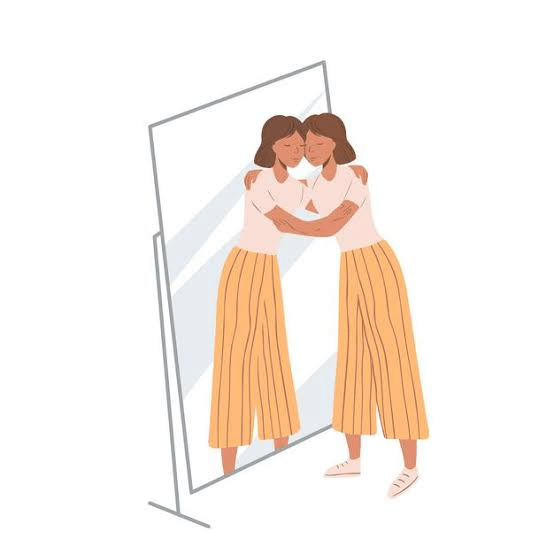
We thrive to learn skills in order to make ourselves useful. But the most useful skill of all is the art of learning to do nothing. In this fast-moving world where everyone is doing something and proving themselves, a large group of people who are probably doing their best might start doubting their abilities and start to compare their success from that of others. This might form a vicious circle of never-ending doubt and low self-confidence. Over time, it might get serious and even effect a person’s ability to work or look at things with a clear perspective. However, self-acceptance and self-awareness is a tool that might help rebuilding the confidence and boosting positivity. Self-acceptance means accepting oneself completely irrespective of the flaws.
The question that arises here is that how will accepting a flaw change the situation and make us feel better?
To answer that, Acceptance is the first step to change. Acceptance does not mean that we have to live with it whether we like or not. Acceptance is the fact that we are aware of the flaw. We know the flaw and how it effects us. Acceptance means knowing and understanding the flaw. One cannot change anything without knowing the cause of the problem. Now, that we have accepted the problem and are at peace with it’s presence, we start to take small steps to change it into the way we like.
Let’s understand it in a simple way You hurt your finger while chopping vegetables. So, the first thing you do is notice the wound and clean it and then, apply appropriate antiseptic medicine. You do not deny to look at the cut and let it be to heal itself on it’s own. Moreover, if we leave a wound open it might even get infected or worse. Similarly, a flaw or a problem in our life is like a open wound. We might choose to ignore it but that will never solve the problem, rather it would make it worse. Just like the wounded finger our own wounds need to be seen and heard. It requires acceptance and then only we can choose the correct medicine or the correct way to heal it. It might be difficult to begin with as we have been conditioned to constantly find our flaws and compare ourselves with others who are better than us. But only self-awareness and acceptance can change that. One of the most promising way to do that is listening to positive affirmation before going to bed and after waking up. Repeated affirmations might help the subconscious brain to reprogram itself into believing new things and changing itself.
Have you visited The Sahara Desert? or the Snow-capped mountains of Switzerland? If you haven’t, it’s perfectly alright. Why visit so far when you can see such places in India too. India has deserts, snow-covered mountains, waterfalls, historic places, and a lot of greenery. You name it and we have it! There are so many breathtakingly beautiful places in India that one doesn’t need to go out.
Here are some spots you should visit before you kick the bucket.
• Tea Garden Hills of Munnar
Munnar is situated in God’s own country, Kerala. It is a famous hill station in Kerala. It is well-known for its tea plantations and lush green hills. The best time to visit these tea garden hills is between November – February.
• Nanda Devi
Nanda Devi is the second-mosy noteworthy mountain in India. It is located in the Himalayan Mountains in the northern part of India. It is extremely famous for its remarkable view. From 15 June to 15 September is the best time to visit Nanda Devi.
• Mizoram
Mizoram is a land of hills, lakes, rivers, and valleys. It is a state in northeastern India. It is known for its evergreen hills, rivers, and high sparkling waterfalls. The best time to visit Mizoram is during October, November, and December.
• Nohkalikai Falls, Cherrapunji
Nohkalikai is the highest waterfall in India. It is located in the state of Meghalaya which is in the northeastern part of the country. It is known as the wettest place on Earth The best time to visit is in September and October.
• Deodar Forest, Himachal Pradesh
Deodar forest is located in Himachal Pradesh and it is famous for its pine trees, Cedrus deodar tree species. The best time to visit is between February to June.
• Tungnath, Uttarakhand
You can find the oldest Hindu Shrine of Lord Shiva here surrounded by the tungnath mountains. It is the best place if you’re looking for a trek. One can visit throughout the year
• Kashmir
Kashmir is also known as ‘ Paradise on Earth’. It is very famous for its snow-capped mountains, wildlife, monuments, and mesmerizing scenic beauty. March to August is the best time to visit Kashmir.
• Lakshadweep
Lakshadweep is a renowned Island located in the Arabian sea. It is known for its flora and fauna and crystal clear waters. The best time to visit this island is from October to mid-May.
A sudden change in the external environment surrounding a person might affect ones physical, mental and emotional health. As we all have been facing an unusual situation for past one year, the importance of sanity and peace has increased. It might not possibly change the outer environment but it can certainly change the way a person sees the situation and help them fight the hardships of life. There is no thumb-rule to living a perfect life. However, there are certain qualities we can attain that might help us make our lives nearly perfect. JOURNALING AND WRITINGONE’S EMOTIONS OUT, is something we have heard since ages. How children make a personal diary and write their emotions out where they feel the need to be heard. I know it sounds boring to a lot of people but Journaling and letting ones feeling out can reduce a lot of burden from one’s chest (Yes, children can be smarter than adults). In life, we have a lot of things that generally cannot be shared with others and we tend to keep those emotions inside us, hoping that they won’t bother us anymore. But little do people know how suppressed emotions can harm a person’s mind and even manifest itself in form of physical illness.
Looking at our own life from an outside perspective.
So, the first issue with Journaling might be accepting one’s emotions which we have denied for a long-time. I know, that accepting might not change the situation but might help in making peace with it. If not so, then a little writing might not affect a person as it might give you a clearer picture of the issue and maybe possible outcomes or ways to make things better for it.
Probably we have started considering writing our issues out but what about others getting an insight into our hidden lives by reading the journal. For such cases, thanks to technology we have free appsfor IOS and Android that keeps a person’s account confidential and provides app locks for security purpose. Since we have checked out two major issues from our list, I guess we might start to consider Journaling.
Additionally, it is win – win situation as there’s no loss. However, there might be some gain in terms of gaining more understanding, compassion and peace.
“Black Hole” almost everyone has heard this term but, what exactly it is? How it is formed? Is a black hole is danger? what if we pass near to black hole?
The idea of a body so massive that even light cannot escape was given by astronomical pioneer John Michell in a letter published by him in november 1784. And since after this an excitement was filled between astronomers and physicists about a body which is invisible. And in December 1967 in a lecture of John Wheeler one of his student reportedly suggested phrase ‘Black Hole’, which Wheeler adopted for his brevity.
Black hole was first spotted in 1971. But after 235 when it was first mentioned by John Michell in 2019, the Event Horizon Telescope(EHT) saw and captured an image of black hole in center of Galaxy M87 53.49 million light years away from earth. The images before this are just art work based imagination and properties of black hole done by astronomers and physicists to define black hole.
Image of black hole captured by Event Horizon Telescope in 2019
How Black Hole is formed? Let us first understand how a star is made. From cloud from Nebula(made of hydrogen and 25% helium) due to density compresses together and forms a shape some what circular, and this object after many million years becomes star one of like sun. The core of star burns hydrogen to be active, when after million years the fuel of star burns out then due to its own gravity and density it starts to compress itself. And if that star is bigger than our sun than it may form a neutron star or the star makes a negative gravity and starts to pull every mass near it. If we compress a massive body bigger than our sun into a size of a city say Mumbai, then it will become black hole. The gravity of this black hole so much increases that even light cannot escape from its horizon making it invisible.
A black can also be size of our sun but its gravity is 1 crore times more than sun. Albert Einstein in his theory of special relativity said that near the black hole the time will run slow. When a star becomes black hole it makes changes in fabric of space-time. And the movement will happen in only linear direction for a person inside it.
What if s person goes inside Black Hole? If a person goes near black hole than time will run slow for him compared to a person on earth. And as a person goes inside the black hole than he will feel so much gravity i.e. gravity 1 crore time more than our sun, that he can die. When a matter goes inside a black hole than due to gravity the atoms are separated and slowly it is vanished. But let say somehow a person survives than for the person it is like having a boon of immortality. If we put a black hole same as the size of sun and replace it with sun then probably nothing change will be happen, it cannot affect us. But due to lack of sunlight our earth will freeze and will only be a giant snowball.
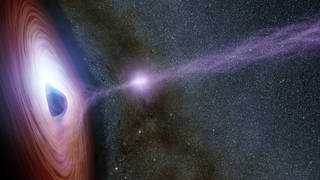
How to find a Black Hole? When a black hole tries to swallow a massive body than its own then it belch just like animals and it gives some portion of light. Black hole has gravity much higher that light like x-rays cannot escape, but when there is a material very close to horizon of black hole, matter is heated at millions of degrees as it is pulled towards black hole and glows in x-rays. Black hole can also be found by coronas. Black holes don’t give any light themselves, but they are often encircled by glowing materials and making it to shine with different types of light.
Corona coming out of a black hole
Types of Black Holes: There are four types four black holes. 1) Stellar-mass black holes As star reaches to the end of their lives, most will inflate, lose mass, and then will cool down to be a white dwarfs. But those with 10 to 20 times as massive as our sun, destined to either become a super-dense neutron star or stellar-mass black holes. Thousands of these stellar-mass black holes may lurk within our own galaxy. 2) Super massive black holes Super massive black hole are the ones predicted by Einstein’s general theory of relativity, can have masses equal to billion of suns; these cosmic giant creatures hide in the center of galaxies. The milky way hosts its own black hole called Sagittarius A* as is more than four million times massive than our own sun. 3) Intermediate Black holes Astronomers also suspect that there is class of so-called intermediate black holes exists in the universe, although evidence for them is so far debatable. 4) Miniature black holes The tiniest member of the black hole family, so far theoretical. These black holes may have swirled to life soon after the universe formed by big bang, some 13.7 billion years ago and quickly evaporated.
Answer to some questions about black holesIs it possible for a black hole eat entire galaxy? No. There is no chance that a black hole whatever is in size can eat a whole galaxy, because the gravitational reach of black holes(even super massive black holes) is not large enough to eat entire galaxy. What if sun turned it a black hole? The sun will never turn into a black hole as it is not massive to explode into a black hole. Instead sun will become a white dwarf. Have black holes have any influence on our planet? No. Even if we put a black hole in place of our sun then also it will not make a difference, earth will continue its rotation, but due to no sunlight it will we disastrous event on earth. Which is farthest black hole we found? The most distant black hole is located 13.1 million light years away from earth called “Quasar”. This black hole is made 690 million years after big bang.
We have found many black hole and learnt many things about them, yet many discoveries are to be made. And black holes will always amaze us.
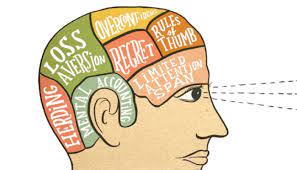
In an ideal world, people would always make optimal decisions that provide them with the greatest benefit and satisfaction. In economics, rational choice theory states that when humans are presented with various options under the conditions of scarcity , they would choose the option that maximizes their individual satisfaction. This theory assumes that people, given their preferences and constraints, are capable of making rational decisions by effectively weighing the costs and benefits of each option available to them. The final decision made will be the best choice for the individual. The rational person has self-control and is unmoved by emotions and external factors and, hence, knows what is best for himself. Alas behavioral economics explains that humans are not rational and are incapable of making good decisions.
Behavioral Economics is the study of psychology as it relates to the economic decision-making processes of individuals and institutions. Behavioral economics draws on psychology and economics to explore why people sometimes make irrational decisions, and why and how their behavior does not follow the predictions of economic models. Decisions such as how much to pay for a cup of coffee, whether to go to graduate school, whether to pursue a healthy lifestyle, how much to contribute towards retirement, etc. are the sorts of decisions that most people make at some point in their lives. Behavioral economics seeks to explain why an individual decided to go for choice A, instead of choice B.
Because humans are emotional and easily distracted beings, they make decisions that are not in their self-interest. For example, according to the rational choice theory, if Charles wants to lose weight and is equipped with information about the number of calories available in each edible product, he will opt only for the food products with minimal calories. Behavioral economics states that even if Charles wants to lose weight and sets his mind on eating healthy food going forward, his end behavior will be subject to cognitive bias, emotions, and social influences. If a commercial on TV advertises a brand of ice cream at an attractive price and quotes that all human beings need 2,000 calories a day to function effectively after all, the mouth-watering ice cream image, price, and seemingly valid statistics may lead Charles to fall into the sweet temptation and fall off of the weight loss bandwagon, showing his lack of self-control.
Charles Robert Darwin was an English Naturalist, born on February 12,1809 in Shrewsbury, England whose Scientific theory of evolution by natural selection became the foundation of modern evolutionary studies. An affable Country gentleman, Darwin at first shocked religious Victorian Society by suggesting that animals and humans shared a common ancestry. However, his non-religious biology appealed to the rising class of professional scientists, and by the time of his death evolutionary imagery had spread through all of science, literature and politics.
DARWIN’S JOURNEY THROUGH EVOLUTIONARY THEORIES:-
The belief that God had created mankind in his own image and likeness were shed by most western scientists until the middle of the 19th century when they thought that all the creatures of the planet had been conceived by a divine force that is until Charles Darwin arrived. Some researchers were already talking about an evolution of the species but the British Naturalist was the first to explain with evidence how evolution might occur by natural selection.
Darwin’s theory radically changed biology offering a new explanation of the origin of Human Beings. It also made him one of the most influential scientists and intellectuals in history but to get there he had to make an extraordinary journey, fighting all the odds before hundreds of experiments and spend 20 years of his life refining all his ideas. In 1831, when Darwin was 22 years old and studying at the University of Cambridge was invited as a Naturalist to a great expedition. He boarded the HMS BEAGLE and spent almost five years travelling several continents starting in South America from which he brought back dozens of life specimens illustrations and fossils. These fossils gave him one of the first clues about evolution, for example observing the remains of a Milodon– a giant animal similar to the sloth. He thought that those similarities were probably not a coincidence, there had to be some kind of link.
When he stopped at the Galapagos Island, Darwin also observed some giant tortoises which lived in nearby islands but showed unique physical characteristics in each island. In the humid areas where vegetation was abundant the turtles had a short neck and a dome-shaped shell whereas in the islands with a drier environment they had a saddle like shell along neck but he couldn’t explain that difference. Upon his return Darwin spent time observing how animal breeders and guards crossbred animals of species to create new varieties. For that creation to be successful the artificial selection made by man was key. Darwin realized that the natural world probably made the same kind of selection but he couldn’t explain how it happened until he read the work of Thomas Robert Malthus, a British intellectual from the 18th century. In an essay on demography, Malthus said that as the population in Europe was growing at one point it would increase much more than the food supplies available and that would cause a fight for survival. This idea helped Darwin explain how evolution works in nature. There is a struggle for survival in which the strongest individual is not necessarily the survivor instead it’s the one which best adapts to the environment where it lives. If a living being has any trait that helps them to survive it will be more successful at the reproduction. Those which don’t adapt will die without descendants. The creatures with the most success in reproducing, past their traits- their lineage and so on until these variations end up becoming a new species. That’s why the differences between the Galapagos Tortoises were a product of evolution.
China and Japan India and Byzantium traveling culture and history vector geisha and samurai men and women Taj Mahal and torii gate capitol building and Great wall landmarks and heritage nationalities.
Culture and history is the main building block of our lifes
The Culture is the characteristics and knowledge of a particular group of people, encompassing language, religion, cuisine, social habits, music and arts.
The word “culture” derives from a French term, which in turn derives from the Latin “colere,” which means to tend to the earth and grow, or cultivation and nurture
History is the study of life in society in the past, in all its aspect, in relation to present developments and future hopes. It is the story of man in time, an inquiry into the past based on evidence.
As with any scholarly approach that boasts of being “new” when it bursts onto the scene, new cultural history was fairly well established as one among many ways of thinking about history by the twenty-first century. This is not to say that new cultural historians enjoyed the unanimous esteem of their more traditional colleagues, for the field still managed to draw the fire of critics from the left and the right who believed that after twenty years this approach still represented a mere “trend.” One could agree with Peter Novick that this attests to the fragmentation of the historical profession into a plethora of specializations that no longer cohered around shared principles and whose denizens had little common ground for discussion. Yet much has changed in cultural history since its heyday in the 1980s.
When new cultural history was actually “new” it provided innovations both in terms of the topics considered worthy of historical attention and in terms of the ways of theorizing such topics within their respective contexts. It is nevertheless apparent that a good portion of what was marketed in 2000 as “cultural history” reflected more of the topical rather than theoretical innovations entailed by this approach. In fact, some of these works even read more like conventional social histories with a few obligatory nods to one of many privileged theorists.
To some extent this state of affairs reflects the success of this approach in the academy and the willingness of historians to combine methodologies in a creative and eclectic manner. On the other hand, though, one might argue that cultural history lost much of its edge by becoming subsumed into a more or less nonreflective historical establishment. Some historians see less fragmentation than the cooptation of erstwhile radical approaches back into a surprisingly resilient mainstream.
“Whatever possibilities become evident,” notes Patrick Joyce, “something is needed to shake the hold of a history which continually reproduces itself, in the process sucking the erstwhile heterodox into its consensus, in much the way that ‘cultural history’ is slowly but surely becoming routinized as more methodology, yet one more subdiscipline in the house of history.” Joyce’s observation is astute, yet one wonders whether a historical approach that could successfully resist such cooptation is possible and, even if it were, whether it would still merit the name “history.” It seems evident that what makes history “history” has little to do with methodologies and innovations that are unique to it, and perhaps a more thoroughgoing interdisciplinarity would discourage the domestication of future innovations into mere additions to the mansion of conventional history.
Pardon A pardon is a decision by the government or the executive branch to relieve a person of culpability for an alleged crime or other legal offence as though the act never happened.
Why do you need a pardon? Individuals may be awarded pardons if they have proved that they have “paid their debt to society” or are otherwise deemed deserving. Pardons are occasionally granted to people who were unfairly convicted or allege to have been wrongfully convicted. Pardons are sometimes viewed as a means of combatting corruption, allowing a specific authority to bypass a broken legal procedure in order to release someone who has been wrongfully condemned. The President of India has the right to give pardons, reprieves, respites, or remissions of punishment, as well as to suspend, remit, or commute the sentence of any person convicted of any offence if the sentence is a death sentence, according to Article 72 of the Constitution.
There are five main types of pardons that are legally required. 1. Pardoning someone means entirely absolving them of their wrongdoing and allowing them to go free. The pardoned felon will be treated as if he or she were a regular citizen. 2. Commutation refers to the process of changing the sort of punishment meted out to the guilty into a less severe one, such as a death sentence being commuted to a life term. 3. A guilty person is granted a reprieve from the execution of a punishment, usually a death sentence, to allow him time to ask for a Presidential Pardon or other legal remedy to show his innocence or effective rehabilitation. 4. Respite refers to a reduction in the severity or amount of a criminal’s sentence due to unusual circumstances such as pregnancy, mental illness, or other factors. 5. Remission refers to lowering the severity of a penalty without affecting its nature, such as decreasing a twenty-year sentence to ten years of hard incarceration.
Art. 72 specifies the kind of cases that can be made.
1. In all circumstances where the punishment or sentence is imposed by a court martial; 2. in all cases where the penalty or sentence is imposed for a violation of any law relating to an issue over which the Union’s executive power has jurisdiction; 3. in all cases when the sentence is a death sentence.
The Pardoning Power’s Characteristics • The question is whether the President’s power to grant pardon is absolute or if it must be utilised on the suggestion of the Council of Ministers. • The president’s power to pardon is limited. The Council of Ministers advises it. • The constitution does not address this issue, yet it is a practical reality. • Furthermore, there is no process under the constitution for challenging the constitutionality of decisions made by the President or governors exercising mercy power. • However, in the Epuru Sudhakar case, the Supreme Court created a tiny window for judicial review of the President’s and governors’ pardon powers in order to rule out any arbitrariness. • The court has previously decided that it retains the power of judicial review even when the matter is solely vested in the Executive by the Constitution.
Conclusions The pardoning power is based on the consideration of the public interest and is to be used for the public good. In circumstances of wrongful conviction or miscarriage of justice, a pardon may be very helpful in preventing an innocent person from being punished. The prospect of being pardoned serves as an incentive for the criminal to conduct well in jail, and thus aids in the resolution of the prison discipline problem.
Introduction A Muslim’s property can be devolved in a variety of ways. Property can be transferred inter vivos (gifted) or through testamentary dispositions under Muslim law (will). A disposition inter vivos is unconstrained in terms of quantum, and a Muslim can gift his entire estate during his lifetime, but only one-third of the total estate can be bequeathed by will. A gift, as a transfer of property, is traditionally controlled by the Transfer of Property Act of 1882. Gift’s Definition and Meaning A gift is a transfer of property ownership from one live person to another living person for no monetary payment. Gifts are referred to as ‘Hiba’ in Islamic law. To be more specific, the term “gift” has a broad connotation and refers to all types of non-monetary transfers of ownership. The term ‘Hiba,’ on the other hand, has a limited meaning. It is primarily transmitted inter vivos, or between living individuals.
Characteristics of a Hiba Following an examination of the definitions and meanings, the following notable elements of Hiba emerge:
1. Hiba is a property transfer that occurs as a result of the parties’ actions rather than by operation of law. It means that any property transfer made by a court of law or any transfer of ownership made under Islamic law will not be considered Hiba. 2. A living Muslim can willingly transfer ownership of any property to another living individual under Hiba. As a result, it is an inter vivos transfer. 3. The transferor conveys absolute ownership of the property to the transferee, who receives full title to the property. Under Islamic law, the notion of Hiba is opposed to conditions, restrictions, or partial rights in a bestowed property. 4. Hiba goes into effect right away and takes away the transferor’s control and ownership of the property. Furthermore, because the property is instantly transferred to the transferee, it must exist at the time of the gift. The phrase “void” refers to a donation made for a future property. 5. A Hiba is a property transfer that takes place without any consideration. A transfer of property is not a gift if the transferor receives something of value in return or exchange.
Donor Competency: Capacity and Authority The person who declares a donation is referred to as a donor. To make a gift, a person must be competent. A competent donor is any Muslim, male or female, married or single, who has reached the age of majority and is of sound mind. The age of majority for the purpose of making a gift is 18 years old, or 21 years old if he is under a certificated guardian.
Gift Types Hiba-il-iwaz Hiba ba Shart ul Iwaz
Hiba-il-iwaz Hiba refers to a gift, while iwaz refers to a consideration in Islamic law. As a result, hiba-il-iwaz refers to a present offered in exchange for a previously provided consideration. There is no system in place under any of the laws that provides for a reward for a gift. However, there is a gift-exchange system in Muslim law. Hiba-ba-Shart-ul-Iwaz It refers to a gift that is given with the expectation of a return. In this situation, the donee does not pay the consideration of his own volition; rather, it is paid since it is a necessary requirement.
The following are the requirements for a valid Hiba-ba-Shart-ul-Iwaz:
1.First and foremost, the transfer of ownership is crucial; it is revocable until the iwaz is paid. 2.Second, once the iwaz is paid, it is no longer reversible. 3.Finally, when an Iwaz transaction is finalised, it takes on the character of a sale.
Conclusion The concept of gifting is a long-standing tradition that dates back to our forefathers. When considering the 1882 Transfer of Property Act, the terms “Hiba” and “gift” have various meanings. Hiba is controlled by Islamic law. So, as we’ve established in this paper, there are three requirements for a legitimate gift:
The donor makes a gift declaration. The donee’s acceptance of the gift. The donor’s transfer of ownership and the donee’s acceptance of it. The donor’s purpose to transmit the property must be genuine.
Study finds topological materials could boost the efficiency of thermoelectric devices.
What if you could run your air conditioner not on conventional electricity, but on the sun’s heat during a warm summer’s day? With advancements in thermoelectric technology, this sustainable solution might one day become a reality.
Thermoelectric devices are made from materials that can convert a temperature difference into electricity, without requiring any moving parts — a quality that makes thermoelectrics a potentially appealing source of electricity. The phenomenon is reversible: If electricity is applied to a thermoelectric device, it can produce a temperature difference. Today, thermoelectric devices are used for relatively low-power applications, such as powering small sensors along oil pipelines, backing up batteries on space probes, and cooling minifridges.
But scientists are hoping to design more powerful thermoelectric devices that will harvest heat — produced as a byproduct of industrial processes and combustion engines — and turn that otherwise wasted heat into electricity. However, the efficiency of thermoelectric devices, or the amount of energy they are able to produce, is currently limited.
Now researchers at MIT have discovered a way to increase that efficiency threefold, using “topological” materials, which have unique electronic properties. While past work has suggested that topological materials may serve as efficient thermoelectric systems, there has been little understanding as to how electrons in such topological materials would travel in response to temperature differences in order to produce a thermoelectric effect.
In a paper published this week in the Proceedings of the National Academy of Sciences, the MIT researchers identify the underlying property that makes certain topological materials a potentially more efficient thermoelectric material, compared to existing devices.
“We’ve found we can push the boundaries of this nanostructured material in a way that makes topological materials a good thermoelectric material, more so than conventional semiconductors like silicon,” says Te-Huan Liu, a postdoc in MIT’s Department of Mechanical Engineering. “In the end, this could be a clean-energy way to help us use a heat source to generate electricity, which will lessen our release of carbon dioxide.”
A path freely traveled
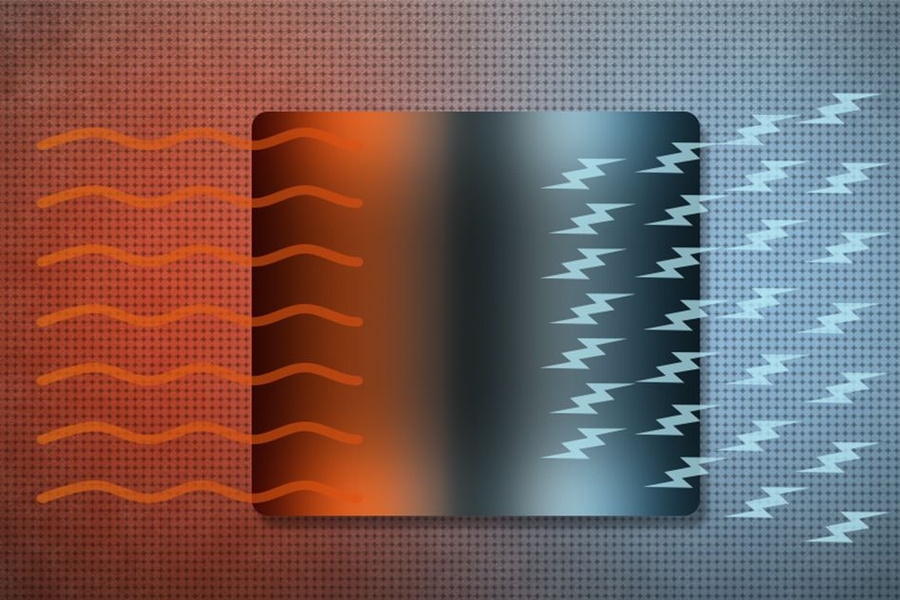
When a thermoelectric material is exposed to a temperature gradient — for example, one end is heated, while the other is cooled — electrons in that material start to flow from the hot end to the cold end, generating an electric current. The larger the temperature difference, the more electric current is produced, and the more power is generated. The amount of energy that can be generated depends on the particular transport properties of the electrons in a given material.
Scientists have observed that some topological materials can be made into efficient thermoelectric devices through nanostructuring, a technique scientists use to synthesize a material by patterning its features at the scale of nanometers. Scientists have thought that topological materials’ thermoelectric advantage comes from a reduced thermal conductivity in their nanostructures. But it is unclear how this enhancement in efficiency connects with the material’s inherent, topological properties.
To try and answer this question, Liu and his colleagues studied the thermoelectric performance of tin telluride, a topological material that is known to be a good thermoelectric material. The electrons in tin telluride also exhibit peculiar properties that mimic a class of topological materials known as Dirac materials.
The team aimed to understand the effect of nanostructuring on tin telluride’s thermoelectric performance, by simulating the way electrons travel through the material. To characterize electron transport, scientists often use a measurement called the “mean free path,” or the average distance an electron with a given energy would freely travel within a material before being scattered by various objects or defects in that material.
Nanostructured materials resemble a patchwork of tiny crystals, each with borders, known as grain boundaries, that separate one crystal from another. When electrons encounter these boundaries, they tend to scatter in various ways. Electrons with long mean free paths will scatter strongly, like bullets ricocheting off a wall, while electrons with shorter mean free paths are much less affected.
In their simulations, the researchers found that tin telluride’s electron characteristics have a significant impact on their mean free paths. They plotted tin telluride’s range of electron energies against the associated mean free paths, and found the resulting graph looked very different than those for most conventional semiconductors. Specifically, for tin telluride and possibly other topological materials, the results suggest that electrons with higher energy have a shorter mean free path, while lower-energy electrons usually possess a longer mean free path.
The team then looked at how these electron properties affect tin telluride’s thermoelectric performance, by essentially summing up the thermoelectric contributions from electrons with different energies and mean free paths. It turns out that the material’s ability to conduct electricity, or generate a flow of electrons, under a temperature gradient, is largely dependent on the electron energy.
Specifically, they found that lower-energy electrons tend to have a negative impact on the generation of a voltage difference, and therefore electric current. These low-energy electrons also have longer mean free paths, meaning they can be scattered by grain boundaries more intensively than higher-energy electrons.
Sizing down
Going one step further in their simulations, the team played with the size of tin telluride’s individual grains to see whether this had any effect on the flow of electrons under a temperature gradient. They found that when they decreased the diameter of an average grain to about 10 nanometers, bringing its boundaries closer together, they observed an increased contribution from higher-energy electrons.
That is, with smaller grain sizes, higher-energy electrons contribute much more to the material’s electrical conduction than lower-energy electrons, as they have shorter mean free paths and are less likely to scatter against grain boundaries. This results in a larger voltage difference that can be generated.
What’s more, the researchers found that decreasing tin telluride’s average grain size to about 10 nanometers produced three times the amount of electricity that the material would have produced with larger grains.
Liu says that while the results are based on simulations, researchers can achieve similar performance by synthesizing tin telluride and other topological materials, and adjusting their grain size using a nanostructuring technique. Other researchers have suggested that shrinking a material’s grain size might increase its thermoelectric performance, but Liu says they have mostly assumed that the ideal size would be much larger than 10 nanometers.
“In our simulations, we found we can shrink a topological material’s grain size much more than previously thought, and based on this concept, we can increase its efficiency,” Liu says.
Tin telluride is just one example of many topological materials that have yet to be explored. If researchers can determine the ideal grain size for each of these materials, Liu says topological materials may soon be a viable, more efficient alternative to producing clean energy.
“I think topological materials are very good for thermoelectric materials, and our results show this is a very promising material for future applications,” Liu says.
This research was supported in part by the Solid-State Solar Thermal Energy Conversion Center, an Energy Frontier Research Center of U.S. Department of Energy; and the Defense Advanced Research Projects Agency (DARPA).
Mithun Bhat, born in Bhopal, could buy 2 houses within a month, Bentley, Ferrari and paid all his debts. But previously, he worked with salary under the minimum wage. So, how could he earn so much money only in a month? He tells us his story.
“I worked at pizza delivery service for a year. I was prior a collage student and did a part time job in a restaurant. I did it to support my study. In the second year of study I was close to be expelled since I could not pay the tuition. At the time, I had to take a loan. I could finally paid my tuition, but I had no money to pay the monthly installments to the bank. Honestly, studying and working all at once was beyond my endurance, and eventually, I was expelled from campus a week before the end of school year. That was the beginning of the darkest days of my life. My father lost his job and my family didn’t know how to survive. Could you imagine how hopeless I felt? I had no decent work and no education, and my father lost his job. I could do nothing to help them.
One night, I was delivering a pizza to the last location. A guy opened the door. He was with his friends, and while he was paying the pizza, I heard their discussion about where would they invest Rs. 2,000,000 they earned 10 minutes ago. I just made a glance and saw a sort of graph and figures on the laptop screen. The guy opening the door gave me Rs. 1,000 but the price was only Rs. 600. He told me to keep the change.
I was absolutely surprised and after I got back home, I took my laptop and tried to recall about their discussion. After 5 minutes, I remembered that they told about online trading. On the Broker website I found the graphs and figures I saw at the guy’s laptop.
After reading all information about the broker and watching tutorial videos, I opened a demo account where I got virtual money. I quickly understood what I had to do, it was very easy. I earned some money after my very first transaction. Then I thought… I did not lose anything, so I decided to open a real account and deposited my last money there. At the morning, I woke up and saw that I earned Rs. 30,654 over that night. After 2 weeks I could paid my debts off, bought a car, and I could help my father while he was searching for a new job and pay his expenses for the next few months. 2 weeks later, I already had 2 houses in the suburb. And all I did without leaving my home and getting higher education.
That’s my luck. It would never happen if I did not meet the rich guy while delivering the pizza. I know there are a lot of people having not good times like me, that’s why I tell you: if you want to live without any problem, I can tell you how to earn money with Trading Resource. It is very easy if you would try it.
The criminal justice system costs taxpayers about billions and billions per year, which is used to pay for municipal policing and the maintenance of state and local prisons. By better understanding of what causes crime and what effective policy responses should be implemented. Experimental criminology tries to minimize the financial burden that crimes impose on nations while also improving safety. Experimental criminology is a branch of criminology concerned with scientific knowledge of crime and its application to the criminal justice system. To put it another way, it employs a variety of scientific analysis to answer issues regarding the crime that occurred, including its prevention, punishment, and injury. These trials are mostly carried out in the actual world rather than in labs. It has a broad scope since it focuses on determining the true cause of the crime and preventing it. In the discipline of experimental criminology, there is a lengthy approach for conducting experiments that includes theoretical, sociological, and methodological stages. In order to completely comprehend crime and the criminal justice system, experimental criminology relies on the work of criminologists, statisticians, and other scientists. Experimental criminology research can use a variety of methods, including observational studies, case-control models, instrumental variables, and natural experiments. Experimental criminology is becoming a major part of the fast growing scientific research and evidence-based social policy movement. This approach is primarily concerned with the improvement and growth of society through the application of high-quality scientific evidence that will assist us in determining what will provide the best results. It includes the controlled investigation of cause and effect, and there are two types of studies: quasi-experimental and experimental. When subjects are chosen at random, research is experimental; however when people are chosen purposefully to explore the cause and effect of a crime, research is quasi-experimental. In experimental criminology, subjects are often divided into two groups and then observed to determine outcome measures that could be used as a deterrent to crime.
Although the state of experimental criminology is currently unknown, it is often regarded as the most effective method for determining the cause-effect relationship of crime and assisting in the development of preventive measures to aid the justice delivery system. However, when experimental criminology is done correctly, it causes fewer risks for society and reports a bigger number of cases that helps in analyzing the causes of crime. This strategy is used by both the police and the court system in India to streamline investigations and judgments. In India, experimental criminology is becoming more well-known. It has decreased the threat of causing harm in the modern era by developing more humane and effective alternatives to long term imprisonment. An observation produced using this method makes a clear point, which makes the evidence credible, and so serves the objective for which it was created.
Finally, the findings of this study showed that the conditions in a community can lead to a rise in both minor offenses and more major offenses. With this in mind, criminologists might advocate for the implementation of a greater number of community-based interventions that will, in return, reduce crime in these communities.
In 1989 Tim-Berners-Lee invented the internet as we know it today and the fundamental building block for this framework is the hyperlink. With the use of hyperlinks, different documents are connected and any document on the web can be identified with that link. This is also known as Web 1.0 (Web of Documents) and its main goal was to exchange information between different machines together on an interconnected network.
The Semantic Web is a collaborative effort led by the World Wide Web Consortium (W3C). Semantic Web which is also called Web 3.0 or web of data links to a specific piece of information contained in that document or application. The semantic web is also modular and dynamic because if the information is ever updated, users can automatically take advantage of any updates. Scalability is an essential requirement of the semantic web as well. In the semantic web, we go beyond the documents and we go towards the lower (data) level.
Some of the main underpinnings of The Semantic Web are as follows:
Building models: the quest for describing the world in abstract terms to allow for an easier understanding of a complex reality.
Computing with knowledge: the endeavor of constructing reasoning machines that can draw meaningful conclusions from encoded knowledge.
Exchanging information: the transmission of complex information resources among computers that allows us to distribute, interlink, and reconcile knowledge on a global scale.
Linked Data is used to connect the web of data in the Semantic Web. Links are made so that a user or a computer can explore the web of data. Linked data is much more interactive, visibility, powerful and useful in retrieving, finding, and determining its relation with other data on the web. So instead of having URLs (Links) between documents, in Semantic Web, we have URLs between facts. To present knowledge about the data in a much more organized manner. It also seamless data integration and it can bring intelligence to the system. URIs consists of two entities: URL (Uniform Resource Locator) and URN (Uniform Resource Name).
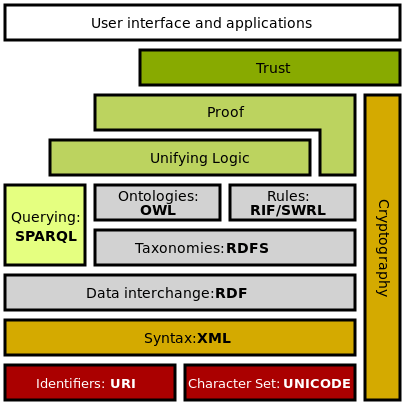
The Basic Structure of The Semantic Web
To implement these URIs we need Resource Description Frameworks (RDFs). RDF is a standard model for data interchange on the Web. It is a framework or a data model for describing resources. RDFs are the formal language to describe the information in the Semantic Web. The goal of RDF is to enable applications to exchange data on the Web while still preserving their original meaning. RDFs comprise triples. A triple gives a unique identifier so that we can link the data and form a relation between various other data nodes. Multiple triples connected are called Graphs.
In metadata terms, RDF and expressed in (Triples). Triples comprise of three fundamental entities:
Object is the resource being described by the metadata record
Predicate is an element in that record
Subject is a value assigned to that element
SPARQL (SPARQL Protocol and RDF Query Language) and OWL (Web Ontology Language) are the other two technical standards used in the Semantic Web.
Semantic the web is an extension to the World Wide Web and it has made significant strides towards making the internet more seamless, efficient, and scalable. Linked Data is very critical in making this happen. But still, Semantic is not yet adopted and many corporations and organizations are unaware of it. So the focus should be to promote wider adoption of the Semantic Web with better availability of the learning resources.
“Education is the strongest weapon that can be used to change the world.”
– Nelson Mandela
As rightly said by Mr. Mandela ,education gives us knowledge which in turn gives us wisdom which teaches us to differentiate between good and bad. Education is not only needed to have a good economic strata but also to have a righteous sense of living . It gives us the power to stand for ourselves when we are being wronged.
The global pandemic which we are facing today has imposed many restrictions on us and in order to keep ourselves safe we are supposed to maintain social distancing as a result of which all the places which wholeheartedly invited the crowd before, are closed down now, the educational institutes being one among them. Read this blog further to know how covid-19 has affected education in the country like ours where during pre pandemic times also many loopholes were present.
The Indian Education system
Around 60% of the total Indian population is considered to be in poverty that is they barely manage a hand to mouth existence . In this case education is definitely a luxury to them . The Constitution of India has declared an individual’s Right to Education as a fundamental right under which children between 6 to 14 years of age are eligible to get free education in government schools across the country. Also, according to section 12(1)(c) of the Right to Education Act of 2009, all the private schools in the country are supposed to reserve 25% seats for the children belonging to the EWS Category(Economically Weaker Section).
Now, Private schools in India also falls in two categories: one is the category belonging to the government recognized schools which charges fair amount of fees and claims to provide quality education. They are affordable by the middle class families and the families falling about them in the economic strata. Second category belongs to the schools which are not recognized by government, charge decent fees and are affordable by the lower middle class families who has a option of government schools but don’t want their child going there due to the below mentioned reasons.
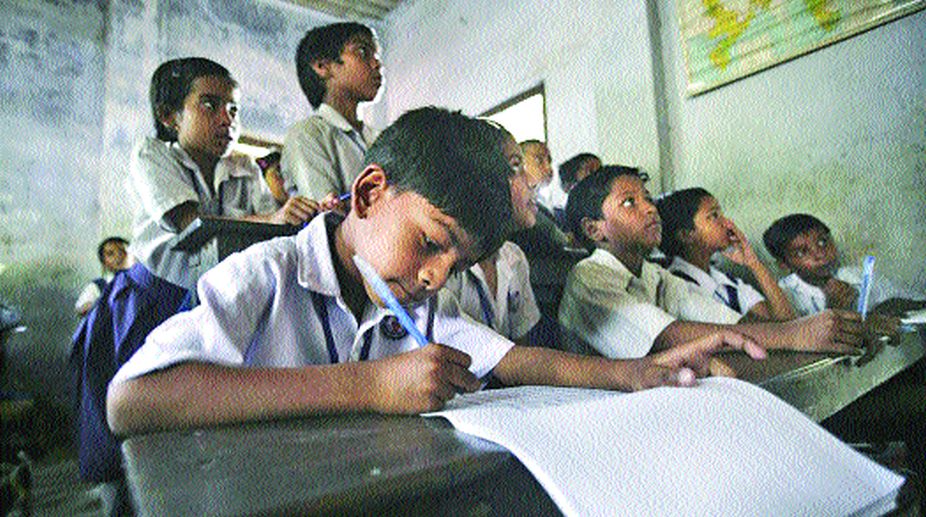
Now coming upon the schools funded by the government, these schools are generally in the limelight for their poor infrastructure, absentee teachers, low student ratio(**this was the case before the commencement of the pandemic). In the pandemic times, the government schools which are well equipped like the ones in Delhi, witnessed only 25 to 30% attendance. The condition of rest of the government funded schools which were just for the namesake can be imagined.
With people adapting to “new normal” in these pandemic times, the world has turned digital and so has the education system. Gone are the times where children would wake up early in the morning, go through their own struggles of going to school to study in the TRADITIONAL WAY OF LEARNING where teachers would come and address a section of class. This “new normal” is the time for ONLINE CLASSES where what matters the most in just learning as to not face a complete loss and at least take out the best in these times . The education in the “new normal” has lost its essence, punctuality , discipline and integrity.
Covid-19 and Indian Education
With the commencement of the pandemic around 1.5 million schools have been closed affecting almost 286 million children in one way or the other from primary to the secondary levels. According to a report released by UNICEF, “The pandemic has affected over 90% of the total student population of the world”. In India itself, the main problem is that not every area has been digitalized yet and in the digitalized areas also not everyone has access to required number of devices and good internet connectivity. Only 24% of the total houses in India have access to internet whereas in rural areas these numbers have dropped upto 4%. Further a survey conducted by the Niti Aayog in 2018 reported that around 55000 villages have no mobile network coverage let alone the internet connectivity and around 35 % schools operate without electricity. In these circumstances, many students have been forced to dropout of the schools which is a destruction of India’s bright future and talent.
Steps taken to solve the digitalization issue
The introduction of the BHARATNET project which ensure the broadband connectivity to over 2,50,000 gram panchayats through optic fiber technology which will enhance the network quality .
Many Government schools have started training teachers on how to teach through net which is important for the successful accomplishment of the project which involves ensuring that no child looses his/her right to education even in these pandemic times.
Many crowd funding platforms have been launched by the government and individuals which aims on providing devices and enhancing infrastructure to enable online classes. The Government of Maharashtra through one such platform has managed to generate rupees 216 crores which will be further used towards the cause. Also, in Kerala 4 tenth standard students have managed to generate rupees four lakhs through one such platform which they will use to buy devices for the students who are not able to afford.
WE CAN JUST HOPE THAT THE COMING TIME WILL NOT BE A DOOM AND WE WILL GET SOME IMPROVEMENTS .





















 Eduindex
You must be logged in to post a comment.