The cat families…Part 1

Felis catus also called house cat or domestic cat, domesticated member of the family Felidae, order Carnivora, and the smallest member of that family. Like all felids, domestic cats are characterized by supple low-slung bodies, finely molded heads, long tails that aid in balance, and specialized teeth and claws that adapt them admirably to a life of active hunting. Cats possess other features of their wild relatives in being basically carnivorous, remarkably agile and powerful, and finely coordinated in movement.

there are more than, 45 types of cat family members are present around the globe, which include the king lion, tiger, leopard, and many more. Here is the information regarding it.

1.Abyssinian:
undefined
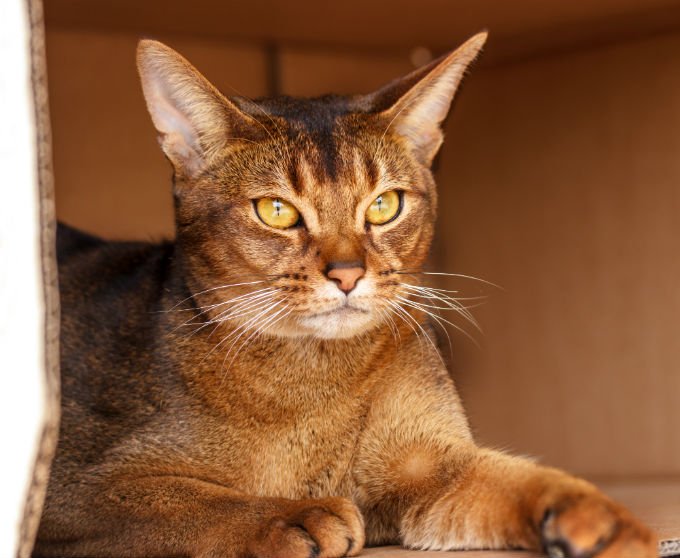
Abyssinian, breed of domestic cat, probably of Egyptian origin, has been considered to approximate the sacred cat of ancient Egypt more closely than any other living cat. The Abyssinian is a lithe cat with relatively slender legs and a long, tapering tail. The short, finely textured coat is ruddy reddish-brown, with individual hairs of the back, sides, chest, and tail distinctively ticked, or tipped, with bands of black or brown. The nose is red, the eyes are hazel, green, or gold, and the tail tip and backs of the hindlegs are black. The Abyssinian is noted for being affectionate and quiet, though generally shy with strangers.

2.African wildcat:
undefined
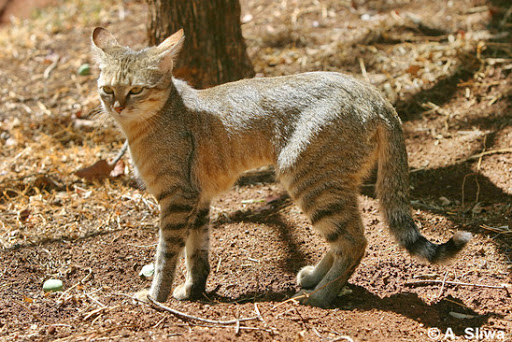
The African wildcat, also called Egyptian wildcat, small, tabby like a cat (family Felidae) found in open and forested regions of Africa and Asia. Likely the first cat to be domesticated, the African wildcat is somewhat larger and stockier than the modern house cat, with which it interbreeds readily. Its coat, paler in the female, is light or orange-brown with narrow dark stripes. The length of the animal is about 70 cm (28 inches), excluding the 40-cm tail; shoulder height averages 23 cm (9 inches), and the cat weighs about 3.5 kg (7.7 pounds). The African wildcat is a solitary nocturnal hunter that preys mainly on birds and small mammals. Mating generally occurs early in the year, and a litter of two to five kittens is born about 56 days later.

3.black panther:
undefined
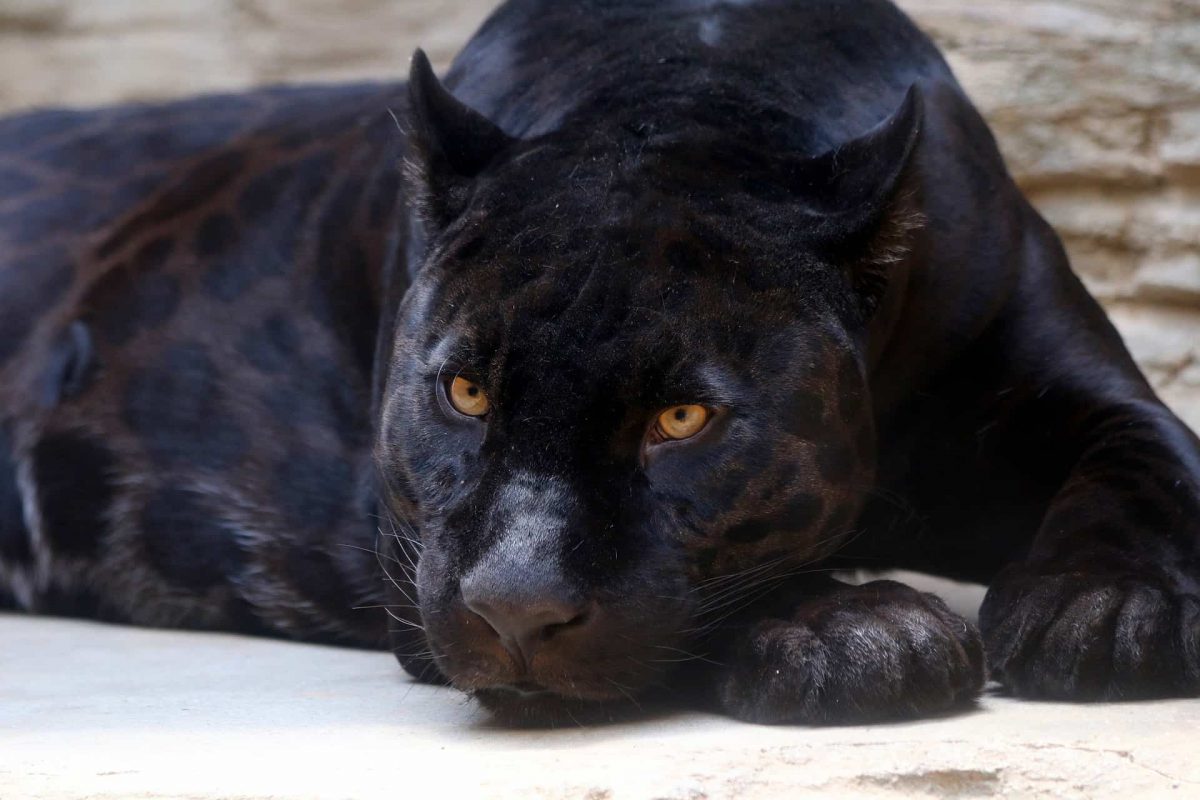
Black panther, colloquial term used to refer to large felines classified in the genus Panthera that are characterized by a coat of black fur or large concentrations of black spots set against a dark background. The term black panther is most frequently applied to black-coated leopard of Africa and Asia and jaguars of Central and South America; black-furred variants of these species are also called black leopards and black jaguars, respectively. Besides, the term is sometimes used to describe dark-colored bobcats, lynx, jaguarundis, tigers, and pumas, even though reports of black-colored representatives of some species, such as the puma, have not been confirmed.

4.bobcat:
undefined
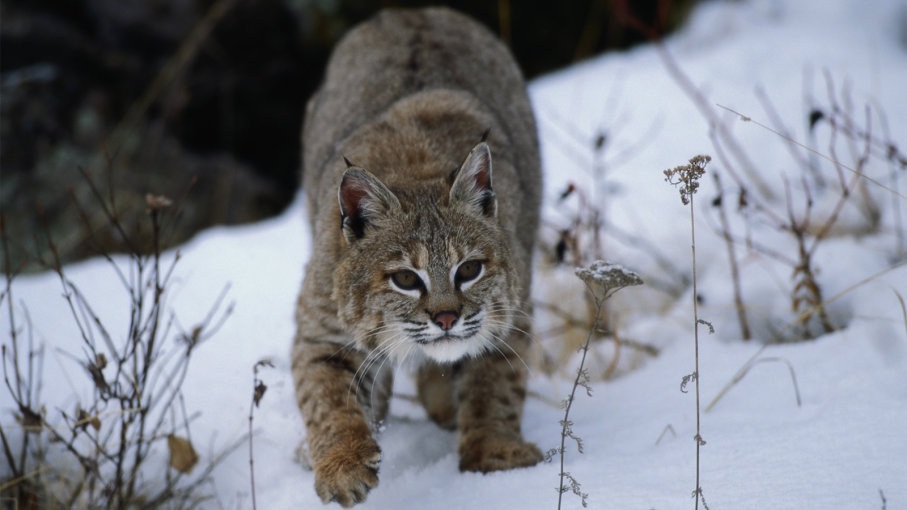
Bobcat, also called bay lynx or wildcat, bobtailed North American cat, found from southern Canada to southern Mexico. The bobcat is a close relative of the somewhat larger Canada lynx.

5.calico cat:
undefined
Burmese, breed of domestic cat, presumably of Asian origin. The Burmese are a compactly built cat with a small, rounded head and wide-set, round, yellow, or golden eyes. The short, finely textured, and glossy coat darkens from a milk-chocolate color in the kitten to a rich sable brown in the adult. The underside is paler than the coat; the ears, face, legs, and tail may be darker. The tail is tapered and may be either straight or kinked near the tip.

6.caracal:
undefined
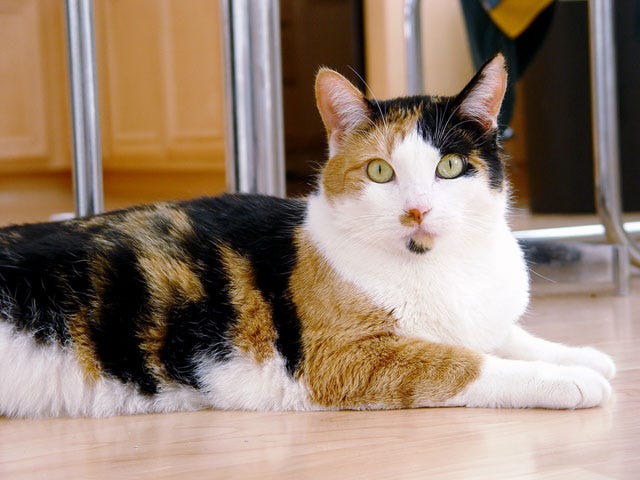
Calico cat, In North America, a blotched or spotted domestic cat, usually predominantly white with red and black patches (a pattern also called tortoiseshell-and-white). Because the genetic determination of some coat colors in cats is linked to the sex chromosome, calicoes are almost always female.

7.cat:
undefined
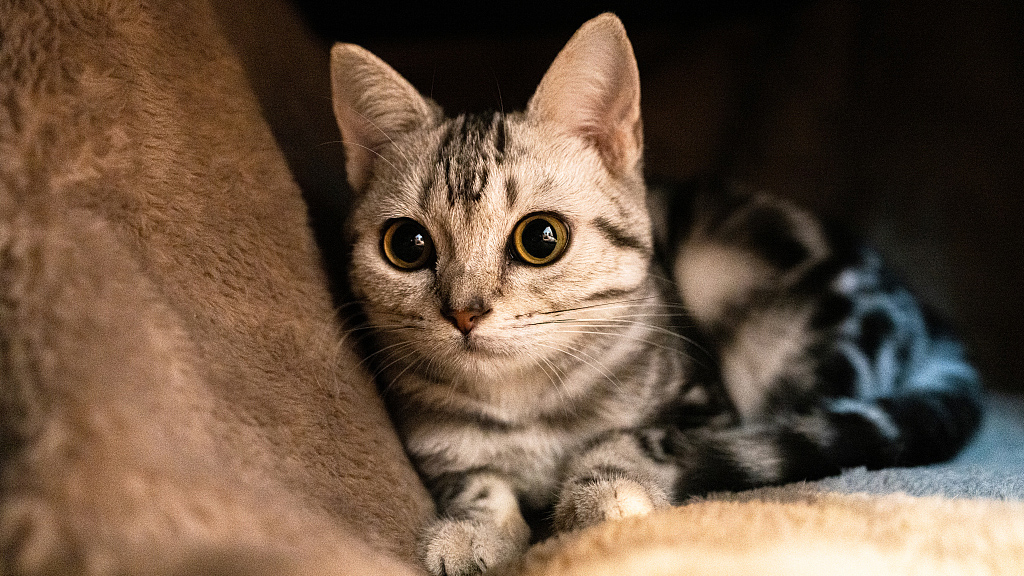
Cat also called house cat or domestic cat, domesticated member of the family Felidae, order Carnivora, and the smallest member of that family. Like all felids, domestic cats are characterized by supple low-slung bodies, finely molded heads, long tails that aid in balance, and specialized teeth and claws that adapt them admirably to a life of active hunting. Cats possess other features of their wild relatives in being basically carnivorous, remarkably agile and powerful, and finely coordinated in movement.

8.cheetah:
undefined
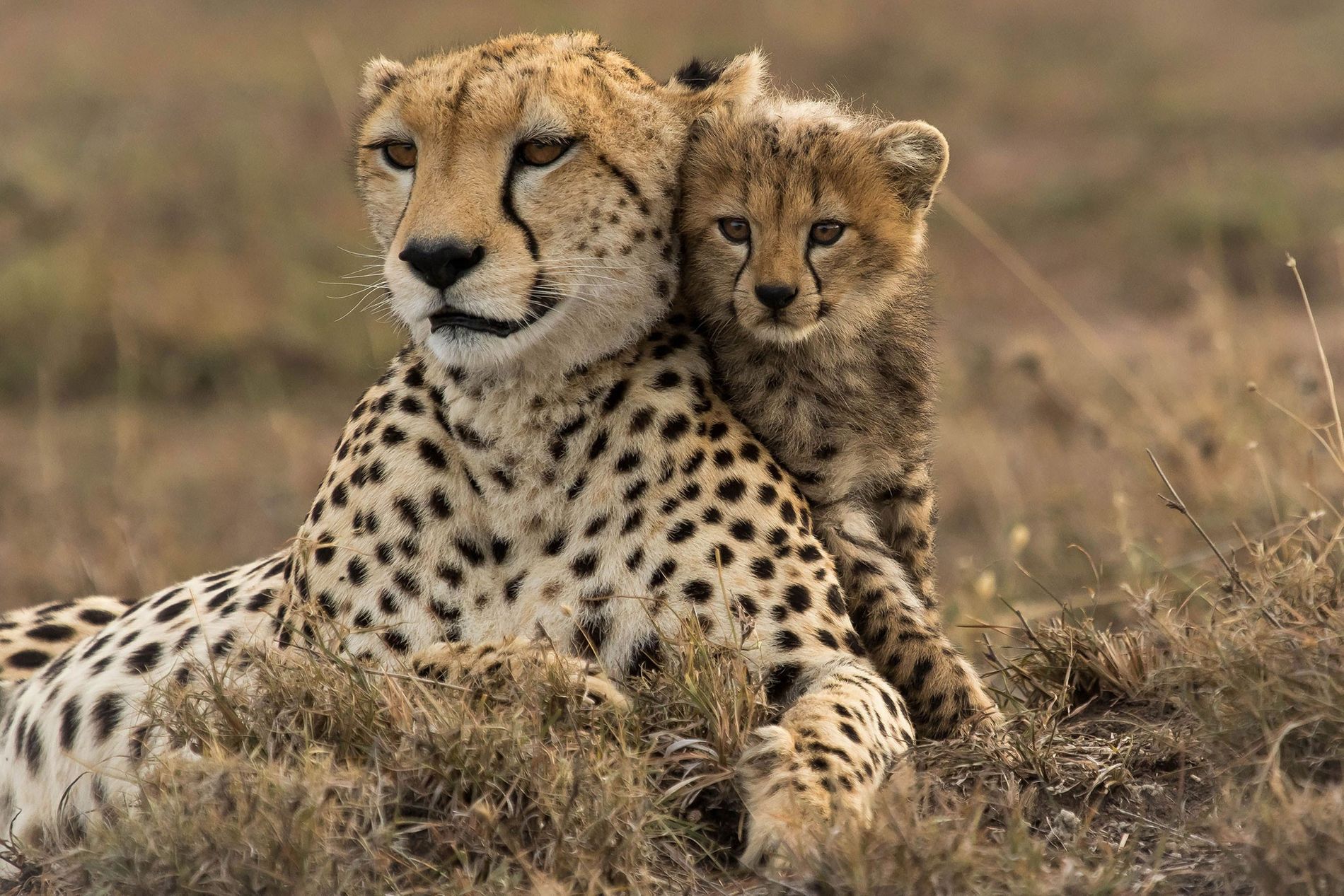
Cheetah, one of the world’s most-recognizable cats, known especially for its speed. Cheetahs’ sprints have been measured at a maximum of 114 km (71 miles) per hour, and they routinely reach velocities of 80–100 km per hour while pursuing prey. Nearly all the cheetahs remaining in the wildlife in Africa.

9.clouded leopard:
undefined
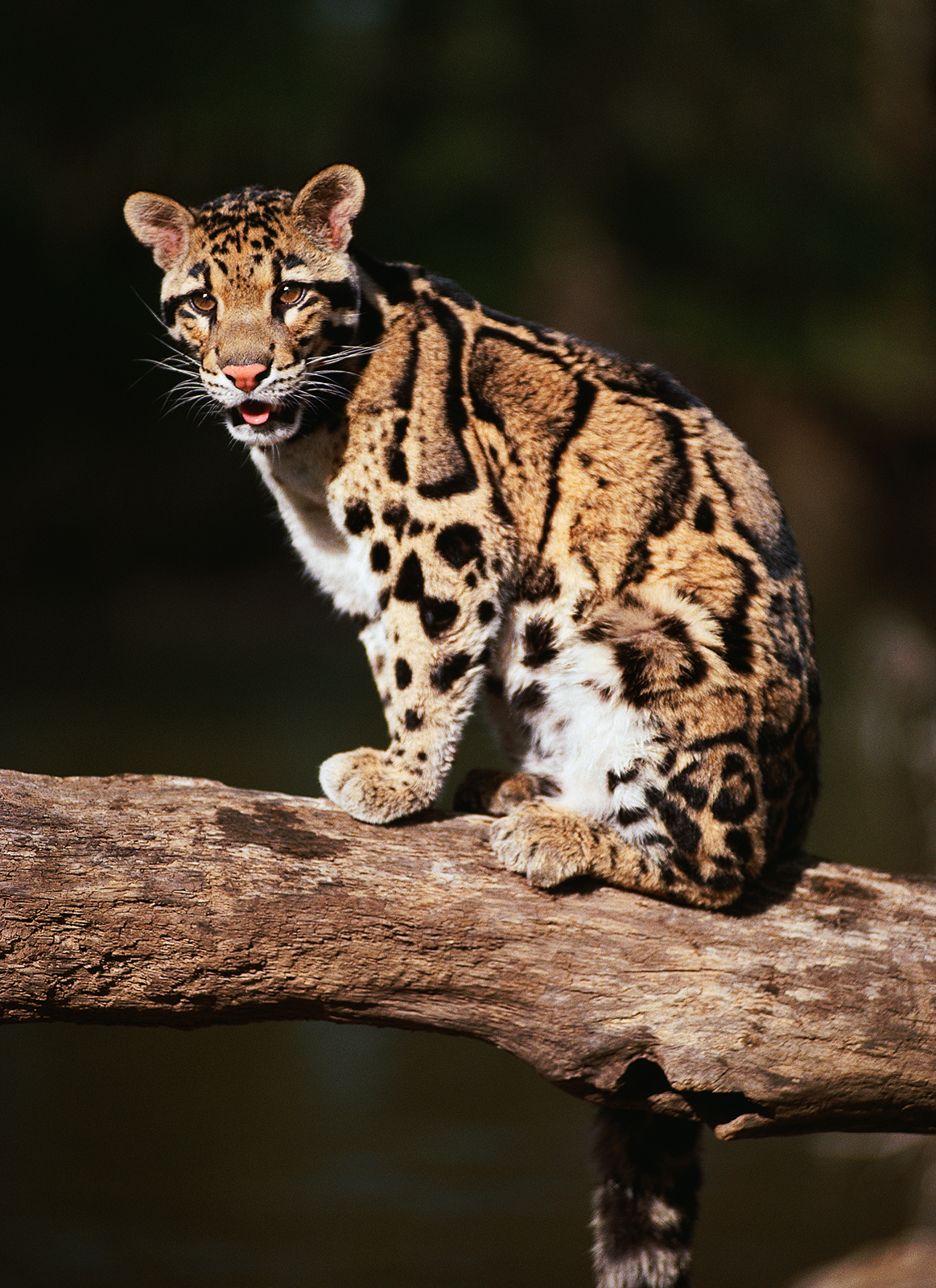
Clouded leopard, also called clouded tiger, strikingly marked cat, very similar in coloring and coat pattern to the smaller, unrelated marbled cat . There are two species of clouded leopard, which are genetically distinct from one another. Neofelis nebulosa, found on the mainland of southeastern Asia, particularly in forests and other wooded regions, and N. diardi, found on the islands of Sumatra and Borneo, are thought to have diverged about 1.4 million years ago. The population of clouded leopards declined sharply in the latter half of the 20th century as a result of hunting and deforestation. They are reported to be nocturnal and to live in trees; they prey on birds and small mammals, such as pigs and monkeys.

10.domestic shorthair:
undefined
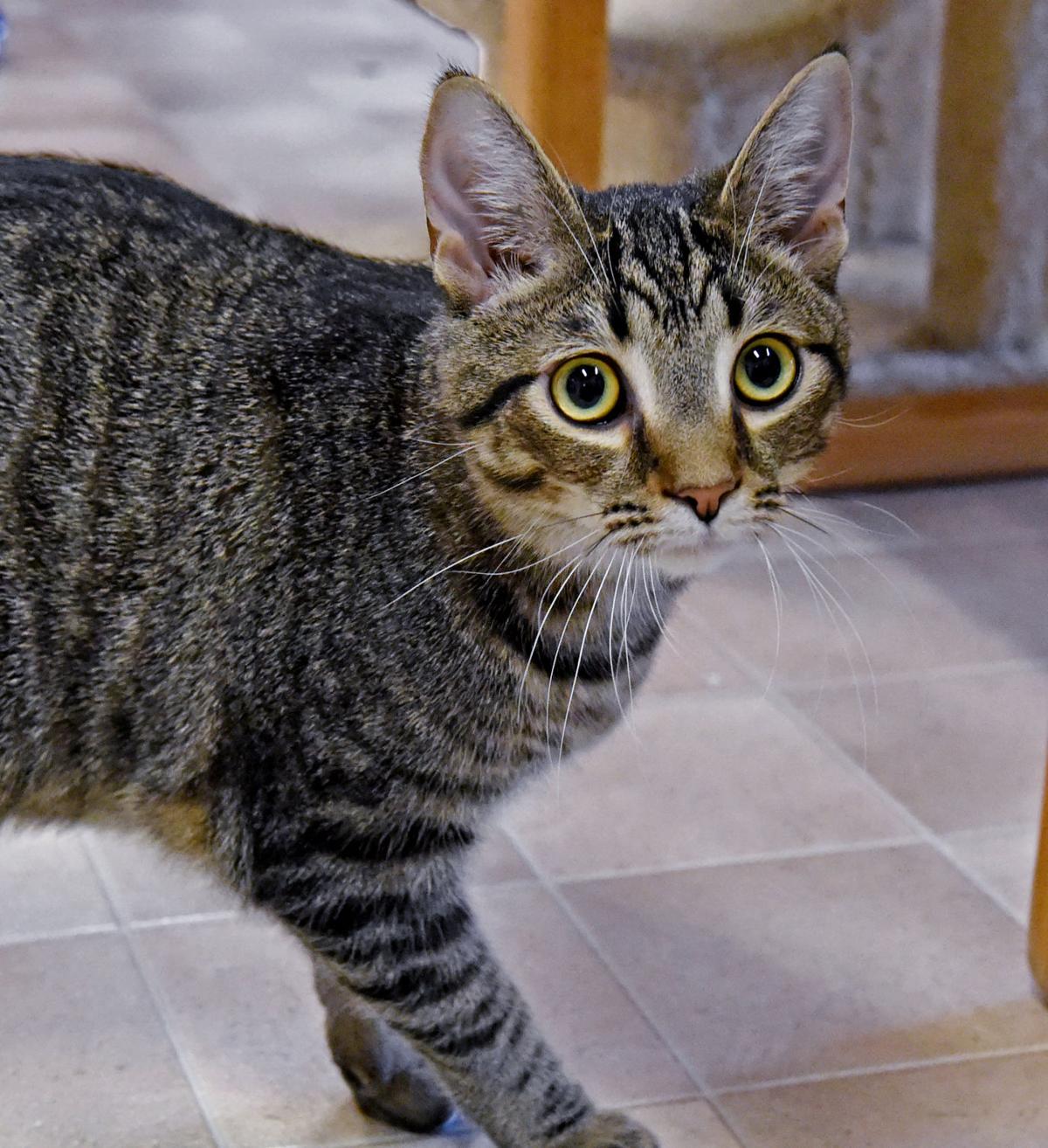
Domestic shorthair, also called British Shorthair, breed of a domestic cat often referred to as a common, or alley, cat; a good show animal, however, is purebred and pedigreed and has been carefully bred to conform to a set standard of appearance.

11.feline:

undefined
Feline any of 37 cat species that among others include the cheetah, puma, jaguar, leopard, lion, lynx, tiger, and a domestic cat. Cats are native to almost every region on Earth, except Australia and Antarctica. They are carnivorous mammals that live in a wide variety of habitats, but they are typically woodland animals.

12.fishing cat:
undefined
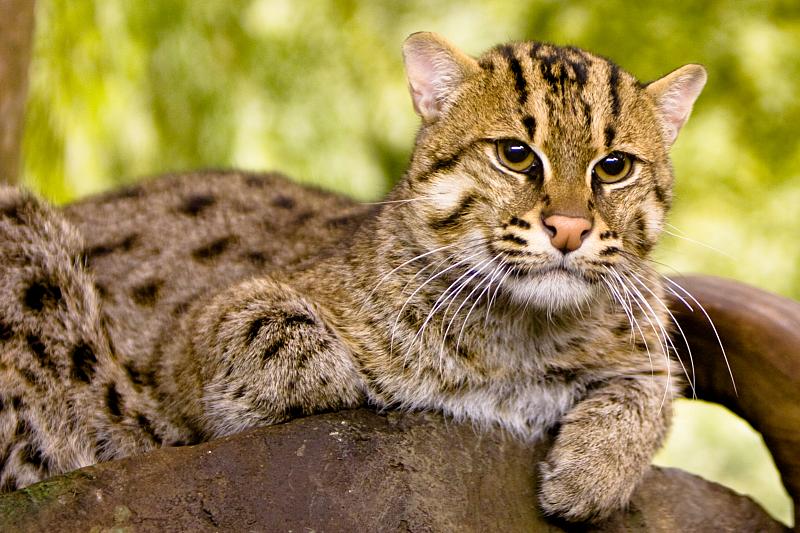
Fishing cat a tropical cat of the family Felidae, found in India and Southeast Asia. The coat of the fishing cat is pale gray to deep brownish-gray and marked with dark spots and streaks. The adult animal stands about 40 cm (16 inches) at the shoulder, weighs 8–11 kg (18–24 pounds), and is from 60 to 85 cm long, excluding the black-ringed tail, which accounts for an additional 25–30 cm. The fishing cat lives near water and in jungles, reed beds, and marshes. It is reported to fish by scooping its prey out of the water.

13.flat-headed cat:
undefined
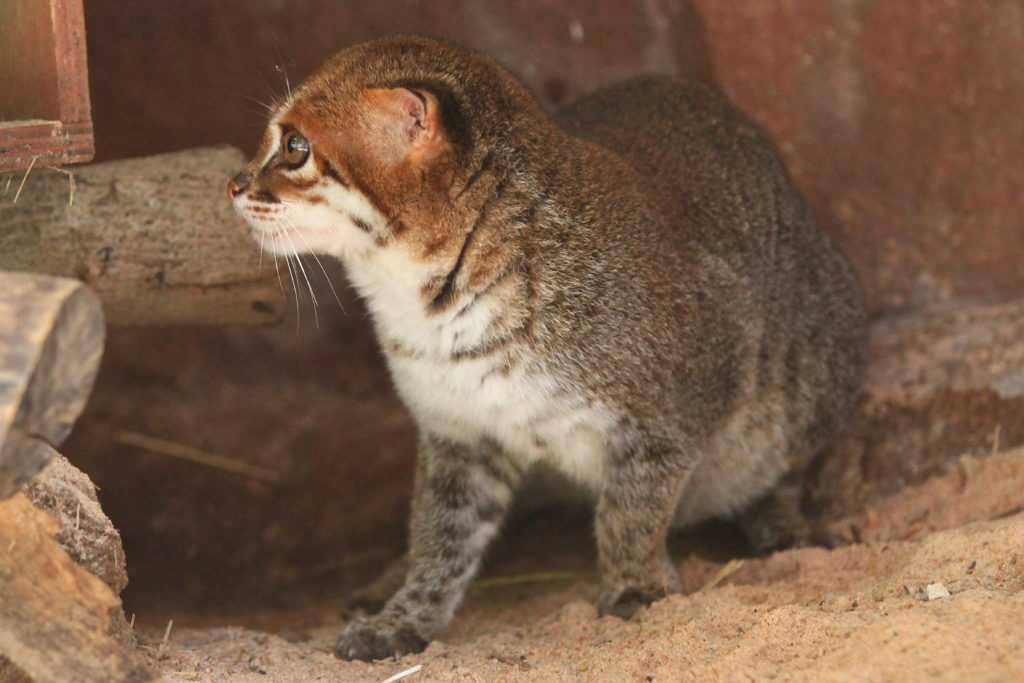
Flat-headed cat extremely rare Asian cat found in the Malay Peninsula, Sumatra, and Borneo. One of the smallest members of the cat family, Felidae, the adult is from 40 to 60 centimeters (16 to 24 inches) long without the 15–20-cm tail and weighs from 1.5 to 2.5 kilograms (3.3 to 5.5 pounds). Its coat is reddish above and white with red spots below; there are white markings around the eyes. It is the only felid known to include any substantial amount of vegetation in its diet, with a preference for fruit and, when available, sweet potatoes and similar foods. Little else is known about this cat, which is reported to be nocturnal and to hunt fish and frogs along rivers.

14.Florida panther:
undefined
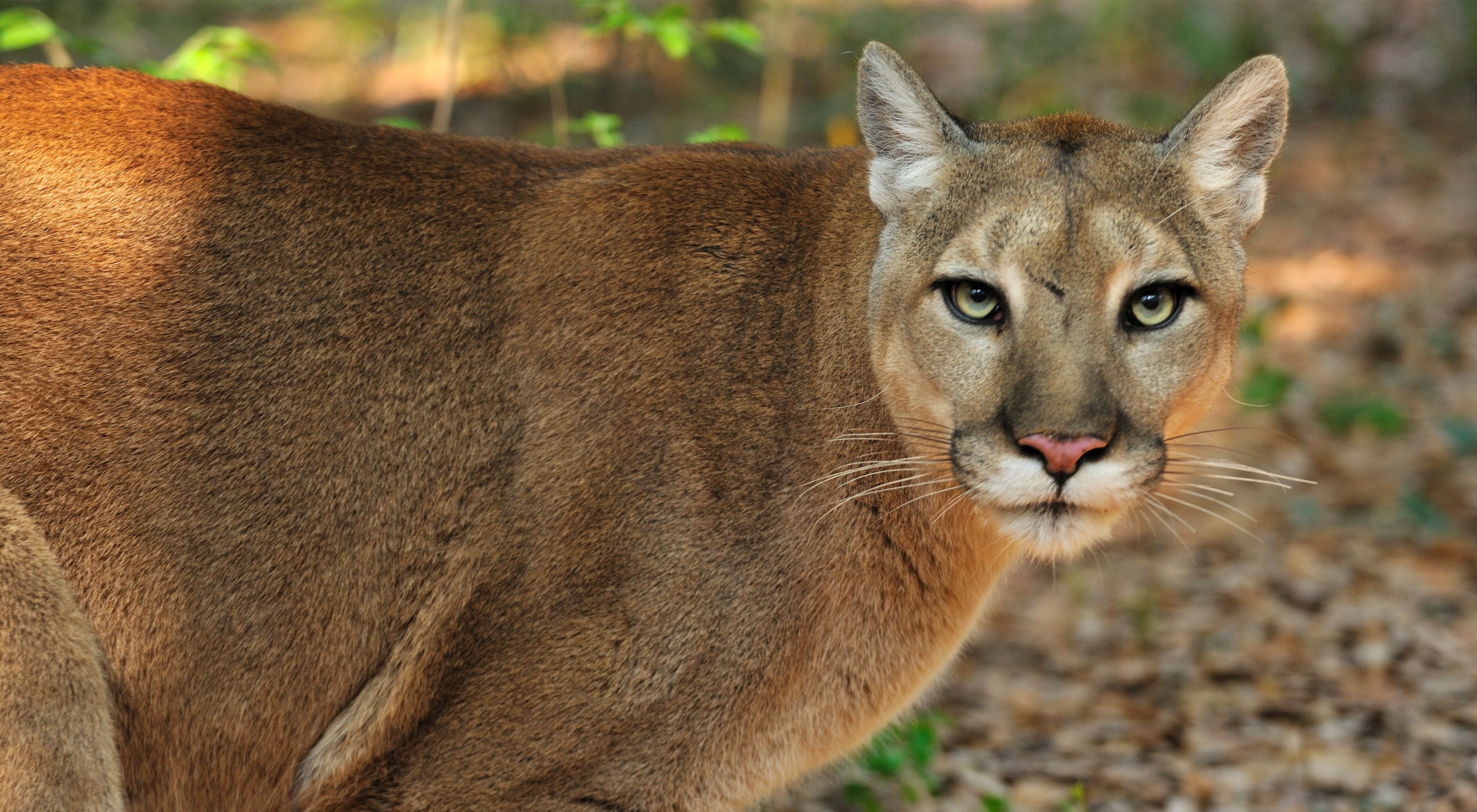
Florida panther, member of a population of large New World cats belonging to the species Puma concolor, family Felidae, confined to a small, isolated, and inbred group in southern Florida. This population is the only breeding group of pumas in the eastern United States. The Florida panther was traditionally classified as a distinct subspecies of puma and was reclassified as a population of the P. concolor cougar subspecies in 2017 after genetic analysis. The Florida panther was one of the first animals listed under the Endangered Species Act when the law first passed in 1973, and it is recognized as the state animal of Florida.

15.Geoffroy’s cat:
undefined
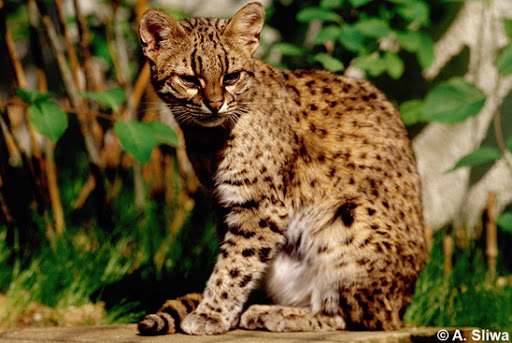
Geoffroy’s cat South American cat of the family Felidae, found in mountainous regions, especially in Argentina. It is gray or brown with black markings and grows to a length of about 90 cm (36 inches), including a tail of about 40 cm (16 inches). Geoffroy’s cat climbs well and preys on small mammals and birds. It breeds once a year; litters consist of two or three kittens.

17.Himalayan:
undefined
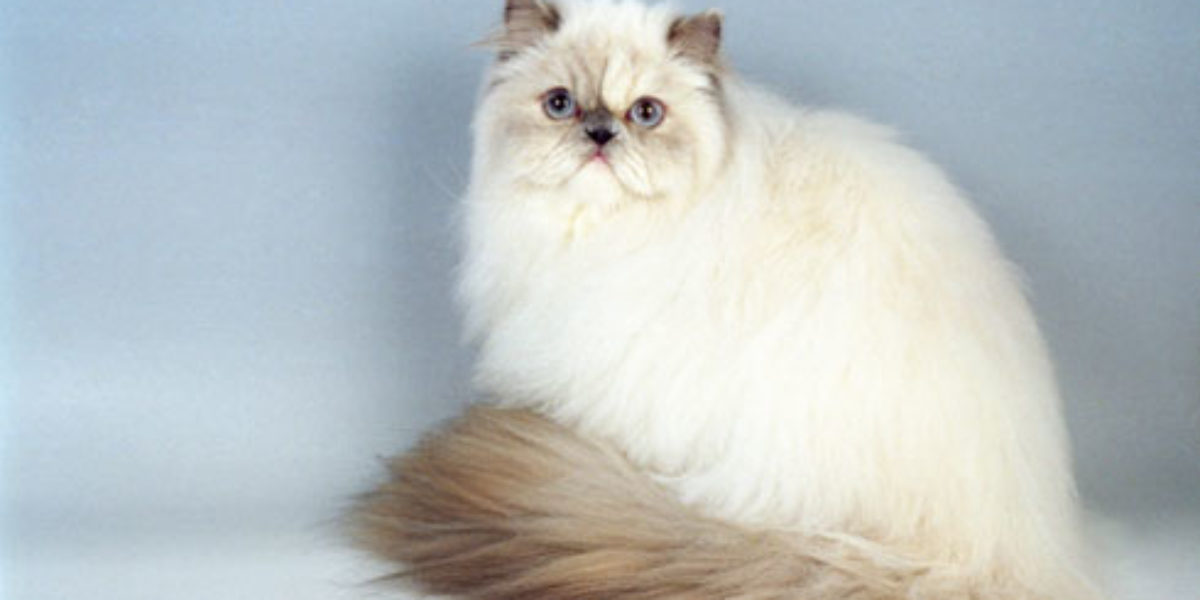
Himalayan, also called colorpoint, or colorpoint, breed of domestic cat with the coloring of the Siamese and the build and coat of the longhair, or Persian. The Himalayan is produced by matings between Siamese and longhairs followed by selected breeding of the offspring to bring out the proper coloring, coat, and build. A good Himalayan is cobby and short-legged with long, soft fur, a broad, rounded head, and round blue eyes. Born cream-colored, it later develops the darker points (ears, face, legs, and tail) of the Siamese. The points, as in the Siamese, maybe deep brown (seal point), lighter brown, blue-gray , pinkish-gray , or reddish-orange .

18.jaguar:
undefined
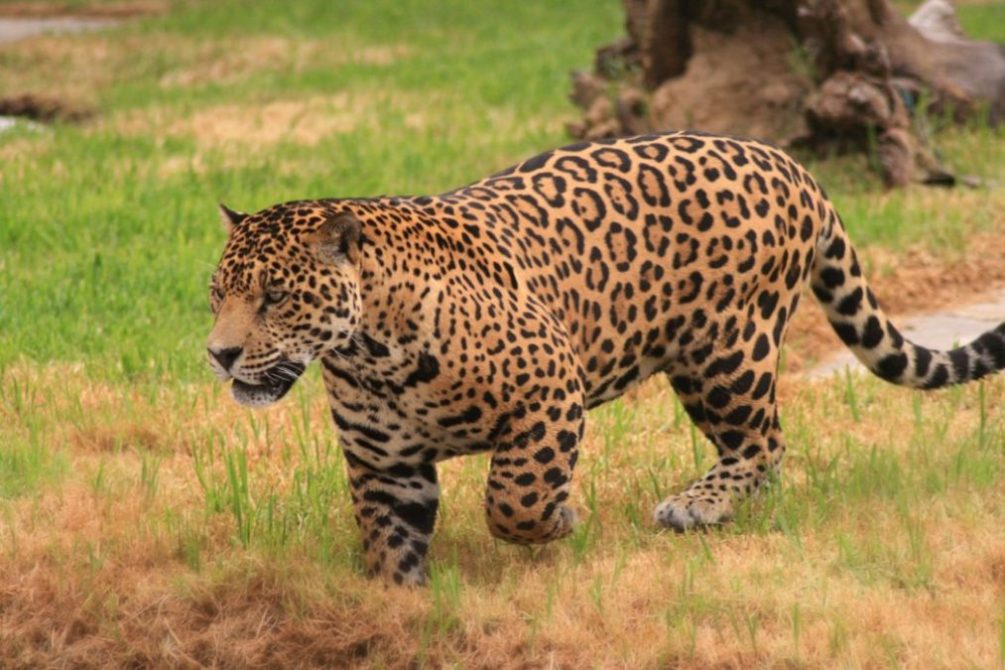
Jaguar also called el Tigre or Tigre americano, the largest New World member of the cat family, once found from the U.S.-Mexican border southward to Patagonia, Argentina. Its preferred habitats are usually swamps and wooded regions, but jaguars also live in scrublands and deserts. The jaguar is virtually extinct in the northern part of its original range and survives in reduced numbers only in remote areas of Central and South America; the largest known population exists in the Amazon rainforest.

19.jaguarundi:
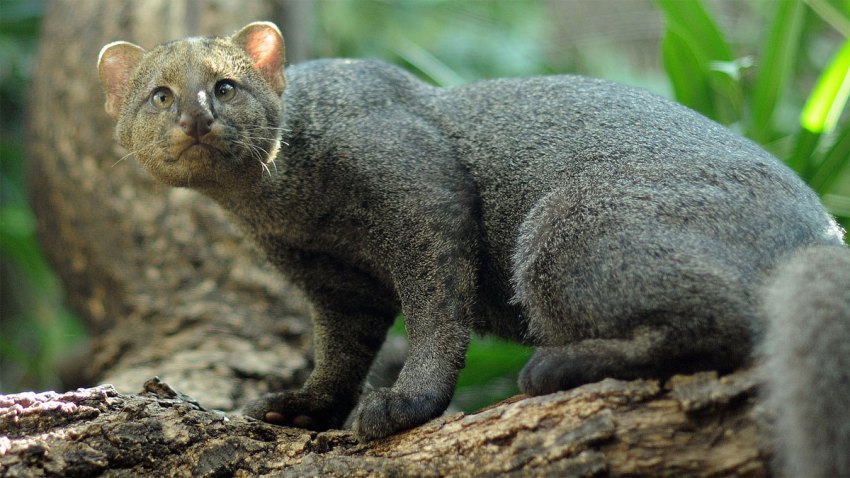
undefined
Jaguarundi, also spelled Jaguarondi small, unspotted New World cat (family Felidae), also known as the otter-cat because of its otterlike appearance and swimming ability. The jaguarundi is native to forested and brushy regions, especially those near water, from South America to the southwestern United States; it is, however, very rare north of Mexico.

20.leopard:
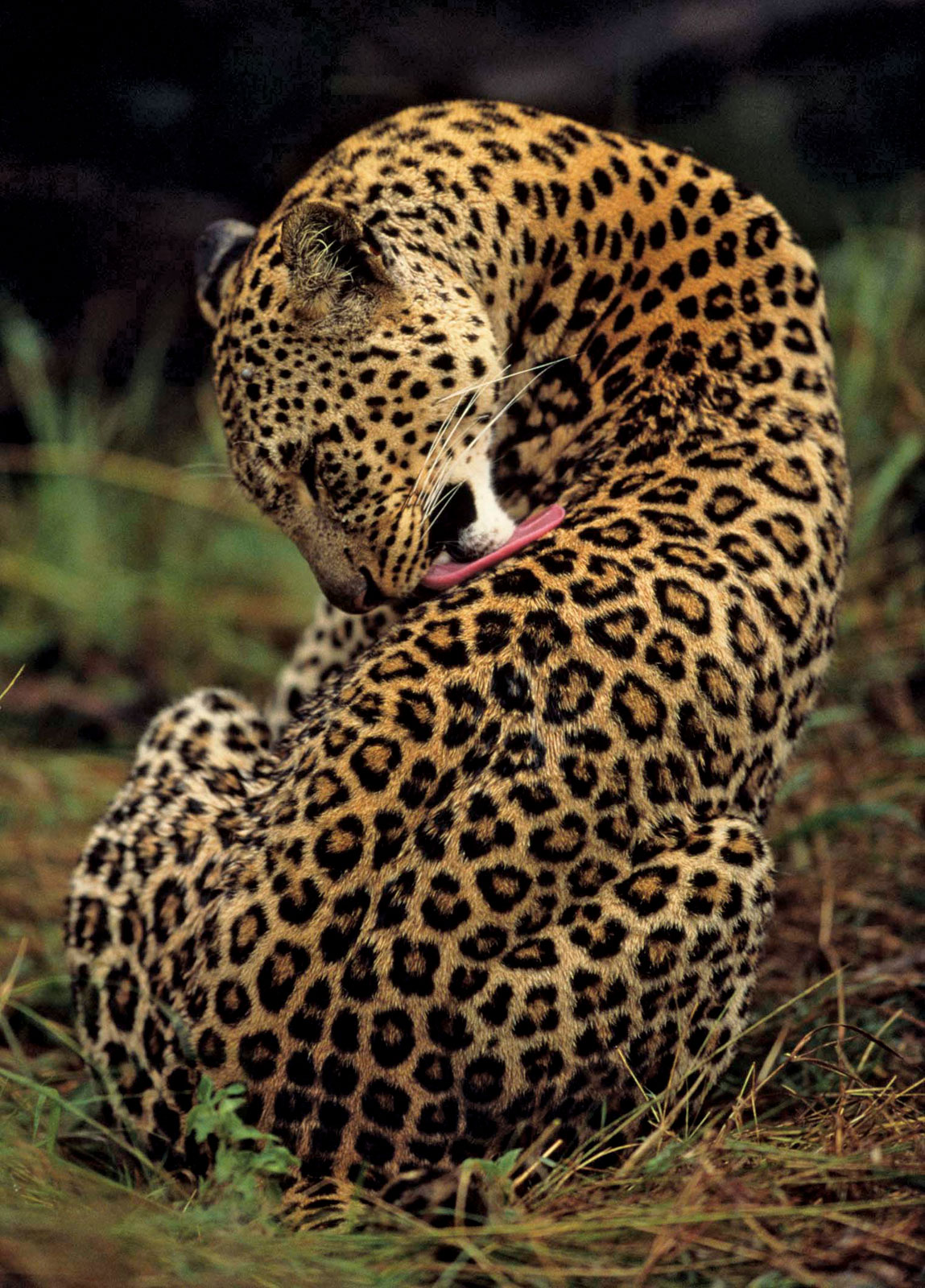
undefined
Leopard also called a panther, large cat closely related to the lion, tiger, and jaguar. The name leopard was originally given to the cat now called cheetah—the so-called hunting leopard—which was once thought to be a cross between the lion and the pard. The term pard was eventually replaced by the name leopard.

21.leopard cat:
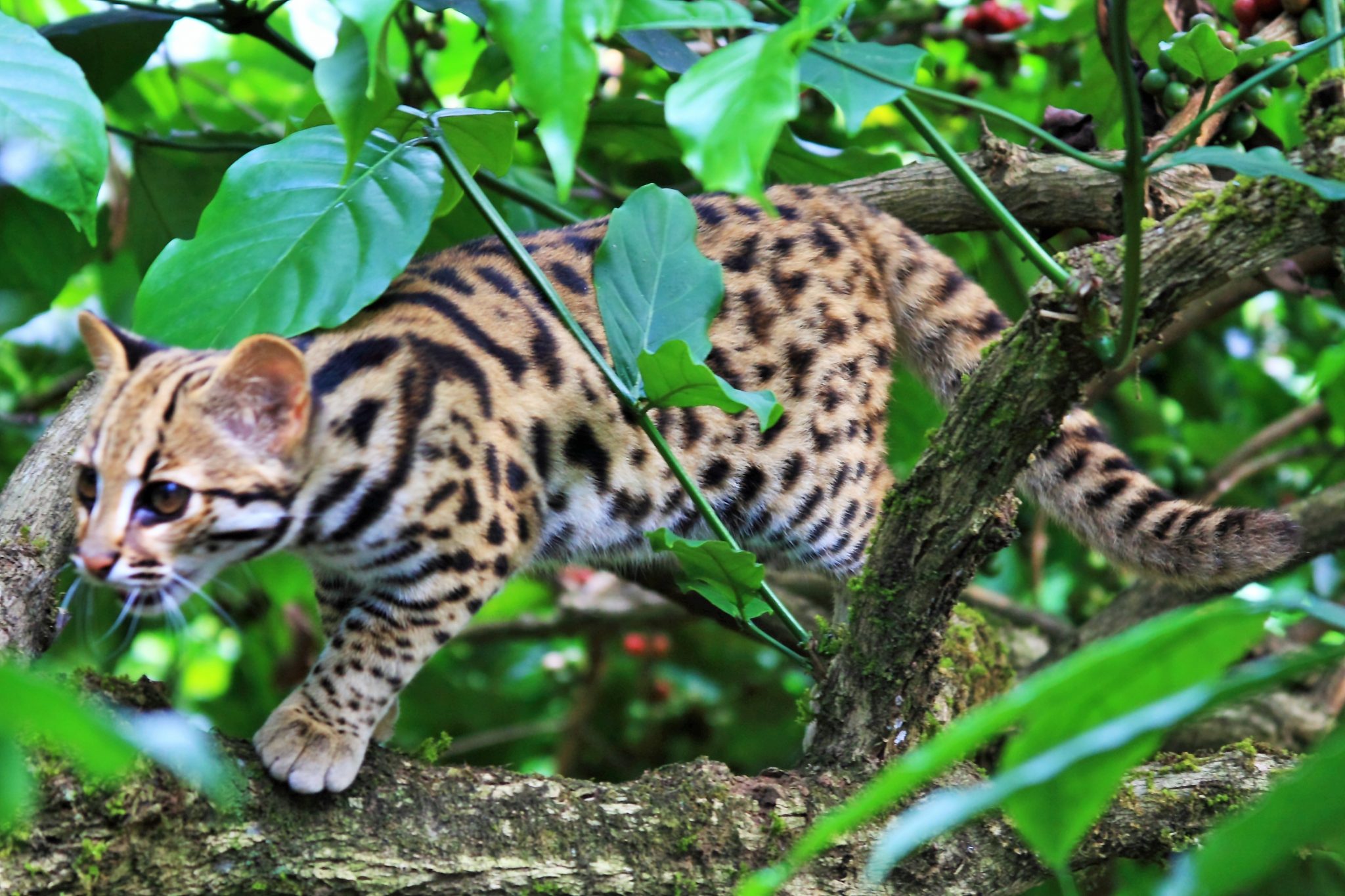
undefined
Leopard cat forest-dwelling cat, of the family Felidae, found across India, Southeast Asia, and nearby islands. The leopard cat is noted for its leopard-like coloring. The species is generally divided into one mainland subspecies, P. bengalensis bengalensis, and several island subspecies—including P. bengalensis borneoensis in Borneo, P. bengalensis Heaney on Palawan, P. bengalensis rabori on the Philippine islands of Cebu, Negros, and Panay, P. bengalensis javenensis on Bali and Java, and P. bengalensis sumatranus on Sumatra and Tebingtinggi.

22.liger:
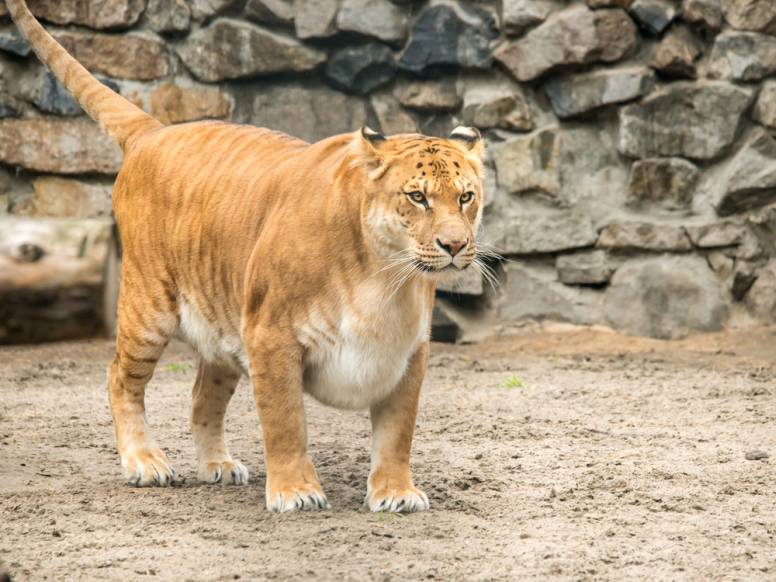
undefined
Liger, offspring of a male lion and a female tiger. The liger is a zoo-bred hybrid, as is the tigon, which is the result of mating a male tiger with a female lion. The liger and the tigon possess features of both parents, in variable proportions, but are generally larger than either. It is thought that most, if not all, male ligers and tigons are sterile. The females, however, on occasion, may be able to produce young. The terms liger and tigon are portmanteaus of the words lion and tiger.

23.lion:
undefined
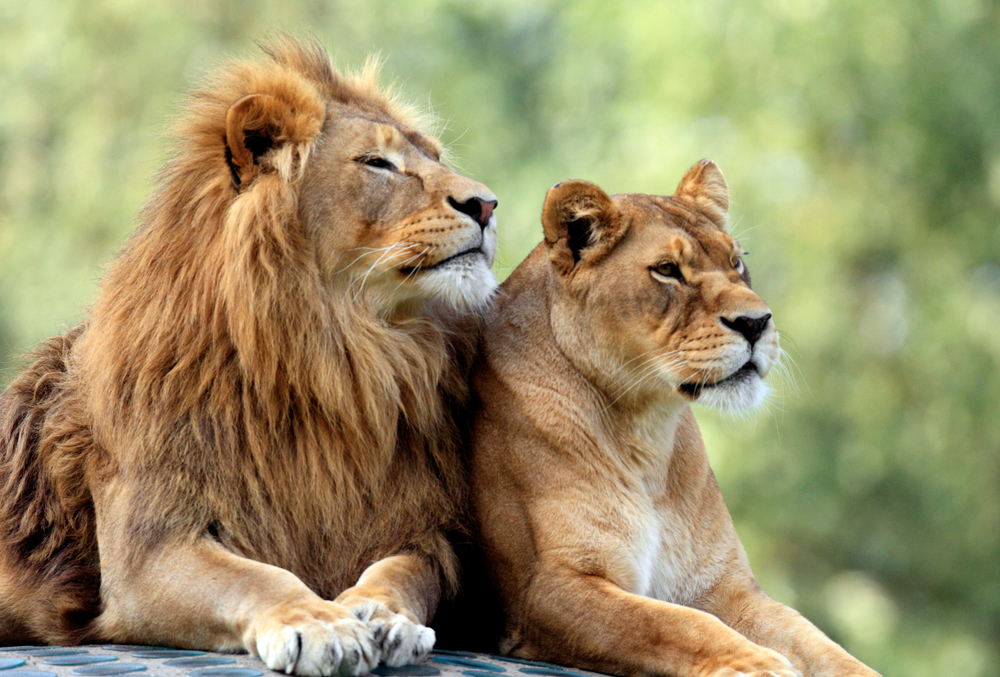
Lion is large, powerfully built cat that is second in size only to the tiger. The proverbial “king of beasts,” the lion has been one of the best-known wild animals since the earliest times. Lions are most active at night and live in a variety of habitats but prefer grassland, savanna, dense scrub, and open woodland. Historically, they ranged across much of Europe, Asia, and Africa, but now they are found mainly in parts of Africa south of the Sahara. An isolated population of about 650 Asiatic lions constitutes a slightly smaller race that lives under strict protection in India’s Gir National Park and Wildlife Sanctuary.

24.longhair:
undefined
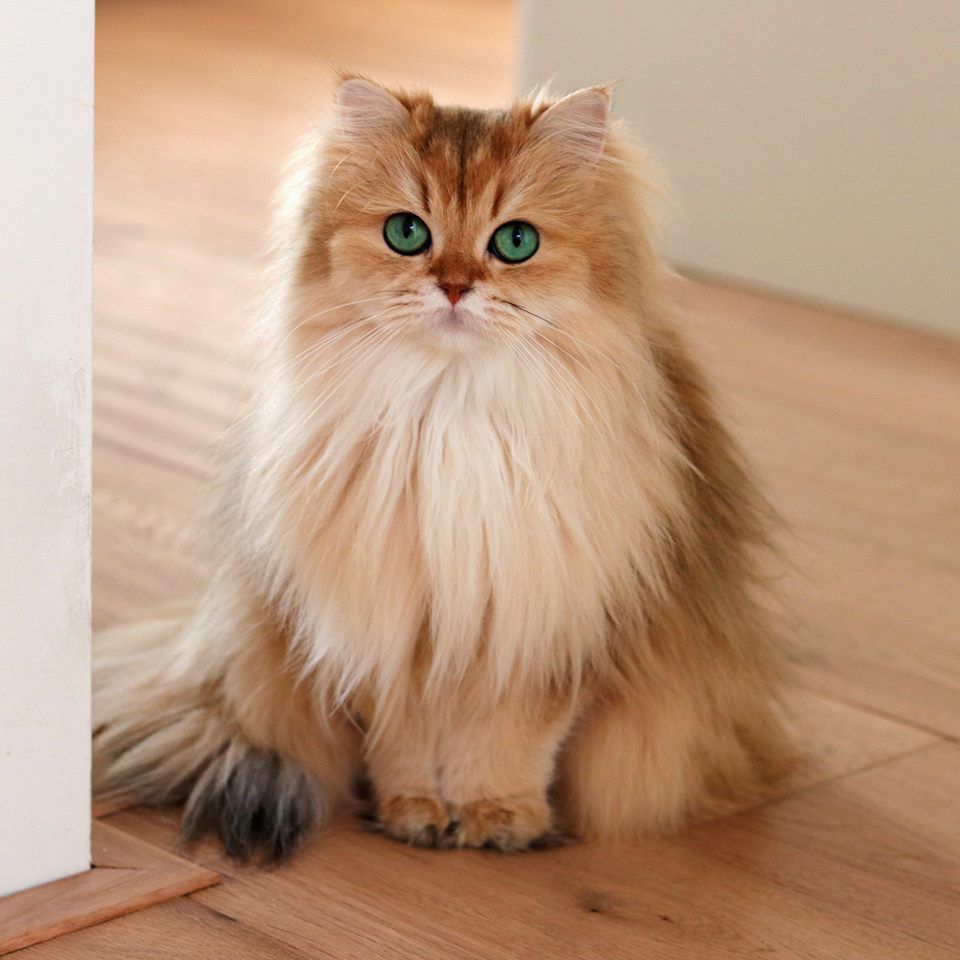
Longhair, also called Persian, breed of domestic cat noted for its long, soft, flowing coat. Long-haired cats were originally known as Persians or Angoras. These names were later discarded in favor of the name longhair, although the cats are still commonly called Persians in the United States. The longhair, a medium-sized or large cat with a cobby , short-legged body, has a broad, round head, a snub nose, and a short, heavily haired tail. The large, round eyes may be blue, orange, golden, green, or copper-colored, depending on the color of the cat. The soft, finely textured coat forms a heavy ruff about the neck.

25.lynx:
undefined
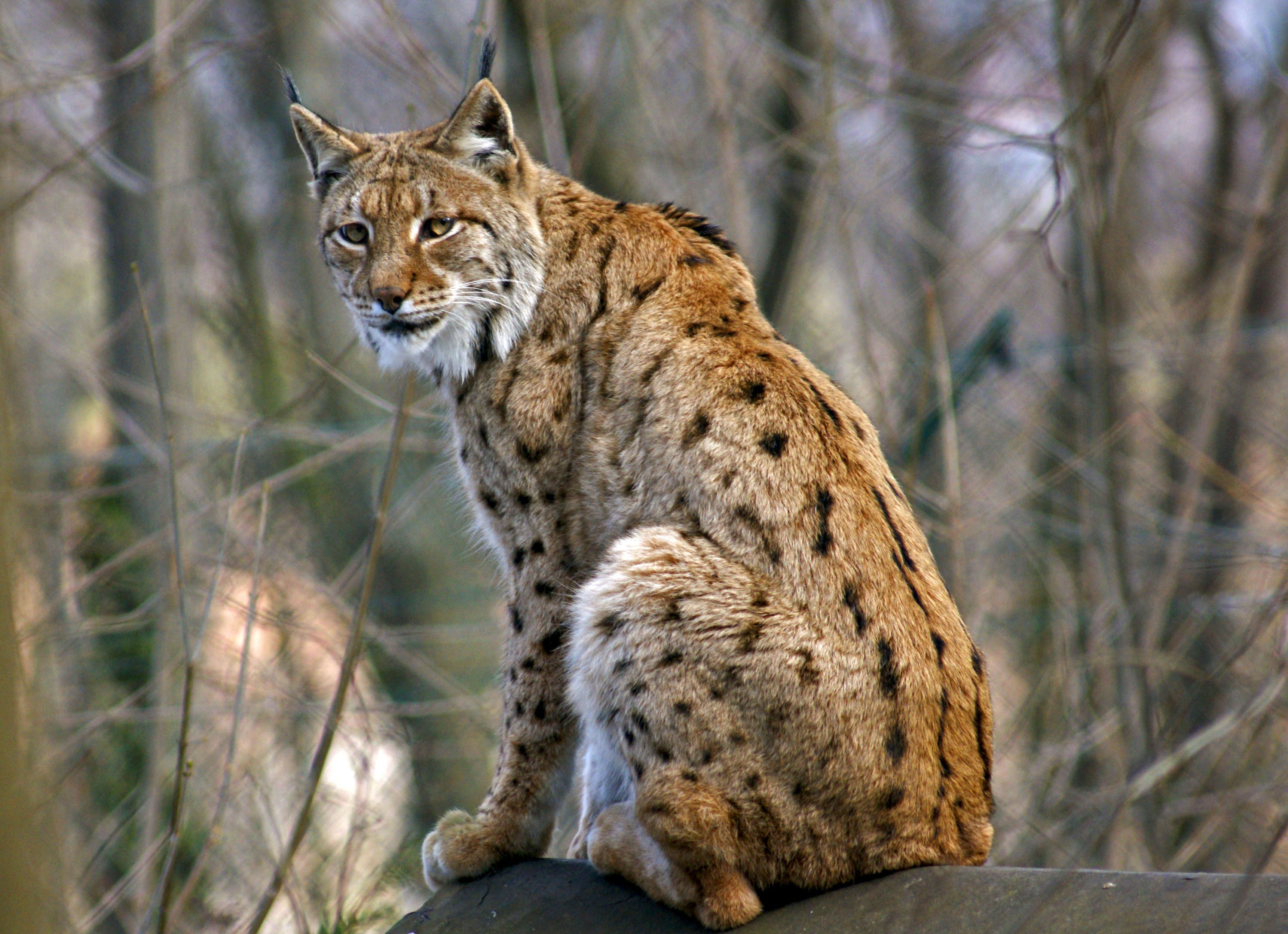
Lynx, (genus Lynx), any of four species of short-tailed cats found in the forests of Europe, Asia, and North America. The Canada lynx and the bobcat live in North America. The Eurasian lynx and the Iberian lynx are their European counterparts. The Iberian lynx is the most endangered feline; as of 2013, possibly fewer than 300 individuals remained in the mountainous scrubland of southern Spain.

Nepotism in Bollywood.

Nepotism in bollywood has reached another level of toxicity. Ever since the demise of the bollywood star sushant singh rajput there is anger among the fans and audience as to why did sushant singh rajput kill himself and the fingers have been ultimately raised towards the industry on why on the first place was the star in depression which was the major cause of his death. It was reported that sushant singh rajput was not invited to any of the big parties and was ultimately ignored by the bollywood industry. One of sushant singh rajput’s friend wrote on instagram describing the star saying that he hated fake friends,phone calls and small talk. He didnt need a campus, he had his own kingdom. She also added that his friend was a fighter and made his own place in the industry. He was an outsider and never cared about being an insider as he had life beyond films. She was left in sorrow as she added that her friend was a fighter. Sushant singh rajput told that he used to be back ground dancer and it shows how much the person had struggled.

The focus has shifted to the topic that how talented actors are made to struggle in the industry where as the starkids are being launched just because of nepotism. The fingers are mainly being raised on the director karan johar who was called as the flag bearer of nepotism by kangana ranaut on his own show of coffee with karan. Karan has launched some of the star kids like alia bhatt and varun dhawan. Lets see what some of the star kids think of nepotism.

1- Alia bhatt

As some of the star kids admit there’s nepotism, some deny it. Alia Bhatt, daughter of famous film director Mahesh Bhatt, once said she feels like punching people who talk about nepotism. Having made her debut with Karan Johar’s Student of The Year in 2012, Alia has established herself as an accomplished actress.

“I want to punch all those people who say that star kids have it easy because it makes no sense. The way the world is today, either you have it or you don’t.”

2- Tiger shroff

Tiger Shroff, son of popular actor Jackie Shroff and known for his dance moves and action stunts, told GQ Magazine revealed he would have never made it to acting, if he had to go through an audition. Sajid Nadiadwala happened to ‘find’ him.

“Had there been one, I wouldn’t have got it anyway.”

3- Sara Ali khan

Sara Ali Khan, daughter of Amrita Singh and Saif Ali Khan, has acknowledged that nepotism exists in Bollywood. However, she believes that one can stay in the business only if they work hard. This is what she had to say on nepotism to India Today.

“I definitely believe that knowing people in the industry does help. That’s not a fact that I can run away from. I’ve often admitted to the fact that the biggest advantage of nepotism is the fact that we have easy access to people. I can call up Karan Johar without doing any film. I can go to Rohit Shetty’s office. So these are privileges I’m well aware of.”

4 – Ananya pandey

Ananya Pandey, daughter of actor Chunky Pandey, debuted with Karan Johar’s Student of The Year 2 and has defended nepotism on several occasions. She was badly trolled as well.

When people hate on me for nepotism, I’m not going to shy away that I’m Chunky Pandey’s daughter. My Dad has worked really hard and he’s still working. My Dad never did a Dharma film, my Dad never went on Koffee with Karan. It isn’t as easy people say it is. Everyone has their own journey.”

The movie Om shanti Om which starred the famous Bollywood King khan Sharukh khan had unknowingly shown the product of nepotism as when Shahrukh khan had tried to act with the same set of skills when he was born in a poor family he failed. But with the same set of skills when the star was reborn as a star kid he was launched easily.

Wise Device: Cellphone

Earlier people had to wait to send and receive a message where was a chance of losing the cognitive and emotional connect, which has now reduced to zero with the invention of mobile phone.  Apart from enhancing social connection, mobile phones are widely used in industry work that saves time and money as well.  But today, Men have come a long way in technological advancement with time that has affected our life and has changed it in many ways.  World has become a global village where many things seems to be just a click away. Life has become more convenient and easy with it and undoubtedly one of the major being invention of mobile phone.  Anytime-any place, is what defines a cell phone as it is one of the portable and fast medium of communication. Or in other words it can be said as, one of the major invention that has become the lifeline of the masses. It has brought communication revolution around the world and changed the way people connect to each other. Previously it was just a device used to receive and send a message but with the evolution of internet it has become a multitasking device used for various purposes making it more impactful in both good and bad sense. Earlier people had to wait to send and receive a message where was a chance of losing the cognitive and emotional connect, which has now reduced to zero with the invention of mobile phone.  Apart from enhancing social connection, mobile phones are widely used in industry work that saves time and money as well.

Previously it was just a device used to receive and send a message but with the evolution of internet it has become a multitasking device used for various purposes making it more impactful in both good and bad sense.

Be it information, entertainment, education, mobile phones have now become a portable computer that can perform many task in one go. It is best device to boost up knowledge on any particular topic be it a subject-related or any issues and happening around the world. Nothing can be a better choice for social gathering than mobile phone these days as its makes people more approachable amid friends and relatives. It’s a best device to socialize anytime soon. Life seems little less complex with the invention of mobile phone.

But as the coins have the other side- mobile phone too has its demerits. Easy access on internet has also made it a device for isolation. Teenagers and adults can be witnessed frequently messaging, gaming, posting updates, clicking pictures or else watching videos and listening music.  According to a survey on the most popular smart phone activities in India 2017 almost 50 percent of the respondent accessed social media via mobile. India recorded the world’s highest number of selfie death, accounting more than any other countries in the world.

High use of mobile phone is leading to health issues as well.  People who tend to use mobile phone on bed seem to have interrupted health and sleep disorders.  Children are becoming more dependent on search engines rather than being creative. It is affecting their creative skill making them dependent on internet. Frequent use of mobile phone is killing absorption as frequent notification, messaging is emerging as a disturbing agent and is killing concentration of the people. Mobile has its impact of people life style and living habit as people have become more fake and cunning.  Like any other technology, mobile phones too can be a choice to lead a good life but as said excess of everything is bad.

YOGURT- a fermented milk product

Yogurt is a basic fermented milk product that usually contains the basic bacterial starter cultures of Lactobacillus bulgaricus and Streptococcus thermophillus.
Although the composition of different types of yogurts changes but there is some fixed composition of fats present in them. It is important to note that all yogurts must contain at least 8.25% of solid which is not fat. The fat composition changes with the type of yogurt like full fat yogurt must contain not less than 3.25% of milk fat whereas low fat yogurt must not contain more than 2% milk fat. Also there is a category of non fat yogurt where the fat composition is even less than 0.5%.
The yogurt is basically a mixture of milk and cream which is then fermented by using a culture of Lactic acid producing bacteria. The types of milk which can be used are whole, reduced-fat, low-fat or non-fat depending on which the type of yogurt is decided. The lactic acid produced by the starter culture bacteria is basically responsible for lowering the pH of the yogurt making it acidic and tart. This finally causes the milk protein to thicken. These bacteria ferment the milk which results in the production of yogurt leads to partial digestion of the milk making it more easily digestible. In addition, these bacteria also act as a beneficial microorganisms for the human body as they act as oral-antibiotic therapy and helps in eliminating the pathogenic-bacteria from the gut and replenishing the non-pathogenic bacteria.


Ingredients of yogurt
Milk
Cream
Sweeteners (e.g. sugar, honey, aspartame, etc)
Flavorings (e.g. vanilla, coffee, etc)
Other ingredients (e.g. fruits, preserves, stabilizers such as gelatin)

Types of yogurt –

  1. Set yogurt – This type of yogurt has a jelly-like structure and texture and is incubated and cooled in a final package.
  2. Stirred yogurt – This type is less firm than set yogurt. It is incubated in a tank and final coagulum is broken by stirring before cooling.
  3. Drinking yogurt – It also has coagulum broken before cooling though very little reformation of coagulum will occur.
  4. Frozen yogurt – This type of yogurt is incubated in the same way the stirred yogurt is incubated. It has an ice-cream like texture.
  5. Flavored yogurt – In this type of yogurt, flavors are added just before yogurt is poured into pots and the sugar content present in this type of yogurt is about 50%.

General processing of yogurt

  1. Adjusting milk composition and blending all the ingredients
  2. Pasteurization of milk (at 85 degrees celcius for 85 minutes)
  3. Homogenization of milk (2000-2500psi)
  4. Cooling of milk to 42 degree celcius
  5. Inoculation with bacterial starter cultures into the cooled milk
  6. pH reduction by waiting for sometime
  7. Again cooling to 7 degree celcius
  8. Addition of fruits and flavors
  9. Packaging of prepared yogurt.

Health benefits of yogurt:
• Yogurt is comparably easier to digest than milk.
• It is rich in variety of vitamins.
• It is a rich source of protein.
• As it is source of protein, it may help in losing weight and gain muscles.
• It acts as a booster for immune system
• It is also important and useful for digestive system. It destroys the pathogenic microorganisms from the gut.
• It is good for bones especially for kids and elderly
• It may also be useful in lowering the blood pressure.

URBAN LIFE PERILS

Whenever we think about life in a metro or living in an urban area, we realise that we have everything. All that comfort, luxuries that contribute to a healthful lifestyle; opportunities, infrastructure, restaurants, big hotels, malls, hospitals and life represents progress. However, every coin has two sides, the opposite side of the concrete jungle is less than desirable. We have advanced cars but a lot of traffic and pollution; huge buildings but less open space, money and facilities but never satisfying desires, education and opportunities and more stress and depression in life. We have our McDonalds and Pizza Hut with them we have obesity, diabetes, cholesterol issues too. People work over 10 hours a day and have no time for themselves or their family. These problems are a result of an occupational hazard in cities as people are stuck in a never-ending rat-race.

In the advanced setup of an urban area, life is being run by technology, and we are all slaves to it. Our WhatsApp, Facebook, Skype has consumed most of our time and thoughts, and while we are virtually closer, we are physically farther than ever before. People are victims of impatience and lack of tolerance, and so confront emotional issues. A proper healthy diet and lack of exercise are standard characteristics of urban lifestyle. Life in a metro offers economic efficiency and a better lifestyle, but what is wealth without health?

The glamour, neon-lit nights, glitz of urban life appeals to us no doubt, but if we want the pleasure, we must take it with the pain. Everyone from a school going child to a worker to businessman is under performance pressure. We have created it for others and ourselves too. Our desires are bringing heftier bills, costs and expenses that sometimes leave us with stress. These stresses lead to diseases, and we look for gym, spas, health courses, yoga classes, and we burn more cash for the illnesses that we created for ourselves. There is less green cover in urban life and how much time do we spend with the left nature, the one we have? We have also developed a culture of isolation. We spend much time on television and on laptops. We keep ourselves distant from people around us because we love spending time with these electronics than we do with people. We isolate ourselves.

Every afternoon, evening and night, we take a fresh breeze of pollution because there is not much fresh air left. What do come comes in the morning and our late-night work, associations and morning affairs do not give us time to enjoy that either. There was a time in the 1990s and early 2000 when kids could move about one ground in an urban city and play cricket, badminton, or anything and now we don’t have space, and when they play this in colony parks, the older people send them away. There was a time when a Rs 2 Kismi bar appeared to be a delight and now the time has changed, areas are more urbanised than ever, and a bar of Cadbury Dairy Milk does not satisfy an appetite. Even in an urban setting, there was a time when few had TV and people used to collect at this person’s place. Now since everyone has everything, nobody needs humans anymore.

Life in an urban city is materially incomparable; it is just great. We are part of a privileged generation which gets to live in this setting. However, we must learn the values of humans, our environment, and we must make the other side of this coin better because we are responsible for giving a beautiful urban life for generations to come.

Is Uniform Civil Code really needed ?

Uniform civil code

Uniform civil code is undoubtedly one of the most debatable topic, which can basically be derived from Indian constitution which mandates to replace personal laws based on the scriptures and customs of each major religious community in India with a common set of rules governing every citizen. Mainly their personal laws like laws of marriage, divorce , adoption , maintenance.

Uniform Civil Code (UCC) is defined in our Constitution under Article 44 of Directive Principles of State Policy. In almost India there is no state to apply these special provisions but In Goa which is the only state which has a common family law and 1954 Special Marriage Act allows any citizen to marry outside the realm of any special religious personal law.

The British Government in 1840 on the basis of Lex Loci report had framed many laws bit personal laws were left out intentionally. This era many reformers were raising voice for the for making laws against the women discrimination like sati etc. so the formation of many laws were done and they refuting themselves would result in the proper dysfunctioning ,which they knew, at the panchayat level .

Then comes the period of 1946 where B.R Ambedkar the chairman of the constitution assembly wants to regulates all these personal laws by uniform civil code but some minority groups and communities like of Muslims protested against it, As a result only one line is added in the Constitution under Article 44 in Part IV of DPSP. The main reason was minority mainly Muslims felt that minorities mainly Muslims felt that their personal laws are violated or abrogated by it.

As the secondary result of these the series of Bills were passed to codify Hindu laws in the form of Hindu Marriage Act, 1955, The Hindu Succession Act, 1956, The Hindu Minority and Guardianship Act, 1956 and the Hindu Adoption and Maintenance Act, 1956, are collectively known as Hindu Code Bill (covers Buddhist, Sikhs, Janis as well as different religious denominations of Hindus). On the other hand, Muslim personal laws are still primarily unmodified and traditional in their content and approach. The Shariat law of 1937 governs the personal matters of all Indian Muslims in India. It clearly states that in matters of personal disputes, the State shall not interfere and a religious authority would pass a declaration based on his interpretations of the Quran and the Hadith.

Some merits of UCC are that it applies this would keep us integrated. No one feel discriminated because he or she comes from another religion. Uniform Civil Code will provide women with the right to equality and justice in courts of law- irrespective of their religion in matters pertaining to marriage, divorce, maintenance, custody of children, inheritance rights, adoption, etc. A unified code is imperative, both for the protection of the vulnerable sections in Indian society(women and religious minorities) and for the promotion of national unity and solidarity.

Some of the demerits are that Due to diversity in India it is somewhere tough to come up with a common and uniform set of rules but our Government is trying to come up with common rules. also, In personal matters, interference of state. As the constitution provides for the right to freedom of religion of one’s choice. But with the codification of uniform rules and it compulsion may reduce the scope of the freedom of religion but altogether UCC is tough task but not impossible.

MRI

As medical sciences is getting better everyday it is mostly focussing more and more on the specific organ or part of the body having problem rather than doing a trial and error medication. For this it is really important that the doctors have the knowledge of the specific area of problem and body scanners do serves this purpose. They scan the body and develops the image of the inner body organs. There are many scanners out there like

  1. X- rays – This is the most common method used to scan the injured bones, the rays are used as they are blocked by bones and dense tissues of the body.
  2. CT scan – Also called computed tomography this is used to get detailed view of blood vessels and  organs in the body.

Third most important scanning technique is the MRI whose full form is  magnetic resonance imaging, the technique was invented in 1972 by Felix Bloch and Edward Purcell. Although in the early years this scanning technique was not used in human body, perhaps this idea was put by Raymond Damadian as he showed the doctors a way to actually use MRI to detect tumors. After some years of developing the machine so as to use it on human, in 1977 it was the first time that MRI was used on humans.

Physics behind MRI scanning

MRI is claimed to be better than CT scanning as it gives more detailed images of the body parts. Another important difference is MRI do not use radiations as CT or X-rays, as exposure to radiations can be a bit risky and especially X-rays can be harmful for pregnant women.

As we know about 60% percent of our body is  composed of water and chemical composition of water contains 2 hydrogen atoms and one oxygen atom. The hydrogen atom has one proton and one electron, and the nuclei has a characteristic  precession  because of which the magnetic moment  is created. when the body is exposed to a magnetic field of 1.5 to 3 Tesla, these magnetic moment aligns to the direction of magnetic field as the nuclei starts precessing about the magnetic field they are exposed to, this precession is called larmor precession. The frequency of the precession is proportional to the applied magnetic field. Next a radio frequency pulse is applied  which is equal to the frequency of the larmor precession, this causes the energy exchange and as they are in resonance. This causes the direction of magnetic moment to tilt a bit in the direction of the radio frequency pulse applied and when this radio frequency pulse is removed it tends magnetic moment to again come back to its position that is to align in the direction of the magnetic field . As this happens the nuclei emits its own radio frequency pulse, and different tissues in the body gives out different Radio frequency pulse. To detect this pulse  the body is covered by a coil which detects these pulses and these are converted to an image using the computers which uses mathematical methods like fourier transformation. This results in the highly accurate image of the body parts.

Though MRI is simple and has less risks like all these years pregnant women take MRI scans and there has not been any report of  any abnormalities while the child is born, but there are some precautions to be taken as follows

  1. Make sure one does not have any magnetic objects while going into the room
  2. There are many patients who fall sick after MRI, it is really normal because of the sedative given before the scan
  3. One should never move while MRI scan is been taken.
  4.  One should avoid driving after he or she has taken  MRI scan.


“Mutations In Corona Virus-Leading Towards Second Wave?”

Current era we are living in is a time of pandemic which is  spread all over the world, infecting millions of people and thousands of people losing life. The hike is growing day by day with no proper vaccines  and cure to it. There have been various studies and ways to test this disease. But various scientists are concerned about something which is surely not good news for people around the world. They believe that the spread of Corona-virus is increasing with its increase in mutation. Mutation is a phenomenon which means the change in the DNA sequence and this mutation can be due to mistake while Copying Of DNA to another cell or due to environment factors as a source of change and adapting the surrounding. 

There have been countries where this pandemic has been eradicated and some places where it is seeing a general downfall in its rate, while there are countries on the contrary and are seeking hikes day by day. Scientists believe that corona-virus may be mutating while it replicates from one individual to another. But the interesting fact is that these viruses or bacteria do mutate every time which means they do  and can change themselves while they get transferred from one person to others we know then need a host to be alive. Virus can be thus simply explained as anything that things that infect us and thus make us sick. Scientists believe that this Covid-19 virus is made up of RNA or Ribonucleic acid which is the building block of life and carry codes which do for a living organism. So this mutation happens when the sequence changes. When these viruses make mistakes in copying their code, they can’t reverse it which man’s that once it gets changed it will be the same forever, and this change goes on happening as it grows . Scientists have come up with discoveries reflecting the mutation process in this Covid- 19 virus

  1. It is believed that the mutation changes are very small and the person would be feeling the same symptoms as present in the older cases. 
  2. But mutation could be an area of concern while testing, as it may be possible that the technique we use for testing it may not be able to catch the mutation and thus gives us a negative result while it is still being present inside the body. 
  3. Also the possibility exists to find a vaccine solving the older virus while the new mutated virus still survives . So there needs to be advancement with time for testing technique, and at least twice a person should be tested so as to get a proper report. 
  4. This change in mutations and their known symptoms could also help the doctors to prepare the vaccine more accurately and effectively. 

But there are biologists that believe that mutations of covid-19 virus are small and their change remains mostly the same. So this could be a strong  reason which could give a reason to start the “Second wave” of virus, with much improved mutated virus. “So scientists and biologists need to remain updated with any change in the characteristics of these viruses, catch their mutations, track them and thus use them to find a proper vaccine and way out other than social distancing and thus save humanity from this deadliest virus and its spread”. 

World’s expansive sports…

We know that trends are currently much changed in the world and people are more engaged in sports. Games are an ideal approach to unwind from the regular schedules and accomplish something else. For the most part, pros say that games keep the general people healthy and useful for the psyche too. There are numerous sorts of games, in which some of them can be effortlessly played at home with everything utilized as a part of them yet a few sports are expensive and hard to play at home. These sports are led through some amazing competitions and shows to show them everywhere throughout the world. Anybody can partake in these sorts of games if he or she is equipped for playing them.

All another typical type of sports can be played whenever however these can’t be played or can’t be taken as a profession. Everybody has no entrance in these sports because of their uniqueness. The most critical thing in every one of these sports is cash without which these sports are unrealistic. Every one of these sports is continuously connected with the exclusive class as they can manage the cost of them.

Here some sports, which are expansive

1.The Whitianga Festival of Sports:

undefined

It is very famous sport that is conducted in New Zealand in every year. It has helicopter used in it, boat, ski racing and helicopter racing as well. In this sport there is basically a competition between one another. Owning and keeping the equipment for this game are very expensive and requires about millions of dollars. It is the most expensive sports teams in the world as well. the boat used in this game cost around $20,000 to $2 million.

2.Ski Jumping:

undefined

Ski jumping is a very famous and interesting sport in the world. The equipment used in this sport can cost about $2,500. The recreational ski jumping is very expensive and can only be affordable by the rich people. A jumper has to spend almost $100,000 to go for this ride. It is also ensured because of the high risk in this game.

3.Formula 1:

undefined

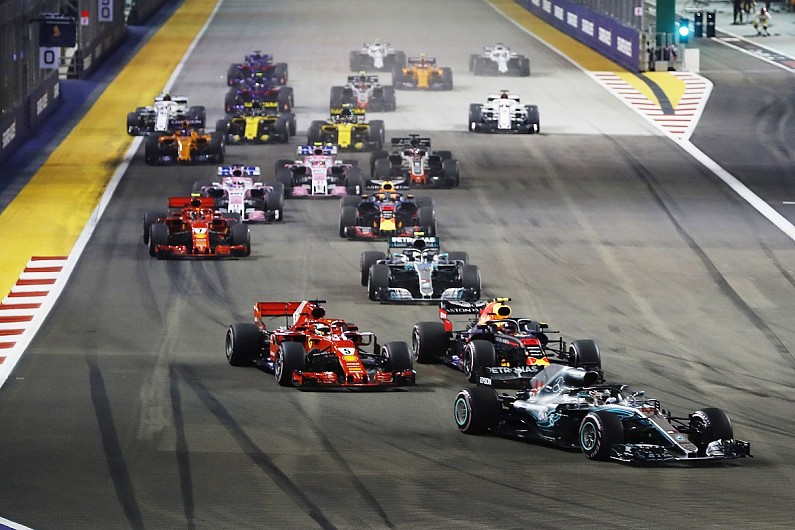
Yes, cars can be cheap if you search patiently and diligently for the right deal. That rule doesn’t apply to Formula 1 cars. Each Formula 1 car may cost over $1 million. Even if you want to drive someone else’s car, you will still need to bring your own sponsors with deep pockets. Sometimes, the minimum sponsorship requirement can be as high as $190,000. Oh, and these Formula 1 car are extremely fragile as well. So the insurance premiums on the cars are going to be astronomical. There’s no wonder that this sport zooms right up to the top of the most expensive sports in the world list.

4.Hot Air Balloon Racing:

undefined

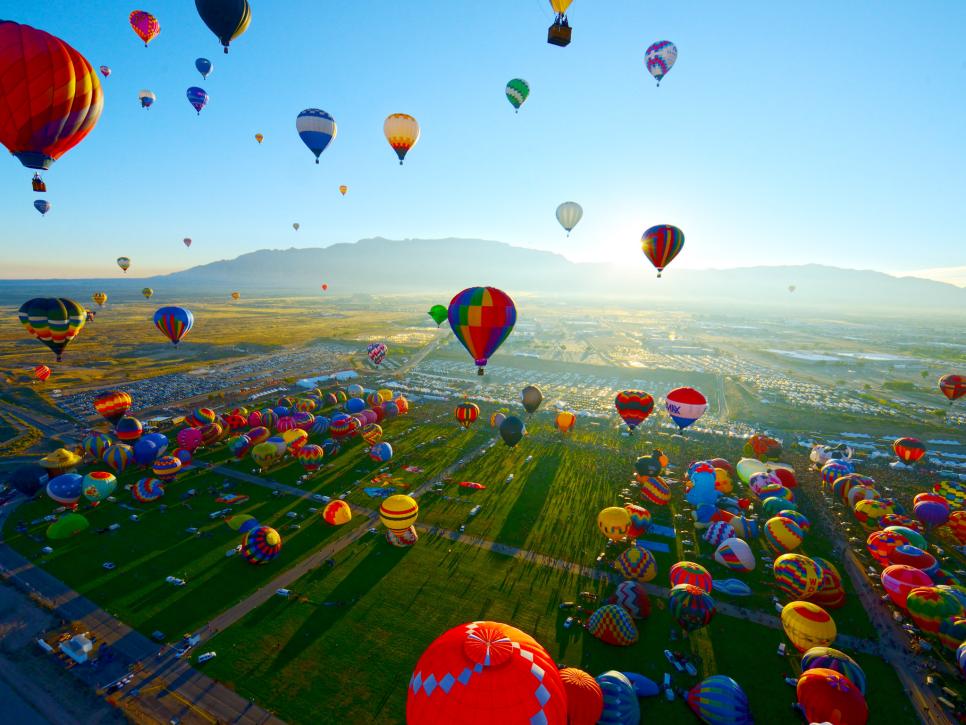
Most people did not know about the hot air balloon races in the world or it is basically a sport. An individual has to pay $300 for one hour ride on the balloon. Most people participating in them own their own balloons which are very expensive. A hot air balloon cost about $20,000 if purchased. Some measures must be adopted to participate in this sport like safety measures. The cost of training a pilot on these balloons cost about $3000 to go on these balloons.

5.Polo:

undefined

Polo is a very famous sport also in countries like the UK. This sport is always associated with the upper class and rich people due to its high cost. Its cost is high as expenses on a horse their maintenance and all others are very high. Mostly polo players have to keep 4 horses in order to keep some as a backup plan. The matches conducted for polo can cost almost $150,000. Mostly polo matches are sponsored by famous companies that cost up to $1,000,000 which is very expensive and high charges. The one problem in this sport it causes many serious injuries to the polo players.

6.Sailing:

undefined

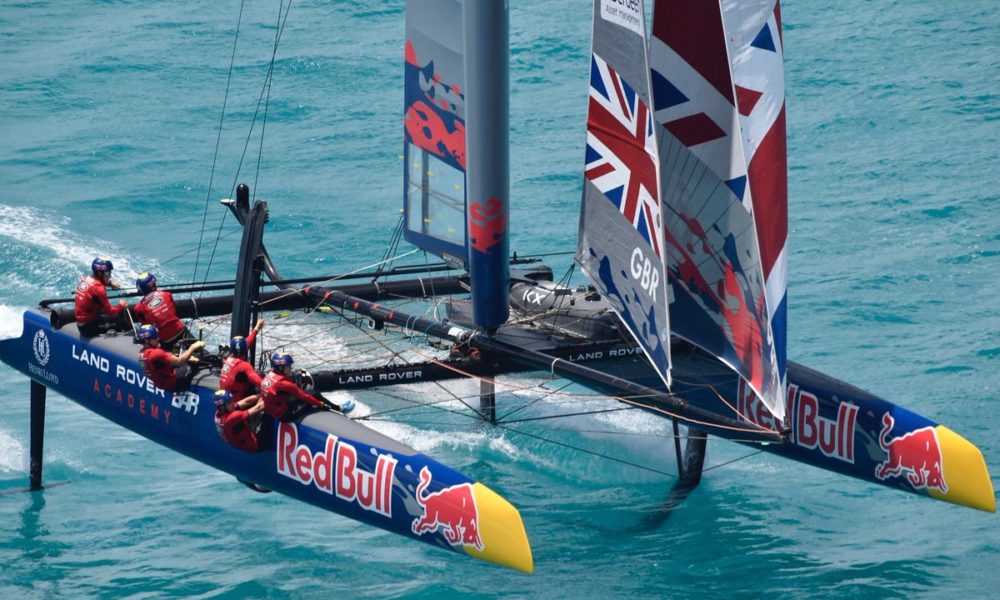
There was a time when humans just tied bamboo stems with ropes and sailed all over the seas. However, that time is long gone and modern-day sailing is one of the most expensive sports in the world. To sail, you will need a sailboat, and most of them cost more than the most expensive super cars. Maintaining the sailboats is also very expensive, so it is paying the crew to run it. Oh and in case you forgot, the sailboat needs to be stored on dry land when competition season is off. Good luck building a hangar for it.

7.Equestrian:

undefined

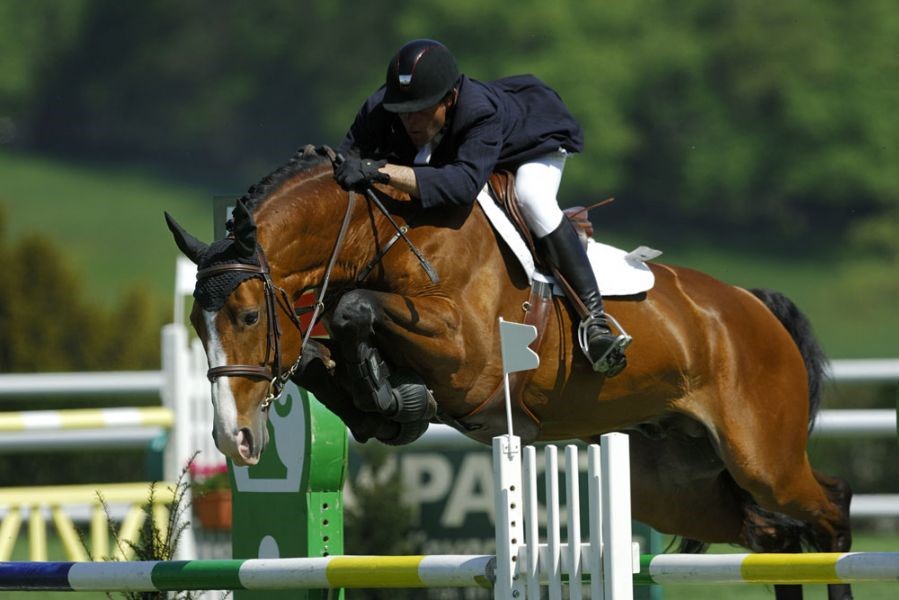
It is a very famous sport which involves driving, riding, and chasing horses. We all know that riding a horse is the most favorite sport of many people. It is basically very rare for sport played with only a limited number of people due to its high cost. As the cost of training and keeping a horse for all these kinds of sports are very expensive and their traveling expenses are also very high. The cost of taking a horse to some this kind of event can cost almost $200,000 each year. In this amount, the cost of a horse is not included which is very expensive as well.

8.Bobsledding:

undefined

This interesting game was introduced in the Winter Olympics. This was first performed by the American star Lolo Jones as she got training after 2012. It is similar to F1 racing and requires a lot of sponsorship due to very high expenses. It can cost about $25,000 for bobsleds while training expenses are separate. People will not believe that the construction of bobsled can cost about millions of dollars. It is basically a team sport in which there are four members which shows cost will also four times greater.

15 Books Bill Gates recommend – Must Read!!!

An average person reads 1.5 books per year while your average top CEO reads over 50 books per year they do this so they can maintain a competitive edge in the game and find new ideas that could improve both their lifestyles and companies this  time we’re taking a look at the books multi billionaire Bill Gates thinks  everyone should read because they had such an incredible impact on his own journey.

Here is list of all 15 books that must be read by you to get a better life style:

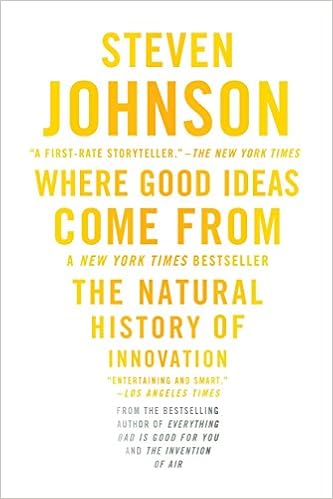
1, Where good Ideas come from :- Steven Johnson

 Click here to view the book


2, Life is what you make it :- Peter Buffet

click here buy the book


3, Tap dancing to work :- Carol Loomis

Tap Dancing to Work: Warren Buffett on Practically Everything, 1966-2013click here to buy the book


4, Moonwalking with Einstein :- Joshua Foer

Moonwalking with Einstein: The Art and Science of Remembering Everything click here to buy the book


5, The Man Who Fed the World :- Leon Hesser

The Man Who Fed the World

Click here to buy the book


6, “The Sixth Extinction” by Elizabeth Kolbert

The Sixth Extinction: An Unnatural History click here to buy the book


7, Making the Modern World :- Vaclav Smil

Making the Modern World: Materials and Dematerialization click here to buy the book


8, The Rosie Project :- Graeme Simsion

The Rosie Project (The Rosie Project Series)

click here to buy the book


9, Business Adventures: Twelve Classic Tales from the World of Wall Street :- John Brooks

Business Adventures

click here to buy the book


10, The Great Gatsby :- F. Scott Fitzgerald

The Great Gatsby

click here to buy the book


11, Outliers :- Malcolm Gladwell

Outliers: The Story of Success click here to buy the book


12, How to Lie With Statistics :- Darrell Huff

How To Lie With Statistics click here to buy the book


13, The Box :-  Marc Levinson

The Box – How the Shipping Container Made the World Smaller and the World Economy Bigger

click here to buy the book


14, How Not to Be Wrong :- Jordan Ellenberg

How Not to be Wrong: The Hidden Maths of Everyday Life

click here to buy the book


15, Sapiens: A Brief History of Humankind :- Yuval Noah Harari

Sapiens: A Brief History of Humankind

click here to buy the book


Growing vegetables at home

Vegetables are essential part of our food, green leafy vegetables gives us the important nutrients we require to lead a healthy life, but nowadays there is a risk buying vegetables from outside not only does it have a risk of getting exposed to the virus but also it can be filled with inorganic fertilizers and toxic stuffs like preservatives which will actually damage our health.  These harmful chemicals are introduced to increase productivity and longitivtiy of the vegetables and consuming these things causes the chemicals to accumulate inside our body and if it is not stopped it can lead to many diseases. The concept of organic  vegetables was introduced as a solution for this where no synthetic chemicals is used on the plant of the vegetables, but these vegetables costs so much that many people cannot afford it.

There is a better solution to this, if  one has space in their home they can grow vegetables in home, but as we know there are some vegetables which cannot be grown  at home nor some plants can be grown together, maybe in the future some way comes up so that these plants can also be grown. For now the vegetables you can grow are Tomatoes, Radishes, Okra,Ginger, beans  and many more. These can be grown in pots  and require some attention and care, this way of growing vegetables is economical also .

If you are a beginner you should have some tools like

  1. watering can- required to water the plants.
  2. Hand pruners – A type of scissors to cut the weeds.
  3. scoop- used to dig the soil.
  4. Small gardening fork- used for loosening the soil

These are the basic equipments required, but may be no need to buy them as you can make them by using many things in your house, like one can make the watering can by using an old water bottle and making holes on the cap or  for hand pruners one can use the ordinary scissors or can use some spoons or forks for loosening the soil.

You can plant these vegetables by seeds or buying the saplings, and put it in a pot with mud which is loosened well and it is very necessary to make holes on the pot which are also called drainage holes.  One should place the pots where the plants can receive optimum amount of sunlight. Its vey much required that you spend at least 1hour  of your day to water these plants, to cut them properly to check their growth status.

Some tips for different plants

  1. Tomatoes – The tomatoes should be grown in a pot of larger height so as to get sturdy and strong roots. These plants require more sunlight. Do add organic pesticides because insects attack tomatoes much more than other plants
  2. Okra – Do not water it very much as it may lead to fungal diseases
  3. Ginger- plant the root in a wide container and do not cover it with very much soil.

such tips will help you to grow these plants better, one should take care of the plants very much in winter seasons as this season tend to inhibit the growth of these plants, sometimes the plant become dormant. Immense amount of love and some care  required to grow these plants.


If you take care of these things and do all the things properly you would certainly get the results so

Enjoy the fresh, organic and healthy vegetables……


Why you must learn a foreign language!

Introduction

When the majority of people say they want to learn new language, they say because of the tendency to learn something new but they never really think of the importance of learning a foreign language and how it can help them for years to come. Learning a foreign language gives a different vision to life. The brain of a bilingual people operate is not the same as other, they have different way to function.  They have another mental level which bilingual people lack in caliber.  That is why learning a foreign language has its benefit as it makes your brain sharper and stronger. Not only this, It just not been advantage to your resume but is also handy for travelling making one smarter and make better to connect with world. Many studies have suggested that communicating in different language has a great benefit.  It is a great asset to mental awareness supporting cognitive process. One doesn’t learn languages in one go and it became powerful. The brain has to put extra effort for improving the functionality of your brain. The brain challenges itself to learn, negotiate meaning, and communicate in different system. It means the learner has skills that boost the ability of solving tasks as well.  Toddlers and children are very much skilled in catching new words and switching between two systems that includes speech, writing, and structure. Switching between the languages makes a good multitasking as it’s easy to switch between the languages.  A good learner often likes its brain to do exercise because it functions well in that case. Learning something obeys the memorizing rule and a set of vocabulary that assist a learner to gain mental strength and stretches mental muscles.  This totally improves an entire memory, that proves that multilingual are better learner and remembering list and arrangements. They could easily catch names and address, says many studies. Every language has its own set of jargons and glitches and subtle implication included in the vocabulary that influences the judgments. It makes any bilingual more confident on its decision making skills. They are quick in checking whether initial conclusion stand up. They hardly become biased and subconsciously influence the judgment. It is said that language is best learned between the sheets.  If a learner has to study a language he/she   better aim of a culture and its diversity. Also help in getting a good knowledge of society are interactively motivated.   Language and its aptitude is the main tool that builds for long relationships and meaningful provides communication. Linguistic studies show that integrative motivation always yields faster and more effective language learning results than any other type of learning. Learner studying language can achieve their goal more instantly than others as they are more motivated. Therefore, tracing its origins or evolutions is the most difficult thing.

 Motivation to learn a language is not problematic but if a learner has a zero cultural curiosity then it’s hard for him/her to learn. The learning process will be more difficult than for those with integrative motivation and difficult to target or even prejudice. Desire to communicate and accelerate language learning that can motivate one to learn a language.  It is also a basic need for a cross cultural friendship and one can fuel integrative motivation. 

Catcher in the Rye:Book Review

It truly is a novel which the youth of any country can relate to in some or the other way, we can greatly empathise with the instances in the novel and is quite appealing to any reader. It was initially published in 1951 by J D Salinger and it is considered to be one of the 100 best novels of the twenty first century by Modern library. It’s young adult fiction and it is said that Salinger was moved by the war and its torment which is reflected in Holden’s character by his loss of hope and faith.

The novel takes you on a ride along with the protagonist of the novel Holden Caulfield who is a 17 year old teenager who drops out from school as he is unable to cope up in the academic area. The only two people whom he was quite close too was his elder brother D.B and his younger sister whose innocence made him develop a soft corner towards her. The setting is the post-world war era and things are not as great as they should be, though freedom is enjoyed by each character. He like many teenagers loses hope in society and is unmotivated to move ahead further in life to fulfil goals. He experiences many adventures which gives him a sweet as well as a bitter taste of reality. In the end he just wanted to be himself, unfazed by anything.

One can see the growth and struggle of the character in the novel, be it teenage issues, academics, family issues, health problems and identity & innocence. It’s a ‘coming of the age” novel that is a bildungsroman novel and was also criticised by many after its publication due to certain sensitive content. It was part of the list of the 10 most frequently challenged books.

It’s a novel which will never go unnoticed and will never really grow old, it’s a must read for the youth of the present and the coming generations as it really takes you into a sphere of true reality which will move you.

Many of the themes be it reality, morality, maturity and responsibility or the three hoods (childhood, teenage-hood and adulthood) are very well portrayed in the novel giving it a realistic appeal and one can empathise with the character of the novel and his journey, the use of colloquial language makes it more fascinating.

Holden the protagonist in the novel is shown to be a free bird who goes along with the flow, he is shown to be true to his heart and immediately tries to fulfil his pleasures, it gives a real glimpse of the  American teenage life and the shortcomings which could happened with anybody, some instances might give you the chills some might make you pity his(Holden) poor condition, The novel really attracts the reader to read further it takes you till the end on an adventurous journey filled with ghastly and interesting events

In the end the novel does have a very vague ending and one definitely does not expect that kind of an ending after reading the whole novel, but the novel touches the reader in a way which would make the reader more cautious and precarious and hence it can give you a pang after reading the instances and shocks which Holden goes through at such a young age without being reliable on any person and does offer cues to life learning lessons.

PRESERVATION OF FOOD USING DRYING METHOD

Drying or dehydration can be defined as the removal of water from the food by controlled processes, which can be achieved by either of 3 ways –

  1. Evaporation due to heating of the food product
  2. Osmotic dehydration
  3. Sublimation, or freeze drying

Drying can be explained as a 2 stage process in which in the first stage, the surface water removal takes place which totally depends on the state of air surrounding that food particle such as its temperature, relative humidity, and speed. On the other hand in the second stage of the drying, the moisture which is present within the food particle is allowed to move onto the surface which can be then again removed by the process of the first stage.
The rate of drying basically depends on the time that moisture takes to come onto the surface of the food from its inside. Heating of any particle accelerated its time of drying. The shortest time period has been noted in starchy foods.
There are 5 basic methods of drying –

  1. TUNNEL DRYING –
    Many years ago, for the purpose of preservation of agricultural products by the means of drying, a solar tunnel dryer was developed. It is an amazing device which can be used for the hygienic preservation of food and also acts as a good alternative for the seasonal agricultural surplus. Also the foods which are dried using this process are more hygienic and superior rather than other methods.
  2. SOLAR DRYING –
    I t is also known as sun drying and is a method of drying any substance using natural sunlight. This drying technique offers faster drying rates and greater protection of the product. There are several problems or limitations which are associated which this type of drying technique, such as the drying areas must be free of dust and whenever there are chances of a dust storm or rain, the drying process cannot be continued.
    There is also a process known as shade drying which can be carried out for the product which can easily lose their color and turn brown if kept in sunlight i.e. they are non-photosynthetic.
  3. SPRAY DRYING –
    This is a unique technique which ultimately transforms the substrate from a liquid to dried form by spraying the feed into a hot drying medium. It is a continuous process and takes time. The dried products which are ultimately obtained can be in the form of powders, granules or agglomerates. It is a multi-step process.
  4. VACUUM DRYING –
    Since evaporation of water takes place more easily and effectively at lower pressures, so vacuum drying was developed which is faster than the process of evaporation. This is an expensive method and is used for some specific products.
  5. FREEZE DRYING –
    This method uses the process of sublimation, which is a process which directly converts solid particles to their gaseous state, without first melting them. It is a technique which is very used in preserving food at low temperatures because at less temperature, chemical reactions occur very rarely and food is rarely attacked by pathogens. It is also a multi-step process which includes freezing, vacuuming, heating and finally condensation of the product.

“Desalination 97% of Water Reserves-Solution To Water Crises?”

Humans and animals have been travelling since ages in search of food and water. Fresh water and Food are required for any person not to be healthy and fit enough to carry his daily day to day routine. We have been able to find various fresh sources of these waters and their origin, and through advancement in technology we have brought them to land directly to our house. We now need not to travel distances in search of water related just turn on the taps and thus we get it anytime anywhere. This truly has transformed human life and has led cities to develop. The source of freshwater is mainly the groundwater which is assumed to be fresh and not contaminated with dust and adulterants. There are possibilities of hard water in some areas due to the geography of particular areas, but still it is drinkable and people can just boil it or just purify it through the RO or Reverse Osmosis process. 

But as we see and acknowledge these water reserves and resources, these are wasted a lot in various processes including technology and manufacturing. Due to which we are facing a lack of water in various parts of the world and has become a worldwide crisis. It is expected that around 5-6 billion people will be living in areas which will lack water resources by 2050. So it’s high time to be involved in the activities to save this essential resource and thus save humanity. 

But the big question which comes into the mind is that we have 3% of drinkable water, what about the rest 97%. “Why Can’t we use it? And What if we make that water clean and salt free, thus 100% drinkable.So what would be the results if we do remove all the salt water or no salt was ever dissolved in these oceans, how would our lives get affected ?” 

First of all what we need to know is how these water resources got salt into them ? It is assumed that since the existence of earth which was about 4.5 billion years ago,  earth was very hot and it took a few years to cool down. Then Around 3.8 billion years ago, the surface of earth got cooler and the vapours in the surrounding or atmosphere turned into liquid state and were fresh enough to drink directly. But sooner it became saltier due to various natural phenomenon especially like rain. Rain brought the carbon content in the air with it and dissolved in the freshwater. This makes the water a bit acidic, thus eroding the rocks. This water then goes into the rivers and streams residing nearby and thus dissolving those salts of rocks in it. Also there were emissions from Volcanoes which dissolved in these rivers and then into oceans. This process continues for another billion years and hence most of the water we do see around is saltier. 

Technologies and research have been followed up with the steps to remove salts from water and thus make it drinkable. So would it be beneficial for us or rather harmful ? 

  1. It is assumed that cleaning up most of these ocean waters by desalination would affect the life inside the sea and oceans. The marine life creatures have evolved to drink and remain hydrated through the salt water present in the surrounding. Cleaning this water will surely lead to death of most of this aqua life. These have evolved as per their surrounding and remove out the extra salt which helps them to survive. 
  2. The underwater algae which is assumed to be spread all around the world, is responsible for absorbing the carbon dioxide and giving out oxygen, which humans require to survive. Thus cleaning of water would affect these plants and would affect our atmosphere, filling it more with the carbon content and less pure and fresh air to breath
  3. Increase climate change making some parts of the world extremely hot to live in. Phenomenon like hurricanes and cyclones would get common as the temperature increased and this would help these tropical storms to build up. This surely looks no good for humans as per their survival would surely be at stake. 

“So it can be an option to shift towards these ocean water, make it clean and drink it, but still we should prohibit it from doing it as it can have a devastating effect on the survival of all living beings. We could rather save the resources which are present around us rather than interfering with nature. As we know everything is balanced in nature and if any interference could lead to a phase humans would never want to enter. So we all need to understand the importance of water, save it as much as we can, so as to be safe from future affects and thus remain safe.”