Past decade has handed over much benefit to human kind and the one to suffer is environment exposing environmental degradation that costs…….. per year worldwide.
“While the overall policy focus should be on meeting basic needs and expanding opportunities for growth, they should not be on the expense of unsustainable environmental degradation.”-muthukmara mani(senior environmental economist).
Using natural resources as fuel to the economic development many have curbed themselves over the poverty, it providing employability and many new opportunities to individuals. With excess greed and overuse of all these resources there has been excruciating effects on environment overall degrading forests, scarring natural resources these are overall affecting the economy in return.
Poverty remains cause of either of both consequence and cause of environmental degradation. Needless mining and overuse of resources that are on first hand limited to us which is quiet evident over degrading agriculture yields per hectare as livestock is overgrazed grassland and forest deplete for human settlements.
The question that arises is our economic benefit so crucial that it costs us worsened environmental quality, depleted resources, extinct habitats and other impacts?
Something that emerges out is environmental stability, low emission resource efficient greening of the economy should be possible at costs of terms less to that of GDP of each country, valuing the available natural resources and taking policy decision accordingly.
To avail this issue the natural environmental growth be necessary, affordable, desirable, and measurable.
If not now it’s going to be a challenge to turn the pages around to covert the damages done to nature with hefty economical costs in future and also proving deadly not only to the flora-fauna but eventually to humans too, hence it’s necessary to avail it at the very moment.
Policies such as environmental taxes can positively help minimize the cost and pressure over governments hence making it affordable to all.
With so many diversifies ecologies and habitat all over the globe the policies and laws needs to be designed such that it preserves and nourishes these natural gems.
What can be done?
Particulate emission reduction can effectively help decrease GDP modestly even reducing 10%.
Making more tractable efficient commitments and following them religiously, look through the environments vision and then make other end decision regarding the communities, societies, business and governments. Science can be at its most use when it’s accessible to every person who wishes to use it. Every person taking this as a personal responsibility the awareness would make it up to history pages. We need to turn around the current situation and consider it as a need of an hour if we wish out economy our trades our families to thrive in peace without draining our economies.
A group of cognitive psychologists, curriculum theorists and instructional researchers, and testing and assessment specialists published in 2001 a revision of Bloom’s Taxonomy with the title A Taxonomy for Teaching, Learning, and Assessment. This title draws attention away from the somewhat static notion of “educational objectives” (in Bloom’s original title) and points to a more dynamic conception of classification.
The authors of the revised taxonomy underscore this dynamism, using verbs and gerunds to label their categories and subcategories (rather than the nouns of the original taxonomy). These “action words” describe the cognitive processes by which thinkers encounter and work with knowledge.
A statement of a learning objective contains a verb (an action) and an object (usually a noun).
The verb generally refers to [actions associated with] the intended cognitive process.
The object generally describes the knowledge students are expected to acquire or construct. (Anderson and Krathwohl, 2001, pp. 4–5)
The cognitive process dimension represents a continuum of increasing cognitive complexity—from remember to create. Anderson and Krathwohl identify 19 specific cognitive processes that further clarify the bounds of the six categories.
The Cognitive Process Dimension – categories, cognitive processes (and alternative names)
The knowledge dimension represents a range from concrete (factual) to abstract (metacognitive) (Table 2). Representation of the knowledge dimension as a number of discrete steps can be a bit misleading. For example, all procedural knowledge may not be more abstract than all conceptual knowledge. And metacognitive knowledge is a special case. In this model, “metacognitive knowledge is knowledge of [one’s own] cognition and about oneself in relation to various subject matters . . . ” (Anderson and Krathwohl)
The Knowledge Dimension
Factual
knowledge of terminology
knowledge of specific details and elements
Conceptual
knowledge of classifications and categories
knowledge of principles and generalizations
knowledge of theories, models, and structures
Procedural
knowledge of subject-specific skills and algorithms
knowledge of subject-specific techniques and methods
knowledge of criteria for determining when to use appropriate procedures
Metacognitive
strategic knowledge
knowledge about cognitive tasks, including appropriate contextual and conditional knowledge
self-knowledge
Bloom’s Revised Taxonomy Model
Note: These are learning objectives – not learning activities. It may be useful to think of preceding each objective with something like, “students will be able to…:
The Knowledge Dimension
Factual
The basic elements a student must know to be acquainted with a discipline or solve problems in it.
The Knowledge Dimension
Conceptual
The interrelationships among the basic elements within a larger structure that enable them to function together.
The Knowledge Dimension
Procedural
How to do something, methods of inquiry, and criteria for using skills, algorithms, techniques, and methods.
The Knowledge Dimension
Metacognitive
Knowledge of cognition in general as well as awareness and knowledge of one’s own cognition
The Cognitive Process Dimension
Remember
Retrieve relevant knowledge from long-term memory.
Remember + Factual
List primary and secondary colors.
Remember + Conceptual
Recognize symptoms of exhaustion.
Remember + Procedural
Recall how to perform CPR.
Remember + Metacognitive
Identify strategies for retaining information.
The Cognitive Process Dimension
Understand
Construct meaning from instructional messages, including oral, written and graphic communication.
Understand + Factual
Summarize features of a new product.
Understand + Conceptual
Classify adhesives by toxicity.
Understand + Procedural
Clarify assembly instructions.
Understand + Metacognitive
Predict one’s response to culture shock.
The Cognitive Process Dimension
Apply
Carry out or use a procedure in a given situation.
Apply + Factual
Respond to frequently asked questions.
Apply + Conceptual
Provide advice to novices.
Apply + Procedural
Carry out pH tests of water samples.
Apply + Metacognitive
Use techniques that match one’s strengths.
The Cognitive Process Dimension
Analyze
Carry out or use a procedure in a given situation.
Analyze + Factual
Select the most complete list of activities.
Analyze + Conceptual
Differentiate high and low culture.
Analyze + Procedural
Integrate compliance with regulations.
Analyze + Metacognitive
Deconstruct one’s biases.
The Cognitive Process Dimension
Evaluate
Make judgments based on criteria and standards.
Evaluate + Factual
Select the most complete list of activities.
Evaluate + Conceptual
Determine relevance of results.
Evaluate + Procedural
Judge efficiency of sampling techniques.
Evaluate + Metacognitive
Reflect on one’s progress.
The Cognitive Process Dimension
Create
Put elements together to form a coherent whole; reorganize into a new pattern or structure.
The Power Of Your Subconscious Mind is a spiritual self-help book, which teaches you how to use visualization and other suggestion techniques to adapt your unconscious behavior in positive ways.
Understanding your subconscious mind as a photographic mechanism removes the emotion and struggle from changing your life, because if it is simply a matter of replacing existing mental images with new ones, you begin to see the ease with which you may change.
‘The law of your mind is the law of belief itself,’ Murphy says. What we believe makes us who we are. William James observed that whatever people expect to be true, will be so, irrespective of whether the object of their belief exists in fact. In the West we have made ‘the truth’ our highest value; this motivation, while important, is weak next to the actual power of belief in shaping our lives.
1. You Receive Answers To Prayer Because Of Mental Acceptance About What You Pray
Murphy proposes that your religious affiliation is not what makes prayer effective. Rather, it is based on your ability and willingness to accept what you pray.
It makes sense that whatever you can and do accept on a conscious level has to be accepted by your subconscious as well.
Another statement that expands on this idea is this one: “the subconscious mind is subject to the conscious mind.” What Murphy is saying is that you can train your subconscious mind to believe what you can accept on a conscious level.
2. Your Subconscious Mind Has The Answer To All Your Problems
This statement makes perfect sense if you don’t have any problems with the idea that your subconscious mind = God.
Even if not for that, though, it speaks to the power of the subconscious mind. You don’t need to go looking outside for the answers you seek – Murphy is saying – you can look inside, and pose questions to your subconscious.
The answers may not come immediately, but your mind is always working on problems you submit to it even when you’re doing other things, and it will eventually present to you a workable solution.
3. Faith Is The Only Universal Healing Principle Operating Through Everybody
I believe the implication here is that faith is created by accessing and harnessing the power of our subconscious minds. Illness, physical ailments, and even traumatic experiences can be healed by repeatedly submitting thoughts of healing to our subconscious minds.
Can we be healed by any other means? According to Murphy, no. Faith is the universal healing principle. Of course, I don’t think he would discount the importance of medicine and other orthodox cures, but I have to guess that in this case he is referring to instances of healing that have occurred in so-called “healing services”, churches, or religious gatherings.
4. If A Prayer Is Answered, It Is Answered Scientifically
What Murphy is suggesting is that there is a formula to prayers that are answered. He explains that “science” means knowledge that is coordinated, arranged and systematized, so the idea here is that we can cooperate with our subconscious minds to see more of our prayers answered.
If anything, the entire book sheds light on how little attention and thought we give to our subconscious minds, and what fantastic tools they are in helping us achieve ends that we desire to see in our lives.
5. Don’t Compel Your Subconscious Mind To Accept Your Idea By Willpower
Although Murphy does talk about presenting positive thoughts and images to our subconscious minds, he is also quick to caution us that we can’t force things. Our willpower is limited, and it continues to decrease and diminish throughout the day. Can you imagine how tiring it would be to force yourself to think the same things and visualize the same images all day long?
I think the idea is that we can plant seeds and nurture them, but we shouldn’t be constantly uncovering the soil to see how our seeds are doing. We must keep pulling the weeds and watering the seed, and while that may require a daily investment, it shouldn’t take more than a couple of minutes.
6. The World You Live In Is Determined By What Goes In Your Mind
Regardless of whether you subscribe to Murphy’s theology, I think this is something we can all agree on. What goes into your mind is hugely important. If you choose poorly, you’ll assimilate bad attitudes, behaviors, and thoughts. If you choose well, you’ll begin to see positive changes within yourself.
What world do you want to live in? Have you thought about it? If you aren’t sure what you want to achieve in your lifetime, it makes it much harder to select input that will assist you on your journey. If you are fully in alignment with your objectives, choosing the right input becomes much easier.
7. Man Punishes Himself With His False Concepts Of God
We create our own misery. No one else does it for us. I think I know exactly what Murphy was saying here. I can attest to the fact that my false concepts of God led me down a path of misery.
In 2014, I went through a period of depression. Up until that point, I had felt that there was a clear path laid out ahead of me. Suddenly, that path disappeared and I could no longer see what was ahead. I cried out to God, but to no avail. My prayers kept hitting the ceiling. And, in retrospect, I feel it was my false ideas of the divine that were responsible for my bouts of depression.
Mysticism is the belief that something outside you controls your life. Recognizing that you are in control and you can rely upon your subconscious mind for the answers you seek is empowering. Right or wrong is not something you can check against a book. Right or wrong is embedded deep within you already, and to try to fit yourself into someone else’s ideas is to try to put a square peg in a round hole.
Be willing to see the unchangeable change.
Give yourself permission to be successful.
Don’t allow other people’s fears to cast shadows of doubt.
Surround yourself with positive reinforcement.
Speak your success as a present fact, not a future plan.
GOOD SAY OR BAD ADOPTING COPING STRATEGIES OR HOBBIES ARE THE THING ON WHICH NOBODY HAS A CONTROL OVER DURING THE LOCKDOWN.
The COVID-19 pandemic and ensuing lockdown measures have created unprecedented circumstances that increase stress and anxiety, thus leading individuals experiencing home confinement to adopt various coping strategies that contribute to building resilience. Given the novelty and recency of the COVID-19 lockdown, factors of coping and resilience in this specific context of home confinement remain undefined. Some put this time in effective routine to get good result but there were some who waste their time with some bad coping strategies.
SOME COPING STRATEGIES WERE-
COOKING– people have learnt to cook for them-self. People who live alone and deprived from the food delivery option have taken up the ladle, some who have no choice and some who see this as a opportunity to learn or put their confined time to some effective work or activity.
DUSTING AND CLEANING- people have to take this activity without any choice as with this lockdown and without any house help their hands were tied or say only their hands were the one left to do the job. Some saw this as an opportunity to cover their missed fitness routine and some did because they didn’t have any choice but to keep their house clean.
READING- This is one of the good coping strategies people have taken up in this lockdown. Prior to this covid-19 lockdown, people with their busy and anxious schedule and working hours with no time left to give to literature or reading has taken this opportunity for an mind relaxing time with reading .
SCREEN TIME – This is the most adopted and with too much used time, it’s seen as and become a bad coping strategy and habit especially during this lockdown. Most people coped this confined and with too much time on digital screen with movies, shows and net etc, under these most people are kids and students with no school and colleges.
YOGA – Yoga during this lockdown has replaced the gym for fitness routine and mental health also. Some has adopted it to replace the gym but some ha adopted it to relax their mind from this anxious and confined situation. And surprisingly during lockdown it has become a big hit among all age of people from kids to adult and old people also.
Our daily routine can have a toll on our mental health. Work pressures, exam related stress, house responsibilities, overtime with no rest can cause serious health problems and therefore needed to be taken care of. Our human bodies need rest to reset for further work, and when that is ignored we end up getting sick or stressed. As sickness could be treated with medications, we need stress bursting activities too. These activities not only reset our brains for a fresh start but also help us develop the capabilities we never actually cared enough about. These activities help us in getting relaxed after a hectic day or two. There are a number of these activities that can and are helpful in relieving stress.
Hobbies
Every person has at least one or two hobbies that can come as a savior while having a stressful day like, painting, writing, reading, cooking, watching movies, art and craft, singing, dancing etc. With heavy work or studies load people end up paying zero percent attention to their hobbies, but these might help in taking the head out of work for some time and just relaxing while exploring their lost hobbies further. Mostly a person’s hobbies relate to its right part of the brain, which is also responsible for creative development of a being, thus these hobbies can prove to be beneficial in many unexpected ways. Any sort of art form can relieve the stress from a heavy work day.
Music
“My heart, which is so full to overflowing, has often been solaced and refreshed by music when sick and weary.”
Music is to have a magic effect on us while trying to survive through a tiring day. The soft and slow music is to act as a meditation, keeping us at peace and relaxing us. The slow paced music helps us clear our mind and ease up while in a stressful situation. The fast paced music is proven to make us happy or excited while in a low mood. Our brain responds to the happy waves generated by music and helps us loosen up better.
Strolls
With most of the work being desk related or requiring hours of sitting in front of the screen, can be hectic and have unhealthy effects on our mental health. Such a situation calls for a stroll or a walk for at least an hour or so to breathe fresh in park and walk to stretch out our muscles. Walking reduces the strain caused by hours of sitting, thus freeing us from part of our undeserved stress.
Conversations
People sometimes forget the power of conversations. Having work related problems? Talk to your work best friend. Having relationship problem? Talk to your best friend. Having life problems? Talk to your mother. The conversations with right person have the healing power to take you away from a rough, awful day. It might seem like a waste of time to a lot of people but in reality, these conversations hold the power cut off the distress and calm us down.
Breaks
Just like we need an interval in between of a movie or a break in the middle of a show, we sometimes need a break from our daily routine. Little tea or coffee breaks while still going strong with work can be a short term solution but breaks such as- visiting parents, going back to hometown, taking on a vacation, meeting friends, celebrating without any particular reason, can all charge us up to the level that of a fighting war and holding up with pressures then a becomes the easiest task in the world.
Whenever I ask readers what the number one thing holding them back from traveling is I almost always get the same answer: Money.
Travelling the world with no money sounds like an impossible dream. But it is possible, and you can do it responsibly without breaking the bank. It should be said that there are some expenses you shouldn’t compromise on (like travel insurance) but there are tons of ways you can travel the world on a budget — including plenty of ways you can travel for free.
Travelling for free entails taking advantage of free accommodation, transportation, and activities that are already out there, thereby reducing your cost to zero. Here, you sacrifice comfort and convenience to extend your travels as long as possible.
And yeah don’t even worry about your food budget the restaurant often has eating challenges just take an insane challenge and fill your paunch
W HEN Gustavus Swift, a youngster in knee breeches, dressed and sold his first calf to the fisherfolk of Cape Cod, he laid the foundation of the largest meatpacking business in the world. The desire to make money—to have a business of his own—was a driving force in the make-up of young Swift. In Barnstable, he was known as a chap with a lot of “get up and go” to him. So it was not surprising that when he felt the desire to make money, he didn’t waste his time wishing, but took his courage in his two hands and started in the dressed beef business in his dad’s backyard.
No doubt there were other young men in Barnstable who wanted to make money too. But while they were wondering how they could make it, Gus Swift cut the Gordian knot. It meant work for him. It was not a pleasant way to make money. There was the possibility of his not being able to sell his calf after he had dressed it. He had to walk miles in order to market his veal, for Cape Cod in those days was a “spread out” sort of place.
But Swift didn’t care.
He wanted money
The work, the walking and the adventure were fun. And because he regarded making money as fun instead of work, he later was able to come to Chicago and start the great Swift packing business. How different from the average young men of today! They are usually more interested in having a good time than they are establishing themselves in a business of their own. Being in business is so confining! So they concentrate on enjoying themselves, serene in their philosophy that tomorrow is another day. If these people, and they are not all young people either, worked half as hard at making money as they do at having a good time, they would be rich.
Then there are people who are willing to work and do work hard at making money, but they are not successful because they lack a target. They are like the chap who hunts big game with a shotgun. They do a lot of shooting, but they bag very little game. Next to being willing to pay the price of success in hard work, the most important thing is to have a definite, clear-cut objective. Since it is necessary to crawl before you walk, it is suggested that you make that objective $1,000.
What you about this story of hard work and dedication
In business, many examples of the 80/20 Principle have been validated. 20 per cent of products usually account for about 80 per cent of dollar sales value; so do 20 per cent of customers. 20 per cent of products or customers usually also account for about 80 per cent of an organization’s profits.
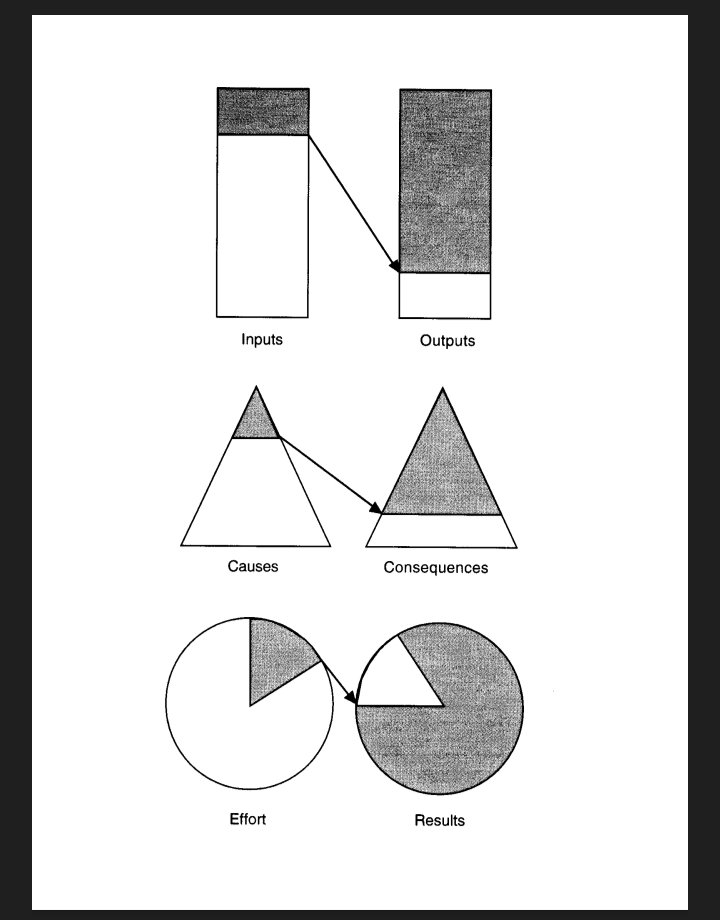
The 80/20 Principle asserts that a minority of causes, inputs or effort usually lead to a majority of the results, outputs or rewards. Taken literally, this means that, for example, 80 per cent of what you achieve in your job comes from 20 per cent of the time spent. Thus for all practical purposes, four- fifths of the effort—a dominant part of it—is largely irrelevant. This is contrary to what people normally expect. So the 80/20 Principle states that there is an inbuilt imbalance between causes and results, inputs and outputs, and effort and reward.
The pattern underlying the 80/20 Principle was discovered in 1897, exactly 100 years ago, by Italian economist Vilfredo Pareto (1848–1923). His discovery has since been called many names, including the Pareto Principle, the Pareto Law, the 80/20 Rule, the Principle of Least Effort and the Principle of Imbalance; throughout this book we will call it the 80/20 Principle.
By a subterranean process of influence on many important achievers, especially business people, computer enthusiasts and quality engineers, the 80/20 Principle has helped to shape the modern world. Yet it has remained one of the great secrets of our time—and even the select band of cognoscenti who know and use the 80/20 Principle only exploit a tiny proportion of its power.
So what did Vilfredo Pareto discover? He happened to be looking at patterns of wealth and income in nineteenth-century England. He found that most income and wealth went to a minority of the people in his samples. Perhaps there was nothing very surprising in this. But he also discovered two other facts that he thought highly significant. One was that there was a consistent mathematical relationship between the proportion of people (as a percentage of the total relevant population) and the amount of income or wealth that this group enjoyed.4 To simplify, if 20 per cent of the population enjoyed 80 per cent of the wealth,5 then you could reliably predict that 10 per cent would have, say, 65 per cent of the wealth, and 5 per cent would have 50 per cent. The key point is not the percentages, but the fact that the distribution of wealth across the population was predictably unbalanced.
There is no definition of beauty, but when you can see someone’s spirit coming through, something unexplainable, that’s beautiful to me. …
Let us live for the beauty of our own reality.
One difficulty for understanding beauty is due to the fact that it has both objective and subjective aspects: it is seen as a property of things but also as depending on the emotional response of observers. Because of its subjective side, beauty is said to be “in the eye of the beholder”.
It has been argued that the ability on the side of the subject needed to perceive and judge beauty, sometimes referred to as the “sense of taste”, can be trained and that the verdicts of experts coincide in the long run.
This would suggest that the standards of validity of judgments of beauty are intersubjective, i.e. dependent on a group of judges, rather than fully subjective or fully objective.
Conceptions of beauty aim to capture what is essential to all beautiful things. Classical conceptions define beauty in terms of the relation between the beautiful object as a whole and its parts: the parts should stand in the right proportion to each other and thus compose an integrated harmonious whole. Hedonist conceptions see a necessary connection between pleasure and beauty, e.g. that for an object to be beautiful is for it to cause disinterested pleasure. Other conceptions include defining beautiful objects in terms of their value, of a loving attitude towards them or of their function.
It’s will amuse you to know that you can sell your body parts and People will pay hundreds, and sometimes thousands, of dollars for certain body parts.
Note that “selling” a body part isn’t the same as putting your futon up for sale on Craigslist. Except for selling ad space on your skin, most forms of giving body parts are technically donations, but it’s common practice to be compensated in cash.
Being compensated for all of the parts listed below is legal, but we don’t necessarily recommend it. There are other — more conventional — ways to supplement your income.
1. Hair up to $1,000
Like blood, hair is easy enough to donate to a good cause (like Locks of Love). But it’s also entirely possible to sell it at a pretty sweet price point.
The trick is to keep it as long and “virginal” as possible. That means no harmful hair dyes or other chemical treatments that could damage the quality. Buyers are likely looking to make wigs, and they’re not going to be interested in your split ends.
According to Wisebread, one woman made as much as $1,000 on her locks in just a week by posting an ad on TheHairTrader.org.
A paid survey is simply a regular survey that pay you a reward for completing it. There are companies that spends a lot of money every year to get to know what consumers think about their products and services and what they can do better.
How much do I earn?
The value of each survey can differ depending of many factors such as the time it takes to complete it. Usually you get around $1 for every 10 minute survey but can be higher. It also depends on how fast you are to answer the questions.
You can survive with bad credit, but it’s not always easy and not cheap. Establishing a good credit score will help you save money and make your financial life much easier. If you’re looking for reasons to maintain your good credit, here are some great benefits to having a good credit score.
Low Interest Rates on Credit Cards and Loans
The interest rate is one of the costs you pay for borrowing money and, often, the interest rate you get is directly tied to your credit score. If you have a good credit score, you’ll almost always qualify for the best interest rates, and you’ll pay lower finance charges on credit card balances and loans. The less money you pay in interest, the faster you’ll pay off the debt and the more money you have for other expenses.
Ayurveda has some of the best keep secrets that can miraculously improve day-to-day health conditions. One such age old remedy to improve the deteriorating vision is a mixture of three simple ingredients such as saunf, mishri and badam. The internet is flooded with claims about this natural remedy, let’s find out the truth behind the tall claims.
Causes of slackening eye health?
Blame it on sedentary lifestyle, heredity, long hours of screen exposure, excessive mobile screen time or lack of nutritious diet. Resulting in myopia and hyperopia. however, according to experts the amalgamation of fennel, almond and rock candy can naturally boost eye health and improve vision. In fact, some people believe that a regular intake of this mixture not only improve eye vision, but also help in removing eyeglasses permanently.
Is the Badam, Mishri and Saunf mixture actually good for eyes?
Almonds are packed with the goodness of vitamin E and Omega 3 Fatty acids, which are great for eye health and boosting immunity. The amalgamation of Almonds with Saunf makes it great for eye health as Fennel seeds have potent medicinal benefits that can improve vision and reduce the progression of Cataract and Glaucoma.In fact, in Ayurveda Fennel seeds are also known as ‘NetraJyoti’ for their potent antioxidant properties that improve vision and help in curing as well as preventing several eye ailments.Combining this mixture with milk and drinking it at bedtime can not only improve eye health, but will also help in cell regeneration, strengthen bones, boost brain functioning and heal the damage caused due to oxidative stress.Apart from that this mixture with milk also helps in improving brain fog, Amnesia and helps in reducing stress and improves immunity and metabolism. Drinking it at bed time can also help in inducing sleep due to the presence of Tryptophan in milk that relaxes the nerves.
How to make this mixture?
There are several ways to enjoy this delicious mixture, you can either make a coarse mixture and enjoy it post meal or consume it with a glass of milk at bed time. Experts believe that the drink can help in improving eye health in just a few months.To make this mixture, take 100 grams of raw fennel, 100 grams of Dhaga mishri, 100 grams of almonds, grind them and make a smooth powder. Mix it with a glass of milk or herbal tea to reap its benefits.Make sure you don’t consume more than 10 grams of this mixture in a day. However, if you are suffering from severe health conditions, always consult your doctor before introducing a new remedy to your diet.
What experts say?
According to Dr. Shabnam Mir – consultant physician, and head of clinical services at Antara, “Fennel seeds and Almonds can help improve one’s eyesight. Combined with Mishri it becomes a combination, also known as magic potion, that is extensively remedial to the eye and good to taste. It is generally suggested to take 10 gms of this mixture with 250 ml of milk, avoid water for two hours post consumption, and give half the quantity if it’s for a minor.”
TOP 5 HOMEMADE ORGANIC FERTILIZERS FOR YOUR KITCHEN GARDEN.
INTRODUCTION:
HEALTHY PLANTS
Now a days many of the urban people has turned towards organic kitchen farming.
Continuous usage of chemical fertilizers has made a havoc among people specially parents those who always look forward for better health.
Excessive fertilizers are reason behind memory loss, weak appetite, dull-dark skin etc.
Turning towards organic kitchen farming is a better way of avoiding such issues, but again people from urban cities faces problem of time management and of course organic fertilizers are actually expensive
Here in this article, I have shared my best 5 organic solutions which you can use for your many of the fruits and flower bearing plants.
COW DUNG FERTILIZER:
COW DUNG FERTILIZER.
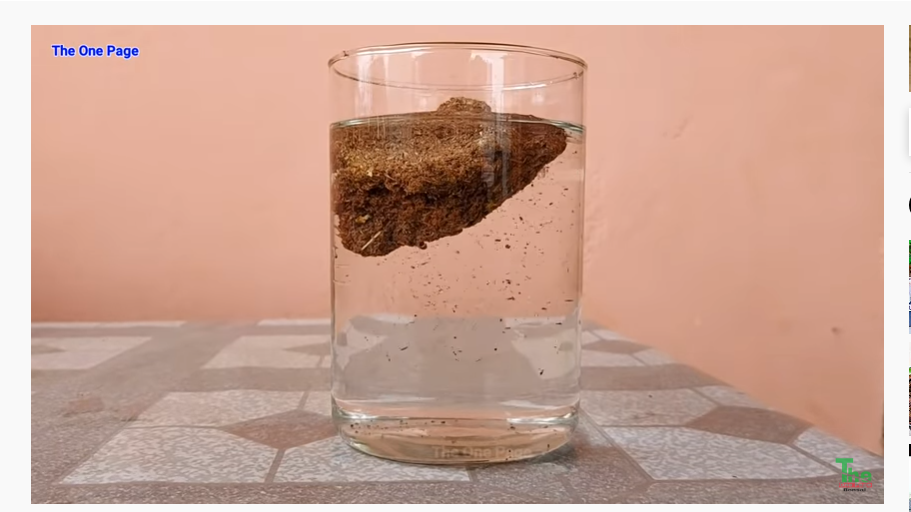
1.COW DUNG FERTILIZER: Most known organic fertilizer, from ancient times cow dung was treated as gold, Now, we have lesser knowledge about it, Farmers used to preserve it by making their dry cakes.
PREPERATION:
Take two glasses of water in a vessel.
Add a piece of dried piece or fully decomposed cow dung
Keep the mixture for overnight.
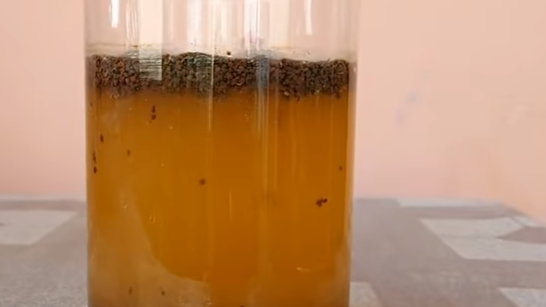
Water will change the color to reddish yellow.
USAGE- you can use this solution to all leafy, fruit and flower bearing plants
This solution is used in every season except harsh summer season.
TEA LEAVES FERTILIZER:
TEA LEAVES FERTILIZER
2.TEA LEAVES FERTILIZER:
Another very easy and accessible liquid fertilizer is tea leaves fertilizer. Some of our garden plants need a bit acidic soil such as rose plant, money plant etc. To fulfill their needs this fertilizer is used.
PREPERATION:
First you need to prepare tea leaves, which you can do easily storing used tea leaves of 5-6 days.
At least you need 2 proper washes to remove milk particles.
Dry them for 3 days. Now your tea leaves are ready for becoming fertilizers.
Take a bowl full of water mix the above granules of tea leaves and keep them for 24 hours, you will observe yellowish solution.
Stain the fertilizer and use in flower bearing plants
Usage- You can use this fertilizer in winters only.
BANANA PEEL FERTILIZER:
3.BANANA PEEL FERTILIZER:
If you know many of the agriculture consultant prescribe NPK fertilizers for complete growth of plants, where ‘P’ stands for potassium which is basically required for proper and healthy flowers in plant. So here is the organic substitute for potash-based fertilizer, BANANA PEEL FERTILIZER.
PREPERATION:
You will need at 6 dried or semi dried peels of banana.
Take a tumbler full of water.
Keep this mixture for 24 hours.
You can use this solution specially for Hibiscus plant and many other flowering plants, which bear flower in all seasons.
Now last two solutions are for fulfilling the requirement of micro-nutrients.
ONION PEEL FERTILIZER:
4. ONION PEEL FERTILIZER:
The most used vegetable in our kitchen is onion, So, why not to make its waste a benefit.
Onion peels are very rich in micro nutrients which can be used as a supplement for our green leafy vegetables such as spinach, pepper mint, bitter guard etc.
PREPERATION:
Collect dried peel of almost 6-7 medium sized onion.
Take two jugs of water.
Soak the peels for 48 hours
Observe the brown color of the solution and your fertilizer is ready for use.
EGG SHELL FERTILIZER:
EGG SHELL
5. EGG SHELL FERTILIZER:
The last and magical solution for the organic lovers is egg shell fertilizer,
You would have heard about different animal-based fertilizers such bone meal, blood meal etc.
egg shell fertilizer is also among those fertilizers. Common constituents of egg shells are calcium carbonate and magnesium this is what our plants ask for.
PREPERATION:
Basic need of this is obviously egg shells, you can take 7-8 shells of egg.
Crush them properly and make a coarse powder.
Mix it with water.
Let it settle for 3 days.
Stain the mixture. Solution is ready for use.
I hope you all find it helpful. If you all want more gardening tips, please don’t forget to mention them in comments below.
‘The new normal’ a phrase you have offen listened to, and had became used to nowadays. Everything has changed the way we live, the way we interact, the way we meet, the way we chill. Our whole world has shrinking to just our electronic gadgets and our house. Even though everything is opening slowly but still, it is not the same as it was before covid.
Effect on children
One of the worst effected during this ‘new normal’ times are the children. They are not able to go out and play, not able to interact with their friends and teachers, not able to enjoy outdoor meals.As they used to before covid.
Now, their eyes are getting strained due to online class, they are becoming insocial, have become a night own. They have actually lost their whole routine. They have lost their speaking skills, have became addictive to social media. They have ultimately started losing the main essence of their childhood.
This is a really important issue, it should be treated with at most seriousness, as they number of children facing mental problems has increased drastically since, the out break of the covid.
It is the responsibility of the parents and teachers to observe their child’s behavior, if the are behavior has become rude or they are getting irritated or frustrated on small things or has stopped or reduced their interaction with you. Then it is certainly a matter of concern.
Ultimately this article is not to scare you, but to bring out the genuine problems of the children in this difficult time.























 Eduindex
You must be logged in to post a comment.