NATIONAL mean a person owing allegiance to and entitled to the protection of a sovereign state. CITIZEN is preferred for one owing allegiance to a state in which sovereign power is retained by the people and sharing in the political rights of those people. the rights of a free citizen SUBJECT implies allegiance to a personal sovereign such as a monarch. the king’s subjects NATIONAL designates one who may claim the protection of a state and applies especially to one living or traveling outside that state.
Maharashtra government is taking every possible decisions to make sure that basic needs of poor and needy people are met. Government is ensuring the protection of all people of the state by taking many good decisions. One such decision is of providing meal at just Rs 5 named as Shivbhojan Thali. This is helping many workers who have lost their work due to lockdown and poor people in the state.
The subsidized ‘Shivbhojan’ meal will continue to be available at Rs 5 for another three months, the Maharashtra government decided on Wednesday. The scheme to provide affordable ‘thali’ (meal) to the poor at Rs 10 was launched by the Shiv Sena-led government in January.
In April, the government announced that it will be available at Rs 5 in view of the distress caused by the corona virus crisis.
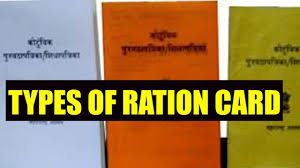
Orange card holders are also getting subsidized food grains in this corona period.
The cabinet also gave its nod to a proposal to provide subsidized food grains to Above Poverty Line (APL) Orange ration card-holders for July and August, the release said. It also decided to rename the Ministry of Skill Development and Entrepreneurship as the Ministry of Skill Development, Employment and Entrepreneurship.
At present over one lakh thalis or meals are sold every day. Since its launch on January 26, over one crore people have benefited from the scheme, said an official release.
Maharashtra is seeing surge in corona cases, thus it is very important that below poverty line (BPL) people are least exposed to the virus and stop spread of corona virus.
Chief Executive Officer of the Pune-based Serum Institute Of India (SII) Adar Poonawalla on Monday said the company is expecting the vaccine for COVID-19 to be ready by the year-end.
The Institute has partnered with British-Swedish drugmaker AstraZeneca to manufacture and supply the vaccine being developed by the University of Oxford under which the SII will supply over a billion doses of vaccine in India, and to other developing and under-developed countries.
However, the approval for the vaccine from the Drug Controller General of India is still awaited.
The institute is expecting to get approval in next six months.The Oxford COVID-19 vaccine trial is currently in its Phase 3 or human trial stage, and will be administered to around 8,000 people in the U.K.
chief executive Poonawalla said while referring to another vaccine candidate from India ie Covaxin of Bharat Biotech, that the company is in no hurry to produce vaccine without proper actions and tests for safety and efficacy.Once they are confident about vaccine, they would launch the vaccine but that would be still 6 months away.
However Bharat Biotech is also confident about its candidate vaccine named Covaxin and has started phase-1 human trials enrolling about 375 patients for test. It is very unlikely that Corona vaccine to be out for masses before or on 15 August, despite the letter of ICMR since human trials may take up to 6-8 months to complete even after conducting only important tests and checks.
It is very positive for the country that we are seeing candidates for vaccine which are in human trials.The vaccine developed in country will be great opportunity for Indian institutes to once again lead the world in pandemic situation.
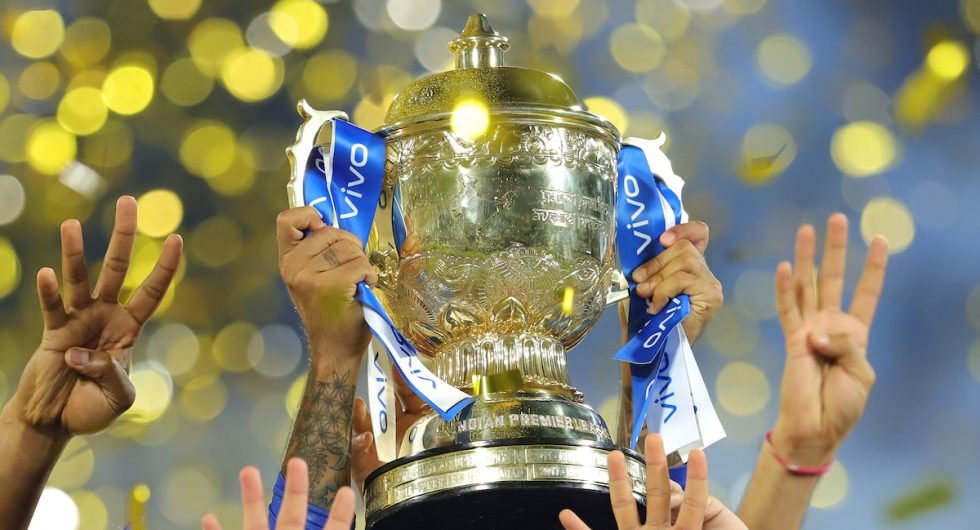
Cricket it’s a sport that dates back over 400 years. And as of 2019 is officially played in 104 countries around the world. Cricket’s worldwide fan base is comprised of roughly one billion people in the Indian subcontinent alone makes up 90 percent of those fans. In India, the country adopted a brand new shorter format of the game has drastically cut down on playing time from days to hours. The Indian Premier League or the IPL has only been around for twelve years but it’s fast become one of the most popular and valuable cricket leagues on the planet. The IPL is brand value has nearly doubled in the last five years. In 2018 the league was valued at 6.3 billion dollars. It rakes in and 510 million dollars each year from its broadcasting rights deal making it to only cricket league in the world to crack the top 20 most valuable media rights deals in all of professional sports joining the ranks of the NFL the NBA and MLB.
So how did the IPL become one the most lucrative cricket leagues on the planet. In India. Cricket is huge. It’s been a staple in Indian sports since the seventeen hundreds. It’s currently the most popular sport in the country. The IPL is one of the richest sports properties in the world. And while the IPL isn’t the only cricket league in India it is the most successful league in the country. The 48 day annual tournament was created in 2007 with the help of the Board of Control for Cricket in India and Indian businessmen Lalit Modi. Even though cricket already had a few pro cricket leagues they wanted to capitalize on the commercial success of 2020. So they modeled the IPL in a similar nature to pro sports in the US.
The IPL was specifically modeled after the likes of the NFL. Which has a decentralized league. meaning that all teams are owned and operated independently. Also similar to the NFL model the IPL is its own league with its own unique structure. There is a separate T20 World Cup where India competes. But that’s different from the IPL. even though matches are all held in India. Team rosters are chock full of top international talent. In 2018, teams spent 94 million dollars to buy 169 players in an auction. up from its 40 million dollars for 66 players in 2017. But what you’ve actually got in the IPL franchises who represent a city a place an industrial heartland and you’ve got the full support of some major entrepreneurs. So rather than let’s say Delhi again. So, you’ve got your IPL franchises based around the cities. I’m not as actually have a massive impact. in terms of global cricket. To make sure the stands are filled with as many IPL fans as possible and to maximize TV viewership. Matches are typically played in the evening and on weekends.
The IPL is a huge moneymaker in India since 2014. The IPL brand valuation has doubled to six point three billion dollars. The reason the IPL has won the largest fan base is for a single sports league in the world. During its opening week of the 2013 season the IPL broke records when 371 million viewers tuned in to watch and by the last week of the tournament a total of 769 million fans watched the 2013 IPL season. The ad revenue generated for that season was over 276 million dollars according to Star India’s managing director. High ratings and ad dollars were a big part of why a major U.S. media companies had their eyes on IPL broadcasting rights. When the IPL launched in 2008. The league issued being your rights to Singapore based sports marketing agency World Sport group. They broadcast an IPO matches on India’s Sony Max TV channel. Under the terms of the 10 year contract World Sport group paid the IPL approximately 1 million dollars per match in its first year for the exclusive broadcasting rights. The overall value of that broadcasting deal was 918 million dollars when the broadcasting deal expired in 2017.
There was a global bidding war for exclusive rights for the IPL. Fox and Sony put in competing bids while Facebook also put its hat in the ring for the 2018-2022 digital rights of the IPL making a 600 million dollar offer. Those TV and digital rights eventually went to Fox the American broadcasters struck a five year 2.5 five billion dollar deal for the global media rights of the IPL. The price per match jumped from 1 million dollars to about 8.47 million dollars per game. For comparison the NFL cost per game is around 22.5 million dollars. The English Premier League is around 13.2 million dollars. The NBA is close to 2 million dollars and the MLB is just 630 thousand dollars per game. Just two years after the ink dried on the Fox IPL deal Disney completed a 71 billion dollar deal for Fox entertainment assets one of the assets that Disney now owns is hot star. The Indian video streaming company in 2019. Streaming service at a global record for the number of people tuning into a life streaming event.
There are 18.6 concurrent viewers watching the IPL final match on the hot star’s website in app. And with that kind of viewership naming rights for the IPL are also huge for the league. Since 2008 the IPO naming rights have changed hands three times from brands DLF to PepsiCo India and finally to Vivo a mobile handset manufacturer in China. Vivo first took over title sponsorship in 2015 and in 2017 Vivo signed a fresh five year deal with the IPL worth approximately 341 million dollars in 2018. The average salary of cricket players in the IPL jumped nearly 30 percent from the year before. All thanks to the massive TV deal signed with Fox in 2017. Before the deal, players across the league had an average salary of 3.9 million dollars but in 2018 the average salary was just over 5 million dollars. And unlike other major sports leagues the IPL season is so short that players have a chance to bank even more cash in the off season.
The IPL takes place in the spring starting at the end of March or early April and continuing through May. That means cricketers have the flexibility to play for other clubs around the world. Take the Mumbai Indians player Kieran Pollard. In 2017 he and more than one million dollars for two months. They play for the Mumbai Indians and IPL in that same year. Pollard had multiple revenue streams from playing for cricket leagues in Australia Bangladesh and South Africa. But just as cricket first spread across the world in the 18th century cricket’s latest form of 2020. Similarly. Taking root across the globe. There’s even a record breaking investment for 2020 league in a country where cricket is even remotely popular, the U.S. In May, 2019, USA Cricket received a 1 billion dollar investment from American cricket enterprises to develop a 2020 league in America. It’s one of the biggest deals for development of domestic cricket in the US and the launch of the league is set to take off in 2021 since the 2020 cricket format was introduced in 2003 and has taken the cricket world by storm. And it doesn’t seem to be slowing down anytime soon.
There has been lot of pressure on police force in such hard times especially in Maharashtra which is worst hit state in India.In the wake of this crisis, state government has decided to recruit as many as 10,000 new police constables to make situations under control. This is very crucial decision taken by government as state is now seeing huge surge in active corona cases. There are now 2 lakh 17 thousand case in the state with almost 10,000 deaths. Nearly 6-10 thousands new cases are seen per day.
According to an official statement, the decision was taken during a meeting presided over by Pawar at the Mantralaya, which was attended by state Home Minister Anil Deshmukh and senior officials.
“A decision has been taken to recruit 10,000 personnel in the police shipai (constable) category to strengthen law and order in the state and reduce work stress on the force,” the statement quoted Pawar as saying.
A meeting had taken place under the chairmanship of Ajit Pawar in which these two decisions were taken by the committee comprises of state’s Home Minister Anil Deshmukh, Additional Chief Secretary (Home) Sitaram Kunte, Additional Chief Secretary of Finance department Manoj Saumik and other concern officials of Home & Revenue department. Maharashtra Police DIG Subodh Jaiswal and SRPF’s Additional DG Archana Tyagi were present in the meeting.
The decision will help youths from urban and rural areas to serve for the country. The recruitment process will be conducted without violating social distancing norms. The process is assured to be completed till the year end.
Moreover, 1,384 posts can be created within the ladies’s battalion and the recruitment can be accomplished in three phases, by filling 461 posts in every stage, the deputy chief minister mentioned within the assertion.
Sourav Ganguly, the captain credited for putting fire within the belly of Indian cricket, celebrates his 48th birthday today. ‘Dada who is known for his legacy, ‘God of the Off-Side’, ‘King of Comebacks’ — Ganguly has been christened with multiple nicknames by cricket fans, experts and team-mates alike through his playing career.
Ganguly took over India’s captaincy after the match-fixing fiasco in 2000 and proved to be a pacesetter who believed in youth and putting them within the line of fireside to get the best out of them. Yuvraj Singh, Zaheer Khan, Harbhajan Singh, Virender Sehwag, Ashish Nehra, Mohammad Kaif et al. are all such examples from that era. His call to ask Sehwag to open the batting in Tests changed Sehwag’s career and had a fantastic impact on Indian cricket. Ganguly was also the one who asked Rahul Dravid to wear the wicket-keepers’ gloves, at a time when India were struggling to seek out a permanent keeper.
‘Dada’ remains India’s second highest run-scorer in ODIs, with a tally of 11,363 runs at a mean of 41.02, which incorporates 22 hundreds and 72 half-centuries. Ganguly
After retiring from the game in 2008, Ganguly chose to give back to the game that made him one of the icons of world cricket. Having served because the president of Cricket Association of Bengal, Ganguly was elected because the current president of the Board of Control for Cricket in India. On the other hand apart from featuring in 311 ODIs, Ganguly played 113 Tests, scoring 7212 runs with 16 centuries and 35 fifties. He never played T20 international cricket.
“It’s men who trust they will suffer no consequences for their actions, while women suffer no matter what they do.”
Meghan MacLean Weir
The Ruchika Girhotra Case is one to instill fear and hatred towards humanity and the toxic patriarchal mannerism infused into our upbringing and way of living. This case convinces my feministic conditioning that this is indeed a man’s world, and women don’t have a voice. Women might scream, buts it’s never heard.
A quick Google search will tell you that, Law enforcement is an umbrella term for the activities of some members of government who act in an organized manner to enforce the law by discovering, deterring, rehabilitating, or punishing people who violate the rules and norms governing that society. Why is it the opposite in most cases? Why are our protectors becoming our predators?
Custodial Rape and Assault is more common than we think. This year, amidst a global pandemic, a father-son duo, from Thoothukudi (formerly known as Tuticorin) were raped, assaulted, and tortured to death in custody for having their store open past curfew.
The three rape cases that brought about the Anti-Rape Movement in India were all custodial rape cases. 1972: Mathura, a 15-year-old from Maharashtra. 1978: Rameeza Bee, a working-class woman from Hyderabad. 1980: Maya Tyagi, a middle-class woman from Haryana. All three women were raped in police custody.
In a 2017 report, Uttar Pradesh has been labeled the state with the highest custodial rape cases.
In Ruchika’s instance, one set of officials didn’t hold back on the nightmarish counts of torture, while the other hardly reprimanded.
Ruchika was a 14-year-old, Tennis player with a bright future, however, thanks to the mighty patriarchal world, all she is remembered as now is the molested teen who succumbed to the threats and killed herself. Her suicide is not her story. Her story started a little while before but went for a lot longer after. Her story wasn’t hers, it still isn’t. Her story, this story is of Shambhu Pratap Singh Rathore. He stole her childhood, innocence, family, happiness, and finally her will to live and fight. This is a monster’s story in a monster’s world.
This story began in 1990 when the then IGP (Inspector General of Police) S.P.S Rathore molested Ruchika in his office until her friend Aradhana Prakash intervened. With the help of the then Home Secretary J K Duggal and then DGP Ram Rakhpal Singh, on 3rd September 1990, Rathore was indicted. Despite the orders, Rathore was neither arrested nor fired.
It was the year 1992, and the state government issued a charge sheet against Rathore instead of filing an FIR. Unfortunately, the state government does not hold the power to issue a charge sheet or act on it, so no action was taken.
All while the then ex-MLA Jagjeet Singh Tikka hired a large group of men to harass Ruchika and her family. Ruchika was also expelled from her school Sacred Heart School for Girls under the pretense of non-fee payment. Multiple false cases were filed against Ruchika’s father, her 10-year old brother Ashu, Aradhana (Ruchika’s friend), and Aradhana’s parents, Anand Prakash and Madhu Prakash. Mr. Pankaj Bharadwaj, the lawyer who initially took up Ruchika’s case too was charged with a defamation case and case for compensation. The journalists who reported on this case were charged too.
Rathore was still free, and was the head of the Haryana State Electricity Board in 1993 and took help from the CIA to illegally confine Ruchika’s brother. The then 13-year old Ashu was mercilessly assaulted by police officials, who are appointed for the safety of citizens. Ashu was again illegally confined 3 months later, on 11th November. Ruchika, on 28th December that year, committed suicide. Rathore celebrated by hosting a party for all those who supported him in this destruction that night. An unconscious Ashu was released only after he and his father were made to sign on blank papers, which was later used as confessions, for crimes they didn’t commit.
Less than a week after Ruchika’s death, the Chandigarh Government closed the case filed against Rathore and Soon after he was promoted to be the DGP (Director General of Police). Ruchika’s family moved out of Chandigarh unable to bear the intimidation anymore.
Anand Prakash, (father of Aradhana Prakash) hadn’t given up. He was fired from his job and his family was constantly under threat. He chased every lead and opening and finally in 1998 filed a petition, and a CBI inquiry was ordered. Only on 16th November 2000, CBI filed a charge sheet against Rathore. With the political influence, the charge sheet did not harm Rathore who continued as a police chief.
Judge Jagdev Singh Dhanjal who in 2001, supported Ruchika’s family and the Prakash family in adding Section 306 (Abetment to Suicide), was forced to take premature retirement in 2003. In 2002, Justice K.C. Kathuria, of the Punjab and Haryana High Court, dismissed the CBI’s charge sheet and ordered to cancel the FIR (which was never filed in the first place). Rathore was free.
More petitions and cases were filed against Rathore by the Prakash family.
On 5th November 2009, the case was transferred from the Ambala Court to the CBI Chandigarh Court. December 21st, the court gave its final verdict and pronounced a six-month jail sentence and a fine of Rs.1000.00 for Rathore. Within minutes after the sentencing, he was granted bail and was free as always.
After 19 years, since the molestation, Rathore was held accountable but only for 6 months! This didn’t sit well with a lot of people. This case was brought up in multiple debates in the Parliament, by CPI (Communist Party of India) leader Brinda Karat. In the following 7 years, Rathod’s 6-month sentence turned into an 18-month sentence.
In 2016, the Supreme Court carried out its verdict and found S.P.S. Rathore guilty. However, reduced the sentence back to 6-months and claimed it had already been endured. This verdict was given keeping in mind Rathore’s old age.
Anand Prakash (74), died suffering from Prostate Cancer in 2018. He was robbed of the justice he deserved. Ruchika was robbed of the justice she deserved. Ashu, Aradhana, and Madhu were denied the justice they deserve.
Why was Rathore’s age taken into consideration, when Ruchika’s wasn’t? Ruchika was 14-years-old.
26 years, molestation, a suicide, multiple false cases, a teenage boy’s torture, families losing peace, fathers losing jobs, mothers being restless, and all it’s come to is no punishment?
26 years, over 40 adjournments, more than 400 hearings, and Rathore is still free with an unsupported guilty tag.
26 years of torture, and no punishment. What justice did the Sessional, High, and Supreme Court of India serve?
26 years and none of the other police officers, politicians, goons, CIA nor judges were held responsible. None of them were charged or fired. Anand Prakash was fired. Judge Jagdev Singh Dhanjal was fired. Everyone who stood with the right paid a price, while the rest got away scot-free.
As I said earlier, this is a man’s world. Only the most powerful man wins, not the best. This should have been Ruchika’s story, but all it ended up being was a Powerful Egoistic Man’s journey of climbing the success ladder and dodging every bullet that justice throws. A man, Rathore molests and only another man, Anand was able to bring justice. Only the powerful win, so Rathore won this game.
It is heartbreaking how some of the Kashmiri youth are getting distracted into false and heinous crimes, where they are forced to be a part of terrorist groups and made to pick up guns and kill people. How sad it would be for a mother who loses her child, who joins a terrorist group and works against the country. Since Kashmir is facing many hardships beginning from Article 370 which includes communication blackout, internet services, people have to jail themselves at home and wait for the orders of reopening. This was one part of the story where Kashmir has become the highly militarised zone because of constant protest and fights, where Article 370 has separated the roots of Kashmir, where some of the young boys are forcefully made to join terrorist groups and fight for the evil things.
One such story is of Khurshad Ahmad a 23 year old young boy who went to a nearby valley with his herd and never came back. His family was worried for him and searched everywhere but couldn’t find a single clue of him. After few months the family was informed that Khurshad was shot dead in a gun fight in Sugg village. This news left his family, specially his mother helpless and heartbroken, where they couldn’t even fight for their child, where they couldn’t even ask the terrorists that why they did this to their son and why a 23 yr old lad was made to hold a gun instead of holding a book and working hard to take the responsibilities of his family.
There are many more stories which you and me don’t know because fortunately we are sitting safely at homes and taking care of ourselves, if we think about the people in Kashmir, we can’t even fathom the problems which they are suffering from, poverty, climatic changes, war, protest and now their children are joining rebel groups. This is not a choice for them, they are forced to do so, they are brain washed in a way that they just can’t ignore the facts to join the terrorist group and become one of them but what is left behind is their family, the mothers, who patiently wait for the child to return but little did she know that her child would never return, his mind and soul has been captured by the evils and they will never leave him until they eat him up.
My dear friends, we don’t know where our destiny will take us, but we should always think about others, pray for the people of Kashmir, pray that they get peace and they can also live normal lives like us.
America does rely on oil in many ways. It’s about 90 percent of the energy that we use in transportation. And it’s more than a third of the overall energy that we use. In fact, it’s probably going to stay that way for a lot, a lot longer. The Energy Information Agency administration predicts that going out to 2050 is still going to over a third of the energy that we’re going to use. So how was it possible for oil to reach a negative value and what does it mean for the American economy? To understand what happened, it’s important to know how a futures contract functions. So the futures market is a way to bet on the future price of a certain commodity.
Different types of oil from all across the world are traded by barrels in their individual market places. But two futures contracts serve as the major benchmark for oil price. Brent Crude trades oil from the North Sea in northern Europe, setting the standard for international oil prices. While the West Texas Intermediate, or WTI, trades a specific grade of oil traded in Cushing, Oklahoma, that serves as a domestic benchmark for oil prices. A refinery might have a contract with a producer and say, we will pay you that Brent price or we’ll pay you the Brent price minus the transportation costs. Or you know that it’s all subject to negotiation. And those two are well known. It’s a shorthand, if you will. And a lot of times other crudes are priced off of those crudes because they’re well, known the quality is high and has a long track record. Similar to most treated commodities, oil prices rely heavily on how much of it is available on the market. In other words, supply and demand. Oil like just about anything else in the world is determined that prices are determined by a willing buyer and a willing seller. And so that means that as demand goes up, more people are buying it.
The price will typically go up, supply stays the same and vice versa. If supply suddenly increases, then then typically the price will go down if the demand stays the same. The demand is determined by how much oil is needed at any given moment due to its crucial role in the economy. High demand has often been associated with a healthy economic growth. Historically, oil demand has moved with the economy of a country. It’s been very tightly tied because almost all transportation comes from burning oil and a lot of other industrial processes use oil. So when the economy is humming along strongly, the demand goes up. And when you have a recession, the demand goes down. On the other hand, supply is usually determined by the producers who have control over its output. Historically, the Organization of Petroleum Exporting Countries, otherwise known as OPEC, has played a crucial role in determining the supply. OPEC currently has 13 member countries, including Iran, Iraq, Kuwait, Saudi Arabia and Venezuela as founding members. However, a lot has changed in recent years as the U.S. surpassed both Russia and Saudi Arabia to become the world’s largest crude oil producer since 2018. Thanks to the rise in production from American shale fields. Essentially these countries and OPEC, everyone is competing for market share.
Everyone wants to produce more for their country, but also the optionality to export it to another country and especially growth regions such as China, Asia. Being an investor or a producer in the oil industry means keeping an eye on this fine balance between supply and demand, as well as the geopolitical events that could threaten the industry. Never forget about geopolitics and the impact it can have on the oil price, because that can be that X factor of why oil may have a big premium or a big discount to fundamentals that you see supply and demand. It’s because geopolitics introduces other risk factors. A historic drop occurred on April 20th, 2020, with U.S. oil prices on WTI dropped by almost 300 percent. Trading around negative 37 dollars. What happened with oil in terms of the negative pricing in April with the futures contracts was rather unprecedented. We have seen negative prices before. For example, last year we were talking about negative natural gas prices and Waha in April 2019. But that’s more due to processing or field issues, not what is happened specifically this time with the COVID 19 and in the price war. Oil prices had been under pressure since January as China battled the spread of COVID 19.
When the pandemic finally reached the rest of the world, demand took a devastating hit. People started talking about the demand going down 2 or 3 percent instead of growing by 1 or 2 percent, as was had previously been expected. But then by the time it got to the United States and all over Western Europe, the forecasts were very different. And at the trough, we probably saw demand in April bottom out, down 30 percent. So we’ve never seen anything like this, certainly in the last 40 years since world oil markets have developed. To make matters worse, a price war erupted between Saudi Arabia and Russia in early March after OPEC and its allies failed to reach an agreement on deeper supply cuts. Oil saw its worst trading day in 20, 29 years. Yesterday, both WTI crude and Brent crude lost nearly a quarter of their value, and the S&P energy sector ended the day 50 percent off its 52 week closing high. Saudi Arabia launched a price war against other key producers. As supply remains steady while demand struck record breaking lows. The petroleum industry quickly began running out of storage space to put their oil. Cushing plays a very big role as one of the main hubs of that commercial storage. And Cushing at the time of the negative contract was around 70, 70 percent full, and what was left was perhaps already committed. So that was a huge issue because Cushing plays one of the main roles in pricing the WTI contracts. As the delivery date for WTI grew near. And investors had nowhere to put the oil. They soon began a massive sell off, prompting an unprecedented crash into the negative territory. WTI special in a way, because it’s so tightly connected to physical oil. And so if you’re holding a contract for WTI, you’re expected to take possession of oil.
What was happening was the buyers who had bought a futures contract, which meant they had responsibility to take delivery of the oil, recognized that that storage was filling up and they had no place to put the oil and they didn’t want the oil. And so they wanted to get out of the contract. Usually they can get out of the contract by getting somebody else to take the oil instead at a positive price. Cause oil’s a valuable commodity. But there was nobody who wanted to take that oil, particularly because it was located in an area that was producing way more oil than they needed. And the pipelines to move oil out of that area were completely full. The historic drop quickly sent shockwaves through the U.S. financial market. The Dow plunged by over 1,200 points over the following two days, and brokerage firms like interactive brokers reported taking 109 million dollar hit to cover its customers losses. It was kind of like what happened in 2000 where we we’re wondering if the computers could roll over. Some of the traders computers couldn’t even handle the negative. They weren’t set up for a negative. So you can imagine the disarray and the surprise, you know, that some traders faced the next morning when they looked at their margin calls or what they owed based on the severity of this drop.
However, experts point out that although the event was unexpected, there was no need to panic. It was not unforeseen. The exchange itself saw it as a possibility ahead of time. They actually discussed what to do if that were to happen, reprogram their software and so forth. And at least one major media outlet reported on it a week ahead of time before it happened. Also, some other products have gone negative in the past. Things like natural gas. So I think it’s important to put it in perspective that while this had never happened with oil before, it was just on one particular instrument. The WTI was just for one day and it was seen as at least a remote possibility ahead of time that it happened. It was very few contracts. There was very little trading at those prices and the price very quickly rebounded into positive territory.
Amar Dubey, the supposed right hand of Kanpur gangster Vikas dubey was shot dead in an encounter with cops in Maudaha, Hamirpur, on Wednesday morning.A Special Task Force (STF) is also investigating the case along with officers from 40 other police stations. Posters of Dubey have been pasted in many areas including Kanpur, Kanpur Dehat, Unnao and adjoining districts.
Vikas Dubey is wanted in the killing of eight policemen in Kanpur and has been on the run since Thursday last week. Amar Dubey was also reportedly involved in the incident, which has also revealed the alleged nexus between criminals and some moles in the police department who tipped them off about possible action against them.
Vikas Dubey was able to shoot 8 policemens due to internal support of some corrupt police. Till date, three policemen have been suspended for their alleged involvement in tipping off Dubey ahead of the police raid in which eight cops lost their lives and seven were seriously injured. The suspended police personnel include two sub-inspectors and a constable.
Dayashankar, a close partner gangster, was arrested by police after being shot in the leg during an encounter in Kanpur’s Kalyanpur area on Saturday. He was later admitted at a district hospital for treatment. He is one of the 18 aides of Dubey on whom the police had declared a reward of Rs 25,000 each.
Kanpur police has got some success in killing Amar Dubey and arresting 3 other partners, but still the main accuse Vikas Dubey is in search. Police has kept Rs 5 lakh reward on information of the wanted gangster. Hope they will soon get hold of him.
New covid-19 vaccine Covaxin has improved hopes of Indians after the successful trials on monkey. It is now all set to start phase-1 human trials approved by ICMR. For the Human trials of India’s indigenous Covid19 vaccine COVAXIN, 12 hospitals are selected. They will enrol participants this month, samples of Bharat Biotech’s COVAXIN are still undergoing quality and safety tests at a govt lab. Theses tests started last Friday and are expected to be finished by the end of next week. Three of the selected hospitals – Delhi’s AIIMS, Kancheepuram’s SRM Hospital and Research Centre and Vishakhapatnam’s King George Hospital are still awaiting ethics committee approvals to begin enrollment of participants for the study.
Besides Sinovac, the vaccines developed by AstraZeneca-university of Oxford and Sinopharm are the only other candidates to start third stage trial.
US-based Moderna is planning to start its late-stage trial for potential vaccine candidates in July.
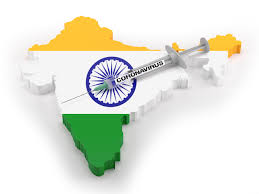
Coronavirus COVID-19 vaccine India
India is making significant progress in producing the probable Coronavirus COVID19 vaccine. Many institutions in India are engaged in Research and Development for Corona vaccines in the country. Accordin to information provided by Pune based ICMR institution, National Institute of Virology and Hyderabad based CSIR institution Center for Cellular and Molecular Biology, six Indian companies are working on probable vaccine candidate for Coronavirus.
COVID19 vaccine can be developed by 2021, says WHO scientist! The chief scientist at the World Health Organization (WHO) Soumya Swaminathan has said that at least one COVID19 vaccine will be ready by 2021. Swaminathan said that we can be hopeful of seeing one “safe and efficacious” COVID-19 vaccine by the next year. Swaminathan has revealed that WHO has been discussing methods for “fair distribution of the vaccine” with its member countries.
Chinese tech giant unicorn ByteDance Ltd. is anticipating a huge loss of over USD 6 billion after ban on its 3 apps including hugely popular video making TIK TOK app in India. The decision was taken by indian government in wake of unfortunate clash in Galwan valley in Ladakh between Indian and Chinese soldiers which led to death of 20 Indian brave soldiers and more number of casualties in Chinese camps.
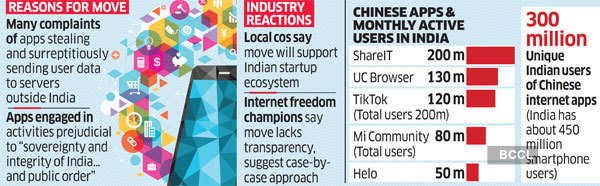
Besides TikTok , India on last Monday banned 58 more Chinese apps including Club Factory, UC Browser and Share it apps for engaging in activities prejudicial to sovereignty and integrity of India, defence of India, security of India and public order.
India was the biggest market in terms of users . Of the total 611 million downloads nearly 112 million are from India which is considerably huge. This ban has however sent image to Chinese government that India would never compromise its privacy, sovereignty and integrity.
The Chinese government has been angry over the decision and want us to take back the decision. However the ban period is not clear and the banned apps are claiming that they have not revealed any information to foreign countries even China.
A top official said the government had considered all aspects before taking the decision. “These apps have been there for a long time, and there are some privacy and security issues with them including risks of data going out of the country,” said the person.
The statement from the Ministry of Electronics and IT (MeitY) said it had received complaints from various sources, including several reports about the misuse of some mobile apps for stealing and surreptitiously transmitting users’ data in an unauthorised manner to servers outside India.
The ban would surely help in bringing Indian alternatives for the Chinese apps and reduce the dominance of Chinese products in Indian market.
India is that the world’s biggest producer and consumer of dairy. In 2018 alone, India produced 186 million metric tonnes of milk — about 410 billion pounds and 22 percent of the milk produced globally. Almost all of that is consumed domestically thanks to India’s dairy-heavy diet — think creamy curries, yogurt drinks, and a popular type of butter called ghee. A quick note before we proceed: this includes milk from buffaloes, which are an important source of milk in many developing countries. the point is that India loves milk.
In 2011, the French dairy company Danone hoped to capitalize on this by opening a division in India. Danone opened its own processing plant in Haryana and tried to capture some of India’s 1.2 billion dairy lovers. But less than a decade later, Danone shuttered their dairy business in India. That same year, the corporate made 28 billion dollars worldwide and was within the top three global dairy companies. With all this success, elsewhere, why did Danone’s dairy business sour in India? Let’s start with some background on Danone. Their business is broken down into three categories:
1.specialized nutrition, like supplements and formula for babies;
bottled waters and seltzers;
dairy and plant-based alternatives.
That one makes up over half of their global sales, but it’s also the one that failed in India. Danone does still sell specialized nutrition products in the country, but they don’t break out those sales figures separately. This is the same company as Dannon in the U.S. The company decided to rebrand to make the spelling less confusing for American consumers. Anyway, now for some background on India’s dairy industry. There are about 75 million dairy farmers in India. Most of them are women who own one or two buffaloes or cows to supplement the family’s income. Nearly half of India’s milk is not sold, but consumed by the farmers household. This makes India’s dairy industry much more fractured and localized than other countries where Danone operates. Take the company’s native France and one of its biggest customers, the U.S. Each has far fewer dairy farms with herds that dwarf India’s one or two animal average. This was Danone’s first big problem in India: sourcing milk is difficult. Of the half not consumed by farmers’ households, only about 15 percent goes to big organized companies or government run cooperatives. The rest goes to hundreds of small, local milk processors.
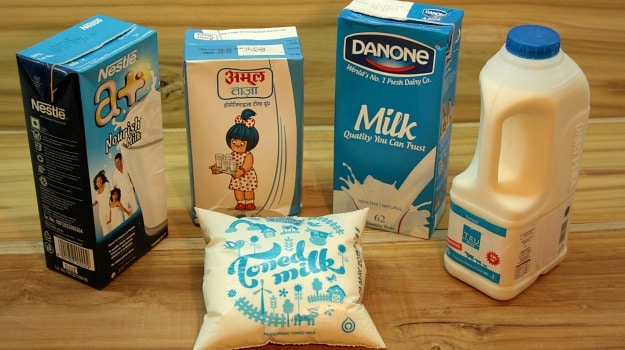
The largest companies like Amul, Mother Dairy, and Nestlé have tiny percentages of the market, and they’ve been there for decades. Market research firms Mintel and Euromonitor declined to release specific market share numbers to CNBC. However, a 2016 piece in The Economic Times of India citing Euromonitor put the figures at about 7 percent for Amul, 3.7 percent for Mother Dairy, and 2.9 percent for Nestlé. In short, tapping into the existing dairy infrastructure is effective but time consuming. Imagine the effort of contacting dozens or hundreds of local and regional dairies, processors, or individual farmers. But establishing a separate supply chain altogether is very expensive — a lesson Danone learned the hard way. And when Danone did get milk, the company focused on the wrong products. Danone pushed plain yogurt and flavored yogurt drinks — popular in places like the U.S. and France with high profit margins to boot. But in India around the time when Danone arrived, yogurt comprised only 7 percent of the dairy consumed.
The real money was in ghee, a type of clarified butter, and plain old fluid milk, a product with razor-thin margins dominated by those hundreds of local small-scale producers. Analysts explained to CNBC the simple reason why Indian consumers shunned Danone’s prepackaged yogurt. And if Indian consumers did want to buy premade yogurt, they had a slew of cheaper options than Danone. Dairy never accounted for more than 10 percent of Danone’s sales in India, a far cry from its global 50 percent. Its specialized nutrition arm picks up the slack, and the company announced a renewed focus on that division when it shuttered its dairy operation. Meanwhile, two of their biggest competitors, Amul and Nestlé, made nearly five billion and 750 million from dairy, respectively. But not all hope is lost for Danone’s dairy in India.
In January 2018, the same time that Danone ended its dairy production there, the investment arm of the company announced its part in a 26.5 million dollar investment in Epigamia, an Indian yogurt startup. This could be a sustainable move for Danone in India’s dairy industry because Epigamia offers consumers products that add value onto the plain yogurt they will make cheaply reception . But perhaps most importantly is this: while much of the population still makes yogurt the old-fashioned way, analysts predict that a growing number of consumers will want to buy premade options as they move into corporate jobs in developing urban centers. Very large numbers indeed. If only 5 percent of India’s 1.35 billion people decides to buy prepackaged yogurt, that’s over 67 million consumers — more than the entire population of Danone’s native France.
When we talk about successful persons nearly all of us think that there must be something secret behind their success. May be we think they work hard but don’t we too work hard if yes then why do most of us think or assume that they are not successful in their life. There are no as such secrets behind success but there are surely some values which if we follow regularly become secrets behind our success. Let us learn about some so called unknown secrets of success.
1.successful people have strong self beiief:
This is the most essential quality to be successful. Such persons do sometimes get caught in self doubt but they witty enough to encounter such things. Instead of over analysing of what things could go wrong they focus on their strenghts. Thus to become successful one must have confidence in themself.
2. To be successful you need not be great all time but must be consistently good:
Yes many times people think that to be successful they must be always great in their work but no it is consistently good performance that makes one successful over the time. If you are great in your work it’s totally ok but being consistently good is must.
3.He who conquers the mind conquers the world:
Mind control is the most important thing to be successful, one must be always focused towards their goal in order to achieve success. Mind is like stearing of the vehicle, in order to reach your destination you must take control of it and keep going in the right path. There will be many distractions in the way but to win you must show strong desire and faith with you controlling the mind not your mind controlling your body.
4.Don’t bother about others, If you are clear in your goal:
This fact is always misunderstood sometimes you have to listen to elders and other experts in your field, because geart people are good listeners. However if you think someone is intentionally teasing you or distracting you from your goal, don’t even bother to reply them.
5.Don’t be arrogant or think yourself superior than others and always have faith in god:
One who is arrogant or over-confident has always risk of being failed. Only the ones who know their limits and are aware of their surroundings succeed. Great people never show-off and always know the importance of god and grateful to others. Don’t forget humans are social beings thus one who gains faith of society becomes successful. Hope this article can help readers to redefine success in a positive way.
In a commendable and courageous judgment, the Kerala High Court just recently on July 1, 2020 in Jana Samparka Samithy Vs State of Kerala in Case No. : WP(C). No. 27148 of 2015 has minced no words to make it unmistakably clear that the State Government has a duty to ensure well-being, life and liberty of migrant workers also. The State Government cannot abdicate this onerous responsibility under any circumstances. All the State Governments must always pay heed to this what the Kerala High Court has held so elegantly, effectively and eloquently!
To start with, the ball is set rolling in para 1 of this latest, landmark and extremely laudable judgment authored by Justice Shaji P Chaly of Kerala High Court and its Chief Justice S Manikumar wherein it is observed that, “W.P.(C) No. 23724 of 2016 is a Public Interest Litigation suo motu registered by this Court on 17.06.2016 on the basis of the common judgment in W.P.(C) Nos. 31925 of 2015 and 15370 of 2016 of a learned single judge of this court portraying the pathetic conditions of migrant labourers in the Labour Camps situated within the State of Kerala. As per the judgment in W.P.(C) No. 31925 of 2015, the Secretary of the Vadavucode Puthencruz Grama Panchayat was directed to seal the buildings of the respondents in the said writ petition, and the District Administration along with the Local Self Government Institutions were directed to take immediate steps to avert nuisance caused by the property, remove the contaminants and restore it to ensure safe habitation of the nearby residents. Other requisite directions were also issued. One of the directions was to the District Collector, Ernakulam to depute an Officer sufficiently senior in the hierarchy to conduct an inspection of the premises and close down the labour camp by providing alternate facilities for accommodating the migrant labourers and collect samples from the well water and to conduct analysis of the same. Since we found that the captioned writ petitions have intrinsic connection, we heard them together on agreement.”
To be sure, it is then stated in para 2 that, “The learned single Judge, taking into account the social ramifications emerged out of the specific instance brought before it in the writ petition, has directed as per an order dated 20.06.2016 to place the judgment before the then Acting Chief Justice requesting to take a decision as to whether a suo motu Public Interest Litigation was to be initiated, along with a memo filed by the learned Government Pleader in W.P. (C) No. 31925 of 2015 and the report of the District Collector with the photographs taken at the time of inspection. It was accordingly that the suo motu proceedings started. Thereafter, as per the order dated 18.07.2016, a Division Bench of this Court impleaded the Kerala State Legal Services Authority represented by its Member Secretary as an additional respondent in the writ petition, in addition to the State, its various Departments, District Collector, Ernakulam, an official of the Labour Department, public sector undertakings like Bharat Petroleum Corporation Limited, Indian Rare Earths Limited, Hindustan Organic Chemicals Ltd. etc. The member Secretary of KELSA was also directed to allot the suo motu case to Smt. Parvathy Sanjay, and with her consent she was appointed as amicus curiae on behalf of the Kerala State Legal Services Authority.”
While continuing in the same vein, it is then specified in para 3 that, “Thereafter, this Court was issuing periodical directions to the respondents as well as the amicus curiae to submit reports so as to issue directions to the State Government and the officials to take appropriate steps to protect the interest of the migrant labourers. The Secretary of KELSA has filed various reports before this Court pointing out the deficiencies existing in the labour camps, and the deplorable conditions of life of the migrant labourers who have been working in various establishments, especially at Perumbavoor, Ernakulam District where they were employed by the Plywood Manufacturers. Along with the report, KELSA as well as the amicus curiae have produced photographs, which would speak in volumes the pathetic condition under which the migrant labourers were living and the difficulties faced by them due to lack of facilities. To combat these issues suggestions were also placed before this Court.”
Be it noted, it is then envisaged in para 4 that, “The amicus curiae has also produced before this Court emergent reports taking into account the urgent actions to be taken and also seeking appropriate directions to the State as well as the other authorities. Likewise, taking into account the report of the amicus curiae, directions were issued to the public sector undertakings who were found to be the principal employers. The report also demonstrated the unhygienic conditions, and the poor maintenance of the bathroom and toilets in labour camps. Pollution problems were also reported to be persisting in the labour camps, however consequent to the successive orders issued by this Court, steps were taken by the authorities and the public sector undertakings to abate the nuisance. Steps were also taken to decongest the labour camps consequent to such reports. The Panchayat as well as the other authorities were also given the liberty to inspect each of the labour camps and take appropriate decisions so as to ensure only a minimum number of labourers residing in such labour camps. In fact, on the basis of the report that there was exploitation of the migrant labourers, appropriate directions were issued by this Court, and due to the constant and frequent reports of KELSA, statement filed by the Government and its officials, as also the report of the amicus curiae, and the consequent monitoring by this court, many of the problems that were faced by those migrant labourers could be curbed and other situations were also able to be regulated to a considerable and satisfactory extent. While continuing so, situations have arisen due to the lock-down restrictions on account of the pandemic, Covid-19 vis-à-vis the difficulties faced by the migrant labourers. Due to the closure of the business establishments and the factories, the migrant labourers were faced with various difficulties, including loss of employment and situations with respect to their day-to-day affairs. Thereupon, on the basis of the reports submitted by the KELSA and the amicus curiae, clarifications were sought by this Court from the Government and its officials and after considering the rival submissions, directions were being issued to sort out the difficulties faced by the migrant labourers. In fact, such reports filed by the KELSA and the amicus curiae were extending help to the State Government and its officials to identify the issues specifically, and to take urgent steps to abate the nuisances confronted by the migrant labourers, and also to alleviate the difficulties faced by them due to the unemployment, and the consequential unrest generated.”
To say the least, it is then elucidated in para 14 that, “After hearing the learned counsel for the petitioner in the said writ petition, learned Sr. Government Pleader, Sri Surin George Ipe, and the learned amicus curiae Smt. Parvathy Sanjay representing the KELSA, we are of the view that the writ petition can be disposed of with appropriate directions taking into account the present situations prevailing in the State of Kerala. Needless to say, the State Government is duty bound to protect the health and welfare of the migrant workers in accordance with the mandate contained under Article 21 of the Constitution of India and the obligations and duties contained under the directive principles which are fundamental in the governance of the State and also the fundamental duties imbibed in every citizens under Article 51-A of the Constitution of India.”
As a corollary, it is also then said in para 15 that, “On a conjoint reading of the said provisions of the Constitution of India, we are of the view that, the State has an onerous duty to ensure the well being and life and liberty of every citizen, which includes the migrant workers also.”
On the face of it, what is then further underscored in para 16 is that, “Therefore, the State Government has a duty to ensure that the employers are providing appropriate shelter to the migrant workers, a clean environment and a healthy living condition with sufficient ventilation, light etc. along with other basic amenities. It is also the duty of the State Government to see that employers are satisfying the requirements in accordance with the prevailing laws with respect to the wages, contribution to welfare funds etc. of the migrant labourers. So also, adequate measures shall be taken for curbing ill-treatment of the labourers in any manner, by the employers.”
Going forward, it is then stated in para 17 that, “In that view of the matter, there will be a direction to the State Government to ensure that the life and liberty of the migrants labourers are protected envisioned by the framers of the Constitution of India and bearing in mind the responsibilities and the fundamental duties and obligations of the State Government in doing so. If any information is received by the State Government and its officials in respect of any ill-treatment of the migrant labourers from any responsible corners, quick action shall be taken for ensuring their well being and life and liberty. It is also made clear that if any of the migrant labourers expressed his intention to go back to his native State, adequate steps shall be taken by the State Government through its Offices to ensure return of such migrant workers subject to the lockdown restrictions and consequential SOPs issued by the respective Governments. So also, the Government shall always be watchful to ensure that no forcible detention are made by the employers of any migrant workers so as to cause any prejudice to the migrants, and if any such action on the part of the employers are noted by the Government, adequate steps shall be taken to initiate appropriate action against such persons. We also make it clear that the State Government is at liberty to implement the suggestions in Ext. P1 report in W.P.(C) No. 23724 of 2016, if they are genuinely required to improve the health and welfare of the migrant labourers.”
In essence, this latest, landmark and extremely laudable judgment by a two Judge Bench of the Kerala High Court very rightly accords the topmost priority to the well-being, life and liberty of migrant workers also who always render their invaluable contribution in State’s development in all spheres as we have already dwelt in detail. It enjoins upon the Kerala State Government to ensure that the same is protected always! The Kerala State Government and its officials must comply with accordingly with the directions stated in the judgment without fail! There can be no denying or disputing it!
Apple sells millions of iPhones every year. In the year 2018, the tech giant reported selling close to 47 million units worldwide. But not all markets are created equal. India has been one of the hardest countries to crack for the Cupertino giant. Although it’s been over a decade since Apple began selling iPhones in India, the company can’t seem to get a big bite of the world’s second-largest smartphone market. India is a very price-sensitive market, which means that people pay a lot of attention to what value they are getting out of the price that they are paying for a particular product.
In the case of Apple, there’s a lot of premium being paid for the brand itself, and that’s where the price-conscious Indian consumer thinks about that if they are getting the same kind of features or specs from another phone that they can get a lower price, that makes it tougher to sell something at a much higher premium. Apple is definitely feeling the pressure. Samsung and Xiaomi accounted for the majority of smartphone sales in India in quarter three of 2018, garnering 22 percent and 27 percent respectively of the smartphone market. In contrast, Apple made up only about 1 percent of India’s smartphone market share, trailing behind Chinese phone makers Vivo and Oppo. It’s also worth noting that the premium smartphone market in which Apple operates still makes up less than 5 percent of the overall smartphone market in India.
Most of the smartphones in India that sell, they are below $200 and Apple does not have any play in that segment. This environment is one that competitors like Samsung have begun to adapt to. The South Korean powerhouse is launching its Galaxy M series budget smartphones to appeal to the Indian market. In contrast, Apple doesn’t seem too keen on changing up its India strategy. I got some ideas for you, OK? I talked to some people at Walmart yesterday. An arrangement with Walmart Flipkart to take over India with a budget phone rather than doing it piecemeal? For us, we’re about making the best product that enriches people’s lives. And so, we’re not about making the cheapest. For us, what we’ve seen is, there’s enough people in every country in the world that we play in that we can have a really good business by selling the best phones. Still, some tech investors see Apple as being out of touch with the India market. You think they are going to slash prices? I think they have to. How can you sell a $1,000 phone in a market like China where the GDP per person is $10,000? In India it’s $2,000. And if you go back to the September earnings release, they talked about the fact that India was way below where they thought.
Well, if your average GDP person is $2,000 and you’re trying to sell a $1,000 phone, it’s gonna be probably pretty hard to sell it. They probably want to eat. Another issue for Apple: stiff tariffs. I think iPhones have a specific disadvantage in the India market because of the local regulation. There is a very high import duty on the phones that are not manufactured locally in India. So for most of the big players in the India market, they are manufacturing locally so they do not have to pay that high import duty. Samsung has been manufacturing phones in India since 2007 and just last year opened the world’s largest mobile phone factory on the outskirts of New Delhi. Chinese phone makers Xiaomi and Oppo have also invested millions of dollars to build manufacturing plants in the country. That’s not to say Apple has completely ignored India.
The tech giant already manufactures its lower-cost iPhone SE and iPhone 6s models locally, through a partnership with Taiwanese manufacturer Wistron. This year, Apple is also expected to move its production of the iPhone X series into Foxconn’s plant in southern India. If you look at how we’ve done over the years, we’ve gone from a $100-$200 million business to last year we had we exceeded $2 billion. That $2 billion was flat year over year after a rapid rapid growth. And so we have more work to do. We’d like to put stores there. We would like some of the duties and so forth that are put on the products to go away. But even with its local hardware production push, Apple still fails to provide Indians with a robust software experience.
Apple has introduced turn-by-turn navigation for the India market. Before that, that significant part was missing. And beyond that, there’s not a lot of customization that Apple has done for the India market. There are not a lot of apps that specifically cater to the India market. Past complaints for Apple Maps also included missing major landmarks and having very sparse data of cities and towns. But again, Apple is working on a solution. The company has hired thousands of engineers at its mapping facility in Hyderabad to improve its services. Apple Pay is also not an option in India, though similar payment services from Samsung and Google have already been rolled out. Finally, unlike in most other markets, Apple can’t rely so much on its brand recognition to sell devices in India. The other challenge for Apple in India is that it cannot have its own retail stores or own Apple stores because of some regulatory issues, which means it has to have partners on the retail side, whether it’s the Apple premium resellers, which you see in many other countries as well, or with the third-party resellers. In order to have a larger presence in the market.
Apple has to have partnerships with thousands of these resellers, which in a country as big as India, can be challenging. Apple is still a premium status symbol for many Indians, but one that is out of reach for the majority of the population. With phones from Chinese brands like OnePlus, which was India’s best selling premium smartphone brand for the second quarter in a row, offering similar features at a fraction of the cost, Apple may have a very tough time getting a bigger slice of the India market.































 Eduindex
You must be logged in to post a comment.