Meetings in India to topple my govt., says Nepal PM K.P. Oli

 Prime Minister K.P. Sharma Oli of Nepal on Sunday said meetings are being organised in India to topple his government.

Addressing a gathering at his official residence to mark the 69th birth anniversary of the late communist leader Madan Bhandari, Mr. Oli said his government enjoys parliamentary majority and the ouster plans will fail.

“There is news coming from Delhi about this. Look at the meetings being organised in India against Nepal’s decision to amend the Constitution to place the revised map of the country in the national emblem,” said Prime Minister Oli, pointing at the alleged plot to overthrow his government.

The lower house of Nepal’s parliament unanimously passed the Second Constitution Amendment on June 13, which gave constitutional status to the new map of the country including the disputed Limpiyadhura-Kalapani-Lipulekh region that is in the Indian state of Uttarakhand. The bill was signed by President Bidhya Devi Bhandari on June 18.

Mr. Oli said India was upset by Nepal’s territorial assertion.

“Nepal’s nationalism is not so weak. We have changed our map and if the prime minister of the country is deposed, then that will be unthinkable to Nepal,” he said. Hinting at India, he said some people consider the new map of Nepal a “crime”. He also indicated at an external plot against his government in 2016 and recollected that the government fell at that time because he had reached out to China and signed transit agreements which reduced dependence on land connectivity through India “I clearly remember that I was toppled when I signed transit agreement with China,” he remarked during the meeting.

“You must have heard that the Prime Minister will be changed in 15 days. If I am removed at this time, no one will dare to speak in favour of Nepal because that person will be dismissed immediately. I am not speaking for myself. I speak for the country. Our party, our parliamentary party will not fall into such traps. Those who are trying, let them try,” said Mr. Oli.

Despite the popular and emotive move on the new map, Mr. Oli has been criticised by colleagues from the faction of Pushpa Kamal Dahal ‘Prachanda’ in the ongoing meeting of the powerful Standing Committee of the ruling Nepal Communist Party. The hostility between the two factions was evident on Friday when Mr Oli did not attend the Standing Committee’s meeting.

The members of the Committee have been critical of the Prime Minister’s handling of the COVID-19 pandemic in Nepal. It is understood that of the 44 members in the Standing Committee, around 30 are with co-chair Prachanda, considered a challenger to Mr. Oli.

The political parties of Nepal put up a joint front during the debates on the new map in parliament but soon thereafter fissures appeared in the Nepal Communist Party over the issue of leadership as Prime Minister Oli is holding both the post of the prime minister as well as chairman of the ruling party. It is being speculated that Mr. Prachanda, though not as popular as Mr. Oli, has support from the opposition and the Madhesi members of the parliament.

Himachal Pradesh Has Been Killing Monkeys for Four Years. Will It End in 2020?

For the fourth straight year, the Himachal Pradesh government has received approval from the Union environment ministry to declare rhesus macaque monkeys ‘vermin’, opening them up to be hunted and killed.

Rhesus macaques are classified as being of ‘least concern’ in the IUCN Red List.

Principal chief conservator of forests wildlife and chief wildlife warden Savita told The Wire Science, “In our latest monkey population estimation, [we recorded] 1.36 lakh monkeys – a decrease of 33.5% since the last count five years ago.”

This survey was conducted by researchers from the Salim Ali Center for Ornithology and Natural History, Coimbatore, on December 4 and 5 last year. The results were published in March 2020.

“Around 5,000 forest staff and officials were engaged in this survey. The monkey-infested areas were divided in line transit patterns. The monkeys in each transit were counted thrice,” Savita said.

Since 2007, around 1.62 lakh monkeys have been sterilised in Himachal Pradesh’s seven sterilisation centres, according to her, preventing the birth of around four lakh rhesus macaques.

“With further reduction of monkey population achieved this year, we may not [have to] declare them vermin next year.”

But even without culling, Savita said the state would continue with its plan to sterilise 20,000 monkeys next year.

Sumanth Madhav, a campaign manager at the Humane Society International, isn’t a fan of Himachal Pradesh’s approach, however. He doesn’t think monkeys turn to human localities because forests have run out of food. “The degradation and fragmentation of habitat in forests is factual. But there is no evidence to support the assertion that there is not enough food for monkeys in the forest.”

Instead, Madhav said, monkeys enter human-settled areas for the easy access to food.

However, Savita and Madhav agree that the more food the monkeys find, the more their population increases, and have called for municipal corporation officials, local bodies and gram panchayats to coordinate and ensure proper disposal of garbage.

Under Section 62 of the Wildlife Protection Act 1972, animals designated ‘vermin’ – because they damage crops – can be killed without inviting punishment. However, animals that move in groups, including rhesus macaques, often have a hierarchy among themselves. When this ordering is suddenly disrupted, there could be unforeseen consequences.

“If an alpha male in a troupe, who manages the entire group, is killed, the younger ones are left headless,” Madhav said. “These babies or sub-adults don’t know how to behave and they create a ruckus. So one troupe becomes fragmented into smaller chunks, with rowdy youngsters.”

So in the absence of a policy on the right way to cull rhesus macaques, many are doing it wrong and potentially making a bad problem worse.

Some farmers, for example, have taken to poisoning the monkeys. Last year, officials spotted the carcasses of a hundred monkeys around Shimla.

Kuldip Tanwar, president of Kisan Sabha Himachal, said, “The Himachal Pradesh government prohibited arms and ammunition use in 1983. Those guns have become obsolete, and their users have lost practice.”

Nine-tenths of the people of Himachal Pradesh live in rural areas. Only a few rich farmers among them can afford guns, pistols and cartridges; the rest use poison. “The farmers are accustomed to using pesticide for their crops, so using another form of poison for monkeys comes easy,” Tanwar said.

In the case of the hundred that had died last year, Tanwar said some people had mixed corn paste with the poison, smeared it on slices of bread and laid them out in places the monkeys visit often. Once a monkey consumed the slice, it would wander off in search of water. If there was a water body nearby, the poisoned monkeys’ carcasses would collect there.

Tanwar used to work with the Indian Forest Service until about a decade ago.

Savita said a carcass that hadn’t been properly disposed could subsequently threaten any animals or birds that may come in contact with it or the water.

And at least one sign points to farmers not disposing of the carcasses: Savita said the wildlife department has declared a cash prize of Rs 500 for every monkey killed – but a single farmer hasn’t come forward to claim it.

She thinks it could be because of the stigma attached to killing monkeys, given the importance of the monkey-god Hanuman in Hinduism. But this reverence is part of why farmers have such a tough time with monkeys in the first place: people often feed monkeys because they’re thought to be venerable in some way.

And this is why, Savita continued, no other state in India might have declared monkeys ‘vermin’.

“Though no method of culling has been prescribed by the wildlife department, the farmers have been directed to hand over the monkeys’ carcasses after they have been killed for a proper disposal,” Savita said. “However, we haven’t received any complaints about farmers resorting to poison.”

Need for a multifaceted strategy

In the past, farmers used to protect their crops with community-watch programmes. Tanwar suggested the government could deploy people through the MGNREGA scheme as ‘community watchers’.

In keeping with that, Madhav said culling must be more humane. “It is a debatable subject, though there is no evidence culling can help in a conflict. It is more politically motivated and psychologically comforting for the people.”

He also said the people as well as state officials could be confusing “population management as a tool for conflict management” when really they ought to be guided by different strategies.

“Population management may help but it is not the only solution.” Monkeys that are “sterilised may live for another ten or more years, so conflicts will continue.” As a result, “unscientific population control and sterilisation in isolation will never give optimum results.”

Instead, he stressed the need for a multi-pronged approach that works with other important factors to ease human-monkey conflicts, including an “awareness programme” to have farmers shift to “crop rotation or [to growing] unpalatable crops for monkeys”. He also said, “The government should introduce a crop insurance scheme and make timely ex gratia payments [for] crop loss to farmers.”

“These measures over a period of long time will help people live alongside animals.”

Decimation of primary herbivores

Such peaceful coexistence pertains not just to the rhesus macaques but also to wild boars, porcupines, rabbits and peacocks, all of which have been blamed for crop depredation in the state.

While Himachal Pradesh is alone in designating monkeys ‘vermin’, Uttarakhand has accorded the wild boar this status (as has Kerala) and Bihar, the nilgai.

Savita said all of these animals – and bird – have been forced to wander towards human settlements because human settlements have encroached on their habitats.

Suresh Bhai, an environmentalist, said however that wild boars and nilgai are primary herbivores. So manipulating their population could in turn affect the survival of tigers, leopards and other carnivores in the same ecosystem.

Seema Sharma is a Chandigarh-based independent journalist. She previously worked at The Tribune and The Times of India. She writes on forest, wildlife, environment, social and rural issues.


 

The Incredible month of Football.

Since the lockdown has been raised and the world is trying to live with the corona virus while taking precautions. Its been a month since football was given a green light in various parts of world but as a precautionary measure the matches had to be played behind closed doors without any audience. With the change in certain rules there will be 2 cooling breaks in a 90 minutes match including the halftime break. The players are not allowed to spit on the pitch. All the players who have started training for their respective clubs have tested negative for the virus. The previous week of football was something incredible and no football fan would want to miss it. Here we have what all happened during this week of football around the world.

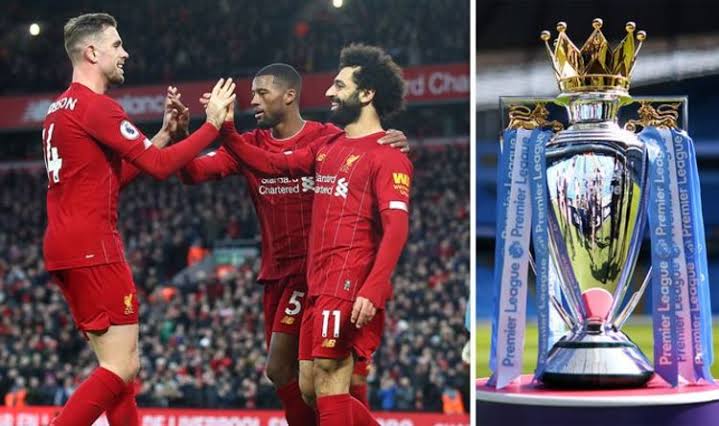
Liverpool crowned Premiere League Champions.

Liverpool were crowned the premiere league champions on Thursday as Chelsea beat Manchester city by a score of 2-1. This ended the 30 year long wait of the reds to win the English Premiere League. This was the 19th league title for the reds. Liverpool still got seven games to play as they are now 23 points clear on top with Manchester city on the 2nd position. In the 31 league games played Liverpool were able to win 28 of them which prompted the Liverpool star Mohamed Salah to speak up and he said “now is our time to win the league”. It has been a tough time for the Liverpool fans as due to the pandemic there were chances of the league being called off and there would have been no declared winner on the other hand Liverpool had not won the trophy from the past 30 years but the wait was worth it as now all the Liverpool fans are celebrating around the world chanting “YOU WILL NEVER WALK ALONE”.

Barcelona’s La Liga title slipping away.

Barcelona drew with a score of 2-2 against Celta the previous night. With suarez opening the scoring for barcelona was a good sign for the striker as he had returned from an injury. Both the goals were scored by suarez and were assisted by messi. Everytime celta moved forward they seemed dangerous as they created many chances from the wings but failed to score in the first half. With the second half in hand celta looked to hurt barca on the counter and as they got the chance they scored to level the score 1-1 but later on suarez score another goal to make it 2-1 for the spanish giants. The twist came in the 87th minute of the match where celta had a freekick just outside the box. The captain stood up to take the freekick and scored an absolute beauty which leveled the scoreline and fortunately the final whistle was called off. Barcelona move on top of the table by just one point clear ahead of real madrid. The whites play espanyol today and if the zinedine zidane man pull off the victory they would move 2 points clear on top ahead of barcelona.

Juventus loose Coppa Italia to Napoli.

Napoli stunned the former Italian champions by dragging the match into the penalty shootout. Most of the talk was on ronaldo’s form as he was not able to make any major impact to the game. Ronaldo did not even get a chance to take a penalty as napoli won 4-2 on penalties. The Juventus coach spoke up and said “Cristiano Ronaldo is struggling to regain his famous acceleration speed after the shutdown forced by the corona virus pandemic”. After the result Cristiano Ronaldo’s sister slammed the Juventus coach and his tactics. She wrote on Instagram “what more can you do?This is it and that’s all, that’s why my darling cant work miracles on his ow… I don’t understand how you can play like this anyway … head up,my king.”

The return of football has already caused a lot of excitement, tension and controversies in just one month we look forward to the return of champions league which is expected to return on 7th of august.

Online shopping:E-Commerce Websites reigning the world!

It has become a part of each and every household, be it shopping for groceries, accessories, textbooks or even clothes, just by clicking a few buttons one has everything available at their doorstep, it has made our lives hassle free and is the way to live in this new age where technology is a boon for us. This is one of the best ways to shop especially in times where we have become used to our sedentary lifestyle where we can access everything from the comfort of our homes.

When it comes to clothing and other products we have thousands of e-commerce sites offering some of the best quality products, the features which the online shopping website offers such as product description, price ranges, reviews, image of the products etc. makes e shopping an easy and fun task, the user friendly applications and the easy return policies really can do a lot benefits in this fast and furious life and also one of the biggest benefits it offers is that one has many options to choose from.

One of the other amazing boons it offers is the comparison of the products, which is not tiring at all like it is in real life when it comes to the payment of the product  be it pay on delivery, card, cash, or payment apps such as google pay– this option really eases our shopping. Some of the most famous online shopping companies are eg. – myntra, Amazon, Tata cliq etc..

Pros And Cons Of Online And Offline Shopping | IndianWeb2.com

Even when it comes to stationeries, reference books, textbooks and other such items sites like Amazon are always at you rescue, The amazing thing is that it allows the buyer to know whether the product is in stock or not, where unlike in reality if one goes to a store to buy a certain textbook and finds out its out of stock it really can be irritating as it is a waste of energy and time.

Many online websites offer medical consultation as well via phone calls, WhatsApp or even video calls, this can really be a good option for senior citizens who are unable to visit clinics or hospital, similarly many e-commerce websites offer delivery of medicines at one’s doorstep which is an economical option to choose and they give one a good guarantee over the quality.

List Of Online Shopping Sites In India - 1Grand Trunk

Many websites which allow one to sell vehicles, furniture, books and much more, this is a great initiative as one can sell the product to someone who is in need of it and the seller can look forward to buying another products. This healthy cycle between the buyer and the seller continues. This exposes one to the whole business of online selling as well and how to make deals. There are many e-commerce sites which allow you to sell your old products.

In these crucial times where COVID-19 has restricted our movement, grocery delivery e-commerce sites like Grofers, Dunzo, Zomato and Big Basket have been saviours and are delivering all the essential goods in a quick amount of time near our doorsteps.

But one needs to check the safety, security and assurance of the product before buying.

  1. To check the guarantee of the product and the seller, to check the reviews and to check the seller’s information as well as other important details.
  2. One should also check the price of the product to know if it’s fake or not, many counterfeit cosmetic products are sold at low prices or the same price, one should also check the images available of the product. One should also check the ratings of the product.
  3. Installing anti-virus applications on your computer or phone will help keep the bugs at bay.
  4. To only buy from online shopping apps which you have trust over and not be lured by the offers which unknown websites give out.
  5. A lot of times to one has to check  the vendor in case of buying or check the buyer in case of selling used products as many fraudsters out their can take advantage of the deals and can do damage by hacking your personal information and much more.

Online shopping truly has been a benediction for us and will continue to reign at the top.

“Site of Unlimited Possibilities-If Humans Could Breathe Under Water?”

Adventures and new experiences have always fascinated humans, thus have been a part of our cultures as soon as we came to live on this planet. The moment from one place to another in search of water, food, climbing mountains and diving deep inside the sea and many more activities have been performed by humans since ages. We have been visiting under the sea quite frequently in search of seafood and new discoveries about aqua life. But we humans can’t breath under water, we can but not for quite a while. Thus we have developed such an artificial system for us to stay under water  and enjoy the peace and silence under it. 

But what could be the scenario if humans could easily breath inside water and require no artificial equipment for the same?  This could surely help us solve many if the problem which surely include:

  1. The availability of land to serve for the upcoming generation as per the rate of population growth.We could shift building of much needed infrastructure in and under water without difficulty to  breathe initially.
  2. It would allow our knowledge about the sea and creatures living in it to increase and wider the area and time to spend underwater. 
  3. It could help us remain fit and obesity would not be an issue in humans.
  4. Also provide the experience of swimming with other creatures like fish and dolphins.
  5.  it would help us make our underground construction possible.
  6.  This would lead us to generate much of the natural resources hidden under the sea and also bring up the possibilities of discoveries if some new elements.
  7.  This would surely help these resources to be safe from the waste we humans throw in it as we would be able to  notice it more closely and no one would like to be surrounded with waste and unhygienic components.
  8.  New adventures of under water sea through  water subway would be possible and we could travel to vast distances which are hidden from us. 

It seems much of a great adventure and easy but on a serious note it is not that easy. If we were able to breathe underwater, still our body is not meant for that. Sea and ocean water could be  much colder and also as we go down and down, this would surely lead us to Hypothermia which is a condition when our body loses much of heat than it can produce, thus slowly our body organs would fail to work and thus could even cause death . Also our eyes are not much adapted to see cleaner under water. If we do buy glasses, it does not provide much if clearity. Also as we go down, the brightness goes on decreasing, which is not a great sign, since our eyes are not so much adaptive to create visible prints of objects under water, thus we wouldn’t be able to see much. We would not be able to talk, for obvious reasons which would definitely have an effect on our vocals thus frequent visits to sea would make them weak. 

It all seems a dream until it turns into reality. Maybe in the future we will be able to develop systems that would enable us to breathe underwater and thus construct much of our needs under them with water not entering the building and harming humans. Maybe we could genetically evolve, which thus brings us the opportunity to behave like reptiles and be able to control our breath for much period of time. Future is full of new possibilities and these possibilities for humans to stay and perform activities under water would definitely be a change maker and would help us to understand our earth closely by looking at its resources hidden deep under the sea, pure and untouched. 

Should India be renamed, Bharat?

William Shakespeare had his most celebrated heroine Juliet say in his Romeo and Juliet play, What’s in a name”. “That which we call a rose. By any other name would smell as sweet.”

But most people wouldn’t agree with Shakespeare in their daily lives. For, a name is the most prominent identity of a person, a family, a caste, a religion or a country. Every name has a history. This was hotly debated in the constituent assembly when India got Independence from British rule. The British called India “India”. Before them, the Mughals, the biggest empire in India, called it Hindustan. After an intense debate, the Constitution accepted two names for the country, India and Bharat. Now, a petition had been filed in the Supreme Court seeking removal of ‘India’ as the name of the country and keeping just Bharat as the solitary identity of the nation.

In The Discovery of India, a book that Jawaharlal Nehru wrote during his years of captivity (1942-1946) and published in 1946 :

Often, as I walked from meeting to meeting, I spoke to my audiences of this India of ours, of Hindustan and of Bharata, the old Sanskrit name consequential from the mythical founders of the race.

When the book was published, these names, Hindustan, Bharat (also Bharata), India, coexisted in the subcontinent. Of the endless usage also was Hind, as in ‘Jai Hind’ (Victory to Hind), the battle-cry that Patel, Nehru other several other political leaders, liked to proclaim at the end of his speeches. To capture these innumerable meanings today is not an easy task. It demands to be conscious of the simple and yet too often forgotten fact that words have a past of their own; they do not maintain the same significance throughout time.

Naming the Nation and Constitutional debates

The constituent assembly debated Article 1 of the then draft constitution prepared under the chairmanship of BR Ambedkar. It was a heated debate that saw sharp exchanges among the members on November 18, 1949 – just eight days before the Constitution was adopted by “We, the people”. The debate opened with HV Kamath, a constituent assembly member from the Central Province and Berar. Kamath opposed the Ambedkar committee’s draft that had two names – India and Bharat.

Kamath projected amendments to Article 1 putting Bharat or alternatively Hind as the primary name for the country and voicing India only as the name in the English language. He listed names such as “Hindustan, Hind and Bharatbhumi or Bharatvarsh” to have been recommended by people.

When Kamath began explaining the origin of the name of Bharat, Bharatbhumi or Bharatvarsh dating it to ancient times. Kamath was strongly opposed to the language of Article 1(1) that says, “India that is Bharat”. Another prominent name to oppose the language was Seth Govind Das, who said, “India, that is, Bharat” are not beautiful words for the name of a country. We should have laid down the words “Bharat known as India also in foreign countries.” Das quoted the Vedas, the Mahabharat, some of the Puranas and the works of Chinese traveller Hiuen-Tsang to say that Bharat was the original name of the country, hence India should not be put as the principal name in the constitution post-independence. He also invoked Mahatma Gandhi saying that the country fought the battle of freedom raising the slogan of “Bharat Mata Ki Jai” asserting that Bharat could be the only plausible name for the country.

Among others who wanted India being named only as Bharat included KV Rao from Andhra Pradesh. Rao went to the extent of suggesting that on the basis of historical nomenclature, Pakistan could be named as Hindustan. Rao emphasized, “we can now call ‘Pakistan as Hindustan because the Indus river is there. Hind has replaced Sind : (Ha) in Prakrit is pronounced as (‘sa)’ in Sanskrit. Greeks pronounced Hind as Ind. Hereafter it is apt that we should refer to India as Bharat.”

At the end, when Rajendra Prasad put the amendments to vote, all fell. Article 1 remained intact as “India, that is Bharat”. However, the debate has continued.

Naming the nation: a sensitive and intricate issue to this day

In 2014, Yogi Adityanath – the current chief minister of Uttar Pradesh – had moved a Private Member’s Bill in the Lok Sabha, seeking substitution of word “India” in the Constitution with “Hindustan” proposing “Bharat” as the primary name of the country. His bill proposed to amend the language of Article 1 as, “Bharat, that is Hindustan, shall be a Union of States.

The Supreme Court wanted  the Centre and the states to comment on a plea demanding change in the name of the country from ‘India’ to ‘Bharat’, in April this year. A 2 judge bench of Chief Justice H L Dattu and Justice Arun Mishra had issued the notice to all state governments and union territories on the PIL which called for restricting the Centre from using the name of India in official papers and for any government purposes.

On June 1, 2020, Niranjan Bhatwal filed a petition, claiming to be a social activist from Maharashtra, said that even the NGO’s and corporates should be ordered to use ‘Bharat’ for all official and unofficial purposes. The PIL detailed that even in the Constituent Assembly, the leading suggestions for naming the country were “Hind, Hindustan, Bharat and Bharatbhumi or Bharatvarsh and names of that kind”.

Among the several questions raised in the PIL were whether the addition of India in Article 1 of the Constitution was just for reference, in order to repeal the Government of India Act 1935, and the Indian Independence Act 1947, where this country had been referred to as India and wanted it to be repealed by Article 395 of the Constitution. Further, it asked whether the addition of ‘India’ was simply referential for de-jure acknowledgement of the country by countries of other parts of the world for political purposes. The PIL also said whether Hindi language extracts of Article 1 Clause 1 of the Constitution signify the same meaning, as it signifies in the English language of the Constitution with respect to establishing the name of the country.

While the government has told the Supreme Court, there is no need to rename India as Bharat. Article 1 (1) of the Constitution lays down that “name and territory of the Union.—(1) India, that is Bharat, shall be a Union of States”. In its affidavit, the Ministry of Home Affairs has said issues concerning the country’s name have been reflected upon lengthily by the Constituent Assembly during the drafting of the Constitution and there was no requirement for a review.

The Supreme Court on 3rd June ordered that a plea to change India’s name specifically to ‘Bharat’ should be forwarded to the Centre for an appropriate decision.

“Bharat and India are both names given in the Constitution, says CJI.

The apex court had rejected a similar petition in 2016. Then CJI, T.S. Thakur emphasized that every Indian had the right to choose between calling his country ‘Bharat’ or ‘India’ and the Supreme Court had no business to either command or decide for a citizen what one should call his country.

Is there a solution?

The policymaking of naming is part of the societal production of the nation. Its processes are moulded by broad socio-political conditions and can be understood from several angles. The purpose has been to look at some of the inherited discourses on ‘Bhārata’ both prior to and at the time of its official equation with ‘India’ in the Constitution of 1950. In the 19th century, the name Bhārata was used to refer to the geographicalpolitical and administrative entity that the colonial power called ‘India’. That Bhārata—a cultural space whose unity was to be found in the social order of dharma—was a pre-national construction and not a national project.

 At the time of independence, India and Bhārata were equally worthy candidates to bless the newly-born nation, along with ‘Hindustan’. But the first article of the Constitution discarded Hindustan and listed the nation under a dual and bilingual identity: ‘India, that is Bharat’. One name was to be used as the translation of the other as exemplified on the cover of the national passport, where the English ‘Republic of India’ corresponds to the Hindi ‘Bhārata gaṇarājya’, or, possibly, even more, telling, on Indian postage stamps, where the two words Bhārata and India are located. It is possible that all these names will continue to be understood and interpreted with new circumstances, to give new connotations to India’s national identity, a constant, open-ended process.

What are we to make of the comparison of Bharat and India in the Constitution? How did such a double-name plan come about? This is the main question to be dealt with. In the end, we should realise that the Constituent assembly’s decision should be understood as the outcome of a long historical process with deep cultural roots.

Hyderabad’s high COVID-19 positivity rate worries experts

Telangana State Disaster Response and Fire Services Department workers sanitise the area surrounding Charminar in Hyderabad, to prevent the spreading of COVID-19

Report points to abysmally low testing rates in the State of Telangana Amidst apprehension that COVID-19 community transmission may be under way in large urban cities, Hyderabad’s high COVID-19 positivity rate (32.1% on June 23), the highest among major infected cities in India, coupled with low tests per 10 lakh population compared to other cities has been repeatedly red-flagged by worried Central government experts.

Pointing to the abysmally low testing rates in Telangana, the report ‘Testing Status: Hyderabad and Telangana’ accessed by The Hindu notes, “Only 1 out of 19 private labs in Telangana is conducting more than 500 tests per week and testing in Telangana is heavily focussed on Hyderabad. Tests per 10 lakh population in other highly infected districts (Ranga Reddy, Sangareddy, Warangal Urban and Jagaon) is extremely low.”

The document adds that Telangana has the highest positivity rate (June 10-23) in India (27.7%) and consistently ranges from 20 – 40% daily with the lowest tests per 10 lakh population (June 10-23) in India.

“All COVID-red States are being closely monitored and have been instructed to hike testing. Testing is vital to map out the growth and concentration of the virus in the general population. Several States have been instructed on this multiple times,” said a senior government official with ICMR who added that letters were issued to all States recently asking them to ramp-up COVID-19 testing.

The ICMR also has noted that COVID-19 escalation is sharpest in urban cities with Delhi, Gurugram, Mumbai and Chennai, also witnessing significant rise in the spread of the virus and added that Telangana has been repeated told to improve its testing scope and reach.

Bringing in the contrast, a senior health official added that neighbouring Andhra Pradesh is testing over 12,000 persons/day and also ramping-up testing to maintain a low mortality rate. “Andhra Pradesh has 336 TruNat machines and 42 labs for COVID-19 testing while Telangana has 21 machines and one lab,” the official added.

According to the Health Ministry, a Central team led by Lav Agarwal, Joint Secretary, in the Ministry is now in Gujarat, Maharashtra and Telangana to interact with the State officials and coordinate with them to strengthen ongoing efforts for management of COVID-19 there.

The Ministry added that they are expanding the COVID-19 testing labs network across the country, ICMR has inducted 11 new labs in the last 24 hours and the country now has 1,016 diagnostic labs dedicated to COVID-19 which includes — 737 in the government sector and 279 private labs.

“At present, India has Real-Time RT PCR based testing labs — 560 (Govt: 359 + Private: 201), TrueNat based testing labs : 369 (Govt: 346 + Private: 23) and CBNAAT based testing labs : 87 (Govt: 32 + Private: 55),” said ICMR.

‘Bring all helathcare facilities under one umbrella’

Meanwhile, in a statement issued by 26 national and Karnataka-based civil society organisations including Naavu Bharathiyaru Karnataka, All India Drug Action Network, All India Central Council of Trade Unions (AICCTU), Karnataka and Campaign for Dignified and Affordable Healthcare (CDAH), the group has noted that in order to successfully curtail the pandemic, a whole health systems approach is sorely required. This is missing in the current approach where provision of healthcare is seen in a segmented manner. There is a dire need to bring public, private, charitable, medical colleges, corporation facilities under a single umbrella with transparent and well-functioning referral and reporting mechanisms, said the group.

It added that the government could use the COVID-19 situation as a good opportunity to improve the reporting and assisted referral mechanisms from the various public as well private facilities so that the patients are not distressed going from one hospital to another and the treatment given to COVID-19 patients must be in strict adherence to Standard Treatment Guidelines, which should be issued by an appropriate government agency.


Jaipur Hospital Served Notice Over Trials in Patanjali COVID Drug

The Rajasthan Health Department has served a notice to the National Institute of Medical Sciences in Jaipur seeking an explanation on the trials of the Patanjali drug that claims it can cure COVID-19. Reports suggest that trials for the controversial ‘Coronil’ drug by Patanjali were conducted at NIMS, Jaipur before it was launched.

Chief Medical and Health Officer, Jaipur, Dr Narottam Sharma told PTI, “We served notice to the hospital on Wednesday evening seeking explanation in three days. The hospital did not inform the state government nor sought permission.”

NIMS has now however, reportedly distanced itself from the drug stating that no clinical trials for the drug were conducted at the hospital. NIMS Chairman, Dr. B.S. Tomar told The New Indian Express that there was no serious case in the patients admitted at the hospital.

“Only 100 asymptomatic patients were given few Ayurvedic medicines under the sponsorship of Patanjali. But we did not prepare any medicine nor did we know its name,” he reportedly said.

Dr. B.S Tomar reportedly claims that he had the ICMR’s trial wing, the Clinical Trials Registry – India’s permission for five ayurvedic medicines to be tested on coronavirus patients.

Earlier, the AYUSH ministry had sought information on the trial of the drug and banned Patanjali from advertising it as a medicine to cure COVID-19.

While the Uttarakhand government has served a notice to Patanjali for its claims about the drug, the states of Rajasthan and Maharashtra have reportedly refused to allow the Patanjali product to be used in their respective states till it received clearance from the AYUSH ministry.

We’ll get through this!

Vitamin D tips for home, COVID Lockdown

At present Corona, the virus is continuing its spread across the world with more than four million confirmed cases in 188 countries. Many people have lost their lives so far because of this pandemic. This is moving like a jet- one that may yet crash on those least able to cope. The best way to boost our immunity is healthy eating practices which may play a main role in determining our overall health during this pandemic period. All vitamins play a huge part in helping us maintain homeostasis and better health. In the age of “the virus” and many other bugs that seek to injure us, our immune system is called upon to soldier up and defends its home.  Many of are unaware of what does vitamin D dowhat are the benefits of vitamin D and so on. So here is an article on Vitamin D tips for home and everywhere.

Vitamin D

Vitamin D is also known as the sunshine vitamin, and the reason behind that nickname is that the primary source of vitamin D is the sun. Calcium and vitamin D should be combined to work correctly. Its primary functions are to protect and repair every bone structure which in return helps to grow immunity.

Vitamin D tips for home

Vitamin D is important. It acts differently than other vitamins. It acts like a hormone and every cell in your body has a receptor for Vitamin D. As it is an important component needed by our body we should start maintaining levels of vitamin D.

Bioavailability

Vitamin D can be activated by respiratory epithelial cells. Metabolism is directly involved in the immunity response to respiratory viruses.

Food enriched with Vitamin D

  • Salmon, Tuna, or fatty fish.
  • Orange juice
  • Egg yolks
  • Mushrooms
  • A supplement of cod liver oil
  • Yoghurt
  • Shrimp
  • Sardines

Fortified Food Sources of Vitamin D

Though there are very few foods which naturally contain Vitamin D, fortified products like milk, cereals, yoghurt and orange juice are readily available to boost your daily dosage. Vitamin D tips for the home include all these enriched foods which are easily available at home.

Supplements

There’s a big question in our heads that what are the supplements of vitamin D.

There’s no risk of your body making too much vitamin D from sun exposure, but always remember to cover up or protect your skin from sunburns. We are often told that if we don’t go a day call at the sun without sunscreen, we’ll eventually develop vitamin D deficiency, but that’s not gonna happen. Our bodies store vitamin D to such an extent, that you simply can go months without sun exposure in the least, and still not develop the deficiency. We surely get vitamin D through the exposure of our skin to short UV wavelengths (260-290), so blocking all UV seems to stop us from taking our daily vitamin D dosage right?

Well, actually no. which is because most folks don’t cover every inch of our exposed body with sunscreen. Maybe, we are really careful with our face, but are we that careful with the remaining of our body? Our ears, the rear of our neck, the rear of our knees? albeit we are at the start of the day, I don’t think most folks reapply on these areas throughout the day, so there’s no harm done, as far as vitamin D cares.

Deficiency Symptoms

  • Hair loss
  • Muscle and bone pain, Back pain
  • Getting sick often
  • Women, especially young, pregnant and breastfeeding.
  • Little exposure to sunlight
  • Darker skin tones
  • Depression and/or anxiety, mood swings
  • Hip, leg or pelvic stress fractures
  • Muscle pain or weakness
  • Bone pain and/or osteoporosis
  • Fatigue, general malaise

Benefits

  • Creates strong bones and teeth
  • Prevents depression
  • Helps with anxiety
  • Reduces the risk of cancer (different forms) and heart disease
  • Boosts immune function prevents colds and influenza
  • Boosts weight loss goals by suppressing appetite

Conclusion

Our immune system performs the task of protecting us from both foreign and domestic invaders.

Vitamin D promotes immunity by increasing the absorption of calcium from our diet via small intestines. It stimulates osteoclast activity (osteoclasts are cells within the bones responsible for bone restoration).

The Centers for Evidence-Based Medicine (CEBM), states that low vitamin D serum levels are the results of acute respiratory infection rates.

We need our lungs to be healthy and able to work properly. I think now you are clear with all the reasons and importance of conscientiously take your vitamins, get enough sunlight, nutritious diet, rest and exercise and be as healthy as you can.

Disclosure:

Consult a doctor for your health and supplements you take.

With the Covid-19 pandemic and everyone being indoors, we need to very carefully, get outside, and get some vitamin D from the sun. Vitamin D wards off depression and makes us happy. It also helps out immune systems, and various studies state that it can prevent flu.

However, we just can’t go out to a crowded park, or beach, and contribute to the pandemic. What we can do is go for walks in secluded places, go for walks early in the morning or at times when not many people are out. We can read in our back yards or front yard. We can do some gardening. Use a little sunscreen. Sunscreen can prevent skin cancer, and ageing your skin. Get outdoors anywhere, where there is not a bunch of people.

Acquire enough amount and start maintaining levels of vitamin D, with the help of our Vitamin D tips for home.

STAY SAFE AND HEALTHY!

Protection is must’: Experts call for following guidelines as India’s Covid-19 cases surpass 5 lakh

Medical professionals and security personnel during the inauguration of Sardar Patel Covid Care Centre and Hospital by Union home minister Amit Shah and Delhi chief minister Arvind Kejriwal at Radha Swami Satsang Beas campus in Chhatarpur New Delhi on Saturday

Medical professionals and security personnel during the inauguration of Sardar Patel Covid Care Centre and Hospital by Union home minister Amit Shah and Delhi chief minister Arvind Kejriwal at Radha Swami Satsang Beas campus in Chhatarpur, New Delhi on Saturday. (Vipin Kumar/HT Photo)

India’s Covid-19 tally crossed the five lakh mark on Saturday and it stands at 5,08,953, with the death toll at 15,685 according to Union health ministry. On the other hand, Delhi has 28,329 active cases with the total count reaching 80,188 and 2,558 deaths.

In this regard, medical experts told ANI that the rise in cases in India is still not high as compared to other countries but said that people should follow Covid-19 guidelines such as wearing face masks.

Dr Suresh Kumar, Medical Director, Lok Nayak Jai Prakash (LNJP) Hospital said that urban mobility is a likely cause in the spike in cases.

“I think as the numbers are rising, protection is must and we must follow the guidelines by the government wholeheartedly. There is a lot of urban mobility, especially in Delhi and Mumbai which may be a cause for the spike. The population density increases the chances of spreading the infection further. However, our recovery rate is also steadily rising which is encouraging,” Dr Kumar said.

Dr SP Byotra, Chairman, Department of Medicine, Sir Ganga Ram Hospital said, “We are yet to reach the optimum number of cases. However, there has been flouting of rules by people. We have been continuously insisting that wearing masks is of foremost importance and mandatory. We should be more responsible as a nation until there is specific treatment/vaccination available.”

In addition, Dr Byotra said, “One more important factor is testing. Now, almost 20,000 tests are being conducted which is helping in the detection of cases and ascertain whether they are symptomatic or asymptomatic.”

The Delhi government, in its media bulletin, stated that 19,180 tests were conducted on Saturday taking the total tests to 4,78,336.

Dr Randeep Guleria, Director, All India Institute of Medical Sciences (AIIMS), told ANI, “Rise in cases in India is still not as high as compared to other countries. In the United States, there have been almost 40,000 cases per day in the last two days. Compared to that, our numbers are not that high.”

“Cases per million population continues to be low and we still have low mortality. Considering the size of our population, the number of cases will be large in absolute terms. But if we are able to keep mortality down, it will be a big success for the country,” he said.

Union health minister Dr Harsh Vardhan stated that the Covid-19 recovery rate has surged over 58% in India with around three lakh cured and discharged patients.


The Power of ATTITUDE💪 – Lion & Eagle

There are only two animals on the planet that the creator identified himself with the first one is the eagle and the second animal is the lion and when we study these two animals because if he is the leader of the universe and we want to be a leader on earth we need to better find out the nature of these animals and also the up attitude of those animals.

If we discover that both of them are the kings of their domain the Eagle is the king of the bird Kingdom and the lion is the king of the animal kingdom but let’s talk a little bit about the lion, the lion has the spirit of leadership and this word spirit here is referring to attitude everybody’s attitude a leader has attitude that makes him or her different from followers now the lion is the king of the jungle but the lion to is a great source of encouragement to all of us. I want you to write down this down remember this as long as you reside favorite the lion isn’t the tallest animal within the jungle number two the lion is not the largest animal in the jungle number three the lion is not the heaviest animal in the jungle number four the alliant is not the smartest animal or the foremost intelligent animal within the jungle and yet when he shows up all of them run away.

Your attitude matters in your life – Journey of life Continues
It really brings home the purpose a military of sheep led by a lion will always defeat a military of lions led by a sheep and therefore the answers thereto dilemma is that this because leadership can transform cowards into violent warriors the proper quite leadership can transform a timid into bold people that are fellows leadership is that powerful leadership can walk into a camp of depressed people on in 20 minutes. They are turned on into unbelievable powerful armies because leadership determines everything the lion is that the king of the jungle due to one-word attitude.

Attitude is Everything (@attitudetweets) | Twitter
Lion features a different attitude that creates every animal scared of him now we do not want to steer by fear but it does take respect for you to become a leader once I use the word fear within the jungle we’re talking about respect the elephant respects the lion the hyenas respect the lion they the giraffes they respect the life what makes these massive animals respect such a small cap the attitude is the difference for example, a lion will see an elephant and the thing that counts with mine one word lunch I could eat this thing and he acts the way he thinks now here’s another amazing mystery the elephant is larger, bigger, stronger, more powerful, heavier and more intelligent and yet when the elephant sees the lion one word involves mind eater attitude may be a product of belief you can’t have an attitude beyond your belief so your attitude comes from your belief system the lion is that the king due to what he believes about himself.

Story of Automotive fuels

Automotive fuels are broadly divided in to two categories. Motor gasoline which is used in spark ignition engines and High-speed diesel, used in compression ignition engines. Both these fuels are generally produced from crude oil.  There is an alternate raw material such as reformate from which this automotive fuel can be derived, however this intermediary is also product of crude oil distillation process. Natural gas is used as a feed in some refineries but limited to low scale production.

Petroleum Crude (Crude Oil)

Crude oil is mixture of comparatively volatile hydro carbons, compounds mainly composed of Hydrogen and Carbon. Hydro carbon in crude is mostly alkanes (Paraffins), cyclo-alkanes (Naphthenes) and various hydrocarbons. Other elements present are sulphur, nitrogen, oxygen and traces of metals such as Iron, nickel copper etc.

Composition of crude oil by mass percentage

Carbon 83 to 87%

Hydrogen 10 to 14%

Nitrogen 0.1 to 2%

Oxygen 0.05 to 1.5%

Sulfur 0.05 to 6.0%

Metals < 0.1%

Crude is formed when large quantities of dead organisms are buried underneath sedimentary rock and undergo intense heat and pressure. Petroleum is recovered mostly through oil drilling. This comes after the studies of structural geology, sedimentary basin analysis, reservoir characterization.

Crude oil is refined and separated, most easily by boiling point, into large variety of consumer products, from petrol (or gasoline) and kerosene to asphalt and chemical reagents used to make plastics and pharmaceuticals.

Petroleum Industry

Petroleum industry is involved in exploration, production, storage, transportation and marketing of petroleum products. The major part product handled by the industry is Fuel Oil and petrol. These are the most widely used fuels around the world. Oil accounts for the largest part of energy consumption all over the world. Approximate oil consumption of the world is around 30 Billion barrels per year.

Upstream oil companies are engaged in exploration, production and refining activities. Down stream oil companies are their expertise in transportation and marketing of refined products. Few companies are engaged in both upstream as well as down stream activities due to their wide experience in the field. Marketing companies are closer to end customers as they have to develop strategy based on changing market requirements.

Refinery Process

Crude oil is subjected to destructive distillation for separating the constituents. The most common distillation fractions of petroleum crude are fuels.

The chemical structure of petroleum is heterogeneous. The chemical separated by distillation are treated by other chemical process for meeting various specification requirements and the customer needs.

Fraction                                               Boiling Range (Degree centigrade)

Liquefied petroleum gas (LPG)                    −40  to  −1

Petrol                                                                  -1   to   110

Jet Fuel                                                                150 to 205

Kerosene                                                             205 to 260

Fuel Oil                                                               205 To 290

Diesel Fuel                                                          260 To 315

Finished products are subjected to stringent laboratory tests to ensure they meets all specifications prescribed by the national and inter national agencies also the specific customer requirements before releasing from refinery.

Supply chain.

Refined products are stored in storage facilities designed based on capacity requirements. Products are transported by different modes based on market locations. Costal movement by oil tankers is preferred for long distance and exports. Pipeline transfer is used as safe and economical option. Rail and road modes are also used widely for transporting fuels. Product transported from refinery locations are stored at intermediate location after ensuring all safety and statutory requirements before finally being dispatched to retail outlets.

Dark season 3 review

If you are going to watch season 3 then definitely my writing will not effect your watch because no one cares to read this since everyone will be busy watching it. If you didn’t watch DARK then my writing definitely make you watch it. May be everyone will read it after they complete the season because it’s DARK.

Only thing I didn’t have a clarity about it was, its name. Why Dark? Why this name? What’s so special about it? May be the name has a vital role to play. If they had a better name to keep, then it might have become popular too quick. Definitely it will become most loved series ever that earth has ever witnessed. But it takes time. None will know what is it about untill the last episode. Everytime we think that we knew something, we will be wrong soon enough. The moment we feel to have a clarity is temporary because the confusion enters to the play. Clarity on one thing is confusion of two things. The moment we gets clarity is the origin of confusion. Confusion is the beginning of clarity and clarity is the end of confusion. Both are in a parallel run and makes our mind to run with it. The screenplay makes us feel intresting and creates curiosity. The moment we witness something about a incident, the scene changes to some other time and makes us think about the unrevealed fact. The moment they try to reveal something is the moment they keep our brain work and shift the scene to some other thing. Everything we predict is just a prediction. Prediction never becomes a reality because reality is unpredictable. The show takes us to different worlds and creates a doubt on our real existence.

Are we, we? Are we living in the real world? Do People who are reading this belong to another world? Does my existence effect someother’s? Am I am? The series makes us to question about our own existence. It’s not from when, it’s from where? Do our future know us? May be my future me might have figured me. They might have found a way back to me and try to prevent the things that will happen and stops me becoming then me. Mistakes can be prevented if we knew what were the mistakes. But can we guarantee ourselves that new mistakes might never happen in that process? What if my new mistakes makes me to go back to my past again? Can we stop doing mistakes and make a perfect world? We can only undo the mistakes that happened and we can’t stop mistakes that will happen. We can only prevent the happened from happening again? The things done can only be undone but the things to be done can’t be stopped.

The existence of a perfect world is possible only in a world without mistakes. Can we spot a person in our world who never did a mistake. Mistakes happen for a reason and if mistakes never happened, then nothing can be learnt. Dark is about creating a perfect world where mistakes can be prevented from happening because those were already happened. Knowing what will happen and stopping it will change the destiny and try to create new problems and the world will not stop from doing what is to be done and people try to figure out a new way to solve those problems by preventing the problem to become a problem and solving it without the existence of the problem.

Happening will happen even knowing the happened. The series gives a wonderful message. It tells us to accept the consequences and try not to repeat it rather than preventing the happening. Try to live with mistakes and accept the mistakes, repeat the mistakes, do the mistakes. We can’t escape our fate. Done can’t be undone by knowing the consequences of done. The done will be done. The only thing that varies is the destiny, but not fate. Everything will be done if it has to be done. Nothing can stop it from happening.

We should not live in past and ruin our future by escaping the present.

Try to witness the future in present that happened in past.

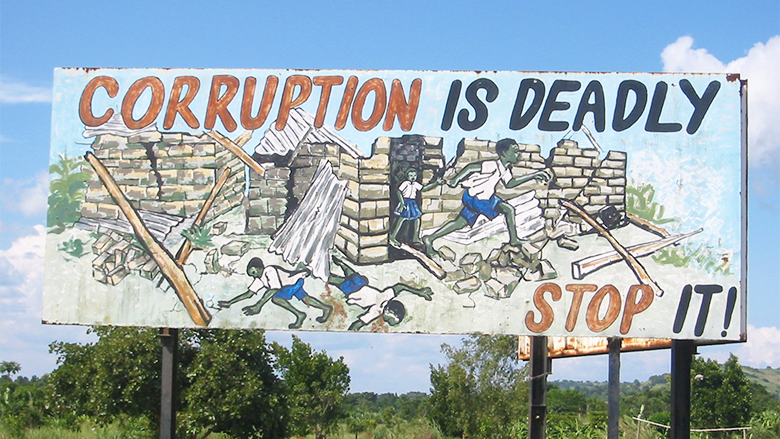
IS THERE END TO CORRUPTION?

People think that we may catch scam after scam and this country will not change. There must be a sense of urgency and restlessness because we need and want to make a corruption-free India. The other name of ‘just the way things are in India’ is corruption. Corruption is the misuse of power or public property for personal gains, like taking bribery. We see that even the simplest daily- routine administrative tasks cannot be performed without a bribe to the civil servant in charge of the paperwork. If you need your work done, don’t forget your bribe money. This situation leads to many issues, but there are two significant issues in it.

Firstly, if we get our work done through bribery, that means we are not paying our taxes rightly, and the person who is receiving it is also not paying taxes. It generates black money. Some people cannot afford bribe. When their work doesn’t get done, and some person with money gets his job done, the divide between have, and have-not widens. This exercise is also contagious. Others get influenced, and they decide that paying a little bit more will get their work done, and so they jump on the bandwagon. It creates a big chain of people who give rise to corruption and black money.

Secondly, we are developing a habit of getting our work done on our own and not informing an authority about something wrong in administration. After this becomes a habit, any new policy will face resistance because we deal with things in our way. So, subsequent procedures or instructions for the collective goodwill not work and so everyone who is connected with that system suffers.

Luxury, convenience and comfort are some offerings that lure us into becoming corrupt. The government allocates let’s say anti-poverty funds, resources for infrastructure development. Why is it that a minor percentage of the entire sum reaches us? It is because, throughout the channel of resource distribution, people are sitting who want an extra taste of all these offerings. The force of this desire is so immense that they snatch money without considering people for whom it was destined.

Corruption in India worsens poverty. A good portion of our taxes gets collected in few hands when it is meant for everyone. Corruption also gives rise to inflation. Since people have black money now and their purchasing power has increased, they demand more for things. When there is a huge demand for materials and objects due to surge in black money, pressure comes on supply which creates inflation. People with money will consume resources since now they have additional money (all thanks to black money and corruption) and ultimately the poor will be deprived of things that he deserves. There is more poverty which leads to a deficit of public trust in government and law.

India’s goal to transform itself into a market for foreign companies and attract investment is increasingly being challenged by corruption and red-tape”.[1] The culture of bribery creates uncertainty for foreign investors. They don’t know if their investment is safe anymore and so become reluctant. Why isn’t everyone alarmed about it and doing something required at own level? Indeed, we Indians are a ‘low arousal’ people. We endure injustice and unfairness. The poor suffer inhuman conditions, and we say ‘that is how it works here’. We must stand up peacefully and resist corruption. It is an epidemic tearing into India’s foundation and economic wellbeing. We can only fix it by real Indians. There is only one-step- we must do it at our level.


[1]Siddharth Chatterjee, Corruption- An Epidemic of Epic Scale in India, The Huffpost, April 4, 2014, available at: https://www.huffpost.com/entry/corruptionan-epidemic-of-_b_5083293.

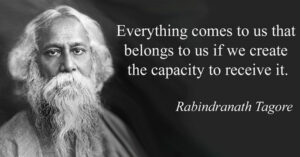
Rabindranath Tagore : Pertinence in the 21 century

Rabindranath Tagore is truly the maestro of Indian literature a man who inspires us and the one who with his spectacular poems instils hope in us to light the fire. He has created magical works which have left a mark behind and will always be cherished for his knowledgeable flair and for his bewildering literary creations. His works are till date best sellers and will continue to remain so. He is also known as “the world poet” and the “Shakespeare of India”.

He is an author whose works will never be outdated that is his works will always be relevant and will be read with great aspiration. In today’s time we have become quite insensitive towards many components of our lives be it religion, race, culture, economy or even our surroundings. Tagore’s works offer an insight into many raw realities of life. His works are looming with verity be it his poems, plays or short stories.

His famous novel Ghar-Baire that is the home and the world gives an insight into politics of a nation and marital life, it offers a real picture into the life of the relation between a husband and wife. The novel has been greatly recognised and also gives one an insight for our strong attraction towards the ways of the western world and their influence on us. His works transcend time. This novel and its themes are very much relevant till date, one can greatly empathise with the instances of the novel.

158th Birth Anniversary of Rabindranath Tagore Observed

His works have a modern point of view to them, it is said that unlike men of his time Tagore had a broad mind set and he could think out of the box and his views were not at all monotonous, he was always seen as a man who inculcated wisdom with his wise words. Unlike the conservative society he always propounded women’s education and favoured women’s equal treatment in all instance of life.

His glorious poem collection Geetanjali is known for the remarkable poems it consists of which bring lives from different backgrounds together, his glorious collection still holds a great amount of weightage even in the twenty first century, and is equally popular in the western countries as well. It holds great value in the western countries as well and has become super famous worldwide. Devotion being its central theme attracts many readers and will always hold value over many other things. Devotion can bring many people together and can imbibed spiritual aspects within people.

Even his artworks like landscape, dancing woman and woman’s face brings the notion of unanimity amongst the people over his beautiful creations. His works have always been related to society and its different aspects. Be it gender studies or culture and influences that shape a society. His works always gave out a fruitful message to society.

Even our beautiful national anthem which we sing with pride filled in our hearts is a pulchritudinous anthem representing our diverse society and representing our sundry culture and its ways. The vivid combination of cultural and societal themes along with the words he combined and formed many exorbitant creations and gave society masterpieces to appreciate and ponder upon.