Who Is Responsible If People Die From Coronavirus On A Reopened Campus?

The loss of lives that could have been otherwise avoided, will attract the most serious penalty and incrimination. Institutional authorities must keep this in mind as they consider the decision to open campus while the pandemic continues to pose threat to life.

Students wearing protective masks appear in the higher secondary school examinations of Madhya Pradesh Board of Secondary Education, during the fifth phase of ongoing COVID-19 lockdown, in Bhopal.

July is almost here, and the autumn semester is not far away. Are we in a position to reopen schools, colleges and universities? What are the implications if we do? Who suffers if COVID-19 attacks campus, and who is responsible if lives are lost?

To open or not to open. Worldwide, this brings together three major crises: a public health crisis, an economic crisis, and the long crisis of higher education. For instance, in the US, due to the high cost of college and the importance of residential education, it is likely that a number of small colleges will go bankrupt, large number of jobs will be lost, and the quality of education will almost invariably suffer. “A kind of a shock therapy,” predicts The Chronicle of Higher Education, “will permanently restructure the higher-education sector.”

Few things in recent history have foregrounded social inequalities as the education sector under the pandemic. Here in India, poor and rural students have suffered the most, lacking the infrastructure to participate meaningfully in online education. In the West, the heads of institutions for racial minorities have championed reopening, pleading that institutions are the safest places for them, as their poor home networks make them more vulnerable to the disease than on campus.

Almost everywhere, education experts have argued that rich and well-prepared students will do fine online, but students from weaker segments of society, including those with poorer academic preparation and lower familiarity with technology, are certain to suffer if on-campus instruction does not resume.

On the other hand, if the campus of a school or college opens and people die from contracting the virus, who holds the legal (to say nothing of the human) liability of such deaths?

The leadership of a number of American colleges are scrambling to get people to sign waivers. However, as the Chronicle has pointed out, this is a fantasy: “No waiver can resolve all those headaches, according to a dozen lawyers who work with colleges.” More than ever, in this circumstance, asking something to sign a waiver is essentially telling them: “I might be doing something that could do you harm.”

Hope Sarah Goldstein, a partner with Bryan Cave Leighton Paisner, told the Chronicle that an employer cannot ask employees to sign away future claims from workplace-related injuries covered by workers’ compensation. Waivers cannot annul liability. On the other hand, a disclosure can raise awareness and underscore communal responsibilities that must be held in a public-health crisis.

What about institutions in India? What are their responsibilities on event of COVID-related fatalities due to virus contracted on a reopened campus?

Dr Abhik Majumdar, a faculty member at the National Law University, Odisha, elaborates on a range of possibilities. The liability of an institution depends on whether or not it reopens following a government order; whether the order in question is mandatory or merely an authorisation given to institutions to reopen at their discretion; and whether the institution is a private or a state body.

If an institution opens contrary to government orders, Prof Majumdar points out, it will attract punishment under Section 3 of the Epidemic Diseases Act 1897, read with Section 188 of the Indian Penal Code 1860. Sections 269 and 271 of the Penal Code might also become applicable in such a situation. It is, however, unlikely to happen, as no institution will be so reckless as to flout governmental orders in the present situation.

It remains important to note, however, that if the government orders educational institutions to open, then liability in case of untoward incidents will lie mainly with the Government. Institutions may incur liability if they fail to adequately provide for safety measures such as dispensing masks, maintaining social distancing, and so forth.

In the last situation, if the government merely permits (as opposed to compelling) institutions to open at their own discretion, the institution becomes liable if their action leads to the spread of the disease and fatalities resulting from the spread. The nature of liability will depend on whether it is a private institute or a state body. In the first case, the institution may incur liability in tort law. It may also be liable under the Epidemic Diseases Act as mentioned earlier, if it is found deficient in implementing appropriate rules. State bodies’ liability features an added dimension. Any deficiency on their part cam be construed as a violation of the right to life under Article 21 of the Constitution.

Surabhi Singh, an alum of NLU Odisha and a current LLM student at the University of Toronto points out that under the current legal regime, State institutions run the risk of being sued for a violation of broader constitutional rights as they are an arm of the government, under writ jurisdictions of the Supreme Court as well as the respective High Courts. A writ jurisdiction is broad, and the relief granted by the courts can range from asking the institute to shut in person classes, award compensation to affected students, refund fees etc. “All of this is of course speculative,” she says, “but as a practicing lawyer I can foresee it being asked for from courts.”

However, Singh thinks that this writ-based relief is less likely with private institutions. Also, should some student fall sick and die, there is the risk of being sued for criminal negligence, which can implicate individual administrators of the institute concerned. Tort claims of negligence can also be made by the students who may claim damages. If the infection spreads through food or water, State based laws on food and water safety may apply.

Life, livelihood, and learning – or at least its best practice. It may seem like a lose-lose situation. This is, however, an extended emergency, and in the end, loss of lives that could have been otherwise avoided, will attract the most serious penalty and incrimination. Institutional authorities must keep this in mind as they consider the decision to open campus while the pandemic continues to pose threat to life.

SAIKAT MAJUMDAR
Second Film on Sushant Singh Rajput’s Life to be Titled ‘Sushant’, by Sanoj Mishra

Sushant Singh Rajput’s Life Story Inspires a Second Film ‘Sushant’ by Sanoj Mishra

Actor Sushant Singh Rajput’s death has led to debates and discussions around the existence of nepotism, favouritism, lobbying, camps in Bollywood. It’s been more than a week and two films are already in the plan related to Sushant. Earlier, director Shamik Maulik shared his idea of making a film on Sushant’s life titled Suicide or Murder: A Star Was Lost. It is based on how actors with no film background are treated by the industry when they try to make their career in the movie world. Also Read – Sushant Singh Rajput’s Demise: Ranvir Shorey Speaks on Nepotism, Godfathers And Award Shows in Bollywood

After Shamik Maulik, Sanoj Mishra has announced his film and titled it Sushant. The director wants to frame the late actor’s journey in a film. Also Read – OPINION | Fans’ Cringeworthy Reactions to 16-Year-Old TikTok Star Siya Kakkar’s Death by Suicide Brings us to Square One of Mental Health discussion.

Sanoj Mishra, who is known for films such as Srinagar, Nawab, Lafange, Gandhigiri, revealed in a statement made to a news publication that film Sushant will tell the story of people pushed to take drastic measures due to the struggle and the harassments in the industry. Also Read – Dil Bechara: Mukesh Chhabra Misses Sushant Singh Rajput, Says ‘Can Visualise You With Your Beautiful Smile’

According to reports, the film is being bankrolled by Road Production and Sanoj’s own production. The location of the film will be Bihar and Mumbai.

Meanwhile, Sushant’s close friend and producer Sandip Ssingh shared a poster for his directorial debut Vande Bharatam, which had Sushant in the lead. In an Instagram post, Sandip wrote, “You made me a promise. We, the Bihari brothers, will one day rule this industry and be the inspiration/support system for all young dreamers like you and me bhai. You promised me that my directorial debut will be with you. Raaj Shaandilyaa wrote this and we were to produce this together. I need your belief, that faith you showed, that was my strength. Now, with you gone…I’m lost…but I promise you this my brother. Now tell me how do I fulfil this dream? Who will hold my hand like you did? Who will give me the power of SSR, my brother?”

Record recoveries in India,  highest new cases in 24 hours

Total coronavirus cases in India crossed 4.9 lakh

The number of active coronavirus cases in India stands at 189463 while 285636 people have recovered

The death toll has risen to 15,301

The total number of coronavirus cases in India jumped to 4,90,401 after 17,296 new cases were reported in 24 hours. This is the highest number of new cases reported in 24 hours. According to health ministry’s numbers released today morning, the number of active cases stands at 1,89,463 while 2,85,636 people have recovered and one patient has migrated. A record total of 13,940 COVID-19 patients were declared cured in a single day. The recovery rate has improved to 58.24%.

Covid-related deaths rose to 15,301 after 407 fatalities were reported in 24 hours.

Coronavirus testing facilities have been ramped up across the country with 1,007 diagnostic labs currently offering covid diagnostic facilities, the government said.

Medical research body ICMR has said that a total of 77.76 lakh samples have been tested up to June 25. And on Thursday over 2.15 lakh samples were tested.

According to figures released by the government on Thursday, coronavirus cases per lakh in India stand at 33.39 against the world’s average of 120.21 cases/lakh. Also, death/lakh in the country is currently amongst the lowest in the world with 1.06 deaths/lakh against the world average of 6.24 deaths/lakh, the government said.

A team from Union Ministry of Health and Family Welfare will visit Gujarat, Maharashtra and Telangana this weekend to interact with the state officials and coordinate with them to strengthen ongoing efforts for management of Covid-19.

Maharashtra, the worst affected state, has reported over 1,47,741 cases and 6,931 fatalities. Among other states, Delhi has reported 73,780 cases, Tamil Nadu 70,977 and Gujarat 29,520.

Globally, total coronavirus cases moved past 95 lakh while the death toll has crossed 4.8 lakh. US on Thursday reported record number of 37,000 cases in a day, taking its overall count to over 24 lakh. The country has reported over 1.24 lakh coronavirus-related fatalities.


Pros of mobile phones for students !

The device which you are holding right now in your hand for reading this article has changed the world. It is not only providing us with a calling facility but also something much more. Mobile phones have changed the pattern of study for students. The time when we found knowledge between the pages of books has gone now. The mobile phone has diversified the area of knowledge. In this article, we have enlisted some of the advantages of mobile phone for students.

Now let us discuss how the mobile phone has changed the lives of students. What are the advantages of the same.

  • Great source of knowledge

Whenever you got confused and you don’t get a clear idea of some topic, then at that time the mobile phone will be of great use for you. You can search for that particular topic and can get a mirror image of the topic. It also provides knowledge regarding similar topics.

  • Helps to be prompt and punctual 

The mobile phone helps in managing the data. You can manage and make notes regarding important things. Then you will not going to miss something really important. You can also set alarms with a title so that on time you get reminders for the things, that will help you to be punctual and be available on time for your things.

  • Helps in Navigation and Finding Place

Mobile phones now come with a feature known as GPS  which helps to track your location. It is very helpful for navigation purposes too. If sometimes student got stuck anywhere, at that time having a mobile phone in their hand will be bliss. They can use google map to know their exact location. Then they can inform their parents about their location and can easily reach to their places. You can also share your location with your parents so that they can know where you are.

  • Help in learning left topics

Sometimes the situation arises when students are not able to attend the classes. So if at that time teacher has taught something really important then what to do? There is nothing to worry about this. You can simply google out the topic and can get a full explanation for the same. And Yes one more thing there is not only one option or site for the topic, but there are many sites you can access according to your requirement for the same topic written by various experts.

  • Great source of entertainment

Whenever students feel bored or get tired of studying for hours and hours, at that time they can listen to their favourite music, or watch movies sitting at home itself in their mobile phone. This will help them to get rid of boredom and feel fresh. Students can also read novels or even listen to audible stories whenever they get the time or they need some relaxation. There are various apps available such as Kindle, Wattpad, Novel cat, Aldiko, etc. They can access to these apps easily. This will not only help them to overcome boredom but also help them in learning something new.

  • Introduce you to the various social media platform

Facebook, Tweeter, Instagram and many more social media platforms are available now on play store where students can make their account and get connected to more number of peoples, friends, family members which are far away. They can post their activities and can see other activities too. They can also get the latest news of Hollywood, Bollywood, and their favourite celebrities.

  • Helps in Collecting proofs

Whenever students find something black lentils or they feel some types of exploitation done to them by a teacher such as when they think teacher do favouritism to students who are taking coachings from them, and not giving deserving marks to other students. Then, they can record this and show it to a higher authority and save themselves from favouritism. Or if they feel exploitation or being bullying from other students then they can record the incident and collect evidence regarding the matter in their mobile phones and can help in catching the culprit red-handed.

  • Provides Various Apps for learning

Nowadays, there are hundreds of learning apps available on mobile phones for every standard students. They can use them in free for learning, various courses are available which helps in their skill development. They can also use a mobile phone in time when they are not having books with them. So, they can use these apps to get their course-related topics cleared. This will also save their time to wait for the books.

  • Capture the moment

Students can capture their significant and sizzling moments in their mobile phones. Students who have an interest in photography, and purchasing any professional camera is not possible for them at that time they can use their mobile phones for their passion.

  • Helps in building a bright future

Mobile phones can be used in various ways and for various purposes by the students. But everything is useless until we use it for some useful purpose. There are various apps available such as LinkedIn, Internshala, freelancer, etc. Nowadays, world is on the way of digitalization. There are various types of jobs and internships available for students on these apps. They can grab them and add something useful to their CV and to their life as well.

  • Dictionary: Improve your Vocabulary

Carrying Huge dictionary everywhere with you is really a tough task. So, now they need of lifting it is over. The mobile phone provides you with various types of offline and online dictionary such as Oxford online and offline dictionary, V-Dictionary, Color Dict dictionary, Concise Oxford Dictionary by, where you can find the meaning of each and every word you are stuck at.

  • Storage of Data

The best use of the mobile phone is that you can store huge amount of data in it. Students who want to learn something new, they can download the matter and various pdfs, documents, about the same topic and they can even take notes from their friends and teacher through WhatsApp. This will prevent making any hard copies of the topic. You can even store data for a long time and even can keep it till you don’t want to erase it.

  • Easy Money Transfer

Mobile phones are primarily used for online transactions nowadays. People sitting at home can easily transfer and receive money to someone else in just some quick steps. Students who are living away from home can use these applications such as google pay, phone pay, pay pal, Paytm and many more to receive money from their parents to submit free or for their basic expenses.

  • Online Shopping

Students can use various online shopping apps such as Amazon, Flipkart, Myntra, Nykaa, etc to get their desired and essential products at their doorsteps. This will save their time and they don’t have to roam here and there to grab things.Advertisements

Can People Spread the Coronavirus If They Don’t Have Symptoms? 5 Questions

Screening for symptoms of COVID-19 and self-quarantine are good at preventing sick people from spreading the coronavirus. But more and more evidence is suggesting that people without symptoms are spreading the virus too. Monica Gandhi, an infectious diseases physician and researcher at the University of California, San Francisco, explains what is known about asymptomatic spread and why she thinks it may be a big part of what is driving the pandemic.

What does it mean to be asymptomatic?


SARS-CoV-2 – the virus that causes COVID-19 – can produce a range of clinical manifestations.Some people who are infected never develop any symptoms at all. These patients are considered true asymptomatic cases.

When people do get sick from the coronavirus, it takes on average five days and as many as two weeks to develop symptoms that can range from very mild to extremely dangerous. The time between initial infection and the first symptoms is called the pre-symptomatic phase. As an infectious disease physician, when I hear about asymptomatic spread of SARS-CoV-2, I think of a person who doesn’t have symptoms at the moment they give the virus to someone else. It doesn’t matter whether they are a true asymptomatic case or just pre-symptomatic; the public health risk is the same.

How many people are asymptomatic?

Estimates of the proportion of true asymptomatic cases – those who are infected and never develop symptoms – range from 18% to over 80%. The reasons for the huge range in estimates are still unclear, but some studies are better than others.

The most accurate way to determine the rate of asymptomatic cases is to test people regardless of whether or not they have symptoms – an approach called universal mass testing – and track them over time to see if they develop symptoms later. A recent mass testing campaign in San Francisco found that 53% of infected patients were asymptomatic when first tested and 42% stayed asymptomatic over the next two weeks. Another recent paper compared the evidence from 16 studies and estimated the overall rate of asymptomatic infection to be 40%-45%. This is in line with the San Francisco finding, but the studies sampled were of various quality and size and likely include some pre-symptomatic cases. Though none of these studies is perfect, a lot of evidence supports a true asymptomatic rate of around 40%, plus some addition fraction of patients who are pre-symptomatic.

How can asymptomatic people spread the coronavirus?

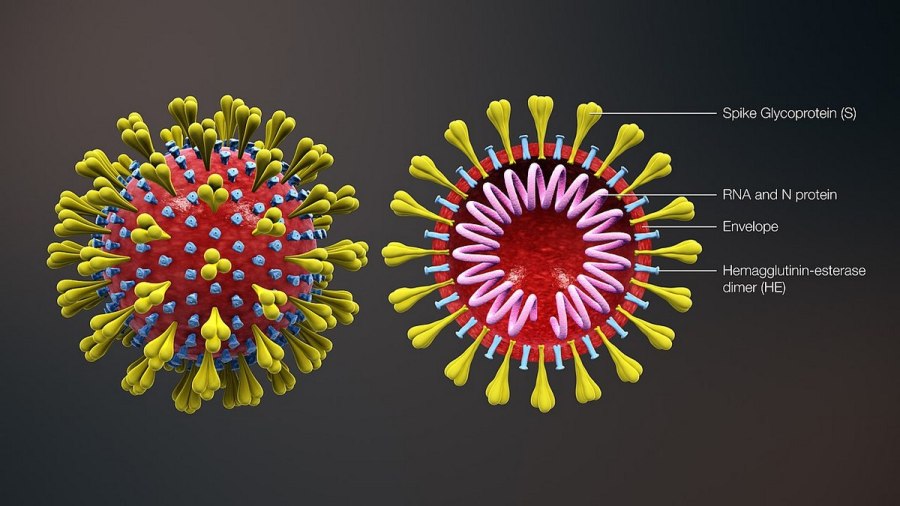
Compared to most other viral infections, SARS-CoV-2 produces an unusually high level of viral particles in the upper respiratory tract – specifically the nose and mouth. When those viral particles escape into the environment, that is called viral shedding.

Researchers have found that pre-symptomatic people shed the virus at an extremely high rate, similar to the seasonal flu. But people with the flu don’t normally shed virus until they have symptoms.

The location of the shedding is also important. SARS-CoV – the virus that caused the SARS epidemic in 2003 – does not shed very much from the nose and mouth. It replicates deep in the lungs. Since SARS-CoV-2 is present in high numbers in a person’s nose and mouth, it is that much easier for the virus to escape into the environment.

When people cough or talk, they spray droplets of saliva and mucus into the air. Since SARS-CoV-2 sheds so heavily in the nose and mouth, these droplets are likely how people without symptoms are spreading the virus.


How much asymptomatic spread is happening?


Public health experts don’t know exactly how much spread is caused by asymptomatic or pre-symptomatic patients. But there are some telling hints that it is a major driver of this pandemic. An early modeling estimate suggested that 80% of infections could be attributed to spread from undocumented cases. Presumably the undocumented patients were asymptomatic or had only extremely mild symptoms. Though interesting, the researchers made a lot of assumptions in that model so it is hard to judge the accuracy of that prediction.

A study looking at outbreaks in Ningbo, China, found that people without symptoms spread the virus as easily as those with symptoms. If half of all infected people are without symptoms at any point in time, and those people can transmit SARS-CoV-2 as easily as symptomatic patients, it is safe to assume a huge percentage of spread comes from people without symptoms.

Even without knowing the exact numbers, the Centers for Disease Control and Prevention believes that transmission from people without symptoms is a major contributor to the rapid spread of SARS-CoV-2 around the world.


What can we do to limit asymptomatic spread?


Any time a virus can be spread by people without symptoms, you have to turn to preventative measures. Social distancing measures and lockdowns work, but have large economic and social repercussions. These were necessary when epidemiologists didn’t know how the virus was spreading, but now we know it sheds at high quantities from the upper respiratory tract.

This means that universal mask wearing is best tool to limit transmission, and there is evidence to back that idea up.

On April 3, the CDC recommended that all members of the public wear facial coverings when outside of the house and around others. The World Health Organization finally followed suit and recommended universal public masking on June 5.

At this point, no one knows exactly how many cases of COVID-19 are from asymptomatic spread. But I and many other infectious diseases researchers are convinced that it is playing a major role in this pandemic. Wearing a mask and practicing social distancing can prevent asymptomatic spread and help reduce the harm from this dangerous virus until we get a vaccine.

This article is republished from The Conversation.

CBSE Evaluation Criteria for 10th 12th Result 2020 released – Explained, how marks would be calculated

CBSE Evaluation Criteria has been released for CBSE 10th 12th Results 2020. Result for all students would be released. Here is how the marks would be calculated for the papers that were cancelled.

Central Board of Secondary Education, CBSE has submitted the assessment and evaluation criteria for the cancelled 10th 12h board examinations. The board would be awarding the students based on the papers they have attempted. For the students who have not attempted a minimum of 3 papers (especially students of North East Delhi) the results would be based on internal evaluation. Check complete notice and details here.

For students whose all papers were complete, the marks would be declared basis the performance in the examination For students of classes 10 and 12 who have appeared in more than 3 subjects, the marks for the pending subject would be based on the average marks obtained in the best three subjects For students who have appeared only for 3 subjects, average marks on the basis of the three attempted subjects would be used for determining the marks of the pending exams that were cancelled For the Class 12 students whose only 1 or 2 papers could be conducted (true for students from North East Delhi), their results would be declared basis the performance in the appeared subjects as well as the performance in the internal/practical/project assignment. These students would have an option to appear for the examination at a later date. The results of all such students, however, would be announced along with the results of all the students.

For CBSE Class 10 students (barring students from North East Delhi), all core exams of 5 subjects were completed. The CBSE Class 10 results of the students, hence would be basis the performance in the examinations attempted. All the other examinations were cancelled this year and as such the board would not be grading students on those papers.

Results would be declared by the board by July 15, 2020 for all CBSE Class 12 students, irrespective of the number of subjects students had appeared for, so as to facilitate the admissions to higher educational instituted. Marks and option to appear for the examinations at the later date would depend on the way their result is calculated.

Students who appeared for all their papers

Most of the students of CBSE Class 12 had already appeared for the papers they had opted for. For all such students, the marks would be awarded basis the performance in the examinations attempted. All such students would not get an option to appear for the examination at a later date. Their results would be binding.

Students who appeared three or more papers and 1 or 2 subjects were pending

For such students, the board would be awarding students as per the average of the best three performed subjects. For instance, say a student appeared for English, Maths, Accountancy and Economics and the Business Studies paper was pending. Now, the student scored (out of 100), 75 in English, 45 in Maths, 85 in Accountancy and 90 in Economics, then the student’s marks in English, Accountancy and Economics would be considered for calculating the average marks in Business Studies. All such students would have an option of appearing for the board exam for the subject that was cancelled when it is conducted by CBSE at a later date. Students can also choose to accept the average marks awarded by the board. However, should the student choose to opt for and appear in the examination at the later date, the marks thus obtained by the students in the examination would be considered final (even if they are less than the average score that was awarded).

Students who appeared for only three other papers

For all such students, the marks would be awarded on the basis of the average score of the three subjects appeared for by the student. For example, say the students appeared for English, Physics and Chemistry and secured (out of 100) 75, 80 and 80 marks respectively, the marks for the remaining two subjects would be given on the basis of the average of these three subjects. All such students too would have an option of appearing for the cancelled papers at the later date. Again, should the students opt to appear for the examination at the later date, the marks thus obtained would be considered final – irrespective.

Students who appeared for only 1 or 2 papers (Students from North East Delhi)

For such students, the marks would be a combination of the average of the performance in the subjects the students appeared in as well as their performance in internal assessment (practical, project, etc.). These students too would be allowed to appear for the examination at a later date to improve their performance.

IMPORTANT TO NOTE

No exams for Class 10 students would be conducted. The results thus calculated and released would be finale. CBSE Class 12 students would have an option to appear for the exams whose marks were awarded based on averages as detailed above. In such a case, the performance in the paper appeared would be considered. CBSE has not shared when the students need to share their choice for optional.It can be assumed the CBSE may provide the students the option to appear for the examination once the results are declared.

CBSE Class 10, 12 Board Exams 2020 which were scheduled for July have been cancelled. The board presented the evaluation criteria to the Supreme Court, which has in turn accepted and allowed CBSE to release the same. The notification detailed above would be released on cbse.nic.in by end of day today. ICSE Board, too, decided to cancel the pending exams. The evaluation criteria, as per CISCE Counsel, would be slightly difference from CBSE and students may be given an option too. The evaluation criteria of ICSE board would be released in a weeks’ time.

By :- Kanika

CBSE 2020 results date: CBSE class 10 and Class 12 board exam results announced; read here

The Central government on Friday told the Supreme Court that the results of CBSE and ICSE board exams of Class X and XII will be declared around mid July

The Centre on Friday told the Supreme Court that the results of CBSE and ICSE board exams of Class X and XII will be declared by July 15. The Top court also permitted CBSE to go ahead with its assessment scheme to award marks to students for cancelled exams.

Solicitor General Tushar Mehta, appearing for the Centre and the CBSE, said that the assessment scheme will consider marks achieved by students in last three papers of board exams.

According to Exam Controller Sanyam Bhardwaj, the exams which were pending due to the COVID-19 situation have been cancelled.

‘Class 12 students will get an option’

“Results will now be declared following an alternate assessment scheme. Class 12 students will get an option to appear for exams later to improve their score. However, for students who chose for sit for exams, their marks in the exams will be treated as the final score,” Bhardwaj said in an official notification.

“Class 10 students will not get the chance to appear for improvement exam. Their result declared by the board shall be treated final,” he added.

The CBSE on Thursday had informed the top court that the Board has decided to cancel the remaining Class X and XII board examinations in light of the rising number of COVID cases across the country.

‘Conducive time’ will be decided by the Centre General Tushar Mehta told the Supreme Court that for now, the exams that were scheduled from July 1 to July 15 have been cancelled and will be conducted at a conducive time for Class XII students. The ‘conducive time’ will be decided by the Centre’

ICSE board told the Supreme Court that they too were agreeable with the CBSE decision to cancel the board exams for students of Classes X and XII. The state of Maharashtra, on behalf of ICSE, had earlier informed the Bombay HC that they will be unable to conduct the exams for the students this year.

ICSE has however clarified to the Supreme Court that they will not be providing any student with an option to appear for the exam at a later date and the results for all students in Class X and XII for the ICSE board will be declared on the basis of their marks in the internal assessment.

The CBSE class XII exams had started on February 15 and were to conclude on April 3. The class X exams had started on February 21 and were to end on March 29. However, the nationwide lockdown to contain the spread of the coronavirus (COIVD-19) pandemic came into force from March 25.

No exams for students of all UNIVERSITIES


Union HRD Minister Ramesh Pokhriyal ‘Nishank’ has asked the University Grants Commission (UGC) to revisit the guidelines issued earlier for intermediate and terminal semester examination, and the academic calendar

Exams for final year students in universities and higher education institutions which were to be held in July are likely to be cancelled in view of the spike in COVID-19 cases, and the commencement of the new session is likely to be deferred to October, according to officials.

Union HRD Minister Ramesh Pokhriyal ‘Nishank’ has asked the University Grants Commission (UGC) to revisit the guidelines issued earlier for intermediate and terminal semester examination, and the academic calendar.

According to officials, a panel, set up by UGC and headed by Haryana University vice-chancellor R C Kuhad, has been asked to revisit the guidelines and come up with alternative options. The revised guidelines are expected to be announced by the higher education regulator within a week’s time.

“The ministry has made it clear that the foundation for revisited guidelines shall be the health and safety of students, teachers staff. The expert committee is of the view that the examinations due in July in most universities as per the revised academic calendar be cancelled and marks for final examination be awarded based on the past performance of each student.

“Students who are not happy with the final marks being given to them based on previous examinations, can be given a chance to improvise their scores by taking examinations later when the pandemic subsides,” a senior official said.

“Similarly, the commencement of the new academic session, which was earlier planned for already enrolled students from August and freshers from September, is also likely to be deferred to October. The deliberations are on and final guidelines in this regard will be announced soon. However, any guidelines framed will be subject to review depending upon the COVID-19 situation,” the official added.

Universities and schools across the country have been closed since March 16 when the central government announced a countrywide classroom shutdown as one of the measures to contain the COVID-19 outbreak.

A nationwide lockdown was announced on March 24, which came into effect the next day. While the government has eased several restrictions, schools and colleges continue to remain closed.

The UGC had in April formed two committees to deliberate on issues arising due to the lockdown to avoid academic loss and take appropriate measures for the future of students.

One of the committees, led by Haryana University Vice-Chancellor R C Kuhad, was tasked with looking into ways of conducting exams in universities amid the lockdown and work on an alternate academic calendar.

The second committee, formed to suggest measures to improve online education, was led by Indira Gandhi National Open University (IGNOU) Vice-Chancellor Nageshwar Rao.

Based on the recommendations of the two panels, the HRD Ministry had on April 29 announced the guidelines recommending the exams for final semester students be conducted in July.

The commission had said that the universities may decide whether to conduct exams online or offline keeping in view the support system available with them and ensuring a fair opportunity to all students.

The UGC had recommended that intermediate semester students may either be evaluated on the basis of internal assessment or in states where the COVID-19 situation has normalised, exams be conducted in July only.

The commission had also said the new academic session for freshers may begin in universities from September and for already enrolled students in August while the admission process may begin in universities from August 1

However, due to spike in coronavirus cases, various states recommended cancellation of final year exams. A few states like Maharashtra and Madhya Pradesh have already announced their plans in this regard.

The cancellation is also likely to put to rest the standoff between DU administration and students and a section of teachers over the university’s decision to conduct Open Book Examination (OBE) online for final year students. PTI GJS GJS NSD NSD


Inspiring story of Google’s CEO: Sundar Pichai – Must read!!!

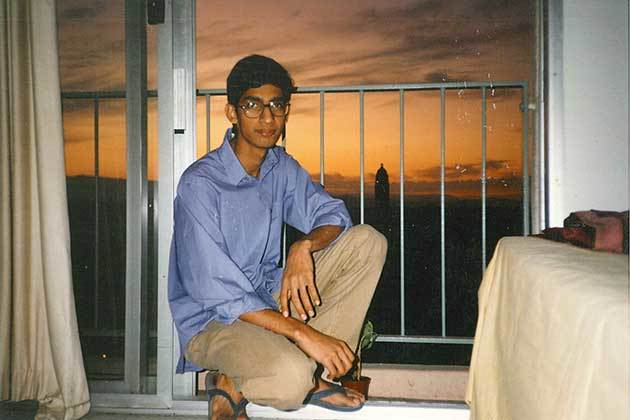
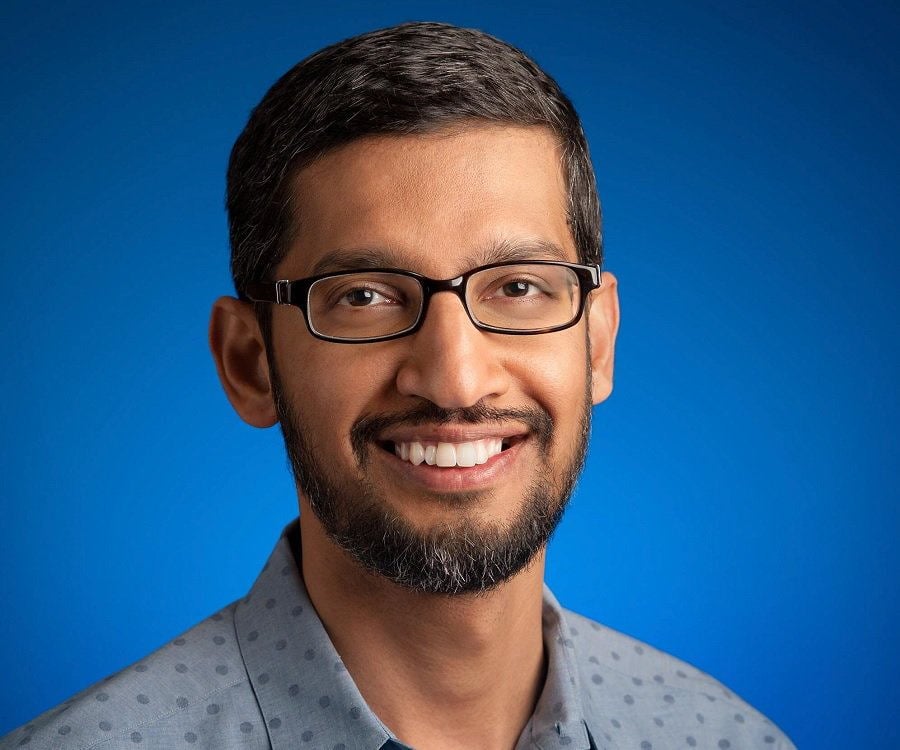
Growing up in India, like many of you, Sundar Pichai got my first telephone when he was 12. In case it turned out be a rotary phone, so it wasn’t that great for selfies. But he still loved to call my friends, play with it and sometimes take it apart. That telephone cemented my fascination with technology. Sundar Pichai remember in his parents’ house in Chennai, reading about the invention of the transistor at Bell labs. Of course, that initial invention helped found what became referred to as Silicon Valley and out of that came companies like fairchild semiconductor and Intel and every one the computers and software, that we all use today. You can draw an immediate line from that invention to the technology, that powers your Twitter feed or your WeChat messages today.

Google's Sundar Pichai travelled in buses, had no television while ...

Image source : GadegtsNow

When he was younger, people would say, this person didn’t get into this college or something and that is the end of the road. Sundar Pichai thought life is so different from that, and so he think it is important to you know, keep your hopes, keep your dreams and try to follow them and you recognize he think, most of how life plays out is up to you, not up to what happens outside of you. It’s important to keep that in mind and take the long-term view. As a teenager, jumping on to a crowded train. At Chennai and traveling for 24 hours, to attend my school at IIT Kharagpur and that opportunity changed the course of my life. You want to aim high enough that you fail, you know few times thought it is the natural part of the process. In fact, Larry accustomed say if you’re employed on really difficult things, you’re more happy because you’ve got no competition, others aren’t performing on that difficult a drag . And although you fail, you finish up doing something great within the process.

Sundar Pichai Biography - Childhood, Life Achievements & Timeline

Image source: Thefamousperson

You know, working the real world, it is important to be well rounded, it is important to try different things, or you know take some risks, he would encourage people to follow their passions a little bit more. To follow set lanes throughout your career. Getting into an elite institution doesn’t guarantee success, it matters plenty but it doesn’t guarantee success. It is important to stay that perspective in life and life may be a long road, and you know, you would like to require it at the proper pace and luxuriate in what you are doing. Sundar Pichai knew how much hard work it takes to pursue your dream of building a business. The long hours, time faraway from family, the ideas you recognize are brilliant, that just don’t seem to catch on. Reading that and thinking, it is the concept matters. It didn’t matter where you come from or what your background is.
One revolutionary idea, one brilliant invention can unleash other entrepreneurs to revolutionize, industries and ways you could never predict.

black samsung tablet display google browser on screen
Photo by PhotoMIX Company on Pexels.com

16 Year Old Tik-Tok Star Siya Kakkar Commits Suicide.

The year 2020 has been a devastating and shocking year for everyone around the world. When it comes to the entertainment platform which mainly includes acting and dancing there had been many shocking up comings in this year which includes the death of the famous bollywood star sushant singh rajput due to poor mental health and depression. When everyone had not gotten over the death of sushant singh rajput there has been another incident where a famous tik-tok star has committed suicide in Delhi. The 16 year old had caught the eye of the audience with her brilliant set of dancing skills. It has been reported that the 16 year old lived with her family and was found dead around 9 pm the previous night. As per the police reports there has been no suicide note found.

It has been come to light that the star had around 11 lakh followers on tik-tok and her last post was 6 days prior to the incident. The news of the stars death was confirmed by her manager who reportedly said “This must be due to something personal…work wise she was doing well.I had a word with her last night for a new project and she sounded normal. Me and my company Fame Experts manage lots of artist and Siya was a bright Talent. I am heading to her home in Preet Vihar.” she said.

It is absolutely shocking that children of such age can take such a drastic step in their life and put an end to everything. It is the parents that have to suffer for the rest of their lives in guilt that they could not save their child irrespective of the situation. The digital world of movie stars and all sorts of actors and dancers have come under the spotlight as what kind of mental and peer pressure they tend to face in their lives.

Media in India: Politics of regulation in a time of false News

The media plays a pertinent role by providing information which is indispensable for two reasons. Primarily, it ensures that citizens formulate proper and updated views by analysing the authentic and genuine facts as provided by media. Secondly, it provides information as a “checking function” by guaranteeing that the chosen government and its representatives act upon electoral promises.

Media thus plays a central role since it is the single means through which public opinion is engendered. The stability of a country is assessed by the way the media report the news of that country. Thus, it becomes the obligation of the media to circulate only applicable and valid facts locally and globally.

The role of media has been changing from what it was perceived. The neutrality of news in reporting is missing in the mainstream media today because of the hidden agendas that many press and media outlets hold.

 Media in India is mostly self-regulated.  The existing bodies for regulation of media such as the Press Council of India which is a statutory body and the News Broadcasting Standards Authority, a self-regulatory organization, issue standards which are more in the nature of guidelines.   Press Council of India established under the PCI Act of 1978 for the purpose of preserving the freedom of the press and of maintaining and improving the standards of newspapers and news agencies in India.

Even though the Constitution guarantees freedom of the press, the government does regulate some media. Print media are largely unregulated, and newspapers and magazines can print nearly anything as long as they don’t slander anyone. The Internet has also gone largely unregulated, despite congressional efforts to restrict some controversial content. Broadcast media, however, are subject to the most government regulation.

Decision-making power in the Indian media regulation is fairly centralized, with the central Government and ministries making the final calls when it comes to new policies and appointments. Politicians have a keen interest in news media regulation owing to the high degree of political ownership in the sector. Thus, political and electoral logic shapes media regulation.

Prime Minister Narendra Modi at the top of the decision-making list.  Modi follows a centralized decision-making model with significant power allotted to his Prime Minister’s Office (PMO), Modi has been a vocal advocate of the use of online media for political mobilization, participation and propaganda. Key influencers in the Indian regulation include Mukesh Ambani, chairman of the Reliance Group of Industries, Amit Shah, an MP and current president of Bharatiya Janata Party (BJP), Subhash Chandra, the chairman of Essel Group, Bennett Coleman & Co. Ltd (BCCL), which owns The Times of India.

WhatsApp has become the platform of choice for politicians because of its massive reach that goes beyond a party’s loyal voter base, but also because of the lack of gatekeepers. Messages forwarded through the system have no context about where they originate, but benefit from the trust of coming from a contact . . one of the BJP leaders denies the  spreading polarising content, but public  WhatsApp data collected by analysts and anecdotal evidence show that Indians are being flooded with propaganda memes, much of it anti-Muslim and critical of the opposition Congress party.

In April smriti Irani’s  ministry issued a circular saying that in order to fight the rise in fake news in print and electronic media, the government had decided that journalists who had complaints of creating/propagating fake news against them, would immediately have their press accreditation suspended.The following day, the Prime Minister’s Office asked her ministry to withdraw it.

Recently A picture of Vadra with the Chinese envoy. Both Republic TV and Times Now got excited enough over a picture of Robert Vadra to launch hashtags and primetime shows. Alt News had to give a video tutorial to Times Now and Republic TV to avoid such rookie mistakes. The picture was from a Chinese food festival that was also attended by India’s Railway Minister Suresh Prabhu, Sitaram Yechuri from CPIM, KC Tyagi from JDU and other leaders from BJP such as Tarun Vijay and Udit Raj. A quick google search could have avoided these channels the embarrassment though we suspect that they neither consider this as an embarrassment nor are they interested in the truth.

Similarly there was a statement attributed to Arundhati Roy – ‘’70 lakh Indian soldiers cannot defeat Azadi gang in Kashmir”  . A fake statement made in a non-existent interview during a trip that never took place was enough to launch prime time debates on Republic TV and CNN News 18 attacking Roy. The fake news had originated from some obscure Pakistani website called times of Islamabad

What followed was attack on Roy by BJP MP Paresh Rawal and prime time debates on the topic. Arnab Goswami called Roy a “one book whiner wonder” and continued to rant about his favorite topic of Lutyens media and pseudo liberals. An investigation by The Wire revealed the truth behind the fake outrage fueled by the news channels and this piece  by News laundry explored it further News laundry had republished an op-ed responding to Roy’s fake quote and it apologised for its editorial oversight and retracted the piece. There was no retraction or apology from Republic TV or CNN News 18 for attacking Roy based on fake news.

Indian media is grappling with many problems, but the country’s regulators fail to address them.

It took the Ministry of Information and Broadcasting (MIB), a key player in India’s media policy, two years and seven months to release public data that had been officially requested in 2015 by TheHoot.org, a website mapping media ownership in India. The ministry said that such data couldn’t be released as it was “third party information.” The ministry’s argument was just tosh as media companies have to reveal ownership data to qualify for a license to operate.

The episode epitomizes the excessively bureaucratic, politicized and clientelistic media regulation in India whose decisions have negative consequences for news media operations

Decision-making in matters related to the Indian media is riddled with political influence, regulatory parallelism and clashes over jurisdiction, involving not only decision-making authorities but also industry players,

Sanskrit:The new language for computer programming!

Sanskrit is the world’s strongest logical language, one of the oldest language and it was one of the major languages of India but now is a minority language. It’s known as the perfect language and is also known as mother of all modern languages. It’s the language of Gods in India.

It’s an Indic language and holds a significant value till date all over the world, our vedic scripts were written in Sanskrit and there was a time when Sanskrit was even used as a language during conversations, Sanskrit is the official language of Uttarakhand and is very close to every Indian’s heart. Even some of the major texts of Jainism and Buddhism have been written in Sanskrit.

Though it is being understated now and its use is decreasing day by day but experts say it can be the new language which will be needed in technological advances. The structure of Sanskrit is very logical and the precision it offers cannot be matched by any other language due to which it is considered as a god language for computer programming.

Sanskrit is one of the most ancient languages and it is said that the earliest literature was written in Sanskrit. Initially Sanskrit was said to have no traces in the form of written manuscripts, it was widely spoken, it was around 250 years back that people started writing in Sanskrit in their own respective script, hence Sanskrit scripts have been written in various languages and hence Sanskrit is said to have no official (default) script.

Sanskrit is one of the most phonetically sound languages and it has said to improve one’s learning e of Sanskrit skills and speech, many speech therapists make use of Sanskrit while working with different clients and  also teachers include Sanskrit as part of school curriculum as it is said to improve brain functioning and has many other benefits.

It’s one of the most sacred languages in the Indian culture and one mostly gets to hear recitations in Sanskrit during holy rituals or wedding ceremonies and it is said to have a an soothing and calming effect on our minds due to the vibrations it produces. In India many schools have abided to teaching Sanskrit as the third language in their school curriculum which is an advantageous move as people have slowly withered away from their mother language and it is going unappreciated, especially with the new generation, most of them are clueless about the importance of Sanskrit and the opportunities it has to offer.

According to many experts Sanskrit is the best language for computer programming and also for artificial intelligence, due to its precision and logical base and also because of certain characteristics it poses as a good option as it can be converted into a machine language and can enhance the working of artificial intelligence. This was stated by Rick Briggs who published his paper in 1985, he was an associate scientist working for NASA and he stated that the strict grammar rules of Sanskrit allow for easy conversion and reduces ambiguity when it comes to the use of the language.

Sanskrit as a language holds a lot of value be it one of the best languages for computer programming or one of the most logical languages to be learnt. It is somewhere or the other going unnoticed in its own country and needs to be uplifted by us!

“Stop Worrying and Start Living” – Dale Carnegie – Book review

Dale Carnegie’s how to stop worrying and start living so the first big idea is ask yourself what’s the worst thing that can happen I remember the first year in college constantly worrying about my grades what was I getting to do if I got a B+ rather than an a well surely my life would be over and that i would never amount to anything in life like that was seriously the thought process browsing my 17 year old head now fast-forward five years.

How to Stop Worrying & Start Living
Carnegie tells a story of this guy in World War 2 who’s stuck in a submarine and basically knows that he’ll be dying in the next few hours and he sits there thinking about all the stuff he used to worry about at home and how absurd it was and makes a promise to never waste his life again like that if he survives now that might be hard to resonate with so let me give you a more contemporary example people are having their heads chopped off every single day every single day the only reason it’s not you is because you are born in a certain place. They weren’t that’s it now going back to my friend I told him look here’s what I want you to do every day you will start your morning by watching somebody’s head being chopped off and then you’ll go about the rest of the day.
He started freaking out about how he can’t do that and how he doesn’t like blood and whatever now here’s the thing. I know that’s really crass and morbid but I don’t care if you don’t worry about stuff great you don’t have to watch anything but if you’re worried about stupid all the time you have a disease so you either treat yourself or you never ask about how you can stop worrying again ever. Here’s what I will guarantee you if you start your day by watching someone else have their head chopped off nothing and I mean absolutely nothing could possibly happen to you for the rest of the day that you could get pissed off about and not feel like a complete retard yes when you’ve seen someone’s head chopped off you will have a weird feeling inside you as soon as you start to complain about how you deserve to be paid more at your job or what you’re going to do now since you bought a B+ rather than an A or how your washer is broken you’ll realize that.

automatic weapon bullet camouflage close up
Photo by Pixabay on Pexels.com

If the guy had been given the chance to live and wear that same dirty shirt for the rest of his life without ever being able to wash it he would have been the happiest man alive realize the absurdity of it all the third big idea staying busy now I don’t mean the average busy person actually those are the people that worry the foremost the guy who works 12-hour days then comes home and watches Fox all night worrying about whether some guy can marry another guy or about all the foreigners who will come and take his job you know because he’s the only one entitled to that job I’m not talking about that kind of busy here’s how I like to stay busy read a book that I like go to the gym with my girlfriend play around on the piano and compose cook amazing food work on a project. I’m passionate about now here’s what happens when you do that your brain can’t think of two things at one time it just doesn’t have that capability you can try right now if you want you can’t think of your broken washing machine and at the same time think of how much you love playing soccer it’s not how your brain works so the best way to get rid of the negative thoughts in your head is to actually start putting positive thoughts in there get busy with what you love and your brain simply won’t even have the power to stress . Finally, a question that really resonated with me here’s what you’re going to do in your life you’re going to work and worry your entire life so you can gather a bunch of stuff like your house and all the stupid.

woman working girl sitting
Photo by Alexander Dummer on Pexels.com

If you’re lucky after 50 years of all that worry and stress all of your stuff could be worth 1,000,000 dollars here’s the question would you sell your legs for a million dollars let me ask you this would you sell your legs for a billion dollars I wouldn’t and you probably wouldn’t either would you sell your arms for another billion dollars no there you go you have already got something that you simply value at two billion dollars actually hopefully more but you do not need to be all Zen you could be a greedy capitalist like me and understand this now here’s what you’re going to do you’re going to ignore and not utilize something worth two billion dollars because you’re too busy worrying and stressing about the things that might amount to 1 million dollars at the end of your life oh and you’ll be considered really lucky if that happens by the way all right.

cheerful barista in apron and hat with portafilter
Photo by Ketut Subiyanto on Pexels.com

So, I don’t know if you’re seeing how crazy that is but that’s kind of like having a huge mansion a personal jet every single car you ever wished for and not using and enjoying those things because you’re too worried about at some point having the ability to shop for a Corolla that’s crazy and sad you have already got everything that you value at billions and billions of dollars so stop ignoring wasting and treating it like for hours and days so you can worry and bitch about how your phone bill went up from a hundred dollars to a hundred and twenty.

You can buy this amazing book from here ( click here )

“Soap VS Sanitizer – What Experts Believe?”

Today’s is a time when we humans are living with a pandemic which is growing all over the world. People are getting infected and dying in numbers and it’s count seeing no end. This virus has been named as Corona or Covid-19. This virus infects a person leading him/ her to high fever, cough and lack in breathing. This surely affects the respiratory system of humans, and thus spreads. Since we know that these viruses do require a host to survive, and when they get so, they just multiply. This is a virus which can spread through touch, so mostly advise to maintain a distance of 1 metre or more while talking with a person. But What doctors are so concerned with is the fact that these viruses are going through mutations and are mutating as they spread from one person to another. This surely is a sign of concern, this not only changes the DNA of the virus but also can make it difficult to track  the presence of the virus, since the technique must not be able to catch the virus, as it has evolved, thus the virus may be present even if any individual test negative. So what can be done to prohibit and remain safe from this deadliest virus. 

Doctors advise to maintain a distance of 1 metre or more while talking, use a handkerchief while sneezing or coughing and frequently wash hands with soap or sanitizer. But one of the frequently asked questions by patients and other individuals is which is better Soap or Sanitizer

So to test  and investigate the effectiveness of these  two and figure out which is better, did an experiment. They included and worked on  two scenarios. 

  1. Washing hands with sanitizer 
  2. Washing hands with the soap. 

Doctors in the microbiology lab experimented the effectiveness of E. Coli bacteria. They rubbed their hands with the bacteria and then  hands were runned on the plates, thus leaving hand impacts which were filled with bacteria. Then they washed their hands with the sanitizer but a very small quantity. Then again with a new simple but with a heavy quantity of sanitizer and the same results were recorded. The second scenario was to rub hands in E. Coli and wash hands with soap. Similar experiment was done, first washing hands for merely 10 seconds and second time for more than 30 seconds.The plates were then set to rest for 24 hours and then results were recorded. 

The results were really amazing, hand sanitizer with much of a quantity removed almost all the bacteria than with the little quantity. Same was the case with the soap, the time period of rubbing hands for. More than 30 seconds helped remove more of the bacteria than just running and washing away. But the interesting fact to record was that sanitizer is able to remove almost all the bacteria and clean our hands as compared to soap which helps some of bacteria still intact with the patch. 

“So sanitizer as per experts, doctors and scientists are much more effective as compared to soaps. It’s better to use sanitizer anyway since every drop of it remains untouched and pure and thus is an effective way out to stay away from bacteria and virus and thus stay safe

The Real Face of Current Situation @India 2020 ………//////

It seems like a huge mountain is fall in our countries head! This is the statement which almost every citizen of our country is saying and it’s true somewhere but the real fact is by here or there we only are responsible for it. Now the question how we are responsible? Will raise like a sun and will jump like a rat in empty stomach in your head until you will not get the answer so in this article I will let to understand each and every single point so that the rat of your empty stomach will remain till your stomach only.

Starting from the biggest threat of the world CORONAVIRUS or COVID 19 VIRUS  so after having a big discussion we all know that from where this virus is came as nobody can hide the truth no matter how big and powerful you are. Today we are talking about India so just focus on the situation of coronavirus in India. We got the first case of corona virus on 30 January 2020 in Kerala which later increase and now we can let’s just pray as the vaccine is not yet discovered and don’t know how much time it will take and by that time how much will left uninfected. Let’s just pray for the best!

Credit : Third Party Reference

You will say why I am writing so negative but I must tell you that it’s not the think to become blindly positive it’s the thing to become preventive. Yes blindly positive and I am using this word because I can see a huge clusters of peoples roaming without mask and eating the street food in street stall by being blindly positive that the corona can’t infect me it seems like covid had signed any contract with them that you just roam in the way you want I will not infect you my majesty; like they had got Chirag-a-Aladdin to fight against the Corona.

After seeing this condition the question which arises in my mind is from where these people got the power to become so blindly positive and the answer which I got is our “respective honourable blind system”  for whom the condition becomes very critical and reaches in its top level when we see cases in thousands and the daily report was in hundreds and now when the condition is totally opposite when we see daily report in thousand, total in Lakh and every state has its own daily hundred then according to our honourable respective system ‘We are doing well, the condition is becoming normal’. I don’t know which normal they are talking about because the ‘normal’ which is there in my dictionary means the condition is improving and far apart I can’t see the even the ‘n’ of ‘normal’.

Credit : Third Party Reference

Do you know who is responsible in bringing corona to our country? Yes we can’t blame one personality or any authority but you all only think of the answer as you all are smart enough I will just tell you’ll some facts and reality. We know that the first case of Covid-19 was detected in November 2019 and the first case in India was detected in 30 January 2020 so that means there was a gap of 2 month so what India has planned in 2 months. What? The trip of Ahmedabad? Because there was no preventative measures was taken during those 2 months, as everyday international flights lands India and there was no checking of those travellers as there was many more and more important things which our government wants to held like in January at Delhi and in February at Ahmedabad. I think you all know about it.

Actually our System wake up when the India starts infected and they put whole India in sleep because that time we are facing a very critical situation which is become normal nowadays remember “normal” and do you know now international flights are also started seems like a Movie is going on where we are running from the reality and only telling lie from ourselves and to their citizens. I think Now it’s our time to wake up because when have seen what our government have done when they wake up. It’s our time to open our eyes and see the real of the condition of our country which can’t be expressed.

Stop being Blind Devotee of anyone first hears them, then use your brain, think that it’s wrong or right and then follow it. Stop being a blind follower otherwise you and our beautiful country will be in big trouble and nobody will come to save us.

So Wake up and See the reality and just remember it is just a big stone of that mountain which I have talked earlier. So I be back soon with another stone of that mountain. Till than is Safe in reality; Stop blindly following anyone, Keeps your Senses open and Be Awake.