Are products really ‘Made In China’ ???

Made in China. We’ve become accustomed to seeing the label on products manufactured in the world’s second biggest economy. But buying one of these products in China instead of say, the U.S., doesn’t guarantee you’re getting a better price. Chinese tourists have built a reputation for being big spenders abroad, spending a whopping $277 billion in 2018, much more than any other nationality. A lot of times, people think that purchasing something in China will be inexpensive, but that isn’t always the case. So how much of a difference are we talking? If we bring four products from four popular western brands to compare. Starbucks, H&M, Adidas store, a Godiva store. To keep things consistent, we will be using 2019’s average foreign exchange rate. The products compared are:

  1. A standard black t-shirt at H&M.
  2. Starbucks Grande Cappuccino.
  3. Godiva Chocolates.
  4. An Adidas hat.

Now let’s compare:

  1. The shirt at H&M is priced nearly the same in the U.S. and China.
  2. A Grande Starbucks cappuccino will cost you $4.63 in Beijing, but in Los Angles, California, $3.95.
  3. This case of Godiva chocolates, called Pearls, is priced at $7.24 in Beijing, but only $3.95 in LA.
  4. The Adidas hat will set you back $42.27 in China, nearly double the price of a similar hat in the U.S.

This experiment has made clear that pricing are complicated. So much so, that websites have popped up like the Mac Index, a site that compares Apple product prices from around the world. So many ads for Apple here in this area. According to an analysis done by Tech Insights, the cost to make an Apple iPhone 11 Pro is $490.50. Yet according to The Mac Index, the price to buy one is $1,318 in Japan, $1,477 in the U.S., $1,658 in Mainland China and more than $2,000 in Turkey and Peru. Prices vary across countries due to factors like demand, tariffs and tax refunds. And then there’s the supply chain: the network of people, organizations, activities, information and resources involved in the creation of a product.

close up of camera over black background
Photo by ATC Comm Photo on Pexels.com

Apple’s current CEO Tim Cook is considered by some to be a mastermind in supply chain. He first joined Apple in 1998 with a mandate to clean up the company’s manufacturing and distribution. Over time, he closed factories and warehouses, instead opting for contract manufacturers in China. That’s great for Apple’s profit margins, but it’s certainly not praised by President Trump, who has asked Apple to make its products in the U.S. If, say, iPhone production was moved to the U.S., instead of China, different analyses show the price for the consumer could go up from anywhere from $30 or $40 to hundreds of dollars to even $30,000-100,000. That’s partially why, despite Apple pledging to invest more money in American manufacturing, it maintains China as its hub for making its gadgets.
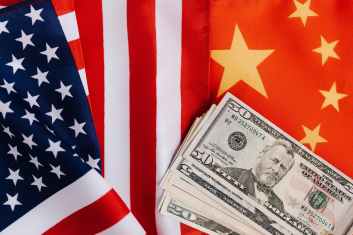
american and chinese flags and usa dollars
Photo by Karolina Grabowska on Pexels.com

That’s Omar Slim, a senior portfolio manager at global asset manager, PineBridge. When you hear about made in this country or that country is really quite relative and it’s a simplification of things because it’s most likely made in a number of countries. Here’s an example. Let’s say we want to make lasagna for dinner. If Jeff cooks the ground beef and prepares the cheese, Sarah makes the tomato sauce and layers the ingredients into a pan; and Blair, who bought all the ingredients, puts it in the oven, who gets the credit for making the lasagna? Now, let’s apply that to Apple’s iPhone. While the phone might say ‘Made in China,’ some of its parts come from other parts of Asia, Europe and even the U.S. Even though an iPhone may be assembled in China, it’s still tariffed in China as a U.S. product because Apple is an American company. The brand makes that clear with by, ‘Designed by Apple in California. How they’re treated in terms of customs, they will be treated as a U.S. product. So regardless of where they come, it’s essentially a U.S. product. Same for Chinese products going into the U.S. and same for, for instance, European cars.

India simply cannot afford to boycott Made in China — Quartz India

China became a popular manufacturing hub in the 1980s after it started to open to the world. It became known for its cheap labor costs, lax regulations and business-friendly environment. As China’s manufacturing sector grew, it took the crown from Germany as the world’s top exporter in 2010. While Made in China has become synonymous with cheap and low-quality products, China is hoping to change that. In 2015, it launched a Made in China 2025 initiative, which aims to shift its economy from low-end manufacturing to high-end, high-tech products. In 2017, Tim Cook said China lost its place as a low labor cost manufacturing nation many years ago. The U.S.-China trade war resulted in a tit-for-tat increase in tariffs on many products.

Petition · Political Parties: Boycott 'Made in China' products in ...

With increasing costs being passed on to consumers, many companies are looking to diversify their supply chain, instead of being so reliant on China. That sentiment has only grown, following the coronavirus pandemic’s hit on the global manufacturing industry. Along that supply chain, there will be some companies, that instead of manufacturing it in China, if they could, they could try to replace. In fact, companies including Apple, Microsoft and Google are reportedly looking into moving some of their hardware production from China to Vietnam or Thailand. But that might be harder than it sounds. The other countries will have a hard time to compete along with the fact that the infrastructure is shown that it’s quite good, along with the fact that in certain countries would not want to compromise the relationship with China.

70 Reasons that makes us Proud to be Made In India - Sanjay Dalmia

The reality today is that a product likely has many components which are sourced globally. A phone may be designed in the U.S, but its screen is sourced from South Korea, the sensors and microchips may be from Taiwan or Germany, with its assembly in China. So, the next time you see a product with the words, “Made in China,” remember that the full story is seldom pure, and never simple.

#DigitalAirStrike

“India bans 59 Chinese apps”

New Delhi: Indian Government has blocked 59 apps with Chinese links. Amid the ongoing tension between China and India, GOI has taken this decision, a digital boycott.
Indo-China border tension (Line of Actual Control) and after Indian soldiers were martyred at the Galwan River Valley,Ladakh. Ever since the incident, there has been an uproar on social media to boycott Chinese products, apps. Google play store and App Store has to discontinue it’s functions.
Here is the list of the banned Chinese apps-

  1. TikTok
  2. Shareit
  3. Kwai
  4. UC Browser
  5. Baidu map
  6. Shein
  7. Clash of Kings
  8. DU battery saver
  9. Helo
  10. Likee
  11. YouCam makeup
  12. Mi Community
  13. CM Brower
  14. Virus Cleaner
  15. APUS Browser
  16. ROMWE
  17. Club Factory
  18. Newsdog
  19. Beauty Plus
  20. WeChat
  21. UC News
  22. QQ Mail
  23. Weibo
  24. Xender
  25. QQ Music
  26. QQ Newsfeed
  27. Bigo Live
  28. SelfieCity
  29. Mail Master
  30. Parallel Space
  31. Mi Video Call – Xiaomi
  32. WeSync
  33. ES File Explorer
  34. Viva Video – QU Video Inc
  35. Meitu
  36. Vigo Video
  37. New Video Status
  38. DU Recorder
  39. Vault- Hide
  40. Cache Cleaner DU App studio
  41. DU Cleaner
  42. DU Browser
  43. Hago Play With New Friends
  44. Cam Scanner
  45. Clean Master – Cheetah Mobile
  46. Wonder Camera
  47. Photo Wonder
  48. QQ Player
  49. We Meet
  50. Sweet Selfie
  51. Baidu Translate
  52. Vmate
  53. QQ International
  54. QQ Security Center
  55. QQ Launcher
  56. U Video
  57. V fly Status Video
  58. Mobile Legends
  59. DU Privacy

Meanwhile, Twitter trends with various hashtags #DigitalAirStrike , #ChineseAppsBlocked and various memers are making posts.

A huge backlash and criticism was going on against Chinese applications.
Upon receiving recent credible inputs that such apps pose threat to sovereignty and integrity of India, the Government of India has decided to disallow the usage both [on] mobile and non-mobile Internet-enabled devices,” the Ministry of Electronics and IT (Meity) said in statement.
The Ministry used Section 69A of the Information Technology Act.
“There have been raging concerns on aspects relating to data security and safeguarding the privacy of 130 crore Indians. It has been noted recently that such concerns also pose a threat to sovereignty and security of our country. The Ministry of Information Technology has received many complaints from various sources including several reports about misuse of some mobile apps available on Android and iOS platforms for stealing and surreptitiously transmitting users’ data in an unauthorized manner to servers which have locations outside India. The compilation of these data, its mining and profiling by elements hostile to national security and defence of India, which ultimately impinges upon the sovereignty and integrity of India, is a matter of very deep and immediate concern which requires emergency measures.” -Govt officials said.
The Indian Cyber Crime Coordinate Centre under the Ministry of Home Affairs sent an exhaustive recommendation for blocking these “malicious apps,” the IT ministry. Earlier this ministry many concerns were received from citizens regarding the data security and the privacy issues.

As Prime Minister makes a digital move towards“ATMA NIRBHAR” Campaign.Official boycott of Chinese applications is a step towards Vocal for Local.

India reels from police brutality

Police brutality, ever since the death of George Floyd, the world had been reeling from the inhumane way police treat the “suspects”. Since then a number of protests have surged throughout the world regarding the brutality of police and thus moving to the broader spectrum of overall racism faced by the African-American community in America. While such a movement has done a lot of good, it has also spread a false sense of ease, projecting that such cases of the police brutalizing people is limited to America only. However, that is not the case, in countries such as India the problem is much larger and much more multi-faceted. Here the police do not target by race but by the Social status of a person, i.e. your monetary worth determines how the police treat you.

Photo by NEOSiAM 2020 on Pexels.com

People are often seen chanting the same old things such as know your rights, no one can arrest you without a warrant after such cases, however the problem is, that it isn’t the case of ground reality. Very often at the mere mention of their rights, the “alleged suspects” are beaten to an inch of their lives. Less than a month since the killing of George Floyd, another incident has the world reeling at the blatant lack of humanity within those who call themselves police. The case of P. Jeyraj and J. Fenix shows how these uniformed thugs terrorise the common folk. The cause of their arrest was an alleged violation of Covid-19 Curfew; however, several eyewitnesses deny to that as the arrest took place 30 mins before that. After the arrest of his father, Fenix reaches the station to inquire and is taken into custody. The father-son duo is beaten, nay brutalized by the police. They are tortured beyond imagination and after three days of constant torture the two succumb to their injuries. However, in order to cover up their crime the police file a hospital notice that the two allegedly fell and rolled over and had a subsequent hearth attack, however upon a closer look at the bodies by eyewitnesses that was no the case. The two had injuries throughout their bodies, their chest hair had been ripped out in tufts, their knees completely smashed by lathis, their faces pushed against the walls and blows rained upon their backsides and buttocks until they bled and ripped and subsequently the were stripped naked and thrown into jail. This is way to excessive just for a curfew break and just for this, the responsible police should have been sentenced to the maximum. However, this was not the case as the two were tortured way beyond this by someone who shouldn’t even be considered human. Their cries were heard throughout the time they were tortured. Behind the bars, where there are no CCTV cameras, these goons did their evil deed, they showed up iron tipped lathis or batons up their buttholes several times and their genitalia and backsides were completely ripped and mangled. Three times during the course of this torture, their blood-soaked clothes were sent back to their homes and fresh ones were demanded and then they would be sent back and so on. After a phony trial with a magistrate by the police, the two were taken back to custody and the torture upon their bodies and souls resumed. Two days after the phony trial the two were admitted into a hospital, and were pronounced dead due to heart failure and fever. This shows that even the medical practitioners hand out fake reports for the police. Since this issue came to light even after the blatant trying of Tamil Nadu police to cover it up, a mere two sub inspectors have been suspended and a few have been transferred. That seems like way below the bare minimum that the responsible authorities could do. To define how small the heinous crime’s punishment is, let us compare it to the sentencing of any given rapist. Nirbhaya case’s culprits dragged their cases for eight years. People arguing no matter how irrefutably inhumane their crime was they deserved the treatment of human beings. How is it that Indian society gives better treatment to bloody rapists than lower middleclass working people? How is it that even a terrorist is treated with better respect than a common folk. This wasn’t just a murder, this was a brutalizing work of psychopaths, who have no shred of human morality. No one should be treated like this, much less people who have “allegedly” committed such a small crime. We as a society must question ourselves that how can we progress further if we turn a blind eye to such events.

I feel that I speak about a vast majority of people who are going to see something like this, feel sad for about a minute or so and forget about it because it hasn’t happened to them. However, to them I say, you are even worse than these scums because the only one worse than someone who commits such a crime is someone who can act upon it but doesn’t.

India as a country has rotten to its core, rape, murder and now torture has become common place. In today’s India, Might makes Right. It is up to us, the future generation to change it, but by the looks of it we don’t have the ability to do so.

Covid-19 Updates.

The global pandemic has troubled the world enough by taking many lives and taking down the economy of vast number of nations. People are praying and expecting that a vaccine is made as soon as possible and then the virus could be stopped.

3 new Covid-19 symptoms.

US healthy body adds 3 new symptoms of covid-19 which could be found in a person who might have contacted the virus. It was already been reported that person who has contracted the virus will have the following symptoms such as fever or chills, cough, shortness of breath or difficulty in breathing, muscle pain or body pain, fatigue, loss of smell or taste, headache or sore throat these are the symptoms which are already included in the covid-19 symptoms list. Here it has been reported that US centers for Disease Control and Prevention has added 3 more symptoms to the list and they are Congestion or runny nose, nausea and diarrhea which makes the total symptoms of 12. This list will be updating as new cases bring new symptoms and the people could experience any combination of symptoms from the following list. People having other sorts of disease or medical conditions are at a higher risk for developing much more serious complications if they contract the virus.

The virus does not seem to stop as the number keeps on increasing every day across the globe as we have around 10 million cases around the world approximately and have recorded 499,000 deaths so far in the last few months. Coming to India as per the reports India has reached around 5.28 Lakh infections and over 16,000 deaths till date.

Lockdown in Maharashtra extended till 31st July.

The Uddhav Thackeray has reportedly led the Maharashtra government today (Monday) and declared that the state would undergo Lockdown till the 31st of July.

Update on the Covid-19 Vaccine.

As the cases around the world are unstoppable there are many nations who have indulged in the making the vaccine for the corona virus. There are mostly 100 vaccines which are being developed worldwide, some of the nations are India, China, US, Russia and Israel. It has also been reported that the chief Scientist of world health organization named Dr Soumya Swaminathan reportedly said that around 2 billion dosses of corona virus vaccine would be available and ready to use by the end of next year. But the major question which arises is that who would get the first vaccine of the deadly virus ? Most probably the people of the country where the vaccine is made. Therefore there is a lot of pressure from various governments on their pharmaceutical companies and scientists to make the vaccine as soon as possible. It is reported that WHO said that Uk-based AstraZeneca was leading the chart for creating the vaccine of the deadly corona virus furthermore they added that the US-Based vaccine Moderna was not far behind.

However there has been many drugs which have shown positive results but the the proper cure or treatment is no where to found right now.

According to the Global Times the vaccine made by china shows promising results on human trials. According to the Chinese company around 1200 volunteers of phase 1 and phase 2 showed effective improvement after the dosage.

FIR against Ramdev, Patanjalli for Coronil drug.

An FIR has been filed against Yoga guru Ramdev by the Rajasthan police for reportedly launching an Ayrvedic drug for curing the dangerous corona virus but it has come to notice that there is no approval on the following product which is said by a senior officer. The drug named as Coronil was launched on Tuesday which claimed that it can cure the virus. They reported that when taken with some other Patanjalli products it has cured all the patients who took part in the trial within a period of 7 days.

How Starbucks captured the coffee & the world…!!!

With nearly 30,000 cafes across the world , Starbucks has become over just a household name. From its iconic cups, often adorned with misspelled names, to the espresso inside them, Starbucks has catapulted from one coffee bean shop in Seattle to a sprawling $80 billion business over the last 47 years.

Starbucks has a 'void in innovation' and healthy beverages won't ...

Starbucks sales account for 57 percent of the total cafe market. Yes, 57 percent, nearly two-thirds of all coffee sold at cafes in the U.S. comes from a Starbucks. But this impressive expansion hasn’t come without growing pains. With more than 14,000 locations in the U.S. alone, Starbucks has spread itself too thin. Having too many stores has led to fewer transactions at individual stores. To compensate, the company has raised prices. But doing this too quickly or too often can drive customers away. So how did this happen? And what’s a coffee giant to do about it? The year is 1970.
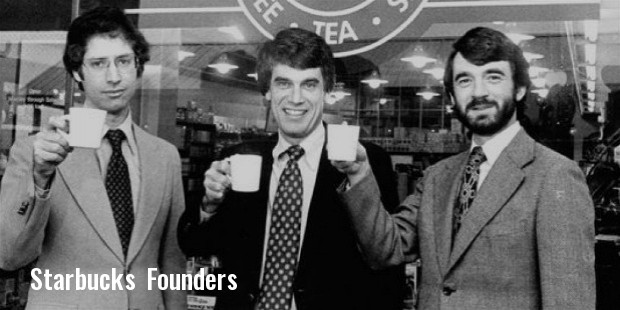
Three college friends, Zev Siegl, Jerry Baldwin and Gordon Bowker decide to get into the coffee business. They found a mentor in Alfred Peet, founder of Peet’s Coffee and the man responsible for bringing custom coffee roasting to the U.S. He knew the coffee industry inside and out, especially the gourmet end. He was the most educated coffee guy in the country at that time. So with Peet’s help, the three friends open Starbucks, a coffee bean shop and roastery at Seattle’s famous Pike Place Market in 1971. Peet provided the young entrepreneurs with roasted coffee beans and connected them with coffee brokers until they could set up their own roastery and source their own beans. For the first decade, the founders opened five more locations in Seattle. At this point, contemporary coffee consumers might have noticed a glaring absence: actual coffee drinks. But that’s the thing about the 70s coffee culture: it didn’t really exist outside the home. There were no coffee bars nor was there much of a requirement for espresso-based drinks. You purchased coffee beans and you either took them home as beans or we ground them for you in the store. Nobody expected to urge a beverage at a Starbucks coffee store until after 1980.

Starbucks Story - CEO, Founder, History | Coffee Company | Success ...
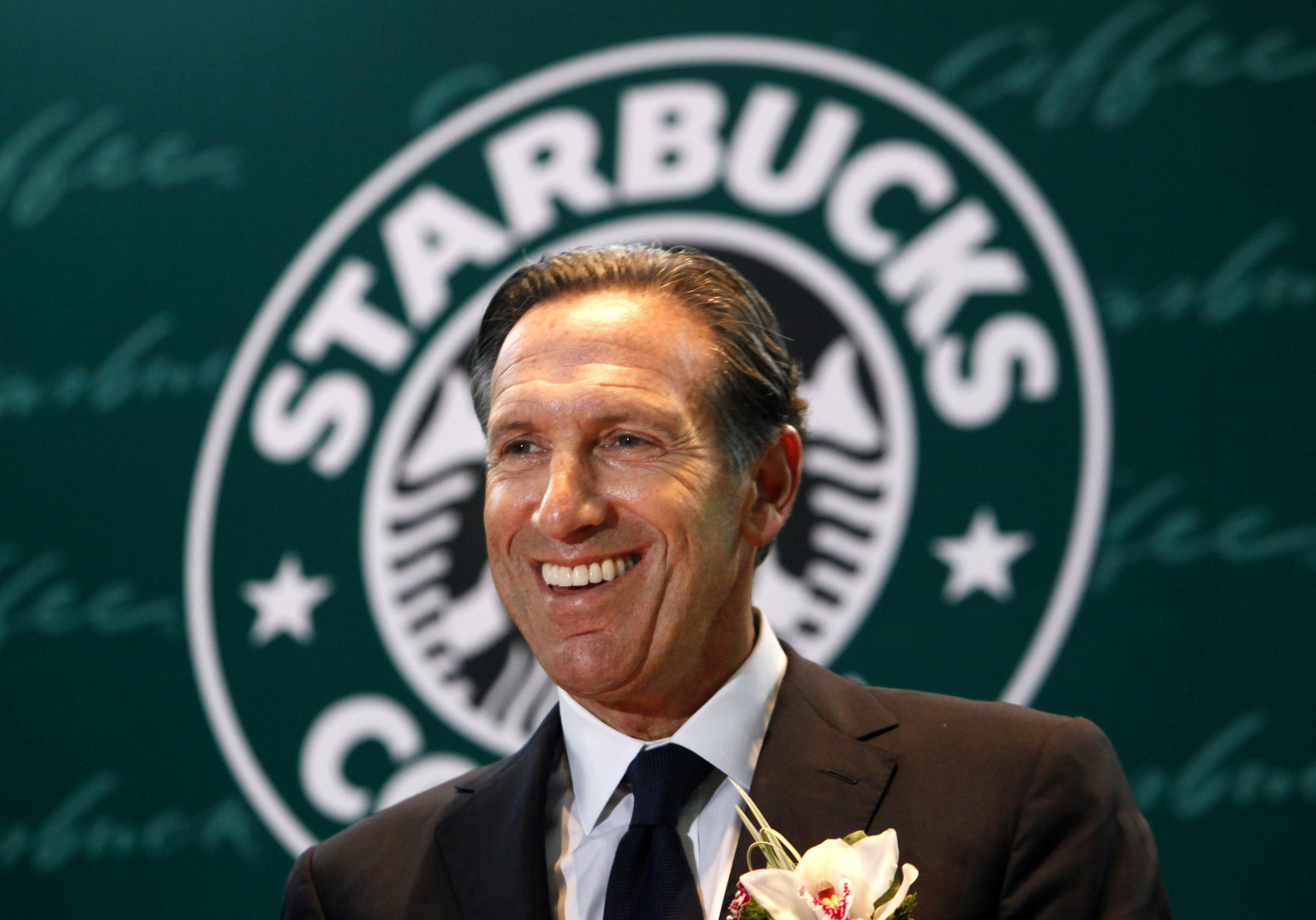
Starbucks’ initial focus was bringing high quality beans to consumers who were more accustomed to instant or canned coffee, but that changed with the addition of one man. The company hired its first really professional Director of Marketing and Sales, and that man was Howard Schultz. And he couldn’t figure out why we weren’t selling beverages. In 1983, Schultz travels to Italy and returns with an idea: turn the coffee bean stores into cafes. Starbucks served its first latte the next year. The experiment was a success, and four years later, Schultz partnered with investors and bought Starbucks for $3.8 million. He was only 34 at the time. Schultz pursued a strategy of aggressive expansion. By the time the company went public in 1992, it had 165 stores, in 1996 it had opened more than a thousand locations, including its first international cafes in Japan and Singapore.
Growth was so rapid that, just three years later, Starbucks opened its 2,000th location. Schultz switched from CEO to Executive Chairman in 2000, at which era Starbucks operated 3,500 stores in additional than a dozen countries. Between 2000 and 2007, the number of Starbucks cafes more than quadrupled, from 3,500 to over 15,000. During this era , the corporate opened a mean of 1,500 stores per annum , including 2,500 in 2007 alone. Sales shot up from $2 billion to $9.4 billion. Consumers were increasingly ditching their kitchen mugs for these iconic paper to-go cups. But then, Starbucks hit a wall: the 2007 financial crash. That year, its rapid growth screeched to a halt and its stock price plummeted by 50 percent as cash-strapped consumers backed away from pricey coffee habits. So, Starbucks brought back Howard Schultz. This news alone caused Starbucks stock to increase by 9 percent.

Xed Knowledge
Schultz halted growth and focused on customer experience. He shuttered cafes – more than 600 in 2008 and another 300 in 2009 – and laid off around 6,700 baristas. A month after his return, Schultz ordered Starbucks to shut all of its U.S. locations for one afternoon so he could retrain more than 135,000 baristas about how to make its signature espresso. Schultz’s goal was to remind customers what they loved about the brand by making the stores an experience, not just a place to get a quick coffee. They stopped selling breakfast sandwiches and brought back in-house grinding, infusing the cafes once again with that fresh coffee aroma. Schultz even mandated the removal of automatic espresso machines. These made service faster, but removed much of the romance and theatre of watching baristas craft each cup of coffee. Schultz’s makeover worked.

Starbucks | Description, History, & Facts | Britannica
The company’s stock soared more than 143 percent in 2009 and same-store sales rebounded. Starbucks has posted positive same-store sales ever since. During Schultz’s makeover of the cafes, Starbucks barely opened any new stores. But the pace picked up again in 2012. By 2017, Starbucks opened nearly 3,000 more locations, ending the year with 28,000 cafes round the world. However, this brings us back to the first problem: profit cannibalization. Over-saturation, particularly in urban locations, has spread sales thin. Because Starbucks has numerous locations, customers do not have to be loyal to only one. So albeit Starbucks overall sales are growing, its individual same-store sales won’t reflect it. Compounding this problem are changing consumer preferences. People are shying away from sugar-laden calorie bombs. which happens to be one of Starbucks’ staples. These signature Frappuccinos contain an average of 57 grams of sugar. That’s more than double the recommended daily limit of sugar. So, to combat these problems, Starbucks is changing once more . The company announced the closure of 150 stores in 2019. That may seem like a drop in the bucket for a sprawling company like Starbucks.

Starbucks App Users Now Drive 17 Pct Of Sales | PYMNTS.com

The company’s biggest undertaking is its new line of upscale stores: Starbucks Reserve Roasteries. These massive, 20,000-square foot stores are designed to be a tourist destination. Here, Starbucks baristas and bartenders’ experiment with different brewing methods and craft new, innovative beverages. These have proven popular. In the first weeks, the Shanghai Roastery made an average of $64,000 every day, which is double what a regular cafe makes in a week.

Meetings in India to topple my govt., says Nepal PM K.P. Oli

 Prime Minister K.P. Sharma Oli of Nepal on Sunday said meetings are being organised in India to topple his government.

Addressing a gathering at his official residence to mark the 69th birth anniversary of the late communist leader Madan Bhandari, Mr. Oli said his government enjoys parliamentary majority and the ouster plans will fail.

“There is news coming from Delhi about this. Look at the meetings being organised in India against Nepal’s decision to amend the Constitution to place the revised map of the country in the national emblem,” said Prime Minister Oli, pointing at the alleged plot to overthrow his government.

The lower house of Nepal’s parliament unanimously passed the Second Constitution Amendment on June 13, which gave constitutional status to the new map of the country including the disputed Limpiyadhura-Kalapani-Lipulekh region that is in the Indian state of Uttarakhand. The bill was signed by President Bidhya Devi Bhandari on June 18.

Mr. Oli said India was upset by Nepal’s territorial assertion.

“Nepal’s nationalism is not so weak. We have changed our map and if the prime minister of the country is deposed, then that will be unthinkable to Nepal,” he said. Hinting at India, he said some people consider the new map of Nepal a “crime”. He also indicated at an external plot against his government in 2016 and recollected that the government fell at that time because he had reached out to China and signed transit agreements which reduced dependence on land connectivity through India “I clearly remember that I was toppled when I signed transit agreement with China,” he remarked during the meeting.

“You must have heard that the Prime Minister will be changed in 15 days. If I am removed at this time, no one will dare to speak in favour of Nepal because that person will be dismissed immediately. I am not speaking for myself. I speak for the country. Our party, our parliamentary party will not fall into such traps. Those who are trying, let them try,” said Mr. Oli.

Despite the popular and emotive move on the new map, Mr. Oli has been criticised by colleagues from the faction of Pushpa Kamal Dahal ‘Prachanda’ in the ongoing meeting of the powerful Standing Committee of the ruling Nepal Communist Party. The hostility between the two factions was evident on Friday when Mr Oli did not attend the Standing Committee’s meeting.

The members of the Committee have been critical of the Prime Minister’s handling of the COVID-19 pandemic in Nepal. It is understood that of the 44 members in the Standing Committee, around 30 are with co-chair Prachanda, considered a challenger to Mr. Oli.

The political parties of Nepal put up a joint front during the debates on the new map in parliament but soon thereafter fissures appeared in the Nepal Communist Party over the issue of leadership as Prime Minister Oli is holding both the post of the prime minister as well as chairman of the ruling party. It is being speculated that Mr. Prachanda, though not as popular as Mr. Oli, has support from the opposition and the Madhesi members of the parliament.

Himachal Pradesh Has Been Killing Monkeys for Four Years. Will It End in 2020?

For the fourth straight year, the Himachal Pradesh government has received approval from the Union environment ministry to declare rhesus macaque monkeys ‘vermin’, opening them up to be hunted and killed.

Rhesus macaques are classified as being of ‘least concern’ in the IUCN Red List.

Principal chief conservator of forests wildlife and chief wildlife warden Savita told The Wire Science, “In our latest monkey population estimation, [we recorded] 1.36 lakh monkeys – a decrease of 33.5% since the last count five years ago.”

This survey was conducted by researchers from the Salim Ali Center for Ornithology and Natural History, Coimbatore, on December 4 and 5 last year. The results were published in March 2020.

“Around 5,000 forest staff and officials were engaged in this survey. The monkey-infested areas were divided in line transit patterns. The monkeys in each transit were counted thrice,” Savita said.

Since 2007, around 1.62 lakh monkeys have been sterilised in Himachal Pradesh’s seven sterilisation centres, according to her, preventing the birth of around four lakh rhesus macaques.

“With further reduction of monkey population achieved this year, we may not [have to] declare them vermin next year.”

But even without culling, Savita said the state would continue with its plan to sterilise 20,000 monkeys next year.

Sumanth Madhav, a campaign manager at the Humane Society International, isn’t a fan of Himachal Pradesh’s approach, however. He doesn’t think monkeys turn to human localities because forests have run out of food. “The degradation and fragmentation of habitat in forests is factual. But there is no evidence to support the assertion that there is not enough food for monkeys in the forest.”

Instead, Madhav said, monkeys enter human-settled areas for the easy access to food.

However, Savita and Madhav agree that the more food the monkeys find, the more their population increases, and have called for municipal corporation officials, local bodies and gram panchayats to coordinate and ensure proper disposal of garbage.

Under Section 62 of the Wildlife Protection Act 1972, animals designated ‘vermin’ – because they damage crops – can be killed without inviting punishment. However, animals that move in groups, including rhesus macaques, often have a hierarchy among themselves. When this ordering is suddenly disrupted, there could be unforeseen consequences.

“If an alpha male in a troupe, who manages the entire group, is killed, the younger ones are left headless,” Madhav said. “These babies or sub-adults don’t know how to behave and they create a ruckus. So one troupe becomes fragmented into smaller chunks, with rowdy youngsters.”

So in the absence of a policy on the right way to cull rhesus macaques, many are doing it wrong and potentially making a bad problem worse.

Some farmers, for example, have taken to poisoning the monkeys. Last year, officials spotted the carcasses of a hundred monkeys around Shimla.

Kuldip Tanwar, president of Kisan Sabha Himachal, said, “The Himachal Pradesh government prohibited arms and ammunition use in 1983. Those guns have become obsolete, and their users have lost practice.”

Nine-tenths of the people of Himachal Pradesh live in rural areas. Only a few rich farmers among them can afford guns, pistols and cartridges; the rest use poison. “The farmers are accustomed to using pesticide for their crops, so using another form of poison for monkeys comes easy,” Tanwar said.

In the case of the hundred that had died last year, Tanwar said some people had mixed corn paste with the poison, smeared it on slices of bread and laid them out in places the monkeys visit often. Once a monkey consumed the slice, it would wander off in search of water. If there was a water body nearby, the poisoned monkeys’ carcasses would collect there.

Tanwar used to work with the Indian Forest Service until about a decade ago.

Savita said a carcass that hadn’t been properly disposed could subsequently threaten any animals or birds that may come in contact with it or the water.

And at least one sign points to farmers not disposing of the carcasses: Savita said the wildlife department has declared a cash prize of Rs 500 for every monkey killed – but a single farmer hasn’t come forward to claim it.

She thinks it could be because of the stigma attached to killing monkeys, given the importance of the monkey-god Hanuman in Hinduism. But this reverence is part of why farmers have such a tough time with monkeys in the first place: people often feed monkeys because they’re thought to be venerable in some way.

And this is why, Savita continued, no other state in India might have declared monkeys ‘vermin’.

“Though no method of culling has been prescribed by the wildlife department, the farmers have been directed to hand over the monkeys’ carcasses after they have been killed for a proper disposal,” Savita said. “However, we haven’t received any complaints about farmers resorting to poison.”

Need for a multifaceted strategy

In the past, farmers used to protect their crops with community-watch programmes. Tanwar suggested the government could deploy people through the MGNREGA scheme as ‘community watchers’.

In keeping with that, Madhav said culling must be more humane. “It is a debatable subject, though there is no evidence culling can help in a conflict. It is more politically motivated and psychologically comforting for the people.”

He also said the people as well as state officials could be confusing “population management as a tool for conflict management” when really they ought to be guided by different strategies.

“Population management may help but it is not the only solution.” Monkeys that are “sterilised may live for another ten or more years, so conflicts will continue.” As a result, “unscientific population control and sterilisation in isolation will never give optimum results.”

Instead, he stressed the need for a multi-pronged approach that works with other important factors to ease human-monkey conflicts, including an “awareness programme” to have farmers shift to “crop rotation or [to growing] unpalatable crops for monkeys”. He also said, “The government should introduce a crop insurance scheme and make timely ex gratia payments [for] crop loss to farmers.”

“These measures over a period of long time will help people live alongside animals.”

Decimation of primary herbivores

Such peaceful coexistence pertains not just to the rhesus macaques but also to wild boars, porcupines, rabbits and peacocks, all of which have been blamed for crop depredation in the state.

While Himachal Pradesh is alone in designating monkeys ‘vermin’, Uttarakhand has accorded the wild boar this status (as has Kerala) and Bihar, the nilgai.

Savita said all of these animals – and bird – have been forced to wander towards human settlements because human settlements have encroached on their habitats.

Suresh Bhai, an environmentalist, said however that wild boars and nilgai are primary herbivores. So manipulating their population could in turn affect the survival of tigers, leopards and other carnivores in the same ecosystem.

Seema Sharma is a Chandigarh-based independent journalist. She previously worked at The Tribune and The Times of India. She writes on forest, wildlife, environment, social and rural issues.


Should India be renamed, Bharat?

William Shakespeare had his most celebrated heroine Juliet say in his Romeo and Juliet play, What’s in a name”. “That which we call a rose. By any other name would smell as sweet.”

But most people wouldn’t agree with Shakespeare in their daily lives. For, a name is the most prominent identity of a person, a family, a caste, a religion or a country. Every name has a history. This was hotly debated in the constituent assembly when India got Independence from British rule. The British called India “India”. Before them, the Mughals, the biggest empire in India, called it Hindustan. After an intense debate, the Constitution accepted two names for the country, India and Bharat. Now, a petition had been filed in the Supreme Court seeking removal of ‘India’ as the name of the country and keeping just Bharat as the solitary identity of the nation.

In The Discovery of India, a book that Jawaharlal Nehru wrote during his years of captivity (1942-1946) and published in 1946 :

Often, as I walked from meeting to meeting, I spoke to my audiences of this India of ours, of Hindustan and of Bharata, the old Sanskrit name consequential from the mythical founders of the race.

When the book was published, these names, Hindustan, Bharat (also Bharata), India, coexisted in the subcontinent. Of the endless usage also was Hind, as in ‘Jai Hind’ (Victory to Hind), the battle-cry that Patel, Nehru other several other political leaders, liked to proclaim at the end of his speeches. To capture these innumerable meanings today is not an easy task. It demands to be conscious of the simple and yet too often forgotten fact that words have a past of their own; they do not maintain the same significance throughout time.

Naming the Nation and Constitutional debates

The constituent assembly debated Article 1 of the then draft constitution prepared under the chairmanship of BR Ambedkar. It was a heated debate that saw sharp exchanges among the members on November 18, 1949 – just eight days before the Constitution was adopted by “We, the people”. The debate opened with HV Kamath, a constituent assembly member from the Central Province and Berar. Kamath opposed the Ambedkar committee’s draft that had two names – India and Bharat.

Kamath projected amendments to Article 1 putting Bharat or alternatively Hind as the primary name for the country and voicing India only as the name in the English language. He listed names such as “Hindustan, Hind and Bharatbhumi or Bharatvarsh” to have been recommended by people.

When Kamath began explaining the origin of the name of Bharat, Bharatbhumi or Bharatvarsh dating it to ancient times. Kamath was strongly opposed to the language of Article 1(1) that says, “India that is Bharat”. Another prominent name to oppose the language was Seth Govind Das, who said, “India, that is, Bharat” are not beautiful words for the name of a country. We should have laid down the words “Bharat known as India also in foreign countries.” Das quoted the Vedas, the Mahabharat, some of the Puranas and the works of Chinese traveller Hiuen-Tsang to say that Bharat was the original name of the country, hence India should not be put as the principal name in the constitution post-independence. He also invoked Mahatma Gandhi saying that the country fought the battle of freedom raising the slogan of “Bharat Mata Ki Jai” asserting that Bharat could be the only plausible name for the country.

Among others who wanted India being named only as Bharat included KV Rao from Andhra Pradesh. Rao went to the extent of suggesting that on the basis of historical nomenclature, Pakistan could be named as Hindustan. Rao emphasized, “we can now call ‘Pakistan as Hindustan because the Indus river is there. Hind has replaced Sind : (Ha) in Prakrit is pronounced as (‘sa)’ in Sanskrit. Greeks pronounced Hind as Ind. Hereafter it is apt that we should refer to India as Bharat.”

At the end, when Rajendra Prasad put the amendments to vote, all fell. Article 1 remained intact as “India, that is Bharat”. However, the debate has continued.

Naming the nation: a sensitive and intricate issue to this day

In 2014, Yogi Adityanath – the current chief minister of Uttar Pradesh – had moved a Private Member’s Bill in the Lok Sabha, seeking substitution of word “India” in the Constitution with “Hindustan” proposing “Bharat” as the primary name of the country. His bill proposed to amend the language of Article 1 as, “Bharat, that is Hindustan, shall be a Union of States.

The Supreme Court wanted  the Centre and the states to comment on a plea demanding change in the name of the country from ‘India’ to ‘Bharat’, in April this year. A 2 judge bench of Chief Justice H L Dattu and Justice Arun Mishra had issued the notice to all state governments and union territories on the PIL which called for restricting the Centre from using the name of India in official papers and for any government purposes.

On June 1, 2020, Niranjan Bhatwal filed a petition, claiming to be a social activist from Maharashtra, said that even the NGO’s and corporates should be ordered to use ‘Bharat’ for all official and unofficial purposes. The PIL detailed that even in the Constituent Assembly, the leading suggestions for naming the country were “Hind, Hindustan, Bharat and Bharatbhumi or Bharatvarsh and names of that kind”.

Among the several questions raised in the PIL were whether the addition of India in Article 1 of the Constitution was just for reference, in order to repeal the Government of India Act 1935, and the Indian Independence Act 1947, where this country had been referred to as India and wanted it to be repealed by Article 395 of the Constitution. Further, it asked whether the addition of ‘India’ was simply referential for de-jure acknowledgement of the country by countries of other parts of the world for political purposes. The PIL also said whether Hindi language extracts of Article 1 Clause 1 of the Constitution signify the same meaning, as it signifies in the English language of the Constitution with respect to establishing the name of the country.

While the government has told the Supreme Court, there is no need to rename India as Bharat. Article 1 (1) of the Constitution lays down that “name and territory of the Union.—(1) India, that is Bharat, shall be a Union of States”. In its affidavit, the Ministry of Home Affairs has said issues concerning the country’s name have been reflected upon lengthily by the Constituent Assembly during the drafting of the Constitution and there was no requirement for a review.

The Supreme Court on 3rd June ordered that a plea to change India’s name specifically to ‘Bharat’ should be forwarded to the Centre for an appropriate decision.

“Bharat and India are both names given in the Constitution, says CJI.

The apex court had rejected a similar petition in 2016. Then CJI, T.S. Thakur emphasized that every Indian had the right to choose between calling his country ‘Bharat’ or ‘India’ and the Supreme Court had no business to either command or decide for a citizen what one should call his country.

Is there a solution?

The policymaking of naming is part of the societal production of the nation. Its processes are moulded by broad socio-political conditions and can be understood from several angles. The purpose has been to look at some of the inherited discourses on ‘Bhārata’ both prior to and at the time of its official equation with ‘India’ in the Constitution of 1950. In the 19th century, the name Bhārata was used to refer to the geographicalpolitical and administrative entity that the colonial power called ‘India’. That Bhārata—a cultural space whose unity was to be found in the social order of dharma—was a pre-national construction and not a national project.

 At the time of independence, India and Bhārata were equally worthy candidates to bless the newly-born nation, along with ‘Hindustan’. But the first article of the Constitution discarded Hindustan and listed the nation under a dual and bilingual identity: ‘India, that is Bharat’. One name was to be used as the translation of the other as exemplified on the cover of the national passport, where the English ‘Republic of India’ corresponds to the Hindi ‘Bhārata gaṇarājya’, or, possibly, even more, telling, on Indian postage stamps, where the two words Bhārata and India are located. It is possible that all these names will continue to be understood and interpreted with new circumstances, to give new connotations to India’s national identity, a constant, open-ended process.

What are we to make of the comparison of Bharat and India in the Constitution? How did such a double-name plan come about? This is the main question to be dealt with. In the end, we should realise that the Constituent assembly’s decision should be understood as the outcome of a long historical process with deep cultural roots.

Hyderabad’s high COVID-19 positivity rate worries experts

Telangana State Disaster Response and Fire Services Department workers sanitise the area surrounding Charminar in Hyderabad, to prevent the spreading of COVID-19

Report points to abysmally low testing rates in the State of Telangana Amidst apprehension that COVID-19 community transmission may be under way in large urban cities, Hyderabad’s high COVID-19 positivity rate (32.1% on June 23), the highest among major infected cities in India, coupled with low tests per 10 lakh population compared to other cities has been repeatedly red-flagged by worried Central government experts.

Pointing to the abysmally low testing rates in Telangana, the report ‘Testing Status: Hyderabad and Telangana’ accessed by The Hindu notes, “Only 1 out of 19 private labs in Telangana is conducting more than 500 tests per week and testing in Telangana is heavily focussed on Hyderabad. Tests per 10 lakh population in other highly infected districts (Ranga Reddy, Sangareddy, Warangal Urban and Jagaon) is extremely low.”

The document adds that Telangana has the highest positivity rate (June 10-23) in India (27.7%) and consistently ranges from 20 – 40% daily with the lowest tests per 10 lakh population (June 10-23) in India.

“All COVID-red States are being closely monitored and have been instructed to hike testing. Testing is vital to map out the growth and concentration of the virus in the general population. Several States have been instructed on this multiple times,” said a senior government official with ICMR who added that letters were issued to all States recently asking them to ramp-up COVID-19 testing.

The ICMR also has noted that COVID-19 escalation is sharpest in urban cities with Delhi, Gurugram, Mumbai and Chennai, also witnessing significant rise in the spread of the virus and added that Telangana has been repeated told to improve its testing scope and reach.

Bringing in the contrast, a senior health official added that neighbouring Andhra Pradesh is testing over 12,000 persons/day and also ramping-up testing to maintain a low mortality rate. “Andhra Pradesh has 336 TruNat machines and 42 labs for COVID-19 testing while Telangana has 21 machines and one lab,” the official added.

According to the Health Ministry, a Central team led by Lav Agarwal, Joint Secretary, in the Ministry is now in Gujarat, Maharashtra and Telangana to interact with the State officials and coordinate with them to strengthen ongoing efforts for management of COVID-19 there.

The Ministry added that they are expanding the COVID-19 testing labs network across the country, ICMR has inducted 11 new labs in the last 24 hours and the country now has 1,016 diagnostic labs dedicated to COVID-19 which includes — 737 in the government sector and 279 private labs.

“At present, India has Real-Time RT PCR based testing labs — 560 (Govt: 359 + Private: 201), TrueNat based testing labs : 369 (Govt: 346 + Private: 23) and CBNAAT based testing labs : 87 (Govt: 32 + Private: 55),” said ICMR.

‘Bring all helathcare facilities under one umbrella’

Meanwhile, in a statement issued by 26 national and Karnataka-based civil society organisations including Naavu Bharathiyaru Karnataka, All India Drug Action Network, All India Central Council of Trade Unions (AICCTU), Karnataka and Campaign for Dignified and Affordable Healthcare (CDAH), the group has noted that in order to successfully curtail the pandemic, a whole health systems approach is sorely required. This is missing in the current approach where provision of healthcare is seen in a segmented manner. There is a dire need to bring public, private, charitable, medical colleges, corporation facilities under a single umbrella with transparent and well-functioning referral and reporting mechanisms, said the group.

It added that the government could use the COVID-19 situation as a good opportunity to improve the reporting and assisted referral mechanisms from the various public as well private facilities so that the patients are not distressed going from one hospital to another and the treatment given to COVID-19 patients must be in strict adherence to Standard Treatment Guidelines, which should be issued by an appropriate government agency.


Jaipur Hospital Served Notice Over Trials in Patanjali COVID Drug

The Rajasthan Health Department has served a notice to the National Institute of Medical Sciences in Jaipur seeking an explanation on the trials of the Patanjali drug that claims it can cure COVID-19. Reports suggest that trials for the controversial ‘Coronil’ drug by Patanjali were conducted at NIMS, Jaipur before it was launched.

Chief Medical and Health Officer, Jaipur, Dr Narottam Sharma told PTI, “We served notice to the hospital on Wednesday evening seeking explanation in three days. The hospital did not inform the state government nor sought permission.”

NIMS has now however, reportedly distanced itself from the drug stating that no clinical trials for the drug were conducted at the hospital. NIMS Chairman, Dr. B.S. Tomar told The New Indian Express that there was no serious case in the patients admitted at the hospital.

“Only 100 asymptomatic patients were given few Ayurvedic medicines under the sponsorship of Patanjali. But we did not prepare any medicine nor did we know its name,” he reportedly said.

Dr. B.S Tomar reportedly claims that he had the ICMR’s trial wing, the Clinical Trials Registry – India’s permission for five ayurvedic medicines to be tested on coronavirus patients.

Earlier, the AYUSH ministry had sought information on the trial of the drug and banned Patanjali from advertising it as a medicine to cure COVID-19.

While the Uttarakhand government has served a notice to Patanjali for its claims about the drug, the states of Rajasthan and Maharashtra have reportedly refused to allow the Patanjali product to be used in their respective states till it received clearance from the AYUSH ministry.

We’ll get through this!

Apple catches TikTok reading user clipboards; won’t do now, says Chinese app

Chinese short-video-making app TikTok has announced it will no longer automatically access user clipboards on Apple iPhones after iOS 14 in Beta exposed the app’s constant reading of user clipboards.

TikTok told The Telegraph that it would stop “snooping on users’ clipboards after iPhone update showed app constantly reads copied text”.

“A security patch from Apple has suddenly exposed just how many smartphone apps are reading users’ clipboards every time they are on screen,” said the report.

In iOS 14 Beta, one of these features is a new banner alert that lets users know if an app is pasting from the clipboard.

This has exposed the behaviour of some popular apps like TikTok as annoyed users who upgraded to iOS 14 Beta went on social media with such complaints.

“For TikTok, this was triggered by a feature designed to identify repetitive, spammy behaviour. We have already submitted an updated version of the app to the App Store removing the anti-spam feature to eliminate any potential confusion,” the Chinese company said in a statement.

According to the report, other apps that read the iOS clipboard include AccuWeather, Call of Duty Mobile and even Google News.

iOS 14 is limited to developers now and the company plans to release a public beta version next month ahead of the launch later this year.

In iOS 14, all apps will now be required to obtain user permission before tracking.

Later this year, App Store product pages will feature summaries of developers’ self-reported privacy practices, displayed in a simple, easy-to-understand format.


Protection is must’: Experts call for following guidelines as India’s Covid-19 cases surpass 5 lakh

Medical professionals and security personnel during the inauguration of Sardar Patel Covid Care Centre and Hospital by Union home minister Amit Shah and Delhi chief minister Arvind Kejriwal at Radha Swami Satsang Beas campus in Chhatarpur New Delhi on Saturday

Medical professionals and security personnel during the inauguration of Sardar Patel Covid Care Centre and Hospital by Union home minister Amit Shah and Delhi chief minister Arvind Kejriwal at Radha Swami Satsang Beas campus in Chhatarpur, New Delhi on Saturday. (Vipin Kumar/HT Photo)

India’s Covid-19 tally crossed the five lakh mark on Saturday and it stands at 5,08,953, with the death toll at 15,685 according to Union health ministry. On the other hand, Delhi has 28,329 active cases with the total count reaching 80,188 and 2,558 deaths.

In this regard, medical experts told ANI that the rise in cases in India is still not high as compared to other countries but said that people should follow Covid-19 guidelines such as wearing face masks.

Dr Suresh Kumar, Medical Director, Lok Nayak Jai Prakash (LNJP) Hospital said that urban mobility is a likely cause in the spike in cases.

“I think as the numbers are rising, protection is must and we must follow the guidelines by the government wholeheartedly. There is a lot of urban mobility, especially in Delhi and Mumbai which may be a cause for the spike. The population density increases the chances of spreading the infection further. However, our recovery rate is also steadily rising which is encouraging,” Dr Kumar said.

Dr SP Byotra, Chairman, Department of Medicine, Sir Ganga Ram Hospital said, “We are yet to reach the optimum number of cases. However, there has been flouting of rules by people. We have been continuously insisting that wearing masks is of foremost importance and mandatory. We should be more responsible as a nation until there is specific treatment/vaccination available.”

In addition, Dr Byotra said, “One more important factor is testing. Now, almost 20,000 tests are being conducted which is helping in the detection of cases and ascertain whether they are symptomatic or asymptomatic.”

The Delhi government, in its media bulletin, stated that 19,180 tests were conducted on Saturday taking the total tests to 4,78,336.

Dr Randeep Guleria, Director, All India Institute of Medical Sciences (AIIMS), told ANI, “Rise in cases in India is still not as high as compared to other countries. In the United States, there have been almost 40,000 cases per day in the last two days. Compared to that, our numbers are not that high.”

“Cases per million population continues to be low and we still have low mortality. Considering the size of our population, the number of cases will be large in absolute terms. But if we are able to keep mortality down, it will be a big success for the country,” he said.

Union health minister Dr Harsh Vardhan stated that the Covid-19 recovery rate has surged over 58% in India with around three lakh cured and discharged patients.


The Power of ATTITUDE💪 – Lion & Eagle

There are only two animals on the planet that the creator identified himself with the first one is the eagle and the second animal is the lion and when we study these two animals because if he is the leader of the universe and we want to be a leader on earth we need to better find out the nature of these animals and also the up attitude of those animals.

If we discover that both of them are the kings of their domain the Eagle is the king of the bird Kingdom and the lion is the king of the animal kingdom but let’s talk a little bit about the lion, the lion has the spirit of leadership and this word spirit here is referring to attitude everybody’s attitude a leader has attitude that makes him or her different from followers now the lion is the king of the jungle but the lion to is a great source of encouragement to all of us. I want you to write down this down remember this as long as you reside favorite the lion isn’t the tallest animal within the jungle number two the lion is not the largest animal in the jungle number three the lion is not the heaviest animal in the jungle number four the alliant is not the smartest animal or the foremost intelligent animal within the jungle and yet when he shows up all of them run away.

Your attitude matters in your life – Journey of life Continues
It really brings home the purpose a military of sheep led by a lion will always defeat a military of lions led by a sheep and therefore the answers thereto dilemma is that this because leadership can transform cowards into violent warriors the proper quite leadership can transform a timid into bold people that are fellows leadership is that powerful leadership can walk into a camp of depressed people on in 20 minutes. They are turned on into unbelievable powerful armies because leadership determines everything the lion is that the king of the jungle due to one-word attitude.

Attitude is Everything (@attitudetweets) | Twitter
Lion features a different attitude that creates every animal scared of him now we do not want to steer by fear but it does take respect for you to become a leader once I use the word fear within the jungle we’re talking about respect the elephant respects the lion the hyenas respect the lion they the giraffes they respect the life what makes these massive animals respect such a small cap the attitude is the difference for example, a lion will see an elephant and the thing that counts with mine one word lunch I could eat this thing and he acts the way he thinks now here’s another amazing mystery the elephant is larger, bigger, stronger, more powerful, heavier and more intelligent and yet when the elephant sees the lion one word involves mind eater attitude may be a product of belief you can’t have an attitude beyond your belief so your attitude comes from your belief system the lion is that the king due to what he believes about himself.

HACCP

“Hazard Analysis and Critical Control Points”.
It is basically a preventive approach to food safety which is used to find and then eliminate the biological, chemical and physical hazards which may or may not be there in production processes and can cause the final products to be unsafe and unhealthy for human consumption. These are certain principles which have been designed by the government to ensure the food quality and safety. It is a various step process that is followed in any food industry.
The HACCP system is followed at each and every level of food chain i.e. in food production and preparation processes which also includes packaging, distribution and even consumption by the consumer. It is therefore known as FARM-TO-TABLE process.
This technique was originated by NASA in the 1960s and US food and drug administration gave a particular definition to this. The main objectives of the HACCP system are –
• Prevention of food-borne diseases so that no one is affected after the consumption of food.
• This system mainly focuses on quality assurance unit i.e. maintains the quality of the food.
• HACCP system tends to reduce the cost of analysis of food.
• It also reduces the losses which occur due to product recall.
• And finally it helps in protecting the reputation of government.

HOW TO CONDUCT A HACCP PLAN??????
Conducting a HACCP plan is a 5 step process as mentioned below –

  1. Collection of HACCP resources and assembling of HACCP team which will look into the all steps.
  2. Description of the product by the team and deciding its method of distribution.
  3. Developing a complete list of ingredients and raw materials which are to be used in the production of the final product.
  4. Developing a flow diagram of the process i.e. how the product will be manufactured, its complete process.
  5. Meeting the requirements for the product to be manufactured safely.

PRINCIPLES OF HACCP
There are 7 main principles of conducting successfully a HACCP plan.

  1. To conduct a hazard analysis is the first step in which all the potential physical, chemical as well as biological hazards in the production of the product are identified.
  2. To determine all the critical control points (CCPs). At this step, all the control measures are thought to be applied. Basically at this step, those points are identified where control measures can be applied for the safety. This step is very essential to eliminate hazards completely from the product.
  3. To establish critical limits is the next step i.e. in this step the control measures are actually applied and also the maximum and minimum limits are set for the preventive measures. To each point found in the last step, a critical limit is applied. These limits assure the food safety.
  4. To establish monitoring procedures is the next step in which all the planning which was done yet is monitored and it should be done on a regular basis. This step assures that there is no mishandling of any procedure of the complete plan.
  5. To establish corrective actions is the next step in which appropriate correct actions are taken if after monitoring it is observed that the critical limits are not met. The corrective actions for each point and limit are already pre-decided.
  6. To establish verification procedures is the next and most important step in which the complete HACCP plan is validated. The complete verification of the plan is required to assure that the precautions and preventions are taken carefully.
  7. To maintain record keeping and documentation procedures is the final step in which the record is maintained and established which must be done regularly. It is necessary for validation procedures.

Is Wearing a Face Mask All Summer Bad for Your Skin?

Look, no one wants to wear a face mask. But even as states open back up and the urge to forget COVID-19 ever happened becomes almost irresistible, it’s good to remember that wearing a mask in public places is not about you, it’s about keeping other people safe from a disease that has killed more than 115,000 people in the U.S. alone.

That said, if wearing a face mask has proved problematic in late winter and spring, it’s going to get much worse when the sweat, sunscreen and sweltering temperatures of summer come into play. You may have already dealt with an unfortunate bout of maskne (that’s mask acne, for people who aren’t keeping up on the new COVID lingo), but when you’re essentially creating a hot box around half your face, strange skin issues will follow.

To help you save face this summer, literally, we got in touch with Dr. Jaime Davis, Board Certified Dermatologist and Medical Director and CEO of Minnesota’s Uptown Dermatology and SkinSpa, who has already been dealing with these conditions among patients.

What sunscreen pairs best with a face mask? What materials should you avoid when buying one? And what issues should men, a generally dermatologically naive bunch, be aware of? Dr. Davis answered all these questions and more.

What kind of face mask should I wear in summer?

Before even talking about the type of mask, Dr. Davis pointed out that many issues are cropping up due to overuse. “Wear the mask when necessary, but remove it as soon as it is not necessary,” she said. “Try to avoid prolonged stretches of mask wearing.” This falls in line with current CDC guidelines that recommend “wearing cloth face coverings in public settings where other social distancing measures are difficult to maintain.” Also, if you have severe breathing issues, it’s important to note that the CDC exempts you from that recommendation.

In terms of materials, Dr. Davis recommends masks with moisture-venting features, which it should be said does not mean cutting a hole in it. While she says that medical-grade options are the most protective, they’re also the most occlusive (in other words, they provide the tightest seal, which is good for stopping virus transmission but potentially bad for your skin); instead, she recommends homemade alternatives “made from tightly woven soft cotton fabric that has been washed in unscented soap, rinsed well of any residual detergent, and dried without fabric softener.”

I’ve developed a rash from my mask. What is it?

While you shouldn’t self-diagnose a rash or other skin irritation, one issue Dr. Davis has dealt with at her practice that people should be aware of is allergic reactions to face-mask materials. She points specifically to “the metal nose bridge (if nickel is in the alloy) or elastic (rubber allergy) or any textile-specific coatings on the fabric.” The nickel issue will be familiar to people who wear earrings or other jewelry, and may be more of a concern for people wearing medical or medical-style coverings.

If you think you’re experiencing an allergic skin reaction, be sure to seek out professional help from a dermatologist. Even if you’re nervous about venturing out to a doctor’s office, Dr. Davis notes that her Minneapolis practice has been offering e-visits which have been, in her words, “freaking fantastic!” She notes that insurance is covering the online sessions, care can be delivered quickly and there’s always the potential for an in-person follow-up, so check with your local dermatologist.

How do I avoid and treat maskne?

Not all acne is the same and it should not be treated the same; the same goes for maskne. Dr. Davis says she’s dealt with both acne rosacea (“inflammatory acne exacerbated by heat and humidity of occlusive masks”) and acne vulgaris (“pimples and plugs from excess oil”) in the current mask-wearing age, but notes people should seek a professional opinion if their acne doesn’t go away. If face wash isn’t part of your regular grooming arsenal, she says to use a mild cleanser like Cetaphil twice a day, which may solve your problem.

What sunscreens go well with masks?

The biggest conversation around sunscreen in recent years has been mineral versus chemical. Basically, chemical sunscreens are the most popular products you’ll find on shelves, available from companies like Banana Boat and Coppertone, but some of them are being banned because they’re unsafe for marine life. Mineral sunscreens are generally considered to be friendlier to oceans and the environment, but in terms of protecting you from skin cancer while wearing a mask, Dr. Davis says you’ll be better off with chemical versions.

“Mineral-based sunscreens sit on top of the skin and could be rubbed off by the mask. Chemical-based sunscreens absorb into the skin and generally provide longer-lasting protection,” she says. “Brands that are generally well tolerated by sensitive skin include Vanicream and Cetaphil.” If you have a favorite brand already, she suggests using SPF 30 or higher for normal daily use. And yes, you should be applying sunscreen on your face every day. However, Dr. Davis also notes that if you’re wearing a snug-fitting or tightly sealed mask, you could develop a sensitivity to the sunscreen.

If you do end up with an unfortunate mask-shaped sunburn, the dermatologist-recommended salve is a cool, moist compress on the burn over a thin layer of 1% Hydrocortisone cream, which is available over the counter at local drugstores.

What other skin issues should I be aware of?

If you’ve got facial hair, you may be having problems with beard folliculitis, which is basically inflammation or infection in the hair follicles, similar to razor bumps. Dr. Davis says men have been experiencing this issue when short whiskers get caught in masks as their facial hair grows out. To avoid it, she advocates for beard commitment: either let it grow out or keep a close shave. “It’s that five o’clock shadow or weekend of not shaving that is the stuff which gets caught and causes folliculitis,” she says.

In a similar vein, the last issue she’s noticed is seborrheic dermatitis, which is a condition that generally leads to dandruff on the scalp but can also manifest in dandruff of the face (yes, 2020 is only getting worse). Thankfully, the solution is generally simple. “People are skipping showers during the pandemic and we’re seeing a lot more dandruff,” Dr. Davis says. So to keep face dandruff at bay just do what she already recommended and wash your face at least once a day.

Copyright © 2020 InsideHook. All rights reserved.