Content writing is a field in which the professional writers write about the relevant content on the website. There work includes a lot Research and a valuable knowledge on various topics .
How content writing growing businesses??
*Reach the audience The content writer’s works is in accordance with SEO and Google analytics which helps the website to reach the targeted audience . A good quality content will help the website to progress and become the best digital marketing agency in India
*Best way to know about different products Content writing is very beneficial for the person who wants to know about different products and services .It ensures to provide all the relevant information about the product or services or anything to the audience.
*Accelerate the Brand value Content writing helps in increasing the brand value of the company .In the digital world , people usually search about the different things on internet and if you have valuable content on your website ,it will help you increase the brand value of your product and be the best digital agency of India
The National Council of Education Research and Training (NCERT) attribute towards developing the valuable content for the CBSE students. The NCERT books published on the principle of child-centred system .The books inculcating creativity and treat children as participants in learning ,not as receivers of a fixed body of knowledge.The NCERT books enhance this endeavour by giving higher priority and space oppurtunities for contemplation and wondering.
Why to use NCERT books ?? Syllabus designed of the NCERT books tried to address the problem of curriculum burden by reorientating knowledge at different stages.
Especially designed for CBSE students The NCERT books are especially designed in curriculum with CBSE students .NCERT books are the best choice for CBSE students . All the answers to the tricky questions asked in CBSE exams could easily be answered by using these NCERT books. There will not be a single question which would be beyond the scope of NCERT books.
Easy to understand language The best advantage of using NCERT books is that ,its quite easy to understand .The NCERT books are written in very simple and easy to understand language. The NCERT books are very simple to understand.
NCERT books especially adhere to CBSE syllabus CBSE students should use NCERT books as they are strictly adhere to CBSE syllabus .Each and every single topic of CBSE syllabus is covered in NCERT books.
Important question NCERT books contains all the important question at the end of the books.The questions are very helpful in scoring handsome marks in the Exams .Even if you touch them at the last minute of examination ,you can score good marks in exams .
CONCLUSION The NCERT books are very helpful for CBSE students .The CBSE board itself suggest the students to use it .Its quite logistics to use NCERT books for CBSE exams .
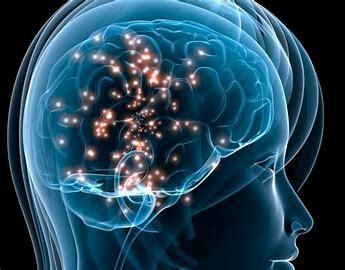
Our body constitutes innumerous chemicals performing functions that makes us feel happy, sad, nervous. Most of them are released by the Hypothalamus and Pituitary glands. There are 4 major chemicals secreted by our body that makes us feel happy:
Dopamine
Dopamine is a neurotransmitter that helps in the transmission of signals in the brain and other areas. It is released by Hypothalamus and acts on receptors that are specific for it. It acts on sympathetic nervous system leading to increase heart rate and blood pressure. Therefore it is used in medication. It is is associated with pleasurable sensations, along with learning, memory, motor system function, and more.
Endorphin
Endorphins are endogenous opioid neuropeptides and peptide hormones which are produced and stored in the pituitary gland. It consists of α-endorphin, β-endorphin, and γ-endorphin. Its main function is to compress pain signals. It can act in both the central nervous system and the peripheral nervous system. It also produces a euphoric state in cases such as sex, listening to music, and eating chocolate. According to a research meditation triggers endorphin secretion.
Serotonin
Serotonin is a complex monoamine neurotransmitter. Approximately 90% of our body’s total serotonin is located in the enterochromaffin cells in the GI tract, where it regulates intestinal movements.About 8% is found in platelets and 1–2% in the CNS. It modulates mood, reward, learning, memory, and various physiological processes such as vomiting and vasoconstriction. Serotonin levels spike when we reflect on past achievements, practice gratitude, and celebrate victories.
Oxytocin
Oxytocin is a peptide hormone and neuropeptide which is produced in the hypothalamus and released by the posterior pituitary. It functions during social bonding, reproduction, childbirth, and the period after childbirth which includes bonding with the baby and milk production. It can also be considered as an antidiuretic since it lowers the urine secretion. We need oxytocin to form strong bonds in our personal and professional relationships.
Although these hormones are essential for our body but there are drugs such as heroine, nicotine etc. which alleviates the levels of these chemicals in excess and it may result in harmful repercussions.
Being literate is not enough today. Being educated is what we require. Standing and living amidst a competent world, the ability to identify, think, and evaluate for oneself is of utmost importance for any human. The foundation for this is built through education. Hence the education system plays a major role in shaping an individual. It’s inevitable to not discuss and compare the different education systems around the world, however, the American and Indian education systems tend to garner huge attention in contrast to others. It’s especially evident from the large number of Indian students’ who flock to America to pursue their further education. In this article, I too am going to elaborate and sketch out the different characteristics of the Indian education and American education system with the help of expenditure, education structure, course structure, teaching focus, and flexibility of subject choices.
The Indian System of education has long been influenced and changed since the British Colonisation. With India’s independence hurling better opportunities, the education system itself has witnessed very few changes in its learning methodology. It is found that an estimated expenditure of around 6.3 lakh crore in the year 2019-20 is spent by the Indian Govt upon the education sector, ranking India at the 35th position on the ‘Worldwide Educating for the Future Index’ in 2019. India’s education system currently follows the 10+2+3 learning system and the grade levels are divided into Pre-Primary, Primary, Secondary, Higher Secondary, and College. The course structure followed by the schools and colleges is highly rigid as it focuses on certain subjects such as Science and Maths more compared to others and provides absolutely no choice to choose subjects until Higher Secondary. The learning methodology used in early education is solely dependent on cramming and memorization techniques with no room for creative aspects to flow. Students are made to focus on academic subjects more than non-academic and extra-curricular activities. Another unique characteristic of Indian Education is that the teachers are often made in charge to handle 40-50 students per class. This ratio may even go up to 100 students per class in rural areas. Furthermore, students are not required to answer any exam to enroll themselves in universities except for a few selected courses like Medical, Engineering, and Architecture (NEET, JEE, NATA). The admission process for universities is usually based on the marks received by the students in their Higher Secondary Board exams.
America on the other hand, also known as the ‘Nation of Dreams’, proves to be very different compared to the Indian education system. The American government spends over $700 billion every year on its education sector making it the topmost nation to invest in education. American Education also varies in its structure as it follows a 10+2+4 system. The level of grades remains the same as Indian Education, however, they possess different terminologies. For instance, Elementary school refers to Pre-Primary and Primary Education, Middle School refers to Secondary Education, High school refers to Higher Secondary Education and Post-secondary refers to College in the Indian Grade Systems respectively. The American Education also offers a highly flexible course structure from the beginning of lower grades where students are free to opt for courses that they like. Math and Science are not the dominant subjects and activities like sports and non-academics are given equal importance as academic courses. The learning methodology focuses on enhancing the child’s creative and critical thinking skills while minimizing the memorization load. For every class the teacher is assigned not more than 30 students, making it easier for the teacher to pay attention to every child in the class. Lastly, for admissions in Universities/Colleges students are required to answer SAT and ACT compulsorily. In addition to all this, both the Public and Private divisions of American schools have better infrastructure and well-equipped technologies compared to the Indian Government schools.
It’s clear that the American Education System is distinctive from the Indian Education System in many ways, yet it’s not the best in the world. Education Systems should not be focused only on flexibility but should also take into account the needs of its citizens and country. The NEP is a step forward in terms of education in India and this is what every country needs to strive towards. As the years go by the education system needn’t stay static but strive to be dynamic to accompany and enhance the educational power in every citizen. In the end, we should never forget that ‘Education’s true purpose is to replace an empty mind with an open one.’
Urban agriculture can be described as the agricultural practices to producing fresh food or other agricultural products in urban areas and their surrounding regions (peri-urban). This can function centrally where plants can be grown and animal husbandry, horticulture, and aquaculture can be practiced. It also involves the processing, packaging, marketing, and delivery of food. In purview urban agriculture extends to establish food production sites within the city’s sphere.
As more land area is getting urbanized and larger number of people are coming to the urban areas to reside. It becomes very critical to properly utilize the space in our cities and suburban areas. Research in the last two decades is has proven that Urban agriculture can be a viable option for food production. It can also help in decreasing the effects of climate change and make the food supply chain more efficient. Proper land use and spatial planning are crucial to practice this effectively. There are various methods to practice urban agriculture including ground-level farming, hydroponic farming, rooftop farming, vertical farming, greenhouses, and other new technologies.
As cities are expanding, this has created new sets of issues like the urban heat island effect, waste management, lack of biodiversity, and high levels of air pollution. With more people moving around the urban space, this has also increased carbon emissions. With urban agriculture, we can try to offset some of the adverse effects of these problems. This kind of agriculture is now being practiced in many cities. Cities like Tokyo, Seoul, and Sao Paulo have their own urban agriculture initiatives. But one of the cities is betting on urban farming in Singapore. The city-state currently imports 90 percent of its food. This also means that any kind of geopolitical tension or a global crisis can severely affect the food supply of Singapore. This means that growing own food becomes critical and essential. Due to this, the Singaporean government has envisioned an ambitious goal to produce 30 percent of its food in the city itself by 2030. This is a special challenge in Singapore’s care due to its tiny land area and highly urbanized population. The city has almost non-existent agriculture land and this is why the focus of food production is on the unutilized urban spaces, on top of shopping malls, hotels, schools, homes, rooftops in parking lots across the city, etc.
In 2009 Singapore government launched a program that incentivizes injecting greenery into development projects across the nation The program was aptly named ‘Landscaping for Urban Spaces and High-Rises’ (LUSH). Their current initiative to build urban food-growing areas within the city will be built upon this program.
Some of the benefits that Urban farming enjoys are immunity from water pollution, a better-controlled environment from the physical forces, and minimal to no use of pesticides and insecticides. But there are some limitations as well. This type of farming can be quite energy-intensive and the outputs can be comparatively lower than traditional farming. This also makes it more expensive.
To make Urban farming more effective governments will also need policies that will make use of the maximum amount of land across the city. Hydroponic farming can be a very effective way to rapidly scale the production where plants are grown with the help of water and the additional nutrients and minerals are added to the water to substitute soil. Additional Urban farming can also help in reducing carbon emissions and making cities cooler. Private firm involvement can also help in stepping up the scale of this kind of farming. This will be the step towards sustainable food production in the cities of the future but to make this happen greater involvement across the citizens and sectors will be needed.
According to the Cambridge dictionary, peer pressure is defined as “the strong influence of a group, especially of children, on members of that group to behave as everyone else does”. In other words, peer pressure is the direct influence on a group or an individual by peers who are encouraged or want to follow their peers. It generally happens among the same social group. Peer pressure is also used to describe the effect this influence has on an individual to correspond to be accepted by the group. If you’re with your friends and they convince you to do something you do not like or you typically would not do. And likely if you continue doing that particular thing you may start to like to do even that was bad or good. A situation like this is an example of peer pressure where an individual changes their behavior, norms, and values to be liked by their peers. The pressure applied by peers may vary. For example, sometimes they do not force you but they make you feel inferior, or they might force you to do it, or they tease you if you do not agree, or they make you feel outcast by ignoring you.
The way you respond to peer pressure can indicate who you are as an individual, a leader, or a follower.
Generally, peer pressure is considered as having a bad impact on people or an individual but indeed, it has a positive impact too. Sometimes peer pressure turned out positive.
Types of peer pressure
Positive peer pressure:- Positive peer pressure is defined as when a peer encourages people or an individual to do something positive or pushes them to grow positively and beneficially.
For example:- When a peer pushes someone to study hard and to score good grades. Like when in a study group someone is procrastinating and does not want to do homework others motivate him/her to complete the work on time by explaining the bad outcomes of procrastination or not doing homework.
By disapproving of bigoted jokes. Like when someone is trying to pass bad comments on someone their friends come forward to stop them by doing so.
Looking down on illegal or risky behaviors. Like when someone in the group trying to drive drunk and the other stop him/doing so instead of supporting him.
Negative peer pressure:- On the other hand negative peer pressure involves doing something dangerous.
For example:- when someone convinces a friend to skip school to watch a movie or to do something unproductive.
When someone pushes their friends to smoke and drink or try the drug.
When someone encourages their friends to fight or bully.
As there are two types of peer pressure then its effect will also be of two types positive and negative. Positive peer pressure leads one to make good choices in their life, they can rely on their friends in a state of confusion. Peer also helps each other develop new skills. But negative peer pressure leads one towards ruin. An individual becomes worse when, surrounded by people, who encourage to do things, which should not be done. Peer pressure influences an individual’s emotional behavior, it can stimulate mental disorders. It also leads to self-doubt.
Peer pressure is very common among teens. And they are most affected. To be cool they do things, which should be not done. In most of the cases, it has been seen that they come under peer pressure in the pressure that they will be outcasted by their friends.
If you are facing the problem of peer pressure then you need to learn to say no and if the pressure continues then you have to leave them. And if you have decided to wait until you are ready to do things then you have to stick to your decision.
We all fail at some point. It’s unavoidable and definitely not a pleasant experience. Our self-confidence and self-esteem might hit the ground. Constant questions of self-doubts arises. But any kind of failure can be an amazing opportunity for growth and development when we approach it the right way.
Here are few things to remember when something doesn’t go your way.
FAILURE IS NOT FATAL
It’s never too late to re-start and pursue your dreams and goals, in one way or another. If you look around there always be hidden opportunities waiting for you to showcase your abilities and skills. There will always be another chance, and this time you can approach with greater readiness and experience. Remember that everything happens for a reason, each opportunity has something to teach you.
LEARN YOUR LESSON
One of the greatest advantages of failures, is that it makes you wiser. It gives you a chance to question yourself about the faults in the process and gives you a chance to re-invent and re-discover yourself. Helps you consider your situations from multiple perspectives. This is also the time when you seek for help from trusted friends and colleagues for their inputs and reviews.
BE PREPARED FOR THE WORSE
It is harder to accept failure when you did not consider it be one of the outcomes of your process. Confidence is a good trait but being fully prepared for any outcome is helpful since this mindset will help you avoid feeling devastated when something doesn’t turn out the way you envisioned it.
Always keep a plan B and act on it immediately. This doesn’t mean that you need to give up or have a defeatist attitude, just to be ready for any outcome. This might help you have a backup or consider your resources more carefully than if you go all in.
NOTHING IS PERSONAL
A problem with failure is that we see it as something that reflects on us and our personal failings. But just as often, our failure happens due to factors that have nothing to do with us. Maybe we offer something that is not wanted or maybe there are objective circumstances that change the situation beyond our control. Learn from your mistakes but don’t pin each situation solely on yourself. By Acknowledging that we don’t have control over the world, we can become resilient and focused on what’s within out purview.
keep going, keep growing
BE KIND TO YOURSELF
Approaching the failure with compassion is an important thing to remember. Often, we are really harsh to ourselves and that discourages us from trying again or learning from the mistakes we made.
Failure is not pleasant but is significant, and looking at any story of success, we will always find the failures that built it. See it as a necessary step, a chance to learn, and you will bounce back better and faster.
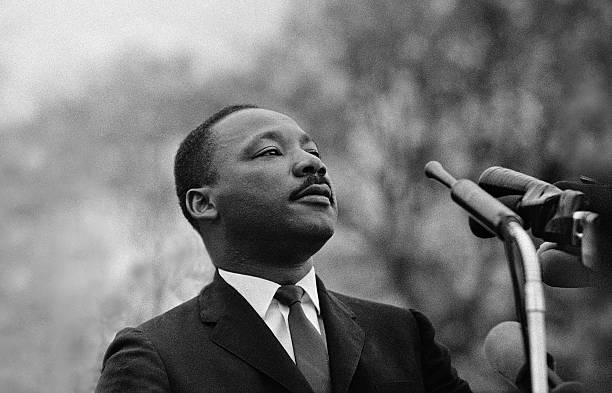
MONTGOMERY, AL – MARCH 25: Dr. Martin Luther King, Jr. speaking before crowd of 25,000 Selma To Montgomery, Alabama civil rights marchers, in front of Montgomery, Alabama state capital building. On March 25, 1965 in Montgomery, Alabama. (Photo by Stephen F. Somerstein
Martin Luther, King Jr. was born on 15 January, 1929 in Atlanta, Georgia in America. His father was Reverend Martin Luther King, Senior and mother Alberta Williams. His early life was spent in Atlanta. As a precocious student, he skipped both the ninth and twelfth grade and entered Morehouse college at the age of fifteen without formally graduating from high school. In 1948 he graduated from Morehouse with bachelor of arts degree in sociology, and enrolled in Crozer theological Seminary in Chester, Pennsylvania from which he graduated with bachelors of Divinity degree in 1951. He began doctoral studies in systematic theology at Boston University and obtained the degree of Doctor of Philosophy in 1955. As a Baptist minister he became a protestant and founded the southern Christian Leadership Conference in 1957. He was the prominent leader in the African- American Civil Right Movement. He is best known for being an iconic figure in the advancement of civil rights in the United States and around the world, using the non- violent methods following the teachings of Mahatma Gandhi. He believed that the non- violent resistance is the most potent weapon available to oppressed people in their struggle for justice and human dignity.
He delivered his famous speech ‘I have a dream’ in 1963 in Washington. Thereon he expanded liberal American values against the color-blind society. His notable efforts were on ending poverty from the society and stopping the Vietuam War. In 1964 he was the youngest recipient of the Nobel Peace Prize for his work to end racial segregation through civil disobedience and other nonviolent means. He was assassinated on 4th April, 1968 in Memphis, Tennessee. He was a post- humously awarded the Presidential Medal of Freedom in 1977 and congressional Gold Medal in 2004. Martin Luther King JR. day (15th January ) is observed as a US Federal Holiday since 1986.
Guru Nanak was the founder of the religion of Sikhism and the first of the ten Sikh Gurus. He was born on 15th April,1469 into a Bedi (Khastriya) family in a Muslim village of Rai Bhoi Di Talwandi, now called Nankana sahib near Lahore. His father was Mehta Kalyan Das Bedi, popularly shortened to Kalu Mehta and his mother was Tripta Devi. At the age of 5 he voiced his interest in divine subjects. At the age of 7 he was enrolled at the village school. He followed her elder sister to Sultanpur to live with her and her husband Daulat khan at the age of 16 years. He was married to Mata sulakhniat about 19 years of age. At the age of 30 he had a vision and disappeared from the village. After three days he reappeared and spoke about god’s path-“ There is neither Hindu nor musalman’ so whose path shall I follow? I shall follow god’s path.” He said that he had been taken to god’s court. There he was offered a cup filled with Amrit(nectar) and given the command- “ This is the cup of the adoration of god’s name. Drink it….I have bestowed the gift of my name upon you. Let this be your calling. “He made four major journeys-first, towards Bengal and assam, second, towards Tamil Nadu, third, towards Kashmir, Ladakh and Tibet, and the final tour towards Bagdad, mecca and medina on the Arabian peninsula. At Mecca, Guru Nanak was found sleeping with his feet towards the Kaaba Mosque. Kazi Rukan-ud-din observed this and angrily objected this and angrily objected. Guru Nanak said,” please turn my feet in a direction where there is no house of god.” The Kazi understand the meaning that “god is everywhere” and was struck with wonder. Guru Nanak preached “god is the doer and without god there is no other.” He advised his followers to practice his teachings in three ways:
Naam Japna: Chanting the Holy name,
Kirat Karo: Earning a living honestly,
Vand Chakko: Helping those with less who are in need.
Guru Nanak expired on 22 September,1539 in Kartarpur at the age of 69.
Editing is a key skill in video production that can make or break the overall quality of a video. However, editing is a relatively simple process to understand. Once you have learned the basics you’ll be able to use your new skills to significantly raise the quality of your videos. Most of all, experimentation is key to becoming a great editor, so don’t be afraid to take the road less travelled.
THE METHODS FOR LEARNING:
Learning Basic Editing Techniques
Acquiring Advanced Editing Techniques
Choosing Ideal Software
1 Film footage to gather some practice material. Film anything and everything, as long as there’s lots of it. Don’t worry about trying to tell a story, just film your surroundings, the local park, your street, your room, or even your pet.
Most modern phones are able to shoot HD footage that is perfect for practicing your editing skills.
If you don’t have a camera handy, or just want to get started on editing, you can download video clips online to practice on.
2 Import the footage into your software. Usually editing software will have what’s called a ‘bin’, a specific place in the program to store all your raw footage.[1] This will look like a list of folders or a large blank space on the left side of the main editing screen.
If you can’t find an import button some software will allow you to drag in the file from your computer into the software.
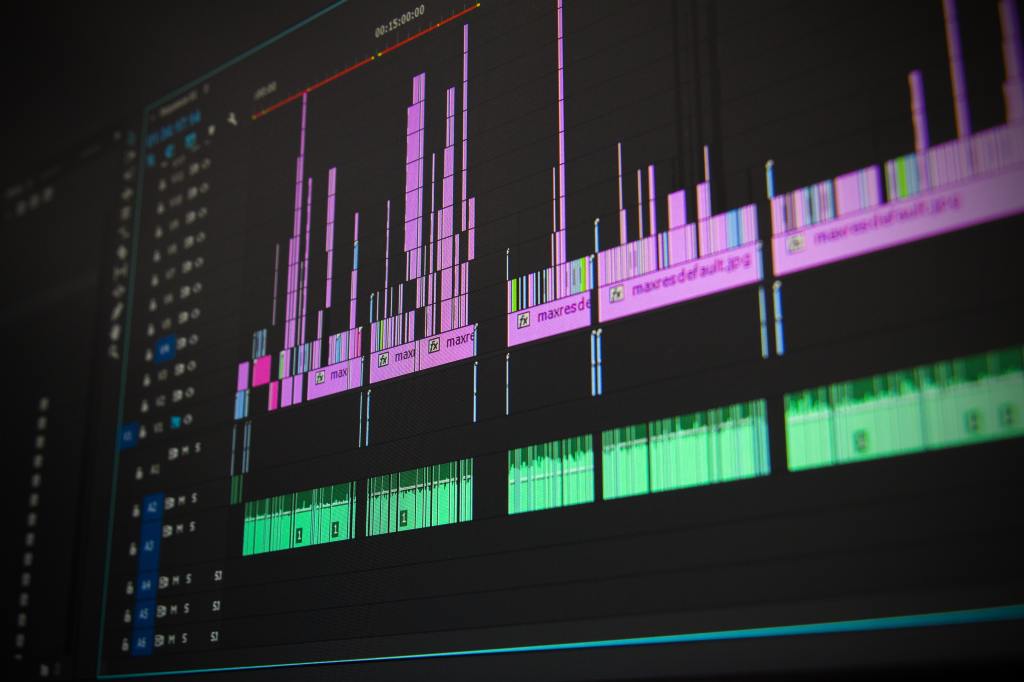
3 Add clips to the timeline. After you have imported footage into the bins, start dragging them onto the ‘timeline’. The timeline appears as a long horizontal bar that takes up the bottom half of the editing screen.
The timeline is where the majority of the work will be done. Here, you can order, rearrange, and manipulate the footage in a variety of ways
4 Rearrange the clips on the timeline. Although the footage shot may be random, try rearranging the clips into different orders to tell different stories. To do so, click and drag the long rectangular box (that represents the video clip) back and forth.
The clips you place together can affect each other. The viewer of a video will always be thinking about the following clip in the context of the previous one.[3] When you’re watching a movie, TV show or video clip, the cut can become completely invisible if performed correctly.
5 Trim the video clips to change the pace of the video. The name of the tool varies from program to program, but generally it’s called the ‘Trim’ tool. You use this tool to trim the front or back of a clip to make it shorter or to extend it outwards. Click the very edge of a video clip in the timeline and drag it inwards and outwards. This will ‘trim’ the clip.
6 Implement transitions to make cuts more appealing. Depending on the tone of the video being made, a pre-made transition from one clip to another can give the video a breath of fresh air. Navigate to the ‘Transitions’ tab located in most editing software and drag a transition you like to the cut between two video clips.
Although transitions are fun, always be thinking about who you’re making the video for. Too many exaggerated transitions can detract from the quality of a video.
7 Export the video from the editing software to save your edits. Once you’ve finished trimming, rearranging and importing all the footage you like, it’s now time to export the video. The software collects all the edits you made of the clips and ‘encodes’ them into a friendly format.
Sometimes exporting can be intimidating due to the sheer amount of options available to you in the software. If in doubt, always export at 24 frames per second (fps) and at 1080p. This means that you’ll be able to play the final video in the media player of your choice. The quality will usually look better after the video is exported.
If you want to learn video editing then first you should understand very basics of video editing.
Then I think you should first start it with Windows movie Maker and after that goes to some other softwares. I’ll suggesting you some best softwares for video editing :—
Adobe premiere pro
Corel video studio
Light worksFinal cut pro
Sony Vegas movie studio
Cinelerra
Pinnacle studios
iMovie
Pitvi
These are the some software you must try to become a good video editor but as I said you should start with learning basics of video editing.
Some you tube channel where you can lean video editing are :—
Surfaced Studios
Rocketstock
kaptainkristian
Peter McKinnon
PremiumBeat
Buddies I am not a professional editor and not also connected to this video editing feild too much. But I provided you information as best of my knowledge.
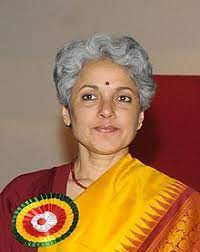
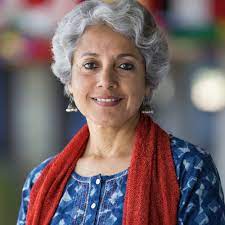
In this highly competitive world, everyone is trying to prove themselves in their areas of interest. Like men, now women are also pursuing their dream wilfully. They are the most competitive persons when compared to men. This doesn’t mean that men are incapable. Just that women are firm and strong enough to prove themselves. You may have a thought why am I talking about women too much? There is definitely a reason. Yeah! Today, I am going to share with you about an Indian Woman who marked her identity in WHO. I think you may have guesses or you should have found who she is? I think, your guess is correct. It’s our Soumya Swaminathan.
Dr. Soumya Swaminathan
Everyone know about the “Father of Green Revolution of India”, Dr. M.S. Swaminathan, right? Soumya Swaminathan was the daughter of Dr. M.S. Swaminathan. She was born on 2nd May 1959 at Kumbakonam, Chennai, Tamil Nadu. Her full name is Soumya Swaminathan Yadav. Her mother, Mina Swaminathan, was an Indian Educationalist. Soumya has two siblings namely Madhura Swaminathan and Nithya Swaminathan. She was married to Ajit Yadav who was an orthopedic surgeon.
Dr. Soumya Swaminathan with her parents and two siblings
Now, let’s see about Dr. Soumya Swaminathan’s educational qualifications and her academic achievements.
She received her M.B.B.S degree from the Armed Forces Medical College, Pune.
She completed her M.D. in AIIMS, New Delhi.
She got her Diplomate of National Board from National Board of Examinations.
She completed her Ph.D., in neonatalogy and pediatric pulmonology.
Let’s see about her Career achievements.
In 1989, she was a Research Scholar in the Department of Pediatric Respiratory Diseases in United Kingdom till,1991.
She also worked as a Senior Research Registar, at Cardiopulmonary Medicine Unit in New Jersey.
In 1992, she joined National Institute for Research in Tuberculosis, as a coordinator and later she became it’s Director.
From 2009 to 2011, She worked as the Coordinator of WHO/UNICEF/UNDP, for a research and training on Tropical diseases in Geneva.
She was the Director of ICMR and Secretory of the Ministry of Health and Family Welfare, in India from August 2015 to November 2017.
From 2017 to March 2019, Dr. Soumya Swaminathan was the Deputy Director-General of WHO.
In 2019, she has become the Chief Scientist of WHO in research about the SARAS CoV-2 and worked hard in this pandemic getting detailed reports from all the countries. And she conducted interview once in two week to make us know the exact situation of the covid.
Let me tell you some of the awards won by her. In 2008, She received Kshanika Oration Award from ICMR. In 2011, she was given an Lifetime Achievement award by the Indian Association of Applied Microbiologists. In 2016, She received Research Endowment Award from NIPER and ASTRAZENECA.
I am inspired so much by Dr. Soumya Swaminathan. Yes, now I have the spark to achieve something big in my career and want to reach heights like her. What about you? I hope you too have your own dreams. Give your full effort and just do it. She had proven herself and made her Father proud. Let’s be like her and make our parents proud. Her achievements show us, how capable women are!! How strong!! Okay, Come on! Women, have confidence in yourself that you can do anything and everything! If you can’t, who can!! Let’s make our India proud.
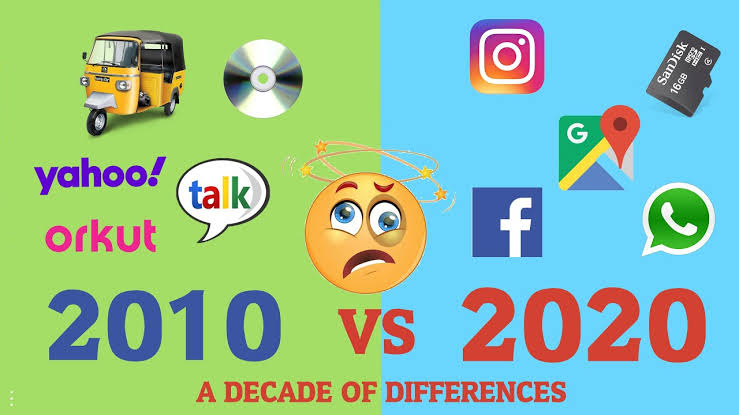
It has been ages since I last smiled at an unknown stranger when our eyes met. Social media, news, movies, has made us so uptight and alert that our natural reflex has shifted from smiling to suspecting them.
We no longer enjoy food as we did
Snapchat and Instagram have made people forget the value of here and now. Instead of being happily in the present moment, we are often more focused on portraying a happy life which may be far from the reality. The satisfaction of the first sip of the morning tea or the first bite of the domino’s pizza doesn’t feel the same as it did a decade ago. The first thought that we have when we see a delicious food now is to click a perfect picture to show other’s how wonderful our life is.
We no longer see Bollywood as we did before
A decade back movie stars were famous for their work and that was enough in itself. Acting was seen as a profession and a job. However, the current Bollywood seems more like a political party than a show business. It is not the work but the lives of the celebrities that we are most interested in. Political leaders are supposed to have opinions and that is what is to be taken seriously by the people. However, now it is the opinions of our favourite celebrities that we are more into.
We no longer have real meaningful bond
The friendship and relationship trends have changed since the last decade. There were more meaningful bonds between link minded people who were true to one another (even behind their back). However, now the long evening chai meets have turned to Starbucks coffee meets. Where though we are physically together, but mentally and emotionally far into two different worlds in our mobile phones.
Education is something that a person obtains from his surroundings or from a school. It is a weapon in one’s arsenal. Education is defined as the acquisition of knowledge. Education is a never-ending process in which we learn new things at every turn, and it will continue until a person’s last breath. In this process, there are no age restrictions; anyone can learn at any age they want.
Education can play a significant role in shaping a child’s personality. As a result, educational institutions play a critical role in this. An educational institution should anticipate children’s needs. The teachers and instructors should be very kind and loving to the students, or else the education and institution will be boring and tiresome to them. Education should not only be about learning, but also about having fun so that the children find it interesting. Education has the potential to impact global development in the long run. A well-educated person is always working to improve humanity. Education produced civilized, well-organized people. People who are educated have great ideas and strive for betterment in life. It assists in breaking out of one’s comfort zone, which is where the magic happens.
Physical education is another aspect that plays a significant role in one’s life. When a child receives a better physical education, he will grow up to be a healthy person with a fit body. As a result of their education, people mature. Refinement enters the lives of educated people. Above all, education teaches people the value of discipline. People with a higher level of education understand the value of time much better. In the eyes of educated people, time is equal to money.
Education is more than what we learn within the four walls of a classroom; it is a broader concept. Nobody in the world knows everything because the world is a mystery and we cannot find a solution to everything. We obviously don’t know everything, so we should always be curious and excited when we come across a new discovery. So, if we are ignorant about something, it is almost certain that when we discover it, it will provide us with an incalculable amount of pleasure.
Generally people think that learning through practice is to make someone better than what he/she was earlier . To think so is not complete appropriate . However, it cannot be denied that there is an improvement as a result of learning . But it can lead towards unwanted or undesired changes . A child who plays football, may also learn wrong technique . Indeed , learning has a detailed explanation . The process of learning begins from the birth and continues throughout life. That is why it is said that learning takes place from womb to tomb. Learning means to adjust or adapt oneself according to the situation . There is a change in the behaviour of an individual after learning and he changes himself according to situations . The various psychologists have defined learning in different ways. However, they reach approximately at the same point . There are following definitions of learning by some eminent psychologists.
According to Guilford, ”We may define the term very broadly in saying that learning is any change in behaviour resulting from behaviour.”
According to R.S. Woodworth and D.G. Marquis, ”Learning consists in doing something new provided, this something new to be retained by the individual and reappears in his later activities.’‘
According to G. Murphy , ‘‘From this point of view it would be legitimate to regard learning as modification both of behaviour and of the way of perceiving.”
According to Whitkar, ”Learning may be defined as the process by which behaviour originates or is altered through training or experience.”
On the basis of the above-mentioned definitions, the following conclusions can be drawn :
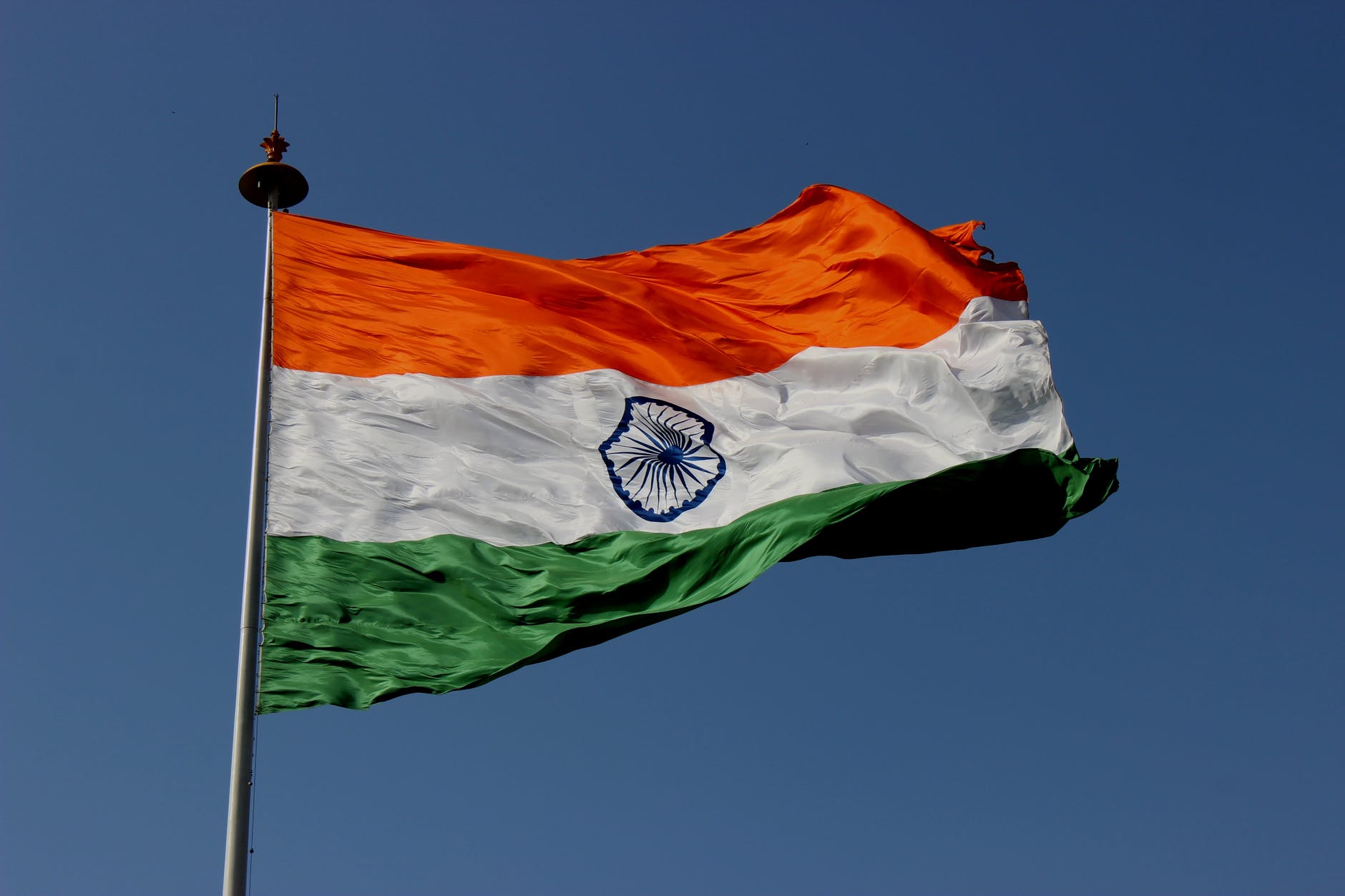
We remember the day with the sacrifices of our brave Indian freedom fighters. When India got independent, our first Prime Minister, Pandit Jawaharlal Nehru Unfurled, our tricolor national flag at Red Fort and Lahori Gate in Delhi. From that day and onward, this day celebrated as an independent day. The honor of the day’s solemn occasion, many programs dedicated at Red fort-like march past by our Indian soldiers, 21 gunshots are fired for the beginning of events and cultural activities by school students. Kite flying has also done as the tradition of Independence Day celebration, with kites of various sizes, shapes, and colors filling in the sky. Later on, from the year 1974, all the chief minister of respective State unfurled the National flag. We soonly update Paragraph on Independence day in hindi and Bengali.
Another contemporary relevance of the independence day as Anniversary of the partition of the subcontinent into countries, India and Pakistan. Our country is recognized as the largest democracy in the world. On this day, the Indian Independence Act 1947 was passed by the UK Parliament, which transferred legislative sovereignty to the Indian nation.
One of the most memorable days in Indian history is 15th August. It’s the day on which the Indian sub-continent got independence after a long struggle. India only has three national festivals that are celebrated by the whole nation as one. One being the Independence Day (15th August) and the other two being Republic Day (26th January) and Gandhi Jayanti (2nd October). After independence, India became the largest democracy in the world. We fought very hard to get our independence from the Britishers. In this essay on Independence Day, we are going to discuss the history and importance of Independence Day.
History of Our Independence DayFor almost two centuries the Britishers ruled over us. And the citizen of the country suffered a lot due to these oppressors. British officials treat us like slaves until we manage to fight back against them.We struggled for our independence but work tirelessly and selflessly under the guidance of our leaders Jawahar Lal Nehru, Subhash Chandra Bose, Mahatma Gandhi, Chandra Shekhar Azad, and Bhagat Singh. Some of these leaders choose the path of violence while some choose non-violence. But the ultimate aim of these was to drive out the Britishers from the country. And on 15th August 1947, the long-awaited dream come true.Why We Celebrate Independence Day?To relive the moment and to enjoy the spirit of freedom and independence we celebrate Independence Day. Another reason is to remember the sacrifices and lives we have lost in this struggle. Besides, we celebrated it to remind us that this freedom that we enjoy is earned the hard way.Apart from that, the celebration wakes up the patriot inside us. Along with celebration, the young generation is acquainted with the struggles of the people who lived at that time.
Activities on Independence Day
Although it’s a national holiday the people of the country celebrate it with great enthusiasm. Schools, offices, societies, and colleges celebrate this day by organizing various small and big events.
Every year at Red Fort the Prime Minister of India host the national flag. In the honor of the occasion, 21 gunshots are fired. This is the begging of the main event. This event is later on followed by an army parade.The school and colleges organize cultural events, fancy dress competitions, speech, debate, and quiz competition.Importance of Independence DayEvery Indian holds a different viewpoint about Indian Independence. For some, it’s a reminder of the long struggle while for youngsters it stands for the glory and honor of the country. Above all, we can see the feeling of patriotism across the country.The Indian’s celebrate Independence Day with a feeling of nationalism and patriotism across the country. On this day every citizen echoes with festive feeling and pride in the diversity and unity of the people. It’s not only a celebration of Independence but also of the unity in diversity of the country.
















 Eduindex
You must be logged in to post a comment.