India Of My Dreams.

The India of my dream would be a country where women are safe and walk freely on road. Also, it will be a place where there is freedom of equality to all and everyone can enjoy it in their true sense. Furthermore, it would be a place where there is no discrimination of caste, color, gender, creed, social or economic status, and race. In addition, I see it as a place that sees an abundance of development and growth.
Women Empowerment

There is a lot of discrimination against women. But, still, the women are stepping out of their houses and making a mark on different fields and on society. In addition, there are a lot of areas that need to be worked upon whether it is female feticide or restricting them to the household task. Besides, many NGO and social groups have come forward to promote women empowerment.

However, we have to work hard to change the mindset of society. I dream India as a country that sees women as its assets, not as liabilities. Also, I want to place women on an equal level as men.

Education.
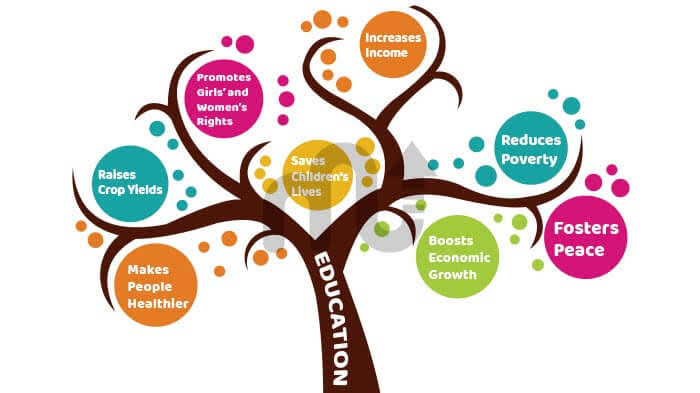
Though there are many initiatives by the government to promote education. But there are many people who do not realize its true importance. The India of my dream will be a place where education will be mandatory for all.

Employment Opportunities.

Although there are many educated people in India. But, due to corruption and many other reasons they are unable to get a decent job. Besides, there are many employment opportunities in the country but they are either limited or don’t pay well enough. One of the reasons for this is weak industrial growth in the country.

In addition, reservation is a hindrance in this path as most of the deserving candidates lose their good opportunity because of it. Many of these deserving candidates go abroad and work for the economic growth of other countries. The Indian of My dream will be a place where the deserving candidate will get the job first rather than reserved candidates.

Caste Discrimination
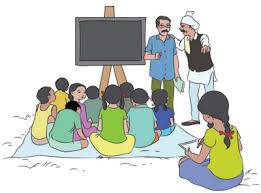
Though India got independence in 1947, still we are not able to get complete independence from the caste, religion, and creed discrimination. It is shameful to see how in certain parts of the country the people of the lower section of the society are denied the basic rights.

However, there are various social groups that speak for their rights and help them to oppose this oppression. Besides, I dream of an India where there is no discrimination of any kind.

Corruption.

Corruption is one of the major reasons that are hindering the growth of the nation. Instead of making an effort to serve the growth of the country the officials and politicians are busy filling their own pockets. So, I dream of an India where the minister and official are dedicated to their work and wholly for the development of the country.
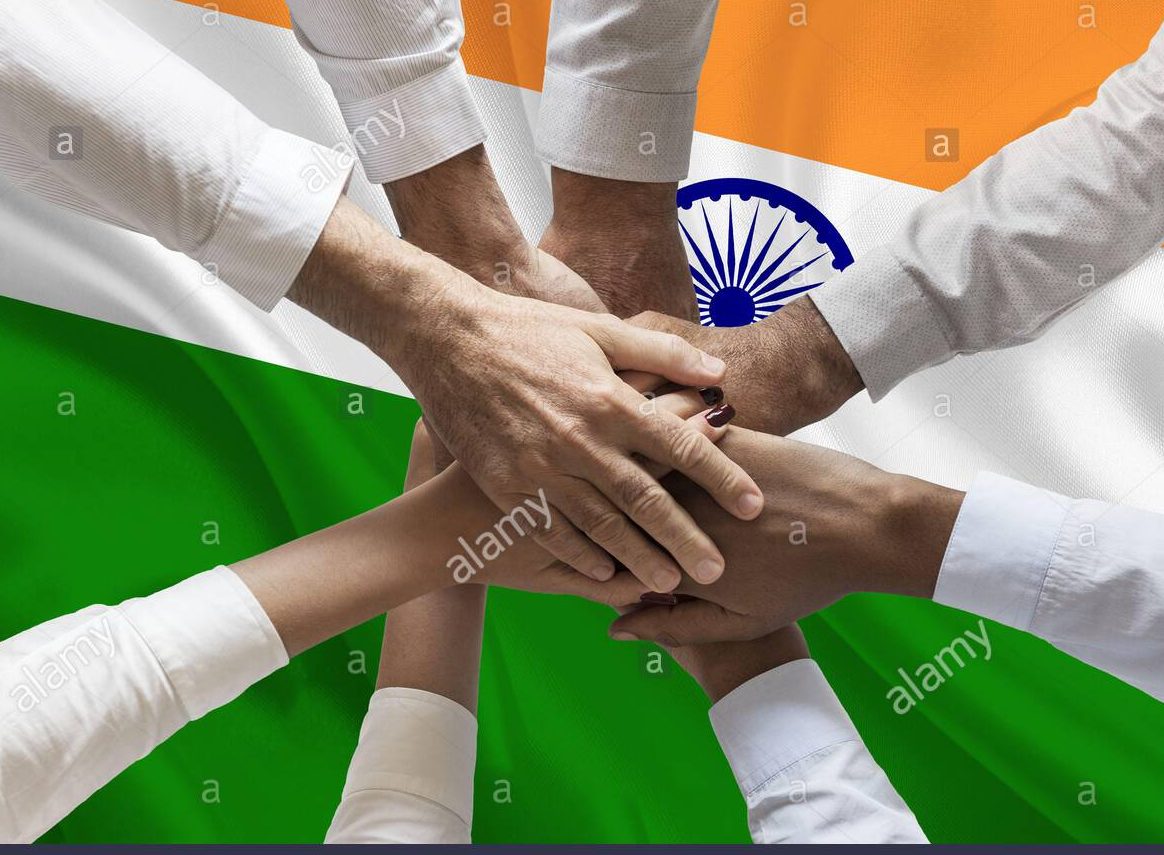
In conclusion, the India of my dream will be an ideal country where every citizen will be equal. Also, there is no discrimination of any type. In addition, it will be a place where women are seen as equals to men and respected equally.

India of my dreams……… Where the bell of happiness rings,where the birds in harmony sings.

. —“Shumayla Mallick”………

10 Greatest Movie Adaptations From Books That You Should Definitely Watch

The adaptation is the ultimate high-wire act in Hollywood. And adapting everything from classic literature to modern pop hits has resulted in the unfortunate debate of “which is better, the movie or the book?” when, more often than not, both the source material and the adaptation are worth the time because they tend to enhance rather than detract from one another.

Photo by Anastasia Shuraeva on Pexels.com

1. The Godfather: The novel by Mario Puzo is an engrossing, dark thriller that fascinates, horrifies, and entertains readers. The first two films adapted from the novel by Francis Ford Coppola elevate the tragic storey into operatic successes that are widely regarded as two of the best pictures ever produced. Both films were nominated for Academy Awards for Best Picture and Best Adapted Screenplay (Part II being the first sequel to do so).

2. Little Women: Regardless of Greta Gerwig’s shocking lack of Oscar nominations this year, there’s no denying that her adaptation of Louisa May Alcott’s classic novel (spoilers ahead!) was outstanding. Gerwig gives the story a simple twist by envisioning Jo as the author of the classic Little Women. This changes the story into one of creative desire and achievement, and it breathes new life into a classic without diluting its essence.

3. The Color Purple:  Steven Spielberg directed a fantastic adaptation of Alice Walker’s novel, one that is both storyline and character accurate to the book. This is a significant accomplishment because Spielberg relies heavily on his actors to express most of the emotional material through their performances, whereas in the novel, we are privy to Celie’s inner thoughts and feelings. This film is a must-see due to the outstanding performances by the actors.

4. Harry Potter: Despite being eight films lengthy, the Harry Potter film series has four directors and two credited screenwriters, and it had to cut J.K. Rowling’s plot down by a bit. The films, on the other hand, remain fairly accurate to both the plot and the character development that is Rowling’s actual genius, following the same progression from a frivolous children’s tale to the darker, more ethically complicated storey found in the later books. They’re perfect adaptations for fans who can’t wait to see the amazing things they’ve just read about.

5. Great Expectations: Charles Dickens’ writings are large, contain a lot of information, and are generally structured in a serial format, so adapting them to the screen is always a challenge. But, even after all these years, David Lean’s 1946 version of Great Expectations remains highly praised; Lean’s script manages to condense the plot and characters into two fast hours without losing anything. The picture feels current and genuine to the text while being more than seven decades old.

6. The Lord of the Rings: In a broad sense, Peter Jackson’s trilogy of films are fairly loyal to J.R.R. Tolkien’s classic epic fantasy novels — Jackson condensed the tale a lot, but few people complained that there wasn’t enough Tom Bombadil in there. With the use of breakthrough CGI, Jackson was able to show the most famous fantasy universe ever conceived in a realistic, plausible manner while maintaining the primary themes of hope, heroism, and despair.

7. The Devil Wears Prada: Miranda Priestly is one of cinema’s greatest villains, and despite Lauren Weisberger’s novel’s success, the picture is a step forward. The novel, which was optioned before it was even finished, finishes on a totally different emotional note, but the film sharpens Miranda’s character to a coal-black point and provides a more satisfying conclusion to the storey.

8. The Social Network: The Accidental Billionaires, a nonfiction book by Ben Mezrich, is a strong, engaging, and well-researched account of Facebook’s birth and the various characters involved, as well as a sharp, critical look at the world of privilege around Harvard University. The screenplay by Aaron Sorkin and the director by David Fincher expand on that great foundation to create an outstanding character study — a film that easily blends remarkable visual flair with modern technology (some people still believe Armie Hammer has a twin) and razor-sharp storytelling.

9. Crazy Rich Asians: Kevin Kwan’s delightful, sarcastic love comedy was released in 2013, and it was transformed into a sizzling motion film directed by Jon M. Chu just five years later. The film was an instant smash, depicting the inner workings, intimacies, and complex demands of Singaporean high society. It was nominated for multiple Golden Globe Awards and received excellent accolades from critics, which piqued people’s interest in the novel.

10. Breakfast At Tiffany’s: Truman Capote’s darker, more brutal novella remains a cultural classic because to the legendary adaptation. Capote’s moving, tragic, and finally beautiful narrative of a woman striving to manufacture glamour out of the ruins of her life is a heart-warming, tragic, and ultimately beautiful story. Despite the fact that the film toned down the sadness, prostitution, and LGBT undertones, it ends on a hopeful note of romance, each scene is dramatic, unforgettable, and kind of genius.

IS RECONSTRUCTING OUR PAST MORE IMPORTANT THAN BUILDING OUR FUTURE?

“There are times in our lives when we have to realize our past is precisely what it is, and we cannot change it. But we can change the story we tell ourselves about it, and by doing that, we can change the future.”
― Eleanor Brown

We often hear that ‘the past is past, don’t bother about it’. But actually, the past is not only the past, but also it is the foundation of our future. Every moment is going to be past. It is the only reality that we can know. Future and present are related. Everything is being examined on the basis of past, future and present. Past is a set of experiences, events and beliefs that someone or something confronted with. Everything has a past and that past constitutes the essence of its present and future. It can be said that history is the collection of recorded past events in the form of written documents, monuments, oral discourses etc. But the past is beyond these historical remains.

The things and deeds we did in past are now to give us fruit in present and also in the future. And our present which is going to be our past will give us its fruit in the future. Some think it is essential to study history in order to make their future bright but some think past has no concern with the future. Other thinks that future is related to present, the things they have in present remain same as in future. Different people have different believe on the same the topic. Why is it so? Due to the different experiences, they have in their past life. In some way or another experience is second name of past.

What actually affect the future?

Experience affects the future. Future can never be predicted but we can strive to make it better by mean of the past experiences. Without knowing the past, we repeat mistakes made in the past, and destroy our future.

We can’t say that we are guessing future upon the past, but in some way, we can perk up our future by relating it to the events take place in past, and work to make it enhanced. No one knows what will happen in the future but the past lends us a hand and lead us to our destiny.

There must be some reasons why past contribute a lot in building future. It is vitally important to study history and keeping the past in mind to avoid repeating the mistakes of the past and understand why things are as they are!

We study history to learn where we were in the past and where we are now, to learn what worked for people in the past. We study history to know what is the right thing to do and what is wrong so that we can understand what to do in life and how the wrong things happen and how we can be prevented.

New thoughts and systems cannot be formed overnight. It is subject to change and reconstruction over the centuries and generations. We cannot say that the past is always constructive and beneficial. Progress is being made by identifying faulty systems. Many things that were once considered right and socially good are now considered as reactionary and unprogressively.

For example, once untouchability was a prevailing practice in our society which was considered as a normal thing. But later, the practice of untouchability is abolished and now we know how ridiculous it is. This realization is the product of reconstruction. This sort of change can be seen in all areas of life such as culture, cinema, environment, caste, religion, gender, language etc. What we firmly believe to be right and wrong today may not be like that tomorrow. Reconstruction aims at deconstruction also.

Future is created through rectifying the mistakes of our past by maintaining its positive aspects. It is determined by the realizations gained through the past experiences. Therefore, it is essential to have a proper sense of past and history.

Here lies the relevance of the reconstruction of the past. The future can only be built by a proper understanding of the past. We must be able to embrace what is progressive and reject what is irrational and biased. Thus, it would be better to say that reconstructing our past is the foundation for building our future instead of reconstructing our past is more important than building our future.

Yes, the past is past, but it continues.

HOW TO MAKE BETTER NOTES IN CLASS

“The more content you try to capture during a lecture or a meeting, the less you’re thinking about what’s being said. You burn through most of your attention parroting the source.”

Do you sometimes struggle to determine what to write down during lectures? Have you ever found yourself wishing you could take better or more effective notes? Whether you are sitting in a lecture hall or watching a lecture online, note-taking in class can be intimidating, but with a few strategic practices, anyone can take clear, effective notes. This handout will discuss the importance of note-taking, qualities of good notes, and tips for becoming a better note-taker.

In-class benefits

Taking good notes in class is an important part of academic success in college. Actively taking notes during class can help you focus and better understand main concepts. In many classes, you may be asked to watch an instructional video before a class discussion. Good note-taking will improve your active listening, comprehension of material, and retention. Taking notes on both synchronous and asynchronous material will help you better remember what you hear and see.

Post-class benefits

After class, good notes are crucial for reviewing and studying class material so that you better understand it and can prepare appropriately for exams. Efficient and concise notes can save you time, energy, and confusion that often results from trying to make sense of disorganized, overwhelming, insufficient, or wordy notes. When watching a video, taking good notes can save you from the hassle of pausing, rewinding, and re watching large chunks of a lecture. Good notes can provide a great resource for creating outlines and studying.

  1. Gather your note-taking materials. It may sound pretty basic, but it’s important to have all of your note-taking materials organized and ready to go before the start of any class, meeting or lecture.
  2. Come prepared. Before you come to a class, lecture, or meeting, make sure to review your notes from the last time round. This will bring you fully up to speed and ready to pick up where you left off.
  3. Be an active listener. When note-taking, many people make the mistake of mindlessly taking down every word, without really comprehending what is being said. Instead, make an effort to understand the topic while you’re in class. Focus on what’s really being said, then ask questions if you don’t understand
  4. Take notes by hand. Although taking notes on your laptop is convenient, research shows note takers actually retain information better when they take notes by hand. This may be because people typing on a laptop tend to transcribe every word without understanding the meaning, while people writing by hand are forced to pick out relevant information in order to keep up
  5. Don’t be afraid to ask questions. When you come across something you don’t understand, don’t just jot it down and tell yourself that you’ll worry about it later — ask the teacher/lecturer for clarification.

FINALLY

Follow up after class

Part of good note-taking includes revisiting your notes a day or so after class. During this time, check for clarity, fill in definitions of key terms, organize, and figure out any concepts you may have missed or not fully understood in class. Figure out what may be missing and what you may need to add or even ask about. If your lecture is recorded, you may be able to take advantage of the captions to review.

REFERENCES

https://learningcenter.unc.edu/tips-and-tools/effective-note-taking-in-classes

https://www.wikihow.com/Take-Better-Notes

Impact of Social Media on Youth

In today’s society, we are all witnessing how social media is evolving on a daily basis. The majority of individuals on the planet use social media. This is very popular among the younger generation. Even if you look at statistics, you will find the same scenario. Every day, the popularity of social media grows. The effects of social media on youngsters are also seen in other aspects of our life.

Social Media Trivia: Brush Up Your Knowledge

Here are some statistics that were done on social media.

  • The average time spent by the people per day on the social network is 1.72 hours.
  • For the teenagers, the numbers are much higher which is up to 27 hours per week.
Impact of Social Networking Sites on the Youth | The Knowledge Review

In today’s society, social media has become an integral part of many young people’s lives. Many young people continue to engage in social media without stopping to consider the influence of social media on youth. The consequences might be beneficial or bad, but they are usually detrimental if they are not linked with a commercial or professional purpose.

It is a major issue for the majority of people in today’s society because what is more important?

Is it more essential to be concerned about “Facebook” friends than those with whom we meet face to face in our everyday lives? What is the long-term influence of social media on today’s youth?

There are many advantages to using sites such as Twitter, Facebook, Pinterest, LinkedIn, Tumblr, Google +, Gaming sites, Instagram, and blogs, but there are also many disadvantages. If we want to make sound decisions, we must go deep within ourselves and conduct extensive study on the subject.

Positive Impact of Social Media on Youth

  • It keeps connected to their friends when they are not able to see each other always when they want to.
  • Social media keeps you updates about the important things that are going across the globe currently or maybe in your locality. It is a great benefit to know about everything just by the simple click of your finger.
  • The youths have the perfect place to express themselves in such a way in which they won’t be allowed to do in public. This is something which makes the youth feel better about them and they hold some position in society.
  • It helps you in developing social skills and the best part is that a number of friendships can begin from the social website. Youths generally like make new friends and know about others as much as they can. All of this is possible with the social media platform.
  • One more interesting impact of social media on youth is that it feels fun to interact with peers rather than talking to them face to face.

Negative Impact of Social Media on Youth

  • People in today’s age place such a high value on social media that it has become their top priority. They like being on social networking sites and neglect all of the things that should come first for them, such as family, sports, and school.
  • We can only see the virtual aspect of a person on social media sites. This implies that we can only see the aspect that they want us to see. Many people strive to present themselves to others as someone they are not.
  • Young people have a bad tendency of bullying their classmates, which is understandable to some extent. However, when it comes to cyberbullying, it has a significant impact on the other peer because it may appear on anyone’s newsfeed and quickly go viral. Such factors can sometimes lead to despair and suicide ideation.
  • Some young people are extremely susceptible to influence. They may feel the urge to modify their physical appearance and compare themselves to everyone they see on social media.
  • Social media provides a powerful temptation. It might become an addiction for the young and cause them to get distracted.

Positive Impact of Social Media on Youth in different Sectors

Educational Aspects

  • Social media allows teachers to quickly interact and connect with students and others.
  • Students have free and simple access to internet sites where they may obtain all of the information.
  • Grades have improved, and the rate of absentees has decreased.
  • According to a poll, around 59 percent of schools confess that their students use social media for instructional purposes. In addition, 50 percent of them utilise social media to discuss school tasks.

Political Aspects

  • The participation of the voters has increased. The users of the platform of Facebook have admitted that they get the inspiration to vote in an election when they see online their friends have voted too. A survey reported that those who visited Facebook more than two times in a single day were more likely to attend a political meeting or rally- 43% more people said that they are sure to vote.
  • Social media gives birth to the idea of change in politics. Social networking gives the social movement cheap as well as a quick method for distributing the information and make the people come together.

News/ Awareness

  • Around 30% of the people of America get their news from online. The information in the social networking sites spreads much faster than any other forms of media.
  • More than 50% of people in the world nowadays get the breaking news from a social media platform
  • The social networking sites provide the benefits academic research to the people along with the online access. This helps the people to get access to the resources that were unavailable before
  • The people who use the platforms of social media get empowered and informed to change their communities and themselves.

Social Aspects

  • With the help of social media, people can communicate with friends and this enhanced communication online strengthens the relationship between them. Survey says around 52% of the teens that remain online say social media have helped them with their friendships and around 88% of the people say that staying online has helped them stay in touch with the friends they don’t see regularly.
  • As said earlier, young people always have this tendency to make new friends. Around 57% of the teens that remain online say that they make new friends on social media.

Jobs for the Youth

  • Social media is one of the best ways for marketing products, connecting with people and find business opportunities.
  • It helps the employers to get the employees and those who are in search of new jobs. Around 87% of the job recruiters have found their employers through LinkedIn, around 30% through Facebook and 15% through Twitter.
  • The social media sites are the reasons for creating thousands of job opportunities for the people and they have brought new avenues of income.

Negative Impact of Social Media on Youth in different Sectors

Work/School

  • Social media helps the students to cheat on school assignments and for those who work can get some idea about their work.
  • If social media is used on a light scale, it will help the students to improve their grades. However, for those students who are heavy users, their grades tend to fall incredibly. A study shows that students who are using Facebook have an average GPA of 3.06 while those who don’t use Facebook have an average GPA of 3.82.
  • On average of 106 minutes in every 90 minutes that is spent on Facebook college students drop their grades to12.
  • The social media platform affects the productivity of the employees to .51%. These workers are generally between the age of 25-34 and check their social media during work.

Lacking Privacy

  • One thing that is seen common among the young people is they often get too open in the public and share their personal information. Most of the people don’t read the privacy policies and are unaware that their information that the information is read by the insurance companies, advertisers and the IRS.
  • They expose themselves to the governmental and corporate intrusions. The justice department of the US gather hundreds of pieces of information from the social networks and email every year.

Cyber Bullying

  • One of the very prime negative impact of social media on youth as some of the negative minded individuals use it for bullying someone.
  • People use it for sending intimidating messages to others that sometimes create trauma for the others as well.
  • Misinformation or false propaganda is another negative impact of social media on youth.

VEDANGAS – THE LIMBS OF THE VEDAS

Vedangas are the six forms i.e., the six auxiliary disciples of Vedas. It is said to be the six limbs of the Purusha called Veda. 

  1. Shiksha (Education) – Nose 
  2. Kalpa (Ritual) – Arms
  3. Vyakarana (Grammar) – Mouth 
  4. Nirukta (Etymology) – Ears 
  5. Chhanda (Metrics) – Feet 
  6. Jyotisha (Astronomy) – Eyes 

SHIKSHA

It is referred to as the nose of the body. Shiksha is related to giving instructions through recitation. It consists of instructions for correct pronunciation and accent of the Samhita texts. It mainly focuses on phonetics and gives the rules for the sound of syllables and pronunciation. Phonetics decides the sound changes while recitation and hence becomes very important for Vedic language. The aim is to attain 

  • Akshara suddhi – syllable purity
  • Swara suddhi – tone and pitch purity
  • Maatraa suddhi – durational purity
  • Balam – the force of articulation
  • Samam – evenness
  • Santana – continuity

KALPA

Kalpa is the arm of the Vedas. It speaks about rules for the right method of performing the rituals. These rules are followed in ceremonies such as weddings, naming functions, and other ceremonies. It has its origin from the brahmana texts of the Veda. These are written in sutra style, referring to sacrifices. Kalpa sutras are divided into 

  • Srautasutras – contains rules for performing different sacrifices and rituals.
  • Smarthasutras – further partitioned into 
    • Grihyasutras – gives domestic rites and rituals for the three castes namely – Brahmins, Kshatriyas, Vaisyas, and the responsibilities for the household life.
    • Dharmasutras – gives rules for behaviour and talks about the four stages of life

VYAKARANA

Vyakarana is called the grammar for the Vedas. It is essential for the formation of sentences, phrases, and words. It is the mouth of the Vedas. It is necessary for understanding the Vedas. It is related to the next Vedanga, Nirukta. It is written by scholars named Panini and Yaska. It consists of 4000 sutras which belong to the four padas of the eight chapters. The four divisions are 

  • Siva sutras – deals with phonetics and intonation
  • Ashtadhyayi – deals with sentence structure and construction
  • Dhatupadha – deals with root words
  • Ganapadha – deals with a group of nouns and phrases

NIRUKTA

Nirukta is the ear of the Veda purusha. It means etymology and tells why a word is chosen for the context and the meaning of the used word. It is generally called the Kosa or the dictionary. It deals with the interpretation of obscure and difficult words and provides insights into the hidden meaning delivered in the content. Hence, the study of Nirukta becomes essential to understand the concealed meaning and linguistic significance of the texts.

CHHANDA

It is regarded as the feet of the Veda Purusha. The word Chhanda is derived from the term Chad meaning to cover. It deals with the metrics to be used in the Vedic hymns. A sloka generally consists of four quarters called paadas. Based on the number of syllables in each paada, there are different meters.

  • Gayatri – 8 syllables
  • Trishtup – 11 syllables
  • Jagati – 12 syllables

JYOTISHA

Jyotisha is the eyes of the Vedas and it means astronomy or astrology. It gives knowledge about auspicious dates and times for the ceremonies and rituals to be performed. This is determined based on the position of the sun, the moon, the planets, and other heavenly bodies. It is believed that the rituals succeed when performed under the influence of a particular graha, nakshatra, or thithi. This is calculated using some mathematical calculations and hence mathematics forms an integral part of it.

VEDAS

The word Veda means Knowledge. Vedas are the earliest piece of literature that was written in the Sanskrit language. These were handed down from one generation to the other orally by the pandits who learned this from their ancestors. Even if there were no facilities to preserve the Vedas through the art of writing, it is preserved by transmitting to the generations orally. In Hindu culture, Vedas are considered spiritual and everlasting revelations. Vedas come under Shruti which means what is being heard. There are four Vedas, each of which was composed of different ages. However, it is believed that it always existed and sages chanted this in their deep meditative states. The four Vedas are – Rig Veda, Yajur Veda, Sama Veda and Atharva Veda.

RIG VEDA

The earliest of Vedas is the Rig Veda. It is a set of 1028 hymns in Vedic Sanskrit. Many of those are beautiful descriptions of nature. The prayers in this seek prosperity and well developed and cultured society. It is believed that these compositions are the natural outburst of Vedic rishis when they went through the mental transcendental stage. Some of the prominent rishis of this period are Vasistha, Gautama, Gritasamada, Vamadeva, Vishvamitra and Atri. Indra, Agni, Varun, Rudra, Aditya, Vayu, Aditi, and Ashwini twins are the eminent gods of this Veda whereas Usha (the goddess of dawn), Vak (the goddess of speech), and Prithvi (the goddess of earth) are the notable goddess of the Rig Veda. Do you know that the majority of the hymns spoke of universally recognized higher values of life like truthfulness, honesty, dedication, sacrifice, politeness, and culture? Rig Veda also provides knowledge about the social, political, and financial conditions of ancient India apart from religion.

YAJUR VEDA

The word Yajur means sacrifice or veneration. This Veda is mostly related to Rites and mantras of different sacrifices. It tells the directions and ways to conduct the yajnas. It is a mixture of both prose and poetry. Being a treatise on rituals, it’s the foremost popular of the four Vedas. Yajur Veda has two main divisions called Shukla and Krishna Yajur Veda i.e., Vajasaneyi Samhita and Taitriya Samhita. This mainly talks about the social and religious aspects of India at that time.

SAMA VEDA 

The term Sama means melody or songs. This contains the tunes for the recitation of Hymns. Sama Veda is mainly of 16,000 ragas and raginis which means musical notes. Only 75 verses out of 1875 verses are original and others belong to the Rig Veda. However, the Sama Veda gives the tunes for the recitation of the hymns of the Rig Veda. It may be called the book of Chants (Saman). This book stands as evidence of Indian music during this era.

ATHARVA VEDA

The Atharva Veda is also called the Brahma Veda. It talks about the treatment for ninety-nine diseases. This Veda is originated from the 2 rishis called Atharvah and Angiras. The Atharva Veda is of immense value because it represents the religious ideas at an early period of civilization. It consists of two main branches namely, Paipaddala and Saunaka. This book gives detailed information about the family, social and political life of the later Vedic period. To know the Vedas, it becomes mandatory to know the Vedangas, the limbs of the Vedas. The Vedangas talk about Siksha (education), Vyakarana (grammar), Kalpa (rituals), Nirukta (etymology), Chhanda (metrics), and Jyotisha (astronomy). 

Each Veda is composed of 4 parts: The Mantra-Samhitas or hymns, The Brahmanas or explanations of Mantras or rituals, Aranyakas, and Upanishads. The division of the Vedas into four parts is to suit the four stages during a man’s life.

GREEDINESS – A HEART ISSUE!!!

Greediness is the path of destruction of people. When people are greedy, they are blinded by the wrong actions and never be able to come of from that without a constant effort. To make you understand easier, I brought you a story written by C. Rajagopalachari who is was the last Governor-General of India.

Quotes about Being Greedy (39 quotes)

The protagonist of the story is Rammaya. He is a simple man living with his wife in a nice house made of tiled roof in a small town. Though he is not rich, he could take care of this family well. There lived two sparrows in the nice spot of the tiled roof of Rammaya’s house adn the mother bird has laid its eggs in the nest.

The male sparrow asked the female why Ramaya’s wife often quarrel with Rammaya. The female replied how could I know and told the male to mind its own business. Then the male sparrow said, you are always self-centered and also asked whether thy could help Rammaya. The female sparrow replied aggressively “don’t talk about the matter that does’nt concern us. It is enough for us if the cat doesn’t come to us”. Here comes the main twist.

The male sparrow picked a diamond nose-jewel somewhere from the land. As soon as picking it, went to its nest and asked the female bird ” Do you like it?” The female replied, what could I do with this diamond jewel. It scolded the male to bring food for the young ones. this male bird dropped the diamond jewel in the house and went to search food for the young ones.

Rammaya’s wife noticed the stud while sweeping the floor. She didn’t think of anything and with delight she wore it. Ramaya became angry and asked her how did she get that diamond stud. She replied causally that she found it and so she wore it. Rammaya insisted her to hand it over to the village magistrate. He also said, if police come and search for it, it will be a disgrace for us.

In the neighbourhood, the talk begun about the lost diamond-stud. The owner of the stud is Meenakshi Ammal’s daughter. She consoled the little girl and also said not to tell her father. If he knows he would in rage, said Meenakshi Ammal. But this talk was heard by the little girl’s father and it has to be admitted. The suspect was the maid-servant Kuppayi. The police searched her but could find nothing. After hearing this, Rammaya was very timid and his wife put the diamond ring in a safe place. Soon after that she had severe fever and was kept in the bed. So no one searched their house.

The male sparrow said, the lady of the house is scared and is down with fever. Replied the female sparrow, it is solely due to your doing. THe male answered bravely, “Did I ask her to steal it?” THis is because the humans are bound to be greedy. The female appreciated the male and said that we should never be greedy for what belongs to others.

The story came to an end by, Rammaya and his wife lived their whole life with the fear of being caught. THe diamond-stud may be with them but the fear of getting caught is more than that.

The thing I understand from the story is, We humans have six sense yet we don’t have conscience. We are greedy and not being truthful and helpful to others. We know birds have only five senses. Do think about the birds and humans. The birds aren’t greedy forwhat doesn’t belong to them. But the humans are greedy.

Even if you don’t help otherrs, try not to be greedy!!!

DOES TECHNOLOGY PLAY A ROLE IN MAKING PEOPLE MORE ISOLATED ?

Do you remember the days when you want to go out or converse with your friends so bad but because of your sluggishness you wind up looking over your social media ? In this cutting edge period of innovation we are practically becoming captives of it. We can abandon our companions yet not our cell phone. Looking through Instagram or Twitter have become the piece of our every day schedule.

Effects of social media on us

Yet, do we understand that we are turning out to be more isolated by doing this. Particularly, subsequent to getting quarantined. Since, we invested the vast majority of our energy in our phone during quarantine. We have gotten far off from our friends. Despite the fact that we live with our families we don’t talk much with one another in light of the fact that we as a whole are on mobile phones.

Influence of technology on kids

Kids as well as managing a similar issue. They have restricted their physical activities like playing around with friends or spending time with friends. The only game in which they are engaged are video games. A portion of the children play vicious computer games which can influence their creating cerebrum. Also it can likewise influence their eyes.

Children are fate of a nation on the off chance that they will stay isolated nation won’t advance. They will need fundamental human manners like correspondence and meeting behavior. So it is necessary for us to distanced from this world of technology for sometime and live in a real world.

8 Hardest Languages to Learn In The World For English Speakers

Which languages are the most difficult to learn? You can see where different languages broke off as you peel back the onion to the beginnings of language creation, often known as the ‘Old World Language Families.’ You may now see why Spanish has parallels to languages such as German, Italian, and French. And why Korean is comparable to Mandarin, Japanese, and other Asian languages. We’ll concentrate exclusively on the most difficult languages for English speakers to learn.

Photo by Pixabay on Pexels.com

1. Mandarin: Why it’s so difficult: English may be the most widely spoken language on the planet, but it comes with its own set of challenges for native speakers. Because Mandarin is a tonal language, adjusting your tone can give a word a whole different meaning. Thousands of letters, intricate systems, and a wealth of homophones make it one of the most difficult languages to learn in the world.

2. Icelandic: Why it’s difficult: The Icelandic language has remained unchanged since the ninth and eleventh centuries, but it continues to add new meaning to old terms. It also doesn’t help that there are only about 400,000 native speakers with whom you can practise.

3. Japanese: Why is it difficult: There are three distinct writing systems in Japanese: hiragana, katakana, and kanji. Japanese students must first study thousands of distinct characters in these writing systems before they can begin writing. It is, nevertheless, much less difficult to learn than Mandarin!

4. Hungarian: Why is it difficult: As previously stated, most languages are descended from the Indo-European language family. Hungarian, on the other hand, is a Finno-Ugric language in which words are produced separately. To put it another way, it’s not the way English speakers generally construct words or phrases. ‘With my [female] friend,’ for example, is shortened to to ‘barátnőmmel.’ Are you perplexed yet? We’re in the same boat.

5. Korean: Why is it difficult: Korean is an isolated language that is not related to any other language family. There’s more, though. There are seven main speech levels in Korean, which native speakers switch between, depending on the formality.

6. Arabic: Why is it difficult: Despite the fact that there are 221 million native speakers from whom you can learn, Arabic remains one of the most difficult languages to master. First, when writing, vowels are not included. To make matters even more complicated, most Arabic letters are written in four distinct ways depending on where the word is placed.

7. Finnish: Have you ever seen The Lord of the Rings? The Elvish language was founded on the Finnish language by author J.R.R. Tolkien. Finnish, like Hungarian, is a Finno-Ugric language with a lot of grammatical intricacy. And just when you think you’ve figured out how to translate Finnish to English, you’ll discover that current Finnish speakers have their own method of expressing emotions that differs from the standard translation!

8. Polish: Making pierogies is one thing, but speaking the language of the country that produces them is another. The Polish language’s complexity can be divided into two categories. First and foremost, the pronunciation. For novice learners, simply saying ‘hello’ (cześć) is a headache because the ‘c’ and’s’ are pronounced significantly differently than in English. The other is that the Poles have seven different gender-affected grammatical cases and seventeen different cases for numbers. Yes, there are seventeen distinct ways to say ‘ten.’

The main crux is that the most difficult languages to learn for English speakers are determined by a variety of criteria, not just one. The number of speakers, linguistic origins, resemblance to English, and other factors all contribute to how difficult it will be to learn. Every language will have its own set of difficulties, but it will also have its own set of rewards, joys, and fulfilment. Remember that whatever language you choose to study, your time will be well invested.

10 Interesting Facts About Harry Potter

There’s no arguing that “Harry Potter” is a cultural phenomenon, whether you’re a die-hard fan or a Muggle who’s only seen the movies. Here are 10 interesting facts that you did not know about the Harry Potter franchise.

1. Rowling and Harry Potter share a birthday: J.K. Rowling: J.K. Rowling’s birthday comes on July 31st; being the author of Harry Potter, Rowling took the advantage of the writing license, and decided to give her birthday (except the year, of course) to her main character.

2. Rowling gave her characters names that reflect their roles in the series: Rowling’s world-building is legendary among fans, and the unique names she gave her characters are no exception. She disclosed on Pottermore that she came up with names for 40 Hogwarts students in Harry’s year, including every member of the Golden Trio, early in the creative process. Harry’s name, for example, refers to his leadership skills, while Ron’s refers to his function as a sidekick. “Harry” is a Middle English variant of the name “Henry,” which has been popular among English kings for ages. Rowling appears to have based “Ronald” on the Old Norse “Rögnvaldr,” a title for a ruler’s adviser. Hermione’s name, which comes from Shakespeare’s “The Winter’s Tale” (as well as Greek mythology in general), has less to do with her personal characteristics and more to do with her Muggle parents’ desire to come up with a witty pseudonym.

3. The “Harry Potter” books have been translated into around 80 languages, from Albanian to Hebrew to Scots: The “Harry Potter” books have sold more than 500 million copies worldwide and have been translated into 80 different languages, including Scots, which is spoken as a first language by 90,000 people.

4. Rowling jotted down the Hogwarts house names on an airplane vomit bag: Many people, including celebrities, connect strongly with a Hogwarts house. Rowling first scribbled the words Gryffindor, Slytherin, Ravenclaw, and Hufflepuff on the back of an aircraft puke bag, which may surprise you. In 2017, she divulged this tidbit on Twitter.

5. When she invented Dementors, Rowling drew from her past experiences with depression: Rowling struggled with depression when she was in her twenties. Dementors, she said in an interview with Oprah Winfrey, are based on the “hollowed-out feeling” of sadness. “I know sadness. Sadness is to cry and to feel. But it’s that cold absence of feeling — that really hollowed-out feeling. That’s what Dementors are,” she stated.

6. Rowling planned in advance who would meet a grim fate in the series — but she decided to spare one character’s life at the last minute: One of the plot aspects that Rowling planned ahead of time is character deaths. She had intended for Ron’s father, Arthur Weasley, to die in “Order of the Phoenix,” but she altered her mind. In a 2007 interview with “Today,” she said, “I think part of the reason for that is there were very few good fathers in the book.”

7. Some of the most expensive costumes to make were the Hogwarts uniforms: The Hogwarts uniforms were arguably of the most expensive clothes in the series to produce because they contained silk ties and wool sweaters. She previously told Insider, “I never wanted to use anything but the most beautiful material.” “The ties are silk, the sweaters are wool, and the gowns are made of a very expensive material.”

8. Some of the food on set was real: Despite the fact that part of the food in the “Harry Potter” films was painted resin, there were edible things in the mix for the feast scene in “Goblet of Fire.” Try some of the wonderful options at Universal Studios’ Wizarding World of Harry Potter, from butterbeer to bangers and mash, if you want to eat like a Hogwarts student.

9. Edinburgh, Scotland, where Rowling resides, provided a ton of inspiration for the series: The Gothic architecture, cobblestone streets, and tight alleys abound in Scotland’s capital. From Greyfriars Kirkyard, where the “genuine” Tom Riddle is buried, to George Heriot’s School, a private institution whose turreted architecture inspired Hogwarts, Rowling was fascinated by the city’s locations.

10. Like the multitude of spells in the series, Hogwarts’ official motto is also in Latin: Rowling is well-versed in Latin, having studied Classical languages and mythology at Exeter University. The series’ many spells, as well as Hogwarts’ motto, “Draco dormiens nunquam titillandus,” (“Never tickle a sleeping dragon”) are based on that old language. “You know the way that most school slogans are things like persevere and nobility, clarity, and fidelity or something,” Rowling noted in a 2005 BBC interview “it just amused me to give an entirely practical piece of advice for the Hogwarts school motto.”

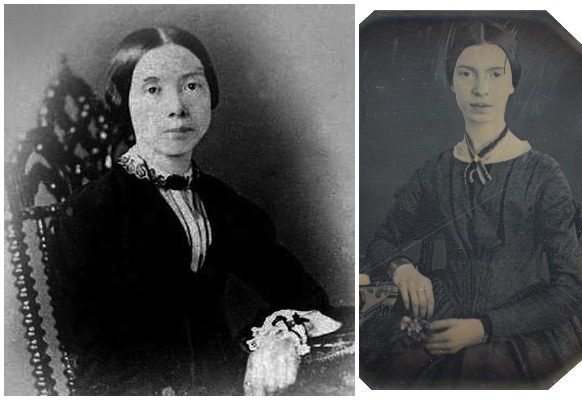
Emily Dickinson – An intellectually Rebellious and the most memorable poet of all time.

About Emily Dickinson, her writing style, favorite works and Amazing facts about her. Dickinson Series- Apple TV

Emily DIckinson

Birth, inspirations, and how her works were saved.

Emily Dickinson was born on December 10, 1830, in Amherst, Massachusetts. She attended Mount Holyoke Female Seminary in South Hadley for one year. Dickinson’s poetry was influenced by the Metaphysical poets of seventeenth-century England. She also read Book of Revelation, admired the poetry of Robert and Elizabeth Barrett Browning, and John Keats. She was dissuaded from reading the verses of Walt Whitman (Due to his daring writeups). Yet Walt Whitman and Emily Dickinson ending up being two of the most famous poets from the time period who revolutionized both the subject and style of American poetry. The first volume of her work was published posthumously in 1890 and the last in 1955. She died in Amherst in 1886. Dickinson’s family found forty volumes of nearly 1,800 poems (or “fascicles”).

Dickinson assembled these booklets by folding and sewing five or six sheets of stationery paper, what seem to be final versions of poems. The original order of the poems was not restored until 1981, when Ralph W. Franklin used the physical evidence of the paper itself to restore her intended order. He relied on smudge marks, needle punctures, and other clues to reassemble the packets.

The Manuscript Books of Emily Dickinson (Belknap Press, 1981) is the only volume that keeps the order intact.

Her Writing Style:

Her features were of verse forms suggesting hymns and ballads, with lines of three or four stresses. Her unusual off-rhymes have been seen as influenced by the 18th-century hymnist Isaac Watts. The intellectual content of her work amazed many and her writings were exceptionally and beautifully bold and original. Her verses has distinct quality by their epigrammatic compression, haunting personal voice, enigmatic brilliance, and lack of high polish.

Her major themes include nature, law, music, commerce, medicine, fashion, finding oneself, death and immortality, and love. She had a unique usage of Capitalization. She is best known for her use of slant rhyme.

Facts:

  • Unconventional approach to poetry, she interspersed her writing with many dashes of varying lengths and orientations (horizontal and vertical)
  • She could play piano.
  • She called herself a pagan.
  • She had an older brother named William Austin and a younger sister called Lavinia.
  • She wrote about the benefits of science over religion.
  • She lived with her family throughout her life. She shared her poems via letters to Susan, her alleged love interest. Who became her sister-in-law later.
  • She sent 250 poems.
  • Dickinson was a fan of the book ‘Jane Eyre’.
  • Her sister and Mabel Loomis Todd (An alleged mistress) published her works after Dickinson’s death.
  • Her second Tombstone reads “Called Back”, reference to an 1880 novel by Hugh Conway called “Called Back” that Dickinson enjoyed loved. This was the idea of Martha Dickinson Bianchi, her niece. The reason could be that she wrote a letter to her cousins before her death to her cousins which had only “Called Back” written.

Emily Dickinson’s well-known must-reads!!

  1. I’m Nobody! Who are you?
  2. Because I could not stop for Death
  3. Success is Counted sweetest
  4. Wild nights – Wild nights!
  5. I taste a liquor never brewed
  6. I Felt a Funeral, in my Brain
  7. Hope” is the thing with feather
  8. Tell all the truth but tell it slant
  9. My Life had stood – a Loaded Gun
  10. ‘Hope’ is the thing with feathers

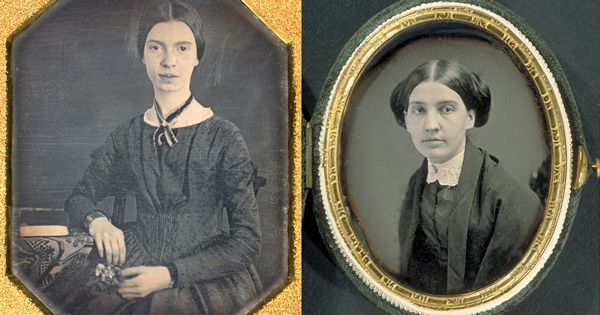
Emily Dickinson and Susan Gilbert

Ps… Dickinson is believed to have a lifelong love affair with her childhood friend Susan Gilbert, who agonizingly became her sister-in-law. Emily had written many letters to Susan till the end. The letters are believed to be indirect confession and expression of love. Austin’s mistress Mabel Loomis Todd -Editor and publisher- erased references to Susan from Emily’s letter, but the fact that the Mysterious “Master” poem – letters (Alleged love interest of Emily) were sent to Susan, doesn’t hide much. But, well historians will still call them “Best Friends”, right?

There’s a book called “Emily Dickinson’s Intimate Letters to Susan Huntington Dickinson”

Summary: For the first time, selections from Emily Dickinson’s thirty-six year correspondence to her neighbor and sister-in-law, Susan Huntington Dickinson, are compiled in a single volume. Open Me Carefully invites a dramatic new understanding of Emily Dickinson’s life and work, overcoming a century of censorship and misinterpretation.

MY FOREVER FAVOURITE FAVOURITE POTRAYAL OF EMILY DICKINSON.

Dickinson (2019) : SEASON 1 AND 2!!

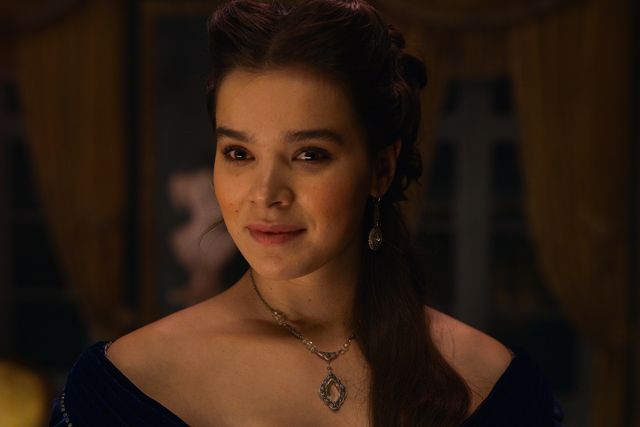
An American comedy streaming television series about Emily Dickinson, created by Alena Smith and produced for Apple TV+.

Hailee Steinfeld as Emily Dickinson and Ella Hunt as Susan and many more !! Their acting is top-notch and the series will hold you till the end and leave you wanting for more.

It is a must-watch.

References:

https://poets.org/poet/emily-dickinson

Story – Attitude is everything

Moral Stories For Kids | Bedtime Stories | Stories for kids in english -  YouTube

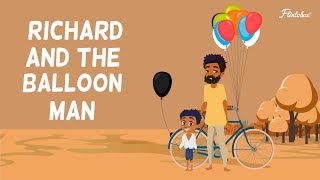
There was a man who made his living selling balloons at a fair. He had balloons of many colors, including red, yellow, blue and green. Whenever business was slow, he would release a helium-filled balloon into the air. When the children saw the balloon go up, they all wanted one. They would come up to him, buy a balloon and his sales would go up. All day, he continued to release a balloon whenever sales were slow. One day, the balloon man felt someone tugging at his jacket. He turned around and a little boy asked, “If you release a black balloon, will that also fly?” Moved by the boy’s concern, the man replied gently, “Son, it is not the color of the balloon, it is what’s inside that makes it go up.”

THE same principle applies to our lives: It’s what’s inside that counts and what’s inside of us that makes us go up is our attitude.

Many of you might have read/ heard this story before; Richard and the balloon man. But despite of the above conclusion, there’s more to the story. The story also focuses on colour discrimination. Everyone human being, right from their birth, are taught to consider fair, white people as beautiful whereas the dark ones are considered being ugly. Who categorized humans based on their appearance and not what they own inside them. No outer appearance decides the altitudes a person might reach, it’s the attitude they hold that paves their way towards success.

William James of Harvard University said, “The greatest discovery of my generation is that human beings can alter their lives by altering their attitudes of mind.”

WHAT WILL LIFE BE LIKE IN 2050 ?

After 29 years from now we will sore new heights in technology and medical science. Try not to get befuddled on the off chance that you see robots and distinctive A.I machines at your work place. Possibly we could go to Mars and different planets. 4G and 5G will turn out to be exceptionally normal and think about what perhaps it would not be being used around then.

Yet, not to fail to remember that now our mother earth is confronting such a lot of a global warming, contamination, deforestation, ozone layer depletion and the list goes on. A few specialists accept that a large number of the cities or nation will get vanished in next 10 to 20 years. These generally incorporates cities close to seaside area on the grounds that the degree of ocean water is rising step by step. Because of global warming polar caps are melting and colder areas are becoming hotter.

We may likewise confront water shortage in 2050 in light of the fact that fresh water is just 2.5% on earth and we are not conserving our natural resources. Not notice that oxygen that we inhale will likewise be exceptionally less in 2050 in light of the fact that now additionally because of contamination air we inhale is becoming poisonous step by step which can influence our lungs gravely. The measure of harmful gases like Sulfur dioxide, nitrogen dioxide and carbon monoxide are influencing air quality index(AQI) gravely. A few specialists say that we may have to convey our own oxygen cylinder in 2050.

Regardless of the amount we dominate in our innovation however we will require these regular assets to live healthy. What will be the reason behind living in such developed society in the event that we can’t be healthy. So we need to save our natural resources and limit contamination assuming we need to live heathy in 2050.

ESSENCE OF INDIAN TRADITION

HERITAGE

The word heritage is defined as “Anything transmitted from ancestors or past ages”. The Indian heritage is often best appreciated concerning different historical periods. We are the inheritors of a cultural and non-secular tradition stretching over 4000 years.

CULTURE AND CIVILIZATION

The word ‘culture’ and ‘civilization’ are often used as the same. However, they have their own clearly defined meanings which differentiate them.

CIVILIZATION

‘Civilization’ means making better ways of living and making use of nature to satisfy daily needs. Civilization includes developing societies into politically well-defined groups that work together for improved conditions of life in terms of food, dress, and communication.

CULTURE

The English word ‘Culture’ is coined from the Latin word ‘cult or cultus’ which means tilling, or cultivating or refining and worship. ‘Culture’ refers to the inner self, a refinement of mind, soul, and heart. Culture includes various art forms and sciences, music and dance, and several higher activities of human life which also are classified as cultural activities. On the whole, it is cultivating and refining a thing to an extent such that its outcome evokes our admiration and esteem. This is often practically an equivalent as ‘Sanskriti’ of the Sanskrit language.

CHARACTERISTICS OF CULTURE

 • Culture is learned and purchased

 • Culture is shared by a cluster of individuals

 • Culture is cumulative

 • Culture changes

 • Culture is dynamic

 • Culture gives us a variety of permissible behaviour patterns

 • Culture is diverse

 • Culture is ideational

CULTURAL HERITAGE

Cultural development may be a historical process. Cultural heritage includes all those aspects or values of culture transmitted to citizenry by their ancestors from generation to generation. They’re cherished, protected, and maintained by them with unbroken continuity, and that they feel pleased with it. Architectural works like monuments, material artifacts, the intellectually achieved properties, philosophy, treasures of data, scientific inventions, and discoveries also are a part of heritage.

TRADITIONAL KNOWLEDGE

Traditional knowledge or ‘local knowledge’ may be a record of human achievement in comprehending the complexities of life and survival in often unfriendly environments. Traditional knowledge, which can be technical, social, organizational, or cultural was obtained as a part of the good human experiment of survival and development. We have to analyse, evaluate conserve, and revive the normal Knowledge Systems for the economic betterment of the planet in a holistic manner. It is that the knowledge system possessed by various communities across the world. Such knowledge has been accumulated, used, and has been bequeathed through several generations. It’s usually regarding the natural surroundings of the community and includes agricultural knowledge like manner of cultivation, environmental knowledge, and knowledge of natural medicines.

TYPES OF TRADITIONAL KNOWLEDGE

 • Cultural knowledge

 • Artistic knowledge

 • Biodiversity or natural resources

 • Agricultural knowledge

 • Sacred knowledge

CHARACTERISTICS OF TRADITIONAL KNOWLEDGE

 • It has been handed on from generation to generation.

 • In many cases, it’s transmitted orally for generations from person to person.

 • It is being considered by the communities as a gift of God and not as personal property.

 • This knowledge generally distinguishes one community from another community.

 • It is typically impossible to spot the first creator of the knowledge.

 • It is learned by observing continuously, experiencing, and practicing it.

 • It is inseparable a part of the communal and cultural life of its holders.

 • It is typically related to biological resources.

NEED FOR SHIELDING TRADITIONAL KNOWLEDGE

 • Lack of proper legal policy framework for the protection of traditions.

 • Exploitation of traditional knowledge and indigenous resources.

 • Patenting the medicinal plants and their derivatives.

 • Commercial interests violate indigenous property rights.