HUMAN TRAFFICKING DURING PANDEMIC

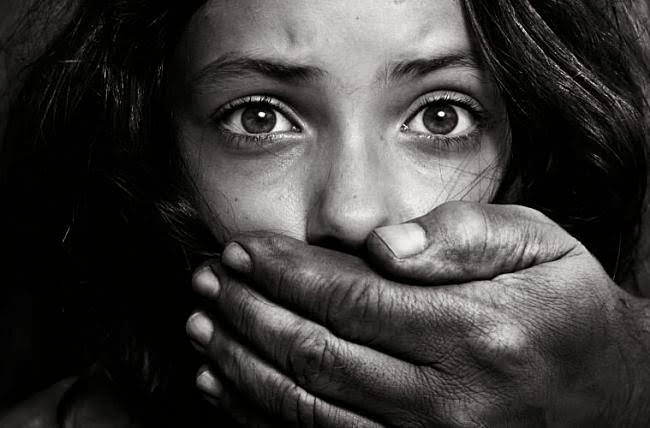
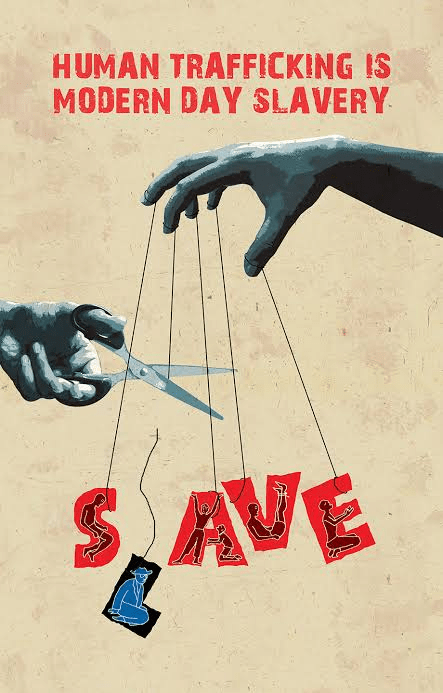
Human Trafficking is a major issue in India and Worldwide. Though, it has been there for ages, the reason for the need of immediate attention is the COVID – 19 Pandemic. The pandemic bought about various social and economical changes in India giving rise to human trafficking cases. The lockdown raised higher level of unemployment amongst daily wage earners. This further lead to effecting the economic background of such families, especially in the rural areas. Having no other source of income lead to desperation in people which made them promote human trafficking by selling their children, making them beg for money and sending their children for child labour. Moreover, the closure of schools increased human trafficking cases as there was no source of education for children. This gave the families and opportunity to use the children economically for labour and wed their girl child at an early age to save the future expenses. Absence of schools further increased the burden on families as many rural schools provided mid-day meal to their students. Absence of which made the children a further burden on the families and an additional stomach to feed. This made them give their children away in a hope for a better future for them and food for their children.


Along with such cases, many organ removal cases in the name of covid cases were found. Many physically fit people with weak financial backgrounds were falsely shown positive for corona virus and later declared dead because of the same. It was found that many traffickers removed organs from such bodies and declared them dead. Hence, this issue is important in the current times and require more attention than ever.
Yes, it’s difficult to step outside and help in this uncertain times but we individuals can start from our homes. The family domestic help, house help, workers, etc belong to rural and economically weak family backgrounds. Hence, talking to them and knowing about their lives can help us get a clear picture of their situation. We can educate them and spread awareness about the wrongs that they might be exposed to. This knowledge might help them be aware and spread the words to different people in their families and neighbourhood, that in turn might create a huge impact on the society as a whole.

Many a times people give into such situations where they willingly promote human trafficking, out of desperation and helplessness. As in case of a daily wage worker who has no other means to support his family economically might sell his child to survive. Hence, it is important to make them aware about various other way where they might get financial help without getting trapped into such rackets. There are government supports yojanas and schemes where they help such people, but in order to get help it is important to know about the availability of that help and that can only be done through awareness. It may not change the entire world scenario but one step by every citizen might make a huge impact altogether.
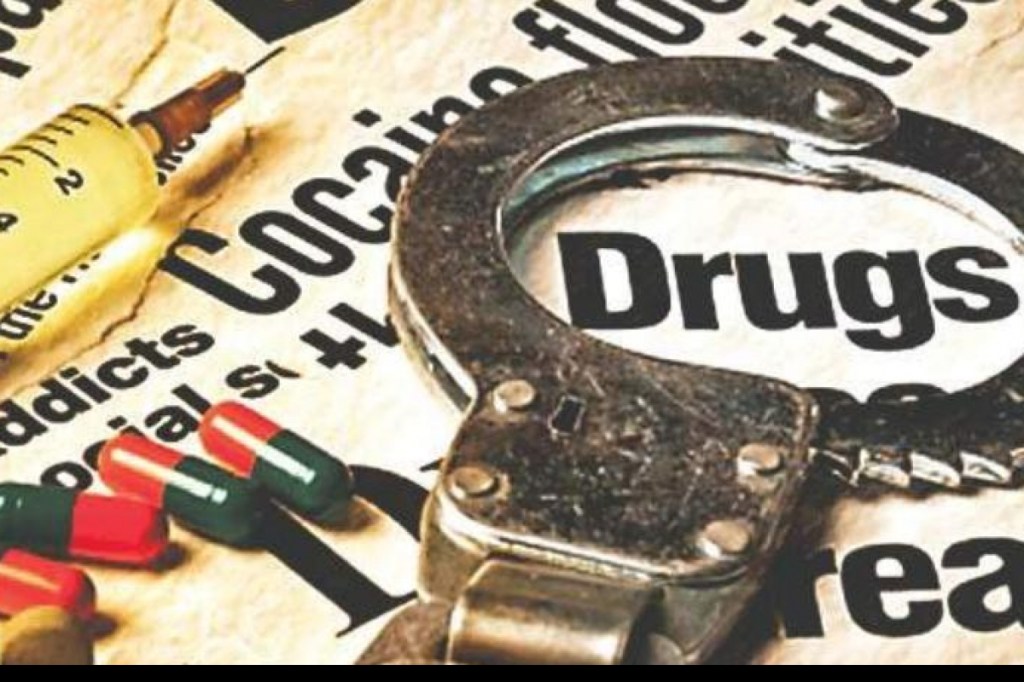
NARCO-TERRORISM DANGER IN INDIA

 The theory of narco-terrorism stems from the realization that the two phenomena of drugs trafficking, and terrorism are inextricably linked, and that, as a result, a coordinated anti-drug and anti-terror policy can and must be employed to effectively combat both threats. Because of its nefarious partnership with terrorist groups, narcotic trafficking, which began as an organized cross-border crime, has now evolved into a menace to nation states. 

Although it has been known for decades that there is a relationship between the drugs trade and terrorist organizations, as suggested by the name narco-terrorism, the international focus on terrorism after September 11, 2001, has intensified the attention given to the issue of narco-terrorism.

The Golden Crescent is the world’s greatest illegal opium production. In 1999, Afghanistan and Pakistan alone accounted for over 6000 metric tonnes of total illegal output. Because of this high-level production, narco-terrorism is increasingly linked to the reigns of central and southeast Asia. India being the southern part of Asia  is concerned because these narcotics are a key source of money for Pakistani-sponsored terrorism in our nation. Also, India is the sole licit provider of opium to the international pharmaceutical sector, with an annual export income of roughly Rupees 209 crores in 1999. The economy of the Pak-Afghan border is based on poppy and cannabis cultivation. The drug money is being smuggled into the Indian money market in an unorganized but methodical way because of which financial institutions suffer. 

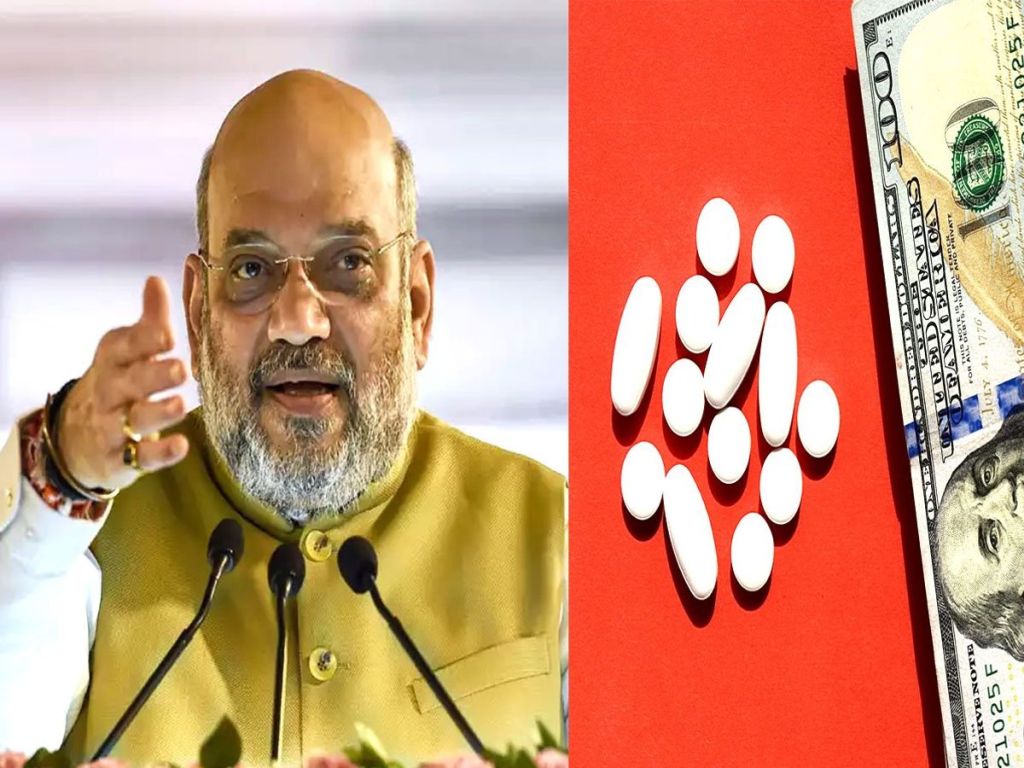
Because of illicit drug trafficking from Afghanistan and Pakistan poses a threat to India’s polity and economy. This issue requires serious attention from policymakers and law enforcement organizations before it is too late to intervene. Similar contention was also made by India’s home minister, Amit shah. He recently visited the National Forensic Sciences University (NFSU) in Gandhinagar to unveil the Centre of Excellence for Research and Analysis of Narcotic Drugs and Psychotropic Substances, which was established during Prime Minister Narendra Modi’s term as Chief Minister of the State of Gujrat. There he announced that India now faces the threat of narco-terror because of the rise of narcotics where drug traffickers and peddlers use drug money to promote their unlawful and disruptive operations. So to tackle this ongoing issue the Government has determined that narcotics would not be let into the nation, and that India will not be used as a transit point. He also mentioned that It is critical to put an end to this threat. 

Talking about the inauguration he said that this Centre was chosen to be connected to Gujarat’s Forensic Science University when the government was constituted for the second time under Prime Minister Narendra Modi because to appreciate the university’s outstanding services, the union government had designated it as a national center of excellence. He further added that the administration emphasized the need of using scientific techniques to conduct faster and more effective criminal investigations. Therefore, Forensic science will play a significant part in this. He also commended the forensic science institution for its contributions to criminal investigations into cyber and drug-related crimes.

The theory of narco-terrorism stems from the realization that the two phenomena of drugs trafficking, and terrorism are inextricably linked, and that, as a result, a coordinated anti-drug and anti-terror policy can and must be employed to effectively combat both threats. Because of its nefarious partnership with terrorist groups, narcotic trafficking, which began as an organized cross-border crime, has now evolved into a menace to nation states. 

Although it has been known for decades that there is a relationship between the drugs trade and terrorist organizations, as suggested by the name narco-terrorism, the international focus on terrorism after September 11, 2001, has intensified the attention given to the issue of narco-terrorism.

The Golden Crescent is the world’s greatest illegal opium production. In 1999, Afghanistan and Pakistan alone accounted for over 6000 metric tonnes of total illegal output. Because of this high-level production, narco-terrorism is increasingly linked to the reigns of central and southeast Asia. India being the southern part of Asia  is concerned because these narcotics are a key source of money for Pakistani-sponsored terrorism in our nation. Also, India is the sole licit provider of opium to the international pharmaceutical sector, with an annual export income of roughly Rupees 209 crores in 1999. The economy of the Pak-Afghan border is based on poppy and cannabis cultivation. The drug money is being smuggled into the Indian money market in an unorganized but methodical way because of which financial institutions suffer. 

Because of illicit drug trafficking from Afghanistan and Pakistan poses a threat to India’s polity and economy. This issue requires serious attention from policymakers and law enforcement organizations before it is too late to intervene. Similar contention was also made by India’s home minister, Amit shah. He recently visited the National Forensic Sciences University (NFSU) in Gandhinagar to unveil the Centre of Excellence for Research and Analysis of Narcotic Drugs and Psychotropic Substances, which was established during Prime Minister Narendra Modi’s term as Chief Minister of the State of Gujrat. There he announced that India now faces the threat of narco-terror because of the rise of narcotics where drug traffickers and peddlers use drug money to promote their unlawful and disruptive operations. So to tackle this ongoing issue the Government has determined that narcotics would not be let into the nation, and that India will not be used as a transit point. He also mentioned that It is critical to put an end to this threat. 

Talking about the inauguration he said that this Centre was chosen to be connected to Gujarat’s Forensic Science University when the government was constituted for the second time under Prime Minister Narendra Modi because to appreciate the university’s outstanding services, the union government had designated it as a national center of excellence. He further added that the administration emphasized the need of using scientific techniques to conduct faster and more effective criminal investigations. Therefore, Forensic science will play a significant part in this. He also commended the forensic science institution for its contributions to criminal investigations into cyber and drug-related crimes.

The utterly butterly delicious story of Amul

Over the years, Amul, one of the most beloved brands of our country, has become the taste of India, just as its tagline claims. Every Indian millennial has grown up listening to the jingles of its many dairy products, and the Amul girl, the brand’s mascot in the polka-dotted dress, has become a nostalgia-evoking symbol. Amul has truly come a long way since its founding in 1946.

The beginning

Amul was formed as a part of a cooperative movement against Polson Dairy in Anand, Gujarat, which procured milk from local farmers of Kaira District at very low rates and sold it to the then Bombay government. Everyone except the farmers benefited from this trade. The farmers took their plea to Sardar Patel, who had advocated farmers’ cooperatives since 1942. The result was the formation of the Kaira District Co-operative Milk Producers’ Union Limited in Anand.

The union started pasteurising milk produced by a handful of farmers for the Bombay Milk Scheme and grew to 432 farmers by the end of 1948. The rapid growth led to problems including excess production that the Bombay Milk Scheme couldn’t accommodate. To solve this issue, a plant was set up to process all that extra milk into products such as milk powder and butter.

Amul is born

The late Dr. Verghese Kurien, rightly called the Milkman of India, was Amul’s true architect. His journey at Amul began in 1949 when he arrived in Anand to manage a dairy as a government employee. He went from helping farmers repair machinery to revolutionising India’s dairy industry with the White Revolution (or Operation Flood), the largest dairy development programme in the world.

The new dairy with the milk processing plant was ready for operation in October 1955, the year that also saw a breakthrough in dairy technology —buffalo milk was processed to make products for the first time in the world. The word ‘Amul’, derived from ‘Amulya’, which means ‘precious’ or ‘priceless’ in Sanskrit, was used to market the range of milk products developed by the Kaira Union. It is also an acronym for Anand Milk Union Ltd.

Dr Kurien had a vision. He wanted to offer small-scale dairy farmers quality-control units and centralised marketing, which were missing at the time in the dairy economy. Thus, the Gujarat Cooperative Milk Marketing Federation (GCMMF) was created in 1973 to market milk and all milk products produced by six district cooperative unions in Gujarat. GCMMF is the largest exporter of dairy products in India and Amul is the umbrella for all of its products.

Awards, accolades, and a global presence

Over the years, Amul, together with GCMMF, has won numerous awards. Some of these include the Rajiv Gandhi National Quality Award, 1999; the Golden Trophy for Outstanding Export Performance, 2009-10; Best Marketing Campaign, 2014; and World Dairy Innovation Award, among many others. Amul earned recognition all over the world when GCMMF  introduced it on the Global Dairy Trade (GDT) platform, where only the six top dairy players across the world sell their products.

More than a mere slogan

Amul’s famous slogan, which is now a part of its logo, was created in 1994 by Shri Kanon Krishna of a Mumbai-based advertising agency called Advertising and Sales Promotion (ASP). According to Amul, the Taste of India slogan is more than just corporate positioning or advertising jargon. This slogan lends meaning to the brand’s never-ending commitment to taking quality food and products to the rural man, which he otherwise couldn’t have afforded.

The Butter Girl

Amul did not always have the round-eyed moppet as its mascot. The Butter Girl was born in 1966 when Sylvester daCunha, the then MD of the advertising agency handling Amul butter’s account, created her for its campaign. It was a pleasant change from the dull, corporate ads that the previous agency had come up with. Being a seasoned marketer himself, Dr Kurien gave daCunha complete creative freedom to create and release the ads without taking the company’s permission. 30 years later, the Utterly Butterly Girl still wins hearts wherever she is, whether on a billboard or on the packet of butter.

Amul is not just a brand; it is also a movement that represents farmers’ economic freedom. The name is now a household term that is here to stay, and the chubby-cheeked Amul girl will continue to cast a spell on the public.

Bahrain Receives Consignment of GI Certified Fazil Mango Variety from West Bengal

Mango - Wikipedia
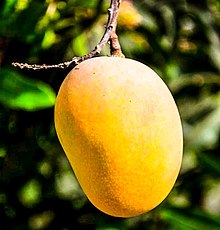
  • The commerce ministry declared that a consignment of GI certified Fazil mango variety sourced from the Malda area of West Bengal was shipped to Bahrain. The GI tag ensures that growers receive a premium price for their product so that no other company may use the name to sell similar products.

What is a GI Tag?

  • A geographical indication (GI) tag is applied to an agricultural, natural, or manufactured product (handicrafts and industrial items) that originates from a certain geographic area. Generally, a name like this offers a sense of quality and uniqueness, which is largely due to its place of origin.
  • In India, registered GIs products include Darjeeling tea, Tirupathi laddu, Kangra paintings, Nagpur orange, and Kashmir pashmina.
  •  A week-long Indian mango promotion program was held in Bahrain in June 2021, with 16 kinds of the fruit on display, including three GI certified Khirsapatin and Lakshmanbhog (West Bengal) and Zardalu (Bihar).
  • APEDA, in collaboration with Farmer Producer Organizations (FPOs), traders, exporters, agricultural scientists, the Uttar Pradesh government, and other institutions, had organized a meet to promote agricultural crop exports and adherence to global practices.

Cyber Bullying

What is Cyber Bullying?

When a young person uses the Internet or technology to harass, threaten, embarrass, or target another person, this person is called a cyberbullying. Typically, cyberbullying involves tweens and teens; but it’s not uncommon for adults to experience cyberbullying and public shaming as well. Even if someone deletes a mean post, chances are it’s still available in some form such as in a screenshot or a shared text message. Worse yet, those targeted by cyberbullies often don’t know who is bullying them, so they often have no way to bring it to an end.

Impact of Cyberbullying

If your child is being targeted by cyberbullying, it’s important that you work with them to report the cyberbullying and do everything you can to get the victimization to stop. Additionally, you should talk to their pediatrician or a mental health professional about what your child is experiencing. Expecting your child to cope with the cyberbullying on their own is not realistic. Cyberbullying also can lead to increasing levels of anxiety and depression. One study found that as many as 93% of kids victimized by cyberbullies reported feelings of sadness, hopelessness, and powerlessness.

Coping with Cyberbullying

  • Encourage your child to reclaim control. Cyberbullying can make teens feel like their lives are out of control. For this reason, you want to give them opportunities where they feel like they have some control. One way to do this is to encourage your child to use what they have experienced and turn it into something good like helping others going through the same thing.
  • Focus on learning from the experience. Whether your child needs a boost to their self-esteem or they need to learn to think positively, help your child identify what they can learn from this experience. You also can help them reframe their experience and focus on the good that has come from it rather than the pain that it caused.

How to Restore Our Sleep Cycle

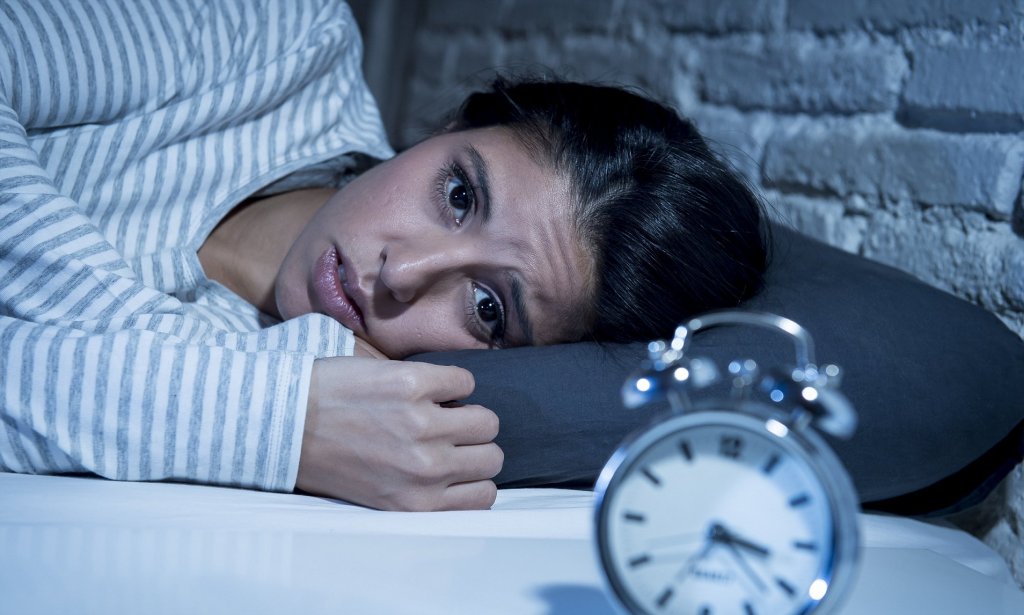
Pandemic has a huge impact on the sleep pattern of the people around the world. Some of them are tossing side to side to get a proper sleep during night time, other stay long awake but unable to regulate their usual pattern. Many experts also suggested that these days people often faces troubled sleep, with many going to bed far later and sleeping longer than usual.

Image: Shutterstock

Our sleep schedules do vary from person to person, depending in large part on the environmental causes. Because according to our circadian clock , that control our sleep schedules are sensitive to light like things like how much sunlight we’re exposed to throughout the day and what types of light we’re exposed to at night affect our sleep schedules. It’s really a huge problem, having a disrupted sleep schedule can result in deteriorating sleep pattern. But this will led to severe health ailments linked to several chronic health problems, such as sleep disorders, obesity, diabetes, depression, bipolar disorder, and seasonal affective disorders etc.

Image: Banala lite

But there are some suggested ways to get our disrupted sleep back on track:

  • A proper bed time routine: Try to stick to a schedule of sleep, like keeping your sleep-wake cycle the same. Our bodies have a circadian rhythm and walking up at different times disrupts it. The less you deviate from your normal bed and wake up times, the better you sleep. To get to sleep earlier, even doctors recommends going slowly and in small increments, adjusting no more than 15 minutes earlier every two to three days.
  • A touch of nature: Get a good amount of sunlight every morning. It serves an important purpose: it shuts down the release of melatonin, this hormone promotes sleep. Aim to get at least 15 minutes of sunlight every morning.

      Image: NPR

  • Cut off caffeine before sleep: Caffeine has a half-life of six to eight hours and a quarter-life of 12 hours. That means if you drink coffee at 4 pm, you’ll still have a quarter of the caffeine floating around in your brain at 4 am.
  • Limit your drinking habit: Alcohol suppresses REM sleep cause sleep disruptions. If you drink alcohol, limit that to two drinks or stop the intake at least three hours before bed.
  • Limit the screen timings: Avoid screen timings just before going to bed. As blue light of mobile screen interfere with sleep habits by sending wrong signals to stay awake. But many of us do it anyway. Avoid screen time before 2 hours of going to bed.
  • Journaling: You can’t get a proper sleep if something is bothering you, it’s always better to pen down your worries in a diary. Making this a habit can lessen your worries. Sit down with a blank piece of paper one to two hours before bed each night. Writing down your thoughts, especially anything that is bothering you. It will help you to schedule your activities and calm your mind.
Image: Unsplash

Meditation and Music: Meditation eases your woes by giving a direction to your thoughts. To get a proper sleep one should practice this 10 minutes daily routine. On the other hand, music calms mind and listening to a relaxing one will help to achieve sleep.

  • Avoid sleeping at day time: To promote better sleep one should avoid day time nap, so as to get a better sleep at night.
  • Environment: Make a good sleeping environment like switching off unnecessary lights and put on the curtains to prevent the entry of noise and lights. Take a warm bath and play some relaxing music, for instance. Make sure your bed is comfortable, the room is dark, and the temperature is not too warm.

These are the ways which enable us regain our disturbed sleep pattern. Sleep, itself promotes body healing. So, this is advised to get a proper 7-8 hours of sleep during night time.

Image: PBS

Third wave of covid-19 knocking at our doorstep

While mass vaccination drive is going on around the whole globe,news of emergence of Third wave of coronavirus have started to surface. WHO (world Health organisation) have also warned about the third wave in Europe. Cases recorded in this wave are of ‘Delta-variant’ of coronavirus.

Second wave of coronavirus caught us all off-guard and hit us hard and many lives were lost and there was a State of panic amongst us all for few months, due to this wave of coronavirus. After, passing of this second wave, people flocked the hill stations and flouted covid norms.
Even, in markets people are walking without masks and not taking necessary precautions.

Alarmed by this situation government of India have warned the citizens about this 3rd wave. Lav Agarwal, Joint Secretary, Health Ministry, on Tuesday said that the third wave of Covid-19 may be caused due to the gross violation of covid appropriate behavior. He told that :

We would like to request to everyone- when we talk about the third wave (of COVID-19), we are taking it as a weather update and not understanding its seriousness and our responsibilities associated with it

Lav Agarwal (joint secretary, Health ministry, GOI)

According to union health ministry data on Tuesday there were 32,906 new cases of Covid-19 and 2020 related fatalities, which pushed the overall tally to 30,905,819 and the death toll to 410,784.

Markets are open and govt offices and school’s are running with 50% capacity, but the way in which common people are violating the covid-19 precaution guidelines, day is not far when we’ll have to pay for this type of behaviour. If situation remains like this, then the government in order to control the spread may impose lockdowns and come up with strict measures.

Hill Stations will be there,if we’ll be safe,then we can visit there later on. We need to learn from our mistakes commited during the second wave of pandemic and try not to repeat them this time.


Government is preparing on its behalf to face up with the inevitable third wave of pandemic. We all as a responsible citizen should adhere with the government guidelines and take precautions,then we can defeat this pandemic.

NASA girl trolled for her faith- peak of Hinduphobia

Humanity hit a new low when an Indian origin American girl was heavily trolled by netizens just because of her faith. NASA, in order to invite new interns tweeted an application showcasing the diverse nature of the organization. An Indian girl also featured in the tweet with Hindu idols in the background of her picture.

An innumerable number of trolls targeted the girl criticizing NASA for including such a “stereotypical” image of Indians according them. But is it okay to bash someone merely because they follow a particular faith or religion? The girl undoubtedly secured a place through her efforts and a futile, good for nothing crowd directly mocked her as a fake science-lover only because she believes in her Gods. If atheism was a criterion to get selected in any scientific organization then people should also nullify the work and contributions of Einstein, Newton and Darwin.

It is so shameful to read the tweets and realize how much hatred and Hinduphobia is prevalent in society. Some of the tweets read ‘She missed Lord Ganesha and 33 million other Gods’, ‘NASA and gods don’t mix. The Indian kid seems to have some kind of obsession with Gods’. Other tweets are too vile to read.

Another user very accurately pointed out “All those mocking her: Hijab, polygamy, child marriages, Niqab, prayers on road, etc. are supposed to be respected under the concept of ‘choice’ and ‘pluralism’ but a Hindu lady practicing her faith has to be ridiculed. Carry on! Your bigotry will make her faith stronger.”

It is indeed true that the case would have been very contrasting only if the girl was wearing either hijab or had a Christ portrait in the background. However, irrespective of any religion or faith, no one should be criticked or targeted just because they are proud of their roots.

Overpopulation problems

As of now July 2021, there are 7.9 billion people in this world. Day by day, the population of humans in this earth is increasing rapidly, especially in countries like China and India. Excess of everything is big problem. Like that excess of population is also a big problem. There many problems with overpopulation. Especially in India, day by day the population is expanding rapidly. In this blog, we are going to discuss what is overpopulation? Why population of India is high? Overpopulation problems in India? How to control overpopulation?

WHAT IS OVERPOPULATION?

Overpopulation is the state at which population becomes so excessive that people must be managed to live. When overpopulation occurs the available resources will become limited or exploited. This makes the population hard to survive. As of now China is the world’s most populated country followed by India.

WHY POPULATION OF INDIA IS HIGH?

Birth rate and death rate are the two aspects that determine the population. If the birth rate is higher than death rate then the population will increase. If the death rate is higher than birth rate than the population will decrease. In India the birth rate is much higher than death rate. India was able to control death rate but it failed to control the birth rate. That’s why India’s population is high. Child marriages is also a reason for overpopulation, even though the law states that the marriageable age for the girls is 18 and boys is 21 years. But in some places the practice is continuing. Old culture norms is also one of the reason in India’s overpopulation. Parents of newly married couple often forces them to have a child. In order to have a male child, couples have more children.

OVERPOPULATION PROBLEMS IN INDIA

The population of India is 1.3 billion alone. India is the second most populated country in the world after china. Experts suggest that India will overtake china in 10 to 15 years. Due to high population there is more competition for everything in India, whether it is a job, college admission etc. Overpopulation generates huge unemployment causing poverty. There will be more unemployed people in India. Which slows down the development of the country. With high population, the resources like land, water and forests will be exploited. With high population, the food prices will rise because there is limited food. Inflation is the major consequence of overpopulation. Overpopulation will cause unequal distribution of money, which widens the difference between rich and poor. In an survey the population density of India in about to be 454 inhabitants live per square kilometre. India ranks 7 position with land.

HOW TO CONTROL OVERPOPULATION?

Government should aware people the consequences of over population. Government should make a population policy regarding the growing population. Increasing the awareness of use of contraceptive devices and free distribution of condoms among the poor. Government should spread the awareness of sex education and family planning. They should encourage people not to specify the birth of the child. Women empowerment should also be encouraged. Organizing campaigns to spread awareness about overpopulation. All these methods will help to control the population of India.

That’s all from my side. I hope you like it.

The Fight is Not over Yet- Farmer’s Protest

“Let us not forget that the cultivation of the Earth is the most important labor of man. When tillage begins, other arts will follow. The farmer’s, therefore are the founders of the civilization.”

Daniel Webster

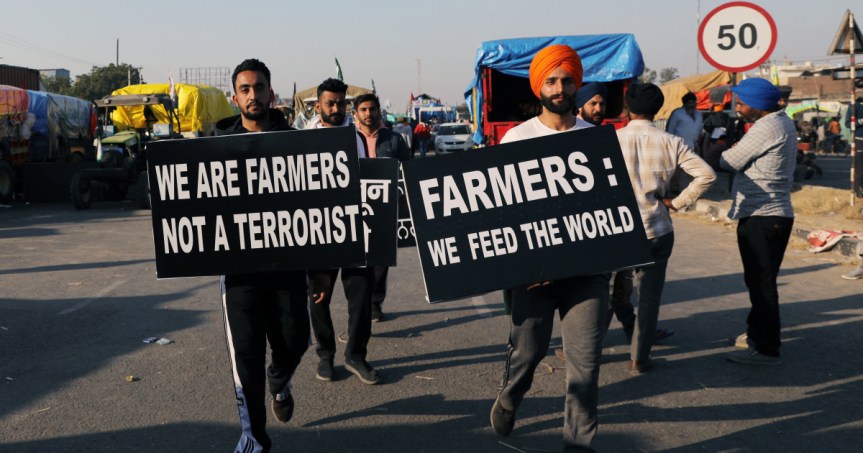
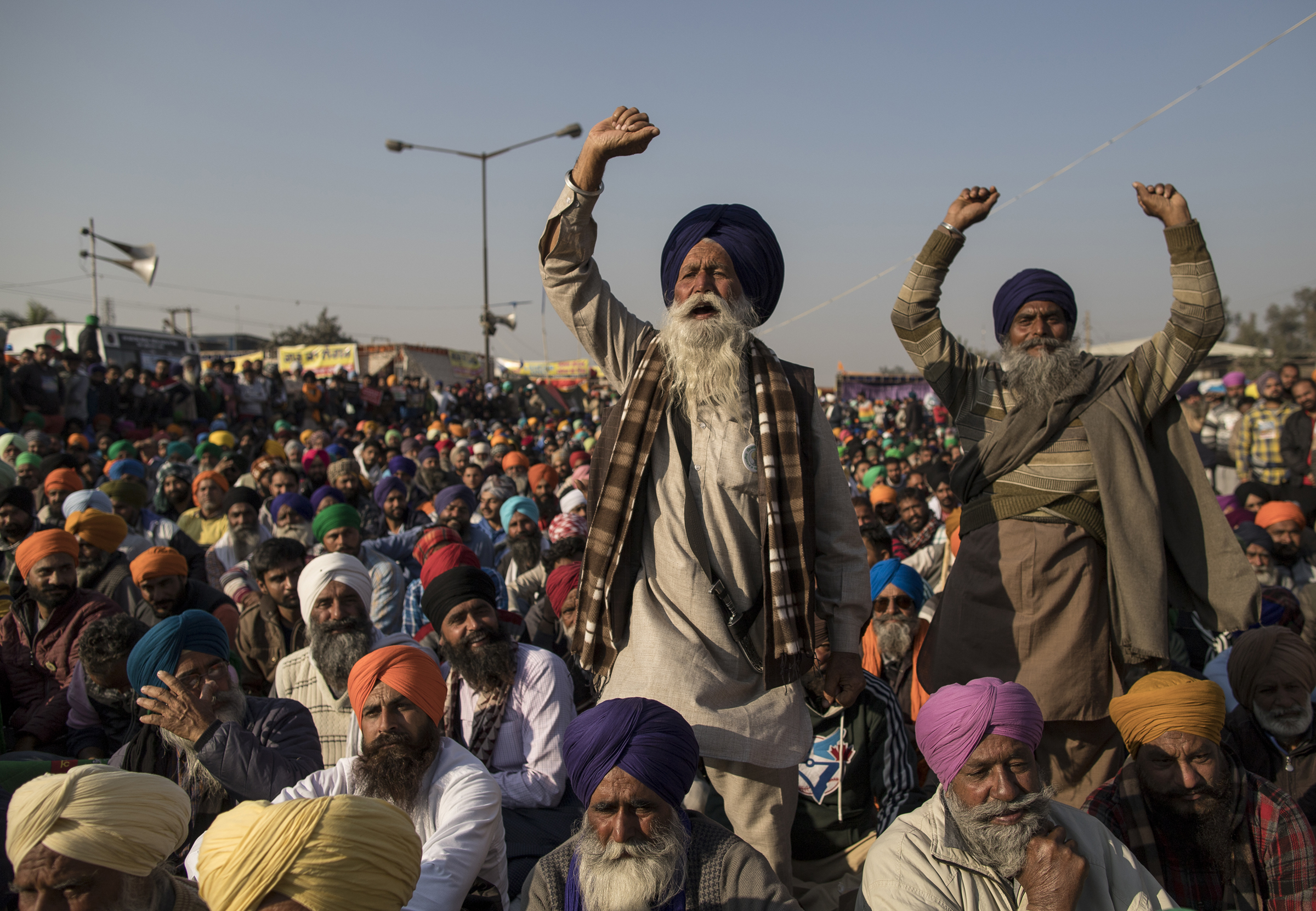
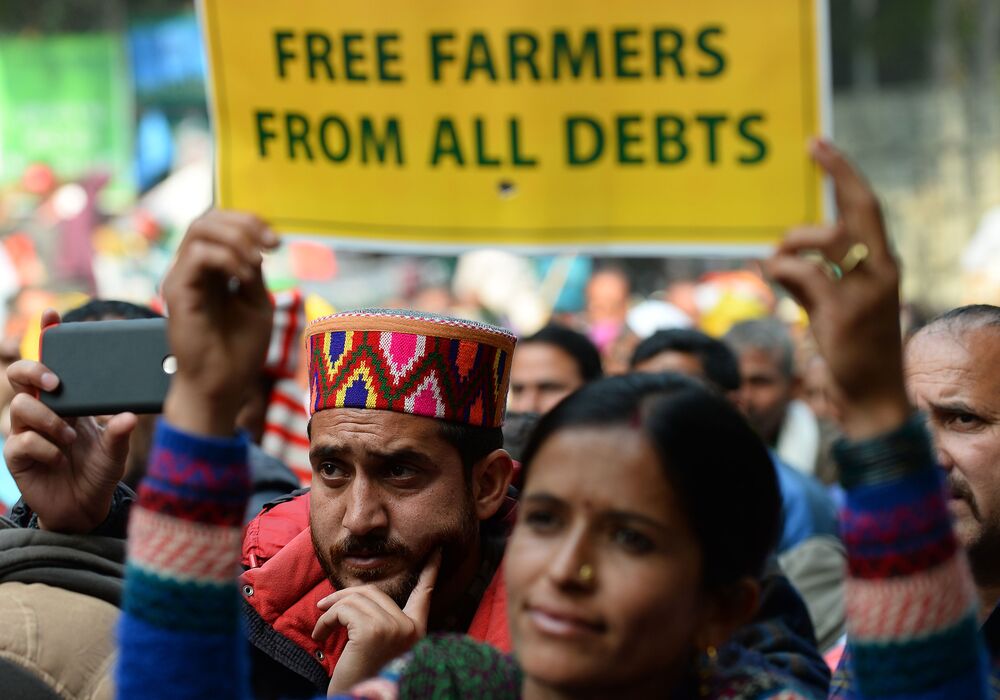
On August 9, 2020, Farmers from Punjab and Haryana laid siege to the national capital region. They are raising their voices against the recently passed farm bills. It has been five months since they have left their houses and have suffered hardships from the changed weather to farmer’s giving up and dying. But no beneficial approach has been taken for them, the fight continues to go on.

After 1947, the zamindari system was abolished in the nation. The farmlands were divided into smaller parts and the tiller became the owner of those parts but still they did not acquire bargaining power for their own crops which led to traders taking advantage of this drawback. Traders used to give credit then used to buy crops during the harvest season at lower prices. The farmer used to stay poor because he never got the good price for his crop production. To decide what the right price should be in the year 1960, when the country was going through the “Green Revolution”, APMC’S (Agriculture Produce Marketing Committees) were introduced which began to regulate the farm produce. Except the committee no one was allowed to buy produce from farmers. They will give traders a license and space to buy. In this system farmer is supposed to get different rates at which he wants to sell his production.

The Farmers' Protests Are a Turning Point for India | Time

But, till today unfortunately the farmers don’t decide the price the traders do. Even today the farmer is a price taker and not a price maker. No matter who makes the laws or tries to raise their opinions and concerns the atrocities have to be faced by the farmer’s.  As a result, they are dealing through several problems like lack of mechanization, soil erosion, agriculture marketing and so on. In India 76% of the farmer’s want to give up farming. The market needs to have a good buyer to pay a fair price. 

Amidst protest from the opposition and farmers organization, the monsoon session of the Lok Sabha passed three agricultural bills which were: – 

  1. Farmer’s Produce Trade and Commerce (promotion and facilitation) Bill, 2020 – to create a system where farmers and traders have the freedom to sell and purchase outside APMC’s, to promote barrier free inter state farmer produce, reduce facilitative framework for electronic trading.  If this is implemented the states will lose its revenue there are also chances that it may end the MSP based procurement system.
  • The Farmer (Empowerment and Protection) Agreement of Price Assurance and Farm Services Bill, 2020 – enable farmers too access modern technology, reduce cost marketing which will boost farmers income, effective dispute resolution. If this is implemented sponsors may not like to deal with small and marginal farmers, farmers who are into contract farming will get weak in terms of negotiating.
  • The Essential Commodities (Amendment) Bill, 2020- removing commodities like some important food items. Essential commodities, bring investment for farm infrastructure, help both farmers and consumers by bringing price stability. If this is implemented big companies will stock commodities, which means they will dictate whatever price they say.

Before helping the farmers, we should understand what problems they are facing. Firstly, we should strengthen the dispute redressal problem. There should be an intermediary body between the traders and the farmers. So, that they understand their rights and know what contract they are signing. They can get a guarantee for their crops and expand their growth if they have someone to help them. Secondly, they should have a bargaining power on what they have produced. This should be their basic right. Lastly if the government provides the farmers with people who can help them it will create massive trust on the government. 

The success or failure of the bill depends on the implementation. It will be unfair if the farmers think that this bill is their biggest enemy which is supposed to be helping them in ways which will change the entire agricultural system of the country. If the government genuinely wants to take up an initiative to help the famers and to end the protest, they should hear the perspective of the farmers because at the end of the day it is their livelihood which is being talked about. An industry that feeds you is worth fighting for.

Farmers' Protest Underscores Modi's Challenges Before Elections - Bloomberg

HUMAN ANATOMY

Introduction to Human Anatomy and Physiology

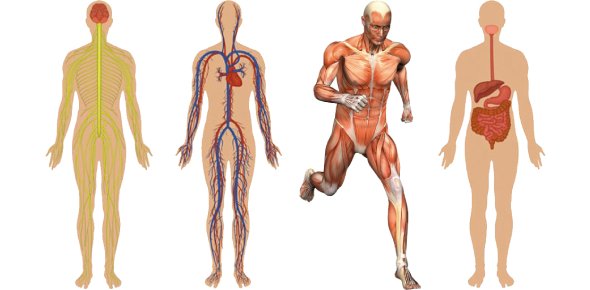
Anatomy is the study of the shape and structure of the body of organisms or living beings. The word anatomy is derived from the Greek words ‘ ana ‘ and ‘ tomy ‘ where ‘ ana ‘ means ‘apart’ and ‘tomy ‘ means ‘to cut’. In physiology, the functions of various system such as respiratory system, digestive system, nervous system, skeleton system and muscular system of organisms are studied. It can be said that physiology is the study of how the body and all its part function. It consists of two word, namely, ‘physio’ and ‘ ology’ where ‘physio’ means ‘nature ‘ and ‘ ology ‘ means ‘ study’. Here ,we will study human anatomy and human physiology.

Definition of Human Anatomy

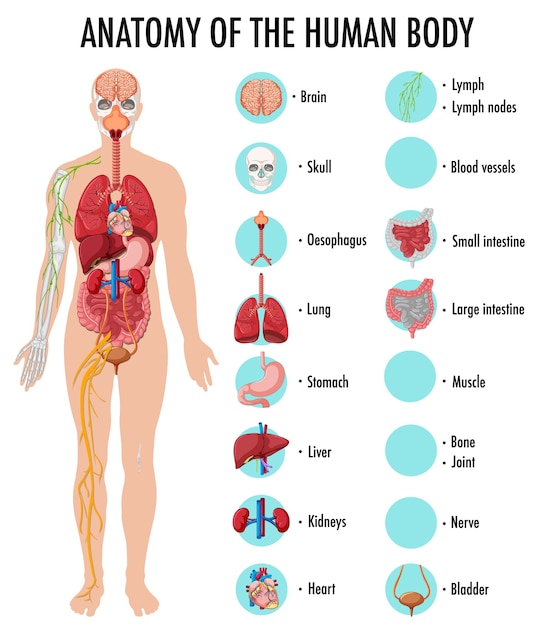
Free Vector | Anatomy of the human body information infographic

Human Anatomy is the study of structure ,shape, size , weight and location of all the organs of human body. A detailed knowledge of the structure of various system of human body is provided in human anatomy . For example , the shape, size, weight, structure and location of all the organs of the excretory system such as lungs, kidneys, large intestine, liver, skin, etc. are studied in human anatomy. Human anatomy can be defined as the science dealing with human body structure and relationships among structures.

Importance of Anatomy

The importance of anatomy and physiology is mentioned below.

  • Anatomy Provides the Knowledge of Structures of Various Organs : Human anatomy provides the detailed knowledge of the structure of various organ body . We get the knowledge of structure, shape, size, location and weight of organs of all the systems of our body. We come to know about the length of various organs such as the length, size and shape of the bones. With the help of anatomy , we get the knowledge of the percentage of white fibres and red fibres present in an individual. As a result of such knowledge , the teacher and coaches working in the field of physical education and sports may easily select the suitable sports according to the traits of students. For example, weightlifting is more appropriate for short statured students, who have more percentage of white fibres i.e., fast twitch fibres in comparison to red fibers i.e., slow twitch fibres can perform better in sprinting events instead of endurance events.

PREPAREDNESS FOR COVID 3-WAVE

All state governments are tightening their preparedness in anticipation of a third wave as restrictions begin to ease across the country.maharashtra government is concerned of Covid 3- wave chief minister Uddhav Thackeray directed officers and doctors to check medical supplies.Delhi Chief minister Arvind Kejriwal also announced to train 5000 youth to help doctors.Country is preparing to fight with Covid 3-wave.

WE CAN STOP COVID 3-WAVE

Photo by cottonbro on Pexels.com

HELP TIPS FOR CHILDREN

Children may worry about themselves, their family, and friends getting ill with COVID-19. Parents, family members, school staff, and other trusted adults can play an important role in helping children.

children should stay home ,Stop visiting relatives/friends.

Do not take your children to social gathering.

◾Do not allow children to rub their eyes and noses, sanetize their hand regularly.

Sanetize playing items twice a day.

Give them warm water for gargling.

Follow SMS:Social distance,Mask, Sanetization.

Wearing and Caring

Early detection and diagnosis

*Fever /Headache,pain in cheeks/eyes

*Body Pain /Sour throat

*Dry cough/Weakness/loss of appetite

*Parents must bring their children to near by Covid OP if they find any above symptoms.

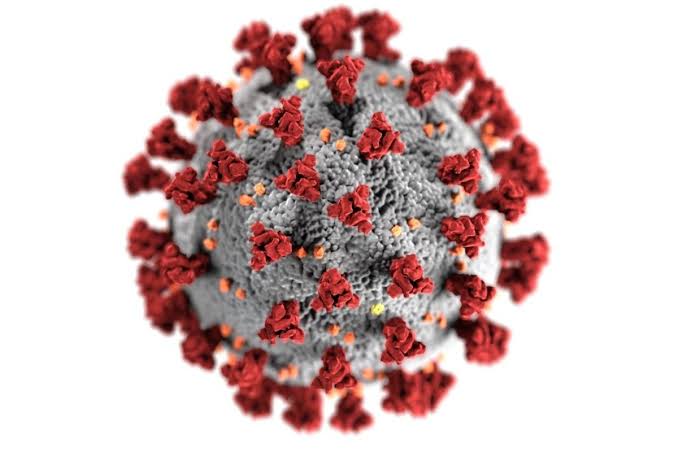
As the number of COVID-19 cases and test positivity rates are showing signs of plateauing in major urban centres across India, we see desperate scenes in small towns and villages. We read about people dying in their homes unable to access medical care. We see pictures of people waiting for their turn to cremate their loved ones in funeral grounds. COVID-19 is a humanitarian disaster where no state is spared, poor or rich.

Now there is a talk of a COVID-19 third wave, if we are not able to vaccinate the population fast enough or if citizens do not follow the ‘social vaccines’ (hand washing, use of masks and physical distancing). Let’s examine the truth about the possibility of a third wave.

The WavesThe first wave usually affects the most vulnerable sections of the population: the old, sick and the immuno-compromised. The second wave starts when the epidemic spreads into the general population, which may not have got the infection during the first wave and who do not have protective antibodies against the pathogen.

The second and third waves of the infection is usually due to mutant strains, which may partially escape the immunity offered by previous infections.In the case of Spanish Flu, the destruction caused by World War I and lack of laboratory surveillance capacity may have played a part in augmenting the spread and increasing mortality; but the learnings from that outbreak is definitely applicable in the case of COVID-19.We have seen a lot of parallels between the Spanish Flu virus and the one causing COVID-19, though they are very different phylogenetically. Therefore, it is only reasonable to anticipate a third wave of virus infections and prepare for it.Vaccine is the most potent tool that we have against COVID-19 infections.

Though we do not have concrete data on the level of protection offered by the various vaccines against the mutant strains, most of the experts agree that some degree of protection against severe infections do exist. Therefore, relying on vaccines is the most rational way to prevent a third wave.Short TermBut at present, we do not have the capacity to produce vaccines fast enough to vaccinate our entire population in the next few months. The combined production capacity of Covishield and Covaxin is only around 60-70 million doses/month and at this rate it may take more than two years to vaccinate India’s population.

So we have to look at other options, like scaling up capacity and ready-made vaccines from abroad.The scaling up of capacity promised by the Serum Institute of India (SII) and Bharat Biotech, which manufactures the vaccines currently used in India, is going to take time and we cannot rely on that process to rapidly increase the rate of vaccination.In the short term, pre-prepared vaccines from abroad seem to be the only viable option if we want to vaccinate the most vulnerable groups and economically-productive sections of the population rapidly. The decision to allow the import and use of Russian-made Sputnik V is a welcome step in this regard. We need more such vaccines, including China’s Sinopharm which was recently approved for emergency use by World Health Organization.

Medium TermIn the medium-term, our existing vaccine manufacturing capacity should be repurposed to make COVID-19 vaccines. India supplies a major proportion of the vaccine requirements of Gavi-the vaccine alliance and has access to most of the technology platforms for vaccine production. When the United States has supported lifting the patent protection available to COVID-19 vaccines, India should be able to leverage its production capabilities and rapidly augment capacity.Besides vaccination, in the short and medium term, we should also aim to increase the testing capacity. Only rapid identification of cases and strict isolation can help to flatten the curve till the vaccine rollout is adequate.

Apart from this, we need to institutionalise the processes to ensure adherence to social vaccines. This can be done through a mix of behaviour change communication, regulatory efforts and community mobilisation. All of this has to be continued till we achieve a vaccination coverage of more than 80 percent.

Photo by Anna Shvets on Pexels.com

To beat this worldwide pandemic, the world has to, must come together.

TIME TRAVEL: THE ART OF PLAYING WITH TIME

Time travel is the concept of movement between certain points in time, analogous to movement between different points in space by an object or a person, typically with the use of a hypothetical device known as a time machine. Time travel is a widely recognized concept in philosophy and fiction, particularly science fiction. According to scientists time travel can be possible in recent years due to certain theories based on famous scientists.

Time travel.

HISTORY OF TIME TRAVEL

Some ancient myths depict a character skipping forward in time. In Hindu Mythology a king named kakudmi traveled to Time to meet Brahma and he was surprised when he saw time has passed when he returned to earth. The concept of universal time sphere was shown in the stories ages ago. In Jewish tradition, the 1st-century BC scholar Honi ha-M’agel is said to have fallen asleep and slept for seventy years. When waking up he returned home but found none of the people he knew, and no one believed his claims of who he was.

Time travel used to be thought of as just science fiction, but Einstein's general theory of relativity allows for the possibility that we could warp space-time so much that you could go off in a rocket and return before you set out.
Stephen Hawking

SCIENCE FICTION IN TIME TRAVEL

Christmas Carol by Charles Dickens has early depictions of mystical time travel in both directions, as the protagonist, Ebenezer Scrooge, is transported to Christmases past and future. Other stories employ the same template, where a character naturally goes to sleep, and upon waking up finds themself in a different time. A clearer example of backward time travel is found in the popular 1861 book Paris avant les hommes (Paris before Men) by the French botanist and geologist Pierre Boitard, published posthumously.

TIME TRAVEL IN PHYSICS

Some theories, most notably special and general relativity, suggest that suitable geometries of spacetime or specific types of motion in space might allow time travel into the past and future if these geometries or motions were possible. Many in the scientific community believe that backward time travel is highly unlikely. Any theory that would allow time travel would introduce potential problems of causality. The classic example of a problem involving causality is the “grandfather paradox“: what if one were to go back in time and kill one’s own grandfather before one’s father was conceived? Some physicists, such as Novikov and Deutsch, suggested that these sorts of temporal paradoxes can be avoided through the Novikov self-consistency principle or a variation of the many-worlds interpretation with interacting worlds.

The art of time

GENERAL RELATIVITY

Time travel to the past is theoretically possible in certain general relativity spacetime geometries that permit traveling faster than the speed of light, such as cosmic strings, traversable wormholes, and Alcubierre drives.:33–130 The theory of general relativity does suggest a scientific basis for the possibility of backward time travel in certain unusual scenarios, although arguments from semiclassical gravity suggest that when quantum effects are incorporated into general relativity, these loopholes may be closed.These semiclassical arguments led Stephen Hawking to formulate the chronology protection conjecture, suggesting that the fundamental laws of nature prevent time travel,but physicists cannot come to a definite judgment on the issue without a theory of quantum gravity to join quantum mechanics and general relativity into a completely unified theory

QUANTUM PHYSICS

THEORIES OF QUANTAM PHYSICS IN TIME TRAVEL

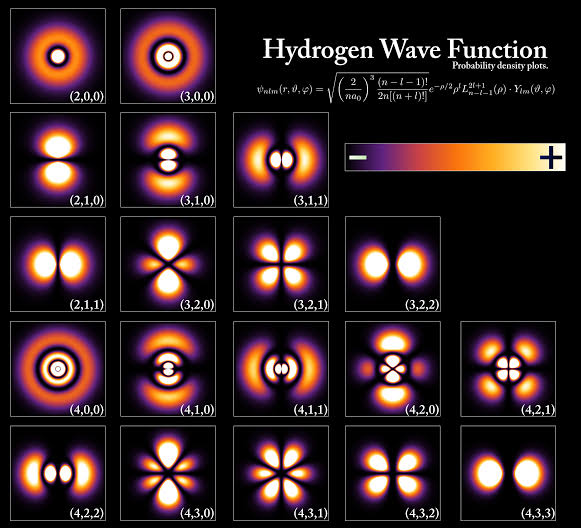
Coming up with a quantum version of time travel requires physicists to figure out the time evolution equations for density states in the presence of closed timelike curves (CTC). Two main routes has been taken in the application of self consistency in Quantam Physics.

LLOYD’s PRESCRIPTION

Based on path Integral and post selection Seth Lloyds proposed a new Alternative. In particular, the path integral is over single-valued fields, leading to self-consistent histories. He assumed it is ill-defined to speak of the actual density state of the CTC itself, and we should only focus upon the density state outside the CTC. His proposal for the time evolution of the external density state

“People like us, who believe in physics, know that the distinction between past, present and future is only a stubbornly persistent illusion.” – Albert Einstein.

Greed vs Generosity: Which Gives a Better Competitive Advantage?

Many people think that in the professional world, selfishness and greed are the characteristics that pay dividends. But the truth is, excepting win-lose situations, that the most successful people in the medium and long term are those who are the most generous in their business and personal lives.

Ambition is a desire to take on more than you can realistically accomplish, to constantly strive for improvement, to grow both personally and professionally, and, of course, the desire to generate more income. However there comes a time when ambition crosses a line, and when that happens it becomes greed. Greed is the desire to chew more than you can eat, a desire that distracts you from realistically possible goals. Greed is wanting to get more than what you have actually earned, obtaining maximum profit at minimum cost, or as an old adage has it: “Grasp all, lose all.”

Today there is an abundance of courses and books on finance, limitless knowledge on hand with a simple click. But to know what is right, to subdue the pirates of greed and to follow your trading plan- this is another story. People who look for easy money invariably find that there is no such thing, paying a heavy price for this lesson. Ego, vanity, and revenge play a part, causing people to fail on their trading accounts. This is one of the factors that explains why people might not fall into the exclusive 10% that ‘win’, and find themselves one of the 90% that lose.

Literature and film are full of greedy and stingy characters, and the moral of films like ‘A Christmas Carol’ or ‘The Wolf of Wall Street’ is always the same: the fate of the greedy is heartbreaking. Their addiction to work means that they live a lonely life, and their search for wealth means that at the end of their lives, they have only the sober memory of their friends from the Stock Exchange.

GIVE AND TAKE

People do not realize that giving without expecting something in return could be a competitive advantage, as well as making ones outlook more positive. Studies have shown that the most successful people are generous. At least this is the affirmation of Adam Grant, a psychologist and professor at Wharton and author of “Give and Take”.

A generous person builds bigger and stronger networks, improves communication with their existing contacts, and also finds it easier to interact with people outside of their core network- this gives them access to new contacts and valuable sources of information. Generous people inspire in others a predisposition, or positive receptivity, to reconnect with them, as well as a greater willingness to collaborate.

Moreover, being a giver encourages persistence because givers are able to enthusiastically motivate people, inspiring confidence, because they are liberal with praise. They create a generally positive environment. Talent is important, but the most important factor in success is persistence. And what’s even more interesting is that being a giver has an energizing effect that increases levels of happiness.

According to Bill Williams, famous trader and writer of “Trading Chaos”, people with a ‘giving’ mindset enjoy more happiness and success. For example, later in his career Bill always traded two accounts, one for himself and one for his charities. The charity account always made more money, even though he traded using the same method with both accounts. In the charity account he never veered from his strategy, while in his own account he would sometimes take a trade based on a “feel”, or get in a trade before the actual signal. This shows us the importance of sticking to a plan, but also the importance of being a ‘giver’.

Giving distracts us from our problems, adds meaning to our lives and helps us feel valued by others. This explains why avidity and egoism are the trader’s worst enemy. Having a benevolent mindset while trading helps the trader to increase performance. Happy people earn more money on average, score higher yields, make better decisions and contribute more to their organizations. Furthermore, traders who are givers are at the top of the most successful trading operations.

THE GREED EFFECT

Focusing only on money results in the ‘greedy effect’, something that all professional traders know. In fact, one of the most common pieces of (rarely followed) advice that newbies receive is to shift their focus from trade results to the trading process, analyzing and following the rules of their trading system. Another suggestion is to start reasoning in pips and ticks instead of dollars. This reduces the greedy mindset and develops a more reliable attitude.

However we can make a further effort to improve our performance by shifting our focus to be more generous. One example is trading for charitable purposes like the aforementioned Bill Williams, another could be simply committing a small part of your monthly or annual profit to microcredits, which promote a world of stability and self-sufficiency, key to overcoming poverty.

Material things can be recovered, but feelings of guilt, helplessness and loneliness cannot be solved with money. If humans would be more understanding of and generous to others, the world would be a very different place. And that is why those who practice generosity, making it part of their daily lives, experience an uplifting of their mental and emotional state, and are generally filled with more satisfaction in their professional and personal lives.

In conclusion, we see that generous people are the most successful in their daily trading performance for the reasons described above. Having a giving mindset helps professionals become part of that exclusive group, the 10% of winners.

Online racism faces by English players

•Black players in the England
football team have been
subjected to a storm of on-
line racist abuse after their
defeat in the fnal of Euro
2020.

•Marcus Rashford, 23, Ja-
don Sancho, 21, and Bukayo
Saka, 19, were the targets of
the abuse after they missed
their spot-kicks.

•The comments have
prompted a police investiga-
tion and wide condemna-
tion.

•“For some of them to be
abused is unforgivable,”
Southgate told a news confe-
rence. “Some of it has come
from abroad (we have been
told this), but some of it is
from this country.”

•British Prime Minister
Boris Johnson condemned
the abuse while Prince Wil-
liam, who is president of the
Football Association, said
he was “sickened”.