What is Talent Management?

Talent management practices have evolved over the years to cater to people-specific trends much like all other aspects of work, and have changed in fast strides over the last few years. Strategic talent management is a necessity in today’s hyper-change environment. Global trends in talent and human capital management have led to a renaissance of the work-worker-workplace equation.

What is Talent Management?

Talent management is defined as the methodically organized, strategic process of getting the right talent onboard and helping them grow to their optimal capabilities keeping organizational objectives in mind. 

The process thus involves identifying talent gaps and vacant positions, sourcing for and onboarding the suitable candidates, growing them within the system and developing needed skills, training for expertise with a future-focus and effectively engaging, retaining and motivating them to achieve long-term business goals. The definition brings to light the overarching nature of talent management – how it permeates all aspects pertaining to the human resources at work while ensuring that the organization attains its objectives. It is thus the process of getting the right people onboard and enabling them to enable the business at large.

Under the umbrella of talent management, there are a string of elements and sub-processes that need to work in unison to ensure the success of the organization. For example, analyzing the right talent gaps for the present and the future, identifying the right talent pools and best-fit candidates, getting them to join and then optimizing their existing skills and strengths while helping them grow are touch-points that are all equally important. They support each other and the whole structure would crumble even if one sub-process fell out of sync.

Talent Management Process

While often cyclical rather than a generic linear progression of events, the process of talent management could be considered, to begin with acknowledging the need for talent and leads to filling that gap and ultimately growing and optimizing the skills, traits, and expertise of employees, new and old.

The following image depicts the key points of the talent management process:

Let’s get into these key steps in the process of managing talent effectively:

1. Planning: Like in any process with a set outcome, planning is the first step in the process of talent management. It involves the following identifying where the gaps lie – the human capital requirement, formulating job descriptions for the necessary key roles to help guide sourcing and selection and developing a workforce plan for recruitment initiatives.

2. Attracting: Based on the plan, the natural next step is to decide whether the talent requirements should be filled in from within the organization or from external sources. Either way, the process would involve attracting a healthy flow of applicants. The usual external sources include job portals, social network, and referrals. The talent pools that need to be tapped into must be identified in advance to keep the process as smooth and efficient as possible. This is where the kind of employer brand that the organization has built for itself, comes into play because that decides the quality of applications that come in.

3. Selecting: This involves using a string of tests and checks to find the right match for the job – the ideal person-organization fit. Written tests, interviews, group discussions and psychometric testing along with an in-depth analysis of all available information on the candidate on public access platforms help in gauging an all-rounded picture of the person. Today there are software and AI-enabled solutions that recruiters can use to skim through a vast population of CVs to focus on the most suitable options and to find the ideal match.

4. Developing: Quite a few organizations today operate on the idea of hiring for attitude and training for skills. This makes sense because while you would want a predisposition to certain skill-sets, it is the person that you are hiring and not the CV. Developing employees to help them grow with the organization and training them for the expertise needed to contribute to business success also builds loyalty and improves employee engagement. This begins with an effective onboarding program to help the employee settle into the new role, followed by providing ample opportunities for enhancing the skills, aptitude and proficiency while also enabling growth through counseling, coaching, mentoring and job-rotation schemes.

5. Retaining: For any organization to be truly successful, sustainably, talent needs to be retained effectively. Most organizations try to retain their best talent through promotions and increments, offering opportunities for growth, encouraging involvement in special projects and decision-making, training for more evolved roles and rewards and recognition programs.

5. Retaining: For any organization to be truly successful, sustainably, talent needs to be retained effectively. Most organizations try to retain their best talent through promotions and increments, offering opportunities for growth, encouraging involvement in special projects and decision-making, training for more evolved roles and rewards and recognition programs.

6. Transitioning: Effective talent management focuses on a collective transformation and evolution of the organization through the growth of individual employees. This involves making each employee feel that they are a part of a bigger whole. Providing retirement benefits, conducting exit interviews and effective succession planning might seem like unrelated career points but they are all transition tools that enable the shared journey

Talent Management Model

Over the years, there have been multiple models made for talent management that have been created b organization who have felt that they have finally cracked the code on the perfect model. The thing with talent management, however, is that it needs to morph to suit the latest talent trends, digital disruptions, and employee expectations.

The following diagram is that of the integrated talent management model which appears to be the most relevant one today.

The primary components of the model are:

  • Acquire – Employer branding, recruitment, onboarding
  • Assess – Talent analytics, succession planning and assessments
  • Develop – Workforce planning, culture at work, engagement and retention practices
  • Deploy – Goal alignment, career-path planning, learning and development, and performance management


This structure of components is cyclical and goes on in a sustained loop while taking onto consideration the internal climate within the organization and the external environment in which it operates.

How can an organization ensure that this model is put to the best use?

The point to be kept in mind here is that no model of something as dynamic as talent management is writ in stone. It needs to be able to adapt to the changing needs of the organization the evolving talent expectations and the pace set by changes within the industry.
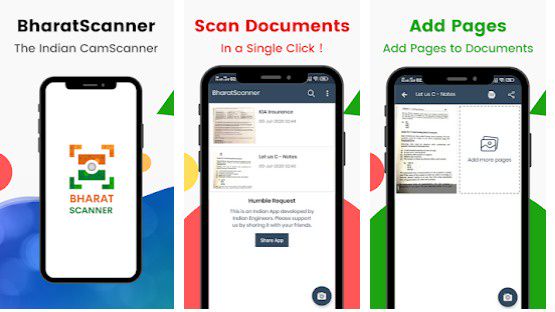
Indian option of CamScanner launched with name BharatScanner.

The BharatScanner mobile app, an Indian alternative to cam scanners, has been launched. In this app, users have got the facility from scanning documents to creating PDFs. The special thing is that this app is completely free and users will not have to pay a separate charge to use any feature.

Rating of 4.4 points found on Google Play Store

Bharat Scanner app is available on Google Play Store for users. This app has downloaded more than 10 thousand users so far and it has got a rating of 4.4 points on the Google Play-Store. At the same time, this app size is 36 MB. .

Features of BharatScanner .

Some current features of BharatScanner are as follows: .

  • Users can scan documents easily.
  • Filters have been supported in this app.
  • Users can keep their documents as PDF.
  • Users have got the facility to share documents in this app on mail and Whatsapp.

Indian government imposes ban on Chinese mobile app .

Under Section 69A of the Information Technology Act, the Government of India decided to block 59 apps as these apps were a threat to India’s sovereignty and integrity, defense of India, security of the state and public order. The government had received many complaints about these apps from various sources, including about the misuse of many mobile apps. These apps were stealing data from both iPhone and Android users.

  • लॉन्च हुआ CamScanner का भारतीय विकल्प Bharat Scanner, जानें इसकी खासियतें

Ban on these Chinese apps

Tiktok, CamScanner, Shareit, Kwai, UC Browser, Baidu Map, Shein, Clash of Kings, DU Battery Saver, Helo, Likee, YouCam makeup, Mi Community, CM Browers, Virus Cleaner, APUS Browser, ROMWE, Club Factory, Newsdog these 59 apps are banned, including BeutryPlus, WeChat, UC News, QQ Mail.

Government concerned over return of large number of Indian students from US due F1 visa issues.

The US order of July 7 stating that F1 visas will not be renewed for students if they are attending only online- lectures in the US is a concerning mater for India since the highest number of foreign students in the US are from India. The US government has announced those F-1 and M-1 (non-academic and vocational students) visa holders attending only online classes will not be allowed to remain in the US.

US Noted India's Concerns Regarding F-1 Visa Issue: Centre

India on Thursday said it has reported its concerns to the US govt about the new rule on F1 visa and urged to keep in mind the role education have played in the developing relationship between the two countries.

The concerns were expressed during the virtual foreign office consultations between Foreign Secretary Harsh Vardhan Shringla and US political affairs secretary David Hale on Tuesday. Ministry of External Affairs’ spokesperson Anurag Srivastava said that the US government has looked into the concern regarding the new rule.

During virtual meeting, Srivastava said that India is concerned about the possibility of the return of a large number of Indian students studying in the US due to new rules in visa.

The Immigration and Customs Enforcement (ICE), an agency of the US Department of Homeland Security (DHS) on Monday said that the foreign students pursuing courses in the US must return to their country if their institutes are conducting only online course due to covid-19 pandemic.

How will 2020 shape 2021 ?

In the year 2020, the whole world is fighting with a virus, which changed the way we live and work at least temporarily. COVID-19 took many lives and made many people jobless. The impact this pandemic created will be there at least for the next few years. No one knows when this pandemic will end, but it is evident that the year 2021 will be different because of the year 2020.

“Sometimes even to live is an act of courage.” Those words are as true today as when they were written two millennia ago by the Roman Stoic philosopher, Seneca. The coronavirus pandemic is affecting millions and it is imperative to understand the unprecedented shockwave it has created – shattering social structures and disrupting economies and markets, with the ripples felt by almost every individual, business and nation.  

The Covid-19 outbreak in India has severely impacted the economy in myriad ways, with the lockdown halting the entire nation. It came at a time when the Indian economy was already slowing due to weaknesses in the financial sector and falling consumer demand for goods. Sectors already suffering, including logistics, aviation, transport, and tourism, are struggling to absorb the impact on the economy of the coronavirus pandemic.  

There are parallels between the emerging economic crisis and the financial crash of 2008. Like then, investment institutions and banks, including the IMF and Goldman Sachs, as well as the global rating’s agencies, such as Moody’s and S&P, have slashed growth projections, with India and other countries forecast to enter a ‘deep recession’. But the scale of the 2020 downturn is likely to be far greater than what followed 2008.

Efforts by the Indian government to flatten the virus curve through stringent lockdown measures will result in a steep economic contraction. In its April 2020 policy review, the Reserve Bank of India, warned: “The macroeconomic and financial landscape has deteriorated, precipitously in some areas.” 

Like other countries around the world, India too is grappling with the conundrum of reopening the economy – protecting and restoring activity this year to help shape a return to growth in 2021 – while containing the spread of the virus, and potentially further lockdowns.

The effect of 2020 on 2021:

  • During COVID-19 pandemic, imports and exports were affected adversely. And it affected many countries. For example, the Automobile industry in India imports components from China. When China was fighting with coronavirus, factories were shut down and as a result, India’s automobile industry had to halt the production. Not just India, but many countries are depending on the imports for many products such as electronics, pharmaceutical ingredients etc. So, in the year 2021, companies will work on diversifying supply chains and countries will work on achieving self-sufficiency. This may lead to protectionist tendencies.
  • COVID-19 came when the world is least expecting it. No country is fully ready to face it. Many developing countries have a shortage of healthcare professionals and medical equipment. Even developed countries have a shortage of medicines. So, in 2021, countries may work to fill this gap.
  • As coronavirus forced people to sit at homes, the demand for telemedicine facilities increased drastically. In 2021, hospitals and governments may work to make telemedicine facilities more accessible.
  • 2021 may bring more work from home jobs, as more and more companies are thinking of it as a win-win situation for them and for the employees.
  • Virtual meetings will become more common. In 2021, people may not travel on flights just to attend official meetings. This will result in less carbon emissions.
  • We have been fighting with climate change for a long time. United Nations member countries started working on the common goal of making affordable and clean energy accessible to all. But coronavirus pandemic affected the world economy badly, and every country is working a lot to uplift the economy. So, the transition to clean energy may take a backseat in 2021.
  • As many people are now scared to eat out and are preferring healthy food to boost immunity, restaurants and food delivery apps may continue to struggle in 2021 as well. There will be more investments in the companies the manufactures hygiene-related products and raw foods.
  • There will be more e-learning opportunities.
  • People may save more money by avoiding unnecessary expenses because COVID-19 pandemic taught people that anything can happen at any time and so savings are important to protect ourselves in tough times.
  • We have witnessed people stuck in other countries or in other states within the country due to lockdown throughout the world. After going through difficult times in 2020, people may want to stay close to their families. If it happens, it will alter the demography of many regions.
  • As people may not be ready to go to theatres at least for the next few months, OTT (Over-the-top media services ) platforms such as Netflix & Amazon Prime may take over the traditional film industry in 2021.
  • With an increase in work from home jobs, 2021 may see an increase in cybersecurity threats.

How will 2020 impact 2021?  

The pandemic is undoubtedly redrawing the landscape, but it is difficult to develop an economic blueprint for the post Covid-19 future because we have never before experienced the measures put in place to stem the spread, such as suspended transport, inoperative plants and stalled projects. Effects will differ to some extent across the Indian states as they follow specific economic strategies. Tourism has been severely hit, and will continue to suffer, no more so than in Goa where tourism is the mainstay of the state’s economic development strategy. The consequences for small firms, labour and for investment in tourist and transport infrastructure will be harsh. 

Even the high-performing districts in India have been badly impacted by the lockdown – 130 districts classified as red zones account for 41% of national economic activity, 38% of industrial output and are the most industrialised regions. Lower economic activity in these areas has spread to suppliers and revenues have slumped. The collective consequence of disruptions to supply chains, operations and travel are reverberating across almost all sectors of the economy, leading to:

Higher unemployment – further reducing demand and impacting production and capacity utilisation, and damaging corporate results 

Shortage of labour – migrant labourers have suffered greatly during the lockdown. The Government of India has increased the money going into the Mahatma Gandhi National Rural Employment Guarantee Scheme, which provides livelihood security in rural areas through 100 days of paid employment for adults who volunteer to do unskilled manual work. Under Covid-19 migrant labour obviously feels safer working closer to home rather than moving across states, but this will reduce the availability of workers for other sectors and regions. 

Severe liquidity crunch – working capital issues/solvency risk for sustained periods could lead to defaults on loans and may increase stranded assets in the banking sector.

Potential losses will vary by sector, but some industries that are suffering, such as airlines, hotels, automotive, construction and real estate, are likely to continue to bear the brunt into 2021. 

Covid-19 is unprecedented, so it is difficult to accurately make projections for economic growth, but it is possible to highlight some of the issues that will have an impact on Indian economy going forward.   

It will take months, possibly years for migrant labours to return to work in other states, so the financial stress on rural households will increase, and will be exacerbated by a weak job market.  

Demand has fallen significantly since the introduction of the lockdown. AIIMS Director Randeep Guleria has said cases of Covid-19 in India will peak in June and July, though others say this may not happen until September. This will impact tourism, aviation, retail and many other economic activities, leading to job losses that will further reduce demand. Given the uncertainties, it is unlikely we will see a return to full-scale operations in many sectors this year. This will impact the financial health of many enterprises and many will reduce Capital investment in 2021.   

Remittances to India are projected to fall due to travel restrictions. The World Bank estimates these could decline by as much as 23%.  

Rising unemployment, falling corporate revenue and profit is bound to impact tax revenues. Already the government has announced a series of support measures. Falling tax income and rising expenditure to support many social and employment schemes will increase the government’s fiscal deficit in 2021.  

There are glimmers of hope, however. The Indian economy may benefit from falling fuel oil prices, potentially halving the import bill if current crude oil prices hold, and many foreign firms are looking at India as alternate manufacturing destinations in many sectors, such as pharmaceuticals, chemicals and electronic component manufacturing. India needs to capitalise on this potential opportunity and provide all necessary policy assistance to attract foreign investment in 2021. 

Covid-19 has adversely impacted the entire global economy and India is not spared. Looking at the current trend India is expected to enter recession. Recovery should focus on creating a more sustainable and resilience economy, pursuing opportunities to build back better and improve the life chances of all Indians.

Conclusion:

Coronavirus pandemic affected everyone and changed our daily lives. The world will create 2021 based on these changes and also with the lessons we learned while fighting with the pandemic.

Different types of cuisine in the world:

With all the amazing food in the world and all the various styles of cooking, people want to explore and know about the tastes and flavors of other nations. Over the last few years, diverse styles of cuisine have taken over the food business, so you can hardly find any familiar delicacy in your local restaurant.Even the local restaurant nearby is that you can find French, Mexican, Italian, Indian and Chinese cuisine. We can host parties with cuisine from all around the world. You just ask for it, and they’ll give you plenty of options to pick from.So, whether you’re an professional searching for some fresh recipes or an amateur seeking a new cuisine Discover the experience of world cuisine in its sweet, healthy and pure nature – because it’s served in their own countries. Here’s a tour of all sorts of cuisine around the world.

Indian Cuisine:

India is a land of variety, and you will find different styles of cuisine in every other region. This is a challenge to summarize Indian cuisine, as the nation has several regional differences, with certain areas of the world becoming exclusively vegetarian.Complex mixtures of spices designed for full flavor are one of the key threads of Indian cuisine. In fact, Indians have a really sweet palate and tasty snacks on any occasion. Sincerely, from hot and spicy to sweet and savory, a person can get a variety of Indian cuisine that will help to build an unforgettable memory for their taste buds.

Italian Cuisine:

IWhen you’re a pizza and pasta lover, then you need to get an indication of where this beautiful, tasty gem comes from. Yeah, it originates from Italy and is one of the most common and appetizing dishes in the world.It’s the one that still lets you drool over the most popular meals, such as fresh pan pizza or cheese. But aside from the two foods, Italian cuisine has a large range of dishes that not only allows a pleasant brunch but also sets a bar high on success in terms of becoming the most delicious food in the country.

Chinese Cuisine:

At any point in your life, you must have had hakka noodles or chinese food. Chinese noodles are just so thick and tasty that you can’t even miss it by consuming it from your pot. A variety of cultures and tastes can be found in real Chinese cuisine.There are eight major cooking types in China, namely Hunan, Shandong, Anhui, Fujian, Cantonese, Zhejiang, Szechuan and Jiangsu. In this style of cuisine, they seek to combine the various textures, colours, smells and tastes in one piece to produce a rich and tasty meal.

• French Cuisine

French cuisine was one of the world’s first foods to fly outside the boundaries of its country of birth. Also now, all of the best chefs prefer to be classically educated in French. French cuisine varies from robust, rustic to good, and Michelin Star quality. The French dinner is made of pasta, wine and cheese.

• Japanese Cuisine

Japan ‘s cuisine is perhaps the most special form of cooking. Some of the products used in recipes are just not present in cooking in many nations. The quality of Japanese cuisine depends on the freshest materials carefully packed. Seasonality is also a central element in Japanese cuisine.

• Korean Cuisine

Much of the world’s Asian cuisine is made up of rice dishes, so Korean cooking is no different. Korean rice is eaten with beef, vegetables and seafood. The most famous food is kimchi, and every meal is served to several households. Kimchi is a cabbage combined with spices or vinegar, placed in pots of clay and permitted to ferment.

• Spanish Cuisine

Spain is one of the European nations where the food is not homogeneous. Cooking in Spain is characterized by the area. Usually, the Spaniards don’t consume a lot of lamb and beef, choosing game meat and a great variety of seafood available along the coast. The most popular Spanish cuisine is possibly tapas, which are deliciously sweet treats with intricate layers of flavours.

• German Cuisine

German cuisine does not have the highest reputation; most people describe it as pure potatoes and sausages; yet there are distinct regional variations. Meat is the core of German cuisine, and the amount of various styles of sausages is enigmatic. The charcuterie is fantastic, and so are the cheeses. Rye breads are growing, along with the potatoes described above, of course.

• South African Cuisine

Unlike most of the citizens of South Africa, food is magnetic, culturally complex, energetic, vibrant and nutritious. The original menu of South Africa has been taken from through community. The passion of their country’s cuisine unites the South Africans. The Boerekos, the fiery Malay dishes and the open-fire Braai meat are all distinctly South African.

• Australian Cuisine

It’s not convenient to describe Australian cuisine, so it’s not known to be one of the greatest food countries in the world, but it’s really fascinating. Australian cuisine is an outstanding blend of both migration to the different country; a combination of British and Eastern European and, in modern times, a powerful Asian impact.

• Scottish Cuisine

In Scotland, food is more nutritious than in other countries, and fresh produce is the main ingredient. Smoked salmon, seafood raspberries and meat are important ingredients. You can’t miss the oatcakes, the porridge, the haggis, the kippers and the shortbread. 

The world of cuisine is so rich and tasty that it is a shame that people are not tempting their palate with fresh culinary experiences.

Mexican Cuisine:

From spicy chili peppers to crispy tortillas, Mexican cuisine is one of the most tasty and common forms of cuisine in the world. This vivid and lively cuisine is not only perfect for its exquisite presentation, but also perfect for the taste bud. 

Thus, the fusion of the various tastes of this style of cuisine makes this cuisine accessible to a wide variety of the population across the globe.

History of Maruti Suzuki in India

Maruti Suzuki India Ltd (formerly Maruti Udyog Ltd) is India’s largest passenger car company with more than 50 percent of the domestic car market. The company offers a full range of vehicles from Maruti Alto entry level to hatchback Ritz A-star Swift Wagon R Estillo with sedans DZire SX4 and Sports Utility car Grand Vitara. The company is sponsored by Suzuki Motor Corporation of Japan. Japan’s largest car company owns 56.21% of cars in Maruti Suzuki as of 31 December 2017. The company has been involved in the business of buying and selling cars and other vehicles (cars).
Other company activities include simplification of pre-owned property management and vehicle financing. It has four of the three plants found in the Palm Gurgaon Road Gurgaon Haryana and the other is in the Manner Industrial Town Gurgaon Haryana. The company has nine subsidiaries of Maruti Insurance Business Agency Ltd Maruti Insurance Distribution Services Ltd Maruti Insurance Agency Solutions Ltd Maruti Insurance Agency Network Ltd Maruti Insurance Agency Services Ltd Maruti Insurance Agency Logistics Ltd True Marue Insurance Broker Ltd and JJ Impex (Delhi) Pvt Ltd. Maruti Suzuki India Ltd was registered on February 24 1981 under the name Maruti Udyog Ltd.
The company was founded as a state-owned company with Suzuki as a small partner to make a car for middle class people in India. Over the years the company list has expanded ownership has changed hands and the customer has turned around. On October 2 1982 the company signed a license and joint venture agreement with Suzuki Motor Corporation Japan. In 1983 the company launched their products and introduced the Maruti 800. In 1984 they introduced the Maruti Omni and the following year they introduced the Maruti Gypsy to the market. In 1987 the company entered the foreign market by exporting the first 500 cars to Hungary. In 1990 the company introduced the first Indian three-box Sedan car. In 1992 Suzuki Motor Corporation Japan increased their number in the company to 50%. In 1993 they introduced Maruti Zen and the following year they introduced Maruti Esteem to the market. In 1995 the company started their second crop. In 1997 they started Maruti Service Master as a model working in India to take care of sales resources. In 1999 a third plant with new paint lines and assembly stores began operating. In 2000 the company introduced Maruti Alto to the market.
In 2002 Suzuki Motor Corporation increased its shareholding in the company to 54.2%. In January 2002 the company introduced 10 financial companies (8 + 2JVs) in Mumbai. They also acquired a new part of the single Maruti True Value business of buying and selling pre-made cars in India. In 2005 the company introduced the world’s first model from Suzuki Motor Corporation ‘the SWIFT’ in India. In 2006 they launched the WaganR Duo with LPG and New Zen Estillo. In 2006-07 the company began work on a new car building and diesel engine facility in Mannesar Haryana. In November 2006 they established a new Driving Training and Research (IDTR) center that was established as a partnership project with the Delhi Government in Sarai Kale Khan in South Delhi. In 2007-08 the company signed an agreement with Adani team to ship 2,00000 themes annually to the port of Mundra in Gujarat.

Kolkata: Sweet Drops of Heaven

Walking down the street, at every corner, there is either an old, green walled shop or a modern, marble tiled outlet, both adorned with trays of delicious, lip-smacking and beautifully carved out sweets. Be it a festival, or a wedding, none of the events are complete without these little drops of sugar, milk, kheer and sometimes jaggery. Sweets are an integral part of this culture, so much so, even our famous movies such as ‘Gupi Gayen Bagha Bayen’ by Satyajit Ray or ‘Mach Mishti n More’ by Mrinal has a reference to sweets. Sweets define the intricacies of this culture, and there is an incomplete feeling without it.

Kolkata, otherwise known as the ‘City of Joy’ is very well known for its immensely flavoured and mouth-watering sweets. If one decides to take a walk down the streets, especially North Kolkata streets, one is sure to come across the most soulful sweets as one can ever imagine.

So let me hold your hand and greet you with some of the most iconic sweets of our Kolkata.

Rosogolla. Sponge little balls dipped in sugary syrup, invented by Sri Nabin Chandra Das in Baghbazar, will surely melt your heart. Creates such a sugar rush, I can bet none can pass by without having it.

Bengali Sweets - Home | Facebook
Rosogolla

Sandesh. On the contrast, these are dry sweets of various shapes made using milk, khoya, sugar and variety of condiments such as almonds, dates, pistachios, and others. Be it the simple one or the Nolenguler Sandesh, it is usually stuffed and most people crave for it after a heavy lunch or dinner.

Mishti Doi. Sweetened curd, best enjoyed during the summers afternoon and one of the most coveted dessert for the Bengalis. Another variant of this is the Nolengurer Mishti Doi, enjoyed either solo or with everything during the winters.

Ledikeni. Thanks to the wife of Lord Canning, after whom this dessert derived its name, this brown sweet is just soft, melt in your mouth with a crunch outside. All dipped in sugary syrup, it will definitely steal your heart.

Malpoa. It’s a Bengali version of USA’s pancake but ours is usually stuffed with dry fruits and soaked with the sugary syrup. Best part of this desert is it is soft in the middle and crunchy at the sides.

Payesh. Be it simple one or the Nolengurer one, this desert in milk stuffed with dry fruits are meant to be enjoyed with everything and at any time of the day. Payesh is considered to be an auspicious dessert and usually marks the beginning of an event.

Pithe Puli Food Festival | WhatsHot Kolkata
Pithe

Pithe. Winters are just incomplete without this rice rolls stuffed with coconut, kheer and jaggery. Every Bengali household prefers to have this sweet on a winter evening than any other food.

Naru. Little brown balls of kheer, coconut and jaggery, Bengalis use this almost in every festival.

So these are some of the desserts which you should definitely try out in Kolkata. This city is full of sweet shops and the next time you are in Kolkata, do give it a try and let me know if you discover some more it.

Till then, nom nom nommm…….

Source:

https://www.nkrealtors.com/blog/journey-evolution-iconic-bengali-sweets/

http://www.padhaaro.com/blog/kolkata-famous-sweets/

Horrors of Remote Work

Before the pandemic hit the world, working at remote locations or rather work from home was supposedly believed to give a sense of joy. But now, work from home has become the new normal with the trend hitting most of the multinational corporations. But as we are trying to combat the virus by confining ourselves to our homes, some data theft ‘viruses’ are lurking outside our homes. With most of us using the setups outside the security layers of office, data thieves are trying to tap on those setups to maximize their wealth.

Remote work might be enjoyable in all aspects, but it also possesses certain downsides which can be horrifying both the recipient and the sender of the network. Looking at various perspectives as well experiencing some, I would like to highlight a few such instances:

  1. Public Wi-Fi network. Usage of public Wi-Fi internet connection to do office work can be very unsecure owing to the malicious parties trying to tap the internet traffic to collect confidential information. Potential malwares such as Trojan horse, virus, worms, spyware, rootkits etc. can very easily damage your service with irreparable effects.
  2. Unlocked device. When working in a public location or at home, sometimes we have the tendency to just leave it and get up to do some chore or to even just get a glass of water. In the meantime the confidential data such as office website, servers or mails gets exposed to the stranger or children at home, which can lead to data leakage, thus compromising the security.
  3. Use of personal devices and networks. Most companies have started this policy where you can use your personal setups such as laptop or desktop at your home. Usually the IT Department configures all the required software in your personal device and you can use it for professional reasons. Issue arises when you are using the same device for your personal work such as installing an app or browsing in such websites which can have malicious content and thus your system, data and majorly, your confidential office data gets compromised. But then the question arises, who is to be blamed here? Is it the organization who allowed the associate to compromise company’s data with the personal setup without enough security firewall? Or is the associate who should have taken care while using it for personal uses?
  4. Wary of VPN. Many a times, the remote workers are over-confident about the confidential data-security and since VPN can make the internet connection a bit slower, people tend to just overlook it. But what they forget in the meantime is that Virtual Private Network (VPN) can restrict the flow of information or data to the intended recipient as well as encrypt the data.
  5. Exposure of home router. It’s a human habit to either go for very weak password or avoid password altogether, lest one might forget. And such a habit can easily throw us into the devil’s mouth.
  6. Opening ‘all’ kinds of e-mails. Hackers and phishers wait for the opportunity to bask in glory when they send us a very catchy and a ‘congratulatory’ kind of mail and wait for our ‘one-click’ on that mail. And after that, everything becomes a history.
  7. Device always switched-on. If we get a notification on our setup asking to restart the system in order to install the updates, we tend to reschedule it to the point when we can avoid it altogether. Non-updated device are the most-prone device to each and every kind of threat.

Just a heads up, these are some, but not exhaustive, lists of threats and danger one can face from remote work. Nevertheless, these also have their own solution but it demands a chunk of our attention and intervention. So from the next time, when you sit down and switch on your system to work, always remember there is an extra pair of eyes looking upon you.

Abort the virus, inside and outside.

Till then, stay safe.

L&T completes the installation of the Cryostat to be used in ITER

By Udbhav Bhargava

The cryostat base built by Indian tech giant Larsen & Toubro (L&T) has been successfully lifted and put in the ITER reactor facility in France, marking a significant milestone in the field of nuclear engineering. 

ITER (International Thermonuclear Experimental Reactor) is an international research megaproject in nuclear fusion engineering. It is an experimental “tokamak” nuclear fusion reactor being constructed in southern France, next to the Cadarache site. It would be the first industrial-scale fusion reactor and will shed light on the way hundreds of thousands of years of generating safe, inexpensive, and plentiful electricity. This will begin, by 2025, to produce a molten mass of “plasma” electrically charged gas within the reactor core.

The program comprises of seven-member countries that fund the enormous 25 billion USD project. The countries are the European Union (included as one unit), USA, China, India, Japan, Russia and South Korea.

India, formally included in the ITER project in 2005, is responsible for delivery of several key apparatuses and machinery systems such as cooling water system, cryogenic system and heating systems, power supplies and some diagnostics and the cryostat as well. The intellectual manpower of the country is also giving its contribution in the successful completion of the project; more than 100 Indian nuclear scientists are involved in the project.

The cryostat is analogous to the nuclear reactor container that is used in a fission-based nuclear power plant. The cryostat contains the vacuum-tightened container around the experimental vacuum vessel and the superconducting magnetic material and functions as a very massive refrigerator in principle. The purpose of the Cryostat is to provide fusion reactor with cooling, and to keep very extreme temperatures under control at its core. The ITER cryostat is to be the first high-vacuum pressure chamber in the world. The Cryostat frame that is referred as the Top Lid or Cap, weighing more than 600 metric tons, will be mounted along with other components of the Cryostat. Also for Cryostat, L&T already supplied the base section, the lower cylinder and the upper cylinder.

The Cryostat is a proud specimen of the technological might and the Make in India Program and its importance stems from the fact that the fusion reaction will take place inside this gigantic container under controlled conditions. It will be a fully welded stainless steel cylindrical vacuum pressure chamber that is 29 meters in height, has a diameter of 29.4 meters and weighs 3,850 metric tons. The number are a symbol of its enormity. It is the largest structure made up of steel in terms of size and a marvel of Indian engineering.

Skeptical Confluences

The very minute insignificant changes can be missed easily in a fine line of ends. Skepticism mostly portrays its confluences in the terms of markets and consumers. Changes in confluences can bring many other factors into consideration when talking about serious observations of markets and their seasonal behaviors. The line where confluences occur is the space where markets and consumers face third superlatives resulting in unlikely consequences out of every situation colliding with each other. The whole point of culminations according to the conclusions given by the statistical reports following changes of confluences aren’t always accurate. Precisely put in words , statistics can differ in the very drama of market’s phases and consumer’s choices / tastes / amendments in branding / survival factors.

Speaking of which , lining up all the observations marked a conclusion that confluences can be effected without our very knowledge. When two productive ends of the nation meet which are markets and consumers the changed make their own scope to show up in the national income which passively shows its drastic changes on the over all graphs. Hence , the skepticism ranges in the areas where the economy takes it’s confluences seriously.

COVID-19 UPDATE

Oxford University vaccine trial finds vaccines to be safe, tolerated, and effective. Further trials are being conducted for effectiveness in children.

Russia coronavirus tails ends today, targets next month launch

A day earlier, Russian health minister had also said they will make the coronavirus vaccine candidate available to general public before it clears the third and last phase of clinical trials

COVAXIN, developed by Hyderabad-based Bharat Biotech International Limited (BBIL), in collaboration with ICMR and NIV, Pune was the first vaccine to get regulatory approvals for clinical trials. 

Online and offline training in organisation

Training is very essential for any organisation which make their employees to perform their work effectively and they become more productive. Training are designed on the basis of their job or work so that they learn how to work done in the organisation and they understand culture and structure of organisation. Employees work effectively and satisfaction to the employees.

New people, new proceedings, new clients. The reasons why organizations undertake training processes are many and very diverse.

Training is an essential activity in every organization. Training helps in imparting skills to employees that help them do their work in a more effective way. Training is one of the best ways to bridge the gap between the requirements of the job and the profile of the employee. Training can enhance the competence of the employee that can positively affect work performance. Traditionally, training has been conducted through classroom sessions where employees assemble in a hall and are trained by a trainer. The problem with this model is it restricts training to a few hours and necessitates employees to be made free during this time.

Online training:

While there are various types of training, the following six types of training are most essential for employees and would be valuable for every organization.

  1. Orientation training:

The orientation training is the initial training conducted for all new employees. It involves inducing the new employee into the organization. Key topics covered would include:

  • Organization vision, mission, and objectives
  • Organization structure and history
  • Organization culture
  • Introduction to organization activities
  • Important policies and procedures

All these topics can be effectively covered through online training modules.

2. Onboarding: Most people confuse orientation with onboarding. Orientation is a one-time activity done when the employee joins. Onboarding takes place over a longer duration. Apart from the initial introduction, it ensures the employee get adjusted into the department or function, where he/she is placed. It ensures that employees understand their job profile and fit into their work smoothly and effectively. This may require training that is conducted over multiple sessions. Online training would be suitable to ensure regular training until the onboarding is complete.

3. Product training: An organization sells its products or services to customers and every employee must be aware of this. Depending on the nature of their work, they need to know all about the products. The product type, the need for the product, its history, product features, unique proposition value the product offers are some of the things every employee should be aware of. Those who interact with customers need in-depth product knowledge so they would be able to handle any queries posed by customers. 

4. Soft skills training :

Apart from the core technical skills, employees need soft skills to be able to do their job in the best possible way. Some of these skills are:

  • Communication skills
  • Leadership skills
  • Time management
  • Stress management
  • Problem-solving abilities
  • Decision-making skills
  • Work ethics
  • Conflict management

These soft skills help to build the overall personality of the employee. It gives them the confidence needed to do their job well.

5. Mandatory training: This includes training on mandatory topics that may be required by law or regulations. It can be training on prevention of sexual harassment, training on work safety basic first-aid training, fire safety training, training on office rules, etc.

6. Technical training: To do his/her work, an employee needs technical skills. These are skills in the subject area related to the employee’s jobs. These skills help the employee to do their work as per requirements. If the job is a marketing job, then the employee needs to have marketing skills and skills in handling customers. If the job is related to software development, the employee requires in-depth knowledge of the development tool. Most technical skills are gained during education. In reality, there is a large gap between what a person learns at college and what is required for a job.

Traditional approach training: Traditional approaches to training still offer a number of benefits and are commonly found in many companies today. Here is a list of training methods from the traditional category that should be considered when choosing the best training techniques for employees in your company.

Classroom-based -training programs :

Usually led by a qualified facilitator, classroom learning takes place over one or more days in a physical venue on- or off-site. Groups of employees go through a series of presentation slides and activities, like case study assessments or information on company policy issues.

The advantage of classroom-based training is that a group of employees can attain large amounts of knowledge at the same time. Unfortunately, the disadvantages are many: hired venues, travel, and catering make this training method costly. Employees also find this approach to training boring.

Interactive training:

One of the most effective training methods in the workplace, interactive training actively involves learners in their own learning experience. This training can take the form of simulations, scenarios, role plays, quizzes or games.

By practicing their new skills and applying them in realistic work scenarios, learners are not only more engaged but more likely to retain what they’ve learned, too. However, it can be time-consuming when done in person, especially when learners require regular feedback from a content expert.

why is the training important in the organisation

▪︎Employee retention and enhanced performance

▪︎Increased revenue and organisational competitiveness

why do organisation invest in training :

  • Change in workplace
  • improvement in quality
  • Introduction of new technologies and Upgradations

Hinduism

Hinduism is the world’s oldest religion, dating back more than 4000 years.Hinduism is the thirs largest religion behind Christainity and Islam. Hinduism is unique and it’s not a single religion, it is the compilation of many traditions and philosophies.

Origin of Hinduism

Most scholars believe that Hinduism started between 2300BC to 1500BC in the Indus Valley near modern day pakistan. Many hindu argue that their faith is timeless and always existed unlike other religions. Hinduism has no founder but it is a combination of various beliefs.There are many beliefs in Hinduism i.e. dharma,karma,moksha. Some basic hindu concepts includes-

a. Hinduism fuses many religious ideas,that’s why, it sometimes reffered as ‘way of life’ or a ‘family of religions’.
b. Most form of Hinduism are henotheistic which mean they worship a single deity known as ‘Brahman’

c. Hindu believe in the doctrines of sansara (the continous cycle of life,death and reincarnation) and Karma [the universal law of cause and effect]

d. Most impt ward of Hinduism is ‘Atman’ or the belief in the soul.

e. Goal is to achieve Moksha which ends the cycle of rebirth to becvome part of the absoulte soul.

Hinduism Symbols

There are two symbols associated with Hinduism, one is OM and other is SWASTIKA. The word SWASTIKA mean ‘good fortune’ or ‘being happy’.OM is composed of three sanskrit letters and represent three sounds [a,u and m].

Hinduism Holy Book

The primary sacred texts, known as vedas were composed around 1500 BC. Vedas were the collection of verses and hymns which were written in sanskrit.The vedas composed of ;
Rig veda, Sama veda, Ayurveda, A thar veda, The Upnishads, the Bhagawad Gita, Ramayans and Mahabharta are also considered important texts in Hinduism.
Hinduism has no founder but compilation of of various beliefs. Hinduism contains various doctrines like Dharma, Karma, Moksha. One fundamental principle of Hinduism is ‘as you sow, as you reap’ i.e. people’s action and thoughts directly determine their current life and future life. Major goal of Hinduism is to achieve ‘Moksha’, which ends the cycle of rebirths to became part of absolute soul. Make your soul pure, do your Karma in good faith and follow path of dharma, then you will definitely achieve moksha.

Institutionalization of 360-Degree Feedback

One of the most dreaded times of a financial year in an organization is the Performance Appraisal time. Traditional way of conducting performance appraisal is to hold it once, usually at the end of financial year with feedback coming in from the higher levels of management that is the team lead and the reporting manager. This method works well if one is at the lower levels of the hierarchy. But this traditional method of performance appraisal is now replaced by a more flexible method by integrating feedback throughout the year or in frequent intervals, without reserving it for the special occasion.

As an associate goes up the levels of hierarchy, his or her pay component also changes. That is, the base or the fixed component decreases and the variable pay which is linked to the performance of his or her team increases. And that is where the concept of 360-Degree Feedback kicks in. 360-Degree Feedback is the process by which surveys are used to gather and analyse feedback about the performance of a particular employee (usually at a higher-grade) from about 10 or 20 people which includes colleagues, managers, vendor, customers, suppliers, supervisor, peers and other stakeholders, who have an experience working with that employee either directly or indirectly. So to sum up, a higher grade associate is usually rated on the performance as depicted by the people he or she is interacting with.

10 Benefits Of 360 Degree Feedback - Edge Training Systems
360-Degree Feedback

The mail goal of 360-Degree Feedback is to convert the intangible qualities into the strengths and deficits, which can be used as a report, thus carving out a path with highlighted points which require definite action for improvement. 360-Degree Feedback has a lot of other advantages too, some of which are:

  1. Provides deeper insight into the mode of doing a particular job, in terms of collaboration, communication and promotion of innovation.
  2. Provides an interesting contrast in how the participants view themselves and how the others see them.
  3. Gives rich data for statistical analysis and provide ratings, based on actual data, thus eliminating subjectivity.

360-Degree feedback is highly valuable and is receiving a lot of positive responses due to its objective nature, is very much candid owing to the fact that the feedback from the peers will be anonymous and is highly compelling in nature. If one analyses the very purpose of such a feedback, benefits can be reaped from the administrative perspective as well as from the personal perspective too. From the administrative perspective, the results of the feedback is used for performance appraisal and thus for performance rating which ultimately affects the compensation. For executives at higher grade, a small increase in compensation without much analysis usually has a tumultuous effect on the bottom line of the company. And from the personal perspective, the feedback, which was provided anonymously can provide the strengths and the pain points, which can be used as reference by the associate for improvement.

360-Degree Feedback works very well for the executives at higher grades because in that way, their performance is very much linked to the performance of his or her peers and direct interacts. So in one way, it can be a great tool to improve or to remove someone if that associate is unable to perform the expected. But it has to be used with great care. Not only there is a distrust regarding the results of the 360-Degree Feedback, but also sometimes the outcomes generates more questions than answers. So this mode of feedback should be handled with utmost care and with proper control.

But in one way, 360-Degree Feedback means – “Once I knew the problem, I could fix it and I had a game plan.”

Source: https://qulture.rocks/en/blog/360-degree-feedback-what-is-it-and-how-does-it-work/

105th National Park of India – Dehing Patkai National Park, Assam

By Udbhav Bhargava

Assam government has decided to upgrade Dehing Patkai wildlife sanctuary to national park

The park will be the 105th entrant in the list of the 104 existing national parks in the country covering an area of approximately 40000 square kilometers, accounting for 1.23% of the total Indian geographical area. This last entry was made in 2018 when the Kuno wildlife sanctuary in Madhya Pradesh was converted into a National Park.

The erstwhile wildlife sanctuary is situated in Dibrugarh & Tinsukia districts of Assam and covers an area of 111 square kilometers. It was declared a sanctuary on 13 June 2004. The “would-be national park” is a dense evergreen rainforest, which when observed by a satellite looks like a “big dark green patch” cut into two parts by the Dehing river. The name of the park is formed by the amalgamation of names of Dehing river and the Patkai Bum hills located in the east end of the park.

Referred to as the “Amazon of the East”, this forestland stretches for 575 square kilometers in Assam. The previous sanctuary was also an elephant reserve under the Project Elephant because of concentration of Asian elephant in the evergreen forest habitat. It is a rich and unique biodiversity hotspot that is home to several rare and endangered animal species; Hoolock gibbon, sluggish loris, pig-tailed macaque, capped langur, Bengal tiger.

It, also, is home to close to 300 different bird species including Slender-billed vulture, white-winged duck, Larger spotted eagle, larger and smaller adjutant, etc. Rock python, King cobra, Asian leaf turtle, monitor lizard are the most common reptiles found in this area. Thirty different butterfly species thrive in this gorgeous tropical vegetation.

Any area other than that comprised of any reserve forest or territorial waters may be notified to constitute a sanctuary if such area is of sufficient biological, faunal, floral, geomorphological, geological or zoological importance for the purpose of preserving, spreading or cultivating wildlife or their habitat. Within the sanctuary area are permitted certain restricted human activities details of which are provided in the Wildlife Protection Act, 1972. The country has a total of 551 Wildlife Sanctuaries.

What is a National Park? An area, whether within a sanctuary or not, can be notified by the state government to be constituted as a National Park, by the same reasons as mentioned above for a wildlife sanctuary. But the distinction is made between the two by the fact that no human activity is permitted inside the national park except for the ones permitted by the Chief Wildlife Warden of the state under the conditions given in the Chapter 4 of the Wildlife Protection Act, 1972.

A political perspective can be attributed to the move as the proclamation came just months after the conditional clearance by the National Board of Wildlife (NBWL) to a Coal India Limited (CIL) coal mining project in the vicinity of the sanctuary area that triggered protests movements in the state.