How To Meditate Like A Buddhist

I’ve often wished I found meditation much earlier in life.

Like in high school, where I once burst a stress ball from excessive squeezing, shooting little beans or beads or whatever filled the ball in every direction around my overloaded desk. Or in college when the triad of my depression, anxiety, and bulimia began to feel like the foundation of my identity.

I wish I knew when I was young that meditation could heal me both physically and psychologically and help me find a space inside my mind that wasn’t so loud and painful—not to mention the effects it would have on my relationships.

It’s almost impossible to be available to the people around you when you’re constantly on edge, quick to react emotionally, and slow to let things go.

Just like meditation creates space in our minds, it creates space in our relationships; it’s strips away our insecurities and judgments and grudges and enables us to meet each other, fully and authentically, in the present moment.

Though I wish I found meditation years ago, I likely wouldn’t have believed you if you told me, back then, just how profoundly it would change my life.

I now believe meditation is the most powerful tool for personal transformation, and I’m passionate about sharing the practice and its benefits—which is why I’m thrilled to introduce you to How to Meditate Like a Buddhist, the latest book from bestselling author and certified meditation instructor Cynthia Kane.

Before discovering meditation, Cynthia often felt anxious, disconnected, and overwhelmed by her daily to-do list. No matter what changes she made to her external world, her internal world remained in chaos, and she eventually concluded she was fundamentally broken.

Peace, presence, and purpose eluded her, until she had no choice but to address her feelings in the aftermath of a tragic loss. Self-destructing and deteriorating both mentally and physically, Cynthia needed to heal her mind, body, and spirit. That’s when she found meditation. And like me, she was blown away by its effects.

“If you had told me eight years ago that I would find peace in my life, form deep connections with others, see beauty in the world, stop judging and evaluating myself constantly, and change my relationship to fear, death, stress, and anxiety, I would never have believed you. Yet here I sit, writing this book to let you know this is exactly what happened and that beginning a meditation practice was the cornerstone to this way of life.” ~Cynthia Kane

And thus begins How to Meditate Like a Buddhist, a book that teaches basic meditation practices and their benefits from a Buddhist perspective. By the time you reach the end of the book, you will know:

What meditation is and what it isn’t
The simple tools you need to practice
The many types of meditation you can choose from
Some of the obstacles you’ll encounter when practicing
How to incorporate meditation into your life with a meditative outlook
Each chapter begins with a Buddhist story or teaching and ends with hands-on practices to help you bring the benefits of meditation into your everyday life.

The book even includes structured programs for a 10-Day Meditation Challenge, a 30-Day Meditation Challenge, and a 1-Day Home Meditation Retreat.

Comprehensive yet easily digestible, How to Meditate Like a Buddhist outlines everything you need to know to start a meditation practice and create mental freedom.

We can’t change the past or control the future, but we can always come back to the present moment, releasing our worries about what’s behind us and our fears about what’s coming. It’s not easy, and we’ll likely still struggle at times. But that’s why it’s called a practice. And the beautiful thing is once we learn how to meditate, we can always come back to it, no matter how much time has passed.

How Peer pressure influence our lives…

Peer pressure is the influence on people by their peers due to which people start following their opinions and lifestyles. It also refers to considering a person or his opinion above all and give him/her the priority.

Peer pressure can be both positive and negative. Like if a person is peer pressuring you for a good cause like to study, to develop your skull, or achieve something good in life then it is motivation. The person is motivating you to achieve something good in your life which is essential for the growth of a person. But sometimes peer pressure leads you to the disastrous situation if it is for the bad cause.

So there are some advantages and disadvantages of peer pressure:

ADVANTAGES OF PEER PRESSURE

Peer pressure helps you to build your character, develop your skills and get master in a particular field. It also motivates us to do a particular work in a particular field. It forces the person to cross the barriers and achieve something great. It also boost the confidence of a person as our brain consider people’s opinion and makes them priority. Peer pressure also helps in marketing sector. Many salesman and entrepreneurs use this technique to influence people to buy product. Similarly peer pressure can also built the character of a person. The main advantage of peer pressure can be in youth, as we have seen many young person doing great after influence by a person.

DISADVANTAGES OF PEER PRESSURE

It can also harm the person in many ways. If you don’t want to do any task and if you are getting continuous pressure to do that work, then you become frustated. It also hamper students career and studies if they indulge in the bad company and they are so much influenced by them that they involved in habits like drug and smoking. These habits have adverse effects on their growth and career.

So, as we can see that peer pressure has both positive and negative effects, it is very important to think about the outcome of the deed before getting influenced by peers. Apart fron this always keep your thoughts at the priority and peer pressure should always be secondary. In this way we are able to take advantage of the positive effects of peer pressure and avoid negative effects.

Explained: What is G4 flu virus with ‘pandemic potential’ found by Chinese researchers?

Scientists report that the new strain (G4) has descended from the H1N1 strain that was responsible for the 2009 swine flu pandemic.

G4 swine flu, new swine flu, new virus china, new G4 virus china, G4 virus china, G4 pandemic virus, swine flu new virus,

The scientists identified the virus through surveillance of influenza viruses in pigs that they carried out from 2011 to 2018 in ten provinces of China. (File/AP Photo)

In a new research, scientists from China – which has the largest population of pigs in the world – have identified a “recently emerged” strain of influenza virus that is infecting Chinese pigs and that has the potential of triggering a pandemic. Named G4, the swine flu strain has genes similar to those in the virus that caused the 2009 flu pandemic.

The study was published Monday in the US science journal Proceedings of the National Academy of Sciences (PANS).

The scientists identified the virus through surveillance of influenza viruses in pigs that they carried out from 2011 to 2018 in ten provinces of China.

During this time, more than 29,000 nasal swabs were collected from slaughtered pigs and over 1,000 swabs or lung tissues were collected from farmed pigs that had signs of respiratory disease.

Out of these samples, the researchers isolated 179 swine flu viruses, the majority of which belonged to the newly identified G4 strain.

They also found that the G4 strain has the capability of binding to human-type receptors (like, the SARS-CoV-2 virus binds to ACE2 receptors in humans), was able to copy itself in human airway epithelial cells, and it showed effective infectivity and aerosol transmission in ferrets.

But why study pigs?

The scientists report that the new strain (G4) has descended from the H1N1 strain that was responsible for the 2009 flu pandemic. “Pigs are intermediate hosts for the generation of pandemic influenza virus. Thus, systematic surveillance of influenza viruses in pigs is a key measure for pre-warning the emergence of the next pandemic influenza,” states the study. It cannot be said if this new strain, if transmitted from pigs to humans, can transmit from one human to another.

The scientists suggest that controlling the prevailing G4 Eurasian-Avian like (EA) H1N1 viruses in pigs and closely monitoring human populations, especially workers in the swine industry, should be “urgently implemented”.

The 2009 swine flu pandemic

The WHO declared the outbreak of type A H1N1 influenza virus a pandemic in 2009 when there were around 30,000 cases globally. The US Centers for Disease Control and Prevention (CDC) defines swine flu as, “a respiratory disease of pigs caused by type A influenza viruses that regularly cause outbreaks of influenza in pigs. Influenza viruses that commonly circulate in swine are called “swine influenza viruses” or “swine flu viruses”. Like human influenza viruses, there are different sub-types and strains of swine influenza viruses”.

The Asteroid Day

Since these days, the asteroids are in the centre of attraction (as we are hearing plenty of news regarding their orbits, paths and harms etc) so I would today like to address about the asteroids as well the Asteroid Day too.

What are asteroids?

Eros asteroid. “Near-Earth asteroid 433 Eros makes its closest approach to Earth since 2012 today (15January 2019), when it comes within 19.4 million miles (31.2 million kilometers) of our planet” – by Astronomy Magazine

As you can see above, an asteroid is a small rocky object that orbits the Sun as well as is relatively smaller than a planet. Most of the asteroids are found in a region between Mars and Jupiter, which is technically known as the asteroid belt. However, they can also orbit around in other regions in the solar system, such as – some asteroids orbit the Sun in a path that takes them near Earth.

Recently, it’s been analysed that at the end of the Cretaceous period (that occured 66 million years ago) , a giant asteroid created an impact at Chicxulub off the coast of Mexico,leading to darkened skies and global cooling, killing off all the dinosaurs from the earth. Scientists believe that volcanoes were not the root cause of the extinction of dinosaurs, but a giant asteroid was.

https://www.nationalgeographic.com/science/2020/06/volcanoes-helped-life-bounce-back-afterdinosaur-killing-asteroid/

Earlier in March and April, a rumour was spread that a giant asteroid is going to hit the earth with a greater force, clearing off the life system as a reaction.

Earlier, NASA had announced that a giant asteroid is expected to pass Earth (at a safe distance) on June 6. A Near-Earth Object (NEO), the asteroid is called 163348 (2002 NN4) and is termed as a Potentially Hazardous Asteroid (PHA) too. Last week, NASA analysed that a giant asteroid known as 441987 (2010 NY65) will pass Earth on June 24.

Scheduling of an asteroid in November 2020

Now let us understand what is the motive behind keeping a specific day for Asteroid Day.

Jne 30th has been selected as International Asteroid Day and 2020 marks the 6th anniversary of World Asteroid day.

The day is celebrated to spread awareness about the asteroid, and how it will impact planet Earth if by chance it hits the earth.

The United Nations General Assembly in December 2016 adopted a resolution A/RES/71/90 and designated 30 June as International Asteroid Day. June 30th was specifically selected for the same as it marks the anniversary of the Tunguska event.

On June 30, 1908, a ferocious impact was witnessed near the Podkamennaya Tunguska River in Siberia, that destroyed a huge amount of forest trees. According to NASA, it was estimated that the asteroid entered the atmosphere of the Earth at a speed of about 33,500 miles/hour. The space rock of 220 heated the air surrounding it to 44,500 degrees Fahrenheit. The blast flattened an estimated 80 million trees over an area of 830 square miles (2,150 square km) of the forest.

Now in order to discuss about the harm that an asteroid can cause to earth if it crashed the earth, this day has been intentionally selected by the scientists, in order to take some preventive methods, in the near future, thus.

Beijing’s 1st response to ban on 59 China-linked apps talks of cooperation

The decision by New Delhi to ban Chinese apps comes days after popular Chinese social media app WeChat – also banned by India – removed updates by the Embassy of India (EoI) on the current border conflict.

China reminded New Delhi of its responsibilities towards foreign companies Reuters

China reminded New Delhi of its responsibilities towards foreign companies. (Reuters)

Beijing on Tuesday said it was “strongly concerned” about New Delhi’s decision to ban 59, mostly Chinese, mobile applications such as TikTok, UC Browser and WeChat, stressed on cooperation between the two countries and underlined that the ban would go against “India’s interests”.

The information technology ministry did not underline the Chinese links of the 59 mobile apps but government officials didn’t leave anyone in doubt. The ban was fast-tracked by Home Minister Amit Shah after the June 15 violent confrontation between soldiers of India and China at eastern Ladakh’s Galwan valley that spiralled tensions between the two neighbours

The official announcement only said the 59 applications were prejudicial to sovereignty and integrity of India, defence of India, security of state and public order. “This move will safeguard the interests of crores of Indian mobile and internet users,” the Indian IT ministry statement on Monday evening said.

Chinese foreign ministry spokesperson Zhao Lijian said Beijing was strongly concerned about the order.

“China is strongly concerned about the relevant notice issued by the Indian side. We are checking on and verifying the situation,” Zhao Lijian said at the regular ministry briefing on Tuesday.

“I want to stress that the Chinese government always asks the Chinese businesses to abide by international rules, local laws and regulations in their business cooperation with foreign countries,” he said.

Zhao also went on to remind New Delhi of its responsibilities towards foreign companies.

“The Indian government has the responsibility to uphold the legitimate and legal rights of the international investors including the Chinese ones,” he said.

“The practical cooperation between China and India is actually mutually beneficial and win-win,” he said

Zhao added: “Such a pattern has been artificially undermined and it is not in the interest of the Indian side”.

The decision by New Delhi to ban Chinese apps comes days after popular Chinese social media app WeChat – also banned by India – removed updates by the Embassy of India (EoI) on the current border conflict including Prime Minister Narendra Modi’s statement on the clash that left 20 Indian Army soldiers dead. The reasons given for the removal of the posts include divulging state secrets and endangering national security.

The updates published on WeChat included Modi’s remarks on the India-China border situation, the phone call between the Indian and Chinese foreign ministers held earlier this month and a statement by the external affairs ministry’s (MEA) spokesperson on the border situation.

India’s decision to ban the China-linked apps and encourage people to use Indian applications is a continuing effort to reduce dependence on its neighbor’s products and hampers efforts by China’s largest corporations to expand beyond their own borders


“Can Human’s Bear the Risk of Terminating Fossil Fuel Consumption?”

 Humans have been working for ages so as to find better food resources, water reserves, better places for shelter and many more.With times and hard work, everything has changed, man doesn’t need to move places in search of most of these resources which are the basic necessities in life. They are available with a minimum of efforts. Science and technologies have helped humans to find more comfort and facilities and thus has made life for most of the humans more easier. The industrial revolution brought humans to a different phase of life, by providing better jobs, product and resources to mankind. But these technologies and industry do require a better source of input to provide the best of their output as efficiency. Humans have been using most of the natural resources and reserves for ages like wood, coal petroleum, natural gas and many for so as to generate power as a fuel. The use of these natural resources and fossil fuels was a better option in earlier days when they were present in heavy amounts and their harms were also less.But as the time has passed, we see these resources getting faded away and also giving birth to various phenomena such as Global Warming and Climate Change. These changes have been recorded, and it’s side effects have been seen in various parts of the world, especially the polar areas, where most glaciers and ice mountains have just turned into liquid water. Many countries have been coming together to fight this problem and have been figuring out their best ways so as to make ourselves and our others better and safe from natural calamity due to these changes. 

So what can we do? The prior and the foremost action which clicks to stop our mind is to stop the consumption of fossil fuel and natural resources and rather shift to better and cleaner fuel, which are more sustainable and pure. But is that easy and how would it affect your life if we stop the usage of these natural resources today?

Possible Results could be:

  1. It seems to put a break in various activities around the world, since we use vehicles to travel , be it cars, trucks, ships or airplanes. All these run on liquid fuel which come from these natural resources.
  2.  Stopping the use would make our travel mostly impossible as we still fight to make most of the vehicle electric.
  3.  Also we do have electric cars, we won’t be able to use them as more than 66% of electricity is generated through burning coal, thus we wouldn’t be able to do so. 
  4. Also some of the countries do have natural power generation plants, but still many countries do lack this technology.
  5.  Most of our work won’t be possible as we would lack electricity to run our PC’s and charge our mobile phones. 
  6. Also this is more a cheap source of generating power, people have to invest much other money in buying and installing them also the installation and learning how to operate sustainable energy would also require skill, thus could take a while to do so. 
  7. Since carbon dioxide from vehicles and industries do get released in the air and is thus increasing the deterioration of our planet. Global warming and climate change are phenomena which are occurring and most of the resources which have been depleted cannot it be brought back.
  8.  Also many experts suggest that if we do stop the burning of these fossil fuels, it is still expected that earth will take time to recover as temperature will still grow due to trapped heat for several decades, thus increasing the temperature of our earth. 

The facts are really not great to visualize but are true this surely opens our eyes to stop the consumption and utilization of these natural resources so as to control its ill effects. It’s high time to invest money in both sustainable energy resources as well as skilled people to operate them so as to get rid of these fossil fuel consumption forever and shift to a better and purest form of our energy which could help us in future. It’s High time to come together not only for sake of humanity but for the sake of saving our coming generation for the sake of good times and for the sake of saving our planet. 

COVID Times: New Terms Make Sound Entry

Language is intimately connected to our life. The linguists have always insisted that it is so. Now we the common people realise it amidst the pandemic. Any event with extremely powerful impact on society creates or generates some terms specific to it. These terms spread among people and become part of the lingo. At least for some time. The 2020 global pandemic has led to injection of some new terms in our everyday life. Some were already in circulation. But now they are being used with greater vigour and frequency. Some are ‘new’ in the sense that we the ordinary people have never known them before. In fact, the most frequently used term COVID-19 were invented only in February this year.

‘Epidemic’, the sudden and extensive outbreak of a disease was a known term. But not ‘pandemic’, which crosses geographical boundaries, greater possibility of infection and larger coverage of people than epidemic. ‘Lockdown’ was a known term but not to the extent it is being used now. ‘Unlockdown’ was much less known. ‘Isolation’ was a familiar term as it concerns putting affected or suspected patients of infectious diseases of any kind, and not just coronavirus. But ‘quarantine’ or ‘self-quarantine’ are relatively new items for the non-medical people. ‘Stay home’, connected to both ‘isolation’ and ‘quarantine’, has also found wide circulation as a governmental order asking us not to venture out of home except to meet essential needs like food and medicines. ‘Containment zone’ is another growingly familiar term to depict the worst affected areas or localities. It is further qualified by ‘red zone’, ‘orange zone’ and ‘green zone’, depicting various degrees of presence of the virus in the first two and the absence in the last one. There are some highly stylized but relatively less used terms like ‘covidient’— referring to one who follows the official advice and rules. Its opposite is a derogatory term, ‘covidiot’— one who does not follow any rules.   

One of the most frequently used new term is ‘social distancing’. It calls for prevention of mass gathering and maintenance of the ideal six feet and at least three feet distance. ‘Work from Home’ has been a relatively known one, mainly due to its use in the IT sector. But it has definitely become more popular thanks to the pandemic. ‘Infodemic’ is a newly circulated term. It refers to excess of available information— some real and some fake, some accurate and some inaccurate— resulting in confusion. There are some specialized terms in circulation among a select group of people— policymakers, epidemiologists, doctors, health workers and informed citizens. ‘Flattening the curve’— a slow but steady strategy to reduce projected number of people who may be prone to infection within a specific time frame— is one such term. In an elite league one finds ‘Quarantini’— a cocktail of quarantine and Martini— to be strictly consumed in the confines of home during lockdown.

Some interesting points can be found about the new vocabulary. First, all these terms are mostly used in English and not in any Indian language. It may be due to the technical nature of most of the terms. Second, there are certain acronyms, such as PPE, which most people use without even knowing its full form— Personal Protective Equipment. There is no problem in being ignorant as the acronym serves the purpose. Third, there are some confusing terms like ‘social distancing’. The way with which we actually need to fight the pandemic is physical distancing. Why do we need the prefix ‘social’? ‘Social’ and ‘distancing’ are odd couples— they do not fit together. The fight back on the contrary needs social bonding, rather than distancing. As the frightening virus spares none and makes no distinction while entering human body we must also be united in our fight against it. A term like ‘social distancing’ is a misfit. Both the World Health Organization (WHO) and the UNESCO have taken note of the problematic term. Some global newspapers like The Washington Post has published articles highlighting the issue. In India Rising Kashmir has raised this issue in feature. But as of now it seems that ‘social distancing’ has gained too deep publicity to be replaced any time soon.

In any case these terms are lending our day-to-day conversation a new look, even a new style. Whether they may cause a powerful linguistic turn depends on their continuation in the post-pandemic period. We have to wait for some time to know that.

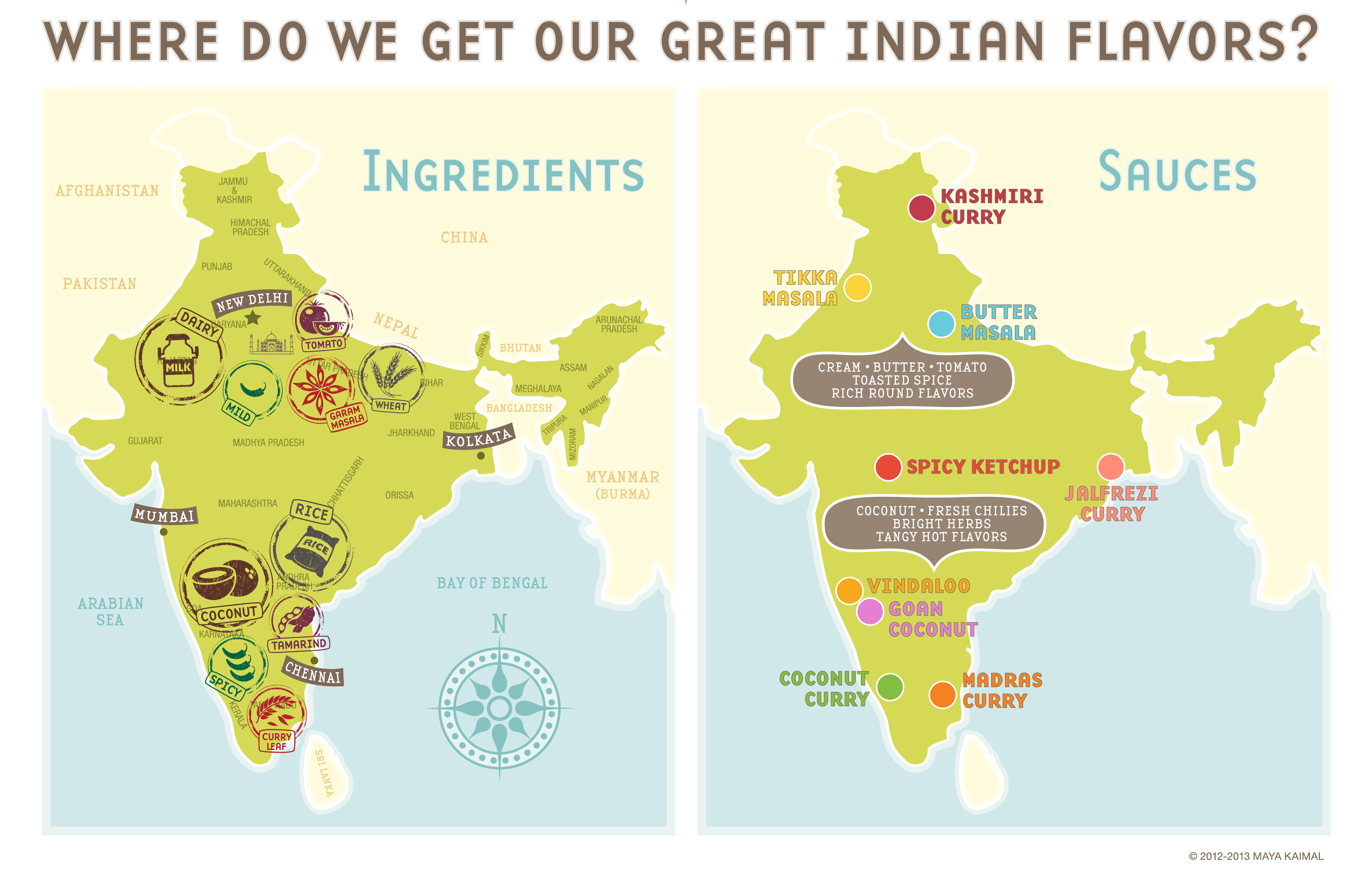
Indian Cuisine: The culmination of many Cultures

Indian cuisine is a culmination of different cultures, each region has to offer a diversity of dishes, the variety of dishes available in the Indian cuisine are just too many in number to be matched by any other country and this is the reason behind the extravagant quality which the Indian cuisine holds.

If we go back around 6,000 years we will see the different influences which have created a plethora of dishes. Each region has its own way of cooking its regional dishes and the ingredients which are majorly available in that region become a base for the dishes. eg- In south India most of the dishes have rice as a base in it as a rice is one of the major crops which is grown in that region. Be it dosas, uttapams, appe, iddiyapam, idlis or even mendu vadas they all have rice in it as a base in some or the other form.

If you go towards Eastern India one can see the influence of the Chinese in eastern food of Indian cuisine, be it noodles, soups or even lip smacking momos and spring rolls, they definitely top our list of favourite food items and we have tried our hand on them in our own kitchens as well.

OUR INSPIRATION • Maya Kaimal Foods
(Maya Kaimal)

All four regions of India that is North, South, East and West have distinct dishes which represent the rich culture and also they represent the variety of crops which are grown in this colourful continent. Based on the settlers who had come and settled in India 6,000 years ago-they have left their mark behind on the Indian cuisine.

The roti, bhakri or chapatti we eat has originated from the afghan naan according to many experts when Afghani tribes had settled in the western provinces, and even the Moghuls contributed to the inclusion of naans which has changed overtime into rotis and bhakris. The Mughal empire which had gripped itself over India has given rise to rich gravies made out of nuts and other dry fruits in Northern India and many other provinces. The Persians who had come and settle in India left a huge mark behind not only on the Indian cuisine but also left behind a versatile Parsi Cuisine. Eg- the famous Irani chai with maska bun is an unforgettable combination. In western India specifically in Gujarat one could see the dominance of Parsi and Jain food, both cuisines being extreme opposites ad Parsis are pure non-vegetarians and other hand one could see Jains who were pure vegetarians who consumed certain selective vegetables and their dishes are truly commendable as creating extravagant recipes by excluding certain major ingredients is not easy. Indian food also has the influence of Mughal culture in the western belt of India. The Parsi community who came all the way from Iran has passed on the use of saffron and dry fruits in sweet and savoury delicacies in Mahrashtra and Gujarat.

Trading via sea ports also gave rise to the addition of many ingredients which are now an important part of Indian cuisine. Goan food is influenced greatly by the Portuguese settlers , there are many meat dishes which have been brought in by the Portuguese eg- “carne de vinha de alhos”, which is a meat dish which is made out of marinated pork that includes garlic and wine. Many of the Goan dishes which have vine as a major ingredient in them be it cakes or curries have also been influenced by Portuguese cuisine. Goa also houses some of the best sweet delicacies especially tea cakes, milk cakes and pastries which have been brought in by the French and the Portuguese.

This whole concept of hight tea or afternoon tea has come from the british, as britishers follow the tradition of having cakes and many other sweet and savoury snacks in the afternoon or evening along with a cup of tea.

We also do have influence on Indian food from Middle East, certain recipes of samosas, biryani, chick pea flour and chick pea curries have been passed on from Persian and Mughal tribes.

In today’s times we can cook many international cuisines and they are served in restaurants as well, but these are indianised versions of these international cuisines and hence one can even call them fusion or Indo western cuisines, be it Indian-American food like burgers, pizzas or fries or even Indo-chinese food which is given an Indian touch to it or even Indo-mexican food ,All of these fusion cuisines which have been in trend lately are creating a big wave in the Indian Food Industry and will soon become a part of it.

Government of India banned 59 Chinese apps

The Ministry of Information Technology, on June 29, banned 59 mobile apps, saying they are engaged in activities which are “prejudicial to the sovereignty and integrity of India, defence of India, security of state and public order.

The list of apps included TikTok, Weibo and others.

the IT ministry said that it has received many complaints from various sources including several reports about misuse of some mobile apps available on Android and iOS platforms for stealing and surreptitiously transmitting users’ data in an unauthorized manner to servers which have locations outside India.

“The compilation of these data, its mining and profiling by elements hostile to national security and defence of India, which ultimately impinges upon the sovereignty and integrity of India, is a matter of very deep and immediate concern which requires emergency measures,” the ministry further said in a statement.

The Confederation of All India Traders ( CAIT) welcomed the move saying, “This huge unprecedented step will go a long way in strengthening the ‘Boycott China’ campaign of CAIT.”

Among the apps, Tik Tok, Club Factory, Xiaomi, Cam Scanner, UC Browser are expected to be the worst-hit because of high user volume.

Sreedhar Prasad, independent e-commerce analyst, told Moneycontrol, “Most of these apps have huge adoption and usage across India. This is a massive move considering the globalised nature of today’s digital world.”

“However, we need to note that China was ahead of every country in setting their internal ground rules by banning many international social media apps, thereby ring fencing their digital ecosystem. India could be having the largest user base outside China for many of these apps and, if some of the other countries follow suit, this could lead to a very strong move of rejection across the world. This is a great opportunity for local alternatives across the world to grab these customers as the usage habit has been created by these Chinese apps.

Here is a list of apps that have been banned by the Centre:

1. TikTok
2. Shareit
3. Kwai
4. UC Browser
5. Baidu map
6. Shein
7.Clash of Kings
8. DU battery saver
9. Helo
10. Likee
11. YouCam makeup
12. Mi Community
13. CM Browser
14. Virus Cleaner
15. APUS Browser
16. ROMWE
17. Club Factory
18. Newsdog
19. Beauty Plus
20. WeChat
21. UC News
22. QQ Mail
23. Weibo
24. Xender
25. QQ Music
26. QQ Newsfeed
27. Bigo Live
28. SelfieCity
29. Mail Master
30. Parallel Space
31. Mi Video Call – Xiaomi
32. WeSync
33. ES File Explorer
34. Viva Video – QU Video Inc
35. Meitu
36. Vigo Video
37. New Video Status
38. DU Recorder
39. Vault- Hide
40. Cache Cleaner DU App studio
41. DU Cleaner
42. DU Browser
43. Hago Play With New Friends
44. Cam Scanner
45. Clean Master – Cheetah Mobile
46. Wonder Camera
47. Photo Wonder
48. QQ Player
49. We Meet
50. Sweet Selfie
51. Baidu Translate
52. Vmate
53. QQ International
54. QQ Security Center
55. QQ Launcher
56. U Video
57. V fly Status Video
58. Mobile Legends
59. DU Privacy

DGCI gives approval for human clinical trials of COVAXIN, first potential COVID-19 Vaccine developed in the country

The Central Drug Standard Control Organisation, the National regulatory body for Indian Pharmaceuticals and medical devices, has granted approval to Bharat Biotech India to conduct human clinical trials for Corona Vaccine called ‘Covaxin’. The company in a statement said it is the first indigenous COVID-19 vaccine to receive the approval. The Covaxin has been developed in collaboration with the Indian Council of Medical Research (ICMR) and National Institute of Virology (NIV), Pune. Bharat Biotech Chairman and Managing Director of Bharat Biotech Dr Krishna Ella informed that these trials are scheduled to start across the country during the month of July. According to the company, the Drug Controller General of India approved Bharat Biotech’s application to conduct phase I and II clinical trials for Covaxin.

Dr Krishna further said the permission was granted after the company submitted results from pre-clinical studies of the vaccine that demonstrated its safety and immune response. The SARS-CoV-2 strain was isolated in NIV, Pune and transferred to Bharat Biotech. The indigenous, inactivated vaccine developed and manufactured at the Bio-safety level 3 lab of the Bharat Biotech located in Genome Valley in Hyderabad.

INDIA & CHINA: things you need to know!

HISTORY

In the 1st century CE, Buddhism was pass on to China from India. There were some contact before the transmission of Buddhism. There are some instance of China in Indian Epic Mahabharata, it is about Qin state which later became Qin dynasty. The Prime Minister of Maurya Empire, Chanakya, he referred Chinese Silk as “Cinamsuka”; the Chinese dress silk, and “Cinapatta”; the Chinese silk bundle.

The records of the Grand Historian, Zhang Quin and Sima Qina contain information about “Shendu”, which is somewhere linked with Indus Valley, known as “Sindhu” in Sanskrit.

INDO-CHINA WAR

Also known as Sino-Indian War, the war between India and China, held in 20 October 1962. The main reason behind this war was the Himalayan Border dispute. China’s People Liberation Army seized India in Ladakh, that time India was not so sure about the war and sent only two army troops in the place of conflict, but, China had three troops there. China cut the telephone lines of India, so that, India could not contact with the headquarters. The Chinese troops attacked on the first day and caused loss in the Indian troops which made Indian troops to escape. 22 October, the day full of confusion as Chinese burnt the bushes and 400 Troops attacked India. For answering the Chinese troops, Indian troops opened fire with mortars and machine guns which killed over 200 Chinese.

POPULATION AND MILITARY STRENGTH

POPULATION: India- 1,380,004,385 China- 1,439,085,892

MILITARY STRENGTH: India- Active personnel 1,444,500; Reserve personnel 2,100,000 China- Active personnel 163,000; Reserve personnel 1,657,000

15 JUNE 2020!

On the night of 15th June 2020, at Galwan Valley at height of 4,300 feet, clash started between the Indian troops and People’s Liberation Army. This war injured 76 Indian soldiers and killed 20. There were no firearms in the fight as in 1996, one agreement was made between India and China that, guns and explosives were banned in that area.

INDIA BANNED 59 CHINESE APPS!

On Monday, 29 June 2020 India banned 59 apps which were somewhere correlated with China. The reason behind this big step is the harmful and detrimental effects of those apps, those were not secure. The most popular apps like, TikTok, UC Browser, Likee, Vigo Video, Club Factory, Shein were banned.

TikTok, Likee, Vigo Video were the video creating apps.

Club Factory and Shein were very popular e-commerce platforms.

WeChat is the messaging app, or in other words, social media app.

CamScanner is a app which scans pictures.

SHAREit and Xender are the sharing apps, which could share images, videos, songs, and other media.

PM Modi announces extension of ‘PM Garib Kalyan Anna Yojna’ till November end

Prime Minister Narendra Modi today announced free food grains to 80 crore people across the country for five more months.  

The Prime Minister  Gareeb Kalyan Anna Yojana has been extended  till the end of November this year.

Under the scheme announced in the wake of COVID- 19 pandemic, 5 kg free wheat or rice along with 1 kg whole chana will be provided to each member of a family per month.  

Its  extension will cost over Rs. 90 thousand crore.

Addressing the nation Tuesday evening, Mr. Modi noted that in the last three months,  Rs. 31 thousand  crore have been transferred to the Jan Dhan accounts of almost 20 crore poor families, Rs. 18 thousand  crore have been transferred to the bank accounts of more than 9 crore farmers and Rs. 50 thousand crore are being spent on PM Garib Kalyan Rojgar Abhiyaan, which has been started to provide employment opportunities.

He stressed that the country is moving towards the institution of ‘one nation, one ration card’, which will be of immense benefit to the poor who travel to other states in search of work.

Mr. Modi said, if one  looks at the death rate due to corona, India is still in a very stable situation  as compared to other countries.  

The Prime Minister added that timely measures like lockdown have saved many lives. Mr. Modi, however, said  ever since unlock one started, people have shown negligence.

He urged  them to take all necessary precautions for fighting novel Coronavirus.  

He also said, regulations need to be followed with the same seriousness as during Lockdown, especially in the Containment Zones.

The Prime Minister added that people  must maintain discipline and those   not following the rules, need to be stopped and made aware.  He warned that nobody is above the rule.

Mr. Modi  also hailed farmers and honest tax payers for their contribution in making the welfare scheme successful.  

The Prime Minister said that in the coming times, the government will continue to take further steps to empower the poor and the needy. Economic activities will also be enhanced, with due precautions in place.

He reiterated the pledge to work towards Atmanirbhar Bharat and to be vocal for local, while also asking people to be careful, use mask and face cover and continue following the mantra of maintaining do gaz doori.

Mr. Modi said, the country is entering in Unlock 2  and the season of cough, fever and cold is also about to start and in such a situation the countrymen should  take care of themselves.

Bollywood: The mammoth industry earning millions

Bollywood the term derived from the mixture of Bombay and Hollywood, it’s a five hundred million dollar industry and one of the most popular and powerful one after Hollywood, the film industry is not only raging with popularity in India but also in other parts of the world as well and the number is still growing. This mammoth industry produces around one thousand films every year.

Most of the South East Asian countries love Bollywood films and Bollywood movies gross huge amounts of money and widen their fan base in these countries especially China, Singapore and Thailand, Malaysia and Indonesia etc. In Dubai they have even built a Bollywood themed park and it attracts the localities as well as the tourists.

In the year 2017 Bollywood movies earned a huge amount in the international arena and also they achieved a larger appeal example – “Tiger Zinda Hai” earned $20,730,000 in this year plus “Baahubali  2” earned $14,360,000.

China is one of the biggest markets when it comes to the domination and popularity of Bollywood Movies,In the year 2018 around 606 crore were spent behind Bollywood movie promotions and marketing.

Some of the factors which lead to its tremendous amount of success in the International Market are-

  • Super stars-

Most of the movies starring famous Bollywood celebrities like Amitabh Bachan, Shahrukh khan, Salman Khan, Aamir Khan, Deepika Padukone, Kareena Kapoor Khan etc. tend to prosper greatly overseas because of a huge fan base. Eg- The film Secret Superstar minted 120 million dollars in China itself.

  • International promotions-

Many Big Budget movies go their way ahead to spend a huge amount on promoting their movies in other countries which leads to Indian Films earning more and also leads to an increase in more movie watchers.

  • Versatile style-

Bollywood movies are made on unique stories with its own personal style which attract many watcher overseas, be it the storyline, the twists and turns, the plot, the surprising endings or even the numerous songs and dances. Plus Bollywood is one of those industries which houses some of the most versatile multitalented actors and actresses which gives it a great streak and also gives it an edge over other film industries.

  • Attractive songs, costumes and Music-

No other Film industry can beat Bollywood when it comes to the lively songs and dances in Bollywood movies, even the versatile costumes and style attract movie watchers which adds to it grossing a huge amount of money overseas. Some of the songs in Bollywood movies take us back to that nostalgic movement when we first heard the song, the culmination of some of the best music artists, singers, lyricists and background players has produced some of the most amazing achievements.

  • Plethora of movies-

Bollywood offers one an array of options to choose from be it   thrillers, frantic murder mysteries, emotional love stories or even moving autobiographies, this is one of the reasons why it has covered a huge amount of audience and also it has touched the hearts of thousands. And plus the movies are based on a variety of topics some create awareness and some untold stories can shake us with bitter realities it shows. This diversity amongst the Bollywood movies attracts movie watchers.

Bollywood movies are truly a feast to the eyes, It’s one of the biggest doses of entertainment in the world and will continue to reign at the top.

cry.

I have always felt slightly bad about not really having cried for decades. People insist that crying is good for you and that not crying is bad for you. The danger is, you might be going to explode some day from repressed grief (watch this space).

And of course in the counselling side of my life I am supposed to consider it a Very Bad Thing if people don’t cry. So I was pleased to see some of the orthodox views on crying disputed by Dutch psychologist Ad Vingerhoets in an interview with The Psychologist. He specialises in the psychology of crying.

Do people feel better after a good cry? Not necessarily, says Vingerhoets. Some feel bad. It helps if other people respond to tears with support but if crying is ignored or disapproved of the crier can end up feeling worse.

Women cry more often than men. Essentially, he says, women cry in situations that make men swear. These include computer crashes, car breakdowns and feeling frustrated or angry. So if you’re female and Vingerhoets’ statement makes you angry, prove him wrong by swearing.

Some Indian tribes, he says, use crying instead of shaking hands as a means of greeting – since I’ve never heard of them before I assume these tribes are obscure and it’s not hard to see why.

You are most likely to cry in the presence of your mother or your romantic partner or another “attachment figure” to use the psychological jargon. Thus, children who are hurt physically or emotionally will sometimes hold off the tears until they get to a parent and then they let them out.

The idea of tears as a sign of weakness seems to have been introduced by the Victorians.

What about tears of happiness? Vingerhoets doesn’t believe people cry because they’re happy. Usually we cry because the happy event also calls up negative emotions, he suggests. An example is crying when you meet a loved one after a long separation. That’s a happy event but the tears come with the accompanying realisation of the pain of the separation.

What mostly makes people cry is “conflict, rejection, criticism and minor failure”. Frustration and helplessness also bring on crying.

If I can’t produce real tears I would certainly have no hope of turning on crocodile tears. People who are really good at this, according to Vingerhoets, include narcissists, psychopaths and actors.

Tears usually lead other people to feel empathy and to want to lend support, which is why narcissists and psychopaths use them to manipulate. It only works, naturally, if people think they’re genuine – and since psychopaths are really good at turning on the charm they can make very good use of tears.

Very empathic people are more likely to cry themselves in response to the tears of others.

you are not too fucking sensitive. period.

You, the people who dare to say to your families that you want something different; that you want love; that you want connection?

You are not too (fucking) sensitive.

You, the people who cry when someone is unkind to you? When someone judges you? When someone finds ways to put you down? When that someone is a family member or friend or partner?

You are not too (fucking) sensitive.

You, the people who are committed enough to changing old patterns that once people switch from outright condemnation to passive-aggressive snarck, you actually call them out?

You are not too (fucking) sensitive.

You, the people who say something when they hear someone say “That’s so gay” or “How retarded” or calling women “bitches” as is if it’s a term of affection or making generalizations about a person of color?

You are not too (fucking) sensitive.

You, the people who hug trees, recycle toilet paper rolls, and cry at the sight of birds bathed in oil after BP blows a rig?

You are not too (fucking) sensitive.

Let me tell you who you actually are:
When you ask your families to engage with you in a way that is loving and connected, you are asking everyone to rise and live bigger. You are engaged with connection.

(Note: the trick is to take responsibility for yourself, and not get attached to controlling/changing their behavior).

When you cry because someone who says they love you is treating you unkindly, you’re feeling the pain of disconnection from other human beings, and this means that you are not a desensitized sociopath. It means you’re a functioning human being who has not cut themselves off from what they feel.

(Note: the trick is to take responsibility for yourself, and not get attached to controlling/changing their behavior).

When you are committed enough to respectful relationships that you draw a clear boundary and you enforce it, including communicating those times where it seems like something passive-aggressive is happening, you are practicing this thing called “self-respect.”

(Note: the trick is to take responsibility for yourself, and not get attached to controlling/changing their behavior).

When you decide to speak up against discrimination, bigotry, and slurs, you’re taking a stand for your values as well as asking others to think about how their words, their “harmless jokes,” might contribute to a collective experience of oppression.

(Note: the trick is to take responsibility for yourself, and not get attached to controlling/changing their behavior).

When your heart aches at the destruction of the planet, you’re exercising compassion, connection, and a deep desire for life to thrive.

(Note: the trick is to take responsibility for yourself, and not get attached to controlling/changing the outcome).

So do you get it?
You’re not too (fucking) sensitive. You’re engaged. Connected. Human. Awake. Alive.

The people accusing you of being too (fucking) sensitive? They’re disconnected.

A moment of compassion for all of us, please.

We’ve all been there. We all have our moments of thinking that someone else’s needs or preferences are just too precious, and judging the hell out of them.

Let’s not polarize into an us/them.

But truly–celebrate your sensitivity. Those who are sensitive are those who are also paying attention. It speaks to the potential for a radiant love within. A deep love within, combined with a willingness to take positive action, is the only thing that has ever revolutionized the world.

Thank you for being so (fucking) sensitive.