PM talks to Romanian, Slovak counterparts, thanks them for evacuation aid

Prime Minister Narendra Modi particularly thanked Romania for permitting Indians to enter its territory without visas.

Prime Minister Narendra Modi thanked Romania PM Nicolae-Ionel Ciucă, and Slovak PM Eduard Heger for permitting evacuation flights to land in their countries to bring back stranded Indians from war-hit Ukraine. (PTI)

Prime Minister Narendra Modi on Monday spoke to his Romanian and Slovak counterparts Nicolae-Ionel Ciucă and Eduard Heger, respectively, as India continued to use the two nations as land routes to bring back its stranded nationals from war-hit Ukraine.null

Modi thanked both Ciuca and Heger for their assistance in the repatriation process since Russia’s invasion of the east European country. According to a statement, he particularly thanked the Romanian PM for allowing Indians to enter the country’s territory without visas.

He thanked them for allowing special evacuation flights in their countries, which are being used to bring home stranded Indian citizens from Ukraine.

Further, Modi apprised Ciuca and Heger of the deployment of aviation minister Jyotiraditya Scindia and Union law minister Kiren Rijiju in Romania and Slovakia, respectively, as special envoys to oversee the evacuation process over the next few days.

During his calls with the two leaders, Modi also expressed his anguish at the ongoing violence and humanitarian crisis in Ukraine, and reiterated the need for a return to dialogue. “He also stressed upon the importance of respecting sovereignty and territorial integrity of nations,” a PMO statement said.

Written by Sharangee Dutta | Edited by Sohini Goswami, New Delhi

Life of Hostel students

There are two kinds of students attending school or a college, they are either hostellers or day scholars. Day scholar students would have been wondering what would hostel life be like? There are a few things we all would have heard from hostellers. Nowadays both of the parents are working, so they prefer to join their children in a hostel rather than picking them up or arranging them a transport and worrying whether the child has reached safely or not, Also students from long distance obviously need hostel for them to stay.

Hostel life

There are certain things we are curious about hostellers. We often ask hostellers whether they miss their family and their previous environment. Of course hostellers miss their family and their home when they are new to hostel life. It’s very natural for a person to feel uncomfortable in a new place with new people surrounded by them. We often come across the word home sick, which is nothing but a distress caused by being away from home. Students miss their home, their family, they want to go back but all these sickness is temporary, once they find new friends and start feeling easy about hostel, it would be the best period of their lives. Hostel life is real fun, imagine staying with your friends all day long, chatting, watching shows and having your own little snacks party and saying creepy stories and enjoying the frightened face of your friends, isn’t it funny? Hostel is not only meant for enjoying but also it’s a great advantage to discuss and learn new things among friends. Each one of the students must be good at something, so it will be easier to learn a lot of new things within themselves.
Leaving Hostel

Staying all those years in hostel, it becomes like another home for them, leaving all those crazy memories and friends hurts them a lot, it’s the same feeling when they left their home for the first time or we can even relate it with our graduation day ,the farewell day , the day after which we won’t be able to experience what we experienced till now. But at last everyone came to the hostel with a purpose, once the purpose is filled we are supposed to leave the zone.

Secularism

Introduction

A country is divided not based on its geographical features, but its unique citizens. Even though the underlying principle of India’s success is “Unity in Diversity”, often these differences do not play well with ethnic communities. The intrusion of religion in politics can only yield unwelcoming outcomes. This is where secularism comes in, an ideology that clearly states” Civic affairs should not have any basis in religion”. In 1851, the British writer George Holyoake coined this term, in a quest to replace the aggravating word ‘Atheism’. The main objective of this ideology is to make appropriate decisions without harming the integrity of any religion. In lamen language, he did not want secularism to be misunderstood with discrimination. Not involving certain topics in a decision-making conference does not necessarily mean we deliberately excluded them or seek to prejudice them.

Types of secularism

Based on the intensity of secularism, it can be divided into two types-hard and soft. Hard secularism is a radical option, which aims to completely disavow any stance the topic takes in political decorum. It renders any form of religious knowledge illegitimate. On the other hand, soft secularism finds its roots in neutrality, tolerance, and liberalism. It argues that attaining the “absolute truth” is not possible without proper deliberation and tolerance of religious issues in civic issues.
Secularism is also divided into three different types based on its application. These are political secularism, philosophical secularism, and socio-cultural secularism. All three overlap and are related to each other, yet they exhibit divergent traits and embody discrete meanings.

Secularism in India

India is a multi-cultural and multi-ethnic society. From harboring Muslims, Christians, and Hindus to being the home of more than a hundred languages, our diversity is one that is marveled all over the world. Keeping in mind the conflicts of interest that might arrive with this heterogeneity, our leaders came up with an effective solution to keep the integrity of politics of this country intact. With the 42nd Amendment of the Constitution enacted in 1976, we declared ourselves a secular nation.
Secularism has always been an inspiration for modern India. We identify as a just nation that gives equal rights and opportunities to all its citizens despite their race, caste, or creed. But, the controversy surrounding Indian secularism has also had its share of attention. With many critics claiming that Indian secularism is “defrauded”, a good look at the positive changes bought about by this ideology might change the way they think about our nation.

One of the best examples of the success of the secularism amendment in India is Muslim Madrassas ( religious education schools) getting government funds. Or the fact that one of our own presidents, Dr. APJ Abdul Kalam, was a Muslim. Prime Minister Manmohan Singh was a Sikh, whilst the party leader Sonia Gandhi was a Christian(Born in Italy). Time after time we have witnessed different communities get their fair share of opportunities, and produce fruitful outcomes, all because Indian secularism was, has, and will always be a success.

The term “secular” means being “separate” from religion or having no religious basis. Religion is open to one and all and is given as a personal choice to an individual without any different treatment to the latter.This is the ideology that has done wonders for the world.

India’s Leading Business Women: NAMITA THAPAR

Namita Thapar is the Executive director of Emcure Pharmaceuticals. Emcure pharmaceutical is a multinational company in Pune, Maharashtra. The company produce tablet, capsule, and various parental pharmaceutical product. The company also is to promotes youth entrepreneurship by teaching entrepreneurial skills to children in age 11-18 years.


The Namita Thapar born in 21 march 1977. she is from Gujarathi Family. She has done her schooling in Pune. After that, she achieve Charted Accountant degree from ICAI. She completed her MBA from Fuqua School of Business at Duke University. She likes to spend time reading and traveling. She is also a public speaker conducting public speaking at various platforms such as Harvard business school, IIM-Ahmedabad, etc.


Namita Thapar has come into the eye as an investor in shark tank India. The Judges are called Sharks who listen to various business ideas and invest in them. It is the platform for youth to become successful entrepreneurs. In 2020 Thapar started a Youtube channel named Unconditional yourself with Namita Thapar. In this talk, she uploaded videos about Women’s health with various doctors, patients, and healthcare experts.


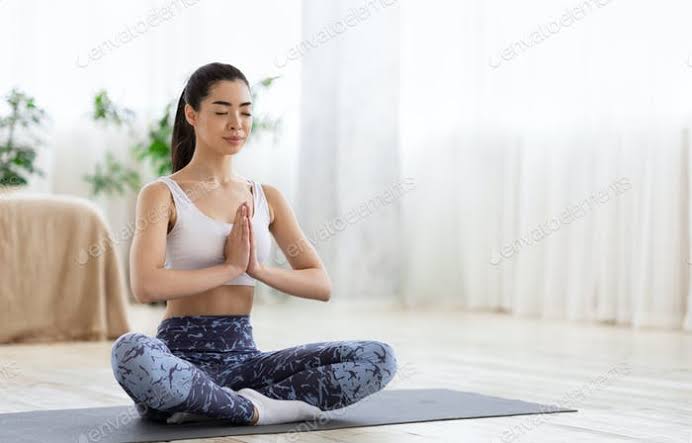
Namita Thapar got the economic times ahead list 2017 Award, India’s hottest young business leader by The economic times in 2017. she always focuses on women’s empowerment. During her interview she shared three M’s for a happy and healthy life she said, “I relax in three ways- Massage, Movies, and Meditation. I ensure I schedule time for this on a routine basis so I can’t reach that breaking point”

REGULATION OF APP-BASED TAXI SERVICE PROVIDERS

 In pursuance of provisions under Section 36 of the Motor Vehicles (Amendment) Act, 2019 and section 93 of Motor Vehicles Act, 1988, Ministry of Road Transport & Highways has issued the Motor Vehicle Aggregator Guidelines, 2020 on 27th November, 2020 and amendments therein on 8th December,2020. The Guidelines are available on the website of the Ministry of Road Transport & Highways (www.morth.nic.in ). It has been shared with States to take appropriate action for regulating taxi aggregators.

Time Travel

We are always curious about time travel which is hard to believe but some people say it is possible to time travel with advanced technology while others say it’s a myth. First of all what is time travel? It is a concept of movement between certain points in time. We always come across cartoons or movies where people go back and forth in time using a hypothetical device known as time machine.

When it all started ?

You may be wondering when did all these talks started. The first time this concept was mentioned was in a novel named “The Time Machine”, written by H.G Wells and published by Heinemann in 1895. We would have also come across ancient myths where some characters had the power to skip forward in time. There is also a Hindu mythology where the king “Raivata Kakudmi”, travels to heaven in order to meet the creator Brahma. There are a lot of cartoons which uses the concept of time travel to entertain the kids.

Science and time travel

What does science mention about time travel? In our physics book we all would have learnt about special and general relativity and also types of motion in space. Theoretically speaking, time travel is possible. According to general relativity, time travel is possible by moving faster than the speed of light , which includes cosmic strings, warm holes and Alcubierre drives. Some of us would have seen the movie interstellar in which the main character travels to the future using black hole concept and meets his daughter who had become way too older than him. Stephen Hawking suggests that the fundamental laws of nature prevent time travel. Still physicist cannot come to a conclusion on time travel but we all find it as an interesting topic to talk about.

Time Machine

Most of us are curious on how does a time machine would look like if it really existed. No one knows How a time machine looks, because real time machine doesn’t exist till date, but from seeing in science fictions and cartoons, we can say that it looks like vintage cars without a roof with some clocks installed in it. whatever maybe a time machine, if it existed won’t we all be standing in line to travel in it?

MGNREGA-The most important scheme of our government?

Inrtoduction

On 23rd August 2005, the Government of India launched a scheme that would prove to be one of the most sophisticated moves the then leadership would make. The National Rural Employment Guarantee Act 2005 (later renamed as the Mahatma Gandhi National Rural Employee Guarantee Act) was passed to guarantee the citizens their “Right to Work”.What would later prove to be a major success in the field of rural employment, the bill was one a lot of people were apprehensive of. India is a country where even the smartest of engineers are unemployed, and the conditions in rural areas are worse. This is a direct consequence of poor job security, availability, and restrictive labor laws. But the MGNREGA aims to eradicate this lineage of poverty.

Why MGNREGA?

The act was first proposed in 1991 by our then Prime Minister P.V. Narasimha Rao. After thorough scrutiny of the program, it was finally launched in 2005, covering 625 districts of India. The statute was praised as”the largest and most ambitious social security and public works program in the world”.In its World Development Report of 2014, the World Bank applauded it as a “stellar example of rural development”.But why was this scheme needed? According to tons of surveys and reports by the various governments of India, between 1980 and 2005, the number of unemployed persons in India steadily increased from around 7.8 million in 1983 to 12.3 million in 2004–5. Not only this, but several media organizations claim that “there is unanimity amongst scholars that the organized manufacturing sector [in India] registered “jobless growth” during 1980-81 to 1990-91”. Such deplorable conditions of our workers were sought to be amended by this act.

Objectives of the program

The key objective of the program is increasing the working days of a daily-wage worker to at least 100 per year, to one or more members of a family, willing to do unskilled work. In its early years, NREGA was claimed to be “making a difference to the lives of the rural poor, slowly but surely.”
Improving the negotiating power of labor who were incessantly exploited was one of the major objectives of the program. The key benefit of the scheme hangs on the reduction of wage volatility.
Another important aim of the program is parity between men and women working similar jobs. This highlights the importance of women’s empowerment through paid jobs and entitled compensations.
Another problem faced is that of water shortage in rural India. With water bodies shrinking, the sources of irrigation for farmers seem to be depleting. In a report covering the timeline of the last decade, it was found that almost half of the funds were directed towards solving this critical problem. Our country relies on agriculture for a large part of its economy, and any hindrance to its fruitful growth could simply not be tolerated.

Achievements of the program so far

Some of the many achievements of MGNREGA include providing a standard livelihood to the women of India, employing the people critically affected by Demonetization and GST, and benefitting the agricultural sector immensely.According to the National Council of Applied Economic Research (NCAER), this scheme has played a vital role in reducing poverty among the poor as well as the socially weaker sections (Dalits, tribals, and marginal farmers).

This program has indeed proved to be a boon for the Indian youth and is the epitome of the fine implementation ability of our democracy.

Abhilasha Toppo

Articles written by Abhilasha Toppo

 1. https://track2training.org/2022/01/17/online-education-and-work-from-home-have-we-arrived-in-virtual-world/

2. http://track2training.org/2022/01/17/national-educational-policy-2020/

3. http://track2training.org/2022/01/17/student-suicides-what-are-the-deep-rooted-problems/

4. http://track2training.org/2022/01/18/role-of-media-in-protecting-democratic-values-in-india-success-and-failure/

5. http://track2training.org/2022/01/19/aadhar-and-privacy/

6. http://track2training.org/2022/01/20/raising-legal-age-of-marriage-in-india/

7. http://track2training.org/2022/01/22/should-courts-declare-prostitution-legal-in-india/

8. http://track2training.org/2022/01/23/juvenile-justice-system-in-india/

9. http://track2training.org/2022/01/24/death-penalty-in-india/

10. http://track2training.org/2022/01/25/addiction-of-social-media/

11. http://track2training.org/2022/01/27/role-of-students-in-eradication-of-drugs/

12. http://track2training.org/2022/01/31/single-use-plastic-ban/

13. http://track2training.org/2022/01/31/ignorantia-juris-non-excusat/

14. http://track2training.org/2022/02/01/language-is-not-only-a-means-of-communication-but-also-a-tool-by-which-we-think/

15. http://track2training.org/2022/02/02/aatmnirbhar-bharat/

16. http://track2training.org/2022/02/07/kashi-vishwanath-corridor/

17. http://track2training.org/2022/02/08/feminism-and-women-empowerment/

18. http://track2training.org/2022/02/08/child-marriage-a-legal-view/

19. http://track2training.org/2022/02/09/impact-of-feminism-and-women-empowerment-on-indian-society/

20. http://track2training.org/2022/02/09/triple-talaq/

21. http://track2training.org/2022/02/13/impact-of-caste-dynamics-in-contemporary-india/

22. http://track2training.org/2022/02/13/electric-vehicles/

23. http://track2training.org/2022/02/14/pm-ayushman-bharat-health-infrastructure-mission/

24. http://track2training.org/2022/02/16/farm-bill-2020/

25. http://track2training.org/2022/02/16/uniform-civil-code/

26. http://track2training.org/2022/02/17/azadi-ka-amrit-mahotsav/

27. http://track2training.org/2022/02/22/__trashed/

28. http://track2training.org/2022/02/23/__trashed-2/

29. http://track2training.org/2022/02/26/the-indian-constitution-indian-republics-sacred-book/

30. http://track2training.org/2022/02/27/section-377/


THE MAN WITH ZERO HATERS

Inspirating story of RATAN TATA

The Ratan Tata is an Indian industrialist and philanthropist. He is chairman of the Tata group. He is the biggest Indian business magnate and chairmen of 100$ billion. The mission of the company is “To improve the lives of communities we serve globally.” Ratan Tata is a very best leader because he takes care of his employees. He started medical benefits to its employees. He is regularly supporting the education system, the health system that is medicine, and rural development. He is a role model for all youth.
The Ratan Tata was born on 28 December 1937(age 84). He is the son of Naval Tata and was adopted by Ratanji Tata (son of Jamsetji Tata). He is situated in Mumbai, Maharashtra. He is an alumnus of Cornell University College Of Architecture. And Harvard business school through the Advanced Management Program in 1975. he joined the company in 1961. he gives 8 hours of work to employees.


Tata invested personal savings in Snapdeal-one of India’s leading e-commerce websites in January 2016. he also invested in Teabox, an online tea seller. he made small investments in both early and late-stage companies in India. Tata Motors rolled out the first batch of Tigor Electric Vehicles from its Sanand plant in Gujarat. For that Tata said, “Tigor indicates a willingness to fast forward India’s electronic dream. the government has set an ambitious target to have only electric cars 2030.”
I came upon a lighthouse: A short memoir of life with Ratan Tata written by Shantanu Naidu. Tata industries work in various fields such as steelwork, ironwork, cotton mills, and hydroelectric power plant. Ratan Tata got the Padma Bhushan award in 2000 and Padma Vibhushan in 2008. He is a real hero and a legend person.

Section 377

In the past, homosexuality was regarded as an offence of criminal nature. However, few years back in 2018, a remarkable judgement was laid, decriminalizing Section 377 of the Indian Penal Code making private homosexual relations legal. This judgement was assumed to be bring benefitable changes in the life of the homosexuals and was believed to contribute in their fight for their right to be a part of the society. Nonetheless, the increasing cases of suicide of homosexuals recently has turned upside down the above believe and the fact of decriminalizing the Section 377 has not brought fruitful effects that was expected as such.

In 1864 initially, Section 377 was introduced by the ruler of British colonial. Section 377 of the IPC states that any homogenous intercourse or sex activities between individuals of same sex are prohibited and illegal under the law. Our Indian government followed this act for a very long time but it was opposed by a great number of people. Many NGOs and foundations also stood in support of the homosexuals and many rallies and campaigns were started to create awareness about gay sex and normalize it in the society.

Prior to the revilement of the Act, the people were afraid to express their real feelings. They considered the fact that they are gay should remain hidden because they thought that if the people come to know about this fact, the society would avoid them making them feel unmotivated, uncomfortable and unaccepted. Such was the reality back then. However, when the ban was raised, many homosexuals came forward and expressed their true feelings. The upliftment made gay sex legal and such people started living a happy confident life and it also encouraged them to make confident choices.

Taking into account the present scenario, many people still consider homosexual intercourse and sex as a taboo. There is a false belief that performing such actions is excessively repulsive and vicious for the society or human race. Although, it has been proven scientifically that its all about changes in the hormones and it’s utterly normal to have affection and love between individuals belonging to same sex. There should be no sense of uneasiness among the people, rather they should support the homosexuals as they are also humans as them and they also have the same emotions and feelings. Love and support are the mere needs of homosexuals to feel accepted by others in the society.

The ban upliftment was the result of the help and support of a number of foundations and NGOs. One such foundation was Naz foundation that focused on putting this act at public notice and tried to make it a significant topic to be noticeable by the court. Many NGOs and foundations came together and joined hands in implementing campaigns to make people familiar about the concept of same sex relationship.

The ban was uplifted by a five-judge bench of constitution headed by chief justice Dipak Mishra. Prior to the revilement of the act, if an individual was caught in this act then he/she was liable to be in atleast a 10 year imprisonment along with fine. It was the outcome of the support of many people and determination of the NGOs and foundations that the ban was raised by a long 185 years period. This encouraged the people to come out of the shadows and live their life confidently and happily. Today, not only in India but in many other countries, the government is open for gay relationships and one can marry an individual of same sex and can even adopt a baby. These things are now no more regarded as taboo because of their constitutional flexibility which is made only for the betterment of the people.

Swarnajayanti fellow’s work to pave way for developing strategies to manage and treat attention disorders

 Prof. Sridharan Devarajan, currently an Associate Professor in the Centre for Neuroscience & Associate faculty in Computer Science and Automation, Indian Institute of Science (IISc), Bangalore, is a recipient of the Swarnajayanti fellowship for the year 2021. He seeks to identify brain regions and neural mechanisms that mediate human attention, with potential applications in developing therapies for treating attention disorders.

The human brain has the remarkable ability to pay attention to important objects and locations in our world while ignoring irrelevant ones. Although attention has been studied behaviourally for many decades, we know very little about how attention works in the brain. Unexplored territories include— identifying brain regions that allow us to sustain attention on particular objects, brain regions that suppress irrelevant information, and brain processes that are disrupted in disorders of attention.

Along with his group, Prof. Sridharan is employing combinations of cutting-edge, non-invasive technologies. Including functional and diffusion Magnetic Resonance Imaging (fMRI/dMRI), Electro-Encephalography (EEG), and Trans-Magnetic and Electrical Stimulation (TMS/TES) to both record and perturb human brain activity in a targeted manner.

In his recent work, Prof. Sridharan has identified how particular brain regions – both in the neocortex (outermost layer of the brain) as well as in the deeper midbrain – contribute to attention. His group has shown that human participants with asymmetric wiring between the midbrain and the cortical hemispheres also show marked asymmetries in the way they pay attention. In another recent study, they have shown that perturbing activity in a particular region in the neocortex (the parietal cortex) can affect participants’ ability to pay attention. To analyse and simulate how attention works in the brain, they also developed detailed mathematical and computational (deep learning) models of the neocortex and midbrain. This research has been published in various prestigious journals, including PLoS Computational Biology.

“While these studies from our group and others have hinted at the role of several brain regions in attention, very few have experimentally established these links directly. As part of the Swarnajayanti Fellowship, our lab will seek to understand “causal” mechanisms of attention in the brain. We will follow a three-pronged approach,” told Prof. Sridharan.

First, they will track changes in the structure, activity, and connectivity between specific brain regions (“neuroplasticity”) when participants are learning to paying attention. Measuring such neuroplastic changes in the brain may have key implications for testing the effectiveness of interventions for managing attention disorders, both in children and adults.

Second, they will develop brain-machine interface technologies that can be used to train participants to voluntarily control activity in attention-related brain regions (“neurofeedback”). They will then try to find out whether achieving such neurofeedback control improves participants’ attention abilities. This type of interface may be developed into a non-invasive tool for training attention capacities in healthy individuals, as well as in patients with attention disorders.

Third, they will perturb and image brain activity in real-time, with millisecond precision (“neurostimulation”), to identify the role of particular brain regions in attention. This technology may be adapted in clinical settings for targeting brain regions implicated in disorders of attention, such as attention deficit disorder (ADD).

All of the experiments will be carried out at the state-of-the-art JN Tata National MRI facility at the Indian Institute of Science (IISc), which houses a 3T (Siemens Prisma) MRI scanner with integrated MR-EEG and MR-TMS setups.

“Broadly, the research findings from this proposal will advance our fundamental understanding of key principles by which attention works in the human brain and may pave the way for developing rational strategies to manage and treat attention disorders,” added Prof. Sridharan.

Description: C:\Users\Admin\Downloads\Slide 2.jpg


Publication link: https://journals.plos.org/ploscompbiol/article/authors?id=10.1371/journal.pcbi.1009322

Health and Nutrition

We all know that being healthy is real happiness, but most of us live a hectic lifestyle, rushing everything, pushing ourselves to earn money, studying hard and we forget about our health. Sometimes people forgot to eat or had forgotten they’ve eaten already. Some of us really do care about our diet, but we don’t know what is appropriate in order to stay fit . Speaking of food, it’s not only important to eat but also to eat a nutritious meal.

Weight loss and weight gain

Many of us are fascinated on seeing celebrities, how do they have such a fit body? how do they look young even at this age? We even try lot of diet and workout to look fit without knowing the basics of dieting and end up gaining all the weight we lost. People skip breakfast, thinking that might help them loose weight but it’s the other way round, skipping breakfast leads to a drop of blood sugar level, reduces your body metabolism which means your body doesn’t breakdown the food you intake, which obviously leads to weight gain. Some people try hard to gain weight, most of the time people gorge themselves leading to eating syndromes and other health issues.

Diet and Exercise

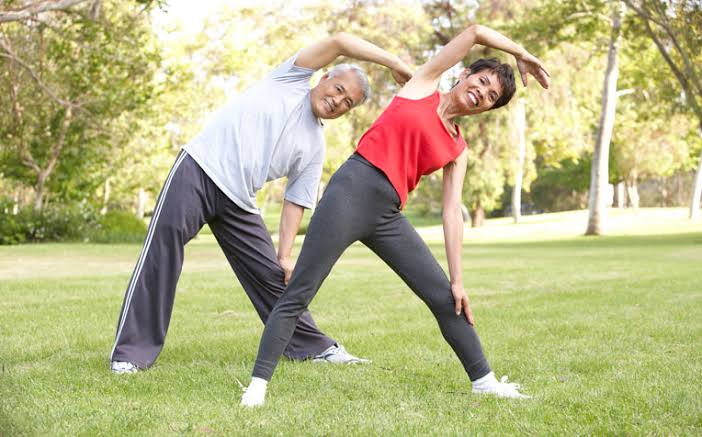
What can we eat to stay healthy? what kind of exercise makes me fit?, These kind of doubts would be arising in our minds while reading this article. There’s a simple way to understand this, our human body needs vitamins, minerals, protein, carbohydrate, fat, dietary fiber and water. It’s very important to note that all these nutrition should be taken in moderation to avoid disorders caused due to malnourishment or over nutrition. Exercise plays an important role in health, at least half an hour of exercise everyday is necessary to keep us fit. Remember to eat healthy and be active to lead a healthy and happy life , another interesting and effective way to stay healthy is facing all our problems with a smile and laugh out your stress, because laughing stimulates your heart which improves your cardiovascular health. Remember to begin your day with a smile.

The Indian Constitution: Indian Republic’s Sacred Book

The Indian Constitution is regarded as the most extensive evidence and cumbersome Constitution worldwide. It is a document that contains the structure of the Indian political system, rights, responsibilities, framework and confinements of the government, that are required to be followed by the government. The fundamental rights and duties of the citizens of India are also demonstrated. It is the absolute law i.e. lex loci in India, including the legislative, executive and the judiciary acquiring powers from it.  The Constitutional document holds objects, rights or obligations sacred in nature.

It consists of 395 articles in 22 parts and 8 Schedules. It also consists of a preamble which is the soul of the Constitution. The Preamble marks India as a secular country and it is governed and run by the Indians solely.

Individual freedom: The freedom of an individual was the result of constant political and sophisticated pursuit for over centuries. The demand for the freedom of press continued all round the British colonialism. The freedom of expression is considered as an essential element in the Constitution, while once basic denied in the Rowlatt Act.

Social Justice: The social justice was always linked to liberalism, as the reservation provisions for the Scheduled Tribes mentioned in the Constitution. It was believed that barely providing rights to equality and voting rights were not adequate. Thus, special provisions such as seat reservation in political and public offices were introduced in order to preserve the Sheduled Tribe’s interests.

Respect for diversity and minority rights: The Constitution makers found this a big challenge to encourage liberalism between communities and promoting equality in the then situation of conflict and order of pecking. Thus, in order to make sure that all the communities are at peace without any domination, it was obligatory to acknowledge rights on the basis of communities. As a result, a right such as right to religion was included in the Constitution.

Securalism: Although the term ‘secular’ was not mentioned in the Constitution but the Indian Constitution has been always secular. Securalism refers to mutual separation between an individual’s state and religion in order to preserve the morals such as rights to citizenship and freedom. The western conception of secularism proposed that the state should not interfere in the religious matter strictly. However, the then conditions of India was different, thus the Constitution makers had to form some other adequate measure. As a result, the makers introduced State’s Intervention power and rights of religious groups.

Universal Franchise: During the non-formal way of seeking the Indian constitutional drafting, it was declared by the author that any individual born in India had the authority to enter public offices and participate in nation’s affairs. Therefore, universal franchise was regarded as a beneficiary instrument to express nation’s will.

Federalism: The Constitution had formed a powerful central government but there were significant differences of constitutional origin between the status of law and various sub units under the same federation. Under Article 371, special provisions beneficial to various States were accorded. The Indian Constitution believed that there is nothing wrong in providing distinctive treatment.

National Identity: The Indian Constitution continues to fortify a common national identity. In the past, India endeavoured to hold on to religious identities along with national. Thus, the Indian Constitution has tried to maintain the balance among different identities but common identities were considered beneficial. The aim of the Constitution is to develop fraternity not unity evolved by force.

Thus, it can be concluded from the historical study of the Indian Constitution that the political parties are recurring but the Constitution remains persistent and the Constitution is considered as the Indian Republic’s sacred book.

Battle of nerves: Indian students in Ukraine pushed into a corner

(From left) Rahul Dhankar, Naveen Shukla and Muskan Dabas in their flat in Ukraine

Shreya Singh, a medical student at Bogomolets National Medical University in Kyiv, woke up Thursday to the sound of explosions. “An orange haze hung over the city. We later heard the news Russia had destroyed Ukraine

‘s airbases. We are panicking as I had booked a flight to India for March 2, but I think it will be cancelled. We are waiting for updates on evacuation from the Indian embassy,” Singh, who is from Lucknow, told Priyangi Agarwal over phone.

Another medical student, Gargi Gupta, said, “We can hear the sound of military aircraft. We have been advised if an 11-minute-long siren is sounded, we should run for the bunkers (bomb shelters)”.

Most of the buildings, including student hostels, the subway and underground metro stations, in Ukraine have bunkers. “We are packing necessary items and documents so that we can leave immediately when the evacuation process begins,” said Gargi, a third-year medical student from Kanpur. 

Her friend, Mohammand Shafiuddin, said he had never imagined that such a situation could arise. A third-year student of Bogomolets National Medical University, Shafiuddin, who is from Hyderabad, stays with 11 friends at a rented house. “As most of my housemates are already in India, I had asked some other friends to stay with me as we are in a state of panic. Our landlord has provided basic facilities like water at the bunkers below our house,” he said. Most of the supermarkets in the city have run out of stocks, said Shafiuddin, and he, along with his friends, is planning to go to the outskirts to purchase groceries. Though he had booked a flight to India for March 12, his flight has been cancelled.

For the Indian medical students stuck in Ukraine, it’s a double whammy. Their studies have been disrupted and now they are worried about their exit route. Arvind Gehlawat of Rohtak, a second-year student at Kharkiv National Medical University, said, “From Thursday morning to noon, we have heard the sound of five explosions and we feel we are at risk. Our classes have been cancelled till Monday and we are confined to our hostel as we have been asked to go out of hostel only if it is necessary.”

Requesting the Indian government to ensure their safe evacuation soon, Sukas Pahal, who is from Panipat and studies in the same university, said, “The situation is tense and our scared parents are calling us repeatedly. I tried to convert Indian rupees to the Ukrainian currency, hryvnia, but it seems that the facility has been stopped.”

A third-year student at Bogomolets National Medical University, Rahul Dhankhar, who lives in a flat with his friends at Kyiv, is regretting his decision of not returning to India earlier. The student from Rohtak says he that thought the situation will get normalised. “We have now been told to make arrangements for ready-to-eat food for a week. There is a long queue outside ATMs and the supermarkets are flooded with people,” he said.

Some students who reached the Boryspil International Airport on Thursday were evacuated after Ukrainian authorities closed the airspace. A student from Gujarat, Vishwa Mehta, a first-year MBBS student at Bukovinian State Medical University, said, “A group of eight students reached the airport around midnight as we had a flight for India around 9.15 am Ukrainian time. However, at 4.30-5 am, we heard an explosion and the airport authorities vacated the entire airport. We were taken out to a safe place in a bus in Kyiv. Our university is around 580 kms from there, and hence, we are now going to the Indian Embassy on the advice of our seniors,” she told TOI on Thursday morning.

The uncertainty is unnerving for Gorakhpur’s Naveen Shukla. “We had no idea that bombing would happen so soon. We don’t know what will happen in the next few hours,” he said

Source Toi

An Overview of Optimism

Being optimistic about one’s endeavors is a highly underappreciated quality. In a perpetual marathon, dubbed as “life” your positive outlook can turn the tables for any obstacle, living or not. Today, your grades can only take you so far on the success scale, whereas it’s the demeanor of a candidate which gets them shortlisted for prosperity. The opportunity to practice this buoyancy props up several times in a person’s life, but utilizing it to the full potential is where most people fail. Can optimism trigger audacity for introverts? Can it figure out tranquility for the ever-agitated? Can it find hope for the gloomy? The answer, well you can only find out once you try.

A ray of hope can be found anywhere

So how does optimism work?

Becoming an optimist isn’t something that can be mastered overnight. It is a process, that accompanies you in your life. It grows with you and basically embodies you. Many research has been carried out about the effectiveness of optimism as a psychological phenomenon. Optimism seems to have an indispensable role when it comes to mediating between depressing thoughts and suicidal idealization. Often, the key to becoming an optimist is to draw lines with the pessimists. Don’t rue it, don’t pity them, because you were once one of them. Now you are on the journey to self-development, and one day so will they. All it takes is changing your perspective.

How a single person can transform the room

Benefits of being optimistic

A principal benefit of being optimistic is finding the smallest silver lining in a grey cloud hanging over your head. Having a positive mindset has been scientifically proven to motivate you towards achieving your goals. Optimists view failures as new beginnings and work upon themselves accordingly. When things go bad, our world gets shaken up, which requires us to grow, see new things, and start afresh. Take the pandemic for example. The arduous times we confronted couldn’t have been conquered without the moral support of you, yourself.

A principal benefit of being optimistic is finding the smallest silver lining in a grey cloud hanging over your head. Having a positive mindset has been scientifically proven to motivate you towards achieving your goals. Optimists view failures as new beginnings and work upon themselves accordingly. When things go bad, our world gets shaken up, which requires us to grow, see new things, and start afresh. Take the pandemic for example. The arduous times we confronted couldn’t have been conquered without the moral support of you, yourself.

But, optimism doesn’t just have neurological benefits. In a study conducted by researchers at the University of Illinois, a survey of 5100 subjects showed that 76 percent of them are more likely to have health scores in an ideal range. Not only this, optimists showed significantly sounder blood sugar and cholesterol levels, worked out more, had a healthier body mass index, and were less likely to smoke.

One of the many advantages of having optimistic peers is that this quality is contagious, and spreads like wildfire in the grimmest of situations one may find themselves in. The institution Gallup conducted a survey and found that more than 65 percent of all 9 to 5 American managers don’t put their heart and soul into their jobs. This costs the decorum of the entire company, making the employees lethargic which further costs the US economy more than 77 billion USD every year. All of this can be avoided because it takes only one person the fuel the atmosphere.

Optimism-the need of the hour

Today, the world is not in a position to accommodate pessimists. With the onslaught of a new wave of coronavirus, the Ukraine-Russia tensions, and whatnot, optimism is the need of the hour. People are inspired by what they see, and every little show of enthusiasm can make society a better place. We more often learn from our experiences, than our mistakes. Let’s focus on making every single experience a joyful one, by being optimistic