APARTHEID

Apartheid was a system of legislation that upheld segregationist policies against non-white citizens of South Africa. After the National Party gained power in South Africa in 1948, its all-white government immediately began enforcing existing policies of racial segregation. Under apartheid, nonwhite South Africans (a majority of the population) would be forced to live in separate areas from whites and use separate public facilities. Contact between the two groups would be limited. Despite strong and consistent opposition to apartheid within and outside of South Africa, its laws remained in effect for the better part of 50 years. In 1991, the government of President F.W. de Klerk began to repeal most of the legislation that provided the basis for apartheid. President de Klerk and activist Nelson Mandela would later win the Nobel Peace Prize for their work creating a new constitution for South Africa.

 

WHO STARTED APARTHEID IN SOUTH AFRICA? 

Racial segregation and white supremacy had become central aspects of South African policy long before apartheid began. The controversial 1913 Land Act, passed three years after South Africa gained its independence, marked the beginning of territorial segregation by forcing black Africans to live in reserves and making it illegal for them to work as sharecroppers. Opponents of the Land Act formed the South African National Native Congress, which would become the African National Congress (ANC).

The Great Depression and World War II brought increasing economic woes to South Africa, and convinced the government to strengthen its policies of racial segregation. In 1948, the Afrikaner National Party won the general election under the slogan “apartheid” (literally “apartness”). Their goal was not only to separate South Africa’s white minority from its non-white majority, but also to separate non-whites from each other, and to divide black South Africans along tribal lines in order to decrease their political power.

APARTHEID BECOMES LAW. 

By 1950, the government had banned marriages between whites and people of other races, and prohibited sexual relations between black and white South Africans. The Population Registration Act of 1950 provided the basic framework for apartheid by classifying all South Africans by race, including Bantu (black Africans), Coloured (mixed race) and white. A fourth category, Asian (meaning Indian and Pakistani) was later added. In some cases, the legislation split families; parents could be classified as white, while their children were classified as colored.

A series of Land Acts set aside more than 80 percent of the country’s land for the white minority, and “pass laws” required non-whites to carry documents authorizing their presence in restricted areas. In order to limit contact between the races, the government established separate public facilities for whites and non-whites, limited the activity of nonwhite labor unions and denied non-white participation in national government.

APARTHEID AND SEPARATE DEVELOPMENT

Hendrik Verwoerd, who became prime minister in 1958, would refine apartheid policy further into a system he referred to as “separate development.” The Promotion of Bantu Self-Government Act of 1959 created 10 Bantu homelands known as Bantustans. Separating black South Africans from each other enabled the government to claim there was no black majority and reduced the possibility that blacks would unify into one nationalist organization. Every black South African was designated as a citizen as one of the Bantustans, a system that supposedly gave them full political rights, but effectively removed them from the nation’s political body.

In one of the most devastating aspects of apartheid, the government forcibly removed black South Africans from rural areas designated as “white” to the homelands and sold their land at low prices to white farmers. From 1961 to 1994, more than 3.5 million people were forcibly removed from their homes and deposited in the Bantustans, where they were plunged into poverty and hopelessness.

 

APARTHEID COMES TO AN END

In 1976, when thousands of black children in Soweto, a black township outside Johannesburg, demonstrated against the Afrikaans language requirement for black African students, the police opened fire with tear gas and bullets. The protests and government crackdowns that followed, combined with a national economic recession, drew more international attention to South Africa and shattered all illusions that apartheid had brought peace or prosperity to the nation. The United Nations General Assembly had denounced apartheid in 1973, and in 1976 the UN Security Council voted to impose a mandatory embargo on the sale of arms to South Africa. In 1985, the United Kingdom and United States imposed economic sanctions on the country.


Under pressure from the international community, the National Party government of Pieter Botha sought to institute some reforms, including abolition of the pass laws and the ban on interracial sex and marriage. The reforms fell short of any substantive change, however, and by 1989 Botha was pressured to step aside in favor of F.W. de Klerk. De Klerk’s government subsequently repealed the Population Registration Act, as well as most of the other legislation that formed the legal basis for apartheid. De Klerk freed Nelson Mandela on February 11, 1990. A new constitution, which enfranchised blacks and other racial groups, took effect in 1994, and elections that year led to a coalition government with a nonwhite majority, marking the official end of the apartheid system.
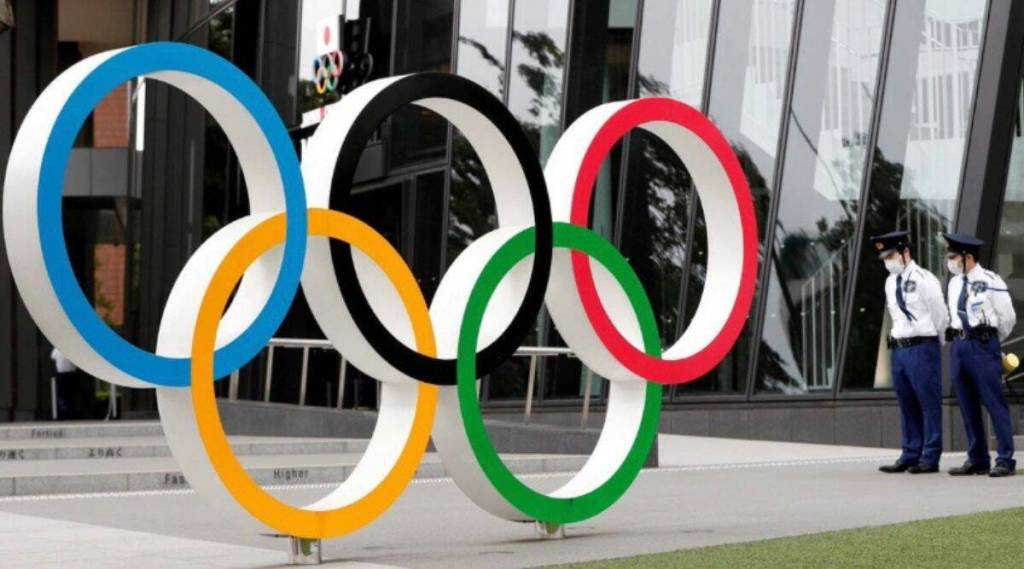

Olympics 2021: India (4,5,6,7th Aug)

4th August2021 – Neeraj Chopra and Shivpal Singh (Javelin Throw), Lovlina Borgohain (Boxing), Aditi Ashok and Diksha Dagar (Golf), Indian hockey Hockey Team (Women), Rahi Kumar Dahiya and Anshu Malik ( Wrestling).

5th August 2021: Havildar Irfan Kolothum Thodi, Sandeep Kumar, Rahul Rohilla ( Men’s 20km walk ), Aditi Ashok and Diksha Dagar (Golf), Indian Men’s Hockey Team, Ravi Kumar(Finals), Deepak Punia(Bronze match), Vinesh Phogat and Anshu Malik(Wrestling).

6th August 2021: Aditi Ashok and Diksha Dagar (Golf), Gurpreet Singh(50km walk), Bhawna Jat and Priyanka Goswami (Women’s 20km Walk Finals), Anas, A. Jacob, N.N. Tom, N. Pandi ( Men’s 4x400m relay ), indian women’s hockey team, Bajrang Punia and Seema Bisla (Wrestling)

7th August 2021: Neeraj Chopra(Javelin Throw FINAL), Aditi Ashok and Diksha Dagar (Golf FINALS), Bajrang Punia (Wrestling Bronze Match)

,

Athletics

Men’s javelin throw

Neeraj Chopra bagged First position by throwing at a distance of 86.65m in Qualifications of Group A.  

The first javelin thrower to enter an Olympic final and also the first to finish on top of the qualification round. 

Shivpal Singh secured 12th in the Group B Qualifications. But, only Top 8 qualify for the seccon round.

Neeraja Chopra to compete in The finals on 7th August at 4:30pm.

Subedar (Indian Army Rank) Neeraj Chopra created history by winning Gold Medal in Athletics.

Men’s 20km walk

Sandeep Kumar came 23rd in the 20km finals on 5th August. Massimo Stano from Italy bagged 1st position.

Men’s 50km Walk

Gurpreet Singh failed to complete 50km walk. He tagged out after 35km by putting up a good fight.

Women‘s 20km walk finals

Bhawna Jat and Priyanka Goswami will be competing on 6th August in the finals of 20km Walk. Priyanka complete the competition and ranked 17th.

Men’s 4x400m relay

A. Rajiv, M. Anas, A. Jacob, N.N. Tom, N. Pandi will be competing on 6th august at 5pm. India fought till the end and missed the 3rd pace by mere mere seconds failing to qualify for finals.

Boxing

Women’s welterweight

Busenaz Surmeneli gave Lovlina Borgohain a tough fight in the Semi-Finals. B. Surmeneli won by the scores as 5-0.

Lovlina Borgohain fought for the Bronze Medal and won it.

Golf

Women’s individual

Aditi Ashok had an excellent start as she finished Round 1 in second position and Diksha Secured 56th position.

Aditi Ashok fabulously played and came second in the round 2 on 5th August and Diksha secured 53rd position.

On 6th August she continued her lead and went into next round by securing 2nd position and Diksha Dagar secured 51th position.

Aditi Ashok and Diksha Dagar will be competing in finals on 7th August at 3am.

Aditi Ashok had a great lead throughout the Match. But, she slipped to 4th position at the eleventh hour. Yet, Aditi Ashok has paved a way for Indian Golfers by reaching finals and remaining in top5 through and through.

Hockey

Women’s tournament

A grueling match between Argentina and India at the Semi- Finals today. It ended with Argentina scoring 2-1 to enter the Finals.

On 6th August, India played against Great Britain for the Bronze medal match.. India put up a brave fight but went down to Britain by marginal scores of 4-3.

Men’s Tournament

Indian Men’s Tournament will be fighting for the Bronze Medal against Germany team on 5th August at am. India won Bronze Medal.

Wrestling

Men’s freestyle 57kg

Ravi Kumar Dahiya wrestled amazingly through 1/8th Finals, 1/4th Finals and Semi- Finals and entered finals at Multiple rounds today – 4th Aug.

Ravi Kumar vs Zaur Uguev will be putting on a wrestle for the Gold Medal on 5th August. It was nail-biting and split decision match. Zaur Uguev won Gold medal and Ravi Kumar won Silver Medal.

Men’s freestyle 86kg

Deepak Kumar lost to David Taylor Iii in semi-finals on 4th aug.

D. Kumar vs Myles Amine on 5th August will be wrestling for the Bronze Medal. The match was grueling from the start. By mere seconds, Myles won the Bronze Medal.

Women’s freestyle 53kg

Vinesh Phogat Vs Sofia Mattsson for 1/8th finals on 5th august. Vinesh Phogat won the 1/8th match and went for the 1/4th match. Wherein she wrestled against Vanesa Kaladzinskaya. Vanesa Won the 1/4th match by fall.

Women’s freestyle 57kg

Iryna Kurachkina from Belarus defeated Anshu Malik in 1/8th Finals with scores 8-2.

Anshu malik vs Koblova Valeria in Repechage round 2 on 5th August. Valeria won this round with scores 5-1.

Men’s freestyle 65kg

Bajrang Punia wrestled his through multiple matches against Iran and Kyrgyzstan to enter the semi-finals of multiple matches on 6th August.

He will be wrestling against Haji Aliyev from Azerbaijan in the semi-finals.He barely slipped through the crack and lost to his opponent.

Bajrang Punia won the bronze Medal in his match against Daulet Niyazbekov, Kazakhstan.

Women’s freestyle 50kg

Sarra Hamdi from Tunisia defeated Seema Bisla in the 1/8th finals.

ARUNIMA SINHA

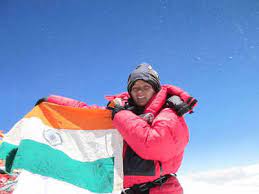
Arunima Sinha was born on 20 July 1989 in Lucknow, Uttar Pradesh. She is the World’s first female amputee to scale Mount Everest, Mount Kilimanjaro (Tanzania), Mount Elbrus (Russia), Mount Kosciusko (Australia), Mount Aconcagua (South America), Carstensz Pyramid (Indonesia) and Mount Vinson, she is additionally seven time Indian volleyball player.

EARLY LIFE AND TRAIN ACCIDENT

Arunima preferred football and furthermore was a public volleyball player. She needed to join paramilitary powers. Be that as it may, when she was going to Delhi in a train a few burglars entered in train mentor to take her pack and gold chain. She had a go at opposing yet they pushed her out of the train and fell on the track. She attempted to get up yet couldn’t and afterward the train run over her leg.

She was raced to the clinic with genuine leg and pelvic wounds and lost her leg after specialists removed it to save her life.

She was offered remuneration of ₹25,000 (US$350) by the Indian Sports Ministry. Following public shock, the Minister of State for Youth Affairs and Sports Ajay Maken declared an extra ₹200,000 (US$2,800) remuneration as clinical help, along with a suggestion for a task in the CISF. The Indian Railways additionally extended to her an employment opportunity.

On 18 April 2011, she was brought to the All India Institute of Medical Sciences for additional therapy, going through four months at the Institute. She was given a prosthetic leg liberated from cost by a private Delhi-based Indian organization.

MOUNT EVEREST ASCENT

While as yet being treated in the All India Institute of Medical Sciences, she set out to climb Mount Everest. She was propelled by cricketer Yuvraj Singh (who had effectively struggled malignant growth) and other TV programs, “to accomplish something” with her life. She dominated in the essential mountaineering course from the Nehru Institute of Mountaineering, Uttarkashi, and was urged by her mom to ascend Everest. She climbed Mount Everest with a prosthetic leg, which was orchestrated by raising assets with the assistance of a master of Ramakrishna Mission, Vadodara.

She reached Bachendri Pal. When she met Pal and Arunima disclosed to her story to her, Bachendri Pal said to Arunima “My youngster You chose to climb Mount Everest in these circumstances with Prosthetic (Artificial) leg. You had climbed, accomplished Mount Everest my youngster now the date is staying to the World to know”.

Furthermore, after that Arunima join essential mountaineering course from Nehru Institute of Mountaineering and TATA Steel Adventure (TSAF) in Uttarkashi (India) and she was energized or roused by her senior sibling Omprakash to ascend Mount Everest.

Sinha climbed Island Peak (6150 meters) in 2012 as groundwork for her rising of Everest.

Sinha and Susan Mahout, a USAF educator, who had together climbed Mount Chaser Sangria (6,622 meters or 21,726 feet) in 2012 under the direction of Hendrick Pal began their rising of Mount Everest.

After a hard work of 17 hours, Sinha arrived at the highest point of Mount Everest at 10:55 am on 21 May 2013, as a component of the Tata Group-supported Eco Everest Expedition,becoming the primary female amputee to scale Everest. She required 52 days to arrive at the highest point. She composed a little message saying thanks to the Almighty on an enveloped fabric and squeezed it by the snow. Relating the occurrence, she said:

It was my recognition for Shankara Bhagawan, and Swami Vivekananda who has been a motivation for the duration of my life.

The Chief clergyman said that Sinha had made history, because of her persistent effort and assurance, by climbing Mount Everest. She was complimented by the Indian Sports Minister Jitendra Singh on her accomplishment.

Arunima Sinha is presently devoted towards social government assistance and needs to open a free games foundation for poor people and distinctively abled individuals. She is giving every one of the monetary guides she is overcoming grants and courses for a similar reason. The foundation would be named Shaheed Chandra Shekhar Vikalang Khel Academy.

She composed the 2014 book Born Again on The Mountain.

She is a motivation to every one of the ladies and individuals with handicap. She demonstrated that one requires difficult work and energy to achieve objective. She has a solid resolve which caused her to achieve her objective even get-togethers around her pity her. She genuinely demonstrated that “the sky is the limit”.

ENRON SCANDAL : VOILATION OF BUSINESS ETHICS

Business ethics is the study of appropriate business policies and practices regarding potentially controversial subjects including corporate governance, insider trading, bribery, discrimination, corporate social responsibility, and fiduciary responsibilities. The law often guides business ethics, but at other times business ethics provide a basic guideline that businesses can choose to follow to gain public approval.

ENRON corporation was an American energy commodities & service company based in Houston , Texas . It was a merger between Houston natural gas & inter north . Founder of ENRON was Jeffrey Skilling & Kenneth Lay . Earlier they used historical cost accounting method , A historical cost is a measure of value used in accounting in which the value of an asset on the balance sheet is recorded at its original cost when acquired by the company. But in 1992 , this company started using Mark to market method , Mark to market (MTM) is a method of measuring the fair value of accounts that can fluctuate over time, such as assets and liabilities. Mark to market aims to provide a realistic appraisal of an institution’s or company’s current financial situation based on current market conditions , with the help of this method only they did the whole scandal . The fraud was , they took loan from banks & other corporations , but didn’t show them in their books of accounts . They bought a MEDIATIOR , SFS ( special purpose vehicles ). They sold their assets to SFS & in return SFS asked loan from the banks . But they didn’t showed that they sold their assets in their books of accounts . They took loans , raised their capital & did the fraud of billion dollars .The value of shares of ENRON raised from 20$ to 90$ . The whole scandal was they hide the losses , showed fake revenues & profits , used complex accounting methods & did unethical things with the books of accounts by manipulating them .

But in 2001 , scandal burst , ENRON suffered a loss of 618 billion $ . Company did the scandal of 70 billion $ . Many investors , general public & employees suffered huge losses . Company’s one time Chief Jeffrey Shilling was sentenced to 24 to 24 years in prison in 2011 . Business ethics enhances the law by outlining acceptable behaviors beyond government control. Corporations establish business ethics to promote integrity among their employees and gain trust from key stakeholders, such as investors and consumers.

Amidst growing scrutiny of business practices, it’s more important than ever for companies to carry out work the right way. Ethics programs are an exceptional tool for promoting moral conduct. Organizations also need employees dedicated to ethical decision-making.

BOOK REVIEW: HARRY POTTER AND PRISONER OF AZKABAN

Harry has spent yet another miserable summer at home with the Dursleys.  He can’t wait to get back to school at Hogwarts, and he’s especially anticipating the third-year privilege of visiting the all-magical village of Hogsmeade near the school. The only problem is that he has to get Uncle Vernon to sign his permission slip to do so. Harry’s bargain with his uncle over the form backfires when Harry gets angry and accidentally “inflates” Aunt Marge.

Rather than being punished by the Ministry of Magic, Harry soon finds that he is being protected. A much-feared prisoner named Sirius Black has escaped from Azkaban, the wizard prison, and Harry is believed to be the target of his next kill. Soon, Black has found his way into Hogwarts, so Harry isn’t even safe in his own dormitory.

Once again, Harry, Ron and Hermione must solve the mystery—what were the circumstances of Black’s original crime, and how is he related to Harry’s parents and their death? Who is the traitor who informed on Harry’s parents to Voldemort? In working out this puzzle, Harry finds both his father’s best friends and his own godfather. 

Positive Element:

Harry practices self-control in not spending extravagantly, even though he desperately wants a new flying broom, he is on his own and he has plenty of money. New Professor Lupin teaches the students that laughter fights what one fears the most. Selfless loyalty to one’s friends is upheld as a high virtue: ” ‘If you want to kill Harry, you’ll have to kill us too!’ [Ron] said fiercely.”

Harry’s loyalty is clearly to his birth family, and he responds angrily in their defense when Uncle Vernon lies to make Harry’s father look bad. Again, Harry finds a family at Hogwarts, where the dormitories take on a family feeling and the students look out for others in their Houses.

Hatred And Anger:

As Harry and his friends grow into their teenage years, hatred and anger become more prominent themes:

“A reckless rage had come over Harry. He kicked his trunk open, pulled out his wand, and pointed it at Uncle Vernon.”

“Even Harry, who hated Snape, was startled at the expression twisting his thin, sallow face. It was beyond anger: it was loathing. Harry knew that expression only too well; it was the look Snape wore every time he set eyes on Harry.”

Adolescent Love:

The maturation process that J.K. Rowling has promised as the series continues is just barely evident in Book III: “Wood looked as though he could have kissed her.”

In a restaurant in Hogsmeade, Ron is clearly attracted to the beautiful waitress: “A curvy sort of woman with a pretty face was serving a bunch of rowdy warlocks up at the bar. ‘That’s Madam Rosmerta,’ said Ron. ‘I’ll get the drinks, shall I?’ he added, going slightly red.”

Spiritual Elements:

New magical creatures are introduced in Book III: Dementors. “Dementors are among the foulest creatures that walk the earth. They infest the darkest, filthiest places, they glory in decay and despair, they drain peace, hope and happiness out of the air around them. Even Muggles feel their presence, though they can’t see them. Get too near a dementor and every good feeling, every happy memory will be sucked out of you. If it can, the dementor will feed on you long enough to reduce you to something like itself … soulless and evil. You’ll be left with nothing but the worst experiences of your life.”

Conclusion:

Dark Magic is still seen here as a great evil to be combated by good witches and wizards. And Dark-Side wizards are often portrayed as selfish and of bad character: “When a wizard goes over to the Dark Side, there’s nothing and no one that matters to him any more.” But that merely underscores Rowling’s intimations that there can be good and bad witches. Such is not the case. The underlying danger of Rowling’s books is the fact that, though witches and wizards aren’t portrayed realistically, they (at least the “good” ones) are portrayed positively.

7 tips to crack GATE 2022

1. The Early You Start, The Better It Is.

GATE is an exam that requires a consistent long-term study. It is helpful to start early because you get enough time to study the topics in-depth and revise regularly. The ideal time to prepare for GATE is in the 3rd year of Engineering. You need to devote at least a few hours per week, say on the weekends for GATE preparation. The competition is high as there are aspirants preparing for the exam for over 2 years.

2. Know the GATE Exam Pattern and Syllabus

Before starting your GATE preparation, be clear with the GATE 2022 exam pattern and syllabus. The Exam has both MCQ and Numerical type of questions. There is negative marking as well except for the numerical type questions.

The next step is to check the GATE Syllabus 2022. Shortlist the subjects and topics based on your conceptual knowledge and understanding of the subject. Categorize the topics based on your strengths and weaknesses, which will help you decide which topics should be focused more. Besides that, choose the core subjects which you need to study thoroughly in order to score more.

3. Make a proper study plan

The study plan will vary for each candidate–whether the candidate is a fresher or a repeater, depending on their strengths and weaknesses, etc. To prepare an effective study plan, closely examine the exam pattern, syllabus, and difficulty level of the exam. Design a long-term plan, monthly, and daily. Practice a variety of problems from different sources. Take mock tests, solve previous year’s papers, and sample papers.

4. Manage Your Time Efficiently

Time is a very important factor in GATE preparation. Create a practical timetable and use your time effectively. Preplan the time required to cover the syllabus and allocate separate time slots for every task related to your GATE Preparation. Revision is the key; take it seriously and practice a variety of question papers to manage time in a better way during the exam.

5. Take Mock Tests and Analyze the Results

At every stage of your preparation, you need to keep track of your performance which can be done by taking mock tests. Only taking mock tests is not sufficient, it is equally important to analyze the results. Know the mistakes you made and the areas that need to improve.

6. Focus on General Aptitude & Engineering Mathematics

If you want to clear GATE 2022, focusing on Mathematics and Aptitude act as saviors. Prepare these two subjects thoroughly because in this section you will score much easily compared to other sections. The Aptitude section carries 15 marks and the Mathematics section too carries 15 marks. Thus, it is an excellent strategy to prepare for this section without fail.

7. Join an Online Test Series

Online Test Series is one of the best ways to know your preparation level. These are prepared by expert faculties and also contain previous year questions. These will help you compete with the actual appearing candidates for the year and you can also analyze your AIR. For details regarding the best test series, you can take the help of your seniors and teachers are they might already be enrolled.

Think beyond the bookish knowledge and find the day-to-day applications of the concepts in engineering. This will help you in making things interesting and real. Develop the power of visualization and try to find the links and relationships between the concepts. This will help you learn more effectively. Create analogies to explain topics and concepts. Take good care of your health and sleep adequately. Revise regularly and keep cool on the day of the exam.

You can check my other blog attached below to know more about the different opportunities after GATE exam.

Different opportunities after the GATE exam

THORNS

Your love grows stronger when it is among rocks and thorns of life. Love speaks in flowers but trust requires thorns because when petals fall off the stem ,only thorns try to catch them.

Some people are like thorns but you have to let them be thorns because thorns can’t turn into petals. The trick is not letting them prick you. A rose does not stop looking beautiful, because of the thorns around it , so never allow weakness to stop you from admiring your own strength.

If you don’t feel the pointed things in life, you will soon take the soft ones for granted. The more the thorns on the way are sharply pointed, the more intensely the fire burns for quenching the great destination.

This heart ,sometimes it is like a flower spreading fragrance but most of the times it is like thorns pricking you with your past memories and make you realise this heart is not made of flowers. Don’t always grumble because roses have thorns, be thankful that thorns have roses.

Problems are only opportunities with thorns on them. Not every thought is a flower, some are thorns but while a flower may make you fall asleep and too see dreams, a thorn will wake you up and make you to think more.

Pain is like a rose, it amazes you with it’s beauty untill and unless you don’t try to pluck it, it makes you bleed when you try to own it. Life is uncertain. Today you get a rose. Tomorrow you feel the thorns.

A life with love will have some thorns but a life without love will have no roses.

There is darkness in light, there is pain in joy and there are thorns on the rose. There is no rose without thorns and no life without pain, your thorns are the best part of you.

If you enjoy the fragrance of a rose, you must also accept the thorns with a smile and move on.

why is china so successful in olympics ?

In terms of athletes from a young age, training hard, and often away from families to go to training centers, this is true, but one needs to understand the context within China, the opportunities that present to these athletes (pay, education, better life), and these athletes’ background (from low socioeconomic families), before passing simple judgment. I will elaborate on this below at the bottom, as I also did in comment on someone else’s answer.

These facts below however are true of why China athletes succeed at the Olympics:

1) The Chinese train harder than anyone else in the world; as other foreign coaches working with China’s Olympic Team have stated in media in past: The Guardian. Following Confucius beliefs, the Chinese believe hard work gets results, and following a progressive long-term athletic development model with repetition of technique and skill they perfect every movement until optimised (thus why they succeed in sports like table tennis, diving, gymnastics, and even weightlifting requires perfection of technique).

2) Centralised Training Program with High Government Support & Funding: The Chinese government has a heavily fund and centralized top-down training model; with the one goal to achieve Olympic Gold. The exact figures of the funding are unknown, and not as transparent as other nations, but still estimated to be the highest funded high performance program in the world. These funds help to pay athletes’ salaries, have full-time staff supporting those athletes, get the best coaches & foreign expertise to improve it further, build big training facilities, and really do anything they want. With a structured pyramid program, with around 5000 sports schools, filtering into province training centers, and then the best up into the Olympic center. Ensuring that the Chinese Olympic program can run smoothly and succeed at its goal.

3) Foreign Expertise: The big jump made at Beijing 2008 and beyond, had a lot to do with foreign expertise. The sourced the world for the best coaches, the best staff. Head coaches alone, there were 28 foreign coaches for the last Olympics; so to say Chinese coaches are “torturing” kids, then ask yourself but what about the foreign coaches? I even know examples where athletes get injured and they fly in experts from around the world for their opinions. This spending of money for an athlete is rarely done elsewhere.

4) Strong talent Identification and Long-term Athletic Development Model: At young ages they look for kids who have the physical capabilities that will allow them to succeed in a sport, and then build on-top of that strong base with a long-term athletic development plan. E.g., start with basic skills and foundation until that is perfected, then build on top of that with another skill, etc.

5) Top-down sports system vs. bottom-up: China is a top-down sports system, a system where the top level controls and manages everything with the goal to achieve Olympic success. Meaning the entire reason athletes enter the system at the bottom (the sports schools), is with the aim to achieve the government’s goal of Olympic success. Some other Asian nations however have similar systems. This contrasts however to Western nations, whereas it’s a bottom-up system, whereas the community and club levels develop athletes, and athletes enter sport for their own goals. One where they just naturally develop going through lower levels, until they have a talent, and then get recognised and selected for national program (and not until then does the government or national sports governing body have much influence on that athlete’s life). Of course arguments and debate on which is optimal. However it’s not hard to see that if you have a control of athlete’s life and sports development from the day they enter sport, and plan & goal for those athletes to succeed at Olympics, then it is much easier to plan for accomplishing that goal (in point 4 above), e.g., what education do they need, what skills do they need, what physical requirements do they need, how much sleep do they need, what medical support do they need, etc.

6) Year round structured training (More prepared): Not to say not all athletes train year round, but the Chinese have a 365 days/year training together as a team generally in most sports. Although some sports like Basketball they have around 6 months (as they spend the other 6 months in their professional teams), but that’s still lot more time together in national team than other nations. What does this mean? Well it means they are going to function better as a team, be more prepared to work with the national coach, better skilled, and better in team environment & teams culture, and with the physical resilience and technical skills to succeed. A lot of other programs in Olympic sports around the world do not follow such a professional program, for example some Olympic teams athletes train independently and then only come together to join the national team in the months or even just weeks before the games.

7) Smart Allocation of Funding: They concentrate on sports that they can win, or succeed at, be it sports that they see an opportunity (less competitive) or sports that they know they win (e.g., table tennis). For example many gymnasts are changed into snow boarding, aerial skiing, and diving. Because of the Chinese athletes’ great gymnastic abilities, they thus would make a good for a similar sports that requires these skills to help and thus can become more competitive then people without those same gymnastic abilities. They also focus on sheer medal numbers; they concentrate on sports with different weight classes (e.g., weight lifting or wrestling) or sports with more medals (e.g., swimming). But then this same approach is done by most centralized sports systems, including Australia.

8) Repetition of Skill or Technical Focused Training: the old rule, repeat until you are perfect or ‘practice makes perfect’. Very much following Confucius thinking here, in China the kids do ONE sport, and repeat the same skill over and over, day in and day out. This is something not done or rare in many nations, for example kids in Australia or America would play many sports in their childhood, they develop better motor skills and coordination but not fine tuning one skill like the Chinese. Is thus the reason China often succeed in technical focused sports like table tennis, diving, gymnastics, because they have trained until they perfected the routine. However all sports do have a technical focus, even track & field, weightlifting, and swimming; related to efficiency and ease of movement.

9) Rewards for Athletes & Better Life: The rewards for those who make it are great. Some Olympic athletes earn more a week than their poor family can in a year. That way it’s a great way forward for poor families to jump to a better social class. This provides excellent motivation for them to train hard. China Olympic champions are suggested to get $200,000USD for an Olympic Gold (figure appears to vary in different sources), and add in houses, a high level job within the government upon retirement; even winning the All-China Games grants athletes $100,000USD (depending on the province). Most of these athletes come from families that work in factories, and/or farms, earning just enough to feed the family.

10) National Pride: sports is seen as a sign of power similar to GDP. A collective culture still, looking to better the community they are within. They do it for the family, nation, and less for themselves (opposite to the west). A way to show a strong and powerful nation.

However above all, one big factor: they want it more than anyone else in the world (similar to the Kenyans in distance running), that motivational factor is big thing in elite sport.

FINANCE COMMISSION


Finance Commission is constituted to define financial relations between the center and the states. Under the provision of Article 280 of the Constitution, the President appoints a Finance Commission for the specific purpose of devolution of non-plan revenue resources. It was formed in 1951. Shri Ajay Narayan Jha recently joined the Fifteenth Finance Commission as its member. The 15th Finance Commission has released a report titled ‘Finance Commission in COVID Times’ on 1st February 2021.

Article 280 of the Indian Constitution

  • After two years of the commencement of the Indian Constitution and thereafter every 5 years, President has to constitute a Finance Commission of India.
  • It shall be the duty of the Commission to make recommendations to the President concerning the:
    • The distribution between the Union and the States of the net proceeds of taxes which are to be, or maybe, divided between them and the allocation between the States of the respective shares of such proceeds;
    • The principles which should govern the grants in aid of the revenues of the States out of the Consolidated Fund of India;
    • Any other matter referred to the Commission by the President in the interests of sound finance
    • The Commission shall determine their procedure and shall have such powers in the performance of their functions as Parliament may by law confer on them

Article 281 of the Indian Constitution

  • It is related to the recommendations of the Finance Commission:
    • The President has to lay the recommendation made by the Finance Commission and its explanatory memorandum before each house of Parliament


Functions of Finance Commission

The Finance Commission makes recommendations to the president of India on the following issues:

  • The net tax proceeds distribution will be divided between the Centre and the states, and the allocation between states.
  • The principles governing the grants-in-aid to the states by the Centre out of the consolidated fund of India.
  • The steps required to extend the consolidated fund of a state to boost the resources of the panchayats and the municipalities of the state are based on the recommendations made by the state Finance Commission.
  • Any other matter referred to it by the president in the interests of sound finance.
  • The Commission decides the basis for sharing the divisible taxes by the center and the states and the principles that govern the grants-in-aid to the states every five years.
  • Any matter in the interest of sound finance may be referred to the Commission by the President.
  • The Commission’s recommendations along with an explanatory memorandum concerning the actions done by the government on them are laid before the Houses of the Parliament.
  • The FC evaluates the rise in the Consolidated Fund of a state to affix the state Panchayats and Municipalities resources.
  • The FC has sufficient powers to exercise its functions within its activity domain.
  • As per the Code of Civil Procedure 1908, the FC has all the powers of a Civil Court. It can call witnesses, ask for the production of a public document or record from any office or court.


Finance Commission Chairman and Members

  • Chairman: Heads the Commission and presides over the activities. He should have had public affairs experience.
  • Four Members.
  • The Parliament determines legally the qualifications of the members of the Commission and their selection methods.

Qualifications of Finance Commission Chairman and Members

  • The 4 members should be or have been qualified as High Court judges, or be knowledgeable in finance or experienced in financial matters and are in administration, or possess knowledge in economics.
  • All the appointments are made by the President of the country.
  • Grounds of disqualification of members:
  • found to be of unsound mind, involved in a vile act, if there is a conflict of interest
  • The tenure of the office of the Member of the Finance Commission is specified by the President of India and in some cases, the members are also re-appointed.
  • The members shall give part-time or service to the Commission as scheduled by the President.
  • The salary of the members is as per the provisions laid down by the Constitution.

CORRUPTION IN INDIA…

Looking at the situation of India today, corruption can be observed and seen in almost every person, every place, every sector, every field, every institute, every dealing, every department, every exchange, every transaction, every opportunity, every job, every system and what not. In case of politics, it is in a worst situation or condition. Sometimes a doubt arises that whether we are living in a democratic country, whether we are following the constitution of  Dr. B .R. Ambedkar or not. Because the present scenario in India is like that, really worst. 

Corruption can be seen in every aspect. In politics, before winning elections-corruption to win, after forming government- corruption in activities and welfare programs. See the situation, how worse is it becoming day by day .I want to discuss this with some examples .Let’s begin.
CORRUPTION WITH EXAMPLES:
1.Distribution of money and gifts at the time of elections to come into power. See how they are cheating on people to come into power and for their personal benefits .They are directly spoiling the voting right of the people.
2. Corruption in quality and quantity of products. Corruption can be seen in the aspects of quality and quantity. If government is distributing something among the people, in between reaching the people from the government, it goes through a lot of corruption, like in hands of officers corruption takes place, some officers they ask money in return from the people to give their part from the government, which is so weird. And sometimes they practice do mal practices by which people may loose their quality ad quantity of the products receiving from the government.
3.For example, corruption in petrol, and food products. Expired products, and adulterated foods and products, cheating in petrol and fuels filling and many more like this. 
MAIN REASON FOR CORRUPTION IN INDIA:
The causes of corruption in India include excessive regulations, complicated tax and licensing systems, numerous government departments with opaque bureaucracy and discretionary powers, monopoly of government controlled institutions on certain goods and services delivery, and the lack of transparent laws and processes.

THERE IS A LOT OF CORRUPTION IN INDIA:

Corruption is especially prevalent in the judiciary, police, public services, and public procurement sectors. Due to varying levels of corruption and quality of government operations across India, local investment conditions vary between and within states.


A SAD THING IS:

Corruption in India is a consequence of the nexus between Bureaucracy, politics and criminals. India is now no longer considered a soft state. It has now become a consideration state where everything can be had for a consideration. Today, the number of ministers with an honest image can be counted on fingers.
HOW CAN WE STOP CORRUPTION:

  1. Expose corrupt activities and risks that may otherwise remain hidden.
  2. Keep the public sector honest, transparent and accountable.
  3. Helps stop dishonest practices.
  4. Ensure that public sector employees act in the public interest.


CHALLENGES

Challenges are meant to help you know who you are, they hit your weakness, but unlock your true strength. Always believe in yourself and always stretch yourself beyond your limits.

Your life is worth a lot more than you think because you are capable of accomplishing more than you know. You have more potential than you think but you will never know your full potential unless you challenging yourself and pushing beyond your self imposed limits.

Every challenge you face today makes you stronger tomorrow. The challenge of life is intended to make you better but not to make you bitter.

Finding the lesson behind every challenge will be the one important thing that helps get you through it. Life throws challenges on you not because you are playing games but because you must realise you are worth the extra effort.

Challenge is not always given by others, sometimes it is given by ourselves, whenever I think of something but can’t remember of what it was, I can’t stop thinking until I think ,I’m thinking of it again.

when you least expect it, life sets you a challenge to test your courage and willingness to change, at such a moment, there is no point in pretending that nothing has happened or in saying that you are not yet ready. The challenge will not wait.

Life does not look back. A week is more than enough time for you to decide whether or not to accept the Challenge. There are no negative in life, only challenge to overcome that will make you stronger.

Some fish love to swim up in stream likewise some people love to overcome challenges.

Being challenged in life is inevitably, being defeated is optional. It is your choice to be inevitably or to be optional.

The 80/20 Principle (or) Pareto Principle

In this article I am going to tell you about some of the things I read in The 80-20 policy book and learned from it. Let’s start reading the article without wasting time.

Book Name : The 80/20 Principle

Author Name : Richard Koch

Year of Publication : 1999

Vilfredo Pareto was an Italian economist. He was studying Wealth Distribution and Income Generation about England in 1897. What he discovered while studying about it was that just over 20% of the population in the England owns 80% of the wealth. After discovering this, Pareto started studying a lot about it.

What he learned then was that this 80/20 principle was consistent across all time periods and in all countries. Looking deeper into this research, this principle is not only relevant to wealth. He discovered in a lot of other things it is related. He realized that 80% of the peas in his garden were only available from 20% of the plants. 

Today we call this principle the 80/20 principle or the Pareto principle. We can apply this principle in all aspects of our lives such as business, health, study, relationship.

What this principle says is that 80% of the results we get are from the 20% of actions we take. In general, what we think is that we get a lot of results only if we do a lot of actions. But according to research it is wrong. Some good actions that we do give us 80% results. After discovering this principle, a lot of people researched whether it is compatible in all respects. In many respects this principle was then in perfect agreement.

Examples :

1. 20% of criminals are reason for 80% of crimes

2. 20% of drivers are reason for 80% of accidents

3. 20% of married couples are reason for 80% of divorce

4. 20% of roads are reason for 80% of traffic

5. 20% of clothes are wore by us for 80%

6. 20% of lands are reason for 80% of minerals

7. 20% of clouds are reason for 80% of rain

8. 20% of actors are reason for 80% of public attention

9. 20% of scientists are reason for 80% of inventions

10. 20% of book writers are reason for 80% of book sales.

How do we apply this 80/20 principle?

 This principle does not teach us not to work. It teaches us to focus on the things that give us the most results.

1. The 80/20 Principle For Business

This principle was used extensively for business. Only then did they begin to apply this principle in all things. Business start-ups waste 80% of their time focusing on things they don’t need. For example, things like how the company logo should look like and how the website should look. All of these things are important. But these things alone do not impress people. First and foremost our ambition is to focus on developing the company’s products and services. Only then should we focus on other things like marketing and sales. Business people need to remember one important thing. Only 20% of our customers give us 80% profit. Similarly, only 20% of customers are 80% compliant. If we focus on these two types of 20% customers we will get 80% winning results. 

2. The 80/20 Principle For Social Life and Happiness

Some of us will think. That we would be better off if we had a lot of friends. So let’s start spending time with a lot of friends. But all this is perfectly understandable. That we have wasted a lot of time. Thus we would not have focused on our important things. Whatever our mind set is, it would be better if we had more. But according to this principle 80% of Happiness and Fulfillment we get only from 20% of friends. So instead of spending time with a lot of friends, spend time with the 20% of friends that suit you. Focus on other things as well.

3. The 80/20 Principle For Studying

For example, suppose you have two friends. The first friend is studying from morning till night. The second friend just reads for 3-4 hours. But when it comes to results, only the second friend will get good results. Because the second friend is unknowingly following the 80/20 principle. He is following two things and using the 80/20 principle. What they are,

* Deciding what to read *

The first friend thinks he should read everything. Doing so will prevent him from remembering exactly what he reads. But the second friend will read the important ones first and read the rest if there is time left.

 * Deciding what time to read *

Humans cannot focus too much time on the same work. But since the first friend was studying from morning till night there is a lot of distraction during the break. Thus no matter how long he studies it will not be a quality study. The second friend reads only from 9 a.m. to 6 p.m. Focused on things that give freshness like walking while taking a break. Thus he can read with full attention without any distractions while reading.

Similarly, find that 20% in your work which gives you results. It gives double results in less time. Then you can use the rest of the time for other important work.

Weird laws from around the world

>Salmon Act 1986

Under the Salmon Act, the Parliament makes it illegal to hold a salmon in suspicious circumstances in the UK. Other fish species like trout, eel, lamprey and smelt are also included in this law. However, the law does not specify what behaviour can be considered suspicious.

>Law for billboards in Hawaii

Hawaii does not allow the use of billboard advertising in public. Only directional boards, landmark signs and real estate boards are allowed to be displayed in Hawaii. However, there is a provision to have a billboard in one’s own property.

>Metabo Law of Japan

Japan takes the matter of its citizens health very seriously. The Metabo Law restricts its citizens aged 40 to 74 years to gain extreme weight and requires the citizens to have an annual weight check by the doctor. Men are supposed to have a waist size not exceeding 33.5 inches and women 35.4 inches. It was made to prevent obesity and other related health issues.

>Locust Invasion Law, India

Locust attacks cause large scale threat to crops. To prevent the destruction people living within 5 miles of the plca of locust invasion are required to beat drum or some other instrument in order to alert the town.

>No chickens to cross the road in Georgia

To let your chicken cross road is illegal in Georgia. The chickens are meant to be kept under the owner’s control and letting them loose can lead the owner to be fined.

>Law on Protection of the Rights and Interests of Elderly People, China

China has a law for its citizens above the age of 60 year. Under this law discrimination, insulting, maltreating or forsaking the elderly etc is forbidden.

>No dying without a burial plot

In Sarpourenx, France the citizens cannot die within the city limits without having purchased a burial plot for themselves. This law was put forward in the year 2008 by the city mayor claiming that those who offend will be severely punished. However, the kind of punishment has not be clarified.

>Swearing, illegal in the UAE

In the UAE, swearing is illegal leading the offender to be fined or even jailed. Under Article 373 of the UAE Penal Code, swearing is form of disgrace to a person. The law also includes indecent gestures or text message and threatening messages along with the use of inappropriate words.

We can learn a lot from the forests, regrowth, change and beauty.

Forests are habitat to all wild animals, plants and support millions of species. They help in reducing global warming caused by green house gases and produces oxygen upon photosynthesis.

Forest can act as pollution purifier by absorbing toxic gases. Forest not only helps in soil conservation but also helps to regulate the hydrological cycle.

Forests contribute substantially to the national economy. With increasing population increased demand of fuel wood, expansion of area under urban development and industries has lead to over exploitation of forest.

At present international level we are losing forest at the rate of 1.7 crore hectares annually. Overexploitation also occurs due to overgrazing and conversion of forest to pastures for domestic use.

Forest is one of the most valuable resources and thus needs to be conserved. To conserve forest, following steps should be taken.

  1. Conservation of forest is a national problem, thus it should be tackled with perfect coordination between concerned government departments.
  2. People should be made aware of importance of forest and involved in forest conservation activities.
  3. The cutting of trees in the forests for timber should be stopped.
  4. A forestation programmes should be launched
  5. Grasslands should be regenerated.
  6. Forest conservation Act should be strictly implemented to check deforestation.
  7. Awards should be instituted for the deserving.

Forest is important renewable resources. Forest vary in composition and diversity and can contribute substantially to the economic development of any country.

Plants along with trees cover large areas, produce variety of products and provide food for living organisms, and also important to save the environment.

It is estimated that about 30% of world area is covered by forest whereas 26% by pastures. Among all continents, Africa has largest forested area (33%) followed by Latin America (25%), whereas in North America forest cover is only 11%. Asia and former USSR has 14% area under forest.

European countries have only 3% area under forest cover. India’s Forest Cover accounts for 20.6% of the total geographical area of the country as of 2005.