5 Names of Indian freedom fighters you might not know

The remembrance of our freedom struggle involves a lot of nostalgia – romanticized and commemorated by the country as best as possible. But there are a few names which have been lost over the years. Names which do not enter the hyped mainstream media responses on freedom fighters; which are subaltern and marginalized. Here is a list of some of those names, of people who formed a very important part of our freedom struggle and are yet, not as well known as a few others.

1. Pingali Venkayya

He was a devout follower of Mahatma Gandhi and was also known as Diamond Venkayya for his knowledge on diamond mining. He was an authority in geology, agriculture and also an educationalist. His major contribution to the movement was the design of the national flag of India, which was first modified and adopted as the flag of Indian National Congress and later modified again to be the national flag of India.

2.Tanguturi Prakasam

A politician and a freedom fighter, he was first the Chief Minister of the Madras Presidency and then the Chief Minister of the Andhra state. He started his career as a lawyer, but gave up his practice in 1921 and was drawn to the freedom movement. One of his most famous acts was in 1928 during the protests against Simon Commission in Madras. The police had imposed a ban on protests in some areas, and had warned of shooting people who violated orders. He faced the police, tore open his shirt, bared his chest and dared them to shoot if they could. This singular act of defiance won him the title of Andhra Kesari (Lion of  Andhra).

3.veerapandiya kattapomman

He was a courageous Palyekar chieftain from Tamil Nadu in the 18th century. He waged a war with the British sixty years before the Indian War of Independence (the 1857 rebellion) occurred in the Northern parts of India. He was captured and hanged in 1799 CE. His fort was destroyed and his wealth was looted by the British army. He basically protested against the sovereignty of the East India Company and refused to pay their taxes.

4.The Trio: Benoy, Badal & Dinesh

The trio is mostly remembered together for their attack on the Dalhousie Square in Kolkata. Their full names are Badal Gupta, Dinesh Gupta and Benoy Basu and all of them hailed from Bengal. Col N.S. Simpson, the Inspector General of Prisons, was infamous for brutally oppressing prisoners. The revolutionaries decided not only to murder him, but also to strike terror among British officials by launching an attack on the Secretariat Building – the Writers’ Building  in Dalhousie Square, Kolkata. The three of them were dressed as Europeans when they went and killed Simpson, but they did not wish to get arrested. So, Badal consumed poison, while the other two shot themselves using revolvers. The Dalhousie Square was renamed as the B.B.D. Bagh after them.

5.Surendra Sai

The man died in obscurity despite protecting Western Orissa from the British rule along with a few other comrades. Eligible as the next in line to the throne of Sambalpur after the death of Maharaja Sai in 1827, he helped the lower caste tribal people in Sambalpur against the British by encouraging their language and culture development.  Affectionately called Bira by the local people because of his swordsmanship, he began protesting from the age of 18 and spent some 17 years in jail after that. But he continued the protest till 1862, when he surrendered and went to jail. He spent 20 years in prison after his surrender.  Also, Sambalpur was the last patch of land to be occupied by the British except for the princely state, and it is said that it was largely due to the efforts of Sai.

Veerapandiya kattapomman

Though most historical accounts cite the revolt of 1857 as the ‘first war of independence’ in India against the British, they seem to overlook a valiant chieftain from Tamil Nadu in the late 18th century who refused to align with the sovereignty of the British East India Company, and singlehandedly waged war against the colonialists.

Born to Jagaveera Kattabomman and Arumugathammal on 3 January 1760, Veerapandiya Kattabomman belonged to the Bommu and Aathi Kattabomman clan in the village of Panchalankurichi in Thoothukudi district of Tamil Nadu.

His father was a Palayakarar (a feudal title for a class of territorial administrative and military governors appointed by the Nayaka dynasty in southern India during the 16th and 18th centuries), from whom Veerapandiya assumed the position of the 47th Palayakarar when he turned 30.

So how did the British manage to maintain a stronghold in the region? It was a well-calculated move. They lent huge sums of money to the Nawab of Arcot and demanded to be repaid through taxes and levies from all the Palayakarars under the Nawab’s domain.

As the Nawab was in severe debt, watched as his people were plundered by the British in the name of tax collection.

Except for Veerapandiya, every other Palayakarar yielded to the diktat of the company. In fact, the British were quite crafty and tried to establish cordial alliances with all the regional statesmen, who in turn tried advising Veerapandiya to ally with the former and live in peace.

Emerging as an undesirable element in the plan that the British had for the region, they began working on different conspiracies to bring the rebellious chieftain down. However, they remained unsuccessful in their schemes until the British army suddenly decided to raid Panchalankurichi under the command of Major J. Bannerman in 1799.

As the entire village had been in Thiruchendur for a temple festival, the British hoped to ambush Veerapandiya unawares. But he had already learnt of the attack through his informers and had prepared well in advance.

Right before the attack, Veerapandiya was ordered to surrender unconditionally through a messenger sent by Bannerman. “We are the sons of this soil. We live with prestige, honour and dignity and we let our soul die for the prestige, honour and dignity of our land. We don’t bow down to the foreigners. We will fight until death,” was the smarting message taken back to the army commander.

Veerapandiya and his men held the fort quite valiantly against British troops, who couldn’t quite match up to their expertise and had to withdraw. However, Veerapandiya knew that his fort would not be able to withstand the onslaught if the British were to unleash their cannons.

Upon receiving information about their hideout, the British threatened the king of Pudukottai, Vijaya Raghunatha Tondaiman to trace and handover the elusive chieftain or face similar consequences.

Buckling under pressure, he sent his soldiers to track down Veerapandiya, who was subsequently arrested at Kayathar on October 1, 1799. Following an interrogation stretching over 15 days and a ridiculous trial, Veerapandiya was sentenced to public execution.

Even in the face of death, he didn’t flinch and continued to stand by his ideals of honour, dignity and prestige. He even boldly argued for the right of his homeland and admonished the British for their immoral and illegal occupation.

Veerapandiya Kattabomman was hanged on October 16, 1799, thus putting an end to the first ever known revolt against the Empire.

The remnants of his old fort at Panchalankurichi is protected by Archaeological Survey of India.

On October 16, 1999, a postage stamp commemorating the bicentenary of Veerapandiya’s execution was released by the government of India in his remembrance.

Every year, the district administration of Tirunelveli honours the legend and his heroic deeds by celebrating the ‘Veerapandiya Kattabomman festival’ at Panchalankurichi on his birth anniversary. Besides, there is an Indian Navy communications centre at Vijayanarayanam, which is named INS Kattabomman after the brave freedom fighter.

On his 258th birth anniversary, let’s remember the valiant Palayakarar from Panchalankurichi who refused to bow down to the British and sacrificed his life for his homeland.

Childeren’s day

All the kids

, chin up, smile and celebrate the day dedicated specially to you! November 14 is celebrated as Children’s Day (also called Bal Diwas) in our country and the occasion also commemorates the birth anniversary of Jawaharlal Nehru, the first Prime Minister of India. As the schools and colleges gear up to celebrate this day, here is all you need to know about the history, importance and significance of the occasion.

Nehru was known for his affection and love for kids, whom he regarded as the ‘future of the country’ and was fondly called as Chacha Nehru. “The children of today will make the India of tomorrow. The way we bring them up will determine the future of the country,” he exclaimed once. He always emphasised on the education of children and played a major role in establishment of colleges in the country which are still considered one of the best in the country

After his demise in 1964, his birth date, November 14, was decided to be celebrated as Children’s Day every year.

On this day, schools and colleges organise various programmes like plays, competitions, cultural events etc., and sweets, books, stationary and other gifts are distributed to children. Also, November 20 is celebrated as the Universal Children’s Day, as declared by the United Nations.

The day is a reminder that every child deserves education, nurturing and the best of everything. They are the building blocks of the nation and hence, the future of the nation depends how well they are brought up. To those who are now an adult, keep the kid inside you alive!

TRENDING NOW #1 SC/OBC/ST ARE VIP CATEGORIES IN MODERN COMPETITION OVER GENERAL – Sahaj Sabharwal

SC/OBC/ST ARE VIP CATEGORIES IN MODERN COMPETITION OVER GENERAL Race in the modern world is a phase, from which no one can chase. Today’s world runs after competition and every single contestant runs with the aim to win in it. But unfortunately, everybody can’t win it, but everyone aims and will be glad to win. Due to a few vacancies available at the winning position, many have to return home to practice again and to try again the next time. Out of those who returns home, only a few of them get motivated, having a positive mindset, learns with the loss While the others feel demotivated and think that its failure for them in life. But actually its not a failure, everyone who participated, practiced well and aimed to win is a winner. Because the winner is just because of luck and a little more efforts. The winners’ positions are less that’s why it is never a fair competition and not a genuine way to check the power, talent or skills of a particular contestant. In our world, in a pen paper or online exams, someone can pass with pass by unauthorised tricks such as cheating, corruption, nepotism etc. And after the results of that particular exam, if a particular cheater wins, then he/she will be determined as a winner without any verification or something, whether that person has some good skills or not. That’s why, just an examination is never the best way to to check inner talents and exceptional skills. ©Sahaj Sabharwal …… 𝗙𝗢𝗥 𝗖𝗢𝗠𝗣𝗟𝗘𝗧𝗘 𝗔𝗥𝗧𝗜𝗖𝗟𝗘 𝗩𝗜𝗦𝗜𝗧 -: https://www.sahajsabharwal.in #pedagogicalthoughtsmadefactsbysahajsabharwal

TRENDING NOW #1 SC/OBC/ST ARE VIP CATEGORIES IN MODERN COMPETITION OVER GENERAL – Sahaj Sabharwal

In India, 5th September is celebrated as Teachers’ Day as a mark of tribute to the contribution made by teachers to the society.

5th September is the birth anniversary of a great teacher Dr Sarvepalli Radhakrishnan, who was a staunch believer of education and was a well-known diplomat, scholar, the President of India and above all, a teacher.

When some of his students and friends approached him and requested him to allow them to celebrate his birthday, he said, “instead of celebrating my birthday separately, it would be my proud privilege, if 5th September is observed as Teachers’ day”. From then onwards, the 5th of September has been observed as Teachers Day, in India.

In the year 1965, some of the prominent students of Late Dr S. Radhakrishnan organised a gathering to pay obeisance to that Great Teacher of repute.

In that gathering, in his speech Dr Radhakrishnan expressed his deep reservation regarding his birth anniversary celebration and emphasised that his birth anniversary should be celebrated as ‘Teachers’ Day’, by paying homage to other Great Teachers of India and Bangladesh.

Since the year 1967, 5th September is celebrated as Teachers’ Day till date.

Pandit Jawaharlal Nehru, who was one of his closest friends throughout, had many great things to say about Dr. Radhakrishnan: “He has served his country in many capacities. But above all, he is a great teacher from whom all of us have learnt much and will continue to learn. It is India’s peculiar privilege to have a great philosopher, a great educationist and a great humanist as her President. That in itself shows the kind of men we honour and respect.”

Is Java becoming obsolete ?

Java has been around for a long time, and over the past few years it has undergone significant changes to keep it relevant. It is still the most popular programming language among developers, according to a 2019 report. But it may not hold onto that title forever. While it’s still at the top of lists of programming languages, other languages, like Python, are closing in on it. In fact, it is predicted that in the next few years, Python will surpass Java (and C) as the most popular programming language. And Python is not Java’s only competition. The rise of Kotlin has also taken some of Java’s share away, especially once Google started supporting Kotlin for Android development.

Java happened to be in the right place at the right time, similar to how Python now happens to be in the right place at the right time with the explosion of interest in AI and machine learning. According to Rich Sharples, senior director of product management at Red Hat, when Java was created 25 years ago, it was designed with the network in mind, and had a lot of features for network communications. It also came about around the time that multiprocessor systems were gaining traction and it was one of the first languages to make use of those hardware advances without the developer having to do too much more work. In addition to those features, it also had big backing in the industry, from Sun Microsystems, IBM and Oracle. All of these factors combined to make Java a highly successful language and a top choice for many developers for decades.

The reason that it has stayed so popular is because it still meets the needs of working across networks. And of course, there’s also the fact that it is open source. “Pretty much anything interesting happening in tech is happening around open source. And it was relatively early in mainstream open source as well. So, it’s checked all the boxes from a technical point of view,” he said.

Java was well suited to the environments of its time, but hasn’t really aged well as technologies change. Sharples explained that Java does a lot of “cool dynamic stuff,” but those sorts of capabilities aren’t really needed in technologies like microservices and serverless. According to Sharples, when working in those types of environments, developers tend to just start fresh when they run into an issue. So, all of those dynamic capabilities Java has aren’t really needed anymore. “What you get is a lot of baggage that doesn’t really provide much value in those modern architectures…If you think back, Java was designed to run on big multi-process machines. You could pretty much guarantee that you owned the machine and you could run multiple applications for each JVM (Java Virtual Machine) or app server. That’s just not the world we live in today. So, a lot of those capabilities bring a lot of weight and complexity and offer little value. So, if you look at functions as a service, you don’t see Java mentioned an awful lot.”

But Sharples doesn’t believe Java is going away quite yet. He believes Java will likely still experience growth for many years, or even decades. There are many projects that let Java thrive in today’s environments, such as Oracle’s GraalVM, which allows for interoperability in shared runtimes, and Red Hat’s Quarkus, which is a Kubernetes-native Java framework.

Mike Milinkovich, executive director of the Eclipse Foundation, which oversees Java Enterprise Edition, also believes Java itself is going to evolve to support these technologies. “I think that there are going to be changes to Java that go from the JVM all the way up,” said Milinkovich.

Sharples also believes Oracle has done a pretty good job of “keeping the innovation going without breaking the stability.” Oracle currently has several active projects focused on facilitating innovation for Java:

•Valhalla, focused on introducing value types to Java

•Panama, which is about updating the form function for Java

•Loom, which focuses on scaling Java

•Amber, which is focused on finding ways to simplify the language

•Metropolis, which is trying to see how much of the JVM can be written in Java so that both JVM and Java can evolve faster

“Languages are hard to change, so Java will continue to lead. It will be interesting to see if other languages begin to use the JVM. Not just JVM dialects like Scala and Kotlin but other languages with their own user bases, like Ruby, JavaScript, or Python,” said Mark Little, VP Middleware Engineering at Red Hat.

ISRO to launch geo imaging satellite

This year world is facing the wrath of nature in every possible way from a deadly pandemic to extreme heat waves and what not. It has been tough year for many of us because suddenly all these disaster taking place did not gave any time for recovering, and above all this people are facing loss and losing their hopes.
Specifically talking about India, the COVID waves made Indians witness the worst medical emergencies and people losing life Infront of the eyes. The situation was horrific and shook everyone deep inside. The ongoing situation is all about reducing the chances to enter into the second wave. In the month of May cyclone Taut hit the western shore, the reason behind cyclone formation was increased surface temperature due to global warmimg, even after taking several measures this high intensity cyclone created loss. The continues Cloud burst in the hilly areas is posing another threat , for both hilly and plain areas, cloud burst have further increased the risk of landslides and flash floods. The force has been deployed to rescue people safely out of such areas Jammu and Kashmir and Himachal Pradesh are worst effected. The rescue process is hampered by bad climatic conditions and hilly terrain due to lost of connectivity it has become difficult to reach people. moreover, this can work as a catalyst for spreading COVID.
The Indian Space Research Organisation has planned to launch a geo imaging satellite this year. the launch is delayed due to COVID 19 situation but, as per Dr. Jitendra Singh the minister of state for science and technology the launch will take place soon. EOS -03 is a geo imaging satellite is specialised in monitoring the geographical changes and climatic movements on regular bases, it will be monitoring the country on regular bases. This will be helpful in keeping an eye upon the natural disasters like landslide, flood etc and for monitoring any climatic situation. Before this ISRO has announced about successful testing of Vikas engine that is for upcoming Gangayaan Mission. The satellite is bild with latest technology to ensure better and reliable results in future. This will add another satellite into the solar system strengthening the satellite network of India, and will further help in preparation of the unforeseen disasters. As now India is facing trouble in terms of the bad climatic condition in the hilly areas and other part of the country. Indian Space Research Organisation has made extensive development in past one year, ISRO play a significant role in India’s Development in space science and technology, it is widely recognised space agency. Such development will help secure better future and enhance the working operations. ISRO has even contributed at the time when COVID was at its peak and ventilators were not available to the people as they were either occupied or unavailable ISRO developed cost effective ventilators and the production was did at large scale to support the people in difficult times. Natural disaster don’t come with warning thus its better to make arrangements before hand.

SAME SEX MARRIAGE

Love comes in all forms. It would be wrong to say that a person cannot marry someone just because they are not from the opposite sex. The world is evolving more than ever and we need to keep up with times. Same-sex marriage is when any person chooses to marry the same sex instead of the opposite. We should not shun this concept anymore.In other words, gone are the days when people had to be ashamed because of their sexuality. In today’s accepting world, we must make way for every human being irrespective of their gender. One needs to realize that there are more than two genders. The society needs to be more inclusive of all kinds of people. It will make the world a happier place when everyone feels they are accepted and appreciated.


IMPORTANCE OF SAME SEX MARRIAGE

All of us are human beings at the end of the day. Before labeling each other with the religion we follow or the people we choose to love. Everyone must realize this fact and act like it. Same-sex marriage is more than important in today’s time as the world is progressing.

Moreover, people can finally be themselves and own their individuality. Just because someone does not love a person from the opposite sex, it does not make them wrong. We can love anyone we want.

In addition, it is better to spend the rest of your life with someone from the same sex you love rather from the opposite sex whom you don’t even like. People will obviously lead happy lives with their loved ones rather than being forced to marry someone.

Same-sex marriage gives the other people hope that they can also have a future. In addition, it paves a brighter path for the LGBTQ community. This community has already suffered enough due to discrimination. They deserve to be able to marry whomever they wish irrespective of gender or sex.


CONCLUSION

Same-sex marriage in India especially is not encouraged. There are many countries which have stringent laws against it yet the people are open-minded. In India, neither are the laws lenient but the people are also very narrow-minded.

Most importantly, they never give these people a chance to prove themselves. Indian society does not like change. It is not as adaptable as western countries. India still needs time to be okay with the concept of same-sex marriage.

However, not knowing about the concept is a different thing and completely opposing it is different. Not only in India, but in other countries, people do not support same-sex marriage because they think it is against their religion.

Thus, this creates a lot of problems for them. People do not want the LGBTQ community to get the right to marry their lovers. This takes away their very basic human rights. The LGBTQ community has fought for a long time for their rights. Yet there is a far way to go.

When we talk about India, we see how it is on its way of progress. Like how it ended Section 377, which criminalizes homosexuality. However, we still have a long way to go in terms of the LGBTQ community. We must not any form of love be it same-sex marriage or anything else.

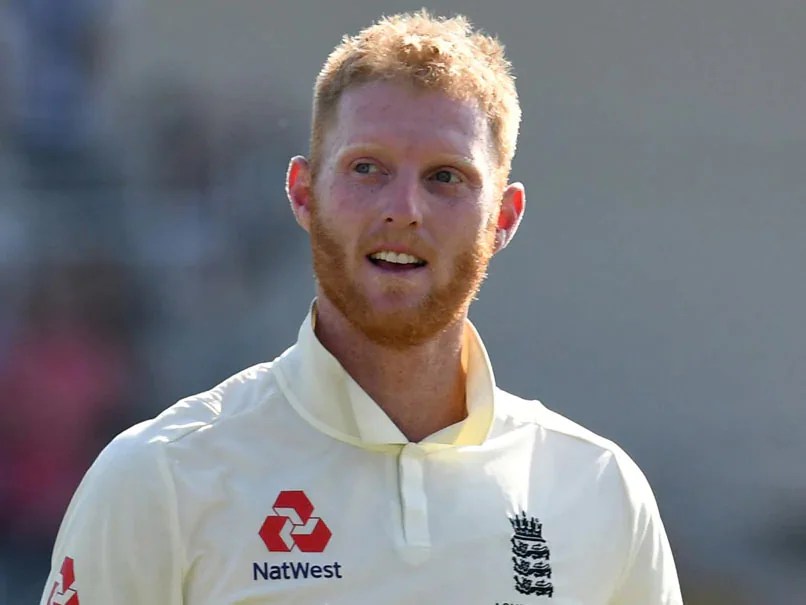
Ben stokes takes indefinite break from cricket

England all rounder ben stokes has taken an indefinite break from all forms of international cricket, with immediate effect to focus on on his mental state. As a result he wont be available for the test series against India that is starting from next week. but what caused ben stokes to take indefinite rest?

Ben stokes has spent the majority of the last year in bio bubble with England test and limited overs team. and he is a that kind of player, who you could not afford to miss out from playing 11. He has that kind of effect in game. Than after the national duty ,stokes came for IPL where again he had to live in bio secure bubbles as per guidelines.

Bio secure bubbles are very safe bubbles . it was made to organize sporting events during COVID -19 pandemic with strict quarantine and safety measures throughout that period . it is very easy to say that the players who are in bio bubble do not have to do anything they just have to live like a normal life. but it is not so easy in reality. it is a like a cage , an invisible cage where you can go on a limited space only with strict protocols and guidelines to be followed. these bio bubbles are safe for organizing cricket and other sporting events but they are very irritating and difficult for players.

Recently We also heard that about many incidents in this year’s IPL, that many foreign players did not came to play IPL due to bio bubble fatigue because these players were playing in these bio bubbles for a long period of time and they were not ready to live in these restrictions for 2 months more. And in many bio bubbles , families are not allowed.

“Ben has shown tremendous courage to open up about his feelings and wellbeing. “Our primary focus has always been and will continue to be the mental health and welfare of all of our people. The demands on our athletes to prepare and play elite sport are relentless in a typical environment, but the ongoing pandemic has acutely compounded this.

“Spending significant amounts of time away from family, with minimal freedoms, is extremely challenging. The cumulative effect of operating almost continuously in these environments over the last 16 months has had a major impact on everyone’s wellbeing.”

“Ben will be given as long as he needs, and we look forward to seeing him playing cricket for England in the future,” said Ashley Giles, the Managing Director of England Men’s cricket. (source : https://m.cricbuzz.com/cricket-news/118394/ben-stokes-england-cricket-to-take-an-indefinite-break-from-all-cricket-cricbuzzcom)

As a result , ben stokes will miss the upcoming series against India , that will be a huge loss for England test team. There is an uncertainity that whether he will be availabe for ICC T20 WC or not because the time period of his break is not stated. that is going to be held in UAE. but first of all keeping all cricket side, he should take a reasonable amount of break so that he recovers with the mental fatigue as soon as possible.

BOOK REVIEW:HARRY POTTER AND THE CHAMBER OF SECRETS

A sleeping evil awakens under the castle of Hogwarts. Harry Potter and the chamber of secrets is the second series of the Harry Potter series. A sequel that gives what we were looking for an solidifies a desire to read the entire series.

Introduction:

In June 1999 Harry Potter and the Chamber of Secrets was released. This book is slightly longer than the previous entry clocking in at 341 pages,  J.K. Rowling takes us into another mystery for Harry, Ron and Hermione to solve involving the heir of house Slytherin.

Plot:

The book was started with Harry Back and Privet Drive and it has been writing to his friends but has not been receiving letters back. Now that he has experienced the wizarding world, he wants nothing more than to return to it. However a house elf named Dobby appears and tells him not to go back to the school and that something really bad will happen there this year. Harry finds out that Dobby has been holding back his letters and chases him. This causes him to interrupt the dinner party his aunt and uncle are having when Dobby uses a hover charm to float a cake over one of the guests head and drop it.  This was the cause by which Harry get trapped in a room but eventually Ron Weasly and his two brothers Fred and George come to rescue him and take Harry back. It also allows us to learn more from several new characters that were not touched on very much aside from names in the previous book.

That was the biggest strengths oof this book. It builds very off the previous book with very little recap needed. The section in Diagon alley for this book tacks on the idea more heavily of celebrities in the wizarding world with Gildoroy Lockheart. An author who has achieved many fantastic tasks. We also see the view of another section of the wizarding world for the first time. This is the darker side, the evil side if you will. It introduces some more of Malfoy’s family and also shows how the wizarding world also has political divides. The return to Hogwarts is handled differently than the past book as well.

This book noticeably does less school lessons with more time devoted to moving the plot of the mystery of the Chamber of Secrets. Harry Potter gets himself in trouble being in the wrong place at the wrong time. This spirals downward and leads to detention and eventually isolation with the whole school no longer trusting him. The derogatory term “Mud Blood” is uttered by Malfoy to Hermione and we get once again a better sense of the bullying and political differences of families in the wizarding world.

The conclusion oof the book is the best with comparison to other book. There are some tropes that can be pulled from the fantasy genre here but at the end of the day, the end of the book pays off nearly all the established questions and leaves me asking for more after a satisfying battle that I am trying not to spoil my review.

Conclusion:

The Chamber of Secrets does it is best and good effort of living up to the first ever series of the series. It grows the wizarding world and gives us the reader to be more invested in characters that are not the three main leads. We also get a good idea for where the series is planning on heading in the future as Voldemort is still a major threat to the world. This book meets the goals that J.K Rowling set out to achieve.

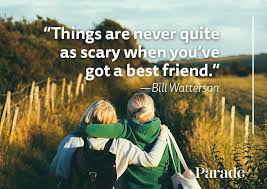
Friendship – The unbreakable bond!!!

TRUST, LOVE, LOYALTY. Friendship is the only bond that suits these three words. In love, if there is love and faith, there is no loyalty at all. In family, if there is trust and love, there is no loyalty. But friendship has these three trust, love and faith. All people in this world will definitely have a true friend who care for you all the time. When I told you this, who is the one that strikes on your mind? The one that strike on your mind will be your soulmate forever. This is my trust. Just try this. Let me come to the point. Why we value friendship more than our family? Have you ever thought about it? Okay. Come on! Let me tell you about the non-sinking ship that is friendship.

When you first went to school, you would have cried when your mom/dad left you there. After getting some friends there, you would have definitely not cried. Yes, the bond that makes feel secure and happy beyond parents must be your friends. When you grow up with your friends, you will feel them as your own brother or sister. This gives you a feel to do anything for them. In your 12 years of school life, you might have faced many situations like punishments etc., right? School, where we learned all goo deeds with our friends. There must definitely be some naughtyness. Getting punishments together, picking on your friends as much as you can, irritating them etc. This childhood friendship has given us something, that is possessiveness, ego, love, care. These are the emergence of our own friendship. We always have a thought, my friend must talk to me and should not talk to others. Those possessive bonds are unbreakable.

14 Reasons Why School Friends Are Friends For Life

In your college life, at first, you might have some hesitation to talk to your friends and it will start very formally and after the bond get stronger, these won’t be formal talks even if you imagine it. The life’s adventures can be known with your friends in your college life. These school and college friendship can never be forgotten. It doesn’t matter what the gender is but what matters is friendship!! Friendship has no language, gender, caste etc., It’s just the sink of two hearts. There have always been the cute and lovely friendship between a boy and a girl. Some thought its wrong; what’s wrong with that? They are friends; they know their limits right? So, let’s stop being opposive on friendship between a boy and girl.

How to teach ... making friends | Teacher Network | The Guardian

As everyone know, tomorrow is International Friendship Day. Rather than texting your long distance friends just make it lively. Just do a video call or a normal call. This makes them feel happy for you. And they will know how strong your friendship is!!

HAPPY FRIENDSHIP DAY!!

When is Friendship Day 2021, International Friendship Day Date

Twitter will pay hackers to discover biases in its automated picture cropping after being accused of doing so.

Twitter is running a competition in the hopes of finding biases in its picture cropping algorithm, and the best teams will get cash awards (via Engadget). Twitter hopes that by allowing teams access to its code and picture cropping model, they will be able to identify ways in which the algorithm might be detrimental (for example, cropping in a way that stereotypes or erases the image’s topic).


Those that compete must submit a summary of their results as well as a dataset that can be put through the algorithm to show the problem. Twitter will then give points depending on the kind of damages discovered, the potential impact on people, and other factors.


The winner team will get $3,500, with $1,000 awards granted for the most creative and generalizable results. On Twitter, that figure has sparked some debate, with some people arguing that it should include an extra zero. For example, if you discovered a bug that allowed you to execute activities for someone else (such retweeting a tweet or picture) via cross-site scripting, Twitter’s standard bug bounty programme would pay you $2,940. You’d make $7,700 if you could find an OAuth flaw that allowed you to take over someone’s Twitter account.


Twitter had already conducted its own study into its image-cropping algorithm, publishing a paper in May that looked at how the system was biassed in the wake of claims that its preview crops were racist. Since then, Twitter has mainly abandoned algorithmically trimming previews, but it is still utilised on desktop, and a good cropping algorithm is a useful tool for a firm like Twitter.


Opening a competition allows Twitter to receive input from a much wider group of people. For example, the Twitter team had a meeting to discuss the competition, during which a team member stated that they were getting queries about caste-based biases in the algorithm, something that software developers in California may not be aware of.
Twitter is also searching for more than simply unintentional algorithmic bias. Both deliberate and unintended damages have point values on the scale. Unintentional harms are cropping behaviours that may be abused by someone publishing maliciously created photos, according to Twitter. Intentional harms are cropping behaviours that could be exploited by someone posting maliciously intended images.


The competition, according to Twitter’s announcement blog, is distinct from its bug bounty programme; if you submit a complaint regarding algorithmic biases to Twitter outside of the competition, your report will be closed and tagged as not applicable, the company warns. If you’re interested in participating, visit the competition’s HackerOne page to learn more about the rules, qualifications, and other details. Submissions are open until August 6th at 11:59 p.m. PT, and the challenge winners will be revealed on August 9th at the Def Con AI Village.

Childhood Obesity

In 2019, an estimated 38.2 million children under the age of 5 years were overweight or obese. Once considered a high-income country problem, child obesity is now on the rise in low- and middle-income countries, particularly in urban settings. Childhood obesity is a complex health issue. It occurs when a child is well above the normal or healthy weight for his or her age and height. The causes of excess weight gain in young people are similar to those in adults, including behaviour and genetics. The rate of childhood obesity has more than tripled over the last four decades—rising from 5 percent in 1978 to 18.5 percent in 2016. But what are the reasons for this rapid increase?

Fast food Consumption

Increased fast food consumption has been linked with obesity in the recent years. Many families, opt for these places as they are often favoured by their children and are both convenient and inexpensive. Foods served at fast food restaurants tend to contain a high number of calories with low nutritional values. Though many studies have shown weight gain with regular consumption of fast food, it is difficult to establish a causal relationship between fast food and obesity.

Sugary beverages

A study examining children aged 9–14 from 1996–1998, found that consumption of sugary beverages increased BMI by small amounts over the years. Sugary drinks are another factor that has been examined as a potential contributing factor to obesity. Sugary drinks are often thought of as being limited to soda, but juice and other sweetened beverages fall into this category. Sugary drinks are less filling than food and can be consumed quicker, which results in a higher caloric intake.

Activity level

One of the factors that is most significantly linked to obesity is a sedentary lifestyle. Each additional hour of television per day increased the prevalence of obesity by 2%. Television viewing among young children and adolescents has increased dramatically in recent years. The increased amount of time spent in sedentary behaviours has decreased the amount of time spent in physical activity. Research which indicates the number of hours children spend watching TV correlates with their consumption of the most advertised goods, including sweetened cereals, sweets, beverages, and snacks. Media effects have been found for adolescent aggression and smoking and formation of unrealistic body ideals. Regulation of marketing for unhealthy foods is recommended, as is media advocacy to promote healthy eating.

Psychological factors:

Self-esteem

Research findings comparing overweight/obese children with normal-weight children in regards to self-esteem have been mixed. Some studies have found that obese children have lower self-esteem while others do not. There is some consensus in the literature that the global approach to self-esteem measurement with children who are overweight/obese is misleading as the physical and social domains of self-esteem seem to be where these children are most vulnerable.

Eating disorder symptoms

Traits associated with eating disorders appear to be common in adolescent obese populations. A number of studies have shown higher prevalence of eating-related pathology (i.e. Anorexia, Bulimia Nervosa, and impulse regulation) in obese children/youth.

Consequences

Childhood obesity can profoundly affect children’s physical health, social, and emotional well-being, and self-esteem. It is also associated with poor academic performance and a lower quality of life experienced by the child. It has also been linked to numerous medical conditions. These conditions include, but are not limited to, fatty liver disease, Type 2 diabetes, asthma, cardiovascular disease, high cholesterol, glucose intolerance and insulin resistance, skin conditions, menstrual abnormalities and impaired balance. Until recently, many of the above health conditions had only been found in adults; now they are extremely prevalent in obese children. Childhood obesity has also been found to negatively affect school performance. A research study concluded that overweight and obese children were four times more likely to report having problems at school than their peers. They are also more likely to miss school more frequently, especially those with chronic health conditions such as diabetes and asthma, which can also affect academic performance.

The growing issue of childhood obesity can be slowed, if one focuses on the causes. There are many components that play into childhood obesity, some being more crucial than others. A combined diet and physical activity intervention conducted in the community with a school component is more effective at preventing obesity or overweight. Moreover, if parents enforce a healthier lifestyle at home, many obesity problems could be avoided. What children learn at home about eating healthy, exercising and making the right nutritional choices will eventually spill over into other aspects of their life. This will have the biggest influence on the choices kids make when selecting foods to consume and choosing to be active. Focusing on these causes may, over time, decrease childhood obesity and lead to a healthier society as a whole.

THE INFLUENCE OF GENDER ROLES ON HEALTH SECTOR INCLUDING REPRODUCTIVE RIGHTS

                                                                          (Photo: Singularity Hub)

  Men form one-third of a typical medical school’s population; Rest of the seats are all occupied by women. The pay gap in the healthcare sector is 25% higher than any other sector. Most women agree to work at low wages because of the financial crises they face. Gender inequality is leading to a shortage of healthcare workers in the sector. Women in India face “extensive gender discrimination” in access to healthcare. Gender inequality is leading to a shortage of healthcare workers in the sector because obviously only one-third of the seats were taken by men. 

Under the National Health Mission, the government has launched several schemes. The most important program launched by the government is Rashtriya Arogya Nidhi which provides financial assistance to the patients that are below poverty line and are suffering from life-threatening diseases.  Rashtriya Swasthya Bima Yojana is a government-run health insurance program for the Indian poor. It aims to provide health insurance coverage to the unrecognized sector workers belonging to the below poverty line.  National AIDS Control Organization was set up so that every person living with HIV has access to quality care and is treated with dignity.  Anganwadi Workers and the ASHA workers are the grassroots level functionaries under the umbrella ICDS Scheme and the National Health Mission respectively.  Both these functionaries being closely connected with the rural and urban poor families, play a pivotal role in addressing their nutrition and health related problems/issues.

How the Government has failed them ?

·        Do not have regular salaries, partly because their work is supposed to be voluntary and part-time.

·        Even though the Code on Social Security, 2020 aims to include formal and informal sectors under a social safety net, it excludes several categories of workers, including ASHA and Anganwadi workers. The Code on Wages, too, has left this constituency out of its coverage, depriving employees of a fixed minimum wage.

·        “As per Modi government’s definition, Anganwadi and ASHA workers are not ‘workers’ but only ‘volunteers’, who do not receive any ‘wage’ but only an ‘honorarium’! So the principle of minimum wage would not apply to these scheme workers.”

Also a gender issue

·  Limited space for career progression is linked to low institutional recognition, demotivation, and curtailed opportunities for growth. ASHAs face sexual harassment by other health workers and community members, linked to their mobility and public profile. ASHAs have worked to further women’s interests, particularly in Chhattisgarh state where Mitanins(the name for ASHAs there) have mobilized protests against alcoholism, supported women’s collectives and taken action against gender based violence. ASHAs have begun taking action to mobilize their peers to reduce gender based violence. ASHAs have reported an increased sense of empowerment and personal growth, in part through their belief in the social value of their work.

     Gender as a social determinant of health

  •     The social determinants of health (SDH) are the non-medical factors that influence health outcomes. They are the conditions in which people are born, grow, work, live, and age, and the wider set of forces and systems shaping the conditions of daily life. These forces and systems include economic policies and systems, development agendas, social norms, social policies and political systems.
  •          The SDH have an important influence on health inequities – the unfair and avoidable differences in health status seen within and between countries. In countries at all levels of income, health and illness follow a social gradient: the lower the socioeconomic position, the worse the health.
  •        The following list provides examples of the social determinants of health, which can influence health equity in positive and negative ways:

              1.Income and social protection

              2. Education

              3.Unemployment and Job security

  •      Research shows that the social determinants can be more important than health care or lifestyle choices in influencing health. For example, numerous studies suggest that SDH account for between 30-55% of health outcomes. In addition, estimates show that the contribution of sectors outside health to population health outcomes exceeds the contribution from the health sector.
  •     Addressing SDH appropriately is fundamental for improving health and reducing longstanding inequities in health, which requires action by all sectors and civil .
  •      Social determinants of health are conditions in the environments in which people are born, live, learn, work, play, worship, and age that affect a wide range of health, functioning, and quality-of-life outcomes and risks. Conditions (e.g., social, economic, and physical) in these various environments and settings (e.g., school, church, workplace, and neighborhood) have been referred to as “place.”
  •      In addition to the more material attributes of “place, ” the patterns of social engagement and sense of security and well-being are also affected by where people live. Resources that enhance quality of life can have a significant influence on population health outcomes. Examples of these resources include safe and affordable housing, access to education, public safety, availability of healthy foods, local emergency/health services and, environments free of life-threatening toxins.
     Reproductive rights in India
     Reproductive Rights are rights of individual to decide freely and responsibly the number, spacing and timing of children. It is individual’s right to decide whether to reproduce and have reproductive health. The Supreme Court of India and several state high courts have recognized the importance of reproductive rights and have observed that the denial of reproductive rights is violation of women’s fundamental and human rights.
     Courts have been at the forefront of expanding, protecting, and promoting reproductive rights. court through its various judgements from time to time has promoted and protected the reproductive rights of women. for instance, Puttaswamy judgment, Suchita Srivastava V. Chandigarh Administration, Navtej Singh Johar V. UOI. 
     
     Role of socio-physical environment in health care
     Social determinants of health are the conditions in the environment where people sustain, i.e. they born, live, learn etc., which affects the health, functioning and quality of life outcomes and risks. Health starts from our localities, our homes, schools, communities where it is also examined by our access to social and economic opportunities. So, social determinants of health are designed to identity ways to create social and physical environment that promote good health.


IMPORTANCE OF CHILDHOOD FRIENDS

Without a doubt, one of the greatest gifts in the universe is the friendship of children. No matter how old we are, playing times with friends can take us back to a time when life was perfect and fun. It is easy to assume that such moments are a global and proven child experience, however, sadly it is not. Children raised in orphanages often miss out on the joys of contact with fellow orphans because such experiences are not available to them in an orphanage. Today is a great day to think about why friendships are so important to children. For children, friendship is an important part of their mental, physical, and social development. Children need opportunities to play together to form friendships. Through friendships, children learn to communicate with others in social situations. They also improve their physical health by competing with their peers in sports and by pushing the limits of their physical abilities. Friendship during childhood is an important part of a child’s emotional development and promotes good mental health. Through friendship and playfulness, toddlers and young children learn to interpret social media and learn to communicate with others. Children are naturally inclined to think of them and their needs. Through childhood friendships, children learn to understand how others feel and how their actions can affect others. Friendship teaches children empathy which is an important life skill that helps them understand why a person feels a certain emotion. Children’s friendships built into a noisy playground create a sense of security for children. They are able to form strong bonds with their peers, as well as with their caregivers and teachers. This has the added benefit of improving their learning skills and creating better opportunities for academic success. The benefits of childhood friendship extend to adulthood. Adults who have built strong relationships from childhood will have great success in their personal and professional lives. The benefits of childhood friendship are undeniable. Play is the child’s first chance to build a relationship. By creating an environment in which children can form friendships with their peers, we are investing in their long-term success.