Different shades of character

When I think of the word character, the line “I look to a day when people will not be judged by the colour of their skin, but by the content of their character” by martin Luther king comes to my mind. As a person grows older, the outward appearances of a person start to fade with time but the character of a person still stays evergreen. Even when we talk to a person once, we might not remember the name of the person but we will always remember the character of the person and how they treated us. It is very important to have a good character so that one can have a fruitful, happy and positive life and also treat everyone in a kind and gentle manner no matter who they are.

Some people always have a good character from the start- but others start to have one when they are put into situations that push them to undergo character development. But at first, what is character development? In fiction writing, character development is the process of building a unique, three-dimensional character with depth, personality,and clear motivations. Character development can also refer to the changes a character undergoes over the course of a story as a result of their actions and experiences. But character developments take place in reality as well. For example – Akhilesh Paul, a criminal who started playing the game of football and became addicted to it and later ended up becoming the captain of the Indian football team and led the team into world cup in 2010. The whole process from being a criminal to transforming into the captain of the team and representing India is a strong example of character development.

When we read books, we always have a character that we like the best- it is because that we as individuals relate to the character and grow fond of it. The reason we grow fond of it can be due to many different reasons- sometimes its because they are something we aspire to be or sometimes because we feel that we see ourselves in them or it’s the circumstances they are in that we relate to.

In reality we too are the main characters of our own lives. “you are the main character of your own life, the architect of your own happiness”.  Every move that we make on daily basis builds up for the circumstances that we are a part of. Everyone that Is a part of our life only help us to become a better version of our own selves and grow into becoming wonderful people. One can become the main character of their life by looking at your goals and take the necessary action to get to the level you want to be in. Taking action also means, going through every possible idea to potentially get the results you want.

Why Indian young people renting home instead of buying.

Real estate property rate is very high nowadays.flat price in Mumbai at Rs 60,000 to Rs 70,000 per square foot, where city like noida and gurgaon housing plots at Rs 100000 per square yard. An asset price bubble is building up in real estate.

Due to covid -19 pendamic the situation is changed. Everyone has affected. A lower middle class person can’t afford a plot in city like Mumbai and Delhi because high rate of housing plot.

Another reason is increasing intrest rate of home loan.

What makes the picture more from”unfair ” to “grotesque” is the fact that exceptionally high real estate price exist with poor civic infrastructure. Because property taxes are not levied very sensibly and then not collected very efficiency. The result is that cities are usually broke to offer even rudimentary service to their citizens – like assured water supply, electricity, an effective land and efficient public transport system.

Germany lifts a ban on travelers from India, Uk, Portugal.

On Monday, Germany’s Health agency said they will lift the ban on travelers from some countries which are hit by the delta variant of Covid-19 namely; U.K, India, Russia, Portugal, and Nepal. Also, the Robert Koch Institute (RKI) said these nations would be reclassified from so-called virus variant countries to high incidence areas, by Wednesday.

This change will allow travelers to visit Germany as long as they follow quarantine and testing protocols.

Germany has introduced the ‘virus variant country’ travel category to put a stop to the new virus variant of coronavirus as it was not spread widely on the land. But, Health Minister (Jens Spanh) said last week that the Delta variant is becoming dominant in Germany, indicating that bans on countries affected by this variant of the virus may be lifted. As the research suggesting vaccines are effective against it, “we’ll look into the situation in few days”, said Spanh.

Last month, Chancellor Angela Merkel had taken a tough call and had put restrictions and longer quarantines for people traveling from Britain, where the Delta Variant has caused an explosion in cases. Last Friday on her visit to London, she indicated that the restrictions might be on ease for the travelers from Britain. She said, “We think that in the foreseeable future, those who have received double jabs will… be able to travel again, without having to go into quarantine”.

Anyone can visit Germany from high incidence areas as long as they provide a negative test on the arrival. Visitors must follow the 10 days quarantine protocol, although they can end it after five days with another negative report. Travelers from high incidence areas are also spared if they have been fully vaccinated. 

Although the countries with other variants apart from the Delta variant such as Brazil and South Africa will remain in the variant category. 

RKI has reported that the conditions are getting better for Germany with a decline in the overall prevalence in recent weeks. On Monday, it has reported 212 new cases in the past 24hrs and a prevalence rate of 5 new infections per 100,000 people over the last seven days.

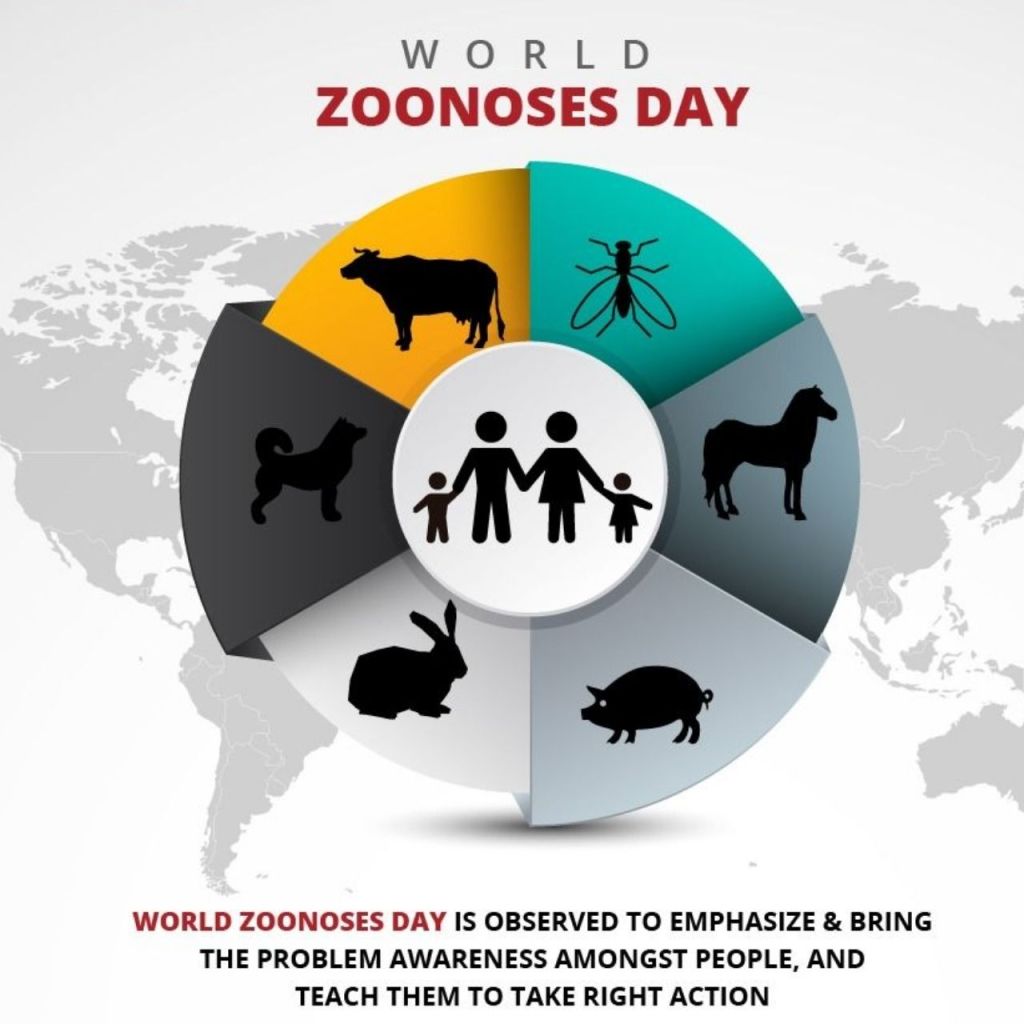
World Zoonoses Day 2021- July 6

Introduction

The World Health Organization (WHO) defines zoonosis as an infectious disease that has jumped from a non-human animal to humans. These zoonotic pathogens can be bacterial, viral, or parasitic and they can be spread to humans through direct contact or food, water, or the environment. World Zoonoses Day was first celebrated on July 6, 1885, in honour of the French biologist Louis Pasteur who managed to administer the first vaccination against a zoonotic disease on the very day, this vaccine was for rabies. The theme for World Zoonoses Day 2021 is “Let’s Break the Chain of Zoonotic Transmission” and it holds more importance in light of COVID-19.

About Louis Pasteur

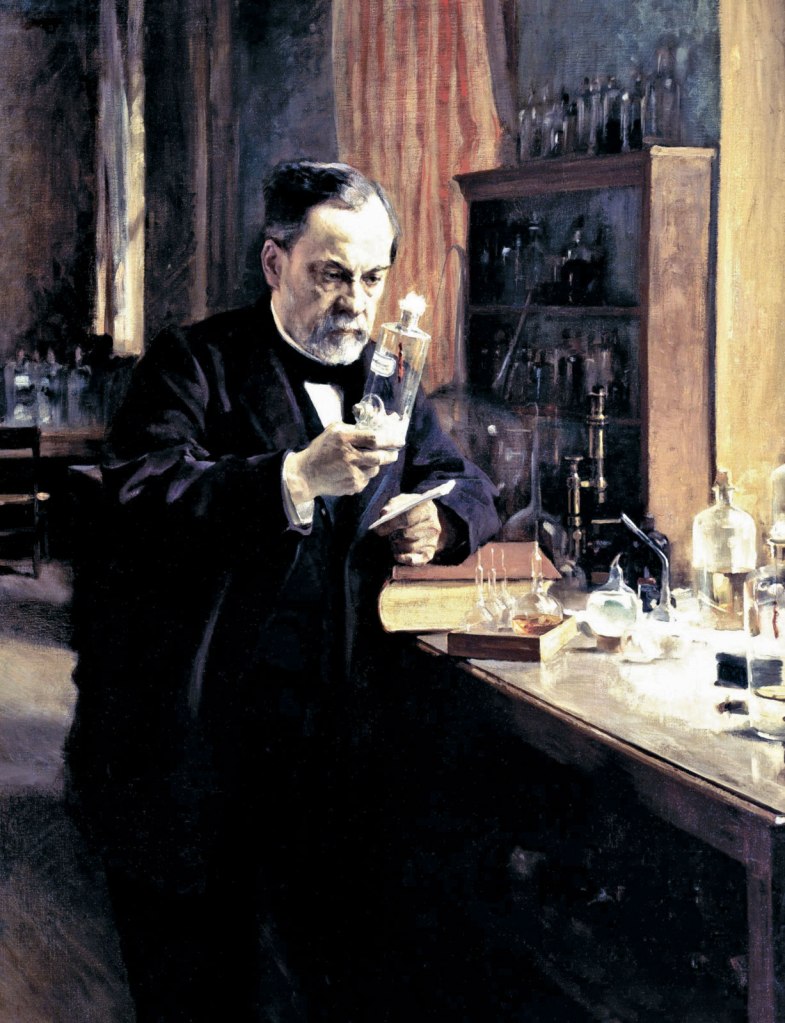
Scientific Identity, Portrait of Louis Pasteur

Louis Pasteur was born on 27th December 1822 in France and died on 28th September 1895. He was a French chemist and microbiologist who is known to be one of the most important founders of medical microbiology. He introduced the study of molecular asymmetry; originated the process of pasteurization; discovered that microorganisms cause fermentation and disease; saved the beer, wine, and silk industries in France; and developed vaccines against anthrax and rabies. He earned France’s highest award of the Legion of Honour. He was also gifted in drawing and painting. He had a bachelor in arts degree and a bachelor in science degree from the Royal College of Besancon.

Vaccine Development

Pasteur’s first discovery in the study of vaccination was in 1879 which was for the disease named chicken cholera. He then started working on anthrax in 1879 also because of the anthrax epidemic in France at that time. Pasteur had also unknowingly created a second class of vaccines known as an inactivated vaccine by accidentally creating a neutralized version of rabies. On July 6, 1885, he vaccinated a nine-year-old boy named Joseph Meister who was bit by a rabid dog and the vaccine was a huge success.

Relevance Today

This day should raise more awareness now as it is said that COVID-19 originated from the bats and then entered the human circle through the wet markets of Wuhan, China. The Center for Disease Control and Prevention (CDC) says that almost 75% of new zoonotic diseases originate from animals that can be transmitted to humans by the act of consuming meat or even by coming in contact with the animal which is affected. WHO has said that poultry farmers, meat sellers, and the people living near the forest region have a higher chance of risk of being affected by these diseases. Some of such diseases are HIV (started as zoonosis but later mutated into a human-only strain), Ebola virus, salmonellosis. Some of these zoonoses have the potential of causing recurring disease outbreaks like Ebola and as we have seen, different waves of COVID-19.

Prevention

The method of prevention for zoonotic diseases differs for different pathogens. But some general practices are seen as effective. A safe and appropriate guideline for animal care in the agricultural sector would help in reducing foodborne zoonotic disease outbreak through meat, eggs, dairy, and vegetables. There should be a set standard for drinking water and waste removal. Education campaigns should be promoted all across the world related to awareness of the diseases and handwashing after coming in contact with an animal.

Conclusion

It is important to learn the history of zoonotic diseases and learning the precautions for them and how to prevent them. With the recent developments of the COVID-19, we know more about how bad the impact of these diseases can be, and it is now more important than ever to learn more about it.

References

RESTORATION HEROIC TRAGEDY

In the serious plays produced shortly after the Restoration there is an artificial declamatory elevation which, joined with bustling action and elaborate spectacle, for some years dazzled audiences. Later this “heroic” type of play yielded to dramas of pathos and sentimentality. Sir William Davenant was a major influence behind the emergence of heroic play, even though Dryden himself liked writing such plays. Dryden, in fact, is not only the chief playwright in this type but also the principal contemporary commentator on it. In his essay Of Heroic Plays, prefixed to The Conquest of Granada(1672), he analyzes and defends the type; in the prefaces to All for Love(1678) and The Spanish Friar(1681) he recants. Davenant he regarded as the father of the type, though he recognized it as a development both of the Elizabethan tradition and of “Corneille and some French poets”. He also recognized the influence of Ariosto and the heroic poem, observing that “an heroic play ought to be an imitation, in little, of an heroic poem; and, consequently, that Love and Valour ought to be subject of it.”

Roger Boyle, Earl of Orrery, who among the first writers of heroic tragedy exercised considerable influence, took up this habit, reintroduced from France and favoured by Charles II. He used English materials in two historical plays. Henry V(1664) and The Black Prince(1667), but cast them in the form of French tragedy and used the popular device of antithetical emotions to tear the souls of his persons between the conflicting duties due to a mistress and to a mistress and to a friend or between love and filial duty. In The General (1664) the hero is torn between love and honour, while the emotional conflicts of Mustapha(1665) are extremely complex. Orrey’s language was marked by a strong but artificial style.

Dryden’s The Indian Queen, written in collaboration with Sir Robert Howard, hit the English stage January 1664, and for more than a decade thereafter Dryden remained as the master-author of heroic plays. In The Indian Queen love and valour, the prescribed motives are the conflicting forces. The great success of this play induced Dryden to produce a sequel next year entitled The Indian Emperor. After a gap of four years Dryden returned to heroic plays with Tyrannick Love or, The Royal Martyr in 1699. The plot introduces us to the tyrant Maximin as a protagonist. There is no villainess; and St. Catherine of Alexandria (as “captive queen”) introduces an element of Christian apologetics, later more significant in Dryden’s nondramatic poetry.

Thrilling as the final rants of Maximin were, they less varied and effective than the poetical rhetoric of Dryden’s most elaborate heroic play, The Conquest of Granada, a play in two parts (1670,1671) filling ten highly complicated acts. The moral instruction seems to be that a nation divided against itself, as were the Moors in Granada, is easy prey armies led by an affective general such as Almanzor, who is Dryden’s loudest realization of a full-blown hero. The character of Almanzor and the poetry in which it is expressed are most remarkable. It is true that Almanzor is frequently absurd, yet his actions always have a basis in reason and are at the same time thoroughly romantic. In 1675 Dryden produced the last of his rimed heroic plays Aureng-Zebe. The stock elements of earlier heroic comedies are to be found in this also.

Even in his later tragedies, Dryden could not completely escape from the mould of heroic plays. His All for Love(1677) and Troilus and Cressida(1679) both have characters whose humanity is artificialized in heroic terms. Dryden’s last plays, Cleomenes(1692) and Love Triumphant(1694) did not achieve much success.

Elkanah Settle was another playwright to achieve moderate success with heroic plays. His The Empress of Morocco(1673), was quite popular and was often compared with Dryden’s plays. The play is hardly more absurd than some of Dryden’s, but its plotting, which concerns the successful intrigues of a wicked empress and her lover against her son, is less well knit lay in its highly spectacular scenic effects.

The chief tragic writers of the period were Lee, Otway, and Southerne. John Banks, with seven or eight tragedies, and Crowne, with eleven, are definitely inferior to these three. All these men are influenced by the heroic play, by Elizabethan tragedy (especially by the “tragedy of blood”), and by the French tradition formulated from Aristotle and Seneca in the early part of the seventeenth century. However, all of the marked a gradual movement away from heroics towards sentimental pathos.

FIRs Under Struck Down Section 66A IT Act

Introduction

On 5th July 2021, the Supreme Court expressed their shock at the practice of police registering FIRs under Section 66A of the Information Technology Act which was struck down by the Supreme Court in the 2015 judgement in the case of Shreya Singhal. An application filed by Peoples Union for Civil Liberties (PUCL) was being heard by a bench headed by Justice RF Nariman. The application sought directions and guidelines against the FIRs which were being filed under Section 66A of the IT Act which was struck down. There were over 1000s of FIRs being filed under the said provision. Justice Nariman commented on the issue, saying “What is going on is terrible. We are issuing notice”.

Background

An amendment made in 2008 introduced Section 66A in the Information Technology Act, which penalized sending of “offensive messages”, it also introduced Section 69. This amendment was passed on 22 December 2008 without any debate in the Lok Sabha and it was signed by President Pratiba Patel on 5th February 2009 to be made an official part of the law. Using this amendment, the Government of India restricted the freedom of speech to avoid self-harm and misuse. This allowed the arrest of any person which the law per se felt was harmful. In 2012, Shreya Singhal filed a Public Interest Litigation (PIL) in the Supreme Court of India.

Shreya Singhal v Union of India

In 2012, the leader of Shiv Sena, Bal Thackeray passed away and there was a bandh declared in Maharashtra by the members of Shiv Sena. Two girls, Shaheen Dhada and Rinu Srinivasan residing in Thane, were involved in this case, one of them posted something on Facebook and the other simply liked the post. Both of them were expressing their displeasure because of the state-wide bandh. They were arrested by the Mumbai police in 2012 under Section 66A of the Information Technology Act, 2000. This section aims to punish any person who sends through a computer resource or communication device any information that is grossly offensive, or with the knowledge of its falsity, the information is transmitted for the purpose of causing annoyance, inconvenience, danger, insult, injury, hatred or ill-will.

Although the two girls were released later, and their criminal cases were closed, they attracted widespread public protests. People felt that the police had misused their power by invoking Section 66A, they felt that it violated the freedom of speech and expression. So, later a writ petition was filed in Public Interest to declare Section 66A, 69, and 79 of IT Act, 2000 as unconstitutional. It was argued that the Section was in violation of Article 19(1)(a) and no provision under Article 19(2) saved it. It was also argued that the section created a lot of vagueness which gave arbitrary powers to the authorities.

In the judgement of this case, the Supreme Court agreed that none of the grounds contained in Article 19(2) were capable of being invoked as legitimate defenses for the validity of Section 66A of the IT Act. They said that any law that seeks to impose a restriction on freedom of speech can only pass muster. They also agreed that Section 66A is vague as it did not define what counts as ‘offensive’ as the object of offense will always be subjective. The Court found that Section 66A leaves many terms open-ended and undefined, therefore making the statute void for vagueness. To conclude, the court invalidated Section 66A in its entirety as it violated the right to freedom of speech and expression guaranteed under Article 19(1)(a) of the Constitution.

Conclusion

The highest Court had made the statute void but the police still keep using it to curb voices and rights that go against them. It is important to make every citizen aware of this update so that they know when they are being charged under a revoked section. And it is also important to hold regular briefings in every police station specifying which laws no longer hold credibility so that each one of them is aware and knows that doing so would then be a crime.

References

AN EDUCATION TO POOR CHILDRENS IN OUR SOCIETY

Education is the word that means learning. We all know that education is very important in this modern period of time, without education in this modern era no one will success in their life, it’s important for everyone. In our country India education system on previous time such as 15 to 20 years ago is very bad in condition or very weak; the children’s who are belong from poor family they have no money to educate themselves, as we know that on that time there is no equality in the society male were dominating the whole of the society. And slowly the changes are has been made in the society people changes their thinking first of all o previous time education is not considered so much important in the society but in this modern period of time education is compulsory for all. There are many projects that are launched recently in India that are doing a very good work by giving education to children’s who are poor and can’t afford the education fees. They will provide education along with training and development of every single individual and for achieving the position from developing country to a developed one it is necessary to educate each and every individual in their life. In this modern era children want to educate in their life because they know that without education they will can’t do anything in their life. There are many universities and colleges which provide scholarship in their campus for free education which will creates a great opportunity for a poor individual who are not able to pay their fees due to poverty. If someone has a skill and ability to do any work but he have no education then he cannot implement the skill on his work.

           There are three groups of people such as the higher class, the middle class and the last one is lower class which is below poverty line. The difficulties are specially faced by the middle class and the lower class because they will not afford the fees of a very big university. Therefore education seems difficult to this class of people group. Education also helps in developing the personality and increase confidence. An individual who is belonging from a poor society, if he becomes educated then he have to do something for society also. May be he will open a school in his area where really it is tough to being educated. The places such as village where schools are very far and it become difficult to go school daily for education. From my point of view it seems to be a very difficult task for those children who have to cross the river, there is no vehicle and in season of monsoon it creates more challenges that have to face by the children. But the good thing is that the education system of India is developing slowly, and it is good news for those children who want to becoming educated in their life. In village areas one more problem is initiated that the children who have time for study insist of that they have to work for his home such as in field of framing, he have to cuts wood from jungle for cooking , and many more the ;list is very big and different types of children have different types of problem.

So we have to change the thinking of the poor people, that how much education is an important tool to us and how its impact in the whole career of the children. It is found that in poor family basically that someone father is a farmer then later his son also becomes a farmer, then it will passing from generation to generation. Therefore it is necessary to change the thinking of poor people. So the parents are also plays a important role in every children life that where they want to send their children for education or insist of that the work that has been followed generation after generation from this there future may be spoil. And if they will send their children for education then he will success in their life and it is good for the living society also from which he belongs too from that one individual, many individual motivated towards him and giving importance to education in their life. Therefore the point is that we have to know the truth of the society that yes till now also there are many villages where education is difficult to get. We have to join government and private programs that are related to education in the backward areas and helping them to motivate every single individual towards the education.

Restoration of Provisions of SC / ST Act

The weak sections of society are often repressed and exploited by society. To control such behavior and actions the government proposes some laws and bills to safeguard the rights of such weaker sections. But these laws are sometimes misused for the satisfaction of personal desires, and such actions need to be regulated.


An amendment bill was passed in March 2018 to restore the provisions of Scheduled castes and Scheduled Tribes (Prevention of Atrocities) Act 1989. According to the National Crime Records Bureau, under the initial provision, the conviction rate remained as low as just 15.4% in 2016. The amendment bill included three new clauses to the existing Act – for the registration of a First Information Report ( FIR ), against any person, a preliminary enquiry shall not be required; no approval would be required for the arrest of the accused under the Act; under this Act, Section 438 of the Code of Criminal Procedure, dealing with anticipatory bail shall not apply, allowing the accused to apply for anticipatory bail; the decision to arrest or not rests in the hands of the investing officer which cannot be taken away. The Supreme Court also issued guidelines to safeguard people against arbitrary arrest by making the arrest possible only after the written permission of the appointing authority for the public servants and Senior Superintendent of Police in the case of private-sector employees. The verdict for the restoration of the SC / ST Bill faced a widespread protest from the Dalits as according to them it dilutes the original nature of the provision. the Supreme Court took this decision considering the interests of the Scheduled Tribes / Scheduled Castes and as well as the arbitrary arrests taking place under the provision. The decision was made in regards –


• It was observed by the Supreme Court that the Scheduled Castes and Scheduled Tribes (Prevention of Atrocities) Act, 1989 was used negatively as a way to blackmail and harass the innocent common citizens as well as the public servants in many cases.
• It was also observed that the Act was misused in many cases just to fulfill personal agendas by registering false complaints.
• The main purpose of the Act which was to break the caste-based boundaries was diluting and rather becoming strong because of the false complaints filed for the satisfaction of personal interests.
• The arbitrary arrest of the accused is tried to be put in control by making arrest possible on the written permission of the appointing authority in case of a public servant and written permission of the Superintendent of Police (SP) in case of a public servant.

The restoration was made keeping in mind the interests and safeguard of the marginalized without hampering the safeguard of the general public. Without going for a preliminary enquiry for a First Information Report (FIR) it ensured safeguard for the marginalized and by controlling the arbitrary arrests of the accused by making the arrest possible only after the written permission of the appointing authority and Superintendent of Police under this Act it safeguarded the general public.

Argentina vs Colombia (COPA AMERICA 2021 SEMIFINALS) Preview

Argentina are set to play Colombia at the Estadio Nacional de Brasilia Mane Garrincha on Tuesday in the semifinals of the Copa America.

Argentina come into this game on the back of a 3-0 win over Gustavo Alfaro’s Ecuador on Saturday in the quarterfinals. Goals from Udinese midfielder Rodrigo De Paul, Inter Milan striker Lautaro Martinez and Barcelona superstar Lionel Messi ensured victory for Lionel Scaloni’s Argentina. Ecuador had Talleres centre-back Piero Hincapie sent off late in the second-half.

Colombia, on the other hand, beat Oscar Tabarez’s Uruguay 0-0 (4-2 p) on Saturday in the quarterfinals. Despite the likes of James Rodriguez and Juan Cuadrado not playing for Colombia, Reinaldo Rueda’s men managed to emerge victorious on penalties.

Argentina vs Colombia Head-to-Head

In 40 head-to-head encounters between the two sides, Argentina hold the clear advantage. They have won 23 games, lost nine and drawn eight.

The two countries last faced each other earlier this year, with the game ending in a 2-2 draw. Early first-half goals from Atalanta centre-back Cristian Romero and Paris Saint-Germain midfielder Leandro Paredes for Argentina was cancelled out by second-half goals from Atalanta striker Luis Muriel and Junior forward Miguel Borja for Colombia.

Argentina form guide at Copa America 2021: W-W-W-W-D

Colombia form guide at Copa America 2021: W-L-L-D-W

Prediction: Argentina 2-0 Colombia

Brazil into FINALS (COPA AMERICA)


Lucas Paqueta’s first-half goal is enough to propel Brazil in the Copa America 2021 final! The Brazilians were all over Peru in the first half and looked like the dominating side. Peru came back strongly in the second half with some tactical substitutions in the break but were too short of quality and time to score the equaliser as Brazil hold on to their slender 1-0 goal lead.

Brazil now lay in wait for the outcome of the second semi-final game between Argentina and Colombia for the final to be played on Sunday, 11th July at 05.30 AM IST. 

Click on the link below to watch the highlights of the match:

https://www.google.com/url?sa=t&rct=j&q=&esrc=s&source=web&cd=&cad=rja&uact=8&ved=2ahUKEwiz0e70_c3xAhXL7XMBHdN6CTMQsk4oAHoECAEQDA&url=https%3A%2F%2Fwww.sonyliv.com%2Fsports%2Fcopa-america-2021-1700000734%2Ffootball-hls-brazil-1-0-peru-6-jul-2021-1000124710%3Fwatch%3Dtrue%26utm_source%3DGoogle%26utm_medium%3DOnebox%26utm_campaign%3Dfootball_hls_copaamerica2021_brazil-vs-peru&usg=AOvVaw0ORqn_ehdJAMIXFi1JNjWC

If you cannot lose weight= Mistakes

If you are trying to lose weight and have been doing all sort of things to get to that aim you have made that is being fit. But you cannot do that because of many hidden reasons which you might have not known because they are playing hide -hide game with you since a long time but no more.

Now I am going to tell you about something very very important. Which you will be happy to know.

Well have you been trying to lose weight since a very long time? And have lost about few kilo grams of weight but wait after some time your weight bounces back again to its more ‘weight normal’.

Everything has science in itself and weight loss and being healthy is a science of it self’s.

If you want to lose weight, then the tips are or the mistakes to avoid are: –

  1. You are not eating enough.

The most common mistake that people do to lose weight is that you think you will lose weight if you start eating less than required.

 Calory intake < Caloy outtake

Starving yourself is not good, in fact starvation crashes one’s metabolism.

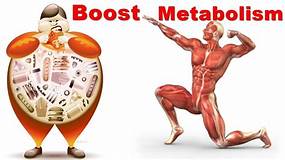
Metabolism is just a process which breaks down our food into energy. That is required by our body to function thus when you starve yourself that metabolism crashes.

Results in you having less BMR= Basal metabolism rate

Even when you are at rest, your body needs energy for all its “hidden” functions, such as breathing, circulating blood, adjusting hormone levels, and growing and repairing cells. The number of calories your body uses to carry out these basic functions is known as your basal metabolic rate — what you might call metabolism.

  • Eating more

When people tend to lose weight, they either start starving themselves or try to burn more calories that intake by exercising more.

Once you start doing too much of exercise then your body requires much more energy because at that time.  Calory intake < Calory outtake

So you started eating too much of food even that will result in more weight gain. So even by trying to being more active you should not eat more. Eat little more so that energy is there in your body to function.

When you exercise more you start losing your muscle mass and bone density instead of doing extreme exercises do little less that you body did not lose your body’s muscle mass and bone density. Which further kills your metabolism.

In order to Maine, your metabolism you should do

  • Resistance training (If you can’t go to the gym try with resistance bands at home , to carry your own weight)
  • Eat more protein to build lean muscles that will burn more fat.
  • Do aerobic exercises.
  • Do any sort of exercises like which you love dancing, cycling, stair climbing etc.
  • If you are unable, you lose weight do not stress yourself because stressing is bad.
  • DO Yoga

So go try these and avoid these mistakes results will take time but it will show.

Recommended books

https://www.healthline.com/nutrition/10-ways-to-boost-metabolism

Life the biggest motivator

Life the biggest motivator itself describes it’s meaning. We as a human have to suffer from a lots of problems in our day to day life and sometimes we even want to leave everything and just want to leave this world but believe me this is not the solution of your problems the solution is you just need a motivation to again start where you have left and when we are talking about motivation we can’t be completed without our life.

I am not to old but just 16 and have a great experience and knowledge about world and people leaving here. Because I have to suffer or you can say fight with so many problems now you are thinking about that what problems a boy of 16 year have . So Dear let me tell you we all have problems but the thing is they differ people to people and the solution is we need to just take a rest and again start with your work.

Life this small word gives us a lots of lesson to everyone in his life but the difference is some understand it and many not. When ever you are feeling low ,tensed just look at your life that how much you suffer to come now many will say I am not anywhere I am just a child or boy so let me tell you will will also give you some motivation to achieve great thing’s in your life think when you were born how many times you fall when you learning to walk but after you all you have learnt na so this is the thing nothing is impossible here here we as a human are many to make impossible things possible.

So after all I just want to say don’t be sad at what you have because atleast you have and you have achieved it with lots of hardwork and dedication .

Keep this line in your mind whenever you are doing something “Try try but don’t cry”.

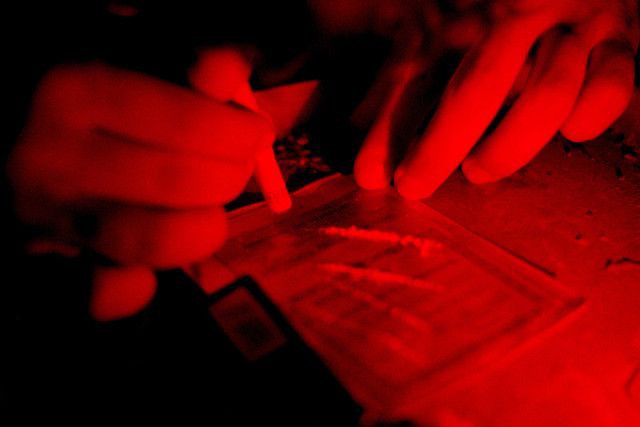
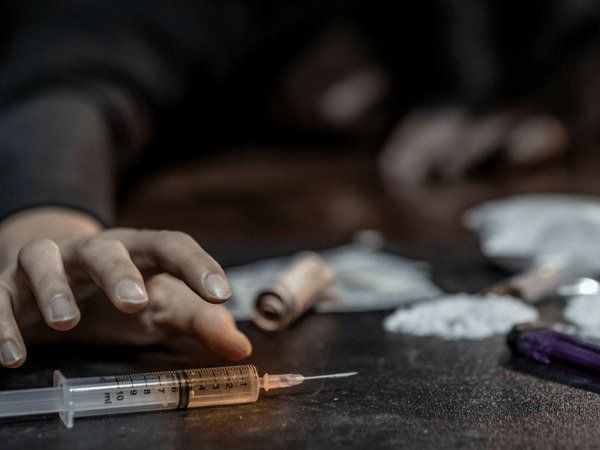
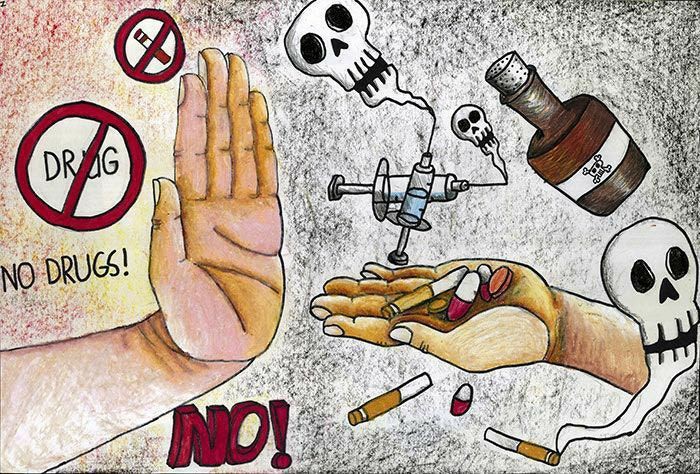
Drugs : you choose , you loose .

Addiction is just a way of trying to get at something else. Something bigger. Call it transcendence if you want, but it’s a rat in a maze. We all want the same thing. We all have this hole. The thing you want offers relief, but it’s a trap.

“ DRUGS ” A five letter word that is destroying human race. A word that could get you to the cloud nine and than kick you from the top.

What do you think it is ?

Is it a pleasure or a pain ?

Some says ‘it gives you wings ‘, others says ‘it makes you insane ‘ . What would you do , if someone is taking drugs ? Well , I would fly (its a joke ).

Ok , Let’s just get over with the topic .

Introduction

All the suffering, stress, and addiction comes from not realizing you already are what you are looking for.

– Jon Kabat-Zinn

Drugs are substances that change a person’s mental or physical state. They can affect the way your brain works, how you feel and behave, your understanding and your senses. This makes them unpredictable and dangerous, especially for young people.

Drug addiction is a chronic brain disease. It causes a person to take drugs repeatedly, despite the harm they cause. Repeated drug use can change the brain and lead to addiction. That can destroy one’s life .

Signs that shows someone has a drug problem

  • Changing friends a lot .
  • Spending a lot of time alone.
  • Losing interest in favorite things.
  • Not taking care of themselves – for example, not taking showers, changing clothes, or brushing their teeth.
  • Being really tired and sad.
  • Eating more or eating less than usual.
  • Being very energetic, talking fast, or saying things that don’t make sense.
  • Being in a bad mood.
  • Quickly changing between feeling bad and feeling good.
  • Sleeping at strange hours.
  • Missing important appointments.
  • Having problems at work or at school.
  • Having problems in personal or family relationships.

If a person shows these signs than he / she is using drugs . But it’s not , it’s a probability . The person may or may not be using drugs . For the assurance you have to ask the person (well they can lie ) . Take them for the blood test . It will show if the person is taking drugs or not . It’s a simple procedure .

Why can’t people stop using drugs on their own?


Repeated drug use changes the brain, including parts of the brain that give a person self-control. These and other changes can be seen clearly in brain imaging studies of people with a drug addiction. These brain changes explain why quitting is so difficult, even when an addicted person feels ready.

Many people are compelled to enter treatment by the pressure of their family, friends, or a court system. People of all ages with substance use disorders live in fear of what will happen if their drugs are taken away.

Due to the addiction , they experience a variety of physical and emotional withdrawal symptoms, including depression, anxiety, and other mood disorders; restlessness, and sleeplessness . It may lead you to the death bed .

Treatment :

Counseling and other behavioral therapies are the most commonly used forms of treatment. Medications are often an important part of treatment, especially when combined with behavioral therapies. Treatment plans must be reviewed often and modified to fit the patient’s changing needs.

  • Rational Emotive Behavior Therapy.
  • Cognitive Behavioral Therapy.
  • Detoxification.
  • Treatment with Medication.
  • 12-Step Facilitation.

One of the hardest things was learning that I was worth recovery.

Link

Dr. A. P. J Abdul kalam

A.P.J. Abdul Kalam, in full Avul Pakir Jainulabdeen Abdul Kalam, (born October 15, 1931, Rameswaram, India—died July 27, 2015, Shillong), Indian scientist and politician who played a leading role in the development of India’s missile and nuclear weapons  programs. He was president of India from 2002 to 2007.

Kalam earned the degree of aeronautical engineering in madras Institute of technology and in 1958 joined the Defence Research and Development Organisation (DRDO). In 1969 he moved to the IndianSpace Research Organisation, where he was project director of the SLV-III, the first satellite launch vehicle that was both designed and produced in India. Rejoining DRDO in 1982, Kalam planned the program that produced a number of successful missiles, which helped earn him the nickname “Missile Man.” Among those successes was Agni, India’s first intermediate-range ballistic missilewhich incorporated aspects of the SLV-III and was launched in 1989.

From 1992 to 1997 Kalam was scientific adviser to the defense minister, and he later served as principal scientific adviser (1999–2001) to the government with the rank of cabinet minister. His prominent role in the country’s 1998 nuclear weapons tests solidified India as a nuclear power and established Kalam as a national hero, although the tests caused great concern in the international community In 1998 Kalam put forward a countrywide plan called Technology Vision 2020, which he described as a road map for transforming India from a less-developed to a developed society in 20 years. The plan called for, among other measures, increasing agricultural productivity, emphasizing technology as a vehicle for economic growth, and widening access to health care and education.

In 2002 India’s ruling National Democratic Alliance (NDA) put forward Kalam to succeed outgoing President Kocheril Raman Narayanan. Kalam was nominated by the Hindu nationalist (Hindutva) NDA even though he was Muslim, and his stature and popular appeal were such that even the main opposition party, the Indian National Congress, also proposed his candidacy. Kalam easily won the election and was sworn in as India’s 11th president, a largely ceremonial post, in July 2002. He left office at the end of his term in 2007 and was succeeded by Pratibha Patil, the country’s first woman president.

Upon returning to civilian life, Kalam remained committed to using science and technology to transform India into a developed country and served as a lecturer at several universities. On July 27, 2015, he collapsed while delivering a lecture at the Indian Institute of Management Shillong and was pronounced dead from cardiac arrest soon afterward.

Kalam wrote several books, including an autobiography, Wings of Fire (1999). Among his numerous awards were two of the country’s highest honours, the Padma Vibhushan (1990) and the Bharat Ratna (1997).

Marxism

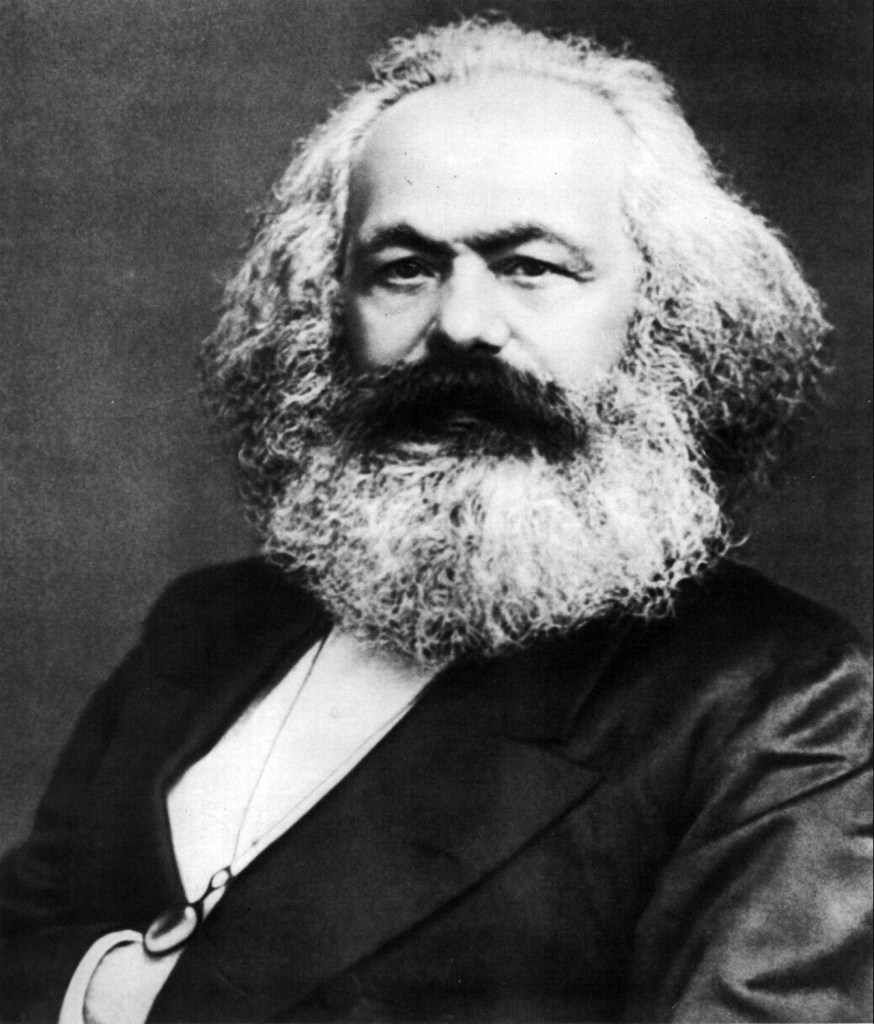
Marxism, also referred to as communism, is a political ideology,philosophy and a body of doctrine which was developed by Karl Marx and Freidrich Engels. Major contributor to the philosophy of Marxism, Karl Marx, was born in Trier, Rhine province, Prussia in 1818. He was born to a Jewish family, which later converted to Christianity. Marx was awarded a Doctorate of Philosophy for his essay on materialism of the Epicurus, a famous Greek Philosopher. He joined as an Assistant Editor at the Rhenish Times and was promoted to the position of Chief Editor. He left this job due to differences between him and the owner. In 1843, he moved to France. He became the editor of the Franco-German Yearbook and continued until it went out of business. Here, he became acquainted to French and German extremists like Proudhon, Mazzini, and Engels. The Communist Manifesto was jointly released by Karl Marx and Friedrich Engels in 1848. Marx published the first volume of Das Capital in 1867 and the remaining volumes were published posthumously by his friend Friedrich Engels. He spent his final years in exile and poverty in London

Marxism uses historical materialism to explain class relations and social conflict. The philosophy of Marxism was greatly influenced by Friedrich Engels who was an idealist. This led to the the concept of dialectical materialism. According to dialectical materialism, the prominent ideas that originate in the human mind at a particular point in time are called the thesis. Certain ideas, then, emerge as a response to these prominent ideas which are called as the anti-thesis. Ultimately, there is a conflict between thesis and anti-thesis, which leads to the formation of the synthesis. For example, the synthesis of the thesis of importance of capital and anti-thesis of importance of labour is class war. 

According to materialistic interpretation of History, throughout history a man pursues his material needs, which in turn creates history, and only after fulfilling his material needs he shifts his focus to higher goals. Using this interpretation, Marx classifies history into four stages based on modes of production. The first one is the Primitive Communist Stage. In this stage, the factors of production were meagre and were shared among the people of the community. The next stage is the ancient stage. The class structures had developed during this period. Slaves were owned by certain masters and these people controlled the factors of production. Being the master, their needs were fulfilled and possessed a surplus and denied benefits to workers. In a similar manner, the feudal lords exploited the landless serfs in the feudal stage and capitalist exploit the workers in the industrial stage.

Another important principle of Marxism is the theory of surplus value. According to this theory, the value of a commodity is equated to the wages paid to the labourer. Any value above the commodity value is regarded as surplus value, which is both needless and exploitative. According to this philosophy, the surplus value results in the exploitation of the labourer as the producer extracts illegitimate profits. The next principle is the theory of class war. According to Marx, two classes of people exist in all stages of history – the bourgeoise and the proletariat. The bourgeoise refers to people who are in control of the factors of production and pay for the labour of other people. The proletariat refers to people who are workers and do not own any or control any factors of production. History is nothing but a clash between these two classes where the former has always exploited the latter – master-slave, landlord-serf, capitalist-worker. The interests of these two classes are, au fond, in conflict with each other. This results in a continuous conflict called class war.

By exploiting the labour of the proletariat, the rich manage to build vast amounts of wealth. The concentration of wealth in their hands increases and the poor become poorer. This enlarges the gulf between the rich and the poor. Only a few people end up controlling most of the resources. This is called concentration of capital. The continuous exploitation of the proletariat by the bourgeoise forces them to rebel against the controllers of production. Therefore, revolution by the proletariat against the bourgeoise becomes inevitable. 

According to Marx, after the revolution by the proletariat, the capitalists will be removed from the position of power and the dictatorship of the proletariat will be established. The proletariats after the revolution will wipe out the capitalists. This is the dictatorship of the proletariat. This will lead to the formation of a classless society where there is no conflict between people. In a classless society, there is no more any need for the state to maintain order and harmony amongst people. This is the end goal of communism. According to Karl Marx, religion is the opium of the people. It makes people sway to sentiments and is used as a tool of exploitation by the capitalists. However, Karl Marx did not advocate the abolition of religion. Socialism, which is considered peaceful and evolutionary, was a prelude to Marxism, which is violent and revolutionary. Marxism took hold of Russia during the World War 11. After the fall of the Soviet Union, the popularity and influence of Marxism has waned.