The Legal Practitioner’s (Women) Act was passed in the year 1923. it was only in 1846 that all duly qualified irrespective of nationality or religion were able to enter into the legal profession. Women were still excluded from the profession at this stage, to be thereafter admitted through the Legal Practitioner’s (Women) Act, III of 1923. The act regarding practising law profession still excluded women from entering the profession as it did not make any reference to women in the act. The Legal Practitioner’s (Women) Act formally allowed women entry into the profession. It abolished the bar on women from practising law. The Indian women were granted the right to choose legal profession and practice as Advocates in the Courts of Law. This fight was pioneered by Cornelia Sorabji. Prior to this, women due to their illiteracy and ignorance were easily duped by the legal people or their touts. Their reserve nature was inculcated and strengthened by customs and culture. They were not able to exercise their right over their own properties. Though initially only a handful of women joined the profession as Advocates this reformative measure ignited the spirit of pleading for the cause of another before the Courts. That the laws could be utilised for obtaining social justice and repressive laws could be overthrown for further development, and that women could do it for themselves and others as well was an eye-opener to the Indian society of pre-independence times.
The challenge before women to enter into legal profession was significant and made a case for their entry to heal Indian women. They wanted to represent the Indian women. In many cases, judges opined that women were not ‘persons’ for the purpose of entering the legal profession. Regina Guha’s case was the first woman’s case. After obtaining a Bachelor of Law degree, Guha applied for admission to be enrolled as pleader in the Alipore district court. The application was examined by the court. Regina contended that since under the General Clauses Act, “words importing the masculine gender shall be taken to include female”, the rules under the Legal Practitioners Act, although referring in terms to men, would include women.In response, barrister Eardley Norton, a civil rights advocate, the bench responded that at the time the Legal Practitioners Act was passed, “there had never been a case of a lady being allowed to practice in the Indian courts”. The Legal Practitioners Act made no reference to women. In another case, Hazra applied to Calcutta University, seeking permission to appear as a private candidate in the preliminary examination of law. Calcutta University transferred her application to Patna University. Her application was refused on the ground that she had not attended regular law lectures.Calcutta University finally granted her permission to appear as a private candidate in the preliminary law examination. In 1921, after obtaining a Bachelor of Law degree from Calcutta University, she applied to be enrolled as a pleader in the Patna district court. The Patna high court judges delivered upholding the position in Regina Guha that in spite of the provisions of the General Clauses Act of 1868 and 1897, a woman, although fully qualified, was not entitled to a certificate under the Legal Practitioners’ Act to act as a pleader because of her sex. She was not a ‘person’.
By this time, the Sex Disqualification (Removal) Act 1919 was passed in England that allowed women to enter the legal profession. At the same time, the Allahabad high court allowed Cornelia Sorabji to be enrolled as a vakil. With the Patna high court judgment, a concerted campaign to amend the Legal Practitioners’ Act began. In 1922, Narayan Malhar Joshi moved a resolution proposing amendment of the Legislative Assembly Electoral Rules to remove sex disqualification in the matter of registration on the electoral roll, Gour introduced a resolution to remove sex-based disqualification in the legal profession as an amendment to Joshi’s resolution.The Legal Practitioners (Women) Act was finally passed in 1923, removing the disqualification affirming that “no woman shall, by reason only of her sex, be disqualified from being admitted or enrolled as a legal practitioner or from practising as such”.
Every hour one student commits suicide in India, with about 28 such suicides reported every day, according to data compiled by the National Crime Records Bureau ( NCRB ). The NCRB data shows that 10,159 students died by suicide in 2018, an increase from 9,905 in 2017, and 9,478 in 2016 . As per reports from the National Crime Records Bureau(NCRB) between 2014 and 2016; 26,476 students committed suicide in India. Of these around 7,500 committed suicide due to failure in various examinations .
This is shocking right ? no one ever thought about this while everyone is talking about cancelling NEET a student is committing suicide, a family is loosing their daughter or son . Do we ever taught what would be the reason behind a suicide. No , we just frame a story ourselves But reality is kept unknown. Most of the students commit suicide because of stress of getting good marks , getting into a good college . We still live in a society where marks are important than knowledge even though time as proved it wrong
Now – a – days students enter into a examination hall like they are entering into a life or death situation there is nothing wrong with a teenager going with such a mindset but it is responsibility to make them realize its just a assessment parents , teachers and school management .
But the reality between each and every suicide is there parents who refuse to see there is a better future for their son/daughter beyond this marks and teacher who just wants to give 100 % just to get an increment and management who wants to provide 100% results to get more admission but is it really worth a young life ???
There are many organisations really working hard to avoid this kind of situation and they saved many lives but we all are seeing this situation from a wrong perspective its not student who need to be educated or motivated its their parents and educational institution .
Once Dr.A.P.J abdul kalam said “If you fail, never give up because FAIL means “First Attempt In Learning”. “Failure will never overtake me if my determination to succeed is strong enough.” “All of us do not have equal talent. But , all of us have an equal opportunity to develop our talents.”
I still strongly believe in his words that this nation lies in the hands of youth . So , I am not trying to say that education is not important all i am trying to say is we a life is more important.
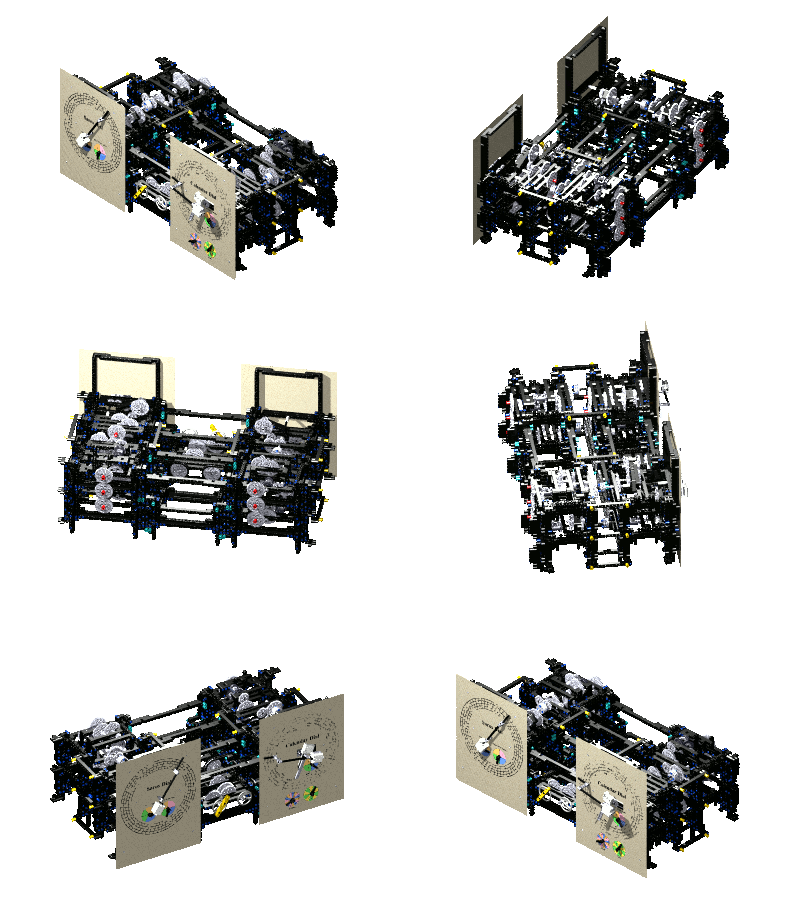
After 2,000 years under thesea, three flat, misshapen pieces of bronze at the National Archaeological Museum in Athens are all shades of green, from emerald to forest. From a distance, they look like rocks with patches of mold. Get closer, though, and the sight is stunning. Crammed inside, obscured by corrosion, are traces of technology that appear utterly modern: gears with neat triangular teeth (just like the inside of a clock) and a ring divided into degrees (like the protractor you used in school). Nothing else like this has ever been discovered from antiquity. Nothing as sophisticated, or even close, appears again for more than a thousand years.
For decades after divers retrieved these scraps from the Antikythera wreck from 1900 to 1901, scholars were unable to make sense of them. X-ray imaging in the 1970s and 1990s revealed that the device must have replicated the motions of the heavens. Holding it in your hands, you could track the paths of the Sun, Moon and planets with impressive accuracy. One investigator dubbed it “an ancient Greek computer.” But the X-ray images were difficult to interpret, so mainstream historians ignored the artifact even as it was championed by fringe writers such as Erich von Däniken, who claimed it came from an alien spaceship. It wasn’t until 2006 that the Antikythera mechanism captured broader attention. That year, Mike Edmunds of Cardiff University in Wales and his team published CT scans of the fragments, revealing more details of the inner workings, as well as hidden inscriptions—and triggering a burst of scholarly research.
The Antikythera mechanism was similar in size to a mantel clock, and bits of wood found on the fragments suggest it was housed in a wooden case. Like a clock, the case would’ve had a large circular face with rotating hands. There was a knob or handle on the side, for winding the mechanism forward or backward. And as the knob turned, trains of interlocking gearwheels drove at least seven hands at various speeds. Instead of hours and minutes, the hands displayed celestial time: one hand for the Sun, one for the Moon and one for each of the five planets visible to the naked eye—Mercury, Venus, Mars, Jupiter and Saturn. A rotating black and silver ball showed the phase of the Moon. Inscriptions explained which stars rose and set on any particular date. There were also two dial systems on the back of the case, each with a pin that followed its own spiral groove, like the needle on a record player. One of these dials was a calendar. The other showed the timing of lunar and solar eclipses.
Experts have been working to decipher inscriptions hidden inside the mechanism, in particular to understand the mechanism’s missing pieces, some destroyed, some probably still at the bottom of the sea. Though the pointers on the front face don’t survive, Alexander Jones, a historian at the Institute for the Study of the Ancient World in New York, says an inscription reveals that they carried colored balls: fiery red for Mars, gold for the Sun.
Also missing are the parts that drove the planetary pointers, leading to debate about exactly how they moved. Because planets orbit the Sun, when viewed from Earth they appear to wander back and forth in the sky. The Greeks explained this motion with “epicycles”: small circles superimposed on a larger orbit. According to Michael Wright, a former curator at London’s Science Museum who has studied the mechanism longer than anyone, it modeled epicycles with trains of small gears riding around larger ones. Though some experts have dismissed this as beyond the Greeks’ abilities, Jones says he will publish evidence supporting the idea later this year.
Other inscriptions hint at where the mechanism was made. Paul Iversen, a classicist at Case Western Reserve University in Cleveland, reports that the calendar includes month names used in Corinth and its colonies in northwest Greece. A dial that displayed the timing of major athletic festivals, including the Olympics, lists Naa, a festival held in northwest Greece, and Halieia, held to the south on the island of Rhodes. Perhaps the mechanism hailed from Rhodes and was being shipped north. The ancient philosopher Posidonius had a workshop in Rhodes that could have been the source; according to Cicero, Posidonius made a similar model of the heavens in the first century B.C.
The tradition of making such mechanisms could be much older. Cicero wrote of a bronze device made by Archimedes in the third century B.C. And James Evans, a historian of astronomy at the University of Puget Sound in Tacoma, Washington, thinks that the eclipse cycle represented is Babylonian in origin and begins in 205 B.C. Maybe it was Hipparchus, an astronomer in Rhodes around that time, who worked out the math behind the device. He is known for having blended the arithmetic-based predictions of Babylonians with geometric theories favored by the Greeks.
Regardless, the Antikythera mechanism proves that the ancient Greeks used complex arrangements of precisely cut wheels to represent the latest in scientific understanding. It’s also a window into how the Greeks saw their universe. They came to believe that nature worked according to predefined rules, like a machine—an approach that forms the basis of our modern scientific views. Edmunds argues that this “mechanical philosophy” must have developed as a two-way process. The ancient mechanics who captured the cosmos in bronze weren’t just modeling astronomical theories but were also inspiring them.
No life is without food, the need of the food and the need of the farmers are keep on increasing in our day to day life. The farmers are following many pathways for the production of the nutrient rich food for us but somehow they are facing lot of troubles sowing to marketing. The government is also taking up steps to minimize these problems. Smart farming is one of the way to overcome the crises. So, in this essay let us discuss in short about Smart farming in India is a dream or a reality.
‘The best culture in this world is AGRICULTURE’
Farming in India
The backbone of India is former as the saying goes, many forming methods have been following throughout the country. The forming method depends upon the climatic condition, the type of the land (soil), based on the availability of water, and of course based on the condition of the environment.
At present due to the poor natural conditions like poor climate, delay of rainfall, windy, over heat, at times drought, and of course of different insects effect which are caused due to the modern era, it created the fact that bringing out the crop with product is a challenge. So sure we need a smart farming method to overcome these types of problems.
‘Modern problems needs modern solution’
Smart farming
The survey says that the demand of food will increase nearly to the 70 percentage of world food production, so it is important and basic need to be fulfilled in the future. This can be achieved only by the smart farming that through with the technology. It is more over like predicting the weather, proper supply of water, sensing the amount of nutrient content in the soil for the plant growth, protecting the plants and crops from the insects and other that affecting the plant.
This all can be brought by watching every activity of the plant growth and providing them with the things they lack. For example the automatic irrigating system this will help to maintain the moisture that needed by the plant and turn off automatically when they get enough water, then noticing the plant growth and its needs through the sensors, identifying the insects entry and keeping them away and by tracing the animals.
Then the storage is one of the foremost important thing and it can be brought by maintaining the temperature, air flow, humidity etc.,
“To get her(food) we need to work to-get-her(together)”
Dream or reality
In country like India it is really difficult task to implant all over the states, but it can be achieved with the help of the government and the funding agencies. The coast of smart farming is really huge and it cannot be set up by the individual farmers who are poor. But it can be brought by the students who create a smart farming individually by his education and love towards the farming.
Even we can say smart farming is achieved in some places, where the person step out individually and created the impact over the farming by inventing new machinery and equipments.
The awareness can be created among the people by explain bought the need of farming and its importance in the future world. Thus it motivates the people to do smart farming and that will help in the betterment of farming.
“Reality are once dreams”
Conclusion
No person is island as the saying goes that holds true for farming also because everything in this world is depends upon one another, so the smart farming can be achieved through the team work, and every reality is once a dream so it can be achieved one day for sure. Let us hope for the best and great future.
“The only culture to be cultured in the world is Agriculture”.
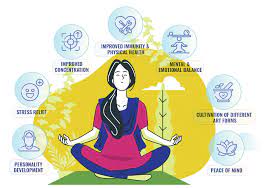
Arthritis is joint inflammation ,which is most common in older adults .There are 2 types of Arthritis which are most common in adults (1) Osteoarthritis (2) rheumatoid arthritis. Osteoarthritis (OA) is the most frequent cause of disability among older adults. According to UN ,by 2050 around 130 million people around the world will suffer from OA and around 40 million will be severely disabled by this disease. Osteoarthritis is related to ageing but there are other factors like obesity ,lack of exercise ,gender etc which effect the condition.The best way to trackle with such diesease is by taking care of yourself take health diet,do yoga , meditation ,and avoid stress .
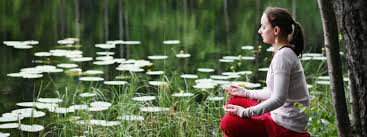
Stress is unavoidable in the current scenario, where the entire world is facing the Corona virus pandemic. With the toll of deaths and positive cases of Corona virus on rise, every person in this world is under stress and anxiety. Higher levels of stress adversely affect the physical as well as psychological health of the individuals concerned. Therefore, it becomes highly essential to manage stress at initial stages, so as to avoid severe consequences of high stress on health. The present article focuses on the management of stress through a unique form of meditation, i.e, ‘Sahaja Yoga’. Sahaja Yoga is a scientifically proven technique of meditation which involves the awakening of the dormant primordial energy- the Kundalini, and integrating it with the all-pervading cosmic energy. Regular practice of Sahaja Yoga meditation leads to the inner transformation of an individual, whereby one becomes more moral, integrated, balanced and healthy.
What is Stress?
Stress refers both to the circumstances that place physical or psychological demands on an individual and to the emotional reactions experienced in these situations. It leads to severe effects on the physical as well as psychological health of the individuals concerned such as frequent headaches, heart disease, myocardial infarction, cardiovascular disease, musculoskeletal disorders, diabetes, high anxiety, depression, post-traumatic stress disorder and so on. Since, stress is a psychological phenomenon, its management can be best realised by treatment focused at the mental level. Thus, the present article aims at spreading awareness about the stress management technique called ‘Sahaja Yoga’ and highlighting its significance in the improvement of overall health, especially, psychological health. Sahaja Yoga Meditation
What is Sahaja Yoga?
The word ‘Sahaja’ means ‘spontaneous’ and ‘Yoga’ means ‘union with the self’ Sahaja Yoga was founded in 1970 by Mrs. Nirmala Srivastava, more widely known as ‘Shri Mataji Nirmala Devi’. Shri Mataji was spiritually enlightened since birth and granted en-masse realisation to people free of any materialistic consideration. For 40 years since 1970, she travelled tirelessly across the globe to teach Sahaja Yoga meditation world-wide at her own expenses
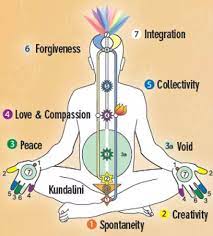
Human Subtle System
The process of Sahaja Yoga meditation works through the subtle system which comprises of three energy channels (nadis) and seven energy centres (chakras). At the root of this system lies a protective power – Kundalini. Amongst the three channels (Nadis), the left channel called Ida Nadi represents our desires (Ichha shakti); the right channel called Pingla Nadi represents our working ability (Kriya shakti); and the central channel called Sushumna Nadi represents our assent. The seven energy centres in the body correspond to the seven nerve plexuses: the pelvic plexus (Mooladhara Chakra), the aortic plexus (Swadhistana Chakra), the solar plexus (Nabhi Chakra), the cardiac plexus (Heart Chakra), the cervical plexus (Vishuddhi Chakra), the optic chiasma (Agnya Chakra) and the limbic area of the brain (Sahasrara Chakra). These energy centres are responsible for maintaining their surrounding physical organs in the body. When Kundalini rises it crosses all the six energy centres and emits from the seventh centre (Sahasrara Chakra) and unites the individual consciousness with universal consciousness. An individual rise above the three channels of the subtle system and reaches a timeless state beyond the past, present and future – a state of thoughtless awareness. This process is referred to as Self-realisation. As an evidence of self-realisation, an individual feels cool breeze of vibrations on the head and palms of hands .
How Sahaja Yoga Meditation Helps in Stress Management?
It is imperative to understand how stress arises and how is it managed through Sahaja Yoga meditation. The central channel (Sushumna Nadi) is the path of rising Kundalini and a channel of balance. An individual having too many desires and always thinking about the past deviates from the central channel and puts his left channel under pressure. On the other hand a workaholic person, always working and planning for the future puts his right channel under pressure. The left-sided individuals become highly emotional, conditioned and day dreamers while right-sided people become highly egoistic and harsh on others. Stress is the result of such an imbalance between the two energy channels and deviation from the central channel. Therefore, one should always keep his attention on the central channel and remain in the balanced state in order to be stress-free. Thus, Sahaja Yoga helps in managing stress effectively by attaining and maintaining the balanced state through regular meditation, since by focussing on the central channel one remains in present rather than thinking about past or future events.
Sahaja Yoga in the present Coronavirus Scenario
As many as 200,000 people across 60 countries have attended online meditation sessions since 16 March 2020 with the commencement of lockdown, according to the information published nation-wide from H.H. Shri Mataji Nirmala Devi Sahaja Yoga Trust (National Trust). The Youtube channel – Pratisthan, Pune of the Trust has seen around 2 million views with 7.31 lakh watch hours and over 13.2 million impressions in the lockdown period. Each viewer attended an average of 8.6 session and spent average of 23 minutes per visit, which is substantial as people look towards meditation to overcome anxiety during COVID19 lockdown.
Conclusion
Sahaja Yoga meditation activates and nourishes the parasympathetic nervous system which relaxes both body functions and the brain by reducing thinking functions Thus, regular meditation everyday cleanses the subtle system, relaxes body and mind, and gradually one starts experiencing physical, mental and emotional benefits also, apart from gaining stress relief Thus, the Indian government should focus on building resilient citizens which can adjust with the pressures of the present stressful scenario.
We have to travel via roads almost every day to go to school, college, office, shops, visit relatives and friends. We need to be safe on the roads. Road safety refers to the methods and measures used to prevent road users from being killed or seriously injured.
Need for safety on Roads
It is a saddening fact that India is the world’s largest contributor to road accidents. India accounts for about 10% of roads accident fatalities at worldwide. Road crashes have a threatening impact on Indian lives, growth and economy.
Causes for Road Accidents
Distracted driving
This is a larger threat and the leading cause for road accidents. It is the distraction of the driver, engaging in any other activity while driving. It may be talking over the mobile phone or texting message or engaging in any activities with attention diverted from driving.
Reckless driving
It is a major traffic violation of rules. It is defined as the mental state in which the driver purposely disregard the rules of the road.
Night driving
An extra alertness is needed while driving at night. The uncontrolled sleep, tiredness due to long drive, poor lighting on the road can cause fatal accidents.
Tailgating
Tailgating refers to a condition where a driver drives behind another vehicle without leaving sufficient distance between them. In this condition, if the vehicle in front of him, stops suddenly, his own vehicle will crash with it.
Heavy Traffic
Increase of vehicles on the road create heavy traffic jam and cause more pollution.
Road conditions
Road expansion is very slow when compared to the expansion of vehicles.
Avoidance of safety gears
Avoiding the use of helmets for two wheelers and seat belts for four wheelers lead to unwanted happenings.
Impatience of Pedestrians
Impatience of Pedestrians and violation of traffic rules result in accidents.
Other causes
Drunken driving, jumping red light over speeding and unmanned railway crossings cause great damage to valuable lives. Due to this, many families lose their breadwinners.
Road Safety Rules
Every country has its own road safety rules and regulations for the best interests of its citizens. India also has designed road safety rules for protecting the road users from meeting with accidents and injury.
As per the Indian law, one should be eligible to get a driving licence at the age of 18. While driving use of mobile phone is prohibited. Sound horn is prohibited near a hospital or a school zone.
Preventive Measures
Government
Through the Ministry of Road Transport and Highways, Government of the India has taken earnest steps for reducing the number of road accidents.
☆ Taking steps for the rectification of accident black spots and improvement of road engineering.
☆ Ensuring the good functioning of the traffic signals and road signs at busy crossing roads.
☆ Constructing proper roads both in urban and rural areas.
☆ Installation of CCTV cameras to record high speed offences which can detect the offenders.
☆Prohibiting the act of digging or hoarding soil from roads
☆ Remove encouragement and maintain proper pedestrian ways for ensuring road safety. If the public are violating the traffic rules, it is the duty of government to correct the public and maintain order. Stringent actions are to be taken for the violation of any road safety rules.
Personality development is the development of the organized pattern of behaviors and attitudes that makes a person distinctive. personality development occurs by the ongoing interaction of temparement, character and environment. personality is what makes a person a unique person, and it is recognizable soon after birth. a child’s personality has several components, temperent, environment and character. temperament is the set of genetically determined triats that determine the child’s approach to the world and how the child learns about the world. there are genes that specify personality traits, out some genes do control the development of the nervous system which in turn controls behaviour. a second component of personality comes from adaptive patterns related to a child’s specific environment. most psychologists agree that these two factors temperament and environment influence the development of a person’s personality the most. temparament with its dependence on genetic factors is sometimes referred to as nature while the environmental factors are called nurture.
while there is still controversy as to which factor ranks higher in affecting personality development, all experts agree that highly quality parenting plays a critical role in the development of a child’s personality. when parents understand how their child responds to certain situations they can anticipate issues that might be problematic for their child. they can prepare the child for the situation or in some cases they may avoid a potentially difficult situation altogether. parents who knows how to adapt their parenting approach to the particular emperament of their child can best provide guidance and ensure the successful development if their child’s personality. finally the third component of personality is character the set of emotional, cognitive and behavioral patterns learned from experienced that determines how a person thinks, feels and behaves. a persons character continues to evolve throughout life although much depends on inborn traits and early experiences. character is also dependent on a persons moral development.
INFANCY: during the first 2 years of life an infant goes through the 1st stage. learning basic trust or mistrust. well nurtured and loved the infant develops trust and security and a basic optimism. badly handled the infant becomes insecure and earns basic mistrust. TODDLERHOOD: the second stage occurs during early childhood between about 18 months to 2 years and 3 to 4 years of age. it deals with learning autonomy or shame. well partnered the child emerges from this stage with self confidence elated with his or her newly found control. the early part of this stage can also include stormy tantrums, stubbornness, and negativism, and depending on the child’s temperament. PRESCHOOL: the 3 rd stage occurs during the play age or the after preschool years from about three to entry into formal school. the developing child goes through learning initiative or guilt. the child learns to use imagination to broaden skills through active play and fantasy; to cooperate with others; and lead as well as to follow. SCHOOL AGE: the 4 th stage learning industry or inferiority, occurs during school age up to and possibly including junior high school. the child learns to master more formal skills: .relating with peers according to rules .progressing from free play to play that is structured by rules and requires teamwork ADOLOSCENSE: the 5 th stage learning identity or identify diffusion, occurs during adolescence from age 13 or 14. maturity start developing during this time. the young person acquires self certainity as opposed to self doubt and experiments with different constructive roles rather than adopting a negative identity, such as deliquency. the well adjusted adolescent actually looks forward to acheivement and in later adolescense clear sexual identity is established. Young businessman holding a marker and drawing circular structure diagram of personal growth on transparent screen. Isolated on white background.
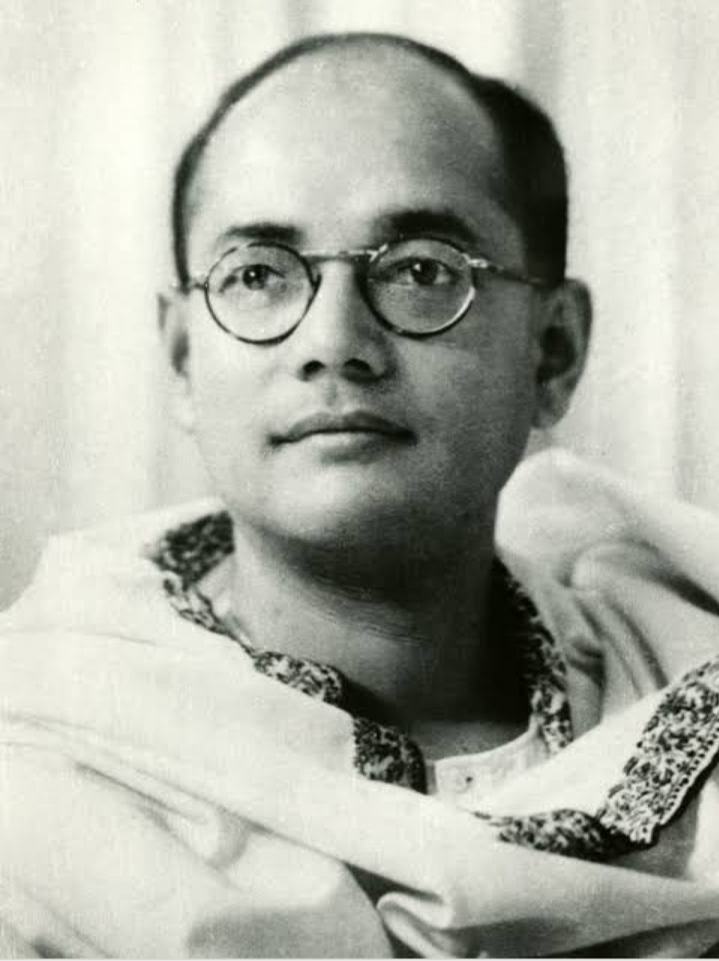
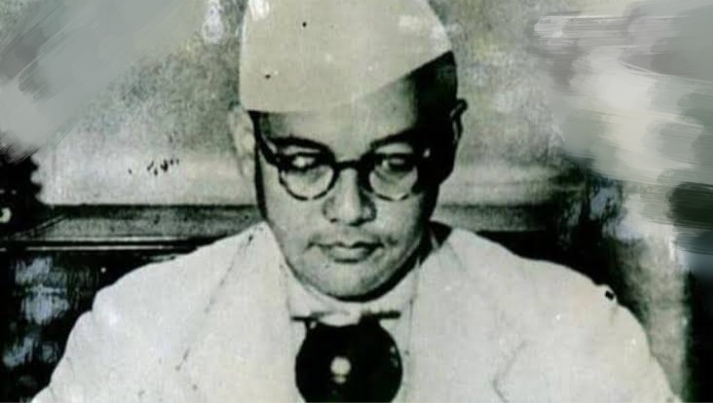
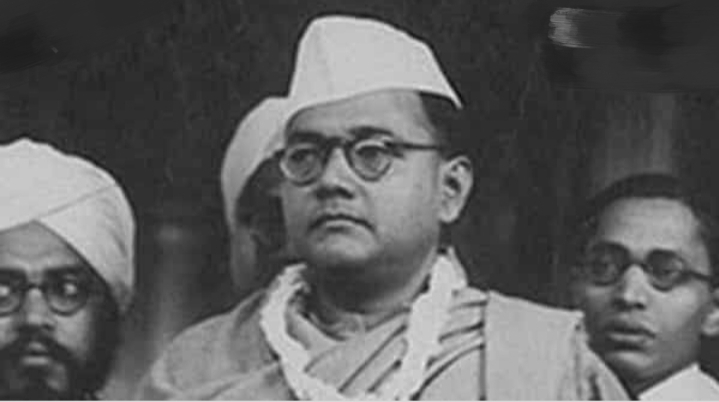
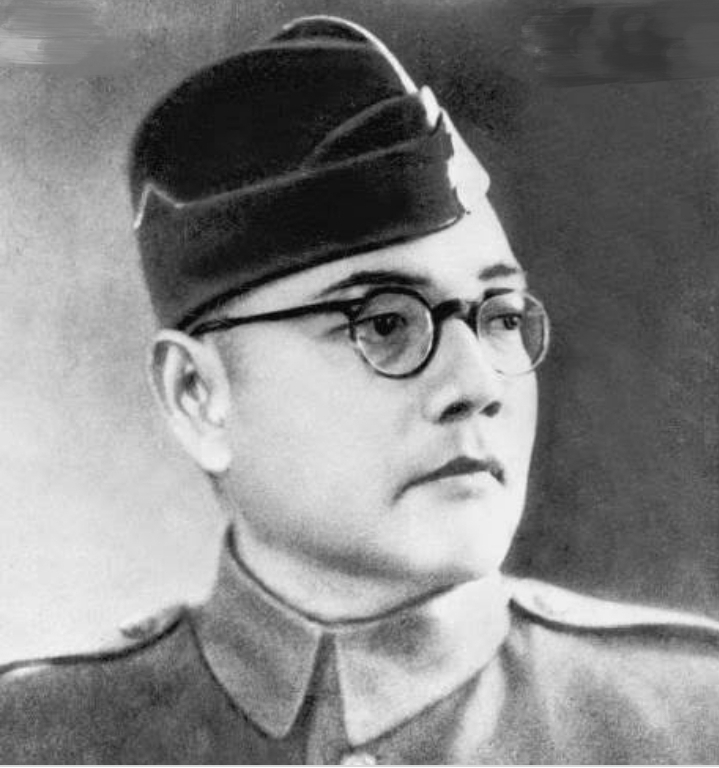
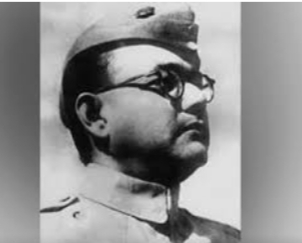
Subhas Chandra Bose was an Indian nationalist whose contribution to Indian independence and development is incomparable. Subhash Chandra Bose, the dynamic leader who gave all his sweat and blood for India’s freedom movement continues to inspire millions of mind with his words even today.
Netaji was born in Cuttack in Odisha in 1897 in a well-to-do family. His father’s name was Janakinath Bose and his mother’s name was Prabhavati Dutt Bose. He was the ninth child among the fourteen.
Bose was a bright student and also the topper in matriculation examination from Calcutta. Since childhood he was influenced by the teachings of Swami Vivekananda and was popular for his patriotic enthusiasm.
He graduated from Kolkata, and to pursue his career in Indian Civil Services, he went to England and appeared for competitive examination and stood fourth in it. He proved his mettle by becoming an Indian Civil Services (ICS) officer. But he was not accustomed to a life of comfort and amenities that came with his job. He was a warrior, who had to wage the freedom struggle.
Not only did he embrace the freedom movement wholeheartedly, but also became an inspiration for freedom. With the slogan “Give me blood and I will give you freedom”, he started preparing to awaken the country. Such was the charisma of his philosophy and personality that whoever listened to him was attracted to him. His popularity skyrocketed and he became “Netaji” to the general public.
He was so fond of Bharat Mata that his country tied to the chains of slavery did not let him live peacefully. People beyond India’s borders also developed a fascination for him. Heads of states of important countries stood by him and Netaji lit the fire of the freedom struggle beyond India’s shores. Netaji was influenced by the teachings of Mahatma Gandhi and he soon joined Indian National Congress. In 1930, he was sent to jail during the civil disobedience movement and was released in 1931. Later, he was expelled from India to Europe but taking the advantage of the situation he worked to strengthen the ties between the two countries. Challenging the ban in the home country he returned, but was again sent to jail. In 1937, after Congress came in to power, he was released.
He built a force and presented that force before the enemies of the country as the Azad Hind Fauj (Indian National Army). He gave the slogan of “Dilli Chalo” with a new spirit. Thousands of soldiers of his 60,000-strong army sacrificed their lives for the country.
Netaji was an active member of the Indian National Congress. He was elected as the President of the All India Youth Congress in 1923. His views as a freedom fighter were very different from those of Mahatma Gandhi. Netaji was a part of the Non-Cooperation Movement led by Gandhiji. He was given the title of Netaji in Germany by Indian soldiers in early 1942. Since then, he has been popularly known as Netaji among people.
“Success always stands on the pillar of failure.” Bose lived with this philosophy and also inspired others. Netaji encountered failures several times, but he converted those failures to triumph with his struggle. Whether it is municipal politics, the journey from a common Congressman to the Congress president’s position, the formation of the Forward Bloc or the struggle of the Indian National Army, he passed every test with distinction.
Bose accepted the leadership of Mahatma Gandhi, but ironically, Gandhiji himself became the cause of him leaving the Congress. But the two leaders always had respect for each other.
At the time of India’s independence, Clement Attlee was the British Prime Minister. He came to Kolkata in 1956. At that time, his host, governor and former Calcutta high court chief justice PB Chakravartti, tried to find out from him the reason behind the British decision to grant freedom to India. In response, Attlee said that the loyalty of the Indian army and navy to the British state was declining due to the increasing military activities of Bose’s Azad Hind Fauj. This was one of the major reasons. This acknowledgement proves the great contribution of Bose to India’s independence.
Jabalpur in Madhya Pradesh had a major contribution in the life of Netaji. The banks of the Narmada transformed his life. The Tripuri Congress session was held from March 4-11, 1939 in Jabalpur. Despite poor health, Netaji had arrived on a stretcher to participate in it. Thereafter, he came again to Jabalpur on July 4, 1939 to form the Forward Bloc. The people of Madhya Pradesh have a deep relationship with Netaji. In every town of the state, there’s a ward in his name. Subhas Chandra Bose’s message to his colleagues was: “Success may be distant, but it is imperative”. Bose used to say, “If a person is not obsessed, he can never become great. But he should also have something else inside him.” Bose is credited with giving global identity to the Indian leadership. Earlier, Swami Vivekananda had enlightened the world about India’s spiritual and cultural superiority and identity.
Netaji was also fluent in many Indian languages. Bose’s struggle for freedom proved to be an inspiration not just for India, but also for all Third World countries. The Indian freedom struggle and the war of independence led by Bose had a profound impact on those countries. Netaji’s status establishes him as the “hero of freedom” globally.
Unfortunately, on August 18, 1945, he was killed in a plane crash in Taiwan.
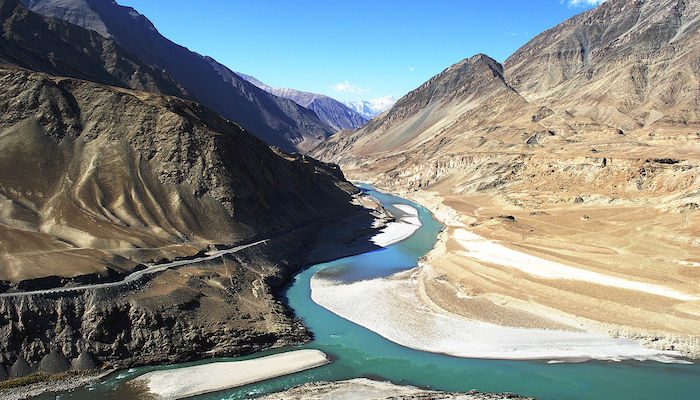
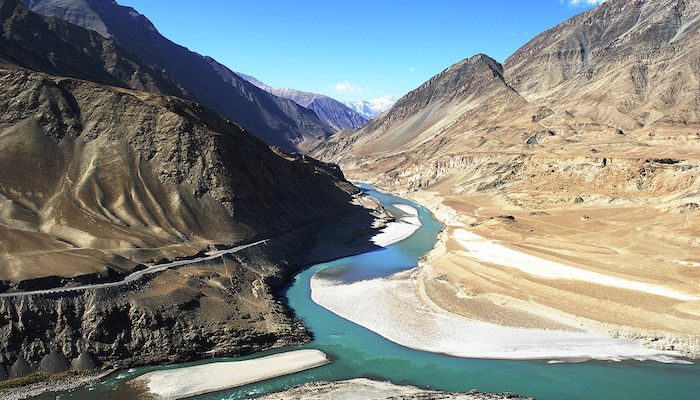
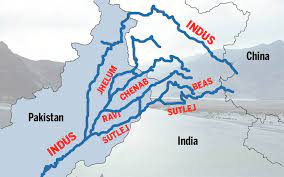
The river Indus as said about the Ganga is a transboundary river that flows Ladakh and Kashmir northwards, passes leftwards towards Nanga Parbat Massif, and Pakistan southwards and ends its journey in the Arabian sea by Karachi. The Indus is termed to be one among the world’s largest rivers in average annual flow, with an estimate of 243 cubic km, which is twice and thrice of the river Nile and the Tigris with the Euphrates combined respectively. The Indus originates from the Tibetan plateau near Lake Manasarovar and enters India in Ladakh. It cuts through the Himalayas in a deep gorge near Nanga Parbat to enter Pakistan. It has five main tributaries – the Sutlej, the Beas, the Ravi, the Chenab and the Jhelum. These rivers give Punjab its name, for the word ‘Punjab’ means ‘five rivers’. This Himalayan river is both snow-fed and rainfed, and therefore flow continuously throughout the year. The river Indus, also known as the Sindhu river, flows for 2897 km, mostly through Pakistan. Since the river moves slowly across the plain, it deposits accumulated silt on its bed. The river bed is thus higher than the sandy plain. When the river is in flood, this results in much destruction. The Indus finally branches into distributaries that join the sea at Karachi. The very river is also famous for the Indus river dolphin, a freshwater dolphin, and one of the world’s rarest mammals. It is, also the second most endangered freshwater river dolphin.
Regions through which the Indus flows
The Indus rises in southern Tibet at a height of about 5500 metres. It flows through a high plateau, then the ground falls away, and the river drops rapidly, and gathers momentum. It rushes northwest and collects the waters from innumerable glacier-fed streams. It flows between the greatest mountain ranges, the Karakoram and the Himalayas. generally, the river becomes slower and has a wider channel as it approaches its delta on the Arabian sea. Agriculture in Pakistan wouldn’t be even possible without this river. In addition, it supplies essential ingredients for human life for many urban areas. These include the Pakistani cities of Islamabad, Lahore, Peshawar and Karachi. Therefore the Sindhu is Pakistan’s longest river with a total length of 3180 km.
The Chenab
The Chenab rises in the upper Himalayas, in the district of Himachal Pradesh in India. Its waters begin from snowmelt from the Bara Lacha Pass. During the Vedic period, it was known as Chandra Bhaga, and it begins at the confluence of two rivers, the Chandra and the Bhaga in Himachal Pradesh. It flows through the Jammu, into the plains of Pakistan. It is first joined by the Jhelum, and then by the Ravi rivers. Later, it meets Sutlej, which has earlier been joined by the Beas.Altogether, these form the so-called ‘five rivers of Punjab’. After, 960 km, it flows into the Indus. The river is dear to the people of Punjab. Moreover, it forms an important part of the land’s history and culture.
Fact: The world’s highest railway bridge – the Chenab bridge – spans the Chenab. It crosses the river in Jammu and Kashmir.
map showing the path of the Indus river
The Jhelum
The Jhelum is the largest, and most western Punjab’s five rivers. It is an ancient river that has been mentioned both by the ancient Greeks as well as ancient Egyptians. It rises from a deep spring, the Verinag Spring in the southeastern part of the valley of Kashmir in India. the river wanders northwards through the valley of Kashmir to the Wular Lake. After emerging from the lake, it continues winding its way through a deep gorge into Punjab. It widens out into an alluvial plain and then goes south to join the Chenab at Trimmu after 813 km. its flow is controlled by snowmelt and the monsoon. In its lower course, the river is famous for its hydroelectric power generation. The Mangla dam and the reservoir on the Jhelum irrigate around 3 million acres of land.
The Ravi
The Ravi, one of the five rivers that create Punjab, crosses national boundaries. It rises in the majestic Himalayas in the state of Himachal Pradesh in India. It crosses Jammu and Kashmir and then flows into Pakistan. After 725 km, it empties itself into the Chenab. It is fed by glacier melt and is the smallest of all rivers of Punjab. In Vedic times, the Ravi was known as Iravati or Airavati river.It is a trans-border river of India and Pakistan. After partition, the river waters were divided between India and Pakistan.
Fact: It irrigates a large area in Punjab through a canal. This canal is known as the upper bari doab canal.
The Beas
The river Beas, one of the five rivers of Punjab, is famous in world history. It is one of the rivers that created problem’s in alexander the great’s conquest of India. His troops mutinied here in 326 BC, refusing to go any further, as they had been away from home for eight years. The Beas rises from the Rohtang Pass in the western Himalayas of Himachal Pradesh and flows south through the Kulu valley. It then enters Punjab and flows in a southerly direction. Thereafter, it finally meets the Sutlej after flowing for 470 km. the chief tributaries of the Beas are bain, Banganga, Luni and Uhal. The river was known in ancient India as the Vipasha, while the ancient Greeks called it the Hyphasis. In the 20th century, it was developed for irrigation and hydroelectric power generation.
The Sutlej
The Sutlej, the longest Punjab’s five rivers, has its source in the Rakshastal lake in Tibet. Sometimes called the red river, it is the easternmost of the Indus river’s tributaries. Further next, it rushes through the Himalayan gorges, and crosses Himachal Pradesh, before entering Punjab. It then joins the Chenab and they empty into the Indus. There are many irrigation projects along its 1400 km long course. They include the Bhakra- Nangal project, and the Sirhind canal. In addition, there is also the Sutlej valley project which benefits both India and Pakistan.
Fact: In the villages of the Sutlej valley you will find descendants of the yak traders of the olden times. These traders were known as Zhang Zhung.
The Indus: the cradle of civilization
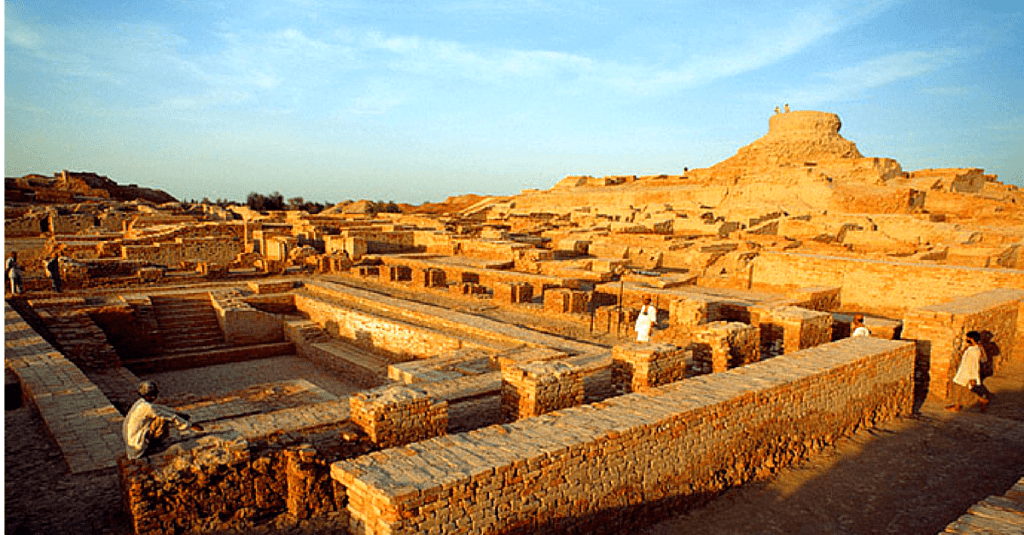
One of the greatest civilizations of ancient times flourished on the banks of the river Indus. Around 3300 BC, there were two great cities in the Indus valley, Harappa and Mohenjo Daro. They were very planned and had houses built with bricks, and even a proper drainage system. The town planning, water supply, sewage and drainage system were of very high quality – there were bathhouses and granaries in plenty, too. These cities prove to the world that the most sophisticated urban civilization of its time flourished in India, more than 5000 years ago! The wonders of engineering and architecture, the richness of the culture, and the quality of the life enjoyed by the people all prove that the valley stood to be the cradle of civilization.
The river basin covers an area of around one million square kilometres and extends to four countries. They are China, India, Afghanistan and Pakistan. Snow and glacier meltwater is the main source of water for this river system, as rainfall is low in the region. It ends in a delta, which includes numerous mangroves. The Indus basin stretches to the Karakoram and Haramosh ranges in the north, the Arabian Sea in the south, the Sulaiman and Kirthar ranges in the west, the Himalayas in the east. In India, the basin spreads over the states of Jammu and Kashmir, Himachal Pradesh, Punjab Rajasthan, Haryana and the union territory of Chandigarh.
Indus Water Treaty
India and Pakistan are two of the four countries through which the Indus river flows. The waters of the same and its tributaries support life in vast areas in these two countries. The Indus river system consists of three western tributaries of the Indus and three eastern rivers. The treaty was a result of Pakistani fears that since the sources of the rivers of the Indus basin were in India, India would have total control of the water. So, the world bank drew up a water-sharing treaty called the Indus water treaty. According to this treaty, the Ravi, the Beas and the Sutlej, which constitute the eastern rivers, are allocated for exclusive use by India, before they enter Pakistan. Similarly, Pakistan has exclusive use of the western rivers the Jhelum, the Chenab, and the Indus. The treaty was signed in Karachi on September 19th, 1960.
Major cities in the Indus basin
Industries in the Indus river basin are mainly based on agriculture and allied products. These include the textile, woollen, sugar, oil and paper Industries, as well as Industries manufacturing agricultural equipment. Other Industries in the region are cement, automobiles, machine and machine parts. These Industries have led to the growth of many towns and cities in the river basin. Important urban centres and towns in the basin are Chandigarh, Srinagar, Shimla, Ambala, Bikaner, Bathinda and Patiala. Chandigarh serves as the capital of Punjab and Haryana while Srinagar is the capital of Jammu and Kashmir. Shimla, a beautiful city on the forested hillside of the Himalayas, is the capital of Himachal Pradesh.
Problems faced by Indus rivers
Rapid population growth
As the Indus is one of the longest rivers in Asia, and many civilizations shaped near it, the rapid population growth has a serious hand on the pollution caused. As the number of people around it increases so does the manipulation and excessive use of river water. Thus it could be concluded that the human actions that affect the river pollution counter affect them.
Increased cultivation rate
As the population increases, so does the need for food. Thus for achieving this the cultivations as a whole should be raised to a certain level covering the need. Added to this the Indus basin highly supports cropping. The exploitation caused by chemical fertilizers and pesticides used had serious effects on the river. The
Issues related to reservoir
The inefficiency of the reservoir had been in great discussions among authorities over the years. the increased freshwater need has come to a greater problem. Added to the low capacity of reservoirs, is the issue of inefficient management of the same.
Sewage management
The untreated sewage disposal to the rivers had adversely affected their condition for too long. The urban sewage added to the industrial waste is strengthening the damage caused. Proper treatment of the sewage is the only possible way to counterattack this issue.
Excessive industrialization
The Indus is a cradle of civilization, many industries grew near it, making it a great industrial site from time immemorial. So is the industrial waste disposal to the water bodies. The extensive water manipulation on the industrial need and discharge of the harmful by-products to the rivers marks the need for sustainability over the industrial sector. It is said that it is one of the top rivers that end up polluting the oceans.
Regional climate change
The fast-paced climatic changes such as the overheated summers causing glacier melts in a higher level are the representations of unstable weather conditions. This then leads to a decrease in river water flow. Well, it isn’t a new fact that global warming the main enemy. When fossil fuels are burned which then increases the greenhouse effect leading towards glacier melts. The minute changes in water flow can even cause not so smaller but undesirable changes in crop production and the organisms.
Tajmahal is also treated as memorial of love .It was located in AGRA. It is also one of the seven wonders of the world.It was built by shah Jahan for his wife mumtaz. Therefore this wonder is also known as mumtaz Mahal. This most beautiful of mausoleums was begun upon her death in 1631 and took 20,000 working men until 1648 to complete .this implies it took over 17 years to build this beautiful moment
Incorporating many elements of ismalic design including arches,minarets, an onion shaped doom, and black calligraphy inlaid around the entrance, the tajmahal is largely constructed of white marble decorated with delicate inlaid floral patterns and precious and semi precious stones such as jade,lapis lazuli,diamonds and mother of pearl
The best time to visit is either at dawn or at dusk when the atmosphere is brilliantly altered by the change in lighting .If possible try to catch a view of tajmahal’s reflection far from the bank of the yamuna River it makes for a memorable selfie
2.THE HOLY CITY OF VARANASI
A major pilgrimage centre for Hindus, holy city of varanasi has long been associated with the mighty ganges. River,one of the faithes most important religious symbols. Dating back to 8th century’s BC ,varanasi is one of the most oldest still inhabited cities in the world
It offers many reasons to visit mnot least of them the chance to explore the old Quarter adjacent to the ganges where you will find kashi Vishwanath temple, built in 1780
Bathing in ganges is of great importance to Hindus, and numerous locations known as “ghats” feature stairways leading to the water where the faithful bathe before prayers
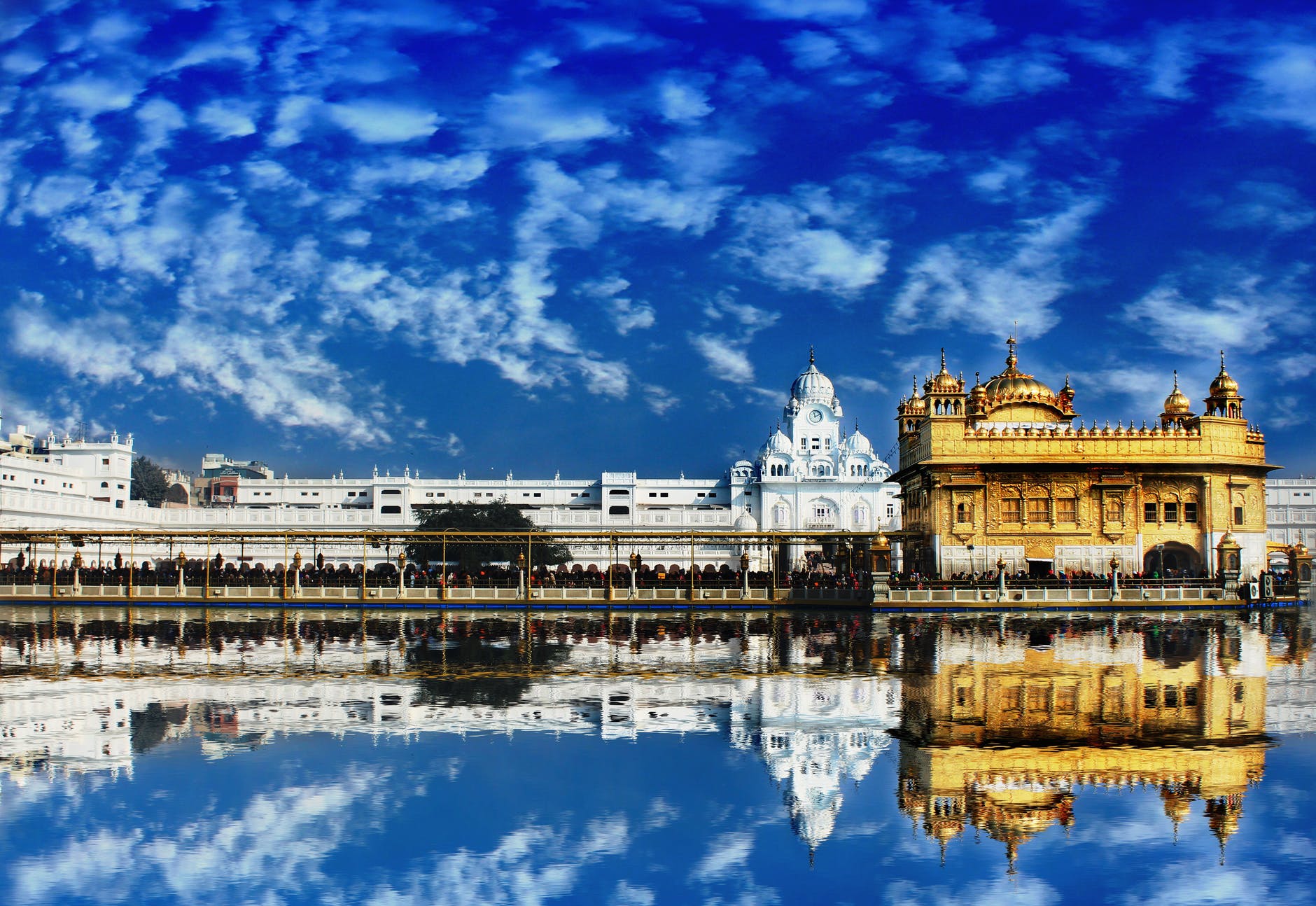
3.HARMANDIR SAHIB :THE GOLDEN TEMPLE
It was founded in 1577 by ram das, Amritsar is an important hub of sikh history and culture .The main attraction here is Harmandir Sahib ,opened in 1604 and stillmoften referred to as golden temple for its beautiful gold decoration. The holiest of India’s many Sikhs shrines,the temple was built in a blend of Hindu and ismalic styles, its lower marble section featuring such flourishes as ornate inlaid floral and animal motifs ,while the large golden dome represents a lotus flower ,a symbol of purity of Sikhs
In addition to it’s splendid design ,visitors are equally impressed with temple’s spiritual atmosphere, an effect enhanced by the prayers continuously chanted from the sikh holy book and broadcast throughout the complex.
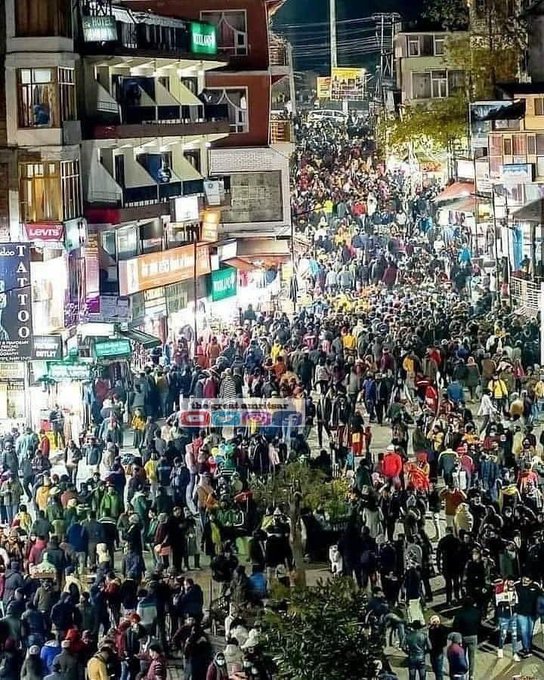
Amidst the heat waves in various places across the country people are setting off to the hill stations . Manali, Shimla, Mussoorie and many more hill stations are now packed up by people. Hotels are running out of beds .
The pandemic has tested the patience and strength of all of us since it has been over a year now Covid has infiltrated our lives. With lockdown imposed regularly the number of tourists declined in the previous year. It was now when the lockdown has just been lifted and the second wave has started to ease out that people decided to visit the hill stations . Moreover most of the people have summer vacations at this point of time.
Nainital administration has announced that once the parking reaches the limit ,tourists will be allowed to enter according to the availability of the space. Although the hoteliers are enthralled since the occupancies of the rooms has peaked, but it is adding a lot of problems to the tourists especially when the rainy season has set off. As a result a lot tourists are returning midway.
Last year Shimla faced utter water crisis and the tourists were urged not to visit. Therefore with this overcrowding water pollution , air pollution aggravates and the whole purpose of setting off to hill stations in the lap of nature demolishes. There are even some cities where even RT PCR is not compulsory .
Although the second wave is at its departure , the third wave is at large which is speculated to arrive in end August and is supposed to peak in September. Therefore it is advised to be careful and not to assume that Covid is over and avoid visiting to the hill stations especially when it is overcrowded . Although vaccinations shields from the virus but since its efficacy is not 100% the protocol of wearing mask, using sanitizer and keeping distance should be followed.
National Workaholics Day is on July 5th, and it might remind us to balance our work and home life better. Work isn’t everything – right? Do you come in early, skip your lunch and stay late or know someone who does? This day is dedicated to the people who fit that description
By definition, a “workaholic” is a person addicted to their work. While dedication is certainly an admirable trait, a healthy work-life balance is also important.
For all the workaholics of the world, today is the day to step back and take it easy. If you fall into this category, take an afternoon nap, read a book, or spend a few hours watching videos on YouTube. You’ll have plenty of time to finish your work tomorrow!
For everyone else, today is the perfect opportunity to celebrate the workaholics in your life and to recognize all they have accomplished. To celebrate Workaholics Day, arrive at the office a little earlier than usual and tackle a project that you’ve been avoiding. Happy Workaholics Day!
Death of Bruno: Bruno was the name of the dog that went through the unpleasant fate. Bruno was a friendly black Labrador in the care of Christuraj.The heart-breaking incident that lead to the death of Bruno took place in Adimalathura Beach,kottukal.The atrocious act happened in the state of Kerala, India.
On June 28,Monday three men at the Adimalathura Beach assaulted Bruno to death by hanging the dog to a fish hook of a boat and then Bruno was beaten by sticks. The accused Sunil(20), Silvester(22), and a 17 year old boy were arrested after this incident was filed as a complaint by the owner Christuraj. This vicious act was done to Bruno as it was resting under the boat of the accused.This incident came to light after the video of Bruno being beaten to death went viral on social media.The video was shared by the dog’sowner,christuraj. According to the police, Sunil one of the miscreants seemed to have some issues with his neighbour, Christuraj. The owner Christuraj was threatened by the culprits after the incident.
Bruno Dog: The owner Christuraj was shocked after this brutal incident done to Bruno. He claimed Bruno as a friendly dog. Bruno was a 9-year old dog that usually has a habit of playing in the beach everyday.
Bruno’s Case: Following the barbarous incident, Celebrities like Alia Bhatt, Tiger Shroff have raised their voices against the culprits. Kerala HC renamed Bruno’s case as “Tribute to dog brutally killed”.The court believed that this would be a tribute to the deceased dog.A great number of people raised their voices against this ruthless incident. A similar case have been reported in Bangalore, two weeks ago. A man has brutally murdered a stray dog in the city and threw it in a drain. The video of the incident have been caught on camera and surfaced online. The police have filed a case against the man under the Prevention of Cruelty to Animals Act,1960.
Picture of Bruno with his caretaker, Christuraj.
Laws against animal brutality: The amendment to the Prevention of Cruelty to Animals Act, 1960 have been proposed by the Union Government. Importance of Animal safety must be ensured as much it is ensured for the human beings.
Importance of Animal safety: Animals are the most affectionate and lovable beings. Taking care of them with extreme protection is a primary duty to all of us. Animals must never be subjected to violence. In case of any difficulty caused unknowingly by them, it should be reported to helplines.The wide prevalence of today’s technology enables one to find help trouble-free. Similarly animal cruelty must be reported to defend the animals. Laws can help to punish the culprits against the brutal act. Animals would never try to harm human beings unless we act as a threat to them. Hence, Violence against animals is a punishable offense and atrocious. Not only animals, other creatures must also never be harmed unnecessarily. It can later lead to serious consequences.
Climate change incorporates both an Earth-wide temperature boost driven by human-initiated discharges of ozone harming substances and the subsequent huge scope shifts in climate designs. However there have been past times of climatic change, since the mid-twentieth century people remarkably affect Earth’s environment framework and caused change on a worldwide scale. The biggest driver of warming is the outflow of gases that make a nursery impact, of which over 90% are carbon dioxide and methane. Fossil fuel consuming (coal, oil, and gaseous petrol) for energy utilization is the principle wellspring of these outflows, with extra commitments from agribusiness, deforestation, and manufacturing.[4] The human reason for environmental change isn’t questioned by any logical assortment of public or global standing.[5] Temperature rise is sped up or tempered by environment criticisms, for example, loss of daylight reflecting snow and ice cover, expanded water fume (an ozone harming substance itself), and changes to land and sea carbon sinks.
Temperature ascend ashore is about double the worldwide normal increment, prompting desert extension and more normal warmth waves and wildfires. Temperature rise is additionally enhanced in the Arctic, where it has added to liquefying permafrost, frigid retreat and ocean ice loss. Warmer temperatures are expanding paces of vanishing, causing more serious tempests and climate extremes. Impacts on biological systems incorporate the movement or eradication of numerous species as their current circumstance changes, most quickly in coral reefs, mountains, and the Arctic. Climate change compromises individuals with food weakness, water shortage, flooding, irresistible sicknesses, outrageous warmth, financial misfortunes, and relocation. These effects have driven the World Health Organization to call environmental change the best danger to worldwide wellbeing in the 21st century. Even if endeavors to limit future warming are fruitful, a few impacts will proceed for quite a long time, including rising ocean levels, rising sea temperatures, and sea acidification. Energy streams between space, the air, and Earth’s surface. Current ozone depleting substance levels are causing a radiative lopsidedness of about 0.9 W/m2.
Large numbers of these effects are as of now felt at the current degree of warming, which is about 1.2 °C (2.2 °F).The Intergovernmental Panel on Climate Change (IPCC) has given a progression of reports that project huge expansions in these effects as warming proceeds to 1.5 °C (2.7 °F) and beyond. Additional warming likewise builds the danger of setting off basic edges called tipping points. Responding to environmental change includes moderation and adaptation. Mitigation – restricting environmental change – comprises of decreasing ozone harming substance discharges and eliminating them from the atmosphere strategies incorporate the turn of events and arrangement of low-carbon fuel sources, for example, wind and sun oriented, an eliminate of coal, upgraded energy proficiency, reforestation, and backwoods safeguarding. Transformation comprises of changing in accordance with genuine or expected climate, for example, through further developed coastline assurance, better fiasco the board, helped colonization, and the advancement of more safe yields. Transformation alone can’t deflect the danger of “serious, far and wide and irreversible” impacts.
Under the 2015 Paris Agreement, countries on the whole consented to continue to warm “well under 2.0 °C (3.6 °F)” through moderation endeavors. Notwithstanding, with promises settled on under the Agreement, a dangerous atmospheric deviation would in any case reach about 2.8 °C (5.0 °F) before the finish of the century. Limiting warming to 1.5 °C (2.7 °F) would require splitting outflows by 2030 and accomplishing almost zero emanations by 2050.
A worldwide temperature alteration is the drawn out warming of Earth’s environment framework saw since the pre-mechanical period (somewhere in the range of 1850 and 1900) because of human exercises, essentially petroleum derivative consuming, which builds heat-catching ozone harming substance levels in Earth’s climate. The term is habitually utilized reciprocally with the term environmental change, however the last alludes to both human-and normally delivered warming and the results it has on our planet. It is most normally estimated as the normal expansion in Earth’s worldwide surface temperature.
Since the pre-modern time frame, human exercises are assessed to have expanded Earth’s worldwide normal temperature by around 1 degree Celsius (1.8 degrees Fahrenheit), a number that is as of now expanding by 0.2 degrees Celsius (0.36 degrees Fahrenheit) each decade. A large portion of the current warming pattern is very possible (more noteworthy than 95% likelihood) the aftereffect of human movement since the 1950s and is continuing at an extraordinary rate over a long time to centuries.
Environmental change is a drawn out change in the normal climate designs that have come to characterize Earth’s nearby, territorial and worldwide environments. These progressions have an expansive scope of noticed impacts that are inseparable from the term. Changes saw in Earth’s environment since the mid twentieth century are fundamentally determined by human exercises, especially petroleum product consuming, which builds heat-catching ozone depleting substance levels in Earth’s climate, raising Earth’s normal surface temperature. These human-created temperature increments are regularly alluded to as an unnatural weather change. Regular cycles can likewise add to environmental change, including inside changeability (e.g., recurrent sea designs like El Niño, La Niña and the Pacific Decadal Oscillation) and outside forcings (e.g., volcanic action, changes in the Sun’s energy yield, varieties in Earth’s circle).
Researchers use perceptions starting from the earliest stage, and space, alongside hypothetical models, to screen and concentrate past, present and future environmental change. Environment information records give proof of environmental change key markers, for example, worldwide land and sea temperature expands; rising ocean levels; ice misfortune at Earth’s posts and in mountain icy masses; recurrence and seriousness changes in outrageous climate like tropical storms, heatwaves, fierce blazes, dry spells, floods and precipitation; and cloud and vegetation cover changes, to give some examples.






/https://public-media.si-cdn.com/filer/1d/94/1d94a50d-2cad-4307-8c01-c337ead1fef9/feb15_j03_antikythera.jpg)
















You must be logged in to post a comment.