SEO stands for “search engine optimization.” In simple terms, it means the process of improving your site to increase its visibility when people search for products or services related to your business in Google, Bing, and other search engines. The better visibility your pages have in search results, the more likely you are to garner attention and attract prospective and existing customers to your business. In Google and other search engines, the results page often features paid ads at the top of the page, followed by the regular results or what search marketers call the “organic search results”. Traffic that comes via SEO is often referred to as “organic search traffic” to differentiate it from traffic that comes through paid search.
The Internet has really put the world at our fingertips. We are usually not more than a few clicks away from almost any information we could be looking for. When people are looking for information, services, products, and so on, they go online. Search engines have spiders — not the creepy kind, but the automated robot kind. These spiders collect all kinds of information about your website and the pages that make up your site. This allows them to easily determine when to serve a searcher a page on your site.
Jaipur is popularly known as the Pink City of Rajasthan, which is not only Pink but also the most colorful city of India. The city is the mixture and combination of Indian culture and modern experiences. Jaipur is probably the first planned city of India. It was planned to design in Pink color, as the color signs for hospitality. The city is known to give an unending experience to the tourist as well as the localities. Pink city has its own vibes and flavors which blends to perfection and brings a completely different exposure. Jaipur is all about forts, museums, food, monuments, shopping and many more things. As a tourist or a newbie in the city, it is always considered to explore the city as a local but in the end, it becomes too messy.
Why Jaipur is known as Pink City
The moment you arrive in Jaipur you will witness that the walls of most building are painted in “pink” terracotta color. The color resembles the city’s heritage and culture. Going back in the history, when Maharaja Sawai Ram Singh was in power and when Prince Albert came to Jaipur during the India tour in 1876. Maharaja wanted to impress the Prince and hence, he planned an extreme strategy. Maharaja constructed a large concert hall and named it after Prince Albert Hall Museum. Then, he decided to repaint the entire city for beautification and chose terracotta pink for the same. The color was durable in all weather conditions. The color represents hospitality. The queen of Maharaja Sawai Ram Singh loved the color and asked the Maharaja to make a law that every house in Jaipur should be pink in color and use of any other color is illegal. The law was passed in the year 1877 and it is effective till today.
PLACES TO VISIT IN JAIPUR
Jal Mahal- Jal Mahar, as per the name suggests is the water palace in Jaipur. Its tropical architectural style with a mixture of Rajput and Mughal structures are just amazing to human sight. It is located in the middle of the Man Sagar Lake and it was built for the royal family to on a summer gateway.
Amer Fort- One of the most famous forts of India. The Amer fort is located on a hill, earlier it was a strong defense around the city. The Indian and Mughal blend of architecture is immensely beautiful. It is said that even the attackers did not want to destroy it.
Hawa Mahal- It was built by Maharaja Sawai Pratap Singh in 1799. The Hawa Mahal was built for the royal women to enjoy festivals and events. It is made of beautiful pink and red sandstone. The structure is in such a way that royal women could enjoy the street view and city life without coming in the sight of the public. It’s shape is like a crown of Lord Krishna which has 953 jharokhas also called as windows in a five-story building.
Nahargarh Fort- Nahargarh fort beautifully displayed the unique blend of Indian and European architectural style. It was built by Madhavendra Bhawan, he built 12 similar suites for his queens. Its construction was done in such a way that Maharaja was able to visit any queen’s suite and none of the other could acknowledge it.
Parliamentary Standing Committee on Information and Technology has summoned Facebook India and Google India to appear before it today. The committee will hear the views of the companies about safeguarding the rights of the citizens and prevention of misuse of social or online news media platforms including special emphasis on women security in the digital space.
This comes days after representatives of Twitter appeared before the panel to discuss India’s new IT rules and how to stop the misuse of the platform.
President Ram Nath Kovind will lay the foundation stone of Dr Bhimrao Ambedkar cultural centre in Lucknow today. In last leg of his five day visit to Uttar Pradesh, he reached Lucknow yesterday and met a host of dignitaries in Rajbhawan.
Chief Minister Yogi Adityanath, Chief Justice of India NV Ramana, Justice MN Bhandari and other dignitaries attended the high tea organised at Rajbhawan yesterday evening.
Today after laying the foundation stone for Ambedkar culture centre in the morning president will return to New Delhi on a special flight. AIR correspondent reports that the proposed Ambedkar culture centre is being developed by culture ministry of state. The Cultural Centre will have a 750 seated auditorium, library, picture gallery, museum, multipurpose hall, dormitory, cafeteria, parking and other basic facilities.
State government will spend around rupees 45.04 crore on this project. The Ambedkar Cultural Centre will have a grand statue of Dr Bhimrao Ambedkar along with landscaping and will be spread over 3 acre government land opposite historic Aishbagh Idgah.
Department of Fertilisers is ready with an action plan to make India Aatmanirbhar in Rock Phosphate, the key raw material of DAP and NPK Fertlisers. Minister of State for Chemicals and Fertilisers Mansukh Mandaviya held a meeting yesterday with officials and stakeholders of Fertiliser industries to improve the availability of phosphatic fertilisers and to reduce the dependence on imports.
Rock Phosphate is the key raw material for DAP and NPK fertilisers and India is 90 per cent dependent on imports. Volatility in international prices affects domestic prices of fertilisers and hinders the progress and development of agriculture sector in the country.
In view of this, the Minister had a meeting with stakeholders to expedite the exploration and mining of available rock phosphate reserves in India. He directed to commercially exploit and ramp up the production in the existing 30 lakh MT of Phosphorite deposits which are available in Rajasthan, central part of peninsular India, Hirapur, Lalitpur, Mussoorie syncline and Cuddapah basin.
Discussion and planning with Department of Mining and Geological Survey of India is going on to expedite the exploration in the potential potassic ore resources in different parts of the country.
Central government is planning to develop a system of financial ratings for upcoming micro, small and medium enterprises (MSMEs). Union Minister for MSMEs Nitin Gadkari said that this system of ratings will help banks to make better credit judgments for such borrowers.
The Union Minister was speaking at the launch of the Maharashtra chapter of Indian Bank’s business mentoring programme for MSMEs. Mr Gadkari informed that as per the draft plan, the system of ratings for MSMEs will depend on the annual turnover, goods and services tax (GST) records, income tax records, exports and the credentials of each company.
Mr Gadkari added that the Ministry of MSME is working to develop a portal as a single-point platform for all the services offered by the government for small businesses. The Minister also said that the Ministry of Road Transport and Highways expects the launch of flexible-fuel vehicles in India in the coming months and these, too, should offer financing opportunities for banks.
The Union Government has announced stimulus package of six lakh 28 thousand 993 crore rupees to boost economy during the fight against COVID-19 pandemic. Finance Minister Nirmala Sitharaman announced several economic relief measures amid COVID pandemic including eight economic relief measures, of which four are absolutely new and one is specific to health infrastructure. Addressing media in New Delhi, the Finance Minister announced 1.1 lakh crore rupee Loan Guarantee Scheme for COVID affected sectors. She said, of them 50 thousand crore rupees will be for health sector.
The scheme is aimed at upscaling medical infrastructure targeting unreserved areas. Ms. Sitharaman said that the guarantee cover will be for expansion and new projects related to medical infrastructure in cities other than eight metropolitan cities.
The Finance Minister also announced 1.5 lakh crore rupees for Emergency Credit Line Guarantee Scheme, ECLGS which was launched as part of Atmanirbhar Bharat Package in May, 2020.
In another relief measure, Ms. Sitharaman announced Credit Guarantee Scheme which is a new scheme to facilitate loans to 25 lakh people through Micro Finance Institutions, MFI.
In yet another decision related to reviving the tourism sector, Ms Sithraman announced financial support to more than 11 thousand Registered Tourist Guides and Travel and Tourism Stakeholders. The Finance Minister also announced free tourist visa to five lakh tourists.
The total financial implication over it will be 100 crore rupees. Ms Sitharaman announced extension of Atmanirbhar Bharat Rojgar Yojana from 30th of June, 2021 to 31st of March, 2022. Ms Sitharaman also informed about extension of Pradhan Mantri Garib Kalyan Anna Yojana, PMGKAY as announced earlier by the government.
“Successful People are not gifted. They just work hard, then succeed on purpose” – G.K.Nelson.
In the initial years of college, we all will be living in a fantasy world where we are with a feeling that we have everything one could wish for. The reality hits us hard on the pre-placement phases of our college. At this point in time, we are obscure about our future. The situation can be handled with ease if we start to do an internship after the first year of our college. This could be either a remote one or a full-time one. Choose according to your convenience and college practices.
Sites for getting your first intern:
“Your big opportunity may be right next to where you are now” – Napoleon Hill.
There are a handful of trustworthy sites for choosing your intern from. Some of them are as follows:
Internshala.
Letsintern.
Linkedin
They have internships for various fields and experiences. Choose one which suits you the best. Never fall for internships that ask you for money. Even if it’s an unpaid internship but it could provide you a better experience then never hesitate to go for it. Most companies don’t expect much from an intern in the beginning. They look for the dedication and interest in the role assigned to you. They assist you well in the beginning so that you can move forward without any hurdles.
Perks of an Internship:
They mold you from the scratch into something which you never expected.
It provides you better clarity on the career path you need to choose from and the skillsets needed for the same.
Most importantly you will get to know yourself better. In college, we would have a bunch of friends with whom we are comfortable playing around. In a workplace, this may or may not happen. But you will get adapted to the environment to deal with different kinds of people at an early stage which will for sure help you in the future.
Some companies provide internship extension and full-time work opportunities for their interns based on their performance which will turn into a hassle-free process for both sides.
In case if it’s a paid internship, you will realize the value of money you have been using in the past and this will make you utilize the economy better.
During the internship, you will have to manage your college assignments, studies, and exams. Although the process seems to be hard in the beginning, once you master the multi-tasking and time management skills you are ready to face the real-time challenges of the world.
In case if the internship domain did not excite you much then it’s also a good sign. You have neglected out an option at an early stage.
Nothing can be mastered at its best in the first attempt. Try hard, learn and unlearn to make the best out of it. Never have hesitation or fear to start again. As experts say you are not starting from scratch , you are starting with experience.
• State preparedness to manage the possible third wave of Covid-19 .
• Provides a real time analysis of data – few suggestions and strategies for effective management Delhi Administration’s policy responses .
• In January 2021 – first wave subsides – the need for hospitalisation of covid-19 patients fell drastically. Delhi administration was using less than 20% of its bed capacity.
• In February 2021 – Delhi Government reduced the bed capacity to the level of just above 5,000 • In March 2021 – health system collapsed – increase in the number of covid-19 cases hit by the second wave of pandemic.
• In April 2021 – bed occupancy went from 33% to over 90% Government – increased its bed capacity – could not keep pace with the rise in covid cases .
• In May 2021 – utilisation of government hospital beds went rapidly back to 30% Many other areas in the country were experiencing a rise in cases.
Inference
• COVID-19 waves require the health infrastructure to be elastic .
• Demand for COVID-19-specific health infrastructure is spatially varied – health capacity at a fixed location will not be sufficient.
• Conveys the difficulty that several administrations in the country face Hard to increase the capacity in response to the kind of surge – in April 2021 Key health infrastructures don’t exist in all areas in our country
Real time analysis of data .
• 145 districts – accounted for 75% of the cases during the 1st wave – Same accounted for up to 80% of cases during the 2nd wave. Permanently at risk Districts – districts that were hit by the 1st wave, affected in the 2nd wave to a greater extent Population size, density and mobility make them prone to rapid spread. Need reserve capacity and resources to be expanded – prevent any risk associated with possible 3rd wave
Suggestions
• Mobility framework – capacity to move healthcare facilities from one area to another Identify what resources can be moved – based on mobility costs and supply elasticity.
• Policy innovations in three areas Personnel management – Inducting trained final year medicine and nursing students – Rehiring of retired medical personnel – use paramedical workers Resources with high mobility costs need to be evenly distributed – ensure equity in access in poorly served areas Spatial equity Expanding the health infrastructure covering all regions Providing accessibility through enhanced regional and area connectivity .
• Leads to sharing of resources within the country – reduces inaccessibility and inequity. • Efficiency of resource-sharing increases with the area of coverage. States or districts – benefits of resource sharing is larger – coordinate and build trust among themselves.
• Greater institutional coordination for a long run is necessary Bodies such as the National Disaster Management Authority and the NITI Aayog could play a vital role.
The following research paper discuses about the various aspects of the Indian economy, GDP, Economic slowdown etc. The COVID-19 pandemic ensued global economic downturn, the most severe one since the Global Financial Crisis. The lockdowns and social distancing norms brought the already slowing global economy to a standstill. Global economic output estimated to fall by 3.5% in 2020 (IMF January 2021 estimates).Governments and national banks across the globe conveyed different arrangement instruments to help their economies, for example, bringing down strategy rates, quantitative facilitating measures, and so forth India received a four-column methodology of control, financial, monetary, and long haul underlying changes: Calibrated financial and money related help was given, padding the defenseless during the lockdown and boosting utilization and speculation.
PRICES AND INFLATION
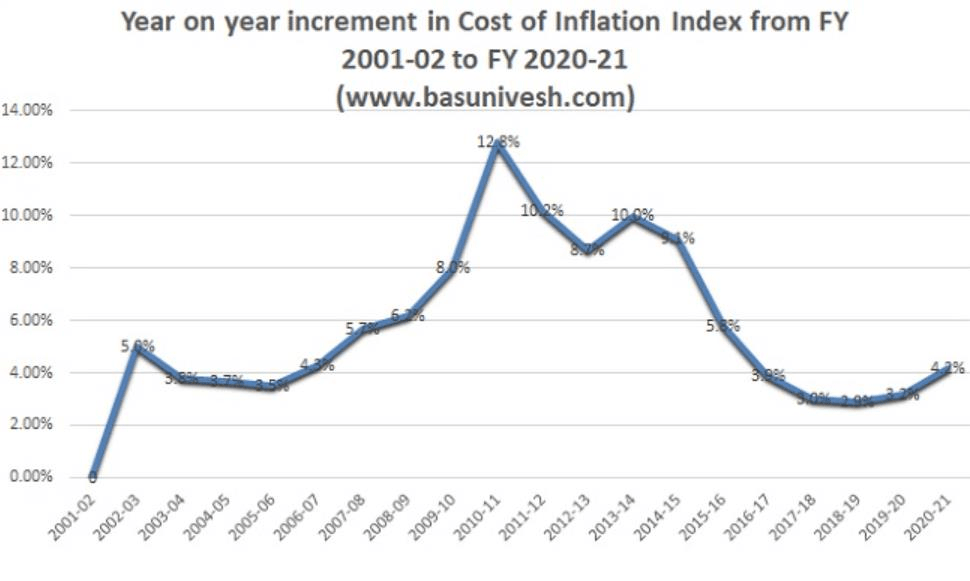
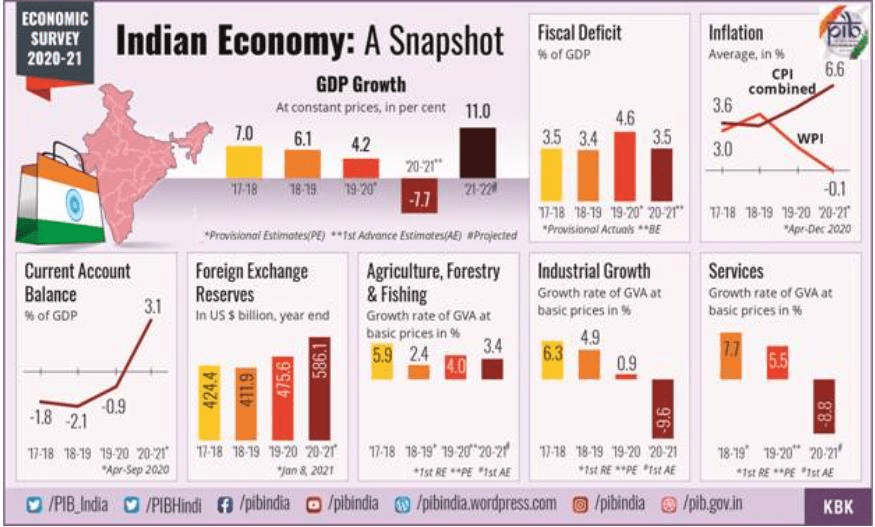
Averaged 6.6% during April-December, 2020 and remained at 4.6% in December, 2020, principally determined by ascend in food swelling (from 6.7% in 2019-20 to 9.1% during April-December, 2020, attributable to develop in vegetable costs) CPI feature and its sub gatherings saw swelling during April-October 2020, driven by significant expansion in value energy – because of the underlying interruptions brought about by COVID-19 lockdown Moderated value force by November 2020 for most sub gatherings, combined with positive base impact.
Sustainable Development and Climate Change
Voluntary National Review (VNR) presented to the United Nations High-Level Political Forum (HLPF) on Sustainable Development . Limitation of SDGs is significant to any methodology pointed toward accomplishing the objectives under the 2030 Agenda. Sustainable advancement remains center to the improvement technique regardless of the remarkable COVID-19 pandemic emergency .Eight National Missions under National Action Plan on Climate Change (NAPCC) zeroed in on the targets of variation, relief and readiness on environment chances. India’s Nationally Determined Contributions (NDC) states that money is a basic empowering influence of environment change activity . The financing contemplations will subsequently stay basic particularly as the nation ventures up the objectives considerably .The objective of mutually preparing US$ 100 billion every year by 2020 for environment financing by the created nations has stayed tricky.
GDP
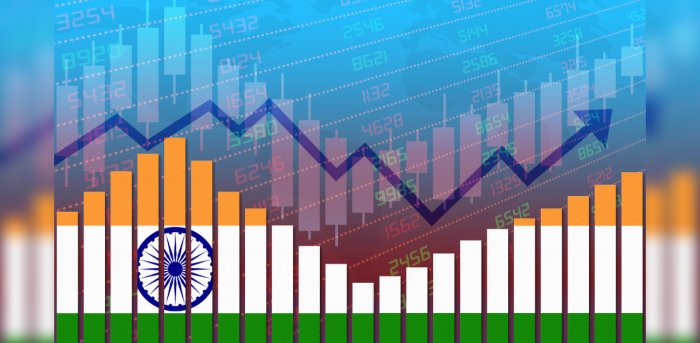
India’s real GDP has recorded a growth of 11 per cent in 2021-22 and the nominal GDP by 15.4 per cent- which has been the the highest since independence. The V-shaped economic recovery is supported by the initiation of a mega vaccination drives with the hopes of a robust recovery in the services sector and prospects for robust growth in consumption and investment. The Union Minister for Finance & Corporate Affairs, Nirmala Sitharaman presented the Economic Survey 2020-21 in Parliament, which stated that the rebound will be led by the low base and continued normalization in economic activities as the rollout of COVID-19 vaccines gathers traction. The fundamentals of the economy remain strong as gradual scaling back of lockdowns along with the astute support of Atmanirbhar.
Conclusion
India has evolved through the pandemic on the back of strong policy initiatives by the government, along with an optimistic outlook for economic recovery. India has administered ~4 million doses of COVID-19 vaccines in two weeks since January 16, 2021, becoming the fifth-largest inoculated country globally. India has become the world’s vaccine hub and extended support to 90+ countries seeking to stock up vaccines.
Since March 2020, early lockdown, health-infra ramp-up, incremental unlocking, blanket testing, social distancing, tailored fiscal stimulus (to reduce supply-side disruptions and revive demand) and structural reforms initiated by the government have helped restrict the fatality rate in India to 1.2%—one of the lowest in the world. India is emerging as the world’s fastest-growing major economy, with the IMF holding its growth forecasts as high as 6.8% for FY23. Also, the Economic Survey 2020-21 has drawn attention to the V-shaped economic growth—a testament to the burgeoning Indian economy and its intrinsic strength. India is not yet out of the danger of the pandemic. Social distancing continues to be the most effective tool to combat the pandemic as activity levels continue to rise in the economy boosted by the rapidly escalating inoculation drive in the country. Infrastructure to boost sectors to grow with unlocking of economy Terming investment in infrastructure “quintessential” to boost growth, the Economic Survey on Friday said post unlocking of the economy, infra sectors are poised for growth and construction of roads is expected to return to the high pace attained before COVID-19. The infrastructure sector will be the key to overall economic growth and macroeconomic stability, the Survey said emphasizing that the year after the crisis (2021-22) will require sustained and calibrated measures to facilitate the process of economic recovery and enable the economy to get back on its long term growth trajectory.
Marriage is an institution that admits man and woman to family life. It is a stable relationship in which a man and a woman are socially permitted to live together without losing their status in the community. Marriage is not merely concerned with the couple; rather it affects the whole society and future generations. The responsibilities it entrusts a couple with are thus both heavy and delicate. In Hindu view, marriage is not a concession to human weakness, but a means for spiritual growth. Man and woman are soul mates who, through the institution of marriage, can direct the energy associated with their individual instincts and passion into the progress of their souls. Chaucer, the father of English poetry, has beautifully established a very noteworthy feature of the blissful state of marriage and husband-wife relation in his essay The Merchant’s Tale.
What is marriage?
Marriage is a socially approved relationship between man and woman that binds each other into a permanent, official relation of husband and wife. It is an important social institution that satisfies physical, social, psychological, cultural and economic needs of men and women. According to the ancient scripture marriage is regarded as a socio-religious duty constituted to attain three important aims of life the dharma (duty), rati (sensual pleasure) and praja (progeny).
Marriage as described in religions
Hinduism: Hindu regards marriage as a socio-religious duty of an individual.
Islam: As per Islam marriage is an obligatione. “Sunnah” which must be fulfils by every Muslim.
Christianity: In Christianity marriage is held crucial to life. It lays weight age on the establishment of a mutual relationship between husband and wife and on their duty to each other.
Key elements of marriage
Like family, marriage is also an important universal social institution which is found in almost all societies.
It is socially sanctioned relation where man and woman lives together, have sexual relation and produce children.
It is a permanent and enduring bond between husband and wife which is design to fulfil each other needs.
This relation is valid only when it has social approval without social approval it is illegitimate.
It is a relation between two individuals of opposite sex is based on customs, law, mutual rights and obligations.Marriage is an essential element to establish a family which further helps to protect and up bring the children. Without marriage family is incomplete.
It is an essential relation between men and women to continue the human race through procreation.
It is associated to the religious ceremony which provides it social identity and legitimacy.It regulates the sexual desire of men and women according to prescribed customs and laws.
It is identified as a new phase of life for the married couple.
It is the only a social institution where the sexual gratification is ensured along with social and cultural mechanism for the continuation of the family.
The offspring of the family born of marriage is only considered the legitimate which is very important in matter of inheritance and succession.
Motivation is crucial; it fuels our drive to figure or achieve certain objectives. In pursuing your goal, you develop habits. Your habits then assist you remain disciplined to achieving your goals whether you are feeling love it or not. It enables you to stay consistent over time. Consistency ensures that your goals become your focus and motivation becomes just a way to an end.
Motivation is that the process that initiates, guides, and maintains goal-oriented behaviors.Therefore, it’s what causes you to act. Motivation involves the biological, emotional, social, and cognitive forces that activate behavior.
It is often done by setting goals! A major source of motivation stems from setting goals the proper way that also include milestones. Milestones offer short-term markers on the route to achieving our goals.
If you’re feeling your motivation wane, revisit to the fundamentals and set clear and specific goals that are measurable and include milestones. Sometimes, we’d like to step back and appearance at just what it’s that we would like out of life.
another aspect are often eliminating the unwanted!
Staying motivated involves your ability to limit distractions. Television, Internet, cell phones, games, and excessive socializing count as distractions.
If you’re serious about your goals, then you’ve got to urge serious about just how you employ the time that you simply do have. Create blocks of your time where you opt to show everything off. This includes shutting down the smartphone, home phone, Internet, and anything which will interrupt you.
One more tip,face your fears!
Take out a sheet of paper and write down all of your fears. Then, write down why you’re scared of those things. Finally, create an excuse on why each of these reasons aren’t true. Reference past experiences where you’ve pulled through or accomplished something you didn’t think was possible at the time.
Yoga also helps to release positive endorphins into the body that help to stimulate the mind, helping to battle the strain hormones that prevalent within the mind and body.
Human beings love challenges, but as long as they’re within the optimal zone of difficulty. Tasks that are significantly below your current abilities are boring. Tasks that are significantly beyond your current abilities are discouraging. But tasks that are right the border of success and failure are incredibly motivating to our human brains. we would like nothing quite to master a skill just beyond our current horizon.
Look forward towards a life achieving your dream goal.
“Preamble declares India to be a sovereign, socialist, secular and democratic republic.” With the Forty-second Amendment of the Constitution of India enacted in 1976, the Preamble to the Constitution asserted that India is a secular nation. This very line from the Preamble of India raises the question that is India really a secular country? Secularism is the principle of separation of the state from religious institutions. It allows no discrimination on the grounds of religion. People are allowed to practice any religion or choose not to practice any without getting judged or discriminated by others. However various instances in India have proved to be contradictory to this statement.
India is a diverse country with many religions cultures traditions values yet at times these aspects are not respected. Religious violence in India includes acts of violence by followers of one religious group against followers and institutions of another religious group, often in the form of rioting. Some of these examples range from Exodus of Kashmiri Hindus, Gujarat communal riots (1969), Anti-Sikh riots (1984), Religious involvement in North-East India militancy, Anti-Hindu violence to Violence against Muslims, Anti-Christian violence, Anti-atheist violence. India is characterized by more ethnic and religious groups than most other countries of the world. Aside from the much noted 2000-odd castes, there are eight “major” religions, 15-odd languages spoken in various dialects in 22 states and nine union territories, and a substantial number of tribes and sects. Three ethnic or religious conflicts have stood out of late: two occurred in the states of “Assam and Punjab; another, the more widely known Hindu-Muslim conflict, continues to persist. The Assam problem is primarily ethnic, the Punjab problem is based on both religious and regional conflicts, while the Hindu-Muslim problem is predominantly religious. It is easier to outline these problems than suggest what should be done about them. In a situation of mutual distrust, almost any solution will generate controversy. Still, three solutions seem plausible. First, further decentralization of power to states would be of considerable help. This would partly address the problems in Punjab and Assam, both of which have complained of the gap between the resources they are entitled to and the resources they actually process. Second, a conscious attempt needs to be made to improve the educational attainment and economic level is easily demonstrated of Muslims whose socio-economic backwardness is easily demonstrated. The Muslim elite could do much in this respect. Special educational privileges are constitutionally sanctioned but they ought to be worked on. Modern liberal, as opposed to religious, education would be of great help. The government, for its part, could allay the apprehensions of the Muslim community by better representing Muslims in the police and paramilitary forces. Third, the secular leaders, to the extent that they exist, must make a sustained effort to reintroduce and deepen secular, socioeconomic concern in democratic politics. Partisan communal leaders and communal electoral mobilization, both within and outside the communal parties, but particularly within the ruling party, should be exposed.
From the above information it can be understood that secularism can be taken as a theoretical concept until the mindset of people can change because in the end only we can bring a change and do something about it.
Surrounded by the Aravalli in the west , the river plains of Ganga and Yamuna r in the NORTH , the plains of Chhattisgarh in the East and the Deccan plateau in the SOUTH , lies MADHYA PRADESH in the central region of India forming the heart of the great nation.
The state has the second highest area per square kilometer after Rajasthan housing 52 districts where people from different religion and culture lives together in harmony. like the human heart which is considered to be precious for the whole well being , the heart of India – MADHYA PRADESH , is considered not only as the highest producer of coal but also has largest reserves of Coal and Copper. The state is blessed with the presence of five rivers namely Rivers Narmada, Tapti, Mahanadi , Chambal and Indravati.
With over 77,482 square kilometer of area under the green shade , the state has the largest forest cover in India which houses many animals, birds and provides employment to many people who are involved with forest conservation and agricultural as well as medical and textile industries. It is also known as the TIGER STATE OF INDIA and is on its way to gain the recognition as the LEOPARD STATE OF INDIA also since it houses nearly 528 tigers and over 3000 leopards the highest number of respective animals as compared to any other Indian state at present.
The mining industry as well as the forest and agricultural industries have resulted in increasing the employment opportunites as well as the annual contribution of the state to the net Gross Domestic Product Value.
Reasons to visit the heart of India
If you are an adventure junkie, an admirer of art forms, a nature lover , an animal lover, a foodie, a religious person or a person with a soft heart for history and grandeur or all of the above , the state will not disappoint you. It surely has something to offer to everyone who visits it. While the cities of Khajuraho , Ujjain and Maheshwar are regarded as the cities of temples with each city presenting the rich gloriousness of India’s past, Gwalior gives you a glimpse into the grandeur palaces whereas Pachmarhi , the only hill station in the state serves as an ultimate trekking destination with nature all around.
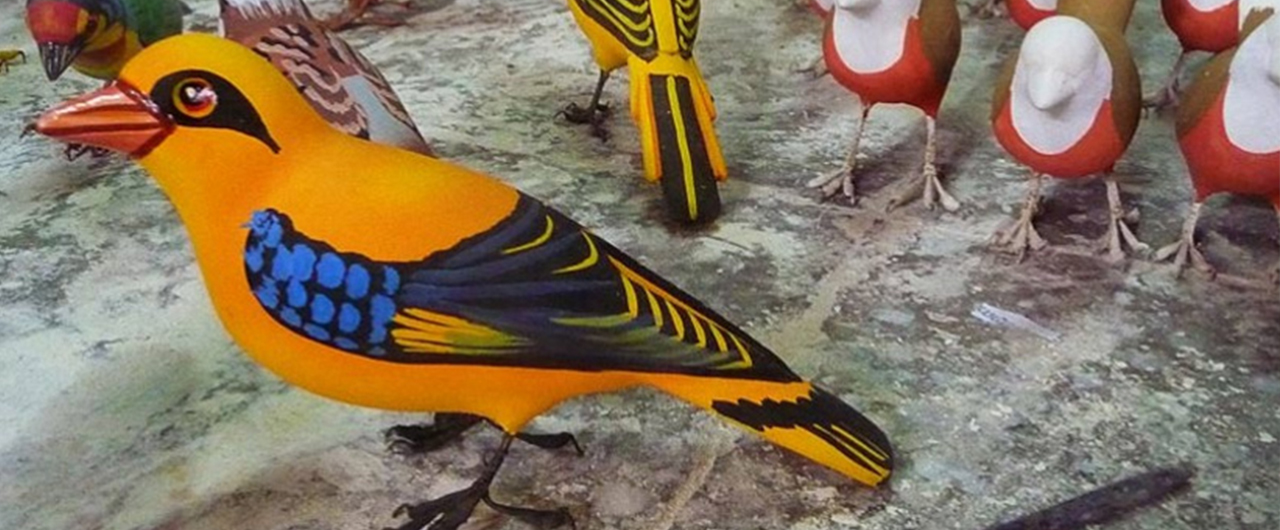
The foodie in you will find solace in every city specially those of Bhopal and Indore which provides the lip smacking cuisines. For all the art lovers out there, the state has a rich history of various art forms which are continuing for over 2000 years to the present with the support from government. The BHIL/PITHORA paintings, the MRABLE ART ,the CHARISMATIC CHANDERI SILK cloth items from the city of Chanderi , the MANDANA art among others are still in trend and gives a peek into the rich ancient heritage a part of which we had still managed to maintain.
Above is the picture of PAPER MACHE , the art form of Ujjain which brings the artefacts to life.
NATURAL THREATS POSED TO THE STATE DUE TO HUMAN INVASION
The presence of large abundance of natural resources has led to excessive mining which has resulted in the loss of forest cover thereby making many animals lose their home , soil erosion and has increased the air and water pollution. The Panna Tiger Reserve which houses the largest number of Tigers in the state had lost nearly all of its big cats between the year 2003 to 2008 owing to food poisoning , poaching and accidents. Though with the efforts of Hardworking forest officials and the government the number was restored , such situations can arise in the future also causing a threat to the national animal.
Other activities such as clearance of forest cover and illegal poaching if continued in the future may lead to the problems in the state causing the BLOCKAGE IN THE HEART OF INDIA thus affecting the entire nation in the aftermath.
As everything has its own pros and cons , so is with the state but despite everything it still remains a beauty to be seen , cherished and explored at least once in the lifetime.
Hellooo guys!!,today’s topic is the joke ,don’t think I am pranking you guys, literally I am going to write about “JOKE”
SO starting todays article with a “joke” as the title says.
Whoever said nothing is impossible is a liar. I’ve been doing nothing for years.><
THE THOUGHT CLUB
What do you guys think when you hear this word “JOKE”
JOKE IS DIRECTED TOWARDS A PERSON,SUBJECT,OBJECT,SITUATION.
A joke is a display of humour in which words are used within a specific and well-defined narrative structure to make people laugh and is usually not meant to be taken seriously.
-Wikipedia
A JOKE CAN BE HUMOUR,PUN ,OR A TEASE
JOKES CAN BE SARCASTIC,SAVAGE,PUN,SENTIMENTAL.EVEN LIFE LESSONS CAN BE LEARNT THROUGH THEM.
Jokes present a funny situation ,but they also make us think about it, interesting isn’t it.
JOKES WHICH ARE MADE ON THE SPOT ARE EVEN MORE FUNNIER AS THEY RELATE TO THE SITUATION PRESENT THERE.
The punchlines are what jokes are mainly made up of the whole joe surround that particular line, whether it will be funny or not it depends on them.
We make jokes when we want to get out of awkward situation, or when teasing someone, or to criticize some one.
we make jokes so there can be a relaxed atmosphere, it binds people closer, jokes that bring a smile on your face, they can make your sad day a happy day.
Reading or listening to jokes can make one stress free, they bring out the joy that is hiding .Jokes make our mood lighter.
Jokes that we read mostly portrays our real life situation which makes them more funnier as we also realize that the the routine which is depicted there is very true and connects to many people.
There are many benefits of jokes,
Jokes make us laugh and in turn it triggers the endorphins which brings calmness to our nerves ,releases pain and makes us stress free.
But sometime jokes can hurt the others feeling too. We should not joke on somebody thoughtlessly cause its fun to you, we should consider the other person’s situation, and take their state of mind ,and relevance to the situation, their emotional status and your personal rapport with them into account so that the other person is not feeling uncomfortable and is actually willing to accept the jokes.
Making jokes without considering their privacy, and thoughtlessly intruding into their personal life cannot be considered as joke but an insult. You cannot make a joke out of every situation, there should be a certain time, environment and mood to be considered.
Jokes can not only sweeten the relationship between people often they can sour, and sever the bonds.
Jokes made without crossing the borders that is what we should aim for so that the other people can think they can confide their serious problems and ask for their solution optimistically as you would be a person who knows when to joke and when you shouldn’t.
And today’s joke of the day is I wrote an serious article on joke><. Thankyou^^










You must be logged in to post a comment.