We all are aware of the fact of how we are dependent on technology. Being technological illiterate is just something you do not want to be in this era. And the current trend for being literate about technology is to start “coding”. So why “coding” is so important in today’s world? Read on to find out why.
Top 5 reasons why everyone should learn coding
Gets a basics understanding of how technology works around us
The foremost and most important reason to learn to code is that it presents us with an aspect of how technology works. In today’s digital-oriented world, it is quite intriguing to find out how technology works. Besides, you will also be fluent in technology. You will become more aware of the technology.
Codingimproves math and problem-solving skills
Mathematics is the building block of coding. So, when you learn to code it will be like an exercise for your brain. Coding involves computational thinking meaning breaking down complex things into simpler ones. Coding also sharpens your problem-solving skills.
Sharper future
Learning things never go in vain. Coding can open up the world with variable opportunities. Having technical knowledge can help you start your dream start-up. Coding may also lead you to a software development job at top mnc’s including Google, Facebook, Apple.
Whether you want to uncover the secrets of the universe, or you just want to pursue a career in the 21st century, basic computer programming is an essential skill to learn
Stephen Hawking
Higher pay grade
An average software developer earns more than around 100,000$ per year in the USA. That is a hefty amount of money you could make in software development. You can also work as a freelancer without the bondage of working under someone. Coding is one of the most valued skills currently in the market
Anyone can do it
Coding can be learnt even from the comfort of your home. It is something that does not require much study material to start. There are thousands of websites that provide to teach you for free. It can be learnt flexibly at your pace.
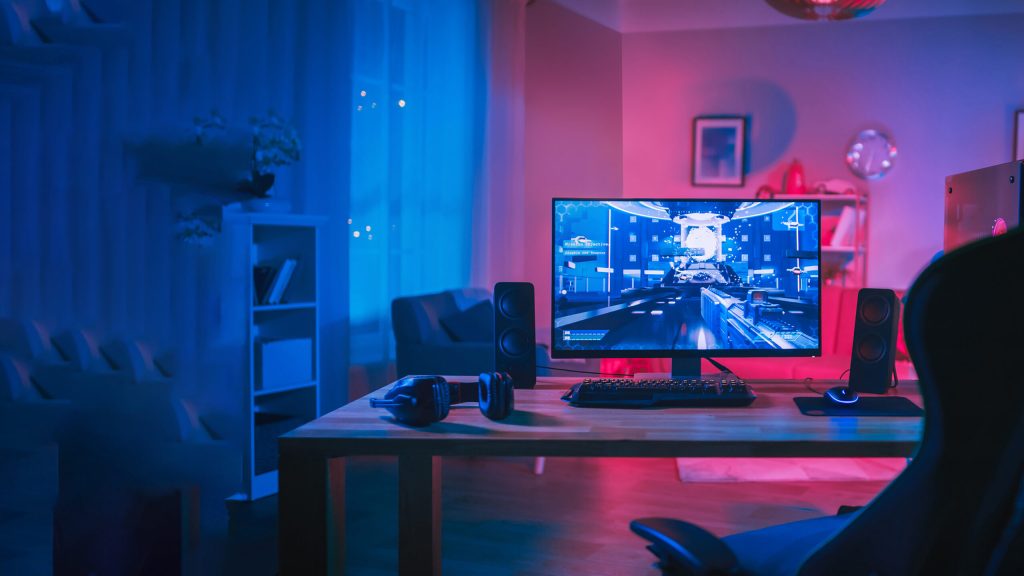
Powerful Personal Computer Gamer Rig with First-Person Shooter Game on Screen. Monitor Stands on the Table at Home. Cozy Room with Modern Design is Lit with Pink Neon Light.
Games consist of three types I would say : Indoor games, Outdoor games and the third one which is Virtual games. The outdoor one is my favourite which consists of physical movements. These games consist of Cricket, Football, Badminton, Volleyball and various games. In these games one has to do movements like running, jumping etc. These games make one healthy and helps to keep the body fit and fine. Indoor games consist of chess, carrom, darts, board games which makes the mind relax and refresh from daily hectic routine. These are the games played with family ones. Virtual games consist of playing games on mobile devices, pc’s, laptop, virtual box, play stations and emulators. These are the latest games and devices which are invented. As day by day technology is developing these games are also being developed. First computer games were introduced then slowly slowly mobile games, play stations, virtual box etc.
As early as 1950, computer scientists were using electronic machines to construct relatively simple game systems, such as Bertie the Brain in 1950 to play tic tac toe, or Nimrod in 1951 for playing Nim. These systems used either electronic light displays and mainly as demonstration systems at large exhibitions to showcase the power of computers at the time. Spacewar! is considered one of the first recognized video games. Developed in 1961 for the PDP-1 mainframe computer at Massachusetts Institute of Technology (MIT) by a group of students there, it allowed two players to simulate a space combat fight on the PDP-1’s relatively simplistic monitor. The game’s source code was shared with other institutions with a PDP-1 across the country as the MIT students themselves moved about, allowing the game to gain popularity.
Video game replacing Outdoor games
Earlier years children playing outdoors were in large numbers. They all were in fit and fine conditions. As the years passed children gradually got addicted to video games rather than outdoor games. They find playing these games sitting in one place for hours interesting. Back in the year parents used to scold children to play less outdoors and stay indoors but as the time changed the words were also changed now parents scold children to go and play outside. I admit the fact that playing video games is also entertaining but still a certain amount of limit. These all limits are crossed now by these younger generations. No doubt this generation of children are smarter than older ones in technology, but they are not strong enough to face the real world physically. For them doing online work is easy but not physical work like helping their mother by doing daily chores.
Problems of video games
As said earlier everything changes as the technology is advanced. Children nowadays may face many health and mental related problems due to video games. To play video one has to look at the screen continuously which might damage their eyes. Nowadays there are headphones available which are also gaming accessories. Children put on headphones and play games at full volume which may cause eardrum damage and can cause to deaf.
Once the game is started it is hard to make yourself away from it so one sits for longer hours a day in one position which might damage the spinal cord and body starts aching. The headache is also one of the problems caused by continuous staring at the screen of devices.
One of the popular types of video games is action games that consist of shooting and fighting. These games are popular from small children to teenagers. Continuous playing of these action games affects mentally. The mindset of children has changed from calm to violence. They don’t even listen to their parents and will talk to them rudely. This is the situation in today’s generation.
Online gaming
Playing online is one of today’s trends. Many people play online games with friends and relatives. Children of smaller ages are too addicted to these games. These online games have business strategies to make money. They would firstly make you play the game for free but they will show new features or guns or characters which are paid which make the children think about buying it. This addiction of playing paid games is so strong that the children are ready to fight their parents if they won’t allow them to buy it. One of the recent case studies is that the gaming addict boy from Punjab who secretly spent Rs 16 lakh of his parents’ money on the battle royale mobile game PlayerUnknown’s Battleground or PUBG is being made to work at a scooter repair shop.While gamers have been known to go to great lengths to prove their love for PUBG, the teen gaming addict from Punjab’s Kharar took the craze for the mobile game to another level after he spent Rs 16 lakhs from his father’s account to buy virtual ammunition in the game. The 17-year-old would take his father’s mobile phone on the pretext of online classes, but would access his father’s bank accounts to make in-app purchases for him and his friends.
At last I would say that “everything has its own limit so please do everything in limit and not to do anything wrong that would hurt others”.
The novel corona virus pandemic has stretched health care system to the brink. Covid 19 might getting all the headlines but patient are getting sick from other health disease and that’s left doctors looking for other way to treat them while minimizing contact.
Telemedicine allows health care professionals to evaluate, diagnose and treat patients at a distance using telecommunications technology. Telemedicine is the use of electronic communications and software to monitor and treat patient in lieu of any in patient visit.
According to IBIS world, the industry revenue has grown 34.7% from 2014 to 2021. Despite the increase in revenue. Americans have been slow to adopt the practice according to 2017 report. Like all of American life, that changed with novel corona virus. The number of medicare patient using telehealth has increased.
Shares of zoom video communication are up more than 150% since the start of 2020.
Telehealth visits are booming as doctors and patient embrace distancing amid coronavirus crisis. Telemedicine is the primary means of care during the corona virus pandemic.
Benefits.
1. It allows a patient to schedule visits at their convenience.
2. The benefits of telemedicine are easy to see. Physicians can now reach patients who are halfway across the city or state. All you need is a strong internet signal and a smartphone, tablet or computer to connect with a medical professional.
3. You can wrap up a visit in 15 or 20 minutes, which is convenient for many patients. Often, you’ll spend the same amount of time driving to and from an in-person visit.
4. There is also a decrease in wait times.
Challenges.
1. The main limitation is the lack of a physical exam. Inability to do a surgical procedure.
2. A lot of time goes into adjusting to the technology and understanding how it works and most importantly managing the wifi network at times.
3. The biggest challenge is to convince the patient that the quality of care via this consult is no less than being done in person.
Telemedicine will be the permanent new normal. It has been obvious for years. It will continue to move healthcare delivery from the hospital or clinic into the home. A fair amount of consultations, approximately 80%, can be done through telemedicine. Today, there are plenty of instruments that allow a person to do an ultrasound and allow people to check their kidney, abdominal cavity or even the heart echo without physically being at the hospital.
Raw materials are inventory items that are used in the manufacturer’s conversion process to produce components, subassemblies, or finished products. These inventory items may be commodities or extracted materials that the firm or its subsidiary has produced or extracted.
Work-in-process (WIP) is made up of all the materials, parts (components), assemblies, and subassemblies that are being processed or are waiting to be processed within the system.
A finished good is a completed part that is ready for a customer order. Therefore, finished goods inventory is the stock of completed products. These goods have been inspected and have passed final inspection requirements so that they can be transferred out of work-in-process and into finished goods inventory.
Transit inventories result from the need to transport items or material from one location to another, and from the fact that there is some transportation time involved in getting from one location to another. Sometimes this is referred to as pipeline inventory.
Buffer inventory used to protect against the uncertainties of supply and demand, as well as unpredictable events such as poor delivery reliability or poor quality of a supplier’s products. These inventory cushions are often referred to as safety stock. Safety stock or buffer inventory is any amount held on hand that is over and above that currently needed to meet demand.
Anticipation inventory is when , firms will purchase and hold inventory that is in excess of their current need in anticipation of a possible future event. Such events may include a price increase, a seasonal increase in demand, or even an impending labor strike.
Traditionally we are used to using adobe, concrete, and wood in construction, which has been and are used in everyday construction, which means the continuous destruction of trees for wood and the extraction of resources to make cement for agglutinated sand. Gravel and bricks For a better world, there are new processes and alternatives for sustainable and green building materials that can be used in construction today. Some of the green and innovative construction matter are listed below.
Bamboo
Bamboo is taken into consideration as one of the high-quality green constructing materials. It has a very excessive self-era rate, with a few being stated to have grown up to 3 toes inside 24 hours. It maintains spreading and developing while not having to be replanted after harvest. Bamboo is a perennial grass and now no longer wooden and grows on each continent, besides Europe and Antarctica. It additionally has an excessive energy-to-weight ratio, even more, complete energy than concrete and brick, and lasts extraordinarily long. It is, therefore, a high-quality preference for floors and cabinetry. Unfortunately, bamboo calls for a remedy to withstand bugs and rot. If left untreated, bamboo consists of starch that substantially invitations bugs, and it may swell and crack after soaking up water.
Cork
Like bamboo, cork grows very quickly. It can also be harvested from a living tree that continues to grow and reproduce more cork, or tree bark. Cork is resilient, flexible, and takes on its original shape again even after sustained pressure, its elasticity and abrasion resistance make it a common element in flooring. In addition, it is excellent at absorbing noise, which makes it perfect for insulation panels, and its excellent shock-absorbing properties make it perfect as a base. Thermal insulation is fire resistant, especially if left untreated and does not release toxic gases when burned. Cork is almost waterproof, does not absorb water, and does not rot. a bit expensive Fortunately, it’s extremely light and only requires less energy and emissions to ship.
Straw Bales
It is another environmentally friendly building material that can be used as a construction material, has good insulation properties, and can act as a soundproofing material, it can also be used as a filler material between columns and in the frame of beams / since it cannot penetrate air, it can have some properties of fire resistance exhibit. Straw can be easily harvested and replanted with minimal environmental impact. Bale straw also has very little influence. They can also be placed on walls, attics, and ceilings to keep the house cool in summer and warmer in winter.
Sheep’s Wool
Sheep wool is an excellent alternative to chemically charged insulation. It insulates the house just like conventional insulation materials and requires less energy to manufacture. It doesn’t degrade as quickly as other insulation materials like straw, and compared to some natural insulation materials like cotton, sheep’s wool is more common, easier to harvest, and regenerates quickly. Unfortunately, it’s not the cheapest insulator. It also needs treatment to protect itself from insects and prevent fungal growth. Depending on the chemicals used, such treatment could make sheep’s wool less environmentally friendly.
Mycelium
It is a natural building material. Mycelium is a natural unicellular organism that comprises the root structure of mushrooms and fungi. It can be stimulated to create a composite of other natural materials, such as It is then air-dried to create light and strong bricks or other shapes. Combined with pasteurized sawdust, the mycelium can be made into almost any shape and used as a surprisingly strong building material. There is the option of building bricks and segments of unique shapes that are strong and light.
Life is a series of games. Sometimes you lose, sometimes you win. We all know this. And yet, we often keep on playing games we lose. Why not play to win? Don’t you enjoy winning? I do. You know what I don’t like? Losing.
I don’t mind losing a few games, but overall, I want to win. And I don’t think you’re any different. I’ve never met a person who said, “I LOVE to lose.”
That person doesn’t exist. People who pretend they don’t mind losing gave up on life years ago. I get it. Life is hard and when you lose a lot, you become numb. That’s why this concept is so important.
Losing Hurts
Look, you can be the most optimistic and thick-skinned person in the world, but if you always lose, you’ll go crazy. You can read as many self-help books as you want, and master any kind of subtle art you want, but if you lose, all that shit goes out the window.
I don’t understand why people are never honest about losing. It hurts. And this is coming from a person who’s not even that competitive.
I always played sports as a kid. And even though I was pissed off when I lost, I could let it go. I had friends who were so competitive that they couldn’t stop before they won something.
Didn’t matter what it was: 1 on 1 basketball, video games, table tennis, foosball, whatever.
It’s not in our nature to be happy when we lose. You know how most people solve this problem? They give up!
That’s the saddest thing I’m currently seeing. And I see this a lot. Every time talented people give up their career and become minimalist yoga practitioners who live off the land, I see someone who stopped playing.
Of course, this is not the case for everyone. But let’s be real. I’ve been there before. When I started my business in 2010, I hit a wall after three years. I stopped playing the entrepreneurship game and decided to climb the corporate ladder.
When I worked at a corporation, I realized that it was not a game I was good at. I stopped climbing the corporate ladder.
Find A Different Game
To be honest, if you’re not good at a particular game, it’s better to stop. Go and find a different game you can win at. But don’t give up and live in the woods.
Jerry Seinfeld explained this concept best in an episode of Comedians In Cars Getting Coffee. In the episode with Eddie Murphy, they talked about why companies that are in second place should just quit. Jerry said:
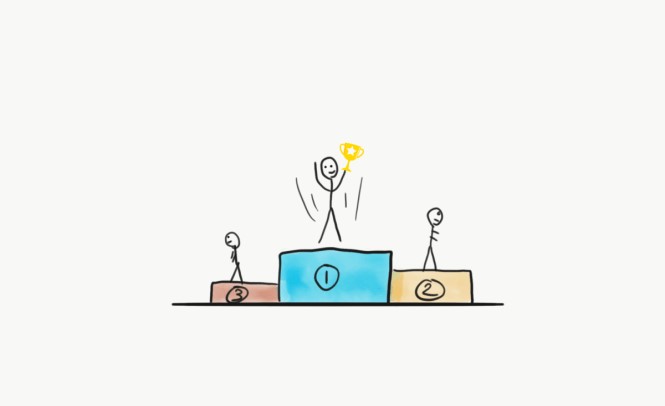
“All these companies that are in second place that hang in there. Why don’t you just quit? Avis, Colgate, RC Cola, just quit. How sad is it to work at these places? You’re never going to catch them [the #1 company]. Pepsi… You’re never gonna catch them.”
Obviously, Jerry is joking here. But there’s a lot of wisdom there. If you can’t be number one, why play? If you can’t win, it’s just a hobby (nothing wrong with hobbies, though). Quit that game and start playing a game you can win.
Let me give you a recent example. A lot of people told me I should make YouTube videos. I’ve been teaching productivity and writing for several years. And I also have a podcast.
It didn’t sound like a bad idea to me. So I got into the YouTube game. I’ve published 38 videos on my channel and tried many different strategies to reach more people. My conclusion? I wasn’t even close to the top perfomers on YouTube in my field. So I quit.
Same thing is true for my podcast. The difference is that my podcast takes less time and is more fun to create. But still, I never came close to the top podcasts in my category. That’s why I allocate less time and resources to it.
Win More Than You Lose
When it comes to content creation and monetization, my main focus is on blogging, teaching, and publishing books. I’m good at those things and the results are much better—and so are the rewards.
For example, my book Think Straighthas been consistently sitting at the top of its category. And even though I might not be #1 in certain categories, I’m very close.
That’s the key. Seinfeld was joking when he said that Pepsi should quit. I think he’s more referring to the players that are not even at the top. In this case, Pepsi is pretty close to Coca-Cola. Will they ever catch them? We don’t know but they are up there.
Can you see the top of your field? Can you finish in the top 10? If so, you have a chance to win. And sometimes, you don’t even have to be #1. If you’re at the top, you will still reap the benefits, just like Avis, Pepsi, etc.
But if you can’t be at the top, I would find a different game. In This Is Marketing, Seth Godin wrote about how we only see the winners in any given field:
“We hear about the outliers, the kids who make millions of dollars a year with their YouTube channel or the fashionista with millions of followers. But becoming an outlier isn’t a strategy. It’s a wish.”
We don’t see all the people who lost. The winners are highly visible—especially in desirable fields. Those folks are the famous outliers. But that doesn’t mean you can’t win at other games.
It’s pretty harsh. And a lot of people don’t agree with this theory (I already received a bunch of emails from angry people). But that’s not a surprise. Just look at how many people work at places that don’t even compete.
Pick Your Games Wisely
There are a lot of games that I lost—which is never a good feeling. When I realized I didn’t even come close to success on YouTube, I had to pull the plug. It simply wasn’t yielding any significant results.
Sometimes, you don’t need to go on forever to draw conclusions. “But what about persistence?” Well, you can’t be persistent with everything. I’d rather be persistent with one or two games that I’m good at. You only have so much energy every day. Can you do it all?
I don’t know about you, but I certainly can’t. This concept is not for everyone. There will always be delusional people who say, “Look at how often Thomas Edison failed!” Sure, but he played the invention game and was winning overall.
There’s nothing wrong with quitting so you can win at something else. Just don’t settle for average. Again, Seth Godin has excellent thoughts on this:
“Quit or be exceptional. Average is for losers.”
And you know what? Maybe it’s not the right time to win. Maybe you’ll lose at something and come back at a later stage. So when you quit a game, it’s not forever. Sometimes you have to quit to get better so you can win later.
Either way, when I focus on too many things at the same time, I start dropping the ball more often. I make mistakes, I forget things, I slack off. You can’t have that if you want to win.
Winning ain’t easy. And there’s little room at the top. But that doesn’t mean you can’t be at the top of your game. You just have to pick a game you can win at.
Hey! Today we will talk about how can we sharpen our memory. Here are some tips and tricks that will help you learn quickly anything!!
Choose a quite place for study
we all know that a little bit of noise can disturb us. So you have to make sure that you are in a good quite place, Where no one can disturb you.
2. Note down all the important information
it’s proved that if you note down important notes, you can remember better! So , try this!
3. Read, close your eyes and recite it
For quick learning, you should try this trick! Just read your lines , close your eyes and recite it.
4. Again read and recite loudly
Now that’s your turn to recite everything loudly. It can help you memorize more better.
5. A cup of tea or coffee for freshness
One thing! It isn’t important to take tea or coffee every hour! So just relax your mind and if you feel tired and want some freshness, go ahead with your favourite drink!
Isn’t it a good idea for a break with a cup of tea or coffee! Again and again memorization can decrease our strength of memorizing anything.
So it’s a great way to have some break between every hour.
I hope all these tricks will work for you! So try all these tips from today and let me know, whether it worked for you or not!
The Supreme Court of India and the High Courts are the guardians of the Constitution of India. Given their exalted constitutional status, it is imperative that the method of appointing judges to these courts is such that only persons of the highest integrity and aptitude are chdown.
But ,the current system of appointments, by a collegium of senior Justices of the Supreme Court, pursuant to a decision of the Court itself, has proven unequal to this way . Finally, it proceeds on an indefensible interpretation of Article 124(2) and Article 217(1) of constitution which prescribes the method of judicial appointments.
WHAT IS SOLUTION .
The Constitution (120th Amendment)bill,2013 and the judicial Appointment commission bill,2013 were introduced in the Rajya Sabha in August 2013.According to this bill provides for the establishment of a Judicial Appointments Commission to appoint judges, the composition, functions and procedures of which are laid down in the accompanying Bill. In general, the concept of an appointments commission is salutary.
Threekeys amendments to the existing scheme are necessary. 1.too much latitude is allowed to Parliament to change the composition and functions of the Commission. It is necessary that not only the establishment of the Commission but also its composition and functions are laid down by a constitutional amendment.
2. These is no procedure or criteria laid down in the act for shortlisting of candidates or for resolving disagreements in the Commission. The past experience of judicial appointments, both when it was led by the executive as well as the judiciary, suggests the definite need for dispositive rules in this regard thereby bringing an optimal degree of transparency into the process.
3. Despite vesting the Commission with the power to transfer judges and Chief Justices from one High Court to another, the Bills neither specify the grounds nor the procedure for doing so. It is clearly delineated grounds for transfer of judges and the procedure to be followed are laid down in the Act.
Now we comes towards the IMPLEMENTATION AND IMPACT
1. The Constitution (120th Amendment) Bill, 2013 passed by the Rajya Sabha and The Judicial Appointment Commission Bill, 2013 pending in the Rajya Sabha should be withdrawn. 2.A more detailed constitutional amendment should be introduced containing the following- ∆ The composition of the Judicial Appointments Commission; ∆ The functions of the Commission. 3. A new, reworked bill must be introduced alongside the constitutional amendment providing for-
∆ The criteria and procedures for shortlisting and selection of candidates ∆ The grounds and procedures for transfer of judges to be followed by the Commission.
Result
Such reform will ensure that the best candidates for judicial office are selected in an optimally transparcy manner. Further, it will do so in a manner that is perfectly consonant with the independence of the judiciary.
To earn a BREAD for our family is everyone’s basic need but what if we cannot fullfill it? There are plenty of questions in our mind running continuosly some of them are…..
what is GDP ? What is the relation between GDP and grains ? How it affects our life …?
GDP stands for gross domestic product for example the amount of crop production per year which is sell by the farmers and reach to common people in cheap prices just like what we improt or exports what profit we get what we invest what we spend on it. In short calculating all the factors related to development like education ,child ratio,birth ratio,crops, goods ,prices etc
Our capita increase when we work but if we do nothing by sitting at our homes it affects our economy so harshly it decrease the GDP .
2011-2012 till 2020-21 GDP is same 135.13 trillion but it is expected to be 145.69trillion
And in 2020 when lockdown starts it gowing down fall rapidly .
Did you know that upto 60% of our body is made of water. Every single cell in our body needs water to survive whether it’s our digestion our lungs our heart everything needs water. Many times if we’re feeling tired, lethargic if we have a headache or when our muscles feel tight. A lot of time it’s actually simply because we are dehydrated. It’s actually a key componentwhen it comes to our immunity. We have to keep our body hydrated and water and water only is the thing that’s going to do that.
1. Drink it hot. Or at least at room temperature. According to Ayurveda the boiling water actually enriches it with energy and it gains a quality of sukshma which means penetrating. Hot water is easily absorbed into your circulatory system and helps to flow throughout the body. This means nutrition is delivered more effectively to your cell and your body is removing the waste products from your cell more efficiently too.
2. Sitting down to drink. Standing and drinking water is actually not recommended at all in ayurveda. It says that water can accumulate in different parts of your body and cause swelling. When you drink water too fast it actually just gushes through your body and it doesn’t allow time for your water to go through all the organs. Water is supposed to move through your organ to also remove out some of the toxins or impurities. So if it doesn’t reach the kidney then those toxin will actually build up in our organ and that can lead to bad health. Drinking water standing can also increase the amount of fluids that gets to the joints and so sometimes people will have pain in their joints or swelling in their knees or hands.
3. Drink slowly. Taking small sips throughout the day is most beneficial to you. You can start your day having a good few glasses but as you go through the day, drink it slowly, drink it every hour. But most important when you get to the end of the day try not to drink to much it will disrupt your sleep and it also put too much pressure on your bladder when it’s supposed to be resting and rejuvenating.
4. Drink it first thing in the morning. First thing that goes into your body is so important because of the toxins that accumulate in our body overnight. This actually help flush them all out before we start all over again the next day. Starting your morning with having hot water can really help to cleanse out your system before you get ready for the day.
5.Don’t drink water with your meals. We leave atleast 45 minutes gap between drinking large amount of water and having our meals. The reason is because drinking water releases large amount of water before we’re about to eat dilutes our digestive enzymes in our stomach and then it makes harder for our stomach to digest our food.
6.Add Flavor to your water. I wouldn’t recommend adding sugar because our body actually ends up not recognizing the water to be water it ends up taking it as food so it hydrates your water differently. I recommend you using herbs or spices like cardamom or black pepper. You can also add fruits like grapefruit or oranges anything you like but as natural as possible. Keep it fresh.
Underground train system used to carry large numbers of passengers within urban and suburban areas, also known as subway, tube, or metro. Subways are normally built beneath city streets to make construction easier, but they may take detours and must occasionally cross rivers. The system’s outskirts usually emerge aboveground as conventional trains or elevated transit lines. The majority of subway trains are made up of multiple cars that operate on a multiple-unit basis.
Charles Pearson, a city solicitor, suggested the first subway system for London as part of a city improvement proposal shortly after the Thames Tunnel opened in 1843. Parliament approved the building of a 3.75-mile underground railway between Farringdon Street and Bishop’s Road, Paddington, after ten years of debate. Cut-and-cover construction on the Metropolitan Railway began in 1860, with trenches dug along the streets, brick sides added, girders or a brick arch added for the roof, and the highway restored on top.
London’s example was followed by a slew of other cities. The first subway on the European continent, a 2.5-mile (4-kilometre) electric tube, opened in Budapest in 1896, employing single trains with trolley poles. The use of a flat roof with steel beams instead of a brick arch, and thus a smaller trench, resulted in significant cost savings over prior cut-and-cover systems.
The Metro (Chemin de Fer Metropolitan de Paris) began service in 1898 in Paris, with the first 6.25 miles (ca. 10 km) opening in 1900. The speedy pace was due to the large streets above and the modification of the French engineer Fulgence Bienvenue’s cut-and-cover approach. At regular intervals throughout the route, vertical shafts were sunk, and side trenches were dug, and masonry foundations to support timber shuttering were placed immediately beneath the road surfaces. The roof arch was then built with minimal disruption to street traffic. While this technology is still employed in Paris, it has not been widely replicated in the construction of subways abroad.
Automatic trains, which use aerospace and computer technology to design, build, and run, have been developed in a few urban regions, including the Victoria Line, a component of the London subway system (completed 1971). BART (Bay Area Rapid Transit), which opened in 1976 in the San Francisco Bay Area, was the first rapid-transit system to be intended for totally automatic operation. Trains are controlled remotely, needing only one crew member in each train to be on standby in the event of a computer breakdown. The first subway line in Washington, D.C., opened in 1976, featuring an autonomous train control system and 600-foot (183-metre) long underground coffered-vault stations.
Other elements of modern subway construction include air-conditioned trains with lightweight aluminium cars, smoother, and faster rides due to advancements in track construction and car-support systems, and attention to the architectural appearance of and passenger safety in underground stations.
Prefabrication is the process of fabricating components of a structure in a factory or other manufacturing facility and shipping entire assemblies or sub-assemblies to the location where the structure will be installed. The term prefabrication also refers to the production of things other than construction in a fixed location. and the section is delivered assembled and ready for assembly. It generally does not refer to electrical or electronic components of a machine or mechanical parts such as pumps, gears, and compressors, which are usually supplied as separate items, but rather refers to the machine body that was used for parts in the past. . Mac premade parts This body can be called “sub-assemblies” and can be separated from other components.
Since when it is used
Prefabrication has been used since ancient times; For example, it is said to be the oldest dam in the world, Sweet Track, dating from around 3800 BC. Ancient Sri Lanka, particularly the Kingdom of Anuradhapura and the Kingdom of Polonnaruwa, used ready-made technology to erect huge structures, which are 2000 years old and some sections have been prepared separately and then assembled. In 1755 the Portuguese capital, especially the Baixa district, is popularly known as the Marqués de Pombal, the most powerful royal minister of D. The leadership of Sebastião José Von Carvalho e Melo, the most powerful royal minister of D. José IA, arose from Pombal a new architectural and urban planning style that introduced early anti-seismic design features and innovative prefabricated buildings. The buildings were manufactured entirely outside of the city, transported in pieces, and then assembled on-site, a process that lasted into the 19th century and provided city dwellers with unprecedented levels of safety before the earthquake. In the 19th century, Australia was importing large numbers of prefabricated houses from the United Kingdom. The method was widely used in prefabricated houses in the 20th century, for example in the UK as temporary living space. Space for thousands of townspeople. Families were “bombed out” during World War II. The assembly of profiles in factories saved time on site and the lightness of the panels reduced the cost of foundation and assembly on site. Gray concrete with flat roofs, prefabricated houses were uninsulated and cold, and prefabricated houses took on some stigma, but some London prefabricated houses have been occupied for much longer than the expected 10 years. The Crystal Palace, built in London in 1851, was a widely visible example of prefabricated iron and glass. Structures; Oxford Rewley Road station followed on a smaller scale.
Current uses
The most widespread form of prefabricated parts in civil engineering is the use of precast concrete parts and prefabricated steel parts in structures in which a certain part of a certain shape is repeated many times. It can be difficult to make the formwork required for pouring concrete structures on site. and delivering wet concrete to the site before it sets requires careful time management. Pouring concrete profiles in a factory brings the benefits of reusing molds and concrete can be mixed on-site without having to be transported and pumped wet into a crowded construction site. The parts reduce the cost of cutting and welding on-site, as well as the associated costs. The quality of the residential units produced had risen to such an extent that their residents could not distinguish them from traditionally built units. The technology is also used in office buildings, warehouses, and factories. Prefabricated parts made of glass and steel are widespread. Use for the exterior of large buildings: single-family houses, cottages, log houses, saunas, etc. They are also sold with prefabricated elements. Thanks to the modular prefabrication of wall panels, complex thermal insulation, window frame components, etc. can be produced on the assembly line, which tends to improve the construction quality of every wall or frame on-site prefer manual construction and the image of the prefabricated house as a “cheap” method only slows its acceptance. However, today’s practice already allows the system to be modified depending on the customer’s requirements and the choice of coating material. All clinker facades can be bricked, even if the load-bearing elements are made of wood Civil engineering work This can be decisive for the success of projects such as bridges and avalanche galleries, where the weather conditions only allow a short construction period. The systems and prefabricated bridge components offer bridge planners and construction workers considerable advantages over the construction time. e, safety, environmental sustainability, feasibility, and cost. Prefabrication can also help minimize the impact of bridge building on traffic. Small and frequently used structures such as concrete towers are also prefabricated in most cases. Radio towers for cell phones and other services often consist of several prefabricated parts. The masts are also often assembled from prefabricated parts. Prefabrication is widespread in the assembly of aircraft and spacecraft, and components such as wings and fuselage sections are often manufactured at the final assembly site in different countries or state Airbus.
Advantages
Moving sub-components out of the factory is generally cheaper than moving pre-production resources to each location.
Placing resources on the site increases costs; precast concrete components reduce costs by reducing the workload on the construction site.
The precision tools of the factory can help control the flow of heat and air in the building, reduce energy consumption and improve the health of the building.
The machine movement of the parts and the absence of wind and rain can improve the safety of the structure.
Uniform indoor factory environments eliminate most of the climate impacts on production
Cancel culture or call out culture is a modern form of ostracism in which someone is thrust out of social or professional circles- where it be online, on social media, or in person. The notion of cancel culture is a variant on the term call-out culture and constitutes a form of boycotting or shunning involving an individual (often a celebrity) who is deemed to have acted or spoken in a questionable or controversial manner. J.K Rowling, known as the author of Harry Potter series, was also cancelled after she made a transphobic comment on Twitter. From authors to entertainers or to just common people, online platforms are ruthless when judging ones action and their past. When children make a mistake, they are taught to correct themselves often in a polite manner and learn something from it and move on, why can’t influencers, authors or even people who make a mistake be treated the same? The difference is that now there is a worldwide platform for the audience to speak their minds. Through a tweet or an Instagram post, a person can call out a celebrity or a person with more influence and others who agree with them follow. With a tool like social media, where a lot of people follow a herd mentality, it is easier to make a mountain out of a molehill. People are always taught to have their own opinions and stick to what they think, but when their opinion is more on the controversial side or is different from others, others tend to “invalidate” it and shame them for it. Rowan Atkinson, an actor well known for playing Mr. bean told Radio Times that cancel culture has become a digital mob “roaming the streets looking for someone to burn”. He then continued to say that this culture has made it hard for people to be “exposed to a wide spectrum of opinion” and he was fearful for the future. Hence, cancel culture is extremely negative and toxic and it can threaten the mental peace and stability of a person who committed a mistake or was ignorant in the past, not giving a chance to the person. The only thing that should be cancelled is the nature of denying forgiveness to those who have wronged.
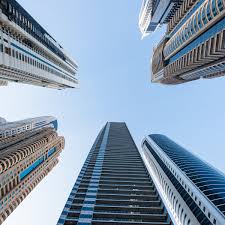
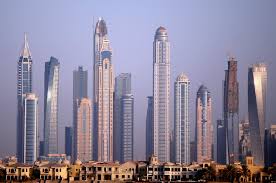
When planning and constructing high-rise buildings, the aim is to create safe and livable rooms in very tall buildings; the buildings have to bear their weight, withstand wind and earthquakes, protect residents from fire, but also have to be easily accessible on the upper floors. Utilities and a comfortable climate for residents Most high-rise buildings have a steel frame that allows them to be built higher than typical reinforced concrete structural walls. Buildings are characterized by window areas created by the concept of a steel frame and a curtain wall; However, skyscrapers can also have curtain walls that mimic conventional walls and have a small window area. This is made possible by cheap energy from fossil fuels and industrially refined raw materials such as steel and concrete.
The construction of the skyscraper was made possible by the construction of steel structures, which increased the brick and mortar construction of the late 19th work. The usable area for ever-larger supporting pillars is reduced. Tubular skyscraper structures have been used since 1960, reducing the use of materials (cheaper: Willis Tower uses a third less steel than the Empire State Building), but allows for greater height; allows fewer interior columns and thus creates more usable space . The elevators are characteristic of skyscrapers, a safety elevator with which passengers can be transported comfortably and safely to the upper floors option was to use a steel frame instead of stone or brick; Otherwise, the walls of the lower floors of a tall building would be too thick to be practical.
Today’s leading elevator manufacturers are Otis, ThyssenKrupp, Schindler, and KONE. Advances in construction technology have caused skyscrapers to shrink in width and increase in height. Some of these new techniques include mass dampers to reduce vibration and oscillation and gaps to allow air to pass through, which reduces wind shear.
Basic design considerations
Good structural design is important for most construction projects, but especially important for high-rise buildings because, given the high price tag, the likelihood of catastrophic failure is small but unacceptable. For civil engineers, this is a paradox: the only way to ensure reliability is to test all failure modes in the laboratory and the real world, but the only way to understand all failure modes is to identify previously known failures. Thus, no engineer can be sure that a given structure will withstand all the stresses that could lead to failure, but they can only have a sufficiently large margin of safety to make failure acceptable due to some form of myopia or some unknown factor.
Loading and vibration
The stress in a skyscraper is in large part due to the strength of the building material itself. In most building designs, the weight of the structure is much greater than the weight of the material it supports beyond its weight., The load on the structure is much greater than the payload . The amount of building material in the lower levels of a skyscraper must be larger than the Empire State Building. Thus the shape results exclusively from the load-bearing capacity. Posts can come in a variety of designs, the most common of which is for skyscrapers. can be divided into steel frames, concrete cores, pipe-in-pipe construction, and wall shear walls.
Steel frame
By 1895, steel had replaced cast iron as a construction material for skyscrapers. Its malleability enabled a variety of shapes and rivets, which ensured firm connections. The simplicity of a steel frame eliminated the inefficient portion of a shear wall, the center portion, and load-bearing elements, which were consolidated in a much stronger way by allowing horizontal and vertical supports throughout. the distance between the support elements decreases, which in turn increases the amount of material to be supported. In buildings over 40 floors, this becomes inefficient and uneconomical because the usable area for the support column is reduced and the increased use of steel.
The elevator conundrum
The invention of the elevator is a prerequisite for the invention of high-rise buildings because most people can (or can) only climb a few stairs at a time. Elevators in high-rise buildings are not only necessary aids such as running water and electricity but are also closely related to the design of the entire building . Taller buildings need more elevators to reach more floors, but elevator shafts consume valuable living space.
Many high-rise buildings use non-standard elevators to reduce space requirements. Buildings like the former World Trade Center Tower and the John Hancock Center in Chicago use elevated lobbies where express elevators take passengers to higher floors and serve as a base for local elevators. Architects and engineers can stack elevator shafts on top of each other to save space; However, celestial corridors and high-speed elevators take up a lot of space and add to the time it takes to move between floors. Double-deck elevators, so that more people can take an elevator to two floors at each station. More than two floors can be used in an elevator, although this has never been the case. The main problem with double-deck elevators is that if only one person needs to reach a particular floor, then everyone in the elevator will be forced to stop. d Mall, Petronas Twin Towers, Willis Tower, Taipei 101 The Paradise lobby on the 44th floor of the John Hancock Center is also home to the first multi-level indoor pool, which is still the tallest in the United States.
“Ode on Indolence” was probably the second ode composed by Keats in the spring of 1819 after “Ode on Melancholy” and a few months prior “To Autumn”. When it comes to grouping of the odes together as a sequence “Indolence” is often placed first in the group, which absolutely makes sense, considering the fact that “Indolence” usually provides glimmerings of themes explored in the other five poems and also seems to portray the speaker’s initial struggle with the problems and ideas of the other odes. “Indolence” is an extraordinarily simple tale of a young man who spends a drowsy summer morning lazing around until he is nudged by a vision of Love, Ambition and Poetry. He feels brewing desire to follow the vision but in the end decides against it when the temptations of his indolent morning outweighs the temptations of love, ambition and poetry.
The principal theme of Keats’ “Ode to Indolence” holds the pleasant numbness of the speaker’s indolence state which is preferable over more exciting and engaging states of love, ambition and poetry. Anguish of morality- the pain and frustration caused by the changes and endings unavoidable in the life of a human being is one of the great themes of Keats’ poetry. In his Ode on Indolence, the speaker’s indolence in many ways seems an attempt to blur the forgetful lines that exists in this world, so that the “short fever-fit” of life can no longer seem agonizing . Love and ambition are rejected by the speaker simply because they require him to experience his own life too and hold the unavoidable promise of ending (of love, the speaker also wonders what and where it is, he notes the pale cheek and “fatigued eye,” and observes it “springs” directly from human morality). He is not interested to find out “how change the moon” and to be “sheltered from annoy” which is why poetry offers the most seductive as well as hateful, challenge to indolence. Poetry is not mortal, but it is detests to indolence and would requires the speaker to feel his life too acutely- hence, it possesses “not a joy” for him as sweet as the nothingness of indolence.
Inspite of the poem ending on a note of rejection, the endurance of the figures and the speaker’s impassioned response to them indicates that the he will eventually have to raise his head from the grass and directly confront love, ambition and poetry. A confrontation which embodies the other five odes, in which the speaker struggles with problems of creativity, morality, imagination and art. Many ideas and images in Ode of Indolence anticipates more developed ides and images in the later odes. Keats in other odes confronts some sort of divine figure, usually a goddess, in the Ode on Indolence, he confronts three. The lushly described summer landscape with its “stirring shades/ and baffled beams,” anticipated the imaginary landscape the speaker creates in “Ode to Psyche”, the experience of numbness anticipates the aesthetic numbness of “Ode to a Nightingale” and the anguished numbness of “Ode to Melancholy” the birdsong of the ‘throstle’s lay’ anticipates the nightingale and the swallows of “To Autumn.”
In this way, the “Ode on Indolence” makes somewhat a preface to all the other odes. It does not present a dramatic exploration of love, ambition and poetry, rather ignites a possibility of such a confrontation in a way that throws light on the behavior of the speaker in other odes. Its lush seductive tone and the speaker’s oscillation between temptation and rejection in the face of the figures’ persistent processional highlights a deeper and more acute poetic exploration to come. As for now the speaker is absolutely content with the numbness of his indolence.


















You must be logged in to post a comment.