On Easements and Essentials of a Valid Easement

The Indian Easements Act, 1882 defines the concept of easement under section 4. According to Section 4 of the Indian Easements Act, 1882, easement is a right of the owner or occupier of the land that enables the person to enjoy the land. The section 4 of the Easements At, 1882 provides the definition of easements as “ a right which the owner or occupier of certain land possesses as such for the beneficial enjoyment of that land, to do and to continue to do something or to prevent and continue to prevent something being done in upon or in respect of certain other land not is own”. In the case of an easement, there is absence of conveyance and this disqualifies it from being called a transfer of property. With easement rights the person gets to enjoy the benefits of the land. In the absence of this right, the owner is not in a position to enjoy the rights of the land.

 The interpretation of easement also includes the right or capacity to act or not refrain the activities or stop the activities or opting to stop the activities continually in a different land, which does not belong to him, so that he can continue to enjoy the land in his ownership. Here, the understanding of the word ‘land’ includes all the things fixed to the earth. The understanding of the term ‘beneficial enjoyment’ is that it means necessities, amenities, convenience and other advantages. 

The Easement Act in India can be dated back to 1882. This allowed all the citizens to exercise the right to an easement. This makes easement come under the bracket of the rights granted to the citizens. It tells that the right of easement allows the possessor of the land or citizens who occupy the land for enjoying the benefits of the land. This ownership allows the people who own or occupy to do the activities or continue to do or to not allow or to opt to continually forbid some activities done on the concerned land that does not belong to the person. Law requires the fulfilment of certain conditions for the qualification of a valid easement. In this context the possessor of the land or the person who is presently occupying the land, according to law, is called as the Dominant Owner. The concerned land for which there are easementary to protect the benefits is called Dominant Heritage.The person or the possessor on whom there is an imposition of the liability is called as the Serviant Owner. The land concerned in the above situation on which there is an imposition of liability is called as Servient Heritage.

Section 5 of the The Indian Easements Act, 1882 deals with the classification of easements. Easements can be classified as continuous and non continuous. Continuous easements can be defined as the ones that can be enjoyed without any human intervention and any action on the part of a human. This is seen as a special quality to the property. Whereas, in discontinuous easements human interventions is necessary to enjoy the right of easement. The right of easement which is discontinuous requires the owner to perform certain actions on the land of the other person. The right of easement can also be classified as apparent or non – apparent. An apparent easement has certain permanent signs to prove its existence. Reasonable foresightedness and thorough examination shows these signs. The other name for this type of easement is express easement. 

Essentials of Easement

Law requires fulfilment of certain conditions for a valid easement. One essential is that there has to be a dominant and a servient heritage. This is an important and mandatory condition. For a person to enjoy or have the right of easement there has to be two properties called dominant and servient heritage. There has to an owner who imposes the liability and another person on whom it is imposed. There has to be a property on which the liability is imposed and a property for the enjoyment of which the liability is imposed. The presence of dominant heritage and servient heritage is the first and a compulsory element of easement. The heritage or property which is vested with certain privileges is called dominant heritage, and the person who owns the property is called the dominant owner. The property being subjected to certain liabilities is called as servient heritage. According to the definition, the possessor for his own benefit exercises the right of easement over another person. These concepts of dominant and servient heritage are opposites and cannot be one. This makes it a must for two completely different properties to exist in order to claim a right of easement. This understanding makes us deduce the requirement of two different owners for the right of easement. The right of easement is not required if the owner is one person. There have to be two people, so that the owner gets to exercise the right of easement over another. 

The goal of right of easement is to benefit the dominant owner. It is to enable him to enjoy the land he owns. Expressed benefits and implied benefits are included in it. The right of easements can be either positive or negative or both. Positive easement right refers to an act through the performance of which the dominant owner gets to exercise over servient owner. Negative easement involves an act performed to prevent something or the act of preventing itself. This involves the restriction or forbidding the servient owner to do certain things. One important thing to be understood here is that the dominant owner does not have the right to ask or legally bind the other person to do something. Another mandatory condition is the adjacent existence of the concerned heritages. The right of easement is also a right in rem. The right of easement is claimable against the entire world. The right of easement is tied to the dominant tenement. The right of easement is also a right of re-aliena. It is a right that exists over a servient tenement and is not applicable to one’s own land. Another mandatory element is separate existence of both these properties. They have to be separate and owned by different people as an easement is not granted or vested on the happening of one property in two properties. 

Section 4 explains this concept using these words “Which is not his own”. In the casw case Radhika Narayan VS. Chandra Devi, the High Court of Delhi said that the beneficial enjoyment should be on the land of a person who is not the owner or possessor of the occupied property for an easement to exist. This is essential for an easement to exist. 

Another essential element is using easement as a status of power of land. It means that the person or dominant should exercise the right of easement as a status of power. It can be exercised only by the owner. As easement is attached to the property, without there is no easement. It is also necessary that the owner uses it for his own beneficial enjoyment. He has to utilise the right of easement to derive beneficial enjoyment from his property. Here the term ‘beneficial enjoyment’ can be interpreted as things like facilities, profits etc. In  the case of Ramchandra VS. Diwakar, the High Court of Madhya Pradesh declared that the easement can be awarded only to the actual owner and not others. 

The right of easement can be enjoyed only by the dominant owner and not by serivitude owner. It is not available to others.Another important essential of easement is that it is tied to the respective property. The right exists only if the property exists. It is related to the property and is not dependent on the person. It is transferred to another person after the transfer of property. Any act committed as a part of his right (owner of the property) is a positive easement. Any action or other things being forbidden by the owner is a negative easement. The right of easement is not only available against the owner of the adjacent land but against everyone. The dominant owner has the right to sue other if they interfere in the beneficial enjoyment of his land. Remedial action is available for such interferences. In the case of Mohammad VS. Anantehari, the High Court of Kerala gave out the essentials of an easement. According to the judgement dominant heritage and servient heritage is necessary, land has to be used for the beneficial enjoyment of the owner, it is necessary that the properties are owned by different people, the owner’s right of action and prevention, easement has to be definite and clear, and finally accommodation of easement along with the dominant property. In Laxman Patnayak VS. Cuttack Municipal Council, the court gave the three essentials of easements. They are: two different kinds of properties namely dominant heritage and serivient heritage have to exist, the properties to be owned by different people, and beneficial enjoyment as the motive to exercise the right of easement by the owner.


124th constitutional amendments Reservations for Economically Weaker Sections

The 124th Constitutional Amendment was done to amend the Constitution of India to extend 10 per cent reservation in direct recruitment in government jobs and for admission in higher educational institutions to ‘economically weaker’ sections. The reservation seeks to provide for the advancement of economically weaker sections of all castes and communities including Christians and Muslims. It intends to help the poor among the upper castes.

In simple terms, reservation is about facilitating access to seats in the government jobs, educational institutions and even legislatures to certain sections of the population. In India, it is governed by government policies backed by the Indian Constitution. 

HISTORICAL CONTEXT

The origin of reservation system is rooted in the age-old caste system of India. These sections of society especially those of lower castes have faced historical injustice due to their caste identity. Historically, William Hunter and Jyotirao Phule in 1882 originally conceived the idea of caste-based reservation system.

The reservation system that exists today was introduced in 1933 when British Prime Minister Ramsay Macdonald presented the ‘Communal Award’. The award made provisions for separate electorates for Muslims, Sikhs, Indian Christians, Anglo-Indian, Europeans and the Dalits. After long negotiations, Gandhi and Ambedkar signed the ‘Ponna Pact’, where it was decided that there would be a angle Hindu electorate with certain reservations in it. After independence, initially reservation were provided only for SCs and STs and OBCs were included in the ambit of reservation in 1991 on the recommendations of the Mandal Commission.

INCREASE IN DEMAND FOR RESERRVATIONS

The increase in demand for reservation can be traced to the fact that it is being seen as a remedy for the adverse effects of ill-thought out development policies. A number of factors are responsible for violent agitation associated with demands for reservation. These are acute agrarian distress, increase in unemployment and loss of jobs among many others.

A widespread demand for reservations among different sections of society is being made; this includes Marathas in Maharashtra, Jats in Haryana, Rajput’s in Rajasthan, Kapus in Telangana and Andhra Pradesh and Patel Patidars in Gujarat among many others.

Increasing reservation demands among upper castes are also arising from the fear of losing privilege and the inability to cope with change. Thus, upper castes have begun to feel disadvantaged especially in context of government jobs as they don’t get similar advantages like the backward classes.

CONSTITUTIONAL PROVISIONS FOR EWS RESERVATION

In a significant move to address demands of the Economically Weaker Sections (EWS) of the society who were earlier not covered by any of the existing schemes of reservation. The 124th Amendment to the Constitution, 2019 was brought so as to provide 10% reservation for the weaker section of general category in direct recruitment for government jobs and admission to higher educational institutions. The Act amends Article 15 and 16 of the Constitution, by adding a clause which allows state to make special provision for the advancement of any economically weaker sections of general category. Accordingly, Articles 15(6) and 16(6) have been inserted in the Constitution to effect the reservation for EWS.      

ELIGIBLITY FOR EWS RESERVATION

The Union Government has set certain criterion to be eligible for reservation in EWS category. The reservation benefits can be availed by those persons who are not covered under the scheme of reservation for SCs, STs and OBCs and whose family has gross annual income below ₹ 8 lakh. Income shall also include income from all sources i.e. salary, agriculture, profession, etc., for the financial year prior to the year of application. Also, persons whose family owns or possesses any of the following assets shall be excluded from being identified as EWS, irrespective of the family income

  • 5 acres of agricultural land and above.
  • Residential flat of 1000 sq. ft. and above
  • Residential plot of 100 sq. yards and above in notified municipalities.
  • Residential plot of 200 sq. yards and above in areas other than the notified municipalities.

The property held by a ‘Family’ in different locations or different places/cities would be clubbed while applying the land or property holding test to determine EWS status. The term ‘Family’ for this purpose will include the person who seeks benefit of reservation, his/her parents and siblings below the age of 18years as also his\her spouse and children below the age of 18years. Further, the states will also determine the reservation criterion accordingly depending upon local factors. The applicability of the reservation is for both jobs in the government sector as well as for seats in higher educational institutions i.e. colleges and universities.  

CHALLENGES TO CONSTITUTIONAL STATUS FOR EWS QUOTA

As the Constitution stands amended, the only constitutional challenge left is conformity to the basic structure doctrine. So far, it has become an established principle that reservation shall have a cap of 50%. In the Indira Sawhney Case (1992), the Supreme Court said that such quotas cannot be provided for poverty alone. It has to be poverty plus social and educational backwardness and the backwardness should reflect historic injustice through generations. The court then said that reservations beyond 50% will hit Article 14 (Right to Equality). Half of jobs and seats in educational institutions must, therefore be for the general merit category. Equality is part of the basic structure, the court insisted. Hence, this step will also violate the Supreme Court ruling of Kesavananda Bharati Case which said that any amendment which offended the basic structure of constitution would be ultra vires.

CONCLUSION

Reservation is fair, as far as it provides appropriate positive discrimination for the benefit of the downtrodden and economically backward sections of the society. However, it also leads to associated problems, such as passing the benefits to only a privileged group who have already been benefited by reservation. The communities excluded from reservations often harbour animosity and prejudice against the castes included in the reservation category. When more people aspire for backwardness rather than of forwardness, the country itself stagnates. A strong political will is indispensable to find equilibrium between justice to the backwards, equity for the forwards and efficiency for the entire system.

The Best Father

I don’t believe in celebrating father’s day. 20th June of every year celebrated as Father’s day, that’s one day out of 365. What about the other 364 days of the year celebrating with you? What about the 364 days of the year being blessed with you? What about the 364 days of the year having you by my side?

THE BEST FATHER
It feels like I am 8, writing an essay about my dad. No, wait, did we ever write about our dad? I never did so. People are fond of writing about their mother, best friend, sister and maybe a brother. Don’t fathers deserve to be appreciated more often? I think fathers are the most deserving yet the least appreciated persons in our lives. So here, I would like to take a moment to give a tribute to the best man in my life, MY FATHER.
I know I have never made it easy for you to be my father but you have always done, and will always do, your very best. You have helped me learn things about myself. You have taught me patience, wisdom, kindness, selflessness, and how to care for others. Most importantly, you have taught me to give love unconditionally. I am sure there are a lot of lessons yet to be learned.
You’ve always been the best person in our lives. You have been the best son, brother, husband, father, and best person. I wish your father could be here to celebrate with us too. I bet he’d be so proud to see the dad you’re to me. We might have done some good deeds in the past that God has blessed us with you. And I pray every single day to be blessed with you for all the rest of my life.
People generally bond with our mothers but we tend to forget about the joy of bonding with our fathers. People forget how fun it could be to laugh with him, have a meal together, watch football matches, experimenting with new recipes, and hang with each other every day. Here’s to all the movie nights, hypothetical conversations, stupid arguments, and a flood of memories.
I’ll be with you every day. It’ll be just you and me in the hospital room as much as the nurses and doctors will let us be. I know you still don’t open your eyes and can’t talk, but I am sure you hear me and one day, I’ll see you smile again. I’ll wait for the day, till then I have plenty of thank yous to say and lots of hugs to give.
I love you, dad. You have always been the best dad to me.

Father’s day

In addition to the fact that dad has to hold down an everyday work, except he is likewise expected to assist when he shows up home, following a monotonous day’s worth of effort. This is what is generally anticipated of the advanced dad, and he is prepared to acknowledge the duty. As a rule, father will be the drill sergeant in the home, so he must be the hero, and the trouble maker. It’s anything but an extraordinarily troublesome occupation surely, and one that we as a whole should be grateful for.

History

Father’s Day was established in the US by Sonora Smart Dodd. Sonora’s dad was a Civil War veteran William Jackson Smart, a solitary parent from Arkansas who benevolently brought up six youngsters. Sonora had caught wind of how Anna Jarvis had made Mother’s Day to pay tribute to her mom. Thus, she told the minister of her congregation that there ought to be something almost identical to commend fathers. She needed to respect and recognize the part of fathers and all dad like figures on the date of her dad’s birthday, which was June 5. The congregation didn’t consent to the appeal yet at last, Sonora persuaded individuals to take part. Consequently, the date was pushed, and the festival was in the end conceded to the third Sunday of June.

Significance

Father’s Day recognizes and honors dads’ contributions to their families and to society as a whole. Children have the opportunity to honor their fathers and father figures on this day, as well as all those who have played a significant part in their lives.

On this day, children celebrate paternity by recognizing their father’s efforts and contributions to the family. They shower their father with gifts, touching cards, outings, and dinners to make him feel special.

Some people also spend the day doing things that they can do with their father, such as hiking, fishing, camping, shopping, art and craft, or just hanging around watching TV. In India, most children have a stronger bond with their moms, thus this day provides an excellent opportunity for people to strengthen their bonds with their fathers.

Quotes for Father

Sometimes the greatest way to express your sentiments is to use a Dad quote. Whether you want to express your sentiments to your own father or share with the world how you feel about being a parent, these sincere examples can help.

“Thank God for the unique bond that exists between fathers and daughters. It has received divine blessings.”

“You helped me grow up to be a strong woman, Dad. I am grateful to you for creating a world full of love for me.”

“You’re the bravest person I’ve ever met, Dad. You’ve taught me how to be brave in my heart, mind, and spirit while remaining loyal to myself.”

“A leader, in my opinion, is someone who prioritizes the group’s well-being before his own. Fathers are in the same boat.”

“Fatherly love is the act of devoting your life to meet the needs of another.”

“A girl’s father is her first true love.”

“I never met a man who could compare to my father, and I never loved another man as much.”

“A father’s sorrows and concerns go unnoticed, and his love goes unspoken, but his care and protection remain a rock of strength throughout our lives.”

“She wasn’t alone; what stood behind her, the most powerful moral force in her life, was her father’s love.”

Father’s day 2021: 10 BEAUTiful quotes

See the source image

The man who makes us believe in dreams and helps them come true. Fathers, they deserve much more appreciation for everything they do to keep a family together. The way father loves us in silent and hidden way no one can love us that much in that way. 

Life without dad is swimming without life jacket in the ocean. He will lift his child up on his shoulder for a reason that he has to see the world which is not even seen by him.  He may be poor, but he never let his child to feel down, instead he always make his own daughter/son to feel as a princess/prince of his own kingdom. He builds a strong house for his children with the bricks of his own house. He sacrifices everything he has for their children’s happiness.  

Father’s Day was celebrated for the first time on July 5, 1908, in West Virginia, USA, after a mining incident took place. It was observed in honor of all the fathers who lost their lives in that mishap. Father’s Day is a holiday of honoring fatherhood and paternal bonds, as well as the influence of fathers in society. The third Sunday of June is celebrated as Father’s Day it acknowledges and celebrates the contribution of fathers to their own families and society at large. It is the day one recognizes the importance of the role a father plays in one’s life. To show their love for their fathers or father-like figures, children buy or make presents and write and draw cards.

A father is someone we look up to anytime no matter what our age is. We made mistakes, he stood by our side and made us realize it. He supported us in our achievements and failures. This Father’s Day, give him back some of the love he has given us throughout his life.

10 beautiful quotes to share with your father on this day:

“Dad – a son’s first hero, a daughter’s first love.” – John Walter Bratton

“A father’s tears and fears are unseen, his love is unexpressed, but his care and protection remain as a pillar of strength throughout our lives.” – Ama H. Vanniarachchy

“She did not stand alone, but what stood behind her, the most potent moral force in her life, was the love of her father.” – Harper Lee

“My dad always told me why do you want to fit into a glass slipper. Shatter it that’s somebody else’s slipper.” – Priyanka Chopra

“My father used to say that it’s never too late to do anything you wanted to do. And he said, ‘You never know what you can accomplish until you try.” – Michael Jordan

“When you’re young, you think your dad is Superman. Then you grow up, and you realize he’s just a regular guy who wears a cape.” – Dave Attell

“I’ve said it before, but it’s absolutely true: My mother gave me my drive, but my father gave me my dreams. Thanks to him, I could see a future.” – Liza Minnelli

“Any fool can have a child. That doesn’t make you a father. It’s the courage to raise a child that makes you a father.”- Barack Obama

“My father didn’t tell me how to live. He lived, and let me watch him do it.” – Clarence Budington Kelland

“I am not ashamed to say that no man I ever met was my father’s equal, and I never loved any other man as much.” – Hedy Lamarr


Family TIME

Family time offers many benefits, including building confidence, creating a stronger emotional bond between family members, improving communication skills, better performance in school and reduced behavioral issues, as well as providing an opportunity to make memories built on fun, laughter and togetherness. Children whose parents spend time with them and take an interest in their education tend to do better in school and complete higher levels of education than those whose parents spent their time at home pursuing their own hobbies, according to a study published on familyfacts.org. Providing essential guidance through studying and assisting with homework, as well as incorporating educational games, can provide children a positive influence, lead to emotional well-being and help them strive for higher levels of educational success as they grow.
Spending time partaking in everyday family leisure activities has been associated with greater emotional bonding within families. Both “core” leisure activities, such as playing a board game, watching television, gardening or playing outdoors and “balance” activities, which require a greater investment of planning, time and money, such as a family vacation or trip to an amusement park or sporting event, can have a big impact on the overall health of a family, according to research published by the National Council on Family Relations. Simply making it a habit to display interest in the well-being of your family members can lead to a willingness to share problems and build mutual respect between parents and children.

Avoid Procrastination

Procrastination is a challenge we have all faced at one point or another. For as long as humans have been around, we have been struggling with delaying, avoiding, and procrastinating on issues that matter to us. During our more productive moments, when we temporarily figure out how to stop procrastinating, we feel satisfied and accomplished. No matter how well-organized and committed you are, chances are that you have found yourself frittering away hours on trivial pursuits (watching TV, updating your Facebook status, shopping online) when you should have been spending that time on work or school-related projects.Whether you’re putting off finishing a project for work, avoiding homework assignments, or ignoring household chores, procrastination can have a major impact on your job, If you’re procrastinating because you find a task unpleasant, try to focus on the “long game.” Research shows that impulsive people are more likely to procrastinate because they are focused on short-term gain. Combat this by identifying the long-term benefits of completing the task. For instance, could it affect your annual performance review or end-of-year bonus?Another way to make a task more enjoyable is to identify the unpleasant consequences of avoiding it. For instance, what will happen if you don’t complete the work? How might it affect your personal, team or organizational goals?our grades, and your life.

Donation- A compulsory thing

India is a huge country in which a lot of peoples live. Some peoples are not able to get food, get educated, survive by ownselves. So donation is made to help to them. Donations are given without return consideration. This lack of return consideration means that, in common law, an agreement to make a donation is an “imperfect contract void for want of consideration.” Only when the donation is actually made does it acquire legal status as a transfer or property.

In politics, the law of some countries may prohibit or restrict the extent to which politicians may accept gifts or donations of large sums of money, especially from business or lobby groups (see campaign finance). Donations of money or property to qualifying charitable organizations are also usually tax deductible. Because this reduces the state’s tax income, calls have been raised that the state (and the public in general) should pay more attention towards ensuring that charities actually use this ‘tax money’ in suitable ways.

It is possible to donate in the name of a third party, making a gift in honor or in memory of someone or something. Gifts in honor or memory of a third party are made for various reasons, such as holiday gifts, wedding gifts, in memory of somebody who has died, in memory of pets or in the name of groups or associations no longer existing. Memorial gifts are sometimes requested by their survivors usually directing donations to a charitable organization for which the deceased was a donor or volunteer, or for a cause befitting the deceased’s priorities in life or manner of death. Memorial donations are also sometimes given by people if they are unable to attend the ceremony.

Adline Castelino: A diva Who made India Proud

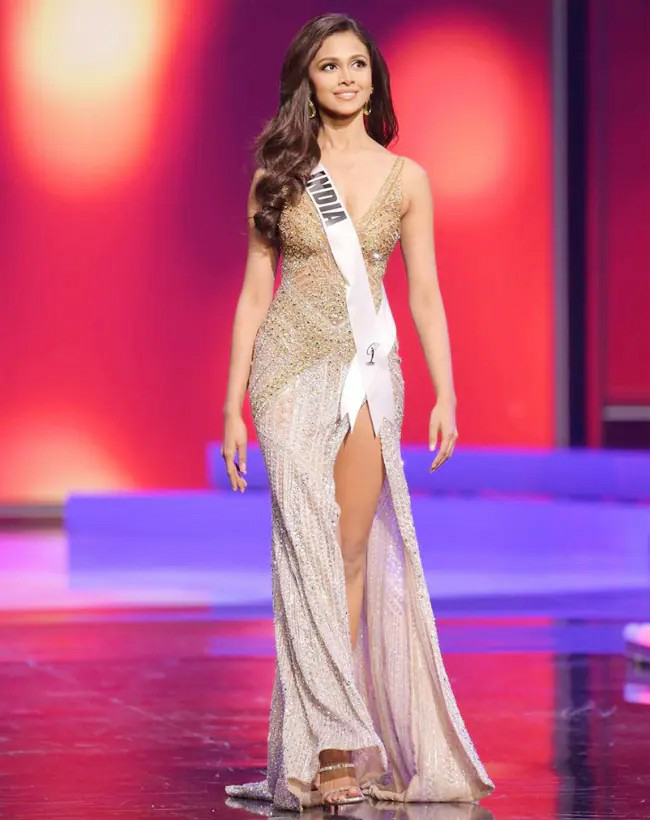
Adline Castelino, who earlier won the LIVA Miss Diva Universe 2020 title, received praise for her well-rounded response in the question-answer round. Castelino, born and raised in Kuwait moved to India when she was only 15, to make a living and become a financially independent woman. Adline Quadros Castelino is born to Manglorean Catholic parents hailing from Karnataka. 

The 22-year-old is a public figure and influencer, she supports causes and creates awareness about polycystic ovary syndrome (PCOS) as well as working to end the stigma around COVID-19.

In an interview with Pinkvilla, Adline said, “There was a big drive that I need to be in Mumbai and be a financially independent woman. I was like every other 15 years-old who didn’t know much about things and I believed there is something for me in Mumbai. I was shy sometimes. I used to think that with the marks on my body, I am not good enough to represent India.”

Adline is here to steal hearts in a high slit shimmery gown

The 69th edition of the Miss Universe contest was held on Sunday night at the Seminole Hard Rock Hotel & Casino in Hollywood. It was a scaled-down affair in the wake of the coronavirus pandemic. Andrea Meza of Mexico has been crowned Miss Universe for the year 2020, beating contestants from 74 other countries, including Miss India Adline Castelino, who came in fourth at the beauty pageant.

During the pageant, she was asked: “Should countries lockdown due to COVID-19 despite the strain on their economies, or should they open their borders and risk a potential increase in infection rates?”

To this, Adline responded, “Good evening universe. Well, coming from India and witnessing what India is experiencing right now, I have realized something very important that nothing is more important than the health of your loved ones. And you have to draw a balance between economy and health. And that can only be done when the government works with the people hand in hand and produces something that will work with the economy. Thank you.”

A day before the finale, she had penned down a heartfelt note on her journey through a video clip posted on social media. She had written: “If I could pen down this feeling without getting overwhelmed about how I felt as I stood there witnessing people around the world cheering, flags waving high and even if I missed seeing , I felt like I was home. I thought of you India and what we are going through. The love that people give you when they are hurting themselves is the purest form of love one can experience. I’m grateful to you that at a young age I have experienced that and if I could only show you what I saw that day! I saw hope, a hope that will be ours soon.”

The gorgeous saree was designed by Hyderabad-based designer, Shravan Kumar.

The 22-year-old diva won accolades and hearts by wearing a saree for the National Costume round. The gorgeous saree was designed by Hyderabad-based designer, Shravan Kumar. She explained the significance of the saree in an Instagram post.In an interview, talking about her dreams and being proud to represent India at Miss Universe platform, Adline Quadros Castelino said, “As a young girl growing up in Kuwait with no exposure, I would always look up to Miss Universe with so much awe but never imagined a girl like me who had a speech defect and had marks on her body could ever represent her country on such a prestigious platform.”

This was India’s highest Placement in Miss Universe after Lara Dutta won the title of Miss Universe 2000. Castelino broke the 20-year drought of India’s non placement in the Top 5 of Miss Universe, which was previously achieved by Celina Jaitley,  who was the 4th runner-up in 2001.

CHILD LABOUR

INTRODUCTION
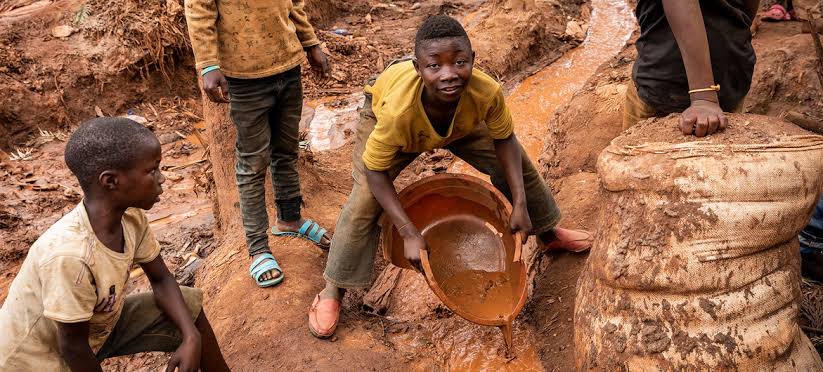
The best phase of human life is childhood. It is the most innocent phase of our life. In this stage human foundations are laid for successful adult life. In this phase we spend the most cosy, carefree and tension free lifestyle. We pass our time by playing, and leading a tensionless fun life. But there are many children who spend their life supporting themselves instead of spending it in a carefree and fun-loving manner because for them learning and playing are scared and tormented. They are controlled & tortured by others.

They want to get out from this dark world but they are forced to stay in this world. This is the true story of the child labour. Child labour is term that we all heard about in news or in movies.

Child labour is a crime. In some underprivileged families who are suffering from poverty, children are forced to work from a very early age to support themselves economically because they expect their kids to take responsibilities of working and provide food for them.
Industries and individuals take the advantage of their poverty and employ children to put them to work at very low payables.

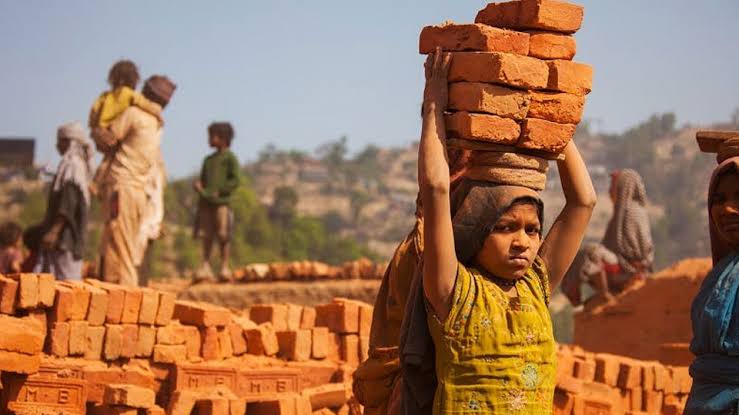
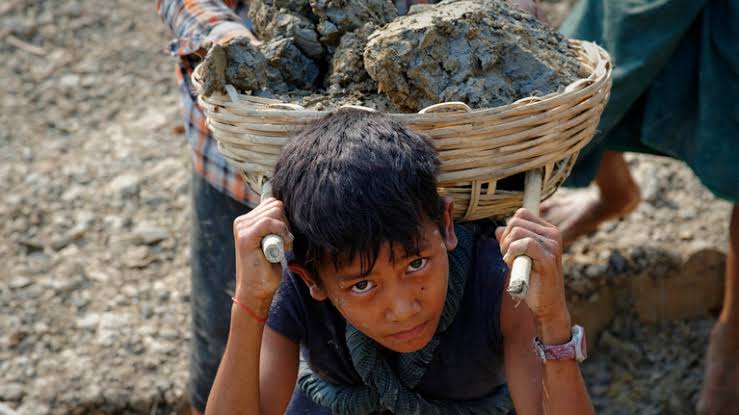
They are forced to work for long hours in dangerous factories. Sometimes they are forced to carry heavy loads that weigh even more than their body weight.

Then comes some individuals’ who hire children in their house for domestic help. They are so rude that when the children make a single mistake they beat them and torture them physically.

Those children do not get proper food to eat or clothes to wear. Sometimes they are made to starve and given worn-out clothes to wear. This is the story of many children who are suffering in this cruel world.
The average age for a child to be appropriate to work is considered 15 years or more, below this age limit won’t be allowed to indulge in any work forcefully.
Child labour takes away the kid’s opportunity of having a normal childhood a proper education and physical and mental wellbeing in some countries. It is illegal, but still now it is practiced in many countries.

CAUSES OF CHILD LABOUR
The main reasons for the ever-growing child labour are poverty and lack of education.
The parents think that their children are money-making machines. To earn more money by getting sympathy from other people they carry infants on the street begging.
Then when they grow up, they take them and eventually sell them to employers.This is a sickness that is rampant across the length and breadth of India
But other than poverty and lack of education, many other reasons are also responsible for child labour.
Firstly, it is common in those countries where unemployment is more than poverty. When the families are unable to earn enough money to support their lifestyle they put the children to work so they can have enough money to survive.
At the same place if the adults
are unemployed. The younger ones have to go to work. When people are illiterate then it is very common that they will send their children to work. This is because being uneducated all they care about is short term results due to which they send children to work even if the earning is less to survive their present . This destroys the future of children. They also remain uneducated and later after growing up when they start their own family they repeat the same thing as their parents did i.e., sending their children to work at an early age.

WORST CONDITION FACED BY CHILD LABOUR

India is in the second-highest number of child labour after Africa.
The worst employment bfir children is bonded child labour which is also known as slavery for lifetime.
Indian Parliament passed an act on the bonded labour system in 1976 but in spite of this act people still keep on practicing this system. It is estimated that almost 10millions children are victims of the bonded child labour. They work as domestic servants in India. Apart from India, almost 55 millions of children are hired across the world for bonded child labour.
The children are sold to money lenders as a payment of the money borrowed by their parents which they failed to return.
Children living in streets, instead of going to school, work in streets as a beggar, or selling flowers. This also is an example of child labour of different category. They are made to stay without eating food for many days so that people feel sad for them and give some.
Nowadays child labour couples who abuses child has become one of the greatest maladies across the world.
Every year the number of child abuse increases especially in the case of the girl child.This usually happens when someone abuses a girl at home, then to hide this fact her family sell her to an employer or money lenders as domestic help or the girl gets married to a man older than her age.

ERADICATION OF CHILD LABOUR
To eradicate child labour we should formulate some efficient solutions which will save our children. The future of other countries dealing with these social issues will also get enhanced. With the help of this one can create several unions that work to prevent child labour solely. It would help the children to indulge in this work and punish those who make them do it.
Stakeholders must take responsibility
Increased access to education
Provide support for children
Improve economic growth
Engage with the Sustainable Development Goals

@track2traininginstitute @track2trainingseminar @edunewsnetwork @hariyaliinsitute

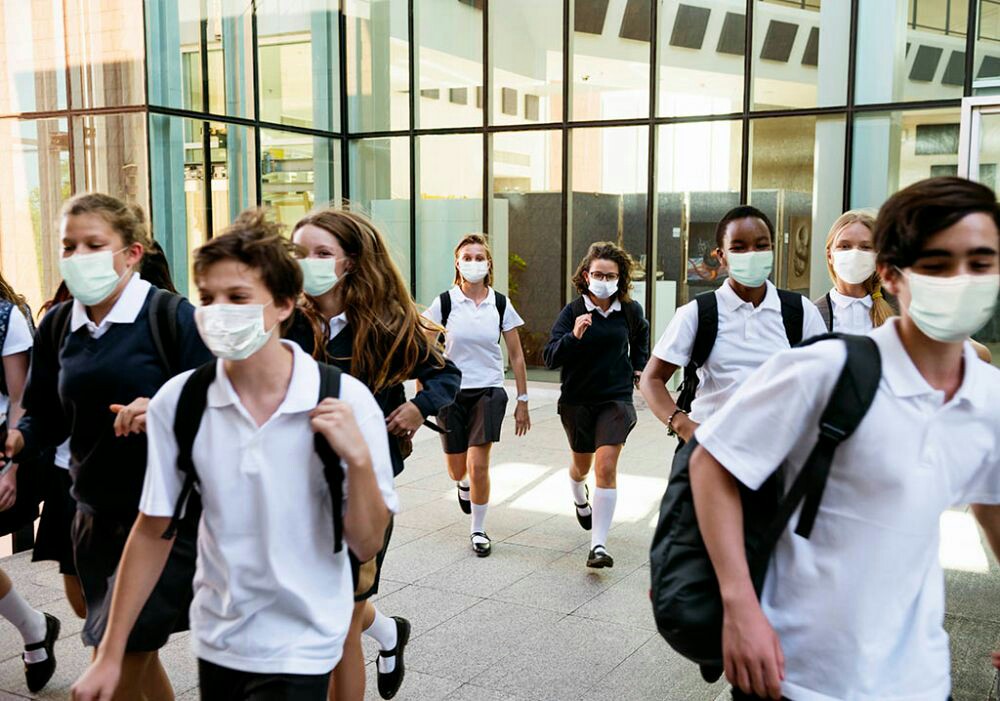
What government said for reopening schools!

The central government said that it is dangerous to open schools in this situation. All medical associations proved that third wave will come back within 3 weeks.

Recent news

It is a good decision of government of India because a bit of carelessness can be dangerous for the health of children.

20th june,2021

source: NDTV News

Indian contract act

The term contract is defined as an agreement two or more parties which has a binding nature, in essence, the agreement with legal enforceability is said to be a contract. It creates and defines the duties and obligations of the parties involved.

Agreement = Offer + Acceptance of offer Contract = Agreement + enforceability by law
Contract- An agreement between two or more parties which is enforceable
by law, is known as Contract.


That is if any two parties or more than two parties want to do something together
or exchange something for that purpose of they are entering into any agreement
which is enforceable by law, it is known as Contract.
A promise enforceable by law.

Essential Elements of contract

Agreement : The primary element that creates a contract between parties is an agreement, which is a result of offer and acceptance, that forms consideration for the parties concerned.

Free Consent: Consent of the parties is another important aspect of a contract, which means the parties entering into the contract, must agree upon the same thing in the same sense. The consent of the parties is said to be free when it is not influenced by corecieon undue influence, fraud, misrepresentation and mistake.

Competency: Competency refers to the capacity of the parties to enter into the contract, i.e. he/she has reached the age of maturity, he/she must be of sound mind, and he/she is not disqualified from contracting, as per the law like the alien enemy, foreign sovereigns, etc.

Consideration: It implies the price agreed to be paid for the promisor’s obligation by the promisee. It must be adequate and lawful.

Lawful object: The object for which the contract is created must be lawful, or else it is declared as void.

Not expressly declared as void: The law should not expressly declare the contract as void, such as contract in restraint of marriage, trade or legal proceedings.

WOMEN EMPOWERMENT

WOMEN EMPOWERMENT
Let me say that too often adolescent girls face intersecting disadvantages because of their age, gender, ethnic background, sexual identity, religion affiliation, income, disability among other compounded factors. We have seen pictures, evoked images of girls in different situations that live with disadvantage, even without crisis. The perception and reality of vulnerability arising out of these multiple intersectionalities really creates that context of discrimination and differentiated impact of crisis.

During conflict or humanitarian situations, natural disasters or climate change, these factors exacerbate and disproportionately and differentially affect young women and girls due to neglect of their human rights and the intersecting forms gender-inequality and discrimination that they endure. So this is how we shine the light on this particular situation of girls in emergencies. As was mentioned, it is often forgotten that women and girls are not only helpless victims, they are sources of power, power to cope, power to prevent, power to reduce risk, power for resilience and transformation and to build back better after crisis. That is the power that we want to invoke and tap into.

We must be outraged about the disadvantages that girls still experience. But here has been some progress. Humanitarian actors and governments are much more aware today about addressing crises and resilience building with a gender lens and with a girls lens. But, we still have miles to go.

Imagine that to date, women and children account for more than 75 per cent of the refugees and displaced persons at risk from war, famine, persecution and natural disasters.
Every 10 minutes, somewhere in the world, an adolescent girl dies because of violence.
Up to one-third of adolescent girls report their first sexual experience as being forced and they are victims of sexual violence. Currently at least 133 million girls and women have experienced female genital mutilation.
Imagine, that more than 700 million women alive today were married below the age of 18 – and more than one in three (some 250 million) were married before 15. And we saw that in crisis, all of this is worse.
Child marriage is four times higher among Syrian refugees than before the crisis. Evidence shows that 2,400 interviewed married refugee Syrian women in Lebanon, aged 20 to 24 years old, 47 per cent were child brides.
The 2030 Agenda for Sustainable Development provided us with 17 development goals, but also SDG 5, which is about “Achieving gender equality and empowering all women and girls”, in all circumstances, including in crisis and humanitarian situations. This is a big win and a commitment of the international community and we must all work to see that it is realized, most of all in crisis situations.

The 2030 Agenda has pledged to leave no one behind. This means that in our development efforts, girls must be a priority. The world should ensure girls are granted all the opportunities they deserve as they mature into adulthood. I would also like to mention something that has not been touched upon, which also plays out in crisis. The whole culture of ‘boy preference’ and ‘girl aversion’ has to be changed, where an equal valuing of girls is something that we must inculcate in all contexts.

Enabling girls to avoid child marriage and unwanted pregnancy, protect them against HIV transmission, and acquiring the education and skills they need to realize their potential, is a key priority toward 2030 and also a priority in crisis. Sometimes we forget that these are essential elements to be taken forward in crisis situations.

Gender equality and empowering all women and girls is something that we seek to advance and if we fail to address girls’ differentiated needs and aspirations too, a generation will be lost and with it, our hope for sustainable development, prosperity, peace and security.

It is therefore critical to EmPOWER Girls: Before, during and after emergencies

One thing all emergencies have in common is that they create a new set of circumstances, which girls have to learn to navigate, but we, as adults around them, have to be in the forefront of prioritizing their needs and helping them navigate:

From one day to the next they may face the loss of their homes, friends and family members. They may suddenly be living in a shelter or have no shelter at all. They may not have access to basic services and amenities or be sure where their next meal is coming from. They may be fleeing the only place they have ever called home.

Furthermore, from the 1991 cyclone in Bangladesh in which 90 per cent of the 140,000 people who lost their lives were women; to the 276 Chibok schoolgirls were abducted by Boko Haram militants in Nigeria in 2014, to the women representing the single-highest adversely affected group by the earthquake in Nepal, we know that resilience building and recovery have a girl’s face. Not only they because they are the most in need of urgent help and in higher risk of violence in the aftermath of the crisis situations, but also because of the critical role young women and girls play in preventing, preparing for, and recovering from natural and human made hazards.

So how do we reach these girls? How can we protect them? How can we inspire them? And how can we ensure they are not left behind?

From today’s presentations we learned that resilience building and planning cannot be sustainable if we do not involve girls’ voices in the planning itself. We cannot be successful unless girls are empowered to actively participate in the solutions; girl-driven solutions. Let them decide how best to address their most urgent and future needs. Let their voices be heard.

Not only can girls inspire innovative and creative solutions, but they can guide and contribute to future policies, research, programming and media campaigns.

During this year’s 16 Days of Activism, we will be working with UNICEF and we will be launching U-Report’s Ending Violence Against Girls Information Centre, which will connect young users directly to the information and tools they want, to be advocates for change in their own communities.

We also need to create safe spaces in which these girls can feel empowered. UN Women has the Safe Cities Programme. UN Women’s Safe Haven centres, for example, provide a space to women and girls to express themselves without fear of judgment and harm.

Empowering girls must also form the core of any protection and humanitarian service provision and resilience building. That is why UN Women is combining what we call the LEAP that is Leadership, Empowerment, Access and Protection, which is about gender-responsive humanitarian response. And our LEAPS strategy, which is about empowering young women–their leadership and economic empowerment. So, we have three flagship programmes to support women and girls in the context of humanitarian crisis.

While education is key to the future of adolescent girls, in conflict and humanitarian zones girls are 90 per cent more likely to be out of school when compared to girls in other, conflict-humanitarian free, countries.

We know that an extra year of primary school for girls increases their eventual wages by 10 to 20 per cent, and that an extra year of secondary school increases them by 15 to 25 per cent.

Universal secondary education would cut child mortality in half. In Sub-Saharan Africa, maternal mortality could fall by 70 per cent.

We know also that when a girl sees herself as a leader or a mentor, it creates a positive force for change in her life.

As we end this morning’s commemoration, I have the pleasure of introducing the #FreedomForGirls film, which is currently available on Google’s homepage in over 50 countries. I invite everyone to share this powerful and inspiring film far and wide, to use the #FreedomForGirls hashtag to tell us what freedom really means to you, and to think about creative solutions for empowering girls in crisis settings, so that we can create a better future for us all.

Dear young people, leaders and champions,

In good times and in crisis—but specially in crisis and emergencies, all stakeholders and actors have a duty to care to make humanitarian response and resilience building work for, include and empower girls and young women.

On this International day of the Girl which zooms in on their rights before, during and after emergencies and crisis, let us take the following pledge:

Together we will protect girls’ human rights in all circumstances;

Together we will foster girls’ capabilities in every field at all times;

Together we will make girl’s voices heard in decision making;

Together we will promote and harness girl’s leadership;

Together we will unleash girls’ power in all its dimensions;

Together we will ensure that girls’ full potential is realized, generation after generation.

Sales of goods act 1930

According to Sec 4(1) of sale of goods act, “A contract of sale of goods
is a contract whereby the seller transfers or agrees to transfer the
property in goods to the buyer for a price”.

Agreement to Sale
The sale of Goods Act defines it as, “where the transfer of the property in the
goods is to take place at a future time or subject to some condition thereafter to be
fulfilled, the contract is called an agreement to sell.”

Unpaid Seller
According to the sales of goods act, 1830 the seller of goods is deemed to be an
unpaid seller when. The whole of the price is not paid or rendered.The bill of exchange or other negotiable instrument has been received as
conditional payment and the condition on which it has was received has not
been fulfilled by reason of the dishonour of the instrument.

Examples
X sold certain goods to Y for Rs. 50,000. Y paid Rs. 40,000 but fails to pay the
balance. X is an unpaid seller.
P sold some goods to R for Rs. 60,000 and received a cheque for a full price. On
presentment the cheque was dishonoured by the bank. P is an unpaid seller.

Difference between Sale & Agreement to sale
When in a contract of sale, the exchange
of goods for money Consideration takes
place immediately, it is known as sale.

In sale, title of goods is transferred to the
buyer with the transfer of goods.
When in a contract of sale the parties to
contract agree to exchange the goods for
a price at a future specified date is known
as Agreement to sale.

Important Dates Of Year E.I. Teachers’ Day, Gandhi Jayanti

Important Dates Of Year E.I. Teachers’ Day, Gandhi Jayanti

The generated text is 93% unique (see FAQ).
HIGHLIGHT text that has not been rewritten


Let us go through the most important days of October so that you know all the details. October is the tenth month of the year in the Julian and Gregorian calendars.    Show Sources

A year on 2 October to commemorate the birthday of Mahatma Gandhi, an Indian lawyer, anticolonial nationalist, politician and ethicist, Gandhi Jayanti is celebrated each year. The aim of World Animal Day is to promote a healthy life for animals and their rights. Mahatama Gandhi is one of the most famous people living on this planet.    Show Sources

Gandhi Jayanti is celebrated in honor of the national father’s birthday, Mohandas Karamchand Gandhi, also known as Mahatma Gandhi or Bapuji. On this occasion, Gandhi Jayanti celebrated the International Day of Nonviolence, the father of the nation, Mohatma Gandhi’s father was a preacher of nonviolence. Mahatma Gandhi’s birthday – an Indian lawyer, anti-colonial nationalist and political ethicist – is celebrated as an international day of nonviolence with numerous events, campaign rallies, billboards and speeches in every corner of India.    Show Sources

Gandhi’s family background can be seen as an important explanation of why he has been able to achieve the position he occupies in Indian society. Mohandas Karamchand (also known as Mahatma Souled Gandhi) was born in Porbandar, the capital of the small Principality (now state of Gujarat in the West Indies) where his father was Chief Minister. She and the rest of the Gandhi family were associated to a branch of Hinduism in which non-violence and tolerance towards religious groups were considered important.    Show Sources

Mohandas Karamchand Gandhi, also known as Mahatma Gandhi, graduated from law school in England and returned to India in 1891. After completing his studies, he returned to India and worked until 1893 as a lawyer in Natal, South Africa, where he was employed by the Indian Trading Company. In 1937, when a member of the Norwegian storing (Parliament) Ole Colbjornsen, Labour member, Gandhi nominated Gandhi for the Nobel Peace Prize this year, he was chosen as one of the thirteen candidates on the Norwayn Nobel Committee shortlist.    Show Sources

Students and their teachers will gather to celebrate Mahatma Gandhi’s 150th birthday with patriotic zeal. Following the true meaning of Gandhi Jayanti and the glorious paths he took towards a peaceful and prosperous world, special interactive e-sessions for teachers will be organised. Pupils from schools across the country will pay special tribute to Gandhi ji with their inspiring essays on the importance of Khadi in life.    Show Sources

Since 1994, World Teacher’s Day has been celebrated on 5 October to mark the anniversary of the adoption of the ILO and UNESCO recommendations on teacher status in 1966. In order to respect and commemorate teachers, UNESCO has set 5 October as the date for World Teacher Day. On Tuesday, 5 October 2010, teachers in Cameroon will join their peers in celebrating the 17th World Teacher Day.    Show Sources

On September 29 the commemorations in Yaounde began with educational sessions at Lycee General Leclerc, before concluding with the 17th World Teacher’s Day at the multi-purpose WADA sports complex. The theme of nation building was passed on to teachers, as the day was an opportunity to honour teachers who not only toil in comfortable conditions, but also build the capacity and human resources for socio-economic development in Cameroon.    Show Sources

The Day is held annually with the aim of mobilising support for teachers and ensuring that they continue to meet the needs of future generations. On March 1 Iraq celebrates the National Day of Teachers, students show appreciation for their teachers by giving them gifts, and the day is celebrated by taking traditional food to schools and generally holding a open day. The school day is not a holiday, but students and teachers gather to celebrate and give gifts to teachers.    Show Sources

In recognition of Dr. APJ Abdul Kalamss “contribution to society and the world, the Student Day will be celebrated on October 15. RBK Teachers Professional Development Centre believes that there is potential that can be embraced by anyone through our courses whether you are a teacher or have no experience or are a person who wants to start. A teacher is a person who provides education to pupils, whether children, students or adults.    Show Sources

This year we celebrate this big day, but it is celebrated in a different way – virtually. As schools have been closed since March 2020 due to the COVID-19 pandemic, we have switched to an online teaching mode.