OBESITY

MEANING

In simple words, obesity refers to a body state that is excessively beyond the ideal Body Mass Index. In adults, obesity is defined as having a BMI of 30 or more, according to the Centres for Disease Control and Prevention. Obesity has become a very serious issue among youngsters in these modern times.

CAUSES OF OBESITY

When a person consumes more calories than they use as energy, their body will store the extra calories as fat. This can lead to obesity. Also, some foods and beverages — especially those that are high in fats and sugars — are more likely to lead to weight gain

Items that tend to increase the risk of weight gain include:• fast foods• fried foods, such as french fries• fatty and processed meats• many dairy products• foods with added sugar, such as baked goods, ready made breakfast cereals, and cookies• foods containing hidden sugars, such as ketchup and many other canned and packaged food items

Many people lead a much more sedentary lifestyle than their parents and grandparents did.Some examples of sedentary habits include:• working in an office rather than doing manual labor• playing games on a computer instead of doing physical activities outside• going to places by car instead of walking or cyclingSome medications can also lead to weight gain.• hypoglycemia medications, such as tolbutamide• glucocorticoids for rheumatoid arthritis• some antidepressants

COMPLICATIONS OF OBESITY

Obesity has been linked to a number of health complications,

• type 2 diabetes• heart disease• high blood pressure• certain cancers (breast, colon, and endometrial)• stroke• gallbladder disease• fatty liver disease• infertility

DIAGNOSIS OF OBESITY

Certain tests to help diagnose obesity-related health risks include

• blood tests to examine cholesterol and glucose levels• liver function tests• a diabetes screening• thyroid tests• heart tests, such as an electrocardiogram (ECG or EKG)• screening tests, such as ultrasounds, CT scans, and MRI scans

OBESITY PREVENTION TIPS

PREVENTION OF OBESITY IN CHILDREN

Gradually work to change family eating habits and activity levels rather than focusing on a child’s weight

• Be a role model. Parents who eat healthy foods and participate in physical activity set an example so that a child is more likely to do the same.

• Keep the refrigerator stocked with fat-free or low-fat milk, fresh fruit, and vegetables instead of soft drinks and snacks high in sugar and fat

.• Serve at least 5 servings of fruits and vegetables daily.

• Encourage children to drink water rather than beverages with added sugar. These include soft drinks, sports drinks, and fruit juice drinks.

PREVENTION OF OBESITY IN ADULTS

• Choose whole grain foods, such as brown rice and whole wheat bread. Don’t eat highly processed foods made with refined white sugar, flour, high-fructose corn syrup and saturated fat

.• Weigh and measure food to be able to learn correct portion sizes. For example, a 3-ounce serving of meat is the size of a deck of cards. Don’t order supersized menu items.

• Learn to read food nutrition labels and use them, keep the number of portions you are really eating in mind.

• Simply reducing portion sizes and using a smaller plate can help you lose weight.

• Aim for an average of 60 to 90 minutes or more of moderate to intense physical activity 3 to 4 days each week. Examples of moderate intensity exercise are walking a 15-minute mile, or weeding and hoeing a garden. Running or playing singles tennis are examples of more intense activities.

CONCLUSION

Recognition is increasing that overweight and obesity are not only problems of individuals, but also societywide problems of populations. Acting on this recognition will require multifaceted, population-based changes in the socioenvironmental variables that influence energy intake and expenditure.“Obesity is very easy to catch but they cannot run so fast”.

MALARIA


                                MALARIA

Malaria can be fatal disease for human beings. Approximately 300 million people around the world get infected with malaria every year. More than 2 million people die every year due to malaria disease.

Malaria is caused by a protozoan parasite Plasmodium. This disease   spreads through the bite of an insect vector- the female Anopheles mosquito feeds upon plant juice.

The name Malaria was proposed by Macculochin 1827. C.L.A. Laveran in 1880, a French physician, discovered the Malarial parasite –  Plasmodium  in the blood of a malaria patient.He received Nobel prize for this discovery in 1907.

SYMPTOMS-

Main symptoms of malaria include headache, nausea, muscular pain and high fever. Each malarial attack is of 6 to 10 hours duration and consists of the three stages:

1.    Cold stage, feeling of extreme cold and shivers

2.    Hot stage, high fever, faster respiration and heartbeat and

3.    Sweating stage, i.e., due to profuse sweating, temperature of the body goes down to normal.

Even after the patient is cured of malaria, the patient feel weak and becomes anemic. Malaria may also secondarily cause enlargement of spleen and liver. Presence of malarial parasite can be checked by blood test.

PREVENTION-

Malaria is an infectious disease. It can spread from an infected person to a healthy person (host) by the bite of female Anopheles mosquitoes (vectors). The only way to prevent malaria is to take precaution against mosquito bites.

 We can protect ourselves from the bite of mosquitoes by following methods:

1.    Wire- gauge should be used on doors and windows of houses to prevent entry of mosquitoes.

2.    Insect- repellents (e.g., Odomos) should be used to prevent mosquito- bite.

3.    One should sleep under mosquito nets.

4.    Mosquito larvae can be killed by sprinkling kerosene oil on large- sized water bodies. Some larvivorous fishes such as Gambusia, minnows or trouts or birds (e.g., ducks) can be introduced in water bodies. These animals feed on mosquito larvae and hence the population of mosquito is checked. This is called biological control of mosquito.

5.    Adult mosquitoes can be killed by spraying insecticides (e.g., BHC, malathion) on the walls of human dwellings. Insecticides are chemical poisons (toxicants), hence, regulation of mosquito population by them is called chemical control. The insecticide DDT is not used in the chemical control of mosquitoes, as it persists in the environment for much longer time and can cause toxicity by accumulating in the body of fishes, birds and humans through food chain.

6.    The breeding grounds should be destroyed. Thus, the ditches, puddles or swamps around human dwellings should be drained or filled. We should not allow the collection of water in any uncovered containers such as water tank, pot, cooler, flower pot, discarded tires, etc.

Ø Recently Allan Porter and his team produced a genetically engineered aquatic bacteria at National Institute of Singapore. When mosquito larvae feed on these bacteria, they get killed by the toxic substance produced by these bacteria. This can prove to be an effective biological control method against malaria.

CONTROL-

A drug named Quinine, which is extracted from the bark of Cinchona tree, is used to treat a person suffering from malaria. This drug kills most of the stages of malarial parasite. There are certain other drugs (medicines) which should be taken on the advice of doctor. Scientists are trying hard to develop an antimalarial vaccine.

Ø Central Drug Research Institute (CDRI), Lucknow has developed an anti- cerebral malaria drug called – Arteether. This drug is extracted from a herbaceous plant Artemisia annua belonging to family Asteraceae.

Plums – Poison For Dogs?


Can Dogs Eat Plums? Do Plums Harm Dogs? All answers you will get in this article.

Plums grow on large bushes or small trees and have beautiful white apple-shaped flowers. The fruit can be up to 15 cm round, and the colour varies from yellow to black. Each fruit seed contains toxins i.e. cyanogen, hydrogen cyanide, prunasin and amygdalin.


When the semen (bone or bone) is consumed whole, the acids from the intestinal tract break down the upper layers and release the toxins into the bloodstream and distribute them throughout your dog’s body.
If your dog suffers from plum poisoning, it will likely experience vomiting, tremors, and shortness of breath and can be fatal within an hour if not treated immediately.

WHY DOGS ARE NOT ALLOWED TO EAT PLUMS?


The major problem is with the bone. It stays in the middle of the plum. That is a very choking hazard but also it is pointy on both ends which means that if swallowed it can sometimes cause oesophagus, stomach or intestinal damage.
If your dog takes a little bit of ripe plum, it will likely be fine. The pulp of a properly ripe plum is not poisonous to dogs of toxins, including cyanide. In addition to this, parts of the plum plant can also contain amygdalin, cyanogen and prunasin.

WHAT TO DO IF PLUM CONSUMED BY YOUR DOGS?


If you notice that your dog has eaten plums, try to find out how much it has eaten and what parts of the fruit, whether your dog has managed to eat a plum whole and only took a bit without it ingesting the plum kernel they are most likely to be fine.
But if they had eaten some other parts of a plum plant and have eaten it in a bulk then most probably you will watch the symptoms listed below
Stomach problems
Tremors
Breathing difficulties
Vomiting

If your dog is showing symptoms of plum poisoning, or if you suspect they have eaten a significant amount of plums, you need to call your veterinarian, who will likely want to check your dog for more signs of plum poisoning, and nitrite given via an IV drip may help that To remove the presence of cyanide from your dog’s.
First to be sure to always remove the plum’s pit. Doing so is essential as the pit contains cyanogenic glycosides (cyanide) which is toxic. Also, it presents a choking hazard.

CONCLUSION
So now we can conclude that dogs may eat a Lil bit of plum but not in bulk. They can also not eat any part of the plum plant like leaves, stem , roots and even bark. However it may not seriously harm dogs if taken in a small amount but suggest you to keep your dogs away from the plums.
Hope you all like this article. If your dog has ever eaten up plum then how could you manage that, tell me in the comments. Also, do share this article if you found it helpful.
Thank You

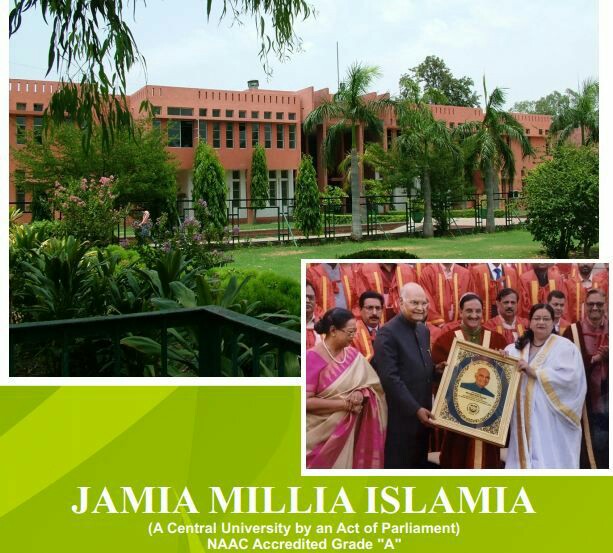
JAMIA has extended it’s date of addmission

The great Jamia Millia Islamia University has extended it’s last date for submission of all forms for class nursary to 9 th standard.

Jamia University, jamia Nagar, New Delhi

If you are a parent and want to give your child best ever education, then go for it!

All the information related admission is available on jamia portal.

Just go to http://www.jmi.ac.in and you can see all the notices and prospectus related any class.

16th June, 2021

remember!

Last date for submission is extended by 12th June 2021 to 2021.

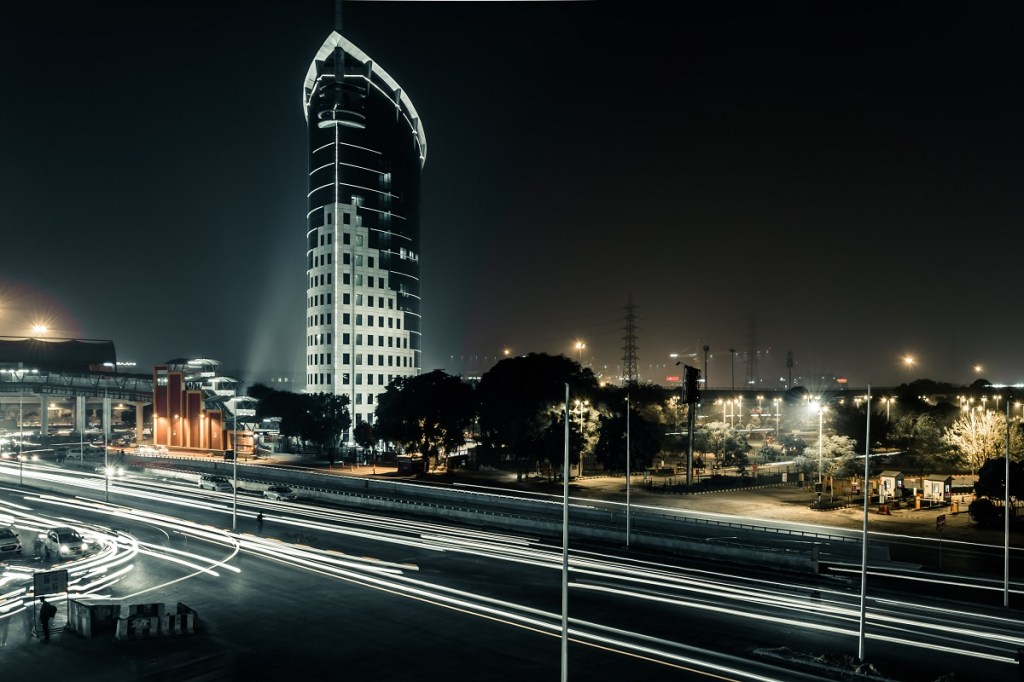
IS GURUGRAM THE BEST CITY TO LIVE IN COVID-19 ERA?

According to a report Gurugram is the most apt city to live from a Covid perspective as compared to Bengaluru and Mumbai
According to the report, Gurugram is overall the most suitable city to live from a Covid perspective as compared to Mumbai and Bengaluru

According to a report by Square Yards, Gurugram is the apt city to live during COVID-19 considering the factors like hospital infrastructure, population density and open area ratio. The study titled Suitability Index: The COVID perspective  highlights the suitability and working in three prime cities of our country- Mumbai, Bengaluru and Gurugarm with respect to COVID-19.

The report ascertains that the factors such as hospital infrastructure, population density and open area ratio are far more important than the work distance or affordability to decide where a homebuyer wants to live at a time when coronavirus disease is at it’s peak and transmitting rapidly.

According to the Suitability Index, even though the density of COVID-19 cases in Gurugram is second only to the North, presence of maximum number of hospitals/10K people, more than 40% open area and lowest population density made the area most suitable and hence sustainable and livable  from the COVID-19 perspective. Also as per the analysis, the most suitable zone found in Bengaluru were Mahadevapura, Bellandur, Devasandra and Marathahalli.

In Mumbai, the most suitable zone were found in Western suburbs and the Central suburbs.

The COVID-19  pandemic exposed the shortcomings in medical infrastructure like never before and during this time according to statistics, both Mumbai and Bengaluru offer only 1.3 and 0.30 hospitals per 10,000 people respectively on the other hand, Gurugram surpasses both the cities with 2.5 hospitals for every 10, 000 people. Mumbai had 13 of the total 24 wards severely affected with more than 50 cases per 10,000 people. In Gurugram, the North and East zones averaged 55 cases per sq km while in Bengaluru 4 zones of the total 8 zones recorded more than 200 cases per sq km. The Covid-suitability index for each city suggests that across all cities, suitability increased as people moved away from the city centres and older parts of the city towards more peripheral locations.

Contrary to the common notion, the report suggests that Mumbai has the highest open area ratio amongst the three cities at nearly 45%. Mumbai was the most densely populated with nearly 60,000 people/sq km while Gurugram had the lowest population density at approximately 4200 people/sq km.

“The Suitability Index is an attempt to bring many non-transaction elements to the forefront that can have an impact while making a home buying decision. The ‘new normal’ is here to stay and the idea is to look at factors other than proximity to work or affordability that impacts the choice of residence,” said Anand Moorthy, Business Head – Data Intelligence & Asset Management Services – Square Yards.

Not only these cities are the top real estate destinations in the country, but they are also among the top cities to be severely hit by the pandemic. This is where the relevance of a Suitability Index kicks in. The need for one’s own ‘home’ has gained an all-new dimension since 2020 due to the changes brought about by the pandemic. The study is an attempt at making the home-buying process in the Covid era slightly more pragmatic.
It highlights certain meaningful factors that today’s end users need to acknowledge while deciding to buy the right home in a pandemic like situation.

Persons Under Illegal Detention Shall Be Paid Compensation By State

It is a matter of great solace, immense satisfaction and tremendous happiness to note that in a latest, learned, laudable and landmark judgment titled Shiv Kumar Verma and Another v. State of U.P. and 3 Others in Criminal Misc. Writ Petition No. – 16386 of 2020, while underscoring in no uncertain terms that the award of compensation for harassment by public authorities not only compensates the individual, satisfies him personally but helps in curing social evil, the Allahabad High Court has most commendably directed the State Government to strictly implement its policy of granting compensation to a citizen (25k), who has been illegally detained. What also cannot be missed out is that the Bench of Justice Surya Prakash Kesarwani and Justice Shamim Ahmed also unanimously, unhesitatingly and unconditionally appreciated the State Government for coming up with a policy decision to pay compensation of Rs 25,000/- for illegal detention of any citizen by any Officer of the State Government and initiation of disciplinary proceedings against such officer. The Court was dealing with the illegal detention of 2 persons who continued to be under detention despite submitting personal bond and other papers as directed under the pretext of verification and thus they challenged their illegal detention before the Court.
To start with, the ball is set rolling in para 2 of this brief, brilliant, balanced and bold judgment authored by Justice Surya Prakash Kesarwani for himself and Justice Shamim Ahmed wherein it is put forth that, “This writ petition has been filed praying for the following reliefs: 
“i) Issue a writ, order or direction in the nature of mandamus directing the respondents to give compensation to the petitioners in lieu of illegal detention from 12.10.2020 to 21.10.2020 in connection with Case Crime No.624 of 2020, State vs. Shiv Kumar Verma and another, under Section 151, 107 and 116 Cr.P.C., Police Station Rohania, District Varanasi.””
While stating the facts of the present case, the Bench then observes in para 3 that, “Briefly stated, facts of the present case are that there was some dispute relating to ancestral property between the petitioners and their family members. In paragraph 3 of the writ petition, it has been stated that some tiff arose between the petitioners and other family members, namely, Rajendra Prasad, Shiv Kumar Verma and Raj Kumar Verma regarding partition of an ancestral land and in apprehension of breach of public peace, the police arrested the petitioners under Section 151 Cr.P.C. on 08.10.2020. A Challani Report dated 08.10.2020 was submitted by the Sub Inspector, Police Station Rohania, District Varanasi to the Sub Divisional Magistrate, District Varanasi under Section 151/107/116 Cr.P.C., which was in printed form and merely name of the petitioners and others, name of village and “land dispute” have been filled by ink in the aforesaid Challani Report. On receipt of the Challani Report, the Sub Divisional Magistrate registered the case as Case No.624 of 2020 (State vs. Shiv Kumar Maurya and others) and passed the following order on 08.10.2020” which to put it shortly reveals that the petitioners were sent to jail for not submitting personal bonds and other papers.”
Shortly put, the Bench then states in para 4 that, “It appears that on 12.10.2020 the petitioners submitted personal bond and other papers but the respondent no.3 has not released them and instead, under the pretext of verification, directed the file to be placed on 21.10.2020.”
As a corollary, the Bench then discloses in para 5 that, “Thereafter, on 21.10.2020 the petitioners were released. Aggrieved with the arbitrary and illegal action of the respondents and illegal detention, the petitioners have filed the present writ petition praying for the relief as afore-quoted.”
As we see, the Bench then to put it shortly states in para 7 that, “In paragraph 8 of the counter affidavit dated 02.02.2021, the respondent no.1 has stated that the State Government has taken corrective action in the matter vide letters/circulars dated 30th January, 2021 and 31st January, 2021.”
Needless to say, the Bench then specifies in para 8 that, “In compliance to the afore-quoted Government Order dated 30.01.2021, the Director General of Police, Uttar Pradesh has issued a Circular being letter No. DG-8-94 (Order) 2021, dated 31.01.2021 to all the Zonal Additional Director General of Police, Uttar Pradesh, and all the Police Commissioners, Uttar Pradesh and directed them to ensure strict compliance of the afore-quoted Government order.” 
As is quite ostensible, the Bench then lays bare in para 9 that, “From the facts briefly noted above and the counter affidavit of respondent no.1, it stands admitted that the police authorities are arbitrarily and illegally submitting Challani Reports under Sections 107/116 Cr.P.C. Since the respondent no.1 has taken steps to correct the mistakes and illegalities, therefore, we do not propose to issue any further direction in that regard, except that the afore-quoted Circulars dated 30th January, 2021 and 31st January, 2021 shall be strictly implemented in the whole of the State of Uttar Pradesh.”
To say the least, the Bench then envisages in para 10 that, “In the counter affidavit dated 01.02.2021, the respondent no.3 has stated in paragraph 5 and 8 that “the petitioners submitted the applications through their counsel that they are ready to furnish personal bonds as well as bail bonds, therefore, they may be released on bail and the answering respondent directed the concerned Tehsildar to verify the revenue records produced by the sureties and on verification the petitioners shall be released on 21.10.2020 on bail.” 
Truth be told, the Bench then lays down in para 11 that, “In his counter affidavit, the respondent no.3 has tried to justify his arbitrary action and clear breach of statutory duty cast upon him as well as the fundamental rights guaranteed under Article 14 and 21 of the Constitution of India. In this regard, it would be appropriate to refer to the provisions of Sections 107, 111 and 116 of the Code of the Criminal Procedure, 1973, which are reproduced below: 
“107. Security for keeping the peace in other cases. 
(1) When an Executive Magistrate receives information that any person is likely to commit a breach of the peace or disturb the public tranquillity or to do any wrongful act that may probably occasion a breach of the peace or disturb the public tranquillity and is of opinion that there is sufficient ground for proceeding, he may, in the manner hereinafter provided, require such person to show cause why he should not be ordered to execute a bond, with or without sureties, for keeping the peace for such period, not exceeding one year, as the Magistrate thinks fit.
(2) Proceedings under this section may be taken before any Executive Magistrate when either the place where the breach of the peace or disturbance is apprehended is within his local jurisdiction or there is within such jurisdiction a person who is likely to commit a breach of the peace or disturb the public tranquillity or to do any wrongful act as aforesaid beyond such jurisdiction. 
“111. Order to be made. When a Magistrate acting under section 107, section 108, section 109 or section 110, deems it necessary to require any person to show cause under such section, he shall make an order in writing, setting forth the substance of the information received, the amount of the bond to be executed, the term for which it is to be in force, and the number, character and class of sureties (if any) required.”
“116. Inquiry as to truth of information. 
(1) When an order under section 111 has been read or explained under section 112 to a person present in Court, or when any person appears or is brought before a Magistrate in compliance with, or in execution of, a summons or warrant, issued under section 113, the Magistrate shall proceed to inquire into the truth of the information upon which action has been taken, and to take such further evidence as may appear necessary.
(2) Such inquiry shall be made, as nearly as may be practicable, in the manner hereinafter prescribed for conducting trial and recording evidence in summons- cases.
(3) After the commencement, and before the completion, of the inquiry under sub- section (1), the Magistrate, if he considers that immediate measures are necessary for the prevention of a breach of the peace or disturbance of the public tranquillity or the commission of any offence or for the public safety, may, for reasons to be recorded in writing, direct the person in respect of whom the order under section 111 has been made to execute a bond, with or without sureties, for keeping the peace or maintaining good behaviour until the conclusion of the inquiry, and may detain him in custody until such bond is executed or, in default of execution, until the inquiry is concluded: Provided that- 
(a) no person against whom proceedings are not being taken under section 108, section 109, or section 110 shall be directed to execute a bond for maintaining good behaviour;
(b) the conditions of such bond, whether as to the amount thereof or as to the provision of sureties or the number thereof or the pecuniary extent of their liability, shall not be more onerous than those specified in the order under section 111. 
(4) For the purposes of this section the fact that a person is an habitual offender or is so desperate and dangerous as to render his being at large without security hazardous to the community may be proved by evidence of general repute or otherwise.
(5) Where two or more persons have been associated together in the matter under inquiry, they may be dealt with in the same or separate inquiries as the Magistrate shall think just. 
(6) The inquiry under this section shall be completed within a period of six months from the date of its commencement, and if such inquiry is not so completed, the proceedings under this Chapter shall, on the expiry of the said period, stand terminated unless, for special reasons to be recorded in writing, the Magistrate otherwise directs: Provided that where any person has been kept in detention pending such inquiry, the proceeding against that person, unless terminated earlier, shall stand terminated on the expiry of a period of six months of such detention. 
(7) Where any direction is made under sub- section (6) permitting the continuance of proceedings, the Sessions Judge may, on an application made to him by the aggrieved party, vacate such direction if he is satisfied that it was not based on any special reason or was perverse.””
For the sake of clarity, the Bench then lays bare in para 12 that, “Section 107 Cr.P.C. requires the Magistrate receiving the information that any person is likely to commit a breach of peace or disturb the public tranquillity or to do any wrongful act that may probably occasion a breach of peace or disturb the public tranquility and is of opinion that there is sufficient ground for proceeding, he may, in the manner provided, require such person to show cause why he should not be ordered to execute a bond, with or without sureties, for keeping the peace for such period, not exceeding one year, as the Magistrate thinks fit. Perusal of the order dated 08.10.2020, passed by the respondent no.3 would reveal that there is no such satisfaction recorded by the respondent no.3. The aforesaid order dated 08.10.2020 would further reveal that the respondent no.3 has not required the petitioners to show cause that why they should not be ordered to execute a bond with or without sureties. Thus, the respondent no.3 has committed clear breach of mandate of Section 107 Cr.P.C.”
Simply put, the Bench then states in para 13 that, “Section 111 Cr.P.C. provides that when a Magistrate acting under section 107, section 108, section 109 or section 110, deems it necessary to require any person to show cause under such section, he shall make an order in writing, setting forth (i) the substance of the information received, (ii) the amount of the bond to be executed, (iii) the term for which it is to be in force, and (iv) the number, character and class of sureties (if any) required. These necessary ingredients of Section 111 Cr.P.C. are totally absent in the order dated 08.10.2020 passed by the respondent no.3. Thus, it is evident on record that the respondent no.3 has acted arbitrarily and illegally.” 
Be it noted, the Bench then seeks to point out in para 14 that, “It would further be relevant to note that admittedly the petitioners have submitted personal bond on 12.10.2020 although the order passed by the respondent no.3 dated 08.10.2020 does not specify the substance of the information received, the amount of the bond to be executed, the term for which it is to be in force, and the number, character and class of sureties, if any, required. Despite submission of personal bond and other papers on 12.10.2020 by the petitioners before the respondent no.3, they were not released by the respondent no.3 and that too against his own order dated 08.10.2020 that the petitioners shall be detained till presentation of personal bond/bail bond. Non release of the petitioners by the respondent no.3 even after submission of personal bond/bail bond and other papers, is a clear breach of Article 21 of the Constitution of India, by the respondent no.3 which resulted in illegal detention of the petitioners at least since 12.10.2020 to 21.10.2020.”
Adding more to it, the Bench then puts forth in para 15 that, “On 02.02.2021 this Court noted the statement made by the State Government in Paragraph 15 of the order dated 02.02.2021 as under:
“15. Learned Additional Advocate General and the Secretary, Home, U.P. Lucknow jointly state that the State Government shall develop a mechanism and shall also issue appropriate guidelines so as to ensure that such instances may not repeat again. They further state that the State Government shall consider to grant monetary compensation to the petitioners for breach of their fundamental rights under Article 21 of the Constitution of India.””
Furthermore, it is then illustrated in para 16 that, “In pursuance to the statement made on own behalf of the State government as noted in the afore-quoted paragraph 15 of the order dated 02.02.2021, the State Government filed an affidavit of compliance dated 24.03.2021 of Sri Tarun Gauba, Secretary, Home Affairs, Uttar Pradesh, in which in paragraph 10 it has been stated as under :
“That it is most respectfully submitted that the State Government has issued directions to all District Magistrates and all Executive and Special Magistrates who are sub ordinate to the District Magistrates, to exercise their power under Section 107, 116 Cr.P.C. for maintenance of public peace and public tranquility in their territorial jurisdiction. They have been further advised that each and every case under the aforesaid proceedings shall be decided on its own merit with the application of judicial mind and in accordance with the established law & procedure to ensure that the fundamental rights of citizens are protected. The State Government has directed all the District Magistrates of the State to ensure strict compliance of the policy/guideline dated 23rd March, 2021. The State Government has reformulated the earlier policy dated 02.03.2021 and after including the aforementioned issues it has re-issued policy/guideline dated 23rd March, 2021. For kind perusal of this Hon’ble Court copy of policy/guideline dated 23rd March, 2021 is being filed herewith and marked as Annexure-1 to this affidavit.””
While citing the relevant case law, the Bench then remarks in para 18 that, “In the case of Lucknow Development Authority Vs. M.K. Gupta (1994) 1 SCC 243 (Paras 8, 10, 11 and 12 Hon’ble Supreme Court observed that under our Constitution Sovereignty vest in the people. Every limb of the constitutional machinery is obliged to be people oriented. No functionary in exercise of statutory power can claim immunity, except to the extent protected by the statute itself. Public authorities acting in violation of constitutional or statutory provisions oppressively are accountable for their behaviour before authorities created under the statute like the commission or the courts entrusted with responsibility of maintaining the rule of law.”
Most remarkably, the Bench then minces no words to state simply, shortly yet strongly in para 19 that, “An ordinary citizen or a common man is hardly equipped to match the might of the State or its instrumentalities. The servants of the government are also the servants of the people and the use of their power must always be subordinate to their duty of service. A public functionary if he acts maliciously or oppressively and the exercise of power results in harassment and agony then it is not an exercise of power but its abuse. No law provides protection against it. He who is responsible for it must suffer it. But when it arises due to arbitrary or capricious behaviour then it loses its individual character and assumes social significance. Harassment of a common man by public authorities is socially abhorring and legally impermissible. It may harm him personally but the injury to society is far more grievous. Nothing is more damaging than the feeling of helplessness. An ordinary citizen instead of complaining and fighting succumbs to the pressure of undesirable functioning in offices instead of standing against it. Therefore, the award of compensation for harassment by public authorities not only compensates the individual, satisfies him personally but helps in curing social evil.”
Equally remarkable is what is then stipulated in para 20 that, “In a modern society no authority can arrogate to itself the power to act in a manner which is arbitrary. It is unfortunate that matters which require immediate attention linger on and the man in the street is made to run from one end to other with no result. Even in ordinary matters a common man who has neither the political backing nor the financial strength to match the inaction in public oriented departments gets frustrated which erodes the credibility in the system. Where it is found that exercise of discretion was mala fide and the complainant is entitled to compensation for mental and physical harassment then the officer can no more claim to be under protective cover. The test of permissive form of grant is over. It is now imperative and implicit in the exercise of power that it should be for the sake of society. It is the tax payers’ money which is paid for inaction of those who are entrusted under the Act to discharge their duties in accordance with law.”
Most laudably, the Bench then seeks to make it clear in para 21 that, “Once it is found by the competent authority that a complainant is entitled for compensation for inaction of those who are entrusted under the Act to discharge their duties in accordance with law, then payment of the amount may be made to the complainant from the public fund immediately but it may be recovered from those who are found responsible for such unparadonable behaviour. This legal position is reflected from the law laid down by the Apex Court in Lucknow Development Authority’s case (supra). In the said case it was further observed by the Apex Court that the Administrative law of accountability of public authorities or their arbitrary and even ultra vires actions has taken many strides and it is now accepted both by this Court and English Courts that State is liable to compensate for loss or injury suffered by a citizen due to arbitrary action of its employees.”
Equally commendable is that while citing all the relevant case laws, the Bench then states in para 22 that, “The legal principles as enumerated in foregoing paragraphs Nos. 18, 19, 20 & 21 also finds support of the law laid down by Hon’ble Courts in the case of Lucknow Development Authority (supra); Jay Laxmi Salt Works (P) Ltd. Vs. State of Gujarat (1994) 4 SCC 1; N. Nagendra Rao & Co. Vs. State of A.P. (1994) 6 SCC 205; State of Maharashtra and others Vs. Kanchanmala Vijaysing Shirke and others (1995) 5 SCC 659; Chief Conservator of Forests and another (1996) 2 SCC 293; S.P. Goel vs Collector Of Stamps, Delhi (1996) 1 SCC 573; Common Cause A. Registered Society Vs. Union of India JT 1999 (5) SC 237: AIR 1999 SC 2979; Shiv Sagar Tiwari Vs. Union of India and others (1996) 6 SCC 558; Chairman, Railway Board and others Vs. Chandrima Das (Mrs.) and others (2000) 2 SCC 465; State of A.P. Vs. Challa Ramkrishna Reddy and others (2000) 5 SCC 712; Research Foundation for Science (10) Vs. Union of India (2005) 13 SCC 659; M.C. Mehta Vs. Union of India and Others (2006) 3 SCC 399; Union of India Vs. Prabhakaran Vijaya Kumar and others (2008) 9 SCC 527; Action Committee, Unaided Private Schools and others Vs. Director of Education, Delhi and others (2009) 10 SCC; Delhi Jal Board Vs. National Campaign for Dignity and Rights of Sewerage and Allied Workers and others (2011) 8 SCC 568; Municipal Corporation of Delhi, Delhi Vs. Uphaar Tragedy Victims Association and others (2011) 14 SCC 481.”
On a candid note, the Bench then is generous enough to observe in para 23 that, “We record our appreciation for the State Government to take the afore-quoted policy decision dated 23.03.2021 for payment of compensation of Rs.25,000/- for illegal detention of any citizen by any Officer of the State Government and initiation of disciplinary proceedings against such officer. Since the State Government itself has taken a policy decision and has paid compensation to the petitioners herein, therefore, no further direction for payment of compensation is required to be issued in the present writ petition.”
To put it shortly, the Bench then holds in para 24 that, “In view of the aforesaid, this writ petition is disposed of with the following directions :- 
(i) The State Government shall ensure that the provisions of the Cr.P.C. as referred in the policy decision dated 23.03.2021 are strictly followed/observed by all the concerned officers. 
(ii) The State Government shall further ensure that paragraph 12 of the policy decision dated 23.03.2021 is strictly implemented.
(iii) The State Government shall publish Para 12 of its Policy decision dated 23.03.2021 in all largely circulated National Level Newspaper having circulation in the State of Uttar Pradesh and shall also display it on display board at prominent places within public view, in all blocks, Tehsil Headquarters, Police Stations and in campus of District Collectorate in the whole of the State of Uttar Pradesh. 
(iv) Copy of this order shall be sent by the State Government to all District level and Tehsil level Bar Associations in the whole of the State of Uttar Pradesh.”
Finally, the Bench then holds in para 25 that, “Let a copy of this order be sent by the Registrar General of this Court to the Chief Secretary of the State of Uttar Pradesh and the Additional Chief Secretary, Home, for strict compliance.”
In essence, it is a judgment which deserves generous praise straight from the bottom of heart. It mandates that persons under illegal detention shall be paid compensation by the State. Illegal detention which is the worst violation of human rights and so also custodial torture which we keep hearing time and again not sparing even senior Army Officers as we saw in case of Lt Col Shrikant Purohit who was illegally arrested, illegally detained and illegally tortured most brutally deserves the most stringent punishment by all those who were behind it as we are now leaving in a democratic India and not in British India where Britishers called Indians as “You bloody Indians” as was pointed out once by famous cricketer Farrukh Engineer! 
There has to be zero tolerance against all forms of custodial violence and illegal detention by those in uniform! Of course, the most dangerous, most despicable and most dastardly tendency to protect men in uniform who commit the worst crime leaving behind even criminals has to be shunned completely now and they too like others have to be taken to task at the earliest if we really want our country to be truly democratic whenever they do anything wrong! No denying!
Sanjeev Sirohi


IS INDIA PREPARED FOR A POTENTIAL THIRD WAVE?

Things India needs to do to negate the possible effects of COVID-19 Third wave

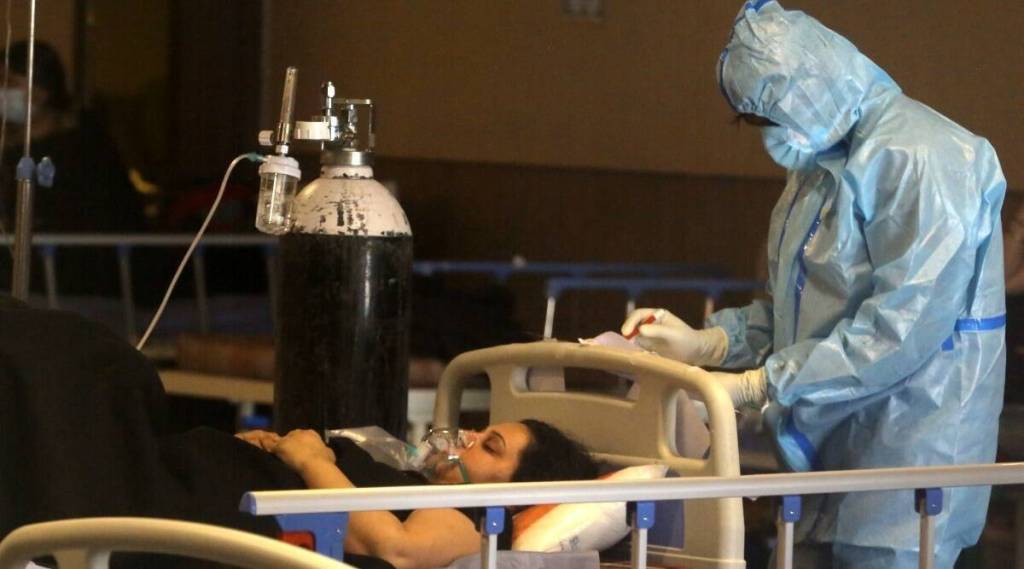
India has recorded 26 million Covid-19 cases  which is second only to the US. The second wave of COVID-19  has overwhelmed the healthcare system with hospitals struggling to bear the pressure of oxygen shortage and treatment drugs. Experts believe the wave is getting diminished at the national level. However, people are more awry this time for a potential third wave of COVID-19 virus.

The most important factor that will play the role whether or not India is getting hit by a third wave, is the rate of vaccination. Apart from this, let us look at other factors which can be instrumental to curb the effects of a third wave.

1. Expansion of testing facilities

Timely testing and isolation of COVID-19 patients is the key. Now-a-days, people who are feeling symptomatic to COVID-19 are not testing themselves due to the distance of testing facilities. Free testing for COVID-19( especially for the poor) can be beneficial as well.

2.  Poor needs to be encouraged to seek medical advice

It is a tendency which has been observed that seeking medical advice from doctors is proportional to the economic background of the people. Most of the patients won’t go and seek any medical advice from doctors or pharmacists thinking that would incur charges as well. Lack of health facilities in proximity and affordability are much bigger reasons for not seeking medical advice among the poor than the rich.  The fact that COVID-19 starts with a common symptoms of fever, cough and cold they think it can be managed well by self-medication rather than visiting a doctor after travelling a lot.

3. Financial burden on the patients and their family

There are many patients whose families are unable to pay the debt or the fees of the hospital with regard to the bed, facilities and treatment. According to the survey done by NSO it is estimated that 81% of hospitalization cases (excluding childbirth cases), the expenditure was met by family income or savings. 11% of such cases were financed with borrowing, 3.5% of these were met with contributions from friends and relatives and 0.4% required sale of physical assets.

4. Cover of  Health Insurance

According to the survey conducted by NSO, it is estimated that over three-fourth of hospitalization cases in India involved individuals who were not covered by a health expenditure insurance or scheme . Access to health insurance is correlated to incomes, and the share of hospitalization cases not covered by any kind of insurance increases from 68% among the richest 20% to 85.5% among the poorest 20%. Even in cases where health insurance existed, it did not cover the cost of the entire treatment. NSO survey shows that on an average, health insurance paid for only 10.2% of the medical expenditure and 9.1% of total expenditure (which includes cost of transporting patient as well as the cost of food, lodging, transport, etc.for the household) in cases which required hospitalization.

How 9/11 changed your life.

45 days after the incident that shook one of the most powerful nations in the world, a bill was hastily passed. The Patriot Act . This changed the world.The patriot act was passed by US president George Bush as an direct response to the 9/11 terrorist attacks.It was a effort to tighten U.S. national security, particularly as it related to foreign terrorism. In general, the act included three main provisions:

  •  It expanded abilities of law enforcement to surveil, including by tapping domestic and international phones
  • It eased interagency communication to allow federal agencies to more effectively use all available resources in counterterrorism efforts; and
  • It increased penalties for terrorism crimes and an expanded list of activities which would qualify someone to be charged with terrorism.

 Since it was not possible for the US government to collect all data, they outsourced it. This is where we come in the picture. Many companies emerged in true american entrepreneurial  spirit to meet the government’s demands. For example, Edward Snowden worked for Booz Allen Hamilton, a consulting firm that describes itself as a leading provider of management and technology services to “government clients in defense, intelligence, and the civil sectors.” Yet Booz Allen Hamilton is just one of many private contractors.Even right now 70% of the U.S. Intelligence Budget Goes to Private Contractors. This is what created the big data craze. Other  government agencies obviously followed the United States NSA, for example britain’s GCHQ.

As of now we know all the big countries are actively spying on their own citizens. Although this is not confirmed FOR India per se, it may be possible that we are also under surveillance. 

So what does mass surveillance change for you?

Mass surveillance is a threat to human democracy as we know it. Time and again we have seen governments justifying mass surveilllence in the name of stopping terrorism but in reality this did not happen..

“If you haven’t done anything wrong, you have nothing to fear.

As absurd as it sounds, this is a common statement used to justify mass surveillance. It introduces this kind of notion that you are a traitor to your country if you can’t sacrifice your privacy for the greater good. This idea is nonsensical. If you look into evidence of what the NSA used all of its data collection for, it was found that only 1% of it was related to terrorist activities. People not wanting to share literally everything about their life doesn’t make them traitors or selfish. Right to privacy  is a basic human right .

So what is the solution? 

Throw away that little tracking device in our pockets? Go live in a cave? 

No. Humans shouldn’t have to live under false identity to escape surveillance. It is our right to demand stricter laws and have no tolerance towards any kind of surveillance. We shouldn’t let data leaks by big companies slide.It’s time to start a movement. Otherwise, we all are going to have to read George Orwell’s  ‘1984’ as a buyer  guide!

Is it essential to understand yourself or not?

‘ no one in this world will understand me’ how can someone feel my pain? No one in this world will understand my situation?

There are lots of these types of questions that you may ask yourself once in a lifetime, or you saw people who are asking those types of questions from others, I am not saying that putting these questions is wrong but can you really try to find out the answer of these questions or you are always busy in blaming others.

When you blame someone for not understanding you? Will you realize that how many times you try to understand them. I think there is a chain of blaming in which we blame others for our situations and they blame us for their situations. Why we can’t understand that it is impossible to understand other people. In reality, no one will understand us completely, and also we can’t understand others completely.

There is a reason behind that problem that no one in this world will completely know about other person,

Take your example, people know about yourself only those things that you will tell them, or you know that what you will tell them,

And you will never be told about yourself completely to other people no matter how close they are,

So I think understanding yourself is a better idea to get rid of all these problems. Here are some ways that will help you to understand that how you will understand yourself. so let’s try to understand them one by one.

1) when you are angry, sad, depressed lonely, etc try to spend some time with yourself and understand your emotional life. and when you feel cry, please cry, don’t hold emotions. try to express them.

2) if you can understand yourself , your emotions you will definitely understand others feelings. At that time you are not have any expectation that somebody will understand you , so in this way your relations also become better.

3) understand that we all have some suffering in our lives, so don’t try to give the burden of emotions to others. Try to understand your emotions just like a responsibility towards yourself.

4) you know about yourself better than any other person, so if you have bad habit face them and get rid from them, and cheers yourself when you do something good.

5) always try to boost your confidence, never compare yourself with others this is the work of society, so do your work.

6) face all the struggles of your life with a warrior spirit, whatever the worst situation is you are the hero of your life.

7) you are the only one who have capacity to uplift your life so, whenever there is failure will come face that failure, and give your best to fight for your life.

8) whenever there is a mistakes will occur, don’t feel regret, but try to improve that mistakes because people only present not past. So don’t your time in regretting about something.

9) motivate yourself, the mind is like a child, if you feel that this work is hard mind blindly on it. and never think about that work, so treat the mind like a teacher.

10) try to be happy in this life, because the struggle is temporary.

Now Black Fungus can be diagnosed early with a newly launched “DUTCH KIT”

The efficacy of the Dutch Kit is quite similar like RTPCR for COVID-19, explains Dr. K Bhujang Shetty.

Black fungus or mucormycosis is a fatal condition which is seen recently in most of the patients who are recovered from COVID-19.  Due to increase in number of patients affected by the deadly fungus, there is a severe shortage of  Amphotericin B (the drug which is required for it’s treatement).

Due to it’s recent advent in the market, people are unaware of it’s symptoms and when they are diagnosed with Black fungus, most of the damage is being done. Hence, to prevent that to happen Narayana Nethralaya’s Chairman, Dr. K Bhujang Shetty and his team have come up with a rapid solution for mucormycosis which they call it as the ‘Dutch Kit’.

According to Dr. Shetty, the efficacy of the Dutch kit is quite similar with RTPCR test of COVID-19.  “We are seeing lot of patients who gets panic and rush to the hospital even if they have a slight nose block. As such there is no rapid tool which can diagnose mucormycosis. Presently what we have is, it takes minimum 10 days to confirm. Since the fungi needs to be cultured in  lab before knowing the exact group. So we brought in this Dutch kit. As the name indicates, it is imported from The Netherlands. The kit as a whole efficiently detects fungal infection in 24 to 48 hours. All we need is the patient’s blood sample and lesion if possible. There are 5 main varieties of mucormycosis and it can be detected and differentiated easily through this method. And the accuracy is 100%” explains Dr. K Bhujang Shetty.

Narayana Nethralaya has already tested the Dutch Kit in approximately 25 people who were doubtful of the fungal infection. Several hospitals are looking  for this kit, which can provide results quickly, with good efficacy and saves time as well. It has come as a big relief for people as they can check themselves whenever they are in doubt of the fungal infection after paying Rs- 7000 for the kit.

Mucormycosis if left untreated or diagnosied at a later stage can prove fatal. Some patients are also getting panicked by the mere thought of Black fungus and that stress is leading to further complications. Recently, a patient named Usha Rani  got a severe headache one week after she tested negative for COVID-19. Being diabetic, she stressed about her symptoms and a mere fact that has been infected by COVID-19 earlier, she feared for Black fungus disease.

“Black fungus was the first thought that crossed my mind. I panicked and rushed to the hospital. Even if it was not a black fungus, I wanted to hear it from the doctor. They mentioned about this imported kit and I immediately went for it. After waiting for 24 hours or so the hospital called and said I tested negative for fungal infection. I can’t explain the relief I felt at that moment. And surprisingly my headache vanished soon after. Looks like the thought of another infection pushed me into stress resulting in headache”, says a much relieved Usha Rani.

UNGa President on terrorism and support from india.

The UNGA President, Abdulla Shahid, who is Minister of Foreign Affairs For Maldives as of 2018 election and the 76th President of the UNGA (United Nation’s General Assembly) as of June 7. He earned 143 votes out of 191 ballots cast in the 193-member General Assembly , winning against former Foreign Minister of Afghanistan Dr Zalmai Rassoul, who got 48 votes.

Abdulla Shahid has expressed confidence that discussions on way to eliminate international terrorism at UN expedite under his presidency. In the interaction with TOI, he said he’ll will urge members to find solutions to such pending issues as soon as possible.

“The issue of terrorism is being discussed at a legal committee, Sixth committee and I’m sure this year will be increase in effort by many countries to expedite the matter. Of course, expected to any incoming President to clear most of the agenda items as expeditiously as possible, I would like a number of pending issues to be finalized. I’d urge members to conclude and find solution to such pending issues as soon as possible,” said Shahid 76th President of UNGA

The Sixth committee is the primary forum for consideration of legal questions in the General Assembly, has been interminably discussing the comprehensive convention on international terrorism without any real progress.

As Shahid acknowledged, India was among first countries to formally endorse Maldives’ India continued to publicly support Shahid.

“We are grateful for that, especially when two of the Sarcc members were competing. It was very important for a candidate to have a clear position from India in the public. I thank PM Modi and Foreign minister S Jaishankar for it,” said Shahid.

When asked about response on Covid-19 failing to meet the expectations of developing countries and their confidence in UN beginning to wane, Shahid said one of the main issue he promised to deal with is speedy supply of vaccination.

“In my vision statement, I’ve outlined the issues that need urgent attention, Number one is the strategy to deal with Covid-19 and the new strains that are coming up. Then, of course , is the vaccine. Vaccination in the world had to be the first priority because no one is safe until everyone is safe. I can see a lot of expectations from the membership for this to happen. I’ll be working very closely with GA membership for increasing the speed of vaccination,” said Shahid.

India needs to play with five bowler startegy in WTC Final feels Virender Sehwag

Indian cricket team on 18th June are set to play the historic test match of all time. After all it is the inaugural World Test Championship final faceoff between India and New Zealand.

Indian team have already named their squad for the finals and currently they are practicing in England ahead of the final match. Team India has got the perfect balance in all the departments mixed with experience and it seems all good so far.

But Virat Kohli’s men still have lot to work on the team combination before they meet the Blackcaps in Southampton. The pace bowling department of Indian team comprised of some skillful and experienced players with the likes of Jasprit Bumrah, Mohammed Shami, Ishant Sharma and Mohammed Siraj  accompanied by two world class spinners – R Ashwin and Ravindra Jadeja. So it’s going to be a headache for Virat Kohli and Indian management to pick the final eleven before the Test match.

Whereas, former India cricket opener Virendra Sehwag  feels India needs to play both Jadeja and Ashwin in the final as the team needs to play to its potential. He feels India should go with 5 bowlers strategy with 3 pacers and 2 spinners as it will also strengthen their lower middle order batting.

“I don’t have any idea about how the wicket would look like on June 18th but one thing I have always believed is that you need to play to your strengths. If India can play with five specialist bowlers that will be great thing because I still believe that two spinners will come into effect on fourth and fifth day. The rough which will be created because of the foot marks, that can be utilized when two spinners are bowling in tandem to generate turn from the pitch,” Sehwag told PTI in an interview.

“Two spinners will be good for India because both Ashwin and Jadeja are capable all-rounders. That also adds depth to your batting. You don’t need a sixth batsman with both of them around.”

He further added, the contest between two IPL mates – Rohit Sharma and Trent Boult would be mouth watering and it will further spice up the finale in Southampton.

Sehwag who himself was a swash-buckling opener in his hey-days, is more eager to watch Rohit Sharma and he feels, according to Rohit’s technique and style he surely would be successful in this summer not only against the blackcaps but also against the England team in the test match series.

“Boult vs Rohit Sharma will be a contest that I would be looking forward to. If Rohit gets set and see off Boult’s opening spell, it will be a treat to watch,” feels Virender  Sehwag .

He also warns the Indian batsmen against the New Zealand pacers – Trent Boult, Tim Southee, Kyle Jamieson and Neil Wagner. All of them are accustomed to the English conditions and it will be a great contest between their bowlers and the Indian batsmen.

We don’t know what strategy Virat Kohli is going to apply in the historic finale but we can surely say, it is going to be one of the greatest Test match of all time.

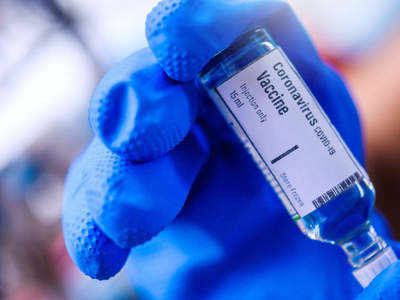
Why Bharat Biotech’s Covaxin is not getting approval in highly regulated countries

India made COVID-19 vaccine, Covaxin manufactured by Bharat Biotech in collaboration with Indian Council of Medical Research  is been used extensively in most of the countries. However, the regulatory body of USA, USFDA has still not given the approval of usage of Covaxin on their citizens. It is believed that their regulatory body wants further clarification on the clinical trials conducted for Covaxin by Bharat Biotech.

What is the reason behind USFDA’s unapproval?

USFDA has asked Bharat Biotech to submit the clinical trial data of Covaxin so as to get the vaccine approval in United States. But after the submission of partial data of clinical trials of Covaxin, the regulatory body of USA rejected the approval and has asked Ocugen( Hyderabad based pharma company which is also Bharat Biotech’s US partner) to submit the additional trial data. Covaxin is therefore rejected for emergency use due to lack of scientific data according to US regulators. However,  if they get the complete trial data from Bharat Biotech they can file a Biologics License Application(BLA) seeking a full approval instead.

Recently, USFDA has revised their guidelines for emergency use authorization and stated that they won’t be entertaining further requests. After all this, Occugen remains hopeful for a good news.

Bharat Biotech’s delay to share Phase- 3 clinical trial data

Bharat Biotech has not yet shared the clinical trial data of phase 3 trials and are expected to share it on next month. Following which, the company will start applying for a full licensure of Covaxin. “Once data from the final analysis of phase III studies are available, Bharat Biotech will apply for full licensure for Covaxin,” Bharat Biotech told the news channels.

Further they added, they have already taken the data of Phase-4 clinical trials which is the post- marketing surveillance to check the safety and effectiveness of the vaccine.

Hurdles of Bharat Biotech’s Covaxin

COVID-19 vaccine, Covaxin manufactured by Bharat Biotech has been facing enormous hurdles in front of them pertaining to it’s approval. The wait of Phase 3 clinical trial data is taking long and that is the reason it is still not being validated by World Health Organization(WHO). Without which they are unable to export their vaccine and make an entry into the Covid 19  passport.   

Different countries has different regulations and also some of the them have stingent  regulations. Due to which COVID- 19 vaccine manufactured by Bharat Biotech, Covaxin remains unapproved in all those countries without their Phase 3 clinical trial data.  This is the reason why, foreign universities are also not considering students who has been vaccinated with Covaxin. They are considering them as “un-vaccinated” in this regard.

Now it remains to be seen how soon they can procure the clinical trial data of phase 3 and then they can get the approval from foreign countries for emergency use. Also, the approval from WHO is required to get into the coveted COVID-19 vaccine passport. “We are aware that Bharat Biotech has sought the WHO emergency-use listing for Covaxin. We hope that the process of getting this approval is completed at an early date,” said Ministry of External Affairs spokesperson, Arindam Bagchi on this issue.

Why Should MPs Be Paid For Disrupting Parliament?

 Let me say first and foremost: I am hugely dismayed, dejected and disappointed to see how Member of Parliaments (MPs) are disrupting Parliament time and again and not allowing Parliament to function smoothly. This under no circumstances can ever be justified. These MPs don’t bother that how much money of taxpayer is getting wasted when they repeatedly adjourn Parliament and even while in session don’t allow it to function smoothly by disrupting Parliament on one pretext or the other.

                                               While craving for the exclusive indulgence of my esteemed readers, let me inform them that I am not alone in feeling so. This is the overwhelming opinion of majority of citizens of India. To top it all, even the first person of India – former President late Pranab Mukherjee  had too while he was President had openly and very strongly expressed his huge seething anger over the logjam in Parliament and said that the House is not a place for dharna and disruptions which amounts to “gagging of majority” by the minority.
                                         For my esteemed readers exclusive indulgence, let me also inform them that late Pranab Mukherjee also minced no words in making it absolutely clear that, “Three Ds are essential in a democracy and these are debate, dissension and decision. But there was no fourth D. At least my teacher did not tell me that there is a fourth D which is disruption”. His observations assumes huge significance as both the Houses of Parliament saw proceedings being washed out yet again on December 9 with the Opposition demanding the Government mourn the deaths caused due to hardships after demonetisation. Nothing on earth can be more unfortunate than this that time and again Parliament is witnessing disruption and yet MPs time and again themselves approve 100% or 200% or 300% hike in their pay as they have the unfettered licence to hike their salaries whenever they want. No one else decides for them as to how much pay they should receive. It is they themselves who decide for themselves as to how much pay they should receive.
                                                 Be it noted, the Opposition leaders also observed one month of the monetisation decision by wearing black bands and staging protests in Parliament complex. Speaking on ‘Electoral reforms for a stronger democracy’ on the occasion of Defence Estates lecture, the President Dr Pranab Mukherjee said unequivocally that, “Disruption is totally unacceptable in Parliamentary system. People send representatives to speak and not to sit on dharna and not to create any trouble on the floor.” Very rightly said and there can be no denying this!
                                                Let me be direct in asking: Why MPs have the freedom to disrupt Parliament? Why are they not permanently barred from entering Parliament if they disrupt Parliament? Why MPs have the colonial power to retain houses at taxpayer’s expense even after they complete their tenure? Why MPs salary is not deducted if they disrupt Parliament? Why are MPs not fined if they disrupt Parliament? Same is the case with MLAs when they brashly disrupt State Assemblies!
                               Truth be told, why for acquiring any government job there is a proper police verification and even if one case is found registered in any police station the concerned candidate is debarred from joining any government service but for becoming an MP or MLA you can be a Phoolan Devi and murder many and still enter Parliament and term cases as “politically motivated”? Why MPs are not made to disclose all their assets and why their unaccounted assets not seized immediately? Why MPs are not made to disclose all donations they receive publicly and same is the case with political parties? Why they are exempted from RTI Act?
                     To put things in perspective, himself a veteran Parliamentarian before becoming the President, Dr Pranab Mukherjee palpably anguished by the manner in which the winter session of Parliament has been stalled due to disruptions made no bones in saying from his inner heart that, “Disruption means you are hurt, you are gagging majority. Majority never participates in this disruption. Only minority comes to the well, shouts slogans, stop the proceedings and creates a situation in which the Chair has no option but to adjourn the House. This is totally unacceptable.” Those minority who disrupt Parliament must seriously introspect on what the President has said! But they care a damn and that alone explains why they repeatedly disrupt Parliament!
                                           As it turned out, the President noted that Parliament is in session for only a few weeks in a year. Rest is all washed out in disruption. Now you can imagine how many crores and crores of rupees are wasted for no purpose by MPs and they have no regret in doing so and will also give hundred reasons to justify it. You just cannot convince them under any circumstances because they think that what they do is right and rest all others are wrong including the President!
                                        For all practical purposes, it is in national interest for Parliament to function normally so that all important Bills are passed and meaningful discussion takes place in Parliament. But what we hear in Parliament is nothing but shouting and slanging matches except on few occasions when few members speak on serious issues and they too are frequently disrupted. When will this end?
                           While maintaining that he was not targeting any single party or individuals, the President was quite forthright in saying that the responsibility of allowing Parliament to function is of everyone. He said that, “Fact remains that this (disruption) has become a practice which should not be acceptable at all. Whatever be the differences, we have the opportunity to speak our mind, to speak freely and no court can interfere in what I say on the floor of the House.” Why can’t MPs pay heed to what President Dr Pranab Mukherjee has said with a heavy heart?
                                                   To say the least, President Dr Pranab Mukherjee pointed out that even if a member is leveling an allegation against someone, no court can prosecute him because he has said so on the floor of the House. President  minced no words in making it clear to all MPs that, “This type of freedom should not be misused by causing disruption”. It is high time and now this freedom must be ended once and for all so that MPs are also held liable just like any other ordinary individual!
                                                Recalling the past days, President pointed out that, “When India’s budget was paltry and when outlay of Five Year Plan was very meager, two-thirds of time of Parliament was devoted to discussing money and finance. This was because elected representatives in Lok Sabha have singular right under which no tax can be imposed without their approval and neither can any money be withdrawn from the consolidated fund without their approval. No amount can be spent from the consolidated fund of India without the approval of Parliament. But if these issues are not debated, when you are spending Rs 16 lakh to Rs 18 lakh crore per year, if these things are not properly scrutinized on the floor of the House, not debated, not discussed, I do not see that our parliamentary system can be very effective and can proceed successfully.”
                                            What  an unbeatable irony that our former President late Dr Pranab Mukherjee  said with a very heavy heart that, “Don’t disrupt Parliament. For God’s sake, do your job.” But Opposition is just not prepared to abide by what he is appealing them to. Not just this, even the Government is no less and they too want that MPs should have unfettered licence to do what they want to do and as they like to do and under no circumstances should they be punished in any manner. Nor should they be thrown out of Parliament nor should their salary be deducted nor should they be punished in any other manner, nor should there be any educational qualifications for them nor should they be debarred even if many criminal cases are pending against them!
                      For how long? If any other person does anything slightly wrong especially those in government services they are immediately thrown out but why MPs are above all such rules and regulations? MPs must be made to pay for the disruption they cause and no salary should be given to them under any circumstances for the time they disrupt Parliament. No MP should be allowed to disrupt Parliament and they must be thrown out if they insist on disrupting Parliament and should be permanently barred from entering Parliament which is the highest institution of democracy! This will be the best tribute that we can pay to Parliament! Nothing better than this!
Sanjeev Sirohi,

DRUG AND ALCOHOL ABUSE


                       DRUG AND ALCOHOL ABUSE


What is the definition of drug and alcohol abuse?

It occurs when you use alcohol, prescription medicine, and other legal and illegal substances too much or in the wrong way. Substance abuse differs from addiction. Many people with substance abuse problems are able to quit or can change their unhealthy behavior. Addiction, on the other hand, is a disease.

Use and abuse of drugs and alcohol by teens is very common and can have serious consequences. In the 15-24 year age range, 50% of deaths (from accidents, homicides, suicides) involve alcohol or drug abuse. Drugs and alcohol also contribute to physical and sexual aggression such as assault or rape. Possible stages of teenage experience with alcohol and drugs include abstinence (non-use), experimentation, regular use (both recreational and compensatory for other problems), abuse, and dependency. Repeated and regular recreational use can lead to other problems like anxiety and depression. Some teenagers regularly use drugs or alcohol to compensate for anxiety, depression, or a lack of positive social skills.

Signs of drug and alcohol abuse

Behavioral Signs

Behavioral signs involve a person’s outward relations with the world whereas physical signs relate to the body’s manifestation of side effects due to the presence of drugs in the system. Behavioral signs include but are not limited to:

OBSESSIVE THOUGHTS AND ACTIONS:

Acquiring and using the drug become the main priorities of life while all or most other obligations including work, family, or school are sidelined.

DISREGARD OF HARM CAUSED:

Although the drug abuse is causing physical and mental distress to the individual and their loved ones, the person struggling with addiction continues using drugs or alcohol.

LOSS OF CONTROL:

Even in the face of wanting to stop or reduce their drug use, the person cannot do so.

DENIAL OF ADDICTION OR HIDING DRUG USE:

When confronted, the person battling addiction will deny or downplay their drug use. To avoid having to explain themselves to others, the person may do drugs in secret.

Drug abuse cannot remain hidden for long. Its impact is too dramatic, and the person using drugs can spiral out of control fast. Changes in behavior, neglecting responsibilities, exhausting financial resources, and engaging in criminal conduct are some of the most obvious signals of a drug problem. Family members, loved ones, and coworkers are usually in the best position to recognize a drug problem as they are familiar with the person’s behavior and habits.

Physical Signs

Physical signs of addiction can manifest as side effects of use, during an overdose, or as a result of withdrawal. It may be very difficult for someone to pinpoint the cause of the physical signs, but severe effects will require immediate medical treatment. Also, it is important to understand that withdrawal symptoms arise when the body adjusts to the absence of familiar quantities of a drug. It is a natural process, but withdrawal can be dangerous.

General physical signs of addiction include but are not limited to:

·         Enlarged or small pupils

·         Sudden weight loss or gain

·         Bloodshot eyes

·         Insomnia

·         Unusual body odors

·         Poor physical coordination

·         Looking unkempt

·         Slurred speech

Typical signs of an overdose may include but are not limited to:

·         Drowsiness or trouble walking

·         Agitation

·         Aggression or violent behavior

·         Difficulty breathing

·         Nausea and vomiting

·         Hallucinations

·         Delusions

·         Loss of consciousness

Alcohol and Drug Abuse: Prevention and Control

Young and adolescent minds could be molded in any direction depending on the kind of exposure they get. They might befriend abusers and get into the habit of drinking, smoking or taking drugs. At this point in time, it is the responsibility of the parents as well as the teachers to handle the issue sensitively and guide them in the right direction.

Here are certain measures which need to be taken to prevent and control alcohol and drug abuse.

  • In the Indian society, the youth are often pushed beyond their limits to excel in every field. Parents want their kids to outperform their peer in studies, sports, creativity, and every other activity. Under excess pressure, the child often has the tendency to take up alcohol and drugs as a resort.
  • Persistent counselling is required to teach the child to deal with failures, pressures, stress, and disappointments. In fact, guiding them towards productive activities such as music, painting, yoga, sports or one of their hobbies could also help.
  • Children often pick up habits from their closed ones. Thus, the attitude of parents and older siblings towards alcohol, cigarettes, and drugs also affect the child’s choices.
  • In case the child is stressed out and on the verge of abuse, help must be sought from parents or even trusted friends who may guide them in the right direction, thereby helping him vent out their anxiety and guilt.
  • Parents must stay connected with the child, keeping a track of his whereabouts at all times. Spending more family time together will help them stay close and honest with their parents.
  • If it is found that children have fallen prey to alcohol and drug abuse, their friends must immediately bring this to the notice of their parents or teachers, so that the latter could take remedial measures for the same.
  • However, despite all the prevention measures, if unfortunately, the child does get into the abuse, seek professional aid. There are a number of rehabilitation centres, de-addiction programs and qualified psychiatrists who would help to get rid of the problem.