Gurajada Apparao

Gurajada Venkata Apparao (21 September 1862 – 30 November 1915) was a noted Indian playwright, dramatist, poet, and writer known for his works in Telugu theatre. Rao wrote the play Kanyasulkam in 1892, which is often considered the greatest play in the Telugu language. One of the pioneers of Indian theatre, Rao holds the titles Kavisekhara and Abyudaya Kavitha Pithamahudu. In 1910, Rao scripted the widely known Telugu patriotic song “Desamunu Preminchumanna”.

In 1897, Kanyasulkam was published (by Vavilla Ramaswamy Sastrulu and Sons, Madras) and dedicated to Maharaja Ananda Gajapati. Apparao (along with his brother Syamala Rao) wrote several English poems. His Sarangadhara, published in “Indian Leisure Hour”, was well received. The editor of the Calcutta-based “Rees and Ryot”, Sambhu Chandra Mukherji read it and re-published it in his magazine. Gundukurti Venkata Ramanayya, editor of the “Indian Leisure Hour”, encouraged Apparao greatly during the same period. In 1891, Gurajada was appointed to the post of Epigraphist to the Maharaja of Vizianagaram.

Gurajada married Appala Narasamma in 1885. He continued his studies and graduated with B.A. (Philosophy major and Sanskrit minor) in 1886. For some period during 1886, he worked as Head Clerk in the Deputy Collector’s office. On Vijayadasami day, 1887, he joined as a Lecturer (Level IV) in M.R. College with a salary of Rs.100. Around the same time, he was introduced to Maharajah Pusapati Ananda Gajapati Raju (1850–1897).

In 1905, Gurajada’s mother died. In 1906, his close friend P.T. Srinivasa Iyyangar, principal of Mrs. A.V.N. College, Visakhapatnam started an association to promote curriculum reform in high schools. One of the chief aims was to introduce spoken dialects. Along with him, J.A. Yates (1874–1951) -a British civil servant, Gidugu and Gurajada were the principal members. Another friend S. Srinivasa Iyengar (1874–1941) also gave a lot of support and encouragement. Incidentally, this Srinivasa Iyengar was a well-known lawyer and was the President of AICC (All India Congress Committee) annual session at Guwahati in 1926. Gurajada’s childhood friend and classmate in Chipurupalli, Gidugu Rammurty (1863–1940) was his school of thought.

Gurajada lived most of his life in and around Vizianagaram in what was then called as Kalinga Rajyam. He and his father before him were both employed by the princely state of Vizianagaram. Gurajada enjoyed a close relationship with the ruling family during his adult life. He had his initial schooling in Cheepurupalli while his father was working there. His remaining schooling was done at Vizianagaram after his father died. During that time, he was taken care of by the then M.R. College Principal, C. Chandrasekhara Sastri who provided him free lodging and boarding. He completed his matriculation in 1882 and obtained F.A. in 1884. Soon after, he was employed as a teacher in M.R. High School in 1884 with a salary of Rs.25.

In 1887, Gurajada spoke at a Congress Party meeting in Vizianagaram. His daughter Voleti Lakshmi Narasamma was born in 1887. He was simultaneously involved in social work and became a member of the Voluntary Service Corps in Visakhapatnam in 1888. He was elected vice-president of the Ananda Gajapati Debating club in 1889. His son Gurajada Venkata Ramadasu was born in 1890. In 1891 he was promoted to Lecturer (Level III) with a salary of Rs.125. He taught the F.A. and B.A. classes several subjects including English Grammar, Sanskrit Literature, Translation, Greek and Roman Histories. His younger brother Syamala Rao died in 1892 while studying at Madras Law College.

In 1911, he was appointed to the Board of Studies by Madras University. The same year, Gurajada and his friends started the Andhra Sahitya Parishat to promote use of spoken dialects. The next year, he was invited to attend the meeting of the Bangeeya Sahitya Parishat (Bengal Literary Association) at Calcutta.

Gurajada retired in 1913, and the then Madras University honored him with the title “Emeritus Fellow”.He died on 30 November 1915.

Kanyasulkam

Kanyasulkam is about the deplorable condition of widows in traditional Brahmin families in the Andhra region of India during the 19th century. The play is a highly thought-provoking social drama dealing with social issues relevant to the time. Gurajada Apparao was deeply troubled by the double standards, hypocrisy and social inequalities in the Indian society. The English preface to the first edition of his play states: “Such a scandalous state of things is a disgrace to society, and literature can not have a higher function than to show up such practices and give currency to a high standard of moral ideas. Until reading habits prevail among masses, one must look only to the stage to exert such healthy influence.”

Perhaps for the first time in Telugu literary history, a prostitute was given a very positive image so much so that she is shown to better the lives of many people during the course of the play. The play is ageless in the sense that its projection of the Indian mindset and psyche is very relevant and applicable in Indian Society today. The play was, in some ways, ahead of its time and was very bold in criticizing the popular opinions and practices during that era. It frequently jabs at the male-dominated society of India, by bringing to the forefront certain egoistic idiosyncrasies of a typical Indian male, in an unflattering manner. It also questions the practices of witchcraft, sorcery, and their popular usage in medical practice during that period in India.
Mother Nature and Man

Article by – Shishir Tripathi

Intern at Hariyali Foundation
In collaboration with
Educational News

“Nature is Mighty
Nature is Strong
Nature is always usually right
Nature is rarely ever wrong
Nature is Beauty
Nature is Moody
Nature is Smart
Nature always has the Greater Part
Nature is Blue
Nature is Green
Nature is every Color Possibly Seen
Nature is True
Nature is Beaming
Nature is Dreaming”

The whole world is moving at a very faster pace at present. Man thinks that he with his inventions in science and other fields too; he has conquered the world and can survive on its own as he has made all the artificial things and inventions for all his luxuries. But, human beings must not forget the fact that they are born out of Nature not the vice versa.

Human beings have taken all the resources available in nature for granted as if they would have produced them on their own. Nations made international borders and divided the oceans, mountains, plateaus, etc and thought as if they owned it. But nature and its organisms do not consider any of these borders at all. A whale swimming in South Pacific Ocean can go each day each hour to South Atlantic Ocean on its own. Similarly a bird flying in Arunachal Pradesh can go on its own to China without asking anyone. Humans can make rules amongst their own selves and can follow but Mother Nature can’t be forced to accept such rules.

Human beings always thought that they are superior to all the other organisms on Earth forgetting the fact that each organism is dependent on the other for survival through a food chain. If any of the creatures of the food chain goes extinct or gets endangered then surely the entire food chain and food web gets disrupted and the other creatures have to bear the imbalances of the Nature.

Human beings consume everything at present right from eggs, meat, chicken, beef and what not. And in countries like China people consume bats, frogs, cockroaches, dogs and many other creatures. Due to the presence of laws and a proper system regarding punishments to those who kill people, otherwise human beings would start consuming other fellow human beings. The hunger and greed of man at present is increasing day by day. There are vegetable products and other foods than non- vegetarian stuffs, but still the man had and will be consuming the poor organisms like goats, chicks, fishes, pigs, etc. these creatures have no life of their own and are produced just to get consumed by such wicked, hungry human beings.

Humans extract each and every tinge of all the materials that Nature has been providing from years.oil wells in Arabic Nations are getting empty day. As millions of litres oil is consumed by the whole world in running automobiles and other machineries, showing a situation of excess demand and lesser and lesser supply. Similarly, the water resources too including ground water and surface water too are used recklessly without any limitations. Due to such reasons, some regions of the world face water scarcity. Similarly untreated smoke discharged from various factories is again the cause of polluted air in different cities of the world and is contributing towards increasing global temperatures.

And if one tries to list all such activities of man in which he harms nature, the list will never be ending. Human beings must realize that in their every deed filled with greed, the nation is surely going to react in ten times much harsh ways in the form of landslides, excessive rainfall, tsunamis, earthquakes, climate change with adverse situations, etc. Humans should realize the real meaning of sustainable development, only then they can survive peacefully without any such problems. Use of resources should be done in such an efficient way that the resources should get preserved for the future generations and also the usage at present must not harm any creature and the natural heritage too.

That’s why it is rightly said that Nature can enough for one’s need but not for everyone’s greed.

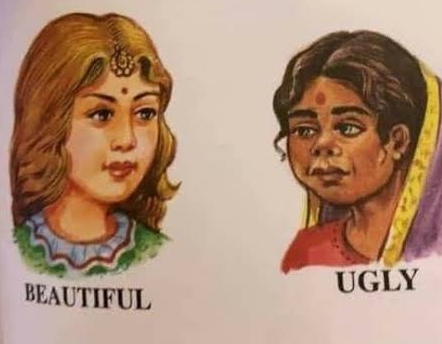
Colorism in India.

“It starts when children are young: the moment a child is born, relatives start comparing siblings’ skin colour. It starts in your own family – but people don’t want to talk about it openly.”

India’s hatred of dark skin, rooted in years of colonization, haunts naturally dark-skinned people there. While under British rule, white colonizers demeaned those with dark skin, favoring those with fairer skin. The British superiority in India showed the power struggle between the fair and the dark. As a result, even amongst Indians, those with darker skin were, and continue to be, looked down upon.

Darker skin represents a connection to the past and its traditions, while Westernization is considered to be modernization, creating a desire for pale skin. Fairness seems to equate to intelligence, power and beauty, leading many to try to achieve such skin.

Skin-lightening products, like “Fair & Lovely,” “Pond’s White Beauty” and “Lotus Herbals Whiteglow” are commonplace in Indian grocery stores, and make up an industry expected to be worth over $24 billion by 2027 globally. The media portrays lighter-skinned families in advertisements and TV shows, and Bollywood favors lighter-skinned actresses as the stars of films, creating an inaccurate ideal for Indians to look up to. This representation issue has been addressed more recently by many.

Yet, colorism might be most noticeable at the grassroots level. Comments from Indian relatives or acquaintances like “The bride is pretty, but dark,” “Oh, she’s so beautiful and fair!” and “She’s so dark, hopefully the baby won’t be as dark,” continue throughout the life of a “darker” Indian individual, and serve as microagressions pinning a negative connotation on those with a darker shade of brown.

This implicit bias has been internalized by Indian society and culture for decades. It does not outwardly show itself in the same way the United States’ prejudice systemically affects Black Americans, but it still accepts and normalizes the belief that lighter is better.

Colorism has led to very implicit discrimination that affects the greater society but also trickles down into everyday microagressions such as being told to drink saffron milk so your child doesn’t inherit the same dark genes you did, or that being pretty and dark is surprising or rare.

It’s a heavy burden and it’s not going anywhere anytime soon. And unlike the comments employed to “other” and homogenize South Indians, this shade of colorism is internalized and in some ways, more painful to deal with. After all, it’s not strangers who are trying to boost their own regionalist identity—but family members who honestly believe that if you were a shade or two fairer, you might be considered beautiful.

Campaigners standing up against the world’s bias towards lighter skin are fighting more than just bad medical practice and consumer habits. They are battling millennia-old preferences for lighter skin.

Colourism and skin lightening in India is a stellar case that shows us the need of using intersectionality to capture the depths of an issue. Our preference for light skin does not merely create beauty standards but also intersects with caste, class, and gender, and actually shapes the idea of womanhood in India. 

Indian Cuisine

Indian food is as diverse as India. Indian cuisines use numerous ingredients, deploy a wide range of food preparation styles, cooking techniques, and culinary presentations. From salads to sauces, from vegetarian to meat, from spices to sensuous, from bread to desserts, Indian cuisine is invariably complex. Harold McGee, a favourite of many Michelin-starred chefs, writes “for sheer inventiveness with the milk itself as the primary ingredient, no country on earth can match India.”

India is known for its love of food and spices. Indian cuisine varies from region to region, reflecting the local produce, cultural diversity, and varied demographics of the country. Generally, Indian cuisine can be split into five categories – northern, southern, eastern, western, and northeastern. The diversity of Indian cuisine is characterised by the differing use of many spices and herbs, a wide assortment of recipes and cooking techniques. Though a significant portion of Indian food is vegetarian, many Indian dishes also include meats like chicken, mutton, beef (both cow and buffalo), pork and fish, egg and other seafood. Fish-based cuisines are common in eastern states of India, particularly West Bengal and the southern states of Kerala and Tamil Nadu.

Despite this diversity, some unifying threads emerge. Varied uses of spices are an integral part of certain food preparations and are used to enhance the flavour of a dish and create unique flavours and aromas. Cuisine across India has also been influenced by various cultural groups that entered India throughout history, such as the Central Asians, Arabs, Mughals, and European colonists. Sweets are also very popular among Indians, particularly in Bengal where both Bengali Hindus and Bengali Muslims distribute sweets to mark joyous occasions.

Indian cuisine is one of the most popular cuisines across the globe. In most Indian restaurants outside India, the menu does not do justice to the enormous variety of Indian cuisine available – the most common cuisine served on the menu would be Punjabi cuisine (chicken tikka masala is a very popular dish in the United Kingdom). There do exist some restaurants serving cuisines from other regions of India, although these are few and far between. Historically, Indian spices and herbs were one of the most sought after trade commodities. The spice trade between India and Europe led to the rise and dominance of Arab traders to such an extent that European explorers, such as Vasco da Gama and Christopher Columbus, set out to find new trade routes with India leading to the Age of Discovery. The popularity of curry, which originated in India, across Asia has often led to the dish being labeled as the “pan-Asian” dish.

Regional Indian cuisine continues to evolve. A fusion of East Asian and Western cooking methods with traditional cuisines, along with regional adaptations of fast food are prominent in major Indian cities.

The cuisine of Andhra Pradesh and Telangana consists of the Telugu cuisine, of the Telugu people as well as Hyderabadi cuisine (also known as Nizami cuisine), of the Hyderabadi Muslim community. Hyderabadi food is based heavily on non-vegetarian ingredients while, Telugu food is a mix of both vegetarian and non-vegetarian ingredients. Telugu food is rich in spices and chillies are abundantly used. The food also generally tends to be more on the tangy side with tamarind and lime juice both used liberally as souring agents. Rice is the staple food of Telugu people. Starch is consumed with a variety of curries and lentil soups or broths. Vegetarian and non-vegetarian foods are both popular. Hyderabadi cuisine includes popular delicacies such as Biryani, Haleem, Baghara baingan and Kheema, while Hyderabadi day to day dishes see some commonalities with Telanganite Telugu food, with its use of tamarind, rice, and lentils, along with meat. Yogurt is a common addition to meals, as a way of tempering spiciness.

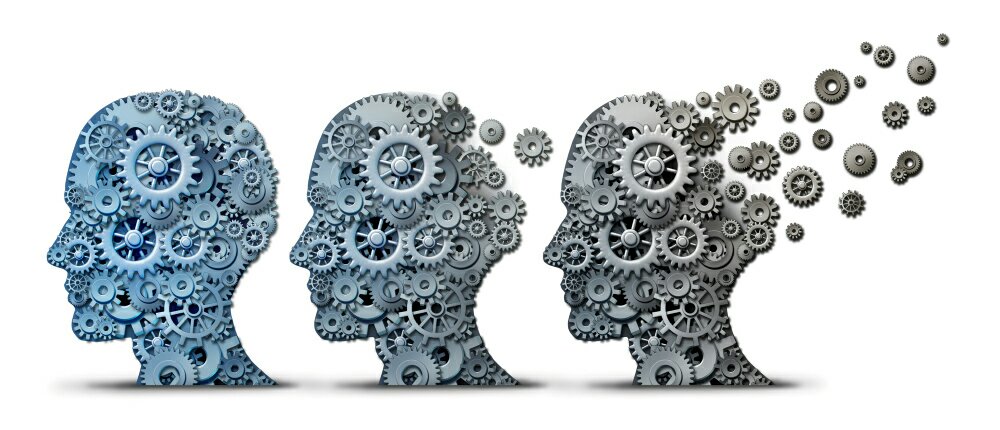
World Alzheimer’s Day: It will be very easy to remember anything in these fun ways

If people with weak memory have to struggle to remember anything, then the fun tips given here will be of great help to you….

It is true that due to increasing dependence on technology, we do not have much trouble even forgetting some things, but trying to remember things always proves beneficial for mental health. Here are some ways, with the help of which it will be very easy to remember the names of people and places, key dates and some important numbers.

Reiterate Names

When you meet someone for the first time, after hearing its name, repeat that name two or three times in your mind. Even if you have a five-minute conversation with them, always address them by their name during that time. This will make it easier for you to remember their name and they will also feel good. 

Convert words to images

After hearing a new name, try to remember its meaning or any topic related to it. For example, if a person’s name is Pankaj, remember also that it means lotus flower, then you will always remember his or her name.

Adopt interesting ways

There are also some names of Hindi which can be translated into English in a fun way. For example, if a person’s name is Lal Bahadur Singh, then you can remember him by the name of Red Brave Lion.

Affiliation is required

Before saving the number of people, write a keyword with their name so that you will immediately remember why we had saved that mobile number. For example, if you talked to someone named Ashish for your child’s tuition, then save their number in your mobile name as Tuition Ashish. You won’t have any problems later.

Remember numbers in this way

It’s okay that people’s addresses and phone numbers are saved on your mobile. Yet the way to remember these is to remember it not in numbers but in words, for example, if someone’s house number is 315, it would be easier to remember it as three hundred and fifteen instead of three one five.

Add links for key dates

Even if Facebook reminds you, try to remember special occasions like your loved ones’ birthday and anniversary on your own. Often some of your friends or relatives’ birthdays will fall around each other. You can remember it like this – in the month of May, it is the birthday of three people, firstly of Soumya on the 2nd, Ketan on the 5th and finally of Saurabh on the 28th. In this way, you will never forget your close one’s birthday. 

Stay organized

Often people forget their things by keeping them here and there. To avoid such a problem, make a habit of keeping the goods back from where they are taken. If you succeed in trying to remember these tips, you will soon forget the habit of forgetting.

Protection against unfair contracts

The Indian Contract Act, 1872 determines obligations of the parties to perform or offer to perform respective promises unless such performance is dispensed with or excused under the provisions of the Act, or of any other law.

As informed by the Law Commission of India, in order to protect the consumers, the Law Commission in its Report No.199 titled ‘Unfair (Procedural and Substantive) Terms in Contracts’ recommended that the provisions of the Indian Contract Act, 1872 and of the Specific Relief Act, 1963 need not be disturbed.

The Consumer Protection Act, 2019 has come into force w.e.f. 20th July, 2020 and has replaced the Consumer Protection Act, 1986. As provided in the new  Act unfair contract means a contract  between a manufacturer or trader or service provider on one hand and a consumer on the other, having such terms which cause significant change in the rights of such consumer, including the following, namely:—

(i)  requiring manifestly excessive security deposits to be given by a consumer for the performance of   contractual obligations; or

(ii)      imposing any penalty on the consumer, for the breach of contract thereof which is wholly

disproportionate to the loss occurred due to such breach to the other party to the contract; or

(iii)     refusing to accept early repayment of debts on payment of applicable penalty; or

(iv)     entitling a party to the contract to terminate such contract unilaterally, without reasonable cause; or

(v)      permitting or has the effect of permitting one party to assign the contract to the detriment of the other party who is a consumer, without his consent; or

(vi)     imposing on the consumer any unreasonable charge, obligation or condition which puts such consumer to disadvantage;

This information was given in a written reply by the Union Minister of State for Consumer Affairs Food and Public Distribution, Shri DanveRaosahebDadarao in Lok Sabha today.

Union Minister Dr. Jitendra Singh delvers Kunwar Viyogi Annual Memorial Lecture of University of Jammu

Union Minister Dr Jitendra Singh today said that the common man in Kashmir is tired of terrorism and is becoming increasingly aspirational for himself and for his children.

Delivering the 1st edition of “Kunwar Viyogi Annual Memorial Lecture” of the University of Jammu on the subject “Way Forward Post Abrogation of Articles 370 and 35A in Jammu and Kashmir”, Dr Jitendra Singh said that terrorism is in its last phase in Jammu & Kashmir and terrorists on the run are hitting soft targets. He said, things are changing for the better each day and hoped for a new beginning from the next season.

Dr Jitendra Singh informed that in the 2nd term of the Modi Government, the Prime Minister had called upon to give J&K similar kind of attention and focus as was given to North-East. He said, after a very long gap, there is almost equal distribution of Central resources in Jammu and Kashmir Divisions.

Referring to his speech in Parliament during abrogation of Article-370 last year, when he described it as a miscarriage of history and anomaly of the Constitution, Dr Jitendra Singh said that what was supposed to be a temporary feature remained permanent for 70 years. He said it was the vision and strong will of Prime Minister Narendra Modi that the historic wrong was undone.

He said even the prophets of doom were proved wrong that abrogation of Articles 370 and 35A would lead to bloodshed and violence. On the other hand, the UT of J&K witnessed the most peaceful festive season be it Holi, Muharram, Eid, Diwali, Republic Day or Independence Day.

Dr Jitendra Singh said that the people of the UT are realizing that in the name of special status and self-rule, it was in fact continuation of dynastic rule of three generations and autonomy was denied at the grassroots level by not holding panchayat elections. He said, panchayat elections were held under the new dispensation of LG in J&K, thus empowering the local people.

Describing the Jammu & Kashmir Domicile Rules Notification as the dawn of a new era for Jammu & Kashmir, Dr Jitendra Singh said that history will vindicate us and prove that this course correction was in keeping with the principle of equality and the norms of a healthy democracy. He said that three generations of people in Jammu & Kashmir had been denied the right to live with justice and dignity. He said, the West Pakistan Refugees and displaced persons from PoJK have been restored their legitimate rights and a discrimination of several decades has been undone.

Recalling that two Prime Ministers of India, I.K.Gujral and Dr. Manmohan Singh, came from Pakistan,Dr Jitendra Singh quipped, they would not have become Prime Ministers if they had chosen to settle in J&K because of the discriminatory law. He also added that it is an irony that All India Services Officers, including IAS and IPS, who devoted 30 to 35 years of their life to serve in Jammu & Kashmir were, at the end of the day, after superannuation, asked to pack up, leave and look for a place elsewhere to settle. This was, he said, quite in contrast to the arrangement in several States and UTs where the All India Service officers of State Cadre are not only allowed to settle but are also provided plots of land for the same. He said the same is the case for teachers, doctors and other professionals.

Dwelling on the administrative outcomes, Dr Jitendra Singh said that post 5th August,2019, Transparency, Digitization and Accountability has increased and said that the Centre is assisting the Union Territory Government of Jammu & Kashmir to establish Grievance Portal in each of the 20 districts of the UT. He said that citizen centricity in Governance has become a new norm. Similarly, several of the stalled developmental projects in the irrigation, power and other sectors have started seeing the light of the day after remaining in cold storage for more than 30-40 years, he added.

On the cultural outcome, Dr Jitendra Singh said by making Dogri an official language, another anomaly was done away with. He said that people are gradually coming out of slavish, slack and selfish mind-set, and becoming part of the new milieu.

In his address the Vice Chancellor of University of Jammu, Professor Manoj Dhar praised the Union Minister for his passion for growth and development of Jammu and Kashmir and that of Dogri Language. He informed that a full-fledged Department of Dogri is functional in the Jammu University and soon a “Centre of Excellence” will be established for promotion of Dogri language, culture and heritage.

Professor Monika Sethi, Head of Department of English under whose aegis the webinar was organized along with Ayushman Jamwal, senior editor of News18 took part in the programme.

Pandemic related rise in mental illness cases

The Government has taken a number of initiatives to provide psychosocial support during COVID-19.

These initiatives include:

  1. Setting up of a 24/7 helpline to provide psychosocial support, by mental health professionals, to the entire affected population, divided into different target groups viz children, adult, elderly, women and healthcare workers.
  2. Issuance of guidelines/ advisories on management of mental health issues, catering to different segments of the society.
  3. Advocacy through various media platforms in the form of creative and audio-visual materials on managing stress and anxiety, and promoting an environment of support and care for all.
  4. Issuance of detailed guidelines by the National Institute of Mental Health and Neurosciences (NIMHANS), Bengaluru- “Mental Health in the times of COVID-19 Pandemic – Guidance for General Medical and Specialized Mental Health Care Settings”.
  5. All the guidelines, advisories and advocacy material can be accessed on Ministry of Health and Family Welfare website under “Behavioural Health – Psychosocial helpline” (https://www.mohfw.gov.in/).
  6. Online capacity building of health workers by NIMHANS in providing psychosocial support and training through (iGOT)-Diksha platform.

The Minister of State (Health and Family Welfare), Sh Ashwini Kumar Choubey stated this in a written reply in the Rajya Sabha here today.

Impact of COVID-19 pandemic on rural healthcare

“Public Health and Hospitals” being a State subject the primary responsibility of implementation of various health care schemes including National Health Mission lies with respective States.

The Ministry is continuously monitoring the implementation of their National Programmes & giving the required guidance to States/ UTs from time to time. States/UTs are being provided required technical and financial assistance for managing the COVID-19 Public Health Challenge from time to time.

All the States/ UTs are provided with necessary financial support under India COVID-19 Emergency Response and Health System Preparedness Package, with flexibility to use the resources based on their context and priorities. During FY 2020-21, funds of Rs 4256.81 crore have been released to the States/ UTs as on 10.09.2020.

“Public health and hospitals” being a State subject, the primary responsibility of ensuring the availability of doctors at public health facilities lies with the respective State governments.

To address the healthcare challenges, particularly in rural areas, the National Rural Health Mission (NRHM) was launched in 2005 to supplement the efforts of the State/UT governments to provide accessible, affordable and quality healthcare to all those who access public health facilities. Currently, NRHM is a sub-mission of National Health Mission (NHM).

NHM support is provided to States/ UTs for setting up of new facilities as per norms and upgradation of existing facilities for bridging the infrastructure gaps and to fill up the vacancies of Human Resource on contractual basis based on the requirement posed by them.

The States are also encouraged to adopt flexible norms for engaging specialists for public health facilities. These include ‘contracting in’ and ‘contracting out’ of specialist services and engaging specialists outside the government system for service delivery at public facilities under NHM.

States have also been allowed to offer negotiable salaries to attract Specialists including flexibility in strategies such as ”You quote, we pay”.

Financial support is also provided to States for providing hard area allowance, performance-based incentives, providing accommodation and transport facilities in rural and remote areas, sponsoring training programmes, etc to engaged human resources to address the issue of shortage of doctors and specialists in the public health facilities.

The Minister of State (Health and Family Welfare), Sh Ashwini Kumar Choubey stated this in a written reply in the Rajya Sabha here today.

Impact of pandemic on child immunisation programmes

The utilization of immunization services slowed down at the beginning of COVID-19 pandemic in April 2020, but coverage has improved subsequently because of series of measures been taken.

To restore universal immunization, following steps were taken by the Ministry of Health & Family Welfare (MoHFW) during COVID-19 pandemic:

  • States/ UTs have been provided with a series of guidelines for delivering immunization services as well as Reproductive, Maternal, New born, Child, Adolescent Health Plus Nutrition (RMNCAH+N) services in the midst of COVID 19 pandemic. The same have also been reiterated in video conferences with the states/ UTs. Guidelines are also uploaded on Ministry of Health & Family Welfare (MoHFW) website for wider dissemination.
Regular reviews are being held with the States/ UTs to discuss challenges being faced during the pandemic and the necessary measures taken to ensure immunization services.Appropriate communication material has been developed and shared with the States and UTs for addressing vaccine hesitancy and strengthening routine immunization during COVID-19 pandemic.Supply chain of vaccines and other logistics has been ensured during COVID-19 pandemic.

As per Health Management Information System (HMIS) 37,49,939 children were fully immunized in rural areas from April- June 2020 whereas 46,75,437 children have been fully immunized in rural areas during same period last year.

After each immunization session, due list of beneficiaries is prepared to track and trace individuals who have missed their regular vaccine including individual, who have missed vaccination due to COVID-19 pandemic

The Minister of State (Health and Family Welfare), Sh Ashwini Kumar Choubey stated this in a written reply in the Rajya Sabha here today.

Union Home Minister Shri Amit Shah hails passage of two crucial Bills on agricultural

Union Home Minister Shri Amit Shah has hailed the passage of two crucial Bills on agricultural reforms by Parliament today. Expressing gratitude to Prime Minister, Shri Narendra Modi, Shri Amit Shah, in a series of tweets, said, “The passage of these bills reflects PM Modi ji’s unwavering resolve towards the overall development of our farmers and strengthening of the agriculture sector. This is the beginning of an unprecedented era of development in India’s agriculture sector.”

Shri Amit Shah said, “People who kept farmers in darkness and poverty for decades by indulging in vote bank politics are today again trying to provoke & mislead them by opposing this historic decision, which is taken by Modi govt in the interest of the farmers. I want to assure my farmer brothers that if anyone thinks of their best interest then it is Prime Minister Narendra Modi ji.”

The Union Home Minister said, “These agriculture reforms of the Modi govt will liberate our farmer brothers from the clutches of middlemen who have deprived them of their dues.”

“Through these agriculture reforms, farmers will be able to fetch the right price for their produce by selling it anywhere they want, this will lead to an increase in their income,” said Shri Amit Shah.

“Even after this decision, the system of MSP will remain in place and government procurement will also continue,” he added.

The Rajya Sabha passed The Farmers’ Produce Trade and Commerce (Promotion and Facilitation) Bill, 2020 and The Farmers (Empowerment and Protection) Agreement of Price Assurance and Farm Services Bill, 2020 today. Both Bills had already been passed by the Lok Sabha.

The Farmers’ Produce Trade and Commerce (Promotion and Facilitation) Bill, 2020 seeks to provide for the creation of an ecosystem where the farmers and traders enjoy the freedom of choice relating to sale and purchase of farmers’ produce which facilitates remunerative prices through competitive alternative trading channels to promote efficient, transparent and barrier-free inter-State and intra-State trade.

The Farmers (Empowerment and Protection) Agreement of Price Assurance and Farm Services Bill, 2020 seeks to provide for a national framework on farming agreements that protects and empowers farmers to engage with agri-business firms, processors, wholesalers, exporters or large retailers for farm services and sale of future farming produce at a mutually agreed remunerative price framework in a fair and transparent manner and for matters connected therewith or incidental thereto.

Medical waste management during COVID-19 pandemic

As informed by Central Pollution Control Board (CPCB), disposal of bio-medical waste including Personal Protective Equipment (PPE) kit worn by healthcare professionals as well as general public became a challenge during the on-going Corona Virus Disease of 2019 (COVID-19) pandemic.        

Public Health’ being a State subject, information relating to increase in COVID-19 cases among individuals employed in garbage collection and disposal, due to mismanagement in disposal of bio-medical waste including PPE kit etc., is not centrally maintained.

As per Bio-medical Waste Management (BMWM) Rule, 2016, waste generated from Healthcare Facilities is required to be treated and disposed as per provisions under said Rules. CPCB has also prepared guidelines, which gives guidance on Handling, Treatment & Disposal of bio-medical waste in line with provisions under BMWM Rules, 2016.          

Further, CPCB issued separate guidelines for ‘Handling, Treatment & Disposal of bio-medical waste generated during Treatment/Diagnosis/Quarantine of COVID-19 patients’ which gives guidance on management of COVID-19 related bio-medical waste including used masks and gloves. These guidelines were initially issued on 19.03.2019 and later revised on 17.07.2020.

As per CPCB Guidelines, used PPEs like face shields, goggles, hazmat suit, plastic coverall, used masks, head cover, shoe cover etc. generated from COVID-19 isolation wards at Healthcare Facilities shall be segregated and
sent to Common Facilities for
disposal as per Bio-medical
Waste Management Rules, 2016 (BMWM Rules). However, used PPEs like masks and gloves generated in Common Households, Commercial Establishments, Institutions, etc., are required to store separately for minimum 72 hours for disposal along with solid waste after cutting or shredding. Such shredded used masks from household can be collected as dry solid waste by Urban Local Bodies (ULBs).

Guidelines issued by CPCB have been circulated to all stakeholders and specific Directions were also issued by CPCB to all State Pollution Control Boards (SPCBs)/ Pollution Control Committees (PCCs) to ensure compliance.

The following additional measures have been taken by CPCB for improvement of management of bio-medical waste during COVID-19 pandemic:

  1. In order to monitor COVID-19 related bio-medical waste, CPCB developed COVID-19 waste tracking App named “COVID19BWM”. Both Android Mobile and Web versions of software application were designed for waste generators, CBWTF Operators, SPCBs/PCCs and Urban Local Bodies (ULBs). 1st version of the App. has been introduced and a demonstration was given to SPCBs/PCCs and other stakeholders in May, 2020. SPCBs and CBWTFs were directed to ensure usage of Tracking App. CPCB vide it’s letter dated 21.07.2020 issued Show Cause Notice to 106 CBWTFs for not using the COVID19BWM tracking App.
  2. Directions under section 5 of Environment (Protection) Act were issued in July, 2020 to all the SPCBs/PCCs to ensure compliance to CPCB guidelines for effective management of bio-medical waste. However, CPCB has also created separate page on its website for dissemination of awareness on management of COVID-19 related waste, including safe disposal of masks and PPEs by general public.

The Minister of State (Health and Family Welfare), Sh Ashwini Kumar Choubey stated this in a written reply in the Rajya Sabha here today.

Treatment Facilities for other illness in COVID-19 hospitals

For appropriate management of COVID-19 cases, Government of India has advised State governments to setup a three-tier arrangement of health facilities exclusively for COVID.

These are-

(i) COVID Care Center with isolation beds for mild or pre-symptomatic cases;

(ii) Dedicated COVID Health Centre (DCHC) with oxygen supported isolation beds for moderate cases and

(iii) Dedicated COVID Hospital (DCH) with ICU beds for severe cases.

In order to prevent cross infection from COVID cases to those being admitted for non-COVID illness, these beds shall not be put to use for treatment of patients other than COVID.

Ministry of Health and Family Welfare (MoHFW), Government of India followed a graded approach and has guided states for accordingly expanding COVID-19 dedicated hospital infrastructure. The states were advised to plan for the requisite number of isolation, oxygen supported and ICU beds, based on the prevalent and expected case growth rate.

As per the information provided by the States/ UTs on the Covid-19 Portal, State-wise details of Hospitals, beds in COVID dedicated facilities (Government and Private both) as on 18th September 2020 is given at Annexure. However, as the situation is dynamic, the bed utilization position changes day-to-day.

HIV/AIDS Patients in India

As per the latest HIV estimates report (2019) of the Government, India is estimated to have around 23.49 lakh people living with HIV/AIDS (PLHIV) in 2019. The HIV epidemic has an overall decreasing trend in country with estimated annual New HIV infections declining by 37% between 2010 and 2019.

HIV infection in India is mainly caused by engagement in high risk behaviours. The main high-risk behaviours identified for HIV infection in India includes unprotected heterosexual behaviour, unprotected homosexual behaviour, and unsafe injecting drug use behaviour.

There are no dedicated hospitals for the treatment of HIV/AIDS patients. However, under the National AIDS Control Programme (NACP) of the Government, as on July 2020, there are 570 Anti-retroviral treatment (ART) Centers and 1264 Link ART Centers.

State/UT-wise details of people living with HIV/AIDS in 2018 and 2019 as per the latest HIV estimates report (2019) is at Annexure.

Steps taken for Documentation of various art forms

Sangeet Natak Akademi, New Delhi has a scheme Survey, Research, Documentation, Dissemination & Publication which has the objective of preserving recordings of different arts forms, for the purpose of research and dissemination. Under the said scheme, Akademi provides grant to individuals and arts and cultural institutions for research work and documentation of various dance forms of the country.

Sangeet Natak Akademi, New Delhi organized Festivals all over the country, gives grants-in-aid for research, documentation, and publishing in the performing arts; organizes and subsidizes seminars and conferences of subject specialists; documents and records the performing arts for its audio-visual archive.

The scheme “Festival, Workshop & Exhibition” is designed to support festivals both at the regional and national levels to present classical, traditional, tribal and other forms of Indian performing arts under the aegis of the Akademi, in order to preserving art tradition in live practice,and for developing technique and creative process through performance and workshop, by holding and supporting music festivals, Seminars & Workshops &Exhibitions etc. The Akademi has brought into limelight unknown and rare art forms and many artistes who are performers of outstanding merit, as also younger generation of performing artists. The opportunities and scope for in-depth documentation of various arts and artistes brought together on the occasion of the above events are utilized for optimum artistic results.

This information was given by the Minister of State (I/c) of Culture and Tourism, Shri Prahlad Singh Patel in a written reply in the Rajya Sabha today.