

Cybercrime, also called computer crime, the use of a computer as an instrument to further illegal ends, such as committing fraud, trafficking in child pornography and intellectual property, stealing identities, or violating privacy. Cybercrime, especially through the Internet, has grown in importance as the computer has become central to commerce, entertainment, and government.It’s predicted that by 2021 cybercrime will cost the world a figure in excess of $6 trillion. It is the fastest growing crime in the US and as it grows the attacks are increasing in size, sophistication and cost, making them all the more terrifying for their targets.The cybersecurity industry is rapidly growing every day. Although more resources are being deployed to counter cyber attacks, the nature of the industry still has a long way to go before we can, as a whole, catch up with these threats.
Most cybercrime is an attack on information about individuals, corporations, or governments. Although the attacks do not take place on a physical body, they do take place on the personal or corporate virtual body, which is the set of informational attributes that define people and institutions on the Internet. In other words, in the digital age our virtual identities are essential elements of everyday life: we are a bundle of numbers and identifiers in multiple computer databases owned by governments and corporations. Cybercrime highlights the centrality of networked computers in our lives, as well as the fragility of such seemingly solid facts as individual identity.
91% of attacks begin with email phishing Email phishing attacks are engineered to trick their unsuspecting targets into providing sensitive data and information. The majority of phishing attacks will be sent via spam which is why it’s so important that you implement effective anti-spam software such as MailCleaner for your business.
There is a hacker attack every 39 seconds A Clark School study at the University of Maryland is one of the first to quantify the near-constant rate of hacker attacks of computers with Internet access— every 39 seconds on average, affecting one in three Americans every year —and the non-secure usernames and passwords we use that give attackers more chance of success.
Cybercrime, also called computer crime, the use of a computer as an instrument to further illegal ends, such as committing fraud, trafficking in child pornography and intellectual property, stealing identities, or violating privacy. Cybercrime, especially through the Internet, has grown in importance as the computer has become central to commerce, entertainment, and government.
The average cost of an American corporate data breach is almost $8 million. Because of the early and widespread adoption of computers and the Internet in the United States, most of the earliest victims and villains of cybercrime were Americans. By the 21st century, though, hardly a hamlet remained anywhere in the world that had not been touched by cybercrime of one sort or another.
New technologies create new criminal opportunities but few new types of crime. What distinguishes cybercrime from traditional criminal activity? Obviously, one difference is the use of the digital computer, but technology alone is insufficient for any distinction that might exist between different realms of criminal activity. Criminals do not need a computer to commit fraud, traffic in child pornography and intellectual property, steal an identity, or violate someone’s privacy. All those activities existed before the “cyber” prefix became ubiquitous. Cybercrime, especially involving the Internet, represents an extension of existing criminal behaviour alongside some novel illegal activities.
Most cybercrime is an attack on information about individuals, corporations, or governments. Although the attacks do not take place on a physical body, they do take place on the personal or corporate virtual body, which is the set of informational attributes that define people and institutions on the Internet. In other words, in the digital age our virtual identities are essential elements of everyday life: we are a bundle of numbers and identifiers in multiple computer databases owned by governments and corporations. Cybercrime highlights the centrality of networked computers in our lives, as well as the fragility of such seemingly solid facts as individual identity.
An important aspect of cybercrime is its nonlocal character: actions can occur in jurisdictions separated by vast distances. This poses severe problems for law enforcement since previously local or even national crimes now require international cooperation. For example, if a person accesses child pornography located on a computer in a country that does not ban child pornography, is that individual committing a crime in a nation where such materials are illegal? Where exactly does cybercrime take place? Cyberspace is simply a richer version of the space where a telephone conversation takes place, somewhere between the two people having the conversation. As a planet-spanning network, the Internet offers criminals multiple hiding places in the real world as well as in the network itself. However, just as individuals walking on the ground leave marks that a skilled tracker can follow, cybercriminals leave clues as to their identity and location, despite their best efforts to cover their tracks. In order to follow such clues across national boundaries, though, international cybercrime treaties must be ratified.
In 1996 the Council of Europe, together with government representatives from the United States, Canada, and Japan, drafted a preliminary international treaty covering computer crime. Around the world, civil libertarian groups immediately protested provisions in the treaty requiring Internet service providers (ISPs) to store information on their customers’ transactions and to turn this information over on demand. Work on the treaty proceeded nevertheless, and on November 23, 2001, the Council of Europe Convention on Cybercrime was signed by 30 states. The convention came into effect in 2004. Additional protocols, covering terrorist activities and racist and xenophobic cybercrimes, were proposed in 2002 and came into effect in 2006. In addition, various national laws, such as the USA PATRIOT Act of 2001, have expanded law enforcement’s power to monitor and protect computer networks.
Cybercrime ranges across a spectrum of activities. At one end are crimes that involve fundamental breaches of personal or corporate privacy, such as assaults on the integrity of information held in digital depositories and the use of illegally obtained digital information to blackmail a firm or individual. Also at this end of the spectrum is the growing crime of identity theft. Midway along the spectrum lie transaction-based crimes such as fraud, trafficking in child pornography, digital piracy, money laundering, and counterfeiting. These are specific crimes with specific victims, but the criminal hides in the relative anonymity provided by the Internet. Another part of this type of crime involves individuals within corporations or government bureaucracies deliberately altering data for either profit or political objectives. At the other end of the spectrum are those crimes that involve attempts to disrupt the actual workings of the Internet. These range from spam, hacking, and denial of service attacks against specific sites to acts of cyberterrorism—that is, the use of the Internet to cause public disturbances and even death. Cyberterrorism focuses upon the use of the Internet by nonstate actors to affect a nation’s economic and technological infrastructure. Since the September 11 attacks of 2001, public awareness of the threat of cyberterrorism has grown dramatically.
Identity theft and invasion of privacy
Cybercrime affects both a virtual and a real body, but the effects upon each are different. This phenomenon is clearest in the case of identity theft. In the United States, for example, individuals do not have an official identity card but a Social Security number that has long served as a de facto identification number. Taxes are collected on the basis of each citizen’s Social Security number, and many private institutions use the number to keep track of their employees, students, and patients. Access to an individual’s Social Security number affords the opportunity to gather all the documents related to that person’s citizenship—i.e., to steal his identity. Even stolen credit card information can be used to reconstruct an individual’s identity. When criminals steal a firm’s credit card records, they produce two distinct effects. First, they make off with digital information about individuals that is useful in many ways. For example, they might use the credit card information to run up huge bills, forcing the credit card firms to suffer large losses, or they might sell the information to others who can use it in a similar fashion. Second, they might use individual credit card names and numbers to create new identities for other criminals. For example, a criminal might contact the issuing bank of a stolen credit card and change the mailing address on the account. Next, the criminal may get a passport or driver’s license with his own picture but with the victim’s name. With a driver’s license, the criminal can easily acquire a new Social Security card; it is then possible to open bank accounts and receive loans—all with the victim’s credit record and background. The original cardholder might remain unaware of this until the debt is so great that the bank contacts the account holder. Only then does the identity theft become visible. Although identity theft takes places in many countries, researchers and law-enforcement officials are plagued by a lack of information and statistics about the crime worldwide. Cybercrime is clearly, however, an international problem.
In 2015 the U.S. Bureau of Justice Statistics (BJS) released a report on identity theft; in the previous year almost 1.1 million Americans had their identities fraudulently used to open bank, credit card, or utility accounts. The report also stated that another 16.4 million Americans were victimized by account theft, such as use of stolen credit cards and automatic teller machine (ATM) cards. The BJS report showed that while the total number of identity theft victims in the United States had grown by about 1 million since 2012, the total loss incurred by individuals had declined since 2012 by about $10 billion to $15.4 billion. Most of that decline was from a sharp drop in the number of people losing more than $2,000. Most identity theft involved small sums, with losses less than $300 accounting for 54 percent of the total.
Internet fraud
Schemes to defraud consumers abound on the Internet. Among the most famous is the Nigerian, or “419,” scam; the number is a reference to the section of Nigerian law that the scam violates. Although this con has been used with both fax and traditional mail, it has been given new life by the Internet. In the scheme, an individual receives an e-mail asserting that the sender requires help in transferring a large sum of money out of Nigeria or another distant country. Usually, this money is in the form of an asset that is going to be sold, such as oil, or a large amount of cash that requires “laundering” to conceal its source; the variations are endless, and new specifics are constantly being developed. The message asks the recipient to cover some cost of moving the funds out of the country in return for receiving a much larger sum of money in the near future. Should the recipient respond with a check or money order, he is told that complications have developed; more money is required. Over time, victims can lose thousands of dollars that are utterly unrecoverable.
In 2002 the newly formed U.S. Internet Crime Complaint Center (IC3) reported that more than $54 million dollars had been lost through a variety of fraud schemes; this represented a threefold increase over estimated losses of $17 million in 2001. The annual losses grew in subsequent years, reaching $125 million in 2003, about $200 million in 2006, close to $250 million in 2008, and over $1 billion in 2015. In the United States the largest source of fraud is what IC3 calls “non-payment/non-delivery,” in which goods and services either are delivered but not paid for or are paid for but not delivered. Unlike identity theft, where the theft occurs without the victim’s knowledge, these more traditional forms of fraud occur in plain sight. The victim willingly provides private information that enables the crime; hence, these are transactional crimes. Few people would believe someone who walked up to them on the street and promised them easy riches; however, receiving an unsolicited e-mail or visiting a random Web page is sufficiently different that many people easily open their wallets. Despite a vast amount of consumer education, Internet fraud remains a growth industry for criminals and prosecutors. Europe and the United States are far from the only sites of cybercrime. South Korea is among the most wired countries in the world, and its cybercrime fraud statistics are growing at an alarming rate. Japan has also experienced a rapid growth in similar crimes.
ATM fraud Computers also make more mundane types of fraud possible. Take the automated teller machine (ATM) through which many people now get cash. In order to access an account, a user supplies a card and personal identification number (PIN). Criminals have developed means to intercept both the data on the card’s magnetic strip as well as the user’s PIN. In turn, the information is used to create fake cards that are then used to withdraw funds from the unsuspecting individual’s account. For example, in 2002 the New York Times reported that more than 21,000 American bank accounts had been skimmed by a single group engaged in acquiring ATM information illegally. A particularly effective form of fraud has involved the use of ATMs in shopping centres and convenience stores. These machines are free-standing and not physically part of a bank. Criminals can easily set up a machine that looks like a legitimate machine; instead of dispensing money, however, the machine gathers information on users and only tells them that the machine is out of order after they have typed in their PINs. Given that ATMs are the preferred method for dispensing currency all over the world, ATM fraud has become an international problem.
Malware attack is the most costly cyber attack Malware is software that has been designed to gain access to or cause damage to a computer without the knowledge of the operator. It’s normally sent via email as a link or an attachment. With a $2.4 million dollar average cost for companies, this is the most costly form of cyber attack.
Since COVID-19, the US FBI reported a 300% increase in reported cybercrimes As if a pandemic wasn’t scary enough, hackers leveraged the opportunity to attack vulnerable networks as office work moved to personal homes.
File sharing and piracy Through the 1990s, sales of compact discs (CDs) were the major source of revenue for recording companies. Although piracy—that is, the illegal duplication of copyrighted materials—had always been a problem, especially in the Far East, the proliferation on college campuses of inexpensive personal computers capable of capturing music off CDs and sharing them over high-speed (“broadband”) Internet connections became the recording industry’s greatest nightmare. In the United States, the recording industry, represented by the Recording Industry Association of America (RIAA), attacked a single file-sharing service, Napster, which from 1999 to 2001 allowed users across the Internet access to music files, stored in the data-compression format known as MP3, on other users’ computers by way of Napster’s central computer. According to the RIAA, Napster users regularly violated the copyright of recording artists, and the service had to stop. For users, the issues were not so clear-cut. At the core of the Napster case was the issue of fair use. Individuals who had purchased a CD were clearly allowed to listen to the music, whether in their home stereo, automobile sound system, or personal computer. What they did not have the right to do, argued the RIAA, was to make the CD available to thousands of others who could make a perfect digital copy of the music and create their own CDs. Users rejoined that sharing their files was a fair use of copyrighted material for which they had paid a fair price. In the end, the RIAA argued that a whole new class of cybercriminal had been born—the digital pirate—that included just about anyone who had ever shared or downloaded an MP3 file. Although the RIAA successfully shuttered Napster, a new type of file-sharing service, known as peer-to-peer (P2P) networks, sprang up. These decentralized systems do not rely on a central facilitating computer; instead, they consist of millions of users who voluntarily open their own computers to others for file sharing.
Understanding the cyber terminology, threats and opportunities is critical for every person in every business across all industries. By providing advanced cyber training and education solutions in all departments of your business, from marketing and sales to IT and InfoSec, you are investing in your company’s protection against cyber threats.
Category: News
Comprehensive, up-to-date news coverage, aggregated from sources all over the world by EduindexNews.
Why we still lack in conquering over Colour discrimination
Recent times has been very horrifying for the world, not due to COVID-19 but because of some accidents happened based on colour discrimination. Peoples have been tortured due to their complexions. The crimes due to colour discrimination has seen a spike in recent years that too with some known personalities. Many has felt this issue at very high levels and have been vocal about this.
Black Lives Matter has been around since 2013, but there’s been a big shift in public opinion about the movement as well as broader support for recent protests. A deluge of public support from organizations like the N.F.L. and NASCAR for Black Lives Matter may have also encouraged supporters who typically would sit on the sidelines to get involved. On June 6, for example, at least 50,000 people turned out in Philadelphia, 20,000 in Chicago’s Union Park and up to 10,000 on the Golden Gate Bridge, according to estimates by Edwin Chow, an associate professor at Texas State University, and researchers at the Crowd Counting Consortium.
Setback
The problem they think is that they glorified the fair complex with another complex. But thing is not so simple. Also, problem is not with Bollywood instead this has been the impression of whole cinema across the globe. However, Things are getting simplified with better ways in other parts and countries of the world.
Recently after the incident of late George Floyd, whole world was shattered. Whole world stood united to trend and realise the fact that black lives does matters. Until now history has been suffering a lot due to such worst reasons. It is even disgusting to think the way those criminals that made them do such heinous crimes. In the 21st century, when we claim to be the most developed and progressive creature among all other species in universe.
Reasons
We have somehow been able to deal with racism and colour discrimination, but the crime rate has still not decreased. Crime has seen a surge; however general perception has definitely changed in peoples mind. There has been a notable change in the behaviour of public to such activities. Public has taken a brave step to reduce such happenings.
But the main perception still has been like #blackLivesmatter and quotes defining that they too are humans and they must be treated equally. They should get equalities in every manner all other complex peoples get.
But this idea has flaw because we have been taught to treat another complexion same as fair, but actually there should be point that colour does not matters at all. We should not just treat black peoples equally instead we should evolve to the thought of colours and complexion. We definitely have sense of that, but the idea has been restricted to give equal value. We have to stop judging the peoples on the basis of colour and also, we must realise that complex should not be criteria for anything. There should be the world where colour has no feature to be judged upon and it is person and personality that conquers everything in the world.
Tolerance
Tolerance is the quality to accept and show proper respect to the opinion, beliefs & customs & habits of others. It’s akin to the motto to “Live & let live.” In a society & in a country where people are speaking in different languages, professing different religions & faiths, and clinging to different political views the necessity of tolerance is very high. They may not take the opinion of others but they should tolerate them. In a world, tolerance is based on proper adjustment, understanding, fellow feeling & cooperation among people of different castes and creeds, faiths, opinions & customs.
Tolerance is of utmost importance in all walks of life. Peace and prosperity of a family, of society, and even of a country or nation depends on it. All members of a family or society may be divided in their opinions but they must be sympathetic to the opinions and views of others. If a person cannot respect the opinion of the other & vice versa, then this may result in strain in relations causing it to be an unhealthy one. Again in a family, if the son & daughter don’t respect their parents & vice versa the family may turn into hell. Similarly, if the democracy is shattered to pieces if the members of a political party do not respect & tolerate each other’s views, then this may lead to unnecessary fighting, bloodshed & killing.
While India is famous for its democracy. The lack of tolerance of the opinions of other political parties leads to the dismemberment of Pakistan in the past. It has lead to the separation of sacred ties between many husbands & wives in Western countries. The system of divorce among husbands & wives is quite a common practice for intolerance. Marriage is a matter of pride of Indian religions, Aryan culture & civilization. But this concept is not appreciated in India. Even though ironically it is much criticized, the count is increasing with time.
FRANCHISE OR OWN SETUP.

When it comes to expanding a business geographically the first question comes in mind is whether to go with franchise or set up own infrastructure. First thing, do you really need geographical expansion, if you are a digital marketing firm or IT company or a BPO you don’t have to do geographically initially. Geographical expansion is more important in restraunt or cafe business or other like that. If you also want to expand your business make sure you are stable enough and having regular source of income. Sustainability is a must need requirement for scalability. Scaling without sustaining is a complete suicide. First of all be sure that you are ready for expanding and it is the right time now. Once you are confirmed that you are now ready to expand then look out some options you have. Whether your marketing is good enough to attract a franchisee what will be the terms and conditions between you and franchisee. If you don’t high amount of working capital and want have less stress and don’t have hire too many employees you can go with franchise model but if you have enough working capital and you areready to invest it and your organisation is having good leadership then you must go with setting up your own infrastructure.
The significance of Hobbies!
In a world full of chaos you need to find things that call for some ME time. As an individual we find even the 24 hours of the day less to meet our targets and in the race of being on top we tend to forget that it is important to spare some time out of our busy schedule for our own self. Here is when hobbies come in the picture. A hobby can be anything that sets your soul free and makes you happy. Anything that distracts you from a busy life can be turned into a hobby. A lot of people like dancing when free, many love singing , many love painting, few play Casio or guitar or any other musical instrument of their choice.Some love poetry and are great poets. Hobbies can also turn into your careers and that is probably one of the best combination, when you enjoy your work, it always keeps you engaged and never gets you boring.
We have often heard “Khaali dimag, shaitaan ka ghar” so to avoid your khaali dimaag you must engage in a hobby. To be productive,instead of gossiping and bitching around and about people we must adapt habits which are useful. In today’s world where mobile phones have become an addiction it keeps you away from it for atleast a particular time, you forget about it and focus on your self. Mental health is one of the major issues people are facing today and having a hobby can be the purest form of cure for that.
As a person you become more interesting, innovative and creative. You have more ideas to share and more knowledge to gain. Hobbies help you become more patient. In order to develop a new hobby, you have to learn how to do something that is brand new to you. The odds are there will be a learning curve, and you will need to be patient in order to build your skills. It increases your self confidence and boosts your self esteem. It enriches your life and gives you a different perspective on things. No matter what type of hobby you choose, you will definitely be exposed to new ideas. Hobbies help you grow in various ways, including exposing you to new opinions and to new ways to look at life. Your perception about life can change, you can be more optimistic.
In today’s digitally progressive world if you post anything you are skilled at and if for once you get viral, you never know you can be the next “Rasode mei kaun tha ” sensation and in a day you would be a public figure. you post your dance,singing,cooking videos on youtube and earn likes .You have a collection of your hobbies at a particular place and it keeps you moving. you feel accomplished. You feel good. Even eating is a habit people enjoy, it may sound vague but it actually is a hobby. A hobby can be anything unless it is unethical or hurts somebody’s sentiments.
So discover new hobbies and develop existing ones. Create an impact. Get going!
“If you are losing your leisure, look out! — It may be you are losing your soul.”
― Virginia Woolf
IIT JEE ADVANCED 2020 ADMIT CARD RELEASED

The Indian Institute of Technology (IIT) Delhi on Monday (September 21) released the admit cards for Joint Entrance Examination (Advanced) 2020 – the entrance exam for admission to undergraduate courses across IITs and IISc. The admit cards were released on official website of the board.
Candidates who have registered for the JEE (Advanced) 2020 will be able to download their admit card online at jeeadv.ac.in. This year, a total of 1,60,864 students have registered to appear for the exam. These are the top-ranking students from the JEE Main.
AdvertisingnullAdvertising
Around 2.5 lakh students were eligible to apply, however, the number of candidates choosing to appear for IIT entrance test declined massively this year due to the pandemic.
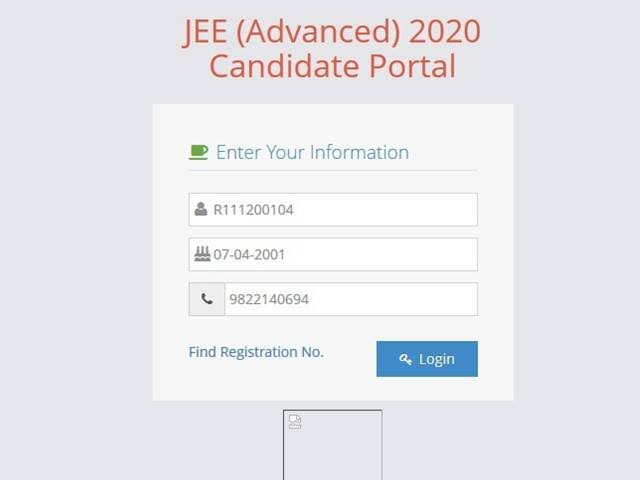
The JEE Advanced 2020 admit cards can be downloaded from Monday (September 21) 10:00 am to September 27 (9:00 pm). Candidates will have to visit jeeadv.ac.in to login and download your JEE Advanced admit card 2020.
The JEE Advanced 2020 admit cards will bear the candidate’s name, Roll Number for JEE Advanced 2020, photograph, signature, date of birth, address for correspondence and category. In addition, it will also bear the name and address of the examination centre allotted to the candidate.
The JEE Advanced 2020 examination is scheduled to be conducted on September 27, 2020, at various centres spread across the state
JUDICIARY AND TECHNOLOGICAL ADVANCEMENT
The flow of technology is as strong as a flooded river that no court can embark on such a vast flow of technology but still seeks to prevent damage by making proper dams by actively participating in the electronic maintenance of court records, allowing or even requiring electronic filing of pleadings and orders, and building high-tech court.
Good technology in our courts will make it more efficient to proceed. Electronic displays provide for adequate visualization and analysis of the exhibits. Technology can boost procedural control capabilities, identify deadlines and decide on matters quickly. Judges can place more time constraints on attorneys, provided that technology is more ready to present. You can access, analyze and use technology to inquire into previous cases for lawyers. Lawyers can complete openings, closings, direct questions and cross-examinations in less time than is needed to use paperwork with stable additions or diagrams. The technology in court halls helps lawyers clarify and synthesize courtroom information to increase the jury’s curiosity, comprehension and memory retention. online application and consultation can make their court experience smooth, quick and hazel free. It would also create transparency.
E-justice is seen and performed as an e-government agency. The Indian judiciary consisted of 15,000 judges in 2,500 districts. Since 1990, computerisation has taken place. Under the National EGP, the Mission Mode Project (MMP) was established for court computerization, and the introduction of IT and communication technology in three phases over a period of five years..
The MMP’s key goals are to:
1. To help court judicial administration streamline their day-to-day operations.
2. To support the courts in raising number of pending cases.
3. Providing litigants with accuracy of the facts.
4. Providing Judges with access to legal and judicial resources.
The project was launched in December 2004 and an e-committee was created to oversee its implementation. The E-Committee formulated a regional strategy and action plan. 700 courts in metro cities and 900 courts in capital cities with the exception of North East, Ahmedabad and Patna have been protected to this day.
The NIC has been extremely associated to the Indian judge for the past eleven years. Back in 1990, the task of NIC was initiated to support the legal community through IT.
Through NICNET satellite-based electronic communication network, all the High Courts were computerised and interconnected. Curtis project was commissioned to streamline the different court records. NIC took COURTIS on behalf of all legal system stakeholders, including judges, prosecutors, litigants, legal firms, government departments, researchers and the general public. Forensic and cyber tracing Forensic and cyber tracking data has played a major role in judicial investigation and enquiry. These made investigation smoother and allowing police and judiciary to pin down violator easily.
It requires the use of IT infrastructure in the judicial administration sector. It requires the use of satellite technology, video or intranet technology to communicate. Today, many judicial officers use video conferencing every day and it is connected to prisons. The accused can now be present by tele-justice through a video connection installed on ISDN lines between the prison and the trial. Indian states today have already adopted tele-justice, including Maharashtra, Andhra Pradesh, Tamil Nadu, Gujarat, and Bihar. In Maharashtra, for example, by video conferencing, more than 40 prisons in and around Mumbai are linked to district courts.
Over many years now, courts in the United States have been using Information Technology extensively.
Throughout the United Kingdom, computer software production at the subordinate court level was developed extensively. The Local County Court Management System (LOCCS) for example used in England
In Australia, “Cyber Tribunals” have extensively utilized the technology in the legal arena at all phases, thereby significantly reducing delays.
In Singapore, the courts use their time and resources to ensure that cases are handled effectively and effectively. The use of technology goes beyond computer use for Singapore courts. The use of video cameras in prisons and court premises dramatically decreases the chances of moving the accused and witnesses in criminal trials within the country and from outside.
While we have come a long way in advancing technology, we still have scope for improvement. On-line database program with precedents, citations, rules, laws and case statistics. Word processing with standard templates including notification/process creation. Lack of professional support expertise and a non-flexible budget in the modernisation process
There is no question that technology will profoundly affect future courtroom and litigation procedures, but the degree to which change will occur is subject to an unprecedented amount of problem anticipation and convenience due to what is now referred to as disruptive technologies, that is, innovations that are yet to be developed that will reshape our lives and alter our way of living. However, there are a large number of barriers that need to be addressed in order for the judiciary to operate to its full potential by using information and communication technology. If our judiciary is completely efficient in using new technologies, justice for everyone can be achieved easily and efficiently. It should be our primary objective to give justice quickly and correctly.
How To Deal With Resistance In Geriatric Care
The task of caring for the elderly can be daunting, especially when they’re resisting help. In order to make them more receptive to help, we need to delve deeper into the cause behind their hostility. Senior citizens often find it difficult to be vulnerable in front of people, especially when the latter do not seem very empathetic. There is also the additional hurdle of getting used to new people and a new environment. A cautious approach goes a long way in dealing with resistance, one which gives the elderly enough time to adjust to their surroundings, and to a new routine.
In the initial stages of the program, getting family members to participate in some of the activities might help in making the elderly more receptive to care and support, and would also encourage them to socialise with their contemporaries more freely. Making program objectives clear to them from the beginning, by explaining the benefits of the enlisted activities and setting up a concrete timeline, would go a long way in breaking their resistance down, and making them more receptive to change. Differential needs assessment is also crucial as a preliminary step to prevent resistance in later stages, as every senior citizen has different requirements when it comes to specialised care. Their cognitive, behavioural, emotional, and physical capabilities are not equal, and so, every individual would be in need of customisation of the program for it to benefit him or her in the best possible way.
If the individual is persistently resistant to help, a trial run of the actual program could be suggested. The program administrators could propose a short activity, assuring the elderly that their enthusiastic consent is something that they would need to start the program. This is known as the foot-in-the-door technique, which would make it more likely for them to say yes to the requests of the administrator in the future. Resistance is also more likely to be overcome when the message aimed at bringing about a change in the attitude is framed positively. Appeals that contain positive consequences of the program, without highlighting the negative consequences of not participating in it, have a higher chance of persuading the elderly. It would be even more effective ifthe message came from a credible source, like a healthcare professional, or a close friend.
When a senior citizen acts out and is consistently uncooperative, it gets frustrating for the program administrator and other members of the program. In such a situation, it is imperative that we maintain our composure, and try to empathise with them. A significant number of senior citizens are neglected and abused by their family members. They fear that they are losing control over their lives, and this drives them to act in a hostile manner. Reflective listening, which is the reconstruction of what the client is thinking tomake the client understand his or her thoughts better, is a communication strategy that can be deployed to bring the elderly to ease as well as win their cooperation. A compassionate and diligent effort to provide assistance would be sure to succeed in the long run.
Author: Diya Pant (dpant2002@gmail.com)
Poverty is not just a lack of money.
“Poverty is not just a lack of money; it is not having the capability to realize one’s full potential as a human being” — Amartya Sen
Poverty is a state or condition in which a person or community lacks the financial resources and essentials for a minimum standard of living. This is the basic “definition” we have been learning since ages. But, the bigger question here is is Poverty really confined to just financial resources or there is something more to it. If I have to answer this question I would say Poverty is a broad term which has been limited to the understanding of only money and people who can’t earn it . It is also a stereotypical word in the society where they have created an imaginary line of people Above poverty line (APL) and people Below Poverty line (BPL) .
Poverty is the lack of Education and Health services . Poverty is not having a house to call yours. Poverty is hunger. Poverty is no job security .Poverty is loneliness of a person. Poverty is fear of the future ,poverty is not able to imagine the days ahead. It is objective ,subjective and psychological. Poverty is social exclusion or when you can not provide your children with stuff they want. It urges people to find an escape. The way of finding escape is sometimes dangerous. When a farmer is compelled to commit a suicide because he can’t feed his family and can not bear to see them starving that is Poverty. When a person is alone in a room full of people that is poverty. When your husband provides you with all the luxuries but fails to give you love, affection and time that is poverty. A person who has nobody to talk his heart out to is called poor. Poverty is not only numbers but poverty is emotions, a feeling, a fear, an insecurity , anxiety and depression.
When a daughter is not allowed to stay out late because her father is frightened to even think about the detrimental effects it could have ,poverty exists here. When the society blames a woman for being divorced or a single mother ,their thinking reflects poverty. When a son leaves his parents to a VRIDH ASHRAM because he is too busy in his life to take care of them, that accounts for poverty. When two people can not have a love marriage because their caste does not allow them, it is poverty. When a person belonging to the LGBTQ category is seen indifferently there comes in poverty. Bullying a friend for any xyz reason and making him lose his confidence in himself is poverty. Male chauvinism is poverty, a drunk man beating his helpless wife is poverty. We as humans do not raise voice for the right is Poverty.
Poverty is a complex societal concept and it needs a lot of attention. It’s high time to realize that there are people who are lacking various comforts of life. The need to provide basic education to a child to build a secure future is important . Just by reaching out to people with various slogans does not help, what we need is Actions that are louder than words. The improvement of Healthcare facilities to reach out to the most vulnerable parts of the country is very important. The urgency to improve the infrastructure of the Healthcare industry has been completely witnessed in the current Pandemic situation where coronavirus has made people realize that few things can not be ignored for long. It is important to make sure that no child or adult goes to sleep starving. The country is experiencing a jobless growth leading to different other consequences and this needs to be addressed as soon as possible. It is important that the women of this country have freedom . A freedom from fear, a freedom from social barriers ,freedom from expectations,freedom from being forced for marriage, freedom to study upto the extent they want to.
“Extreme poverty anywhere is a threat to human security everywhere.
We as Humans have a lot of potential to deal and cope with things and try all possibilities to improve situations in hand. Every problem has a solution but only finding the right ones is important. India and Indians both have a lot of potential to improve their credibility over others . For an economy to make progress it is important to strengthen its roots and its roots lie in the most vulnerable sections of the society . For alleviating poverty, a freedom to sustain, a freedom to express ,a freedom to actually live freely is the most important. India should succeed in making its citizens feel secure and to live free of poverty – emotionally and physically.
In conclusion, poverty is not the problem of a person but of the whole nation. Also, it should be dealt with on an urgent basis by the implementation of effective measures. In addition, eradication of poverty has become necessary for the sustainable and inclusive growth of people, society, country, and economy.
How Indian culture proves that Old is gold?
“If any individual is judged by his character and morality, society is judged by its culture and tradition” said Dr S. Radhakrishnan. Culture means the way of life followed by a community that consists of custom, tradition, religious practices and the human values. Every culture has its distinct positive features. The culture of a community never remains same. It is evolved over a period and is always in the process of reforming itself.
Even from very ancient time, the Indian civilization was highly developed. Many factors have contributed to the cultural formation. Our scriptures like Vedas and Upanishads are considered as immense treasure of knowledge. There are various other scriptures like Ithihas, Purana etc. Bhagawad Gita, Ramayana and Mahabharata have taught us how we should conduct ourselves. We have developed very good art like Music, dance, paintings, sculpture etc. While the temples like Ramanathapuram on the southern corner of India are noted for their workmanship, novelty and sculpture, temples like Rishikesh and Badrinath in north are considered as the very abodes of God. Hinduism is one of the oldest religions of the world and great saints like Adi Sankara, Ramanuja, Sri Ramakrishna Paramahamsa and Swami Vivekananda have enriched our religion by their interpretations. From the day Swamy Vivekananda addressed the Parliament of Religions at Chicago; many people have turned towards India for spiritual knowledge. Though Adi Sankara and other saints have set Self-realisation as the ultimate goal, it was Sri Ramana Maharshi who highlighted its importance and showed the way for achieving that goal. All these developments have contributed to India a rich cultural heritage and tradition. India has thus inherited a great tradition and a way of life which formed the basis of its culture.
Though Mughals came and then the British came and ruled over the land, they could not destroy the culture. The Indian culture has now become universal and it has become a land where different religions and culture survive, co-exist peacefully and flourish. Now there are different communities and nationals in India pursuing their own beliefs and faiths. Though India presented a picture of diversity, India has grown as a national that welcomes all ideas, philosophies and doctrines. It is a land where people of different faith live in peace and harmony, like a family bound in mutual love and affection.
Indians have adopted and assimilated the foreign culture and yet they have retained what is good for their own culture. They may be communicating in English, traveling in Mercedes, dressing in western style but they never deviate from their basic tradition and culture. The car symbolizes the modern trend but its name, Maruti, symbolizes the legendary past. Those who migrate to foreign countries adopt the culture of the country to which they migrated without deviating from their own culture. Like , I f you ever met any family who use to live in USA and still touches feet of elders. Wherever Indians go, whether USA or Dubai, along with their spouses, children and belongings, they make it a point to carry the Indian culture also with them. This is evident from the various cultural programmes being regularly organized in foreign countries like USA, Dubai or Singapore. Music Festival is a regular annual feature in Cleveland, USA and leading Indian artists take active part in them. Indian temples are seen in most of the States in America, the Venkatachalapathi temple at Petersburg being the biggest among them.
Cinemas, the computer, air linkage, information technology have all brought the inhabitants of the world closer. The world which remained unreachable and wide apart before has become a global village now. As the geographical boundaries became mere symbols, people to people contact became more frequent. As people mingled with each other, we find a cultural synthesis taking place in India now.
Some adverse changes have also come in the Indian family tradition. Previously, the wife used to be the home maker, attending to house hold duties, managing the children, attending to religious practices etc. Now, according to the modern trend more and more house-wives are going beyond their home-making avocation and take up responsibilities in business undertakings. “Now, for women, there is life even after marriage” commented a friend in a lighter vein. Women are well educated and became partners with men in bringing about progress and prosperity. Thanks to the winds of change blowing over and thanks to the free and liberal outlook created by modern era, India now finds itself free from its outmoded customs and practices. Though woman has proved her enormous power as a contributor for nation building, it cannot be denied that she has left a vacuum at the home front. We need to bring up a system where our culture and tradition should be passed on to our children also. Woman has a higher responsibility in this sphere.
It would be pertinent to conclude this essay with the quotation of Swami Ranganathananda, the late President of Ramakrishna Mission, Kolkata: “Change is the order of the day. Everyday, we witness changes occurring all around us and even within us. Society may change in infinite ways in response to historical necessities but that is no reason why cultural values underlying all human endeavors should change.” Let us all be proud of our culture and cherish it for ever.
So, we not only say that we are proud of being and Indian but we really are. It is always indian culture which gave us a different definition or identity infront of whole world. Like, only by seeing a Foreigner you can’t say from where he/she belongs from, but, any Foreigner can easily say that he/she belongs from india. Jai hind.
See yaa…
The story of a Stethoscope
Doctor and a stethoscope are synonymous with each other. A stethoscope is doctor’s best buddy. Hung around one’s neck, it gives doctor his identity. It is basically an instrument used to listen sounds made by heart, lungs or intestines and blood flow in veins and arteries. Let’s read how a young doctor’s shyness led to its invention which proved to be path breaking in field of medical diagnosis.
Born in 1781, a young French doctor, Rene Laennec got inspired to become a doctor when his mother passed away due to tuberculosis. He was a learnt man who studied medicine under famous physicians Dupuytren and Joan Nicholas Corvisat.
Corvisat strongly believed in diagnosing a patient by listening to heart sounds. In those days (early 1800s), it was common for a doctor to listen one’s heart beat by pressing his head directly on patient’s chest or back.
In 1816, as a part of his training, Laennec was told to examine a young overweight woman who was having heart problem. Laennec felt shy as well as uncomfortable thinking about using the traditional method. At that moment, he thought of a way. He rolled a quire of paper into a cylinder and placed one end on the chest of the patient and other end to his ear. And much to his surprise, he perceived sounds better than the other traditional method.
Successful in his impromptu experiment, Laennec devised a wooden version. It was 25 cm by 2.5 cm and could be carried around. He named it STETHOSCOPE which was derieved from a greek word sthethos( meaning chest) and scopos (meaning examination). Gradually, its use spread across Europe and US. But unfortunately Laennec died in 1826 at the age of 45 due to the same disease, as of his mother, tuberculosis.
Till date, various refinements have been made to original one. The major changes were brought by a Harward Professor, David Littmann in 1960s. He made a lighter version with better acoustics.
Littmann stethoscope are no doubt, the gold standard and used worldwide by doctors. But Laennec’s invention proved to be major milestone in the history of medical sciences.
Many of us must be unaware about this but have a knowledge always pays of.
See yaa
Taj Mahal to reopen after 6 months
The Taj Mahal, India’s “monument to love”, has reopened after a six-month hiatus with special rules introduced – including no touching the white marble walls of the mausoleum built for a Mughal emperor’s favourite wife

.Only 5,000 visitors are allowed daily – a quarter of usual capacity – and all have their temperature taken by staff wearing face shields, masks and gloves.
Visitors can whip off their masks for a photo, but security personnel are quick to remind them to put them back on once the shutter has been pressed.
And the famous bench where people usually sit to have their picture taken has been laminated in plastic, to help cleaning between every photo
India, home to 1.3 billion people and some of the world’s most crowded cities, has recorded more than 5.4 million COVID-19 cases, with approximately 100,000 new infections and more than 1,000 deaths recorded daily in the past several weeks. But after a strict lockdown in March that devastated the livelihoods of tens of millions of people, Prime Minister Narendra Modi is reluctant to copy some other nations and reimpose curbs on activity.
Instead, in recent months his government has eased restrictions, including on many train routes, domestic flights, markets, restaurants – and now, visiting the Taj Mahal, a UNESCO World Heritage Site.
The 17th-century white marble mausoleum built by Mughal emperor Shah Jahan in the city of Agra, about 200km from the capital, New Delhi, is India’s most popular tourist site. It usually draws seven million visitors a year but has been closed since March
Types of film certifications
Everyone might have been observed displaying a certificate before a film begins, either in theatre or CD. This means, the film makers display that certificate to everyone so that we can know the standards of that film. But how do those certificates tells us the standard and what do they actually implies? Let us see know.
These certificates are actually issued by the Central Board of Film Certifications. There are actually four types of film certifications issued by CBFC. The certificates are U, U/A, A and S. Let us know about each one of them clearly.
U
U certificate of CBFC means unrestricted public exhibition. This means public of any age group can watch the movie. The U certified films do not contain any pornographic content, too much violence, abuse etc. So these films are something like family entertainers, can be seen with whole family.
Some of the U certified movies are: Hum aapke hein koun, Bhag Milla Bhag etc.
U/A
U/A certificates mean parental guides for children under age 12. This means that the children with age below 12 shouldn’t watch those movies without their parents beside. These movies tend to contain some frightening scenes, little romantic scenes, usage of crude language, moderate abusive scenes, moderate violence. So, the CBFC recommends that the children under age 12 can watch these movies with their parents beside.
Some of the U/A certified movies are: Gajini, Bahubali, etc.
A
If a film is A certified then it means that film is restricted to adults i.e. nobody of age 18 and below are allowed to watch that movie. Thae films tend to have pornographic content, too much abuse, violence in peaks, crude language. So, these films are allowed to watch by the people who crossed 18 years as these people are considered as majors.
Some of the A certified films are: Kabir Singh, The Dirty Picture etc.
S
This is a special certificate and is rarely used. The S certified films are restricted to some special categories of people like engineers, doctors, scientists etc. So, if a film is S certified then it means that only engineers or doctors or scientists can watch that movie.
Initially there were only two certificates U and A. The U/A and S certificates were added in June 1983. The certificate will be provided within 64 days by the censor board members. The censor board members together discuss and decide the type of certificate to be given and this has to be done within 64 days of film’s submission to the board.
The films which include the topics of foreign countries are carefully watched by censor board and decide whether some of the scenes are to be excluded or not. Because, the relations with other nations should not get broken by films.
How do the certificates are given for foreign dubbed movies?
CBFC does not give any seperate certificate for dubbed films. The certificate will be same as the one distributed to the original film.
Hope this article provides you some basic information on film certifications.
Plastic surgery
Plastic surgery is a surgical specialty involving the restoration, reconstruction, or alteration of the human body. It can be divided into two main categories: reconstructive surgery and cosmetic surgery. Reconstructive surgery includes craniofacial surgery, hand surgery, microsurgery, and the treatment of burns. The advancements in technology in medical science have opened the doors to better treatment possibilities with minimal side effects being witnessed post treatment. People are now able to avail treatments for such complications which require highly complex and minute procedures to be performed where the implications of the existence of errors are highly fatal. With the inclusion of robotic technology and advanced medical equipment infrastructure, procedures have now become highly convenient and accessible to the people and this feasibility has also enabled the healthcare professionals to provide better medical service to the consumers (Reconstructive Plastic Surgery Overview, 2008).The development of plastic surgery that has been witnessed over the recent years has given rise to various opportunities wherein the use of medical technologies are being used to enhance personal physical features rather than seeing the medical procedures as a means of treatment of illnesses. Among these procedures, plastic surgery is the most widely sought feature modification and enhancement methods which have enabled further developments in the medical field. Plastic surgery had originated as a means to provide reconstructive measures for the damaged parts of the physical parts of the body. These parts can get damaged or injured due to accidents or various other stimuli. Plastic surgery aims at reconstructing and / or modifying the appearance as well as the function of the respective limb (Reconstructive Plastic Surgery Overview, 2008).Plastic surgery is divided into two parts, cosmetic plastic surgery and reconstructive plastic surgery. Cosmetic surgery seeks to improve the patient’s features on a purely beauty level. Reconstructive surgery seeks to fix any physical feature, which is deformed by illness, accidents or birth defect or imperfection. It also provides a significant degree of functional enhancement so as to enable the patient to regain most of the actual functionality which existed for the respective part. Traditionally these processes have been used to treat damages and hide the scars arising out of deep wounds or skin damage. Reconstructive surgery is also being considered as a viable option for those who want to enhance one’s mobility and functionality in cases of incidents which render a person partially disable (Reconstructive Plastic Surgery Overview, 2008).However the current trend of becoming competitive in terms of physical features has led to the adverse outcomes being witnessed in cases where the patients have resorted to the use of new untested drugs or in cases when there is a natural adverse reaction to the procedure. In either case, there is a severe impact of these procedures on the social environment wherein various individuals and groups are subjected to the outcomes (Reconstructive Plastic Surgery Overview, 2008).When the word plastic surgery is heard or used, people immediately think of body changes or enhancements and want to know what has been done. This is especially so in the case of women due to the focus and featuring of the female face and body in magazines and fashion shows. Plastic surgery is performed all over the world where we have women who are in need of bodily transformations and where the procedures are available. There is a high prevalence of this in the US and Europe, and through globalization the image of the enhanced ‘western woman’ has been spread far and wide. Because of this, we find women aspiring to this model or just an enhancement to make her look ‘better’ than her compatriot. This phenomenon has also spread to the Middle Eastern countries and can be found from Lebanon, Syria and others to the UAE. There are many reasons which will be explained why women in this region, and the UAE resort to this treatment despite the fact that it is prohibited in the religion of Islam.In simple terms, plastic surgery can be seen as an operation to change, shape or mould a person’s features as you would do with plastic. However, on a more sophisticated basis, plastic, reconstructive, and cosmetic surgery refers to a variety of operations performed by doctors and undertaken by patients in order to repair or restore body parts to look normal again, or to change or enhance a body part to look ‘better’ than before and thus draw more attention. All of these types of procedures are highly specialized and require accurate skills and training to perform them. The operations require the careful preparation of a person’s skin and tissues, followed by precise cutting. Afterwards , stitching needs to be accurately done to leave minute traces of scar tissue. Due to cutting-edge technology in the form of instrumentation and procedures, plastic surgery is more advanced today than before (Magleby 2008;Surgery Encyclopedia 2010).General Reasons for Plastic Surgery:The three types of surgery performed use similar types of techniques and approaches. However, they all have different reasons attached. In the case of plastic surgery it is mainly used to treat defects after birth as well as enhance the skin whereby blemishes, acne scars, growths or birthmarks could be removed. Cosmetic surgery is just to make a person look younger or enhance the appearance. Reconstructive surgery is mainly used for the reattachment of body parts that got detached in an accident or in war or to add body parts that were missing at birth or were removed by surgery (Surgery Encyclopedia 2010;Skin grafts are also used for severe burn victims as shown in the case of a Palestinian child with severe burns who were sent to the UAE (Palestine Children’s Relief Fund 2006).Specific Types and uses of Plastic Surgery:Plastic surgery:- it involves surgical procedures of the skin. Here the popular ones are the shaping of ears, acne scars and removal of tattoos. Also, the famous excess removal of abdominal fatty tissue (‘tummy tucks’) are common.Cosmetic surgery:- this is done on the face for enhancement and beautification. This is used to enhance facial features or correct a disfigurement. In children cleft lips or palates are cosmetically rectified. For adults it is mostly about shaping and modeling noses and lips. Sagging bags under eyelids are also done as well as the well-known facelifts. Then there are also the cases of breast enhancements- either increase or decrease the size of it. For a breast increase, implants are used and for reduction, excess fat and tissue are removed (Leslie 2009; Surgery Encyclopedia 2010; Corder 2007).Reconstructive surgery: – most of the cases treated are accident and burn victims. In the case of accidents it is related to the rebuilding and reconstructing of broken bones and limbs and involves skin transplantations and skin grafts as well. It includes the cases of reattachment of severed fingers , toes or arms, provided these limbs are taken to the hospital quickly. At other times, artificial limbs are attached to the body or implants are made such as teeth, knee, elbow and hip joints (Surgery Encyclopedia 2010).Disadvantages of Plastic SurgeryThe obvious risk of plastic surgery is that it not only involves complications but also the risk of receiving bad work. This is for sure, no one wants to spend substantial amount money to look even worse that before or to be affected by side effects involved in plastic surgery. In order to clarify all the possibilities of plastic surgery, whether good or bad, you should consult your doctor before you plan any surgery for you. This will assist you in knowing the risks involved and to get prior knowledge of the medications to which your body reacts unpredictably. With cosmetic surgeries, results may be unrealistic, not up to the expectations of the person undergoing surgery.Advantages of Plastic SurgeryThe advantages of plastic surgery are no doubt dramatic, like the ability to use a hand, remove skin cancer or close an open wound, or subtle like cosmetic or skin surgery or rhinoplasty for a young woman etc. Cosmetic surgery has become one of the most common events in the lives of people of all age groups, after all everyone takes due advantage from this processes. The motive behind the surgery can be any, removing birth marks or unattractive looking scars, re-scaling of noses, get rid of enlarged breasts or any other problem. The sole purpose behind plastic surgery is to get a good appearance and therefore to enhance self-confidence.Plastic surgery, the enhancement process by means of surgery has many different forms and benefits. It is very beneficial where someone is in need of physical enhancement due to a malformed body part or where a limb has been severed or was destroyed. In the case of cosmetic surgery it serves to mostly shape and enhance the person’s personal looks and body shape. Millions of women worldwide and in the UAE favour this procedure. The women who subject themselves to the cosmetic surgery would like to look younger, or have a better facial or bodily look. Plastic surgery for purely better looks are frowned upon in the Islamic religion, however, women in the Middle East still do this and justify their actions. This surgery also does not come without risks and people have died, especially under the hand of unprofessionally qualified surgeons. Many instances of malpractices in the UAE have been uncovered and warnings and advice have been given in connection with plastic surgery. Despite all of the things mentioned, plastic surgery still carries on as women keep on searching for better looks.When the word plastic surgery is heard or used, people immediately think of body changes or enhancements and want to know what has been done. This is especially so in the case of women due to the focus and featuring of the female face and body in magazines and fashion shows. Plastic surgery is performed all over the world where we have women who are in need of bodily transformations and where the procedures are available. There is a high prevalence of this in the US and Europe, and through globalization the image of the enhanced ‘western woman’ has been spread far and wide. Because of this, we find women aspiring to this model or just an enhancement to make her look ‘better’ than her compatriot. This phenomenon has also spread to the Middle Eastern countries and can be found from Lebanon, Syria and others to the UAE. There are many reasons which will be explained why women in this region, and the UAE resort to this treatment despite the fact that it is prohibited in the religion of Islam.In simple terms, plastic surgery can be seen as an operation to change, shape or mould a person’s features as you would do with plastic. However, on a more sophisticated basis, plastic, reconstructive, and cosmetic surgery refers to a variety of operations performed by doctors and undertaken by patients in order to repair or restore body parts to look normal again, or to change or enhance a body part to look ‘better’ than before and thus draw more attention. All of these types of procedures are highly specialized and require accurate skills and training to perform them. The operations require the careful preparation of a person’s skin and tissues, followed by precise cutting. Afterwards , stitching needs to be accurately done to leave minute traces of scar tissue. Due to cutting-edge technology in the form of instrumentation and procedures, plastic surgery is more advanced today than before (Magleby 2008;Surgery Encyclopedia 2010).
SCHOOLS REOPEN from today, state wise status

After a long gap of 6months due to the coronavirus pandemic, schools of some states have decided to reopen the gate of the educational institution for students of classes 9-12, on a voluntary basis . All the guidelines provided by the government for unlock 4 will be followed in the process.
The union home ministry has a set of rules for schools to follow when reopen. Students and teachers residing in containment zones are not permitted to attend schools. Only 50% of the teaching and non-teaching staff are allowed to operate, while students only from classes 9 to 12 can attend, on voluntary basis. Students who would attend have to get a permission slip signed by their parents or guardians. Schools that decide to reopen will have to continue online classes for students that stay at home.
It is mandatory for Schools which are reopening to have thermal scanners at the entrance, so that students, teachers and other staff can enter only after temperature checks. Schools have been advised to operate separate gates for entry and exit, although it is not compulsory. Most importantly, everyone entering the school premises have to wear face masks, and sanitise their hands or wash them following the 20-second rule on a regular basis.
Here is the state wise status of school reopening :
Andhra Pradesh
Schools in Andhra Pradesh for classes from 9th standard to Intermediate second year are likely to reopen from September 21. Schools, colleges, educational and coaching institutions will continue to remain shut for students and regular class activity up to September 30.
Assam
The Assam government on Wednesday issued the SoPs for reopening of schools and colleges in the state from September 21, adhering to Covid-19 protocols. After six months from the date of closure of schools due to the pandemic, the state secondary education department has notified the SOPs for reopening of educational institutions in Assam from classes 9 to 12.
Bihar
Schools in the city are making all arrangements to ensure safety of students as the Centre has allowed partial resumption of activities for students of classes 9 to 12 from September 21 as part of Unlock 4.0.
Chandigarh
Class 9 to 12 students are allowed at schools from today on a voluntary basis, for taking guidance from teachers.
Goa
Most stakeholders in the field of education on Thursday said that Classes IX-XII could begin from September 21, even as they expressed concern over ferrying students via Bal Raths and addressed parents’ apprehensions about schools resuming during the height of the Covid-19 pandemic.
Haryana
Students of classes 9 to 12 will be allowed to visit their schools from September 21 in Haryana on a voluntary basis for academic help.
Himachal Pradesh
Schools reopen in the state after the Govt allowed students of Class 9 to 12 to visit schools from September 21 on a voluntary basis, for taking guidance from teachers.
Jharkhand
There is no clarity yet. Government is still to take a call. Although education department had drafted a proposal for staggered opening from September 21, but it was not approved by state government. Any decision on it will be taken only after month end
Karnataka
The Department of Public Instruction issued the order on Saturday. It is in the view of the Union Government’s order permitting students from classes nine to 12 to visit schools to meet teachers and get their doubts cleared. However, the state government issued an order on Saturday saying that students here won’t be permitted to visit school and PU college campuses till September end or further orders which will be issued after reviewing the developing situation.
Meghalaya
Education minister Lahkmen Rymbui on Friday said that the schools in Meghalaya which are shut for six months due to the Covid-19 pandemic will partially reopen from next week for students to meet teachers to clarify their doubts. The schools will be open for students of class 9 to 12 to meet teachers to clear their doubts but there will be no regular classes and no classroom session, he added.

Although states like, Uttar Pradesh, West Bengal, Gujarat, Kerala, Odisha, Uttarakhand, and Tamil Nadu, will not reopen schools from 21st September.
Kerela and Gujarat are not willing to rush into opening schools.
Odisha chief minister Naveen Patnaik has declared closure of schools till durga puja.
Uttar Pradesh and Uttarakhand in both the states schools will not reopen as the states saw a surge of COVID-19 cases.
Tamil Nadu has decided to reopen schools only when the coronavirus outbreak will be brought under control.
West Bengal schools are closed till 30th September, after which the Chief Minister Mamta Banerjee will make a decision.


You must be logged in to post a comment.