Public administration and development related

INTRODUCTION:-

public administration at the local, regional, national and international levels where it is directed to managing development processes in low and medium income countries. It gives special attention to investigations of the management of all phases of public policy formulation and implementation which have an interest and importance beyond a particular government and state. PAD has a particular interest in the link between public administration practice and management research and provides a professional and academic forum for reporting on new experiences and experiments. PAD also publishes
articles on development management research in the NGO sector. It is widely read by academics and practitioners alike, including consultants, donors and policy advisers. With its case study approach, it is also frequently used for teaching and training purposes.

Public Administration and Development

Information for Subscribers

Public Administration and Development (Print ISSN 0271‐2075; Online ISSN 1099‐162X at Wiley Online Library, wileyonlinelibrary.com) is published in 5 issues per year. Institutional subscription prices for 2020 are: Print & Online: US$2987 (US and Rest of World), €1929 (Europe), £1528 (UK). Prices are exclusive of tax. Asia‐Pacific GST, Canadian GST/HST and European VAT will be applied at the appropriate rates. For more information on current tax rates, please go to http://www.wileyonlinelibrary.com.tax‐vat. The price includes online access to the current and all online back files to January 1st 2017, where available. For other pricing options, including access information and terms and conditions, please visit wileyonlinelibrary.com/access.

Delivery Terms and Legal Title

Where the subscription price includes print issues and delivery is to the recipient’s address, delivery terms are Delivered Duty Unpaid (DDU); the recipient is responsible for paying any import duty or taxes. Title to all issues transfers FOB our shipping point, freight prepaid. We will endeavour to fulfil claims for missing or damaged copies within six months of publication, within our reasonable discretion and subject to availability.

Services

Adver tisements

Advertisement Sales Department, John Wiley & Sons, Ltd.,

The Atrium, Southern Gate, Chichester, West Sussex

PO19 8SQ, UK.

Tel: +44 (0)1243 770254

Fax: +44 (0)1243 770432

e‐mail: adsales@wiley.co.uk

Commercial Reprints:

E‐mail: corporatesaleseurope@wiley.com;

corporatesalesusa@wiley.com; or

corporatesalesaustralia@wiley.com

Author Reprints (50–300 Copies):

Order online: http://www.sheridan.com/wiley/eoc

Backstock Agent

PSC

Back issues: Single issues from current and recent volumes are

available at the current single issue price from cs‐journals@wiley.com.

Earlier issues may be obtained from Periodicals Service Company,

351 Fairview Avenue ‐ Ste 300, Hudson, NY 12534, USA.

Tel: +1 518 822‐9300

Fax: +1 518 822‐9305,

Email: psc@periodicals.com

General Enquiries

Tel: +44 (0) 1243 779777,

Fax: +44 (0) 1243 775878.

Contact Details within John Wiley & Sons

Journal Customer Services: For ordering information, claims

and any enquiry concerning your journal subscription please go to

http://www.wileycustomerhelp.com/ask or contact your nearest office:

Americas: Email: cs‐journals@wiley.com; Tel: +1 781 388 8598 or

1 800 835 6770 (Toll free in the USA & Canada).

Europe, Middle East and Africa: Email: cs‐journals@wiley.com;

Tel: +44 (0) 1865 778315

Asia Pacific: Email: cs‐journals@wiley.com; Tel: +65 6511 8000

Japan: For Japanese speaking support, Email: cs‐japan@wiley.com;

Visit our Online Customer Help available in 7 languages at

http://www.wileycustomerhelp.com/ask

Copyright and Copying (in any format)

Copyright© 2021 John Wiley & Sons, Ltd. All rights reserved

No part of this publication may be reproduced, stored or trans

mitted in any form or by any means without the prior permission

in writing from the copyright holder. Authorization to copy items

for internal and personal use is granted by the copyright holder

for libraries and other users registered with their local Reproduction

Rights Organisation (RRO), e.g. Copyright Clearance Center

(CCC), 222 Rosewood Drive, Danvers, MA 01923, USA (www

copyright.com), provided the appropriate fee is paid directly to the

RRO. This consent does not extend to other kinds of copying such

as copying for general distribution, for advertising or promotional

purposes, for republication, for creating new collective works or

for resale. Permissions for such reuse can be obtained using the

RightsLink “Request Permissions” link on Wiley Online Library.

Special requests should be addressed to: permissions@wiley.com

Disclaimer

The Publisher and Editors cannot be held responsible for errors

or any consequences arising from the use of information

contained in this journal; the views and opinions expressed do

not necessarily reflect those of the Publisher and Editors, neither

does the publication of advertisements constitute any endorsement

by the Publisher and Editors of the products advertised.

Abstracting and Indexing

Public Administration and Development is covered by the following

abstracting and indexing services: Abstracts on Hygiene &

Communicable Diseases (CABI), ASSIA: Applied Social Sciences

Index & Abstracts (ProQuest), CAB Abstracts® (CABI), CAB

HEALTH (CABI), CABDirect (CABI). Current Contents: Social &

Behavioral Sciences (Thomson Reuters), Emerald Management

Reviews (Emerald), ERA: Educational Research Abstracts Online

(T&F), Forestry Abstracts (CABI), GEOBASE (Elsevier), Global

Health (CABI), Grasslands & Forage Abstracts (CABI), IBSS:

International Bibliography of the Social Sciences (ProQuest),

Journal Citation Reports/Social Science Edition (Thomson Reuters),

PAIS: Public Affairs Information Service (ProQuest), Plant Genetic

Resources Abstracts (CABI), ProQuest Central (ProQuest), Rural

Development Abstracts (CABI), SCOPUS (Elsevier), Social Sciences

Citation Index (Thomson Reuters), Social Services Abstracts

(ProQuest), Sociological Abstracts (ProQuest), Soils & Fertilizer

Abstracts (CABI), Studies on Women & Gender Abstracts (T&F),

Tropical Diseases Bulletin (CABI), Web of Science (Thomson Reuters),

World Agricultural Economics & Rural Sociology Abstracts (CABI),

Worldwide Political Sciences Abstracts (ProQuest).

Online open

Public Administration and Development accepts articles for Open

Access publication. Please visit http://olabout.wiley.com/

WileyCDA/Section/id‐406241.html for further information

about OnlineOpen.

Production Information

For manuscripts that have been accepted for publication,

please contact:

Podhumai Anban

e‐mail: padproofs@wiley.com

Production Details

Printed in Singapore by C.O.S. Printers Pte Ltd.

Identification Statement

PUBLIC ADMINISTRATION AND DEVELOPMENT (Print ISSN

0271‐2075; Online ISSN 1099‐162X) is published in February, May,

August, October and December. US mailing agent: Mercury Media

Processing, LLC 1850 Elizabeth Avenue, Suite #C, Rahway

NJ 07065 USA. Periodical postage paid at Rahway, NJ.

Postmaster: Send all address changes to PUBLIC ADMINISTRATION

AND DEVELOPMENT, Wiley Periodicals LLC, C/O The Sheridan

Press, PO Box 465, Hanover, PA 17331.

For submission instructions, subscription and all other information

visit: wileyonlinelibrary.com/journal/pad

Wiley’s Corporate Citizenship Initiative Statement

Wiley’s Corporate Citizenship initiative seeks to address the

environmental, social, economic, and ethical challenges faced in

our business and which are important to our diverse stakeholder

groups. Since launching the initiative, we have focused on sharing

our content with those in need, enhancing community philan

thropy, reducing our carbon impact, creating global guidelines

and best practices for paper use, establishing a vendor code of

ethics, and engaging our colleagues and other stakeholders in our

efforts. Follow our progress at http://www.wiley.com/go/citizenship

Statement on Research4Life

Wiley is a founding member of the UN‐backed HINARI, AGORA,

and OARE initiatives. They are now collectively known as

Research4Life, making online scientific content available free or

at nominal cost to researchers in developing countries. Please

visit Wiley’s Content Access – Corporate Citizenship site:

http://www.wiley.com/ WileyCDA/Section/id‐390082.html

Reference Link:-

https://onlinelibrary.wiley.com/journal/1099162x

https://onlinelibrary.wiley.com/loi/1099162x

BYJU’S: India’s most valuable Unicorn.

Photo Credits: BYJU’s

What’s the business about?,

BYJU’s is an Indian multinational educational company which was founded in 2011 by BYJU Raveendran and Divya Gokulnath. Today, it’s the most valuable unicorn in India and world’s most valuable technological educational company.
History of BYJU’S

In 2011, Mr. Raveendran and Ms. Divya Gokulnath founded an educational company with the help of their students which provided online video based learning programmes for students of kindergarten to Grade 12th.

In 2015, with the help of Think and Learn Ltd., the business firm launched its first ever app named BYJU’s: The learning app. After that, in 2017, BYJU launched its second app for mathematics for kids and subsequently they also launched another app for parents to help them track their child’s learning course.

Rose to fame: BYJU’s

By 2018, BYJU’s had more than 15 million users and 9 hundred thousand paid users. In 2019, BYJU’s won sponsorship rights for Indian Cricket Team jersey. Popular Indian actors Mohanlal and Shah Rukh Khan are the brand ambassadors for Byju.

Major Services provided by BYJU.

Initially, educational content was only made for students from classes kindergarten to 12. But now BYJU also trains students for Indian competitive examinations like IIT-JEE, NEET, CAT, UPSC and it also trains students for international exams like GMAT and GRE.

In 2019, the company announced that it would soon start providing classes to students in their respective regional languages in India. The same year it also announced the commencement of an international app for students living in countries outside of India.

Byju’s also launched its Future School which is a Kids Coding Platform where kids are taught to code online by experts.

The video tutorials in the app are about 12-20 minutes long and they’re digital animation videos for classes 4th to 12th and hence this makes it easy for students to grasp and learn.

Road to most valued start up!

BYJU’s has raised 350 million dollars from UBS, private equity Equity Giant Blackstone and also from Abu Dhabi state fund ADQ, Phoenix Rising and Zoom.

Byju’s has raised over 1.5 billion dollars in last eighteen months because of the increase in online learning and teaching due to the COVID-19 pandemic.

Byju’s has also acquired several other small business in the recent past like White Hat Jr, Scholr, Osmo and Toppr. In fact, it’s latest fundraising comes from popular educational chain, The Akash Educational Services, estimated at about 950 million dollars.

According to Mr. Raveendran, the 21st century illiterates are not those who can’t read and write, but those who can’t learn, unlearn and relearn.

UNDERSTANDING SOFTWARE DEVELOPMENT LIFE CYCLE

In todays cyber world we are driven with a technical life style which introduces software to be an integral part in our day to day life. It is hardly possible to imagine our every day life with out any computerized process. When we closely observe the applications that we use daily we all get a common doubt that, how were these applications are developed and what is the process behind them? Let me explain you about the process of developing a software keenly.

SOFTWARE DEVELOPMENT LIFE CYCLE:

Whenever there is a need for sophisticated system or an end user web or a mobile application we have to design a procedure which describes the whole process of development from starting stage to final stage. Similarly, Software development life cycle is also a methodology or a set of principles that should be followed in every software development team as preliminary steps to development a software.

This software development life cycle organizes the whole work process of the project into different stages which simplifies the work in order to complete it in the desired dead lines and it also focusses on the cost of project development. According to the project type we can apply different software development life cycles. The different SDLC processes applied by the companies are Agile model, RAD model, Waterfall model, Spiral model etc…. Though there are different models for the different kinds of projects, we use the following stages most frequently.

THE STAGES OF SOFTWARE DEVELOPMENT LIFE CYCLE:

1) BRAIN STORMING (OR) PLANNING: This is the first and fore most step in the software development life cycle process. This stage include brain storming session and then the development team finalizes an idea to proceed further into the project. After the completion of brain storming the team plans about the initial and core stages of the project and they also set the time frames and strategies to complete the project. When the prerequisite stage is perfectly completed then only the can move to the requirements stage.

2) DEFINING REQUIREMENTS: In this stage the team understands the project in deeper and classifies the requirements according to the stages of the project development and also in this stage only the team analyzes the future risks of the project and comes to a conclusion on the overall cost of the project.

3) DESIGN: Software design is the most complicated stage in the project development cycle. During this phase the team conceptualizes the created solution and verifies that whether the created solution meets the requirements or not. In this stage the team concentrates on the functionality of the solution and also analyze the structure capabilities, objectives of the proposed solution. After identifying a certain design for the development of software team forward in to development stage.

4) DEVELOPMENT: The development stage is all about converting the design into the actual software through coding. This stage of the development cycle is the longest path as it is the back bone of the whole project and the software development team should have to verify the code constantly to meet the requirements of the project. Once the development of complete architecture of the solution is completed. The team proceeds to the testing stage.

5) TESTING: In this stage the developed solution is tested under different methods in order to fix the bugs in the code and all the verified code at different stages are integrated in this stage. The testing stage is mainly useful for checking the quality of developed code prior to its release.

6) IMPLEMENTATION & MAINTENANCE: Once the software is certified with out having any errors or bugs then the team will release the developed software to production environment. This means the developed software product can be used by customers. Though the software is implemented also the development team must focus on the maintenance of the software in order to fix the bugs and update the new features.

These are the stages that are commonly used in every software development life cycle by a developer team. This SDLC process is use full to make perfect time frames for the completion of desired software product and also SDLC gives a perfect figure about total cost accomplished for the development of the project at every stage. Finally, SDLC is a process which sets the whole work in an organized and simplified manner.

IMPACT OF COVID-19 ON EDUCATION IN INDIA

India is the one of best and largest place for education systems in the world.

India is the country with over 1,000 universities and 50,000 colleges and institutions. The impact of covid 19 is observed in every sector around the world. The education sectors of India as well as world are badly affected by this.

Due to this pandemic, around 32 crore learners stopped to move schools/ colleges, all educational institutions are halted in India. COVID-19 made all the institutions to grow and opt for platforms , techniques, that are not used before. All the classes suspended and all the examinations, entrance tests are postponed.

This pandemic completely destroyed all the schedules of every student. COVID-19 Impact on education is also leads a great damage on country economy at present and in future.

COVID-19 has created many opportunities and challenges for educational institutions to strengthen their technological knowledge and infrastructure.

The lockdown made the entire education online, the teachers are teaching and assigning works through online by using some apps like zoom, Google meet, teams, YouTube, Facebook, skype .,etc.

India is not fully equipped to make education reach every corner of the country through online process. The students those who are not having access to internet will suffer a lot due to the present choice of digital platforms.

Universities and the government of India are relentlessly trying to come up with a solution to this problem.

Database Concepts

Database :- It is collection of information in such a way that computer program can quickly retrieve desired pieces of data and do operations.

DBMS ( Database management system) :- It is collection of programs that allows us to store, modify and extract information from database.

Data Independence :- Data independence implies that data stored at different levels should not affect each other when get changed.

Table :- A predefined row/column format for storing information in relational databasse.

Attributes :- Columns of table are called attributes.

Tuples :- Rows of table are called tuples.

Degree :- Number of attributes (columns) in a relation is called its degree.

Cardinality :- The number of tuples (rows) in relation is called cardinality.

Key :- Keys help in identifying, retrieving and establishing relationship among tables. There are various keys some of them are primary key, foreign key, alternate key, etc.

Data Integrity :- It means that one person can correctly and consistently navigate and manipulate the tables in database.

Entity Integrity :- It state that value of primary key can never be null and for each roe, it should be unique.

Referential Integrity :- It state that if a relational table has foreign key, then every value of foreign key must be either null or match the value in the relational table in which foreign key is a primary key.

Join :- It is used to combine related tuples from two relation. The join operator is cross product of two relations.

SQL (structured Query Language ) :- It is standard language used for communicating with RDBMS. It looks like English language.

DML ( Data Manipulation Language ) :- It is a part of SQL that provides statements for manipulating database. DML statements can modify the data stored in a database, but they can’t change its structured. Some of DML statements are : Insert Into, Delete , Select, Update, etc.

DDl ( Data Definition language ) :- It is a part of SQL that provides statements for creation and deletion of database. DDL statements are : Create Table, Alter Table, Drop Table, Create Index, etc.

WINDOWS XP

Windows XP is still going strong

Windows XP is a line of proprietary operating system which was developed by Microsoft and is meant to be used for general purpose computers , such as home computers and business desktops , notebook computers and various types of media centres . Windows XP succeeds Windows 2000 and Windows ME , and is the first consumer – oriented operating system produced by Microsoft to be built on the Windows NT kernel and architecture . The most popular operating systems versions are Windows XP Home Edition , which is primarily meant for home users , and Windows XP Professional , which boasts additional features , such as support for Windows Server domains and dual processors , and is meant for professionals and other experts . Windows XP Media Centre Edition has additional multimedia features . Windows XP has an edge over the earlier versions of Microsoft Windows because of enhanced efficiency and better stability .

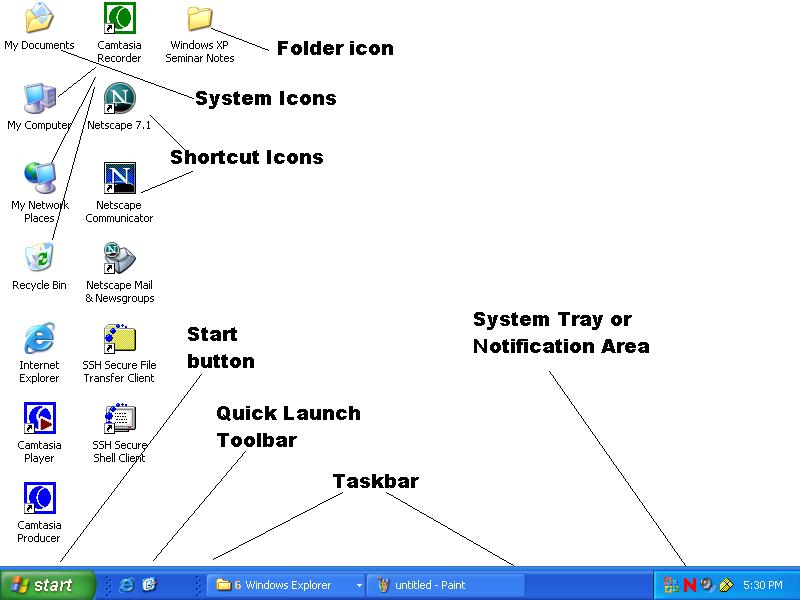
Windows XP helps you access and manage your files on the pc using a Graphical _User Interface GUI . All Programs and files stored on the PC are represented as pictures that are called icons . These icons are stored on the desktop .

Components of Windows XP

Windows XP

The Windows XP user interface consists of various components and concepts that help make Windows XP user friendly and intuitive . Some of the important components are :-

  1. Desktop
  2. Start Menu
  3. Taskbar
  4. Icons
  5. Recycle Bin
  6. Windows
  7. Applications
  8. Folders
  9. Files
  10. Control Panels

Is Digital a future ?

As a student of marketing we all believe that we are goanna be placed well and we are opportunistic but is that real ? . if u ask me its a big no things will not be standard untill we graduate. we all are being lied that we are gonna be placed in a good company but the truth is.

How do we prepare ourselves for the better future ?

Its simple for us to say work hard but that will be so funny when you cant find rightful resources when this internet is full of ads and paid E – Commerce sites to take our attention away.now let me say how you can prepare yourself best way to learn something is to learn yourself . set a proper goal and try to learn each and everything related to those thing not only learning will help us we have to implement practically.

How to learn digital marketing ?

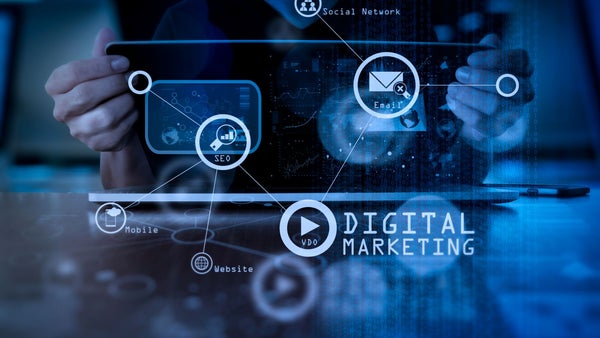
Digital marketing is nothing new without knowing we are already in digital marketing for example YouTube , Twitter , Instagram , Facebook and so on are the important platform of digital marketing . So , try to create your own website lets a gaming channel or whatever you like and try to find a way to attract people with your contents and make sure you do learn something from it . Don’t make a large investment before you get something in return and try to monetize yourself.

Digital marketing a future

In 90’s people bought products based on what they say on advertisement but now people dont have time watch tv’s and most of them have changed to smart TV so marketing needed a change then came the digital marketing i wont say that advertisement will be total failure that’s for a different conversation . Now its about DM a survey says that Internet users across India spend nearly six and half hours online daily in the third quarter of 2020. by another 5 years it will be doubled so DM is the only way to make people see our product . so people who are planning to take marketing as a career should concentrate on his/her skills on digital marketing ( e- mail , YouTube , twitter , Facebook marketing )

SPACE DEBRIS

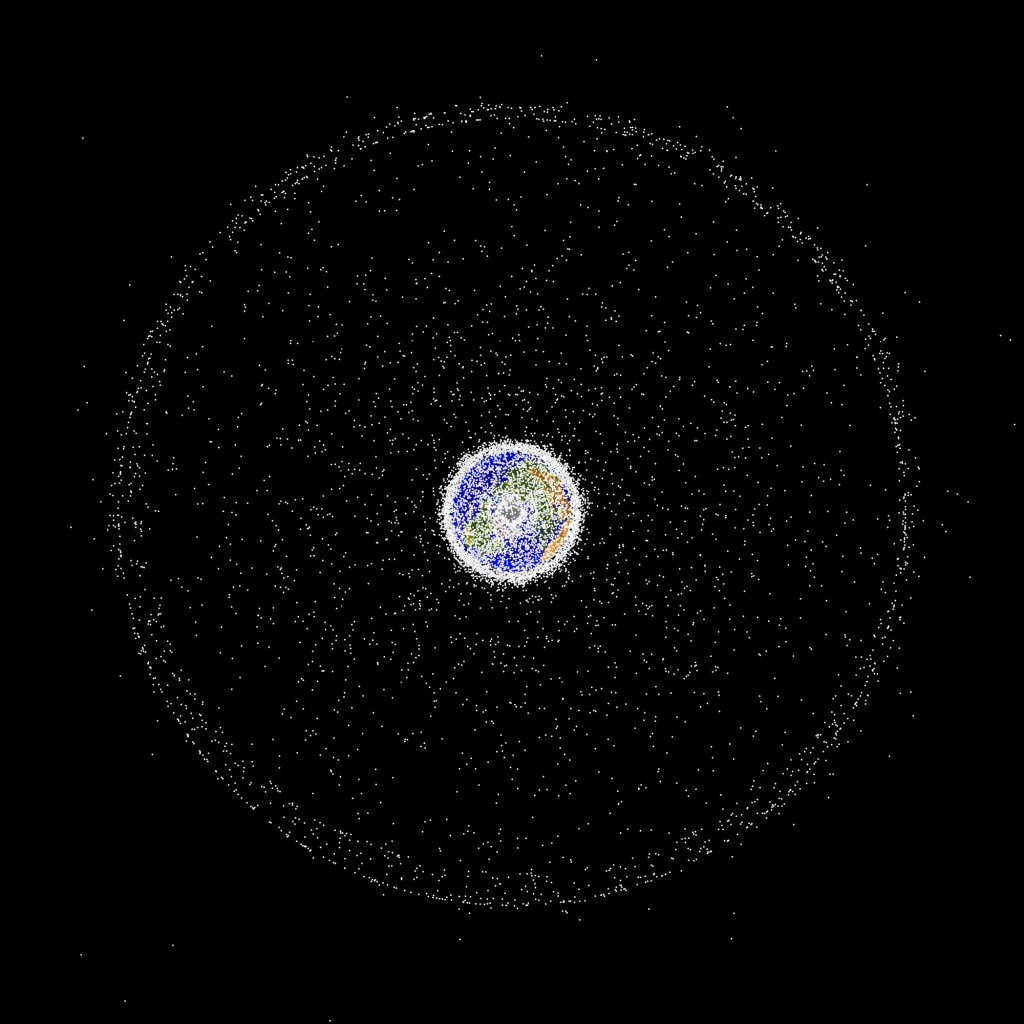
Space debris is the combination of natural(meteoroid) and artificial(man-made) particles. Natural debris orbits around the sun and artificial debris orbits around the earth. Hence they are called Orbital Debris. This can be any man-made object in the orbit moving in the earth’s orbit. Such debris includes nonfunctional spacecraft, abandoned launch vehicle stages, mission-related debris, and fragmentation debris.

In this article, we are going to focus on Artificial Debris, the Reason for its cause, and its prevention.

Space debris

What is Artificial space debris?

Any non-functional man-made object in space is called Artificial debris. 

They come from 

  • Satellites and spacecraft which are failed.
  • Satellites whose life has ended.
  • Rocket dismantle stages during the launch.
  • Hardware like nuts, bolts, payload covers, etc.
  • Solid propellant slag.
  • Cast aways during space activities like human wastes.
  • Fragments due to battery explosions, collisions, etc.

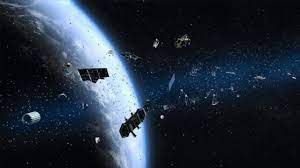
When two satellites collide they produce thousands of particles that are dangerous and can cause further destruction which makes Earth’s orbit unfit for satellite launches.

Artificial means man-made satellites

The number of satellite and rocket launches as of April 2021 is given below:

Number of rockets launched(excluding failures) since 19575560
Number of satellites carried by rockets launched11139
Number of satellites still in space7389
Number of satellites still functioning3170

Let’s have a look at the number of satellites launched only in 2020 and 2021(April)

Satellites launched in 20201283
Satellites launched in 2021 (April)853(65% of 2020)

History

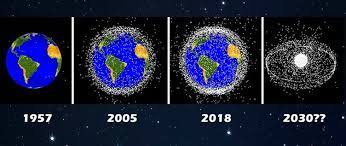
In the year 2009, 19,000 debris over 5 cm in size were tracked. 

In July 2013, more than 170 million debris smaller than 1 cm(0.4), around 670,000 debris of 1 to 10 cm in size, and approximately 29,000 larger debris were detected.

By July 2016, nearly 18,000 artificial debris were orbiting the earth.

In October 2019, nearly 20,000 artificial objects including 2,218 were tracked.

The speed with which the debris travel is more than 28,000 kph(23 times the speed of sound).

Have you heard of Kessler syndrome?

NASA scientist Donald Kessler in 1978, proposed that more launches could increase the junk around the earth which results in the chain reaction of collision of objects in space and further making the earth’s orbit unfit for satellites.

This situation would be extreme, but some experts worry that a variant of this could be a problem one day, and precautionary steps should be taken to avoid the problem.

How do they track space debris?

The USA and Russia have set up tracking networks to monitor the orbital space object population. The European Union is also starting to develop its ways to track debris.

Powerful lasers are used to measure the distance of these objects, like radar or sonar. When a laser beam hits the debris and bounces back to Earth, ground crews can measure how long it takes to figure out where they are and where they are going it alerts the ground stations in case of collisions. But usually, laser technology is used to detect the movement of satellites and if the same technique is used to detect the debris then continuous monitoring should be there since debris are found randomly in space.

Detection of objects through laser technology

India’s status on tracking debris

NETRA(Network for space Objects, Tracking, and Analysis)

Till now, ISRO was dependent on NORAD(North America Aerospace Defense Command) data,

which is available in the public domain, to keep track of space debris and monitor our active and passive satellites. However, this global data is not accurate but NORAD keeps accurate data available for those who are members of its network. Therefore, ISRO cannot access the data.

But now, ISRO has decided to set up telescopes and radars in four corners of the country to get accurate data and avoid unwanted collisions of the satellites.

In September 2019, India launched the early warning system NETRA to secure satellites and other assets in space.

Can satellites be protected from space debris?

There are two ways in which the satellites and spacecraft can be protected:

  • Computer programs can search for possible collisions between large debris. This system is used in the International Space Station to detect. These operations are expensive and can disturb delicate experiments. Space tracking networks can only track objects more than 100 mm in size. Even a 10 mm object can cause big trouble this cannot be called 100% effective.
  • A debris shield can be designed to provide additional protection for a spacecraft. One way is to increase the thickness of the craft but that can increase the mass of the craft/satellite. Hence, a specially designed shield called the Wipple shield was used. It was made of two thin walls separated by some space. It was observed that this wall was more resistant to debris. The outer layer absorbs a lot of debris energy so that the inner wall is not punctured.
Protection of satellites through shields

Space debris Removal

Removing space junk, especially larger pieces before they fragment is not easy. The best way to do this is retarding the force and deorbiting the junk. When it drops in altitude less than 400 km above the earth it is burnt.

For years NASA, ESA, and other space agencies are studying debris removal technologies. Some of the ideas include the usage of nets to gather junk and robotic arm. Japanese are now developing a type of satellite that uses magnets to catch and destroy the debris. Last year, UK has successfully cast a net around a dummy satellite.

Clearspace one

Clearspace-1 will be the first space mission to remove debris from the Earth orbit, it was planned to launch in 2025. The technology demonstration satellite was first developed by the Swiss Federal Institute of Technology in Lausanne. 

Clearspace one

Many countries are trying to invent new technologies to reduce the threat of debris. Russia invented a Self Destroying Satellite. Australian researchers are developing the Hunter-Killer satellite to neutralize space junk. Finland has developed a Wooden Satellite and planning to launch this year.

credits to the right owners of the pictures used.

Wireless Energy Transfer-Tesla’s Dream

WPT- Wireless Power Transmission
Wireless Power Transfer holds the promise of freeing us from the tyranny of power cords. This technology is being incorporated into all kinds of devices and systems.

Wireless Power Transfer holds the promise of freeing us from the tyranny of power cords. This technology is being incorporated into all kinds of devices and systems. Let’s take a look!
The Wired Way
The majority of today’s residences and commercial buildings are powered by alternating current (AC) from the power grid. Electrical stations generate AC electricity that is delivered to homes and businesses via high-voltage transmission lines and step-down transformers.
Electricity enters at the breaker box, and then electrical wiring delivers current to the AC equipment and devices that we use every day—lights, kitchen appliances, chargers, and so forth.
All components are standardized and in agreement with the electrical code. Any device rated for standard current and voltage will work in any of the millions of outlets throughout the country. While standards differ between countries and continents, within a given electrical system, any appropriately rated device will work.
Here a cord, there a cord. . . . Most of our electrical devices have AC power cords.


Wireless Power Technology
Wireless Power Transfer (WPT) makes it possible to supply power through an air gap, without the need for current-carrying wires. WPT can provide power from an AC source to compatible batteries or devices without physical connectors or wires. WPT can recharge mobile phones and tablets, drones, cars, even transportation equipment. It may even be possible to wirelessly transmit power gathered by solar-panel arrays in space.
WPT has been an exciting development in consumer electronics, replacing wired chargers. The 2017 Consumer Electronics Show will have many devices offering WPT.
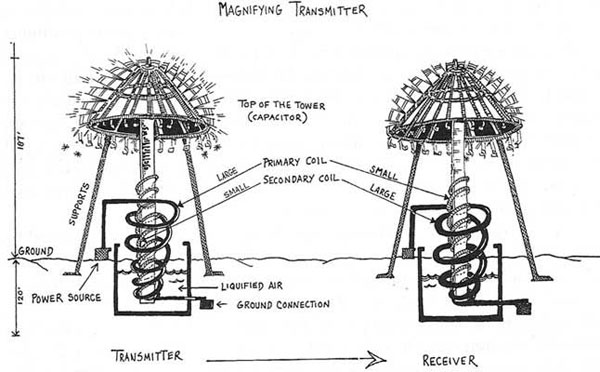
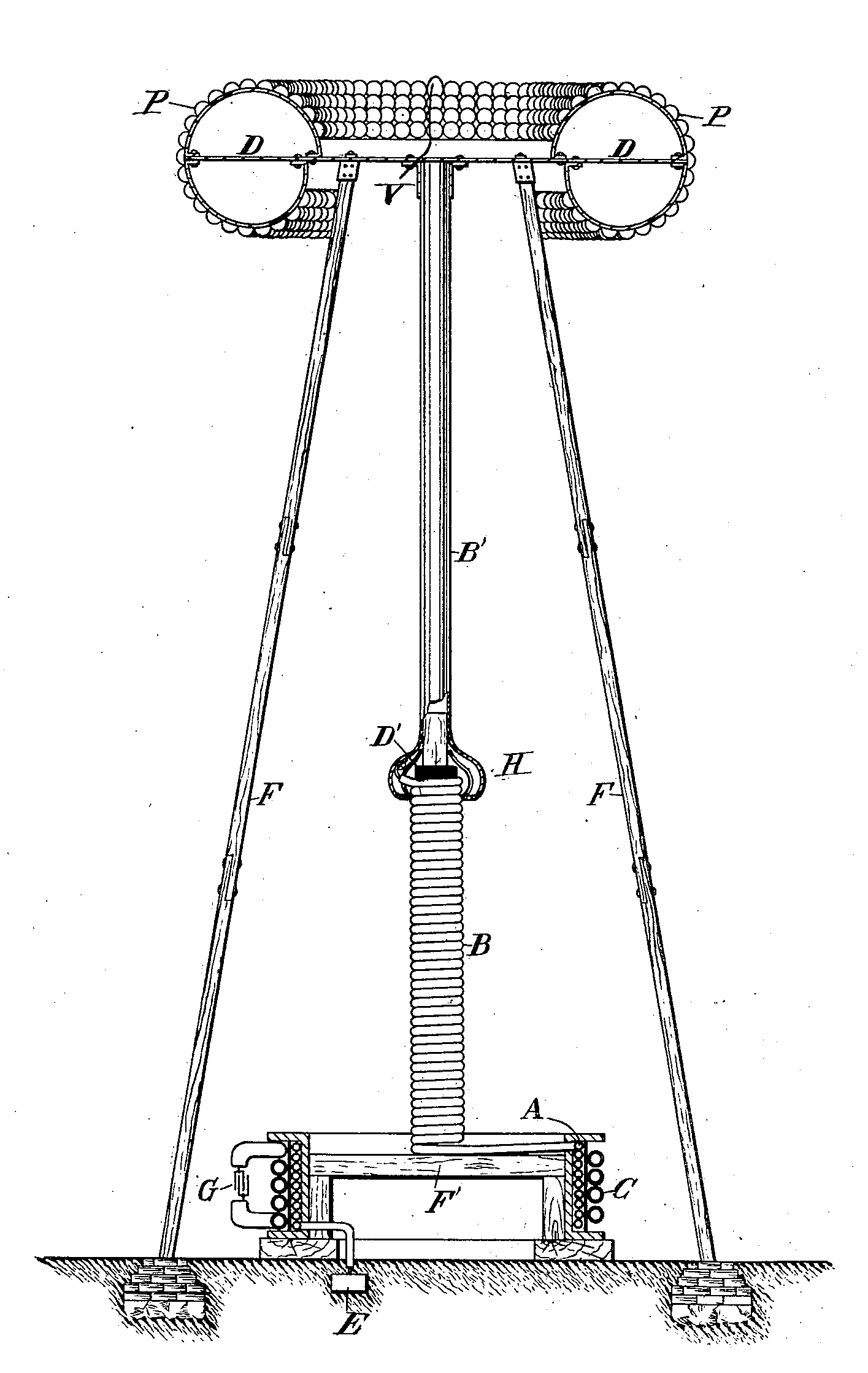
The concept of transferring power without wires, however, has been around since the late 1890s. Nikola Tesla was able to light electric bulbs wirelessly at his Colorado Springs Lab using electrodynamic induction (aka resonant inductive coupling).
 

An image from Tesla’s patent for an “apparatus for transmitting electrical energy,” 1907.
 
Three light bulbs placed 60 feet (18m) from the power source were lit, and the demonstration was documented. Tesla had big plans and hoped that his Long Island-based Wardenclyffe Tower would transmit electrical energy wirelessly across the Atlantic Ocean. That never happened owing to various difficulties, including funding and timing.
WPT uses fields created by charged particles to carry energy between transmitters and receivers over an air gap. The air gap is bridged by converting the energy into a form that can travel through the air. The energy is converted to an oscillating field, transmitted over the air, and then converted into usable electrical current by a receiver. Depending on the power and distance, energy can be effectively transferred via an electric field, a magnetic field, or electromagnetic (EM) waves such as radio waves, microwaves, or even light.

 
Qi Charging, an Open Standard for Wireless Charging
While some of the companies promising WPT are still working to deliver products, Qi (pronounced “chee”) charging is standardized, and devices are currently available. The Wireless Power Consortium (WPC), established in 2008, developed the Qi standard for battery charging. The standard supports both inductive and resonant charging technologies.
Inductive charging has the energy passing between a transmitter and receiver coil at close range. Inductive systems require the coils to be in close proximity and in alignment with each other; usually the devices are in direct contact with the charging pad. Resonant charging does not require careful alignment, and chargers can detect and charge a device at distances up to 45mm; thus, resonant chargers can be embedded in furniture or mounted in shelving.
 

The Qi logo displayed on the Qimini wireless charging plate. Image courtesy of Tektos.
 
The presence of a Qi logo means the device is registered and certified by the Wireless Power Consortium.
When first introduced, Qi charging was low power, about 5W. The first smartphones using Qi charging were introduced in 2011. In 2015, Qi was expanded to include 15W, which allows for quick charging.
Only devices listed in the Qi Registration Database are guaranteed to provide Qi compatibility. There are currently over 700 products listed. It is important to recognize that products with the Qi logo have been tested and certified; the magnetic fields they use will not cause problems for sensitive devices such as mobile phones or electronic passports. Registered devices are guaranteed to work with all registered chargers.  
For more information on Qi wireless charging, check out this article, and for an introduction to and technical evaluation of Qi-compatible transmitter/receiver WPT evaluation boards, click here and here.
 
The Physics of WPT
WPT for consumer devices is an emerging technology, but the underlying principles and components are not new. Maxwell’s Equations still rule wherever electricity and magnetism are involved, and transmitters send energy to receivers just as in other forms of wireless communication. WPT is different, though, in that the primary goal is transferring the energy itself, rather than information encoded in the energy.


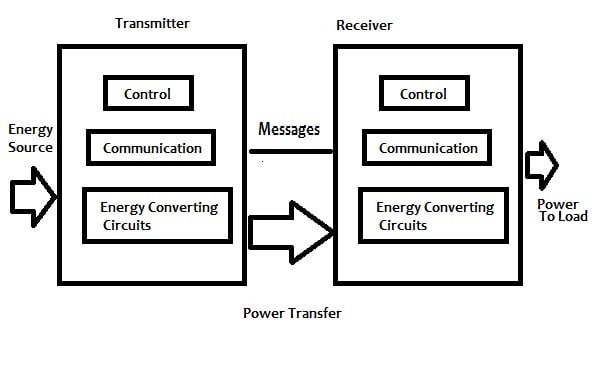
WPT transmitter/receiver block diagram.
The electromagnetic fields involved in WPT can be quite strong, and human safety has to be taken into account. Exposure to electromagnetic radiation can be a concern, and there is also the possibility that the fields generated by WPT transmitters could interfere with wearable or implanted medical devices.
The transmitters and receivers are embedded within WPT devices, as are the batteries to be charged. The actual conversion circuitry will depend on the technology used. In addition to the actual transfer of energy, the WPT system must allow the transmitter and receiver to communicate. This ensures that a receiver can notify the charging device when a battery is fully charged. Communication also allows a transmitter to detect and identify a receiver, to adjust the amount of power transmitted to the load, and to monitor conditions such as battery temperature.
The concept of near-field vs. far-field radiation is relevant to WPT. Transmission techniques, the amount of power that can be transferred, and proximity requirements are influenced by whether the system is utilizing near-field or far-field radiation.
Locations for which the distance from the antenna is much less than one wavelength are in the near field. The energy in the near field is nonradiative, and the oscillating magnetic and electric fields are independent of each other. Capacitive (electric) and inductive (magnetic) coupling can be used to transfer power to a receiver located in the transmitter’s near field.
Locations for which the distance from the antenna is greater than approximately two wavelengths are in the far field. (A transition region exists between the near field and far field.) Energy in the far field is in the form of typical electromagnetic radiation. Far-field power transfer is also referred to as power beaming. Examples of far-field transfer are systems that use high-power lasers or microwave radiation to transfer energy over long distances.
 
Where WPT Works
All WPT technologies are currently under active research, much of it focused on maximizing power transfer efficiency (PDF) and investigating techniques for magnetic resonant coupling (PDF). In addition to the idea of walking into a room equipped for WPT and having your devices charge automatically, much more ambitious projects are in place.
Across the globe, electric buses are becoming the norm; London’s iconic double-decker buses are planning for wireless charging, as are bus systems in South KoreaUtah, and Germany.
Using WiTricity, invented by MIT scientists, electric cars can be charged wirelessly, and those cars can wirelessly charge your mobiles! (Using Qi charging, of course!) This wireless technology is convenient, to be sure, but it may also charge cars faster than plug-in charging can.
 

Graphic of a wireless parking charge setup built into a parking space. Image courtesy of Toyota.
 
An experimental system for wirelessly powering drones has already been demonstrated. And as mentioned above, ongoing research and development is focused on the prospect of supplying some of Earth’s energy needs using WPT in conjunction with space-based solar panels.
WPT works everywhere!
 
Conclusion
While Tesla’s dream of having power delivered wirelessly for everyone’s use is still far from feasible, many devices and systems are using some form of wireless power transfer right now. From toothbrushes to mobile phones, from cars to public transportation, there are many applications for wireless power transfer.

TIME DILATION-That makes you age faster

Dark energy explained by relativistic time dilation? – Astronomy Now

Time Dilation

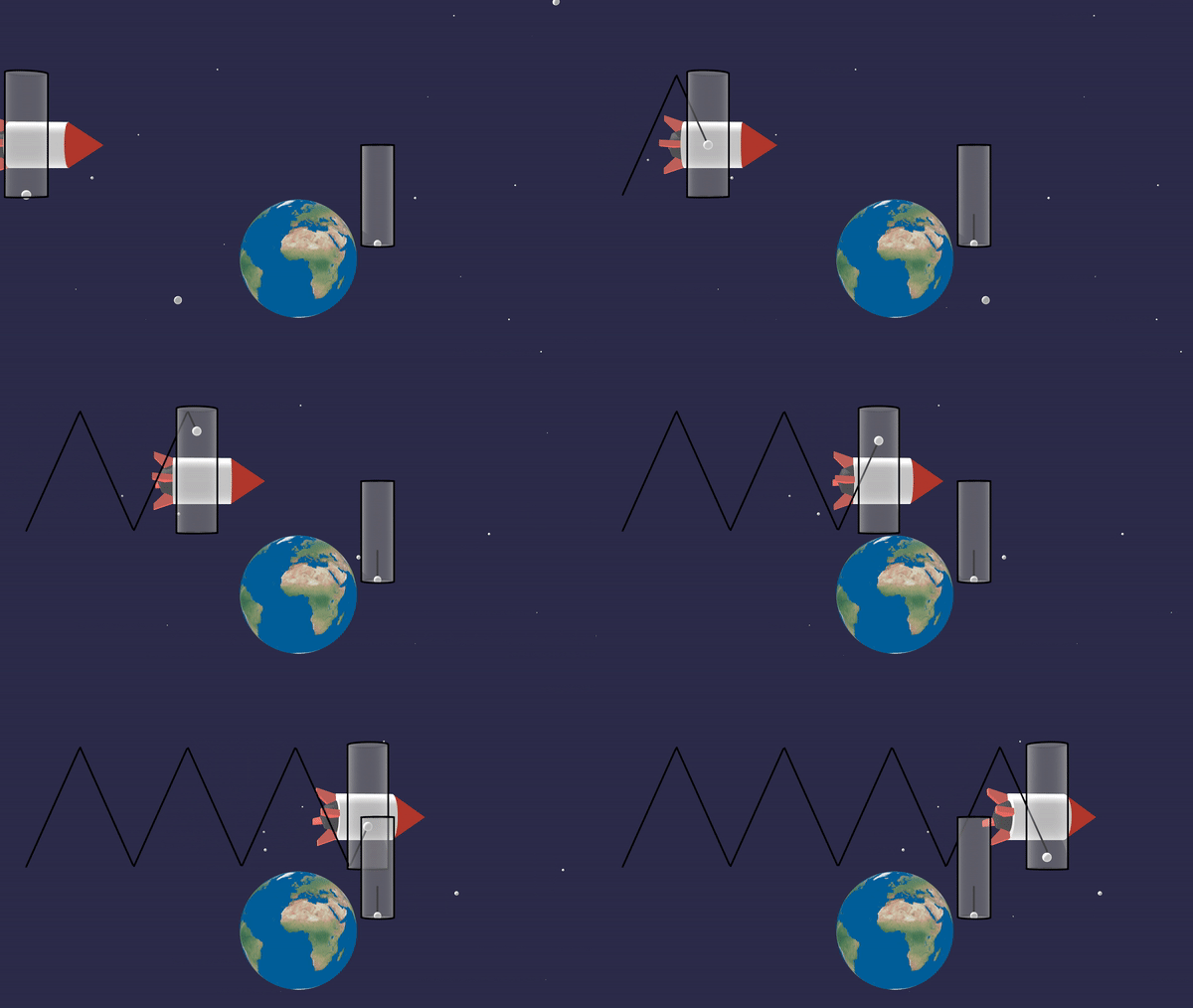
It turns out that as an object moves with relativistic speeds a “strange” thing seems to happen to its time as observed by “us” the stationary observer (observer in an inertial reference frame). What we see happen is that the “clock” in motion slows down according to our clock, therefore we read two different times. Which time is correct??? well they both are because time is not absolute but is relative, it depends on the reference frame. Let’s look at the following classic example. There is a set of twins, one an astronaut, the other works for mission control of NASA. The astronaut leaves on a deep space trip traveling at 95% the speed of light. Upon returning the astronauts clock has measured ten years, so yhe astronaut has aged 10 years. However, when the astronaut reunites with his earth bound twin, the astronauthe sees that the twin has aged 32 years! This is explained due to the fact that the astronaut’s twin is traveling at relativistic speeds and therefore his “clock” is slowed down.

Let’s see how we can calculate the time “difference”. The equation for calculating time dilation is as follows:

t = t0/(1-v2/c2)1/2

where: t = time observed in the other reference frame

t0 = time in observers own frame of reference (rest time)

v = the speed of the moving object

c = the speed of light in a vacuum

so in our problem we will let v = .95c, t0 = 10 years and we will solve for t which is the time that the earth bound brother measures.

t = 10/(1- (.95c)2/c2)1/2

t = 10/(1- .952)1/2

t = 10/ .312

t = 32 years
(the time the earth bound brother measures)

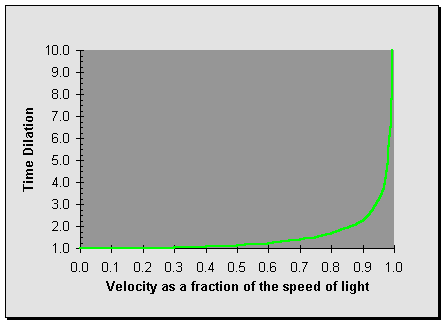
Now let’s have a closer look at the equation and determine just what impact the speed of the object has on time dilation. We can see that is the velocity is small compared to the speed of light the quantity v2/c2 approaches 0 and the equation simplifies t0: t = t0/1 which is simply t. So at relatively slow speeds (our everyday speeds) time dilation is not a factor and Newton’s Laws are still applicable. Now let’s look at high speeds (close to the speed of light), from the equation that as velocity increases the quantity v2/c2 approaches 1 (but will never quit reach it), causing the quantity(1-v2/c2)1/2 t0 become smaller and smaller….therefore causing the time measured by the other observer t0 become greater thus making our time appear slower (refer back to the example). I know its so confusing!!! read it again, think about it, then study the graph below. As one can see in the graph time dilation starts t0 “show up” between .4c and .5c. Also notice that the closer one gets to the speed of light the greater impact speed has on time dilation (notice how steep the curve gets towards the end)..

5G Networking Technology

What is 5G Network?

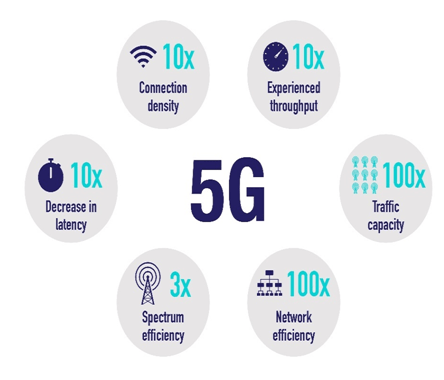
In Telecommunications, 5G is the fifth generation technology standard for broadband cellular networks, which cellular phone companies began deploying worldwide in 2019, and is the planned successor to the 4G networks which provide connectivity to most current cell phones. 5G networks are predicted to have more than 1.7 billion subscribers worldwide by 2025, according to the GSM Association. Like its predecessors, 5G networks are cellular networks, in which the service area is divided into small geographical areas called cells. All 5G wireless devices in a cell are connected to the Internet and telephone network by radio waves through a local antenna in the cell.

In telecommunications, 5G is the fifth generation technology standard for broadband cellular networks, which cellular phone companies began deploying worldwide in 2019, and is the planned successor to the 4G networks which provide connectivity to most current cell phones. 5G networks are predicted to have more than 1.7 billion subscribers worldwide by 2025, according to the GSM Association. Like its predecessors, 5G networks are cellular networks, in which the service area is divided into small geographical areas called cells. All 5G wireless devices in a cell are connected to the Internet and telephone network by radio waves through a local antenna in the cell.

HOW DOES 5G WORK?

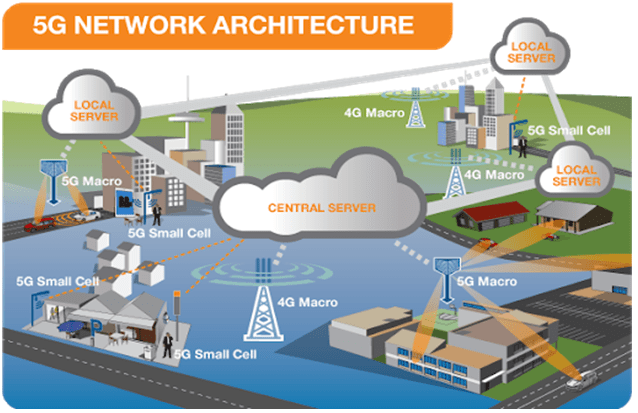
5G network architecture illustrating 5G and 4G working together, with central and local servers providing faster content to users and low latency applications.

A mobile network has two main components, the ‘Radio Access Network’ and the ‘Core Network’.

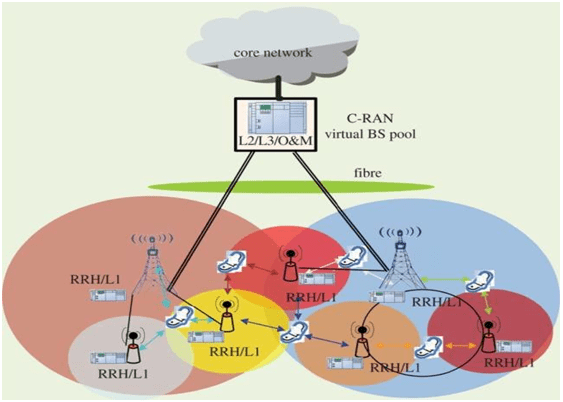
The Radio Access Network – consists of various types of facilities including small cells, towers, masts and dedicated in-building and home systems that connect mobile users and wireless devices to the main core network.

Small cells will be a major feature of 5G networks particularly at the new millimetre wave (mmWave) frequencies where the connection range is very short. To provide a continuous connection, small cells will be distributed in clusters depending on where users require connection which will complement the macro network that provides wide-area coverage.

5G Macro Cells will use MIMO (multiple input, multiple output) antennas that have multiple elements or connections to send and receive more data simultaneously. The benefit to users is that more people can simultaneously connect to the network and maintain high throughput.  Where MIMO antennas use very large numbers of antenna elements they are often referred to as ‘massive MIMO’, however, the physical size is similar to existing 3G and 4G base station antennas.

The Core Network – is the mobile exchange and data network that manages all of the mobile voice, data and internet connections. For 5G, the ‘core network’ is being redesigned to better integrate with the internet and cloud based services and also includes distributed servers across the network improving response times (reducing latency).

Many of the advanced features of 5G including network function virtualization and network slicing for different applications and services, will be managed in the core. The following illustration shows examples of local cloud servers providing faster content to users (movie streaming) and low latency applications for vehicle collision avoidance systems.

Example of a local server in a 5G network providing faster connection and lower response times

Network Slicing – enables a smart way to segment the network for a particular industry, business or application. For example emergency services could operate on a network slice independently from other users.

Network Function Virtualization (NVF) – is the ability to instantiate network functions in real time at any desired location within the operator’s cloud platform. Network functions that used to run on dedicated hardware for example a firewall and encryption at business premises can now operate on software on a virtual machine. NVF is crucial to enable the speed efficiency and agility to support new business applications and is an important technology for a 5G ready core.

When a 5G connection is established, the User Equipment (or device) will connect to both the 4G network to provide the control signalling and to the 5G network to help provide the fast data connection by adding to the existing 4G capacity.


Where there is limited 5G coverage, the data is carried on the 4G network providing the continuous connection. Essentially with this design, the 5G network is complementing the existing 4G network

5G Configuration:-

Advantages of 5G Networking:-

High resolution and bi-directional large bandwidth shaping.

Technology to gather all networks on one platform.

More effective and efficient.

Technology to facilitate subscriber supervision tools for the quick action.

Most likely, will provide a huge broadcasting data (in Gigabit), which will support more than 60,000 connections.

Easily manageable with the previous generations.

Technological sound to support heterogeneous services (including private network).

Possible to provide uniform, uninterrupted, and consistent connectivity across the world.

Disadvantages of 5G Networking:-

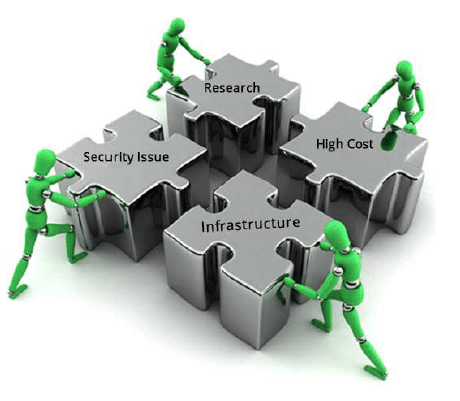
Technology is still under process and research on its viability is going on.

The speed, this technology is claiming seems difficult to achieve (in future, it might be) because of the incompetent technological support in most parts of the world.

Many of the old devices would not be competent to 5G, hence, all of them need to be replaced with new one expensive deal.

Developing infrastructure needs high cost.

Security and privacy issue yet to be solved.

Conclusion

5G will be able to sustainably satisfy the requirement of the 1000-time traffic growth. 5G will provide users with fiber-like access data rate and “zero” latency user experience. 5G will be capable of connecting 100 billion devices.

Antikythera-The Modern Invention in the Past.

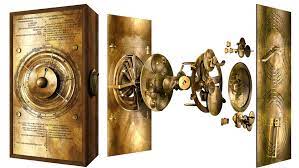
After 2,000 years under thesea, three flat, misshapen pieces of bronze at the National Archaeological Museum in Athens are all shades of green, from emerald to forest. From a distance, they look like rocks with patches of mold. Get closer, though, and the sight is stunning. Crammed inside, obscured by corrosion, are traces of technology that appear utterly modern: gears with neat triangular teeth (just like the inside of a clock) and a ring divided into degrees (like the protractor you used in school). Nothing else like this has ever been discovered from antiquity. Nothing as sophisticated, or even close, appears again for more than a thousand years.

For decades after divers retrieved these scraps from the Antikythera wreck from 1900 to 1901, scholars were unable to make sense of them. X-ray imaging in the 1970s and 1990s revealed that the device must have replicated the motions of the heavens. Holding it in your hands, you could track the paths of the Sun, Moon and planets with impressive accuracy. One investigator dubbed it “an ancient Greek computer.” But the X-ray images were difficult to interpret, so mainstream historians ignored the artifact even as it was championed by fringe writers such as Erich von Däniken, who claimed it came from an alien spaceship. It wasn’t until 2006 that the Antikythera mechanism captured broader attention. That year, Mike Edmunds of Cardiff University in Wales and his team published CT scans of the fragments, revealing more details of the inner workings, as well as hidden inscriptions—and triggering a burst of scholarly research. 

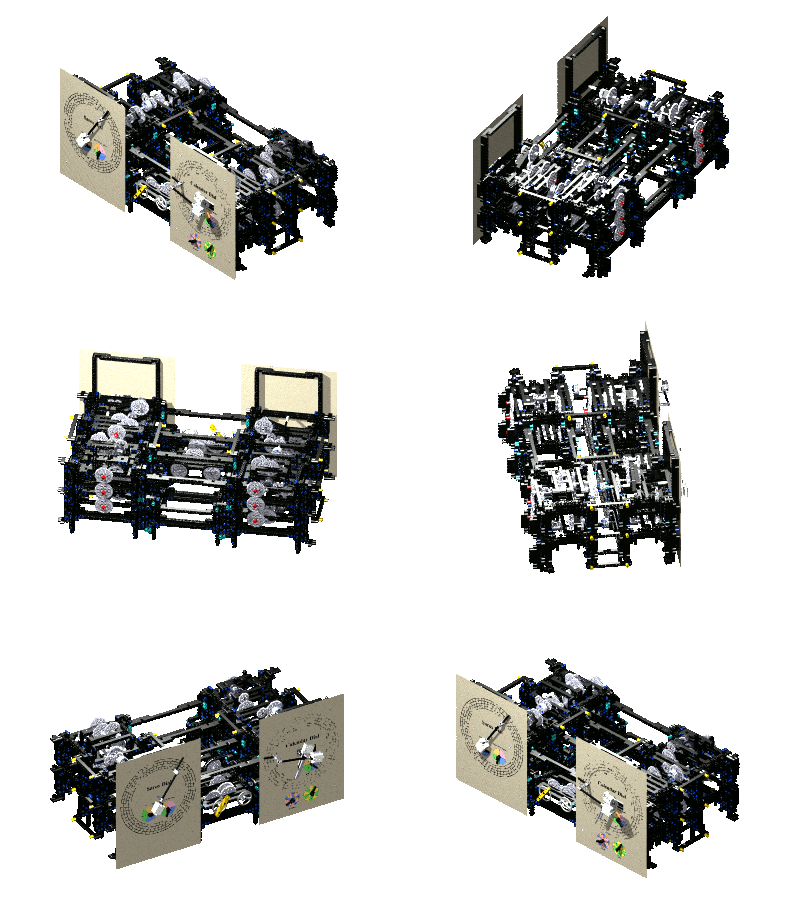
The Antikythera mechanism was similar in size to a mantel clock, and bits of wood found on the fragments suggest it was housed in a wooden case. Like a clock, the case would’ve had a large circular face with rotating hands. There was a knob or handle on the side, for winding the mechanism forward or backward. And as the knob turned, trains of interlocking gearwheels drove at least seven hands at various speeds. Instead of hours and minutes, the hands displayed celestial time: one hand for the Sun, one for the Moon and one for each of the five planets visible to the naked eye—Mercury, Venus, Mars, Jupiter and Saturn. A rotating black and silver ball showed the phase of the Moon. Inscriptions explained which stars rose and set on any particular date. There were also two dial systems on the back of the case, each with a pin that followed its own spiral groove, like the needle on a record player. One of these dials was a calendar. The other showed the timing of lunar and solar eclipses.

Experts have been working to decipher inscriptions hidden inside the mechanism, in particular to understand the mechanism’s missing pieces, some destroyed, some probably still at the bottom of the sea. Though the pointers on the front face don’t survive, Alexander Jones, a historian at the Institute for the Study of the Ancient World in New York, says an inscription reveals that they carried colored balls: fiery red for Mars, gold for the Sun. 

Also missing are the parts that drove the planetary pointers, leading to debate about exactly how they moved. Because planets orbit the Sun, when viewed from Earth they appear to wander back and forth in the sky. The Greeks explained this motion with “epicycles”: small circles superimposed on a larger orbit. According to Michael Wright, a former curator at London’s Science Museum who has studied the mechanism longer than anyone, it modeled epicycles with trains of small gears riding around larger ones. Though some experts have dismissed this as beyond the Greeks’ abilities, Jones says he will publish evidence supporting the idea later this year.

Other inscriptions hint at where the mechanism was made. Paul Iversen, a classicist at Case Western Reserve University in Cleveland, reports that the calendar includes month names used in Corinth and its colonies in northwest Greece. A dial that displayed the timing of major athletic festivals, including the Olympics, lists Naa, a festival held in northwest Greece, and Halieia, held to the south on the island of Rhodes. Perhaps the mechanism hailed from Rhodes and was being shipped north. The ancient philosopher Posidonius had a workshop in Rhodes that could have been the source; according to Cicero, Posidonius made a similar model of the heavens in the first century B.C.

The tradition of making such mechanisms could be much older. Cicero wrote of a bronze device made by Archimedes in the third century B.C. And James Evans, a historian of astronomy at the University of Puget Sound in Tacoma, Washington, thinks that the eclipse cycle represented is Babylonian in origin and begins in 205 B.C. Maybe it was Hipparchus, an astronomer in Rhodes around that time, who worked out the math behind the device. He is known for having blended the arithmetic-based predictions of Babylonians with geometric theories favored by the Greeks. 

Regardless, the Antikythera mechanism proves that the ancient Greeks used complex arrangements of precisely cut wheels to represent the latest in scientific understanding. It’s also a window into how the Greeks saw their universe. They came to believe that nature worked according to predefined rules, like a machine—an approach that forms the basis of our modern scientific views. Edmunds argues that this “mechanical philosophy” must have developed as a two-way process. The ancient mechanics who captured the cosmos in bronze weren’t just modeling astronomical theories but were also inspiring them.

FEB15_J03_Antikythera.jpg

What is Web Hosting? And its Types

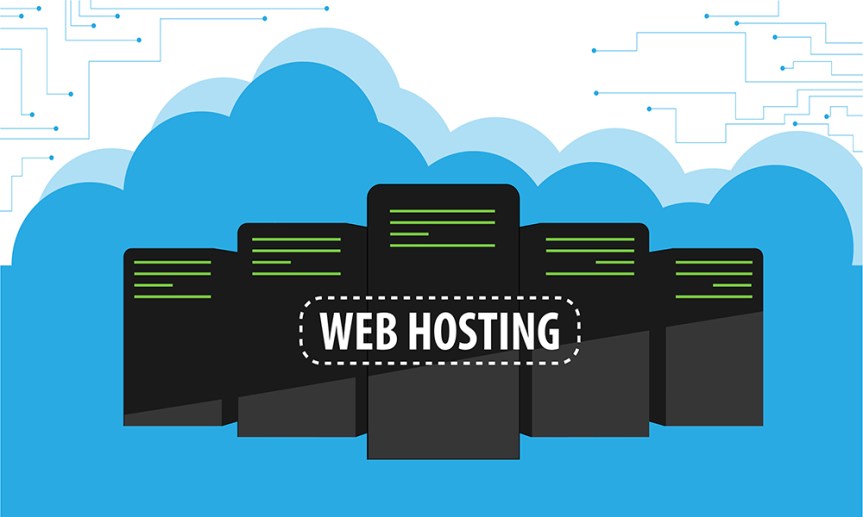
Web hosting is an online service that enables you to publish your website or web application on the Internet. When you sign up for a web hosting service, you basically rent some space on a physical server where you can store all the files and data necessary for your website to work properly.

A server is a physical computer that runs without any interruption so that your website is available all the time for anyone who wants to see it. Your web host is responsible for keeping that server up and running, protecting it from malicious attacks, and transferring your content — such as text, images, files, etc. — from the server to your visitors’ browsers.

Types of Web Hosting Packages

  1. Shared Hosting

This type of hosting is the most common answer for most web hosting needs and it’s an excellent solution for most small businesses and personal blogs. With this type of hosting, you’re sharing one server with other clients. Websites hosted on the same server share all its resources, such as memory, computing power, disk space, and others.

  • Pros :
  • Low cost, excellent for small online business websites
  • No need for specific technical knowledge
  • Pre-configured server options
  • User-friendly control panel — hPanel
  • Maintenance and server administration is taken cared for you
  • Cons :
  • Little or no control over server configuration
  • Traffic surges on other websites can slow down your website

2. VPS Hosting

When you’re using a Virtual Private Server — or VPS for short — you’re still sharing a server with other users. However, your web host allocates an entirely separate partition for you on that server. This means you get a dedicated server space and a reserved amount of resources and memory. In fact, VPS hosting can be great for medium-sized businesses with a rapidly growing number of websites and traffic.

  • Pros :
  • Dedicated server space
  • Traffic surges on other websites have no effect on your performance
  • Root access to the server
  • Easy scalability and high customizability
  • Cons :
  • More expensive than other types of hosting
  • Technical and server management knowledge is a must

3. Cloud Hosting

Cloud hosting is currently the most reliable solution on the market. With cloud hosting, your host provides you with a cluster of servers — your files and resources are replicated on each server. When one of the cloud servers is busy or encounters a problem, your traffic is automatically routed to another server in the cluster. This results in little to no downtime, which is excellent if you own a very busy website.

  • Pros :
  • Little to no downtime
  • Server failures have no effect on your website
  • Allocates resources on demand
  • Pay-as-you-pricing strategy — you only pay for what you use
  • More scalable than other web hosting types
  • Cons :
  • Hard to estimate the actual costs
  • Root access is not always provided.

4. WordPress Hosting

WordPress hosting is a particular form of shared hosting, created for WordPress site owners. Your server is configured specifically for WordPress and your site comes with pre-installed plugins for crucial tasks, such as caching and security.

  • Pros :
  • Low cost and beginner-friendly
  • One-click WordPress installation
  • Good performance for WordPress sites
  • Customer support team trained in WordPress issues
  • Pre-installed WordPress plugins and themes
  • Cons :
  • Recommended only for WordPress sites, which can be a problem if you want to host more than one website on your server

5. Dedicated Hosting

Dedicated hosting means that you have your own physical server that’s dedicated solely to your website. Therefore, you’re given incredible flexibility over how you want to manage your website. You can configure your server as you wish, choose the operating system and software you want to use, and set up the whole hosting environment according to your own needs.

  • Pros :
  • Full control over server configuration
  • High reliability and security options
  • Root access to your server
  • Cons :
  • High cost, more oriented towards larger businesses
  • Technical and server management knowledge is a must

Use of MS Excel in today’s world.

Excel is typically used to organize data and perform financial analysis. It is used across all business functions and at companies from small to large. The main uses of Excel include: Data entry.

Excel is a software program created by Microsoft that uses spreadsheets to organize numbers and data with formulas and functions. Excel analysis is ubiquitous around the world and used by businesses of all sizes to perform financial analysis.

The main uses of Excel include:

1 Data entry
2 Data management
3 Accounting
4 Financial analysis
5 Charting and graphing
6 Programming
7 Time management
8 Task management
9 Financial modeling
10 Customer relationship management (CRM)
** Almost anything that needs to be organized!

Excel is used extensively in finance and accounting functions. In fact, many organizations run their entire budgeting, forecasting, and accounting functions entirely out of Excel spreadsheets.

While Excel is defined as a “data” management tool, the data that is most commonly managed is financial. At CFI, we would define Excel as the ultimate financial software. While there are other pieces of financial software that are tailored toward performing specific tasks, the strongest point about Excel is its robustness and openness. Excel models are as powerful as the analyst wishes them to be.

Accountants, investment bankers, analysts, and people in all types of financial career paths rely on excel to perform their daily job functions.

And one should know how to use MS Excel. Its on of the most important skill in today’s corporate world.

How Archives transformed in the Digital era

The Word archive is derived from the Greek word ‘Arkheion’. The word was further referred from ‘Archon’, which meant a magistrate who oversaw the town hall where all the official public documents were stored. The Word Archive came to use for the first time in the 17th century.

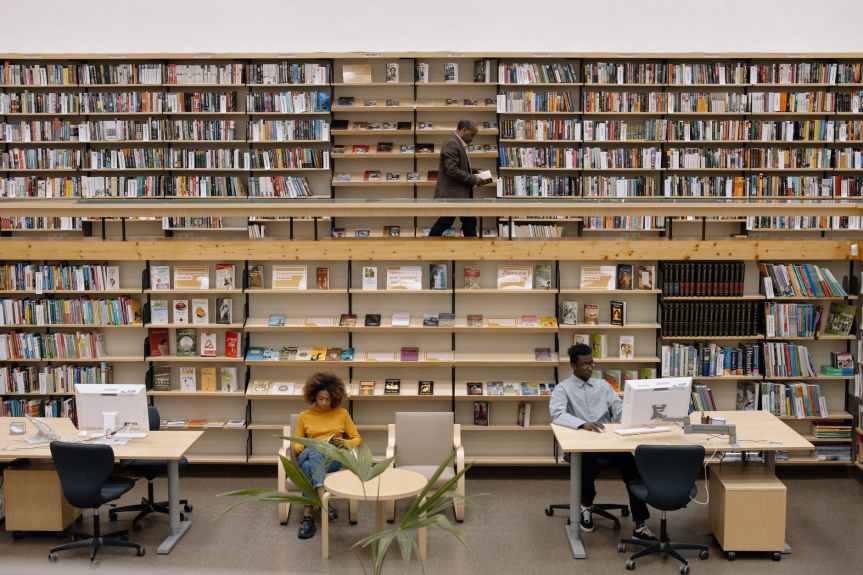
Archives are also known as ‘memory institutions’ because they record and preserve memories and form a significant part of culture, community, official and unofficial history of any place or region or state, or any institution. Their function is to collect, store and preserve artefacts and documents of historical, cultural, and legal importance from the yesteryears and the present so that they remain accessible, informative, and useful to future generations. In general, any organization, government institution or individual can build archives. The National Archives, UK has described archives as “collections of records or documents, selected for lasting preservation due to their historical value, significance as evidence, or as a source for research studies”. International Council on Archives (ICA) has defined archives as “documentary result of various human activities conserved for its long-term value”. They further described archives as contemporary accounts created to can provide a true and verified version of past events.

The significance of the archives lies in the orderly collection of crucial source documents accumulated over an individual’s or organizations’ lifespan and preserved, which can serve as evidence or reference for future work. As archives are the repositories housing various historical documents and records of value, archival research is facilitative for scholars and researchers looking for data to assess and facts to study from the original documents. However, owing to the vastness and diversity of ample archival documents and records, archival analysis is a hectic and tedious job. Access to the artefacts and documents stored in an archive is not an easy task and requires permission from the respected authority. In addition, most of the information stored in traditional achieves is paper-based and thus, is susceptible to decay with time. The aforementioned limitation of traditional archives can be overcome by archiving documents and artefacts in various digital formats, which can ensure that the information is preserved for a substantially longer period.

With the advent of newer digital technologies, it became easier and more convenient to store and preserve the information in the digital space. With the assistance of new digital tools and methods, the process of transcending information from the physical world to the digital world became much efficient and easier. 

Digital archiving is an area where the relationship between digital tools/methods and information preservation can be witnessed. It is a blend of the former and current storage of information. Their function is similar to traditional archives, as repositories of elaborated collection of information in various digital formats at a virtual location. This also makes digital archives more accessible and democratic as the physical constraints are eliminated.

Advantages of Digital Archives:

  • The the digital archive allows “anywhere-anytime” accessibility to users ensuring a reduction of time, cost, and money.
  • The redundancy of information stored in digital archives can be reduced, which can promote ease of access.
  • No geographical site is required to build a digital archive, which is cost-effective.
  • The simultaneous requests of access from multiple users can be addressed by creating multiple copies of information stored, which can overcome the issue of bottlenecks encountered in traditional archives.
  • Managing and navigating objects or records stored digitally are easier in digital archives, which allow developing capacity to preserves terabytes of information.
  • Digital archives are less subjected to bureaucracy like traditional archives, which can ensure data accessibility to the general public.

Digital archives are not perfect. Many times due to the digital divide and other constraints, researchers are not able to access the information. Sometimes the information challenges the authority and due to this, the information can be unavailable in the digital archives because of censorship. But there is no denying that digital archives have transformed the way information is stored and processed.  

References: