MACHINE LEARNING

Machine learning is the study of computer algorithms that improve automatically through experience and by the use of data. It is seen as a part of artificial intelligence.

Machine learning is a subfield of artificial intelligence, which is broadly defined as the capability of a machine to imitate intelligent human behavior. Artificial intelligence systems are used to perform complex tasks in a way that is similar to how humans solve problems

Machine learning allows the user to feed a computer algorithm an immense amount of data and have the computer analyze and make data-driven recommendations and decisions based on only the input data.

Machine learning (ML) is a type of artificial intelligence (AI) that allows software applications to become more accurate at predicting outcomes without being explicitly programmed to do so. Machine learning algorithms use historical data as input to predict new output values.

For example, medical diagnosis, image processing, prediction, classification, learning association, regression etc. The intelligent systems built on machine learning algorithms have the capability to learn from past experience or historical data.

Common machine learning problems

1) Understanding Which Processes Need Automation.

2) Lack of Quality Data.
 
3) Inadequate Infrastructure.
 
4) Implementation.
 
5) Lack of Skilled Resources

These are three types of machine learning: supervised learning, unsupervised learning, and reinforcement learning.

                
                           “Machine learning will automate jobs that most people thought could only be done by people.”
                          
                                         ~Dave Waters

Artificial Intelligence (AI)

Artificial intelligence (AI) is the simulation of human intelligence processes by machines, especially computer systems. Specific applications of AI include expert systems, natural language processing (NLP), speech recognition and machine vision.

Artificial Intelligence (AI) is the branch of computer sciences that emphasizes the development of intelligence machines, thinking and working like humans. For example, speech recognition, problem-solving, learning and planning.

The Four Types of AI

• Reactive Machines. Reactive machines are the simplest level of robot.

• Limited Memory. A limited memory machine, as the name might suggest, is able to retain some information learned from observing previous events or data.

• Theory of Mind.

• Self-awareness

The basic objective of AI ( machine intelligence) is to enable computers to perform such intellectual tasks as decision making, problem solving, perception, understanding human communication (in any language, and translate among them).

Artificial Intelligence Examples

• Manufacturing robots.
• Self-driving cars.
• Smart assistants.
• Proactive healthcare management.
• Disease mapping.
• Automated financial investing.
• Virtual travel booking agent.
• Social media monitoring.

Artificial intelligence is impacting the future of virtually every industry and every human being. Artificial intelligence has acted as the main driver of emerging technologies like big data, robotics and IoT, and it will continue to act as a technological innovator for the foreseeable future.

Artificial Intelligence enhances the speed, precision and effectiveness of human efforts. In financial institutions, AI techniques can be used to identify which transactions are likely to be fraudulent, adopt fast and accurate credit scoring, as well as automate manually intense data management tasks.

“As more and more artificial intelligence is entering into the world, more and more emotional intelligence must enter into leadership.”

-Amit Ray, Famous AI Scientist, Author of Compassionate Artificial Intelligence

Football Analytics

Introduction

Data analytics have come to play an important role in the football industry today. Clubs look to gain a competitive edge on and off the pitch, and big data is allowing them to extract insights to player scouting, improve player performance, prevent injuries, their suitability to the club’s system and ethos, output prediction and increase their commercial efficiency. However, contextualizing the information and extracting valuable insights is not always an easy task.

Moneyball & Football

Overtime, Analytics has started to play more important roles in Football with respect to player recruitment. There are many Football clubs in the world who pride themselves over their player recruitment models based purely data and metrics. Billy Beane, the pioneer of the ‘Moneyball’, a system of player recruitment based purely on stats instead of the old, tried and tested ‘eye-tested’ proved to revolutionise recruitment in Baseball. Nowadays clubs like Liverpool FC, Brentford FC, Barnsley, Midtjylland, AZ Alkmaar the Red Bull Franchise and many other clubs are known for their data driven approach to player recruitment.

The Metrics

There are many metrics over which a football player is analysed. These include Xg(Expected Goals), Xa(Expected assists), turnovers, dribbles, different per 90 minutes stats like passes, dribbles, pressures, tackles, interceptions etc. These stats can be viewed by the helps of charts and graphs which can present a player’s overall stats and make it easy for assessment. This model also helps in predicting potential risks and assessing the weaknesses of a player which reduces the chances of signing a player who can prove to be a flop, significantly.

Future

Moneyball and the modern data driven approach in football has been proved to be a efficient, smart and cost effective way of recruitment. This model has allowed many smaller clubs to punch above their weight and challenge the bigger, more established clubs and have a successful trophy winning runs.

There are many football applications and websites available where one can view player stats like Sofascore, StatsBomb, FbRef etc. This field has gained more demand recently and many clubs are moving towards a pure data driven approach towards recruitment.

https://statsbomb.com/

http://sbibarcelona.com/test/data-analytics-in-the-football-industry/#:~:text=Data%20analytics%20have%20come%20to,and%20increase%20their%20commercial%20efficiency.

The impact of Social Media Influencers on Promotion of a brand

Promotion of a brand involves informing, persuading and keeping the potential consumers for continued and long term engagements. Promotion can be done by informing the public about the features of the product or brand, persuading them to buy the product by telling its unique features and keeping in touch with the customers to convince them to further buy more products of the same brand by providing after-sales-services and by maintaining good producer-consumer relations.

It is also important to note that there is a difference between promoting a product and promoting a brand. Promoting a brand is broader in terms as it focuses on building and maintaining brand image and is related with the promotion of the entire business. Promotion of a product is narrower in terms as it just focuses on promoting a “particular product”. For example, when Loreal Paris uses the tagline “You’re worth it”, it not just promotes a particular product but the entire Loreal brand. However, when it uses “5 problems, 1 solution”, it promotes a particular product (i.e., Total Repair 5) by highlighting the importance of it.

Online Brand or Product Promotion is the method of promoting the brand or product on different social media and online platforms by using the internet to its full potential to reach a wide range of audience. For ages, brands and advertisers have influenced and shaped consumers’ attitudes and behaviours and sometimes we don’t even get to know about it.


There are several ways in which Social Media Influencers impact promotion of a brand or a product:

1) Influencing Purchase Decision of Consumers:

Consumers’ purchase intentions are frequently measured and used by marketing managers as an input for decisions for new and existing products. Social Media Influencers do not put up advertisements but just directly talk about the product or brand in details, how to use their, if they are value for money. So influencers cover the “Frequently Asked Questions” about a product.

2) Convincing customers to buy products:

After influencing the purchase decision of the customers, the main task of influencers is to make their followers buy the products. Actions involving social media influencers help more when there is best personalised advertisement done by the influencers.

3) Distribution of Samples:

This is one of the newest techniques through which social media influencers help business firms in their promotional activities. The influencers take free samples from the producers and further distribute them to their followers in terms of “online giveaways”. This technique of “Online Giveaway” becomes extremely beneficial for those firms which are new in the market. The social media influencers ask their followers to comment, like or share the posts of the business product/firm they’re associated and few lucky winners are the ones who get to take the products in these Online Giveaways. There’s also traditional form of distribution of samples where influencers distribute a business firm’s products which are generally smaller in quantity than the original products so that customers get a first hand experience of the products.

Clearly, social media influencers have had gained and influenced their followers a lot in recent years and especially during the pandemic. People rely on influencers more these days and influencers keep on creating more content for their followers.

Effects Of Video Games On Teenagers

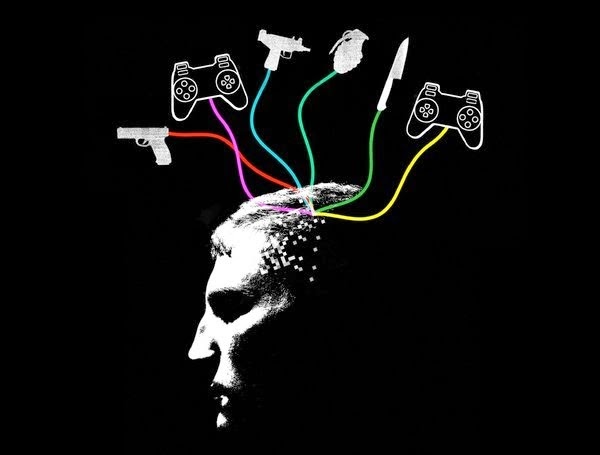
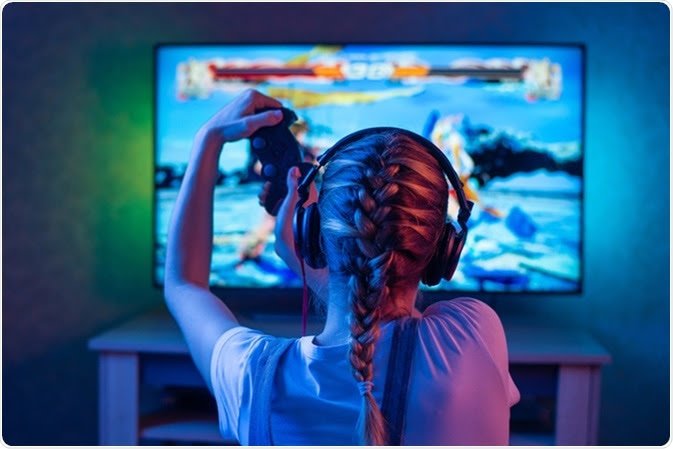
The world has changed and evolved rapidly in the past few years. The invention of computer and modern internet has changed the fundamental needs of most teenagers. Video games on consoles, computers and smartphones have revolutionized the world and the concept of virtual reality. Many teenagers find it palying video games interesting especially violent video games.  This is due to how entertaining and thrilling they are to them as teenagers. However, playing video in most cases has some negative effects to the player. Violent video games often make an individual’s brain more responsive to violence. Unknowingly, such type of video games leads to aggressive increase in behavior and as time goes on, the brain doesn’t perceive that aggression to be anything abnormal. Despite the numerous positive effects such as, quick-decision making, multitasking, teamwork…etc., “there are two sides to every coin,”. While all the listed above are good effects of video games, on the other side, video games have their own negative short comings which affect physical health, psychological health, and overall performance of teenagers. This paper will discuss negative ways video games affect the lives of teenagers.
Addiction to video games hinders the physical health of a teenager. Excessive sitting while playing games with minimal movement may possess physical health problems such as obesity, back pains, insomnia, and drowsiness. As already mentioned, video gaming is an addictive practice which a person tends to develop a liking for this attitude and can go on-and-on with it playing for hours. It is obvious that illness and disease caused by ceaseless gaming are hard to cure. Therefore, trying not to get into such activities is the first step to prevent these types of problems to the physical health; and possible the most advisable thing to do. Most teenagers who play violent video like tend not to have interest in stuff he/she has been preoccupied with. This is because, the often teenagers play the video games, there is a higher interaction with the video gaming interface, and therefore tends to take control of the teenagers thought process. According to a research conducted by Dr. C. Shawn Green of the University of Wisconsin, he mentioned that, “video games can change your brain more negatively. (needs Citation)” this is because, most video games are designed to make you the protagonist and, in most cases, commit crime and other violent activities to achieve your goals. This in the long run might have negative effects by making your brain to think more negatively.
One common health issues that is faced by most individuals, specifically teenagers addicted to playing violent video games is obesity. Addicted gamers usually encounter this problem because, they are prone to sit in one place for a longer period, and as a result their body practically misses out on any kind of physical activity like exercise. For example, back in home in Ghana, my cousin used to be teased with different names due to the amount of weight he had gained from sitting still almost all day due to his attachment to video games. This was mainly because he was always at his room playing addictive games such as call of duty, grand theft auto and many more whiles eating at the same time. This became his habit, and by the time his parents realized, he was obese and violent as well. This situation led to him been stigmatized by his friends. Even in school, no one wanted to play with him because he had gained a lot weight and would often complain of back pains immediately they involve themselves in any activity. Being overweight may increase the risk of developing other ailment in a long run, such as high levels of cholesterol, diabetes, hypertension and so on. Playing video games for long hours could also prevent teenager to have the maximum sleep they need which results in the development of insomnia; Which further results in drowsiness and hypoactive immune system. Again, back pains are also commonly experienced by gaming addicts, since they sit in position for long hours. Even though they don’t pay attention to this, it might have an in-depth implication as the thirst for gaming progresses.

There are psychological health issues with regards to playing video games for incredibly long hours which prone to negatively affect the social behavior of the teenager as well. Excessive gaming can develop certain traits which may have adversely effects on an individual’s life development. According o a research conducted by Douglas Gentile released by the Iowa State University utters that, “teenagers are most inclined to video games by being indoors, which leads to a bad habit of socialization.” (needs Citation) Now social isolation can be an immediate consequence of frequent and ceaseless gaming. Teenagers tend to spend lesser time with their friends and family since they obviously want to get back home or game centers as fast as possible and continue playing. Prior to this, most gaming teenagers become detached from others, and so in the long- run lack abilities of social communication and develop fear of human company (anthropophobia). For example, I met a friend last semester in one of my math classes. This guy would be sitting at the back-playing game all by himself, whiles other people were making discussions on previous topics. Days after, I approached him, and he seems very shy talking to me and spoke very slowly due to no connection he could make from the conversation. I observed that he was a bit nervous. So, I told him not to be nervous, then he replied saying, he’s not used to talking to people apart from his parents. Even he barely talks to people younger sister, because he is always busy playing video games alone. Now this clearly confirms how video games can influence a person’s life.

Uncontrolled addiction to video games deduces a teenager’s performance academically. Normally this happens when teenagers always think and dreams about games he has playing thus tends to lack of interest in studies and other related activities. According to an article written by the Naskar in the industrial psychiatry Journal, the article mentions how an 18- year old boy had excessive use of video game for the last 2 years which led him to losing interest in studies as well as getting low academic grades.”(needs Citation) Academic performance can be affected by inverse balance to video game addiction. This literally signifies that the more time one spends in playing, the lesser the person occupies his/her self with studies. Obviously, this shows negatively in the end of semester school report card, and as a result makes the child academically incompetent.
Teenagers find it interesting playing video games, most especially violent games. Although video games are fun, and has positive effects, however video game impact negatively on teenagers as well. Resulting to the effect on physical health, psychological health, and overall performance in terms of academics. Therefore, in order to reduce such negative chances on teenagers, parents and guardians are to check on their children assign rule and regulations to control this kid form getting addicted to video games. This rule can include time and hours for homework, video games and family get-together. Ensuring these measures will help improve the lives of teenagers for a better future.

We cannot and will not ban the creation of violent video games. But we can prevent the distribution of these disturbing games to children, where their effects can be negative .

TOP 6 ARTIFICIAL INTELLIGENCE DOCUMENTARIES

The Social Dilemma

The Social Dilemma, which published in 2020, discusses the rise of social media and how it impacts society’s thinking as a whole. It is a documentary film made by Jeff Orlowski that discusses many facets of social media and how it may affect people’s thoughts if not handled appropriately. The artificial intelligence video also sheds attention on teenage mental health concerns. It demonstrates how artificial intelligence algorithms could operate in the context of social networking. The social problem also includes interviews with former Facebook, Google, and Apple employees.

iHuman

iHuman is a documentary on machine learning, political order, and power that demonstrates how AI has transformed human lives. It also discusses how AI influences society and our destiny. The documentary features interviews with AI researchers Ilya Sutskeve and Jürgen Schmidhuber, as well as discussions about how AI may be created and applied. Some personalities symbolise AI and demonstrate its significance in today’s society. iHuman premiered at the 2019 International Documentary Film Festival Amsterdam.

Hi, A.I

Hi, A.I is a film about how people connect with artificial intelligence robots. In 2019, Isa Willinger directed the film, which was funded by Stefan Kloos. It highlights human interactions while also discussing AI progress, degrees of AI, and other AI and robotics research.

Lo and Behold

Wener Herzog produced the documentary movie Lo and Behold, reveries of the linked world, which was released in 2016. It covers robots, artificial intelligence, the web, the internet of things, and other topics. Interviews with luminaries in the fields of artificial intelligence and innovation, such as Elon Musk, Sebastian Thrun, Bob Kahn, and others, are included in the film.

AlphaGo

The trip from Cambridge to Seoul is shown by AlphaGo. Go, a Chinese game, has been viewed as a test for AI, and in March of 2016, the worlds of Go and AI clashed in South Korea, where hundreds of thousands of people viewed a game tournament. For the very first time in human history, a famous Go master faces off against an AI adversary in AlphaGo. The film explores what artificial intelligence can teach us about mankind and what it can disclose about the 3000 years old game.

TechnoCalyps 

TechnoCalyps is a 2006 documentary directed and written by Frank Theys on the advancement of technology. It’s a 3-part documentary that covers automation, artificial intelligence, cybernetic implants, nanotechnology, and other topics. Interviews with renowned specialists in the area are also included in the film.

Steam : PLATFORM THAT CHANGED PC GAMING FOREVER

Steam is a digital marketplace and is owned by Valve Corporation. Valve Corporation was formed by ex-Microsoft employees and after launching critically acclaimed games like Half-Life and Counter-Strike, they set out their eyes on retailing software through the internet.  

History of Steam

Steam was launched as a standalone software client in September 2003 as a channel to provide automatic updates for their games.  It pioneered the digital distribution of the software. Before video games used to be physically owned and any kind of updates and patches were very cumbersome to implement.  As owning music CDs became obsolete similarly owning games in physical media became a rare thing. As internet speeds increased, this meant that downloading games over the internet became easier, and having a single library where the users can access all their purchases has now become the norm.

Later it expanded to provide software by third-party developers to become a full-fledged distribution platform. The developer of Steam is Valve Corporation.  As of today, it is one of the most profitable privately owned corporations in the world.

Steam’s business model is very similar to the model that Apple uses in its app store. It operates a commission-based business model. Steam takes a percentage cut from all the sales made on its platform (30%)

How Steam grew from its initial years?

During In its initial years, Steam provided a freemium model.  It offered its games for a free-to-play model. It helped Steam to reach a wider audience and increase its growth.

Steam has benefited a lot with its network effect. As more and more game publishers and smaller indie game developers joined the platform. Steam increased its titles library. New developers got a medium to publish their games without the hassles and cost of hosting and maintaining the games. With the help of free games and new value units being added all the time, new users joined the platform at an ever-increasing rate as well.  Now consumers could access their whole game library in a single place. Thus benefiting both these sides of the core interaction.

Currently Steam has 100 million monthly active users and over 30,000+ games listed on its platform.

In the initial years Steam solved its chicken and egg problem by providing free games and free demos of games. The strategy of seeding by providing free updates and discounts that were not available in physical media helped Steam to become a viable option. The Same strategy is also followed by the Fortnite developer and Steam rival Epic Games Store which was launched in 2018. It gives away a free game every week. This has helped Epic to get a significant foothold in the market dominated by Steam. Even though Epic games store lacks in the number of feature layers that Steam provides. Valve had realized that its user base is a very valuable asset. To increase the engagement in the platform it added community forums. Where fellow users could discuss and help each other with any topic. Steam also introduced many new features including statistics tracking system and friend list. Now Steam was shaping up like a social media platform over its core interaction as a mere platform.

In 2008 Steam introduced a filtering system. That helps users to better find their desired product. Now the catalog could be browsed according to the genre. In 2012 Steam introduced Steam Guard.  This included two-factor authentications to curb frauds and also launched its mobile app. In 2012 Steam introduced Steam Guard.  This included two-factor authentications to curb frauds and also launched its mobile app. In 2016 Valve introduced the support for VR headsets. It collaborated with HTC to introduce the Vive headset.  Later extending support for Oculus Rift.

Present and Future

Recently Steam launched a new VR title, Half-life: Alyx with the introduction of its new VR headsets. It’s one of the best virtual reality applications to date and the game received critical acclaim from reviewers and users alike. Valve is again trying a paradigm shift for pushing Virtual Reality to the mainstream and so far they have been successful in it.

Steam was one of the first digital marketplaces and they are continually working on improving their platforms. Even with new competitors, Steam has been a relevant force for over 15 years. New technological ventures and platforms can learn a lot from Valve with its drive to be innovative and ambitious in its approach.

References:

Not Just A Cool New Thing :How Technology Improves Education

Today, the internet dominates many aspects of our life. We’re so used to it that we don’t even think about all the areas it touches. It helps us communicate with our friends and family. It’s an invaluable tool in the kitchen as we look up recipes and ingredients. If we’re attempting DIY repairs on our car, we might look up a tutorial on YouTube. We access our entertainment online. Whenever we have any question, from the most mundane to the most complicated, we ask the internet.
There’s one facet of our life, however, where we might not often think about the effects of technology, and that’s the realm of education. Today, we want to spend some time examining how technology has found its way into the halls of schools across the country and around the globe, and all the ways technology has changed education.
Technology has improved education by using advanced techniques and tools for research and development. Technology has improved the speed of the learning process through the internet.
Technology helped to create new and updated educational material and syllabus. Data analysis and visualizations Technologies have improved the quality of education. Technology improved the student’s security and provided low cost, real-time platforms for communication.
Now there are thousands of fonts support different emotions and facts in the text. Now notes, eBooks, blogs, videos, apps, charts, smart arts, data visualizations, infographics are the part of educational materials. Today Corel Draw, Microsoft Word, Excel, PowerPoint, smart class apps, Adobe Photoshop, stock images and many other IT sources helping to create, design, and various types of educational materials and class syllabus.
This is a big change in education through technology. And I think the goal should be to store data/information/knowledge systematically in the brain of students. And this helps them to memorize it faster during the class and competitive exams. Even when they will in the jobs they can execute that knowledge to produce creativity in their works. Technology has changed, improved the quality of education. And I think we need to think on long-term problems and results while we plan and integrate the change in education by using Technologies.
Technology has improved the Teachers and students communication channels and methods. There was a time when students fear to ask a question from teachers. There was a time when student hesitates to communicate with the teacher about what they are feeling. If someone wants to learn more about the class topic from the same teacher then there were not the ways. There were no ways to keep connected with the teachers for years.
But technology has changed teachers and students communication methods and types. It is now much stronger, easy, high tech and possible to builds long-term connection with teachers and students with the help of technologies.
Now today’s teachers understand that technology is a part of our life. So they are trying to learn the use and methods of advanced technological tools that help them to explain the class topic.
Use of social media by teachers not only helps students to learn but also help society. If Physics teachers/lectures/professor have social media pages and groups then they can invite and target students especially college students to like and join the group. After that, they can create, post, like content that is related to physics (class wise/chapter wise). It builds a great connection and generates student’s interest to learn physics not only in the class but after class. And I think it’s the biggest and greatest use of social media in education.
Technology removed the communication gaps and it is above then political boundaries. And when we matter education and development of students above then politics then I am sure that we will become not only developed but wise citizens.
Now if students have the option to learn from teachers on their blog, they can follow them on twitter, they can join the communities and overall it helps to study the subject and it helps to create a positive environment.
This way, I think technologies speed up the learning process. Technologies created the platform for students to post questions and answers. Students from different cultures are connected with each other for the class topic.
The better use of technology in the classroom and education mostly depends on our teachers, professors, and management. When they adopt a positive attitude to enhance the capacity of students then it will improve and align the education in the right direction.
But we also need to careful that our students are not motivated to follow the wrong direction directed by trolls, politicians, companies for personal benefits.
To stop the negative impact of technology on students, teachers and professors have to lead students. And it will happen if the government, school, college, university, and management boards work on teacher’s development. So that they can feel safe, secure and inspired to lead students for a better future by developing expertise in students through technologies.
Technology has improved the transparency in the educational process and in the organization, improved the staff management methods, streamlined career development programs, faster and easier methods to conduct exams and test, students’ performance reporting, real-world problem-solving assignments, and projects.
But whatever the ways you choose to integrate technologies in the classroom, school or in the colleges. But always remember that don’t ignore the happiest and joyful environment and projects. If students not happy, everything you do will not be beneficial. So that it’s important to integrate technology around the happiness, interests, and motivations of students.

“Technology will not replace great teachers but technology in the hands of great teachers can be transformational”

gaming- TYPES, GNERES AND CAREER

Gaming, a word which is shifting its meaning specifically towards electronic games. The technology is becoming more accessible. Internet prices are becoming low. And this field is becoming more and more familiar.

THERE ARE TYPES OF GAMES

  1. Arcade game: These type of games are typically seen in malls, refreshment parks and restaurants. These are usually coin operated. Pinball machines, videogames and electromechanical games are some of the games you might have seen. They have short levels in games with simple controls. players will rent the games to play. popularity of these games decreased with introduction of PC games.
  2. Console game: This type of game will provide interactive multimedia experience through a display device. A handheld control device is used to play games. Computer runs the game`s software. These games may come in a disk or can be downloaded directly from the internet. These are also played in specialized computers.
  3. Cloud game: This game resides on the company server instead of the users device. The gamer only have to install the client program. The client program will access the server to play games. These games will not require large storage and and processing power to play. The provider can also easily update the game.

POPULAR GENRES IN GAMES

  • Action games: Action games challenge the player`s physical capabilities like reflexes, hand and eye coordination, reaction time etc. These will have a great visuals to treat the player as well as give a punch of adrenaline rush while playing. They deliver a unique experience to the player. Innovations in these genre are frequent and dominating the other genres.
  • Sports games: This genre is present since the beginning of the gaming culture. Traditional physical sports are simulated here. The opposite team is controlled by Bots or by artificial intelligence. Some games will have actual sport tactics and rules. FIFA series is the best example to give here which has a record as fastest selling game.
  • Adventure games: These games involve storytelling themes with action and great visuals. These visuals take gamers on an adventure. Action-adventure games are also developed. The games will have adventure tasks like item collecting, puzzle-solving and explorations. The legend of Zelda is a good example for this genre.
  • Role playing games: These games showcase visually rich 3D experience. The gamer plays or controls a fictional character which goes on a quest. There will be a fantasy world for the character. The tasks assigned to the character are done by the gamer.
  • Simulation games: These games will create a simulation about the tasks of the real world or something near to that. These games try to copy various activities from the real life. These can be used for training analysis or prediction. These games will have more freedom of action within the game. sim city is an simulation game.
  • Battle royale games: This genre puts the player in exploration, scavenging and survival of the players character. This involves dozens of hundreds of players. Players start with minimal equipment and go on exploring and eliminating others. Winner is the last player to be alive. PUBG the game which took the gaming world with a storm is of this genre.
CAREER AS PROFESSIONAL GAMER

Gaming was once restricted to recreational purposes. But now this taking a form of a stable career. As it is a budding industry and not everyone is familiar with this field. But the professional side is picking up quickly. A professional gamer in India can earn between 5000 rupees to 45,000 rupees per month once they tie up with the e-sports company. Obviously the paycheck will depend on the performance and skills.

To become a gamer professionally one should find motivation and interest in playing e-sports. There are plenty of games out there but which game you are choosing to master on will also matter. Anyone who can play a game will not become a professional gamer. To be a professional gamer you have to practice the game you have to make a career in day and night. play and replay the levels so that you will master the levels. Participate in competitions happening around and get noticed by the e-sport companies. Make your own team and become a pro player.

Playing games is a fun task and a successful career from will be more fun. There are many gaming streamers in YouTube platform and game play has become one of the major content. Future will have more professional gamers and a big E-sports community will be built. There is no doubt that younger generations are obsessed with these games and we will definitely see E-sports as a mainstream sport throughout the world.

SOCIAL MEDIA

One in three-person have heard this word before and may had used it too frequently. But what social media stands for? Social media is a collective term for websites and applications which focus on communication, community-based input, interaction, content-sharing, and collaboration.  There are plethora of social media platforms present out there, which not only allow you to share your thoughts and ideas with the world but also provide a stage to do online business.

Types of platforms-

  1. Facebook and Instagram: they are a popular free social networking website that allows registered users to create profiles, upload photos, and videos, send messages and keep in touch with friends, family, and colleagues.
  2. Twitter: it is a free microblogging service that allows registered members to broadcast short posts called tweets. Twitter members can broadcast tweets and follow other users’ tweets by using multiple platforms and devices.
  3. Linkedln: it is a social networking site designed specifically for the business community. The goal of the site is to allow registered members to establish and document networks of people they know and trust professionally.

And much more others.

Social media networks help a person to expand his clients and work with larger networks easily.  You need to answer the question-  how much social media help my business to grow? And you are all set to join a large community of people needing your goods.

social media monitoring- analytics: what is happening at websites, who visited there and are interested in your business help you find a target audience you can put efforts to make a sale.

Social media is a large field where you can do diverse actions, make friends, learn new things, see what is trending in the world, stay updated with current happenings, and much more.

But you need to use it wisely due to ongoing cyber threats and lots of misshaping. to every coin, there are two sides you need to know both before flipping the same!

Global chip shortage : An Analysis

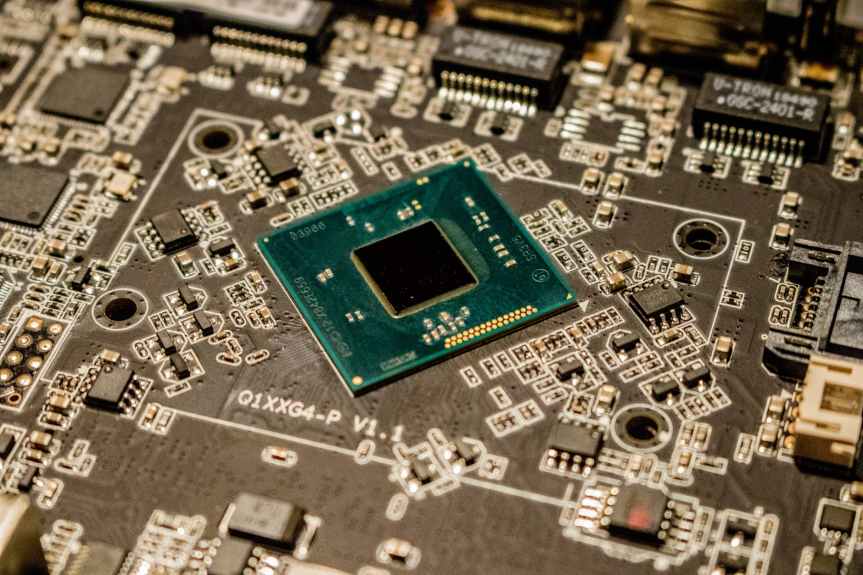
Not many industries have suffered the fate of disarray as the chip industry after the advent of the Covid pandemic. Things were not great for chipmakers in 2020 due to the pandemic but instead of seeing any signs of improvement, 2021 has been even worse for the industry so far. There has been a deficit of chip supply as compared to the demand and it’s not just the electronic industry that is going through a rough phase but it’s many other industries as well. Unlike a couple of decades back when chips were mainly present in personal computers and specialized electronic appliances and gadgets. Now chips power the world. One of the worst-hit industries has been the automobile sector. When the first wave of Covid-19 hit the world, global sales of cars had dwindled, and to compensate for this, car manufacturers had lowered their chip orders from the manufacturers. These chips are a requirement for assembling the critical electronics and computers that are inside modern cars. 2021 saw a sudden increase in automobile sales and this caused the disruption in equilibrium of chip supply and many automobile manufacturers started giving large orders and chip fabrication plants like TSMC were unable to cope up with the sudden growth in demand. This parallel demand for chips has increased the backlog and even though the chip manufacturers are operating over time, they have not been able to keep up with the demand. Now even home appliances might face issues with their chip supply.

There is one more important aspect that we have to address and it’s the increased demand for electronics items after the pandemic. As many people were and are still stuck in homes, they are buying computers, consoles, televisions, and various other electronic components. Many companies have not been able t keep up with the demand due to this. Graphics card is one of those elusive items that have suffered a double whammy. Both potential gamers and crypto miners want their hands on the newest graphics card but due to a shortage of chips card manufacturers are not able to keep up with the demand. There have been many cases where individuals and groups are scalping (buying in bulk) these new cards and reselling them at much higher prices.

Basic appliances and car components often use chips manufactured with older technology. For instance, PC and smartphones are using 7nm manufacturing whereas cars manufacturers uses older 32 nm or 14 nm technology because they are comparatively cheaper to manufacture. But due to the shortage in supply, manufacturers are prioritizing their newer chips and it’s getting challenging to allocate resources for older manufacturing processes. Due to this many car manufacturers have scaled-down on the extra amenities in their models.

TSMC (Taiwan Semiconductor manufacturing company) is one of the biggest chip manufacturers in the world. The company produces 60 percent of the world’s chips for automobiles and 92 percent of cutting-edge chips. Recently Taiwan is experiencing its worst drought in over 50 years. A high quantity of water is required to clean the wafers during the manufacturing of the chips. Droughts have only increased the problems in the manufacturing of these chips. There is immense pressure when most of the world’s chips are made in one single building. This also exposes the problem of relying on a single source of manufacturing. Due to globalization and completion, most of the world’s manufacturing shifted to Asia. The issue of chip shortage will most probably remain next year as well. Intel (U.S) is has started to set up two new manufacturing plants in Arizona. This comes at a time when many have realized that a concentrated source of manufacturing is not the most reliable thing and diversification is the only way to deter any future shortages.

INDIA AND INDUSTRIAL REVOLUTION 4.0 Part-1

The industrial revolution is the advancement in manufacturing processes. The industrial revolution began in Europe in the 17th century. It was the first Industrial Revolution.  With the advancements in machines and manufacturing processes, Industrial revolution 2, 3 and 4 came into existence.

Industrial Revolution 2.0 started just after the first industrial revolution. It was also coined as Technological Revolution. The area of influence of the Industrial Revolution 2.0 was mainly Britain, America and parts of Germany.

The third industrial revolution began with the era of computers. With the widespread use of computers, and the capability to do superhuman things, Industrial revolution 3.0 started. Industrial revolution 3.0 stated the use of programming logic controllers. It also laid foundations for Industrial revolution 4.0.

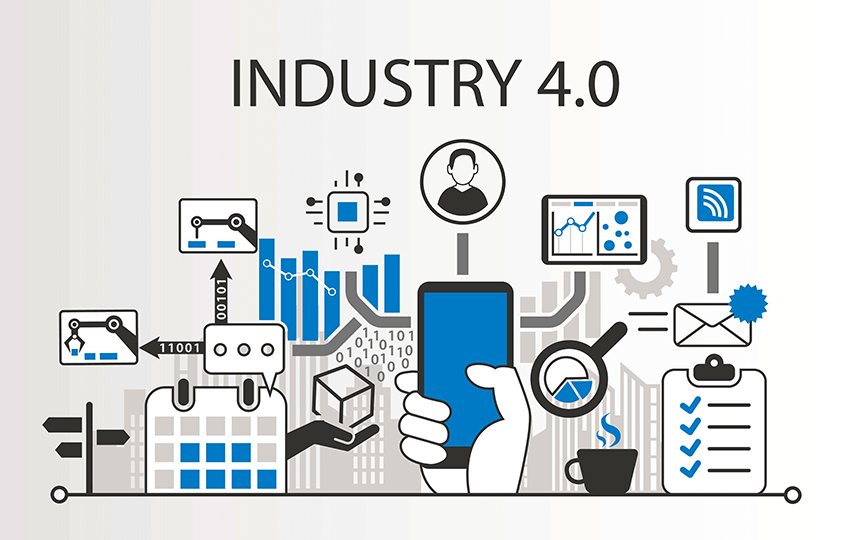
The industrial revolution, also coined as “smart factory”, is the dependency of machines and smart reality at the more ease and comfort with more increase in production. In essence, industry 4.0 is the trend towards automation and data exchange in manufacturing technologies and processes which include cyber-physical systems (CPS), the internet of things (IoT), industrial internet of things, cloud computing, cognitive computing and artificial intelligence.

Industrial Revolution 4.0 consists of different aspects viz.

1.Internet of Things

2.Smart Sensors

3.Advanced robotics

4.Big Data Analytics

5.3D Printing

6.Augmented reality

7.Cloud computing

8.Location Detection

1.Internet of Things

The ability to transfer data over a network without requiring human-to-human or human-to-computer interaction is known as the Internet of Things.

In simple language, when things communicate with each other over a common network, it is known as the Internet of things. In the consumer market, IoT is synonymous with home automation, home security and systems that can be controlled with devices related to that ecosystem like smartphones.

2. Smart sensors

Smart sensors are a major part of the Internet of Things. They are equipped with a digital interface, and they perform self-diagnosis by monitoring internal defects for evidence of faults.

The most important feature of a smart sensor is the ability to communicate, which can be done by displaying the data directly to the user and transfer it over a wired interface wirelessly.

3.Advanced robotics

Advanced robotics is the use of sensors that allow a robot to interact with the real world. The concept of creating machines that can operate autonomously dates back to classical times, but research into the functionality and potential uses of robots did not grow substantially until the 20th century. Throughout history, it has been frequently assumed by various scholars, inventors, engineers, and technicians that robots will one day be able to mimic human behaviour and manage tasks in a human-like fashion. Today, robotics is a rapidly growing field, as technological advances continue; researching, designing, and building new robots serve various practical purposes, whether domestically, commercially, or militarily.

4. Big Data Analytics

Big Data analytics is the process of collecting, organizing and analyzing large sets of data (called Big Data) to discover patterns and other useful information. Big Data analytics can help organizations to better understand the information contained within the data and will also help identify the data that is most important to the business and future business decisions.

5. 3D Printing

3D printing covers a variety of processes in which material is joined or solidified under computer control to create a three-dimensional object, with the material being added together (such as liquid molecules or powder grains being fused), typically layer by layer.

6.Augmented reality

Augmented reality (AR) is one of the biggest technology trends right now, and it’s only going to get bigger as AR ready smartphones and other devices become more accessible around the world. AR let us see the real-life environment right in front of us. Perhaps the most famous example of AR technology is the mobile app Pokemon Go, which was released in 2016 and quickly became an inescapable sensation.

7.Cloud computing

In its most simple description, cloud computing is taking services (“cloud services”) and moving them outside an organization’s firewall. Applications, storage and other services are accessed via the Web. The services are delivered and used over the Internet and are paid for by the cloud customer on an as-needed or pay-per-use business model.

8.Location Detection

Several technologies can provide real-time information about the location of devices, and hence the location of users of the devices. The types of devices that can be located include mobile telephones, laptop computers, personal digital assistants and gaming consoles. There are many location detection technologies, such as the global positioning system (GPS)

Read more about India and Industrial Revolution in next part, INDIA AND INDUSTRIAL REVOLUTION 4.0 Part-2.


Real-time Operating System (RTOS)

A real-time operating system (RTOS) is a type of operating system designed to support real-time applications that process data as it arrives, with hardly any buffering. Processing time requirements in an RTOS are determined in tenths of seconds increments of time. It’s a time-constrained system, or we can say with fixed time limitations. Processing must take place within the stated limits in this system. Or else, the system will be useless.

Advantages of RTOS

  • Less Downtime: An RTOS ensures that the system uses more resources while keeping all devices idle. As a result, RTOS-based systems have relatively less downtime. Also, hosting firms should use RTOS to achieve the best possible outcomes.
  • Efficiency: One application is focused at a time in an RTOS. This program will almost always be the one that is already executing. All the rest in the line will be kept in the waiting stage. As a consequence, important activities may be completed on time and within the specified deadline, resulting in the exact outcomes required.
  • Reliability: Real-time operating systems, particularly those that are based on hard RTOS, are error-free. It guarantees that mistakes be dealt with more effectively. Furthermore, operating systems suffer from jitter, a problem in which the number of mistakes between loops is monitored. An RTOS may be programmed in such a way that it experiences fewer jitters if it is properly programmed. 
  • Task Management: It takes less time for a real-time operating system to go from one job to another. Shifting tasks usually take 3 microseconds or less. Critical procedures may be completed on time with this sort of quicker task management.
  • Availability: An RTOS achieves maximum outcomes, that is why it is a system that is accessible 24 /7. As a result, it is best suited for applications that must run at all times. Aside from that, an RTOS system may handle a variety of MCU systems.

Disadvantages of RTOS

  • Multitasking: Although an RTOS has the ability to focus on certain programs, this is not the same as multitasking. They’re just meant to do a handful of the duties. As a result, it’s not a good idea to use it on systems that demand to multitask.
  • Task Focus: An RTOS concentrates on a single application at a time. This is mostly done to ensure accuracy and minimize mistakes. All other applications with a low priority should be put on hold. They will be on stand-by for an unlimited amount of time.
  • Driver Requirement: Signal disruptions are unavoidable in a real-time operating system. As a result, the appropriate drivers must be loaded on the computer in order to get consistent performance. With the assistance of drivers, an RTOS will be able to respond rapidly whenever an interruption occurs.
  • Complexity: An RTOS interface have complex algorithms behind it. These algorithms will be tough to write for a typical user. Only a skilled programmer will be able to write and comprehend them.
  • Program Crashes: When working with a real-time operating system, program crashes are common. An RTOS, unlike a traditional operating system, is incapable of effectively separating memory regions. As a result, procedures will struggle to deal with them.