

The developing utilization of online applications has opened diverse vocation roads for youth across the globe. Regardless of an applicant is a fresher or an accomplished one, these new position profiles help one in better proficient future and furthermore great motivations.
One of such occupation profile is of Search Engine Optimization (SEO) proficient. As a large portion of individuals across the world use web crawlers like Google to determine their questions. Website design enhancement is one of the advanced showcasing methods that assistance in better streamlining of a site and rank it top in web search tools for applicable questions.
There are many type of improvement, for example, on location content and site page enhancement or site backlink streamlining. Web optimization not just plans to rank better sites or drive quality traffic yet in addition assist with building brand perceivability in the online world.
Different ongoing investigations recommend that SEO will be a significant showcasing device for creating leads and procuring new clients. It has constrained pretty much every organization to put more in SEO prompting expanded interest of SEO experts in India. The developing interest of SEO experts has constrained alumni and website specialists to learn SEO for a superior profession ahead.
Category: Training
History of Unix
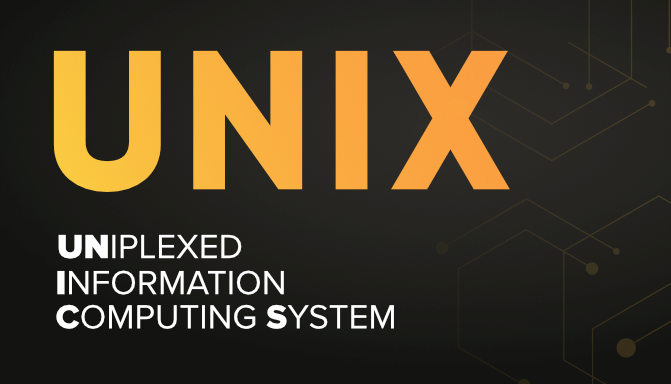
Origins of Unix
UNIX development was started in 1969 at Bell Laboratories in New Jersey. Bell Laboratories was (1964–1968) involved on the development of a multi-user, time-sharing operating system called Multics (Multiplexed Information and Computing System). Multics was a failure. In early 1969, Bell Labs withdrew from the Multics project.
Bell Labs researchers who had worked on Multics (Ken Thompson, Dennis Ritchie, Douglas McIlroy, Joseph Ossanna, and others) still wanted to develop an operating system for their own and Bell Labs’ programming, job control, and resource usage needs. When Multics was withdrawn Ken Thompson and Dennis Ritchie needed to rewrite an operating system in order to play space travel on another smaller machine (a DEC PDP7 [Programmed Data Processor 4K memory for user programs). The result was a system called UNICS (UNiplexed Information and Computing Service) which was an
’emasculated Multics’.
Unix Development
The first version of Unix was written in the low-level PDP-7 assembler language. Later, a language called TMG was developed for the PDP-7 by R. M. McClure. Using TMG to develop a FORTRAN compiler, Ken Thompson instead ended up developing a compiler for a new high-level language he called B, based on the earlier BCPL language developed by Martin Richard. When the PDP-11 computer arrived at Bell Labs, Dennis Ritchie built on B to create a new language called C. Unix components were later rewritten in C, and finally with the kernel itself in 1973.
Since it began to escape from AT&T’s Bell Laboratories in the early 1970’s, the success of the UNIX operating system has led to many different versions: recipients of the (at that time free) UNIX system code all began developing their own different versions in their own, different, ways for use and sale. Universities, research institutes, government bodies
and computer companies all began using the powerful UNIX system to develop many of the technologies which today are part of a UNIX system. By the late 1970’s, a ripple effect had come into play.
Key Factors
1969 The Beginning
The history of UNIX starts back in 1969, when Ken Thompson, Dennis Ritchie and others started working on the “little-used PDP-7 in a corner” at Bell Labs and what was to become UNIX.
1980 Xenix
Microsoft introduces Xenix. 32V and 4BSD introduced.
1983 System V
Computer Research Group (CRG), UNIX System Group (USG) and a third group merge to become UNIX System Development Lab.
AT&T announces UNIX System V, the first supported release. Installed base 45,000.
1991
UNIX System Laboratories (USL) becomes a company – majority owned by AT&T. Linus Torvalds commences Linux development.
Solaris 1.0 debuts.
1998 UNIX 98
The Open Group introduces the UNIX 98 family of brands, including Base, Workstation and Server. First UNIX 98 registered products shipped by Sun, IBM and NCR. The Open Source movement starts to take off with announcements from Netscape and IBM. UnixWare 7 and IRIX 6.5 ship.
2007
Apple Mac OS X certified to UNIX 03.
News and Current affairs


What is news
News is information about current events. This may be provided through many different media: word of mouth, printing, postal systems, broadcasting, electronic communication, or through the testimony of observers and witnesses to events. … The genre of news as we know it today is closely associated with the newspaper.
What is current affairs
Technically Current Affairs is defined as a genre of broadcast journalism where the emphasis is on detailed analysis and discussion of news stories that have recently occurred or are ongoing at the time of broadcast.
Difference
Current affairs is a genre of broadcast journalism. This differs from regular news broadcasts that place emphasis on news reports presented for simple presentation as soon as possible, often with a minimum of analysis.
Day to Day life many things happened that information will pass to us in the form of news and current affairs
ANDROID APP DEVELOPMENT
The Android device market is growing day by day, and companies are taking advantage of it by developing Android applications and selling them on the market. Google Mobile Operating System. It is designed to be open source so that Android application developers can take advantage of the operating system and create innovative new applications. The app makes everything easier. But anyone can simply download and use the application; developing an application is not easy. It takes months or even years of brainstorming and deciding on technical details to finally develop an application that can prove itself in the market. To cope with fierce competition in the market, it is important to ensure that everything is done under the latest trends and technological updates in the development industry. Mobile application development is the process of creating software applications that run on mobile devices, and a typical mobile application Use network connections to handle remote computing resources.

Basics of Android development
Android application development consists of one or more of the following four categories:
Operation-an application that provides visible user operations. On the start screen or application Start the operation in the launcher.
Service-You can use service for any application that needs to run for a long time, such as a B. Network monitor or application to check for updates.
Content provider. The easiest way to think about content providers is to think of them as database servers. The job of the content provider is to manage access to persistent data, such as contacts on mobile phones. If your application is very simple, you don’t need to create a content provider. However, if you are building a larger application or application that makes the data available for multiple operations and/or applications, the content provider is a medium that prohibits access to your data.
Streaming media receiver. You can launch Android applications to process data about specific items or respond to events, for example to Receive SMS.
In the past 10 years, Android has become the most popular operating system in many ways. This is a very flexible and user-friendly system that can change anything unrecognizable. It can be done at any stage of the Android application development process, which is impossible to build an application from scratch on a traditional linear platform
How to use the phone as a webcam for your PC


In these pandemic situation there no offline meetings and interviews. Video conference is daily habited in these time , we are using lot of application for video conference like Google meet, zoom meet, Microsoft teams , Skype and jio meet
Most of people facing problems while hosting and interviews times ,our laptops and PC doesn’t have good quality of video
Then , is there any way to optimise for good quality of video . yes there is a way for that problem
In these day every one have mobile phones , by those mobile phone we can as a webcam
Are you thinking I am joking , then just follow my instruction you will be find my word are no joke..
I have research many application but ,I recommended an application Droidcam that can be download by our favourite app stores
Now you connect your PC or a Laptop over the same Wi-Fi network or with the help of a USB cable. If you downloaded the DroidCam app on your phone from the app store, then download the DroidCam Client on your Windows laptop or PC
There are two ways :
- Using wi-fi
- Using cable
- using Browser
Using Wi-Fi
Open the DroidCam app on your phone and click on the ‘Wireless’ option.
Then next screen should display the ‘WiFi IP’ and ‘DroidCam Port’ . If your ‘WiFi IP’ appears 0.0.0.0, then you are not connected to the Wi-Fi.
Open the DroidCam Client on your PC or laptop and enter the ‘WiFi IP’ and ‘DroidCam Port’ as displayed on your mobile phone. Click on the ‘Start’ button.
Now start the video conferencing app and check the webcam by clicking on the ‘Webcam’ or ‘Video’ settings.
Using cable
Connect your mobile phone to your PC or Laptop with USB cable.
We have remember to note is that you need iTunes downloaded on your PC to connect using USB cable. If you do not have iTunes, you can download it . Once you login to iTunes, it will automatically detect your mobile Phone.
Start the DroidCam Client, select the ‘USB’ option and tap on ‘Start’.
using Browser
DroidCam mobile phone application also connect to the camera using a web browser.
Then you have to connect your phone to a Wi-Fi and open DroidCam application.
Lunch Chrome on your Laptop or PC and enter the ‘Browser IP Cam Access’ data then ‘http://192.168……./video’ and click on enter.
If you have wish to specify the resolution of the video in the URL by using the path including ‘force’. example – http://192.168…./video.force?1280×720.
The application DroidCam Wireless Webcam we used was the free ver . You canl also find the paid ver of this app, called the DroidCamX Wireless Webcam Pro in the Google Play Store. The paid version application supports HD video streaming with out ads
there is one more application I recommends i.e Xsplit connect
NATIONAL ELIGIBILITY TEST PREPARATION: TIPS AND TRICKS

National Eligibility Test also known as UGC-NET, is an exam conducted by National Testing Agency (NTA) to determine the eligibility of a candidate for the post of assistant professor and/or Junior Research Fellowship awards in universities and colleges. It is a national level exam, conducted twice a year (June and December) and over 5,00,000 students appear in the exam per attempt. A total of Eighty-one subjects are offered and applicants choose the subject they have a masters degree in for the exam.
UGC-NET is one of the toughest exams to clear and requires a lot of planning and dedication on the part of the applicant. Not only the applicant is expected to have knowledge of the topics in the syllabus but should also be familiar with related topics.

There are two papers:
Paper-1 General Paper (50 questions for 2 marks each, Time given: 1 hour) : This paper is common to all. The syllabus entails topics such as Teaching aptitude, research aptitude, Information and communication technology, logical reasoning, higher education, etc. Many students have a hard time cramming the concepts. Here are some tips and tricks:
- Students normally take the route of coaching centers which is very helpful given the faculty is reputed.
- For everyone who is preparing through self study needs to have a proper timetable according to their sitting capacity.
- Next, you need to start with the topic that looks the most interesting so as to get you to begin your preparations.
- Once you choose the topic, you must first read the chapter thoroughly from the book you chose to begin your preparation. Mark every important date, the name of an author, etc.
- Next, go to YouTube (you will find a gazillion videos on a singe topic), find a lecture on the topic selected and listen to it carefully while taking notes. Online tutors always have something extra to offer. They have an interesting way of teaching which helps to learn things faster while keeping the learners engaged.
- Now you have all the information related to a particular topic. Revise it at regular intervals to keep it fresh in your mind.
- You can now move on to the next topic. Repeat the cycle and don’t forget to make detailed notes.
- Once all the topics are thoroughly covered, you must attempt a few mock tests to put your knowledge to test.
Paper-2 Specific Subject Paper (100 questions for 2 marks each, Time given: 2 hours) : This subject is chosen on the basis of the subjects a candidate has during their post-graduation. There are total 81 subjects to choose from. Since you have already mastered in the subject, there is not a lot of cramming involved. Some additional tips you could follow are:
- Paper-2 demands you to have vast knowledge of each and every unit involved. There are a hundred questions which can be asked from any topic directly or indirectly.
- You must first study the syllabus properly and since you have already studied those topics in you masters, it would be easier for you to find out the easy and the difficult ones. For this, I would suggest you prepare a schedule that involves studying for the easy unit and the difficult unit on alternate basis. This will ensure that you are not left with only the difficult topics in the end.
- YouTube classes are a must in this case also. There is no book that would fully cover the syllabus for this paper and thus you need you follow a reputed online tutor. Again, their tricks will make the subject easier and will enable you to reach at the depths of each unit.
- Detailed notes will come in handy before the exam, thus make sure that all your notes are up to date and arranged perfectly.
- When all the units are covered make sure you attempt regular mock tests and keep a track of your scores.
An aspirant must start their preparation ideally 3-6 months before the exam since the syllabus is vast and every topic is important and should not be skipped. If you stick to your schedule and revise everyday, nothing can stop you from clearing the exam. However, it is necessary that the applicant takes regular 3 hour mock tests (or solves previous year papers) and diagnose them later to find out the mistakes. The more mock tests you give, the more you will be sure of your success. However it is important to keep in mind that checking the tests is as important as giving it. You must know where you lack and go through that unit again.
Lakhs of students appear in this exam every year and only a handful manage to clear it and with proper time management, planning and scheduling you could be one of those handful aspirants.
ALL THE BEST!
How to start coding? Part-2

This article is in continuation to How to start coding part-1. So now you have decided which programming language to choose from to starting coding. But here comes the tricky part, learning. There are again tons of resources available to learn from. But it is not humanly possible to scrap through all of those. So in this article, I will show you how you choose from the pool of resources available.

Youtube
The pre-eminent of all the resources, Youtube has “python programming” playlists that are quite lucid. These playlists/courses are free to watch. Similar to classroom learning experience from the comfort of your home, Youtube provides content that is worth laudable.
W3 Schools
If you are more into learning from reading rather than watching tutorials, then this site is the perfect place for avid readers like you. With laconic content, it will surely bolster your learning experience. The small bits of example try yourself will surely help you get your foundation laid.
Python org
This official documentation of python also provides with lucid explanation for beginners. Along with the explanation, this site also has all the python version released ready to install on your system. Documentation, community, news, events, jobs, everything related to python under one hood.
The list does not end here. There are also other popular resources available. It is not feasible for me to cover all these. Hope you find all these resources useful.
7 Best Windows 10 apps in 2021
(By Bhoomika Saini)
Since, this pandemic known as Covid 19 commenced, it made a huge impact to the whole world and everything went digital. And the necessity for using windows and its best features became more important. We’ll talk about Windows 10 and some of its best apps to ease up your work from home or many other experiences. There’s a wide range of apps available and it might be difficult to choose. So, whether you’re in need for a better work from home experience or beneficial productivity or some entertainment, we got you covered with some of the best apps for Windows 10 for 2021.
- Spotify Music
Microsoft store on Windows 10 makes it easier for you to download this app. All the music and podcasts lovers can discover a lot here. The sync feature of this app is amazing as it can easily switch from your mobile to desktop and vice versa. Moreover, it provides a clean user interface and it has a “made for you“ playlist for your every mood.
A little mood enlightenment from work requires some good music and Spotify got it all covered.
2. Netflix
Who refuses to Netflix and chill? A break from work is necessary.
And Netflix brings all your favorite shows and movies in one place. It got a huge range of your favorites with the genre of your choice. Moreover, you can choose from 3 subscription plans, skip the intros and all the videos are streaming.
So, what’ s stopping you?
3. Audible
Love reading books but can’t make out time to read? This app solves it all.
Audio book app is accessible anytime, anywhere. Just plug-in your earphones and explore the world of your favorite books. It’ll also improve your fluency, vocabulary, attention span and memory. And the biggest benefit, time management.
So from now, listen your books.
4. Duolingo
If you love languages, then this is the best place for you.
You can download this app from Microsoft store easily. Moreover, this app asks for no fee and is ad-free. It’s small lessons will help you to achieve your goals smoothly as it picks up the course from the basic level.
Learn languages from the highest rated platform from the comfort of your home.
5. Google Meet
Whether it’s a business meeting or online schooling, Google meet became one of the most important educational tool for workspace.
More than 100 million users access this app and it’s easily available on Microsoft store. This app is secure and virus free. Moreover, it’s features like live captioning, speech to text, easy messaging, layout and screen setting and compatibility makes it beneficial and easy to use.
6. WhatsApp Desktop
Messaging has become an important feature and WhatsApp became a huge success during this pandemic.
WhatsApp desktop is easily available on Microsoft store. If you have less disc space then WhatsApp web is best for you. This app brings keyboard shortcuts for a better productivity. You can use a type in keyboard, drag, drop, copy or paste files from the sites and ease your work load.
Bigger screen experience without any problem is good, isn’t it?
7. Pinterest
Need some inspiration or ideas for life? Don’t worry!
This platform is for everyone- your hobbies, interests, etcetera, everything is available here. It has a five star rating on the store for a good reason, you get to the source directly and moreover it’s free of cost, you just need to sign in. So, pinning your interests or pinning interests of your choice is up to you.
Keep exploring and expand your knowledge.
If You Feel Like You Need A Break, Take One


You recharge your phone when it runs out of juice. You refill your gas tank when you’re running on empty. But sometimes, you forget to take a break and recharge your most precious possession: Your body (and the brain that’s inside of it).
Whether you love what you do, are in between jobs, or have a job you hate: You’re working. Living is also a job. A pretty tough one, actually. Just the act of getting up in the morning can be a daunting task. And I’m not even talking about all the responsibilities we have.
So why do you make your life even more challenging by not taking a vacation to recharge? I’m not talking about your weekends that are packed with activities, or holidays where you do more work than relax.
No, that type of “free time” only costs energy. I’m talking about resting with a very specific reason: To recharge your battery so you can get back to living a productive life.
A break reduces stress and improves productivity.
Scientific research shows that a vacation decreases perceived job stress and burnout. Now, that’s a pretty solid benefit of taking a few days off. But there’s more.
As you may know, I’m always interested in productivity. In the case of resting or a vacation, my question is:
Will I get more things done when I get back?
The answer is yes, but there’s one major thing to keep in mind. But let’s back up a bit: What does it mean to get more done? Getting things done has nothing to do with time—if you work more hours, you don’t necessarily get more done.
In fact, research shows that working more hours general means less productivity.
Why? Well, we often waste time if we have a lot of it. It’s simple: If I say to you, you have a year to write an article. What would you do? Put it off until tomorrow, right?
But what if I tell you that you only have 2 hours? You’ll probably get started right away. So in a way, having more days off, and fewer days to work, forces you to be more effective with your time.
Research shows that a vacation in itself won’t make you more productive, but when you have more days off, you have a strong desire to get more things done in less time.
And that’s a win-win situation for everybody: You, your business, or your job. You take off a few days, recharge, spend time with your family or friends, and when you come back, you’re more productive.
Sounds great. But wait, there’s a caveat.
When your vacation is stressful, the positive benefits go away. So keep the stress at a minimum on your holiday. Otherwise, you’ve wasted a perfect opportunity to relax and boost your overall productivity.
I recently felt I needed a break for several reasons. I had a few injuries that didn’t seem to go away and had less energy. I could have powered through, but instead, I decided to go on a vacation with my family. For a week, I did absolutely no work. And when I came back, I was full of energy.
Here are a few tips that might help you to take a break that fully recharges you.
1. Do What You Want
There are no rules for taking vacations and everybody relaxes in a different way. If you like to plan your holiday, just do it. If you want to go with the flow, then do that.
Want to wake up early? Do it. Don’t like waking up early? Sleep in. Even if you go on a vacation with your partner, friends, or family, you don’t have to be together 24/7. You can also sometimes do things that you enjoy.
The key is to not have expectations on your vacation. Let go of everything. I also don’t like to post vacation pictures on social media. Otherwise, I’m constantly thinking about taking a cool picture so I can impress others.
You’ll probably even do things you wouldn’t do just to take a picture. “I really need to rent a jet ski so I can take a picture with it.” No, you don’t.
Who cares? Focus on enjoying the moments you experience. Whatever those moments may be.
2. Read
Bill Gates is famous for his voracious reading habit. He is also known for his ‘Think Week’ where does nothing else but read and think.
You don’t have to be Bill Gates to think about your life and career. We all have our daily, weekly, and monthly routines. Usually, routines and habits work very well. However, you can also get stuck inside a loop.
That’s why I recommend you to step back from your daily life and career. If you do that, two things can happen: When you step away, you miss your daily life and can’t wait to pick up where you left off.
Or, the opposite will happen. You don’t want to go back. See that as a sign that you need to make a change. Either way, a break always serves a purpose. It doesn’t only help you to recharge, it will also make you think.
That’s why I like to read for hours on my vacation.
3. Get Bored
One of my favorite strategies for finding new ideas is to get bored out of my mind. It sounds easier than it is because of distractions.
In the past, I would do everything to NOT get bored: Watch TV, go out, browse Facebook, etc. But did you know that you can use boredom to your advantage?
Instead of giving into distractions, just give into the boredom and see it leads your mind to. In fact, one of my favorite artists of all time, Andy Warhol, embraced boredom. You can tell by the boring films he made or the references he made in The Philosophy Of Andy Warhol about getting bored.
Whenever I hit a creative wall, I just do nothing. Literally, nothing. Try it sometime. It’s a great strategy; maybe you come up with the next best thing in your industry.
It’s never a good time to take a break.
- “I just need to finish this project.”
- “My boss will never accept it.”
- “People will think I’m lazy.”
- “I don’t have time.”
- “My family needs me.”
Yeah, yeah, I’ve been there too. But what would you rather: Continue to work without resting and burn out? Or take some rest before you’re tired?
So before you use all those valid reasons to not take a break, think about what all the people in your life have to do if you’re not here anymore. Yes, you’re important. So take care of yourself. Take a break and come back with more energy.
3 Common Mistakes Smart People Make

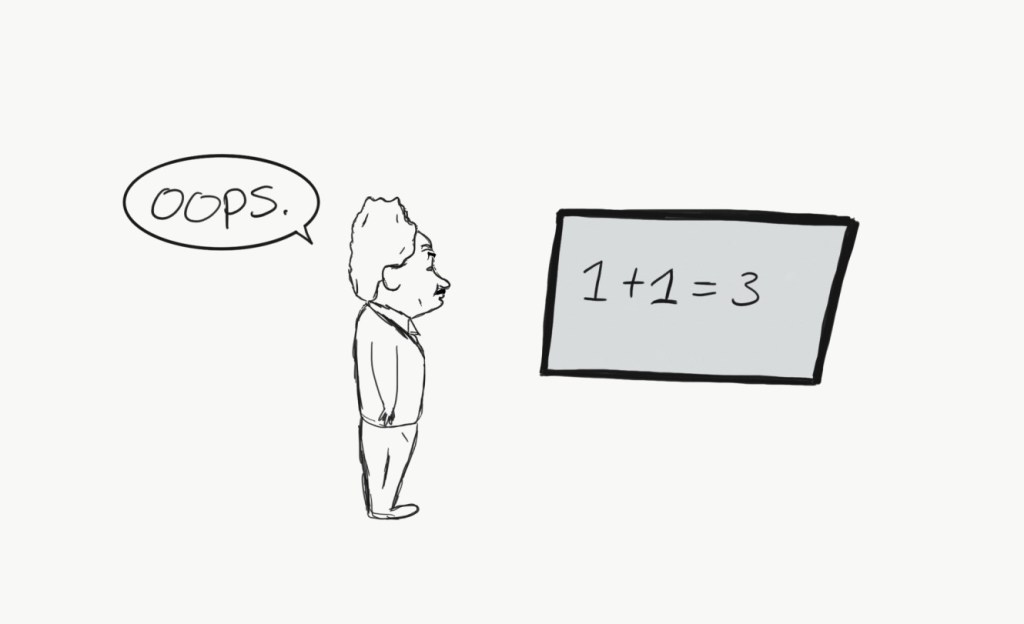
If you believe that only stupid people make these common mistakes, you’re as wrong as I was. The truth is that everyone makes mistakes. Smart people admit that. Stupid people do not.
What’s more, the smartest and most successful people in history have made the most mistakes. Are those two things connected? I think so. This Albert Einstein quote says it all:
“Anyone who has never made a mistake has never tried anything new.”
I used to blame myself for making mistakes in life. I think that’s how our society is. As a kid, you’re punished for making mistakes in school and life. And because of that, we think it’s normal to punish each other as adults.
But why would you punish yourself or another person for making silly mistakes? Most things in life are reversible and small (I’m not talking about committing crimes or adultery here). What matters is that we learn from our mistakes.
One of the best traits one can have in life is to be forgiving. You must go easy on yourself when you screw up. The same is true for the people in our lives. Alexander Pope put it best:
“To err is human, to forgive, divine.”
And when people really cross the line—just move on. No need to make things complicated.
In life, there are lines one should not cross. If you keep yourself to a high moral standard, you’re doing the right thing. And if you make mistakes? So what? No one is perfect.
Here are 5 of those mistakes that smart people make. Remember that you don’t have to make these mistakes yourself. It’s better to learn from other people’s mistakes. They have made them, so we don’t have to.
1. Chasing money
I recently read How To Get Rich by Felix Dennis, who owned one of the biggest magazine publishers in the UK. Contrary to the title, the book actually tries to discourage you to chase money.
Many rich people will tell you the same. The funny thing is that we all know there is more to life than money. And yet, we make it our sole purpose. Dennis writes:
“People who get trapped in the tunnel vision of making money think that is all there is to life.”
There’s nothing wrong with wanting to get rich. We just have to remind ourselves that making money beyond a certain amount has little impact on our happiness. But somehow, we get tunnel vision. Again, trying to get rich is not a mistake. However, it is a mistake if you expect that it’s the answer to all your problems.
2. Ignoring sleep
When you get excited about something, you want to spend all your time on it. That’s a great feeling.
But when your excitement prevents you from having quality sleep, you want to change that. It’s one of my biggest pitfalls. I can read and work all day long—well into the night.
But even when I go to bed at 2 AM and wake up 8 hours later, I still feel tired. Somehow, it’s different when I hit the sack at 11 and wake up at 7. I feel much more energized.
For the past year, I’ve been taking my sleep more seriously. I wake up at the same time every morning. And I turn off my devices exactly one hour before I want to sleep. That means no work or heavy mental activity before bedtime. Just some light reading or journaling.
3. Being connected too much
The past decade has been great for technology. Almost everyone has a smartphone with access to the internet. Within a few years, the whole world will be connected. Even the less developed countries.
Modern technology has changed the world. These developments are great. But remember that too much of a good thing becomes bad.
That also applies to your smartphone, tablet, and laptop. Recent research shows that Generation Z (born after 1995) is distressed and anxious. The American Psychological Association even says they have “the worst mental health of any generation.”
One of the biggest reasons for their mental state? All the signs point towards their smartphones and connectedness. For years, I’ve been limiting my smartphone usage.
And inspired by Cal Newport’s new book, Digital Minimalism, I’m only getting more strict with this.
These Six Questions Will Improve Your Decisions
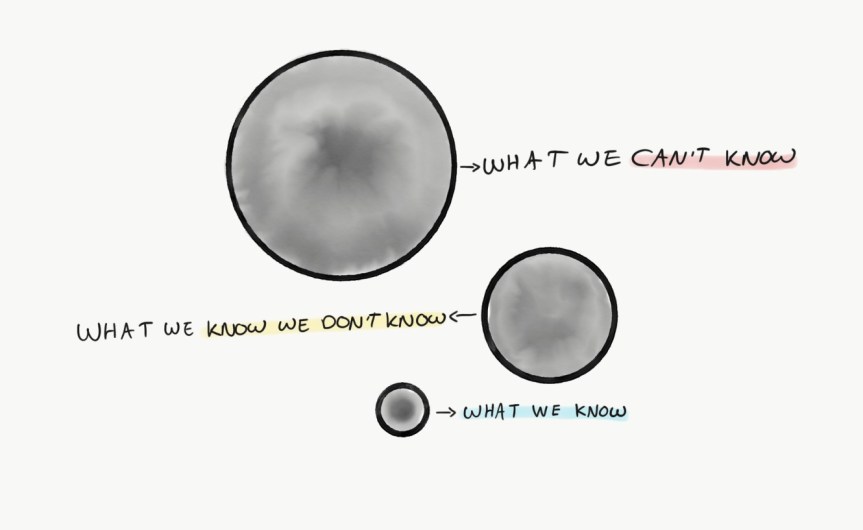
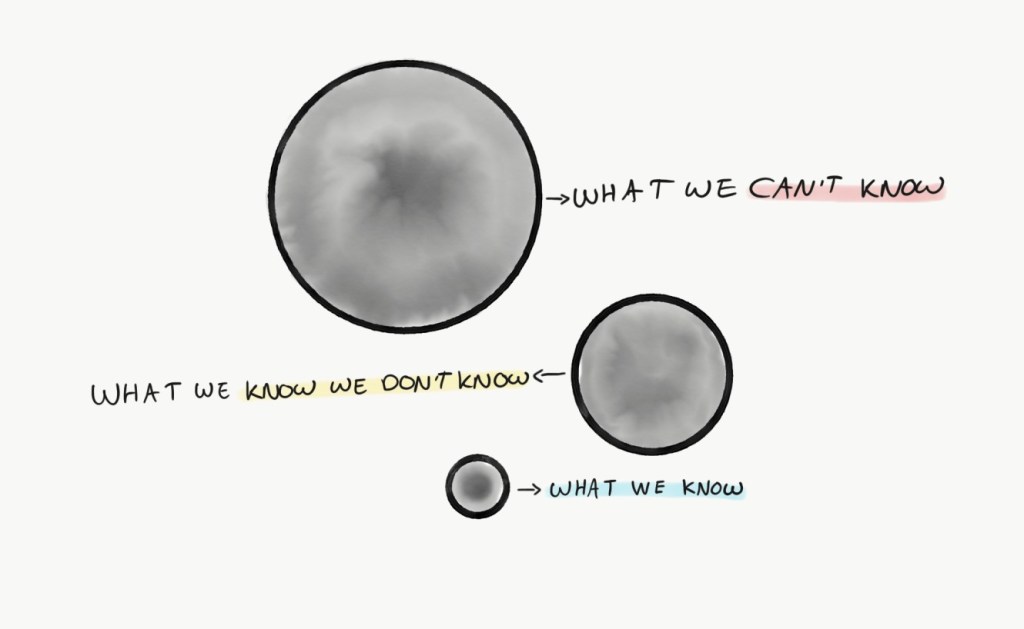
To improve your decisions, you want to look at your process for making a decision. Most people assume that good decision making is a matter of picking a course of action that leads to the desired outcome.
That’s a misconception. Decision making refers to your cognitive process. It’s about how you end up with your decision, not what the decision leads to.
Good decision making can lead to bad outcomes. The opposite is also true. Bad decision making doesn’t mean you always get bad results. For every decision, there are external factors that influence your outcomes.
So how can we improve our decisions? By focusing on the process, not the outcome. The best method for improving your decision making process is to ask yourself critical questions. It’s not enough to ask obvious questions like, “What are my alternatives? What has worked for others? What are the consequences?”
While it’s good to ask yourself those questions, it will not change your decision making process. Those questions only look at what you already know.
I found a list of six thought-provoking questions in Annie Duke’s book, Thinking In Bets. Notice what the theme is.
- Why might my belief not be true?
- What other evidence might be out there bearing on my belief?
- Are there similar areas I can look toward to gauge whether similar beliefs to mine are true?
- What sources of information could I have missed or minimized on the way to reaching my belief?
- What are the reasons someone else could have a different belief, what’s their support, and why might they be right instead of me?
- What other perspectives are there as to why things turned out the way they did?
Think About What You Can’t Know
The reason I like these questions from Annie Duke is because they force you to think about what you can’t know. In my experience, that’s what drastically improves your decisions.
We all know the feeling of talking to an experienced person who shares some insights with us, and we go, “Aha! I didn’t realize that.” That’s what you want. Duke writes the following in Thinking In Bets:
”Just by asking ourselves these questions, we are taking a big step toward calibration. But there is only so much we can do to answer these questions on our own. We only get exposed to the information we have been exposed to, only live the experiences we have experienced, only think of the hypotheses that we can conceive of.”
This is the reason I often turn to my friends, mentors, communities, books, courses, and podcasts for insights that come outside of myself. I want to learn about things I can’t know.
It’s impossible to know and see everything. We haven’t had the experiences of other people. Most of us keep making the same decisions because we never get an outside point of view. We don’t make an effort to improve our decisions.
Open To Beliefs—Not Gullible
To improve your decisions, ask yourself questions that challenge your existing beliefs. I highly recommend saving those six questions in your note-taking app. I’ve done it and when I face a decision, I often go through these questions and my other notes on decision making.
As you become open to other beliefs and perspectives, keep in mind that other people also don’t have all the answers. Adopt the mindset of a skeptic. Be open to other beliefs, but don’t believe everything instantly.
Keep looking for evidence and other perspectives. When you have collected enough information, make your decisions. Sometimes people assume you have to listen to everything “experts” have to say. This will only make us gullible. If there’s one thing that harms our decisions, it’s that.
We should always make our own decisions after going through a process. We should avoid making rash decisions based on the opinions of others.
Common Decision Making Pitfalls
Here’s what you should watch for when you’re making decisions (no matter how big or small):
- Analysis paralysis—This is very common. At some point you get stuck in the process and you can’t make a decision. You go over the process over and over again. This is a big risk. You can NEVER have 100% of the information you need. It also helps that your decisions are not about the outcomes. Don’t let your fear of making the “right” decision paralyze you. There’s no right or wrong outcome. Just outcomes. Deal with it later.
- Extinction by instinct—The opposite of the above. It’s the belief that instincts are a useful tool in decision making. This leads to rash decisions.
- Information overload—This is when you ask too many people for their opinion or insights. Stick to trustworthy sources and keep them at a minimum. More information is not better. Reliable information is.
I’m not a fan of complicated theoretical decision-making frameworks to improve your decisions. Those types of formal frameworks might work for large institutions, but for you and me, it’s just not useful. Who makes time to read an 800-page textbook on statistical decision theory? And if you do study it, you probably can’t remember all of that theory. Instead, work with what you have.
When you face a problem, simply look at your options, collect some information, think about what you can’t know (the six questions at the top), evaluate everything, and pull the trigger. Done. Then, move on to the next one.
What is Python programming language?
Python is one of the most popular and fastest-growing programming language. Inherently, it is interpreted, high-level, general-purpose, and object-oriented scripting language, which means the following:
•Interpreted
An interpreter processes the source file at runtime, it reads the lines of code, one by one and performs what is said. Similarly to Perl and PHP, Python does not require that you compile your program before executing it. So, you do not have to invoke a compiler. Instead of running the compiler that helps turn source files into compiled class files, you simply run a .py file. Python byte code compilation is automatic and entirely implicit.
•High-level
Python relies on easy-to-read structures that are later translated into a low-level language, the original code that is run on a computer’s central processing unit (CPU). A high-level language is intended to be used by a programmer and the written code is further interpreted into a low-level language. Like C++ or Java, before running, Python has to be processed. This enables Python’s portability — it can run on different kinds of computers with nearly no modifications.
•General-purpose
Python can be used for nearly everything. It is applicable to almost every field for a variety of tasks. Be it the execution of such short-term tasks as software testing or long-term product development that involves roadmap planning, Python works well for them all, it is applicable all over the map. Its roles are unlimited. It is popular not only among software engineers, but also among specialists in other fields: mathematics, data analysis, science, accounting, and network engineering. Likewise, Python cliques with young people because it’s a very beginner-friendly scripting language.
•Object-oriented
This programming paradigm gives an overall orientation towards scripting and powerful code structuring. This object-oriented approach allows thinking of problems in terms of classes and objects. Then, objects are composed in such a way to make up complex computer programs. Beside the object-oriented programming, Python also supports a procedural paradigm. With OOP being only one of the options, you can make Python programming more advanced by going for an object-oriented programming approach. Developers can create reusable patterns of code thus curtailing redundancy in development projects.
Guidelines to choose your career-for final year and pre-final year students
” I have no problem with starting from scratch” – Leif Garrett
The age 20-25 is quite confusing age of our lives. Everyone will have an inner voice which is constantly interrogating us a set of questions like , ” What are my interests?” , “Which is the field I can excel on?” , “How can I bring the best out of myself?”. Never be terrified by these questions. These are questions which will make you streamline your career path.
During the pre-final year and final times , we all will start to have a fear of future and will begin to recognize the practical aspects of life. The pressure could be due to college placements, peer discussions and expectations of our families. Never make any of these external factors influence your career choice.
The first step in order to identify the career path which best suits you is to know about your interests and skillsets. Write down three important interests of yours which may or may not relate to the stream of your study. Figure out what are the skill sets you have in those interests which could fetch you a job. In case if you have no skillsets in those fields refer to the career sites and find out what are the skill expectations for those roles.
The second step is to understand the industry. In the initial days of our college, we all would have had fun unaware of a world outside which is developing at a rapid phase . Start learning about what’s happening around you. Recognize the fields which are blooming and categorize those which attract you. List down the skills which are anticipated in those fields.
The third and most important step is to write down all the fields , interests and skillsets you have figured out in steps one and two. Write down your short term and long term goals which align with your interests. Narrow down to 2 fields which allure you and make you move forward towards your long term goals.
“We cannot become what we want to be , by remaining what we are” – Max DePree
Kick start your learning phase by acquiring skills and mastering them which attribute to revamp your profile. Make sure you update your profile regularly on career sites like LinkedIn which provides you the opportunity of networking. Never be petrified by the fear of perfection during the learning phases because,
“Continuous Improvement is better than Delayed Perfection” – Mark Twain.
Why is SQL important? What problem is it solving?
Database administration or data management is incomplete without the SQL. For comfortable use of SQL as part of your administration or development requires that you understand the basics of SQL, which will take you a long way in your career.
Before we start with the introduction to the SQL itself, and then, understand the important features of SQL Server. It will take you through a demonstration of the internal workings of SQL, starting from SQL standards, evolution, and progresses to creating tables, understanding and defining relationships, writing Transact‑SQL commands, and so on.
You will also understand that SQL is a special-purpose programming language; special-purpose, as in, it is different from the general-purpose programming languages such as C, C++, Java/JavaScript, etc., meaning, it has a very particular purpose: manipulation of datasets. And this manipulation happens using what is known as Relational Calculus.
But isn’t studying SQL alone, restrictive? Turns out, it isn’t. Of course, we can use SQL on any kind of database or data source, but even if we cannot directly use SQL, most query languages of today have some relationship to SQL. In general, once you know SQL, you can effortlessly pick up other query languages too.
Standards are vital because every relational database must build its framework around this framework in order to ensure compatibility. This means that the learning curve is greatly reduced. SQL is ANSI as well as ISO-compliant, along with other standards, which emphasizes the fact that you have to learn the concept only once.
youtube


YouTube the way of leaning…
What Are the Main Functions of YouTube?
- Users can search for and watch videos.
- Create a personal YouTube channel.
- Upload videos to your channel.
- Like/Comment/share other YouTube videos.
- Users can subscribe/follow other YouTube channels and users.
- Create playlists to organize videos and group videos together.
What is the main purpose of YouTube?
YouTube provides a simple way for people to store videos online and share them with others. YouTube videos cover any topic anyone cares to upload a video about. These videos are easy to share via other forms of social media, email and websites and can also be embedded in other websites
What are the benefits of being a YouTuber?
Benefits of Having a YouTube Channel
Give the Audience More Content. One really good reason to add video and a YouTube channel to your site is to give the audience more content. …
Extra Source of Traffic. …
Closer Personal Connection. …
Another Source Of Revenue. …
Modernizing. …
Creative Outlet. …
Get Outside Your Comfort Zone.
Teens Like YouTube because?
YouTube is a free to use service and a can be a great space for teens to discover things they like. For many young people, YouTube is used to watch music videos, comedy shows, how to guides, recipes, hacks and more. Teens also use the video-sharing service to follow their favourite vloggers (video blogger), subscribe to other YouTubers and celebrities they are interested in.
By YouTube what the people wish to like ?
The way the their mind sets and Intrest videos
there are different kind of people
Wish to learn new things
spend time on their mind sets
giving live news and events
Advantages and Disadvantages
1. In education YouTube help in term of provide the video of teaching and learning for the students to get the knowledge from the professors in another part of the world.
2. The students are able to access to the sources of learning anytime anywhere they want without any payment.
3. Provide the chance for all the learner to study with the high professional teacher especially for those who have no chance to go university.
4. There are many skill people who upload their video and we can learn from their skill.
5. YouTube is the very wide classroom for teaching and learning which we can save our time and budget.
6. It is a biggest source of study which easy to understand by the video such as video on how to make up, video on how to cook, video on how …etc.
 Eduindex
You must be logged in to post a comment.