Artificial Intelligence is a topic with a vast appeal to the en masse. People believe that it is the future of human techologies. But beyond that, people are of various school of thoughts. The first group assumes that AI shall help humanity achieve singularity – a point in technological development that shall mean an utopia. We shall spend all our time towards spiritual and emotional development while most of the crude tasks shall be taken care by machines. The second school of thought assumes that AI shall take over humanity as its overlords. Let us analyse both.
The history of animated, self-thinking, free willed machines is not new at all. It has been imagined for centuries by fiction writers. However, the modern conception of AI in scientific thinking started about 80 years ago. John McCarthy, an American mathematician proposed the idea of such machines back in the first half of the 20th century. Alan Turing, the inventor of the Turing Machine, a British mathematician also proposed his idea of intelligent machines, his proposal now famously called the Turing Test. However, for the next 40 years or so, no important research occurred in the field. It was only in the last decades of the 20th century, when the research started again and not before humanity entered into the 21st century that something formidable was created.
As of today, AI has invaded all spaces of human endeavor. Mechanics, mechatronics, smart devices, our smartphones – all of it is infiltrated with AI. But this AI is what most scientists call ‘weak AI’. It cannot really think. It has a predefined algorithm and then it uses that algorithm to capture inputs and ‘learn’ about new scenarios as per its algorithmic definitions. This AI cannot work without human input and can certainly not take over the world. It can however carry out some actions that are equivalent to evolution as the AI at the Facebook research Center developed their own language to communicate. However, this evolution still does not mean that the AI is “thinking”. It is just evolving its learning based on a preprogrammed code. It is nothing like human beings where discretion is a thing. Even the famous robot AI, Sophia is but a weak AI – a little better than SIRI and google assistant but that is all there is to it. It is not a self-thinking, free-willed machine.
Sophia, the robot
Researchers have tried hard to create strong AIs with a completely different set of ethical concerns – the main obviously being how would such machines live with humans if they are free to think – but have failed so far. And believe it or not, strong AIs might really not be a thing for at least another 50-100 years at the very least. Maybe even a couple of centuries after that.
So, if you’ve watched the movie Prometheus or Covenant and are scared of the possibility of David being a reality, grab a cup of coffee and relax. By the way, both the movies are really good!
“Forts are the very basis of a kingdom. They are the real treasure, the real wealth of a kingdom. They are our best form of defense against the enemies. Forts themselves are the kingdom.”
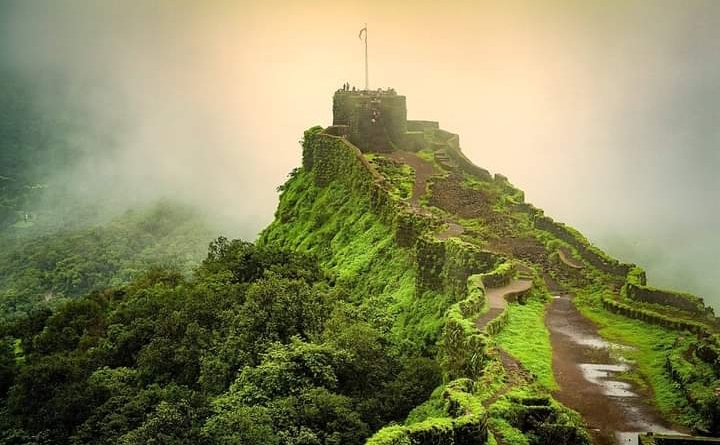
Rulers of almost every dynasty in Maharashtra gave tremendous importance to the construction and maintenance of forts. That’s one of the reasons you will find a fort in every nook and cranny of Maharashtra. Pune is a city that has a large number of forts around it. Many of these forts were built by Chhatrapati Shivaji Maharaj, the great Maratha warrior king. These Forts are like real treasure of Maharashtra.
So here are top 5 forts near Pune you must visit.
1. Sinhagad Fort
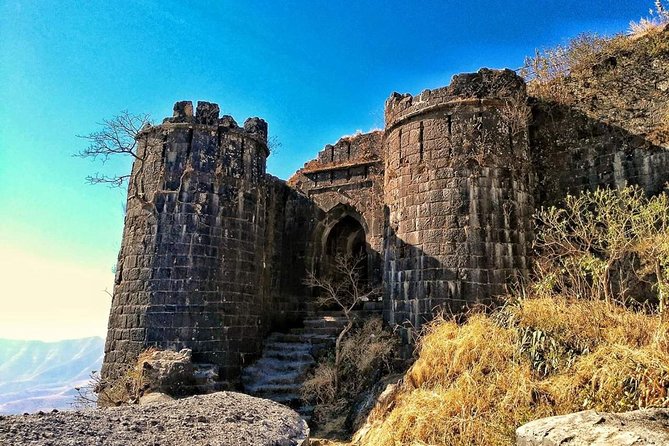
Sinhagad Fort Formerly known as Kondhana is one of the most beautiful fort to visit near Pune.
The forts has been the site of many battles, with the Battle of Sinhagad (1670) being the most notable of all. The fort was named ‘Lion Fort’ (Sinhagad) to honor the sacrifice of Subhedar Tanaji Malusare by Chhatrapati Shivaji Maharaj, who lost his life while fighting the Mughals in the battle.
The fort, built on the top of a hill, offers an amazing view of the lush greenery surrounding it. Pune Darwaza and Kalyan Darwaza are the two entrances to the fort, with the former being the main entry point for visitors. There are a few temples and a memorial built for Tanaji Malusare inside the fort.
Although there is a motorable road till the entrance, trekking to it is preferred by many youngsters. The 13-km trek has a medium difficulty level which makes it one of the best forts near Pune for trekking.
Distance from Pune : Around 30 km via Sinhagad Ghat Road and Sinhagad Road
2. Torna Fort
The historical significance of Torna Fort is that it was the first fort captured by Chhatrapati Shivaji Maharaj; thereby, making it the foundation of the Maratha empire. With an elevation of over 4600 feet above sea level, it is also the highest fort near Pune. Over the years, it has become one of the favourite destinations for anyone who wishes to experience history amidst the opulence of natural beauty.
Torna Fort is also a popular trekking hotspot, and the best time to visit it, is in between September and December. The trek begins from Velhe village as its base. One will first get the exalted view of the fort in the distance after a walk of 200 m. The entire trail is dotted with rocky patches hemmed by dense vegetation. The 4-hour trek goes through various structures like Bini Darwaza, Menghai Goddess Temple, Budhla Machi and the majestic Zunjar Machi. If you are trekking to the fort during the monsoon, be a little careful as the trail becomes slippery in patches. The view from top of the fort is very beautiful and mesmerising.
Distance from Pune : Around 71 km
3. Shivneri Fort
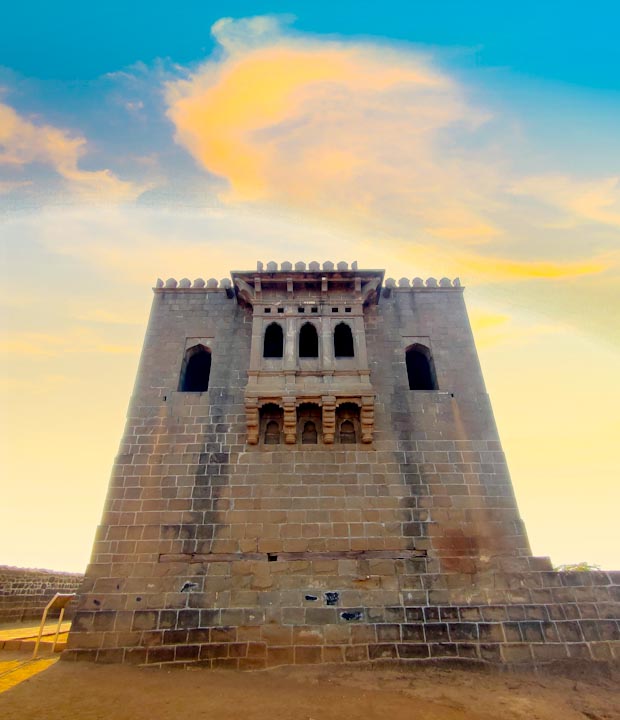
Shivneri Fort : the birthplace of Chhatrapati Shivaji Maharaj, the founder of the Maratha empire. Located near Junnar town, the military fortification has a memorial of Chhatrapati Shivaji Maharaj, known as Shiv Kunj right in the center.
The fort offers a panoramic view of the picturesque mountainous and beautiful lakes in the backdrop.
The fort has been rightly rated as one of the most favorite places for sightseeing as it has some interesting spots, such as the temple of Goddess Shivai.
Distance from Pune: 93 km
4. Raigad Fort
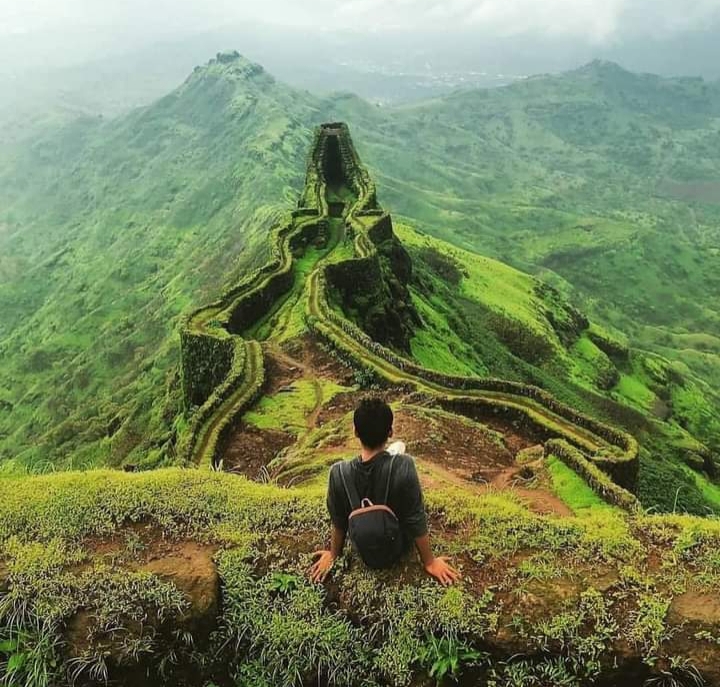
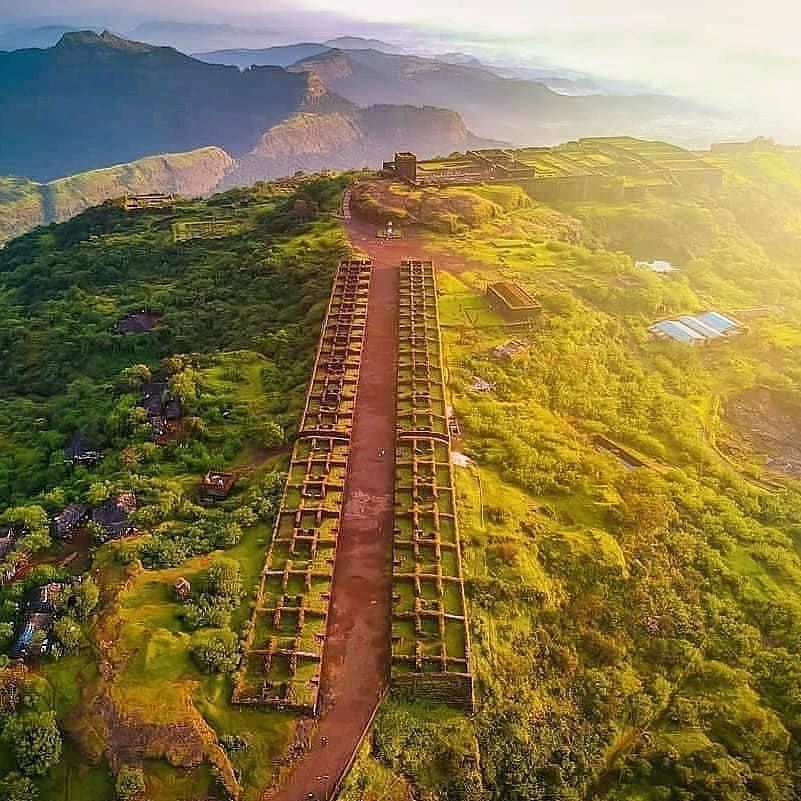
Raigad Fort is another witness to the glorious past of the Maratha empire, be it the coronation of Chhatrapati Shivaji or the various battles that were fought here. The hill fortress was the capital of the Maratha empire during the reign of Chhatrapati Shivaji Maharaj. Though many portions of the fort are in ruins, the remaining structures stand tall, testifying why Raigad Fort was called the ‘King of Forts’ as well as ‘Gibraltar of the East’. There are towers, grand entrances, artificial lakes, a Shiva temple and many other structures inside the fort.
Raigad Fort is a favourite among adventure enthusiasts because you have to either use the ropeway or trek to the fort, which is 2700 feet above sea level. Those who want to trek to the fort need to climb around 1700 steps from the foothills to reach the fort.
Distance from Pune : 131.4 km via Tamhini Ghat Road and Mulshi Road
5. Pratapgad Fort
If you want to indulge in a day full of adventure, history and scenic beauty, Pratapgad Fort is the place to be. It is one of the most well historical marvels in Maharashtra. Pratapgad Fort is also known as the Valour Fort as the heroic battle between Chhatrapati Shivaji Maharaj and Afzhal Khan took place here. The fort is divided into parts – the upper fort and the lower fort. The lower fort is largely occupied by Bhawani temple, whereas the upper fort includes several eye-catching structures.
As Pratapgad Fort is located near Mahabaleshwar, it is frequented by several tourists. Around two to three hours of strolling around are enough to check out every nook and corner of this architectural beauty and its majestic surroundings. The best time to visit is around March and September as the weather remains pleasant during these periods.
Hunting for internships? Read the Article to Know Where to Look! Once you know your interests and prospects. You can start hunting for internships opportunities. Here is how you can start!
Job sites
Websites like Internshala and Linkedin have many jobs and internship listings. Research well! Look for the internship titles you’re interested in, and narrow result down by location, size, industry company rating, pay and more. To get relevant updates in your inbox, create a job alert.
Internships and Job fair
Your college, as well as other students organization often organise career and internship fairs- make sure to attend them as they allow you to connect face-to-face with hiring decision-makers.
Leverage Your Network
Getting a personal recommendation can make all the difference in your internship search, so make sure to reach out to friends, family, colleagues, classmates, professor and alumni to see if they know anyone hiring. Another great strategy is to look up the companies you’re interested in and reach out to employees there for an informational interview – don’t underestimate yourself!
Cold Mailing companies
If you have a dream company in mind but they don’t have any relevant internship you can always try writing them a letter of interest in hopes that they will either contact you when one opens or even create a position for you. It’s a longshot, but worth a try.
Put a word on your social media
Job hunts are as dynamic as technology-you don’t have to stick to the above mentioned traditional methods of job hunting! Put a word on your Instagram stories, make a post on Linked ln and Facebook. opportunities present themselves in the most unexpected places!
A deep dive into the course revolutionising business worldwide.
What is Data Science?
According to Wikipedia Data Science is an interdisciplinary field that uses scientific method, processes, algorithms and system to extract insights from structured and unstructured data.
There is an humongous amount of data being generated every minute and so, industries need experts who can solve problem fast. Currently, many popular universities across the world offer postgraduate programs specialising in Data Science.
Why is Data Science is important for students and businesses?
The importance of data Science brings together the domain expertise from programming, mathematics, and statistics to create insights and make sense of data. When we think about why data science is increasingly becoming important, the answer lies in the fact that the value of data is soaring heights. Data science is high in demand domain and explains how digital data is transforming businesses and helping them make sharper and critical decisions. So data that is digital is ubiquitous for people who are looking to work as a data scientist.
Is Data Science a good career?
Data scientists are in constant demand because it is a data-heavy world! Data scientists are a new growing breed of professionals, highly in demand today. Data science has been called “the sexiest job of the 21st Century” by Harvard Business Review. The Scope of Data science is getting more popular in recent times. Data scientists are professionals who can simplify big data through coding and algorithms and turn it into a problem-solving solution for the business.
What Will I Study?
A chance to study subject like • Machine learning • Data analytics • Business analysis • Data visualisation • Cloud computing • Database systems • Internet technology • Algorithm
What Exams Do I Need To Take?
Most of the universities in the United States prefer students to undertake the GRE/GMAT exam. Many universities in Australia, Canada, UK, Ireland and New Zealand assess the student based on their academic background and may not ask for GRE/GMAT scores.
Career Opportunities?
Being one of the most sought – after courses in these days, Data Science is a field to ripe opportunities for you, not to mention handsome remuneration.
Career option after data science • Business Intelligence Developer • Data Scientist • Marketing Analyst • Statistician • Quantitative Analyst
Hypnotherapy is an adjunctive technique that utilizes hypnosis to aid in the treatment of specific symptoms or health conditions. Hypnotherapy works by inducing a hypnotic state marked by waking awareness that allows people to experience detached external attention and to focus on inner experiences. It is sometimes used as part of a treatment plan for phobias and other anxiety disorders. It is also sometimes used for pain management, weight loss, smoking cessation, and a variety of other applications. Formal explorations in the therapeutic uses for hypnosis began in the late 1700s but did not gain scientific credibility until much more recently. Modern researchers have further explored how hypnosis can be used, which conditions it can treat, and how effective it may be compared to other treatments.
What Hypnotherapy Can Help With
There are many different reasons why a person might want to try hypnotherapy. Research suggests that some possible applications include:
Chronic pain conditions
Dementia symptoms
Nausea and vomiting related to chemotherapy
Pain during childbirth, dental procedures, or surgery
Skin conditions, such as psoriasis and warts
Symptoms of irritable bowel syndrome (IBS)
Symptoms of attention-deficit/hyperactivity disorder (ADHD)
Hypnotherapy may also be used by licensed physicians and psychologists in the treatment of conditions like anxiety disorders, depression, eating disorders, and post traumatic stress disorder (PTSD).
Benefits of Hypnotherapy
Some people may experience dramatic results with hypnotherapy. In other cases, people may simply feel very relaxed. Some of the benefits of hypnotherapy may include:
Awareness: Some people remain fully aware during the entire experience. They recall everything that happens and are even able to have conversations while under hypnosis. Other people may experience states of relaxation that are so deep that they may even feel detached from what is happening.
Focus: Most of the time, we are distracted by our surroundings. Whether the TV is blaring, your kids are demanding attention or your spouse wants to talk, it can be difficult to fully focus on yourself. Our conscious minds are also cluttered. You may be worried about paying a bill, concerned about an upcoming project, or planning tonight’s dinner. The therapy session is intended to break through these day-to-day concerns and allow you to focus completely on the problem at hand.
Relaxation: In the hypnotic state, you are deeply relaxed. Your conscious mind is quieted, allowing your unconscous mind to deeply focus on your issue. You are also calmer, and therefore more receptive to facing your problems or fears.
Most hypnotherapists utilize a series of calming messages, such as “you are safe” and “no one can harm you” to reassure their clients that during hypnosis they can objectively face their problems without having a panicked reaction.
Effectiveness
The effectiveness and impact of hypnotherapy can vary based on the individual and how the treatment is used. Hypnotherapy has been shown to have some degree of efficacy for certain applications, particularly:
Pain reduction and control during dental procedures and childbirth
Reduction in nausea and vomiting in individuals being treated for cancer with chemotherapy
Reduction in the severity of symptoms associated with irritable bowel syndrome (IBS)
While it may help people cope with problems related to stress and anxiety, it may be best applied when used in conjunction with first-line treatments such as cognitive behaviour therapy (CBT) and medications.
Things to Consider
While hypnotherapy is generally safe and well-tolerated, that does not mean that it doesn’t pose some potential risks, such as:
Hypnotherapy can produce false or distorted memories in some cases.
People who are very suggestible may experience a decreased sense of personal control while under hypnosis.
Some people can experience side effects such as anxiety, headaches, or dizziness.
Hypnotherapy may not be appropriate for people who are experiencing symptoms of psychosis such as hallucinations and delusions
Common Misconceptions
Hypnotherapy is still considered controversial, as many mental health professionals dispute its effectiveness. There are a number of myths and misconceptions about hypnotherapy that can affect how people view this therapeutic tool.
Hypnotherapy is often confused with stage hypnosis. Stage hypnotists are performers who are excellent at reading people. They seekextroverts who will put on a great show for the crowd. Whether or not their subjects are truly hypnotized is debatable, but they are willing to go along with the sometimes outrageous suggestions of the stage hypnotist.
Hypnotherapy doesn’t cause you to forget what happened. You will remember the things that occur during your hypnotic state, you will not be asleep or unconscious, and you will be able to break the hypnotic trance at any time.
Hypnotherapy doesn’t cause you to lose control. During hypnotherapy, you remain in control. It is not possible for anyone to force you to do anything against your will, even under hypnosis. You will be tuned in to the work at hand, and so may not pay attention to your surroundings, but you will always be in charge of your own actions, behaviors, and statements.
Being hypnotizable doesn’t mean you are less intelligent. While some people believe that they cannot be hypnotized, research suggests that most people are hypnotizable to a certain degree. Only about 10% of people are difficult or impossible to hypnotize.
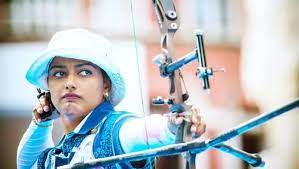
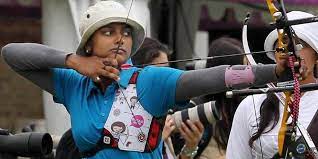
Everyone in the world have some unique talent. The talent to do something vary from person to person. Yes, I believe I have the talent of writing articles. I would say this is my unique talent. Likewise, we haven’t heard a lot about the so called unpopular games. Archery is not as famous a cricket. But Archery is a wonderful sport. The people who has interest in this is also low. This game needs a free and concentrated mind. In this game, concentration plays a major role. Let me ask you a question? Do you know the name of any archers in India? Have you heard of Deepika Kumari? I would say I have heard her name and now I know about her a little bit by writing this article. Come on! Let’s see about Deepika Kumari.
Deepika Kumari Mahato was born on 13th June 1994 in Ranchi, Jharkand. Her father, Shivnarayan Mahato, is an auto-driver and her mother Geeta Mahato, a nurse at Ranchi Medical College. Her interest in Archery came from hitting the mangoes with stones. Many of us did this, but this has laid the strong foundation for her archery career. Deepika’s family was financially unstable and they cannot buy her new equipments to practice. So she used bamboo bow and arrow. After that her cousin helped her to develop and improve her talent.
DEEPIKA KUMARI
DEEPIKA’S PROFESSIONAL CAREER:
She made her breakthrough in 2005, by entering the Arjun Archery academy run by Wife of Jharkand Chief Minister Arjun Munda.
Her professional career started in 2006 by joining Tata Archery Academy in Jhamsedpur. After being sent there, she had uniform and professional equipments and she praticed hard. She only returned home after three years, by winning Cadet World Championship title in November 2009. She is the one to get first medal for India in Archery.
Deepika became the second women to win the World Archery Competition held in 2006.
She won the 11th Youth World Archery Championship in 2009 at her age of fifteen.
In 2010 Common Wealth Games, She won two medals, one in individual event and the other in team event. In the same year, she was awarded Outstanding performance at CWG in the women’s catergory at the Sahara Sports ceremony.
In the 2010 Asian games, she lost in the individual Archery game to a North Korean player in the Bronze-level playoffs. But as a recurve team defeated Taipei of China in the Bronze-level playoffs.
In 2012, She won her first Word Cup individual stage, held in Turkey.
In London Olymbics 2012, She lost to Amy Oliver of Britain in the opening rounds due to relatively high fevers and winds.
In July 2013, she won the gold medal in Archey World Cup stage 3 held at Mendellin.
In September 2013, she won silver in the FITA Archery World Cup.
In 2015, in Stage 3 Archery world Cup, she won bronze in the individual event. She won team Silver with her teammates in the same World Cup.
In November 2015, she won a bronze medal in the Asian Championship with Jayanth Taldukar in the Recurve Mixed Team event.
In April 2016, at the first stage of the World Cup in Shangai, Deepika equaled the Ki-Bo-Bae’s world record of (686/720) in the women’s recurve event.
In November 2019, Deepika Kumari secured an Olympic quota at the Continental Qualification Tournament being held on the sidelines of the 21st Asian Archery Championships in Bangkok.
She won three gold medals In Stage Three World Cup held in Paris 2021.
She recorded the 13th triple gold and became the 11th archer to achieve the feat – in the 15-year history of the Hyundai Archery World Cup.
In 2017, a Biographical Documentry called Ladies First, flimed the life of Deepika Kumari. This movie won at London Independent Festival and was screened in Mallorca Film Festival in October 2017. This movie has also been submitted in Short Documentary category at Oscars.
PadmaSri awarded by Hon’ble Pranab Mukerjee.
AWARDS WON BY DEEPIKA KUMARI
2012 – Arjuna Award by the Government of India
2014 – FICCI Sportsperson of the Year Award
2016 – Padmasri by the Government of India
2017 – Young Achievers award which is felicitated by Vogue.
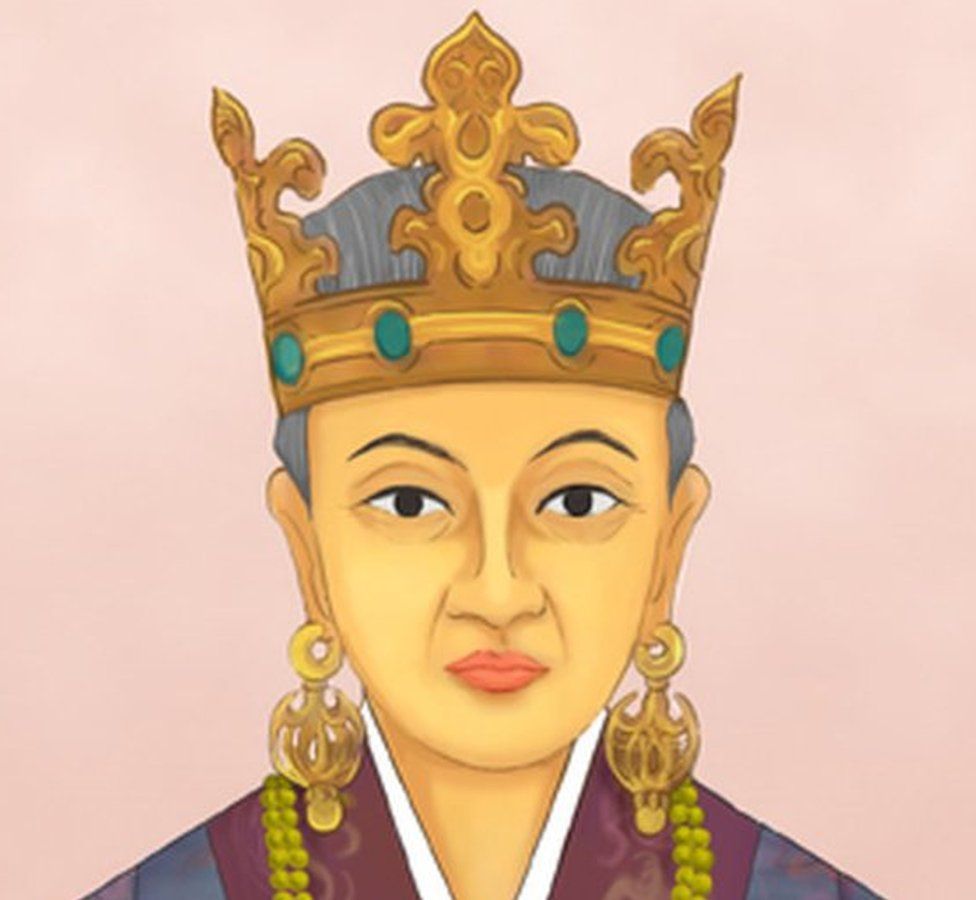
Ayodhya, which is best known as the birthplace of the Hindu god Ram. Also, however, holds special significance for some South Koreans – many believe they can trace their ancestry to the city. This belief comes from several historical Korean stories, which tell the story of an Indian princess – Suriratna – who married a South Korean king and started a dynasty.
Legends say, Princess Suriratna, also known as Heo Hwang-ok, went to Korea in 48 AD, some 2000 years ago, and started the Karak dynasty by marrying a local king. Some Chinese-language texts claim that the then King of Ayodhya had a dream where God ordered him to send his 16-year-old daughter to South Korea to marry King Kim Suro.
Queen Hwang-ok was the princess of the “Ayuta” kingdom, according to Samguk Yusa (Memorabilia of the Three Kingdoms), a popular South Korean book of fables and historical stories. The royal pair was successful. They had a total of 12 sons and lived to be over 150 years old. While children in Korea generally adopt their father’s surname, the queen was disappointed that her offspring would not be able to bear her surname. As a result, King Suro allowed two of their sons to keep her name (Heo), which is still used today.” According to historians, the couple’s descendants number more than six million, or nearly 10% of the South Korean population.
People from the Karak dynasty have also preserved the rocks that are said to have been used by the princess during her sea voyage to Korea to keep her boat stable.
An anthropologist named Kim Byung-mo Ayuta appeared to confirm the widely held belief that Ayuta was actually Ayodhya, as the two names are phonetically similar.
An agreement was signed to develop Ayodhya and Gimhae as sister cities in 2000.
Then in 2001, more than 100 historians and government representatives, including the North Korea ambassador to India, unveiled Queen Hwang-ok’s memorial on the west bank of the River Saryu in Ayodhya.
In 2016, a Korean team presented the Uttar Pradesh Government with a proposal to expand the memorial. On the eve of Diwali, South Korean first lady Kim Jung-sook lay the foundation stone for the enlargement and beautification of the current memorial on November 6, 2018. She paid her respects at the Queen Heo Memorial, attended a ground-breaking ceremony for the memorial’s upgrade and beautification, and joined the current Chief Minister of Uttar Pradesh, Yogi Adityanath, at an elaborate Diwali celebration in Ayodhya that included cultural shows and the lighting of 300,000+ lights on the banks of the Saryu River.
As per reports, every year, hundreds of South Koreans visit Ayodhya for paying homage to their legendary queen Heo Hwang-ok.
Assam is is a state in northeastern India, south of the eastern Himalayas along the Brahmaputra and Barak River valleys. Assam covers an area of 78,438 km^2. The state is bordered by Bhutan and Arunachal Pradesh to the north; Nagaland and Manipur to the east; Meghalaya, Tripura, Mizoram and Bangladesh to the south; and West Bengal to the west via the Siliguri Corridor, a 22 kilometres wide strip of land that connects the state to the rest of India. Assamese is the official and most commonly spoken language of the state, followed by Bengali, which is official in the Barak Valley and Bodo which is official in Bodoland Territorial Region.
Assam is known for Assam tea and Assam silk. The state was the first site for oil drilling in Asia. Assam is home to the one-horned Indian rhinoceros, along with the wild water buffalo, pygmy hog, tiger and various species of Asiatic birds, and provides one of the last wild habitats for the Asian elephant. The Assamese economy is aided by wildlife tourism to Kaziranga National Park and Manas National Park, which are World Heritage Sites. Dibru-Saikhowa National Park is famed for its feral horses. Sal tree forests are found in the state which, as a result of abundant rainfall, look green all year round. Assam receives more rainfall than most parts of India; this rain feeds the Brahmaputra River, whose tributaries and oxbow lakes provide the region with a hydro-geomorphic environment.
Assamese Culture is traditionally a hybrid one developed due to assimilation of ethno-cultural groups of Austric, Dravidian, Tibeto-Burman and Tai origin in the past. Therefore, both local elements or the local elements in Sanskritised forms are distinctly found.
The modern culture has been influenced by events in the British and the post-British era. The language was standardised by American Baptist Missionaries such as Nathan Brown, Dr. Miles Bronson and local pundits such as Hemchandra Barua with the form available in the Sibsagar (Sivasagar) District (the ex-nerve centre of the Ahom Kingdom).[citation needed]
Increasing efforts of standardisation in the 20th century alienated the localised forms present in different areas and with the less-assimilated ethno-cultural groups (many source-cultures). However, Assamese culture in its hybrid form and nature is one of the richest, still developing and in true sense is a ‘cultural system’ with sub-systems. Many source-cultures of the Assamese cultural-system are still surviving either as sub-systems or as sister entities, e.g. the; Bodo or Karbi or Mishing. It is important to keep the broader system closer to its roots and at the same time focus on development of the sub-systems.
Some of the common and unique cultural traits in the region are peoples’ respect towards areca-nut and betel leaves, symbolic (gamosa, arnai, etc.), traditional silk garments (e.g. mekhela chador, traditional dress of Assamese women) and towards forefathers and elderly. Moreover, great hospitality and bamboo culture are common.
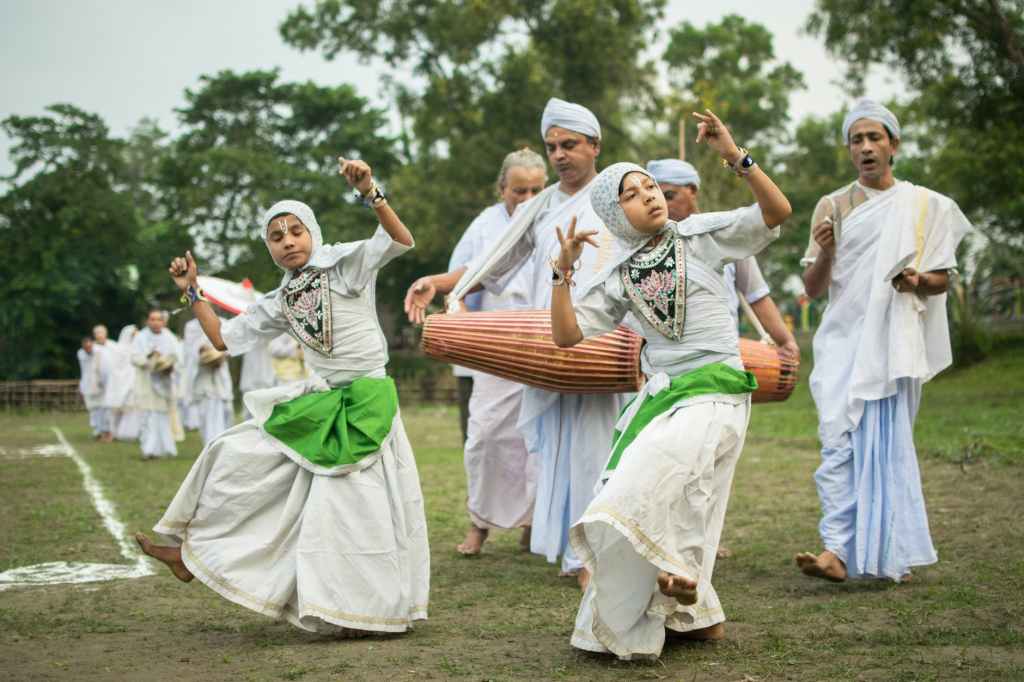
Bihu is the most popular folk dance of Assam. Bihu dances are performed by young boys and girls during the Bihu festivities which represent youthful passion, reproductive urge, and joy.It is characterized by brisk dance steps, and rapid hand movement. Dancers wear traditionally colorful Assamese clothing.
Nutrients A, C, and E, just as the mineral zinc, contain cell reinforcements that can help forestall macular degeneration. It’s a condition wherein the macula — the piece of the eye that controls focal vision — disintegrates.
Food hotspots for these significant supplements incorporate an assortment of bright vegetables and organic products, for example,
carrots
red peppers
broccoli
spinach
strawberries
sweet potato
citrus
Food sources wealthy in omega-3 unsaturated fats, like salmon and flaxseed, are likewise suggested for better eye wellbeing.
2.Don’t fail to remember the carotenoids
A couple of different supplements are additionally keys to further developing visual perception. Among them are lutein and zeaxanthin, which are carotenoids found in the retina. You can likewise discover them in verdant green vegetables, broccoli, zucchini, and eggs.
Lutein and zeaxanthin can likewise be taken in supplement structure. These carotenoids assist with securing the macula by further developing shade thickness in that piece of the eye, and retaining ultraviolent and blue light.
3.Stay fit
Indeed, practice and keeping a sound weight can help your eyes, not simply your waistline. Type 2 diabetes, which is more normal in individuals who are overweight or stout, can make harm the small veins in the eyes.
This condition is called diabetic retinopathy Trusted . A lot of sugar flowing in your circulatory system harms the fragile dividers of your corridors. Diabetic retinopathy causes the tiny supply routes in your retina — the light-touchy back piece of the eye — to spill blood and liquid into the eye, hurting your vision.
4.Follow the 20-20-20 principle
Your eyes buckle down during the day and need a break from time to time. The strain can be particularly serious on the off chance that you work at a PC for extended lengths all at once. To facilitate the strain, keep the 20-20-20 standard.
That implies like clockwork, you should quit gazing at your PC and take a gander at something 20 feet away for 20 seconds.
5.Quit smoking
You realize smoking is terrible for your lungs and your heart, also your hair, skin, teeth, and pretty much every other body part. That incorporates your eyes, as well.
One of the most tragic instances in history would be that of the holocaust – a word that in itself is a definition of six years of European geopolitics. In Russia, Palestine and China, the expulsion of the White Army, the expulsion of the Arabs and the brutual suppression of cultures across China in the name of cultural revolution respectively bring to picture the way in which states and not just people can sometimes be the enemy of people. However, there have been several such instances in history, most of them hidden because they were carried out by the more ancestors of the ones who ended up being economically and intellectually influential communities.
A poster calling out for Chinese Cultural Revolution
Human history is a record of forced displacements both internal and external, ethnic cleaning and genocides and murders both to the dismay and sponsored by states. When Captain Cook discovered the down under, it led a massive import of British criminals on the continent. With them came officers, scientists and explorers. The businessmen and civilians searching for more opportunities came in later. The people of the continent – the Australian arboginals, the Maoris from Oceania and many more tribes were reduced to a mere holder of small patches of lands and often no land at all by the British who had a superior military.
When the first Irish and British settlers landed in the new World of America, the red Indians offered them food and shelter which soon became a situation where the Red Indians had to fight for the survival of their lives and their cultures which was systematically and quite institutionally taken away by the New World settlers. Similarly, when the Spanish invaded Latin America, it meant a complete and absolute dissolution of their traditions and a genocide that would annihilate their population to an extent where even after 400 years, they would not attain the same.
Machu Pichu stands as a testimony to the Grand Incan Empire in the Andes before the Spanish arrived.
To add to all these miseries are the tales of the Rohingya community from Myanmar, the Tamils in Sri Lanka, the Kashmiri Pandits in Indian state of Jammu and Kashmir, the now diminishing sea faring communities in Philippines and Malaysia and many more. Japanese and Italian unifications were also carried out at the cost of the local traditions, cultures and ways that the communities living there had been practicing for a millennia. In India, the use of English and Hindi have slowly gobbled up on the rich culture of local languages that the communities had. In fact, many communities from the state of Bihar and Uttar Pradesh have completely given up on their languages. Bihar – a state where only 6% people had Hindi as their mother tongue now has a minority of about 20%!!
World loses about 1 language every 15 days!!!
Wikipedia defines Indigenous people as – “Indigenous peoples, also referred to as first people, aboriginal people, native people, or autochthonous people, are culturally distinct ethnic groups who are native to a place which has been colonised and settled by another ethnic group. ” But, a broader definition is the fact that indigenous people are defined by their cultures which is at a steady loss across the globe. The most important thing is to treasure the fragments of their traditions that still remain. Because a rainbow is better a rainbow.
Happy International Day for the Indigenous communites.
Tamil Nadu is a southern state of India which is supremely rich in culture and heritage. Known to be one of the oldest civilisations in the world, the people of Tamil Nadu belong to the prestigious Dravidian Family. Tamilians also, like other South Indians, take much pride in their rooted Tamil culture and make great efforts to protect their 2000 years old history. The state has been ruled by the Cholas, Pandyas and the Pallavas and has been flourishing since. The art and architecture have been their creations which are used and maintained even today.
Out of 74 million Tamil people in the world, around 62 million live in Tamil Nadu. Rest of the Tamilians are scattered in different parts of India and the world, mostly in the northeast of Sri Lanka. People who live in the state understand the ethnicity of their culture and how it marks their identity in the world. They are very adherent towards their rituals and traditions like following the caste system, religion and community traits, etc.
Tamil is the official language of the state. It is a derivative of Brahmi script, and the letters represent sounds, much like the Mandarin language. Not only most of the people in Tamil Nadu speak Tamil, but it is also spoken by many in Sri Lanka, Mauritius, Singapore, and Malaysia.
RELIGION – A great amount of relevance is given to a person’s religion when it comes to personal identity. Although four-fifths of the population of the state are Hindus, rest of them are divided in Islam, Christianity, and Jainism. Their rituals include deity worship and animisms like tree worship, animal worship and stars and planets worship. Many Hindus are followers of different religious institutions called ‘Matha’ which are the centres of Monastic studies.
MUSIC AND DANCE – Tamil Music has evolved over the years. The most important form of music was the Carnatic music which considered only for the elite who could understand the intricacy of music. For others, Telugu songs and a mix of traditional numbers from a source of entertainment.
Bharatnatyam is the official dance form of Tamil Nadu, recognized all over India and the world. It’s a complicated dance form with subtle moves of body parts and expressions. Some other folk dances like Parai, Villuputtu Karakaatam, and Kuthu are also performed by local people including tribal people.
TRADITION AND ARCHITECTURE – Most traditional art are religious in some form and usually centres on Hinduism, although the religious element is often only a means to represent universal—and, occasionally, humanist—themes.
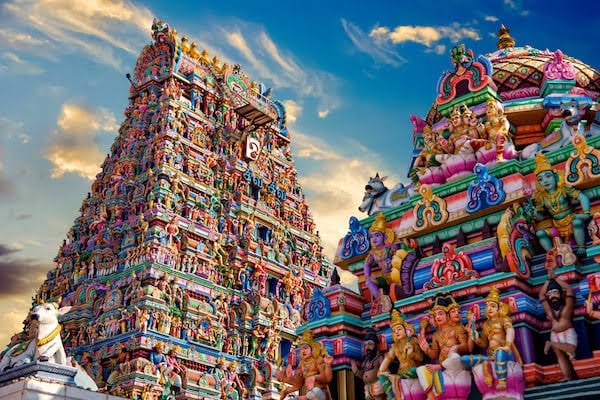
The most important form of Tamil painting is Tanjore painting, which originated in Thanjavur in the 9th century. The painting’s base is made of cloth and coated with zinc oxide, over which the image is painted using dyes; it is then decorated with semi-precious stones, as well as silver or gold thread. A style which is related in origin, but which exhibits significant differences in execution, is used for painting murals on temple walls; the most notable example are the murals on the Kutal Azhakar and Meenakshi temples of Madurai, the Brihadeeswarar temple of Tanjore.
Tamilnadu sculpture ranges from elegant stone sculptures in temples, to bronze icons with exquisite details. The medieval Chola bronzes are considered to be one of India’s greatest contributions to the world art. Unlike most Western art, the material in Tamil sculpture does not influence the form taken by the sculpture; instead, the artist imposes his/her vision of the form on the material. As a result, one often sees in stone sculptures flowing forms that are usually reserved for metal.
“WHERE SHIVA EXISTS IN EVERY STONE , IS UTTRAKHAND “
And this statement gives the justification of why Uttarakhand is know as “the land of gods “. Uttarakhand was formed on 9th November 2000 as the 27th State of India, when it was carved out of northern Uttar Pradesh. Located at the foothills of the Himalayan mountain ranges, it is largely a hilly State, having international boundaries with China (Tibet) in the north and Nepal in the east. On its north-west lies Himachal Pradesh, while on the south is Uttar Pradesh. It is rich in natural resources especially water and forests with many glaciers, rivers, dense forests and snow-clad mountain peaks. Char-dhams, the four most sacred and revered Hindu temples of Badrinath, Kedarnath, Gangotri and Yamunotri are nestled in the mighty mountains.
LET ME GIVE YOU A BRIEF ABOUT THE MAJOR TEMPLES FOR WHICH UTTARAKHAND IS FAMOUS FOR :
PANCH BADRI ( 5 BADRI )
a. BARDINATH : Badrinath is the northern Dham of the four sacred Dhams called Char Dham. Though the Badrinath temple is believed to date to the Vedic period, the current structure was built in the 8th century AD by Adi Shankaracharya. The other three dhams are Rameswaram in the south, Dwarka in the west and Jagannath Puri in the east; all of these four temples are dedicated to god Vishnu. Adi Shankara’s basic intention was to unite the country under the banner of Hinduism. The temple, which had been subjected to damage due to snow avalanches and landslides, several times in the past, was last restored in the 19th century. Badrinath is also part of Chota Char Dham, four sacred temples in Uttarakhand. The others include the Shiva temple of Kedarnath and the sources of the holy rivers Ganges and Yamuna.
b. AADI BADRI : In ancient times, when approach to the main shrine of Badrinath was closed due to weather conditions, pilgrims worshipped Vishnu at this temple. Adi Badri, also known as Helisera according to revenue records, is a tiny temple complex enclosed within a space of 14 meters (46 ft.) X 30 meters (98 ft.). The height of the temples vary from 2–6 meters (6.6–19.7 ft.).
c. BHAVISHAY BADRI: According to the legend of Bhavishya Badri (literally “Badri of the future”), when evil transcends the world, the mountains of Nara and Narayana would block up the route to Badrinath and the sacred shrine would become inaccessible. The present world will be destroyed and a new one established. Then, Badrinath will appear at the Bhavishya Badri temple and be worshipped here, instead of the Badrinath shrine.
d. DHAYAN BADRI : The legend of Dhyan Badri (meditating Badri) is linked to the Urvashi, son of King Puranjaya of the Pandavas lineage who meditated in the Urgam region and established the temple for Vishnu. The image of Vishnu is four-armed, made of black stone and in a meditative posture.
e. YOGADHYAN BADRI : Yogadhyan Badri, also called Yoga Badri, is located at Pandukeshwar at the elevation of 1,829 meters , close to Govind Ghat and is as ancient as the main Badrinath shrine . Legend has it that King Pandu, father of the five Pandavas – heroes of the Hindu epic Mahabharata, meditated here to god Vishnu to cleanse him of the sin of killing of two mating deer, who were ascetics in their previous lives. The Pandavas were also born here and Pandu died and attained salvation here. Pandu is believed to have installed the bronze image of Vishnu in the Yogadhyan Badri shrine. The image is in a meditative posture and thus the image is called Yoga-Dhyan (meditative) Badri. The idol is life size and has been carved from Shaligram stone. According to legend, the Pandavas, after defeating and killing their cousins Kauravas in the Mahabharata war, came here to repent.
2. PANCH KEDAR ( 5 KEDAR )
A folk legend about Panch Kedar relates to the Pandavas, the heroes of the Hindu epic Mahabharata. The Pandavas defeated and slayed their cousins — the Kauravas in the epic Kurukshetra war. They wished to atone for the sins of committing fratricide and Brahmanahatya (killing of Brahmins — the priest class) during the war. Thus, they handed over the reins of their kingdom to their kin and left in search of lord Shiva and to seek his blessings. First, they went to the holy city of Varanasi (Kashi), believed to be Shiva’s favorite city and known for its Shiva temple. But, Shiva wanted to avoid them as he was deeply incensed by the death and dishonesty at the Kurukshetra war and was, therefore, insensitive to Pandavas’ prayers. Therefore, he assumed the form of a bull (Nandi) and hid in the Garhwal region.
Not finding Shiva in Varanasi, the Pandavas went to Garhwal Himalayas. Bhima, the second of the five Pandava brothers, then standing astride two mountains started to look for Shiva. He saw a bull grazing near Guptakashi (“hidden Kashi” — the name derived from the hiding act of Shiva). Bhima immediately recognized the bull to be Shiva. Bhima caught hold of the bull by its tail and hind legs. But the bull-formed Shiva disappeared into the ground to later reappear in parts, with the hump raising in Kedarnath, the arms appearing in Tungnath, the face showing up at Rudranath, the nabhi (navel) and stomach surfacing in Madhyamaheshwar and the hair appearing in Kalpeshwar. The Pandavas pleased with this reappearance in five different forms, built temples at the five places for venerating and worshipping Shiva.
3. PANCH PRAYAG( FIVE PRAYAG )
VISHNU PRAYAG : The Alaknanda River, which originates from Satopanth glacier is joined by the Dhauli Ganga River near Joshimath . Alaknanda flows in front of the Badrinath temple, one of the most revered Hindu shrines. Dhauli Ganga originates from the Niti Pass, after traveling a distance of 25 km (15.5 mi) from its source to the Vishnu Prayag
2. NAND PRAYAG :Nand Prayag is the second Prayag in the cascade sequence of the confluences where the Nandakini River joins the main Alaknanda River. According to one tale, a noble King Nanda performed Yagnya (fire-sacrifice) and sought blessings of God. Hence, the confluence is named after him.
3. KARNA PRAYAG : KARN Prayag is the location where Alaknanda River is joined by the Pindar River that originates from the Pindar glacier, below the Nanda Devi Mountain range. The epic Mahabharata legend narrates that Karna did penance here and earned the protective gear of Kavacha (armour) and Kundala (ear rings) from his father, the Sun god, which gave him indestructible powers. The name of the confluence is thus derived from the name of Karna.
4. RUDRA PRAYAG : At Rudra Prayag the Alaknanda meets the Mandakini River. The confluence is named after god Shiva, who is also known as Rudra. According to a widely narrated legend, Shiva performed the Tandava here, Tandava is a vigorous dance that is the source of the cycle of creation, preservation and dissolution. Shiva also played his favourite musical instrument the Rudra veena here. By playing the Veena, he enticed god Vishnu to his presence and converted him to water.
5. DEV PRAYAG : Dev Prayag is the confluence of the two holy rivers, the Bhagirathi – the chief stream of the Ganges and the Alaknanda. It is the first prayag on the way to Badrinath. Beyond this confluence, the river is known as Ganges. The holiness of this place is considered equal to the famous Triveni sangam confluence at Allahabad where the Ganges, Yamuna and Saraswati rivers merge.
A part from temples , there are many other famous place to pay a visit for . some of them are , Dehradun , Nainital , Mussoorie , Rishikesh, Haridwar , Almora , Kausani , Pithoragarh , Chopta , Ranikhet , valley of flowers , etc. One in his life time should make a visit to this state , to see nature from you soul , from your eyes . It is a heaven on earth .
Global warming yet again comes to news as it has been for the past soo many years and there’s gonna be nothing we are going to do about it once again. Even then, as a moral duty, I feel this compelling desire to inform all of my fellow malefactors of the supplementary and thoroughly under-appreciated results of our activities.
Let’s bestow upon them our much needed, though short term, attention. Today, I read on the newspaper about how the Ladakh glaciers are retreating due to global warming and decreased winter precipitation and that the Atlantic Meridional Overturning Circulation (AMOC)- a prominent warm ocean current belt particularly important for Europe and by extension, the whole earth has weakened over the centuries and reached a tipping point.
Lets start with the issue of the Ladakh Glacier. “The Pensilungpa Glacier located in Ladakh’s Zanskar Valley is retreating due to an increase in temperature and a decrease in precipitation during winters”, a recent study conducted by a team of scientists from the Wadia Institute of Himalayan Geology(Dehradun) revealed. Now with the increasing temperatures and retreating glaciers, it might be very well possible for the current snowfall in those areas to be replaced with rainfall: the snowfall that is responsible for balancing temperature of the lower altitude zones. It is now very much a possibility that the summer and winter patterns of surrounding regions are very much likely to be changed. We might very well be having winter rains real soon people, and floods.
And now, lets move towards the AMOC- The Atlantic Meridional Overturning Circulation-a result of difference in the water’s density(caused due to temperature and salinity difference). Well, that plus the combined effort of continental boundaries and Coriolis force(due to gravity). A large system of ocean currents, it is quite prominent in the Atlantic ocean. It is quite easily recognizable with the northward flow of warm, salty(salt dissolving capability increases with temperature. In colder regions, after being provided a sufficient time to cool off, these waters descend as denser and cold waters) water in the upper layers and a southward flow of colder, deep waters. Global warming is one of the main reasons of the slowing down of this current, contributing by causing the Arctic circle to warm, Greenland(a prominent ice sheet zone) to melt, rainfall to increase and the flow of fresh water to the Northern sea to intensify(It initially had high salinity due to no fresh water river drainage and less intermixing caused by ocean currents). Though, it is being said the rising temperature of the Indian ocean will keep the current going. The increased precipitation in the Indian ocean will draw winds from other parts of the world, lowering the amount of rainfall in the Atlantic ocean. It will increase the salinity of the AMOC current waters and increase the strength of the flow of current.
Seems like the global warming is creating a problem and further creating another one with the purpose of solving the first one and somehow completely increasing both the problems together. Wait, replace the global warming with humans. Quite amusing, how we managed to create a string of issues and now they are finding more and more beads to stitch, and we sit by and watch it all unfold. Well, not all of us, obviously. Most of us don’t even know of these unique products of our everyday activities. But, now that we are at it, we will let them know and invite, or rather force them all to join us in the midst of the unfolding of a future disaster, as we all sit by and do nothing.
I have started this chain, would be later adding more to it. You all share it. After all, the more the merrier. Right?
The motivational genre is concentrated on motivating the readers to achieve their goals. It focuses on problems and helps to solve the puzzle. It also helps to improve the character and the personality of the readers.
Motivation:
The term motivation is derived from the Latin word, ‘Movere’ meaning ‘To Move’. Motivation can be referred to as a combination of motive and action. Motivation is an action word that influences every aspect of our daily lives. Motivation is fundamental in the level of success and individual attains.
Characteristic of motivational literature:
In Literature, “Motivation” is defined as a reason behind a character-specific action or behavior. This type of behavior is characterized by the characters on consent and willingness to do something. Characters have some motivation for every action, as do people in real life. Therefore, The implicit or explicit reference to a motivation of a character makes the piece of literature seems closer to life and reality.
Indian motivational literature:
The God of Small Things by Arundhati Roy
Arundhati Roy is one of the prominent writers in India. Her famous works are “The God of Small Things” and “The mystery of utmost happiness”. The God of Small Things is an inspirational encounter with two twin sisters who go through a series of unfortunate events in life. This work is a big booster of inspiration that helps us to boost up our self moral self-esteem and inspiration to embark upon a new beginning full stop the book will make you realize that need for change on the futility to become rigid in life.
If you are happy in a dream, does that count?
African literature:
I know why the caged bird sings by Maya Angelou
I know why the caged bird sings is a 1969 autobiography describing the early years of American writer and poet Maya Angelou. It shows how the strength of character and the love of literature can help overcome racism and trauma. This autobiography touches on themes such as race, sexuality, love, and identity. Struggles to separate sexuality and love in two separate category due to the lack of love from her family and on account of being sexually abused.
Hoping for the best, prepared for the worst, and unsurprised by anything in between.
Austrian literature:
Man’s search for meaning by Viktor E Frankl
Viktor E Frankl is an Austrian doctor, a writer, and a Holocaust from the Nazi concentration camp. This book is about how he lived inside the camp and how he managed to survive. And to stand for the title he talks about logotherapy that is a person needs a reason to survive. This book is full of meaning and hope.
Those who have a “why” to live, can bear with almost any “how”.
Lebanese literature:
The Prophet by Kahlil Gibran
The Prophet is a short book with enormous wisdom within the pages. The Prophet provides timeless spiritual wisdom on a range of subjects including giving, eating and drinking, clothes, buying and selling, crime and punishment, laws, teaching, time, pleasure, religion, death, beauty, and friendship. It is not a religious book but it is spiritual. In this book every word is like a poem, it has its rhythm and rhyme schemes.
“Your children are not your children you may give them your love but not your thoughts for they have their own thoughts.”
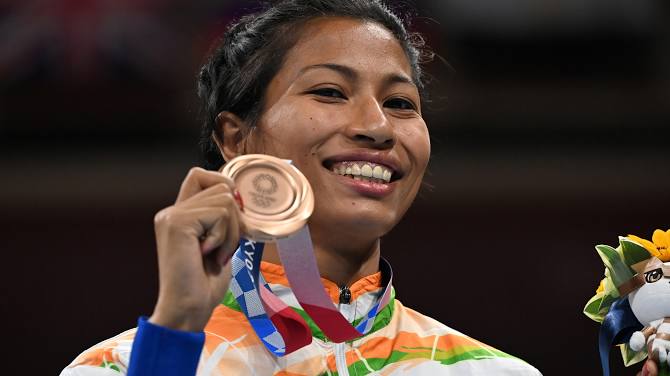
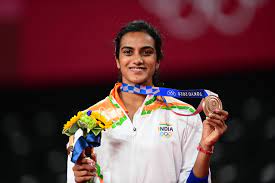
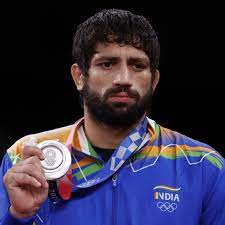
India is nation of 1.3 billion individuals yet we are aching for gold medals. Though little nations like France, Japan and Germany have more gold medals than our complete awards till now. What could be the explanation ? Do our people need potential or difficult work ? No, we have potential however we don’t utilize it.
Since our youth we are advised to do well in examinations, we scarcely have any games period in our school. Numerous nations have sports like gymnastic, volleyball and swimming in their school however we don’t have any. A few guardians don’t permit their children to play any games since they imagine that it could influence their scholarly.
In our nation sports like cricket are given more significance. Cricketers are viewed as God though scarcely anybody knows the names of our Hockey players which is our national sport. Cricket isn’t directed in Olympics. Simply 10 to 12 nations play cricket and we feel extraordinary in the wake of winning a World cup directed between those 12 nations. Cricket is a game which brought by Britishers while games like Kabaddi and wrestling are from India.
Our Government additionally spend extremely less cash on sports. A portion of the players don’t have appropriate equipment. They additionally need to battle a great deal since some of them come from small towns. They need to confront analysis which the players of different nations don’t confront.
After this load of issues we anticipate that our country should win medals and assuming we don’t, we censure our players. We have been playing Olympics from 100 years while China from 69 years then additionally they have all out 250 gold medals though our all out awards are scarcely 40. Our players are not lacking anyplace they simply need our help and legitimate offices. Assuming we need our nation to more win medals in next Olympics then we should chip away at these issues.



















 Eduindex
You must be logged in to post a comment.