COMMUNALISM: A CURSE

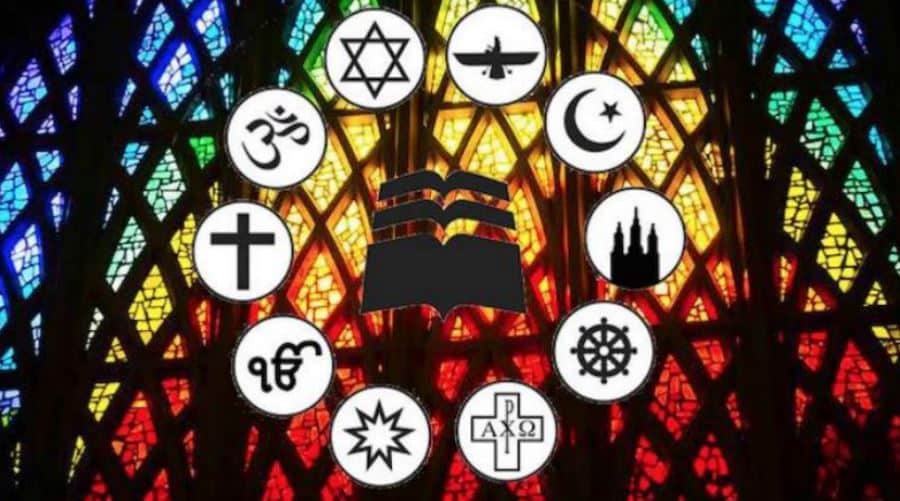
The Christian is not to become a Hindu or a Buddhist, nor a Hindu or a Buddhist to become a Christian. But each must assimilate the spirit of the others and yet preserve his individuality and grow according to his own law of growth.…SWAMI VIVEKANANDA

HOW DIABOLICAL!

The most glorious tradition of the Indian civilization is the basic unity among the people in spite of the various diversities that exist in our life. There are different religions in India and in matters of food, dress, language and manners and custom, we are distinctly different. But in spite of all these, we are Indians from the very beginning, birth to death and we are proud of this unity.

OUR COUNTRY HAS TRACKED ITS PASSAGE

But such divisive forces as communalism, linguism and religious feeling often plague our country. Communalism is the greatest evil. It is responsible for the division of India. The British fanned the communal feelings of the Muslims and the latter wanted a separate State for themselves. Thus, Pakistan was created. Now we suffer the consequences of the partition of India. Had we lived together, many problems such as population, food and shelter could not have been so acute. Moreover, our long- standing disputes over the borders would not have poisoned our relationship.

SOCIETY AND ITS PEACE ARE ON TARGET

Communal feelings are often whipped up in India by interested people and parties. There are often quarrels between two communities in States like Bihar and Uttar Pradesh and they often culminate in murders. Different religious sects or linguistic minorities raise their voice for separate States. Such fanaticism will lead to the division of India into many parts. India will be weakened and foreign powers will take advantage of the weakness of India. India to-day has to deal with the Punjab problem, Gorkha problem in Darjeeling, Jharkhand problem, the problem of tribals in Tripura, Boro problem in Assam and many other communal problems. Some politicians are responsible for whipping up casteism for their self-interest. This is very unfortunate. There are people of different regions and languages, casts and creeds but there is basic unity in India’s culture and religion.

MAKE PEACE…..NO WAR

So, it is necessary to combat the evils of communalism. India is one and indivisible. United India can hold its own and play a significant part in the international world. Communal harmony is the need of the time. Fanaticism must be checked so that India’s unity is not damaged.

Global research on coronavirus disease (COVID-19)

WHO is bringing the world’s scientists and global health professionals together to accelerate the research and development process, and develop new norms and standards to contain the spread of the coronavirus pandemic and help care for those affected.

The R&D Blueprint has been activated to accelerate diagnostics, vaccines and therapeutics for this novel coronavirus.

The solidarity of all countries will be essential to ensure equitable access to COVID-19 health products.

Global research database

WHO is gathering the latest international multilingual scientific findings and knowledge on COVID-19. The global literature cited in the WHO COVID-19 database is updated daily (Monday through Friday) from searches of bibliographic databases, hand searching, and the addition of other expert-referred scientific articles. This database represents a comprehensive multilingual source of current literature on the topic. While it may not be exhaustive, new research is added regularly.

The WHO evidence retrieval sub-group has begun collaboration with key partners to enrich the citations and build a more comprehensive database with inclusion of other content. The database is built by BIREME, the Specialized Center of PAHO/AMRO and part of the Regional Office’s Department of Evidence and Intelligence for Action in Health.

For further information or questions, please contact the WHO Library via email.

Disclaimer: the designations employed and the presentation of the material in publications listed in this database does not imply the expression of any opinion whatsoever on the part of WHO concerning the legal status of any country, territory, city or area or of its authorities, or concerning the delimitation of its frontiers or boundaries. Dotted and dashed lines on maps represent approximate border lines for which there may not yet be full agreement.

The mention of specific companies or of certain manufacturers’ products in publications listed in the database does not imply that they are endorsed or recommended by WHO in preference to others of a similar nature that are not mentioned. Errors and omissions excepted, the names of proprietary products are distinguished by initial capital letters.

By listing publications in this database and providing links to external sites does not mean that WHO endorses or recommends those publications or sites, or has verified the content contained within them. The database has been compiled without warranty of any kind, either expressed or implied. The responsibility for the interpretation and use of publications included in this database lies with the reader. In no event shall WHO be liable for damages arising from its use.

Modernism & Postmodernism – II

The 2nd half 20th Century – the socio cultural movements that effected people are merging and becoming more. Post Colonial literature became  popular, Ngugi wa thiongo a Kenyan thinker – Moving the Centre – The plurality of culture and literature, the shift from Eurocentric understanding of the world. Grand narratives centred around the Eurocentric understanding, and postcolonial works thus became a shift from these Grand Narratives. The way art aesthetics and literature were looking at the past and the grand narratives became problematic, because people felt a need to bring back the past, but simultaneously in every country there was this need to bring something new back. Every age becomes a response to a previous period and the previous period is a response to resistance. Literatureis not something that is just to entertain people, the position of literature is embedded in our social systems, part of your existence. To understand postmodernism, is to lie on modernism. France Fanon, Meena Kandasamy, examples of theoretical perception are taken forward with people of different discipline. Thiongo’s  work becomes important for the possibility of multiple centres and multiple meanings – a product of European imperialism and internal resistance as well. 

Mcluhan’s  Medium as message, depending on the medium the reachability is different and the access as well is differing. 

Susan Sontag – a revolt against  ‘the departure from modernism can be regarded as new sensibility, a revolt against canonised modernism’s avant-guard revolution’  – Critiquing the high culture of Modern Capitalist world, against the cannon. On one hand Modernism tried critiquing the Grand narratives and on the other it cerated a canon for itself. 

Modernism is adopting plurality like Postmodernism, but was lamenting fragmentation even though working through it, trying to work on a wholesome unity, they continued to believe that with lit or artistic expression we may achieve a ‘self’ while postmodernism are embracing fragmentation, praising dissent, rather celebrating fragmentation. 

Arnold Toynbee – birth of postmodernism, and questioning the tradition moral values and beliefs (grand narratives); and by questioning this he’s talking about the development of cultural modernists and the different understanding of the world, a better apparatus of understanding world and culture. Grand Narratives continue to be over – aching and totalising and replace or silence other narratives around us. And how mini-narratives can replace grand narratives by promoting plurality and heterogeneity as it becomes local. [Culture in modernism – a cultural innovation – development of new meanings.] Postmodernism is branching out to different ways, questioning the requirement and the need for plurality and heterogeneity.  

Modernism & Postmodernism – I

1922 – TS Elliot’s Wasteland & James Joyce’s Ulysses, Virginia Woolf – Jacob’s Room

1927 – Virginia Woolf – To the lighthouse.

1924 – Manifesto of the Surrealist Moment – Andre Bretel

1937 – Guernica – an anti-war painting. 

1914 – Stravinsky – Rise of Spring

Before Modernist was the Victorian Period, certain set of practices that was held sacrosanct up until the 1920’s, and everything that came out post 1920’s questioned everything. Linear chronological narrative was held sacrosanct for ages, and Elliot, James Joyce, Virginia Woolf were subservient to these narrative, alongside the impressionist, and the Credo of Modernism ‘make it new’ campaign by Ezra Pound; Modernist thinkers and philosophers stood for renovation and experiments, ‘Avant Garde’ ‘Sapere Aude’ (dare to know – courage to chart new territories) – after WWI. 

Theoretical justification form this break of the past ? Why ? The central image of modernism was a big large void that defined Modernism – Scepticism/disbelief/boredom/disillusionment/restrictive and that this is not ‘it’, and to replace it with something new; and everything that was held important started falling apart. The science that was to make everything better couldn’t hold, the centre was falling apart and one couldn’t make sense of it, here structuralism to poststructuralism – Derrida – meaning is differing. 

1990 – Virginia Woolf – Modern Fiction – in the pre-verbal or pre-literate thought your words are not linear, because it’s happening in your mind, therefore chronological pattern never works, it’s always in a flux, therefore she suggests “stream-of-consciousness” – a randomness of a narrative – no structure, a linear mode of storytelling – Virginia Woolf’s Mrs. Dalloway. 

Purist, Exclusivist/Universalist – to contain a single meaning – something that is questioned by Modernism. Meta Narratives/Grand Narratives that dictate the Euro – Centric understanding of the world, that make things/life better or easier – Marxism, Religion – Christianity – Redemption. 

Single Epistemology (the theory of knowledge) 

Post Colonial/Gender/Race came in complicating others. 

Moving the Centre by Ngugi wa thiongo, and Afrocentrism. 

Skincare

This is a topic that each one of us need to address, and over the years, there is definitely been a rise in discussions on but what has predominantly tampered these discussions are the issues of finance, because skincare isn’t just for the middle class or the elites, it’s is for everyone, even if the common consensus is not for the same. 

Undoubtedly, there are startups and other companies that cater to the lower side of budget scale, and even deliver a somewhat mediocre result, but it still isn’t cost effective for everyone. 

Next, the complicated process that is served to us, makes us blinded towards what our needs are or what our skin needs, we are normalised to ignore the nourishments our skin needs, the lil’ TLC we deserve, rather we are fished by companies, complicating the process and many celebrities add more to this complication, just because it suits their skin, it doesn’t necessarily suit yours, and these celebrities are more often than not are paid to promote a certain product, or are using products that are capable to leave a dent on your pockets.

So what’s the best line of action? Some R&D, dig through articles, figure what skin type you have, read what could suit your skin, what could benefit you, and is good for you — ingredient wise, and one that, start filtering what suits your budget, and what is easily available to you, read more about the products and the company, their ethical practices, and its cruel-free deliverance, and once you are satisfied with your choice, go for it, trust you gut, since its about self care, start loving yourself as well. 

And make sure, you always, ALWAYS, listen to your skin’s needs, they will speak to you and depending upon that go by your routine, nothing has to be rigid. 

Swearing and Masculinity

Swearing has always been a man’s thing to be manly, this doesn’t mean that woman’s don’t swear, they do, and to an extent it’s perfectly normal to use certain adjective, sometimes it’s unconsciously used in your lingo, sometimes you do it forcefully to seem cooler and more acceptable among your peers, but more often than not, the use of profanity is used to show off masculinity.

How so? Mens in their natural habitat — hanging out with their peers, start acting immaturely, and extend that immaturity into conversations and things escalate and you normalise using a very colourful vocabulary. 

Is it redundant to use this same argument? Possibly for some, but the fact-of-the-matter is that while just simply talking, you don’t need to get aggressive, don’t need to raise your tone, or anything like hat to get your point across, you do. 

Would you like to cutdown on it? You should, its not pleasant to have a potty mouth, nor is it flattering, and it could get you into situation within a professional set up and you would do something and can’t turn back again, thus it make a compelling argument that you need to throw off your male ego, you masculinity crutch of profanity and try being better, and if you have swearing as a crutch to feel masculine, then you have much bigger and intense problem about your identity than anything else. 

What next, clean up your act! Be human, be more vocal with your certifiably tremendous vocabulary, and if anytime you feel the ‘itch’ to use such words, breathe to it and try finding suitable replacements to it.

The Golden Olden institution

Hello guys!

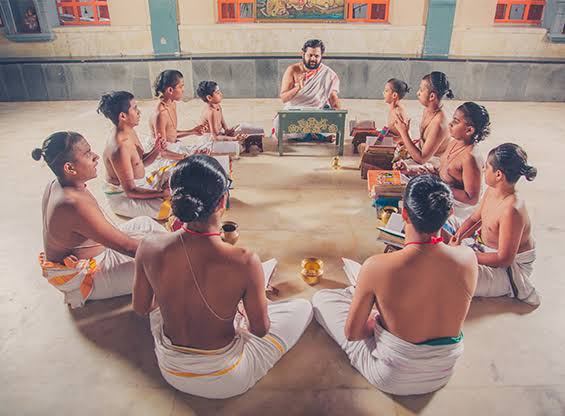
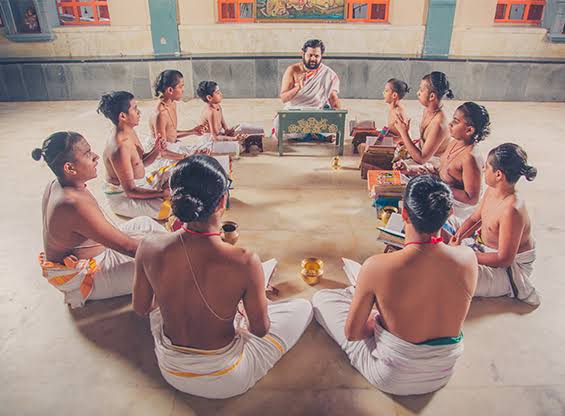
Jumping straight into the topic . Do you guys know how old the school you studied in ? Have you ever heard of an institution that might be established hundreds of years ago and present till know?

I asked that question because I recently got to know about an institution that is almost 479 years old and also is present till now . Fascinating isn’t it!

As the saying goes “Old is Gold” this 479 year old institution is also a “treasure”.

This 479 years old Educational Institution in India still continues the tradition of imparting knowledge

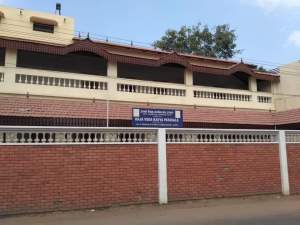
This institution is Raja Veda Kavya Patasala, established in 1542 AD. It is located in Kumbakonam,Tamilnadu,India.

Started by Govinda Dikshitar, the prime minister of Nayaka kings.
The Veda Patasala still runs in Kumbakonam today .

Source:Unkown

This patasala is providing vedic education for almost 5 centuries without any interruption adds another feather to it’s cap.

This institution is established on the southern banks of the river cauvery with prime aim of imparting the knowledge of Vedas and sastric studies.

From:veda patashala

It’s speciality is students here don’t use pen and paper to mug up the answers later ,they don’t carry heavy bags here everything is taught vocally and people also should remember which inturn increase the memory capacity of the students.

These are the institutions that still carry on the legacy of our Indian Vedic culture to our future generations.

These type of institutions are the backbone of our country’s vedic knowledge. They are the torch bearers for future generations.

Thankyou^^🙏

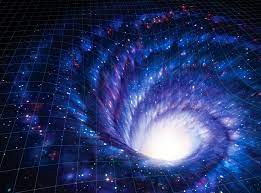
WORMHOLE-That helps you to teleport

Wormhole theory

Wormholes were first theorized in 1916, though that wasn’t what they were called at the time. While reviewing another physicist’s solution to the equations in Albert Einstein’s theory of general relativity, Austrian physicist Ludwig Flamm realized another solution was possible. He described a “white hole,” a theoretical time reversal of a black hole. Entrances to both black and white holes could be connected by a space-time conduit.

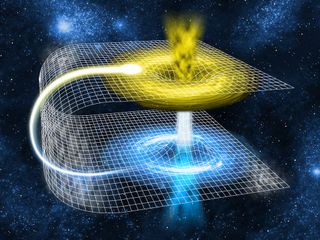
In 1935, Einstein and physicist Nathan Rosen used the theory of general relativity to elaborate on the idea, proposing the existence of “bridges” through space-time. These bridges connect two different points in space-time, theoretically creating a shortcut that could reduce travel time and distance. The shortcuts came to be called Einstein-Rosen bridges, or wormholes.

“The whole thing is very hypothetical at this point,” said Stephen Hsu, a professor of theoretical physics at the University of Oregon, told our sister site, LiveScience. “No one thinks we’re going to find a wormhole anytime soon.”

Wormholes contain two mouths, with a throat connecting the two. The mouths would most likely be spheroidal. The throat might be a straight stretch, but it could also wind around, taking a longer path than a more conventional route might require.

Einstein’s theory of general relativity mathematically predicts the existence of wormholes, but none have been discovered to date. A negative mass wormhole might be spotted by the way its gravity affects light that passes by.

Certain solutions of general relativity allow for the existence of wormholes where the mouth of each is a black hole. However, a naturally occurring black hole, formed by the collapse of a dying star, does not by itself create a wormhole.

Wormhole

Through the wormhole

Science fiction is filled with tales of traveling through wormholes. But the reality of such travel is more complicated, and not just because we’ve yet to spot one.

The first problem is size. Primordial wormholes are predicted to exist on microscopic levels, about 10–33 centimeters. However, as the universe expands, it is possible that some may have been stretched to larger sizes.

Another problem comes from stability. The predicted Einstein-Rosen wormholes would be useless for travel because they collapse quickly. 

“You would need some very exotic type of matter in order to stabilize a wormhole,” said Hsu, “and it’s not clear whether such matter exists in the universe.”

But more recent research found that a wormhole containing “exotic” matter could stay open and unchanging for longer periods of time.

Exotic matter, which should not be confused with dark matter or antimatter, contains negative energy density and a large negative pressure. Such matter has only been seen in the behavior of certain vacuum states as part of quantum field theory.

If a wormhole contained sufficient exotic matter, whether naturally occurring or artificially added, it could theoretically be used as a method of sending information or travelers through space. Unfortunately, human journeys through the space tunnels may be challenging.

“The jury is not in, so we just don’t know,” physicist Kip Thorne, one of the world’s leading authorities on relativity, black holes and wormholes, told Space.com. “But there are very strong indications that wormholes that a human could travel through are forbidden by the laws of physics. That’s sad, that’s unfortunate, but that’s the direction in which things are pointing.”

Wormholes may not only connect two separate regions within the universe, they could also connect two different universes. Similarly, some scientists have conjectured that if one mouth of a wormhole is moved in a specific manner, it could allow for time travel

“You can go into the future or into the past using traversable wormholes,” astrophysicist Eric Davis told LiveScience. But it won’t be easy: “It would take a Herculean effort to turn a wormhole into a time machine. It’s going to be tough enough to pull off a wormhole.”

However, British cosmologist Stephen Hawking has argued that such use is not possible. [Weird Science: Wormholes Make the Best Time Machines]

“A wormhole is not really a means of going back in time, it’s a short cut, so that something that was far away is much closer,” NASA’s Eric Christian wrote.

Although adding exotic matter to a wormhole might stabilize it to the point that human passengers could travel safely through it, there is still the possibility that the addition of “regular” matter would be sufficient to destabilize the portal.

Today’s technology is insufficient to enlarge or stabilize wormholes, even if they could be found. However, scientists continue to explore the concept as a method of space travel with the hope that technology will eventually be able to utilize them.

“You would need some of super-super-advanced technology,” Hsu said. “Humans won’t be doing this any time in the near future.”

Additional resources:

Are online friends better than real ones?

We all at some points have been more closer to an online friend than our real-life friends. The world of social media made it easier for us to connect with people from any part of the world. We made these online friends through games, random comments, or social media. We still talk to them regularly and sometimes they know more about us than our real friends.

I remember a time in my life where I was struggling through issues, and I did not want to discuss them with the people around me. So, I messaged my online friends and honestly, they gave me some of the best advice. I also remember talking for hours to some of my online friends about political issues, world debates, random topics, etc. We had way more to talk about than I do with the friends who live near me.

A few reasons why online friends are great:

Trust: It is always easier sharing things with an online friend because they will not gossip around. Real friends tend to share the things we tell them to other people.

Honest: Real-life friends lie sometimes to make us feel good. But online friends mostly tell the truth. If they think a dress is ugly, they will not let you go out wearing it.

Judge: Online friends do not judge us for who we are. We can tell them about our darkest secrets, and they would still be supportive and understanding.

A great place for introverts: starting a conversation through online mediums is less stressful than making real-life friends.

Group chats: There are also various groups for people with similar interests where you can talk to people with similar views.

Flexible: online friends are more flexible compared to real friends. We can reply to online friends after a week and they won’t question us. We can talk whenever we want to without any complications.

Deep conversations: it is easy opening up to online friends in comparison to real friends. We are likely to have more deep conversations with online friends about things like mental illness.

Before you get too comfortable with your online friends make sure to not give them too much information about yourself. You can tell them the city you live in but not the area because it is very easy for people to catfish. We need to be safe and smart while making online friends.

The Internet can be a dark place, with all the hate comments, trolling, and cyber-bullying but it is also a place to connect with genuine people. Sometimes, we connect more to the people living miles away than the ones living near us.

Online friends are great you will get to learn so much about them and the places they are from. It is always fun connecting to new people. You do not have to leave all your real-life friends but once in a while it’s good to connect to people who live miles away from us.

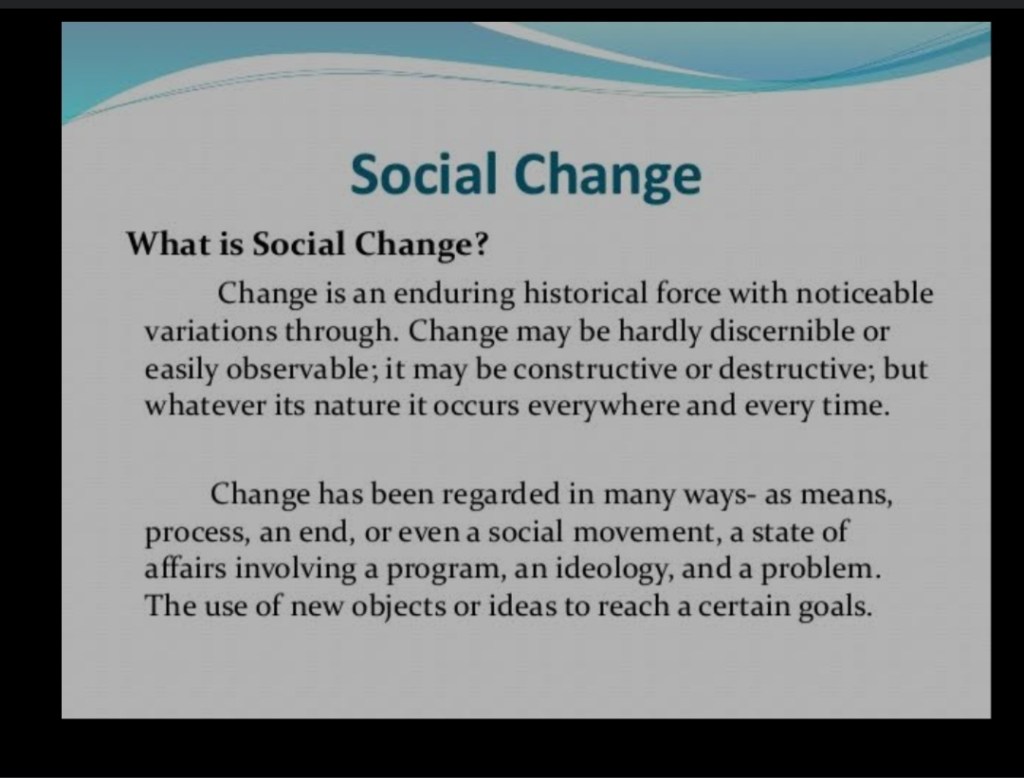
Social Change ( Meaning, Definitions, Causes )

Nothing social remains the same , nothing social abides .

Nature is never at rest . Change is present in the world because change is the Law of Nature .
Like Heraclitus an ancient Greek philosopher said ,
” It is impossible for a man to step into the same river twice “
According to Heraclitean philosophy , “Neither remains the same “, ” the reality of change , the impermanence of being the inconstancy of everything but change itself “

Society we live in is changing .
It’s not a static phenomenon but a dynamic entity . It’s an “ongoing process “subject to constant change due to many forces and factors that irresistibly cause changes .

The perfect example can be observed in our own history , where the man’s rise and growth from the Paleolithic age to the Neolithic age, then to the Stone Age and next to the copper age to development over time, technologies expand, ideologies and values take on new components; institutional functions , modernization etc .

Incessant changeability is the very inherent nature of human society .
Hence , social change is due to the fact that humans are dynamic beings and undergo variation .

Meaning of social change

Social change in general means change in society .
Society is a web of Social relationships .

Social relationships include social processes and social interactions .

Hence , ‘social change ‘ is used to indicate the changes that take place in human interaction and interrelations .

Society is composed of a vast and complex network of patterned human relationships in which all humans participate.
When human behaviour is in process of modification , this is another way of indicating social change.
Thus , apparent alteration in the mutual behaviour between individuals which takes place is a sign of social change .

Definitions :-

Social change is a term used to describe variations in or modification of any aspect of social processes , social patterns , social interactions or social organisation .”
– M.E. Jones

By social change is meant only such alterations as occur in social organisation , that is structure and functions of society “
– Kingsley Davis

Social change may be defined as a new fashion or mode , either modifying or replacing the old ,in the life of a people – or in the operation of society “
– Majumdar ,.H.T

Social change refers to a ‘ process ‘ responsive to many types of changes ; to changes in the man-made conditions of life ; to changes in the attitudes and beliefs of men , and to the changes that go beyond human control to the biological and the physical nature of things .”
– MacIver and Page

MacIver also refers to social change as simply a change in human relationships .

Thus , social Change includes alternations in the structure and functions of the society .


Characteristics of Social Change

1:
Social Change is Continuous

2:
Social change is universal

3:
Social Change in Environment

4:
Social Change is Human change

5:
Social Change Results from Interaction of a Number of Factors

6:
Social Change May Create Chain Reaction

7:
Social Change Involves Tempo (or Rate) and
Direction of Change

8:
Social Change maybe planned or unplanned

9:
Social Change is an Objective Term

10:
Social Change can be a short as well as long run process.

11:
Social Change is Temporal


Sources of Social Change

There are several factors due to which social relationships undergo constant alterations .
Sociologists as well as many anthropologists have been debating and discussing the sources of social change .

Fundamentally , there are two factors that are major sources of social change according to various discussions by several sociologists.

Diffusion
• Inventions

The source of social change is to be found in both diffusion and invention .

Social change takes place due to cultural diffusion i.e spread of elements of culture from one local group to another .
Every society borrows the cultural elements of another society for its progress directly or indirectly . Many tribes became more civilized by diffusion of cultural elements from several local groups.

Social change also takes place because of the inherent capacity of people to invent .
Invention refers to the rearrangement of known traits into new patterns or configurations .
Inventions in every field whether industrial , agricultural , communication or transportation had a huge impact on society .
Hence , inventions constitute the major source of social change.


Causes of Social Change


There is no single cause that produces change in society . Several factors operate together to cause social changes .

According to Harry M. Johnson the cause of social change are of three types

i) the causes of social change are inherent either in the general social system or in any specific social system.

ii) the change is caused because of some impact from the social environment of the social system.

iii) changes due to impact from a non – social environment .

The physical , biological , cultural and the technological factors have been generally regarded as the potential factors of social change.
Lapiere regarded these factors as ‘intervening variables ‘ rather than just ‘ causal or determining ‘ factors .


Geographical / Physical Factors


This factor emphasised the impact of the geographical environment upon human society .
According to Huntington ,. alternation in climate is the sole cause of the evolution and devolution of civilization and cultures.
Some social ecologists have attributed much importance to geographical factors for social change.
The physical factors such as climate , rivers ,climate , mountains , natural vegetation etc have profound influence on human society but these factors cannot solely explain the cause of rise and fall of civilization . Hence , the influence of geographical factors are neither decisive nor negligible.

Biological Factors

Biological factors include living and non living creatures. Man is influenced by non-human biological factors and modifies them to serve his purposes .
The biological factors influence the numbers , the composition ,the birth rate , the death rate , the fertility rate and hereditary quality of the successive generations.
Among the biological factors is the qualitative aspect of population , that produces major social change which has dynamic relations with man and society.

Cultural Factors

According to Max Weber theory of comparative study of religious and economic institutions , the main cause of social change is cultural factors.
Cultural factors consist of values and beliefs , ideas and ideologies , morals and manners , customs and traditions and various institutions .
Ideas and ideals , ideologies and philosophies are inherently changeful ,hence not only social values direct social changes but change themselves .
Dawson and Getty have written that culture gives speed and direction to social change and determines the limits beyond which social change cannot occur .
Our behaviour , living , thinking etc are influenced by the changes in social values.

Technological Factors

Technological Factors have immense influence on social change .
Ogburn stated , ” Technology changes society by changing our environments to which we ,in turn , adapt . The change is usually in a material environment and the adjustment we make to the changes often modifies customs and social institutions .”

The increase in new machines , new discoveries had a very great influence upon society.
Technology is the product of civilization .It is a systematic knowledge through which using tools and running machines helps to serve human purpose .
A single invention may have innumerable social changes . In the modern age technological factors are among the predominant causes of social change.


Role of Great Men in Social Change

Great Men like Buddha , Mahavira , Shankaracharya , Jesus Christ , Zoroaster , Prophet Mohammed , Confucius and many other great personalities introduced revolutionary change in the realms of religion .
Napoleon Bonaparte, Washington , Lincoln , Karl Marx, Lenin , Mao Tse Tung , Kemal Pasha , Mahatma Gandhi , Hitler , Mussolini , Khomeini and many others have caused revolutionary changes in the political field .
Similarly many writers , scientists , philosophers have many contributions to social changes .

Great Men and their leadership , revolutionary thoughts , extraordinary talents , powerful expression , ability and efficiency have brought revolutionary and long lasting changes in society .

All Social changes occur because of the actions of men and women .

As Robert Bierstedt said ,

Culture is not self innovating , ideas are not self creating , and technology is not self inventing . Somehow , somewhere , in a society , a man breaks however slightly from tradition . He does some things in a different way . He finds a shortcut . He has a new idea or makes a new discovery . When that happens whether he is a ‘ great man’ or not , he has distributed the stream of culture and like a stone , tossed into the waters , it’s ripples may go on forever . It may affect a while , all the compartments of culture and all the sectors of society .”

Provide Poor Lunch Organization(PPLO)

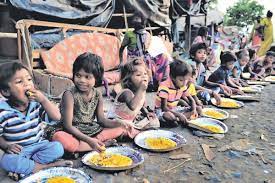
PPLO is started by G.Sanjay on 2019 as an initiative to serve the lunch to the poor people who starve for food.

PPLO’s motive is to “Reduce Shortage by Donating the Wastage“.

FOOD WASTAGE- A SHORT GLIMPSE AND STATS:

Having food is something to celebrate but have you ever wondered consciously just much food you waste. Have you ever stopped to analyze just how much food is wasted in your household, society, country and the world? It is not something that people, who have food readily available whenever they feel hungry, worry about. However, for people who are not even able to eat one meal a day, often wonder if all the food that is being wasted around them on a daily basis could have filled their stomach.

Food waste is an issue of importance to global food security and the environment. But what a lot people may not realise is that is impacts a country’s economy as well. Every day, food suitable for human consumption is wasted in large quantities in medium and high-income countries at the retail and consumer level. In fact, a significant food loss and waste occur at the production to processing stages in the food supply chain in low-income countries. 

Food Wastage in India:

Contrary to the belief of Indians that we don’t waste food, data showed that India wastes as much food as the whole of United Kingdom consumes. In fact, food wastage is an alarming issue in India and country’s streets, garbage bins and landfills have sufficient evidence to prove this. According to the United Nations Development Programme, up to 40 per cent of the food produced in India is wasted and about 21 million tonnes of wheat are wasted annually. 

You don’t even have to scour through several resources to see how much food is wasted in the country. During the nationwide lockdown this year, India registered high wastage because of a poor supply chain. Food delivery website MilkBasket lost 15,000 litres of milk and 10,000 kg of vegetables in a single day after delivery agents were denied entry in societies due to lockdown. Farmers in Belagavi district of Karnataka spilt thousands of litres of milk in a river after they could not reach the people due to the lockdown. Several other reports surfaces which showed how much food was wasted.

Food Wastage stats:

  • Around 67 million tonnes of food is wasted in India every year which has been valued at around Rs 92,000 crores. For context, this amount is enough to feed all of Bihar for a year
  • Annually, nearly 21 million metric tonnes of wheat rots in India. This figure is equal to Australia’s total annual production
  • According to old 2018 BMC data, Mumbai generates close to 9,400 metric tonnes of solid waste per day, from which 73% is food, vegetable, and fruit waste, while only 3% is plastic. 
  • National Delhi also generates around 9,000 metric tonnes of waste per day, with the country’s largest landfill located in East Delhi.

Economic Impact:

Food Wastage not only leads to negative environmental impact but also causes economic loss. According to an FAO report, approximately one-third of all food produced for human consumption is lost or wasted. The economic costs of this food wastage are substantial and amount to about $1 trillion each year. However, the hidden costs of food wastage extend much further.  In addition to the $1 trillion of economic costs per year, environmental costs reach around $700 billion and social costs around $900 billion.

Global food wastage costs as per FAO report:

  • 3.5 Gt CO2e of greenhouse gas emissions. Based on the social cost of carbon, these are estimated to cause $394 billion of damages per year.
  • Increased water scarcity, particularly for dry regions and seasons. Globally, this is estimated to cost $164 billion per year.
  • Soil erosion due to water is estimated to cost USD 35 billion per year through nutrient loss, lower yields biological losses and off-site damages. The cost of wind erosion may be of a similar magnitude.
  • Risks to biodiversity including the impacts of pesticide use, nitrate and phosphorus eutrophication, pollinator losses and fisheries overexploitation are estimated to cost $32 billion per year.
  • Increased risk of conflict due to soil erosion, estimated to cost $396 billion per year.
  • Loss of livelihoods due to soil erosion estimated to cost $333 billion per year.
  • Adverse health effects due to pesticide exposure, estimated to cost $153 billion per year.

Earlier this year, former Union Minister of Consumer Affairs, Food and Public Distribution Ram Vilas Paswan said that in financial year 2019-20, foodgrain wastage in the country stood at 1,930 tonnes, which was 0.002 per cent of the total procurement. The total procurement in FY 2019-20 was 751.72 LMT (Lakh Metric Tonnes). The minister shared the data on Twitter and asserted that the notion that foodgrain wastage is high in FCI (Food Corporation of India) godowns is not true. While he was right, the truth is that over a thousand tonnes of foodgrains was wasted which could have fed millions of people. 

Now that it is clear that food wastage cripples a country’s economy to an extent that most are unaware, some measures that the government needs to take is to include containing wastage in transportation, improve storage facilities. Food processing also needs to be sped up so food is saved and wasted less to feed more. 

PPLO’s WORK:

In PPLO Sanjay and his friends collects the food wasted by common people from their schools and houses and test the quality of the food ensuring that only healthier and good food will be served. We then serve the lunch for the poor people in need instead of throwing to the dusbin. If we find the food has been contaminated we convert the food into a manure by composting.

So in PPLO we ensure that the food is not wasted and it is either used to feed humans or to nurture plants.

Chennai: Fish sales remain extremely poor

Why eat lunch?

Lunch is an important meal for everyone. It provides energy and nutrients to keep the body and brain working efficiently through the afternoon. A packed lunch made at home can be a healthy and delicious choice and gives you control over the foods and ingredients included so the mothers or fathers or children who cook their food for loved ones can able to help the people in need by donating their wastage. So, we took a step to serve the lunch to the needs.

We were able to provide lunch for the slum consisting of 370 people from food collected from a single school. So, we can able to feed the whole world if the wastage is managed properly.

Food waste as fertilizer.

Foods which we find contaminated are transformed to manure to Grow plants. We could use all the food waste and prepare a compost out of them which can be used as organic fertilizer. This way we save the earth from the pollution caused by food waste and also do something productive.

Food waste is unique as a composting agent, it is the main source of organic matters. Fruits, vegetables grains, coffee filters, eggshells can be composted.

PPLO MISSION:

FOOD FOR ALL AND WASTE FOR NONE.

PPLO ACCOMPLISHMENT:

PPLO was successful in providing lunch for nearly 400 people from the food remains generated by a school of 527 students.

If you would like to support PPLO or if you need support from PPLO

Please Contact: s98208366@gmail.com

Money and it’s Functions

Money a commodity accepted by general consent as a medium of economic exchange. It is basically the legal tender of exchange. The paper currency which we use today has a long history behind it’s origin and evolution. Even today, money is continuously evolving, going from paper to plastic to digital. Over the years, money has changed it’s forms several times but what hasn’t changed is it’s functions. No matter what form it is used in, money almost always serves the same functions.
The functions of money are categorised as primary, secondary and contingent functions.

Primary Functions of Money:

Under this category, money performs it’s two main functions that are medium of exchange and unit of value. In the former case, money has removed the need of double coincidence of wants, something which was very much needed in the batter system which was used earlier. Being a medium of exchange means being generally acceptable. This gives the user freedom of choice and economic independence. It also acts as an intermediary and facilities exchange.
Money as unit of value means money is the standard for measuring values of all goods and services. This value is expressed in terms of price. Price is in terms of monetary unit and money acts as the determiner of rate of exchange. It also helps in calculating important economic parameters like costs, revenue, profits etc.

Secondary Functions of Money:

Under this, money performs three functions. It acts as a standard of deferred payments, it acts as a store of value and as a transfer of value. Money as a standard of deferred payments means that money acts as a standard for payments, which are to be made in future.
Money as a store of value means that money can be used to transfer purchasing power from present to future. Money is a way to store wealth. Although wealth can be stored in other forms also, but money is the most economical and convenient way. Money as a transfer value refers to the fact that money has velocity. It keeps transferring from person to other person.

https://www.yourarticlelibrary.com/economics/money/primary-and-secondary-functions-of-money/30307

Contingent Functions of Money:


Money performs certain contingent functions. These include: distribution of national income, maximization of satisfaction, basis of credit system, money as the most liquid asset. Money helps in distribution of the national product in the form of rent, wage, interest and profit, which are expressed in money terms. Money helps the consumers and producers in maximizing their satisfaction. A consumer derives maximum satisfaction when marginal utility is greater than marginal cost. Money helps in credit creation for banks. Money as a store of value has encouraged savings by people in the form of demand deposits in banks. These deposits are used for generating credit. Money is the most liquid asset of all assets in which wealth is healed. Individuals hold wealth in numerous forms ranging from currency, demand deposits, time deposits to bonds , savings, treasury bills etc. All these forms can be converted into money and vice versa.

https://www.yourarticlelibrary.com/economics/money/contingent-functions-of-money-in-economics/30310

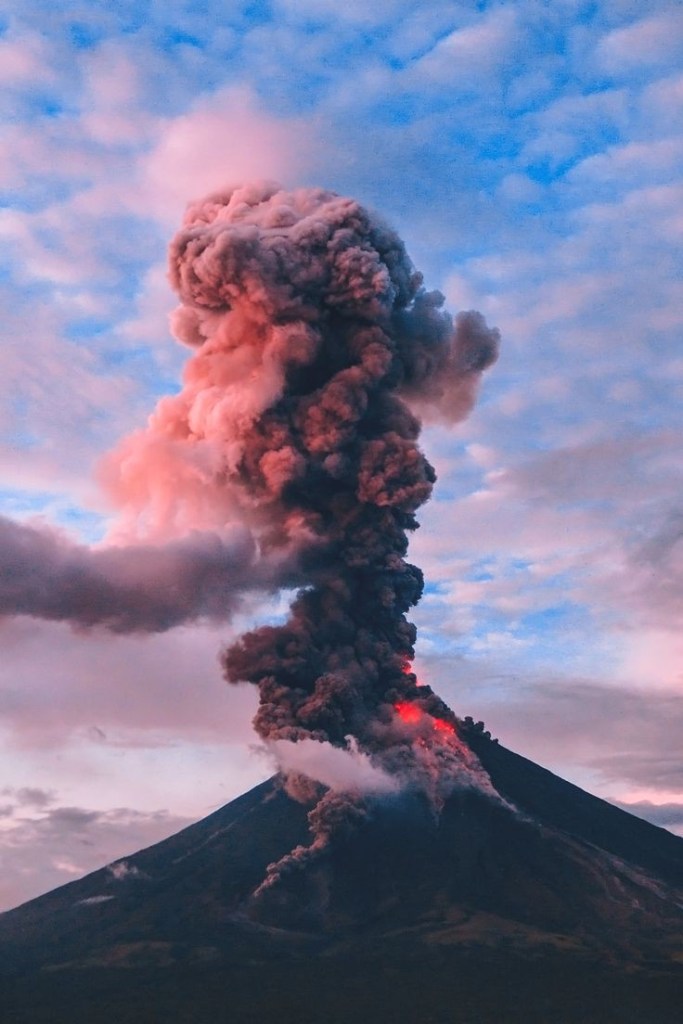
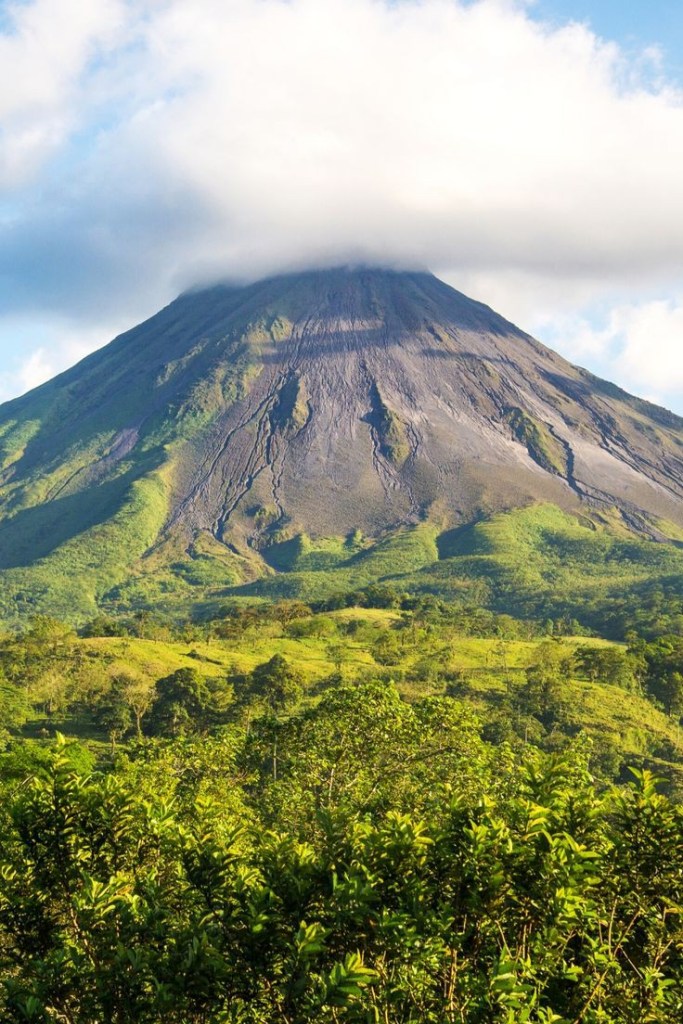
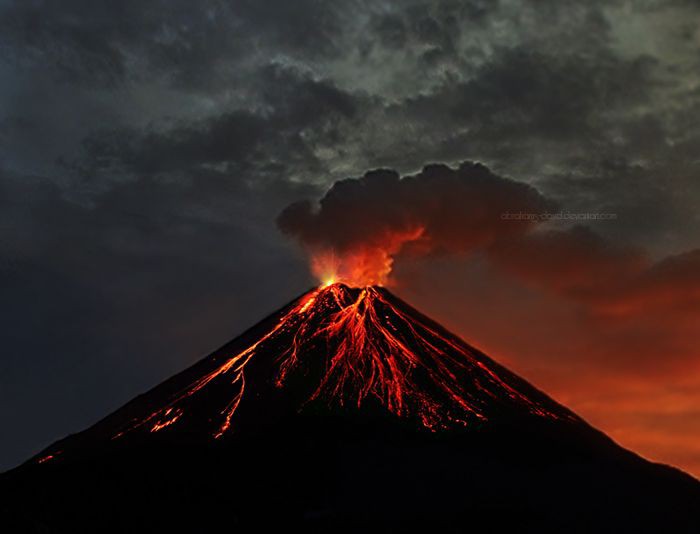
Volcano Eruption

“We are, all of us, growing volcanoes that approach the hour of their eruption, but how near or distant that is, nobody knows- not even God.”

~ Friedrich Nietzsche

We always talk about , what it would be like to see volcano eruption in front of your eyes ?

How amazing it would be like to find out , how the volcano erupt ?

There are many things that we don’t know exist in our earth 🌍. Do you want to know about it . If yes , than read the editorial .

Introduction

A volcano is a rupture in the crust of a planetary-mass object, such as Earth, that allows hot lava, volcanic ash, and gases to escape from a magma chamber below the surface.

On Earth, volcanoes are most often found where tectonic plates are diverging or converging, and most are found underwater.

The word volcano is derived from the name of Vulcano, a volcanic island in the Aeolian Islands of Italy whose name in turn comes from Vulcan, the god of fire in Roman mythology.

Many ancient accounts ascribe volcanic eruptions to supernatural causes, such as the actions of gods or demigods. To the ancient Greeks, volcanoes’ capricious power could only be explained as acts of the gods, while 16th/17th-century German astronomer Johannes Kepler believed they were ducts for the Earth’s tears.[87] One early idea counter to this was proposed by Jesuit Athanasius Kircher (1602–1680), who witnessed eruptions of Mount Etna and Stromboli, then visited the crater of Vesuvius and published his view of an Earth with a central fire connected to numerous others caused by the burning of sulfur, bitumen and coal.

Types of eruptions

  • Hydrothermal eruption. An eruption driven by the heat in a hydrothermal systems.
  • Phreatic eruption. An eruption driven by the heat from magma interacting with water.
  • Phreatomagmatic eruption.
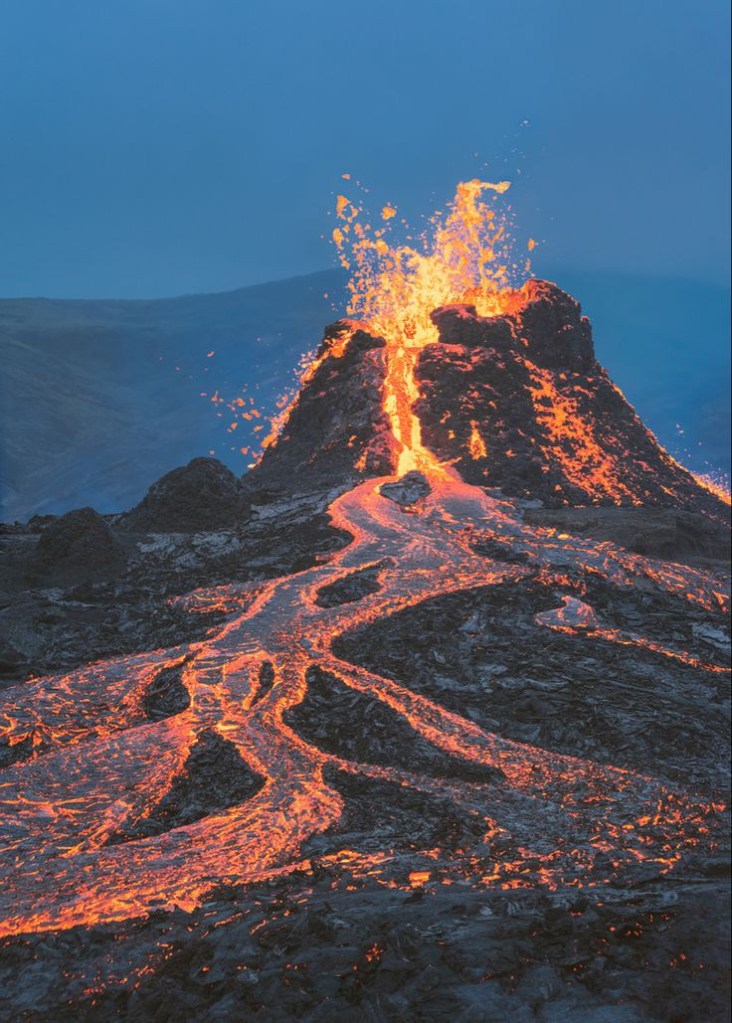
  • Lava.
  • Strombolian and Hawaiian eruptions.
  • Vulcanian eruptions.
  • Subplinian and Plinian eruptions.

How do volcanoes erupt?

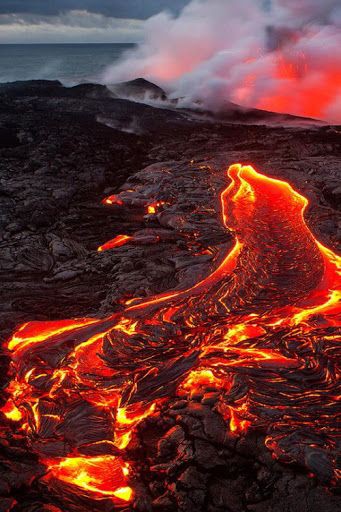
Deep within the Earth it is so hot that some rocks slowly melt and become a thick flowing substance called magma. Since it is lighter than the solid rock around it, magma rises and collects in magma chambers. Eventually, some of the magma pushes through vents and fissures to the Earth’s surface. Magma that has erupted is called lava.

The explosivity of an eruption depends on the composition of the magma. If magma is thin and runny, gases can escape easily from it.
Explosive volcanic eruptions can be dangerous and deadly.

Humans and volcanoes

Volcanic eruptions pose a significant threat to human civilization. However, volcanic activity has also provided humans with important resources.

Although volcanic eruptions pose considerable hazards to humans, past volcanic activity has created important economic resources.

Volcanic ash and weathered basalt produce some of the most fertile soil in the world, rich in nutrients such as iron, magnesium, potassium, calcium, and phosphorus.

Volcanic activity is responsible for emplacing valuable mineral resources, such as metal ores.

The paradox of volcanoes was that they were symbols of destruction but also life. Once the lava slows and cools, it solidifies and then breaks down over time to become soil – rich, fertile soil.
She wasn’t a black hole, she decided. She was a volcano. And like a volcano she couldn’t run away from herself. She’d have to stay there and tend to that wasteland.
She could plant a forest inside herself.

Matt Haig, The Midnight Library

Link

The Importance of Good Hygiene!!!

 Maintaining good personal hygiene is very important for your health and social reasons. Also, the presence of the COVID-19 virus makes it much necessary to maintain good personal hygiene. Well, it’s a poor choice if you don’t maintain good hygiene. And if you do maintain it, it’ll benefit your health and also it impacts the people around you. It necessitates keeping your hand, head, body, and the place around you clean, to stop the spread of germs and illness. 

We also must see the social benefits as it is associated with cleaning your body on a day-to-day basis, it reduces the chances of body odor and thus preventing any chances of embarrassment at school or work.

Why does a good personal hygiene routine look like?

As of now, we know the necessity and importance of maintaining a good personal hygiene routine – but what does it contain?

Given below are steps one can follow to keep themselves and their families clean and free of germs that could cause future illness.

Hand washing 

Our hands are the biggest carriers of germs. We use our hands to interact with different surfaces like shaking hands with people, eating our meals, while playing, using a keyboard, using a common telephone, etc.

Maintaining good hand hygiene can protect you from illness caused by germs and bacteria such as cold, cough, flu, etc. You can protect yourself from illnesses caused by germs and bacteria by washing your hands frequently with soap and water, sanitizer, or any liquid soap. You should wash your hands:-

Before and after eating.

★Before cooking fold.

★After using the toilet.

★After being in contact with an animal.

★After coughing, sneezing, or being in contact with someone who is ill.

Dental Care

Maintaining oral hygiene is as important as maintaining hand hygiene. Maintaining it can prevent gum disease, bad breath, tooth decay, and many other infections. Always remember to:-

★Floss your teeth daily.

★Make sure you brush your teeth twice a day.

★Store your toothbrush in a clean, dry place and replace it regularly.

Bathing

Do take baths on a day-to-day basis to maintain good personal hygiene. Daily bathing is an essential part of good personal hygiene because:-

★Taking bath with soap and warm water can kill odor-causing bacteria.

★Skin infections can be reduced by washing and drying the infected area.

★ Shampooing and conditioning your hair at least once a week can keep the scalp clean and free from head lice.

Hygienic Clothes

Germs and bacteria also can stick to your clothes. It is very important to wash your clothes after each use, especially after being contacted by an ill person. You can add antiseptic liquids to your laundry load to remove germs.

Maintaining a personal hygiene routine is not that difficult. Once you get used to it, it becomes a habit. And also it is important to give a message to your family members, and especially children, to make their own hygiene routines.

MESSIER 87-The Galaxy that gives Hope

M87
The elliptical galaxy M87 is the home of several trillion stars, a supermassive black hole and a family of roughly 15,000 globular star clusters. For comparison, our Milky Way galaxy contains only a few hundred billion stars and about 150 globular clusters. The monstrous M87 is the dominant member of the neighboring Virgo cluster of galaxies, which contains some 2,000 galaxies. Discovered in 1781 by Charles Messier, this galaxy is located 54 million light-years away from Earth in the constellation Virgo. It has an apparent magnitude of 9.6 and can be observed using a small telescope most easily in May.
This Hubble image of M87 is a composite of individual observations in visible and infrared light. Its most striking features are the blue jet near the center and the myriad of star-like globular clusters scattered throughout the image.
The jet is a black-hole-powered stream of material that is being ejected from M87’s core. As gaseous material from the center of the galaxy accretes onto the black hole, the energy released produces a stream of subatomic particles that are accelerated to velocities near the speed of light.
At the center of the Virgo cluster, M87 may have accumulated some of its many globular clusters by gravitationally pulling them from nearby dwarf galaxies that seem to be devoid of such clusters today.
For more information about Hubble’s observations of M87, see:
http://hubblesite.org/news_release/news/2008-30
http://hubblesite.org/news_release/news/2000-20
http://hubblesite.org/news_release/news/2013-32
locator star chart for M87