How to do reforestation

the process of replanting trees as a recovery process of deforestation is known as reforestation. Reforestation has very large importance to recover for the harm of deforestation. It is important to decrease the pollution, specifically air pollution and also helps to fight climate change.

Every person asks to plant trees and has a list of reasons to do so. But nobody told about the right way to do reforestation. Is it ok to go on planting any species thinking every plant gives oxygen, what is the difference. Along with reforestation, protecting our biodiversity is also crucial. Just planting same species to an entire area is just like agriculture. It will never contribute more than oxygen and never helps to address other co-existing problems.

Conducting right reforestation programs will help to restore habitats. A large number of animal species are facing the fear of extinction because of deforestation. They just not need any tree to survive, Their survival depends on the biodiversity as well. Forests take part in ecological changes. Forests maintain soil quality. Planting a single species will surely not helps to restore the soil quality and also maintaining humidity and temperature.

HOW TO SELECT SUITABLE SPECIES

Go for the study of the site or place where you are planning to do reforestation. Study the soil composition and derive conclusions based on that. See whether the place has the capacity to grow the species you are selecting. Look for the plants that have naturally regenerated in that place. That will give you an idea about the verities that originally belong to that place. Study about the historical vegetation that is try to get knowledge about the vegetation present there before deforestation. This can be done by looking for old forest department records. After you decide for the species that to be planted collect information about the growth of each type. Look for requirements of water and sunlight and other necessary things and whether they are now available at that site.
HOW YOU PLANT WILL ALSO MATTER

There are two methods in regeneration: 1. Natural regeneration in which includes natural seeding techniques, stump sprouting and root suckering. 2. Artificial regeneration method which involves machine planting, hand planting, aerial and ground seeding methods. Choose whatever works for you.

Choose the plants samplings from the local source. This will help in effective reforestation. Go for mixing of species, both naturally occurring and planted and maintain diversity. In the area with management problems go for long-lived species. Use species which is appropriate for the site.

Promote natural appearing style rather than planting in rows and columns. Leave enough space between the samplings and allow for establishment of other species. consider other soil management techniques like scarifying and irrigation if needed. Protect the surrounding natural habitats like lakes and ponds. Provide debris to the plants. And also increasing complexities may increase the cost of reforestation. Always manage the budget.

Kwimba Reforestation project of Tanzania is an example for successful reforestation project. This project was commenced in 1990 funded by World land trust. The main purpose of the project was to restore the biodiversity of the Usambara mountains. Now species like ficus, mahogany cedar, plum tree, apple trees are the part of that biodiversity and world needs to be inspired by such stories.

6 forgotten things to do in Weekends.

It is very difficult for all of us to pass our time in weekends and especially if weekends fall in between big pandemic lockdowns. For many of us, each day has become like a weekend due to long imposed lockdowns in our respective areas.

We must utilise our time in something productive and productive doesn’t have to necessarily mean learning a new skill or cleaning our house. Being productive is so much more than that! Productive is also when we give times to things that would bring us instant joy.

Let’s get back in time and relive some of the moments that were daily habits for us at some point in time and practise them in these weekends.

1) Take out Old Photo Albums.

Photo Credits: The Guardian

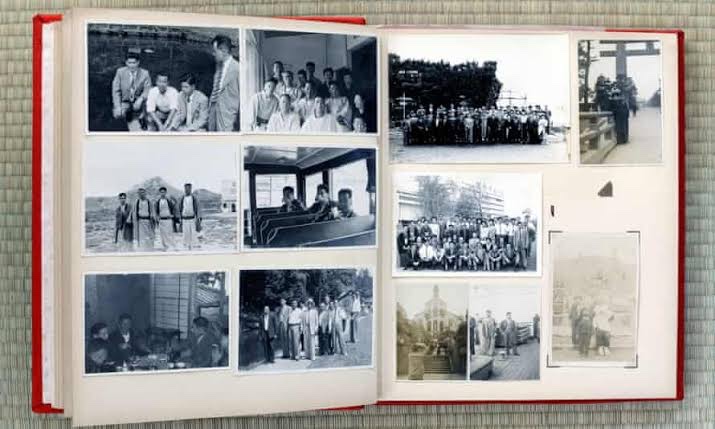
Remember the time when there used to be only one camera at our homes? A photo album carries so much in itself. From our grandparents’ youth to our parents’ wedding to our own childhood, photo albums are always refreshing even after being so old. It’s always good to visit our family’s old family photo albums and live those old memories yet again.!

2) Write Journal or Diary.

Photo Credits : She The People Tv.

Writing has always been fun, isn’t it? Well, now writing means just WhatsApp or Email or for other professional purposes. It’s time for us to give one day to write happenings around us on a piece of paper in a diary or in a journal like we used to do in our childhood. The time when we used to collect those New Year gift diaries all for diary writing!

3) Solo Indoor Picnic.

Photo Credits: Medium.

It’s always good to eat and it’s even better when we can eat all the food alone. Although some people might be thinking that this never used to happen in the past. So yes, you’re correct. Solo Picnics never used to happen in the past. Picnic itself means social gathering with friends or families. However, here I’m urging everyone to have a solo picnic indoor because of the ongoing pandemic. Though if you’re living in a nuclear or joint family, go for a picnic indoor with them. Cook great food, eat and chill.

4) Read Old Books and Magazines:

Photo Credits: Etsy

We always have a shelf in our house with full of books and magazines from the past era. We just keep them aside and forget about them after reading them once. There are also our favourite magazines that we used to collect during our childhood, may be because of their content or because they used to have our favourite celebrity on their covers. We can just relive those memories by simply taking out and reading them.

5) Put on the radio!

Photo Credits: The Conversation.

Don’t have a radio? Don’t worry about it at all. There are plenty of mediums in this new era that would give you the feeling of a typical radio. There are also radio stations available on new smartphones, some are even available on normal typing phones! You can always look for radio in these platforms in absolutely no cost. Just listen to the Radio Jockeys narration and listen to news stories and music in that old style.

6) Take out Old CDs

Photo Credits: Britannica

This is somewhat similar to photo albums. Do you also have old compact discs in your home cupboards. Well, then just take them out and watch your old family happenings recorded in them and enjoy!

Yes, lockdown and weekends have always been stressful for each one of us. But we can always find a way to engage ourselves in something that would make us happy and lively! Try these six ways and get nostalgic!

Warli paintings

Hello guys!!

Have you guys ever heard about warli painting?even if you don’t know it’s name I think many of you can recognise the paintings ,they are present almost on any design,dress,wall art.

Still you haven’t got a clue? No problem .Have you ever seen stick figures on brown walls ,or on any dresses,they are called warli paintings.

From pinterest

Warli painting’s originated from maharastra.The name warli came into light because of the tribe warli in Maharashtra.Warli paintings showcase their drawings on mud walls,brown walls and now recently it is even used as design on dresses.

Warli painting’s have simple structure that is they mostly draw with circles,squares,and rectangles,they put emphasis on the story they are delivering through the painting.

Mostly it’s about their lifestyle,that is farming,dancing,singing,working.

On special occasions they draw these things with the white pigment.

These paintings garnered attention for their simplicity,and raw feel that these drawings show.
These paintings are very popular and they are available on many online sites ,people love to decorate their homes with these paintings.

Even the small figures when painted on the walls they recieve so much attention ,they are pleasing to the eyes. The dancers take a long turn in the audience and try to encircle them for entertainment. The circle formation of the dancers is also said to resemble the circle of life.people are doing their own activities and enjoying their time.The huts depict,their homes,the trees.

Every thing is depicted in those basic geometric shapes becoming its own speciality and oozes uniqueness,and sense of familarity.

I remember we had an activity where we had to draw over walls and the topic was warli paintings ,it was very fun to draw those things on the walls.

These paintings depict their culture, lifestyle,and their essence is the depicting small things in our life in a beautiful way.

Thankyou^^

Featured pic taken from pinterest.

Please visit the below website for more information https://en.m.wikipedia.org/wiki/Warli_painting

Tamil at Harvard University

Inauguration of Tamil Club and Kavidhai Club - Sevalaya

What is Tamil Chair?

Tamil Chair Inc. is a non-profit organization registered in the state of Maryland (USA) that is currently working on fund raising for Harvard Tamil Chair

6m $ is required to establish it

Tamil is one of the very few languages of the world with a classical past and a robust literary tradition that has continued to this day. Despite many foreign occupations of the Tamil country and other outside influences, this noble language has always shined, producing vibrant literature for over 2 thousand years.

In addition to the literature, there have been numerous grammar books, commentaries, religious works, didactic books, secular literature and works from many other genres.

This is what the Tamil chair of Harvard university states about tamil

What is the need for a Tamil Chair?

  1. Tamil language has one of the oldest written traditions in all of Asia and boasts a rich body of literary work dating back 2,500 years. Tamil has been accorded with a prestigious recognition as one of the seven classic languages (Greek, Sanskrit, Latin, Hebrew, Persian, Tamil and Chinese), and it is one of the very few that has survived all the way through to the modern world since its beginning.
  2. Currently, Tamil is the 20th most commonly-spoken language (by 80 million people) in the world, with vibrant literatures for over 2 thousand years. Literature represents the culture and tradition of a language or people, and it provides a kind of blueprint of human civilization.
  3. Thus far the global reach of Tamil literature is so limited, and for its ancient and Classic standing, Tamil literature deserves to be critically looked from new and diverse perspectives and the resulting knowledge needs to be shared across other cultures for mutual benefits.
  4. So the purpose of this chair is multifold. First, it is a matter of great prestige for Tamils to have our language taught at the world’s most prestigious university which attracts brilliant students from all over the world.
  5. There is also a need for research in ancient classical Tamil literature. Harvard will produce Tamil scholars who will be trained in research methodologies.

IMPORTANCE OF TAMIL CHAIR IN HARVARD UNIVERSITY AND THE WAY IT ENRICHES THE LANGUAGE

  1. Helps building History

History can be written on the basis of outputs from researching a language.

Research about a language is a step to build a history.

Ex: In recent, historians of India use vedic texts of sanskrit to build the own history.

They build Indian history with vedas as base.

If more outputs from researching tamil comes out it will help build Indian History which may be seen from view of tamil literature.

2. Helps developing the language

In India Hindi and sanskrit are given importance by central government for promoting and developing them. These types of actions from Indian government limits Tamil as a regional language and major funding is deprieved.

Promoting through a reputed university will ensure good amount of funding for research.

It will help explore the Tamil studies on a much deeper level through a rigorous approach executing formal academic research processes to bring out the traditions, the cultural, intellectual, and social practices of the Sangam period that are barely explored as of now. This will elicit Tamil’s long tenured literary tradition to the peer academic communities and establish it’s much deserved recognition as a Classic language.

3. Competition with Sanskrit and other classical languages

Indian goverment in name of Hindu Nationalism promotes only sanskrit.

For all other Classic and widely spoken languages like Sanskrit, Greek etc , there is so much research and progressive work that is done at various international academic centers. It is quite urgent and highly imperative that the same world class effort is put forth for Tamil to expand its stature and reach. It will enhance not only the chances for continual use but also the newly embraced recognition from the global populace.

4. Intensive Research and development

Any developments on language of Tamil is stopped by Indian government . Without funds researchers are suffering. Even if someone come out with good research it is deemed valued by Hindutuvas/Hindi Nationalist Indian government

Independent research in a foreign country will only enrich it for good without influence by Indian Government.

5. Gets world wide interest and new learners

Developing the language in a well known University will gather world wide interest for the language and gather new learners.

May revoke intersets in researchers to resume archaelogical excavations a, Keezhadi, Poombukar, Adhichanallur which were currently banned by Indian government for excavating. Because they provide excessive proofs to Independent tamil culture in Sangam period, so that it will affect sanskrit’s claim on Tamil.

Assures Tamil language’s legacy to survive and grow.

This endeavour will cerainly increase the horizon of Tamil

Minimalism

What is Minimalism?

Minimalism is defined as a design or style in which the simplest and fewest elements are used to create the maximum effect. Minimalism had its origins in the arts—with the artwork featuring simple lines, only a few colors, and careful placement of those lines and colors. More recently, it has become representative of a lifestyle that aims to remove clutter from all facets of life. 

Minimalism is all about owning only what adds value and meaning to your life (as well as the lives of the people you care about) and removing the rest. It’s about removing the clutter and using your time and energy for the things that remain. We only have a certain amount of energy, time, and space in our lives. In order to make the most of it, we must be intentional about how we’re living each day.

There are many different approaches to minimalism, but it’s really just a tool to help you prioritize what’s important in your life.

Joshua Becker of Becoming Minimalist offers this definition: “Minimalism is the intentional promotion of the things that bring you joy and the removal of those that do not.” It might be called simple living, tiny living, intentional living, and a myriad of other things—but there is at least one common thread: the idea of curating the things we own to best reflect our priorities and vision for our lives.

If the idea of minimalism sounds intimidating to you or if you’ve seen some images and thought, “that’s a nice idea, but I’d never want to live like that,” don’t worry. You can benefit from applying minimalism in your life whether you live in a tiny home, suburban house, or a mansion. You can use minimalism as a guiding philosophy and customize based on what works best for you.

Common Misconceptions of Minimalism

Contrary to what some people think, there aren’t any actual rules to minimalism. There’s no official board of minimalism to determine whether or not you’re doing minimalism right. Minimalism truly looks different for everyone.

You don’t have to own below a certain number of items. You can still have nice things, and no, you don’t need to get rid of your favorite collection—whether it’s books, shoes, or music. Minimalism doesn’t have to look like white-walled, modern and sparse homes you’ve probably seen in magazines and videos, a common minimalism mistake. Minimalism is also not a one and done project. It is a a continual practice to ensure everything in our lives is working for us in our vision, not against us. Its used over the years to make substantial changes in our careers, home, lifestyle, buying behaviors, etc.

Everyone can benefit from applying the principles of minimalism to their lives. It’s a process of removing distractions and things that no longer add value to our lives.

Why Minimalism Is An Effective Tool For Living An Intentional Life?

In the end, minimalism is less about owning fewer items and more about actively making choices on what kind of things truly matter to you.

We exist in a society that creates false value on owning more stuff and having no time to use them much. The constant pursuit of bigger and better is an endless cycle. There will always be a nicer car to buy, a bigger boat, a larger home, and or a faster private jet. Did you know that there’s a website for billionaires to shop? Yeah. It never ends.

It may seem like an overwhelming challenge at first, but as you untangle the life you built around owning more things, you’ll find the stress disappearing and the world starting to slow down. Those choices you make will begin to build a muscle that will fundamentally change the way you live your life.

Why do Indians eat with hands?

Eating with bare hand is a traditional Indian culture, which people still follow. Eating is a mindful process since the sensory organs like touch and taste are involved. Fingertips are used to feel the temperature and texture of our food. Nerves at our fingertips send a signal to our brain, and the brain activates the human body’s digestive system and further improves the digestion process. In practice, Indians sit down on the floor in comfortable clothes and eat in a big banana leaf or Saili leaf. This process activates your senses and makes you enjoy your meal.

Eating with hand is a mindful eating…

But, is it good or bad to use hands?

Stay till the end…

Imagine eating roti with a spoon and dosa with a fork. Sounds weird right? Oh well, it is!

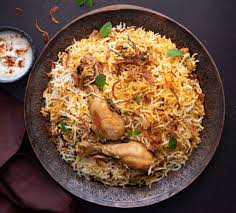
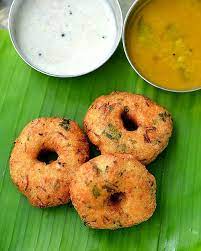
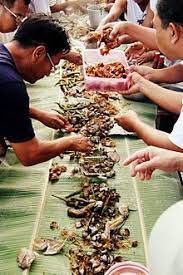
Traditional Indian foods are made to eat with hand. We use hands to eat foods like rice, chappati, vada, dosa, chicken, fish, papad, Pongal, and many more. While eating, curry is mixed with rice or stuffed in a roti that gives a flavor of multiple spices added while preparing the dish.

Here raises a question…

Is eating with your hand “unhygienic”?

Washing hands before eating is a habit of everybody. Indian tradition follows hygiene and cleanliness during dining. The hand once used by a person to consume their food is not used to serve or to share because that is treated as ‘jootha’ meaning contamination and treated as an unhygienic way of eating. People are supposed to wash their own dishes after eating which reduces the intermixing of saliva of two individuals as a concern of one’s health.

Significance of eating with hands:

According to the ancient theory, all five fingers of our hand has its own spiritual significance and it symbolizes the 5 elements of nature. 

  1. Thumb finger- Fire
  2. Index finger- Air
  3. Middle finger- Space
  4. Ring finger- Earth
  5. Little finger- Water

Apart from those theories, it was proved that using hand while eating improves the healthy digestion of food. Our palms and fingers are protected by a bacteria called Normal Flora. Normal Flora protects our skin from harmful microbes. Hence your hand is safe to use.

Is India the only country where people eat with their hands? 

Obviously Not!! 

India is not the only country where people follow the tradition of eating with hands. People from large swaths like the Middle East, Africa, South Asia, South America follow the norm of using their hands to eat. Tribes in Nigeria, Amazighs (Berbers) in North Africa, Black Africa, the Arabs of the Middle East also follow this tradition.

‘Kamayan‘ meaning “with hands.” Kamayan is an ancient tradition traditional Filipino practice of eating with the hands. They believe that eating with hands has its own significance than eating with fork and knife. It is also referred to specific type of Filipino feast known as the “boodle fight”.

Ethopian eating culture

Conclusion

Remember, it’s your culture and there is nothing to be ashamed of using your hand. Every culture in this world deserves respect. This article is all about bringing out the importance of Indian culture and not to dishonor western dining etiquette. Nowadays, restaurants and cafes are all westernized. As the customs and lifestyle changes it is our responsibility to hold and accept our own culture first. 

Creating an awareness among the people about the science behind our culture is the main motive of this article!!

References:

https://en.wikipedia.org/wiki/Customs_and_etiquette_in_Indian_dining

https://www.indiatoday.in/fyi/story/eat-hands-indians-357398-2016-12-14

http://www.timotis.com/news-1/eat-with-your-hands

credits to the right owner of the images used.

Do you know how to say “No To Plastic “? 3rd July , International Plastic Bag Free Day .

Do you know about   Skrap organisation  ? Or about Paperman and Saahas Zero Waste? 

Do you know about Ryan Mario Yasin ?

Or about Joanna Sandler or about  Aweko Faith or Andrew Mupuya ?

I will assume that your answer is no .

Because we are busy being Fantastic that we forget to avoid using Plastic .

But these organisations and people don’t .

Skrap

Mumbai-based Skrap environment sustainability management organization.   They analyse waste generation data based on the type and size of event, devise a customised plan and implement it on the premises . They provide an end-to-end process of waste management at events and offices.

Paperman

Paperman was established in 2010 with the objective to accelerate recycling in India, Paperman launched a mobile app offering on-demand doorstep recycling, which people could use to directly connect with local ragmen to sell their waste. Along with this, the organisation’s initiatives also include public awareness programmes.

Saahas Zero Waste

Saahas Zero Waste is  a Bengaluru-based NGO established in 2001 , they specialise in handling bulk waste produced by MNCs, residential communities, universities, tech parks and other organisations and using sustainable management to recycle the waste .

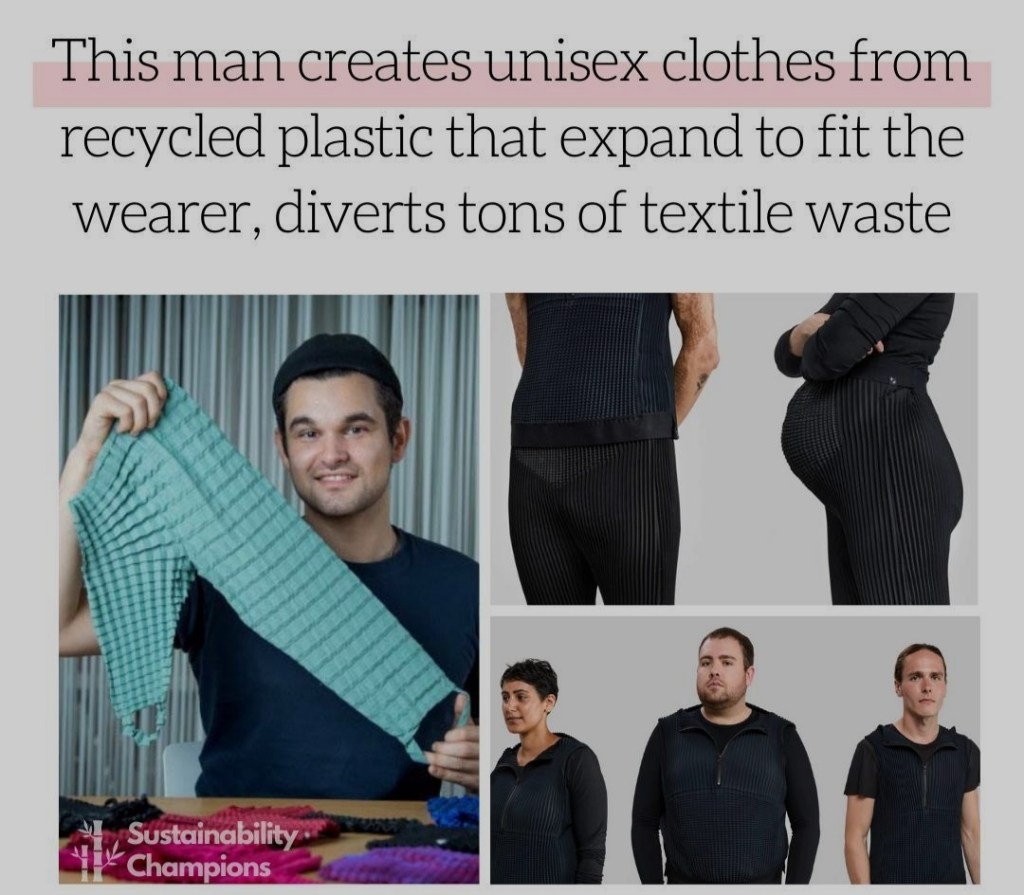
Ryan Mario Yasin , developed Children’s wear made out of recycled plastic bottles that can grow 7x their size .

Joanne Sandler genetically engineered bacteria that could turn plastic bottles into a valuable ingredient i.e vanilla .

Aweko Faith, along with her two friends , developed a durable and waterproof bag from plastic waste they collect .

Andrew Mupuya ,a 16 year old who handcrafted 20,000 eco-friendly  bags in a week to eradicate plastic use .

We are too ignorant towards our environment because it’s always just “one bag of plastic ” by “8 million people “.

It is foreseeable that plastic pollution has become one of the world’s most tremendous  environmental crises. The increasing production rate of plastic has surpassed the world’s ability to recycle ,hence  making  plastics take over our lands and water bodies.

This pollution is  extremely dangerous which can have a catastrophic influence on biodiversity. 

 Plastic particles in the ocean attract toxins, which in turn affects us, as the toxins enter the food chain making our water bodies have plastics swimming in them leading to  millions of deaths of animals  from ingestion of plastic every year.

I assume you already know the harmful effects of plastic . But do you know how to say ”  No to Plastics ” ?

We humans have become dependent on plastic for a range of uses, from packaging to products. Reducing our use of plastic bags is an easy place to start getting our addiction under control.” 

David Suzuki

3 July , International Plastic Bag Free Day 

International Plastic Bag Free Day is observed all around the world on 3 July  every year. 

This day  emphasizes the plastic bag-free world and spreads awareness about the devastating effects of plastics on the environment. 

International Plastic Bag Free Day was created by Bag Free World. It was created as a worldwide initiative for the purpose of getting rid of the single-use of plastic bags around the world. 

On this day many organizations and thousands of responsible citizens  work together to raise awareness on the impact of plastic bags and encourage the use of other eco-friendly bags. 

One must promote  environmental conservation by encouraging  all to stay away from the use of plastic bags and use  eco-friendly alternatives.

Ways to celebrate this day :- 

” It’s when plastic takes on a life of its own that the food chain will be disrupted.”

…. –  Anthony T. Hincks

There are many steps one  can take to honor this important date :-

• By volunteering the primary three ways Plastic Waste Management i.e :-

•Reduce

•Reuse

•Recycle .

•  Volunteering by giving our  money or  time to an environmental organization or charity that is focused on cleaning landmasses and water of plastic bags. 

Groups  such as Greenpeace, Plastic Pollution Coalition, Clean Ocean Project etc .

• By  making and selling eco-friendly handbags and  shopping bags .

I think, on a personal level, everybody, when you go through the checkout line after you get your groceries and they say, ‘Paper or plastic?’ We should be saying, ‘Neither one.’ We should have our own cloth bags. “

Woody Harrelson

•  By organizing or taking part in raising awareness to stop the usage of single-use plastic bags. 

• By  conducting a workshop based on using reusable plastic bags. 

• By volunteering to clean up some mess of plastic bags on streets and in the ocean.

• By Adopting  the habit of using reusable bags.

• By using  social media  and spreading awareness , sharing information and  and #PlasticBagFreeDay slogan .

• By  supporting and out- spreading  the alternatives for single-use plastic bags such as recyclable bags, cloth bags, canvas bags, and a lot more, which may help in saving the environment and animals.

It is in the hands of each and everyone in  the world to make a plastic bag-free society possible. 

Effects Of Plastics:- 

To make a plastic bag-free world, it is essential to teach the public about the harmful  effects of throwing plastic into the environment. 

Plastic pollution leads to  extremely detrimental effects on the environment, wildlife and indeed human health.

BPA is just one chemical used to make plastic baby bottles and in the lining of food, beverage, and infant formula containers. Research shows that children are exposed to BPA by drinking from polycarbonate bottles and consuming food from containers made using BPA.”

– Suzy Shuster

The marine ecosystem is  suffering immensely as a result of plastic pollution.  Over 250 species have become entangled in plastic , leading to suffocation and death.

Littering of plastics in open spaces creates unhygienic conditions. Plastics do not undergo degradation, thus, stay in the soil for many years, which affects soil fertility and degrades the soil quality.

The improperly disposed of plastic bags , when eaten by animals, cause harmful diseases   leading to  death.

When plastic artifacts enter the drainage and sewerage system, they block the pipes and the drains causing waterlogging.

3 July , International Plastic Bag Free Day , is a global initiative to eradicate or reduce the use of these dangerous plastics and to make people aware of its harmful effects. We must foresee the future dangers that will soon affect our ecosystems and  our vision of  sustainable development.

This day is just like any other day where one  can voice their opinion and use it to save the  environment from a global  man made catastrophe i.e plastic pollution.

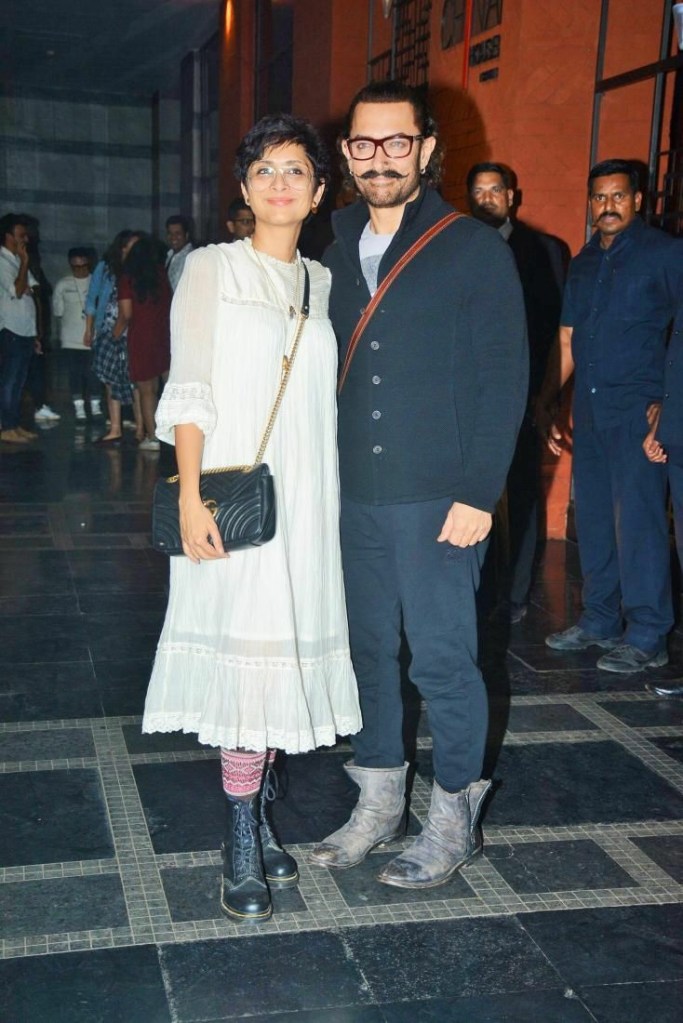
Aamir khan announced divorce from Kiran Rao after 15 years of marriage

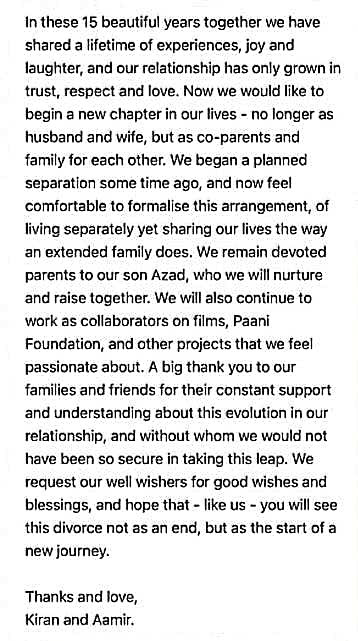
Bollywood Actor Aamir Khan and filmmaker Kiran Rao have announced their divorce after 15 years of marriage in a joint statement. The couple said that they will co-parent their son, Azad Rao Khan, as well as continue with their professional partnership on Paani Foundation and ‘other projects that they feel passionate about’. The couple also thanked their families for constant support in understanding their relationship.

reaction of people around the world

Few are trying to shape this divorce in a controversial manner by linking it with relegion. While there are few who support his decision .

The offical joint statement given by the couple”

about the Marriage

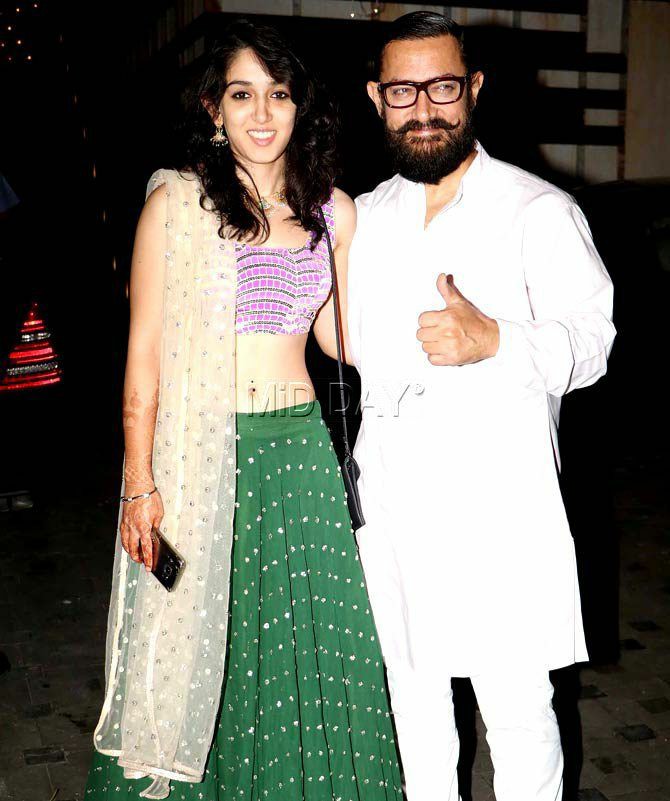
Aamir Khan married Kiran Rao, who had been an assistant director to Gowariker on the set of Lagaan .On 28 December 2005 they got married. They announced the birth of their son, Azad Rao Khan,on 5 December 2011, through a surrogate mother. Aamir has married twice and his first wife was Reena Dutta, who had a small part in Qayamat Se Qayamat Tak, on 18 April 1986. They have two children: a son named Junaid and a daughter, Ira. Dutta was involved briefly in Khan’s career when she worked as a producer for Lagaan. In December 2002, Khan filed for divorce and Dutta took custody of both children.

Famous movies & upcoming projects

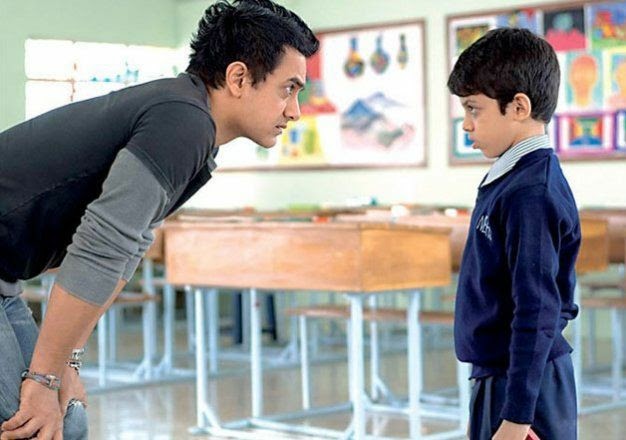
Aamir khan have his own production house ,which has produced brilliant piece of cinema. The first film of ‘Aamir khan production was laagan (2001), which was nominated for the Academy Award for Best Foreign Language Film, and earned him a National Film Award for Best Popular Film .After a four-year absence from the screen, Khan returned to appear in leading roles, notably in Fanaa and Rang De Basanti. He made his directorial debut with Taare Zameen Par (2007), which won him the Filmfare Awards for Best Film and Best Director. Khan’s greatest global success came with Ghajini ,3 Idiots, Dhoom 3 ,PK and Dangal, each having held the record for being the highest-grossing Indian film. He created and hosted the television talk show Satyamev Jayate, through which he highlights sensitive social issues in India, occasionally influencing the Indian parliament. His upcoming projects includes lal Singh chadda , which is An adaptation of the 1994 American film Forrest Gump .

Behavioural Economics

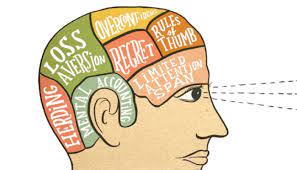
In an ideal world, people would always make optimal decisions that provide them with the greatest benefit and satisfaction. In economics, rational choice theory states that when humans are presented with various options under the conditions of scarcity , they would choose the option that maximizes their individual satisfaction. This theory assumes that people, given their preferences and constraints, are capable of making rational decisions by effectively weighing the costs and benefits of each option available to them. The final decision made will be the best choice for the individual. The rational person has self-control and is unmoved by emotions and external factors and, hence, knows what is best for himself. Alas behavioral economics explains that humans are not rational and are incapable of making good decisions.

Behavioral Economics is the study of psychology as it relates to the economic decision-making processes of individuals and institutions. Behavioral economics draws on psychology and economics to explore why people sometimes make irrational decisions, and why and how their behavior does not follow the predictions of economic models. Decisions such as how much to pay for a cup of coffee, whether to go to graduate school, whether to pursue a healthy lifestyle, how much to contribute towards retirement, etc. are the sorts of decisions that most people make at some point in their lives. Behavioral economics seeks to explain why an individual decided to go for choice A, instead of choice B.

Because humans are emotional and easily distracted beings, they make decisions that are not in their self-interest. For example, according to the rational choice theory, if Charles wants to lose weight and is equipped with information about the number of calories available in each edible product, he will opt only for the food products with minimal calories. Behavioral economics states that even if Charles wants to lose weight and sets his mind on eating healthy food going forward, his end behavior will be subject to cognitive bias, emotions, and social influences. If a commercial on TV advertises a brand of ice cream at an attractive price and quotes that all human beings need 2,000 calories a day to function effectively after all, the mouth-watering ice cream image, price, and seemingly valid statistics may lead Charles to fall into the sweet temptation and fall off of the weight loss bandwagon, showing his lack of self-control.
Climate change : In India and World today .

Let’s double down on solar energy, let’s be more energy-efficient, let’s weatherize our homes. We can build a better, healthier economy based on good-paying, clean energy jobs.”

Ian Somerhalder, Actor

Being one of the second largest country , climate change in India is having profound effect on India and all over the world . India is ranked fourth among the list of countries most affected by climate change in the period from 1996 to 2015 .

With 7% of global emissions , India emits about 3 gigatonnes (Gt) CO2eq of greenhouse gases each year; about two and a half tons per person, which is half the world average.

Due to the rise in temperature , the Tibetan plateau are causing problem to Himalayan glaciers . It directly effect in increasing the flow rate of the Ganges , Brahmaputra, Yamuna and other major rivers.

The Indira Gandhi Institute of Development Research has reported that, if the prediction of the Intergovernmental Panel on Climate Change is correct about Global warming than it may cause fall of GDP upto 9%.

In all over the world , climate change is drastically affecting the change in temperature of the globe 🌎 . Climate change includes both global warming driven by human-induced emissions of greenhouse gases and the resulting large-scale shifts in weather patterns.

Causes :

Human envision and green house gasses are two important causes in the climate change. Greenhouse gases affect Earth’s energy balance and climate .Human activities have added greenhouse gases to the atmosphere. Human activities are changing the climate.

Other causes :

  • Power Plants.
  • Farming .
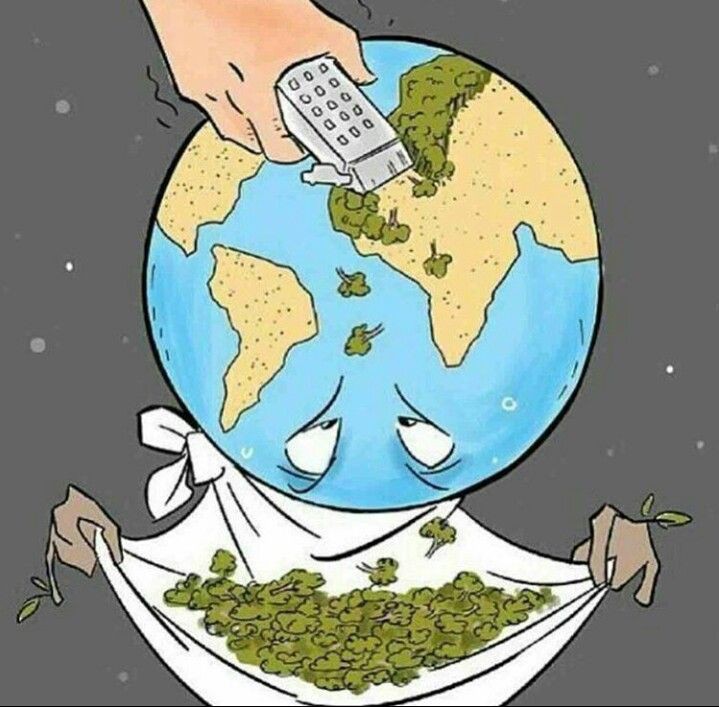
  • Deforestation.
  • Fertilizers.
  • Oil drilling.
  • Natural gas drilling.
  • Permafrost.
  • Garbage .
  • Volcanic eruption.
  • Pollution.

Campaigns

There are many campaigns that are going on . One of them is The ActNow campaign . It was launched at the UN Climate Change Conference (COP 24) in December 2018, with a call from Sir David Attenborough in conjunction with the award-winning “People’s Seat” initiative.

It signifies individual action on climate change and sustainability. By changing our habits and making choices that have less harmful effects on the environment, we can tackle the climate emergency and build a more sustainable world.

It is also working with other campaigns like The Good life goals , Anatomy of action , 170 actions to combat climate change , lazy person guide to saving the world , connect4climate , climate neutral now , trash hack , stop the waste , Think. Eat. Save. , Clean seas , breathe life , glowing glowing gone . Their may be others as well .


Prevention :

Becoming more energy efficient is a great way to prevent pollution. It causes the power plants to expend less energy that can lead to the production of greenhouse gases. … Replace your light bulbs with energy-efficient light bulbs that help you save electricity too.

  • Speak up!
  • Power your home with renewable energy.
  • Weatherize, weatherize, weatherize.
  • Invest in energy-efficient appliances.
  • Reduce water waste.
  • Actually eat the food you buy—and make less of it meat.
  • Buy better bulbs.
  • Pull the plug(s).

Conclusion

In the times , where the world is changing and taking measurements for saving the globe . Many Environmentalist , Actors , Politicians , Countries are taking precautions and actions on the climate change . It is our duty to prevent our world from falling . Take Initiative To Save The World .

Climate change is real. It is happening right now, it is the most urgent threat facing our entire species and we need to work collectively together and stop procrastinating.

Leonardo Di Caprio, Actor & Environmentalist

Link

World Photography Day

What’s a photograph?


It’s a memory, an idea, an experience, a feeling, an expression. In simple words, photographs are the medium that allows us to see the world from another person’s point of view. Isn’t it magical, I believe photography is one of the greatest inventions of mankind. That’s why it has been said; a photograph is worth a thousand words.

Every year World Photography Day is celebrated on the 19th of August to inspire all the shutterbugs to share a single photo and share their world with the world. Let’s have a look at photography over the years.

It originates from the invention of the photographic process called Daguerreotype developed by Frenchmen Louis Daguerre and Joseph Nicephore Niepce in 1837. Later, on the 9th of January 1839, the Daguerrotype process has been announced by the French Academy of Sciences. And on the 19th of August, the French government purchased the patent and declared the invention as a gift “free to the world”. 

But Daguerrotype was not the first photographic process. In 1826, Nicéphore Niépce invented a process called heliography, which he used to create the earliest known surviving photograph from nature; View from the Window at Le Gras.

On the 19th of August 2010, World Photography day hosted its first online gallery globally. In which approximately 300 shutterbugs shared their pictures and people from more than 100 countries visited the website. This marked the first official, globally reaching World Photography Day.

Some interesting photography facts:

★ In 1861, the first durable colored photograph was taken by Thomas Sutton. It was a combination of three black and white pictures taken through red, blue, and green filters.

★ The first selfie was taken in 1839 by an amateur chemist and photography enthusiast from Philadelphia named Robert Cornelius.

★ The first digital photograph was taken in 1957, almost 20 years before Kodak invented the first digital camera.

Don’t forget to share your world with the world on the coming World Photography Day.

“For me, the camera is a sketchbook, an instrument of intuition and spontaneity.”
– Henri Cartier-Bresson

Culture and history

China and Japan India and Byzantium traveling culture and history vector geisha and samurai men and women Taj Mahal and torii gate capitol building and Great wall landmarks and heritage nationalities.

Culture and history is the main building block of our lifes

The Culture is the characteristics and knowledge of a particular group of people, encompassing language, religion, cuisine, social habits, music and arts.

The word “culture” derives from a French term, which in turn derives from the Latin “colere,” which means to tend to the earth and grow, or cultivation and nurture

History is the study of life in society in the past, in all its aspect, in relation to present developments and future hopes. It is the story of man in time, an inquiry into the past based on evidence.

As with any scholarly approach that boasts of being “new” when it bursts onto the scene, new cultural history was fairly well established as one among many ways of thinking about history by the twenty-first century. This is not to say that new cultural historians enjoyed the unanimous esteem of their more traditional colleagues, for the field still managed to draw the fire of critics from the left and the right who believed that after twenty years this approach still represented a mere “trend.” One could agree with Peter Novick that this attests to the fragmentation of the historical profession into a plethora of specializations that no longer cohered around shared principles and whose denizens had little common ground for discussion. Yet much has changed in cultural history since its heyday in the 1980s.

 When new cultural history was actually “new” it provided innovations both in terms of the topics considered worthy of historical attention and in terms of the ways of theorizing such topics within their respective contexts. It is nevertheless apparent that a good portion of what was marketed in 2000 as “cultural history” reflected more of the topical rather than theoretical innovations entailed by this approach. In fact, some of these works even read more like conventional social histories with a few obligatory nods to one of many privileged theorists.

To some extent this state of affairs reflects the success of this approach in the academy and the willingness of historians to combine methodologies in a creative and eclectic manner. On the other hand, though, one might argue that cultural history lost much of its edge by becoming subsumed into a more or less nonreflective historical establishment. Some historians see less fragmentation than the cooptation of erstwhile radical approaches back into a surprisingly resilient mainstream.

“Whatever possibilities become evident,” notes Patrick Joyce, “something is needed to shake the hold of a history which continually reproduces itself, in the process sucking the erstwhile heterodox into its consensus, in much the way that ‘cultural history’ is slowly but surely becoming routinized as more methodology, yet one more subdiscipline in the house of history.” Joyce’s observation is astute, yet one wonders whether a historical approach that could successfully resist such cooptation is possible and, even if it were, whether it would still merit the name “history.” It seems evident that what makes history “history” has little to do with methodologies and innovations that are unique to it, and perhaps a more thoroughgoing interdisciplinarity would discourage the domestication of future innovations into mere additions to the mansion of conventional history.

Turning heat into electricity.

Study finds topological materials could boost the efficiency of thermoelectric devices.

MIT researchers, looking for ways to turn heat into electricity, find efficient possibilities in certain topological materials.

What if you could run your air conditioner not on conventional electricity, but on the sun’s heat during a warm summer’s day? With advancements in thermoelectric technology, this sustainable solution might one day become a reality.

Thermoelectric devices are made from materials that can convert a temperature difference into electricity, without requiring any moving parts — a quality that makes thermoelectrics a potentially appealing source of electricity. The phenomenon is reversible: If electricity is applied to a thermoelectric device, it can produce a temperature difference. Today, thermoelectric devices are used for relatively low-power applications, such as powering small sensors along oil pipelines, backing up batteries on space probes, and cooling minifridges.

But scientists are hoping to design more powerful thermoelectric devices that will harvest heat — produced as a byproduct of industrial processes and combustion engines — and turn that otherwise wasted heat into electricity. However, the efficiency of thermoelectric devices, or the amount of energy they are able to produce, is currently limited.

Now researchers at MIT have discovered a way to increase that efficiency threefold, using “topological” materials, which have unique electronic properties. While past work has suggested that topological materials may serve as efficient thermoelectric systems, there has been little understanding as to how electrons in such topological materials would travel in response to temperature differences in order to produce a thermoelectric effect.

In a paper published this week in the Proceedings of the National Academy of Sciences, the MIT researchers identify the underlying property that makes certain topological materials a potentially more efficient thermoelectric material, compared to existing devices.

“We’ve found we can push the boundaries of this nanostructured material in a way that makes topological materials a good thermoelectric material, more so than conventional semiconductors like silicon,” says Te-Huan Liu, a postdoc in MIT’s Department of Mechanical Engineering. “In the end, this could be a clean-energy way to help us use a heat source to generate electricity, which will lessen our release of carbon dioxide.”

A path freely traveled

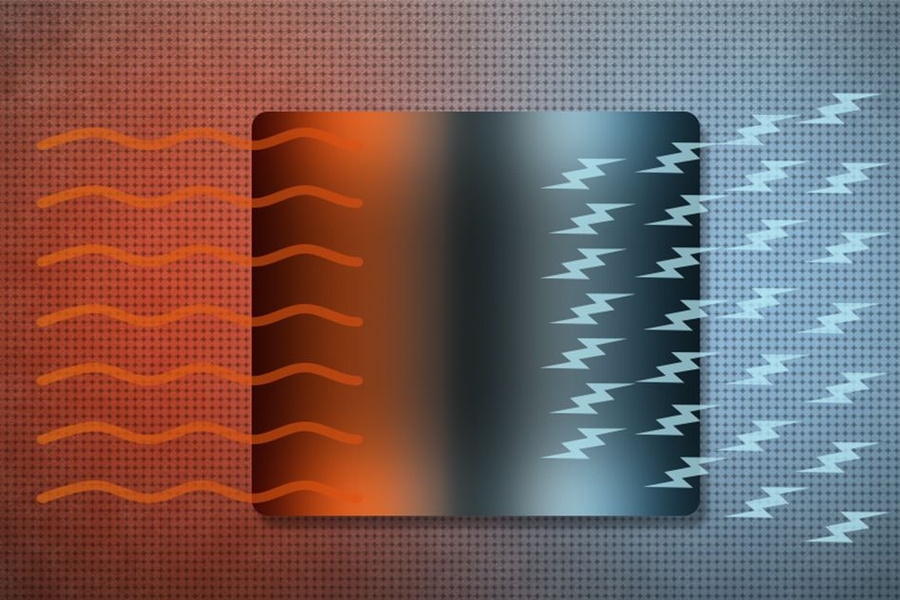
When a thermoelectric material is exposed to a temperature gradient — for example, one end is heated, while the other is cooled — electrons in that material start to flow from the hot end to the cold end, generating an electric current. The larger the temperature difference, the more electric current is produced, and the more power is generated. The amount of energy that can be generated depends on the particular transport properties of the electrons in a given material.

Scientists have observed that some topological materials can be made into efficient thermoelectric devices through nanostructuring, a technique scientists use to synthesize a material by patterning its features at the scale of nanometers. Scientists have thought that topological materials’ thermoelectric advantage comes from a reduced thermal conductivity in their nanostructures. But it is unclear how this enhancement in efficiency connects with the material’s inherent, topological properties.

To try and answer this question, Liu and his colleagues studied the thermoelectric performance of tin telluride, a topological material that is known to be a good thermoelectric material. The electrons in tin telluride also exhibit peculiar properties that mimic a class of topological materials known as Dirac materials.

The team aimed to understand the effect of nanostructuring on tin telluride’s thermoelectric performance, by simulating the way electrons travel through the material. To characterize electron transport, scientists often use a measurement called the “mean free path,” or the average distance an electron with a given energy would freely travel within a material before being scattered by various objects or defects in that material.

Nanostructured materials resemble a patchwork of tiny crystals, each with borders, known as grain boundaries, that separate one crystal from another. When electrons encounter these boundaries, they tend to scatter in various ways. Electrons with long mean free paths will scatter strongly, like bullets ricocheting off a wall, while electrons with shorter mean free paths are much less affected.

In their simulations, the researchers found that tin telluride’s electron characteristics have a significant impact on their mean free paths. They plotted tin telluride’s range of electron energies against the associated mean free paths, and found the resulting graph looked very different than those for most conventional semiconductors. Specifically, for tin telluride and possibly other topological materials, the results suggest that electrons with higher energy have a shorter mean free path, while lower-energy electrons usually possess a longer mean free path.

The team then looked at how these electron properties affect tin telluride’s thermoelectric performance, by essentially summing up the thermoelectric contributions from electrons with different energies and mean free paths. It turns out that the material’s ability to conduct electricity, or generate a flow of electrons, under a temperature gradient, is largely dependent on the electron energy.

Specifically, they found that lower-energy electrons tend to have a negative impact on the generation of a voltage difference, and therefore electric current. These low-energy electrons also have longer mean free paths, meaning they can be scattered by grain boundaries more intensively than higher-energy electrons.

Tin telluride - Wikipedia

Sizing down

Going one step further in their simulations, the team played with the size of tin telluride’s individual grains to see whether this had any effect on the flow of electrons under a temperature gradient. They found that when they decreased the diameter of an average grain to about 10 nanometers, bringing its boundaries closer together, they observed an increased contribution from higher-energy electrons.

That is, with smaller grain sizes, higher-energy electrons contribute much more to the material’s electrical conduction than lower-energy electrons, as they have shorter mean free paths and are less likely to scatter against grain boundaries. This results in a larger voltage difference that can be generated.
What’s more, the researchers found that decreasing tin telluride’s average grain size to about 10 nanometers produced three times the amount of electricity that the material would have produced with larger grains.

Liu says that while the results are based on simulations, researchers can achieve similar performance by synthesizing tin telluride and other topological materials, and adjusting their grain size using a nanostructuring technique. Other researchers have suggested that shrinking a material’s grain size might increase its thermoelectric performance, but Liu says they have mostly assumed that the ideal size would be much larger than 10 nanometers.

“In our simulations, we found we can shrink a topological material’s grain size much more than previously thought, and based on this concept, we can increase its efficiency,” Liu says.

Tin telluride is just one example of many topological materials that have yet to be explored. If researchers can determine the ideal grain size for each of these materials, Liu says topological materials may soon be a viable, more efficient alternative to producing clean energy.

“I think topological materials are very good for thermoelectric materials, and our results show this is a very promising material for future applications,” Liu says.

This research was supported in part by the Solid-State Solar Thermal Energy Conversion Center, an Energy Frontier Research Center of U.S. Department of Energy; and the Defense Advanced Research Projects Agency (DARPA).

Old Becomes Richest Man In India Making Money Online!

Mithun Bhat, born in Bhopal, could buy 2 houses within a month, Bentley, Ferrari and paid all his debts. But previously, he worked with salary under the minimum wage. So, how could he earn so much money only in a month? He tells us his story.

“I worked at pizza delivery service for a year. I was prior a collage student and did a part time job in a restaurant. I did it to support my study. In the second year of study I was close to be expelled since I could not pay the tuition. At the time, I had to take a loan. I could finally paid my tuition, but I had no money to pay the monthly installments to the bank. Honestly, studying and working all at once was beyond my endurance, and eventually, I was expelled from campus a week before the end of school year. That was the beginning of the darkest days of my life. My father lost his job and my family didn’t know how to survive. Could you imagine how hopeless I felt? I had no decent work and no education, and my father lost his job. I could do nothing to help them.

One night, I was delivering a pizza to the last location. A guy opened the door. He was with his friends, and while he was paying the pizza, I heard their discussion about where would they invest Rs. 2,000,000 they earned 10 minutes ago. I just made a glance and saw a sort of graph and figures on the laptop screen. The guy opening the door gave me Rs. 1,000 but the price was only Rs. 600. He told me to keep the change.

I was absolutely surprised and after I got back home, I took my laptop and tried to recall about their discussion. After 5 minutes, I remembered that they told about online trading. On the Broker website I found the graphs and figures I saw at the guy’s laptop.

After reading all information about the broker and watching tutorial videos, I opened a demo account where I got virtual money. I quickly understood what I had to do, it was very easy. I earned some money after my very first transaction. Then I thought… I did not lose anything, so I decided to open a real account and deposited my last money there. At the morning, I woke up and saw that I earned Rs. 30,654 over that night. After 2 weeks I could paid my debts off, bought a car, and I could help my father while he was searching for a new job and pay his expenses for the next few months. 2 weeks later, I already had 2 houses in the suburb. And all I did without leaving my home and getting higher education.

That’s my luck. It would never happen if I did not meet the rich guy while delivering the pizza. I know there are a lot of people having not good times like me, that’s why I tell you: if you want to live without any problem, I can tell you how to earn money with Trading Resource. It is very easy if you would try it.

Jobs and career

What is a JOB ?

A job is something you simply do for the money. Usually, jobs have a small impact on future resumes because they aren’t typically related to what your career is or will be. Also, jobs usually offer less networking opportunities because your coworkers often won’t be continuing on to the same field as you in your future career.

Most jobs consist of hourly wages, are more short-term, and focus on getting a task done.

What is a career ?

A career is all about building up skills through various employment opportunities, giving you the ability to move on to higher paying and more prestigious ones. Careers provide a foundation of experiences that help fuel your professional life for many years.

Careers are more long-term and are about learning, gaining experience, building connections, and putting yourself in the right position for promotions and raises. Also, careers tend to be more salary based, as opposed to hourly based like jobs, and often include benefits such as paid time off and healthcare.
While more education is often required for a career, you don’t need to spend the rest of your life in school just to get ahead. South College offers many associate degree programs that can be completed in just two years, getting you started on your new career before you know it.

If you’re interested in finding out what your future career should be or in getting the right education to put you there, contact us today!

That’s not to say that jobs aren’t valuable. Jobs show your work ethic, which is important to future employers, and money pays the bills! Jobs can help prepare you for a career by providing you with valuable skills like time management and communication.

DIFFERENCE

A job is more short-term oriented and tends to focus purely on earning money. On the other hand, a career is a series of related employment in one field that provides experience for your future and helps you earn a better paycheck and living status

7 Strategies to Build A Successful Career

  • Identify with Your Goals. Before even considering following a career route, you must get to know yourself. …
  • Build a Professional Resume. …
  • Become Aware of Your Strengths. …
  • Assume Full Responsibility for Your Life. …
  • Always Raise Your Standards. …
  • Brand Yourself. …
  • Network — A LOT. …
  • Conclusion