• An integrated rice field or rice field and pond complex .
• Fishes are grown concurrently or alternately with rice .
• Fish – deliberately introduces/ fishes may enter fields naturally from surrounding waters when flooding occurs/ mix of both. • Allows the production of fish and other aquatic animals, from the same rice field area without causing reductions in rice yields
Advantages .
• Readily available paddy fields can be utilized .
• Can serves as an off season occupation for farmer .
• Fish serves as an excellent agent for integrated Pest Management (IPM) .
• Fish – increase soil productivity and boost the production of paddy.
• boosts productivity and income from unit area Rabha tribe .
• Scheduled tribes of India.
• Mainly inhabit Assam and West Bengal .
• Live in small, isolated groups commonly called as Rabha Basti .
• Indian journal of medical science HbE – a haemoglobin variant, is found in high incidence among the Rabha tribes (PS – For Anthropology optional)
Annie wood is an famous writer, orator, theosophist, women’s rights activist, educationist, philanthropist. When we look into the history of wood she was born on 1st Oct 1847 at Clapham, London United Kingdom who belong to the British Nationality. She was an ancient supporter of both Irish and Indian self-rule . Annie Besant was a great and courageous lady who has been titled as a freedom fighter as she fought for many war to help people to get their real freedom. Annie Besant as a social reformer took a role as an social activist for both England and India. She proved herself as one of the best social activist through her great and continued social works even aftter being criticized regarding to women’s rights in India. Wood also fought gor women’s rights favouring the traditional Hindu customs as she had more respect for the old Hindu ideas.
During her life as a social activist, she wrote for the National reformer newspaper of NSS at the age of 19. She got married to Frank Besant a clergyman but soon got legally separated due to religious difference and they had 2 children asther and Mabel. Later, which she became a prominent speaker, famous writer for National secular society NSS and had a friendly relationship with her close friend of Charles Bradlaugh and later which they both joined hands and published a book by birth control campaigners. Charles Bradlaugh was 1st selected as member of parliament for Northampton and became the leading speakers for Fabian society and Marxist social democratic federation (SDF) and become involved in union actions including the Bloods Sunday demonstration and the London matchgirls strikes.
Besant was earning a small weekly wage by writing a column for National Reformer. The NSS allowed her to act as one of its public speakers which was very popular entertainment in Victorian times by which her demand for brilliant speaking increased. When we look into the theosophy interest of Basant she met Helena Blavatsky and over the next few years her interest in theosophy grew and she become society member and successful lecturer in the theosophy and also she was deeply involved in Indian Independence movement and continued her campaign to make India and independent country the love on Indian People culture, tradition make her bring it and started awakening Indian people for deep sleep through her loud speech .when she became President of theosophical society. She guided indian societies away from Buddhism to bring them towards Hinduism.
Annie came to India through her theosophy related religious movement and was selected as 1st women President of Indian National Congress as an Irish origin women who played a significant role towards Indian Independence movement and Annie left congress and joined the liberal party when Gandhi launched satyagraha against British rule and when he took effective control of the congress party.
Besides being a prolific writer Besant was ‘practised stamp orator’ who gave 66 public lectures in 1 year and also engaged in public debates. Some of the popular books are The political status of women, The law of population, why I am socialist, The 7 principles of man, Karma, The religion problem in India, The ancient wisdom.
The great speaker rested her soul on 20 sep 1933 at the age of 85 in Indian land of Adyar Madras, Madras Presidency British.
Brian Lara(Full Name: Brian Charles Lara) is a former Trinidadian cricker and is regarded as one of the greatest to have ever graced the game. He was a prolific run scorer in both one day internationals and test cricket. He was born on 2nd May, 1969 in Cantaro, Trinidad. He batted left hand and is known in the cricket world for his knock of 400 not out versus England in 2004 – a record for most runs scored by a batsman in one innings. He also scored a score of 501 not out, which is also a record for the highest first class individual score in an innings, for Warwickshire against Durham at Edgbaston in 1994.
He did not take much time to impress others at Harvard cricket clinic. Spotting his talent, his coach soon made him play against cricket balls. West Indain cricketer Carlisle Best was impressed with the boy after seeing him bat at the club and presented him a bat as a gift. He loved both cricket and football as a kid. When he confronted with a situation to choose one, it was his father who played a role in Lara’s decision.
He made his debut for the national cricket team of West Indies when he was just 21 in the year 1990. It took him a bit longer to create an impression at the top level, it was not until 1994. In 1994, he broke the records of highest individual score in test cricket after score 375 runs versus England and the record of highest individual score in first class cricket after scoring 501 not out in county cricket. He later bettered his personal best score by scoring 400 not out against the same opposition and broke the record that belonged Mathew Hayden ( Mathew Hayden 380).
He raised curtains to his international career after 2007 ICC Cricket World Cup. He finished his career as one of the most prolific run scorers in the history of cricket. He scored 11, 953 and 10,405 in test cricket and one day cricket respectively(including 53 centuries) – one of the few to do so. Called as ‘Prince of Trinidad’, he was inducted to the ICC Hall of Fame in 2012.
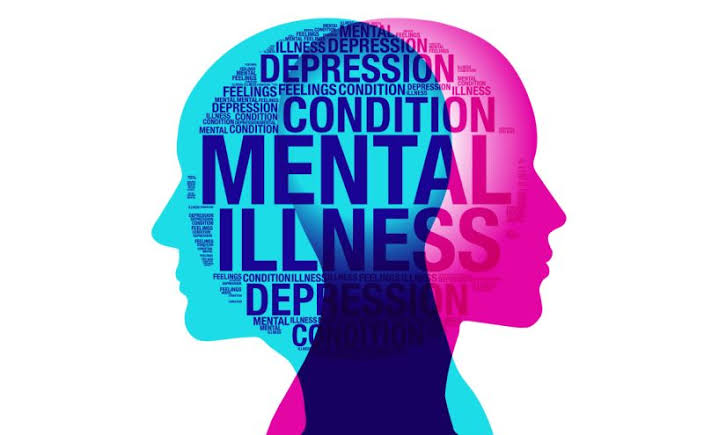
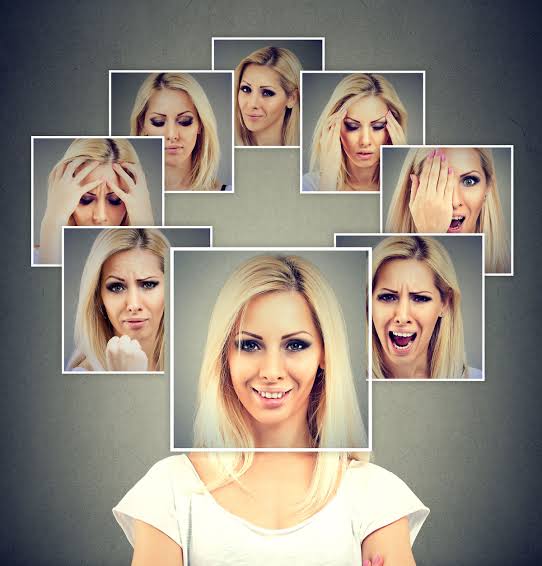
Mental health is all about behavioural and emotional well being. Mental health refers to how we feel, behave and think. Sometimes we feel low and sometimes we feel extreme rush of happiness. It’s not a big deal if you feel sad or happy or furious because we all are human beings afterall, we all have feelings and emotions. But what if those emotions take over our mind so harsh that it’s almost impossible to control them? What if you’re sad continuously for one weeks or months?This is something to worry about. This is what we call mental illness when a person himself can’t control his emotions and ultimately it ruins his life. Sometimes, the burden is so much that people often have suicidal thoughts and some even commit suicide because self killing seems easier than dealing with those emotions.
Anxiety is your body’s natural response to stress. It’s a feeling of fear or apprehension about what’s to come. The first day of school, going to a job interview, or giving a speech may cause most people to feel fearful and nervous.
But if your feelings of anxiety are extreme, last for longer than six months, and are interfering with your life, you may have an anxiety disorder.
Anxiety is your body’s natural response to stress. It’s a feeling of fear or apprehension about what’s to come. The first day of school, going to a job interview, or giving a speech may cause most people to feel fearful and nervous.
But if your feelings of anxiety are extreme, last for longer than six months, and are interfering with your life, you may have an anxiety disorder.
This type of anxiety may cause you to stop doing things you enjoy. In extreme cases, it may prevent you from entering an elevator, crossing the street, or even leaving your home. If left untreated, the anxiety will keep getting worse.
Anxiety disorders are the most common form of emotional disorder and can affect anyone at any age. According to the American Psychiatric Association, women are more likely than men to be diagnosed with an anxiety disorder.
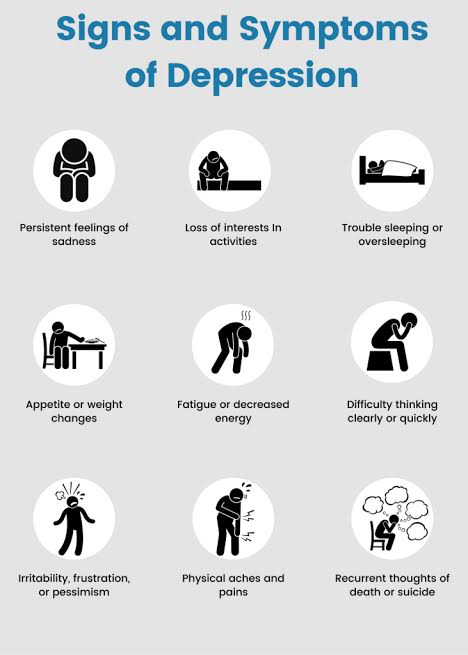
Depression is classified as a mood disorder. It may be described as feelings of sadness, loss, or anger that interfere with a person’s everyday activities.
People experience depression in different ways. It may interfere with your daily work, resulting in lost time and lower productivity. It can also influence relationships and some chronic health conditions.
not eating enough or overeatinghaving insomnia or sleeping too much distancing yourself from other people and favorite activities feeling fatigue even with enough sleep feeling numbness or lacking empathy experiencing unexplainable body pains or achiness feeling hopeless, helpless or lost smoking, drinking, or using illicit drugs more than ever before feeling confusion, forgetfulness, irritability, anger, anxiety, sadness, or fright constantly fighting or arguing with friends and family having extreme mood swings that cause relationship problems having constant flashbacks or thoughts that you can’t get out of your head hearing voices in your head that you can’t stop having thoughts of hurting yourself or other people
being unable to carry out day-to-day activities and chores
How to overcome:-
Get plenty of sleep
Eat well
Avoid alcohol, smoking and drugs
Get plenty of sunlight
Manage stress
Activity and exercise
Do something you enjoy
Connect with others and be sociable
Do things for others
Ask for help
Conclusion:-
Mental illness is a bigger concern for today’s generation. It is a serious issue and no one should take it lightly. If you’re facing some sort of mental illness then please do cure as soon as possible. It’s not a myth, but a harsh reality that everyone needs to be understood.
According to the 2011 population census India has nearly 104 million senior citizens of the total population. And around 71 % of senior citizens live in rural parts and 29 % reside in urban areas of India. These senior citizens are often left out when it comes to basic amenities and requirements and have to depend on others for their living and financial support especially in urban areas, whereas the senior citizens living in rural areas are unable to get aids for their age-related impairments or disabilities due to financial weakness. For overcoming this issue in senior citizens of rural and urban areas and provide the senior citizens with financial and health stability, the government came up with the Senior Citizens Welfare Scheme and Rashtriya Vayoshri Yojana. The Senior Citizens Welfare Fund (SCWF) was included under the Finance Act, 2015 for 3 years that is till 2020. This fund is utilized for the welfare of senior citizens. It is expected that around 5,20,000 senior citizens would benefit from this scheme. The scheme also tries that at least 30 % of beneficiaries in all districts should be women as far as possible. An amount of Rs. 410.23 crore was allocated as of December 2019, as initial funding under the scheme, and is handled by the Ministry of Social Justice and Empowerment. The fund is allocated from the unclaimed money which is lying untouched (after 10 years is transferred) under the Small Savings Schemes, Public Provident Fund, Employees Provident Fund (unclaimed for 7 years), any insurance scheme (be it life or non – life), any such unclaimed policy under the insurance companies, Coal Mines Provident Fund, and Central Government Schemes such as the Savings lying in the Post Office, Post Office Time Deposit Account, Kisan Vikas Patra, Post Office Monthly Income Account, Post Office Recurring Deposit, and Senior Citizens Savings Scheme.
In 2016, the Department of Economic Affairs transferred an amount of Rs 5889.17 crore to the corpus of Senior Citizens Welfare Fund and the interest accrued from this would be utilized for the Welfare Scheme funded from the Senior Citizens Welfare Fund. The Department of Economic Affairs allocated an amount of Rs 16 crore from the Senior Citizens Welfare Fund and provided it to the Department of Social Justice and Empowerment for the implementation of the Rashtriya Vayoshri Yojana. An inter–ministerial committee is set up for the administration of the funds. This ministry comprises – Ministry of Social Justice and Empowerment as the Nodal Ministry, Ministry of Health and Family Welfare, Ministry of Rural Development, Ministry of Labour and Employment, Ministry of Housing and Urban Affairs, and Department of Financial Services.
Rashtriya Vayoshri Yojana is a scheme under the Ministry of Social Justice and Empowerment. This scheme was launched in 2017. The funds for this scheme target at providing assistive living devices and other aids to the Below Poverty Line (BPL) category belonging to senior citizens, who suffer from disabilities due to growing age. Artificial Limbs Manufacturing Corporation of India (ALIMCO) is a public sector undertaking under the Ministry of Social Justice and Empowerment by which the scheme is implemented. This public sector undertaking manufactures assistive living devices. Depending upon the disability of impairment the following assistive devices are provided to the eligible senior citizens under the scheme:
• Spectacles
• Artificial Dentures
• Hearing Aids
• Walking Sticks
• Wheelchair
• Crutches / Walkers
• Elbow Crutches
• Tripods / Quadpods
To avail of benefits under this scheme, the senior citizen must belong to Below Poverty Line (BPL) category. He/she must be suffering from age-related disabilities and those disabilities can be – Loss of teeth, hearing impairment, locomotor disability, or low vision. The assistive devices provided for these impairments try to provide near normalcy bodily functioning.
Impact
A total of 325 districts were selected for the implementation of this scheme. 135 districts completed their assessment camps for identification of the beneficiaries as of 25/01/2019. As per the Ministry of Social Justice and Empowerment 70939 senior citizens belonging to the BPL category have benefited from 77 distribution camps organized. In the year 2017 – 18,34069 senior citizens benefited from this scheme and in the year 2018 – 19, 36870 senior citizens benefited from this scheme of Rashtriya Vayoshri Yojana.
Introduction Culture is the characteristics and knowledge of a particular group of people, encompassing language, religion, cuisine, social habits, music and arts.Thus, it can be seen as the growth of a group identity fostered by social patterns unique to the group
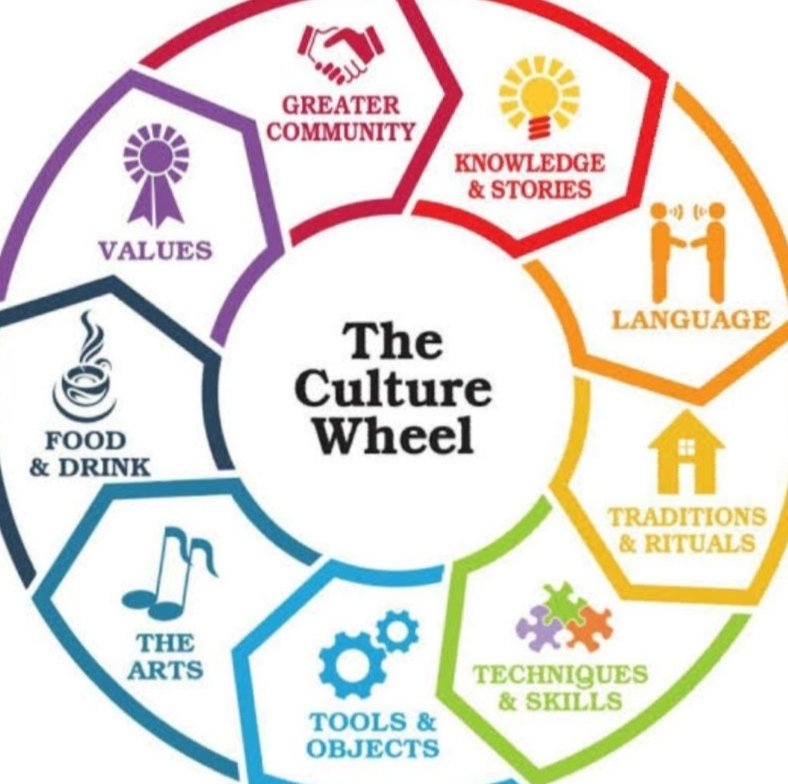
Different types of cultures in India
This is the wheel of different cultures in India
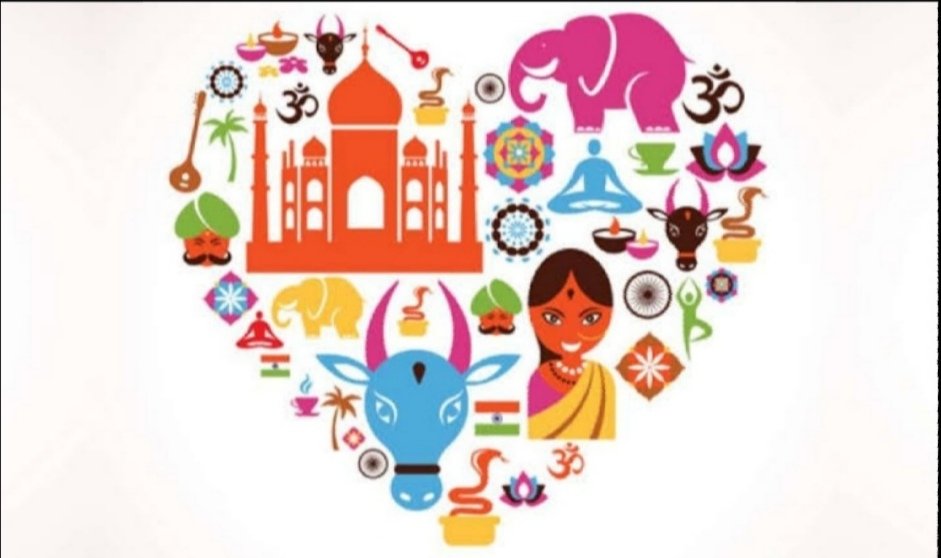
And Indian culture is the one of the most liked culture by all other countries in the world. The around the world get attract to our culture fastly. Because our culture is not boughted by sentimentally. There is a scientific reason behind every culture in India.
In india the culture is different from North to South. We can see lot of difference.
North culture
Traditions
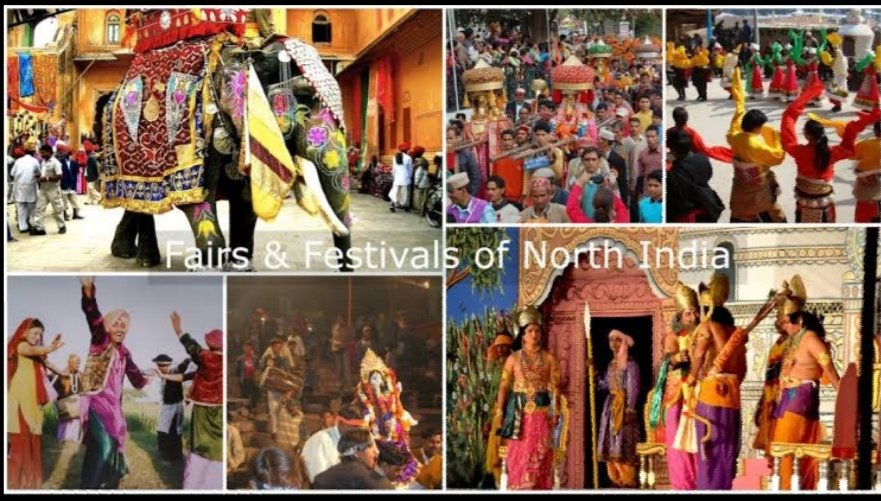
There are so many festivals that are celebrated widely in North India with pomp and show like Dusshera, Diwali, Karvachauth, Holi, Navratri, Shivratri, Guru Nanak Jayanti. Many festivals are called with different names in various regions but are same North India festivals are celebrated in Uttarayana. Ram Navmi and Janamasthami related to Lord Rama and Krishna are give importance in the North
Different festivals in North
Food
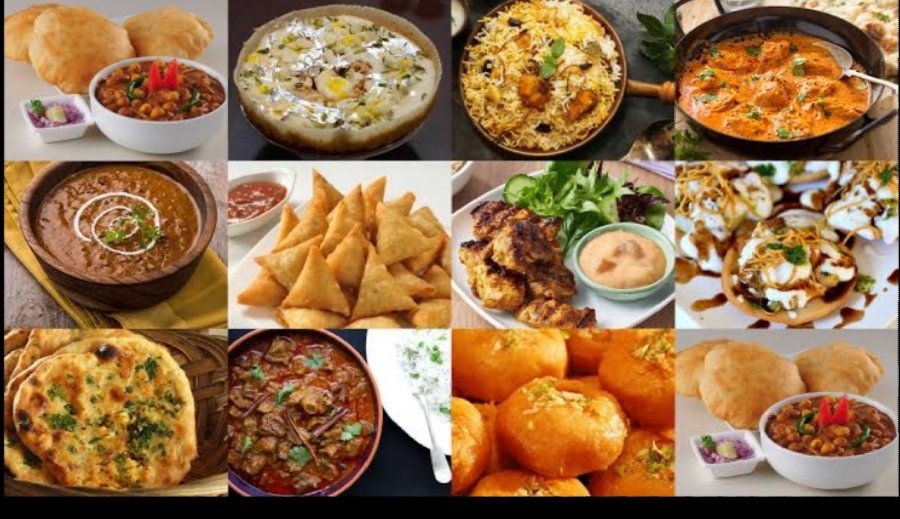
Differnt foods in north are samosa, chats, tandoori chicken, chloe bhatore, amristari kulcha, dal makahani, in north most of them eats roti every night.
North Indians eats very spicy food compare to South Indians they also eats street food a lot
South culture
Traditions
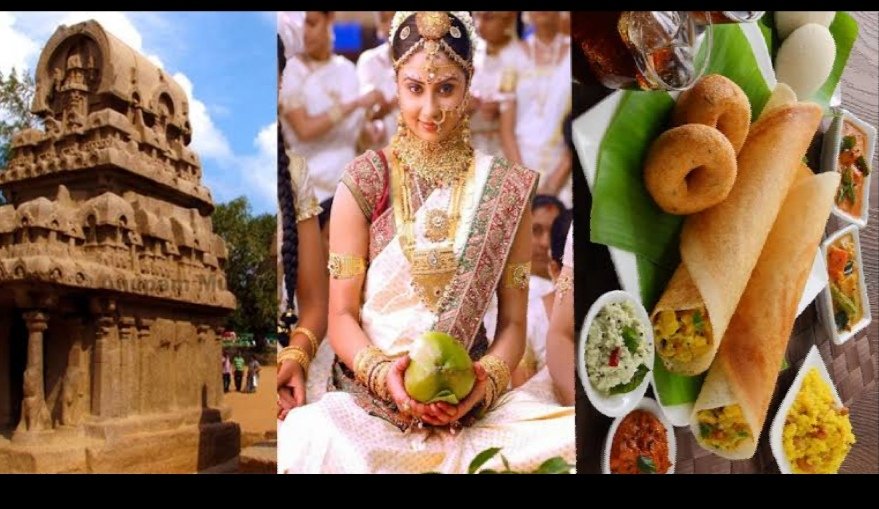
South Indian culture refers to the culture of the South indian states of andhra pradesh, kerala, tamilnadu, telangana. South Indian culture, though with its visible differences, forms an important part of the Indian culture. The people from different place attract to the South indian culture enteranally. Not only the people from India also from other countries like the South indian culture and they also follow these. And the clothing, dancing and scluputers are very famous from India. And for entertainment purpose there is a huge cinema following in South and there are different types of dances like bahartahnatyam, kuchipudi, kathak and etc.. And the languages speak in South are malyalam, tamil, telugu mostly.
FOOD
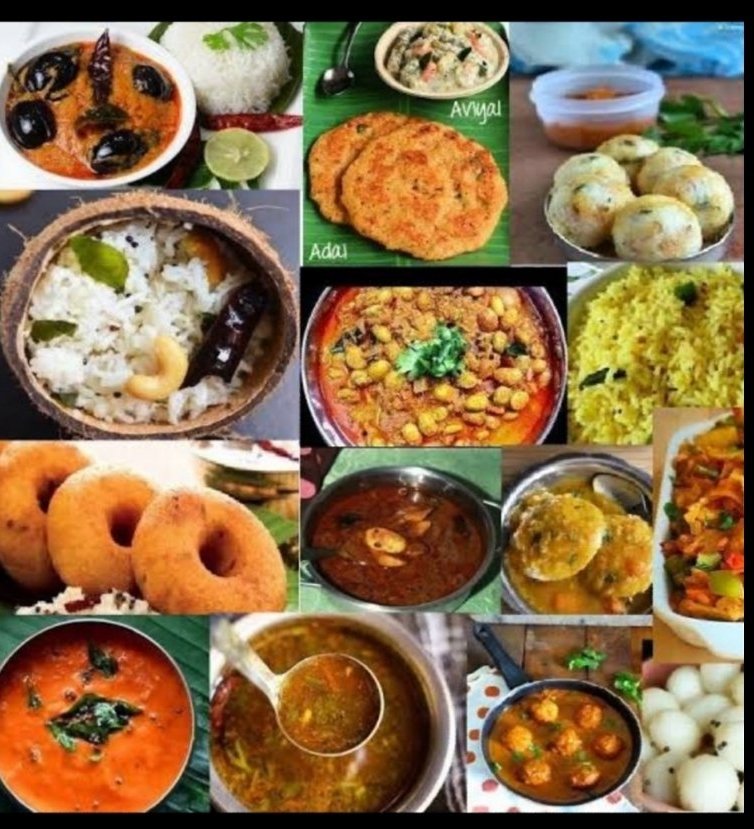
South indian food is very tasty. there are differnet types of food items idly, vada, sambar, dosa and onion dosa and in South mostly the people were brahmins and non veg items fish, chicken and mutton are also very famous. And avakay is very famous for telugu people. And for tamil people sambar. And in kerala there were many coconut trees. And they use mostly tha coconut oil. And pulihora is very famous dish in South.
CONCLUSION
And at last the culture is different in South and North but over all the culture of india is very famous in over all universe because it hits very different and attractive from culture in another counties.
The love for pets has recently increased in this quarantine. These pets not only are a of a companion but also a stress buster. It is proven that they have therapeutic value. Especially dogs and cats can reduce our stress , anxiety and depression. Their playfulness turns to our happiness . They are of valuable companion to the elders . They have a soothing effect on humans . They decrease the depression mentality and many other mental illness . There are service dogs where they are trained to support people with disabilities under the guidance and the direction of the owner .
Oxytocin is a kind of hormone that is released during breastfeeding the baby. This same hormone is released during the dog cuddling . It gives you a calming and comforting effect . The positive interactions with these pets benefits the mind and body . It also releases endorphins that produce a calming effect . These has a great improvement on the psychological state . Breeds like Greyhounds, Havanese, Whippets, and Spaniels are good for depression . An emotional support animal must be prescribed by a licensed mental health professional. Dogs can sense threat , when detected they get protective and alert. They too have feelings and when humans cry they feel distress.
It is true that dogs also develop mental illness. Dogs feel anxiety when left alone or apart from owner ,many fears and phobias and even post-traumatic stress disorder.
They might only be here for a part ofyour life . But for them you are their whole life.
Open acess is a set of principles and a range of practices through which research outputs are distributed online, free of cost or other access barriers. with open access strictly defined, or libre open access, barriers to copying or reuse are also reduced or removed by applying an open license for copyright. the main focus of the open access movement is peer reviewed research literature. historically this has centered mainly on print based academic journals. whereas conventional journals cover publishing costs through access tolls such as subscriptions, site licenses or pay per view charges, open access journals are characterised by funding models which do not require the reader to pay to pay to read the journals contents or they relay on public funding. open access can be applied to all the forms of published research output, including peer reviewed and non peer reviewed academic journal articles, conference papers, theses, book chapters, monographs, research reports and images.
FEATURES
The emergence of open science or open research has brought to light a number of controversial and hotly debated topics. scholarly publishing invokes various positions and passions. for example, authors may spend hours struggling with diverse article submission systems, often converting document formatting between a multitude of journal and conference styles, and sometimes spend months waiting for peer review results. the drawn out and often contentious societal and technological transition to open access and open science particularly across north america and europe has led to increasingly entrenched positions and much debate. the area scholarly practices increasingly see a role for policy makers and research funders. giving focus to issues such as carrer incentives, research evaluation and business models for publicly funded research. subscription based publishing typically requires transfer of copyright from authors to the publisher so that later can monetise the process via dessimination and reproduction of the work with oa publishing typically authors retain copyright to their work, and license its reproduction to the publisher
FUNDING:
Since open access publication does not charge readers there are many financial models used to cover costs by other means. open access can be provided by commercial pubishers who may publish open access as well as subscription based journals, or dedicated open access publishers such as public library of science and biomed central. another source of funding for open access can be institutional subscribers. advantages and disadvantages of open access have generated considerable discussion amoungst researchers, academics, librarians, university administrators, funding agencies and government officials. reactions of existing publishers to open access journal publishing have ranged from moving with enthusiasm to a new open access business model, to experiments with providing as much free or open access as possible to active lobbying against open access proposals.
Imagine a world where you can dive into dreams, not just in your dreams but dreams of your friends, family and even enemies. Think about all the stuff you could learn about someone through their dreams, because what are dreams if not a projection of what we long for. Dreams are an extension of ones desires, fears and even secrets. Imagine the benefits of such a technology, it could help patients suffering from PTSD as it would give a closer look of the trauma faced t the therapist. It could be used to help patients to overcome their fears on their own all the while having full control over the environment. It could also help patients that have trouble remembering by just helping them relieve their life. Every coin has 2 sides, for a lighter and hopeful side there always is a darker side. This side is what the movie sheds some light at.
The movie follows a crew led by Dom Cobb played by the dashing Leonardo DiCaprio, he plays a professional thief that specializes in stealing secrets. He is an extractor who dives into his targets mindscape using experimental tech and extracts information required. He has a partner Arthur played by the lovely Joseph Gordon-Levitt, Arthur manages the operation and is responsible for research about the target. Cobb is known to be one of the best extractors and generally uses a multi layer structure in the dreams. The dream within a dream approach which makes it difficult for his targets to anticipate his actions. When a person dies in the dreamscape they just wake back up in the real world.
Mr.Saito a Japanese business man played by Ken Watanabe decides to hire Cobb not to extract an idea, but to implant it. In the dreamscape the targets subconscious is weaker and susceptible to suggestions, Saito wishes to use this to his advantage by having Cobb convince Robert Fischer played by the talented Cillian Murphy to relish his business empire. Robert Fischer is the heir of Saito’s business rival Maurice Fischer who left everything to his son before dying. Cobb accepts the job as Saito promises him to clear his criminal status, Cobb prepares a crew that contains himself, Arthur, Ariande a graduate student responsible of creating the world in the dream scape, Eames who specialises in forgery and impersonations, Saito himself and Yusuf a chemist tasked with designing a sedative to manage the dream within a dream strategy. Getting out of these tailored dreams requires a kick and a member who is responsible for creating the dream stays behind to deliver a kick. Usually when someone dies in the dreamscape they just wake back up in the real world, this multi-layered dream has a catch where if someone dies they pass on into a world of infinite subconscious and would prevent them from waking back up. Cobb reveals his experience of this limbo to Adriande and the others.
The movie is directed by the brilliant Christopher Nolan who does an amazing job of building the world and all the intricacies that make it interesting. The story is gripping and make you think critically, it is known to confuse many people when it comes to understanding the different levels of the dream. The end is pretty ambiguous and truly makes the viewer think and understand the underlying plot.
In conclusion its a wonderful movie that is sure to make you think. A must watch for sci-fi lovers and enthusiasts, many fans watch it more than once to try and decode every little secret possible. All the twists and turns make you wonder about our own reality.
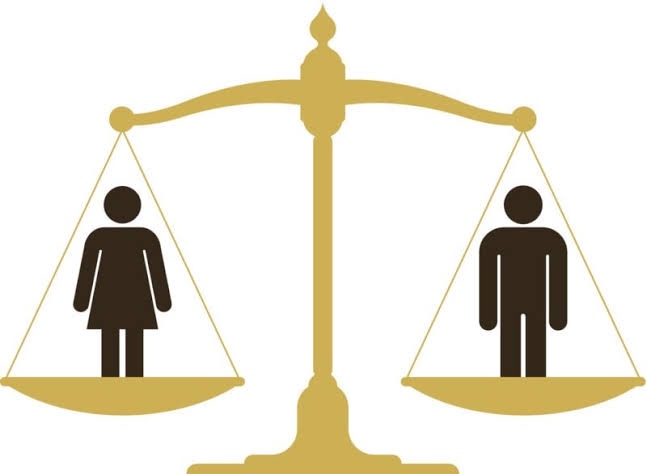
We must have heard from our relatives and people from our older generation that a good woman or a good wife is the one who knows how to ‘adjust’. We also must have come across conversations where patriarchs have often said things like “to maintain a good relationship, a woman must adjust” or “till the time things don’t go worse a woman should learn to adjust and shouldn’t go for judicial recourse”.
Photo Credits: First Post
These casual patriarchal phrases raise many important questions: do women need to face the worse to get justice? Do women need to tolerate abuse from their partners till the time abuse doesn’t go extremely physical or sexual in nature? Do only women need to give up on their dreams and just look after their families?
Patriarchy apologists, however appraise some women in our society and they are only those women who unwillingly or willingly give up on their dreams and career in order to maintain a ‘happy’ family or women who stay with their ‘cruel’ in laws. This proves that the more a woman sacrifices or the more a woman tolerates abuse, the more she is loved and the more she is considered as an “ideal woman”.
But the moment a woman stands up for herself, the moment she focuses on her dreams and career instead of caring about maintaining a family, the moment she stops adjusting, the same patriarchy apologists start slut shamming her or shamming her simply. In this case, she becomes a “bad example” for all other women just for standing up for her simple basic rights.
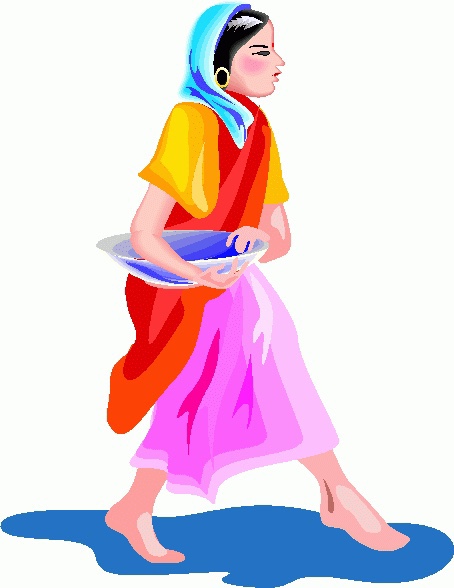
This also reminds us about how society has taught us that a mother only becomes “a true mother” when she is sacrificial. In India, people question a mother’s identity even if she chooses to wear a western outfit. Do women now even have to sacrifice on their preferred clothes? Women wearing western are seen “incapable “of raising a child? How does a simple piece of fabric decides a woman’s worth? Mothers are also judged by our patriarchal world for being into a particular profession, for example, those engaged in beauty and wellness or into travelling. How does a mother’s profession makes her “less of a mother”?
Photo Credits: Clipart Library.
It’s high time we stop romanticising women who suffer because of internalized patriarchy. The only thing our patriarchal society has to understand is that a woman’s personal choices are her own fundamental rights and she can exercise them as and when she wants.
Traveling the world is valuable and who doesn’t want such worthwhile experience. Even In this trying times, everyone has an urge to travel the globe to experience the beauty of the world and have incredible experiences to add up in their brain’s memory bank.
But are you the one who is vaccinated by covaxin but can’t be treated as vaccinated and be permitted to travel across international borders?
Well, here are the reasons why covaxin is not approved by world health organization yet.
First of all, we need to understand the process of getting a vaccine approved By WHO. It consists of four parts, Namely,
1. acceptance of the manufacturer’s expression of interest,
2.A pre submission meeting between WHO and the manufacturer,
3. Acceptance of the dossier for review by WHO,
4.Decision on status of assessment and the final decision on approval.
Now If we talk about the approval of covaxine which was manufactured by Bharat Biotech. The first step itself is not completed yet. That is the acceptance of the manufacturer’s expression of interests is not accepted by the WHO and more information is needed as reported by Who in order to clear the first stage. Bharat Biotech, located in Hyderabad, submitted 90 percent of the documents required for the WHO’s Emergency Use Listing in April month. The rest of the paperwork would be presented this month, according to the statement provided by the manufacturing company.
The second step which consists of a pre submission meeting between WHO and the bharat biotech will also be held in this month Meanwhile, the WHO authorized the Pune-based Serum Institute of India (SII), which manufactures Astrazeneca’s Covishield vaccine, on February 15 after passing the same four phases. The approval procedure is classified, and it is unclear what papers are needed at this time to approve covaxine. Therefore, the Indian people who got fully vaccinated by covaxine are sceptical of it’s authorization by WHO because recently, US food and drug administration also rejected Bharat Biotech’s proposal for an emergency use authorization (EUA) of Covaxin, delaying the company’s vaccine launch in that country.
The government of india’s take on US FDA disapproval is that it respects the FDA’s decision not to grant Covaxin an EUL, but claims it will have no influence on India’s immunisation programme. Union minister of information and broadcasting prakash javedekar said in the press briefing that “The World Health Organization (WHO) has not made a judgement on whether or not persons who have been vaccinated with Covaxin should be prohibited from travelling. Covaxin is a vaccination that has shown to be one of the most successful to date.”
So, when can we expect the authorization of covaxin by world health organization is a question we all needs answer for. On June 9 bharat biotech said that the company will reveal all of Covaxin’s phase 3 trial results in July 2021, after which it will commence the phase 4 trial while concurrently applying for a complete license in India. The submission of trial results are important because it is a prerequisite for Obtaining the WHO Emergency Use Listing.
A good news for the people who got inoculated by covaxine is that so far, few countries like Iran, Philippines, Mauritius, Mexico, Nepal, Guyana, Paraguay and Zimbabwe have approved the Covaxin. But, The European Union and the United States are unwilling to let Indians who have been vaccinated with Covaxin to enter their countries since WHO authorisation is still pending.
It would be hard to call Leonardo Da Vinci anything other than a man ahead of his time. Between 1452 and 1519, Leonardo did just about everything. He is most famous today for his skills as a painter, where he painted some small works- like the Mona Lisa and The Last Supper. His sketches of man were the most anatomically correct to date (The Vitruvian Man). He was also a famed sculptor, musician, architect, anatomist, geologist, cartographer, botanist, writer mathematician, engineer and inventor. He conceptualized things far beyond his time, including concentrated solar power, a calculator, the double hull for ships, a tank and, most interesting to those of us in the aviation industry, a helicopter.
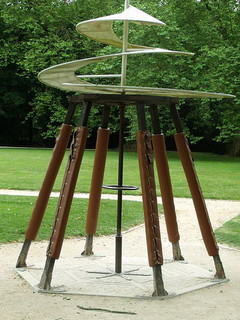
Over 420 years before the first helicopter was built, Leonardo Da Vinci sketched out what he called the Aerial Screw. This aerial screw was a man powered helicopter that required four men to spin cranks fast enough to generate enough lift to get off the ground.
Now, fast forward to 1980, 461 years after Leonardo passed away. The American Helicopter Society sought to finally see the first human powered helicopter take flight. To win the prize money, which started at $10,000, the helicopter needed to reach at least 3 meters in the air (9.8 feet) for 60 seconds while being stable enough to have the center of the helicopter stay within a 10 x 10 meter box (32.8 x 32.8 feet). It would take 9 years from then before the first human powered helicopter even got off the ground when students at Cal Poly San Luis Obispo got their human powered helicopter 8 inches off the ground for all of 7.1 seconds. In the next 20 years, not much progress would be made so the Sikorsky Aircraft Corporation pledged additional prize money to try to see if that would inspire more innovation.
Sure enough, it did. Two teams, one from the University of Maryland and the other AeroVelo, were locked in a tight race to win. The university of Maryland got their man powered helicopter to fly for 65 seconds but it only reached 8 ft (about 1.8 feet short of where they needed to be) in August of 2012.
Finally, this July in Toronto, Aerovelo took the $250,000 in prize money with this flight:
While we don’t expect to see these Atlas human-powered helicopter’s flying around a city near you soon, this was a remarkable achievement. Congratulations to the Aerovelo team! And, over 480 years later, Leonardo Da Vinci’s vision of a human powered helicopter came to fruition.
The electric light bulb has been known as the most important invention since man-made fire. The light bulb helped to establish social life after sunset, extended the workday well into the night, and allowed us to navigate and travel safely in the dark. Without the light bulb, there would be no nightlife.
The electric light, one of the everyday conveniences that most affects our lives, was not “invented” in the traditional sense in 1879 by Thomas Alva Edison, although he have created the first commercially practical incandescent light. He was neither the first nor the only person trying to invent an incandescent light bulb. However, Edison is often credited with the invention because his version was able to outstrip the earlier versions because of a combination of three factors: an effective incandescent material, a higher vacuum than others were able to achieve and a high resistance that made power distribution from a centralized source economically.
EARLY LIGHT BULBS AND HISTORY:
In 1802, Humphry Davy invented the first electric light. He experimented with electricity and invented an electric battery. When he connected wires to his battery and a piece of carbon, the carbon glowed, producing light. His invention was known as the Electric Arc lamp. And while it produced light, it didn’t produce it for long and was much too bright for practical use.
Over the next seven decades, other inventors also created “light bulbs” but no designs emerged for commerical application. In 1840, British scientist Warren de la Rue enclosed a coiled platinum filament in a vacuum tube and passed an electric current through it. The design was based on the concept that the high melting point of platinum would allow it to operate at high temperatures and that the evacuated chamber would contain fewer gas molecules to react with the platinum, improving its longevity. Although an efficient design, the cost of the platinum made it impractical for commercial production.
In 1850 an English physicist named Joseph Wilson Swan created a “light bulb” by enclosing carbonized paper filaments in an evacuated glass bulb. And by 1860 he had a working prototype, but the lack of a good vacuum and an adequate supply of electricity resulted in a bulb whose lifetime was much too short to be considered an effective producer of light. However, in the 1870’s better vacuum pumps became available and Swan continued experiments on light bulbs. In 1878, Swan developed a longer lasting light bulb using a treated cotton thread that also removed the problem of early bulb blackening.
THOMAS ALVA EDISON AND HIS FIRST ‘LIGHT BULB’ :
Thomas Alva Edison was born on February 11, 1847, in Milan. He was the seventh and last child born to Samuel Edison Jr. and Nancy Elliott Edison, and would be one of four to survive to adulthood. Thomas Edison received little formal education, and left school in 1859 to being working on the railroad .
In 1878, Thomas Edison began serious research into developing a practical incandescent lamp and on October 14, 1878, Edison filed his first patent application for “Improvement In Electric Lights”. However, he continued to test several types of material for metal filaments to improve upon his original design and by Nov 4, 1879, he filed another U.S. patent for an electric lamp using “a carbon filament or strip coiled and connected to platina contact wires.”
Edison focused on inventing a safe, inexpensive electric light to replace the gaslight–a challenge that scientists had been grappling with for the last 50 years. Edison set up the Edison Electric Light Company and began research and development. He made a breakthrough in October 1879 with a bulb that used a platinum filament, and in the summer of 1880 hit on carbonized bamboo as a viable alternative for the filament, which proved to be the key to a long-lasting and affordable light bulb. In 1881, he set up an electric light company in New york.
Although the patent described several ways of creating the carbon filament including using “cotton and linen thread, wood splints, papers coiled in various ways,” it was not until several months after the patent was granted that Edison and his team discovered that a carbonized bamboo filament could last over 1200 hours.
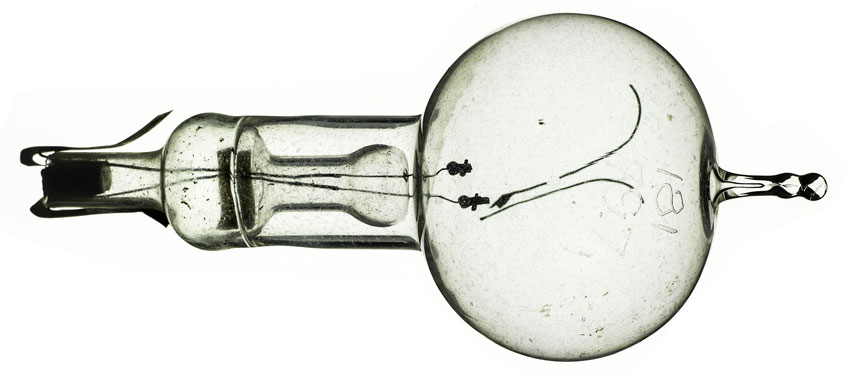
Original carbon-filament bulb from Thomas Edison
THE FIRST INCANDESCENT LIGHT BULB :
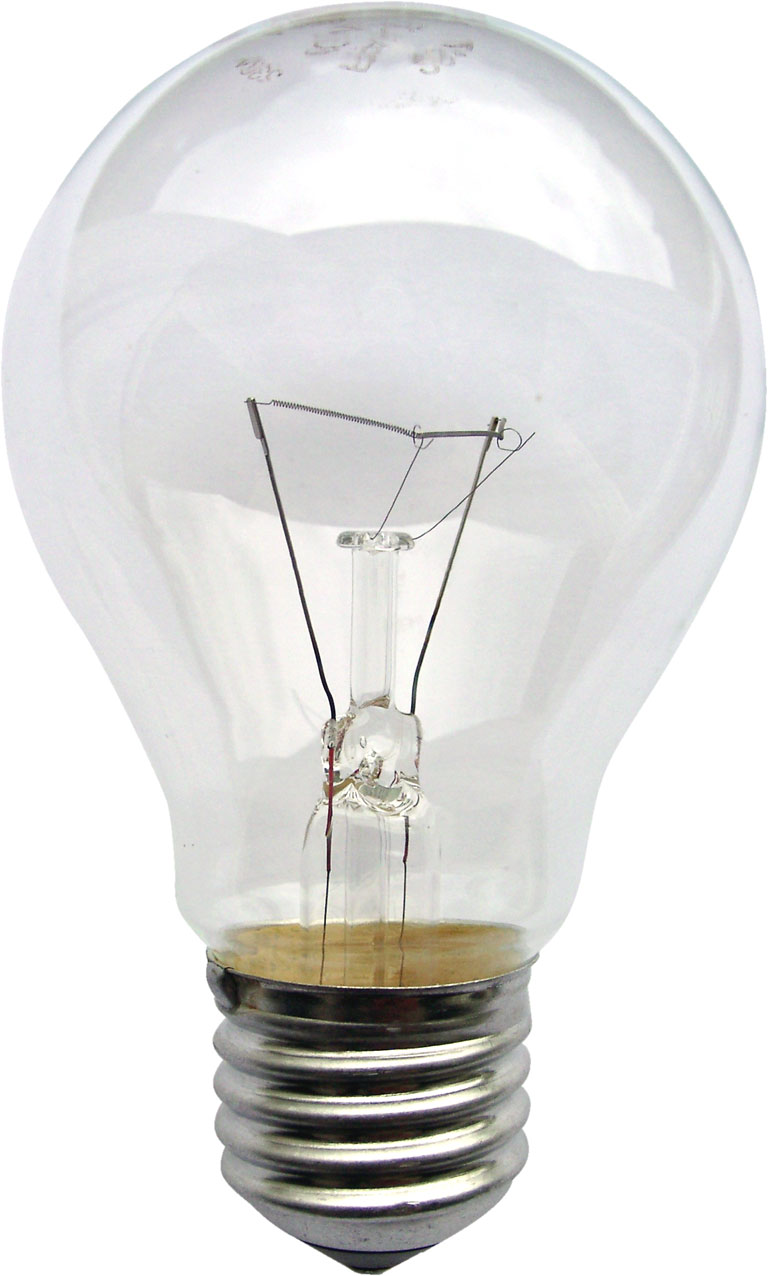
Incandescent light bulb use electricity to heat a carbon or metal base filament inside a glass bulb until it becomes hot and emits a radiant glow. A vacuum keeps the filament from burning up too quickly and blackening the interior of the glass bulb. Many of the first incandescent light bulbs faced the same challenges – a poor vacuum design, inferior or expensive filaments, and bulb blackening. However, these early experiments were pivotal in the development of the first commercially viable incandescent light bulb.
Incandescent bulbs are manufactured in a wide range of sizes, light output, and voltage ratings, from 1.5 volts to about 300 volts. They require no external regulating equipment, have low manufacturing cost, and work equally well on either alternating current or direct current. As a result, the incandescent bulb became widely used in household and commercial lighting, for portable lighting such as table lamps, car headlamps, and flashlights, and for decorative and advertising lighting.
From March 2021 till today the life is going through this lockdown stuff, got bored with this pandemic situation but what to do, donot have any way to get rid of this. Anyhow, there are some ways I found to pass these pandemic situation. ‘Contribute yourself to the social activities’, just glance your sight towards the social life of this world there you could found many things which are unreal. It is our responsibility to change these unreal things to real things so move on to the social activities.
A firm is said to be a monopoly if it is the only sole vendor of its item and its item doesn’t have any close substitutes, for instance, McDonald’s. The factors like government license, ownership of resources, copyright and patent, and high starting cost makes McDonald a solitary dealer of goods. Every one of these factors limit the passage of the other sellers onto this market. It also possesses some information that is not known to other sellers.
McDonald’s is a commonly used example of monopolistic competition. Monopolistic competition signifies the variety in the products available in the market. Though they have similar products they are yet different from each other in various aspects. McDonald’s have divided them products in different varieties and have many outlets and dine ins too. There are many other similar ones in the competition like KFC, Subway, Burger King etc. All of these are a similar kind of food chain and serve fast food itself yet their very basics are differently structured.
This makes the entity the single seller in the market controller as well as the price maker. They maximize their profit by deciding the price of the product that is to be sold and by determining the quantity of the equivalent. Also, McDonald’s charge different prices from different customers for the same product called ‘Price discrimination’ as this entity aims for profit maximization.
A very significant quality of McDonald’s is the fact that wherever they put up an outlet they always go with the native cuisine and have so many options. People love their menu because of their varieties without posing a close substitute from other entities. McDonald’s has made use of non-price competition for their growth too. Though they have similar products they are yet different from each other in various aspects.









 Eduindex

You must be logged in to post a comment.