Organization of the Petroleum Exporting Countries (OPEC):
• A permanent Intergovernmental Organization ofb14-oil exporting developing nations.
• Created in 1960 at the Baghdad conference by Iran, Iraq, Kuwait, Saudi Arabia and Venezuela.
• The other members of OPEC include Algeria,NAngola, Congo, Ecuador, Equatorial Guinea, Gabon, Libya, Nigeria, and United Arab Emirates.
• Qatar which was a member, left OPEC on January 2019.
• Other oil exporting nations join OPEC meetings as
observers.
• Mission: To ensure that they remain stable so that there is an efficient, economic and regular supply of petroleum, to the consumers. To ensure steady income to the oil producers. It will also ensure the business interests of the investors in the petroleum industry.
• Headquartered at Vienna, Austria.
• The OPEC Secretariat – executive organ: located in Vienna.
• Releases the publication called the ‘World Oil Outlook’. OPEC+ :
• A group of 24 oil-producing nations: 14 members of the OPEC; and 10 other non-OPEC members, including Russia.
• Born in 2017 with a deal to coordinate oil production among the countries in a bid to the stabilize prices of oil.
• Reached deals for members to voluntarily cut and ramp-up production in response to changes in global oil prices.
• Members collectively agree on how much oil to produce.
• Industrial complex – beads and semi- precious stones were manufactured.
• Iron smelting units – forged steel at the site. • Trade centre – 5th – 1st BCE. • Village – Chera capital of Karur with the Chera port of Muciri in Pattnam in Kerala.
Excavations
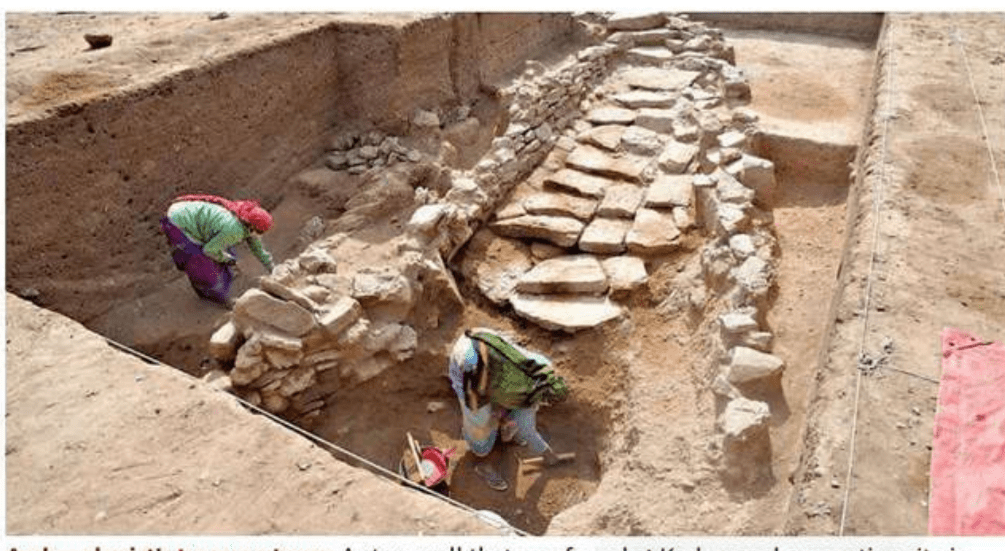
• Circle-shaped step-well – found for the first time. • Scientific dating – 2,300 years old.
• Current excavation – trench was dug near the last year’s trench • Result – Discovery of the well. • Well – 2.65 metres wide; Depth – deposits were removed.
• Steps – weathered rocks, slopes down from the ground to the well that served the habitation.
• Two rubble masonry walls existed on either side of the steps.
• Site – habitation come industrial site Water – Used both for household needs as well as for polishing beads and other industrial activities. • Other Findings: Pottery – Black and red ware, black slipped ware, russet coated ware and red slipped ware. Beads – Quartz and clay. Potsherds Megalithic cairn circle Iron sword Double edged axe Small daggers
• Four factors influencing rise in prices: Crude oil, freight and processing charges to the dealer. Excise duty charged by the government. Dealer commission to the gas station. Value Added Tax levied by the state government.
Impacts of taxes on fuel price hike
• Increasing central and state taxes on fuel – key reason for high fuel prices.
• 2020: Centre hiked the excise duty on petrol and diesel by Rs. 13 and 16 per litre. To shore up revenues.
• Example: In Delhi, central and state taxes – 57 % of pump prices of petrol and is about 51.4 % for diesel.
• Central government has not cut central taxes – taxes on auto fuels should be cut to curb inflation.
Fuel price hike and inflation
• When fuel prices rise, so does inflation.
• Higher the inflation – lower will be the inflation-adjusted returns.
• India’s retail inflation became 6.3% in May 2021- breached the upper limit of RBI (6%).
Way forward
• ICRA: government may cut cess levies on retail prices of petrol and diesel to ease prices.
• Petrol consumption is estimated to grow 14% and diesel 10% year-on-year in FY22. Reason: Recovering economic activities and mobility – easing of curbs and accelerating Covid19 vaccinations.
• Higher consumption of fuels – support a rise in the indirect taxes levied on them. • Growth in consumption would result in Rs. 40,000 crore of extra cess collections.
• Existing fuel price can be cut by ₹4.50 per litre for petrol and diesel.
Life can’t be described by only one or two words. It is a mixture of everything. The mixture of happiness and sadness, success and failure, comfort and pain, love and hatred, relief and sorrow and struggle and giving up. Life is not perfect, but it is beautiful.
Life is a journey. Everyone takes every step in a very unique way. The journey may take you down by great storms and bumpy roads but it does not matter, what matters the most is how many times you stand up and continue. Each moment in your journey of life, you are presented with an opportunity to react differently. You may even make the same choices over and over again because you do not know otherwise. You have the power to change things and not to walk around in a constant circle.
A new experience every time influences a person’s way of looking at life. Thus, there cannot be one single way in which one cannot look at life. Consequently there cannot be one single meaning and purpose that one might find to his or her life. Some of us, especially the ones who suffer in life, try to relate it to the lives of people around us who have suffered the same or more.
It shows how life carries on even after death, almost taking the course of the ancient. Every devotee believe that the soul leaves the body after death, and the body goes back to dust. Life is not about the body or the soul. Life is what is beyond the body and the soul. That is the reason why it continues even after death in various forms.
• New Vaccine passport system has come into effect across the European Union from July 1st
Green Passport
• European Union – EU Digital COVID Certificate. Ease travel restrictions for people travelling to EU countries.
• Digital proof – Attests informations of the person. Vaccinated by any one of the four European Medicines Agency approved vaccines. Received a negative test result. Recovered from the viral infection.
• Certificate – digital signature which is verified when the QR code is scanned. • Issuing body – own digital signature key, all of which are stored in a secure database in each country.
• Certificate – recognized by all 27 EU countries, Switzerland, Liechtenstein, Iceland and Norway.
• Possession of the certificate – exempted from free movement restrictions.
• Member States – refrain from imposing additional travel restrictions unless necessary.
• Lack of certificate – subjected to the usual travel restrictions and quarantine rules which are in effect in every country.
Issue
• EMA – listed only four vaccines. Vaxzevria (Oxford-AstraZeneca) Comirnaty (Pfizer-BioNTech) Spikevax (Moderna) Janssen (Johnson & Johnson).
• None of the three vaccines – approved for use in India till date is featured on the list. Covishield, Covaxin and Sputnik V.
• Only essential travel is allowed into EU countries and that too special permission has to be taken.
• Global concerns – Delta variant (first detected in India), more restrictions are put in place.
Stand of the European Union
• Reason behind excluding – Serum Institute of India’s Covishield is a biologically different product. Needs to apply separately for EMA clearance.
• Serum Institute of India and AstraZeneca – Process of seeking clearances.
• Covaxin – yet to gain recognition from the World Health Organization.
• Claim – Hint of racism. Vaccines cleared by the EMA are those taken by residents in Europe and North America.
World Health Organisation
• Stand of the WHO Vaccine passports should not be made mandatory for travel and should be optional. The proof of COVID-19 vaccination should not be required as a condition of entry and exit from a country.
India’s stand on the Issue
• Recent G20 ministerial conference – External Affairs Minister registered a strong protest over the issue.
• Sources – India was prepared to initiate reciprocal harsh quarantine measures against countries that discriminate against Indians.
India’s concerns – three-fold
• Vaccine inequality – vaccine passports being restricted to passengers from countries that don’t have the same access to vaccines
• Gain recognition to Covishield
• Indian-approved vaccines – Worldwide recognition. Stance of Africa .
• African Union and Africa Centres for Disease Control and Prevention – statement raising concerns Covishield vaccine was the “backbone” of the EU-supported international COVAX alliance’s programme in Africa.
Current Status
• Nine countries – agreed to independently make exemptions for Covishield Austria, Germany, Greece, Iceland, Ireland, the Netherlands, Slovenia, Spain and Switzerland have.
• Estonia – accepted both Covishield and Covaxin.
• Hope – enough pressure will be built on the EMA to include exemptions for Indian vaccines as well.
A pet, or companion animal, is an animal kept primarily for a person’s company or entertainment rather than as a working animal, livestock or a laboratory animal. Popular pets are often considered to have attractive appearances, intelligence and relatable personalities, but some pets may be taken in on an altruistic basis (such as a stray animal) and accepted by the owner regardless of these characteristics.
Two of the most popular pets are dogs and cats; the technical term for a cat lover is an ailurophile and a dog lover a cynophile. Other animals commonly kept include: rabbits; ferrets; pigs; rodents, such as gerbils, hamsters, chinchillas, rats, mice, and guinea pigs; avian pets, such as parrots, passerines and fowls; reptile pets, such as turtles, alligators, crocodiles, lizards, and snakes; aquatic pets, such as fish, freshwater and saltwater snails, amphibians like frogs and salamanders; and arthropod pets, such as tarantulas and hermit crabs. Small pets may be grouped together as pocket pets, while the equine and bovine group include the largest companion animals.
Pets provide their owners (or “guardians”) both physical and emotional benefits. Walking a dog can provide both the human and the dog with exercise, fresh air and social interaction. Pets can give companionship to people who are living alone or elderly adults who do not have adequate social interaction with other people. There is a medically approved class of therapy animals, mostly dogs or cats, that are brought to visit confined humans, such as children in hospitals or elders in nursing homes. Pet therapy utilizes trained animals and handlers to achieve specific physical, social, cognitive or emotional goals with patients.
People most commonly get pets for companionship, to protect a home or property or because of the perceived beauty or attractiveness of the animals. A 1994 Canadian study found that the most common reasons for not owning a pet were lack of ability to care for the pet when traveling (34.6%), lack of time (28.6%) and lack of suitable housing (28.3%), with dislike of pets being less common (19.6%). Some scholars, ethicists and animal rights organizations have raised concerns over keeping pets because of the lack of autonomy and the objectification of non-human animals.
• After a 70-year effort, China has been awarded a malaria-free certification from WHO.
Malaria
• A life-threatening disease caused by Plasmodium parasites.
• Vector – Mosquito.
• P. falciparum and P. vivax pose the greatest threat.
• 2019: 229 million cases of malaria worldwide.
• Most malaria cases and deaths occur in sub-Saharan Africa. • Also prevalent in South-East Asia, Eastern Mediterranean, Western Pacific, and the Americas.
• 40 countries/ territories are malaria-free -WHO.
• China – first country in WHO Western Pacific Region to be awarded a malaria-free certification in more than 3 decades. Other countries in the region – Australia (1981), Singapore (1982) and Brunei Darussalam (1987).
• India is not yet a malaria free country.
China’s Malaria elimination journey
• 1950s: Chinese health authorities worked to locate and stop the spread of malaria. Provided preventive antimalarial medicines.
• A major effort to reduce mosquito breeding grounds
use of insecticide spraying. • 1967: Chinese Government launched the “523 Project”.
Nation-wide research programme aimed at finding new treatments for malaria. Led to the discovery in the 1970s of artemisinin. Core compound of artemisinin-based combination therapies (ACTs) – most effective antimalarial drugs available today. • 1980s: China – one of the first countries in the world to extensively test the use of insecticide-treated nets (ITNs).
• 1988: more than 2.4 million nets had been distributed in China.
• 1990: number of malaria cases in China fell to 1,17,000; deaths were reduced by 95%
• Funding by the Global Fund to Fight AIDS, Tuberculosis and Malaria, launched in 2002.
• 2021: China was declared as a Malaria free country.
Copywriting vs. content writing—it’s all the same, right?
No, they are most definitely not the same. It’s not exactly the difference between apples and oranges—more like oranges and tangerines—but close enough. For young writers looking for work, it’s incredibly important to know the differences between the two; each presents a unique set of challenges and skills to do well. Here, we pinpoint the major differences between copywriting and content writing.
Purpose
The greatest distinction between copywriting and content writing lies in its purpose. Copywriting is selling your personas on your brand; content writing is subtly telling them about it while delivering valuable content.
Copywriting is the art of selling people on an idea, brand, or ideology. The best copywriting fuses the products and ideology of a brand together to create branding. Copywriting is advertorial in nature as its intent is to pitch customers to use a brand’s products and/or services.
For the Mad Men fans out there, this is what Don Draper and Peggy Olson did all the time at Sterling Cooper (or whatever agency they were with at the time). They weren’t selling products, but ideas and emotions that were tied to products.
Content writing is the art of creating content. It needs to either inform, educate or entertain; it needs to have a clear purpose and/or reason behind the piece; it needs to represent the brand’s voice; it needs to be a good read. The best content writing is focused on the quality of the editorial, no matter if it comes from a brand or a publisher. For brands (and some data-driven publishers), content writing aligns with strategic business and marketing goals to attract audiences and potential customers.
Here’s one way to look at the two: content writing passes information along to your audience while copywriting reveals what your brand is all about.
The two, of course, do share similarities. For one thing: goals. Both copywriting and content writing ultimately seek to convert a reader into a sale or a lead. Another similarity: they both need to be well-written. What is well-written for one differs from the other, but quality writing, for whatever purposes, entices readers to keep reading.
Bottom line: The ultimate objective of copywriting is to sell an idea whereas content writing aims to create valuable content to help the audience understand your brand and generate interest.
The job
A truism: copywriters write copy and content writers write content. If you’re confused at what this means, then you should know all shall be explained. Another distinction between copywriting and content writing lies in the job description.
A copywriter is a professional whose job is dedicated to producing copy. This can come in many forms (see below), but the general idea is that a copywriter writes marketing material for a living. It is their trade, craft, skill—whatever you want to call it.
Now, a content writer can be anyone. They are not necessarily a professional writer, but someone who produces content. Thanks to the democratization of the internet, anyone can write now, including professionals, executives, authors, bloggers, software engineers, CEOs, brands, etc. Of course, the best content writers understand the craft of content writing, but it may not be their trade.
Bottom line: A copywriter is a professional who writes marketing copy; a content writer can be anyone producing content.
Types of writing
A copywriter writes marketing material, a content writer writes content—but what kinds of marketing material and content? This is the last major distinction between the two.
Traditionally, copywriting was limited to advertising in the days of yester-yore (again, see Mad Men). But the internet changed the scope of what copywriters can write for beyond witty slogans. Today, the list includes, but is not limited to:
Ads, online and off
Slogans and taglines
Web page content
SEO content
Email campaigns
Television or radio commercial scripts
Video scripts
Press releases
White papers
Catalogs
Billboards
Brochures
Postcards
Sales letters
Direct mail letters
Jingle lyrics
Social media
Copywriters today see plenty of overlap with content writers and technical writers, but remember: the point is to sell you an idea as part of a marketing campaign.
Likewise, content writing has plenty of opportunities to write different kinds of content, including, but not limited to:
Blog posts
Newspaper articles
Magazine features
Whitepapers
Email newsletters
E-books
Books
Print magazines
Social media posts
Podcasts
Television
Film
Radio
Yep—even TV and film is considered content these days, just a different kind (but that’s another story).
What you really need to know is that brands of all kinds need copywriting and content writing to stay fresh, so there’s plenty of opportunities for writers out there to try their hands at both. It’s just a matter of seeing which one you have a knack for and sticking with that one.
WHAT EVER YOU THINK, COMES BACK TO YOU. THE UNIVERSE IS JUST LIKE A MOUNTAIN, WHEREIN YOU SHOUT , THE VOICES ECOES AND COMES BACK TO YOU. IT IS SAID EVERY POSITIVE THOUGHT IS TEN- THOUSAND TIMES STRONGER THAN A NEGATIVE THOUGHT. WHY IS IT SO, YOU MIGHT WONDER ? IT IS THE UNIVERSE, WHO LISTENS TO WHAT EVER YOU ARE SAYING. WHEN YOU MAKE A THOUGHT, THE UNIVERSE CONSPIRES TO MAKE IT HAPPEN. FOR INSTANCE; IF YOU ARE WITH YOUR MOM AND APPRECIATE HER FOR WHAT SHE HAS MADE, SHE WILL GIVE YOU ANOTHER PORTION TO EAT. SIMILARLY, IF YOU THANK UNIVERSE AND PAY GRATITUDE TO IT, IT WILL SURELY DO GOOD TO YOU.
A HUMAN MIND GETS LOADS OF THOUGHTS THROUGHOUT THE DAY, WE CANNOT STOP OURSELVES FROM THINKING. BUT, WE CAN SHIFT OUR THINKING TOWARDS POSITIVITY. A HUMAN MIND CAN DO WONDERS. NOTHING IS UNACHIEVABLE. IF YOU HAVE SOMETHING IN MIND, YOU CAN BRING IT TO REALITY. WHY CANT WE? SUCCESS DOES NOT STOP ITSELF FROM COMING TO YOU, IT IS YOU WHO THINK THAT WE CANT SUCCEED. WHAT EVER YOU THINK IS ACHIEVABLE.
THANK THE UNIVERSE FOR WHAT YOU HAVE GOT. THANK IT FOR WHAT IT WILL GIVE YOU. STAY THANKFUL AND PAY GRATITUDE, THE UNIVERSE SHALL ALWAYS BE THERE TO HELP YOU.
Twilight is the first book of a series that brought the vampire-romance genre back from the undead in 2005.
Main characters are Isabella Swan, Edward Cullen and Jacob Black.
Edward is a vampire. Bella is a human. The lion shouldn’t be with the lamb, as we have famously read, but despite being a forbidden love, the relationship of Edward and Bella in Twilight illustrates that love isn’t governed by any rules. It is boundless, and cannot be restricted by what other people may think is wrong or right. Edward goes against his natural instincts to be close to Bella, and while their relationship is fraught with complications, the book goes to painstaking lengths to show that Bella’s world is changed for the better when she becomes involved with Edward. He cannot offer her a normal future or a normal relationship but he can make her happy despite the challenges that face them.
“I’ve never given much thought to how I would die. But dying in the place of someone I love seemed like a good way to go”. Bella in twilight
The novel starts with Bella who recently shifted to Forks, United States of America. She met Edward Cullen in her new high school, Forks high school. Edward, the vampire is possessive, angers easily, and stalks Bella, his human love interest. He even sneaks into her house to watch her sleep before they start dating. During a trip with her classmates, Bella encounters a family friend, Jacob Black, who informs her that the Cullens are supposedly vampires according to his tribe’s legend.
This Book is about how Bella Identify Cullens true identity… And fell for Edward. How Cullen family fought to James, vampire for saving Bella.
Bella is bitten by James but Edward sucks the venom out of her and she survives, continuing as a human
On one date Edward says to Bella, “You are my life now.”
By the end of Twilight, Bella is bitten by James but Edward sucks the venom out of her and she survives, continuing as a human. Bella professes that she’s sick of being the weak one who always needs to be saved, and would like the relationship to be more equal, she also wants to be a Vampire but Edward still has power over her because of what he is.
And I learnt a lot from this book – As Edward teaches us to “Let the person make their own decisions.
Carlisle Cullen, Edward’s father teaches us to “Stick to your beliefs, even if the world is against them and Respect the world’s beliefs, even if you are against them. …
The Twilight Saga is a series of five vampire-themed romance fantasy films from Summit Entertainment based on the four novels published by author Stephenie Meyer. The films star Kristen Stewart, Robert Pattinson, and Taylor Lautner
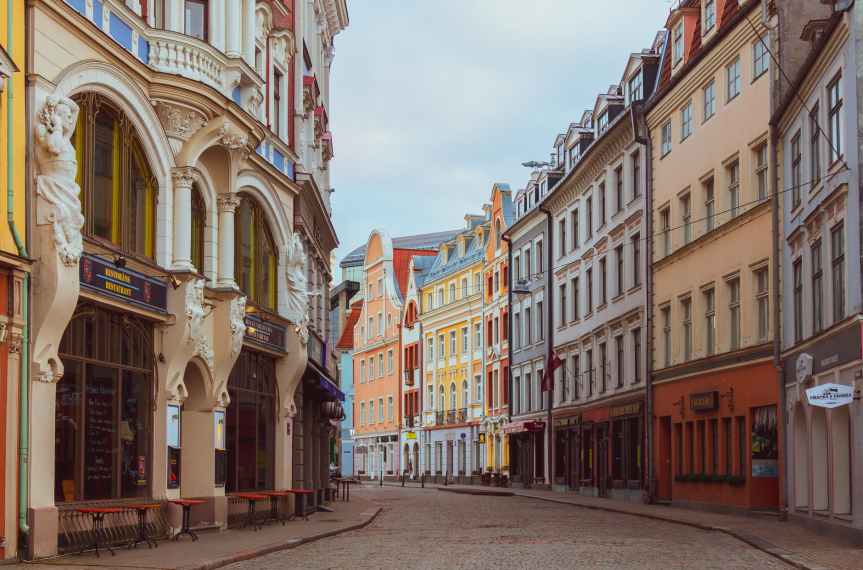
Baltics, also known as the Baltic States is comprised of three countries including Latvia, Lithuania, and Estonia. The three countries are situated on the eastern shores of the Baltic Sea. In 1991 the regional governments of Lithuania, Latvia, and Estonia declared independence from the Union of Soviet Socialists Republics (USSR). Three countries have a collective population of just over 6 million. The three have been one of the better examples which have been progressing well after the breakup of the USSR. Many other former Soviet republics have been suffering the disarray of corruption and political instability.
In 2002 Baltic countries applied for membership in the European Union (EU) and by May 2004 all the three countries joined the EU. They also gained membership in NATO by March 2004.
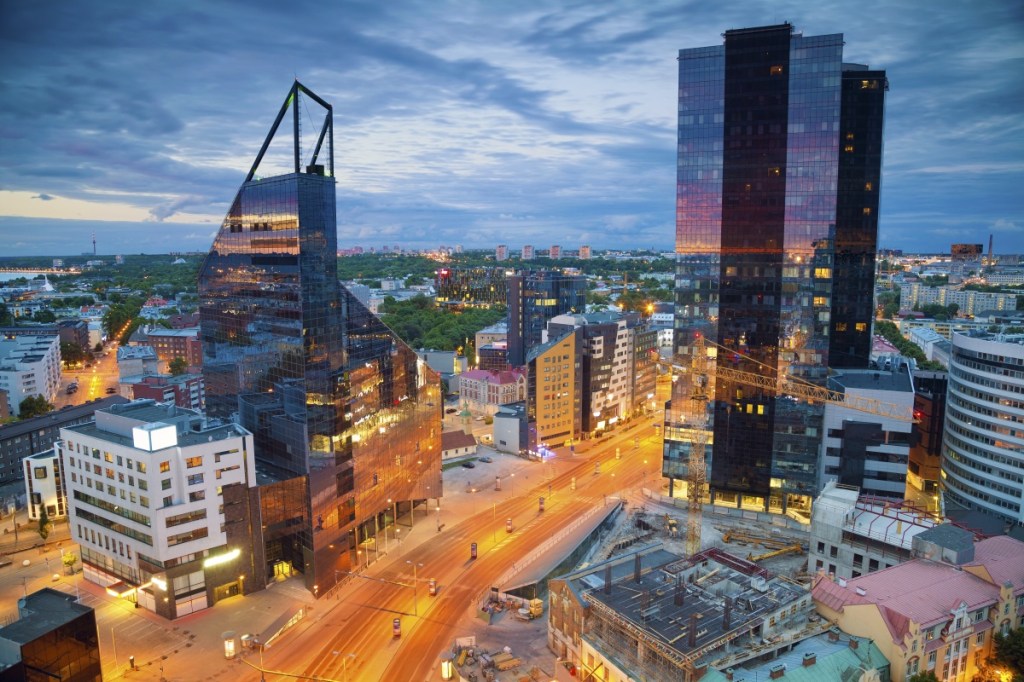
Downtown Tallinn
Baltic independence in 1991
It’s truly astounding how the three countries have developed since 1991. None of them were independent since 1940. The three countries had large Russian minorities and many Soviet soldiers were still stationed there. There were no major national institutions and banking infrastructure with a crumbling economy. There was a growing homegrown national moment against the ruling government since the 1980s. The homegrown fronts won the republican parliamentary election against the ruling party in early 1990 and were allowed to govern but with limited power. The Russian president at that time, Boris Yeltsin had not contested their newly declared independence in 1991. The Baltic also witnessed no violence when the three governments had declared their independence.
The three nations also had almost no natural resources, unlike USSR which was resource-rich. They were still in a very vulnerable situation with a small population and no military of their own. Even though the countries were linguistically distinct with different languages, but people in all three countries had a united drive to strive for a better future. The three had implemented reforms with a shared vision. The governments of the three shared many policies, ideas, and experiences. The Baltic States also valued their new independence with a lot of enthusiasm and didn’t take it for granted. The other ex- USSR countries often had to ask for assistance from Russian Federation and also formed new alliances with the Russian government. Baltic countries on the other hand tried to stay away from joining the post-Soviet Commonwealth of Independent States. In the subsequent years, all the three countries adopted radical economic policies and Estonia was the first mover and Latvia and Lithuania would follow suit. In 1994 Estonia introduced a flat income tax at just 24 percent and the other two also implemented the policies. Currently, Lithuania has a tax rate of just 15 percent which is one of the lowest. With early and fast deregulation and privatization, the Baltic countries were able to capture a large amount of foreign direct investment. Estonia also radically transformed its public sector with various digitalization implementations and less reliance on paperwork. Latvian and Lithuania’s transformation in this area was not as drastic but after some time both of them followed Estonia’s footsteps. Transparency International ranks Estonia No. 17, Lithuania 37, and Latvia 42 out of 175 countries on its Corruption Perception Index for 2020. This is a commendable ranking considering they all the three are a relatively new entrant to the EU and many other EU countries have lower ranks than the three.
Success attributions
The success can also be attributed to the generous support that the three countries received from the international community and funds granted by the EU, World Bank, and the IMF. In 2008 Baltic suffered from the global economic crisis. The three soon adopted the Euro as their currency to avoid any future liquidity freeze issues that they experienced at that time. The economies al the Baltic rebounded quickly and due to good monetary measures, the three have a very low public debt. Baltic governments have also made swift progress in the Education sector and the three have attained commendable rankings in the Program for International Student Assessment (PISA) of the Organization for Economic Cooperation and Development (OECD). Estonia has done a very commendable task in this area with top 10 rankings in many assessments. But the Baltics also face many challenges with population loss due to low birth rate and emigration. Proximity and hostility with Russia still is a challenge that the tiny nations have to endure.
More than 60 percent of population India lives in rural areas.
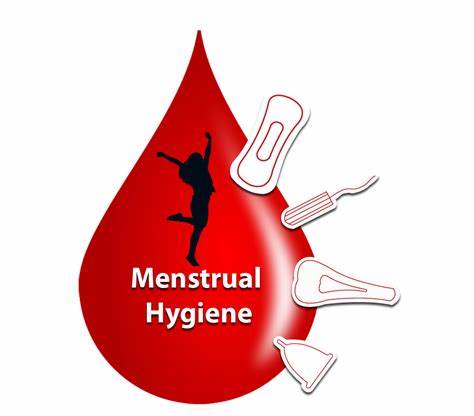
women lack access to menstrual hygiene products and menstrual cycle becomes a burden and bane for them
For the privileged, periods are normal, something which occurs every month. we are educated and understand as to why it occurs.
we might have to deal with pain and discomfort But for those who live in rural areas this prevents them to do their daily activities. Myths and taboos which are embedded with periods, makes lives of these women even worse.
According to a report less than 40 percent of women get access to sanitary products.
The cost of sanitary products are expensive for the people of rural areas, who hardly get to earn money to have some food , Some fill in their stomach’s using hand to mouth process.
A lot of women in rural areas use cloth during their periods, this can cause infection and fungal diseases. Due to Menstruation, a lot of young adults in villages are forced leave the schools and are looked upon with a feeling of disgust.
Monthly campaigns should be put to make people understand the importance of menstrual hygiene. free sanitary products should be distributed every month. The villagers can be taught to how to make sanitary products, it will also add up to their incomes.
steps like these would definitely remove the stain of fungal/ bacterial infection due to menstruation.
India is a country, where women make up half the population. more than 60 percent of population India lives in rural areas. women lack access to sanitary napkins and menstrual cycle becomes a burden and bane for them. women are god’ s precious creation. For us, the privileged, periods are normal, something which occurs every month. we might have to deal with pain and discomfort But for those who live in rural areas this prevents them to do their daily activities. Myths and taboos which are embedded with periods, makes lives of these women even worse. According to a report only around 35 percent of women in India use sanitary napkins. The cost of sanitary napkins are expensive for the people of rural areas, who hardly get to earn money to have some food. Some follow hand to mouth process. Sanitary napkins are not a luxury, they are a necessity and every women deserves to have access to them. A lot of women in rural areas use cloth during their periods, this can cause infection and fungal diseases. Due to Menstruation, a lot of young adults in villages are forced leave the schools. Free sanitary napkins and some encouragement might help the child to not to discontinue their studies and their daily activities. Menstruation is a topic, people resist talking about, they feel its shameful. It is disheartening to see people thinking of it to be dirty. The Government of India, is indeed, working towards the progress of our country but some steps like these would definitely work towards achieving the India, we all wish for.
With the advancements and introduction of new and efficient techniques of inventory control and valuation, it is essential for every business to keep up and adopt these methods to improve their profitability and efficiency.
What is Inventory control and valuation?
Inventory control is the process of maintaining sufficient stock of raw material and ensuring the continuous process for uninterrupted production schedule. The main objective is to avoid overstocking or understocking. It is essential to do so because:
Overstocking leads to higher costs of holding the inventory
Understocking acts as a hindrance to the production process and interrupts the flow
It reduces wastage and cost by allowing the enterprise to purchase raw material economically by purchasing the exact number of units needed for production at the time.
There are two commonly used inventory control techniques- Just in time Approach (JIT) and Economic order quantity (EOQ).
Just In Time (JIT) Approach: This approach focuses on increasing efficiency and minimizing inventory. This is done by aligning the raw material orders directly with the production schedules on an as-needed basis. It ensures minimal wastage of material and reduces storage cost as well. However, it relies on steady production, high-quality workmanship and most importantly, reliable suppliers. It can be used for items that are not essential for daily production and are not needed in huge quantities. For example, machine spare parts.
Economic Order Quantity: This method focuses on determining the number of units to be purchased at one time which ultimately reduces the ordering and carrying cost of the company. Ideally, it is used when demand for a particular input is constant throughout the year. This method is ideal for placing orders for raw material that is needed in huge quantities and is a common ingredient or material required in the production of various goods.
Inventory Valuation is the process of determining the monetary value of the inventory with the company. The value is ascertained on the basis of the cost incurred to acquire to inventory and get it ready for sale.
It is essential that the value of the inventory is accurate as it-
is used to determine Cost of Goods Sold (COGS) and Gross Profit for the year.
helps in ascertaining the financial position of the company
allows companies to maintain accurate records and gives a realistic picture
There are several methods of Inventory Valuation-
First In First Out
Last In Last Out
Weighted Average Method
First In First Out: This method is based on the premise that the first inventory purchased is the first to be sold. It is one of the most common methods of inventory valuation used by businesses as it is simple and easy to understand. Unfortunately, the FIFO model fails to present an accurate depiction of the costs when there is a rapid hike in prices.
Last in First Out: Under this inventory valuation method, the assumption is that the newer inventory is sold first while the older inventory remains in stock. This method is hardly used by businesses since the older inventories are rarely sold and gradually lose their value. This results in significant loss to the business.
Weighted Average Method: Under the weighted average cost method, the weighted average is used to determine the amount that goes into the cost of goods sold and inventory. It is the most efficient method and gives a realistic picture of the inventory value.
It is essential to weigh the pros and cons of the inventory valuation and control methods mentioned above and choose the ones that would give the most realistic and accurate picture of the company’s inventory according to the nature of the business operations.
In a world where everything is happening at supersonic speed whether it be the Internet, online payments, hyperloop coming to India, or smartphones with new features every day adding more storage and speed. Adding to this, Fast traveling is also very necessary; the air mode of transport is already very rapid and on-road nothing is better than having an electric car with high tech features. Some people believe that sports are threatened with extinction by tightening restrictions on carbon dioxide emissions due to their high speed and unacceptable fuel-guzzling all over. As we already know, we will run out of fossil fuels by 2050 it’s been a matter of concern. To overcome the problem of technology even have a solution for this. Electric vehicles.
The electric sports car has always been a hot topic because it’s something that is both supersonic, environment friendly which is now one of the most important concern in today’s world and it’s cheaper than having an electrically chargeable car which takes up fuel which prices have risen sharply in the last few years because of which people prefer it more. Electric supercar produces carbon dioxide emission and also it makes less noise so it doesn’t contribute to noise pollution either. Having a car that is powered by electricity is better because we can produce electricity more fastly and easily by dams, windmills, etc than fossil fuels which take about hundreds of years.
With technology progressing every day by day. Many e-car companies have decided to launch new models of electric cars in 2021.
So, what’s New For 20201. The most financially favorable awaited cars in this list are –
Tesla Model Y :
Price – 52 Lakhs INR
Launched On-Road – Estimated 2022
Tesla is very famous, It is an upcoming electric cum supercar, partially driven by Artificial Intelligence and machine-oriented that will be launched in the year 2022 by space X company and the best part is that it’s versatile enough to carry up to 7 passengers and comes to a utility of ‘A Place For Everything ‘.
The Model Y can attain speed up to 155mph, further focusing on safety the features are fairly biased towards safety motives and promise AWD dual-motor, Adding into its cutting edge technology features.
As tesla is famous for altering its product throughout the year of manufacturing a few changes on the motor front have already been done to make it suitable and sustainable for the longer go stretching its driving range.
Mahindra XUV300 Electric:
Price – 18 lakhs INR
Launched on road – end 2021
The brand name itself comes with a trust in Indian buyers . Now the well renowned car brand is shifting its major focus towards developing electric cars. Newly launched Mahindra XUV300 Electric becomes a great example.
Designed for future , full of fancy lights and attractive body , the car already seems to have two variants one lower another higher one offering range of almost 350km and 400kms on the single charge. It is a spacious electric SUV look alike which is worth buying for the price.
The XUV300 Electric is built on the MESMA 350 (Mahindra Electric Scalable and Modular Architecture 350). The in-house developed 350-volt powertrain supports a wide range of electric motors ranging from 60 kW to 280 kW output, dual motor setups and batteries up to 80 kWh capacities.
Tata Altroz EV:
Price – 14 lakh INR
Launched on-road – Mid 2021
Voted in top electric cars this car by prestigious TATA is a hatchback available in Automatic transmission & Electric Range option .
This Ev delivers range of upto 300km in a single charge with a sleak design complimented by its alloy wheels giving an edge to the sporty blue lights whereas ,The interior will have new larger pop-out style touchscreen infotainment system, new seat upholstery etc. But customers will have to sacrifice with the sunroof feature.
The vehicle is currently out on sale for bookings where company promised the car to be equipped with a Lithium-Ion battery with IP-67 certification and 8-years warranty. With a wireless charger and over 2 hours of charging time car is ready to go .
All the above mentioned electric cars have the best output of efficiency and economic intake of electricity. In today’s world where we find so many options to look around and choose the right fit for us in accountability of cost , apprence, brand, charging time,
the above mentioned cars have everything you can ask for more than one can desire. In the closing statement we would like to say as the world is getting more tecocrat about everything, looking upto electric cars is our best invention for current times.
So next time you are looking for a car to purchase make sure you keep in mind that everything a fuel powered car can provide, a electric car would definitely preceed thinking in a way that is also good for our mother Earth and now they can be pocket friendly too .





![THE LAW of ATTRACTION [LOA]](https://eduindex.org/wp-content/uploads/2021/06/pexels-photo-7671617.jpeg?w=863&h=0&crop=1)








 Eduindex
You must be logged in to post a comment.