The Google every knows about Google, it gives us access to almost all information by typing what you want to know into the search bar. There are some interesting secrets you can have enjoy.
Then why are u waitimg just go with my steps ,
Go with,you have type the phrase “Do a barrel roll” into the search bar of Google and press enter, the entire page spin around once.
Second is a fun trick if you like Chuck Norris jokes. If you type in ‘Find Chuck Norris’ and click ‘I’m feeling lucky’, you will get a little message from Google about being careful what you search for.
Next, and this is one of my favourites, try typing ‘Google Gravity’ into the search bar on Google and pressing search. It will cause the entire page to fall into pieces. Although sometimes this doesn’t work, if you search it and click the first result on the page, it will take you back to the homepage which will then fall. The best part is that you can still search for things even after it has taken effect. It will, however, cause all of the results to fall from the sky and crash down on top of the already fallen homepage.
Finally, my favourite. Type ‘Zerg Rush’ into the search bar and hit enter. This will cause many ‘o’s to appear from all directions! But beware, they are not your friends. You must hover over each of the ‘o’s with your cursor and click like crazy. Soon they will vanish. Attempt this at your own peril, you have been warned.
So there you have it, a few cool things to do with Google when you’re bored. Of course, there are far more tricks to do with Google, but you can always find them by, you know, googling it. A little extra for reading this far: if you leave the search bar blank and click ‘I’m Feeling Lucky’, you’ll be shown all of the Google doodles that have ever been used on special dates.
Here are way more tricks you can do on google.
Do a Barrel Roll. Search for “do a barrel roll” without the quotes, and hold onto your desk for dear life. …
“As I rained blows upon him, I realized there had to be another way!” It’s a Festivus MIIIRACLE! …
A bull market is the condition of a financial market in which prices are rising or are expected to rise. The term “bull market” is most often used to refer to the stock market but can be applied to anything that is traded, such as bonds, real estate, currencies, and commodities.
Because prices of securities rise and fall essentially continuously during trading, the term “bull market” is typically reserved for extended periods in which a large portion of security prices are rising. Bull markets tend to last for months or even years.
Understanding Bull Markets
Bull markets are characterized by optimism, investor confidence, and expectations that strong results should continue for an extended period of time. It is difficult to predict consistently when the trends in the market might change. Part of the difficulty is that psychological effects and speculation may sometimes play a large role in the markets.
There is no specific and universal metric used to identify a bull market. Nonetheless, perhaps the most common definition of a bull market is a situation in which stock prices rise by 20%, usually after a drop of 20% and before a second 20% decline. Since bull markets are difficult to predict, analysts can typically only recognize this phenomenon after it has happened. A notable bull market in recent history was the period between 2003 and 2007. During this time, the S&P 500 increased by a significant margin after a previous decline; as the 2008 financial crisis took effect, major declines occurred again after the bull market run.
Characteristics of a Bull Market
Bull markets generally take place when the economy is strengthening or when it is already strong. They tend to happen in line with strong Gross Domestic Product (GDP),and a drop in unemployment and will often coincide with a rise in corporate profits. Investor confidence will also tend to climb throughout a bull market period. The overall demand for stocks will be positive, along with the overall tone of the market. In addition, there will be a general increase in the amount of IPO activity during bull markets.
Notably, some of the factors above are more easily quantifiable than others. While corporate profits and unemployment are quantifiable, it can be more difficult to gauge the general tone of market commentary, for instance. Supply and demand for securities will seesaw: supply will be weak while demand will be strong. Investors will be eager to buy securities, while few will be willing to sell. In a bull market, investors are more willing to take part in the (stock) market in order to gain profits.
Bull vs. Bear Markets
The opposite of a bull market is a bear market, which is characterized by falling prices and typically shrouded in pessimism. The commonly held belief about the origin of these terms suggests that the use of “bull” and “bear” to describe markets comes from the way the animals attack their opponents. A bull thrusts its horns up into the air, while a bear swipes its paws downward. These actions are metaphors for the movement of a market. If the trend is up, it’s a bull market. If the trend is down, it’s a bear market.
Bull and bear markets often coincide with the economic cycle, which consists of four phases: expansion, peak, contraction, and trough. he onset of a bull market is often a leading indicator of economic expansion. Because public sentiment about future economic conditions drives stock prices, the market frequently rises even before broader economic measures, such as gross domestic product (GDP) growth, begin to tick up. Likewise, bear markets usually set in before economic contraction takes hold. A look back at a typical U.S. recession reveals a falling stock market several months ahead of GDP decline.
How to Take Advantage of a Bull Market
Investors who want to benefit from a bull market should buy early in order to take advantage of rising prices and sell them when they’ve reached their peak. Although it is hard to determine when the bottom and peak will take place, most losses will be minimal and are usually temporary. Below, we’ll explore several prominent strategies investors utilize during bull market periods. However, because it is difficult to assess the state of the market as it exists currently, these strategies involve at least some degree of risk as well.
Buy and Hold
One of the most basic strategies in investing is the process of buying a particular security and holding onto it, potentially to sell it at a later date. This strategy necessarily involves confidence on the part of the investor: why hold onto a security unless you expect its price to rise? For this reason, the optimism that comes along with bull markets helps to fuel the buy and hold approach.
Increased Buy and Hold
Increased buy and hold is a variation on the straightforward buy and hold strategy, and it involves additional risk. The premise behind the increased buy and hold approach is that an investor will continue to add to his or her holdings in a particular security so long as it continues to increase in price. One common method for increasing holdings suggests that an investor will buy an additional fixed quantity of shares for every increase in stock price of a pre-set amount.
Retracement Additions
A retracement is a brief period in which the general trend in a security’s price is reversed. Even during a bull market, it’s unlikely that stock prices will only ascend. Rather, there are likely to be shorter periods of time in which small dips occur as well, even as the general trend continues upward. Some investors watch for retracements within a bull market and move to buy during these periods. The thinking behind this strategy is that, presuming that the bull market continues, the price of the security in question will quickly move back up, retroactively providing the investor with a discounted purchase price.
Full Swing Trading
Perhaps the most aggressive way of attempting to capitalize on a bull market is the process known as full swing trading. Investors utilizing this strategy will take very active roles, using short-selling and other techniques to attempt to squeeze out maximum gains as shifts occur within the context of a larger bull market.
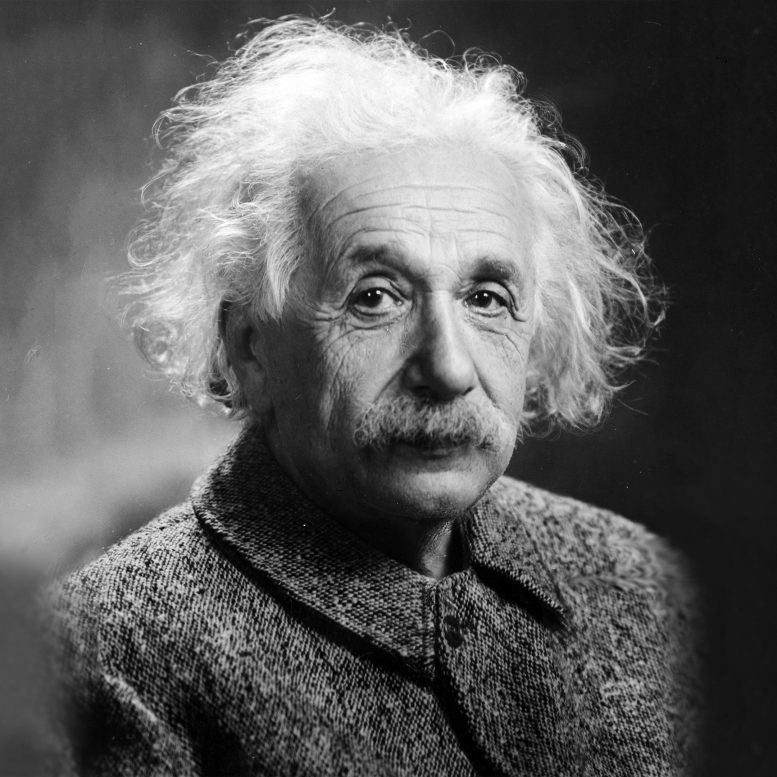
Previously Unknown Letter Reveals Einstein’s Thinking on Bees, Birds and Physics
The 1949 letter by the physicist and Nobel laureate discusses bees, birds, and whether new physics principles could come from studying animal senses.
It’s a position still being realized within physics to this day, with a growing body of research and understanding of how animals such as birds and bees find their way around.
Now a study led by RMIT University in Melbourne, Australia, discusses how recent discoveries in migratory birds back up Einstein’s thinking 72 years ago.
The previously unpublished letter was shared with researchers by Judith Davys — Einstein had addressed it to her late husband, radar researcher Glyn Davys.
RMIT’s Associate Professor Adrian Dyer has published significant studies into bees and is the lead author of the new paper on Einstein’s letter, published in the Journal of Comparative Physiology A.
Letter by Albert Einstein, validated by The Hebrew University of Jerusalem, where Einstein bequeathed his notes, letters and records. Credit: Dyer et al. 2021, J Comp Physiol A / The Hebrew University of Jerusalem
Dyer said the letter shows how Einstein envisaged new discoveries could come from studying animals.
“Seven decades after Einstein proposed new physics might come from animal sensory perception, we’re seeing discoveries that push our understanding about navigation and the fundamental principles of physics,” he said.
The letter also proves Einstein met with Nobel laureate Karl von Frisch, who was a leading bee and animal sensory researcher.
In April 1949, von Frisch presented his research on how honeybees navigate more effectively using the polarization patterns of light scattered from the sky.
The day after Einstein attended von Frisch’s lecture, the two researchers shared a private meeting.
Although this meeting wasn’t formally documented, the recently discovered letter from Einstein provides insight into what they might have talked about.
“It is thinkable that the investigation of the behavior of migratory birds and carrier pigeons may someday lead to the understanding of some physical process which is not yet known,” Einstein wrote.
Professor Andrew Greentree, a theoretical physicist at RMIT, said Einstein also suggested that for bees to extend our knowledge of physics, new types of behavior would need to be observed.
“Remarkably, it is clear through his writing that Einstein envisaged new discoveries could come from studying animals’ behaviors,” Greentree said.
More than 70 years since Einstein sent his letter, research is revealing the secrets of how migratory birds navigate while flying thousands of kilometers to arrive at a precise destination.
In 2008, research on thrushes fitted with radio transmitters showed, for the first time, that these birds use a form of magnetic compass as their primary orientation guide during flight.
One theory for the origin of magnetic sense in birds is the use of quantum randomness and entanglement. Both of these physics concepts were first proposed by Einstein.
Reference: “Einstein, von Frisch and the honeybee: a historical letter comes to light” by Adrian G. Dyer, Andrew D. Greentree, Jair E. Garcia, Elinya L. Dyer, Scarlett R. Howard and Friedrich G. Barth, 10 May 2021, Journal of Comparative Physiology A. DOI: 10.1007/s00359-021-01490-6
The letter to Glyn Davys shows the openness of Einstein’s mind to novel possibilities observed in nature and the evidence that he took an interest in von Frish and his bee research.
Monetary and fiscal policy refer to the policies of the government aimed to solve the economic problems in a country. A monetary policy is a credit control measure adopted by the central bank of an economy. It deals with the demand and supply of money. Fiscal policy refers to the use of taxation and public expenditure by the government to stabilise the economy. A monetary policy aims at achieving full employment. Unemployment leads to wastage of potential and resources. Price stability is another goal of monetary policy. Changes in price levels lead to uncertainty in the economy. Achieving economic growth and maintaining a favourable balance of payments are some of the objectives of this policy. A fiscal policy aims at achieving full employment, stabilizing the price levels and growth rate of the economy, maintaining equilibrium in the balance of payments. It uses taxation to affect national income, output, prices etc. Monetary policy uses various instruments to achieve it’s goals. Open market operations, bank rate policy, selective credit controls, changes in reserve ratios are some of the instruments of monetary policy. Open Market Operations refers to sale and purchase of securities in money market by the central bank. Bank rate is the minimum lending rate of the central bank. When there is rise in prices, the central bank raises the bank rate and vice versa. Selective Credit Controls are used to influence specific types of credit for specific purposes. A monetary policy can be classified as an expansionary or a contractionary policy. In the former case, monetary policy is used to overcome a recession or deflationary gap. It generally happens when there is a reduction in demand for consumer goods or investment goods. To control this central bank starts an expansionary monetary policy that reduces credit market conditions and leads to upward shift in demand. In the later case, monetary policy is used to curtail aggregate demand. When the economy faces inflationary gap due to rise in demand for consumer goods and increase in business investment, the central bank increases the cost of bank credit. This is often done by selling government securities, rising discount rate etc. Similarly, fiscal policy can be classified as neutral, expansionary and contractionary. Neutral policy is usually undertaken when an economy is in equilibrium. In this instance, government spending is fully funded by tax revenue, which has a neutral effect on the level of economic activity. Expansionary policy is usually undertaken during recessions to increase the level of economic activity. In this instance, the government spends more money than it collects in taxes. Contractionary type of policy is undertaken to pay down government debt and to cap inflation. In this case, government spending is lower than tax revenue. Monetary and Fiscal policy both have their own advantages and disadvantages. Fiscal policy may sometimes result in a domino effect causing one problem to make another and repeat. Fiscal policy can also have issues with time lags. Although monetary policy is not very effective in a recession, it is flexible and works well to slow down the economy. Most people however, prefer fiscal over monetary because its brings low taxes and low interest rates. https://www.ukessays.com/essays/economics/fiscal-and-monetary-policy-economics-essay.php
We do not simply just inherit our parents’ skin complexion, eye colour, or height. We can also acquire our parents’ stories, narratives, and perspectives on life. There is a piece of them that lives on in us, whether we are conscious of it or not. While carrying on our family’s tradition is a good thing to do, there may be unaddressed tension and trauma to sift through and tidy up.
WHAT IS GENERATIONAL TRAUMA?
Generational trauma is exactly what the name implies: trauma that is passed down from one generation to the next. It can be subtle, hidden, and ambiguous, emerging via nuances and unwittingly taught or suggested throughout someone’s life from infancy onward.
Families with a record of unresolved trauma, depression, anxiety, and addiction can pass on ineffective coping techniques and suspicious views of life to subsequent generations. In this way, one might perpetuate the same behaviours and attitudes of previous generations, even if they’re healthy.
While generational trauma can impact anybody, individuals who have suffered major kinds of abuse, abandonment, torture, discrimination, and racial inequalities are at the greatest risk. Generational trauma has been studied in relation to Holocaust survivors, the Khmer Rouge atrocities in Cambodia, the Rwandan genocide, the relocation of American Indians, and the slavery of African Americans, among other things. While the evidence on how trauma manifests itself is varied, several studies have found increased rates of anxiety, sadness, and PTSD among trauma survivors and their offspring.
Trauma can cause poverty, poor parenting, decreased bonding, psychological distress, and insecure living conditions, all of which have a significant influence on children ’s development.
WAYS IN WHICH GENERATIONAL TRAUMA CAN AFFECT FAMILIES
Emotions could become a point of conflict across generations – Regardless of how the trauma is coped with, elder generations within a family set the tone for how traumatic events must be (and frequently are) dealt with. Unfortunately, the trauma is passed down through generations since those who needed assistance never received it. In some situations, the traumatised family member may even pass on bad feelings to others in the family.
Trauma can have an impact on the parent-child relationship – Individuals who have not gotten assistance and support for their trauma may establish unhealthy connections with their kid or grandchild. Emotional, psychological, or verbal abuse can all be signs of an unhealthy relationship. Abuse can be sexual or physical in severe situations.
Unaddressed mental issues could cause relationship conflict – It is well known that older people do not believe in seeking the assistance of mental health specialists. Members of the family suffering from mental health issues (depression, anxiety, psychotic symptoms, etc.) genuinely require assistance because untreated psychiatric symptoms can lead to more trauma and emotional instability within one’s family.
Younger generations may become “satisfied” with the way things are – If avoiding and denying ,and even embracing, the trauma becomes “normal” for the family, future generations will adopt this manner of “survival” and imitate the behaviours. People who avoid, downplay, or suppress family trauma exacerbate the situation for younger family members. We learn a lot about how to cope with stressful experiences.
HOW TO HEAL FROM GENERATIONAL TRAUMA
Many people do not realize their dysfunctional behavior because they are simply applying what they have learnt in the best way they know how to. The key to change is awareness. There can be no change unless you acknowledge that something is wrong in your family unit.
The first step is to recognise the patterns. Some are much more visible than others, such as domestic violence, abuse, anxiety, and gender norms.
The second stage is to become more conscious of what causes you to fall into these established patterns. Is it shouting, contempt, feeling undervalued, physical violence, or witnessing others bully? The list could go on and on.
The third stage is to become conscious of how you respond to triggers once you are aware of them. Do you shut down, get furious, get aggressive, or yell?
The fourth stage is to understand how to create constraints in such behaviors. Creating a trigger word or phrase that will assist you detect when you are following a pattern. Creating a support network in order to be held accountable.
Giving yourself love and time to heal is the fifth stage. These are behaviors which have been ingrained in us for a long time. Generational trauma doesn’t really heal in a day or a week. It takes some time.
In order to enhance these processes, enlisting the assistance of a professional is a wonderful choice. Sometimes when the trauma you experienced is so deeply ingrained in you that you need additional assistance.
Dear Zindagi by Gauri Shinde is an unrewarded masterpiece. The movie narrates the story of Kaira, a young lady in her 20’s who is financially independent and successful than most of the people of her age. It shows the importance of childhood in an individuals life, and how it can impact their adult life. It is a beautiful story of self-discovery and freedom from the three dangerous words- ‘Log kya kahenge’. To, accepting herself and her truth irrespective of anyone’s disagreement (After all YOLO).
As adults we often carry the burden of unhealed wounds from our childhood traumas. We might not be aware of their presence for years until they start reflecting upon our relationship with others, as we grow up. Similarly, Kaira did not have a normal childhood with a happy family. She had various scars of abandonment, shame, hate, jealousy from her past. At a very young age she was left to live with her grandparents for years, until she failed in the 2nd standard and had to move back with her parents as it was very shameful for them. As a child she was always considered to be the rude, moody and ill-mannered by her parents and relatives but no one ever asked her the reason, why she behaved the way she did.
It was only after her break-up that she started having sleep issues and realized she had to consult a psychologist. Dr. Jahangir Khan, the best therapist one could wish to bring out of the reel world, is played by Shahruk Khan. He is an empathetic, compassionate counsellor who guides Kiara in her journey of self-discovery. The lessons taught by him go way beyond the movie and can be applied in the real life. As children we are taught that wiping off our tears and hiding our emotions as it’s considered a sign of bravery whereas crying and showing our vulnerable side is considered to be a sign of weakness. However, in reality emotions are meant to be expressed, be it happiness or sorrow. Year’s of unexpressed emotions impact a person’s emotional health and later on express itself in the form of physical illness if not addressed.
Being a girl from the 21st century Kaira had to face various comments by the society which started to effect her self-worth. This is when Dr. Jahangir explained her the Chair Concept. So, when we buy a chair we look at different varieties of chair and make sure that the one we choose is comfortable for us and suits us. Then why not apply the same theory in choosing the right partner, after all he/she will be the person we decide to spend our entire life with.(And that surely has much more impact on our life than a chair, so why risk it)
The movie gives a simple yet deep message of self-love and self-discovery. It’s important for us to know and understand ourselves. The best way to know ourself is to go back and explore our childhood memories. Our childhood shapes our life in a way that we often don’t understand. It is only when we completely understand ourselves, we know what we want and what we deserve in life.
Top Trending Online Courses in 2021 [For Both Students & Working Professionals]:-
Professional certifications provide excellent avenues for developing your knowledge and skills. They can help you demonstrate your interests and potential to prospective employers while building your profile for lucrative job positions. There are many trending courses lockdown has made prominent once again, to guide and prepare candidates for modern workplaces. We have detailed some of these programs for you below.
Professional courses and certifications have many advantages. They can help you in:
Demonstrating your skills and gaining credibility
Enhancing technical knowledge and upskilling
Qualifying for senior-level jobs
Staying abreast of the latest trends
Acquiring experience and hands-on training
Table of Contents
Top Trending Online Courses
1. Data Science
2. Artificial Intelligence and Machine Learning
3. Big Data
4. Business Intelligence
5. Cloud Computing
6. Project Management
7. Software Development
8. Full-stack development
9. Cybersecurity
10. Networking
11. DevOps
12. Digital Marketing
13. Blockchain
14. Internet of Things
15. Computer Science
Conclusion
Top Trending Online Courses
1. Data Science:-
Study programs in data science typically focus on big data analytics, data visualization, statistics, and predictive analytics. The curriculum is designed for individuals pursuing technical job positions, such as data scientists, data analysts, business analysts, and machine learning engineers.
Whether you are a fresher, a marketing professional, or a software engineer, data science knowledge can advance your career.
Usually, no prior coding experience is necessary for this course. If you have a bachelor level degree and a knack for numbers, you can enroll in a postgraduate level data science program. Many online options are also available, which provide accredited master degrees and diplomas in addition to placement support.
upGrad’s PG Certification in Data Science aims to equip working professionals with the following capabilities:
Python programming
Using Python and SQL for predictive analytics
Data visualization using Python, exploratory analytics, ML algorithms, and so on.
Upon completing the course, you earn a certificate from IIIT-Bangalore and get a chance to connect with a global community of data science professionals from diverse industries. The engaging pedagogy of upGrad courses includes case studies, projects, group coaching, and live sessions to provide personalized feedback and facilitate improvement.
2. Artificial Intelligence and Machine Learning:-
Artificial Intelligence (AI) and Machine Learning (ML) are the exciting technologies of the 21st century. AI and ML certifications can help boost the careers of IT professionals who have a background in mathematical or statistical fields.
Such programs cover various programming languages, tools, and libraries to equip students with the required competencies. Examples of the technologies taught include Python, MySQL, AWS, Docker, Kubernetes, Keras, REST-API, etc. Moreover, learning opportunities would expand when the syllabus is delivered via videos and real-life industry projects.
upGrad offers an online Master of Science in ML & AI for working professionals looking to jump-start their careers. The degree is recognized by Liverpool John Moores University, a prestigious educational institution in the UK, and comes with access to LJMU’s digital library.
And you can attain this qualification at a tenth of the cost of the offline program. Alternatively, you can go for advanced certifications that allow you to specialize in Big Data, Cloud, Deep Learning, and NLP. These upGrad courses arrange for resume feedback, interview preparation, career counseling, and job assistance.
The skills you learn prepare you for lucrative job opportunities like Big Data Analyst, Data Engineer, Machine learning engineer, etc. Hiring partners include Amazon, Flipkart, Myntra, PayTM, Make My Trip, American Express, Accenture, Standard Chartered, Adobe, Genpact, MobiKwik, and many other leading companies.
3. Big Data:-
Big data certifications can help you go after more diverse roles than specific data science jobs. You can opt for different specializations depending on your background and career aspirations. Generally, learning tracks of big data certifications include:
Business Analytics
Data Engineer
Natural Language Processing
Deep Learning
Business Intelligence
For example, the PG Diploma in Data Science from IIIT-B is certified by NASSCOM and delivered in partnership with industry leaders like Actify, Zee5, Uber AI Labs, AIQRATE, Genpact, Flipkart, Myntra, and Gramener.
The course follows an integrated approach to teach you about different programming languages and tools. These include Python, Tableau, MS Excel, Hadoop, PySpark, Power BI, MongoDB, Keras, TensorFlow, AirFlow, and many others.
4. Business Intelligence:-
BI professionals put their numerical ability to work and solve real-world business problems. Their insights can translate into actionable metrics, leading to changes in planning, operations, product development, and strategic management.
Therefore, their primary responsibility is to maximize the use of data in an organization to direct it on the path of successful performance. Training in business intelligence can help IT professionals build aptitude in:
Data mining and analytics
Data visualization
Management reporting
Using Excel, SQL, R, Python, Spark, Hadoop, etc.
The Business Analytics Certification is one of the trending courses 2020 has drawn attention to, especially for those competing for business analyst and managerial roles.
You can also check out upGrad’s Executive MBA program from NMIMS Global Access School. The degree is AICTE-approved and incorporates a three-month capstone project and one-on-one interaction with industry mentors.
The faculty includes subject experts in Analytics, Marketing, Human Resources, Economics, Finance, and Supply Chain, and Operations. The MBA(X) course offers a Business Analytics specialization that qualifies for better job prospects in management consulting, business leadership, and growth and strategy roles.
5. Cloud Computing:-
Cloud computing is one of the top IT fields that is experiencing an emerging trend in 2020. As organizations around the world go after dynamic and scalable applications, the demand for cloud services is only going to rise.
While making the shift, companies encounter many technical challenges. So, having qualified people with domain expertise would be necessary. It is already a top IT job globally. Software developers can go for specialized programs in cloud computing to learn the following things:
Understanding of cloud migration and multi-cloud environments
Knowledge of serverless architecture
Cloud security skills
Building cloud-native technologies, virtual machines, microservices, etc.
PG Diploma in Software Development (cloud computing specialization) is suitable for engineering graduates who want to occupy titles like Cloud Developer, Cloud Architect, Cloud Administrator, and other similar positions.
6. Project Management:-
Project management is one of the trending courses 2020 has generated interest in, for both employers and aspirants. Project managers ensure that work assignments are delivered within time and budget constraints. They assign tasks to the concerned members, set deadlines, and drive the project team to achieve the desired goals.
Those in core IT careers can gain knowledge in this discipline by earning a project management certification or take admission in an MBA program. Nowadays, top universities are offering online degrees in partnership with industry players. The syllabus has everything from core management concepts to business communication to strategy and leadership.
You can consider applying to the online PG Program in Management from IMT Ghaziabad, one of India’s leading business schools. The course is structured to acquaint students with Sales and Distribution, Marketing Management, Business Economics, Organizational Behavior, Accounting and Finance, and Decision Sciences.
These subjects allow candidates to develop their managerial acumen for senior positions. Moreover, the live projects help navigate the entry into work life as they are presented in collaboration with companies like Vodafone M-Pesa, LinkedIn, HP Enterprise, and ITC.
7. Software Development:-
The primary duties of a software development job include designing, managing, and testing software applications. Being successful in this field requires efficiency in writing and implementing code. To build the necessary proficiencies, you can undertake training in Java programming, C programming, automation testing, SQL database, among other topics. Here are some of the job titles associated with this IT career:
Computer systems analyst
IT Coordinator
Network administrator
Systems architect
Computer and information research scientist
Junior software engineer
Senior programmer
Web developer
Online postgraduate degrees in software and technology are among the trending courses lockdown has made feasible. The MSc. in Computer Science from UK’s Liverpool John Moores University can get you the same quality and exposure in 18 months as any on-campus degree.
Moreover, you can choose from seven different specializations, interact with experienced professionals, and network with your fellow LJMU and IIIT-Bangalore alumni.
8. Full-stack development:-
Full-stack development is concerned with both front-end and back-end technologies. A typical full-stack development course would familiarize you with programming languages and tools like Spring, Java, Typescript, Oracle, Git, Hibernate, React, AWS, Selenium WebDriver, and so on. The extensive program structure prepares you to work as:
Full-stack developer
Back-end developer
UI developer
Senior web developer
IT manager
Technical operations officer
After gaining relevant experience and spending several years in the industry, you can occupy senior-level positions like Director of Technology and Chief Technology Officer.
If you are searching for industry-oriented education programs that prepare you to work in a similar domain, upGrad’s PG Diploma in Software Development would be an excellent choice. The specialized learning track in full-stack development would teach you how to create robust and scalable applications, replete with back-end APIs and an interactive web UIs.
This 12-month program is delivered in an online format, dedicating sufficient time for introductory modules, experiential learning activities, and a capstone project.
9. Cybersecurity:-
In recent years, the instances of data breaches and cyber attacks faced by companies have increased. In the wake of rising cyber crimes, the demand for security experts has also picked up. Most software development courses provide a specialized learning path for those interested in cyber security careers. Here is a snapshot of the skills taught in a postgraduate-level cyber security program:
Application security
Network security
Data secrecy and cryptography
Training in Python, Java, git, AWS, etc.
With upGrad and IIIT-B’s advanced PG Diploma, you can study cyber security in a way that goes beyond the classroom. This online software development course packages more than 400 content hours, six programming languages, over seven projects, and more than ten live sessions. In 12 months, you would learn, apply your skills, get mentored, and move ahead in your chosen career path.
10. Networking:-
Hardware and networking professionals build and maintain computer networks and ensure their smooth functioning, thus contributing to organizational success. Their job is not restricted to working behind the scenes on IT infrastructure but also involves aspects of analytics, security, and automation.
A professional credential in networking can serve as a testimonial of your competencies to hiring managers and make a strong first impression. One of the accredited courses that can help you obtain and improve your computer programming skills is Master’s in Data Science.
11. DevOps
As the title suggests, DevOps combines the Development and Operations arms of software applications. In today’s fast-paced marketplace, tech companies need to stay ahead of their competitors. And DevOps enables agile methods in software development. A DevOps-oriented study program would emphasize the following things:
Agile methodologies for integration and deployment
Creation and management of software lifecycle
Continuous deployment through CI/CD practices and many more.
To gain an in-depth understanding of the mentioned concepts, you can enroll in the specialized DevOps course, earning a software development diploma from IIIT-B and a data science certification from upGrad.
12. Digital Marketing:-
Digital marketing is an exciting subject for professionals like brand managers, sales personnel, entrepreneurs, and marketers. With increasing internet penetration and online activity, the scope of traditional marketing has also expanded. Digital marketing encompasses topics like Search Engine Optimization (SEO), content marketing, social media, and marketing analytics.
Some popular examples include PG Certification in Digital Marketing and Communication on upGrad. This online course is offered by MICA, a leading higher education institution in India.
13. Blockchain:-
Blockchain is a rapidly growing discipline capable of bringing about significant transformations in the fields of real estate, healthcare, finance, insurance, among several others. The syllabus of blockchain development certifications comprises Ethereum, Smart Contracts, Hyperledger, Composer, Javascript, NodeJS, Solidity, etc. A background in engineering, mathematics, or computer science is a prerequisite for this stream.
Blockchain is touted to be the disruptive technology that will dominate industries beyond 2020. Having a working knowledge of blockchain can prepare you for software development jobs and assist you in getting an accelerated start in business development, engineering, and operations.
You can also complete an advanced course while working. For instance, IIIT-B & upGrad’s PG Diploma in Software Development (Specialization in BlockChain) requires you to dedicate 10-14 hours per week for 12 months. At the end of the program, you would have learned over ten software tools and worked on business problems for clients like Quora, Imgur, and DCB Bank. Additionally, you would receive comprehensive career support in the form of job fairs, mock interviews, and dedicated mentorship.
14. Internet of Things:-
IoT enables the exchange of information between people, things, and processes. Examples of “things” include wearable health monitors, smart home security systems, wireless inventory trackers, biometric scanners, and other connected appliances.
According to IDC, there would be 41.6 billion connected IoT devices by 2025. The IT research agency forecasts that these devices would experience a compound annual growth rate or CAGR of 28.7 percent from 2018 to 2025. With every new connection, there would be possibilities of new security vulnerabilities and privacy concerns. So, companies adopting IoT would also have to take care of data hazards to maximize customer benefit.
Enrolling in an online IoT course can support your quest for knowledge and keep you engaged during the coronavirus pandemic. You would learn how to develop IoT solutions with the aid of sensors and other functions. After completing the training, you can apply for jobs like IoT developer, IoT architect, IoT cloud engineer, etc.
15. Computer Science:-
The program design of MSc. Computer Science consists of software development, primarily using languages like Java and Python. Online MCS programs allow you to select any specialization from full-stack development to big data to DevOps to Blockchain and IoT. Whether you hold a technical undergraduate degree or already working in an IT company, getting an advanced degree can improve your earning capability.
Recent studies have highlighted that certifications can help candidates stand out in the job market. Having completed a technical course in a specific domain can improve your chances of landing work or scoring a promotion. However, a certificate may not be enough to make a difference.
You would also have to seek out opportunities to gain industry experience and hands-on practice. Here, mentorship and live projects can prove immensely helpful. It is thus best to opt for programs that include such components in the curriculum.
Conclusion:-
With this, we have put across the most relevant and trending courses lockdown has brought to the fore. We attempted to make you aware of the available options and make an informed choice about your career. So, pick a certification that matches your needs and start learning.
5 Free Online Courses that you can take up from Home:-
1. Graphic Designing:-
If the sight of blank papers and sketch pens have always excited you and you spend most of your free time drawing and doodling, then it’s time to take your hobby to another level and learn graphic designing online. If you have a creative bend of mind especially when it comes to express ideas through sketching and designing, try your hands at Photoshop and other popular graphic designing software and learn to build creative websites and much more.
2. Online MBA:-
Online MBA programs are very popular these days especially for working professionals who couldn’t afford to pursue full time MBA. Online MBA programs are offered by various prestigious institutes. They have identical syllabus like that of a full time MBA programs, the only difference being that online MBA course are shorter and have flexible timings for the ease of working professionals.
3. Social Media Marketing:-
If you own a business, you need to to tell the world about it and what could be the best way to disseminate the information other than through social media? The promotion of your business online through social media channels like Facebook, Twitter etc is social media marketing and since everyone is social these days, what could be the best way to attract target audience if not through social media marketing?
4. Programming:-
Programming is a vital part of setting up a website. There are various programming language to learn from. Programmers basically code algorithms in programming languages to run a program successfully. If you are interesting in solving complex algorithms, learn programming online and help solving complex codes on back-end to smoothly run programs on front-end of a website.
6. Foreign Language Courses:-
Learning foreign language can add brownie points to your CV. Additionally, it will help you to improve your vocabulary and interacting skills. With online courses on offer, learning any foreign language of your choice is no more a distant dream. So enroll yourself to your favorite foreign language courses soon. Leaning foreign language can also help you to bag the job of a translator.
Linguistics is the systematic study of language. Its focus is on language, in general , not on any individual language. The word linguistics is derived from Latin lingua meaning tongue and istics meaning knowledge or science. It studies language as a universal and recognizable part of human behavior . It investigates how the language is constructed, how it varies through space , how it is used, and how it is related to other languages. Hence the linguist studies the origin , organization ,nature and development of language descriptively ,historically , comparatively and explicitly and formulates general rules related to language . The linguist is one who studies language objectively , observing it scientifically , recording facts about language objectively , observing it scientifically , recording facts about language and deriving general principles for them. First study the language and second it tries to describe the language apply those theory in language .
The facts about language that interest a linguist are its sounds ,forms of words and the arrangement of words to form meaningful utterances. There are various approaches to the study of linguistics : historical, descriptive and comparative.
HISTORICAL LINGUISTICS :-
It studies the facts about a language for the purpose of describing the development of the language for a period of time. It traces language change and the causes and results of such changes that occurred from time to time.
DESCRIPTIVE LINGUISTICS:-
It deals with the description and analysis of the ways in which a language operates and is used by a given set of speakers at a given time. it is based on a structural approach to language.
COMPARATIVE LINGUISTICS:-
It is concerned with comparing two or more languages .It traces the evolution of language and by comparing one with another , establishes the relationship between them .
Linguistics may be considered as science . Like any other branch of science it has a well – defined subject matter called language. It makes use of methods like observation , recording and analysis of the various phenomena related to the study of language.
Jhumpa Lahiri is an award – winning author and translator. She received the Pulitzer Prize in 2000 for Interpreter of Maladies, which also won the New Yorker Prize for Best First Book, the PEN/Hemingway Award and was shortlisted for the Los Angeles Times Award. She was awarded a National Humanities Medal in 2015. Her other works of fiction in English include The Lowland, which was a finalist for the Man Booker Prize in 2013.
Lahiri has also written three books in Italian, including In altre parole ( translated in English as In Other Words) and the novel Dove mi trovo. Her translation of Domenico Starnone’s Trick was a finalist for the National Book Award. She decides her time between Rome and Princeton University, where she is a professor of Creative Writing and Literary Translation.
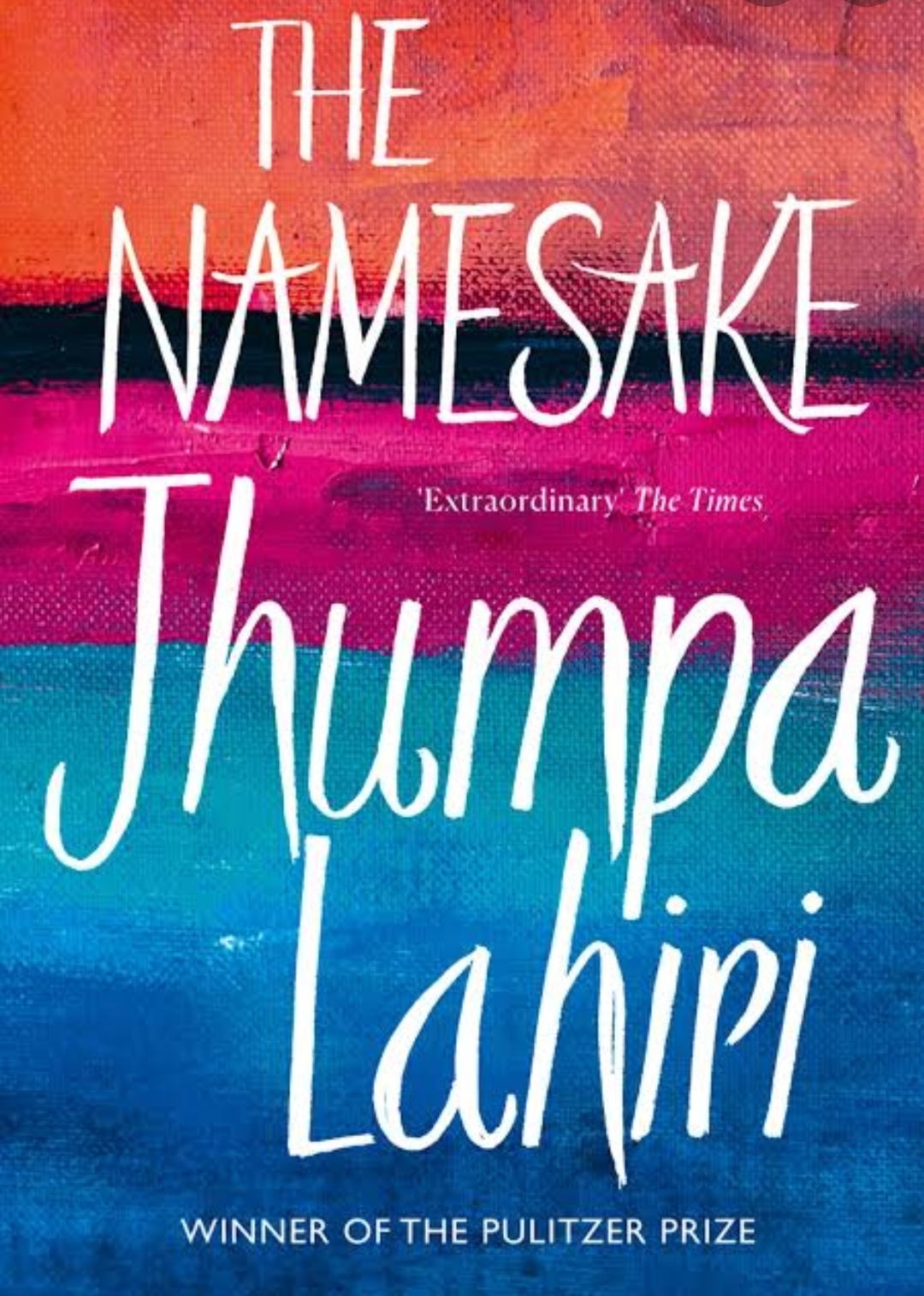
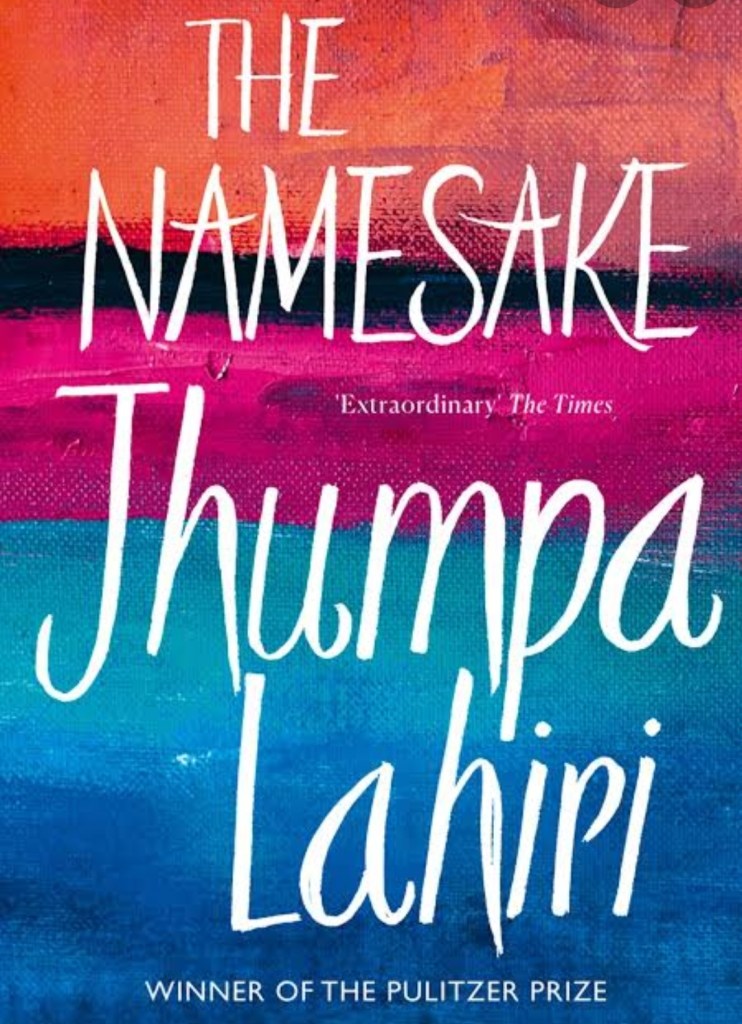
In 2003,Lahiri published her first novel, The Namesake. The theme and plot of this story was influenced in part by a family story she heard growing up. Her father’s cousin was involved in a train wreck and was only saved when the workers saw a beam of light reflected off of a watch he was wearing.
“Good novelists, like Bengali parents, must make their creation unique, and Lahiri’s central characters are painfully believable…. An extremely good first novel, a glowing miniature of a tiny family making the voyage between two worlds.”
” Lahiri’s prose reveals her as a mistress of the small moment with a debt to the Russian classics.”
Analysis of the book
The Namesake is the debut novel by American author Jhumpa Lahiri. It was originally published in The New Yorker and was later expanded to a full-length novel. It explores many of the same emotional and cultural themes as Lahiri’s Pulitzer- winning short story collection Interpreter of Maladies.
The novel between events in Calcutta,Boston, and New York city, and examines the Nina CES in loved with being caught between two conflicting cultures with distinct religious social and ideological differences.
Gogol was named in haste after his father’s favourite author. Growing up in an Indian family in suburban America, he finds himself yearning to cast off his awkward name,and with it the inherited values it represents.
Determined to live a life far removed from that of his parents, Gogol sets off on his own path, only to discover that the search for identity depends on much more than a name.
Summary of the story
The story begins with Ashoke and Ashima Ganguli, a young Bengali couple, who leave Calcutta, India and settles in Central Square in Cambridge, Massachusetts. When they gave birth to their first child, they weren’t allowed to leave the hospital without providing a legal name in the medical papers and documents of their child.
But as per their family tradition,the naming of a child was done by the elderly and in their case, they were waiting for a letter from their grandmother who was going to give name to their son. But the letter never arrived and the grandmother died. So as per their tradition, a child must have a pet name which will be called by friends or families. And the other name was the good name which will be used officially.
Thus Ashoke pet named their son Gogol by getting inspired from his favourite Russian author, Nikolai Gogol. But they decided to use Nikhil as his official name. But when Gogol was little, he loved his pet name so the teachers of his school named him Gogol in all the official documents.
But as Gogol was growing, he started hating the name Gogol and was eager to change his name officially. On going college,he changed his name to Nikhil. He hated Bengali culture and loved American life and dated American girls. He met Maxine at a party and they both started a relationship. He was accepted by Maxine’s family but she was not that much accepted in Gogol’s family.
When Ashoke died of heart attack in Ohio, Gogol was totally heartbroken and he broke up with Maxine and started more time with his mother and sister. After that he was married to Moushumi,the daughter of his mother’s friend. But within a year Moushumi was no more interested in their marriage and they got a divorce.
Conclusion
At the end, Ashima decided to go to Calcutta as she feels nothing here anymore without Ashoke, and Sonia(Gogol’s sister) decided to marry her boyfriend Ben. Gogol was all alone and at the end he started reading the Russian novels which his father gave him as birthday gift.
“You are still young, free.. Do yourself a favor. Before it’s too late, without thinking too much about it first, pack a pillow and a blanket and see as much of the world as you can. You will not regret it. One day it will be too late.”
“Pet names are a persistant remnant of childhood, a reminder that life is not always so serious, so formal, so complicated. They are a reminder, too, that one is not all things to all people.”
Old school love: Sending letters: Via courier? Via pigeon? Via travelers? Waiting for calls? Sending cute but short text messages? (With ‘don’t reply, mom, will read it) Seeing each other for the first time? (With those shy eyes) This is what we are searching for.
People nowadays think relationships don’t last. And here I am talking about a long-lasting long distant relationship. GOD! But yes, it does work. Only if you want it to work.
You know long distance relationship still has a touch of old-school love somewhere. You know; where you wait all day long to talk to them; where you wait for months/years to see each other’s faces; where you still look at the moon at the same time to feel each other’s presence(cliche, but true); where you’re always there virtually to be a part of each other’s success and failure; where you find ways to do things together. (watching series/movies, having online dates, playing online games, having late night antakshri sessions) All of these sounds so perfect, doesn’t it? But as I say, not every day is rainbows and flowers. There are clashes in every relationship. A long-distance relationship has some pieces of stuff to spice the clashes.
For example DISTANCE. You live far away from your partner, there is a problem in matching your timings. You cannot frequently see each other, which isn’t a problem unless you need a hug/cuddle after a long tiring day.
COMMUNICATION GAP. You can only talk over phone calls, and solving fights over phone calls is something one shouldn’t try. Just kidding, conveying your point of view over a call, is tough. You will never know how the other one is perceiving it. Then misunderstanding takes place. There are times when you barely have a good conversation for over a month.
DISTRACTIONS. Maybe he/she won’t be able to be there for you and someone else is doing their part. Don’t just let that affect your relationship. All you need to remember is where your heart belongs. Where do you belong? Not everyone stays.
“आखों मे बसी हो पर दूर हो कही, दिल के करीब हो ये मुझको है यकिन”
There are times when you just feel that this is not going to work. Everyone feels that. But don’t give up easily. Now by this, I don’t mean that continue being in a toxic relationship. Just don’t give up on something, you know will last long.
Long-distance relationships do last, you just need the right partner to go along with. You just need to remember the love you have for them. And also I believe LOVE lasts. Long-distance or short. It lasts forever.
I am going to tell you guys about my sweet memory regarding this topic,before we jump right into the topic.
I remember going to an exhibition with my mother.The exhibition used to take place monthly twice.
While we are shopping through the baazar I saw a person making something with some metals and tools and it piqued my curiosity so I asked my mother what was it .
My mother said it is filigree, the art of making jewellery.I was so impressed by their work and asked them if I can watch them more closely.They gave permission and were happy cause I was showing interest in their craft.
They delicately and precisely made jewellery with their hands ,they twisted ,and turned the metals but the result was beautiful in whatever way they turn.
Filigree is also called as filigrann or filgrene.This form of metal work can be traced back to 17th to 19th century of itialian and French and Portugal Metal works.
The word can be broken into two word filum and granum ,which means a thread and grain or bead respectively.
Filigree is mainly done on two metals those are gold and silver.The customers love the works crafted through this art which are often described to be classy,unique.
This work needs a lot of concentration and finesse while making these metal works intricately. This works still remains popular in India and some other parts of Asia .
Jewellery ,watches,spoons,beads and what not everything that is made through this metal work is just wonderful.
Filigree is a metal art because every piece created by this technique is a chef’s kiss or to say a craftsman kiss.
I love this craft cause every piece has its own delicate nature that it depicts and also the finite accuracy in each twist and turn of the metal reminds me the hardwork,the time they sacrifice for our satisfaction.
Something which can never be defined in words ,filled with so many emotions.It is as simple as it can be and as complex as it could be .life is god’s most amazing and artistic creation . So ,love it ‘as it is’ cause you are the luckiest one who can atleast feel those emotions . Enjoy your life and remember bloom where you are planted.
Gautama Buddha, popularly referred to as Buddha (also referred to as Siddhattha Gotama or Siddhārtha Gautama or Buddha Shakyamuni), was a Śramaṇa who lived in ancient India (c. 5th to 4th century BCE). He’s considered the founding father of the planet religion of Buddhism and revered by most Buddhist schools as a savior, the Enlightened One who rediscovered an ancient path to release clinging and craving and escape the cycle of birth and rebirth. He taught for around 45 years and built an outsized following, both monastic and lay. His teaching is predicated on his insight into the arising of duḥkha (the unsatisfactoriness of clinging to impermanent states and things) and therefore the ending of duhkha—the state called Nibbāna or Nirvana (extinguishing of the three fires).
The Buddha was born into an aristocratic family within the Shakya clan but eventually renounced lay life. consistent with Buddhist tradition, after several years of mendicancy, meditation, and asceticism, he awakened to know the mechanism which keeps people trapped within the cycle of rebirth. Buddha then traveled throughout the Ganges plain teaching and building a spiritual community. Buddha taught a middle way between sensual indulgence and therefore the severe asceticism found within the Indian śramaṇa movement. He taught training of the mind that included ethical training, self-restraint, and meditative practices like jhana and mindfulness. Buddha also critiqued the practices of Brahmin priests, like animal sacrifice and therefore the class structure.
A couple of centuries after his death he came to be known by the title Buddha, which suggests “Awakened One” or “Enlightened One”. Gautama’s teachings were compiled by the Buddhist community within the Vinaya, his codes for monastic practice, and therefore the Suttas, texts supported his discourses. These were passed down in Middle-Indo Aryan dialects through an oral tradition. Later generations composed additional texts, like systematic treatises referred to as Abhidharma, biographies of Buddha, collections of stories about the Buddha’s past lives referred to as Jataka tales, and extra discourses, i.e. the Mahayana sutras.
FORMATION OF THE BHIKKHUNI ORDER
The formation of a parallel order of female monastics (bhikkhunī) was another important part of the expansion of the Buddha’s community. As noted by Anālayo’s comparative study of this subject, there are various versions of this event depicted within the different early Buddhist texts.
According to all the main versions surveyed by Anālayo, Mahāprajāpatī Gautamī, Buddha’s step-mother, is initially turned down by Buddha after requesting ordination for her and a few other women. Mahāprajāpatī and her followers then shave their hair, don robes, and start following Buddha on his travels. Buddha is eventually convinced by Ānanda to grant ordination to Mahāprajāpatī on her acceptance of eight conditions called gurudharmas which specialize in the connection between the new order of nuns and therefore the monks.
According to Anālayo, the sole argument common to all or any of the versions that Ananda uses to convince Buddha is that ladies have an equivalent ability to succeed in all stages of awakening. Anālayo also notes that some modern scholars have questioned the authenticity of the eight gurudharmas in their present form because of various inconsistencies. He holds that the historicity of the present lists of eight is doubtful, but that they’ll are supported earlier injunctions by Buddha. Anālayo also notes that various passages indicate that the rationale for the Buddha’s hesitation to ordain women was the danger that the lifetime of a wandering sramana posed for ladies that weren’t under the protection of their male relations (such as dangers of sexual abuse and abduction). because of this, the gurudharma injunctions may are how to put “the newly founded order of nuns during a relationship to its male counterparts that resembles the maximum amount as possible the protection a laywoman could expect from her male relatives.”
As of now 2021, Computers become very important for our daily life. Computers are in each of every sector like banking, gaming, health care sectors. 20 years back, computers were just used in some purposes only. But now computers become very important for each of every sector. In this blog we are going to discuss the following topics. What is a computer? Why computers are important? Evolution of Computers, and at last Is Computer Science the future of the world?
A Computer is machine that can be programmed to carry out sequences of arithmetic or logical operations automatically. Computer consist of two things, one is Hardware and the other is Software. The all physical components of computer like keyboard, CPU, mouse, monitors etc. Comes under the Hardware. The programs, files and programming languages comes under the Software.
EVOLUTION OF COMPUTERS
In 1882, the first computer was invented by Charles Babbage.
In 1880, Herman Hollirith developed in computer which can record and store information in it.
In 1936, the first programmable computer was developed by Konrad Zuse.
In 1947, Bell Telephone Company invented transistors which were the key component of the computer.
In 1953, IBM(International Business Management) came out with there first computer.
In 1962, the first computer video game was invented.
In 1963, Douglas Engelbart invented the computer mouse.
In 1974, IBM and Apple were the companies to sold personal computer(pc) to the people.
In 1991, the first laptop computer came out.
WHY COMPUTERS ARE SO IMPORTANT?
Communication
Due to the use of computers, the communication become much more easier with the help of internet. Now you contact any person in the corner of the world. We can send messages to every person in the world within seconds, all this happen because of computers.
Business
With the help of computers, Huge transactions can be made within seconds. Computers are used to store details about there product in business. Computers are used to keep of record of profit and loses of the company.
Education
Due to the covid-19 pandemic, all schools shifted there education in online mode. Teachers use computers to teach children online. Due to computer, a student can learn anything which he wants from his home itself.
Hospital
Computers are used in hospitals to keep the track record of the patients admitted to the hospital. They are used to detect diseases. They help doctors to perform an operation.
And there are many more reasons why computers become so important in this world.
IS COMPUTERSCIENCE THE FUTURE OF THE WORLD?
Now we came to the most interesting topic in this blog. Nowadays, people are showing more interest towards computer science. Computer science is the most famous branch of education. New emerged careers such Artificial intelligence, Data science and full stack Developer are highest paying jobs in the world, all these are the parts of computer science. Due to the covid-19 pandemic the opportunities of other careers are some what decreased. But the opportunities in Computer science was tend to grow double. There are many career options in computer science. Experts suggest that the growth rate of computer science is 16 percent through 2028. With this we can say that Computer science is the future of the world.
I hope you like this blog, If you like this blog kindly like and rate it. It gives me motivation.
A region present in Northern Greenland was named the Arctic’s last ice area. This was named as such because scientists believed that this area was the strongest and most resistant to global warming. Global warming has caused some major effects around the globe melting of ice caps, ever-rising sea levels, erratic weather conditions all of these occur due to global warming. Due to various human activities, harmful gases and pollutants are released into the atmosphere which results in increasing the temperature and also causing a breach in the ozone layer.
Let’s take a close look into what the last ice area means; the National Geographic in the year 2015 estimated the climatic changes and their effects on our environment and predicted that by the end of 2040, the final place to able to withstand global warming would be this area. It’s devasting to imagine that in another two decades there will only be a small island on which global warming would not have its effect. Furthermore, the World Wildlife Fund also stated that the current climatic conditions are majorly responsible for the shrinking Arctic and are not a good sign for the future. They also made it clear that not only the animals residing in the Arctic are exposed to danger, but also the local Inuit societies that survive on these lands.
This area was regarded important as it would help sustain several species that require the habitat as and when the surrounding areas would have melted. This area is now prominent with several polar bears who use this region as their hunting grounds. But now this area has begun to melt, raising concerns all around the globe. Researchers have stated in a Journal published in “Communications Earth & Environment” in August 2020 this region recorded an ever-low concentration of sea ice; suggesting that the Last Ice area has begun to deteriorate.
The main question that arises is that when did the melting start. Well According to research led by the University of Washington, the initial signs of melting were observed in the year 2018. They also claimed that about 80% of melting had occurred due to weather-related scenarios like winds and the other 20% was due to global warming. This has resulted in the gradual melting of ice caps throughout the Arctic region, causing panic among the locals.
With the additional help of satellite imagery researchers have identified that sea ice levels were less than 50%. Although satellite imagery cannot be considered to be accurate, it does give us an idea about how worse the situation is. The lead author of the study under the University of Washington also stated the alternate reason for the melting was maybe due to the open ocean causing a cycle of absorbing heat energy from the ice, forcing it to melt.
Although the results and studies are unsatisfactory in giving any accurate reason behind this, it tells us that the effects due to global warming have begun sooner than we had expected and we must get together and must prevent further harm to our environment.


















 Eduindex
You must be logged in to post a comment.