NOTA JUDGMENT 2013

INTRODUCTION

The option to cast an election has been an idea which has been joined as a key right of a person. In the prior periods this right was just vested in people of a specific class. In certain social orders, the option to cast a ballot was just vested with people and needed to confront a long battle before they were likewise permitted to cast a survey in open decisions or appointment of some other nature.

In India during the British guideline when self-administration was acquainted the right with vote was vested uniquely with individuals who had a place with a specific class and just with time and a long battle for opportunity was the idea of grown-up testimonial for example, the right vote was given to people similarly, proficient and ignorant similarly by the selection of the Indian constitution.

Notwithstanding, another measurement came into the political circle when an inquiry was mooted that whether there will be a right not to decide in favour of any of the applicants who were challenging the races and the decision stayed a mystery. This is the measurement that was investigated by the Supreme Court of India in the moment milestone judgment.

ADR and National Election Watch (NEW) have examined the quantity of votes got by NOTA in different decisions since 2013. The total report in English and the Executive Summary in Hindi and Kannada are connected herewith.

NOTA (None of the abovementioned) was presented in India through the Supreme Court’s judgment dated 27th September 2013 in WP (C) No. 161 of 2004, (People’s Union for Civil Liberties and another Vs. the Union of India and another). The SC guided the Election Commission to make essential arrangement in the voting form papers/EVMs and give a catch to ‘Nothing unless there are other options’ (NOTA) in EVMs so the citizens who go to the surveying stall and choose not to decide in favor of any of the competitors in the quarrel, can practice their right not to cast a ballot while keeping up their right to mystery. The arrangement of NOTA button was first executed in the State Assembly Elections of Chhattisgarh, Mizoram, Rajasthan, Delhi and Madhya Pradesh in 2013. ADR and National Election Watch (NEW) have dissected the quantity of votes got by NOTA in different decisions since 2013.

FACTS

PUCL, a social freedoms NGO, archived a writ offer under Article 32 of the Constitution, testing the consecrated authenticity of Rules 41(2) and (3), Section 33B of the Representation of People Act, and 49-O of the Conduct of Election Rules, 1961 communicating that these plans abuse the mystery of casting a vote which is vital for the free and sensible races and is needed to be kept up as per Section 128 of the Representation of the Peoples Act, 1951 and Rules 39 and 49-M of the Rules.

The sacrosanct authenticity of Rules 41(2), (3) and 49-O of the Rules of 1961, was condemned. The combined effect of these standards was that individuals who didn’t project a voting form in choices were recorded (by the overseeing official) as having not cast a voting form. The candidates battled this as an encroachment to one side to secret balloting, guaranteed by Articles 19(1) (a) and 21 of the Constitution.

In the above background, the applicants thus appealed to God for pronouncing Rules 41(2) and (3) and 49O of the Rules ultra vires and illegal and furthermore petitioned God for a course to the Election Commission of India, to give fundamental arrangement in the polling form papers just as in the electronic democratic machines for the assurance of the right of not to cast a ballot to stay quiet about the activity of such right under the current RP Act/the Rules or Article 324 of the Constitution.

Issues –

  • The essential issue was that whether rule 41(2) and (3) and 49-O of the guidelines disregard the mystery of casting a ballot which is major to the free and reasonable decisions and is needed to be kept up according to Sec 128 of the Representations of the People Act1951 and rules 39 and 49-M of the standards.
  • Whether a writ can be given for a situation managing a legal right of casting a ballot?
  • Whether the choice set down in Kuldip Nayar in regards to right of a citizen should be returned to and whether the two decisions Association for majority rule changes’ and PUCL stands overruled?
  • Whether the standards 41(2) (3) and 49 O of direct political decision rules,1961 disregard the principal privileges of the citizen?

SUPREME COURT JUDGEMENT ON NOTA 2013

For the situation under investigation, the Supreme Court of India said, that they direct the Election Commission to give crucial game plan in the democratic structure papers/EVMs and another catch called “Nothing except if there are different alternatives” (NOTA) may be given in EVMs so the citizens, who go to the studying corner and decide not to rule for any of the up-and-comers in the battle, can rehearse their advantage not to project a voting form while keeping up their advantage of mystery. The Supreme Court additionally saw that it is fundamental that individuals of high good and moral qualities are picked as individuals’ agents for appropriate administration of the country, and furthermore be assigned for genuine organization of the country and accordingly, NOTA catch can urge ideological groups to designate a sound applicant.

CONCLUSION

NOTA has been depicted as the developing of India’s majority rules system. One sort of assessment is that the reason and benefit of NOTA have been crushed as the victor will be the competitor who gets the second-most elevated number of votes, regardless of whether NOTA gets the most noteworthy number of votes. Henceforth, “NOTA is a positive advance”, while “it doesn’t go far enough”. NOTA is considered a “misuse of vote”, “only restorative”, “an emblematic instrument to communicate hatred”, electors communicating their “upsetting with the current political framework” and potentially “a simple design”.

“A few groups contend that the execution of NOTA will drive up political decision costs. Be that as it may, a spoiled applicant who enjoys debasement and acts of neglect is a more noteworthy expense for the country. It is just the longing to proceed in influence and the insatiability for cash that take unmistakable quality over qualities.”


3 Common Mistakes Smart People Make

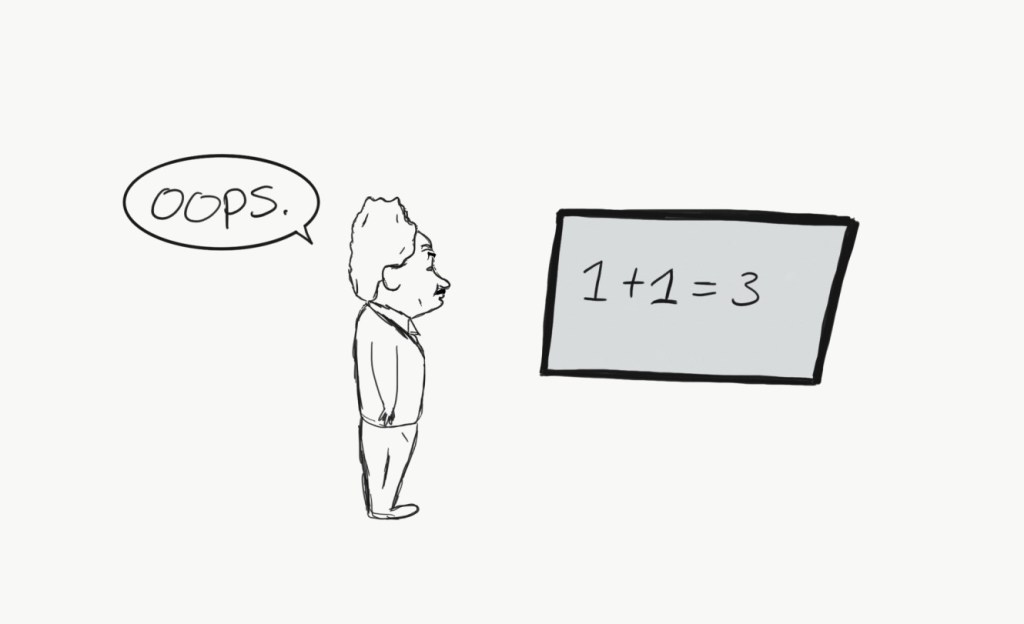
OOPS!

If you believe that only stupid people make these common mistakes, you’re as wrong as I was. The truth is that everyone makes mistakes. Smart people admit that. Stupid people do not.

What’s more, the smartest and most successful people in history have made the most mistakes. Are those two things connected? I think so. This Albert Einstein quote says it all:

“Anyone who has never made a mistake has never tried anything new.”

I used to blame myself for making mistakes in life. I think that’s how our society is. As a kid, you’re punished for making mistakes in school and life. And because of that, we think it’s normal to punish each other as adults.

But why would you punish yourself or another person for making silly mistakes? Most things in life are reversible and small (I’m not talking about committing crimes or adultery here). What matters is that we learn from our mistakes.

One of the best traits one can have in life is to be forgiving. You must go easy on yourself when you screw up. The same is true for the people in our lives. Alexander Pope put it best:

“To err is human, to forgive, divine.”

And when people really cross the line—just move on. No need to make things complicated.

In life, there are lines one should not cross. If you keep yourself to a high moral standard, you’re doing the right thing. And if you make mistakes? So what? No one is perfect.

Here are 5 of those mistakes that smart people make. Remember that you don’t have to make these mistakes yourself. It’s better to learn from other people’s mistakes. They have made them, so we don’t have to.

1. Chasing money

I recently read How To Get Rich by Felix Dennis, who owned one of the biggest magazine publishers in the UK. Contrary to the title, the book actually tries to discourage you to chase money.

Many rich people will tell you the same. The funny thing is that we all know there is more to life than money. And yet, we make it our sole purpose. Dennis writes:

“People who get trapped in the tunnel vision of making money think that is all there is to life.”

There’s nothing wrong with wanting to get rich. We just have to remind ourselves that making money beyond a certain amount has little impact on our happiness. But somehow, we get tunnel vision. Again, trying to get rich is not a mistake. However, it is a mistake if you expect that it’s the answer to all your problems.

2. Ignoring sleep

When you get excited about something, you want to spend all your time on it. That’s a great feeling.

But when your excitement prevents you from having quality sleep, you want to change that. It’s one of my biggest pitfalls. I can read and work all day long—well into the night.

But even when I go to bed at 2 AM and wake up 8 hours later, I still feel tired. Somehow, it’s different when I hit the sack at 11 and wake up at 7. I feel much more energized.

For the past year, I’ve been taking my sleep more seriously. I wake up at the same time every morning. And I turn off my devices exactly one hour before I want to sleep. That means no work or heavy mental activity before bedtime. Just some light reading or journaling.

3. Being connected too much

The past decade has been great for technology. Almost everyone has a smartphone with access to the internet. Within a few years, the whole world will be connected. Even the less developed countries.

Modern technology has changed the world. These developments are great. But remember that too much of a good thing becomes bad.

That also applies to your smartphone, tablet, and laptop. Recent research shows that Generation Z (born after 1995) is distressed and anxious. The American Psychological Association even says they have “the worst mental health of any generation.”

One of the biggest reasons for their mental state? All the signs point towards their smartphones and connectedness. For years, I’ve been limiting my smartphone usage.

And inspired by Cal Newport’s new book, Digital Minimalism, I’m only getting more strict with this.

did suicide ever hit your mind ?

sometimes it feels like nobody is around, nobody wants to be around, feels like everyone is avoiding I don’t want to care what everyone says or think about me as they don’t know what I have gone through they dont know whether it is my choice or my helplessness, the don’t know whether I want to be like this or I have to be like this for some reason what they know is just what they assume. the assumption is the worst thing in the world as assumptions they have made are according to them and not the truth. the main thing that tears me into pieces is my family, friends even they are not understanding my problem.

being in such a position sucks.

but what hits me at late nights or when I am thinking of myself is that if I am being sad or being lonely it is because I want me to feel in such a way if I want then I can enjoy my loneliness and get encouraged by my failures of life. the more I fail the more I will succeed the more I am lonely the more I’ll get the chance to shine.

don’t let your weakness weaken you just make yourself learn from them and make them your strength. there are many people who will let you down or make you feel unwanted, make you feel useless, there will be many times in life when you will feel the worst. dont let people do this to you as you deserve all the happiness you are not alone in this world. you are wanted and you are loved but you need to make yourself worth it and make yourself proud.

LIFE CYCLE OF INNOVATION

INNOVATION

Innovation is the action or process involved in improving an existing product/service. It involves new techniques and ideas to create better products that add up value to the customers. Innovation enhances the brand value and is the key to the successful running of the organizations.

Example: Power banks – They are innovative reusable devices that replace conventional chargers in the absence of electricity. Power banks store the battery and give power through USB ports to the devices in need of charging.

LIFE CYCLE OF INNOVATION

The phases of innovation in an innovation life cycle can be the following

  • Ideation – Ideation starts with the necessity of a solution for a problem or to satisfy the customer’s requirements. The problem statement is identified first and the feasible idea to solve it, is generated. Curiosity, Creativity, Involvement gives impetus for a new idea to spark. This may either increment an old one or open a new market. Innovation potentials are generally identified through
    • Targeted search – This involves finding potentials through creativity workshops, idea contests, or LEAD user workshops.
    • Random findings – This involves discovering the new idea randomly while coming across some new products, suggestions, and customer feedback.
  • Research – This is one of the important steps as it involves identifying risks. After the idea is generated, research should be done to conceptualize and bring an idea into a form. Proof of Concept (POC) must be provided and it should prove that neither a similar product is available in the market nor POC is available and patented. This phase should ensure that the idea is possible by analyzing
    • Customer’s requirements – Customer’s unheard problems and needs.
    • Market potential – Market size and attractiveness for the generated idea.
    • Growth potential – Expected opportunities, growth, and scalability.
    • Risks and feasibility – Potential risks, technical barriers and laws, standards, and patterns.
  • Offering – This phase involves offering the product as a complete one to the market. Before it is offered, the availability of resources and scope of the product in the market must be analysed. The feedback from the potential customers must be obtained and incorporated. Use these customers as an anchor to obtain new customers. 
  • Commercialization – This involves launching the product as a commercial one to gain profit from it. The following points should be considered for commercialization
    • Sales plan and marketing strategy – How the product is delivered to the customers and attracting, convincing, and making the customers realize the need for the product.
    • Contracts and license management – Regarding the terms and conditions for using the product
    • Product management and engineering – Involves packaging, delivery, and installation. Striving continuously for future enhancements and updating the versions on a timely basis.
    • Customer support – Customer helpdesks, feedback management, etc.
  • Growth – This phase is to ensure leading the market. Continuous study on the competitors, new arrivals, and customer needs could help retain the market position. The product should be able to sustain the competitive market. Customer acceptance and support should be increased through the performance of the product. Eventually, revenue generation increases. The availability of the product must be expanded.
  • Retirement – A product goes through this phase when there is a replacement of the product by an advanced one. The product tends to lose the market position thereby failing to generate expected revenue. This may happen due to a decrease in demand, the substitution of technology or the product may no longer provide a relevant solution to the customers.

These phases of innovation are considered indispensable in the product’s lifecycle. So, it becomes mandatory to take care of every detail in the life cycle to achieve success and sustain in the market.

me and my world both got tilted

Hellooooo guys !!!

oh! you may get doubtful about how I am writing this article if both me and and my world are both tilted right now.

Just kidding guys😄

I have to tell you guys a secret shhhh🤫 come closer to the screen guys . Actually the thing is….

I am a” warrior” you don’t believe do you? want to know how?

Actually I am an undergraduate student during this pandemic ,haha 😆sorry my jokes are also tilted.

I thought a lot about what should I be writing so you may get to know how my perspective changed after the pandemic that is as my title says.

After this pandemic everyone’s life became a big mess .Many people lost their lives,livelihood ,their loved ones,there is alot of negative things happening around which is quite depressing
This situation tilted every one’s lives .

Coming to the point “lockdown” is the term we are now most familiar with

so in this lockdown what did you do?

I just lazed on my couch, attended online classes, not to mention watching my favourite kdramas ,listening to kpop ,reading my favourite webtoon, manhwas and surfing through the net.

We all are experiencing the situation that the male lead in “old boy” movie faced , for those of you who are not familiar with the movie I recommend it its a very good thriller. The so called tilt in our world caused by pandemic is the reason why we can relate to the character in the movie.

Similarly seasons passed while I was lazing on my couch too , I mean the seasons in web series.
Here we go again with my silly jokes.
I know most of them can relate to our binge watching the series days, the so called boring days, the days we had to find something to keep ourselves busy.


But thinking about this in my tilted world , I enjoyed my time by spending with my family ,had online meetings with my friends, joined online classes (obviously for attendance) .

People are learning new courses ,they are trying to find new hobbies such as learning musical instruments, dance ,arts and so on…, they started learning cooking ,they are trying various things ,they are doing trends, making video challenges ,starting their vlogs and writing blogs.

People are finding new talents that even they weren’t aware of them before.

Myself, themselves ,and ourselves ,each and everyone one us are finding something new about the so called “self”.

“There’s always an opportunity with crisis. Just as it forces an individual to look inside himself, it forces a company to reexamine its policies and practices.”

Judy Smith

So my point is in this pandemic people’s perspective of viewing the world changed.

Why don’t we also try to change our perspectives and view this pandemic as chance given to us , to find the magic that has been lost in our daily stressful lives, why don’t we slow down our pace and take a look at the world we are living in we are breathing in.
Why don’t we try to change ourselves and try to adapt into this new tilted world
Finding the “new tilted selves”.

Hope and despair are the two different sides of the same coin so when we toss the coin the chance is half and half but why don’t we grasp this opportunity and stick to the hopeful side of the coin.

I know its easier to fall rather than to climb, its harder to view a negative thing in a positive light.

My point is as the world is already tilted why don’t you try to tilt yourselves and your perspectives ,that is utilising this time to know what do you enjoy? ,what is your strength’s and weaknesses? ,what do you like what you don’t like ? ,what is the so called yourself that you always speak about?.

What is the “new tilted self” that you found ?

Ask these questions to your selves and try to answer those questions even if you didn’t find the answers no rush go in your own pace and you will find them automatically.

I know you are going to be okay.so cheer up ,you can do it!!
And thanks for visiting my tilted world and sparing your time .😊

Time Blocking: Improve Your Focus And Get More Meaningful Work Done

Do you have a list of priorities or goals that you want to achieve this year? And do you struggle with allocating time to them? Time blocking might be helpful.

It certainly helped me. Look, I’m not any different from you. Life can be messy. Most of us juggle a lot of different things at the same time. Even though the simple solution is to stop juggling, it’s not always realistic. Or even needed.

What if you could do more things without losing your time? It’s possible. But you must work in an organized way.

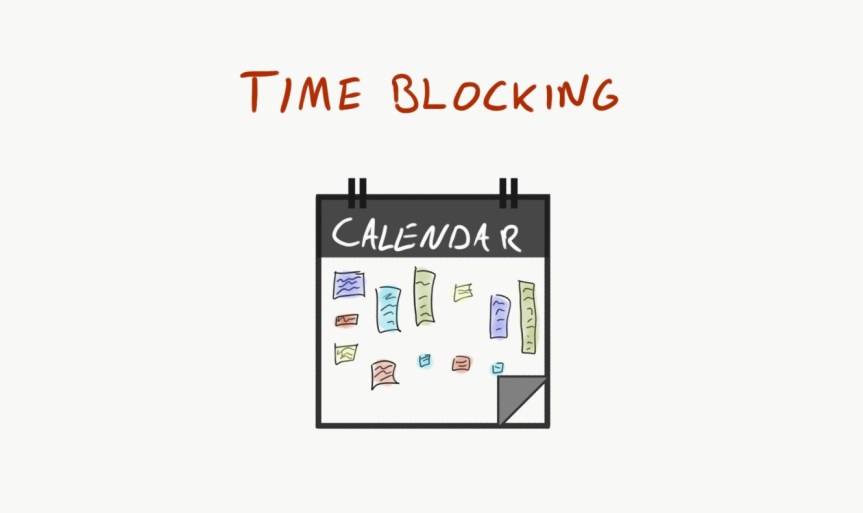
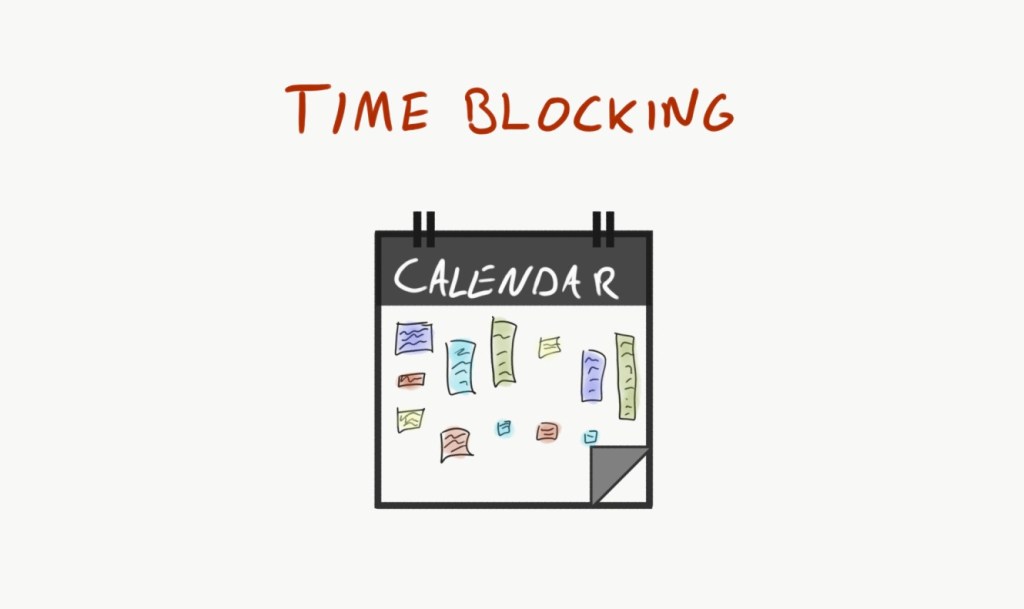
Time Blocking a simple productivity exercise that many people use. It’s not fancy or revolutionary. The only thing you need is a calendar, which is something everyone with a smartphone and computer has.

Time Blocking is simply using your calendar to block time for your most important priorities. During that time, you only work on that one thing. And, you let your calendar lead the way. That way, you don’t have to think, “What should I do next?”

But Time Blocking is more than just a productivity tool. It’s about self-awareness.

The road to high productivity starts with awareness.

For instance, one of my priorities this year is to write a book on pragmatic thinking. However, there’s a problem: I haven’t been writing.

How did I come to this conclusion? I simply looked at my list of priorities for 2017, and I then I looked at my calendar.

I hadn’t scheduled any time for writing in a while. Now, you might think, “do you really have to look at your calendar to realize that?”

Yes, I do. I’m not some kind of supercomputer that remembers everything. I’m a regular human being. I think of something to do, start working on it, life gets in the way, and then I FORGET about it.

It happens to all of us. We need self-awareness and tools that keep us in check. And that’s why I like Time Blocking.

Some people love Time Blocking. Some people hate it.

Computer science professor and author of Deep Work, Cal Newport, also uses time blocking. He says:

“I take time blocking seriously, dedicating ten to twenty minutes every evening to building my schedule for the next day. During this planning process I consult my task lists and calendars, as well as my weekly and quarterly planning notes. My goal is to make sure progress is being made on the right things at the right pace for the relevant deadlines.”

The last sentence is exactly why I schedule everything I want to do. Working is not the same thing as making progress. And Time Blocking helps me to improve my focus so I can get meaningful things done. Things that have an actual impact on my life.

I know there are a lot of successful people who work with empty calendars. I’ve read the articles. They simply work two, three or four hours per day.

And to be honest, that sounds very attractive to me too. However, one must look at his/her own life situation.

What are you trying to achieve?

And more importantly: What resources do you have?

Often, people who don’t have a lot of money, do have a lot of time. So why not use it wisely? Either way, I think that planning serves a purpose.

I plan my days and weeks in advance because I want to make sure I’m working on the RIGHT things. Too often, I get lost in completing daily tasks.

Think about it this way. I’m pretty organized already. And I only work on one big thing per area of my life.

But there are many different areas of my life: My family business, my blog, podcast, online courses, relationship, friends, investments, etc.

It might sound like I’m doing many different things. But it depends on how you look at it. Everything I do leads to one thing: Living a meaningful and independent life.

But let’s not get philosophical here. If you’re lacking focus, not making progress, and want to work in a more organized way, give time blocking a try.

Here are some things I’ve learned that may help:

  • Take 10 minutes every evening and plan your next day. Rearrange blocks if you must create time for other important things.
  • Use recurring blocks for recurring tasks. For instance, I’ve scheduled two hours to write my new book every Tuesday and Thursday.
  • Don’t over-schedule. Realistically, you can’t be productive 10 hours straight. Give yourself some time between tasks.
  • And always schedule more time than you think you need.

“Wow, time blocking sounds like too much planning to me.”

No problem. Plan less. There’s always a counter-movement for everything. People who do the exact opposite and advocate an anti-productivity lifestyle. You know, folks who claim they have empty calendars and don’t care about anything.

People who pretend they are always “enjoying” themselves. They like to go with the flow and daydream.

You know what that reminds me of? Those kids in school always said, “Ah dude, I didn’t have time to study for this class,” but always ended up getting straight A’s.

People just want to make you believe they don’t work hard. It’s facade. And when they do well in life, it seems like it came easy.

As far as I know, achieving meaningful things is hard. I don’t think there’s anything cool about pretending it’s easy. Nor do I believe that it’s cool to work yourself to death.

I often think of this question: Are you an amateur or a pro?

It’s Steven Pressfield’s famous analogy, from his book The War Of Art, for getting work done.

The amateur-only works when inspiration strikes. The pro sits down every day and puts in steady work. The key is steady. Not irregular or extreme.

Pressfield says:

“The sure sign of an amateur is he has a million plans and they all start tomorrow.”

Don’t start tomorrow.

Raymond Willams 

Raymond Willams 

Raymond Williams, the overlooked Marxist but an impactful figure to the study of Literature and Linguistics. When we are introduced to Karl Marx, we often times overlook how Friedrich Engles, plays a jarringly critical roles and how he has enabled Marx with the support and opportunity he needed to move with what Marx believed and simultaneously wrote about. Similarly, Williams became this figure– unless you’ve touched subjects directly under his expertise– he’s the one we’ve turned a blind eye towards. 

Keywords, by Raymond Williams, a treatise and not a dictionary where he presented us the historical transformation 109 words which have underwent as a part of socio-political, ethno-cultural and economical transcendence and haven being privileged enough to read one of his impactful works, it’s just baffling to see how less of a influence he has outside of his field. It’s not extrapolating information that is thrown at you just for the heck of it, but rather an insistence to know who and what Raymond Williams’ stands for. He has redefined/ restructured what Antonio Gramsci has called Hegemony, and even went on further with his works in tearing down era’s through his works and critiquing the existence and work of aristocrats and ownerships in his works The English Novel from Dickens to Lawrence and in Culture and Society: Coleridge to Orwell with his highlights on class struggle; from his comments overarching and inclusive of architecture, fashion, food, and even leisure, he has lured literary critics. 

Williams was one of the pioneers to question about the greatness of culture, the association of High Culture to the Bourgeoise and propagated skeptically the notion of something with no inherent value to be associated and put into pedestal, a notion he worked to deconstruct by questioning the elites and it’s control over the means of production as well as its hegemonic power over what is to be named as culture, and more.

This British man, also was very actively engaging in discussion of what Language is, and how it is a reflection of society, that has been nothing short of a lopsided tale serving a particular class; he question the use of language in reality, and how it has shaped the area of Literature, and constricted it, almost white-washed it. He persists upon altering generic views towards literature, to understand categories like arts, humanity, creativity, science and more. He also spoke about the politics of Speech Writing and how narrowed or culture centric it has to be in order to act as a tool of aid to the speaker to give him impetus, this all significantly spotlights William’s need to bring Language to the forefront of the existence and continuation of human society, not as a crutch, but more like a base for the super-structure to stand tall on; not a closed, rigid system, but something that could be reimagined and conceptualised to constantly regenerates, this is Raymond Williams’ basic as a Marxist Cultural Critic. 

The Inherited Right- Human Rights

What are Human Rights?

The society operates on some moral principles and norms, which regulate human behavior. Human rights validate these principles and norms and protect the rights of humans internationally. 

Human rights follow the concept of ‘natural right’. These rights are inherited by birth just because he or she is a human being. Every human being is entitled to these rights irrespective of their place of birth, religion, age, or any other regard.

Human rights are universal i.e., it is applicable everywhere in the world, irrespective of which nation you are in. The rights are also said to be egalitarian, which means these rights are equal for every human being without any discrimination.

Origin of Human Rights

The roots of human rights can be dated back to 1215, when the first king of Persia, Cyrus the Great, conquered Babylon. Unlike other conquerors, he freed all the captive slaves and provided them with the freedom of right to choose, and the abolition of slavery by signing the ‘Magna Carta’, also known as the ‘Great Charter’. The Magna Carta significantly proved to be the start of the evolution of human rights. The Universal Declaration of Human Rights (UDHR) has taken the two rights mentioned in the Magna Carta.

The most important right human right is based on is ‘right to life. The right to life believes that every human being has the right to live, and should not be killed by anyone including the government. It does not merely mean to have a right to live, but have a life of dignity, which helps in laying down the rest of the human rights such as the right to equality and freedom from discrimination, right to equality before the law, freedom of belief and religion, and more such rights that affect the life of a human being.

What is the Universal Declaration of Human Rights (UDHR)?

Every law or right is drafted in a document. One such international document, comprising of 30 articles is the Universal Declaration of Human Rights (UDHR). The UDHR is the drafted document that has all the rights of human beings mentioned in it. The United Nations General Assembly ratified the document on 10th December 1948, in Palais de Chaillot, Paris.

The UDHR along with the International Covenant on Civil and Political Rights (ICCPR), AND International Covenant on Economic, Social, and Cultural Rights is called the International Bill of Human Rights.

Human Rights Governing Bodies

The Human Rights Council works for the protection and promotion of human rights around the world. It is an intergovernmental body made up of 47 United Nation member states. The former governing body, United Nations Commission on Human Rights was replaced by The Human Rights Council in 2006. 

Nationally, in India, the National Human Rights Commission (NHRC) operates as a statutory public body. It works for the protection and promotion of human rights in the state (nation).

Every state in India has a Human Rights Commission that works for the protection of human rights in that particular state. If any person finds his or her human rights are violated can file a complaint with the respective state commission.

Why Discuss Human Rights?

Human rights are not something that should be only known to a lawyer, judge, or any other individual working in the field of law, but by every human being. It is important to know one’s rights and duties. 

Inheriting the rights is not the end of it. It is important to know what is rightful and what is not. Unless we know our rights and duties there is no way to analyze what is right and what is wrong. 

If any violation of these rights takes place, it is important to be brought to the notice of the governing body for seeking justice. We often see in our surroundings discrimination taking place based on caste and colour most commonly, but often ignore it. Victims of such discrimination also don’t raise their voices against it due to a lack of knowledge about their rights. Awareness must be created among people regarding their rights, and they can seek justice not just for themselves but also help others facing such issues. Raising your voice against such issues is important to create and maintain a balance in society and making the world a better place to live

The need of “cool” parents

A parenting is considered to be good when the children feel free to share anything with their parents. In the teenage, what a child want is his or her parent’s support and guidance. They want their parents to think like them, to talk like them, they want their parents to understand their view of the world.

Today most of the parents try to be friendly with their children from the very first day . They share everything with their children so that the children never feel afraid to share anything with them. This makes the child understand that no matter what happens his or her parent is always there as the support system.

But still, there are many adolescents who are afraid to share anything with their parents. It is not that they don’t want to it is because they don’t have the courage to do that. They fear that may be their parents would shout at them and not understand their situation. This causes a very serious mental health condition.

Parents need to change themselves as per their children’s world . They should have to be frank with them as well as strict too. Extra strictness destroys the parent – children relationship. It is seen that a teenage girl or a boy even finds it difficult to discuss the pubertal changes with their parents. A good guidance can only come from a parent but if they do not make their children comfortable with them so how can a child share or discuss anything with their parents.

Parents should understand that doing good at studies and coming first is not the only thing to do in a child’s life. They can be interested in many other things. It is the duty of every parent to encourage their children in whichever field they find interest in. It is seen that many students take up medical, engineering,or law just because their parents had told them. May be they had interest in other things but because of their parent’s pressure they were unable to deny it.

When a child enters his teenage both mother and father should become the friend of his or her. The girl or the boy should feel secure in the arms of their parents that they can share their problems, their studies, plans about careers and even about having a relationship. But it is seen many children suffer through this problem of not being able to discuss anything with their parents. And this day by day triggers the anger of the child and thus a distance is created between the parents and the children.

Because of these distances it is seen that a boy or a girl does something wrong and not being able to tell their parents about this commite suicide. May be they feared that their parents won’t understand them as like always and would scold them beat them and this fear made them took such serious life- threating or life-ending step.

So, it is very important for a parent to be like a friend or to be more precise, a best friend with their children from the very beginning so that if anything happens whether good or bad they will be the first to get informed; so that their child can feel free to discuss or share anything with their parents.

A good parenting is seen when a father and a mother supports the child like the same way they show strictness. A good parenting is seen when a father and a mother becomes the most trusted partner of their child unlike anyone else.

MY PERSONAL ACHIEVEMENTS IN THE HISTORIC LOCKDOWN’ 2020.

I want to share few of my personal achievements of the historic lockdown 2020.

Lock down opened a new phase of life which was quite unknown, unexplored, untouched and unexpected. Hectic life schedules had made us workaholic, ignorant about our precious health, our family, and kept us on toes for the perfection in the execution of work. Work pressure, meeting of goals and excessive commitments’ negotiation had been squeezing all vital forces of life

I boast to take it differently.

I use to kickstart my day by few brisk walks on my terrace, do little yoga which I had left long back, eat more vegetables than eat my whole life, keep a strong clean ambience in my personal surrounding and consciously try to keep myself in the physical distancing from all external exposure to the world. Besides following the mandatory health and hygiene routine and social distancing call of awakened India, I have tried to accommodate my daily routine progress on the ladder steps of three life sized practice, i.e.: REJUVENATION, RENOVATION, AND REMUNERATION by dedicated work style.

Work from home format of engagement has gifted me a longer hour of work to understand even the minutest details of work besides grooming my essential faculties for smart management skill and training. I work to my soul’s content exploring many new ideas, thoughts and parallelly learning many tools and techniques for personal and professional advancement. Office at home was although a new experience, nevertheless weakened the enthusiasm of effective presentation and efficient execution. This can be branded as REMUNERATION.

Being a principal in a school, I had had poor time to listen multiple grievances of my parents’ community. My world was confined and a wave of dissatisfaction used to hover all the time. WFH helps me to associate with my humble parents’ community and their demands, quite easily, individually, and attentively on phone calls. This provides me space and time to cope up with the ballooning resentment among them. This not only provides me the work satisfaction but inspires me to join in greater mission of the future to change the shape of our educational machinery. This can be realized as RENOVATION.

Last but not the least the lock down has cemented my relationship with my pride possession, my beloved family, my school team members, my friends, relatives, and known ones. It has galvanised my faith on my personal, social and worldly behaviour which was long time dry in the absence of proper care and nourishment.  It actually proclaims me the importance of human relationship and gave me a life lesson of human life value. Today, I love my dignified carrier and all my faculties who supports me to run the life’s vital shows. This can be appreciated as REJUVENATION.

For many the pandemic is stubborn and depressing, lockdown is strangling but to all smart and knowledge driven workers, this is a big opportunity to identify their potentials, update their skills and renovate their rusted work culture. This has bestowed us a completely new vision to understand humanity in more enlightened horizon.

So, utilise every moment of your staying home with positive thoughts and productive workings. Life is ready to serve you with all great resources at every moment. Stop complaining and start living, enjoying every significant moment of it. Learn to smile and never to give up.

Inbound Marketing

Inbound marketing refers to process of helping potential customers to find our company. Inbound marketing happens even before any customer makes a purchase. Several types of inbound marketing are SEO marketing, content marketing, blogs, etc. The contents provided by inbound marketing is educational and entertaining too. Inbound marketing only consists of organic leads. Inbound marketing has the potential to connect us with people who are genuinely interested in what we say.

Inbound marketing can solve various problems and issues, such as:

  1. Increasing brand awareness- A right content and a right message in place can make our website and our products appear online at the topmost search result. This will increase people’s knowledge on our brand.
  2. Improving brand preferences- One can increase brand preference ie, make our brand come into their mind when they want to purchase commodities by educating and interacting with potential customers.
  3. Generate more leads- Inbound marketing has very little to invest and can reap benefits for a greater period of time. It will attract organic searches and leads.
  4. Drive traffic into the website- Inbound marketing can ensure that our website is being searched for and clicked-through more often.
  5. Communicating to target audience- Inbound marketing will help in identifying prospective customers who require our product or service and can help in generating leads and awareness.

Certain features of inbound marketing are as follows:

  1. Focusses on creativity- Inbound marketing ensures that we think a lot on creating a good marketing strategy or campaign for attracting target audience. Blog posts, social media marketing, email campaigns, re-targeting are certain methods where there is customer attraction gathered.
  2. Encourages email marketing- Inbound marketing also eencourages people to perform email marketing. It is a great form of re-targeting strategy if the emails are sent at the right time and to the right audience.
  3. It concentrates on SEO- Inbound marketing greatly focusses on search engine optimization. Using relevant key phrases and terms, using headline with keywords are some of the ways in which one can ensure that their products are looked at or their website is visited.
  4. Increases customer retention- Content marketing and email marketing help in retaining customers as the constant reminders sent to them will make them be more attracted towards our brand and this will also encourage a good amount of engagement via consuming the product or availing the service.
  5. Offers higher ROI- Properly executed inbound marketing is observed to bring about higher returns on investments as it leads to higher sales or leads. It is observed that correctly executed inbound marketing are ten times more effective than traditional marketing.
  6. Merges sales and marketing- Sales and marketing can work together to provide highly-targeted contents which would directly solves issues which any customers have. It will help in knowing exactly what the product or their company lack and will strive to make improvements.
  7. Blog-readers- Inbound marketing attracts the attention of blog readers to earn higher returns and to share the knowledge of the particular product or service available. Blog-readers play an essential role in describing the usefulness of any product or service and it ensures higher attractiveness towards the product or service which ultimately make customers buy it or avail it.
https://medium.com/@hakbar2707/8-inbound-marketing-features-every-marketer-should-know-c2659b8942f4

https://www.30degreesnorth.com/blog/4-problems-solved-by-inbound-marketing

https://blog.incisive-edge.com/blog/how-inbound-marketing-solves-problems

Administrative Law


Definitions:-

According to the definition of Sir Ivon Jennings” Administrative Law can be defined as a law relating to administration. It determines the organization, powers and duties of administrative authorities.” According to Britanica,

Administrative law, the legal framework within which public administration is carried out. It derives from the need to create and develop a system of public administration under law, a concept that may be compared with the much older notion of justice under law. Since administration involves the exercise of power by the executive arm of government , administrative law is of constitutional and political, as well as juridical in nature.

Austin has defined administrative law as one which determines the ends and modes to which the sovereign power shall be exercised. According to him sovereign power should be either exercised directly by the monarch or entrusted to subordinate political agents holding a position of trust.

Holland regards Administrative law as “one of the six divisions of public law”.

Bernard Schawartz has defined it to be the law applicable to those administrative agencies which possess adjudicatory authority of a delegated legislation.

The three main stages led to the expansion of the meaning of the term Administrative law-
1. Laissez Faire

2. Dogma of Collectivism

3. Social-Welfare State


Indian context:

The moving of a state from the laissez faire to welfare state.

Administration has been in the forefront in indian history.Akbar and Ashoka’s court provide classic examples of the same.Later on the British administration was adapted and embibed in India.After independence, After independence, India adopted to become a welfare state, which henceforth increased the state activities. As the activities and powers of the Government and administrative authorities increased so did the need for ‘Rule of Law’ and ‘Judicial Review of State actions’.

Henceforth, if rules, regulations and orders passed by the administrative authorities were found to be beyond the authorities legislative powers then such orders, rules and regulations.

Stop Spending So Much Time In Your Head

YOU CAN’T GIVE UP!

I know something about you without knowing you. I bet you spend A LOT of time in your head.

You know, thinking, worrying, stressing, freaking out — call it whatever you want. I call it a preoccupied mind. And with what?

99% of your thoughts are useless. William James put it best:

“A great many people think they are thinking when they are merely rearranging their prejudices.”

All my life I’ve been obsessed with practical things. Practical philosophy, practical knowledge, practical books, practical work, and practical advice.

That idea comes from Pragmatism, a philosophical tradition that started in the 19th century in America. Charles Sanders Peirce, who was a Harvard professor, is considered as the “father of Pragmatism.”

But it was William James, a trained physician turned philosopher, who really defined the philosophy.

About thoughts, worry, and stress, William James says:

“The greatest weapon against stress is our ability to choose one thought over another.”

Pragmatism believes that a mind is a tool. Your mind should work for you, not against you. People who don’t master their mind, don’t believe it’s possible.

They say: “I can’t help but thinking these things.”

Well, you can with enough practice. It’s a skill.

In other words: You have the ability to decide what you think. Or, you can choose NOT to think.

And that is one of the most important and most practical things you can learn in life. Before I learned that skill, I would spend hours and hours inside my head.

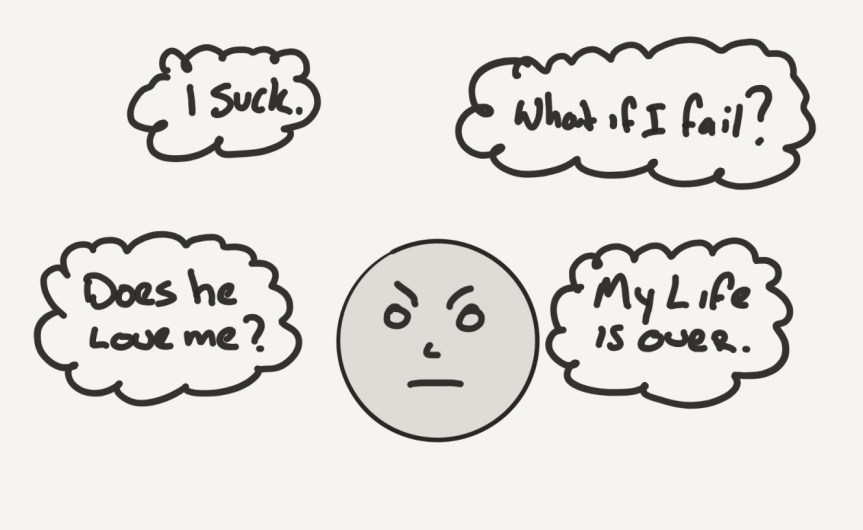
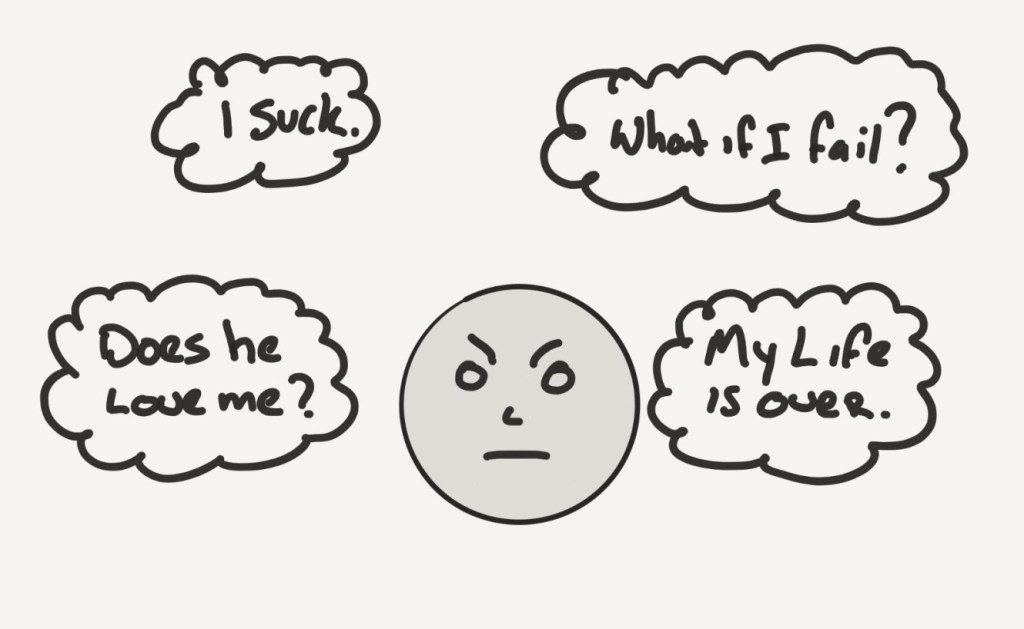
Just think about how much you think.

  • “I wonder what my boss thinks?”
  • “What happens if I screw up and lose my job?”
  • “Does she love me?”
  • “I think he doesn’t care about me.”
  • “I just keep failing.”
  • “Why does my life suck?”
  • “Why is my life awesome, and other people’s lives are not?”
  • “What if I get cancer?”
  • “I don’t care about my job. Is there something wrong with me?”
  • “I can’t finish anything. What’s wrong with me?”

And the list goes on. That is all REAL shit. That’s stuff people tell me when I ask them what they worry about.

Do you know what those thoughts do to you? Guilt, anger, suffering.

I just have one question for you: What’s the practical use of your thoughts?

Yes? I’m waiting. Still no answer? Exactly.

Thoughts have no use. 99% of them that is.

Which thoughts are useful?

  1. Thinking about how you can solve problems. A problem is just an unanswered question. Put your brain to use and think about how you can solve problems. There are a lot of those on this earth.
  2. Understanding knowledge. That means this: Try to internalize knowledge and think about how you can use that knowledge to improve your life, career, work, relationships, etc.

That’s it. You can ignore every other thought.

If you’re constantly thinking, it’s because you haven’t’ trained your mind yet. You HAVE to get out of your head.

If not, you go mental. Everyone will. No exception.

Also, you’re probably thinking so much that you’re missing out on life. Did you notice the sunshine this morning when you woke up? Or the raindrops? Did you notice the smell of your coffee? Did you feel the texture of your cereals?

If your answer is no, you definitely need to get out of your head. Stop thinking and start feeling.

Now, you might think: “How do I train myself to stop thinking useless thoughts?”

Awareness.

That’s where it starts. Every time you start drifting off, become aware of it. Just observe your brain. Step outside yourself and just observe the crazy shit you’re thinking about.

Don’t judge. Don’t think you’re stupid. If you do that, you’re thinking again.

No, what you want to do is say this to yourself: “Ah that’s a cute thought. Now, let’s get back to reality.”

“If you can change your mind, you can change your life.”
― William James

Are you back to reality? Do you feel your eyes reading the letters on your screen? Do you feel your phone in your hand? Are you thinking about how you’re going to apply this information to your life?

Great. You’re USING your mind, and it’s not the other way around. Now, keep using that brain of yours.

Because I’ll tell you this: It’s the most powerful tool on earth.

Thanks for reading!

INTERNATIONAL WIDOWS DAY: A timeline of lives of Widows in India.

Today, June 23, is a very important day for one of the most neglected sections of our society, and they are none other than the widows. International Widows Day was firstly established by The Loomba Foundation to increase awareness about the tyrannies faced by widows all across the world. June 23 was especially adopted by the Loomba Foundation because it was on this day in 1954 the mother of foundation’s owner became a widow. Later on in 2010, this date was officially adopted by United Nations to focus on issues of widowhood.

Widowhood in India: A brief History.

During ancient times, after the death of a man, their wives were expected to live an execrable and damnable life. Widows were made to wear only white clothes, shave their heads and had limited options for having food of their choice. Untouchability and ostracism of widows were at peak. At some places widows were forced to undergo the Sati practice in which widows had to sacrifice themselves by sitting atop their deceased husband’s funeral pyre. These practices came from the patriarchal idea that if a husband’s life is over, his wife’s life is also over.

Ban of Sati Practice: Prominent Social Reformer Raja Rammohan Roy led the movement against the evil practice of Sati in India and finally on December 4, 1829, Bengal Sati Regulation was passed by Lord William Bentinck.

Widow Remarriage: A significant change!

Indian Social Reformer Ishwar Chandra Vidyasagar from Bengal was one of the major leaders who advocated in favour of remarriage of widows in India. He received support from several dignitaries of that time including Rani Rashmoni of Kolkata to many other government officials in East India Company.

Finally, Hindu Widows’ Remarriage Act, 1856, was drafted by Lord Dalhousie and passed by Lord Canning for remarriage of Hindu Widows in all jurisdictions of India under East India Company.

Did the lives of widows change after the progressive law?

The simple answer to the question above is “no”. Although things have improved in well-read and educated families where widows don’t have to go through the same amount of brutality as before, however things have not changed for millions of widows in India.

Abandonment: A newer problem!

Widows, even in 21st century have to face massive amount of torture from confinement to lack of care in many Indian families who have a patriarchal and out-dated approach.

Most women in India are not financially independent and are dependent on their husbands for daily needs. And thus, when the husband passes away widows become financially vulnerable. Children of the widows do not take the responsibility of their well-being and abandon them. With no options left, widows take shelter in old age homes or take the path of spiritual life and settle in ashrams of holy cities like Varanasi and Vrindavan. There are also some NGOs and private bodies in these holy cities who take care about the wellbeing of the widows including their medical and food expenses. Widows are also encouraged to engage themselves in some relatively easy jobs like stitching and sewing by these NGOs to have financial stability.

There are more than 50 million widows in India and its high time that we as a society and government must step up to protect their rights and make a discrimination free environment for them.

Mental health and the social stigma around it

The Tabooed Ailment

Have you ever felt really happy? So happy that, it becomes impossible to imagine what normal feels like? Well, we all have such rare moments from which we can’t get back. A state of euphoric bliss experienced more in our childhood that depletes as we age. Do you know? Whenever you feel that joy, our body releases: dopamine that causes pleasure-seeking behavior, endorphin that reduces pain, Anandamide (derived from the Sanskrit word ‘Ananda’ meaning bliss) that maintains ecstasy and about a 100 more neurochemicals.

Happiness is wonderful! I know. Except, the dark side is – the same happens when one feels self-deflatingly depressed. One can’t get back to normal. One feels helpless; crushed; drained-out; anxious; and nihilistic. Such a person needs medicine, not philosophy.

I often find people using the word – ‘depressed’ casually whenever they feel dull, drunk, dumped, or drowsy. If you feel anything like that then you are just bummed out, ordinary- rather, a little extra-ordinary. These are all passive states of mind. Mental Illness is a negatively active state of mind. Symptoms of depression can have a wide range from trouble sleeping and eating, to persistent anxiety and sadness, recurring episodes of hopelessness, overeating, fatigue, a sudden switch from sadness to calmness, desperately pretending to be happy, taking risks, tying up loose ends, changing wills, and finally- death.

I once asked my brother about his friend who was diagnosed as clinically depressed, he recalled her sentences quite vividly – “It felt like I am living through the blank pages of my fate. Wish I had a way to erase it!”, she said. The most important thing that our society must be sensitive to is the fact that the cause of the behavior of a mentally ill person is rooted within him. Therefore, changing situations around him will not change anything significant.

Suicide is the leading cause of death in India among 15-29 years. This is not a mere statistic, but a statement to the world – “In our country, people kill themselves more than they get killed by others”, and we have the time to blame politicians. Yes, I know, we all want to do something about it, and that’s the extent of our concern. Here’s what I propose – How about being a little sensitive with people around? 1 in 7 people are mentally ill in our country. Well, it may not be your friend, but it might be you. Recognise mental health as an actual issue, instead of tossing it under the carpet, just because you are not ready to accept it. Don’t call someone lazy or unmotivated, they’re fighting their own battles that they can’t share. So, be kind to everyone, including yourself.