


Authentic, scholarly and unpublished research papers are invited from academicians and writers for publication in an edited volume. The volume will be published with an ISBN (International Standard Book Number) by Edupedia Publications Pvt Ltd, New Delhi. Authors are requested to strictly follow the submission guidelines mentioned herewith in their papers. Only electronic submission via email will be accepted for publication to editor@eduindex.org
Book will be available for global readers through our distribution partners Google Books and Amazon.
Book will be indexed in different database like Google Scholars and others to boost citation.
Certificate of Publication will be issued to individual contributors from reputed Academic Publication of India which is UGC approved and indexed. (Edupedia Publications Pvt Ltd)
“Book Chapters in Upcoming Books”
Send typed manuscript in English only for publication, we don’t entertain book chapters in other languages.
Submission Guidelines
• Manuscript must be written in English language.
• File must be in Microsoft Word format (Preferably Word 2007).
• Paper size: A4, Font & size: Times New Roman 12, whereas the title must be in 14 point size, bold.
• Word limit: Minimum 1000 and Maximum 4000
• Abstract: 300 words
• The authors will have to strictly follow MLA 7th edition in their papers.
• Each manuscript must carry a self-declaration that it is an original work and has not been published/ sent for publication anywhere else.
• A brief bio-note of 150 words of the respective authors should be attached towards the end of the paper.
How to Submit Book Chapters
Authors are requested to submit their manuscript to editor@eduindex.org
The last date of submission: by the End of the Month.
Publication will be completed in
Acceptance or rejection of the paper will be intimated within 7 days of submission. A publication fee of Rs. 1500 will be chargeable after the selection of paper. Each contributor will get a complimentary copy.
There won’t be any publication fee as such. If authors wish to take printed copy of the published book, then he/she need to pay just Rs 1500 per copy. Printed Certificate Rs 100 each.
using PayPal to editor@eduindex.org or for UPI OPEN THIS LINK

New Delhi, India
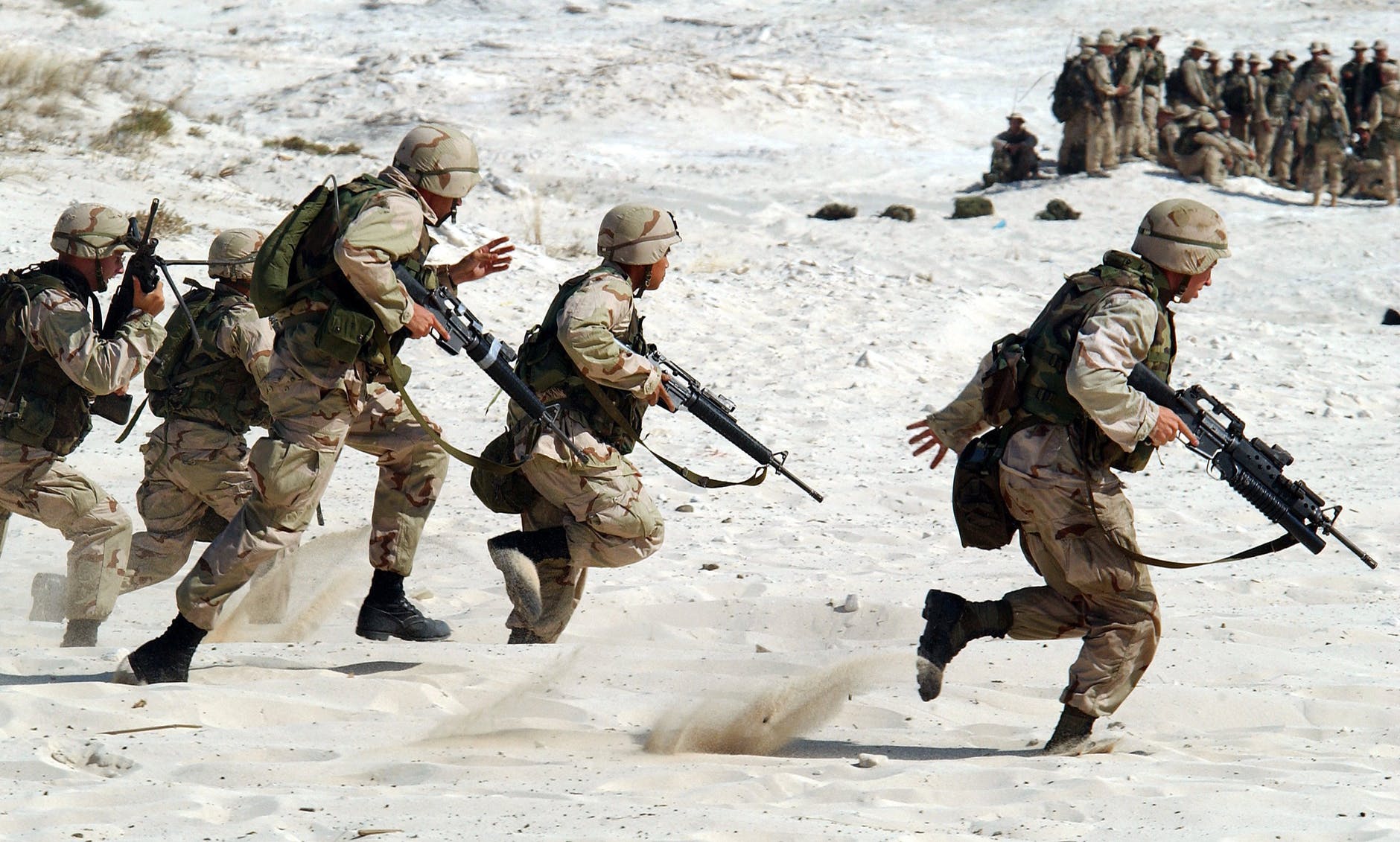
No, I am not talking about the World Wars. I am talking about a war where actually no was ever fought, a bullet fired or a war bell rung. I am talking about the COLD WAR, a war that lasted more that the two world wars combined. This war was a period of geopolitical conflicts and ideological battles. It became as to who were more powerful militarily and economically. This war divides the world into two distinct blocs and there was a constant threat of war even after the horrors of the world war was over.
Basically, it was more of an ideological conflict. The Americans believed in FREE market system and capitalism. They allowed private ownership and accumulation of wealth and profit. There was always competition with the rich getting richer.
On the other hand, USSR or Union of Soviet Socialists Republics believed in Karl Marx’s theory of communism and collective ownership. All the wealth of the nation is to be collectively owned and shared. It even had the ideal of a stateless society where all are equal.
Clearly, both of these are extreme ideologies with little respect to be in the middle ground. And this became the cause of the war. Both of them viewed the other as an enemy and a threat to their state. They started expanding their influence to their neighboring states. They had almost fanatic ideas that the other will take over the world. So by hook or crook, they started defending their ideas and values.
But mostly, a was never fought between them. There was immense stockpiling of weapons as a precautionary move. USA and USSR started to influence the other countries by providing them with monetary aids. The Cold War even went to this extent where even the same country as divided up into two halves. For example, Korea, Vietnam and Germany. There was a display of stark contrast between these two halves.
But it does not mean that no life was killed. Extremely polarized wars took place at the battles of Korea an Vietnam. The worst policy to ever be criticized was that USA and USSR both purposely helped one half of the same country. While USA helped South Korea, USSR helped only North Korea. There was no effort from anyone to resolve the war but prove their superiority. Countless people have been killed in the wars.
Another horrific war that occurred was the Vietnam War. Almost a million of American soldiers were deployed in this war. Even the American public opinion were against the war but consecutive American Presidents were determined to win the war. Even the United Nations or the UN could not take any steps to promote world peace. The other newly independent states of Asia and Africa were cautious about engaging in such decisive politics.
Eventually, this war fizzled out in the 90’s when the state of USSR collapsed. After that the world witnessed the rise of unipolar USA practically taking the reins of the entire world. It severely dominated world affairs to look after its own interest, to what is referred to as Unilateralism.
The Cold War surely disturbed world harmony. This conflict showed that how even ideologies can become such rigid and intolerant. We must live together peacefully and support everyone to become the best version of oneself rather than being engaged in this ‘ego war.’
Global Warming has become Climate Change now. Our world is now being pushed into the brink of extinction due to rising industrialization, deforestation and urbanization. Countless activists, individuals, scientists and environmentalist began an outcry about the tremendous hazard we are causing to the world, owing to our activities.
Even though many people are taking serious actions to reduce the impact on the earth, damage is still being done. We can even feel the effects of such damages as a result of climatic disasters, pollution, soil erosion and extinctions of several species in the flora and fauna.
Many people have switched to sustainability and veganism to reduce their carbon footprint. Apart from these steps, there are certain steps we can take to reduce the footprint. These steps are simple to follow and can be followed by anyone.
Read on the steps below-
These were some of the easy tips to help save this planet. Always do your best.
Enforcement Directorate has attached assets worth 3 crore rupees of TMC leaders Kunal Ghosh, Satabdi Roy and Debjani Mukherjee in the Saradha chit fund money laundering case. It said a provisional order for attachment of the movable and immovable properties has been issued under the Prevention of Money Laundering Act.
The number of security personnel injured in the encounter in Chhattisgarh has increased to 24. The encounter took place between security forces and Maoists in Jagargunda area of Chhattisgarh’s Bijapur district yesterday.
In this gun battle, five security personnel were martyred. Police also recovered bodies of two Maoists, including a female rebel, from the spot. Meanwhile, 24 injured jawans have been brought to Bijapur district headquarters. Out of these, seven criticality injured jawans have been airlifted to the capital Raipur for better treatment.
Prime Minister Narendra Modi said his thoughts are with the families of those martyred while fighting Maoists in Chhattisgarh. In a tweet, Prime Minister said the sacrifice of the brave martyrs will never be forgotten. He wished speedy recovery of those injured.
Home Minister Amit Shah has paid tributes to the sacrifices of brave security personnel martyred while fighting Maoists in Chhattisgarh. In his message, Mr Shah said that the Nation will never forget the valour of our brave security personnel.
He extended condolences to the families of the martyred and wished for speedy recovery of those injured. The Home Minister also asserted that the country will continue it’s fight against the enemies of peace & progress.
Bihar government has ordered closure of schools, colleges and coaching institutes till April 11 in view of rising cases of Covid-19. This decision was taken at a Crisis management Committee meeting. AIR correspondent reports that there will be no public gathering till the end of this month, except for funerals and marriages with restrictions. Maximum 50 people will be allowed in a funeral, while 250 in a marriage ceremony.
In case of scheduled examinations, the schools and colleges will have to strictly follow the Covid protocols. All DMs and SPs have been instructed to ensure that Covid-19 protocols are followed at religious places, shopping malls, hotels, restaurants and other public places. Transport department has been asked to ensure that not more than 50 percent people travel in public transport till April 15.
Meanwhile, record 836 fresh cases were reported during the last 24 hours. Maximum 359 cases are from Patna. However, Covid-19 recovery rate is 98.31 per cent in Bihar with two lakh 62 thousand 988 patients recovering from the infection in the State so far. Over one lakh 71 thousand people were vaccinated yesterday. Over 34 lakh 18 thousand people have so far been vaccinated in the State.
Chief Minister Nitish Kumar has instructed health department to increase the number of covid tests, especially RT-PCR, and also increase Covid-19 vaccination along with keeping hospitals ready with all facilities.
The Odisha government has imposed a night curfew in 10 districts between 10 pm to 5 am from tomorrow in view of rising COVID-19 cases. The districts where night curfew will be imposed are Sundargarh, Jharsuguda, Sambalpur, Bargarh, Bolangir, Nuapada, Kalahandi, Nawrangpur, Koraput and Malkangiri.
All shops, commercial establishments, offices, institutions will remain closed and movement of individuals will be prohibited between 10 pm to 5 am, except for essential activities. District Collectors have been allowed to impose any further restrictions or allow such activities as felt appropriate considering the local situation.
India has inched closer to administering nearly 7 crore 50 lakh COVID-19 Vaccine doses. Continuing with its largest vaccination drive in the world, the nation administered over 13 lakh doses till yesterday evening on the 78th day of its nationwide vaccination programme. India is one of the fastest countries in the world to have accomplished administration of over 7 crore 44 lakh COVID-19 Vaccine doses in a such a short interval of time.
The nation commenced the largest vaccination drive in the world on 16th January this year with vaccination of healthcare workers. Vaccination of front line workers began from 2nd February whereas from 1st of March vaccination of everyone aged above 60 years and above 45 years with specified co-morbidities was undertaken. Widening the scope of Vaccination, from 1st of this month, under the current phase everyone above the age of 45 is being vaccinated.
The Health Ministry has informed that in a short span of time over 4 crore 57 lakh people above 45 years have already been administered the first shot of the COVID-19 Vaccine whereas another 7 lakh 65 thousand have received the second dose of the vaccine as well.
Campaigning will end this evening for assembly elections in Tamil Nadu, Kerala and Puducherry and third phase of polling in Assam and West Bengal. While single phase polling will be held in Tamil Nadu, Kerala and Puducherry on Tuesday, Assam is witnessing three-phase voting, and that of West Bengal eight phases. Third phase of polling in Assam and West Bengal will be held on Tuesday.
Bypolls to Kanniyakumari Lok Sabha seat in Tamil Nadu and Malappuram Parliamentary constituency in Kerala will also be conducted simultaneously. Voting for 40 assembly seats in Assam and 31 seats in West Bengal will be held in this phase. On Tuesday, single-phase polling is taking place for 234 assembly seats in Tamil Nadu, 140 constituencies in Kerala and 30 Assembly seats in Puducherry.

You might have been told to maintain a routine in your daily life. But do we even enjoy it or does it make us more effective and productive? We often despise our routine and feel restrictive. But real routines are supposed to make us feel productive and useful and leave us with energy and peace of mind.
I have got a few hacks and wise words that will help you develop a better routine for yourself. Read on:
These were some habit tips that helped me build an efficient routine for me. I hope these best tips from some of the influential and successful people.
India’s Ambassador to China Vikram Misri interacted with representatives of Indian industry in Shanghai yesterday. He will also launch India@75 celebrations today in Shanghai. The event was attended by more than 30 representatives representing 8 sectors such as textiles, pharma, electronics, manufacturing, chemicals, IT, banking etc. AIR correspondent reports, Ambassador Misri discussed the issues related to business risk in the fluid current geopolitical scenario. He also discussed the general issues faced by the businesses such as flights and visa for their Indian employees who want to come back to China. Amid a geopolitical tussle including tensions in technology and trade, with the western countries led by the US, Chinese companies and businesses are facing sanctions on various counts. China has also announced tit for tat sanctions, affecting the whole business environment.
Amid the border tensions in Ladakh, India had tightened regulatory requirements last year for investments from China and banned more than 200 Chinese apps which were considered “prejudicial to sovereignty, security of state and public order”. Also, due to the COVID-19 pandemic, global trade flows have been slowed, although there has still been strong demand for medical equipment and supplies which has largely contributed to China becoming India’s top trade partner in 2020.
The Central Board of Secondary Education ( CBSE) has decided not to reduce the syllabus for the students of classes 9 to 12 for academic year 2021-22.
The board has released the new syllabus in which the chapters and topics that were removed in the last academic year have been restored for the upcoming academic session 2021-22. Official sources said the reduction in the syllabus was a one-time measure only for the 2021 board exams.
Last year, CBSE had rationalised the syllabus by up to 30 per cent for classes 9 to 12 for the year 2020-21 to reduce the course load of students in view of COVID-19 pandemic. The students who studied the reduced syllabus will appear in exams in May-June this year.
India’s biggest floating solar power plant with a capacity of 100 MW will be set up at Ramagundam in Telangana. The project expected to be opened in May, is being set up at Ramagundam thermal power plant reservoir. The solar project is commissioned by the National Thermal Power Corporation (NTPC). The project, which is estimated to cost around 423 crore rupees, will have 4.5 lakh photovoltaic panels.
The solar panels will cover 450-acre area of the reservoir and can be expanded in the future. NTPC’s efforts to set up floating solar power projects is aimed at reducing its carbon footprints and accelerate its green energy production to 30 per cent of its capacity.
The world’s largest solar power plant with 600 MW capacity is being set up on Omkareshwar Dam on Narmada river in Madhya Pradesh. The project costing 3,000 crore rupees is expected to start power generation only by 2022-23.
 Eduindex
You must be logged in to post a comment.