Research report showing corona’s effect on heart:

100 to 78 patients complained of heart damage and heart inflammation during infection, 80% started having heart problems after recovering from corona one day before
According to the researchers, oxygen is inhibited in the body due to infection, due to which the heart has to work harder to get blood to many organs. In the event of an infection, this pressure on the heart increases further, so the heart tissue starts to weaken and problems increase.

Even after recovering from corona, the effect of virus infection can be seen in the body for a long time. This is what the American Medical Association Journal’s research suggests. According to research, heart problems have been seen in 80 percent of people recovering from corona. The research took place between April and June. This included Corona patients who were healthy before the infection and were between 40 and 50 years of age.

Research done on 100 patients
According to the researchers, 100 people suffering from corona were researched. Of these, 67 patients were asymptomatic or showed very mild symptoms. Another 23 patients were admitted to the hospital. MRI, blood test and heart tissue biopsy were done to find out what effect corona has on the heart of patients.

78% of patients have heart swelling
According to researcher Claude W. Yancy, research has revealed that 78 out of 100 patients have heart damage and heart swelling. After getting the corona out of this, many things are yet to be revealed that how much it will affect the body parts in future. The more infections increase, the greater the risk of bad side-effects in the future.
The same pattern was seen in the study conducted in Britain.

Another similar study in Britain revealed that 1216 patients with corona showed heart-related disorders after infection. In 15% of patients, heart-related complications occurred which were very serious and were life-threatening.

Why is this happening
Scientists are trying to find out why the corona side effects are seen on patients for a long time. They say that the corona directly affects the lungs of patients. Due to which the level of oxygen in the body is affected. In this situation, a lot of hard work has to be done to get the blood to other organs. Heart tissue starts to become weak when there is constant pressure and cases related to heart diseases arise.

Ankita Lokhande revealed:

Sushant started making distance with family after Riya’s arrival, refused to meet elder sister waiting outside the house

Nearly a month and a half after Sushant Singh Rajput’s death, his ex-girlfriend Ankita Lokhande made several revelations in an interview. Ankita said in an interview to Republic TV that she was not in touch with Sushant after the breakup in 2016 but was engaged to his sisters and father.
Ankita said that she did not even have Sushant’s phone number and she was not in his touch for the last four years. Ankita said, we knew that we could no longer talk that way. Whatever was to be done is done. He was happy in his life and I was mine.

Sushant was away from family, Ankita also spoke in this interview on the distance between Sushant and his family. Ankita said, ‘Sushant’s elder sister Rani went to his house in November 2019 to meet Sushant. She was waiting outside the house, Sushant was ready to meet her but then suddenly something happened and she refused to meet.
Rani Didi told me that she felt that there was some pressure on Sushant.

Sushant never used to go against Rani Didi before this. After the death of the mother, no one can stop Didi’s talk. I was shocked to hear this because we never saw Sushant going against Rani Didi while we were together.

Sushant changed after Riya’s life,Saddened by Sushant’s behavior, Rani Didi told me, ‘I am losing my brother. Then I told them, trust God, everything will be alright. Rani Didi was worried that there was someone who was influencing Sushant, because Sushant was not a person who would come under pressure or listen to anyone. Ankita said that when Riya came into Sushant’s life a year ago, this was the time when Sushant kept distance from his family.

Sushant was living in a live-in with Riya for almost a year. On 8 June, Riya left her home after quarreling with Sushant. Sushant’s sister Mitu stated this in his statement to Bihar Police. She had also told that while leaving home, Riya had also told Sushant that she would never return. After this, Sushant had committed suicide on 14 June.

MINDFULNESS

‘Living in the moment, and seeing everything afresh without judgment and worry lets us experience life, rather than simply get through it.’ – Dr. Patrizia Collard

Our brains are always multi-tasking i.e. constantly thinking about our future actions or dwelling with the past actions along with working in the present. However because of this we are not able to sometimes live in the present, enjoy it and make the most out of it. The practice of being present in the moment is known as mindfulness. It is one of the most difficult things to achieve as it is quite common for us to constantly slip from the present moment into thinking about the future.

Mindfulness can increase our ability to be in sync with our thoughts, emotions, and body sensations which allows us to manage them and communicate about our feelings to others as well as understand theirs. The people who live in the moment are happier, calmer, relaxed, and appreciative. Its okay for us to slip back to into not being present in the moment, but to overcome that we just need to accept that we are not present and we can instantly feel more relaxed and it also makes it easier for us to slip back into the moment.

BENEFITS OF MINDFULNESS

Mindfulness meditation is a time where we can let go of all the judgments and focus on the natural curiosity about the working of our mind, and approaching our experience with warmth and kindness to others as well as ourselves. When we are present in the moment, it reduces stress, enhances our performance, gain insight and awareness through observing our mind and increase our attention to our surroundings as well as to other’s well-being. Mindfulness also helps us to emotionally connect with others as well as changes our mindset and perspective towards things.

HOW TO TUNE INTO MINDFULNESS?

The following simple tips can help us to tune into mindfulness –
  1. Spare some time from your schedule to meditate. There is no need for any special equipment; just some time and space.
  2. Observe the present moment as it is and give attention to it without any judgment.
  3. Whenever we notice that judgments are rising during the meditation, just note them in your mind and let them go.
  4. Whenever our mind gets carried away to other things other than the present, the practice of mindfulness comes into help as it brings our mind back to the present again and again.
  5. We should never be harsh on ourselves for the wandering of our minds or for others thoughts coming into our mind, as it is a natural phenomenon. Instead of judging ourselves, we should recognize the action of slipping away of our mind and try and calmly bring it back.


ADVANTAGES OF MINDFULNESS
  1. It helps to improve the social skills as it allows us to let go of the worry of being judged by others and just allows us to communicate with others more freely.
  2. Whenever we are present in the moment, we definitely find it easier to work on our creativity as it allows our brain to process things calmly and ideas just flow through our brain.
  3. Another advantage is that we become more appreciative of our surroundings as we analyze and label the people or the things around us quite less. The beauty that our world is, seems to be more enhanced as we take the moment of our life to appreciate it more.
  4. When we live in the present, we let go of the worry of the future and the past which stops us from functioning in the present moment and enjoy it. It also reduces the extra worry and stress that we create because of constant thinking of the future.

Hollywood star’s unique deal

Tom Cruise Celebrates Universal Picture for a Budget of 1500 Crore, Mega Deal on Zoom Call

Hollywood star Tom Cruise has convinced Universal Picture for a mega project. The special thing is that the script of the film is not even in the hands of Tom Cruise, but for this film to be shot in space, Cruise has prepared a universal picture to spend $ 200 million i.e. about 1500 crores. Universal Picture has signed this mega budget deal zoom call with Tom Cruise.

According to reports, apart from Tom Cruise, writer-director Doug Lehman, collaborator Christopher McQuire and producer PJ van Sandvik were present on the zoom call. Elon Musk will also be involved in this project through his Space X firm. McQuire, director of Mission Impossible 5, 6 and 7, will play the story adviser and producer. At the same time, Lehman is working on writing the script of this film. Lehman has worked with Cruise in successful films such as Edge of Tomorrow and American Made.

Shooting for Mission Impossible begins
Cruise recently resumed shooting for Mission Impossible 7, which was halted due to Corona. It is being told that the crew of the film are planning to blast an actual bridge in Poland for an action scene. This bridge was built in 1909 in the village of Pilshovish, Poland. It has not been in use since 2016. Therefore, it will be used for shooting.

Corona will be examined in 30 seconds:India-Israel jointly started trial of rapid testing, if successful, Corona report will be found in 30 seconds

India and Israel are working together to develop a special type of rapid testing kit. If the experiment is successful, the test report of the corona will be available only within 30 seconds. Trial has started at Dr. Ram Manohar Lohia (RML) Hospital in Delhi 3 days ago. The results are expected in the next 2 weeks.Israel’s Directorate of Defense Research and Development (DRDD), India’s Defense Research and Development Organization (DRDO) are working together in this trial under the Ministry of External Affairs of India and Israel. It also includes the Council of Science and Industrial Research (CSIR).

The team of scientists arrived here 3 days ago on a special flight from Israel.
India helped Israel in every possible way
Israeli Ambassador Ron Malka said that the Prime Ministers of the two countries spoke during Corona. The two agreed to work together to find a solution to Corona. He said that if the research is successful, it will get results in a few seconds. Malka said that India helped Israel in every possible way during Corona. India also supplied the necessary raw materials for medicine and medicines to Israel. It is a sign of good friend.PMO’s Principal Scientific Advisor K.K. Vijay Raghavan said that India and Israel are partners in every field. The trust and relations that have been built between the two countries over the years will help in furthering this research.

I hope that we will be successful in this trial and it will be beneficial for our country and people.
Trial on 4 types of tests,4 different types of easy and non-invasive technology are being used in the trial. In this, a change in the voice of the patient is seen with the help of voice test, ie Artificial Intelligence. Breath analyzer, that is, the patient is asked to blow in a tube, to know the capacity of its langs. Also the test is done with Terra Wave. This shows the presence of virus.Isothermal testing is done to identify the virus in the patient’s saliva. Polyamino acids are used. This leads to the separation of Kovid-19 related proteins.

Lootcase & shakuntala Devi review

lootcase starting Kunal kemmu,ranvir shorey,rashika,aaryan prajapati,Rajesh Krishan is streaming in Disney+hotstar

lootcase is a highly entertaining & funny film which works due to its superb writing & effective performances

Lootcase

review – ⭐⭐⭐

shakuntala Devi starting vidya balan is streaming in Amazon prime video

Shakuntala Devi is a biography of Guinness world record holder “shakuntala Devi” the human calculator

Review – ⭐⭐⭐⭐

Discrimination in education.

Indian society suffers from substantial inequalities in education, employment, and income based on caste and ethnicity. Compensatory or positive discrimination policies reserve 15% of the seats in institutions of higher education and state and central government jobs for people of the lowest caste, the Scheduled Caste; 7.5% of the seats are reserved for the Scheduled Tribe. These programs have been strengthened by improved enforcement and increased funding in the 1990s.

The Convention on the Rights of the child has important implications for the education of children. In the Convention are numerous articles that deal with education and with children’s rights education. First is the child’s right to education on the basis equal opportunity (article 28). This includes the right to free primary education and to accessible secondary and higher education. Second are the child’s rights in education (articles 2, 12, 13, 14, 15, and 19). This includes the right to non-discrimination, participation, protection from abuse and violence, and freedom of thought, expression, and religion. Third are the child’s rights through education (article 29 and 42). This refers to education where children are able to know and understand their rights and to develop respect for human rights, including their own human rights.

Discrimination on any grounds- religion, race, caste, sex, place of birth or any other is prohibited under Art 15 of the Constitution. This constitutes an important move away from the graded inequalities and discrimination based on the caste system. Discrimination is widespread on various counts – caste, ethnicity, religion, gender, age, class, disability, region, language, family occupation, or a combination of these. These have found their way into every aspect of social life, including the education system. Dalit’s face the worst forms of discrimination and violence, given the religious basis of the caste system, concepts of purity, pollution and untouchability.

Article 21A Indian Constitution mandates the state to provide free and compulsory education to all children aged 6-14 years has the right to free and compulsory elementary education with adequate infrastructure facilities, free textbooks, writing materials and uniforms; the government should ensure that children from disadvantaged social groups are not discriminated against and prevented from pursuing and completing elementary education; The Constitution categorically abolished “untouchability” and its practice in any form declaring it ‘offence punishable under law’. In the context of education, Article 30 (2) prohibits the state from discriminating in granting aid to educational institutions on the ground of its management under a minority. Article 46 of Indian Constitution recognises the state should promote with special care the educational interests of scheduled castes.

Caste based discrimination in the education system can be seen at two levels – institutional and relational. Institutional discrimination includes the many ways in which the education system denies equitable education opportunities, education services and supportive mechanisms to facilitate Dalit students to access an equal quality of education and to reduce educational inequalities between Dalit’s and non-Dalit’s. It may include both active and passive forms of discrimination, default and intentional. The relational forms of caste based discrimination against students in the schools and higher education institutions take various forms too. At the school level, discrimination has been reported and studied- caste based verbal abuse and name calling, in midday meals, teaching and learning practices, in the use of drinking water, in assigning cleaning tasks in schools, not paying attention to Dalit students and de-motivating them, preventing their participation in schools, heightened corporal punishments, and so on. Discrimination and violence against Dalit schools have been reported by students across the country, including sexual violence against Dalit girl students. The current and long-term negative impact of this discrimination on Dalit students in terms of their learning, educational achievements as well as future opportunities are yet to be fully grasped.

Adivasis, in addition to suffering from the same low expectations, face a different set of issues. Demographically, tribal habitations are small and sparsely populated and hence lack many infrastructural facilities, including schools and roads. Even when schools are within walking distance for pupils, it is not unusual for the roads to become impassable during the monsoon and for the teachers, who often live in larger towns, to surreptitiously close the school. These factors are particularly constraining for tribal children who live in isolated communities. Language poses another major challenge for tribal education. Trial’s normally speak local dialects rather than the main language of the state in which they reside, and tribal students feel further alienated when the teachers are not well trained to communicate in their tribal dialects (Sujatha 2002). Muslim students suffer from similar disadvantages. Many Muslims would like to see education take place in Urdu, their mother tongue, but few schools accommodate this. Children often face harassment and ridicule, and rising religious tensions lead to children’s alienation from school. Since Muslim families are disproportionately urban, access to schools is less likely to be a problem, but discrimination by teachers and a hostile school environment may pose a major impediment.

Human rights activists are concerned that the discrimination is preventing the realisation of India’s Right to Education (RTE) that aims to provide quality education to all children between the ages of 6 to 14 till elementary school (till eighth grade). Since RTE came into force in 2010, nearly all children are in school. Government data shows that the total enrolment of children in primary school increased by 14.6 million in the past five years, which includes 56 per cent girls, as well as 55 per cent backward castes and 41 per cent Muslims. Meenakshi Ganguly, head of Human Rights Watch in India, said that it was the responsibility of the government to ensure that all the enrolled children feel safe and welcome in school, which allows them to complete their education. “We are a proudly diverse country, we celebrate that diversity, let’s do that with honour, equity and not with discrimination,” she said, making an appeal for zero discrimination at the launch of the report. But would the appeal cut into the thick cloak of prejudice? Experts believe that few efforts have been made to sensitise teachers, or detecting and preventing discrimination. Vimala Ramachandran, an education pioneer for over two decades, said that at present no mechanism exists to monitor teachers and penalise them for discrimination.

Unaddressed discrimination

Annie Namala, executive director at the Centre for Social Equity and Inclusion, pointed that government bodies and civil society groups had done studies to address discrimination, but these recommendations were not being implemented. “None of these are really getting to the light of the day, nor it translating into any point down the files and papers,” she said. Increasingly, parents with even some money are opting to send their children to any cheap private school in the vicinity. And so, government schools are filled with the most marginalised children, while their teachers belong to upper castes. Ambarish Rai, national convener at the Right to Education Forum, says that these teachers don’t understand why children of cobblers and washer men should be taught. Their thinking, he said, is “what will they do with studying”. Besides child labour, girl dropouts are especially vulnerable to early marriages. Government data shows that the dropout rate among girls is more than 41 per cent till the eighth grade and over 57 per cent till the tenth grade. Girls from lower castes are made to clean toilets, while girls from the higher castes make tea for the teacher. In Rajasthan, she pointed out that government schools for girls don’t offer science and math beyond the eighth grade.

Access to childcare

To succeed in bringing and retaining marginalised children in schools, the government will have to ensure zero discrimination in classrooms. Girls and children with disabilities will need even more attention. For this, any future teacher training should go beyond improving learning outcomes to focus on inclusive learning practices that are effective, ensure greater participation of children from marginalised communities and healthy interaction among children from different backgrounds. Civil society groups can be important government allies in this venture.

It is also time to expand the Right to Education so that all children are entitled to 12 years of free and accessible education by 2030. Equally, there needs to be universal access to early childhood care and education to guarantee children’s long-term development, health and well-being. These goals are part of the proposed global agenda and India too sees them as priorities. The government should set an example at the World Education Forum by announcing special commitments toward implementing these goals.

Terrorism and Humanity

Terrorism warfare is the demonstration of creating apprehension, danger and fear among masses. It has no philosophy, no establishment yet to make fear among individuals utilizing any mean, way or device. The sole goal is to oppress individuals and their wellspring of vitality is simply the dread created as it were. Terrorism is the greatest danger of Humanity. Rather than affection it claims dread, rather than equity it produces pecking order, rather than enthusiasm it depends on self-roused interests.

In the ongoing time we are seeing the expanding occurrences of Terrorism oppression everywhere throughout the world. In spite of the fact that medieval rulers have put together their standard with respect to fear of individuals however notwithstanding hardly any exemptions and time of unsettling influences, their general reason for existing was to make state of harmony in which their standard can flourish. However, the cutting edge phenomena of fear mongering knows no time of harmony and that is the reason it is the greatest danger of humankind. For whatever length of time that fear mongering will get by in a territory there will be a bad situation for humankind for even a solitary snapshot of time.

To manage fear mongering first we have to comprehend its underlying foundations and its reasons for cause. As such fear based oppression has no belief system. Terrorism oppressors utilize the differing speculations for their advantage and shape it as per their desires. Religion which is utilized by fear mongers is only a clothing to conceal its actual standards and look for authenticity for shameless acts which in any case have no authorization an any religion. In spite of the fact that religion isn’t the reason for fear mongering yet the stagnation which happened in religion due to securing of universal components to medieval ethos has given space to these components. The need of hour is to adjust religion to present day esteems and quit beholding back at medieval ethos. Let the religion to advance and individuals with it.

The other significant reason for its fortifying is obstruction of different countries into a nation. In the attire of acquainting popular government they acted with make gaps into the general public of effectively settled countries to advance their own advantages. This procedure is going on from the beginning of twentieth century whether it id Sykes-Picot understanding or production of Israel or wars pursued by Western countries in Middle-East nations every once in a while. The gaps made in the public arena as well as the origination of Western country to counter Terrorism oppression or any Leader administering in a country they have made Frankenstein beast as new fear monger associations and which are presently out of their control. Interestingly, these countries have not gained from their experience and still attempt to recognize great psychological warfare and awful fear based oppression.

To restrict the Terrorism all countries needed to work in collaboration and they have to put stock in uniformity among country and power of a country. Strategy is the best arrangement to sift through unsettling influences among countries. In the event that they will utilize Terrorism militants as a weapon against different countries, these demonstrations can reverse discharge on them. Harmony and participation should be the goal of countries. World can advance on these footing as it were. Impedance will make just shocking effects in general world.

Advancement of masses and viably unraveling their complaints are the two apparatuses to tackle the issue of fear based oppression. As fear based oppression just serve the interests of not many however it blossom with the issues of individuals which is brought about by inconsistent appropriation of assets and advantages collecting to the country. Naxalism in India is one of the appearances of inconsistent appropriation among masses prompting separation with state and a propensity to move towards savage methods.

Genuine Democracy can be utilized against Terrorism oppression yet this vote based system ought not be forced by different countries. In any case, various agents of a country should approach to manufacture a country dependent on fairness, freedom and equity.

Innovation can be utilized viably to handle Terrorism oppression and limit its evil impacts. It very well may be utilized to scatter present day thoughts among individuals and let them escape medieval mindset. Furthermore it tends to be utilized to get data about the fear based oppressor associations and checking stream of assets to them and checking their development in until now immaculate regions.

Fear mongering groups solidarity to destabilize entire world and release powers of abuse and viciousness. It is the ordinary citizens which are influenced by the fear based oppression the most. It brings about removal and making pressure on different countries because of colossal number of evacuees who have no mean to endure yet to request help.

Impacts of fear based oppression is the general annihilation of humankind. It will cause comfort for a few and abuse for other exceptionally for ladies. Ladies are the most influenced fragment of these exercises. It will make a world wherein dread will run the show. The expanding hold of IS in center east focuses towards what the eventual fate of world will be if its development won’t be checked.

Uncovering of Terrorism warfare totally is the main answer for tackle the hazard of fear mongering. Initial step ought to be disintegration of its base among mis-coordinated individuals who are utilized by it to fill the need of first class in fear based oppressor association. It tends to be finished by scattering of present day esteems and settling their monetary, social and political complaints. Second step ought to be to quit outlining alleged “great” Terrorism warfare and “awful” fear based oppression. All subsidizing to any association ought to be halted. In any case fortifying of one gathering will prompt its development from “great” to “awful” class.

Third obstruction of other country ought to be checked. Accomplishment of vote based system ought to be founded on the development of individuals and not on the intense inconvenience of different countries. Fourth, in this battle against Terrorism warfare all country need to help out one another and tact dependent on fairness of countries ought to be the method of giving answer for the contrasts between countries. The hazard of Terrorism warfare ought to be taken care of at the earliest opportunity else it will carry annihilation to mankind and world-harmony.

Academy of Art University

About Us

Since 1929, artists and designers have called Academy of Art University their home. Founded in San Francisco and family owned, it is one of the largest private, accredited art and design schools in the nation.

We are first and foremost a professional school—a specialized place that helps you master your craft as you prepare for professional roles as artists and designers. Our hands-on, no-nonsense curriculum is taught by some of the finest minds working in today’s creative and innovative industries. They will help you develop your talent and acquire skills sought by the creative marketplace.

All are welcome here. Our inclusive admissions policy is rare among art schools. We’ve found that our students’ potential doesn’t depend on their past elsewhere, but on their future with us. Find your place and your purpose at Academy of Art University, as you prepare for your professional career.


Student Life at the Academy

Academy of Art University is an absolutely amazing place to be a college student. One of the world’s great creative capitals, San Francisco has been our home since 1929. Our neighbors include giants in everything from advertising, animation, and architecture to communications, game development, and web design.

Our Vision and Mission

Our Vision: To be the first choice for students seeking a world-class education in the arts and the first choice for those seeking to employ artists globally. Our Mission: Academy of Art University prepares aspiring professionals in the fields of design, communication, and the arts by delivering excellent undergraduate and graduate degrees and certificate and portfolio programs.

Mission Statement

Academy of Art University Institutional Learning Outcomes

We Value Your Time and Schedule

When it comes to working your education into your schedule, flexibility is key. That’s why we offer various modes of learning that allow you to take the courses you want without disconnecting from your work or family. Academy of Art students can earn accredited degrees onsite, online, or by taking both online and onsite. Study on your own time, at your own pace.

Our Core Values

While a lot has changed since 1929, there are certain foundational values that will never change at Academy of Art. They were there in the beginning, and are a part who we are today.

We Value Inclusion

Our students are from all over the world. They are different in countless ways—in race, religion, political leaning, gender, and more. We embrace these differences. Each individual is welcome here. This no-barriers approach makes Academy of Art University one of the most diverse artistic communities in the world. The diversity gives students a place to truly be themselves. It gives them the confidence to express themselves, and to go for everything they’ve ever wanted.

We Value a Faculty of Industry Professionals

We believe the best teachers are professional artists and designers. Our faculty is comprised of art and design professionals who maintain the leading edge of industry standards.

We Value the Benefits of Collaboration

When art and design students from different cultures and backgrounds collaborate—their diverse experiences, ideas, and passions are reflected in the beautiful work they produce. We encourage students to work together because it mimics the collaborative work they’ll do in their professional careers.

We Value the Planet

Today’s designers want to leave their mark on the art and design world; but only if that mark is made with sustainable practices, using 100% natural materials. We applaud our students for their future-looking, environmentally conscious, zero-waste efforts. They truly are the future of art and design.

We Value our Urban Campus

Informed by our home in San Francisco, we aim to give back to the culture in the spirit of generosity and compassion. We challenge our students to reach their full creative potential in an atmosphere of support and collaboration.

We Value Your Time and Schedule

When it comes to working your education into your schedule, flexibility is key. That’s why we offer various modes of learning that allow you to take the courses you want without disconnecting from your work or family. Academy of Art students can earn accredited degrees onsite, online, or by taking both online and onsite. Study on your own time, at your own pace.

Our Core Values

While a lot has changed since 1929, there are certain foundational values that will never change at Academy of Art. They were there in the beginning, and are a part who we are today.

We Value Inclusion

Our students are from all over the world. They are different in countless ways—in race, religion, political leaning, gender, and more. We embrace these differences. Each individual is welcome here. This no-barriers approach makes Academy of Art University one of the most diverse artistic communities in the world. The diversity gives students a place to truly be themselves. It gives them the confidence to express themselves, and to go for everything they’ve ever wanted.

We Value a Faculty of Industry Professionals

We believe the best teachers are professional artists and designers. Our faculty is comprised of art and design professionals who maintain the leading edge of industry standards.

We Value the Benefits of Collaboration

When art and design students from different cultures and backgrounds collaborate—their diverse experiences, ideas, and passions are reflected in the beautiful work they produce. We encourage students to work together because it mimics the collaborative work they’ll do in their professional careers.

We Value the Planet

Today’s designers want to leave their mark on the art and design world; but only if that mark is made with sustainable practices, using 100% natural materials. We applaud our students for their future-looking, environmentally conscious, zero-waste efforts. They truly are the future of art and design.

We Value our Urban Campus

Informed by our home in San Francisco, we aim to give back to the culture in the spirit of generosity and compassion. We challenge our students to reach their full creative potential in an atmosphere of support and collaboration.

We Value Your Time and Schedule

When it comes to working your education into your schedule, flexibility is key. That’s why we offer various modes of learning that allow you to take the courses you want without disconnecting from your work or family. Academy of Art students can earn accredited degrees onsite, online, or by taking both online and onsite. Study on your own time, at your own pace.

Our Leadership

The Academy of Art College was established in San Francisco in 1929 by Richard S. Stephens, a fine art painter and Creative Director for Sunset Magazine. Assisted by his wife, Mrs. Clara Stephens, he opened the new school in a rented loft at 215 Kearny St. to teach advertising art.LEARN MORE

Accreditation

Academy of Art University prepares aspiring professionals in the fields of design, communication and the arts by delivering excellent undergraduate and graduate degrees and certificate and portfolio development programs.GET THE DETAILS

Our Alumni
1/5

Andy Wood
BFA Animation & Visual Effects
Project Manager,
Unity Technologies
As soon as I walked into the studio I knew what to do. I love producing content and telling the stories, and I learned how to do that at the Academy.

Samantha Buckley
B.Arch Architecture
Associate,
Gensler
My classmates and I have felt that our education has proven to be invaluable as we step into the profession. The program prepared us for a seamless transition between my education and career. I am so thankful for the support from my faculty in and outside the classroom.

Alyssa Watson
BFA Fashion Design
Assistant Designer,
Adidas Innovation Team
I met a senior design recruiter from Adidas after my first Academy of Art University runway show in San Francisco. A year later, he got back in contact and I forwarded him my latest portfolio. Within a couple of days I was offered a six-month internship at the North American headquarters in Portland.

Fei F. Ou
BFA Game Design
Freelance Illustrator,
Fantasy Flight Games
What really drew me in was the work of the student body. When I saw what students get to do here, I knew that this was the place for me—that the energy here would be electric.

Kristina Varaksina
MFA, Photography
Independent Contractor
Studying at the Academy has been a life changing experience to me. I’ve established myself as an artist. I’ve opened my mind to a lot of great new things, from the amazing work of different photographers to the way I approach my photo shoots and interact with people.

Discover Academy of Art University

Experience our urban campus in the heart of San Francisco with a guided tour.

Nationalism and internationalism are opposing and mutually exclusive

Nationalism

Nationalism is an old idea and was at top during the twentieth century, when the world was crying with the disturb mistreatment of settler and industrialist country. Nationalism is the political idea about having the country own personality and opportunity which doesn’t subvert the opportunity of other country. It’s in the line to best serve the humankind and its directors. Nationalism is frequently connected with Patriotism which says – singular serves his family, family serves the town, town serves the locale, area serve the state, state serve the country and country serve the mankind. Along these lines so as to serve the humankind country opportunity is must.

Indian Nationalism during Struggle for Independence

The phases of Indian Struggle for Independence is the advancement of Nationalism in India. A portion of the significant highlights of this advancement were – Swaraj, Satagragh and Non-Violence, People Participation, and so on which accentuation on the center directors of patriotism – self-rule and self-oversee; individuals rights, association, acknowledgment and agreement; not hurting other country opportunity and keeping quiet and wellbeing connection with other and so on.

Internationalism

Internationalism is ongoing advancement rose significantly in twentieth century after the First world War and since them it advancing consistently. Internationalism is about solidarity, regular activities, and objectives with helpful and steady activities of different country. It rose with idea of bringing harmony, agreement, steadiness on the planet and maintaining a strategic distance from the any ruinous activity which lead to the murdering of humankind. Internationalism doesn’t confine to a specific limit rather it includes everybody and put stock in taking everybody together by joining their character.

Nationalism Vs Internationalism – Opposing

Nationalism and Internationalism are not the equivalent however both accentuation on the advancement of mankind, there is crucial contrast between the establishing standards. On one hand where Nationalism interest for the personality of self, worldwide weakens the individual character for the normal and more prominent great. Patriotism however not against any race, religion or area yet it’s increasingly about a specific local character and their opportunity while the internationalism is being having an assembled personality. Nationalism developed as breaking down from radical and entrepreneur country control and giving more capacity to settlements or procured regions while internationalism rose as reconciliation of control and in this way driving grouping of intensity. Nationalism lead to autonomy and opportunity where as Internationalism lead to relationship .Thus Nationalism and Internationalism are contradicting yet the two has their own areas to activity in various circumstances.

Nationalism Vs Internationalism – mutually exclusive

Nationalism is increasingly about localisation where internationalism is centered more around globalization. Nationalism exist at national or nation level where internationalism exist at above nation level. Nationalism attempt to accomplish the solidarity through intentional detachment (point of which is to crush the persecution and control of colonialist) where Internationalism attempt to accomplish the solidarity with deliberate affiliation (different nationalities joining on air conditioning totally intentional premise after radical abuse has been disposed of). There both are existing in various setting in this manner both are fundamentally unrelated.

Accordingly Nationalism and Internationalism are would be steady to one another with the end goal of humankind whenever applied with away from of territories. Nationalism is significant for acceptable administration, social and political turn of events, preservation of culture, qualities and assorted variety though internationalism is significant for security (Terrorism), balance condition, monetary advancement, science and innovation improvement, training and expertise improvement, and so on.

Sexual Harassment at the Workplace.

Sexual Harassment at Work Place’ As enshrined in the Preamble to the Constitution of India, “equality of status and opportunity” must be secured for all its citizens; equality of every person under the law is guaranteed by Article 14 of the Constitution. A safe workplace is therefore a woman’s legal right. Indeed, the Constitutional doctrine of equality and personal liberty is contained in Articles 14, 15 and 21 of the Indian Constitution. Sexual harassment constitutes a gross violation of women’s right to equality and dignity. It has its roots in patriarchy and its attendant perception that men are superior to women and that some forms of violence against women are acceptable. One of these is workplace sexual harassment, which views various forms of such harassment, as harmless and trivial.

Often, it is excused as ‘natural’ male behaviour or ‘harmless flirtation’ which women enjoy. Contrary to these perceptions, it causes serious harm and is also a strong manifestation of sex discrimination at the workplace. Not only is it an infringement of the fundamental rights of a woman, under Article 19 (1) (g) of the Constitution of India “to practice any profession or to carry out any occupation, trade or business”; it erodes equality and puts the dignity and the physical and psychological well-being of workers at risk. This leads to poor productivity and a negative impact on lives and livelihoods. To further compound the matter, deep-rooted socio-cultural behavioural patterns, which create a gender hierarchy, tend to place responsibility on the victim, thereby increasing inequality in the workplace and in the society at large. Though sexual harassment at the workplace has assumed serious proportions, women do not report the matter to the concerned authorities in most cases due to fear of reprisal from the harasser, losing one’s livelihood, being stigmatized, or losing professional standing and personal reputation. Across the globe today, workplace sexual harassment is increasingly understood as a violation of women’s rights and a form of violence against women.

The Sexual Harassment of Women at Workplace (Prevention, Prohibition and Redressal) Act, 2013 was enacted to ensure safe working spaces for women and to build enabling work environments that respect women’s right to equality of status and opportunity. An effective implementation of the Act will contribute to the realization of their right to gender equality, life and liberty, equality in working conditions everywhere. The sense of security at the workplace will improve women’s participation in work, resulting in their economic empowerment and inclusive growth.

A Review of the Protection of Women Against Sexual Harassment At Workplace Bill, 2007

As mentioned in the preceding section, the Court in the Vishaka case had stepped into the law-making domain and suggested that in the absence of a law against sexual harassment, the guidelines suggested by the Court would be considered as the law. The Court, however, also called for a legislation prohibiting sexual harassment to replace its injunctions subsequently. The Court ruled in the Vishaka case in 1999. Since then there have been demands for legislation on sexual harassment and several attempts at drafting and presenting a bill have been made. The Bill also provides space for third-party harassment. Third-party harassment implies that the perpetrator is not the employer or colleague; an outsider, like a client or customer who comes in contact with the woman at the workplace or in relation to the workplace.

In 1992, a rural level change agent, Bhanwari Devi, was engaged by the state of Rajasthan as a Sathin to work towards the prevention of the practice of child marriages. During the course of her work, she prevented the marriage of a one-year old girl in the community. Her work was met with resentment and attracted harassment from men of that community. Bhanwari Devi reported this to the local authority but no action was taken. That omission came at great cost – Bhanwari was subsequently gang raped by those very men. The Bhanwari Devi case revealed the ever-present sexual harm to which millions of working women are exposed across the country, everywhere and everyday irrespective of their location. It also shows the extent to which that harm can escalate if nothing is done to check sexually offensive behaviour in the workplace.

Based on the facts of Bhanwari Devi’s case, a Public Interest Litigation (PIL) was filed by Vishaka and other women groups against the State of Rajasthan and Union of India before the Supreme Court of India. It proposed that sexual harassment be recognized as a violation of women`s fundamental right to equality and that all workplaces/establishments/institutions be made accountable and responsible to uphold these rights.

In a landmark judgment, Vishaka vs. State of Rajasthan (1997), The Supreme Court of India created legally binding guidelines basing it on the right to equality and dignity accorded under the Indian Constitution as well as by the UN Convention on the Elimination of All Forms of Discrimination against Women (CEDAW).

It included:

A definition of sexual harassment

Shifting accountability from individuals to institutions

Prioritizing prevention

Provision of an innovative redress mechanism

The Supreme Court defined sexual harassment as any unwelcome, sexually determined physical, verbal, or non-verbal conduct. Examples included sexually suggestive remarks about women, demands for sexual favors, and sexually offensive visuals in the workplace. The definition also covered situations where a woman could be disadvantaged in her workplace as a result of threats relating to employment decisions that could negatively affect her working life.

Need for laws protecting Rights of Media.

Communication is the most important factor in our lives. Media takes up the role of fulfilling this factor and giving a platform to various individuals and organizations. Media is generally defined as means of mass communication, which includes broadcasting, publishing and the internet regarded collectively. The term “media” is plural of medium, referring to communication channels through which we disseminate news, music, movies, education, promotional messages and other data. News, magazines, television, radio, billboards, telephone, the internet, and fax are ways through which communicate in society. Media rights means with respect to each credit party and its subsidiaries, all licensing rights (as licensor and licensee), manufacturing rights, production rights, and distribution rights and all rights, title and interest of such persons in registered patents, trademarks, service marks, copy rights. Other media rights include: right to broadcast, transmit, display, film and photograph the competition as well as recordings thereof (or any part thereof) in any form in all media now known or hereafter and the right to exploit such rights by means whatsoever. Freedom of media is indeed an integral part of freedom of expression which is part of fundamental rights of the Constitution of India. Media plays a vital role as in enables the citizens to be aware about what is happening in the country and other important factors they need to know. Media has created a platform for the common man to express his opinions and reach to the diplomats in higher positions which are usually not easily reachable. Today it has become one of the major instruments of social change. It is the duty of the media to report cautiously and fairly. Media tends to bring transparency and sometimes it is not good for people’s reputation. Freedom of press is a fundamental right that government itself can not violate but still it’s the most violated right. There has been constant press freedom violation including abuses by political leaders, threats, from criminal groups, police violence or threats by corrupt local officials making journalism one of the most dangerous professions to practice in India. There have been prominent journalists like Sauri Lankesh, Narendra who have paid the ultimate price for uncovering the truths and more than sixty-four journalists have been killed on duty. Uttar Pradesh holds the distinguished place with the highest number of journalists killed since year 2000 and the duty lies with the government to make effective laws and provisions for the protection of the media. The risk factor in the profession of journalism is rapidly increasing the face of violence and intimidation for practicing their fundamental rights. The ranges of danger they are getting include kidnapping, murder, online harassment, cyber bullying, forced detention and torture and defamation among others. There is a need for effective laws for protection of media. The freedom under Article 19(1) (a) is not only cribbed, cabinet and confined to newspapers and periodicals but also includes pamphlets, leaflets, handbills, circulars and every sort of publication which affords a vehicle of information and opinion. Although the freedom of press is guaranteed as a fundamental right, it is necessary for us to deal with various laws governing the different areas of media so as to appreciate the vast of media laws. Freedom of Press and the Freedom of Expression can be regarded as the very basis of a democratic form of government. Every business enterprise is involved in the laws of the nation, state and community in which it operates. Newspaper publishers find themselves more hemmed in by legal restrictions than any other businesses do regardless of the fact that freedom of press is protected by the India Constitution. The various Acts that have been taken into consideration when dealing with the regulations imposed upon the print media are: The Press and Registration of Books Act, 1867, the Act regulates printing presses and newspapers and makes registration with an appointed authority compulsory for all printing. The enactment provides against the printing and publication of incitement to crime and other objectionable matters. More over the protection of rights of media are internationally recognized. Evidently, the existence of the International Declaration on the protection of journalists. The International Declaration on the protection of journalists is based on thorough research and analysis of existing international mechanisms in the area of journalists and media organizations to ensure maximum safety.

The Constitution of India confers the fundamental right of freedom of the press. Article 105(2) provides certain restrictions on the publications of the proceedings in parliament.  The Supreme Court held that, the publication by a newspaper of certain parts of the speech of members in the House, which were ordered to be expunged by the speaker constituted a breach of privilege. The media is given freedom of speech and press however the limitations given by the country suppress them and hinders them from exercising their rights to the fullest. The limitations imposed also make the work with fear for being found on the wrong side of the law.

What are the challenges faced by the Media in practicing their duty? Authoritarian rule in many developing countries, democracy is formally established by political elites and authoritarian rulers control power beyond the influence of the majority of people. So instead of more democracy there is less, instead of more participation there is more exclusion, instead of the rule of law, there is insecurity, impunity and lack of accountability. Media organizations are not welcomed because they will always question authoritarian rule. Media rights are under pressure Media suffer from obstruction of freedom of press, freedom of expression and to access information. Media regulations become tougher and journalists who are not in line with mainstream elites become more and more endangered and face possible censorship and intimidation the worst being arbitrary arrest and torture.

Because of the above mentioned challenges faced by the media it shows there is need for protection of reporters, editors and journalists. This need of crafting laws for protection of media becomes an important task for media support organizations and the close monitoring of the development of media freedom becomes more relevant.

In conclusion, media plays an important role in our lives as it enables us to communicate at different level. In a national level the journalists, editors and other are the people who are in control of media. However they face so many challenges, with some even life threatening. Hence there is need for laws protecting the rights of the media. In most if not all the countries freedom of press and speech is guaranteed however political elites limit the media from exercising their rights fully.

HUMAN RIGHTS

What are human rights?

Human Rights are those minimal rights which every individual must have against the State or other public authority by virtue of his being a ‘member of the human family’, irrespective of any other consideration.

Our country was one of the original signatories to the International Covenant on Civil and Political Rights and therefore the framers of Indian Constitution were influenced by the concept of human right and recognize as well as guaranteed most of the human rights which were subsequently embodied in the International Covenant 1966. The Preamble of the Indian Constitution reflects the inspiring ideals with the specific mention of “dignity of the individual”.

Human rights under the constitution of India:

Fundamental Rights: Fundamental Rights are the modern name for what have been traditionally known as Natural Rights. The Natural Rights transformed into fundamental rights operate as a constitutional limitation or a restriction on the 4 powers of the organs set up by the Constitution or the State action. Judicial Review, Justiciability or Enforcement became an inseparable concomitant of fundamental rights.

There are six fundamental rights:

1.     Right to equality (article14-18):  includes equality before the law, the prohibition of discrimination on grounds of religion, race, caste, gender or place of birth, equality of opportunity in matters of employment, the abolition of untouchability and abolition of titles.

  1. Article 14 – Right to equality guarantees equal rights for everyone irrespective of religion, gender, caste, race or place of birth. It ensures equal employment opportunities in the government and insures against discrimination by the State in matters of employment on the basis of caste, religion, etc. This right also includes the abolition of titles as well as untouchability
  2. Article 15- The State shall not discriminate against any citizen on grounds only of religion, race, caste, sex, place of birth or any of them.  No citizen shall, on ground only of religion, race, caste, sex, place of birth or any  of them, be subject to any disability, liability, restriction or condition with regard to access to shops, public restaurants, hotels and places of public entertainment.
  3. Article 16- There shall be equality of opportunity for all citizens in matters relating to employment or appointment to any office under the State. No citizen shall, on grounds only of religion, race, caste, sex, descent, place of birth, residence or any of them, be ineligible for, or discriminated against in respect of, any employment or office under the State.
  4.  Article 17- “Untouchability” is abolished and its practice in any form is forbidden. The enforcement of any disability arising out of “Untouchability” shall be an offence punishable in accordance with law.
  5. Article 18- No title, not being a military or academic distinction, shall be conferred by the State. No citizen of India shall accept any title from any foreign State. No person who is not a citizen of India shall, while he holds any office of profit or trust under the State, accept without the consent of the President any title from any foreign State.

2. Right to freedom (article 19-22):  includes freedom of speech and expression, assembly, association or union or cooperatives, movement, residence, and right to practice any profession or occupation.

  1. Article 19-  All citizens shall have the right –
    (a) to freedom of speech and expression;
    (b) to assemble peaceably and without arms;
    (c) to form associations or unions;
    (d) to move freely throughout the territory of India;
    (e) to reside and settle in any part of the territory of India; and
    (f) to practice any profession, or to carry on any occupation, trade or business.
  2. Article 20- No person shall be convicted of any offence except for violation of a law in force at the time of the commission of the act charged as an offence, not be subjected to a penalty greater than that which might have been inflicted under the law in force at the time of the commission of the offence.
  3. Article21- No person shall be deprived of his life or personal liberty except according to procedure establishing by law. The State shall provide free and compulsory education to all children of the age of six to fourteen years in such manner as the State may, by law, determine.

d. Article 22- No person who is arrested shall be detained in custody without being informed, as soon as may be, of the grounds for such arrest nor shall he be denied the right to consult, and to be defended by, a legal practitioner of his choice.

3. Right against exploitation (article 23-24) : This right implies the prohibition of traffic in human beings, begar, and other forms of forced labor. It also implies the prohibition of children in factories, etc. The Constitution prohibits the employment of children under 14 years in hazardous conditions

a. Article 23- Traffic in human beings and begar and other similar forms of forced labour are prohibited and any contravention of this provision shall be an offence punishable in accordance with law.

b. Article 24- No child below the age of fourteen years shall be employed to work in any factory or mine or engaged in any other hazardous employment.

4. Right to freedom of religion (Article 25-28) – This indicates the secular nature of Indian polity. There is equal respect given to all religions. There is freedom of conscience, profession, practice and propagation of religion. The State has no official religion. Every person has the right to freely practice his or her faith, establish and maintain religious and charitable institutions.

a. Article 25- Subject to public order, morality and health and to the other provisions of this Part, all persons are equally entitled to freedom of conscience and the right freely to profess, practice and propagate religion.

b. Article 26- Subject to public order, morality and health, every religious denomination or any section thereof shall have the right –
(a) to establish and maintain institutions for religious and charitable purposes;
(b) to manage its own affairs in matters of religion;
(c) to own and acquire movable and immovable property; and
(d) to administer such property in accordance with the law.

c. Article 27- No person shall be compelled to pay any taxes, the proceeds of which are specifically appropriated in payment of expenses for the promotion or maintenance of any particular religion or religious denomination.

d. Article 28- No religious instruction shall be provided in any educational institution wholly maintained out of State funds. No person attending any educational institution recognize by the State or receiving aid out of State funds shall be required to take part in any religious instruction.

5. Cultural and Educational rights (Article 29-30): These rights protect the rights of religious, cultural and linguistic minorities, by facilitating them to preserve their heritage and culture. Educational rights are for ensuring education for everyone without any discrimination.

a. Article 29 –  Any section of the citizens residing in the territory of India or any part thereof having a distinct language, script or culture of its own shall have the right to conserve the same.

b. Article 30- All minorities, whether based on religion or language, shall have the right to establish and administer educational institutions of their choice.  The State shall not, in granting aid to educational institutions, discriminate against any educational institution on the ground that it is under the management of a minority, whether based on religion or language.

6. Rights to constitutional remedies ( Article 32-35) : The Constitution guarantees remedies if citizens’ fundamental rights are violated. The government cannot infringe upon or curb anyone’s rights. When these rights are violated, the aggrieved party can approach the courts. Citizens can even go directly to the supreme court which can issue writs for enforcing fundamental rights.

Fundamental rights for Indians have also been aimed at overturning the inequalities of pre-independence social practices. Specifically, they have also been used to abolish untouchability and thus prohibit discrimination on the grounds of religion, race, caste, sex, or place of birth. They also forbid trafficking of human beings and forced labor (a crime). They also protect cultural and educational rights of religious establishments.

REFERENCES:

  1. https://en.wikipedia.org/
  2. https://www.clearias.com/

It’s never late

Start something you haven’t started. Start everything you had stopped in the past. Try it again but never the same way. Beleive you can and you will definitely work it out.

Nothing will happen untill you try to make it happen. Don’t wait for miracle to happen. Nothing happens untill you start doing something. Be positive and have patience. Everything which has to happen will happen when it has to. Never ever stop learning because it stops you at that point itslef. Try to push yourself as far as possible because it’s when you know about yourself.

Starting to finish something isn’t something that could fetch you the success. Be constant and try to do variable things. Develop prerequisites that would help you in your work and start making it as a habit. That habit surely will improve your worth and you will see the results in no time. You don’t know when you have to use your skill. So develop it and keep on improving.

Nepotism In India

In India Corruption goes hand in hand with nepotism. It goes on in government and private jobs both. Nepotism is common in politics, judiciary, and business and in the film industry. It goes on even in religious circles, arts, industry, and other types of organisations. Many members of Parliament and various Legislative Assemblies have a generations-long legacy of nepotism allocation of constituencies to their relatives. Many judges and advocates of the High courts and the Supreme Court are alleged to be appointed by exercising casteism, nepotism and favouritism, primarily because the Supreme Court and the High Court’s uses a non-transparent undemocratic appointment process called Collegiate which recommends to the President, in a legally binding manner, the names of judges to be appointed or promoted to the higher judiciary. The various judicial services exams are also infamous for these practices. The Bajaj family is related to the Birla family which itself is related to the Biyani family by marriage. Moreover, dynasty in politics remains. Rahul Gandhi, Vice-President of the Indian National Congress party, is a descendent of Jawaharlal Nehru and Indira Gandhi & Rajiv Gandhi. Data shows since 1999, the Congress has had 36 dynastic MPs elected to the Lok Sabha, with the BJP not far behind with 31 dynastic MPs. The highly popular sport of cricket is also affected with nepotism, although to a lesser extent, in the form of Stuart Binny, Rohan Gavaskar and very recently Arjun Tendulkar. Home minister Amit Shah’s son was appointed as the BCCI secretary.

Growing nepotism in the Indian film industry (Bollywood)

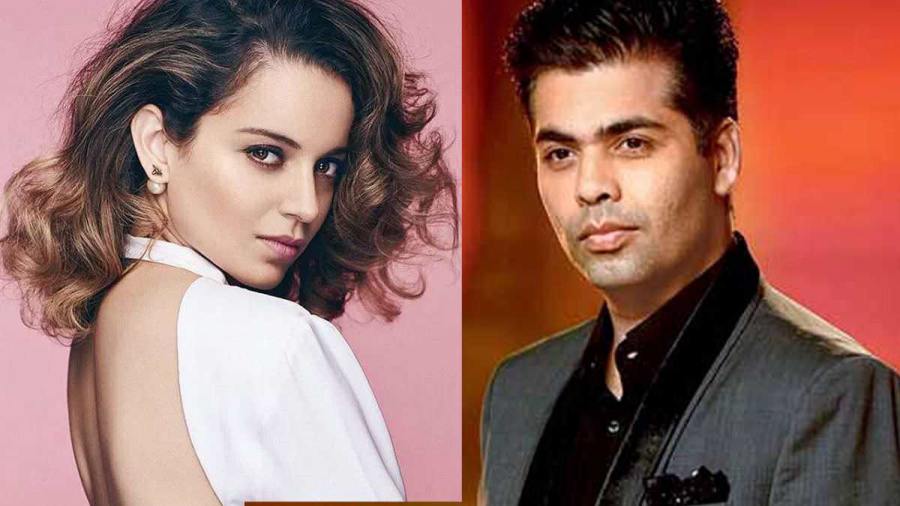
The Kapoor families and many other Indian film actors have been known for bringing their children into the industry with their endorsements and influence for decades. However, a fresh debate on nepotism soon followed the untimely demise of actor Sushant Singh Rajput, investigations into which have pointed to professional rivalry and instances of “bullying”. As per media reports, he was ostracized by the film fraternity despite being an accomplished actor. Filmmaker Karan Johar, with whom Rajput had worked in the Netflix film Drive, was quickly hailed as the flagbearer of nepotism by actress Kangana Ranaut, with Rajput’s fans calling for a boycott of Johar and his banner, Dharma Productions, as well as of actor Salman Khan and his brothers, who were greatly accused of bullying outsiders in the past. Actors and actresses like Alia Bhatt, Varun Dhawan, Janhvi Kapoor, Ishaan Khatter, Ananya Pandey, Athiya Shetty, Tiger Shroff, Arjun Kapoor, Sara Ali Khan, all of whom hail from film families, were also widely criticized for their mediocre filmography and quickly lost millions of social media fans and followers within a week. Responding to allegations of nepotism against her, Sonam Kapoor sparked controversy with a tweet on Father’s Day, with trolls calling her out for delivering poor films in the past few years.

In recent weeks, nepotism has become centre stage in mainstream public discourse. Triggered by speculations over the death of actor Sushant Singh Rajput, the debate was initially confined to the film industry. But it has since spread to other domains. What began as a hashtag about a tragic death has acquired a life of its own. How do we understand this sudden upsurge, given that nepotism is not a new phenomenon?

In India, whichever field one may consider, there is no denying the prevalence of influential families that wield nepotistic influence. But does this mean we make peace with nepotism? Certainly not. But a lot depends on how the debate is framed, and the nature of the contingent politics around the nepotism discourse.