20,000 beds to be added in National Capital by next week for COVID patients: Amit Shah

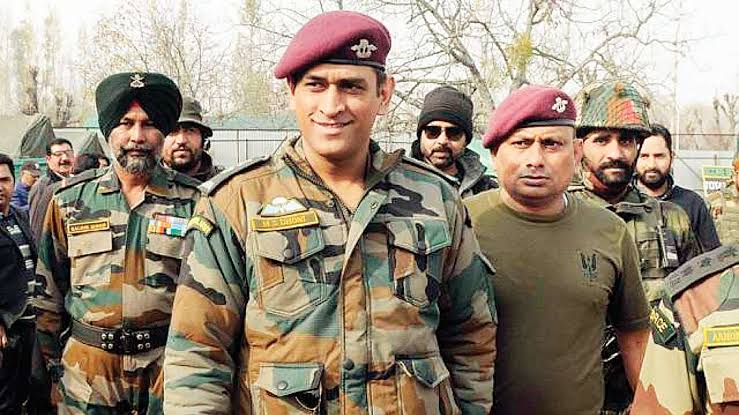
Union Home Minister Amit Shah has said that around 20 thousand beds including 250 ICU beds for COVID -19 infected persons will be added in the National Capital by next week. Mr Shah said that ten thousand bedded COVID Care Centre at Radha Swami Beas at Chhatarpur of Delhi will be operational by 26th of this month. He said, the work is in full swing and a large part of the facility will be operational by Friday. Mr Shah said this in a tweet while replying to a letter written by Delhi Chief Minister Arvind Kejriwal inviting Mr Shah  to inspect the COVID Care Centre  at Chhattarpur. Delhi Chief Minister had also requested for deployment of doctors and nurses from ITBP and Army at the Centre. Mr Shah said,  Home Ministry  has already assigned the work of operating the COVID Care Centre at Radha Swami Beas to ITBP.

The  Home Minister said  that one thousand  bed full-fledged hospitals with 250 ICU beds for COVID -19 infected persons will be ready by next week. He said,  DRDO and Tata Trust are building the facility with the support of the Central Government. He said, Armed forces personnel will man it and  this Covid Care Centre will be ready in the next 10 days. He said, Armed Forces personnel have been detailed for providing medical care and attention to the infected persons housed in the Railway Coaches in the national capital. He said, eight thousand additional beds have already been placed at Delhi government’s disposal for making COVID Care Centres, as per requirement.

Pride Goes Before Destruction

“Pride goes before destruction and a haughty spirit before a fall.”

“For everyone who exalts himself will be humbled, and he who humbles himself will be exalted.”

This leaves you with an understanding that humility is a virtue; pride is not. Humility comes when people are secure while pride comes when they are insecure. Humility is your strength whereas pride is your weakness.

pride

More often than not the line between pride and humility is blurred. While trying to keep it in check, you get either too arrogant or too humble when the time comes. Your thoughts become conflicting while figuring out whether to be proud or humble in a certain situation and you almost always end up doing the opposite of what was intended. It seems like a never-ending maze without any particular destination.

So the question that arises now is how do you distinguish when to show what emotion and in what quantity? This can be achieved by knowing the answer to these two simple questions.

What is the difference between true pride and false pride? What is the difference between true humility and false humility?

True pride is when you acknowledge your identity and your actions without the burning need for approval from the outside sources. False pride is claiming that you are more than you believe you are and that you know more than you need to know. In this case, a person will feel empty and inadequate from inside and need approval for every tiny detail of his life from others. Now outside approval is not necessarily a bad thing but when you feel like your self-worth depends on it, know that you are in deep trouble. Another thing associated with false pride is a sense of arrogance. True pride is knowing you are better than the other person at a certain task. This is not somehow affecting your performance or hindering your progress. False pride is getting the other person to acknowledge the fact that he is behind you in that task. Often while doing this, a person loses sight of the long-term goal with his need to feel superior to others.

pride2

True humility is when you acknowledge your identity and your actions without the burning need for approval from the outside sources. False humility is claiming that you are less than you believe you are and that you can do less than you believe you can. A person with false humility is driven with a need to get everyone to accept that he is too humble as he feels himself to be inferior to them. This could be the case when he thinks being even a little proud is bad for him or when he wants to shadow his arrogance by overcompensating for it. A truly humble person will not be affected by what others think of his actions.

What this brings us to is that true pride and true humility are one and the same thing. We need to balance out these emotions in our lives, all the while working towards our goal and not caring about unnecessary opinions.

Image Courtesy: GOOGLE

References: Proverbs 16:18

15 Books Bill Gates recommend – Must Read!!!

An average person reads 1.5 books per year while your average top CEO reads over 50 books per year they do this so they can maintain a competitive edge in the game and find new ideas that could improve both their lifestyles and companies this  time we’re taking a look at the books multi billionaire Bill Gates thinks  everyone should read because they had such an incredible impact on his own journey.

Here is list of all 15 books that must be read by you to get a better life style:

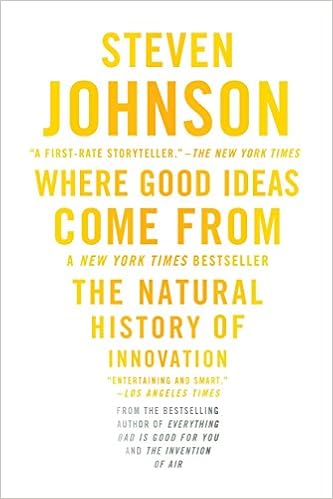
1, Where good Ideas come from :- Steven Johnson

 Click here to view the book


2, Life is what you make it :- Peter Buffet

click here buy the book


3, Tap dancing to work :- Carol Loomis

Tap Dancing to Work: Warren Buffett on Practically Everything, 1966-2013click here to buy the book


4, Moonwalking with Einstein :- Joshua Foer

Moonwalking with Einstein: The Art and Science of Remembering Everything click here to buy the book


5, The Man Who Fed the World :- Leon Hesser

The Man Who Fed the World

Click here to buy the book


6, “The Sixth Extinction” by Elizabeth Kolbert

The Sixth Extinction: An Unnatural History click here to buy the book


7, Making the Modern World :- Vaclav Smil

Making the Modern World: Materials and Dematerialization click here to buy the book


8, The Rosie Project :- Graeme Simsion

The Rosie Project (The Rosie Project Series)

click here to buy the book


9, Business Adventures: Twelve Classic Tales from the World of Wall Street :- John Brooks

Business Adventures

click here to buy the book


10, The Great Gatsby :- F. Scott Fitzgerald

The Great Gatsby

click here to buy the book


11, Outliers :- Malcolm Gladwell

Outliers: The Story of Success click here to buy the book


12, How to Lie With Statistics :- Darrell Huff

How To Lie With Statistics click here to buy the book


13, The Box :-  Marc Levinson

The Box – How the Shipping Container Made the World Smaller and the World Economy Bigger

click here to buy the book


14, How Not to Be Wrong :- Jordan Ellenberg

How Not to be Wrong: The Hidden Maths of Everyday Life

click here to buy the book


15, Sapiens: A Brief History of Humankind :- Yuval Noah Harari

Sapiens: A Brief History of Humankind

click here to buy the book


How to Stand out During a Phone Interview

Phone interviews are a common step in the job-search process.  Most often, hiring managers request phone screens before initiating an in-person interview. In these initial screenings, hiring managers expect the applicants to be as prepared as they would be for an in-person meeting. Here are a few steps to get ready for your next phone interview.

Have your material at hand 

In a phone interview, hiring managers will ask you about your work history and education, along with other necessary questions to establish your knowledge, skills, abilities and qualifications for the position. To answer these questions as thoroughly and thoughtfully as possible, have copies of your resume, previous job descriptions and any materials related to transcripts, degrees, or certifications at hand. This will minimize the potential for a lot of “lag” time that is often filled with awkward pauses while you search for the information you need. Being clear and articulate in your responses will show the interviewer that you are prepared and focused.

Practice your responses

During normal conversation, we tend to make up for our pauses with filler words, such as “um” and “like.” To sound more articulate, and to avoid being dismissed by the interviewer, practice how you would respond to typical interview questions ahead of time. If possible, record yourself and play it back to see if you rely heavily on the use of filler words. We are often unaware of our own speech patterns, so taking the extra time to practice your responses will help you sound more prepared and confident over the phone.

Research the company

 In a phone interview, hiring managers also like to hear the applicant’s questions about the company and the position. If an applicant does not have questions, it is a cue to the interviewer that the applicant didn’t do enough research.  Even if there are no obvious questions to ask, create a couple. For example, ask about how the position fits within the strategic plan of the organization, or how the company integrates different departments into the planning process. You can also ask questions about the reporting structure for the position, or about the top priorities for the person who fills the position. While these questions are usually asked in face-to-face interviews, you’ll want to have a few questions prepared to help you not only find out more about the company and position, but to show your interest in the company beyond getting the job.

Plan for comfort

Some folks are more comfortable on their feet than they are sitting in a chair and are able to project their voice better. If you prefer to pace when you are problem-solving or having important discussions such as an interview, you need to make sure your phone can keep up with your footwork. If you are using a mobile phone, make sure that you have a strong connection. If you are using a landline, adjust your call waiting so it doesn’t interrupt you during the conversation. If you prefer to sit, make sure that your chair is comfortable and that you have a table or desk in front of you to spread out your materials. Have a glass of water ready for those moments when you need to take a sip. If you’re in an area that might be loud, find a quiet place and shut the door. Never under-estimate the potential of your surroundings to interrupt your interview. Plan ahead to make sure that you’ll be comfortable during the call , which is why it’s better to schedule a call when you’re at home, not at the park or in a grocery store.

Take notes during your interview 

Finally, make sure you take notes during your interview.  Make notes on the questions they asked, the information they provided and some of the answers you provided. These notes will help you prepare for in-person interviews as you advance through the selection process.
By being well-prepared, you increase your opportunities for making a strong first impression during a phone interview. It isn’t easy to stand out from the other applicants over the phone, but by taking these steps you will make a positive impression that counts.
Jack McCallum has been with the online business department at Herzing University since 2011. When not teaching, she serves as the President/Principal Consultant for HR Balance LLC—a consulting company specializing in human resources management, organizational development, leadership coaching, and training/development. She started HR Balance LLC in 2003 after years of serving in a leadership capacity for a variety of for-profit and non-profit organizations. A keynote speaker and presenter, Jack has served as an industry expert for radio and print media.

STRUCTURE OF ORGANISING

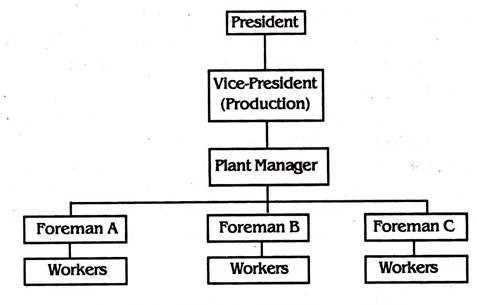
The structure is the pattern in which various parts or components are integrated or interconnected and this prescribes the relationships among various activities and positions, as these positions are held by various persons, a structure is called the relationships among people in the organization and thus organization structure refers to the differentiation and integration of activities and authority, role and relationships in the organization. Differentiation is the differences in cognitive and emotional orientations among managers in different functional departments and differences in formal structure among these departments. Integration refers to the quality of the state of collaboration that is required to achieve unity of effort by the organization. The structure of an organization thus regulates, coordinates, and reduces uncertainty in the behaviour of people. According to Peter F. Drucker, “Organisation structure is the most important means as a structure wrongly build cannot assist in the promotion of the business”. Thus, the organisational structure is the lifeline of an organisation and this determines the mutual relationship of different persons working within an institution and clarifies the position of each person in it.

TYPES OF ORGANISATION

Creation of an appropriate structure is indispensable for any organisation and Organisation structure represents the hierarchical arrangement of various positions in the enterprise and it helps in allocating authority and responsibility formally and it also lays down the pattern of communication and coordination in the enterprise and As Kimball write, “ The problem of an organisation is to select and combine the efforts of men of proper characteristics to produce the desired results”. Although character and type of organization would depend largely on the size and nature of the enterprise, yet, there are certain patterns of organising the personnel in an organisation and the need of clear-cut authority/responsibility relationships has led to different forms of administrative organisation as follows:

1. Line Organisation

It represents a direct vertical relationship through which an activity flows from top to bottom throughout the organization and the quantum of authority is highest at the top and it reduces at each successive level down the hierarchy, every person in the organisation is in the direct chain of command. The line of authority not only becomes the avenue of command to operating personnel but also provides the channel of communication, coordination and accountability in the enterprise.

2. Line and Staff organization

Under the line and staff organization, the function of line is similar to its function under the line of organisation but some staff or experts are also appointed as advisors to the line officers. The functions of line officer are to take decisions, while the function of the staff officers is to advise them and these staff officers are experts in their respective fields and they offer their useful advice after analysing the problems presented by the line officers and in the way, the work of thinking and execution is done by different persons and this removes the chief defect of the line organisation and it can be adopted in case of large business enterprises. It is, however, important to make it clear that the line officers are not bound to accept the advice offered by the staff officers because the line officers alone are responsible for the outcome.

Best Construction Management Software for Small Businesses : Big Exclusive >>>>>>>>

A project is a series of related a task which when they are carried in the correct order will lead to the completion of the project. Projects are temporary, generally resulting in the creation of a tangible product or outcome. A construction project, sometimes just referred to as a ‘project’, is the organised process of constructing, renovating, refurbishing, etc. a building, structure or infrastructure. The project process typically starts with an overarching requirement which is developed through the creation of a brief, feasibility studies, option studies, design, financing and construction.

Construction projects are typically one offs. That is, a project team, brief and financing are put together to produce a unique design that delivers a single project. Once the project is complete the team is disbanded and sometimes will not work together again. This can make it difficult to develop ideas or relationships, and so lessons learned are often not carried forward to the next project. The exceptions to this are repeat developers such as supermarket chains, housebuilders, and so on.

Credit : Third Party Reference

A construction software provides real time access to construction scheduling, documents, change orders, photos, warranty management etc. Construction is a task-driven business and construction project management software plans it accordingly. If you are into the construction business you should consider having one of the top construction software for better productivity. List of the top-rated construction management software’s currently authorised by United States government are given as below:

  1. ProcoreConstruction Project Management Suite:

 Procore has been one of the most talked about construction management software in the last few years. The reason is not just the quality rich features but the efficiency it provides to the project management team. Construction companies can manage multiple construction projects with ultimate visibility and without going remote. Procore ensures quality and safety by mitigating real-time risks and accessing data just a click away. Labour Management, Financial management, Time management are other important features that make Procore leading software.

Procore Construction Management Features: Accounting Integration, Budget Tracking/Job Costing, Change Orders, Commercial, Contract Management, Contractors, Residential, RFI & Submittals, Subcontractor Management.

  • Oracle AconexConstruction Project Management Software:

Oracle Aconex is cloud-based construction management software that connects major construction and engineering projects. Aconex is one of the best solutions to manage information and work process across your projects while handling multiple assignments. Aconex deals with document management, project controls, workflow management, BIM management, quality, and safety of projects, providing insights into projects and analysing data, bidding and estimating quotes.

Credit : Third Party Reference

Oracle Aconex Construction Management Features: Budget Tracking/Job Costing, Change Orders, Commercial, Contract Management, Contractors, Incident Reporting, Residential, RFI & Submittals, Subcontractor Management.

Now that you have fully understood the construction management software, you can start scheduling a call with a number of vendors to discuss your project management needs. You can and should weigh those vendors in terms of their software capability, vendor reputation and flexible price offerings in order to select the one that can promise you quick profit on your investment.

How Do I Motivate Myself to Stay Motivated?

Making a decision to achieve success is not enough. Many do so, but they are doing not back their decision with action.

It is so easy and pleasant to daydream, watch programs on TV about celebrities and follow them on Instagram, Twitter or Facebook. This might be sweet, but it will not make you successful.

To achieve success you need to act. You need to do things. You need to follow through with your decisions, even if it is difficult and inconvenient and you need leave your comfort zone.

You need to motivate yourself constantly, until motivation become a habit.

Decisions and plans need to be backed by strong desire and strong ambition, steady motivation, and perseverance. You have to keep your goal constantly in your mind, and avoid negative thoughts and doubts about your ability to achieve your goal. To do so, you need a constant supply of motivation.
We read about successful and rich people and want to be like them. A weak desire is not enough. It must be burning desire that is not stopped by obstacles and by failures.

Almost every successful person experienced failure and rejection, but they found the inner strength to rise above them and continue trying.

Many try to reach far, but only the ones who do not give up win.

What do you choose, to be on the ranks of those who:

Only daydream.
Try, fail, and quit.
Go all the way, despite obstacles, fears and failures.
It is natural to be at times frustrated, exhausted, or discouraged. Sometimes, plans do not work out as expected. At other times, we feel tired and lack energy. Yet, you can awaken renewed motivation.

Here are few actions that can help you motivate yourself:

  1. If you have a certain goal that you want to achieve, you need to remind yourself often, about the importance of your goal and how much you want it accomplished.
  2. Think often, what proportion your goal means to you. Think of details, visualize it, and feel as if it is already accomplished.
  3. Repeat your decision to achieve your goal, every day, several times a day.
  4. Always try to find ways to replenish our motivation and enthusiasm.

One of the way to do so, is to do small acts that get you closer to your goal. Sometimes, it is difficult to awaken enthusiasm, especially when the goal looks too big and far away. In this case, do a few minor actions that are easy to do, and which get you closer to achieving it. This will keep the zest and enthusiasm alive.

  1. Think of the benefits of achieving your goal, and how your life will be after achieving it.
  2. Read about people who have achieved success, and let their stories inspire you. Be careful of negative thoughts that might rise up, telling you that you cannot do what they did. Reject these thoughts, no matter how many time they return.
  3. Read inspiring quotes by people who achieved success. Every quote is like a tiny sparkle of wisdom and inspiration. You can many quotes, here, at the quotes directory.
  4. When frustrated or discouraged, exercise your body, take a walk or go the gym. This will fill you with renewed energy and strength.
  5. Surround yourself with positive and happy people. A positive mental attitude is contagious, and so are feelings of happiness. Of course, if you are too negative, there might be inner resistance at first, but you should not let negativity win.

Top Athletes Who Tested Positive For Covid-19.

The global pandemic has changed the living aspects of everyone across the globe. The sporting world has unfortunately come on hold due to the covid-19 outbreak except some of the football leagues which have been given the green light to play behind closed doors and many other restrictions. The pandemic has had major impact not only on the sporting world but on all types of channels such as food, industries, education etc. The virus outbreak had spread so fast across the globe and had contained different athletes from all over the globe. Some of the famous athletes are mentioned below.

1- Paulo Dybala

Paulo Dybala is a famous football player from Argentina playing professional football in the Italian league for Juventus football club. Paulo Dybala and his girlfriend were diagnosed with the covid-19 in the month of march. The football star informed the news of them being contained with the virus on twitter in the early march. However later on Dybala had tested negative for the covid-19 twice. The player had successfully recovered from the virus and was free to play and leave isolation. After the results Dybala tweeted “Many people talked in the past weeks… but i can finally confirm that i am healed.Thank you once again for your support and my thoughts on who are still suffering from it. Take care! He tweeted.

2- Shahid Afridi

The former Pakistan cricket team captain Shahid Afridi had tested positive for covid-19 as star himself revealed about it on twitter the last week. The player had addressed that the first few days were really tough but now he is improving and there is no need to worry and panic. The former Pakistan all rounder added that he was not able to spend time with his children as he had contained the virus and misses them but it is important to take precautionary measure until the start is fit and fine he added. Afridi also addressed the nation that he knew he would be at a higher risk of catching the virus as he was traveling a lot for charity work. On the contrary it is reported that 7 more Pakistani cricket players had tested positive for covid-19.

3- Novak Djokovic


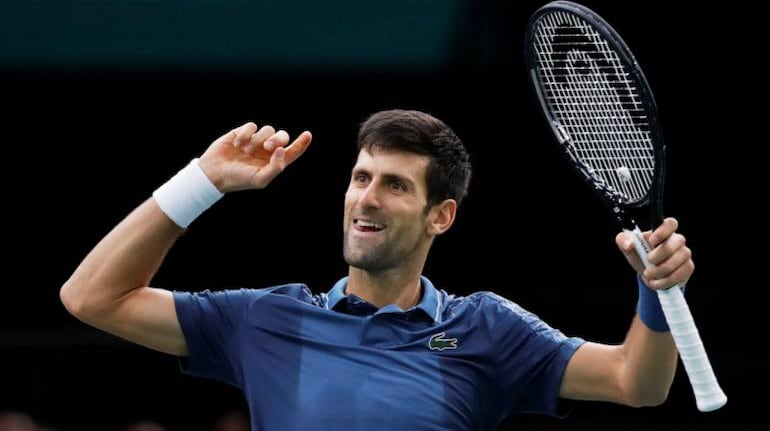
Novak Djokovic is world’s number 1 tennis player who was supposed to play in a final on sunday had reported that he and his wife had tested positive for the virus while the children had tested negative. This all took place during an exhibition event which took place in Croatia. The Adria tour had taken place in Zadar last weekend and created a lot of controversy regarding the social distancing and certain other precautionary protocols. The tennis star apologized about the tournament and said that it was too soon and also added that the organizers world share health resources among the people who have attended the event. The star added that he and his wife would stay in complete 14 days isolation and also perform the test again in a span of 5 days.

4- Paolo Maldini

The Italian football legend Maldini and his son Daniel had tested positive for covid-19 in the month of march. During the time Italy was under severe lock down and the death tally was at its peak. But soon enough it was reported that both the father and son had recovered successfully by isolating themselves at home for 2 weeks and not being in contact with anyone.

5- Kevin Durant

The Brooklyn nets star Kevin Durant had tested positive for the covid-19 late in may and wasn’t really overthinking about it as he said “I’m alive and that’s it and that’s all i can tell you that i’m good and he also added that he had a lot of support if he wanted to talk to someone. The star was not much concerned about the virus but the Achilles Tear that kept him out for a long time.

The art of happiness

William Ogdon’s column appeared on the editorial page of the New York Times on. December 30, 1945.

There was never a time when so much official effort was being expended to produce happiness, and probably never a time when so little attention was paid by the individual to creating the personal qualities that make for it. What one misses most today is the evidence of widespread personal determination to develop a character that will in itself, given any reasonable odds, make for happiness. Our whole emphasis is on the reform of living conditions, of increased wages, of controls on the economic structure- the government approach – and so little on man improving himself.

The ingredients of happiness are so simple that they can be counted on one hand. Happiness comes from within, and rests most securely on simple goodness and clear conscience. Religion may not be essential to it, but no one is known to have gained it without a philosophy resting on ethical principles. Selfishness is its enemy; to make another happy is to be happy one’s self. It is quite, seldom found for long in crowds, most easily won in moments of solitude and reflection. It cannot be bought; indeed, money has very little to do with it.

No one is happy unless he is reasonably well satisfied with himself, so that the quest for tranquillity must of necessity begin with self examination. We shall not often be content with what we discover in this scrutiny. There is so much to do, and so little done. Upon this searching self analysis, however, depends the discovery of those qualities that make each man unique, and whose development alone can bring satisfaction.

Of all those who have tried, down the ages, to outline a program for happiness, few have succeeded so well as William Henry Channing, chaplain of the House of Representatives in the middle of the last century:

“To live content with small means; to seek elegance rather than luxury, and refinement rather than fashion; to be worthy . . . to study hard, think quietly, talk gently, act frankly; to listen to the stars and birds, to babes and sages, with open heart; to bear all cheerfully, do all bravely, await occasions, hurry never ; in a word to let the spiritual, unbidden and unconscious, grow up through the common.”

It will be noted that no government can do this for you; you must do it for yourself.

Taken from Light from many Lamps by Lillian Eichler Watson.

What it takes to become a PRO?

The Difference Between Professionals and Amateurs

It doesn’t matter what you are trying to become better at, if you only do the work when you’re motivated, then you’ll never be consistent enough to become a professional.

The ability to show up everyday, stick to the schedule, and do the work — especially when you don’t feel like it — is so valuable that it is literally all you need to become better 99% of the time.

I’ve seen this in my own experiences…

When I don’t miss workouts, I get in the best shape of my life. When I write every week, I become a better writer. When I travel and take my camera out every day, I take better photos.

It’s simple and powerful. But why is it so difficult?

The Pain of Being A Pro

Approaching your goals — whatever they are — with the attitude of a professional isn’t easy. In fact, being a pro is painful.

The simple fact of the matter is that most of the time we are inconsistent. We all have goals that we would like to achieve and dreams that we would like to fulfill, but it doesn’t matter what you are trying to become better at, if you only do the work when it’s convenient or exciting, then you’ll never be consistent enough to achieve remarkable results.

I can guarantee that if you manage to start a habit and keep sticking to it, there will be days when you feel like quitting. When you start a business, there will be days when you don’t feel like showing up. When you’re at the gym, there will be sets that you don’t feel like finishing. When it’s time to write, there will be days that you don’t feel like typing. But stepping up when it’s annoying or painful or draining to do so, that’s what makes the difference between a professional and an amateur.

Professionals stick to the schedule, amateurs let life get in the way. Professionals know what is important to them and work towards it with purpose, amateurs get pulled off course by the urgencies of life.

You’ll Never Regret Starting Important Work

Some people might think I’m promoting the benefits of being a workaholic. “Professionals work harder than everyone else and that’s why they’re great.” Actually, that’s not it at all.

Being a pro is about having the discipline to commit to what is important to you instead of merely saying something is important to you. It’s about starting when you feel like stopping, not because you want to work more, but because your goal is important enough to you that you don’t simply work on it when it’s convenient. Becoming a pro is about making your priorities a reality.

There have been a lot of sets that I haven’t felt like finishing, but I’ve never regretted doing the workout. There have been a lot of articles I haven’t felt like writing, but I’ve never regretted publishing on schedule. There have been a lot of days I’ve felt like relaxing, but I’ve never regretted showing up and working on something that is important to me.

Becoming a pro doesn’t mean you’re a workaholic. It means that you’re good at making time for what matters to you — especially when you don’t feel like it — instead of playing the role of the victim and letting life happen to you.

How to Become a Pro

Going about your work like a pro isn’t easy, but it’s also not as complicated or difficult as you might think. There are three steps.

1. Decide what you want to be good at.

Purpose is everything. If you know what you want, then getting it is much easier. This sounds simple, but in my experience even people who are smart, creative, and talented rarely know exactly what they are working for and why.

2. Set a schedule for your actions.

Once you know what you want, set a schedule for actually doing it.

You want to set a schedule based on actions you can do, not results that you want.

3. Stick to your schedule for one week.

Stop thinking about how hard it will be to follow a schedule for a month or a year. Just follow it for this week. For the next 7 days, don’t let distractions get in the way.

Setting a schedule doesn’t make you a professional, following it does. Don’t be a writer, be writing. Don’t be a lifter, be lifting. For one week, do the things you want to do without letting life get in the way. Next week, start again.

Once you get at the top there is no coming or looking back because when you reach there it becomes more of habit .that you cannot leave .


­­­­­­

The real ground reality of the corona treatment

Corona virus, every day its like we are tuned to the same channel spewing the same things like a factory mill on overwork. But be as it may every day, we learn more about this disease that was thrust suddenly to the world, after initially originating from china. There are many a theory afloat that China deliberately kept the onset of this disease a secret to gain from it, and knowing the level the Chinese usually stoop to it would not be farfetched to believe so. Nearly every country is trying to cope up to this disease with drastic level of differences. On one side we have countries like new Zealand who have virtually negligible cases and still effectively trying to combat the situation and on the other end we have countries like USA where the cases have arisen to such a point that their President has announced that he will be slowing down testing to make it seem like the number of cases have dwindled. So where on this spectrum does India lie?

Photo by Anna Shvets on Pexels.com

India is home to a vast population that counts in billions, to safely combat a virus which spreads so easily is a herculean task in itself. However, the front-line workers are continuously working to be the first line of defence, but is it enough. Very often we see on the news and media how heroically our government is fighting the virus, often depicting them as gallant saviours shielding us from the evil virus. The hospitals giving their best in order to help the patients that they get, treating them and sending them back to society so that they may function like before. However,  the ground reality is anything but so, with the influx of corona positive cases of nearly 15000 each day, adding the fact that hospitals are seeing the worst mismanagement that could be done during a pandemic, it is no surprise that to many people going to the hospital seems like a walk towards the gallows. The hospitals launched apps in order to increase their efficiency and help them control the crowd gathering in hospitals, however with the traditional Indian scene of mismanagement this has just poured fuel to the increasing fires. The apps show the hospitals having free beds when there are none, mistreating patients and whatnot. Many a hospital within Delhi, India’s capital city have started to look more like morgue, without enough beds to put the dead bodies in, entire floors have been converted into makeshift morgues with bodies simply piled up unhygienically. This is just the tip of the iceberg that is the inefficiency of the hospital scene in battling corona virus. With the amount that an average corona patient is charged, coupled with the gross mismanagement it can make life a living hell for anyone going to the hospital regarding this issue. During this pandemic bed charges have inflated very much, a general ward bed in super specialty hospitals costs around 11000 a day, due to the covid-19 expenses. The overall amount depends on the time period one I admitted. Adding the mismanagement of the hospital staff into the mix it can go for unnecessarily long periods. Counting in the per day costs of a ventilator in the ICU ward for serious cases it can add an additional 50,000 per day as well. Thus, even if one miraculously survives the ordeal of corona, monetarily they are thrust back way harder than before.

What actions we further take is for everyone to see.

Growing vegetables at home

Vegetables are essential part of our food, green leafy vegetables gives us the important nutrients we require to lead a healthy life, but nowadays there is a risk buying vegetables from outside not only does it have a risk of getting exposed to the virus but also it can be filled with inorganic fertilizers and toxic stuffs like preservatives which will actually damage our health.  These harmful chemicals are introduced to increase productivity and longitivtiy of the vegetables and consuming these things causes the chemicals to accumulate inside our body and if it is not stopped it can lead to many diseases. The concept of organic  vegetables was introduced as a solution for this where no synthetic chemicals is used on the plant of the vegetables, but these vegetables costs so much that many people cannot afford it.

There is a better solution to this, if  one has space in their home they can grow vegetables in home, but as we know there are some vegetables which cannot be grown  at home nor some plants can be grown together, maybe in the future some way comes up so that these plants can also be grown. For now the vegetables you can grow are Tomatoes, Radishes, Okra,Ginger, beans  and many more. These can be grown in pots  and require some attention and care, this way of growing vegetables is economical also .

If you are a beginner you should have some tools like

  1. watering can- required to water the plants.
  2. Hand pruners – A type of scissors to cut the weeds.
  3. scoop- used to dig the soil.
  4. Small gardening fork- used for loosening the soil

These are the basic equipments required, but may be no need to buy them as you can make them by using many things in your house, like one can make the watering can by using an old water bottle and making holes on the cap or  for hand pruners one can use the ordinary scissors or can use some spoons or forks for loosening the soil.

You can plant these vegetables by seeds or buying the saplings, and put it in a pot with mud which is loosened well and it is very necessary to make holes on the pot which are also called drainage holes.  One should place the pots where the plants can receive optimum amount of sunlight. Its vey much required that you spend at least 1hour  of your day to water these plants, to cut them properly to check their growth status.

Some tips for different plants

  1. Tomatoes – The tomatoes should be grown in a pot of larger height so as to get sturdy and strong roots. These plants require more sunlight. Do add organic pesticides because insects attack tomatoes much more than other plants
  2. Okra – Do not water it very much as it may lead to fungal diseases
  3. Ginger- plant the root in a wide container and do not cover it with very much soil.

such tips will help you to grow these plants better, one should take care of the plants very much in winter seasons as this season tend to inhibit the growth of these plants, sometimes the plant become dormant. Immense amount of love and some care  required to grow these plants.


If you take care of these things and do all the things properly you would certainly get the results so

Enjoy the fresh, organic and healthy vegetables……


Why you must learn a foreign language!

Introduction

When the majority of people say they want to learn new language, they say because of the tendency to learn something new but they never really think of the importance of learning a foreign language and how it can help them for years to come. Learning a foreign language gives a different vision to life. The brain of a bilingual people operate is not the same as other, they have different way to function.  They have another mental level which bilingual people lack in caliber.  That is why learning a foreign language has its benefit as it makes your brain sharper and stronger. Not only this, It just not been advantage to your resume but is also handy for travelling making one smarter and make better to connect with world. Many studies have suggested that communicating in different language has a great benefit.  It is a great asset to mental awareness supporting cognitive process. One doesn’t learn languages in one go and it became powerful. The brain has to put extra effort for improving the functionality of your brain. The brain challenges itself to learn, negotiate meaning, and communicate in different system. It means the learner has skills that boost the ability of solving tasks as well.  Toddlers and children are very much skilled in catching new words and switching between two systems that includes speech, writing, and structure. Switching between the languages makes a good multitasking as it’s easy to switch between the languages.  A good learner often likes its brain to do exercise because it functions well in that case. Learning something obeys the memorizing rule and a set of vocabulary that assist a learner to gain mental strength and stretches mental muscles.  This totally improves an entire memory, that proves that multilingual are better learner and remembering list and arrangements. They could easily catch names and address, says many studies. Every language has its own set of jargons and glitches and subtle implication included in the vocabulary that influences the judgments. It makes any bilingual more confident on its decision making skills. They are quick in checking whether initial conclusion stand up. They hardly become biased and subconsciously influence the judgment. It is said that language is best learned between the sheets.  If a learner has to study a language he/she   better aim of a culture and its diversity. Also help in getting a good knowledge of society are interactively motivated.   Language and its aptitude is the main tool that builds for long relationships and meaningful provides communication. Linguistic studies show that integrative motivation always yields faster and more effective language learning results than any other type of learning. Learner studying language can achieve their goal more instantly than others as they are more motivated. Therefore, tracing its origins or evolutions is the most difficult thing.

 Motivation to learn a language is not problematic but if a learner has a zero cultural curiosity then it’s hard for him/her to learn. The learning process will be more difficult than for those with integrative motivation and difficult to target or even prejudice. Desire to communicate and accelerate language learning that can motivate one to learn a language.  It is also a basic need for a cross cultural friendship and one can fuel integrative motivation. 

Global Warming : A closer look

Many people are still unaware about the changes in the overall climate of the planet. Human emissions of carbon dioxide and other greenhouse gases are posing an unprecedented threat to the future of life on Earth. Recent observations suggest that the planet has experienced the largest increase in surface temperature over the last 100 years. The continuous rise in temperature of the planet is really upsetting and will severely affect ecosystems and disturb ecological balance and the fundamental cause for the rapid climate change is global warming. Global warming is caused due to human activities such as industrialization and burning of fossil fuel thereby releasing uncontrolled emission of green house gases. Fossil fuels are being continuously used to produce electricity. The burning of these fuels produces gases like carbon dioxide, methane and nitrous oxides which lead to global warming. It is the considered to be the root cause of rising sea level, flooding, changes in weather patterns, storms, cyclone, epidemic diseases, lack of food, death, etc. Melting of polar ice caps will lead to floods which can cause mayhem everywhere. Rise of sea levels will devastate agricultural and fishing activities. Hence appropriate measures must be taken to tackle this problem.

Global warming has impacted the nature’s balance, biodiversity and climatic conditions of the earth over decades. Another cause of global warming is the ozone depletion. The ozone layer protects the earth surface by inhibiting the harmful sun rays to coming to the earth. However because of the gradually declining ozone layer , ultraviolet sun rays are entering to the biosphere and get absorbed by the green houses gases which ultimately increase the global warming. The process of global warming begins when sunlight reaches the Earth. The clouds, atmospheric particles and surface of oceans then sends back sunlight back into the space, whilst the remaining is absorbed by oceans, air and land. This heats up the surface of the planet and atmosphere, making life feasible. As the Earth warms up, this solar energy is radiated by thermal radiation and infrared rays, propagating directly out to space thereby cooling the Earth. However, some of the outgoing radiation is re-absorbed by carbon dioxide, water vapours, ozone, methane and other gases in the atmosphere and is radiated back to the surface of Earth and are commonly known as greenhouse gases. The concentration of greenhouse gases in the atmosphere was artificially increased by humankind at an alarming rate since the past two centuries. According to a study, over 8 billion tons of carbon dioxide was pumped, huge amounts of methane gas are generated in landfills and agricultural decomposition of biomass and animal manure, nitrous oxide is released into the atmosphere by various nitrogen-based fertilizers including urea and ammonium phosphate and other soil management utilization . As a result, thermal radiation is further hindered by increased levels of greenhouse gases.

 We must solve the issue of global warming by spreading social awareness among people about global warming to get it eradicated from worldwide and make the possibilities of life on earth forever as usual.

HABITS

All have habits-anything done continuously becomes, a habit – habits may be good or bad – necessary to prepare good habits and avoid bad ones – good habits help us to succeed in life. All of us have habits. Anything that is done repeatedly becomes a habit.

Man is a bunch of habits. Anything done frequently and repeatedly is called a habit. It is an obtain pattern of action which becomes easy and mechanized because of repetition. Thus, habits, once formed, are difficult to be removed. That is why the saying, ‘Old habits die hard’. The root of habit is practice and regularity. The more we repeat a habit, the more easy and permanent it becomes. We are bound to repeat a habit, because if we do not we feel intolerable and uneasy. This is called the force of habit.

Habits can be good as well as bad. But it is very easy to acquire bad habits. Bad habits once acquired become the bonds and chains forever. If one becomes a sufferer of bad habits, they contribute his get away impossible. Habits become part of a man’s nature. They cannot be changed, specially at advanced stage. As a cat cannot change its streap, so you cannot change or get rid of evil habits. Like ones name they stick fast till the grave. Habits make or spoil our destiny. They actually form the foundation of our fortunes. In the words of an author: “Sow an ‘act, and you reap a habit. Sow a habit, and you reap a character. Sow a character, and you reap a destiny.” Thus, habits form the cornerstone of one’s personality and destiny. We are the maker of our destiny because we acquire good or bad habits and have the results accordingly. It is the use which causes origin and growth of a habit. Without use and frequency there would be no habit at all. A thing done occasionally, say once in a blue moon, cannot be called a habit. 1 n the words of Dryden “Ill habits gather by unseen degrees, as brooks make rivers, rivers run to seas.” The same fact is underlined by the poet Hannah More in the following words: “Small(evil) habits, well pursued betimes, May reach the dignity of crimes.” The same principle applies to the formation of good habits. But healthy and good habits can be formed only with a great labour and long continuous practice. You cannot acquire a good habit simply by determination, chance or by fits and starts. You have to perspire and persevere to acquire a good habit. It is far more easy to acquire good habits early in life when there is lot of flexibility both in body and nature. Once you have attained a good habit, it will always stand you in good stead. By possessing them you become quite capable to bear the ups and downs of life like a real, man. Good habits, like those of hard working, sincerity, honesty, courtesy, punctuality, simplicity, frugality, accuracy, tenacity of purpose, etc., constitute a sure security against ills of fortune and circumstances. They form a firm ladder to success and happiness. They are to be acquired, cultivated and possessed by hard labour, practice and constant use. And early youth is the best period to have them because then they make not so much demand on us. In brief, habits make the man. What actually you are, depends on your habits. You are good, excellent, bad or worse in proportion to your good and evil habits and their intensity.

There are many forces which play an important role in forming habits. Early education, impressions, company, association, etc., are some of the major factors in habit-formation. Gradually they get ingrained in our nature. Idleness, smoking, drinking, telling lies, flattery, gambling, cheating, stealing, spitting here and there are some of the major evil habits. Habits are also acquired because of imitation. Parents, elders, friends, etc., help them in their formation, and development. For example, a boy, who sees his father smoking, is likely to acquire the evil habit of smoking. The boy may think that in smoking there should be some pleasure and excitement that is why his father is a smoker. And then he may try it stealthily as smoking material is easily available to him. Gradually he may become a habitual smoker. Curiosity, routine and boredom also help in acquiring bad habits.

One bad habit leads to another bad habit. It is a vicious circle from which, there is hardly any rescue and escape. So always make good habits because sometimes you know by your habits also. Habits takes a very important place in our life. As our life changing we have to acquire new and good habits who gave us comfort in our day to day life. Habit of early wake up, healthy food habits, excercise regularly, reading books, gardening, painting, dancing, etc. Whatever you like. Sometime habit become passion for some people.