PM Modi to interact with CMs of 15 remaining States, UTs to further discuss COVID-19 pandemic

Prime Minister Narendra Modi will interact with Chief Ministers of 15 States and Union Territories through video conferencing on the second day today. The Prime Minister will discuss with them the situation emerging following the first phase of nationwide Unlock and plan ahead for tackling the COVID-19 pandemic.

The States and Union Territories include Maharashtra, Tamil Nadu, Delhi, Gujarat, Rajasthan, Uttar Pradesh, Madhya Pradesh, West Bengal, Karnataka, Bihar, Andhra Pradesh, Haryana, Jammu and Kashmir, Telangana and Odisha. On the first day yesterday, the Prime Minister interacted with 21 States and Union Territories through video conferencing.

During his interaction, the Prime Minister observed that timely decisions taken to combat the pandemic have been effective in containing its spread in the country. He said, its early preparedness approach helped the country to chalk out measures to save many lives. Mr Modi said, when India’s fight against COVID-19 will be analysed in the future, the time will be remembered for how the Centre and States worked together to fight the pandemic. The Prime Minister said, they have presented an example for cooperative federalism to the world.

Mr Modi said that even a single loss of life due to coronavirus is saddening and the nation should not lower it’s guard even during the unlock. He urged every citizen to strictly follow all necessary precautions including wearing mask, maintaining Do Gaj ki Doori and washing hands regularly with soap. Mr Modi said, they have tried to save each and every life. He emphasized that with all modes of transport now open, in last few weeks, thousands of Indians returned from abroad and hundreds of migrant workers reached their home towns. The Prime Minister said, even though India has a huge population, coronavirus has not assumed as life threatening a form as in the rest of the world. He said that health experts worldover are praising the discipline shown by Indians, adding that the recovery rate in the country is now over 50 percent. He also noted that India is amongst the nations with the least deaths due to coronavirus.

Prime Minister noted that due to the efforts of the past few week, several green shoots in the economy are visible which are encouraging the country to forge ahead. Mr Modi highlighted the increased sale of fertilizers, larger year on year sowing of Kharif Crops and digital payments in retail sector as few benchmarks. He also mentioned the historic reforms introduced by the Central government, including provisions to provide automatic collateral free loans to MSMEs and boosting the agrarian economy as measures which will ensure creation of strong and sustained demand in the country.

Mr Modi emphasized the need to focus on both life and livelihood. He said, on the one hand, there is a need to boost health infrastructure with emphasis on testing and tracing, economic activity will also need to be increased. The Prime Minister said, the decisions need to be taken keeping in view both current needs and future requirementsHe appealed to the Chief Ministers to turn crisis into opportunity.Mr Modi said, the views and the experiences of all states and Union Territories will be discussed to strategize future roadmap of nation’s fight against the global pandemic.

First part of the two day interaction yesterday witnessed participation of States and Union Territories including Punjab, Assam, Kerala, Uttarakhand, Jharkhand, Chhattisgarh, Tripura, Himachal Pradesh, Chandigarh, Goa, Manipur, Nagaland, Ladakh, Puducherry, Arunachal Pradesh, Meghalaya, Mizoram, Andaman and Nicobar Islands, Dadra Nagar Haveli and Daman Diu, Sikkim and Lakshadweep. The Chief Ministers thanked the Prime Minister for his leadership during such a challenging time and uniting the country to fight for the collective fight against the virus. They provided feedback about existing health infrastructure in their states and efforts for augmentation to tackle the impact of the virus. They mentioned about the awareness campaigns being run by them, help being provided to workers who have returned home, usage of Aarogya Setu app, and kickstarting of economic activities in the states.

Speaking on the occasion, Home Minister Amit Shah said that while the country has so far fought a successful battle against the pandemic, the road ahead is long and suggestions given by the Prime Minister regarding use of mask and face cover, maintaining do gaz doori should be followed by all. The meeting assumed significance in the wake of the rising number of novel coronavirus cases in the country. This was the sixth meeting of the Prime Minister with the Chief Ministers since the announcement of nationwide lockdown in March.

Currently, the country is under the fifth phase of the lockdown which entails much more relaxations than the previous ones. Under the first phase of nationwide Unlock, the Centre and state governments have eased several restrictions for the convenience of public and businesses to ensure that economic activities gather momentum. AIR correspondent reports that earlier, the Prime Minister had held a detailed meeting with senior ministers and officials on 13th of this month to review India’s response to Covid-19 pandemic. The meeting had reviewed the national level status and preparation in the context of the pandemic.


“An animal’s eyes have the power to speak a great language.”

It has been a long time since there is a debate, whether animals have been exploited for humans’ needs. However, More than 200 million animals are killed for food around the world every day – just on land. Including wild-caught and farmed fishes, we get a total closer to 3 billion animals killed daily. That comes out to 72 billion land animals and over 1.2 trillion aquatic animals killed for food around the world every year. In the United States alone, around 9 billion chickens hatch every year for the sole purpose of growing to an edible size and dying for human consumption. Animal suffering is the most direct consequence of consuming meat, but there are unintended consequences of eating animals, too.

All-around the globe, animals are used in a different way by humans to fulfill their need, they use it as food, making shoes, jewelry, irrigation, medical research, end experiments. Is it justified to use animals to human’s personals needs? not all animals grass-eaters, they also have to kill or hunt to fill their stomach, Video from the first large-scale investigation of intensive fish farming in Europe shows fish thoughtlessly scooped out of nets and thrown into plastic containers, where they slowly asphyxiated, Some of them miss the bin and flap to death on the floor. This video was disturbing, Some fish survive out of water for hours on their way to the slaughterhouse. If they’re still breathing when they get there, they die by a blow to the head. Nearly 300 wild sea animals are killed every year to feed one American, but that doesn’t include the fishing industry’s bycatch.

Considering the number of Americans that claim they only eat humane meat, it’s worth a quick math lesson. If 99% of farm animals in the U.S. are raised on factory farms, compared to about 90% globally, and 75% of Americans think they consume humane meat, the survey says that most of them don’t. Animals raised for food die by the millions in slaughterhouses around the world, and they do not think before eat. but the main thing is that animals also take revenge by spreading life threating viruses like swine flu and plague, even though human-made vaccines of these viruses, it had taken lots of human life.

If I talk about India, each and every day many animals have been killed by humans, even though the majority of the population is Hindu, and the coastal area also famous for fishing and fish farming, many famous franchises like K.F.C, Mc.donald, Subway, and Burger King provide chickens, beef, meats, poke, and many other animals eatable product. furthermore, in the fashion industry like L.V., Gucci, Prada, Zaara, and more,  provide clothes and fashion accessories like a leather purse, belts, leather shoes, and jackets that are obtained from animal’s flesh.

On the other hand, if we talk about science and research, in that process animals always be preyed by the scientist, and in recent news, they narrated that “Tests of other fast-tracked vaccines show that they have prevented infections in the lungs of monkeys.” they are so mean to not test on human or own self, they also not have an idea that there are lots of difference between the skin and immune system. there are many alternatives to reduce the suffering causes of animals.

Additionally, in India, there are many N.G.O.s, which always stands for animals rights, People for Animals India does a great job by saving street dogs in COVID-19 situation by serving food, shelter, and medicines. however, not only N.G.O.s but all people around the world stand for mutated animals, and if you wont to do great help, join the nearby N.G.O.s and save animals.

Be the follow “live and let live”


Coronavirus: Dexamethasone proves first life-saving drug

A cheap and widely available drug can help save the lives of patients seriously ill with coronavirus.

The low-dose steroid treatment dexamethasone is a major breakthrough in the fight against the deadly virus, UK experts say.

The drug is part of the world’s biggest trial testing existing treatments to see if they also work for coronavirus.

It cut the risk of death by a third for patients on ventilators. For those on oxygen, it cut deaths by a fifth.

Had the drug had been used to treat patients in the UK from the start of the pandemic, up to 5,000 lives could have been saved, researchers say.

And it could be of huge benefit in poorer countries with high numbers of Covid-19 patients.

The UK government has 200,000 courses of the drug in its stockpile and says the NHS will make dexamethasone available to patients.

Prime Minister Boris Johnson said there was a genuine case to celebrate “a remarkable British scientific achievement”, adding: “We have taken steps to ensure we have enough supplies, even in the event of a second peak.”

Chief Medical Officer for England Prof Chris Whitty said it would save lives around the world.

Latest coronavirus updates
About 19 out of 20 patients with coronavirus recover without being admitted to hospital.

Of those who are admitted, most also recover but some may need oxygen or mechanical ventilation.

And these are the high-risk patients dexamethasone appears to help.

The drug is already used to reduce inflammation in a range of other conditions, including arthritis, asthma and skin some conditions.

And it appears to help stop some of the damage that can happen when the body’s immune system goes into overdrive as it tries to fight off coronavirus.

This over-reaction, a cytokine storm , can be deadly

In the trial, led by a team from Oxford University, about 2,000 hospital patients were given dexamethasone and compared with more than 4,000 who were not.

For patients on ventilators, it cut the risk of death from 40% to 28%.

For patients needing oxygen, it cut the risk of death from 25% to 20%.

Chief investigator Prof Peter Horby said: “This is the only drug so far that has been shown to reduce mortality – and it reduces it significantly. It’s a major breakthrough.”

Lead researcher Prof Martin Landray said the findings suggested one life could be saved for:

every eight patients on a ventilator
every 20-25 treated with oxygen
“There is a clear, clear benefit,” he said.

“The treatment is up to 10 days of dexamethasone and it costs about £5 per patient.

“So essentially it costs £35 to save a life.

“This is a drug that is globally available.”

When appropriate, hospital patients should now be given it without delay, Prof Landray said.

But people should not go out and buy it to take at home.

Dexamethasone does not appear to help people with milder symptoms of coronavirus who do not need help with their breathing.

The Recovery Trial, running since March, also looked at the malaria drug hydroxychloroquine, which has subsequently been ditched amid concerns it increases fatalities and heart problems.

The antiviral drug remdesivir, meanwhile, which appears to shorten recovery time for people with coronavirus, is already being made available on the NHS .

The first drug proven to cut deaths from Covid-19 is not some new, expensive medicine but an old, cheap-as-chips steroid.

That is something to celebrate because it means patients across the world could benefit immediately.

And that is why the top-line results of this trial have been rushed out – because the implications are so huge globally.

Dexamethasone has been used since the early 1960s to treat a wide range of conditions, such as rheumatoid arthritis and asthma.

Half of all Covid patients who require a ventilator do not survive, so cutting that risk by a third would have a huge impact.

The drug is given intravenously in intensive care and in tablet form for less seriously ill patients.

So far, the only other drug proven to benefit Covid patients is remdesivir, which has been used for Ebola.

That has been shown to reduce the duration of coronavirus symptoms from 15 days to 11.

But the evidence was not strong enough to show whether it reduced mortality.

Unlike dexamethasone, remdesivir is a new drug with limited supplies and a price has yet to be announced

Personal Development

Personal development can include any skill that you build to improve yourself—your emotions, thoughts, or behaviors. It doesn’t really matter which skills you want to improve; the key to personal development is taking the right steps — steps that help ensure that you reach whatever goal you are pursuing.

What are the most important personal development skills? It really depends on what you’re trying to achieve. But here are 9 that I have found to be important to successful personal development.

1. Start by figuring out which personal development skills you need to build. The first step in any personal development strategy is to figure out how to best use your time. It makes little sense to learn how to code if you don’t plan to be a coder or to bench press 400 pounds if you don’t plan to be a weight lifter. These can be hobbies, but personal development is more about building skills to reach your goals. So it’s good to take some time to self-reflect. (If well-being is a goal of yours, take this well-being quiz to see which skills you need to build.)

2. Develop entrepreneurial thinking. Everyone can benefit from learning how to think like an entrepreneur, regardless of whether or not you are one. Why? Because entrepreneurs are innovative, good at planning for all possible outcomes, and skilled at getting others to buy into their vision or dream. And perhaps more importantly for personal development, they tend to be adaptable to all sorts of situations.

By developing entrepreneurial thinking, you better adapt to whatever your circumstances are so you can more easily achieve your goals, whether those goals are to start a business that makes a positive impact in the world, to set yourself up for an early retirement, or climb Mount Everest.

3. Develop a growth mindset. If we have a “fixed mindset,” we may shy away from challenges that could help us grow. But this can be problematic because our fear of making mistakes can lead us to avoid challenges and new experiences—experiences which would help us grow, improve ourselves in important ways, and create the life we desire.

If we have a “growth mindset” we seek out challenges because we value learning and growth more than we value feeling smart or knowing what we’re doing. That’s why those with a growth mindset often build new skills more easily: They believe they can and so they really work at it.

4. Develop your self-soothing mechanism. High levels of stress are not only bad for our health and well-being, they can prevent us from effectively pursuing and achieving our self-development goals. By learning effective, long-lasting stress-reducing strategies, your body and mind will be more equipped to handle the inevitable challenges that arise when you’re trying to develop yourself.

5. Develop resilience. Resilience is that super-important skill that helps you bounce back quickly after being knocked down. This is one of the most important skills for success because none of us will achieve anything if we don’t keep trying when we fail. We can build resilience by improving skills like emotion-regulation, mindfulness, and positivity.

6. Develop your value compass. It’s not always easy to live by our core values. But when we go through life without following our personal values, we can easily get lost. We may suddenly “wake up” and realize that we are not who we want to be or where we want to be. This is why it’s so important to stay in alignment with our personal values.

What are your values? Perhaps: kindness, curiosity, creativity, hard work, or personal relationships. Define your personal values so you know which actions are in alignment with those values.

7. Create a personal development plan. A good personal development plan takes all these factors into consideration — the WHAT, the HOW, the WHY, and the WHEN. So ask yourself:

What skills will you build?

How will you build them?

Why will you build them?

And when will you build them?

8. Record your progress towards personal development. Keeping track of our progress as we move toward our personal development goals is key to making sure we’re on the right track. Then we can pause and take a different direction if we’ve gone off course. By maintaining self-awareness and frequently checking in with ourselves, we can identify things that we need to devote more attention to. As a result, we can make better progress toward our personal development.

9. Keep developing yourself in new ways. The science is clear: The more ways we develop ourselves, the broader our skill set, and the more success we tend to have. So try learning some new emotional skills or do some activities to build new skills. You just might learn something that changes your life.

Living With Loneliness


Seven steps to freeing yourself from being lonely:

Have you had the experience of feeling lonely, like there is no one around and no one to talk to, as you sink into a state of sadness or anxiety that you fear you will never get over? Does such a feeling overwhelm you at times? If you’ve had such feelings of loneliness, you are far from alone. Loneliness is one of the most common, if unpleasant emotions that millions of people experience. For some, it may be a passing emotion. For others, it’s a recurring sense of desperation and sadness. But for all of us, it is part of being human.

Loneliness can lead to excessive drinking or binge eating, to suppress those unpleasant feelings. It can lead to depression and rumination, as you dwell on the question, “Why am I alone?” It can also lead to hopelessness. But having a strategy to deal with loneliness can be an important safeguard against depression, substance abuse, or even making bad choices for partners.

Let’s take a look at seven ways you can cope with feelings of loneliness:

1. Normalize Loneliness

As John Cacioppo, a researcher in the field of loneliness, points out, loneliness is on the rise — from 11 percent to 20 percent in the 1970s and 1980s to 40 percent to 45 percent in 2010. So you are not alone in feeling lonely. Perhaps the recent breakdown of connectedness can be related to the decline of family connections, higher divorce rates, people moving more frequently, the decline of church attendance, or declining participation in organizations like the PTA and labor unions. As Harvard social historian Robert Putnam illustrated in his book, Bowling Alone, people in the 1950s would participate in things like bowling leagues, but now they bowl alone. As widespread and increasingly frequent loneliness is, we must recognize that we need to have strategies for coping with it.

  1. Relate loneliness to your values of connection.

It may sound invalidating, but we can also ask, “What is loneliness good for?” I would suggest that loneliness reminds us of the value of connection, intimacy, or simply sharing experiences with others. We evolved to live in smaller communities with daily face-to-face contact — and shared child-rearing. That has changed for most people, but loneliness may remind you of the fact that you value connecting with other people, and that this value is an important part of being human. Don’t give up on connection when you are feeling lonely.

  1. Have a plan.

The first part of developing a plan is to identify your “trouble times” for loneliness. It might be evenings, weekends, or holidays. Have a plan in advance for these times. On weekends you might make plans with friends or family; you might go to museums, concerts, bike rides, guided walks, church or synagogue events, or connect with people on Meetup.com or other sites. I like thinking of turning yourself into a tourist for a day or a night. Or if your worrisome time is at night, have a plan for a couple of nights each week when you might connect with someone; it could simply be on Skype. Plan some videos to watch, music to listen to, attend a yoga class, join a health club, take up a hobby. A friend of mine, who is incredibly resilient, took up the guitar and swimming — separately — at the age of 68. He experiences great enthusiasm with these activities. What’s your plan?

  1. You don’t need someone else to do something rewarding.

So often people will say, “I have no one to do things with.” You don’t need someone else to go to the movies, go for a walk, work out, go to a concert, or take up a new hobby. Some people say, “I feel self-conscious doing these things by myself.” Try to identify what those self-conscious thoughts are — they may be things like, “People will see me alone and think that I am pathetic.” But how do you know what others think? And even if they did think that, why should you care? Maybe doing things alone means you are independent, empowered, and free.

THE BASICS
Understanding Loneliness
Find a therapist near me
In fact, doing something by yourself might actually be a good way to meet new people. Imagine that you are at a museum or bookstore, and you start talking to someone next to you about a painting or a book. Or imagine that you are taking a cooking or yoga class and start talking to people. Empower yourself by getting out and realizing that you don’t need someone else to do things with. You have yourself.

  1. Identify your loneliness thoughts.

Write down some of the thoughts that you have when you are lonely. These might include thoughts like those above, or the following:

I will always be alone.
If I am alone, I have to feel lonely and unhappy.
I must be a loser, because I am alone.
I can’t stand feeling lonely.
If you have these or other negative thoughts, then you are like millions of other people who feel stopped in their tracks by loneliness. But you can try some of these rational and helpful responses:

You are only alone for these moments (minutes, hours), and you will be interacting with other people soon — at work, waiting in line, talking to a friend, or participating in an activity. You are not on a deserted island.
Just because you are alone doesn’t mean that you have to feel sad and lonely. You can look at it as an opportunity to do some things that you like. You might enjoy having the peace to read something you like, listen to your own music, cook your favorite food, watch your favorite movie, or visit a museum at your own pace.
The idea that you are a “loser” because you are alone makes no sense: Everyone is alone at some time. And as recent research shows, about 45 percent of people experience loneliness. Being alone is a situation — and situations change.
The idea that you cannot stand being alone also doesn’t make sense. It may be true that you don’t like being alone, but it’s the way you relate to it that matters. If you relate to loneliness with protest, anger, desperation, or defeat, then it will be unpleasant. It might be more helpful to relate to it with the idea that feeling lonely or being alone comes and goes and that it is something we all cope with. Accepting what is might be better than catastrophizing something we all experience.

  1. Direct compassion and tenderness toward yourself.

Rather than thinking that you need to rely on others for love, acceptance, and compassion, you might direct these thoughts and feelings toward yourself. This can include acts of lovingkindness toward yourself such as making yourself a healthful treat or buying yourself a simple gift; directing loving thoughts toward yourself by giving yourself support for being who you are and by being your own best friend; and by recalling a loving person from your childhood (your mother, grandmother, father, aunt) whom you recall showing tenderness toward you. Taking care of yourself and soothing yourself is a wonderful antidote for loneliness.

  1. Build a community of connectedness.

We all need some connection with other people — or even animals. So many people — friends, family, patients — have told me how much love and connection they experience with their pets. So consider getting a cat or a dog. Or go to your local animal shelter and offer to volunteer. One woman I know volunteered for several months at a shelter, “socializing the kittens.” Talk about great work to have.

Another way of connecting is to do volunteer work, because we all need to be needed. You can search online in your community for volunteer organizations that correspond to your interests. Perhaps it’s working with kids, older people, cancer patients, or the poor. I doubt that you will feel lonely when you are showing kindness toward someone.

And make plans to see people. (This includes using social media.) Just because you haven’t been in contact much lately doesn’t mean you can’t take the initiative. Or join organizations where people share your interests — political, cultural, religious, or social.

Being alone doesn’t mean you have to feel lonely. And feeling lonely doesn’t mean that you have to feel that way indefinitely. All emotions pass, depending on what you’re thinking and what you’re doing.

It’s up to you.

MYTHS WE SHOULD STOP BELIEVING

Hello everyone so today we are going to talk about myths and their facts, So what do you what is myth! Myth is a combination of stories or narratives which is told by our ancestor. At night time, our ancestors will speak about the stories of god and devils. They are so many myths that people usually believe in them. We should stop believing in myths and think about the facts.

Now I am going to tell you some myths and also their facts.

1.MYTH:- People say that when we sneeze our hearts skip a beat for a second.

FACT:- Sometimes our heart changes its rhythm but our heart never stops for a second, while sneezing.

2. MYTH:-Since from our childhood, it has been told that we should or we get blind.

FACT:-Carrot help us to prevent us from muscle degeneration but carrot don’t improve your sight.

3.MYTH:-We should not use the phone during the light storm.

FACT:-Smart phone has the radio waves which doesn’t conduct electricity.

4.MYTH:-In science we had studied that our body have 5 sense.

FACT:- It’s not true we have at least 21 senses in our body like the sense of balance and temperature.

So these are some myths and facts.

There is a myth or a story about Tiyanak. There is a story that while we walk alone in woods and we hear about the baby crying that is called Tiyanak. When people start to follow the sound of a baby crying and found out a baby and when they hold the baby it suddenly will change into a monster and swallow you.

There are also other stories like Kapre, Orpheus and Eurydice.

So this is a famous story which must have heard from our ancestors. Some common myths seem to be true that we must learn from our parents or school.

When we hear something like this type of thing which seems to be impossible then we should start searching for the fact.

I hope you all enjoyed reading the article. Let me know in the comment box which you have heard.

Thank you for reading the article and have a delightful day.

Flavors of Delhi

Aloo Tikki, Afghani Street Bites, Chaat, Kebabs, Kachori Aloo, Chhole Bhature, Rajma Chawal, Parathas – these are reasons enough to call the Capital Delhi-Belly.

Delhi has always been a diverse city with people coming from all over India to settle and start a new life here. Many people know Delhi to be a city of rich cultural heritage. But Delhi, as a city, is so much more than that. And one aspect of this is the food in Delhi that makes it a great tourist place. The people of different cultures and traditions have brought with them their unique tastes to Delhi too.

It is not a hidden fact that Delhi has no particular food culture; the city acquires the identity of all types of people living here in its food preferences. The maze-like alleyways and marketplaces of Delhi are known to lure foodies with their curbside kiosks serving rich in taste street food while the studded restaurants add their own charm and elegance to the cuisine of the city.

Being an amalgamation of several cultures, Delhi is among the few places where you can find a South Indian devouring a serving of Butter Chicken and a Bengali enjoying Idli Sambhar, and it is not even astonishing anymore. The best part about this is that all these recipes are age-old, being handed down from generations after generations, helping them stay true to their original flavors.

Here’s what Delhi has to offer, apart from the traditional cuisine from all the states:

  • Mughlai Cuisine: One of the oldest cuisines being served to the Delhiites is the Mughlai cuisine. Even today the taste of the Mughal era can be felt in the Kebabs from the time of Delhi Sultanate while Nihari and Biryani have become a household name. The delicious fruit-flavored sorbets or Kulfi as we know them today were originally served in the Mughal kitchens. Karim’s and Ghantewala, famous for their Kebabs and Karachi Halwa respectively, have also served many of the Mughal emperors in the past.

  • Street Food: Another group of delicacies bringing the people together is the street food available in almost every lane of the city. Names like Sita Ram Diwan Chand, Bittu Tikki Wala, Nataraj Dahi Bhalla, Daulat Ki Chaat, and Al Jawahar have been churning out some of the country’s best street grub. There is a street named Parathe Wali Gali in Chandni Chowk which in itself is enough to show the love people of this city have for Parathas.

  • International Cuisine: Along with the traditional dishes, Delhiites have also truly embraced the authentic International cuisines which means there is no trouble finding Chinese, Thai, Italian, and French cuisine to name a few. The Churros with chocolate sauce at La Bodega, the Glass Noodles at Gung, and the Cheese Kunafa at Zizo are gradually making their way into the hearts of Delhiites.

The diversity that Delhi shows in its food culture is a mere reflection of the people who have lived here in the past and the people who call it their home in the present. It is this diversity that brings the people together and makes Delhi a better tourist spot.

Principles of Management

A principle refers to a fundamental truth, it establishes a cause and effect relationship between two or more sets of events. Principles can predict the results of certain causes in the given circumstances. According to George R. Terry “ Principle is a fundamental statement of truth providing a guide to thought or action”.  Thus on a basic principle, we may say that this is to be done and this is not to be done. A managerial principle is a broad and general guideline for decision-making and behavior, for example, while deciding about the promotion of an employee on my consider seniority, whereas the other may consider the principles of merit. Principles of management are different from that of principles of pure sciences. Management principles are not as rigid as principles of pure sciences they deal with human behavior and thus are to be applied creatively given the demand of the situation.

Management principles have not been developed overnight but a complete procedure to develop these principles is undertaken and these principles are developed by the management experts, first, the problems were born, then efforts were made to solve them and these efforts resulted in a lot of research work and finally the solutions were found out and these solutions are in the form of principles of management. The principles of management are derived in the following ways:

1. Based on deep observation/ study of the problem

  Researchers observe the problem in different situations and from different angles. They have to study deeply the problem, its cause, magnitude, consequences, and solutions.

2. Based on experimental studies

A decision or statement which is observed is tested in different organizations with different employees and if they get a favorable result, then the statement is given the name of a principle and a principle is derived. After understanding the meaning of principles and principles of management, it is very necessary to learn the nature and the need for the principles of management.

Based on the above guidelines the principles of the management were developed. Several principles of management have been developed to assist managers in performing their functions well, a large number of principles have been contributed by the management authors belonging to the traditional school of management thought and today there is a very lengthy list of management principles and these principles can be used by changing them according to the requirement and situation. The principles of management are not like the principles of physical sciences. The Principles of management cannot be rigid or absolute as they are not rules or laws and “No Principle operates automatically”. According to Henry Fayol “Principles of management are flexible and nor absolute, but must be utilized in the light of changing and special conditions”. Management principles are universal and these can be applied in different organizations like government, business, military, etc.. Principles of management are the fundamental statements of the truth of universal validity and these principles help the managers in solving managerial problems systematically and scientifically and methodologically.

Impact of Climate Change on International Business Strategies…..

A recent KPMG report, highlights ten “sustainability megaforces” that will shape markets in the decades to come. The list includes population growth, energy and fuel, ecosystems decline, and material resource scarcity, among others. These interconnected trends will create risks and opportunities for business. In response, companies need new strategies, particularly for market impacts relating to what KPMG calls the “megaforce” influencing all others: climate change. Forward-thinking companies are starting to draw links between climate change and other major trends that impact business.

It is the demand of the era that businesses have to do their part in response to the threat of the climate change. Most of the large companies these days see to the managing of the greenhouse gas emissions. They also help in minimizing the level of energy consumption as an integral part of the environment based management practices. Many people have set the targets for the reduction of the greenhouse gas emission. One can work with the suppliers and the consumers for causing a reduction in the rate of emission.

One can consider climate change as the strategic issue. It is the logical conclusion that companies should seriously think about the risks related to the change in climate. This can cause possible danger to the various business opportunities. One should be able to predict in advance that how a change in climate can cause difference in business. Based on the thoughts and the predictions one can decide how to protect the business strategies from the possible climatic risks. This way, one can reduce the downside risks, and there can be augmentation in the upside opportunities.

2019 may be remembered as the year when climate change activism went mainstream. At the end of September, in a series of rallies timed to coincide with the United Nations climate summit, an estimated six million people in more than 180 countries took to the streets to demand far more action to cut greenhouse emissions. This was probably the biggest climate protest in history.  Protests in the form of school walkouts had taken place throughout the world for a whole year. The ‘Extinction Rebellion’ initiative has added a further edge by seeking to demonstrate the potentially catastrophic consequences of inaction.

Central banks and other supervisory authorities are now considering climate change as a risk to financial stability. This has led to the establishment of the Task Force on Climate-related Financial Disclosures (TCFD) in 2015, and the Network for Greening the Financial System (NGFS) in 2017. Both are concerned with enhancing the quality of climate-related awareness, risk management and transparency.

It is important for the companies to develop the sort of corporate data expertise and knowledge based on climate change. There are companies to go furthest in causing integration in the change in climate as part of the various business strategies. This however, can emphasize the amount of time and effort being invested in the testing of the new technicalities and the set of the inventive approaches. However, before making an investment, the companies should understand the several implications made in business.

Hence, the conclusion for the above lines would simply be that of cutting down greenhouse emissions, going green and using resources by means of sustainable development.

Refrences:-

arabessay.com

http://www.wri.org

3 Reasons to be Cautious of Student Loan Relief Agencies

If you’ve heard advertisements such as, “You qualify for Obama Loan Forgiveness!” or “Sign up for loan forgiveness before it’s too late!” you might be tempted to call and ask about these loan forgiveness programs. However, it’s important to know that many “student loan relief agencies” or “debt reduction companies” often charge students large fees for unnecessary help with their student loans, or for necessary help that could be obtained elsewhere for free. Plus, you may not even qualify for forgiveness.
Here are 3 reasons why you should be cautious of these student loan relief agencies:

Large fees

While these companies sound like they have your best interests at heart, that may not be the case. One tactic of such agencies is to advertise, “You Qualify for Forgiveness!” and then enroll you into an income-driven repayment plan for a “low fee.” The company might submit your income-driven repayment plan application to your loan servicer and then charge you monthly fees on top of your federal student loan payment. What these companies might not tell you is that you could do this yourself at https://studentloans.gov/myDirectLoan/index.action or by working with your Department of Education Loan Servicer – for free! Other common advertisements will claim, “You Qualify for One Low Monthly Payment!” The loan relief company will submit a consolidation application on your behalf, even if a consolidation isn’t necessary. If you would like to consolidate your loans, you can also do so for free through the Department of Education.

Offering forgiveness without verifying eligibility

Students may receive a text message or voicemail claiming, “Your loan has been flagged for forgiveness,” but be careful. These phrases are used as marketing tactics to encourage students to apply for a forgiveness program. These companies can’t make you eligible and have no influence as to whether or not your loans will actually be forgiven. Some of them will file your application for you without verifying your eligibility for loan forgiveness. You get billed and you will have to pay for the service regardless of your eligibility. For eligible borrowers, student loan forgiveness is only available after you have made several years of qualifying payments. You can always call Herzing University’s Alumni Support Center or your loan servicer for help as well.

Failure to follow through with the service

Along with voicemails and text messages, students may see billboards, hear radio and TV ads, or receive social media messages regarding loan forgiveness plans. Before you call one of these companies, do some research. A quick Internet search of the company can bring up previous customer reviews. If you do choose to contact the company, ask how much the service costs. These companies are not affiliated with the Department of Education and some of them fail to follow through with the services you think you’re paying for. Even if the service was not performed, or was performed incorrectly, the student will still be charged a fee. Students should also be cautious of signing any contract, paperwork or releasing personal information to these so-called loan relief agencies.
Below are some examples of third-party advertisements:
  • Voicemail examples:
    • Trump is going to repeal the forgiveness plans. If you want this forgiveness, you must call immediately within 24 hours.
    • Your student loan payment can be cut in half or completely wiped away.
  • Text message examples:
    • Your student loans may be completely forgiven if you qualify. Find out by calling xxx-xxx-xxxx.
    • Your student loan qualifies for federal loan forgiveness! Call now at xxx-xxx-xxxx.
    • Your student loan has been flagged for forgiveness. Call now for forgiveness.
If you see one of these advertisements for loan forgiveness, it’s best to be careful and call your federal student loan servicer for free help. If you have questions about student loans, repayment plans, or forgiveness, feel free to contact Herzing University’s Alumni Support Center at 866-508-0748 ext. 01353 or alumnisupport@herzing.edu.
Dani Madson works in Herzing University’s Alumni Support Center. She graduated from St. Norbert College in De Pere, Wisconsin with a Bachelor of Arts Degree and is an expert in successful management of federal student loans.

How to open a Franchise without money- US…

let’s talk about to open a franchise with no money so the first thing you can do, if you want to open a franchise with no money down is go to your friends and family look. I understand that that’s something that you may not want to do sometimes that’s a toughest conversation asking friends and family for money but I would assume if you’re willing to open a franchise and you have some skill sets you have a certain level of intelligence and a certain level of ambition so assuming that you have a good reputation and a good rapport with your friends and family then that’s the first place that you can go to get money to fund your franchise.

hamburger and fries photo
Photo by Jonathan Borba on Pexels.com

Now when you’re approaching them for the money it’s important to be tactical and strategic about it and you don’t just say hey! can I borrow ten thousand dollars can I borrow twenty thousand dollars can I have fifty thousand dollars you have to go into it strategically so go into it with a business plan this is the franchise that I want to buy this is the amount of money that I need to get started this is a lot the amount of money that I think I will make with the franchise this is the time period which I can pay the money back to you and get on that loan repayment plan, another way to approach getting money from feds and friends and family to fund your franchise is to ask them to be a partner with you so although they may not want to work in the franchise themselves maybe they’re more willing to give you money or lend you money for the franchise if they are an owner or an investor with you so maybe you’re the one that runs the franchise and you handle the day-to-day operations the sales managing the staff managing the overall business and they get a percentage of the profits as a way of paying them back.

close up photography of starbucks disposable cup
Photo by Adrianna Calvo on Pexels.com

The next way that you can fund a franchise is to get a loan and before you read about that real quick with the franchise so now in getting a loan to open a franchise business it’s important to note that one you’re going to need to have good credit and two you’re going to need to have an income that can support paying back. The loan and three the likelihood is you are still going to need money for the down payment on that loan if you get us an SBA loan which is Small Business Administration they require a minimum of 10% down from you in order to fund that business so what does that mean if you need $100,000 for your franchise business then that means you need to come up with $10,000 in order to here that loan so the question is how will you come up with that $10,000 and there’s a number of options that we’ll go over in a second of how you can do that one way you can do that is what we already talked about which is getting money from friends or family it’s so even with the Small Business Administration having a ten percent minimum requirement that you have to put towards the loan in order to open a business.

white and blue come on in we ere open signage
Photo by Tim Mossholder on Pexels.com

Most lenders that issue SBA loans are going to require anywhere from 20% to 30% in order for you to secure that loan so again in that example if you’re looking to open up a business that’s a total of $100,000 you’re going to have to figure out a way to come up with twenty to thirty thousand dollars in order to secure that loan and so in a second I’m going to tell you about a strategy of exactly how you can do that without having to ask your friends or family for money another way that you can fund a franchise without having any money so to say is seeing if you have any 401k or retirement plans now as someone who has managed over a hundred million dollars over the course of career as a financial advisor typically. I would not recommend for someone to take money out of their 401k and that’s not what I’m recommending to you. So, I want to make sure that you get that clear because there are severe penalties and tax consequences that you should consult the tax advisor about but there are ways that you can leverage your 401k so if you’re still working with your employer you can take out a loan against your 401k in order to fund a business and when you take out a loan there’s one thing that you have to be very careful about the thing that you have to be careful about is that if you leave that employer and you have an outstanding loan they are going to make you repay that loan within a certain period of time usually it’s 60 days if that is the case if you don’t come up with the money and repay the loan for the 401k they count it as an early distribution you’re going to have to pay taxes on that money depending upon if it’s a pre-tax 401k and you may have to pay some penalties. 2 guys opened up first location they were going to need 300 just over $300,000 in order to get first location open so they had a significant equity in their home at that time and want to went ahead and apply for a home equity loan they secured a three hundred and ten thousand dollar home equity loan use that home equity loan to fund the business and to pay for the business about a year or so later they actually wind up moving they sold their house the home equity loan was paid for paid off and now they own the franchise in the business completely outright don’t have any loans on the business and then the last way that you can potentially buy or open a franchise with absolutely no money is to talk to the franchiser again it’s not about the resources it’s about your resourcefulness so it never hurts to ask them and to make a pitch if you’re truly excited and confident about the opportunity.

download

Image source: AZ quotes

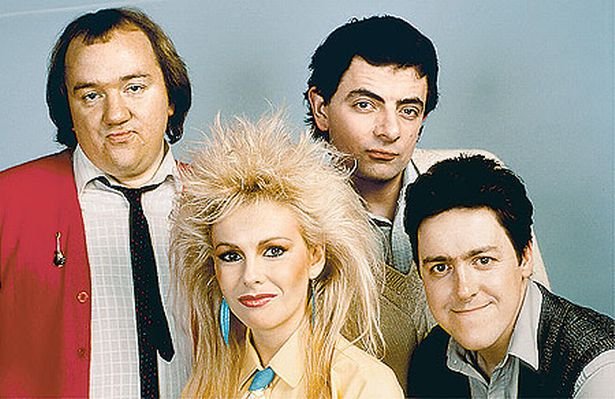
Rowan Atkinson AKA Mr Bean

Rowan Atkinson or as we know him better by the name Mr. Bean, is an important memory of everyone’s childhood. He is an outstanding comedian and an incredibly talented actor, who made us life without uttering a word.

But there is a lot more about this multi-talented personality than we know.

  • Degree in Electrical engineering

He pursued his degree in electrical engineering from Newcastle University in 1974 and earned his masters from Queen’s College, Oxford in the same subject.
He also began his doctoral work but then he decided to step into comedy.

It was an unexpected change of the field in which he pursued his career.

  • Love for cars

We have seen him driving a mini in the Mr. Bean series but in real life he loves cars and has a great collection of them. He also writes for some Car magazines.

His car collection include some cars as follows:

  • Classic 1939 BMW 328

  • Rolls Royce

  • McLaren F1

  • Jaguar MK7

  • Lancia Thema 8.32 series 1

  • Land Rover Defender 90 heritage

  • BMW 328

  • Aston Martin Vantage

  • Mercedes Benz SLS AMG

  • Skoda superb

  • Mercedes Benz 500E

  • Aston Martin V8 Zagato

  • Ford Falcon

  • BMW 13

  • Audi A8

This list goes on so long that Rowan Atkinson was working on building a mansion to store his cars as they were all very expensive and needed a comfortable parking space to be maintained.

He also went into some accidents but came out with no injuries. He says that he is a thrill seeker.

Hence, he’s not only just a funny guy, but also a car guy.

  • Saved his family from a plane crash

Rowan Atkinson was flying in a private plane over Kenya along with his family. The pilot passed out and Rowan Atkinson took control of the plane even though he never piloted a plane before. He controlled the plane till the pilot gained back his consciousness and landed the plane at the Wilson Airport, Nairobi.

  • The name “Mr. Bean”

We often wondered what is Mr. Bean’s first name as we only knew his surname. This question was answered in the Mr. Bean movie where in one scene we get to see his passport.

Mr. Bean’s first name is “Mr”. Which means that his full name is Mr. Mr. Bean. Sounds strange yet funny.

Instead of the name Bean, Mr. White was finalized but Rowan Atkinson wanted to name his character after a vegetable. So the name Mr. Cauliflower was decided at first and then he came to his final choice, Mr.Bean .

  • Difficulty with the letter ‘B’

Rowan Atkinson has difficulty while pronouncing the letter ‘B’ when it is followed by a vowel. For example the name ‘Bob’. He has to take a pause before pronouncing such words.

  • Had a stammer problem for years

Rowan Atkinson had the stammer problem for many years which made him perfect for the role of Mr. Bean. It was also a reason behind him giving very few interviews.

  • Fan of James Bond

He has always been a fan of James Bond. You can imagine how great it must have been for him to play a supporting character in a James Bond movie ‘Never say Never’.

  • Private person

Rowan Atkinson likes to keep is life private to an extent that not even his close friends knew that his wife was pregnant until the child was born. Privacy is very important to him, especially when it comes to his family.

  • BCC comedy sketch show

‘Not the Nine O’clock News ‘ gave a boost to his career and his name was known in the industry since then.

  • Known by the Royalties

He is one of the few celebrities who were invited to attend Prince Charles and Camilla Parker- Knowles wedding ceremony. It might be because of his charitable work for The Prince’s trust.

  • Famous shows and movies

Other than Mr. Bean, Rowan Atkinson has entertained the audience since ages by his various performances in some of the following movies and series:

  • Johnny English
  • The Tall Guy
  • Love actually
  • Never say never
  • Keeping Mum
  • Blackadder
  • The Thin Blue Line
  • Maigret
  • Not the Nine O’clock News
  • Dead On Time

His show Mr. Bean is evergreen and is watched since generations and is still a mood booster for people.

MECHANICS FOR JEE

1. KinematicsBe clear with Vectors and Basic Math, and you are done. Practice tons at this stage because you’d have an early practice of solving equations fast.
2. Newton’s Laws of MotionIt might be seeming very tough to you, but don’t worry, by the end of your course you would be really comfortable with it. Practice a lot of questions. I can’t emphasize it more. Be thorough with concepts like friction, strings, and pulleys, Normal force, Circular Motion, etc. Practice till you are perfect.
3. Work Power Energy and GravitationPractice conservation of Energy a lot. It is very important in Physics. Gravitation is linked to this. Again, look out for Energy conservation and Kepler’s law when solving Gravitation questions. Work-Energy Theorem is another important concept. Make yourself comfortable with the topic.
4. Centre of Mass and MomentumOne of the toughest chapters after Rotation. Tough nut to crack. Step one could be trying to remember all concepts and equations. It helps a lot. Be thorough with vectors. Momentum conservation relies a lot on it. Collisions has some interesting problems. Be thorough with the main formulae. Conservation of Momentum and Energy are central here. Remember positions of COM of various objects. It will be very helpful in future. Remember some basic cases in collisions(small object, heavy object, same masses, etc.) Spring questions are common. Be aware of springs in parallel/series, and basic equations.
5. RotationRotation may be a real tough nut, and JEE asks some really awesome questions from this section. This is tough and has got a good weightage. You must give a good amount of time to it. It begins with Moment of Inertia. Learn the MI of varied standards objects, and be thorough with the derivations. It will assist you just in case some questions supported calculating MI comes in JEE. Then there is a discussion of angular velocity, rotational Kinematics, etc. Pretty easy if thorough with basic trigonometry and Kinematics. Then comes torque, angular momentum, etc. This seems tough, but it will come naturally to you with time if you are clear with NLM. Remember there are only few equation, T=I(alpha), and L=Iw. Try to remember these employing a correlation with NLM. Conservation of Angular momentum is very important. Lots of questions are asked from this topic. Be clear with the axis of rotation and the point about which you are trying to conserve it. Massive problem solving will help.
6. Simple Harmonic MotionAnother basic and important topic. Remember the derivation and equations of SHM. Remember the Time Period formulae. It will save a lot of time on the final day. Questions involving finding the period of time of any system are common. Be thorough with them.
7. Fluid Dynamics and ElasticityNot vital but few easy questions come needless to say . You don’t want to miss them. Continuity equation, variation of pressure with depth, and Bernoulli equation are important. Try to do some questions of Surface Tension too(JEE has asked some really tough questions from this topics). Elasticity has a graph of Stress vs Strain. Remember it well. These chapters have a bunch of long equations. Try to remember them. There might be a few questions at least in JEE(Main) where you would need to evaluate the expression.
So, this was it. Coming to the preparation strategy, first of all hear your coaching lecture/online lecture and do homework, and discuss in school if you’re during a coaching. This will help you clear Mechanics.
Coming to books(and hence the self-study guys too) HCV is that the god-book for Mechanics. Read every line(irrespective of whether you’re during a coaching or not), understand everything and solve each question. Solutions are available somewhere on the Internet I guess(don’t know if they are copyrighted or something, so beware). Discuss with teachers. If you sincerely solve all questions of Mechanics then nobody can stop you from being a Master of Mechanics. I also recommend reading NCERT. It gives a wonderful insight into the subject and will prepare you for JEE(Main) and Boards too. If you would like more objective practice, choose DC Pandey Problems book. Deb Mukherjee’s book is really good for conceptual questions. And then comes the GOD- I.E. Irodov. This will prepare you for Olympiads, and for facing any question in JEE(Advanced). Solve this only if you have time and are done with the above stuff. Better do it during Holidays. But trust me, Irodov will offer you an upper edge if you’re aiming for a top 100 rank approximately .

The Paradox of Behavior Change

The natural tendency of life is to find stability. In biology we refer to this process as equilibrium or homeostasis.

For example, consider your blood pressure. When it dips too low, your heart rate speeds up and nudges your blood pressure back into a healthy range. When it rises too high, your kidneys reduce the amount of fluid in the body by flushing out urine. All the while, your blood vessels help maintain the balance by contracting or expanding as needed.

The human body employs hundreds of feedback loops to keep your blood pressure, body temperature, glucose levels, calcium levels, and many other processes at a stable equilibrium.

Martial arts master George Leonard points out that our daily lives also develop their own levels of homeostasis. We fall into patterns for how often we do (or don’t) exercise, how often we do (or don’t) clean the dishes, how often we do (or don’t) call our parents, and everything else in between. Over time, each of us settles into our own version of equilibrium.

Like your body, there are many forces and feedback loops that moderate the particular equilibrium of your habits. Your daily routines are governed by the delicate balance between your environment, and many other forces. As time goes on, this equilibrium becomes so normal that it becomes invisible. All of these forces are interacting each day, but we rarely notice how they shape our behaviors.

That is, until we try to make a change.

The Myth of Radical Change

The myth of radical change and overnight success is pervasive in our culture. Experts say things like, “The biggest mistake most people make in life is not setting goals high enough.” Or they tell us, “If you want massive results, then you have to take massive action.”

On the surface, these phrases sound inspiring. What we fail to realize, however, is that any quest for rapid growth contradicts every stabilizing force in our lives. Remember, the natural tendency of life is to find stability. Anytime equilibrium is lost, the system is motivated to restore it.

If you step too far outside the bounds of your normal performance, then nearly all of the forces in your life will be screaming to get you back to equilibrium. If you take massive action, then you quickly run into a massive roadblock.

Nearly anyone who has tried to make a big change in their life has experienced some form of this. You finally work up the motivation to stick with a new diet only to find your co-workers subtly undermining your efforts. You commit to going for a run each night and within a week you’re asked to stay late at work. You start a new meditation habit and your kids keep barging into the room. 

“Resistance is proportionate to the size and speed of the change, not to whether the change is a favorable or unfavorable one.”

The forces in our lives that have established our current equilibrium will work to pull us back whether we are trying to change for better or worse. In the words of George Leonard, “Resistance is proportionate to the size and speed of the change, not to whether the change is a favorable or unfavorable one.” 

In other words, the faster you try to change, the more likely you are to backslide. The very pursuit of rapid change dials up a wide range of counteracting forces which are fighting to pull you back into your previous lifestyle. You might be able to beat equilibrium for a little while, but pretty soon your energy fades and the backsliding begins.

The Optimal Rate of Growth

Of course, change is certainly possible, but it is only sustainable within a fairly narrow window. When an athlete trains too hard, she ends up sick or injured. When a company changes course too quickly, the culture breaks down and employees get burnt out. When a leader pushes his personal agenda to the extreme, the nation riots and the people re-establish the balance of power. Living systems do not like extreme conditions.

Thankfully, there is a better way.

Consider the following quote from systems expert Peter Senge. “Virtually all natural systems, from ecosystems to animals to organizations, have intrinsically optimal rates of growth. The optimal rate is far less than the fastest possible growth. When growth becomes excessive—as it does in cancer—the system itself will seek to compensate by slowing down; perhaps putting the organization’s survival at risk in the process.” 

By contrast, when you accumulate small wins and focus on one percent improvements , you nudge equilibrium forward. It is like building muscle. If the weight is too light, your muscles will atrophy. If the weight is too heavy, you’ll end up injured. But if the weight is just a touch beyond normal, then your muscles will adapt to the new stimulus and equilibrium will take a small step forward.

The Paradox of Behavior Change

In order for change to last, we must work with the fundamental forces in our lives, not against them. Nearly everything that makes up your daily life has an equilibrium—a natural set point, a normal pace, a typical rhythm. If we reach too far beyond this equilibrium, we will find ourselves being yanked back to the baseline.

Thus, the best way to achieve a new level of equilibrium is not with radical change, but through small wins each day.

This is the great paradox of behavior change. If you try to change your life all at once, you will quickly find yourself pulled back into the same patterns as before. But if you merely focus on changing your normal day, you will find your life changes naturally as a side effect.

DREAMS WE LIVE FOR

Usually dream is our imagination that we see while sleeping . Dream is both positive and negative, Negative one is called nightmare. Dream is not to fulfill something, dream is to imagine something and through that imagination make It true.Dreams are just like flowers,we can’t imagine our life without and as such we have to take care of just as we do with flowers to grow up as we want. Every one in this life has his own dreams and lam that one who has alot of dreams and l would like all my dreams to come true one day. One of my dreams is to take a trip around the world, so that l would be able to get knowledge and insight about that an unknown world for me. I know that is impossible to happen but l belive in God’s power that can be able to turn the impossible to possible. For that l keep on praying him to make it true. And doing hardwork for my dreams to make it true. Dreams are not just dreams for me , it is very important in my life and I want to fullfil my all dreams. I don’t have a single dreams , I have a lot of dreams like learning guitar, trained in Kathak, learning swimming, horse riding, write a book on my dad, buy a penthouse, live in high hills for few months, punchy jumping, want to go Paris and a lot.

Every human being has a dream which he/she believes to make that actually happen in the near future.

I dream of a world made up of good people which includes their choices, their passions, their likes & all the good things that they desire. In fact we cannot live in such a world which exists in my dream but I think in dreams we can make anything happen.

My dream is big, wide and far away from this real world. My dream world has no place for violence and hatred. We all are seeing a lot of bad things in the televisions and newspapers that is happening in various parts of this world today. I want to see those world which their is no place for violence. I want to see a peace world with happy and helpful people. And all support each other and understand each others feelings and give respect to their feelings.

I dream of a world where everybody helps each other and there is no place for jealousy among people. It is a place where people are not segregated in terms of caste and creed. There is no difference between the poor and rich, but all are considered as equals.

My dream world is full of goodness & fun which we hardly see in this real world. Today we are not safe to live in this world no matter where we are but in my dream world everybody is safe. Though I dream of an imaginary world still deep down in my heart I sincerely wish that someday this world become a better place to live by replacing hatred with love & harmony. It’s high time for all of us to realize our responsibilities and guide our new generation towards the right path. Teach our new generation how they make our world more beautiful and free from all disturbing particles ( including better environment, humanity, respect, peace, love for each other, no discrimination on the basis of caste, religion, rich and poor etc.)