I am taking no chances. I am a poor man and will be bankrupted if you sue me ! Please therefore take note that reading this post on a screen may be injurious to your eyes. Please also note that if you are sipping coffee at the same time it might spill and burn your thighs as it is hot !!
Missing the Aim(s) of Education!
Unexpected and Unintended – Consequences of Curriculum and Material Development Processes
President of India Inaugurates Constitution Day Celebrations; Says Interpretation of the Constitution is a Work in Progress, and it will be up to the Youth of the Nation to Carry Forward the Task of Realizing its Ideals
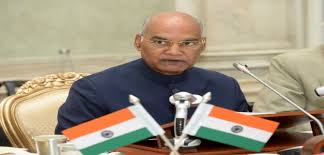
The President of India, Shri Ram Nath Kovind, inaugurated the Constitution Day celebrations, organised by the Supreme Court, to mark the 70th anniversary of the adoption of our Constitution, today (November 26, 2019) in New Delhi.
Speaking on the occasion, the President said that the Constitution is the scripture of our nation that has to be read in a sensitive and delicate manner. The Constitution gave this onerous task to the judiciary. Keeping the role of the Supreme Court as final interpreter of the Constitution and the laws enacted under it, the judiciary assumes the role of its guardian. The authors of our Constitution took extra care in providing it the necessary powers and freedoms to function without any undue influence. Over these eventful seven decades, the judiciary has remained alive to the high responsibility placed on it.
The President noted that the Supreme Court has initiated several innovative measures to reach out to people. But for a large section of people, justice is still beyond reach.
Pointing the issue of making justice accessible to all, the President said that one way out of the high cost is the provision of free legal aid. Remembering, veteran lawyer Ashoke Sen, he said that in the multiple roles Shri Sen played in the field over a long career, his sole objective was the pursuit of justice, for one and all. He expressed hope that more and more law professionals will take inspiration from the example of Shri Sen and distribute freely the fruits of their knowledge among the needy. He said that the task of making justice more accessible to all has to be a collective effort of all the stakeholders in the bench and the bar.
The President said that the question of access is not limited to the cost factor alone. Language too has been a barrier for many, for a long time. He was happy to note that the Supreme Court has started making its judgments available in nine regional languages. He said that another hurdle in the way of justice is the delay and the resulting backlog. Clearing this bottleneck requires detailed deliberations and systemic efforts. Information and communication technology can bring about amazing results in this domain. He was happy to note that beginnings have been made to take help of technological innovations.
The President said that we should strive to spread the awareness about the making of the Constitution, its provisions and its fundamental principle of equality. We need to especially narrate to the young generation the grand vision of our founding fathers. After all, we stand as a mere link between two generations in the continuing saga of this nation. Interpretation of the Constitution is a work in progress, and it will be up to the youth of the nation to carry forward the task of realizing its ideals.
*****
When Is It GOOD To Get Angry?
References on Islam
I highly recommend Ibn Warraq’s “Why I Am Not A Muslim”. Raised as a Muslim, Warraq now lives in the West and is an outspoken critic of Islam. He has a secular humanist approach. The name of the book is deliberately similar to Bertrand Russell’s “Why I Am Not A Christian”. Since the punishment for Islamic apostasy is death, he, like many other ex-Muslims, uses a pseudonym. There are several informative websites run by ex-Muslims: Institute for the Secularization of Islamic Society, Ali Sina’s Faith Freedom, Apostates Of Islam.
Robert Spencer’s, “Islam Unveiled”, is an excellent book for people knowledgeable about Christianity. He contrasts these two religions – a very effective way to get a sense of the magnitude of Islam’s inherent flaws. See his website: Jihad Watch.
Serge Trifkovic’s, “The Sword of the Prophet,” reviews the full bloody history of Islam with a no-holds-barred approach. Read, for example, the horrific Muslim invasion of India. Historians have described it as the bloodiest atrocity prior to the 20th century. Remember, Hindus and Buddhists do not practice a “religion of the book”; strict Islam requires their conversion or death. Read his interview.
Bat Ye’or’s, “ Islam and Dhimmitude: Where Civilizations Collide,” gives a voice to the suffering of non-Muslims forced to live under oppressive Islamic rule. Bat Ye’or, a leading Islamic scholar, rejects Islamic mythology in favor of sound historical analysis. Her website is an excellent source of information on Islam: Dhimmitude.
The above are excellent introductory books. For more indepth studies see Andrew Bostom, Bruce Bawer, Paul Sperry, Steven Emerson, and Sam Harris.
The land of the dinosaurs
Reading this post may make you blind
I am taking no chances. I am a poor man and will be bankrupted if you sue me ! Please therefore take note that reading this post on a screen may be injurious to your eyes. Please also note that if you are sipping coffee at the same time it might spill and burn your thighs as it is hot !!
An emerging mystery in education reform
CEOs sacked for conduct don’t deserve severance pay
Using Performance Standards to Improve Teacher Effectiveness
- The most important way to generate teacher motivation is to enable them to experience success in the classroom. Hence a set of minimum enabling conditions being in place make a huge difference.
- Teachers change when they experience the standards, rather than simply being told about them – towards this, the in-service courses themselves need to incorporate the standards expected of teachers. (A few of the states have begun this process of improving their own inputs to teachers.)
- There is a sequence in which teachers learn (and indeed institutions and systems learn). It is also better to avoid overcrowding expectations. It would therefore be best to plan improvement in terms of stages of teacher development, broken down into three-month phases, each of which has a very limited number of indicators to be attained (4-8). As teachers attain one set of indicators, this motivates them as well as prepares them for the next, higher order, set. The support institutions, too, learn along with the teachers and grow phase-wise in turn.
- Standards and indicators can tend to be vague! It is important to convert them into concrete steps that can actually be implemented by teachers. Thus, if an indicator agreed upon is ‘children ask questions freely, without fear’ there is a need to make clear exactly what the teacher needs to do for this to happen. Hence, as part of the roll out, all teams need to detail the concrete steps involved in converting the expectations into actionable steps.
- Implementer choice and partnering with teachers is more likely to yield results than passing on a set of instructions. In sub-district meetings, teachers should get to choose the indicators they want to attain (from a given list of potential indicators for that stage, though) and identify / develop the steps needed to attain these. Their performance will be assessed against the indicators chosen by them. If possible, peer assessment will be introduced.
- ‘Target setting’ in terms of the degree of improvement in performance can now be practiced. Teachers and their resource persons can use the standards document to fix the degree of change they seek to bring about over, say, a year or six months. They can then assess their progress against this. As this was not possible earlier, improvement efforts tended to lose their way very soon.
- Taking a ‘low-interference’ approach helps – that is, there is no pressure on the system to change curriculum or textbooks or introduce new model of teaching. It is more a case of ‘doing the same as before, but a little differently’; this reduces systemic stress and enables rapid implementation.
Have You Been Un-Hindu Today?
Address by the Hon’ble President of India Shri Ram Nath Kovind on the Occasion of the Inauguration of the Constitution Day
- I feel honoured to be here today to inaugurate the Constitution Day celebrations. Today I feel doubly blessed as before coming to the Supreme Court, I addressed a joint session of parliament on the occasion of the 70th anniversary of adopting the Constitution. I have the rare privilege of being associated with both the institutions, Parliament and the Supreme Court, which are temples of our Republic.
- On this occasion I also feel humbled when I recall our Founding Fathers. Guided solely by the light of liberty and justice, they sat down to write this document of our destiny amid historic events and challenges. They created institutions and designed the right balance among them to ensure that their core objectives are not compromised. The co-existence of our fully independent judiciary with a vibrant parliamentary democracy is a testimony to their sagacity and foresight.
- These sages put in words the noble vision of our Republic in the Constitution after marathon deliberations over three years. The nation will always remain grateful to all the members and office-bearers of the Constituent Assembly, particularly its President, Dr Rajendra Prasad, and the Chairman of the Drafting Committee, Dr Babasaheb Bhimrao Ambedkar, who is rightly known as the architect of the Constitution. Their zeal and devotion to meet the task of such magnitude was matched by contributions from the titans like Jawaharlal Nehru and Sardar Vallabhbhai Patel. They headed various committees and sub-committees, along with ‘Acharya’ Kripalani, H. C. Mookerjee, Gopinath Bordoloi and Amritlal Thakkar.
- I would like to also pay homage especially to the 15 women members of the Constituent Assembly. They included Sarojini Naidu, Rajkumari Amrit Kaur, Hansaben Jivraj Mehta, Sucheta Kripalani and G. Durgabai, who spoke of equal rights for one and all, when women in many parts of the world were denied basic rights.
- In his speech before the Constitution was adopted, Dr Rajendra Prasad rightly noted that the successful working of democratic institutions requires willingness to respect the views of others, and capacity for compromise and accommodation. He said, [quote] “Many things which cannot be written in a Constitution are done by conventions. Let me hope that we shall show those capacities and develop those conventions.” [Unquote] Seventy years later, we have reasons to believe that the nation has lived up to his hopes to a fair degree.
- As Rajen Babu, Babasaheb and many others pointed out that day, a Constitution is after all a mere document, recording in words the inspired ideas. It can come alive and enter our world only when it is translated into life of the nation and its ideals put into practice. It is the scripture of our nation that has to be read in a sensitive and delicate manner. The Constitution gave this onerous task to the judiciary. Keeping the role of the Supreme Court as final interpreter of the constitution and the laws enacted under it, the judiciary assumes the role of its guardian. The authors of our Constitution took extra care in providing it the necessary powers and freedoms to function without any undue influence. Over these eventful seven decades, the judiciary has remained alive to the high responsibility placed on it. I am aware of the fact that it has initiated several innovative measures to reach out to people.
- But for a large section of people, justice is still beyond reach. While we celebrate the 150th birth anniversary of Mahatma Gandhi, let me refer to his views on the issue. Neither was the Father of the Nation a member of the Constituent Assembly, nor do we know his views on our founding document. What we know for sure is that he had played a crucial role in the making of the Constituent Assembly and blessed this historic endeavour. In a sense, the Constitution is the product of the values inspired by the Freedom Struggle. It, thus, very much reflects the democratic virtues Gandhiji lived by. Still, the closest we have as his views on a possible Constitution is a book called ‘Gandhian Constitution for Free India’. Shriman Narayan Agarwal wrote it in 1946, based on his understanding of Gandhian principles. The book had the benefit of being read and approved by Gandhiji himself, even though the words are not his.
- The book is critical of the British judicial system in India. In panchayats of the old times, it says, [Quote] “Justice was cheap and fair. Modern courts, on the contrary, are very expensive; even very ordinary cases are disposed of only after months, if not years.” [Unquote] What I wish to point out here is that Gandhiji would have been unhappy at the high cost of justice.
- Indeed, the Constitution itself calls for making justice accessible to all. Consider the Preamble, which is the ‘seed text’ of the whole document. Why did ‘We, the People of India’, solemnly resolve to constitute India into a republic”? Obviously this pledge seeks, “To secure to all its citizens: JUSTICE—Social, Economical and Political”. Like any religious scripture, this grand statement or “Mahavakya” of the constitution aims to secure liberty, equality and fraternity along with justice.
Ladies and gentlemen,
- On today’s occasion, let us deliberate how we can make justice accessible to all. One way out of the high cost is the provision of free legal aid. Pro-bono service is a subject close to my heart. As many of you know, during my days as a Supreme Court advocate, I provided pro-bono aid to weaker sections of society in general, and women and the poor in particular. I remain grateful to veteran lawyer Ashoke Sen who showed me the way. In the multiple roles he played in the field over a long career, his sole objective was the pursuit of justice, for one and all. I hope more and more law professionals will take inspiration from the example of Shri Sen and distribute freely the fruits of their knowledge among the needy. I would like to stress here that the task of making justice more accessible to all has to be a collective effort of all the stakeholders in the bench and the bar.
- The question of access is not limited to the cost factor alone. Language too has been a barrier for many, for a long time. On this count, however, I am happy that the Supreme Court has followed up my suggestion and started making its judgments available in nine regional languages. In the days to come, the list can include more languages, so that common people can read the verdicts of the highest court.
- Another hurdle in the way of justice is the delay and the resulting backlog. Clearing this bottleneck requires detailed deliberations and systemic efforts. I also understand it is an ongoing process. Information and communication technology can bring about amazing results in this domain, and I am happy to learn that beginnings have been made to take help of technological innovations. In this context, I am glad to learn that three apps for mobile phones are being launched today. This litigant-friendly move will bring the portals of the apex court closer to the people.
Ladies and gentlemen,
- In listing the obstacles before the delivery of justice, I have in mind the words of Dr Ambedkar. In his concluding speech before the Constituent Assembly, he exhorted us not to be tardy in the recognition of the evils that lie across our path and not to be weak in our initiative to remove them. He said, [QUOTE] “That is the only way to serve the country. I know of no better.” [UNQUOTE]
- To answer Babasaheb’s call, we should also strive to spread the awareness about the making of the Constitution, its provisions and its fundamental principle of equality. We need to especially narrate to the young generation the grand vision of our founding fathers. After all, we stand as a mere link between two generations in the continuing saga of this nation. Interpretation of the Constitution is a work in progress, and it will be up to the youth of the nation to carry forward the task of realizing its ideals.
Ladies and Gentlemen,
- Let me share something with you on a personal note. As I mentioned before, I come here after having addressed the Parliament. Standing before you, I recall that in 1993-94, I had made a journey from here to there; from being an advocate here to being a member of the Upper House. Such journeys have enriched my perspectives on the functioning of the republic. The framers of our Constitution rightly underlined the doctrine of separation of powers among the organs of the state. This, however, was not to be a hurdle in serving the people. Indeed, it was meant to serve the people better. Observing the life of the nation from more than one station in my journey, I now better appreciate the vision of our Founding Fathers.
- I thank you for inviting me to share my views. I congratulate the nation on the occasion of the Constitution Day, and extend my best wishes to all of you for the celebrations.
Thank you,
Jai Hind!
*****
What is (more) \’Educationally Responsible\’?
- Encouraging someone to ask questions or give answers to questions no one is asking?
- Helping learners discover worlds of fascinating and worthwhile knowledge around them versus providing them information from books?
- Setting challenging tasks versus \’telling\’ children, giving explanatory lectures ?
- Encouraging reflection or ensuring memorization of the right answers?
- Preventing errors or letting children discover for themselves when they\’ve made a mistake?
- Giving feedback versus giving marks (and remarks)?
- Ensuring all children get the same opportunity versus ensuring different children get different opportunities?
- Doing everything oneself (if you\’re a teacher) versus passing on some of your tasks to children (e.g. marking attendance, ensuring participation of peers)
- Maintaining all provided materials in good shape or using them at the risk of their getting spoilt, torn, etc.?
- Asking community to help with their knowledge heritage versus asking community to contribute to improvement in mid day meal?
- Using a textbook as a resource versus using a textbook as a definitive material (i.e. assuming it is the curriculum)
- Reading this blog or reading a useful book on education?!
What is (more) \’Educationally Responsible\’?
- Encouraging someone to ask questions or give answers to questions no one is asking?
- Helping learners discover worlds of fascinating and worthwhile knowledge around them versus providing them information from books?
- Setting challenging tasks versus \’telling\’ children, giving explanatory lectures ?
- Encouraging reflection or ensuring memorization of the right answers?
- Preventing errors or letting children discover for themselves when they\’ve made a mistake?
- Giving feedback versus giving marks (and remarks)?
- Ensuring all children get the same opportunity versus ensuring different children get different opportunities?
- Doing everything oneself (if you\’re a teacher) versus passing on some of your tasks to children (e.g. marking attendance, ensuring participation of peers)
- Maintaining all provided materials in good shape or using them at the risk of their getting spoilt, torn, etc.?
- Asking community to help with their knowledge heritage versus asking community to contribute to improvement in mid day meal?
- Using a textbook as a resource versus using a textbook as a definitive material (i.e. assuming it is the curriculum)
- Reading this blog or reading a useful book on education?!


You must be logged in to post a comment.