What is Solar Achitecture

Solar architecture is an architectural approach that takes in account the Sun to harness clean and renewable solar power. It is related to the fields of optics, thermics, electronics and materials science. Both active and passive solar housing skills are involved in solar architecture. The use of flexible thin-film photovoltaic modules provides fluid integration with steel roofing profiles, enhancing the building’s design. Orienting a building to the Sun, selecting materials with favorable thermal mass or light dispersing properties, and designing spaces that naturally circulate air also constitute solar architecture. Initial development of solar architecture has been limited by the rigidity and weight of standard solar power panels. The continued development of photovoltaic (PV) thin film solar has provided a lightweight yet robust vehicle to harness solar energy to reduce a building’s impact on the environment.
In the past, we’ve seen solar panels as a necessary evil. They used to be clunky, awkward objects placed haphazardly around a building. Solar panels have evolved in their design and so to has their presence in the world of architecture and design. The major development in solar panels is that they no longer need to be perfectly flat. This has opened up a world of opportunities in their use in more abstract architectural projects. They have their limits, however. It’s hard for solar panels to soak up as much sunlight on an angle.
Architects have managed to take solar panels leaps and bounds. Panels have been incorporated into roofing without simply being placed in rows along a roof. Clients who choose to focus on solar energy can work with architects to designate flat, unused spaces throughout a property to place solar panels without drawing too much attention. More creatively, solar panels have been incorporated into awnings. They have also been incorporated into the landscaping of properties, dividing gardens and filling in empty spaces in the surrounding environment.
The effectiveness of solar architecture is largely determined by the creativity of the architect and the flexibility of the client. A clever architect will be able to incorporate solar panels into the design of a building without making them look bulky and awkward. The more a client is willing to be flexible with the amount of solar energy generated, the more subtly the panels can be incorporated into the design.
Solar panels have been widely available for purchase since the 1980s but have yet to be widely adopted in residential housing.
Some barriers to the widespread adoption of solar panels include worries about the cost of the panels, the impact on jobs, and their appearance.
“Economics is the biggest barrier, and aesthetics are the second,” Gardzelewski says. He says these two things stand in the way of solar becoming the standard for architecture design, rather than a risky and costly add-on.
The economic aspect of solar panels is multifaceted. First, there’s cost and risk perception, and then there’s the larger impact on the economy, such as the creation of green-collar jobs. Some people think that their home’s resale value is at risk when they install solar. One appraiser Gardzelewski spoke to said: “I won’t give a house with solar panels any more value in an appraisal. The appraisal will be the same with or without them.” Because the appraisal industry itself is ambivalent about assigning value to solar panels, many homeowners fear that installing them could actually decrease the value of their home—despite potential savings for buyers on future energy bills.
The initial cost of installing solar panels is notoriously exorbitant. Gardzelewski insists that the actual price of the panels has decreased tremendously, so there is no reason that solar-panel installation costs should remain so high. “Solar-panel installers will give you a quote to put solar panels on your home, and they will tell you it costs a lot more than it should cost or what it needs to cost,” he says. “The panels themselves have come down to where they’re just a fraction of the overall expense.”
One reason solar installation remains such a high-ticket item is that builders haven’t wholeheartedly adopted it. “Once solar integrates into the home-building industry, the price of labor will go down because the contractor is going to manage that pretty tightly,” Gardzelewski says. “If you manage the cost and the labor of solar-panel installation, there’s no room for the price to get jacked way up.”
In coal-industry-driven states, there is also some fear that the rise of solar energy will hurt the economy and take away jobs. But Gardzelewski disagrees. He believes that the long-standing blue-collar jobs of the coal industry could become the long-standing green-collar jobs of the solar industry.
BERG’s 5-Strategy Taxonomy for Solar Architecture
1. Legibility
This refers to revealing and celebrating the building systems to see how they work. This is an industrial look with the “guts” of the building exposed. In this paradigm, seeing the inner workings, wiring, structure, and connection of the solar panels fits in with the overall industrial design.An energy-systems plan (including a radiant-floor heating system, insulation, seasonal shade structures, a ground-source heat pump, and design-integrated solar) for the Fox House in Pavilion, WY. Courtesy of UW-BERG.
2. Material Planes
Gerrit Rietveld’s Schroder House and Ludwig Mies van der Rohe’s Barcelona Pavilion are two examples of buildings focused on planar composition. In the case of the Barcelona Pavilion, Mies used planar composition to celebrate the richness of materials such as glass, marble, onyx, and travertine. With this strategy, the material aspect of a solar panel is celebrated, too. “We really love looking at the crystals and the wiring and all the intricacies of a solar panel,” Gardzelewski says.
3. Form Follows
From the principle “form follows function,” this concept means designing a building that adapts its shape to the path of the sun. This strategy is obvious when a design is altered to provide optimal orientation for a large number of solar panels, often with a stretched-out or swooping form on the south roof. “A solar panel is a huge module of 3 1/2 feet by 5 1/2 feet, and this can seriously influence the size of your roof,” Gardzelewski says. Designing a roof to fit this module can make the actual solar installation not only easier and more effective but also much better looking.
4. Shading Through Solar Architecture
Solar panels can provide shade for the building itself or the adjacent outdoor space; this method is a good solution for a difficult existing roof. “If you build an exterior structure and you can pull out an enclosed porch—a space that you’re not trying to fit onto the existing roof—you can use it to shade a small space outside,” he says. “You can add solar panels to this new area, and it won’t have to blend into the rest of the roof, because it is a completely separate thing.”A 3D model of the Fox House in Pavillion, WY. Courtesy of UW-BERG.
5. Disguised Solar-Panel Design
In this approach, the solar panels are hidden through either compositional strategy or design innovation. This strategy is best used in conjunction with “form follows,” as architecture designed around the size and shape of a solar panel is best suited to disguise the panel (like these solar rooftops from Tesla). “If you can fit them perfectly onto your roof, then you can float or frame the solar panels so you don’t see all of the infrastructure under it—you just see the reflective glass,” Gardzelewski says.
Getting the economic equation for solar panels to work for average middle- and working-class families may take some time. But incorporating BERG’s architectural taxonomy, which integrates solar panels in the design phase, is something architects can do now. Even if a client isn’t going to install solar right away, the taxonomy can help home and building owners incorporate solar panels more aesthetically down the road. And by considering solar as an early constraint that influences building design, architects may be able to usher in an era when solar is finally ubiquitous.
Solar architecture
The term solar architecture refers to an approach to building design that is sensitive to Nature and takes advantage of climatic conditions to achieve human comfort rather than depending on artificial energy that is both costly and environmentally damaging. Unlike the conventional design approach that treats climate as the enemy which has to be kept out of the built environment, solar architecture endeavours to build as part of the environment using climatic factors to our advantage and utilising the energy of Nature itself to attain required comfort levels. Nature’s energies can be utilised in two ways – passiveand active and consequently solar architecture is classified as passive solar and active solar architecture.
Passive solar architecture
It relies upon the design or architecture of the building itself to ensure climate control by way of natural thermal conduction, convection and radiation. The rudiments of solar passive design were developed and used through the centuries by many civilisations across the globe; in fact, many of these early civilisations built dwellings that were better suited to their climatic surroundings than those built today in most developed and developing countries. This has been largely due to the advent of cheap fossil fuels that allowed for artificial temperature and light control at the cost of natural light and cooling. A substantial share of world energy resources is therefore being spent in heating, cooling and lighting of such buildings. The use of solar passive measures such as natural cross ventilation, sufficient day-lighting, proper insulation, use of adequate shading devices coupled with auxiliary energy systems that are renewable and environment friendly can considerably bring down the costs as well as the energy needs of the building.
Passive solar systems
The term passive solar refers to systems that absorb, store and distribute the sun’s energy without relying on mechanical devices like pumps and fans, which require additional energy. Passive solar design reduces the energy requirements of the building by meeting either part or all of its daily cooling, heating and lighting needs through the use of solar energy.
Passive heating
Heating the building through the use of solar energy involves the absorption and storage of incoming solar radiation, which is then used to meet the heating requirements of the space. Incoming solar radiation is typically stored in thermal mass such as concrete, brick, rock, water or a material that changes phase according to temperature. Incoming sunlight is regulated by the use of overhangs, awnings and shades while insulating materials can help to reduce heat loss during the night or in the cold season. Vents and dampers are typically used to distribute warm or cool air from the system to the areas where it is needed. The three most common solar passive systems are direct gain, indirect gain and isolated gain. A direct gain system allows sunlight to windows into on occupied space where it is absorbed by the floor and walls. In the indirect gain system, a medium of heat storage such as wall, in one part of the building absorbs and stores heat, which is then transferred to the rest of the building by conduction, convection or radiation. In an isolated gain system, solar energy is absorbed in a separate area such as greenhouse or solarium, and distributed to the living space by ducts. The incorporation of insulation in passive systems can be effective in conserving additional energy.
Passive cooling
Passive solar technology can also be used for cooling purposes. These systems function by either shielding buildings from direct heat gain or by transferring excess heat outside. Carefully designed elements such as overhangs, awnings and eaves shade from high angle summer sun while allowing winter sun to enter the building. Excess heat transfer can be achieved through ventilation or conduction, where heat is lost to the floor and walls. A radiant heat barrier, such as aluminium foil, installed under a roof is able to block upto 95% of radiant heat transfer through the roof.
Water evaporation is also an effective method of cooling buildings, since water absorbs a large quantity of heat as it evaporates. Fountains, sprays and ponds provide substantial cooling to the surrounding areas. The use of sprinkler systems to continually wet the roof during the hot season can reduce the cooling requirements by 25%. Trees can induce cooling by transpiration, reducing the surrounding temperature by 4 to 14 degrees F.
Active cooling systems of solar cooling such as evaporative cooling through roof spray and roof pond and desiccant cooling systems have been developed alongwith experimental stratergies like earth-cooling tubes and earth-sheltered buildings. Desiccant cooling systems are designed to dehumidify and cool air. These are particularly suited to hot humid climates where air-conditioning accounts for a major portion of the energy costs. Desiccant materials such as silica gels and certain salt compounds naturally absorb moisture from humid air and release the moisture when heated, a feature that makes them re-useable. In a solar desiccant system, the sun provides the energy to recharge the desiccants. Once the air has been dehumidified, it can be chilled by evaporative cooling or other methods to provide relatively cool, dry air. This can greatly reduce cooling requirements
Evaporative cooling
Evaporation occurs whenever the vapour pressure of water is lesser than the water vapour in the surrounding atmosphere. The phase change of water from liquid to the vapour state is accompanied by the release of a large quantity of sensible heat from the air that lowers the temperature of air while its moisture content increases. The provision of shading and the supply of cool, dry air will enhance the process of evaporative cooling. Evaporative cooling techniques can be broadly classified as passive and hybrid.
Passive direct systems include the use of vegetation for evapotranspiration, as well as the use of fountains, pools and ponds where the evaporation of water results in lower temperature in the room. An important technique known as ‘Volume cooler’ is used in traditional architecture. The system is based on the use of a tower where water contained in a jar or spray is precipitated. External air introduced into the tower is cooled by evaporation and then transferred into the building. A contemporary version of this technique uses a wet cellulose pad installed at the top of a downdraft tower, which cools the incoming air.
Passive indirect evaporative cooling techniques include roof spray and roof pond systems.
Roof spray
The exterior surface of the roof is kept wet using sprayers. The sensible heat of the roof surface is converted into latent heat of vaporisation as the water evaporates. This cools the roof surface and a temperature gradient is created between the inside and outside surfaces causing cooling of the building. A reduction in cooling load of about 25% has been observed. A threshold condition for the system is that the temperature of the roof should be greater than that of air.
There are, however, a number of problems associated with this system, not least of which is the adequate availability of water. Also it might not be cost effective, as a result of high maintenance costs and also problems due to inadequate water proofing of the roof.
Roof pond
The roof pond consists of a shaded water pond over an non-insulated concrete roof. Evaporation of water to the dry atmosphere occurs during day and nighttime. The temperature within the space falls as the ceiling acts as a radiant cooling panel for the space, without increasing indoor humidity levels. The limitation of this technique is that it is confined only to single storey structure with flat, concrete roof and also the capital cost is quite high.
Earth cooling tubes
These are long pipes buried underground with one end connected to the house and the other end to the outside. Hot exterior air is drawn through these pipes where tit gives up some of its heat to the soil, which is at a much lower temperature at a depth of 3m to 4m below the surface. This cool air is then introduced into the house.
Special problems associated with these systems are possible condensation of water within the pipes or evaporation of accumulated water and control of the system. The lack of detailed data about the performance of such systems hinders the large-scale use of such systems.
Earth-sheltered buildings
During the summer, soil temperatures at certain depths are considerably lower than ambient air temperature, thus providing an important source for dissipation of a building’s excess heat. Conduction or convection can achieve heat dissipation to the ground. Earth sheltering achieves cooling by conduction where part of the building envelope is in direct contact with the soil. Totally underground buildings offer many additional advantages including protection from noise, dust, radiation and storms, limited air infiltration and potentially safety from fires. They provide benefits under both cooling and heating conditions, however the potential for large scale application of the technology are limited; high cost and poor day-lighting conditions being frequent problems.
On the other hand, building in partial contact with earth offer interesting cooling possibilities. Sod roofs can considerably reduce heat gain from the roof. Earth berming can considerably reduce solar heat gain and also increase heat loss to the surrounding soil, resulting in increase in comfort.
Active solar architecture
It involves the use of solar collectors and other renewable energy systems like biomass to support the solar passive features as they allow a greater degree of control over the internal climate and make the whole system more precise. Active solar systems use solar panels for heat collection and electrically driven pumps or fans to transport the heat or cold to the required spaces. Electronic devices are used to regulate the collection, storage and distribution of heat within the system. Hybrid systems using a balanced combination of active and passive features provide the best performance.
Active solar systems
Active heating
In active systems, solar collectors are used to convert sun’s energy into useful heat for hot water, space heating or industrial processes. Flat-plate collectors are typically used for this purpose. These most often use light-absorbing plates made of dark coloured material such as metal, rubber or plastic that are covered with glass. The plates transfer the heat to a fluid, usually air or water flowing below them and the fluid is used for immediate heating or stored for later use. There are two basic types of liquid based active systems- open loop and closed loop. An open loop system circulates potable water itself, through the collector. In closed loop systems, the circulating fluid is kept separate from the system used for potable water supply. This system is mainly used to prevent the freezing of water within the collector system. However, there is no need to go in for such a system in India, as freezing of water is not a possibility. Also closed loop systems are less efficient as the heat exchanger used in the system causes a loss of upto 10 degrees in the temperature of water, at the same time, one has to reckon with the extra cost of the heat exchanger as well as the circulating pumps. Compared to these, thermosiphon systems are more convenient and simple.
In Thermosiphon systems, the water circulates from the collector to the storage tank by natural convection and gravity. As long as the absorber keeps collecting heat, water keeps being heated in the collector and rises into the storage tank, placed slightly above (at least 50 cm). The cold water in the tank runs into the collector to replace the water discharged into the tank. The circulation stops when there is no incident radiation. Thermosyphon systems are simple, relatively inexpensive and require little maintenance and can be used for domestic applications.
Solar ponds have been developed ,which harness the sun’s energy that can be used for various purposes including production of electricity.
Other devices such as solar cookers, water distillation systems, solar dryers, etc. have been developed which can be used to reduce energy requirements in domestic households and in industrial applications.
Active cooling
Absorption cooling systems transfer a heated liquid from the solar collector to run a generator or a boiler activating the refrigeration loop which cools a storage reservoir from which cool air is drawn into the space. Rankine steam turbine can also be powered by solar energy to run a compressed air-conditioner or water cooler.
Solar refrigeration is independent of electric supply and without any moving parts, for example, Zeolite refrigerator.


Post-traumatic Stress Disorder.

Post-traumatic stress disorder (PTSD) is an phychological disorder that a person can face who has experienced or witnessed a traumatic event such as a natural disaster, terrorist attack, war/combat, rape, or death, sexual violence or serious injury.

People with PTSD have intense and annoying thoughts and feelings associated with their experience that last long after the traumatic event is over. One may relive the event through flashbacks and nightmares. They may feel sad, afraid, or angry. And they may feel separated or alienated from others. People with PTSD can avoid situations and people that are reminiscent of traumatic events and have a strong negative reaction to mundane things such as loud noises and accidental contact.

According to reports in context to United States, about 3.6% of people about 5.2 million adults develop PTSD in time of last year , and an estimated 7.8 million Americans will develop Women are more likely to develop PTSD than men. This may be because their are high chances that women are more likely to be victims of domestic violence, abuse and rape.

Symptoms:
• Intrusive thought: Intrusive thoughts such as repeated involuntary reminders. A miserable dream; or a flashback of a traumatic event. Flashbacks are so vivid that people feel like they are remembering or seeing the traumatic experience in front of them.
• Avoidance: Avoiding the memory of traumatic events may include avoiding people, places, activities, objects, and situations that can cause disastrous memory. People may try not to remember or think about traumatic events. They may resist talking about what happened and how it makes them feel.
• Mood changes and Behaviour : Negative thoughts and feelings that lead to persistent and distorted beliefs about oneself and others, such as not being able to remember important aspects of traumatic events. Distorted thoughts about the cause or effect of an event can lead to false accusations of yourself or others. Persistent fear, fear, anger, guilt, or shame. There is much less interest in the activities that I enjoyed before. Feeling alienated or alienated from others; or unable to experience positive emotions (lack of happiness or satisfaction).

Treatment:
It is important to note that not everyone who experiences trauma develops PTSD, and not everyone who develops PTSD requires psychiatric treatment. For some people, the symptoms of PTSD disappear over time. Others are better with the help of their support system (family, friends,etc) . However, many people with PTSD need specialized medical treatment to help recover from psychological stress. It is important to remember that trauma which causes the PTSD can lead to serious distress. The sooner a person is treated, the more likely one can recover fast from PTSD.
Psychiatrists and other mental health professionals use several effective ( authorized and proven) methods to help people recover from PTSD. Both talk therapy and medical dosage provide effective evidence-based treatment for PTSD.

Stagflation: a serious economic issue

Photo by Reynaldo #brigworkz Brigantty on Pexels.com

Stagflation is a situation wherein there persists both inflation(consistent rise in the prices of all the goods and services available in a country) as well as stagnation(lack of any economic development). Since 1970, there have been paradoxical developments in most developed nations of the world. There has been a considerable fall in the level of production and employment on one hand, and rise in the general price level on the other. That is nothing but inflation and stagnation coexisting. Inflation and unemployment are mutually exclusive economic phenomena. There has always been an trade off between these two in an economy. Thus, when both of this coexist, it leads to the rise of a paradoxical situation called Stagflation.

The features on stagflation include:

  • Rise in general prices.
  • Rise in the wage rate.
  • Reduction in the level of demand for goods and services.
  • Reduction in the level of production.
  • Emergence of excess capacity.
  • Increase in involuntary unemployment (a situation wherein people are willing to work at the prevailing wage rate but do not get any work).

Causes of stagflation:

  • Increase in the supply of money.
  • Rise in wage rates under pressures from trade unions.
  • Consistent rise in agricultural prices, owing to the government policy.
  • Rise in administered prices.
  • Credit expansion by the banks.
  • Increase in saving and investment.
  • Reduced demand for labor resulting in unemployment.
  • Rise in prices of petroleum and coal.
  • Increase in industrial capacity.

Stagflation is certainly a more difficult proposition than inflation. In the words of Haberler, “The combination of unemployment and inflation is a very delicate matter, if we fight recession, we stimulate inflation and if we fight inflation, we stimulate recession.

Some measures to control stagflation:

  • Creation of bank credit and supply of money must be checked.
  • Excise duty and other indirect taxes need to be reduced to stimulate production.
  • Consumption level is to be very carefully encouraged.
  • Labour intensive enterprises are to be encouraged to stimulate employment.
  • Appropriate income policy needs to be pursued to strike against the problem of inflation.
  • Wage rate must be suitably regulated.

Stagflation not only causes economic unrest but also leads to social instability. There are many instances where the rich gets richer and the poor gets poorer. There seems a moral dispute within the people resulting in hoarding, black marketing ,etc. Thus, stagflation is an serious economic hindrance which needs to be kept in check.

What is Climate Responsive Architecture

 The climate responsive design refers to the architecture that reflects the particular region-specific weather conditions of the peculiar area. It uses data of weather patterns and factors like sun, wind, rainfall, and humidity. The building structure is built according to the same.

In a given region, Climate is the predominant weather. Just as flora and fauna adapt to their surroundings and create sustaining ecosystems, architects should design buildings that respond to the climate and are living rather than consuming. Climate change is one of the greatest challenges faced by human society in the 21st century. To tackle climate change, carbon dioxide emissions can be reduced by changing the way buildings are designed, constructed, managed, and used. The climate-responsive architecture aims to design the optimized building according to specific characteristics of that particular site, to minimize extreme energy use and have a reduced impact on the natural environment.

What Architects must know about climate responsive architecture
Image Sources: Tropical Climate Analysis ©Pinterest

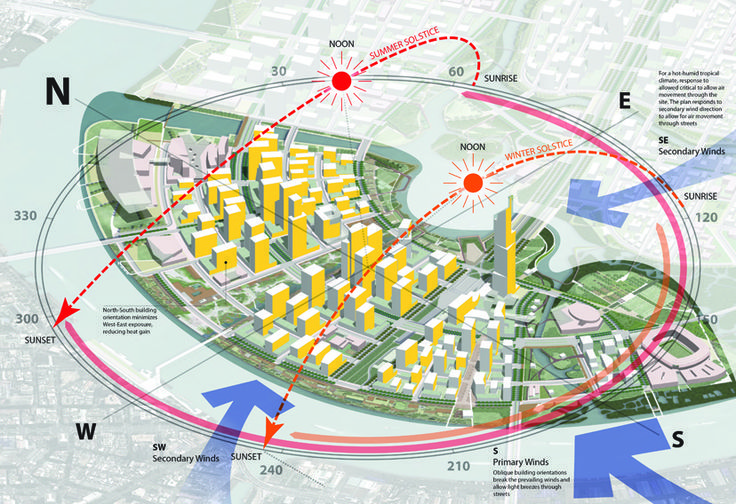
Climate-responsive architecture functions in lockstep with the local climate(temperature, historical weather patterns, etc.), the direction of the sun (sun path and solar position), site-specific environmental conditions (such as wind, rainfall, humidity), seasonality and also taking into account the natural shade provided by the surrounding area and topography to design pleasant buildings which ensure physiological comfort of users, energy-efficient buildings with reduced reliance on artificial energy.

With an approach from a genuinely sustainable perspective to create buildings that respond directly to their unique place, the process begins with climate data rather than architectural sketches. By addressing the questions such as “Determining the sun’s position in the sky at a given time and season?”, “How much rain falls on the site each season?” and “What effect will the wind have on the building keeping in mind the occupant’s comfort?” The building should be adaptive to changing environmental conditions to meet its functional requirement and to provide comfort. Some steps to achieve climate responsive design involve:

Site analysis

To understand the specific site, it’s important to understand the ramifications of the building through site analysis. The Layout of the Building is designed through an integrative design process to achieve the most optimal location for the building.

Sun direction

The building should be placed considering the cardinal directions. The goal is to maximize the amount of sun that heats space in the winter as well as decreasing the amount of sun in the summer to reduce the less reliance on mechanical energy for cooling and heating.

Window Considerations

Buildings with façades facing the south should use a window area appropriate to their orientation, and glazing should use a double or triple-panelled Low-E-coated glass. In the hottest months, it minimizes the amount of heat transmitted into space while keeping heat inside during the cooler winter months.

Minimize the Building Footprint

To minimize building footprint, architects should design the buildings to be multi-functional. The building will have fewer excavation costs and more wall areas that can benefit from the sun’s warming effects along with an increase in natural daylighting.

Design for Natural Ventilation

A building can be cooled by designing for stack ventilation to draw cooler air from low building openings to protect from warm air rises while carrying heat away through openings at the top of the space. The rate at which the air moves is a function of the vertical distance between the inlets and outlets, their size, and the temperature difference over the room height.

Relax the Occupants Comfort Standards

With climate responsive design, the amount of energy used to cool and heat the building is reduced by dependence on using natural systems, the sun, and the wind. This is possible only if the occupants are open to adding or removing clothing layers according to the seasons, increasing the amount of energy saved.

Building for Geographic Area

When designing the envelope of the building, factors such as insulation, vapor barriers, and air barriers will vary radically depending on whether the project is in the cold, snowy north, the hot and humid south or the arid desert.

Modelling and Analysis

Architects and designers can utilize tools such as lighting models, energy modeling, computational fluid dynamics, daylighting studies, to understand how the design best integrates with the local climate and micro-climate specific to the site.

Find Energy-Efficient Appliances and Systems

Developing climate-responsive homes involves minimizing environmental degradation. Installing sustainable systems and appliances in a building can reduce atmospheric and surface-level pollution. Smart devices may significantly increase the energy efficiency of a house, reducing its ecological effects.

Smart thermostats connect to a building’s HVAC system. They access local weather readings through a Wi-Fi connection, adjusting indoor temperatures for efficiency. They also use motion detection sensors, turning systems off in vacant homes.

Smart lights have similar functions, decreasing artificial light energy usage. Designers can connect a structure’s autonomous systems to renewable energy sources, further decreasing ecological impacts.

Consult an Energy Professional

Sustainable architects can additionally improve the energy efficiency and low impact of construction projects by consulting a power professional. During an energy consultation, certified workers evaluate a whole property, determining its electricity usage. The power professional interprets their findings, helping builders understand how to improve the sustainability of a home.

They evaluate the building’s design, environment, and residential habits when determining its efficiency. When using the feedback, construction professionals can significantly minimize ecological degradation on-site.

Perform Multiple Iterations

If at first, you don’t succeed, try again! It will take the design team multiple passes of just these basic layouts in your pre-design or schematic design phase to hone in the lowest energy use possible, optimized for your specific site. However, it’s better to spend more time in the early phases of design to model the project, which is far less costly than making changes in the field or later on in the design process. Keep at the trials, and eventually, your building will be responding directly to the climate specific to the project site.

Multiple Iterations

The design practice of Climate-Responsive architecture involves more time in the early phases of design to model the project along with multiple iterations in the design process.

Destructive Habits: Bias

There are many habits that destroy your mental peace, happiness and mostly you. Some of them are usually with different addictions or because of people but what destroys you as a person depends on how you view things and people around you. Your environment is what shapes you but to be different, you have to do it by yourself. 

The most common habits have become common because we are more focused elsewhere than ourselves. To be a better version of yourself, you need to view your flaws and work on them.

  1. Spotlight Effect: We overestimate how much attention people give to our words and appearance. Imagine you said something but it felt wrong after it came out. In reality, everyone only remembers it for the moment and immediately moves to the next topic. We ponder over it for days, forgetting that others don’t care as much as we do about it.

Example: “The red shoes don’t match the outfit at all! I guess the guys are laughing because of it”

*Red shoes matched the outfit better than you imagined*

Truth: No one cares about you as much as your loved ones do. Everyone is just a temporary traveler in your life and you have to be okay with it. Dress how you want and be how you want to be. 

  1. Status Quo Bias: We prefer for things to be the same; usually change is viewed as a negative aspect of life. If you adopt a new habit that cuts out something from your life, you immediately feel guilty of not being able to manage it, so you quit your new habit for the old one because it feels more comfortable.

Example: “I like to paint, but the classes are on Friday, I won’t be able to party! I can always paint later so let’s party now!”

*Proceeds to miss out on an amazing experience*

Truth: Change is hard. To adapt to a new routine and new place is always difficult and your mind is stuck on the old routine, but only then do you learn more about yourself. You may like to paint now, but when you explore it, you may not want to put the brush down! You need to explore that change for a while to know more about yourself.

  1. Zeigarnik Effect: We focus more on the incomplete tasks than the ones that have been completed. Sometimes, we forget to see that we have accomplished many things on the way, and we focus on the ones that we have not accomplished yet. It pushes you to feel bad that you are not able to do anything. 

Example: “Bro I lost the Table-Tennis Pan-India Semi-finals! I feel so like I can’t do it anymore”

*Came so far by winning championships and tournaments*

Truth: You have to see where you are today. Look behind you and see the different hurdles you had to come across. You didn’t cross them just to go back did you? It does feel bad to not achieve something the first time you try it, but when you achieve it, after toiling for some time, the fruit is incomparable.

  1. Pessimism Bias: We tend to overestimate the possibility of negative outcomes. We always have a small part of your mind that searches for a negative outcome. What you see and ask for, is what you get and have. You will increase the chance of losing the opportunity if all you see is losing it.

Example: “I feel like I will lose this chance to be head of department, there are so many others who are way more qualified.”

*Loses opportunity because it messed with your confidence and screwed your interview*

Truth: What energy you put out, is what you usually get. Sometimes, you lose opportunities, but don’t dwell on the wrong aspects. You may not have the necessary qualifications but the way you portray yourself is what gets you opportunities.

  1. Sunken-Cost Fallacy: We invest more in things that have cost us something, even if we have negative outcomes. We feel that if we invest more, the difference can be recovered with just a little gain.

Example: “My portfolio is down by 25%! I will invest 50% of it so with a 25% gain, I can recover the loss”

*Proceeds to lose more because the stock market is in a bear phase*

  1. Self-serving Bias: Our failures are situational but our success is our hardwork’s result. We view that our failures are determined by external factors and our success is because of us. It is also difficult to ascertain what caused success or failure on the spot so we divide it based on the result.

Example: “I lost the game because the opponent was too strong. I got the best player of the match because I practiced well”

*Opponent won because of your overconfidence in your practice*

“The eyes sees only what the mind is prepared to comprehend.”

~Robertson Davies

Sometimes, we see these habits recurring but we don’t want to change because we feel it will make others dislike us. By changing, you are not making your friends feel bad but giving them a chance to understand that it’s time to improve. It’s time to make yourself the person you always wanted to be. Everyday is a learning step and only then can you improve. These habits of biasing situations have a lot of effect on where you are and where  you want to be.

This post has been inspired by Ankur Warikoo. You can check his post on LinkedIn here!

This was a delight to write about. I hope you have found this article interesting and let me know about your thoughts on this. Keep on smiling!

Destructive Habits: Bias

There are many habits that destroy your mental peace, happiness and mostly you. Some of them are usually with different addictions or because of people but what destroys you as a person depends on how you view things and people around you. Your environment is what shapes you but to be different, you have to do it by yourself. 

The most common habits have become common because we are more focused elsewhere than ourselves. To be a better version of yourself, you need to view your flaws and work on them.

  1. Spotlight Effect: We overestimate how much attention people give to our words and appearance. Imagine you said something but it felt wrong after it came out. In reality, everyone only remembers it for the moment and immediately moves to the next topic. We ponder over it for days, forgetting that others don’t care as much as we do about it.

Example: “The red shoes don’t match the outfit at all! I guess the guys are laughing because of it”

*Red shoes matched the outfit better than you imagined*

Truth: No one cares about you as much as your loved ones do. Everyone is just a temporary traveler in your life and you have to be okay with it. Dress how you want and be how you want to be. 

  1. Status Quo Bias: We prefer for things to be the same; usually change is viewed as a negative aspect of life. If you adopt a new habit that cuts out something from your life, you immediately feel guilty of not being able to manage it, so you quit your new habit for the old one because it feels more comfortable.

Example: “I like to paint, but the classes are on Friday, I won’t be able to party! I can always paint later so let’s party now!”

*Proceeds to miss out on an amazing experience*

Truth: Change is hard. To adapt to a new routine and new place is always difficult and your mind is stuck on the old routine, but only then do you learn more about yourself. You may like to paint now, but when you explore it, you may not want to put the brush down! You need to explore that change for a while to know more about yourself.

  1. Zeigarnik Effect: We focus more on the incomplete tasks than the ones that have been completed. Sometimes, we forget to see that we have accomplished many things on the way, and we focus on the ones that we have not accomplished yet. It pushes you to feel bad that you are not able to do anything. 

Example: “Bro I lost the Table-Tennis Pan-India Semi-finals! I feel so like I can’t do it anymore”

*Came so far by winning championships and tournaments*

Truth: You have to see where you are today. Look behind you and see the different hurdles you had to come across. You didn’t cross them just to go back did you? It does feel bad to not achieve something the first time you try it, but when you achieve it, after toiling for some time, the fruit is incomparable.

  1. Pessimism Bias: We tend to overestimate the possibility of negative outcomes. We always have a small part of your mind that searches for a negative outcome. What you see and ask for, is what you get and have. You will increase the chance of losing the opportunity if all you see is losing it.

Example: “I feel like I will lose this chance to be head of department, there are so many others who are way more qualified.”

*Loses opportunity because it messed with your confidence and screwed your interview*

Truth: What energy you put out, is what you usually get. Sometimes, you lose opportunities, but don’t dwell on the wrong aspects. You may not have the necessary qualifications but the way you portray yourself is what gets you opportunities.

  1. Sunken-Cost Fallacy: We invest more in things that have cost us something, even if we have negative outcomes. We feel that if we invest more, the difference can be recovered with just a little gain.

Example: “My portfolio is down by 25%! I will invest 50% of it so with a 25% gain, I can recover the loss”

*Proceeds to lose more because the stock market is in a bear phase*

  1. Self-serving Bias: Our failures are situational but our success is our hardwork’s result. We view that our failures are determined by external factors and our success is because of us. It is also difficult to ascertain what caused success or failure on the spot so we divide it based on the result.

Example: “I lost the game because the opponent was too strong. I got the best player of the match because I practiced well”

*Opponent won because of your overconfidence in your practice*

“The eyes sees only what the mind is prepared to comprehend.”

~Robertson Davies

Sometimes, we see these habits recurring but we don’t want to change because we feel it will make others dislike us. By changing, you are not making your friends feel bad but giving them a chance to understand that it’s time to improve. It’s time to make yourself the person you always wanted to be. Everyday is a learning step and only then can you improve. These habits of biasing situations have a lot of effect on where you are and where  you want to be.

This post has been inspired by Ankur Warikoo. You can check his post on LinkedIn here!

This was a delight to write about. I hope you have found this article interesting and let me know about your thoughts on this. Keep on smiling!

Thor Box Office Collection: Khuda Hafiz 2 was blown away in the storm of this Hollywood movie Thor earned so many crores in 4 days

The Hollywood film Thor: Love and Thunder broke all the box office records.This Marvel Cinematic Universe movie made huge bucks over the weekend from Hollywood movies released in the country.It dropped “The Lion King” from the top five list.Before his Hindi earnings, Vidyut Jamwal’s Khuda Hafiz 2 also failed.’Thor: Love and Thunder’ Earns Hugely Released a day before the US in India, ‘Thor: Love and Thunder’ film surprised everyone by grossing a grand premiere of 18.60 crores on the first day.But only after that the business of this film fell by 36% on Friday but on Saturday already showed an increase again and earned 16.70 crores After that the film on Sunday earned around 18 crores in all languages ​​If we consider the first 4 days Adding up this film then the film has surpassed the 60 crore mark, which is more than any Indian film to be released this week ‘Thor’ surpasses Khuda Hafiz 2, Thor has become the 5th highest grossing film among of all Hollywood films released in the country. He eliminated “Lion King” from the top 5 list, which made a deal of 54.75 crores in the first weekend of 2019.It will be interesting to see how tough Thors fight will be.” Khuda Hafiz 2” failed Bollywood films was seen filling water before this Hollywood film flop and has barely earned Rs 5 crore in three days.Looking at the earnings, it wouldn’t be wrong to say that people flatly rejected this action film.

Thor Box Office Collection: Khuda Hafiz 2 was blown away in the storm of this Hollywood movie Thor earned so many crores in 4 days

The Hollywood film Thor: Love and Thunder broke all the box office records.This Marvel Cinematic Universe movie made huge bucks over the weekend from Hollywood movies released in the country.It dropped “The Lion King” from the top five list.Before his Hindi earnings, Vidyut Jamwal’s Khuda Hafiz 2 also failed.’Thor: Love and Thunder’ Earns Hugely Released a day before the US in India, ‘Thor: Love and Thunder’ film surprised everyone by grossing a grand premiere of 18.60 crores on the first day.But only after that the business of this film fell by 36% on Friday but on Saturday already showed an increase again and earned 16.70 crores After that the film on Sunday earned around 18 crores in all languages ​​If we consider the first 4 days Adding up this film then the film has surpassed the 60 crore mark, which is more than any Indian film to be released this week ‘Thor’ surpasses Khuda Hafiz 2, Thor has become the 5th highest grossing film among of all Hollywood films released in the country. He eliminated “Lion King” from the top 5 list, which made a deal of 54.75 crores in the first weekend of 2019.It will be interesting to see how tough Thors fight will be.” Khuda Hafiz 2” failed Bollywood films was seen filling water before this Hollywood film flop and has barely earned Rs 5 crore in three days.Looking at the earnings, it wouldn’t be wrong to say that people flatly rejected this action film.

What is Vulnerability Analysis for Environment

Vulnerability assessments are used to ascertain the susceptibility of a natural or human system to sustaining damage (or benefiting) from climate change. Vulnerability is a function of exposure, sensitivity, and adaptive capacity. Vulnerability assessments differ from impact assessments in that they more fully consider adaptive management or policy responses that may lessen negative impacts (or enhance positive impacts) of climate change. Where vulnerability assessments are used to guide management or conservation actions, they are often most informative when they are “place-based” and designed to address a particular resource or system of interest. However, in the climate change literature, there are multiple definitions of vulnerability and there is no single universal assessment framework. The assessments included below focus on various exposure units, are applied at different spatial scales, and are relevant to different locations

Planning adaptation at the local level requires an understanding of the current and projected climate hazards as well as an understanding of the vulnerable sectors of the city. These two factors are combined in a risk and vulnerability assessment. There are a multitude of methods that can be applied to conduct risk and vulnerability assessments in urban areas. Knowledge about the different types of methods and their outputs is important for the selection of the most efficient and effective method to be applied in accordance with the capacities of the local authorities.

Climate change risks in a city or town should be characterised from the point of view of several aspects: the climate threat (projected climatic conditions); context of the geographic location (e.g. coastal area, mountain region, etc.); and affected sectors and systems (e.g. human health, infrastructure, transport, ports, energy, water, social well-being, etc.) including the impacts on the most vulnerable groups (e.g. the elderly, he homeless, those at risk of poverty, etc.).
Signatory cities to develop their Risk and Vulnerability Assessment (RVA). Under the Covenant of Mayors reporting framework, the Risk and Vulnerability Assessment incorporates data on climate hazards, vulnerable sectors, adaptive capacity and vulnerable population groups. In terms of climate hazards, signatory cities are requested to define the probability and impact of the most relevant hazards, their expected change in intensity and frequency, as well as timescales. This is done via a defined indication of the level of confidence. For each identified climate hazard, the vulnerable sectors and their vulnerability level is defined. Further, an assessment of the adaptive capacity at the sectoral level is defined, using positive adaptive capacity categories, such as access to services, governmental and institutional capacity, physical and environmental capacity, knowledge and innovation. It is also possible to assign indicators for the identified vulnerable sectors and adaptive capacity. 
Risk assessments focus primarily on the projected changes in climatic conditions, inventory of potentially impacted assets, the likelihood of the impact happening and the resulting consequences. Vulnerability assessments emphasise exposure, sensitivity and adaptive capacity of systems, assets and populations. Integrated risk and vulnerability assessments address both the vulnerability to and the impacts of climatic hazards.
The methods designed for risk and vulnerability assessments can be divided into top-down methods, which are usually based on quantitative data (e.g. census data, downscaled climate models) and use mapping; and bottom-up methods that often employ local knowledge to identify risks and are generally qualitative in nature.
Indicator-based vulnerability assessments use sets of pre-defined indicators that can be both quantitative and qualitative and can be assessed both through modelling or stakeholder consultation.
A quick risk screening method, which is based on existing knowledge, can be employed first-hand to have a clearer understanding of the needs for an in-depth assessment.
Regardless of the method applied, the assessment should, at minimum, take the following elements into consideration:Trends of various climate variables (e.g. average and extreme temperature, number of days with extreme heat, intensive rainfall events, snow cover), ideally based on a range of different climate scenarios;
Expected (direct and indirect) impacts (threats and opportunities) by identifying the most relevant hazards as well as the areas of the city that are at most risk given an overlay of the spatial distribution of the total population, vulnerable populations, economic activities and economic values;
Timescale, such as short, medium (e.g. 2050s) or long-term (e.g. end of century);
An indication on the level of confidence (e.g. high, medium, low) for such impacts, with a view of facilitating the decision-making process given the degree of uncertainty attached to the results.
Climate Change Vulnerability is defined by the IPCC as the susceptibility of a species, system or resource to the negative effects of climate change and other stressors, and includes three components: exposure, sensitivity, and adaptive capacity:Exposure is the amount and rate of change that a species or system experiences from the direct (e.g., temperature, precipitation changes) or indirect (e.g., habitat shifts due to changing vegetation composition) impacts of climate change;
Sensitivity refers to characteristics of a species or system that are dependent on specific environmental conditions, and the degree to which it will likely be affected by climate change (e.g., temperature or hydrological requirements); and
Adaptive capacity is the ability of a species to cope and persist under changing conditions through local or regional acclimation, dispersal or migration, adaptation (e.g., behavioral shifts), and/or evolution.
What are Climate Change Vulnerability Assessments?
Climate Change Vulnerability Assessments (CCVAs) are emerging tools that can be used as an initial step in the adaptation planning process. A CCVA focuses on species, habitats, or systems of interest, and helps identify the greatest risks to them from climate change impacts. A CCVA identifies factors that contribute to vulnerability, which can include both the direct and indirect effects of climate change, as well as non-climate stressors (e.g., land use change, habitat fragmentation, pollution, and invasive species?).
The process of completing a CCVA includes the synthesis of existing information about the target species or system, confidence levels in those data, and identification of knowledge gaps. A CCVA combines this background information with climate projections to identify the specific elements of exposure, sensitivity, and adaptive capacity that contribute to the overall vulnerability of the species or system.
Figure adapted from Glick et al. 2011
There is no standard method or framework to conduct a CCVA, and a variety of methods are being implemented at government, institutional, and organizational levels. Because of this, interpretation of CCVA results should carefully consider whether and how each of the three components of vulnerability (exposure, sensitivity, and adaptive capacity) were evaluated, if non-climate stressors were included in the assessment, how uncertainty is presented, the geographic location covered by the assessment, and whether the entire life cycle of a target species was evaluated, particularly for those that are migratory. Generally, the approach chosen should be based on the goals of practitioners, confidence in existing data and information, and the resources available (e.g., financial, personnel).
Some of the most common frameworks applied regionally are:NatureServe Climate Change Vulnerability Index (CCVI) – A quantitative assessment based on the traits of fish, wildlife, and habitats that might make them more vulnerable to climate change. The CCVI is suitable for assessing large numbers of species and comparing results across taxa. It is based in Microsoft Excel, relatively easy to use, and includes factors related to direct and indirect exposure, species-specific sensitivity, and documented or modeled responses to climate change.
Climate Change Response Framework (CCRF) – A collaborative, cross-boundary approach among scientists, managers, and landowners designed to assess the vulnerability of forested habitats. The assessment incorporates downscaled climate projections into tree species distribution models to determine future habitat suitability. Experts conduct a literature review to summarize the effects of climate change, as well as non-climate stressors, and consider all three components of vulnerability to come to a consensus on a vulnerability ranking and level of confidence.
Northeast Association of Fish and Wildlife Agencies (NEAFWA) Habitat Vulnerability Model – An approach created to consistently evaluate the vulnerability of all non-tidal habitats across thirteen Northeastern US states. This method is based on an expert-panel approach, and is made up of 4 sections, or modules, based in Microsoft Excel. The modules score vulnerability based on climate sensitivity factors (adaptive capacity is also partially addressed) and non-climate stressors to produce vulnerability rankings and confidence scores. Experts use these scores to construct descriptive paragraphs explaining the results for each species or habitat evaluated. These narratives help to ensure transparency, evaluate consistency, and clarify underlying assumptions. The National Park Service, the U.S. Forest Service, and several states have used this model successfully to assess habitat vulnerability.
Expert opinion workshops and surveys – These are often qualitative (or mixed qualitative/quantitative), and have been used by a number of states including a report on habitat vulnerability in Massachusetts. These assessments are usually developed independently, and are typically not based on a standardized framework. This allows greater flexibility for the institution conducting the CCVA; however, it is more difficult to make direct comparisons across assessment results since the specific factors evaluated may vary.
Outputs from the CCVAs outlined above compare the relative vulnerability among species or systems and identify major factors contributing to the vulnerability, confidence in the factors assessed, and remaining knowledge gaps. This information can inform adaptation strategies and actions by identifying the areas where additional monitoring and research is needed, and helping to prioritize management and policy decisions.
How are CCVAs presented in the Massachusetts Wildlife Climate Action Tool?
The CCVAs presented in this tool are drawn from assessments completed throughout the Northeast United States, as well as the Midwest and Mid-Atlantic regions. The NatureServe Climate Change Vulnerability Index was the most common method of assessing species vulnerability, though other methods were also included (see descriptions above). The Massachusetts Climate Action Tool presents a summary of CCVA results for individual species and forest habitats; in cases where more than one CCVA result is offered, studies come from various locations and may have used different assessment methodologies. Users should consult the original source for a complete understanding of how vulnerability was assessed and detailed results.
We present multiple Climate Change Vulnerability Assessment (CCVA) results because not all species were assessed specifically in Massachusetts. For example, an assessment may have included Massachusetts, but been regional in scope. Because species’ ranges and life histories extend beyond state boundaries, assessments conducted in other areas may provide a more comprehensive understanding of their vulnerability. We suggest starting with CCVAs that include Massachusetts (e.g., North Atlantic LCC, North Atlantic coast), and then comparing results from nearby states. We also suggest considering the life history and migration patterns of species to determine what factors might be most influential as the species moves in or out of Massachusetts. In some cases, CCVA rankings may vary for the same species because of unique factors within a given area, or because different methodologies were used in different studies. It is important to read the expert opinions supporting ranking to understand why a ranking differs from one state to another.
In the Massachusetts Climate Action Tool, the following information is presented for each species assessed:
Ranking: The vulnerability ranking categories refer to the predicted extent that the assessed species will be impacted by climate change. Because the ranking category names and definitions vary across reports, similar rankings have been grouped and are presented in a standardized format. See Table 1 (next page) to compare these with the original ranking categories and definitions used by the CCVAs cited in this tool.
Confidence: This category describes how confident the authors are in the vulnerability ranking assigned to each species in the assessment. Confidence scores refer to the amount and quality of the available background information on that species, and do not necessarily include the uncertainty associated with the projected climate data used for rankings.
Emission Scenarios: Emissions scenarios describe future releases of greenhouse gases, aerosols, and other pollutants into the atmosphere, and are based on expected changes in human populations and technology. See climate change page for more information on emission scenarios and climate models.
Time Period: Vulnerability for each species is considered for a specific time period. Many vulnerability assessments consider the current and future impacts that a species may experience through the years 2050, 2080, or 2100.
Location: This field refers to the geographic region considered in the vulnerability assessment. CCVAs can be conducted on local, regional, state, and national levels.
Simplified vulnerability ranking categories as presented in the Massachusetts Wildlife Climate Action Tool, cross-referenced with the original vulnerability ranking categories and definitions used in the assessment reports cited in this tool.
Additional Resources on CCVAs
Climate Registry for the Assessment of Vulnerability (CRAVe): The Climate Registry for the Assessment of Vulnerability (CRAVe) is a searchable, public registry on CCVAs. The purpose of CRAVe is to make information about ongoing and completed vulnerability assessments readily accessible. CRAVe is hosted in two locations: 1) USGS National Climate Change and Wildlife Science Center and 2) the EcoAdapt Climate Adaptation Knowledge Exchange. The assessments in CRAVe include studies on species and ecosystems, built environments and infrastructure, cultural resources, and socioeconomic systems. Users can access CRAVe to conduct searches across all vulnerability assessments to find the information necessary for decision making.
Vulnerability Assessment Trainings: The U.S. Fish and Wildlife Service’s National Conservation Training Center (NCTC) offers training courses to guide conservation and resource management practitioners in the theory, design, interpretation, and implementation of CCVAs. Participants also gain a perspective of how CCVAs fit into the broader context of adaptation planning. Courses follow the guidelines established in Scanning the Conservation Horizon – A Guide to Climate Change Vulnerability Assessment.
References
Adaptation Subcommittee to the Governor’s Steering Committee on Climate Change. 2010. The impacts of climate change on Connecticut agriculture, infrastructure, natural resources, and public health.
Brandt, L., et al. 2014. Central Hardwoods ecosystem vulnerability assessment and synthesis: a report from the Central Hardwoods Climate Change Response Framework project. Gen. Tech. Rep. NRS-124. U.S. Department of Agriculture, Forest Service, Northern Research Station, Newtown Square, PA.
Butler, P., et al. 2015. Central Appalachians forest ecosystem vulnerability assessment and synthesis: a report from the Central Appalachians Climate Change Response Framework. Gen. Tech. Rep. NRS-146. U.S. Department of Agriculture, Forest Service, Northern Research Station, Newtown Square, PA.
Byers, E., and S. Norris. 2011. Climate change vulnerability assessment of species of concern in West Virginia. West Virginia Division of Natural Resources, Elkins, West Virginia.
Cullen, E., E. Yerger, S. Stoleson, and T. Nuttle. 2013. Climate change impacts on Pennsylvania forest songbirds against the backdrop of gas development and historical deer browsing. Pennsylvania Department of Conversation and Natural Resources, Wild Resource Conservation Program (WRCP-010376), Harrisburg, PA.
Dawson, T. P., S. T. Jackson, J. I. House, I. C. Prentice, G. M. Mace. 2011. Beyond predictions: biodiversity conservation in a changing climate. Science 332: 664-664.
Furedi, M., B. Leppo, M. Kowalski, T. Davis, and B. Eichelberger. 2011. Identifying species in Pennsylvania potentially vulnerable to climate change. Pennsylvania Natural Heritage Program, Western Pennsylvania Conservancy, Pittsburgh, PA.
Galbraith H., DesRochers DW, Brown S, Reed JM (2014) Predicting vulnerabilities of North American shorebirds to climate change. PLoS ONE 9(9): e108899.
Glick P., B. A. Stein, and N. Edelson, editors. 2011. Scanning the conservation horizon: a guide to climate change vulnerability assessment. National Wildlife Federation, Washington, DC.
Handler, S., et al. 2014. Michigan forest ecosystem vulnerability assessment and synthesis: a report from the Northwoods Climate Change Response Framework. Gen. Tech. Rep. NRS-129. U.S. Department of Agriculture, Forest Service, Northern Research Station, Newtown Square, PA.
Handler, S., et al. 2014. Minnesota forest ecosystem vulnerability assessment and synthesis: a report from the Northwoods Climate Change Response Framework. Gen. Tech. Rep. NRS-133. U.S. Department of Agriculture, Forest Service, Northern Research Station, Newtown Square, PA.
Hoving, C.L., Y.M. Lee, P.J. Badra, and B.J. Klatt. 2013. Changing climate, changing wildlife: a vulnerability assessment of 400 Species of Greatest Conservation Need and game species in Michigan. Wildlife Division Report No. 3564. Michigan Department of Natural Resources, Lansing, MI.
Intergovernmental Panel on Climate Change (IPCC). 2007. Climate change 2007: impacts, adaptation, and vulnerability. Contribution of Working Group II to the Fourth Assessment Report of the Intergovernmental Panel on Climate Change. M. L. Parry, O. F. Canziani, J. P. Palutikof, P. J. van der Linden, and C. E. Hanson (eds.). Cambridge University Press, Cambridge, UK.
Intergovernmental Panel on Climate Change (IPCC). 2014. Climate change 2014: impacts, adaptation, and vulnerability. Part A: Global and sectoral aspects. Contribution of Working Group II to the Fifth Assessment Report of the Intergovernmental Panel on Climate Change Field, C. B., V. R. Barros, D. J. Dokken, K. J. Mach, M. D. Mastrandrea, T. E. Bilir, M. Chatterjee, K. L. Ebi, Y. O. Estrada, R. C. Genova, B. Girma, E. S. Kissel, A. N. Levy, S. MacCracken, P. R. Mastrandrea, and L. L. White (eds.). Cambridge University Press, Cambridge, UK.
Janowiak, M., et al. In preparation. New England forest ecosystem vulnerability assessment and synthesis: a report from the New England Climate Change Response Framework. U.S. Department of Agriculture, Forest Service, Northern Research Station.
Janowiak, M.K., et al. 2014. Forest ecosystem vulnerability assessment and synthesis for northern Wisconsin and western Upper Michigan: a report from the Northwoods Climate Change Response Framework. Gen. Tech. Rep. NRS-136. U.S. Department of Agriculture, Forest Service, Northern Research Station, Newtown Square, PA.
Manomet Center for Conservation Science (Manomet) and Massachusetts Division of Fisheries and Wildlife (MA DFW). 2010. Climate change and Massachusetts fish and wildlife: Volume 2 habitat and species vulnerability. Massachusetts Division of Fisheries and Wildlife, Westborough, MA.
Manomet Center for Conservation Science (Manomet) and National Wildlife Federation (NWF). 2013. The vulnerabilities of fish and wildlife habitats in the Northeast to climate change. Manomet Center for Conservation Sciences, Plymouth, MA.
Schlesinger, M.D., J.D. Corser, K.A. Perkins, and E.L. White. 2011. Vulnerability of at-risk species to climate change in New York. New York Natural Heritage Program, Albany, NY.
Small-Lorenz, S., L. A. Culp, T. B. Ryder, T. C. Will, and P. P. Marra. 2013. A blind spot in climate change vulnerability assessments. Nature Climate Change 3:91–93.
Sneddon, L. A., and G. Hammerson. 2014. Climate change vulnerability assessments of selected species in the North Atlantic LCC Region. NatureServe, Arlington, VA.
Tetratech, Inc. 2013. Vermont Agency of Natural Resources climate change adaptation framework. Vermont Agency of Natural Resources, Waterbury, VT.
Whitman, A., A. Cutko, P. DeMaynadier, S. Walker, B. Vickery, S. Stockwell, and R. Houston. 2013. Climate change and biodiversity in Maine: vulnerability of habitats and priority species. Report SEI-2013-03. Manomet Center for Conservation Sciences (in collaboration with Maine Beginning with Habitat Climate Change Working Group), Brunswick, ME.
Young, B. E., E. Byers, K. Gravuer, K. Hall, G. Hammerson, A. Redder, J. Cordeiro, and K. Szabo. 2011. Guidelines for using the NatureServe Climate Change Vulnerability Index, version 2.1. NatureServe, Arlington, VA.

Importance of Cybersecurity.

Cyber security is the protection of Internet-connected systems such as hardware, software, and data from cyber threats. This technique is used by individuals and businesses to protect against unauthorized access to data centers and other computerized systems.

Cyber security is important because it protects all categories of data from theft and damage. This includes sensitive data, intellectual property data, government and industry information data and systems information,personally identifiable information , protected health information and personal identified information . Without cybersecurity programs, organizations cannot protect themselves from data breaches campaigns and are attractive targets for cybercriminals.
Global connectivity and the use of cloud services such as Amazon Web Services to store sensitive and personal information increase both inherent and residual risks. Along with increasingly sophisticated cybercriminals, widespread misconfiguration of cloud services means an increased risk for businesses suffering from successful cyberattacks and data breaches. Executives can no longer rely solely on off-the-shelf cybersecurity solutions such as antivirus software and firewalls, cybercriminals are smarter, and their tactics are more resilient to traditional cyber defense. It is important to cover all areas of cybersecurity to remain fully protected.
Cyber threats can come from all levels of an organization. Organization should educate employees about common cyber threats such as social engineering fraud, phishing, ransomware attacks and other malware designed to steal intellectual property and personal information. Should include cybersecurity awareness training for.

Types of Cyber Threats :
Malware-This is a type of malicious software that can use arbitrary files or programs to harm computer users. This includes worms, viruses, Trojan horses, and spyware. Ransomware-This is another type of malware. This involves an attacker locking the victim’s computer system files and requesting payment to unlock them.
Social Engineering-This is an attack that relies on human interaction to trick users into breaking security procedures and gaining sensitive information that is normally protected.
Phishing-This is a form of social engineering that involves sending deceptive emails or text messages similar to those from trusted or known sources. Often in random attacks, the purpose of these messages is to steal sensitive information such as credit cards and login information.
Spear phishing – This is a type of phishing attack aimed at targeted users, organizations, or businesses.

Cyber security is very important today. Our society is more dependent on technology than ever before and in today’s digital time data breaches that could lead to the theft of personal information which are easily disclosed to social media accounts. Sensitive information such as social security numbers, credit card information, and bank account details are now stored in cloud storage services such as Dropbox and Google Drive. In fact, whether you are an individual, a small business, or a large multinational company, in today’s time everyone rely on computer systems every day .

Examination system of India

Photo by Pixabay on Pexels.com

In India, the most significant job of a Board, Council, or University is to conduct examinations. The memory of a test has been entrenched in a child’s consciousness since the beginning of his school life. He is taught that, in the end, the tests would be the sole determinants of his future existence.

Advantages

Examinations have grown in prominence in the scheme of a student’s life in India. Of course, there is no disputing that tests are quite vital for pupils. There is no alternative way on the horizon for objectively assessing the merits of the kids. All pupils are not always the eager kind to pay attention to their classes and thoroughly prepare for them in order to get the maximum advantage. The examination system forces them in this direction. The examiners are unknown to the examinees during the public examination. Examiners have no room for bias in their work of reviewing scripts, and examinations allow for an honest appraisal of the merits of the pupils. The examination’s most valuable gift to a student is that it instills in him a zest for healthy competition; and without this spirit, a student would struggle to flourish in life. The present examination system may offer a possible chance to a mediocre student to score better results than a really meritorious one.

Disadvantages

The current examination system, with its yardstick, fails to correctly judge the merit of such a pupil. A brilliant student’s mind and talent can never be constrained to the confines of his textbooks. His perspective is broader. A student, on the other hand, may be of ordinary ability. But he makes precise assumptions about the likely questions, and he reproduces them perfectly in the examination. His outcomes might be pretty appealing. This oddity is the result of India’s current examination system. In the current method, an examinee must answer a large number of questions in a short period of time. Clearly, he sees no way to respond based on his conception and reasoning. As a result, he has to memorize the courses and answers from memory. As a result, determining actual merit becomes a farce. The examiners must review a huge number of scripts in a short amount of time. They, too, are required to do justice in the consistent value of the response scripts in a hurry. Furthermore, the attitude of the examiners under different conditions is occasionally reflected in the task.

This testing system requires an upgrade. Some modifications are needed in the system of determining a student’s merit in a single examination. Before rendering a final judgment on a student’s performance, his records for the full academic session must be considered. Methods for assessing pupils’ qualitative abilities should be developed. As a result, the darkness of disorder will vanish in the wake of the dazzling light of the cosmos.

What is C++? Where and how to learn C++. complete information

Many people want to know what is C++, and maybe you have also come here to know the same, today we will tell you what is C++, and will also tell you what is the difference between C++ and C language. .So keep reading this article thoroughly and completely.

Do you also have an interest in Coding or Programming? If it is, that’s a good thing. Nowadays everyone should learn to program, and C ++ is also a part of this, about which we are going to give you information today.

As we told you that nowadays it is a very good thing to learn coding or programming, and everyone should be aware of it, still the time is going on sub digital, and in such a situation you can think that the time to come will be faster. It is going to grow, and at the same time, it is also going to be very much needed.

Friends, C ++ is also a coding language like PHP, CSS, and HTML. It is also used to make a program.

You also use software and apps to make your daily life easier. Examples of software – There is other software like Chrome, Windows, VLC, etc.
The language we are telling you about today is the world’s oldest programming language, about which we are going to tell you in detail today. Also, where is C programming used?

And today we are going to give you complete information about how to learn the C language, so read this article thoroughly and completely, so that you understand everything well and do not miss anything.


What is C++?

What is C++


C++ is a programming language that is part of the Object Oriented Programming System. This language was developed by Bjarne Stroustrup in 1985. It uses the abstraction of data using a concept named “classes”, among other features, to allow object-oriented programming.

There are no virtual functions in C. C is a middle-level programming language, which uses a top-down approach. A namespace is not available in the C language. There are currently over 35 different operators in C++, which can perform everything from arithmetic and bit manipulation to logical operations, comparisons, and more.

The main purpose of C++ programming was to add object-oriented concepts to the already available C programming. In today’s time, Object Oriented Programming is considered the best in programming.
Programs written in the C++ programming language can be run on operating systems such as Unix, Linux, Windows, etc. Classes are created to use object-oriented concepts.

Software of various types of Mobile Platforms, Satellite Connected Software, Set Top Box etc. are also developed in “C++” language. The “C++” language is used to make the programming codes of iPhone and iPad easy and reusable.

What is the difference between C language and C++?

  1. C language is a procedure-oriented programming language and C++ is a procedure and object-oriented programming language.
  2. Function overloading is never done in C language whereas it is in C++.
  3. C language is a top-down approach whereas C++ is a bottom-up approach.
  4. There is no inheritance in C language while it is in C++.
  5. A namespace is also not found in C language whereas it is found in C++.
  6. C language is a middle-level programming language whereas C++ is a high-level programming language.
  7. C++ has a polymorphism concept whereas C language does not.
  8. There is no virtual function in C language whereas there is in C++.
  9. Exception handling is not possible in C language whereas it is in C++.
  10. C++ has both user-defined and built-in data types, whereas C language has only built-in data types.
  11. C++ has operator overloading whereas C language does not.
  12. The concept of encapsulation does not work in C language, whereas it does in C++.
  13. C language does not support reference variables whereas C++ does.

Why learn C++?

As we studied earlier, C++ is a base language for many programming languages. Therefore, learning C++ as the core language will play an important role while studying other programming languages. It shares similar concepts such as data types, operators, control statements and many more.

‘C’ can be widely used in various applications. It is a simple language and provides fast execution. There are many jobs available for ‘C’ developers in the current market. In today’s date, you will get a lot of saree jobs, and in the coming time also it will be used a lot.

If you learn C++, then you will not have any problem learning other computer programming languages, after learning the C language, you can make both system software and application software of the computer.
Let us tell you that C ++ is the most basic programming language. If you enter the programming field of the computer

If you want, first you have to learn C++. If you learn another programming language without learning C++.

C ++ language is very popular in Computer Programming Languages ​​and its programming language is still used in making much software.

Where and how to learn C++?

If you want to learn C++ and work with it, then you can also read C++ online, you will find many such websites and YouTube channels online from which you will get a chance to learn C++ for free. Let us tell you a list of some such websites.

  • w3schools.com (FREE)
  • tutorialspoint.com (FREE)
  • codewithharry.com (FREE)
  • codecademy.com (FREE/PAID)
  • Udemy.com (FREE/PAID)

Apart from all this, if you do a little research on YouTube, you will find a lot of good classes, where you will get to know everything about C++ for free, and you will also get to learn a lot about it.

So friends today we told you in this post what is C++? And how can you learn it, we will tell you only that in today’s time you should also have knowledge about coding, and should also become.

This is going to be needed the most in the coming times, everything is now being done online and with the help of electronics, and at the same time, e everything has become smart too.

So if you have anything that we told you today in this post if there is any such thing that you have not understood, then you can ask us in the comment box given below, we will try our best to help you. And also do share this post as well.

What is Land Suitability Analysis

and suitability assessment is a method of land evaluation, which identifies the major limiting factors for planting a particular crop. Land suitability assessment includes qualitative and quantitative evaluation. In the qualitative land suitability evaluations, information about climate, hydrology, topography, vegetation, and soil properties is considered and in quantitative assessment, the results are more detailed and yield is estimated. At present study we prepared land suitability assessment map for rain-fed wheat and barley crops based on FAO “land suitability assessment framework” using parametric method and machine learning algorithms in Kurdistan Province, located in west of Iran. This is a unique study that compared two machine learning-based and traditional-based approaches for mapping current and potential future land suitability classes. Moreover, potential yield of rain-fed wheat and barley crop were computed by FAO model.

1. Introduction

Rapid population growth in developing countries means that more food will be required to meet the demands of growing populations. Rain-fed wheat and barley, as major grain crops worldwide, are planted under a wide range of environments and are a major staple source of food for humans and livestock [1][2][3][4]. The production of such staple crops influences local food security [5]. Rain-fed wheat and barley are cultivated on approximately 6 and 0.64 million ha in Iran, respectively [6]. They are well adapted to the rain conditions of western Iran, where mean precipitation is 350–500 mm. The production of rain-fed wheat and barley per unit area in Iran is low compared to developed countries worldwide [2]. One of the main causes for this low yield is that the suitability of land for their cultivation has not been determined. To overcome this problem, land suitability assessment is needed, which can help to increase crop yield by growing these crops in the locations that are most suited to their growth [7].

The first step in agricultural land use planning is land suitability assessment which is often conducted to determine which type of land use is suitable for a particular location [8]. Land suitability assessment is a method of land evaluation, which identifies the major limiting factors for planting a particular crop [9][10]. Land suitability assessment includes qualitative and quantitative evaluation. In the qualitative land suitability evaluations, information about climate, hydrology, topography, vegetation, and soil properties is considered [11] and in quantitative assessment, the results are more detailed and yield is estimated [12]. The FAO land evaluation framework [13][14] and physical land evaluation methods [15] have been widely used for land suitability assessment.

Land suitability maps provide the necessary information for agricultural planners and are vital for decreasing land degradation and for assessing sustainable land use. There is a lack of land suitability mapping and associated information in Iran because land suitability surveying and mapping in Iran have followed the traditional approach [16][17][18][19][20]. In the traditional approach, abbreviation of the soil variability through a soil map unit to a representative soil profile may cause the precision of the land suitability maps to be lacking and ignores the continuous nature of soil and landscape variation, resulting in the misclassification of sites and discrete and sharply defined boundaries [21][22]. Moreover, the traditional approach is time-consuming and costly [23].

Machine learning (ML) models are capable of learning from large datasets and integrate different types of data easily [24][25]. In digital soil mapping framework, these ML models have been applied to make links between soil observations and auxiliary variables to understand spatial and temporal variation in soil classes and other soil properties [24][26][27][28]. These ML models include artificial neural networks, partial least squares regressions, support vector machines, generalized additive models, genetic programming, regression tree models, k nearest neighbor regression, adaptive neuro-fuzzy inference system, and random forests [26][27][28]. It should be noted that random forests and support vector machines have been the most commonly used techniques in the digital soil mapping community in the last decade due to their relatively good accuracy, robustness, and ease of use. The auxiliary variables can be obtained from digital elevation models(DEM), remotely sensed data (RS), and other geo-spatial data sources [24][29][30][31][32][33][34][35].

2. Discussion

Although in recent years, ML models have been widely used to create digital soil maps [24], little attempt has been made for using ML models to digitally map land suitability classes [36][37]. For instance, Dang et al. [38] applied a hybrid neural-fuzzy model to map land suitability classes and predict rice yields in the Sapa district in northern Vietnam. Auxiliary variables included eight environmental variables (including elevation, slope, soil erosion, sediment retention, length of flow, ratio of evapotranspiration to precipitation, water yield, and wetness index), three socioeconomic variables, and land cover. Harms et al. [39] assessed land suitability for irrigated crops for 155,000 km2 of northern Australia using digital mapping approaches and machine learning models. They concluded that the coupling of digitally derived soil and land attributes with a conventional land suitability framework facilitates the rapid evaluation of regional-scale agricultural potential in a remote area.

Although Kurdistan province is one of the main agriculturally productive regions of Iran and holds an important role in the country’s crop production rank, the mean yield of rain-fed wheat and barley in these regions is lower than 800 kg ha−1 [40]. Land suitability maps can classify the areas that are highly suitable for the cultivation of the two main crops and can help to increase their production. However, such information is commonly scarce in these semi-arid regions.

References

  1. Dawson, I.K.; Russell, J.; Powell, W.; Steffenson, B.; Thomas, W.T.; Waugh, R. A translational model for adaptation to climate change. New Phytol. 2015, 206, 913–931. [Google Scholar] [CrossRef] [PubMed]
  2. FAO. FAO Year Book; FAO Publication: Rome, Italy, 2013. [Google Scholar]
  3. Houshyar, E.; Esmailpour, M. The impacts of tillage, fertilizer and residue managements on the soil properties and wheat production in a semi-arid region of Iran. J. Saudi Soc. Agric. Sci. 2018, 93, 43–51. [Google Scholar] [CrossRef]
  4. Jamshidi, A.; Javanmard, H.R. Evaluation of barley (Hordeum vulgare L.) genotypes for salinity tolerance under field conditions using the stress indices. Ain Shams Eng. J. 2018, 9, 2093–2099. [Google Scholar] [CrossRef]
  5. Qader, S.H.; Dash, J.; Atkinson, P.M. Forecasting wheat and barley crop production in arid and semi-arid regions using remotely sensed primary productivity and crop phenology: A case study in Iraq. J. Saudi Soc. Agric. Sci. 2018, 613–614, 250–262. [Google Scholar] [CrossRef] [PubMed]
  6. FAO. Fertilizer Use by Crop in the Islamic Republic of Iran; Food and Agriculture Organization: Rome, Italy, 2005. [Google Scholar]
  7. FAO. Land Evaluation: Towards a Revised Framework; Food and Agriculture Organization of the United Nations: Rome, Italy, 2007. [Google Scholar]
  8. Bodaghabadi, M.B.; Faskhodi, A.A.; Saleh, M.H.; Hosseinifard, S.J.; Heydari, M. Soil suitability analysis and evaluation of pistachio orchard farming, using canonical multivariate analysis. Sci. Hortic. 2019, 246, 528–534. [Google Scholar] [CrossRef]
  9. De la Rosa, D.; Mayol, F.; Diaz-Pereira, E.; Fernandez, M. A land evaluation decision support system (MicroLEIS DSS) for agricultural soil protection. Environ. Model. Softw. 2004, 19, 929–942. [Google Scholar] [CrossRef]
  10. Halder, J.C. Land suitability assessment for crop cultivation by using remote sensing and GIS. J. Geogr. Geol. 2013, 5, 65–74. [Google Scholar] [CrossRef]