

What is online Casino
Online casinos, also known as virtual casinos or Internet casinos, are online versions of traditional casinos. Online casinos enable gamblers to play and wager on casino games through the Internet. It is a prolific form of online gambling.
Casino games are enjoyed by millions of people all over the world and have been for many years. Ever since the first online casinos began offering their services over the internet, this form of gambling has grown even further in popularity. It’s now easier than ever before to play, and you don’t even have to leave the house.
Playing at online casinos can be a lot of fun, and of course, there is also the opportunity of winning some money. It’s also really quite straightforward, even if you’re not particularly great with computers, and perfectly safe, too. Despite these facts, the idea of playing online for real money can be quite daunting for some. That’s why we put together this introduction to online casinos.

In this section of our casino guide, we’ll teach you everything you need to know in order to enjoy playing casino games on the web. It includes a collection of useful articles explaining what online casinos have to offer and how they work. These articles cover the bonuses and rewards you can benefit from online, and there’s also some advice for choosing where to play. There is also a handy online casino FAQ.
You can see a more detailed description of each of these articles below, along with a link to each article. Further down the page, we’ve offered a step-by-step guide to joining an online casino, including our recommendations of where to play. We’ve also listed our top tips for playing online
Understanding Online Casinos – Essential Information
Online Casinos vs. Land-Based Casinos
It’s fair to say that playing casino games over the internet is a different experience than playing in a land-based casino. The basic principle remains the same, of course, but there are several notable differences. In this article, we compare playing live to playing online, and take a look at the advantages and disadvantages of both.
About Random Number Generators
Randomness occurs naturally in a live casino with the spin of a roulette wheel or the roll of a dice, but it has to be artificially reproduced online. This is achieved with the use of computer programs known as random number generators. You don’t really need to know how these work to enjoy playing online, but we explain all about them in this article.
Fairness and Security at Online Casinos
People can be put off the idea of playing online for a number of different reasons. Two particularly common concerns are whether the games are fair and whether it’s safe to provide your personal details. Such concerns are largely unfounded, as most online casinos make sure that they are both fair and secure. Find out how in this article.
Online Casino Software Explained
In this article, we explain how the software at online casinos works to provide accurate simulations of all the different games. We look specifically at the three main types of software used – downloadable, instant, and mobile – and we also address the reasons why most casinos choose to use third-party software providers.
Welcome Bonuses at Online Casinos
Welcome bonuses are offered by most online casinos as an incentive for new players to sign up. They are also known as sign-up bonuses, and they usually take the form of additional funds to play with. You typically have to make an initial deposit to be eligible, but some places offer a few chips completely for free. This article explains bonuses in more detail.
Rewards and VIP Schemes at Online Casinos
Once you have signed up at an online casino, they’ll want you stick around. This is why they tend to offer rewards based on playing activity and have VIP schemes for their most valuable players. You can gain some real benefit from these opportunities if you play regularly, but you need to know how they work. You can find out how in this article.
Choosing Where to Play
Choosing which online casino to play at can be difficult, primarily because there are so many to choose from. Most of them are decent enough, but some are better than others. Ideally, you want to choose somewhere that is top quality and provides for any specific preferences you may have. This article gives advice on how to do this.
Online Casino FAQ
In this article, we list a range of frequently asked questions relating to online casinos. We also provide detailed answers to these questions, along with details of where to find additional information if required. The topics covered include which games are available, how much money you need, legal issues, and much more.
Getting Started Online – A Step-by-Step Guide
If you want to play casino games online but don’t really know what to do, this step-by-step guide will help you get started. We explain the importance of playing at the right places and talk you through exactly what you need to do to open an account and start playing. The whole process is simpler than you might think!
1Choose the RIGHT Online Casino
The very first step you need to take is to decide which casino you are going to join. You may have noticed that we’ve suggested choosing the right casino and not the best one, and there is a good reason for this. Online casino players have their own ideas about what makes the “best” online casino, and not all players will agree on this point.
For example, a player that loves playing slots would probably consider the best casino to be one that has plenty of different slot games and offers regular slot-related bonuses. A player that prefers playing blackjack, however, is likely to view the best casino as one that offers good bonuses and rewards for playing blackjack.
The point we’re trying to make here is that you should really be playing at a casino that suits your own preferences. You should consider what is important to you, and then try to find a casino that offers what you want. The following are some of the questions you might want to ask yourself when deciding which casino is right for you:
- Does the game selection include your favorite game(s)?
- Are there bonuses/rewards available for your favorite game(s)?
- Can you deposit using your preferred deposit option(s)?
- Can you play in your preferred currency?
- Do the minimum/maximum deposits suit your budget?
- Do the minimum/maximum stakes suit your budget?
- Is the game software compatible with your preferred device?
This is by no means an exhaustive list, but it covers some of the main factors that are important to online casino players. It’s also worth noting that not all casinos are open to players in all parts of the world. Therefore, the right option for a player in the United Kingdom, for example, is not necessarily going to be the right option for a player in the United States.
This is precisely why we don’t just list the “best” online casinos at GamblingSites.com. We have our top overall rankings, which provide a very good indication of where we think you should be playing, but we also recommend the top casinos in a variety of different categories.
We rank the top casinos by region, for instance, and the top casinos for high rollers. We provide lists of recommended places to play specific games, too.
Best apps that will make you want to install them!

Apps assure us that we can do so much with the touch of a button. Or more appropriately, with the touch of a screen. Want to go somewhere in particular? With the press of a ‘screen’, you will know how to get there and the mode of transport available to reach your destination. Do you wish that you had ready-made food at your table? Within a few clicks, you will be having your desired meal without having to leave your house.
All these are made possible by the applications that are available on playstore and other app stores. There are apps available today for every function that you can imagine. So to make the best use of your android phone. Take a look at some of the best apps that will make you want to install them!
1.Bitwarden Password Manager
With the Bitward Password Manager app, you would no longer face the hassle of resetting your passwords for your social media and other important sites. This app provides you with a vault to secure your passwords and usernames and retrieve them when required. You no longer need to worry about forgetting your passwords or facing the risk of its disclosure to anyone due to the app’s encryption functionality. This app surely makes the netizens want to install it.
2. Credit Karma
Credit Karma is a lighthearted financial application. Its purpose is to allow you to check your credit score for free. Furthermore, the app will alert you when your credit score changes significantly. Other features of the app include notifying you of credit cards that you might be eligible for based on your credit score.You will also receive notifications if a new account has been opened in your name. This app has indeed the best to offer for free of charge!
3. Gboard
Gboard is a virtual keyboard app, brought to you by the master of the search engines, namely Google. It is a simple tech app that allows you to type with gestures and voice commands. It also allows you to search for emojis and GIFs. The icing on the cake here is that you can search the web on this keyboard without having to leave the app you were using. If not in your life, it will certainly make you want to install it.
4. Google Drive
Google Drive is your one stop drive to access and store your Google Docs, Google Files, Google Photos, Google Slides, Google Sheets and other Google data you can think of as they are all integrated with the Google drive app. In a traditional sense, you can access your word documents, excel sheets, powerpoint presentations and photos, all at one place.
It also makes it easier to locate files and downloads on your device, and also enables easy sharing of your documents through mail or messaging apps. Thus making it one of the best apps that makes you want to install it.
5. Zedge
Do you often find yourself scouring through the internet looking for wallpapers and ringtones? Let your search end with Zedge, a one stop app where you will find wallpapers, ringtones, notification tones, and alarms across a variety of genres. This will certainly make you want to install this app on your phone as it boasts several options and varieties in its content.
So these are some of the best apps that you may want to check out. I am looking forward to downloading the Gboard app.
References
Joe Hindy, December 2021, 15 best free Android apps available right now, http://www.androidauthority.com
Technologies that have gone obsolete.

With rapid technological advancements, we witness several unique and innovative technologies that take the market by storm! They become the talk of the town, sometimes go out of stock, and build a foundation for newer and better technological ideas to formulate. Finally, no matter how advanced these technologies are, it goes obsolete as it paves way for newer technologies to storm the market.
We have had the privilege of witnessing several such technologies that completely blew our minds. But sadly, some are no longer in use or have gone obsolete.
Here is a list of some of the technologies that have gone obsolete.
So let us reminisce about the past!
1.Telephones and wired landlines

I am reminded of the classic monotonous ringtone of a telephone as I write about this! Although not often used today, telephones and landlines have had a long run as it’s origins can be traced back to the 1840s. It has gone through several advancements and iterations, such as the rotary dial phones and wired landlines.
Rotary dial phones have gone obsolete and the wired landlines are waiting to be one as portable and handheld solutions are multiplying across the world. However, we would never forget the long conversations we have had while sitting close to a telephone and holding on to the receiver.
2. Phone booths

Gone are the times when people queued up outside a phone booth to make a call. Now you might see people queuing up to buy the latest I-Phone before it goes out of stock for a while! With handheld devices and network services being made available and affordable, phone booths no longer serve the purpose for which it was originally intended.
There have been rumours about Google planning to develop these telephone booths into Wifi spots. For now, it stands as a reminder of the telephone’s long history.
3. Pagers and beeper
Pagers and beepers were used in the 1980s as portable alternatives to landline telephones. They were mainly used by emergency service workers and doctors for people to reach out and connect with them, even when they were away from a landline telephone. Users could send and receive messages with these pagers and beepers.
The early 2000s witnessed it’s decline as smartphones emerged into the market. But due to their durability and better network coverage, they are still in use by a few numbers. However, among the vast majority, this technology has gone obsolete.
4. DVD a.k.a Digital Versatile Disc

DVD is an evolutionary and a very familiar video format for many of us. We all have had the pleasure of inserting the DVDs into our DVD Players to enjoy audio and video content. It had several advantages over its predecessors as it had more storage space and was more durable.
Today, video streaming platforms and high speed internet have replaced the DVDs to become the most sought after medium of entertainment.
5. Floppy disc

In the modern ages, Floppy disc is the universal computer icon that indicates the function of saving files. However, with the auto-saving options made available in many softwares, these are disappearing even as an icon. Floppy discs were mainly in use during the 1970s. The initial ones were capable of storing upto 80 kilobytes of data. With further developments made to the floppy discs, it’s storage capacity was increased to hold upto 144MB of data.
Due to low durability and vulnerability to corruption, it was soon replaced by CD-ROMs. Today, one can say that this technology has gone obsolete.
Which of these inventions do you remember using and which are the ones that I have missed out? I am sure there are many. Put them in the comments below!
ANALYSIS OF THE STYLE AND STRUCTURE OF THE NOVEL THE STONE ANGEL BY MARGARET LAURENCE

Margaret Laurence’s 1964 novel The Stone Angel depicts the story of Hagar Shipley, whose life was filled with chaos and sorrows. Hagar Shipley the protagonist of the novel is a ninety year old woman who outlived her husband and younger son John. Hagar is the daughter of a wealthy shop owner, Jason Currie. As a young woman she marries Brampton Shipley against the wishes of her parents. After marriage she gave birth to two sons Marvin and John, among which Hagar shows favoritism towards younger son John. Hagar and Brampton’s marriage become unsuccessful and they become separated. Hagar takes John along with her, but finally he returns to his father. Hagar visits her hometown Manawaka, after hearing the news of Brampton’s poor health, and he dies soon. Then John too dies soon in a car accident. Upon hearing the news of John’s death, Hagar doesn’t show any emotions. From these incidents she becomes a strong, emotionless person, the stone angel, as the title suggests. Then, she lives with her elder son Marvin and his wife Doris. Hagar runs off from them, when they planned to send her to nursing home, and wanders around at Shadow point. Towards the end Marvin and Doris takes her back home, brings to the hospital. Aware that she is dying Hagar finally apologizes to Marvin.
This life story of Hagar is presented in the first person point of view by the author. The narrator itself is Hagar, who presents the events in the form of fragmented memories and images. The novel is divided into ten chapters and they shifts back and forth between the present and the past. At the present Hagar is a ninety year old woman, whose physical breakdown made her dependent. As Hagar narrates her own story, the narrative arc goes back to her early ages, where the events are presented in a chronological order. But these memories and images of the past occur in a fragmented way, which represents the present, helpless, ill condition of Hagar. Margaret Laurence has incorporated the technique of stream of consciousness in the narration. This made the mental and emotional state of narrator transparent. And by this the readers will also be able to perceive the intensity of her feelings and experiences and they can feel with her. The shift from present state to past memories can also be analysed as the attempt of Hagar to
suppress her fear of mortality. The use of Hagar as narrator to tell her own story makes the work more special. Even though Hagar tells her past in the form of monologues, whose tragic flaw is excessive pride, they can also be considered as biased. By the structure it can also be considered as a kind of autobiography of Hagar. The shift from present to past somehow resembles the narrative part of Benjamin in the novel The Sound and the Fury. Margaret Laurence made the novel rich with various symbols and images which strengthens the narrative. The title itself, identifies with Hagar. The stone angel represents the rigid, unbending, proud self of Hagar. But at the same time she is not completely without emotions. Towards the end she feels guilt, sorrow and regret. So, the symbol of stone angel
clearly depicts Hagar. As an angel she considered herself as superior to others, whose tragic flaw was excessive pride. The symbol of eggs, used by author represents nurture and compassion for others, which lacks in Hagar. While analyzing the images used by the author, the biblical image is superior. The name Hagar, came from Bible, Abraham’s concubine and mother of Ishmael. As Hagar was banished from heaven, Hagar in the novel also left her home. The nursing home and hospital imagery can be related to death which Hagar fears. The narration, images and symbols makes the novel greatest Canadian novels ever written by Margaret Laurence. The two narrative arcs, narration through fragmented images and stream of consciousness technique, first person perspective etc make the structure and style of the novel different.
PROCRASTINATION AND PRODUCTIVITY
Since the global pandemic, covid 19 had made a lot of changes in our ways of life, we are facing a lot of problems also. Nowadays, as most people and students work and study from home, their procrastination also increased. The habit of procrastination was present in most people, but this change to work from home increased this habit to a certain level. Procrastination is the habit of delaying an important task, usually focusing on less urgent, more enjoyable, and easier activities instead. The biggest challenge these procrastinators feel is the inability to start. The word procrastination originated from Latin “procrastinatus“, which itself evolved from the prefix “pro” meaning and “crastinus” which means “of tomorrow”. This can lead to make us feel guilty or ashamed and it leads to reduced productivity and makes a chance to not achieve our goals.

So it is important to stop the habit or reduce the habit of procrastination for achieving our goals. The first step to reduce procrastination is to realize that one is procrastinating. This understanding is important to tackle to this. If one is doing low priority tasks instead of high priority ones, and waiting for “right time”are the signs of procrastination. So realizing that you are procrastinating is necessary. The next step to tackle this habit is to understand why you are procrastinating. Lack of organization can sometimes lead to procrastination. The use of to – do lists to schedule tasks, can reduce this problem to a certain extend. Even a to do list user can still procrastinate. The fear of failure and poor decision making can lead to procrastination. So, after understanding that one is a procrastinator, and why you are procrastinating the final step is to adopt procrastination strategies. Various anti procrastination strategies are making to do list, organized tasks, prioritizing tasks, write down the tasks etc. Promising a reward after completing a task is also another method to avoid procrastination. Minimizing distractions like turning off social media notifications and television are another method to avoid procrastination. There are various mobile applications for users to avoid procrastination, and to stay focused for doing tasks. So by following these steps one can avoid the habit of procrastination and achieve their goals.
WOMEN SAFETY

India is a country known for its rich beautiful culture and tradition. Women are given the place of goddess Lakshmi in the Indian culture.Women in India have been given equal rights as men; however, people do not follow this rule. They contribute to the growth and development of our country; still, they are living in fear. Women are now on respected positions in the country, but if we take a look behind the curtains, we see even then they are being exploited. Each day we read about horrific crimes being committed against women in our country like it’s a norm.
CRIMES
The list of crimes against women is quite long, to say the least. Acid attack is becoming very normal is various parts of the country. The criminal throws acid on the face of the victim to destroy their lives completely. Nonetheless, India has a lot of strong acid attack survivors who are battling for their lives and trying to lead their lives independently.
Domestic violence and honor killings are very common. The wife stays in an abusive relationship because of the fear of society. The family kills their daughters in the name of honor to keep up with the reputation of their family. Similarly, female foeticide is yet another common crime. Due to the regressive thinking, people kill daughters before they are born.
In India domestic abuse, sexual assault and murder are common forms of violence against women. Dowry death is an ultimate form of murder. Indians are still with the psychology that dowry is tradition and girls’ father loses everything to pay it. Domestic violence or domestic abuse is done by one partner with the other partner in a relationship. The rate of domestic violence is increasing in India. 70% of women are victims of domestic violence. It leads to depression and suicides. It’s not a direct murder but it is a cause of murder for sure. Moreover, girls are forced into marriage at a young age. This child bride is not even mature enough to understand her responsibility. Acid throwing is a form of violent assault which ruins the beautiful girl’s life. ‘Cheat in a relationship’ is the other commonly found crime against women. A man easily breaks up with his wife and starts a new life with another bride.
The list continues as crimes against women are on the rise. Other crimes also include child marriages, child abuse, rape, trafficking and many more.
WAY TO ENSURE WOMAN SAFETY

Although the list of crimes is very long, we can take measures to ensure women’s safety in our country. Firstly, the government must make stringent laws that ensure the punishment of criminals immediately. Fast track courts must be set so the victim gets justice instantly. This will serve as a great example for other men to not commit crimes against women.
Most importantly, men must be taught to respect women from an early age. They must consider women as equals so they don’t even think of harming them. When you consider someone inferior, you tend to oppress them. If this thinking goes away, half of the crimes will automatically end.
In short, crimes against women are stopping the growth of our country. We must not put the blame on women and ask them to be extra careful. Instead, we must ask the men to change their thinking and work to make the world a safer place for women.
FIGHT BACK ! BE ALERT!
INTERNET
The Internet is a vast network that connects computers all over the world. Through the Internet, people can share information and communicate from anywhere with an Internet connection.In the present world without internet nothing will happen.INTERNET is a short form of Interconnected Network of all the Web Servers Worldwide. It is also called the World Wide Web or simply the Web.The Internet is used for many things, such as electronic mail, online chat, file transfer, and the interlinked web pages and other documents of the World Wide Web. The most used service on the Internet is the World Wide Web.Internet is a system that interconnects the different computer systems across the world. … The Internet system carries an extensive range of information resources and services including World Wide Web (WWW), telephony, electronic mail, etc. It uses standard internet protocols, such as TCP/IP and HTTP, etc.

Internet is a global network that connects billions of computers across the world with each other and to the World Wide Web. It uses standard internet protocol suite to connect billions of computer users worldwide. It is set up by using cables such as optical fibers and other wireless and networking technologies. At present, internet is the fastest mean of sending or exchanging information and data between computers across the world.
Advantages of the Internet:–
Instant Messaging: You can send messages or communicate to anyone using internet, such as email, voice chat, video conferencing, etc.
Get directions: Using GPS technology, you can get directions to almost every place in a city, country, etc. You can find restaurants, malls, or any other service near your location.
Online Shopping: It allows you to shop online such as you can be clothes, shoes, book movie tickets, railway tickets, flight tickets, and more.
Pay Bills: You can pay your bills online, such as electricity bills, gas bills, college fees, etc.
Online Banking: It allows you to use internet banking in which you can check your balance, receive or transfer money, get a statement, request cheque-book, etc.
Online Selling: You can sell your products or services online. It helps you reach more customers and thus increases your sales and profit.
Work from Home: In case you need to work from home, you can do it using a system with internet access. Today, many companies allow their employees to work from home.
Entertainment: You can listen to online music, watch videos or movies, play online games.
Cloud computing: It enables you to connect your computers and internet-enabled devices to cloud services such as cloud storage, cloud computing, etc.
Career building: You can search for jobs online on different job portals and send you CV through email if required.
Types of internet connections include:-
* DSL (digital subscriber line).
* cable broadband.
* fibre optic broadband.
* wireless or Wi-Fi broadband.
* satellite and mobile broadband.
dedicated leased line.
Disadvantages of the Internet:-
* Addiction, time-waster, and cause distraction.
* Bullying, trolls, stalkers, and crime.
* Spam and advertising.
* Pornographic and violent images.
* Never being able to disconnect from work.
* Identity theft, hacking, viruses, and cheating.
* Affects focus and patience.
Second chance romance.
One Day in December by Josie Silver.
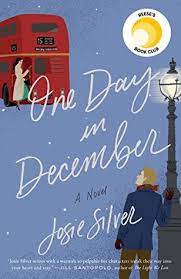
Laurie is certain that love at first sight only exists in movies. But then, one snowy December day, she spots a man through a misted-up bus window and knows he’s the one. Their gazes lock, there’s a brief moment of perfect magic… and then her bus departs.
Laurie spends a year looking for him in every bus stop and cafe in London, convinced they’re destined to meet again. But she never finds him, at least not when it matters. Instead, they “reunite” at a Christmas party, where Laurie’s best friend Sarah presents her new boyfriend to Laurie with glee. It’s Jack, the bus conductor. That would be the case.
Laurie, Sarah, and Jack have 10 years of friendship, heartbreak, wasted opportunities, routes not travelled, and destiny re-examined ahead of them.
Seven Days in June by Tia Williams.
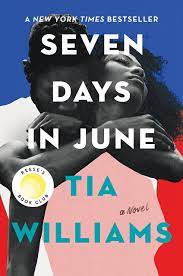
Eva Mercy, a single mother and writer from Brooklyn, is feeling pressured from all sides. Shane Hall is a secretive, mysterious, award-winning literary novelist who appears in New York to everyone’s astonishment.
Sparks ignite when Shane and Eva meet at an unexpected literary gathering, raising the eyebrows of New York’s Black literati. Nobody knows that twenty years ago, a young Eva and a young Shane spent a frantic, fiery week hopelessly in love. They may seem as if everything is normal today, but they can’t deny their chemistry, or the fact that they’ve been secretly writing to one other in their books since then.
Eva and Shane reconcile over the course of the following seven days in the middle of a sweltering Brooklyn summer, but Eva is unsure how she can trust the guy who broke her heart, and she has to get him out of New York. But, before Shane vanishes, there are some questions that need to be answered.
Regretting You by Colleen Hoover.
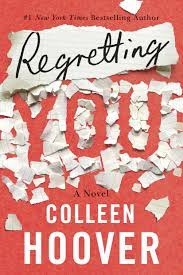
Morgan Grant and her sixteen-year-old daughter, Clara, would give anything to be different.
Morgan is adamant about not allowing her kid to make the same errors she made. Morgan put her own goals on wait when she became pregnant and married much too young. Clara is not interested in following in her mother’s footsteps. Her obedient mother is devoid of any sense of spontaneity.
Morgan and Clara are finding it more difficult to cohabit due to their opposing personalities and agendas. Chris, Morgan’s husband, Clara’s father, and the family’s rock, is the only one who can keep the peace in the house. However, Chris’s calm is broken when he is engaged in a fatal and dubious accident. Morgan and Clara will not be the only ones to suffer the tragic and long-term effects. Morgan finds comfort in the last person she expects to find comfort in, and Clara turns to the one boy she’s been forbidden to see as they struggle to reconstruct all that has crashed around them. New secrets, animosity, and misunderstandings separate mother and daughter with each passing day. They may never be able to get back together because they are so far away.
Love and Other Words by Christina Lauren.
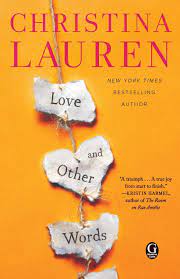
Macy Sorensen is settling into an ambitious, though emotionally lukewarm, routine: work hard as a new paediatrics resident, arrange her wedding to an older, financially secure guy, and keep her head down and emotions hidden.
When she runs into Elliot Petropoulos, her first and only love, the carefully crafted bubble begins to disintegrate. Elliot was once Macy’s entire universe, developing from a gangly bookish buddy to the guy who coaxed her heart open again after the death of her mother…only to destroy it the night he confessed his love for her.Teenage Elliot and Macy spend weekends and leisurely summers together in a home outside of San Francisco, reading books, swapping favourite phrases, and talking through their growing pains and successes, as told in alternate periods between Then and Now. They had been strangers to one another as adults until their unexpected meeting. Elliot will come to realise the reality behind Macy’s decade-long quiet, despite the anguish of what occurred that night so many years ago, and will have to overcome the past and himself to restore her trust in the prospect of an all-consuming love.
The Girl He Used To Know by Gravis Graves.
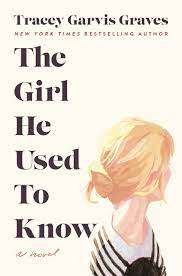
Annika Rose like to be alone.
She is befuddled in social situations, talking or acting inappropriately. She simply does not have the ability to read people. She enjoys being alone with her books or playing chess over being in a crowd. Except for Jonathan. She like being around him, but it had been 10 years since she had seen him. That is, until now. And given what happened all those years ago, she’s not sure he’ll want to see her again.
Annika Rose like to be alone.
Except she doesn’t enjoy being alone in the first place.
Light Academia book recommendations .
Emma by Jane Austen.
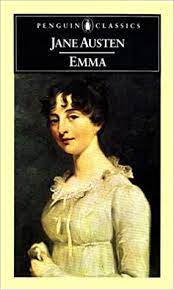
Emma Woodhouse is a fascinating and vivid character in Jane Austen’s novels. Emma organises the lives of the residents of her sleepy little village and plays matchmaker with terrible effect. She is beautiful, pampered, vain, and irrepressibly clever.
Little Women by Louisa May Alcott.
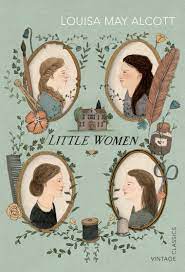
The March sisters, Jo, a bright tomboy and aspiring author, Beth, who is terribly frail, Meg, who is lovely, and romantic, spoilt Amy, are bonded in their love for one another and their battles to survive in New England during the Civil War.
It’s no secret that Little Women was inspired by Alcott’s own childhood. While her father, the freethinking reformer and abolitionist Bronson Alcott, mingled with the likes of Emerson, Thoreau, and Hawthorne, Louisa supported herself and her sisters with her own writing “Sewing, doing laundry, and serving as a household servant are examples of “women’s work.” She soon learned, however, that she could earn more money by writing. Little Women brought her fame and fortune for the rest of her life, and it wasn’t just because she was a woman “It explores such timeless themes as love and death, war and peace, the conflict between personal ambition and family responsibilities, and the clash of cultures between Europe and America, as requested by her publisher.
Pride and Prejudice by Jane Austen.
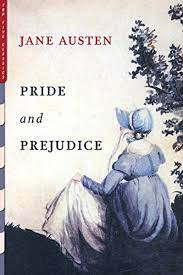
Pride and Prejudice has been one of the most popular novels in the English language since its early success in 1813. This great masterpiece was dubbed “her own beloved child” by Jane Austen, and its vivacious protagonist, Elizabeth Bennet, was described as “as charming a creature as ever appeared in literature.” The romantic conflict between Elizabeth and her pompous beau, Mr. Darcy, is a brilliant display of civilised sparring. Jane Austen’s dazzling wit gleams as her characters dance a delicate quadrille of flirting and intrigue, making this the finest comedy of manners in Regency England.
Anne of Green Gables by L. M. Montgomery.
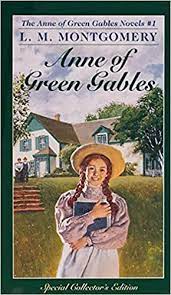
Green Gables, an old-fashioned farm outside of Avonlea, has enticed generations of readers into the wonderful world of Green Gables. Anne Shirley, an eleven-year-old orphan, arrives in this lush corner of Prince Edward Island only to learn that the Cuthberts—elderly Matthew and his severe sister, Marilla—wish to adopt a boy rather than a fiery redhead girl. But, before they can send her back, Anne, who needs more room for her ideas and a genuine home, fully converts them. Anne of Green Gables is a beloved classic that examines all of a child’s fragility, expectations, and hopes as they grow up. It’s also a magnificent portrayal of a time, a location, and a family… and, above all, love
The Great Gatsby by F. Scott Fitzgerald.
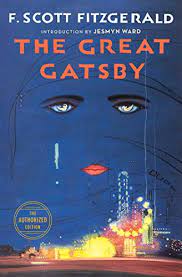
F. Scott Fitzgerald’s third book, The Great Gatsby, is often regarded as his greatest achievement. This classic Jazz Age novel has been praised by generations of readers. It’s a wonderfully constructed narrative of America in the 1920s about the fantastically affluent Jay Gatsby and his new love for the beautiful Daisy Buchanan, of opulent parties on Long Island at a time when “gin was the national drink and sex was the national obsession,” according to The New York Times.
Sense and Sensibility by Jane Austen.
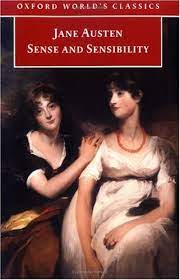
Marianne Dashwood wears her heart on her sleeve, and she rejects her sister Elinor’s warning that her rash behaviour exposes her to gossip and innuendo when she falls in love with the handsome but unsuitable John Willoughby. Meanwhile, Elinor, who is usually conscious of social convention, is fighting to hide her amorous disappointment even from her closest friends. The sisters learn that sense must combine with sensibility if they are to discover genuine pleasure in a culture where rank and money dominate the rules of love through their simultaneous experiences of love—and its potential loss.
To the Lighthouse by Virginia Woolf.
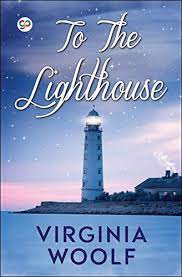
On the Isle of Skye, the tranquil and maternal Mrs. Ramsay, the tragic yet absurd Mr. Ramsay, their children, and many guests are on vacation. Woolf creates a magnificent, emotional analysis of the complicated tensions and allegiances of family life, as well as the battle between men and women, from the seemingly little postponement of a visit to a local lighthouse.
As time passes, the Ramsays face the greatest of human obstacles as well as its greatest triumph—the human ability for change—alone and simultaneously.
Dark Academia book recommendations.
The Secret History by Donna Tartt.
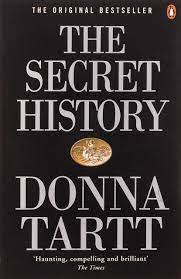
A group of bright, eccentric misfits at a prestigious New England college discover a way of thinking and living that is a world away from their classmates thanks to the influence of their charismatic classics professor. When they cross the line into normal morality, however, they progress from infatuation to corruption and betrayal, and finally—inexorably—to evil.
Ninth House by Leigh Bardugo.
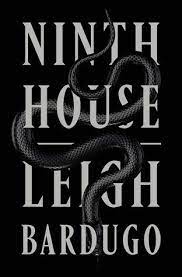
Galaxy “Alex” Stern is the most unusual freshman in Yale’s class. Alex was raised by a hippie mother in the Los Angeles suburbs and dropped out of school early, plunging into a world of sketchy drug dealer boyfriends, dead-end jobs, and much, much worse. She is the solitary survivor of a brutal, unsolved multiple homicide by the age of twenty. Some could claim she’s squandered her life. But, from her hospital bed, Alex is given a second chance: a full scholarship to one of the world’s most prestigious colleges. What’s the catch, and why is she involved? Alex arrives in New Haven charged by her mysterious donors with monitoring the activities of Yale’s hidden clubs, still searching for answers. The future rich and powerful, from high-ranking politicians to Wall Street and Hollywood’s top players, are known to frequent these eight windowless “tombs.” Their esoteric operations, however, are revealed to be far more evil and fantastic than any paranoid imagination could imagine.
If We Were Villains by M. L. Rio.
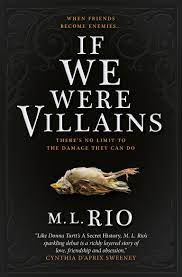
Oliver Marks was just released from prison after a ten-year sentence for a murder he may or may not have committed. He is greeted by the man who put him in prison on the day he is released. Detective Colborne is planning to retire, but first he wants to get the truth about what happened a decade ago.
Oliver and his buddies play the same roles onstage and off as heroes, villains, tyrants, temptresses, ingenues, and extras as part of a group of seven teenage actors studying Shakespeare at an elite arts institution. However, when the cast changes and the supporting characters take over, the plays become dangerously alive, and one of them is discovered dead. The rest of the cast faces their most difficult acting task yet: persuading the cops, as well as themselves, that they are blameless.
The Picture of Dorian Gray by Oscar Wilde.
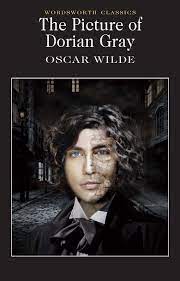
Oscar Wilde’s storey of a fashionable young man who sells his soul for eternal youth and beauty is the author’s most popular work, written in his distinctly sparkling style. When the storey of Dorian Gray’s moral decay first came out in 1890, it caused a stir, but when Wilde was chastised for the novel’s corrupting influence, he remarked that “there is a horrible moral in Dorian Gray.” Only a few years later, the book and the aesthetic/moral conflict it posed were used as evidence in the trials resulting from Wilde’s gay liaisons, which led to his imprisonment. “Basil Hallward is what I think I am: Lord Henry is what the world considers me: Dorian is what I would like to be—in other ages, maybe,” Wilde wrote in a letter about Dorian Gray’s relationship to autobiography.
Catherine House by Elisabeth Thomas.
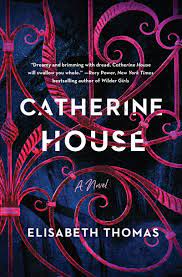
Catherine House is a unique institution of higher learning. With its experimental curriculum, highly selective admissions criteria, and substantial endowment, this furnace of reformer liberal arts study has produced some of the world’s brightest minds: prize-winning authors, painters, inventors, Supreme Court judges, and presidents. Tuition, lodging, and board are all provided for those chosen. Acceptance, however, comes at a cost. Students must spend three years in the House, including the summers, completely cut off from the outside world. They must leave behind their family, friends, television, music, and even their attire. In exchange, the school promises its pupils a future of supreme power and distinction, as well as the ability to transform into anyone or anything they wish. Ines, a member of this year’s new class, expects to trade the blurry nights of parties, narcotics, harsh friends, and dangerous men for rigorous intellectual discipline—only to find a culture of sanctioned revelry instead. Viktória, the enigmatic director of the school, urges the kids to explore, to broaden their minds, to discover themselves and their position within Catherine’s intimidating black iron gates.Catherine is the closest thing Ines has ever had to a home, and her serious, shy roommate, Baby, quickly becomes an unusual friend. Despite its aged velvet and weathered leather, the House’s peculiar rituals make this haven feel more and more like a gilded jail. And when Baby’s obsession with acceptance ends in tragedy, Ines begins to suspect that the school—in all its shabby splendour, hallowed history, advanced theories, and controlled decadence—may be concealing a dangerous agenda linked to a secretive, tightly knit group of students chosen to study its most promising and mysterious curriculum.
YA Retellings.
Beauty and the beast:
Into the heartless wood by Joanna Ruth Meyer.
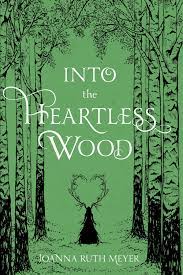
The woodland is a deadly place where men and women are lured to their deaths by siren song. A witch has been harvesting souls to feed the callous tree for ages, harnessing its power to expand her realm.
Seren, one of the witch’s tree-siren daughters, saves Owen Merrick’s life rather than ending it after he is led into the witch’s wood. Every night, he climbs over the garden wall to see her, and her desire to be human becomes stronger. Seren’s desire to become human will take them into an old struggle waging between the witch and the king who is trying to stop her, as a shift in the constellations foreshadows a dreadful curse.
Romeo and Juliet
Roman and Jewel by Dana L. Davis
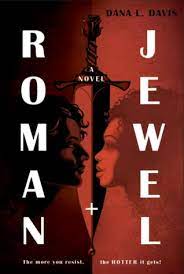
Who would play the leads in a Hamilton remake of Romeo and Juliet? This is the storey of a young woman who believes she has what it takes…and the rest of the world agrees.
Jerzie Jhames will go to any length to get the main role in Roman and Jewel, Broadway’s hottest new show, a Romeo and Juliet inspired hip-hopera with a diverse cast and current twists on the play. Her aspirations are dashed, however, when she discovers that Cinny, the mega-star, has won the lead…and Jerzie is her understudy.
It’s a bad idea for Jerzie to fall for male lead Zeppelin Reid, especially after she knows Cinny wants him for herself. Star-crossed love is doomed to fail. When a video of Jerzie and Zepp practising goes online and the entire world votes on who should play Jewel, Jerzie realises that while fame is expensive, friendship, family, and love are invaluable.
The phantom of the Opera:
Sing Me Forgotten by Jessica S. Olson.
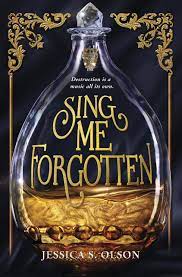
There is no such thing as Isda. At least not beyond the opera house’s ornate walls.
Cyril, the opera house’s owner, protected her from being cast into a well at birth for being one of the magical few who can modify memories when people sing. He has protected her from the violent world outside since that day. He only requests that she use her influence to keep ticket sales high—and that she stay hidden. Isda and Cyril would pay the price if it was discovered she had survived.
But when Isda meets Emeric Rodin, a handsome boy who upsets her tranquil, isolated life, she defies Cyril’s cardinal rule. His voice is unlike any she’s ever heard, but the true shock comes when she discovers glimpses of a way out of her gilded prison in his recollections.Isda spends more and more time with Emeric, haunted by the potential, searching for answers in his music and his past. But the cost of liberty is far greater than Isda could ever imagine. Even as she battles with her growing affections for Emeric, she realises that the only way she can control her own future is to become the monster the world sought to drown in the first place.
Pride and Prejudice:
Pride and Premeditation by Tirzah Price
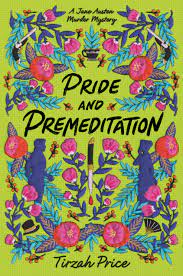
Despite the meddling of Mr. Fitzwilliam Darcy, the stern young heir to the prominent company Pemberley Associates, seventeen-year-old aspiring lawyer Lizzie Bennet seizes the opportunity to establish herself when a shocking murder shakes London high society.
Lizzie vows to solve the murder on her own, convinced that the authorities have imprisoned the wrong person. However, as the case—and her feelings for Darcy—become more convoluted, Lizzie realises that her ideal career may make her happy, but it may also lead to her death.
Rapunzel:
What Once Was Mine by Liz Braswell
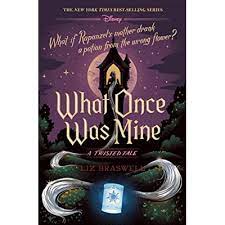
The virtuous people of Corona search for the all-healing Sundrop flower to cure their queen and her unborn child in a desperate attempt to preserve their queen’s life—but instead obtain the sparkling Moondrop flower. Regardless, it heals the queen, and she gives birth to a healthy baby girl with moon-like silver and grey hair. It brings with it perilous magical abilities: the ability to harm rather than cure. Rapunzel is imprisoned in a tower and placed in the care of Mother Gothel, a powerful goodwife, for her own and the kingdom’s safety.
Rapunzel has been kept away for eighteen years, knowing she must protect people from her miraculous hair. However, when she leaves the only home she’s ever known in order to witness the floating lights that emerge on her birthday, she becomes entangled in an adventure with two robbers that takes her throughout the kingdom. Rapunzel discovers that there may be more to her storey, and her miraculous tresses, than she ever imagined before she reaches her happy ending.
Important inventions that changed our world.
The only thing constant in this ever-changing world is change. This ‘change’ has cultivated some interesting inventions that shaped our world and made our lives easier. So much easier that today we cannot imagine our lives without them. These innovations further evolve and develop to create new possibilities in the future. From the modeling of a wheel to designing a medium that travels beyond the earth, here are some of the important inventions that changed our world.
So be ready to be amazed!
1.Compass
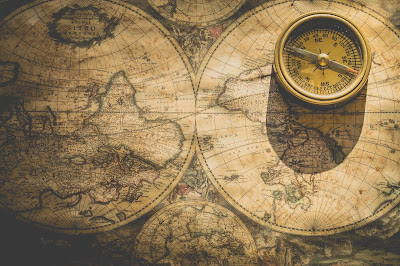
The earliest form of compasses were likely to be invented by the Chinese in 200 BC for religious purposes. It was started being used for navigational purposes by the 11th century. Over the years this invention saw several developments and modifications and it currently resides in our smartphones.
2. Automobiles

This is an invention that eventually went on to take the load off the horses and put them on the wheels! It all began from Nicholas Joseph Cugno who designed an automobile powered by steam that was suitable for human transportation. The evolution of the automobiles witnessed the contribution of different engineers and scientists. It became mainstream due to Henry Ford’s mass production techniques. Other popular manufacturers such as General Motors and Chrysler also contributed to the mass production of automobiles.
3. Steam Engine

Trains have been a popular, reliable, and affordable choice of transport for many years, the origin of the same can be traced back to 1698, when Thomas Savory invented the steam engine to withdraw water from the congested mines by using pressure from the steam. After some modifications by forthcoming engineers, this steam engine was being used to power trains.
Although not in use today, it is an important milestone in the development of today’s modern transport system.
4. Airplanes

Leonardo da Vinci’s sketches of flying machines and countless other inventions over the centuries led to the first successfully controlled flight by the well-known Wright brothers. Their achievement laid the foundation for development and commercialisation in the field of aeronautical engineering which is prevalent today.
5. Light bulb
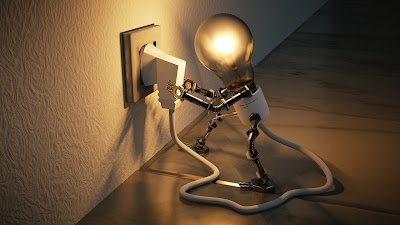
There is more to the history of a lightbulb than the ever famous Thomas A Edison. Humphry Davy pioneered the functional electric bulb during the early 19th century. Wilson Swan made modifications to the conventional electric lightbulb and increased it’s span of use.
Thomas A Edison can be credited for the commercialisation of the lightbulbs as he further increased it’s illumination span by 1200 hours. He went on to produce and sell these lightbulbs under his company named Edison Electric Light Company.
6. Printing Press

The establishment of the Printing Press in 1436 by Johannes Gutenberg, a German goldsmith, helped spread knowledge and information among the public. Although the origins of the printing press can be traced back to the Chinese and Koreans’ printing methods, HIs printing machine was a development over the pre-existing printing modes and had been first introduced to the west. Gutenberg’s press went on to produce upto 20 million materials in the following years which consisted of books, individual papers, and pamphlets.
We hope that you too would marvel at these inventions that has shaped our present.


You must be logged in to post a comment.