Advancement of Women in India

Advancement of Women

Introduction

In India, where women are considered as mothers, women are being enslaved and abused. It is a pity that women seek to destroy women. 

The Status of the Woman

In ancient times women were proud. That is why all the rivers of the motherland were called by the name of the woman. From the fact that many female poets lived during the Sangam period and from the heroic life of Lakshmibai, the Rani of Jhansi and Rani Mangammal, we can know that women excelled in all fields. 

But over time, that is likely to change. The oppression of women began to grow. Women began to be enslaved.

The custom of having his wife jump into the fire with him if the husband dies came from the name of conspiracy. Reformers like Rajaram Mohan Roy slammed it and removed it. 

Women today have the same responsibilities as men in a family. Many families depend on women. But even today, in the name of dowry, women are given and gold is given. It is painful to note that many of these women are abused by the groom’s house. If the wife dies, the widow is denied marriage while the groom remarries.

Femininity in Society 

To this day, women are given second place in society. Gandhiji said he would accept that peace prevails in the country if a young woman walks the streets alone in the midnight. But in the daytime, the news about men abusing women is the same.  

 Female infanticide still exists in many families today. The family does not provide adequate education for women. Similarly, it is painful to portray women as mere objects in movies and advertisements. 

Women today are proving that we can achieve in any field. However, violence against women continues today. No one can deny this. But the comforting news is that many women’s organizations are emerging and listening to these atrocities.

Government Programs

It is to be welcomed that the government has come up with several legal schemes and shown interest in the advancement of women. The State Government and the Central Government have enacted laws such as the Dowry Prohibition Act, the Maternity Allowance Act, the Industrial Rules, the Sharda Act and the Equal Pay Act and are making arrangements for data on reservations for women. 

The government and the general public must protect women’s rights by providing them with education and equal rights. We must remember that men and women are equal.

Conclusion

We will realize Bharati’s dream that this world will flourish only because men and women are equal. Understand the fact that the two wheels of the cart of society are male and female and everyone should participate in the advancement of women.

VEGETARIAN PROTEIN ALTERNATIVES IN INDIAN DIETS

Ranging from a variety of reasons like muscle and bone building, to healthier skin, nails and even hair, protein is in very high demand among the people of the world today, as they become more and more health conscious and start taking care of their mind and body by feeding and maintaining it well. Most of the times, protein is majorly incorporated in diets of people who want to build muscles. However, as vegetarianism is expanding a rapid pace in today’s world, one of the first concerns of the people as they switch to vegetarian diets is the apparent lack of protein in the regular, western, vegetarian diets. But, a point that needs to be acknowledged that is not a problem in indian diets at all. Protein forms a very important part of indian diets and so, people can consume regulated amounts of protein that they require in a day.

Some of the protein rich foods in indian diets are as follows:-

#1 PANEER, ALSO KNOWN AS COTTAGE CHEESE

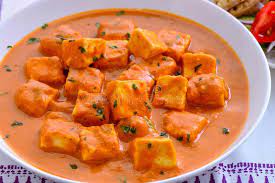
Cottage cheese, or popularly known as paneer in indian subcontinent is largely used in dishes and cuisines, especially in North India. Paneer is cooked in a variety of manners, supplemented with other vegetables like capsicum to make kadhi paneer, or even used to make the famous paneer parathas. They are also added in sweets, making it an all-round ingredient. While paneer is a major source of protein, it is also quite rich in fats. It is highly nutritious as well; consisting of vitamin B12, calcium and iron as well. Around 100gm of paneer consists of 20gm protein. Hencforth, try having paneer infused dishes to get your daily dose of protein

#2 LENTILS

LENTILS ARE POPULARLY CONSUMED IN LUNCH TIME IN INDIAN DIETS. However, we can also add it in salads and soups. Lentils are highly enriched with fiber, foliate, iron as well protein. Around 240gms of a cup of lentils consist of 18 gms of protein, making it a healthy vegetarian protein ingredient.

#3 NUTS

Nuts are considered ‘super-foods’. One of the major reasons behind this claim is that nuts offer a variety of benefits on consumption. They are packed with vitamins like vitamin E and A, that are extremely good for hair and nail growth and keep your eyes healthy as well. Not only this, they are really good for your skin and eyes. Furthermore, they are widely prevalent and even recommended by doctors as they help in keeping cholesterol levels in check in people that suffer from this grave issue. They are also enriched in protein, making it a good source of protein in indian diets.

#4 KIDNEY BEANS AND CHICKPEAS

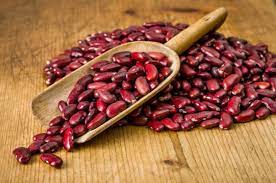
Kidney beans and chickpeas are quite popular in north indian cuisines, not only for their superb taste, but also their nutrients. This is evident through the fact that they are rich in iron, magnesium, complex carbs and fiber, along with protein. So, make sure to not skip out that plate of rajma chawal on sunday!

To sum it all up, there are various vegetarian protein rich foods in diets around India, you just have to look hard enough!

360 Wander Writer

Welcome to the Disney World

PART – II

Disney/Fox merger: what Disney owns now - Vox

The desire  and  contemptment for entertainment  is unlimited . Knowing this and with  the overview on Disney land services he came up with the idea of establishing the Disney Land. It was as expected a great success  attracting tourists from around the world. With further expansion in it , it had the Americas first monorail system.  It is a fact that the making of an animated movie takes a longer period of time than a normal movie. In Spite of the fact, the Disney studio continued to be busy with the release of about 5 to 6 releases per year. During the period of 1950’s to 1960’s  the creation of popular animated features like Sleeping Beauty. 

The next set of revolution in his creations was the origin Xenography through which they converted the drawings into animated cells. The most successful animated musical adaptation was one of all time highest grossing movies and received 5 Academic Awards. Unfortunately as a result of chain smoking Walt Disney died due to the complications of Lung Cancer. Following Walt’s death Roy O Disney took over as the  chairman, CEO, and president of the company. 

Disney's Road to Coronavirus Recovery: Disney Q3 2020 Earnings LIVE! > Da  Mouse

Walt Disney was remarkably a great person , who as a film producer,  holds the record for most Academy Awards  earned by an individual, having won 22 Oscars from 59 nominations. The last two films Walt actively supervised were released, the animated feature The Jungle Book and  the musical’ The Happy Millionaire’.’ Buoyed by the success of Who Framed Roger Rabbit in 1988, Disney’s flagship animation studio enjoyed a series of commercial and critical successes known as the Disney’s Renaissance ,with such films  as The Little Mermaid, Beauty and the Beast, Aladdin and The Lion King. 

Even after the demise  of Disney the company still flourished with its new ideas . They  released their first film using 3D animation ,Chicken Little in 2005. During the course of time ,Director Roy E. Disney departed  his soul from the earth.  Have you watched the Watched the Avengers :End game? It is the second top highest grossing film till date. And Disney has the pride of taking its distribution to the world.  In 2009, Disney announced a deal to acquire Marvel Entertainment for about  $4.24 billion.

About Us | Disney UK

Let us now talk about the present. It is none other than the pandemic time. The Disney parks are closed due to the COVID-19 pandemic. Disney has  experienced a 63 percent drop in earnings for the fiscal second quarter of 2020, resulting in a loss of $1.4 billion for the company. Yet let us hope for the best!  It is not an ordinary industry to be worn out by such losses. It has already thrived through many difficult times and will come out of this distress too.

BEING VEGAN

Plant based meat or meat subsidies are taking the world by storm. There is science and capitalism behind the growth of this multibillion-dollar industry. There are cultural and environmental aspects too. First the science: A study published in March 2020 noted that plant-based diets can help reduce the risk of heart disease, which is a much bigger killer than to COVID 19. As of end December 2020 COVID-19 already has killed more than 300,000 people in the U S. By comparison in 2018 heart disease was the cause of death for about 6,55,000 Americans; cancer for 5,99,000 and stroke nearly 140,000.

In general, consumption of red processed meats has been associated with increasing weight gain over time as well as increased risk of diabetes heart diseases and colon cancer according to the study. It is no wonder a whole new industry has risen out of protein alternatives. at the end of 2020 the global meat substitutes sector was worth 20.7 billion it is set to grow 23.2 billion by 2024, according to market research company Euromonitor. And there are moves among food scientist make plant -based protein tastier and healthier. The awareness of healthy eating habits is growing. A vegan diet is not considered a fad diet rather it is an eating pattern that has been more on the rise with the increased awareness on anti-animal affairs and environmental concerns. For many vegans’ nutritional choices centered around taking better care of the earth’s resources and the environment, ethical issues about animal care the use of antibiotics and growth stimulant to produce animals.

Vegans are generally thinner have lower serum cholesterol and blood pressure and have lower risk of cardiovascular disease. Sticking to veganism is ultimately a matter of commitment and determination. Food companies come up with many choices for the consumers fast food chains too have options for vegans. A vegan diet contains more antioxidants and fibers. It is rich in potassium magnesium foliates and vitamins A C and E. It is also a good way to reduce excessive body fat and maintain healthy body weight if it is well balanced. the median effect of adopting a vegan diet is an increase in energy levels. this is also accompanied by changing bowel habits to a regular and healthier pattern ensuring good digestive health. these benefits are associated with the detoxification for the process as you substitute animal products with whole foods higher in fiber and lower in fats and sugars. Generally, vegans often might need to add vitamin B12 supplements omega-3 and calcium.

WOMEN SAFETY IN INDIA

Women in India, today, are becoming the most vulnerable section as far as their safety and security is concerned. Women are the greatest strength of our society and it is so disheartening to see that they are getting unsafe day by day as the number of crimes against them are increasing. According to a poll by Reuters, India has been ranked the most dangerous country out of the world’s 10 worst countries for women. When we turn the pages of a newspaper, we come across many headlines reporting cases of molestation, harassment, trafficking, ill treatment of women in houses, violence against women in remote areas etc. Women feel unsafe and unsecure and feel that their freedom and liberty are expose to risk. It is unbearable to imagine the plight of women who are sufferers of such crimes. It is a shake on the confidence of the women of the society and on our judicial system.

According to the National Crimes Records Bureau(NCRB), India recorded 88 rape cases every day in 2019 and crimes against women increased by 63.3% in the first six months of 2021. NCRB report highlights that rape vulnerability of a girl or woman has increased up to 44% in the last 10 years. As per the latest NCRB data, KOLKATA comes out on top in safety, not just for women, but overall as well. To protect women from domestic violence THE PARLIAMENT OF INDIA passed ‘The Protection of Women from Domestic Violence Act 2005’.

IMPORTANCE OF WOMEN SAFETY-

Safety of women is very important in this cruel and evil society. As the number of cases are arising against women, it is very important to exercise the laws and get the criminal arrested and punished as soon as possible. It helps women be calmer, understanding and they feel protected. They will trust the government if the criminal gets required punishment in time. It will develop body and mind control in them. They will take active part in every thing if proper safety is ensured to them. There are laws but there should be proper safety measures which we have to follow strictly to protect the women from violence.

We generally play the blame game for any such incidence and hence have not succeeded to reach the root cause of this issue. An effective implementation of loss protecting women’s rights is the first step in this direction. There should be stringent loss and the criminals of such crime should be severely punished.

CRIMES AGAINST WOMEN-

In India, sexual harassment, rapes, domestic violence, dowry cases and murder are common forms of violence against women. It is found in some places that even today, there is a tradition of taking dowry from the girl’s family and the father sacrifices and loses everything to pay it. Domestic violence is also increasing very badly where one partner or a man abuses another another partner or a girl in a relationship. It leads to depression and suicides. It’s not a direct murder but it is the cause of murder for sure. Cheating in a relationship and giving divorce is also a crime against women which destroys the whole life of a women and the man easily finds a new girl and marries her. Acid throwing is considered to be the most heinous crime against women which ruins the beautiful girl’s life and left her in a state of shock.

HOW CAN WE SAFEGUARD WOMEN OF OUR SOCIETY?

We also need to create social awareness about these issues and ostracise those who commit such crimes and not the victims. Women safety is a crucial concern in India and a lot of organisations started working on it after Nirbhaya’s case. Women should be taught some self-defence tips and tricks in schools, colleges, offices and residential colonies, so that if anyone tries to harm them, they can apply these tricks to protect them and hurt the person trying to attack her. Also, various videos of self-defence techniques are uploaded online, on various social media platforms for educating women’s safety. Women should always put some chilly powder, ginger-garlic paste or some harming materials while going out to harm the attacker. To ensure the security of the women in the country, the entire population should be well-educated and the laws should be very tough against every kind of crime. Both the men and women of the society should be empowered with proper education and income so that they can fight against any harm to them. There are also various helpline numbers for ensuring women safety in India. Only when these measures are taken, India can become a carefree and enjoyable place for women when they can go where ever they like to without any fear of being stared at, molested or discriminated.

”It took me quite a long time to develop a voice, and now that I have it, I am not going to be silent”. – Madeleine Albright

BUBBLES

surround everyone you can think

of in bubbles of love

~ Diana Cooper

Bubbles! We all know how fascinating they are, evoking happy memories of blowing and chasing the mystical orbs with our friends. A bubble’s fragile nature, beautiful rainbow colors, and ability to soar through the sky make them universally fascinating among kids.

How are bubbles formed?

Bubbles are pockets of soap and water that are filled with air. When soap and water are mixed together and air is blown into the mixture, the soap forms a thin skin or wall and traps the air, creating a bubble.

What are some fun facts about bubbles?

A bubble consists of three layers: two layers of soap clinging to either side of a layer of water. Light that hits the different layers interferes with itself, causing colorful iridescence. A bubble always attempts to form a sphere because surface tension pulls the liquid inward.

What is the purpose of bubbles?

What’s the science behind (or inside) a bubble? Bubbles provide the opportunity to study science concepts such as elasticity, surface tension, chemistry, light, and even geometry.

What are the properties of bubbles?

Properties of Bubbles

  • Liquid-Solid Contact Angles.
  • Film-Film Contact Angles.
  • Film-Solid Contact Angles.

Who invented bubbles?

Bubbles are no longer simply soap and water. Invented by Taiwanese bubble solution expert Jackie Lin, the top-secret solution contains a polymer that allows bubbles to resist evaporation.

Why do bubbles float?

soap bubbles can’t really fly — they float! … Because the air trapped inside a bubble is less dense than the air outside the bubble, it’s up, up and away! The heavier carbon dioxide in the air around the bubble pushes up on the air trapped inside the bubble and off it goes.

Are bubbles liquid or gas?

A bubble is a globule of one substance in another, usually gas in a liquid. Examples include soap bubbles, foam, bubbles in carbonated drinks, etc. The surface of a bubble is usually liquid. A bubble is a globule of one substance in another, usually gas in a liquid.

What are the different kinds of bubbles?

  • Air bubbles as a man surfaces in a swimming pool.
  • Bubbles of gas in a soft drink.
  • Bubble of gas in a mudpot.
  • A bubble of gas in a tar pit.
  • Frosted bubble.
  • Man blows bubble.

” Happiness is a soap bubble that

changes color as the iris and that breaks when touched “

~Honore de Balzac

Tax Planning


Introduction to Tax Planning:


Tax
Planning
is an activity
conducted by the tax payer to reduce the tax liable upon him/her by making
maximum use of all available deductions, allowances, exclusions, etc. feasible
under law. 


It is a good thing to give government a part of our earnings
so that various development works can
be carried out. But we should also think of saving the tax that we pay with the help of ways
provided by the government. Various deductions that can be taken under Section
80 can be taken up to a maximum limit of 1.5
Lakhs.


How to create an effective Tax plan ?

Let us try to understand it with an example:

I would like to take deductions as
follows:

1.        PPF (Under Section 80C): Invest Rs. 5000, in PPF every month, i.e., Rs.60,000 per annum into PPF. I will save tax also and fulfil my investment plan also.

2.       
ELSS
(Under Section 80C):
An Equity Linked Savings Scheme,
popularly known as ELSS, is a type of diversified equity scheme which
is close-ended, with a lock-in
period of three years, offered by mutual funds in India. Annual
Investment of 68,500 to be made in ELSS, which will save tax expenses and
generate income also.

3.       
Deduction for Term Life Insurance: Deduction of at least Rs. 9492, based on the plan I chose. Premiums paid for it are
deductible u/s 80C.

4.       
Deduction for Medical Insurance (Under Section 80D): Take a health
insurance of an annual premium of Rs. 21500 approx.
for the cover of Rs. 75,00,000.


NET INCOME WITHOUT TAX PLANNING

AMOUNT (₹)

Annual Income

12,50,000

Income Tax @ 25%

312500

NET INCOME

9,37,500


NET INCOME AFTER TAX PLANNING

AMOUNT (₹)

Annual Income

12,50,000

Deductions Under Section 80C

1,50,000

Net Taxable Income

11,00,000

Income Tax @ 20%

220000

NET INCOME

8,80,000


Analysis of the above Tax Plan

As we can see above, without any taxation planning, we
have to pay a tax of Rs. 3,12,500 p.a. under 25% slab of Income Tax. But after tax planning
and making proper
allocations of money, Income tax paid is Rs. 2,20,000.
Hence, we save Rs. 92,500 p.a. This amount can further be invested into some
return generating investments.


                                                Conclusion                     


Thus, we should always try to plan our taxes in such a
way that less of them have to be paid and more return can be made in long run.


5 most dangerous animal on the planet

There are many animals on this planet. Some are fine but some are venomous and dangerous for all. Some might hurt you back when you try to hurt them as well but some are just not as good as you can think of them. So here we are going to talk about 5 of these dangerous animals on the planet.

1) Box jellyfish

Box jellyfish is one the dangerous animals found on the planet. They are native to Australia. They are cnidarian vertebrates distinguished by their box like body. Some species of this animal produces venom that are fatal to humans. It is said to be the deadliest creature in the sea.

2) Mosquitoes

Mosquitoes are one of the smallest creature but is as deadly as large venomous creatures. They are found in every region except Antarctica. Genera Aedes, Anopheles and Culex are the main dangers. They are primary vector for diseases like malaria, chikungunya, yellow fever, dengue, elephantiasis, Zika virus, encephalitis and dengu. These diseases affect more than 700 million people in a year and caused death of nearly 725000 people.

3) Saltwater crocodile

They are one of the most dangerous beast. They can grow up to 26ft. They are massive in size and weights upto tonnes. They are aggressive they tear the humans into pieces. One or two fatal attacks are reported by these creatures. If looked properly they resembles T.rex. There are sign board present to avoid swimming in the area of this beast. Mainly 20-30 attacks outside Australia take place by these massive man eaters. Most of them are males.

4) Stonefish

Stone fish are found in indo-pacific ocean, The Red sea and the great barrier reef. They are the most venomous fish known and they are fatal to human. Stonefish stings are extremely painful and potentially lethal. Stonefish stings can occur on the beach, not only in water but also outside the water as they can survive 24 hours outside the water. They look similar to rocks or corals.

5) Puffer fish

Puffer fish is also known as blowfish. They are closely related to porcupinefish which have large external spines. These species are toxic and some are poisonous. Pufferfish can be lethal if not served properly. Puffer poisoning usually results from consumption of incorrectly prepared Puffer soup, fugu chiri, or occasionally from raw Puffer meat. Pufferfish tetrodoxin deadens the tongue and lips, and induce dizziness and vomiting, followed by numbness and prickling over the body, rapid heart rate, decreased blood pressure and muscle paralysis.

Perfectionism Destroys Productivity

Do you always worry that you didn’t do a good job? Do you always question your work and your actions? Are you afraid of admitting your mistakes? Does rejection make you feel bad? If so, you’re in great danger. If you’re a perfectionist, you’re just a procrastinator with a mask. It’s no different from someone who’s lazy and does nothing at all. A perfectionist…

  • Always waits for the right moment.
  • Never makes mistakes.
  • Always needs more time.

But at the end of the day, life and work is about outcomes. Results matter.

Is perfectionism worth it?

Perfectionism is just another form of procrastination. When you constantly worry about making mistakes, doubt creeps in your mind. And that causes indecision.

There are two types of perfectionists:

  1. The one that never starts. You want to achieve something, but you immediately start doubting yourself. You think: “I don’t think I can do it.” So you never start.
  2. The one that starts but has too high standards. You set a goal. You work hard (maybe too hard). But you’ve set your goals so high, that you’re always failing yourself.

These are things that we rather avoid. Joachim Stöber and Jutta Joormann, who studied Worry, Procrastination, and Perfectionism, write:

“The combination of concern over mistakes and procrastination may be a crucial factor in the maintenance of worry. On the one hand, it may prolong existing threats because no steps are taken to cope. On the other hand, it may increase existing threats or even produce additional threats because initially solvable problems will pile up, thus creating an overload of problems that may finally be insoluble.”

And that feeling of being helpless is the biggest pitfall for us. Because what do we do when we feel helpless? Exactly—we give up. Just look at the studies about Learned Helplessness. However, perfectionism is not always bad. In fact, some studies suggest perfectionism is related to greater achievement. But that’s not the question here. Of course, when you set higher goals and if you have higher standards; you achieve more. Without a doubt, perfectionistic tendencies can be a good thing. But as we all know, achieving goals is not the only thing in life. It’s more about HOW we reach our goals and aspirations.

How to beat it?

In an interesting study by Gordon L. Flett and his colleagues; they talk about the role of learned resourcefulness to perfectionism. They suggest that learned resourcefulness can play a mediator role.

Michael Rosenbaum, a Professor at Oxford University says,

“Learned resourcefulness refers to the behavioral repertoire necessary for both regressive self-control and reformative self-control. This repertoire includes self-regulating one’s emotional and cognitive responses during stressful situations, using problem-solving skills, and delaying immediate gratification for the sake of more meaningful rewards in the future.”

Learned resourcefulness is the skill that you need to stop sabotaging yourself.

Finding Balance

If you’re a slacker, you don’t care about much. Good enough is your motto. And you have no ambition at all. An attitude like that doesn’t bring you anywhere. The American novelist Cormac McCarthy put it best:

“It’s like a lot of things, said the smith. Do the least part of it wrong and ye’d just as well to do it all wrong.”

Slacking is an attitude of “I don’t care.” But if you want to make things happen in your life, you have to care. And what you want is to find a middle ground where your perfectionistic tendencies drive you, but you have the calm of a slacker, and you combine that with learned resourcefulness. Do great work like a perfectionist, but don’t give too much attention to your goals like a slacker. And finally, combine it with this:

Resourcefulness — Goals can work well, but they can also be counterproductive. That’s why you want to rely on systems. And when shit hits the fan; use your problem-solving skills to figure things out.

 Instead of beating yourself up when you make a mistake or if you fail yourself, you just adjust or solve the problem.

  • Avoid the perfectionist’s favorite sentence: “OMG, this is the worst thing ever!”
  • Also avoid the slacker’s favorite sentence: “I don’t care.”
  • But instead, you say: “I’ve got this.”

Everything about Procrastination

We all procrastinate Procrastination is the act of putting off work for no particular reason. Some guides and experts say that you’re procrastinating when you’re not doing a task that needs to be accomplished by a certain deadline.  That’s a false definition. It implies that we’re not procrastinating as long as we get the work done. If that’s true, most people don’t procrastinate. Which is of course not true.  In fact, a recent study with 2,219 respondents showed that 88% of all people admit to procrastinating at least one hour a day. That’s more accurate. Why? Because we all delay or postpone a task for no good reason. Sometimes, we start a task or project, but we end up delaying the work. We don’t get it done.

Examples of Procrastination

When you delay work for a good reason, you’re not procrastinating. What’s a good reason? When your work improves with the delay. Think of someone who needs to write a report but runs into a new challenge that must be included in the report. One can argue that the work will be better by spending more time on researching the new challenge. However, most of our work does not get better by delaying it. If you want to go to the gym, your performance will not be better tomorrow. It will probably be worse because of entropy.  Until four days before the exam. That’s when the exam comes close, which is when most students start panicking. Now, most of us form this behavior in college and remain working this way long after we’re graduated. In the workplace, we procrastinate in the same way. How often have you delayed work on a project until the last minute? Again, this pattern is not only limited to education and work. In our personal lives, we do the same. When are you submitting your yearly income taxes? Exactly, on the last day. Will we do a better job with our taxes on the last day? Probably not. I argue that we’re even more likely to make mistakes because of the time pressure.  Some people say that they love deadlines and claim that’s what fuels them to do good work. I know journalists who swear by it. But it’s not a sustainable way of living and working. When you’re close to your deadline, and you haven’t done anything, you experience more stress. While stress may improve your concentration, it also has negative effects on your long-term well-being. Long-term, or chronic stress, can lead to depression, anxiety, heart disease, high blood pressure, abnormal heart rhythms, heart attacks, obesity, eating disorders, and a handful of other health problems1. Procrastination is not a problem we should take lightly.

Benefits of Stopping Procrastination

Procrastination is an inner struggle that can seriously destroy our overall well-being. There are three main benefits to beating procrastination:

1. Lower Anxiety

The more we procrastinate, and the longer we wait to get started with important things, the more anxiety and stress we have. Doing work is never easy. And if you wait until tomorrow, you will only feel more anxious about getting started. If you overcome procrastination and take immediate action, you will get things done. You remove the anxiety from that task before it gets to you.

Higher self-discipline

Research shows that procrastination is not only a time-management problem. One of the biggest reasons we procrastinate is low self-discipline. The main benefit of beating procrastination is that you automatically increase your self-discipline. 

Better Work

People who don’t procrastinate accomplish better work. When you work with less stress, anxiety, and high self-discipline, you give yourself the chance to do better work. 

Tips To Stop Procrastinating

  1. Know your time: This is one of the most effective techniques to identify how much time we waste. If we want to stop wasting our time, we need to be aware of how we spend our time first.
  2. Perfectionism destroys Productivity: This is a common trap ambitious people fall in. When you try to be perfect, you’re more likely to procrastinate.
  3. Disconnect from Internet: A big aspect of beating procrastination is to avoid distractions. One of the biggest distractions is the internet. It’s good to disconnect at times.
  4. Sleep Well: Sleep is a big part of getting things done. When you’re tired, you’re more likely to put off tasks. 
  5. Exercise: Exercising is a perfect way to test yourself. If you can exercise consistently every week, it’s a good sign you’ve beaten procrastination. 
  6. Improve Self-Confidence: Improve your self-confidence so you are more likely to get things done. Believe in your ability to figure things out. 
  7. Write Daily: Writing every day is another example of self-discipline. Just like exercise, if you can write for your own purposes every day, you’ve beaten procrastination.

Books to help you stop procrastinating

  1. Man’s Search for Meaning by Victor Frankl:  Viktor Frankl was a psychiatrist before the war. His ability to observe the behavior of his fellow prisoners in Auschwitz resulted in Man’s Search For Meaning. This unique book describes how we choose our attitude in any given set of circumstances. Even during the horrible conditions of a concentration camp, humans can endure the suffering and find meaning in living because of inner decisions.
  2. A Manual for Living by Epictetus: A Manual For Living is exactly what the title says it is. This book also gives you a larger perspective on humanity. People have always had problems with self-confidence, family, work, other people, etc. In a way, nothing has changed. And that’s pretty comforting.
  3. Mindset: The New Psychology of Success by Carol Dweck: Life is about solving problems and finding solutions. If you always look at the risks and consequences of everything, you might play it safe, but you’ll also never grow. Carol Dweck’s book is one of my favorite books about developing the mindset you need to succeed in life.

“A good head and a good heart are always a formidable combination.” – Nelson Mandela


INTRODUCTION

The leader is a man who comes closest to
realizing the norms of a group that values the highest; this conformity gives
him his high rank, which attracts people and implies the right to assume
control of the group. (Homans, 1950). The underlying need-structure of the
individual is what motivates his behaviour in various leadership situations.
Leadership style thus refers to the consistency of goals or needs at different
situations. (Fiedler, 1967). One of the great leaders who had the above
qualities fulfilled in him is the former South African president, Nelson
Rolihlahla Mandela
.

Nelson Rolihlahla Mandela
was born on 18 July 1918 in the Transkei village close Umtata. Nelson Mandela
was sent to Healdtown, a Wesleyan secondary school with some reputation where
he enrolled after getting a primary education at a local mission school.

Early life and work

Nelson Mandela was the son of Chief Henry
Mandela of the Madiba clan of the Xhosa-speaking Tembu people. After his
father’s death, young Nelson was raised by Jongintaba, the regent of the Tembu.
Nelson renounced his claim to the chieftainship to become a lawyer. He attended
South African Native College (later the University of Fort Hare) and studied law
at the University of the Witwatersrand; he later passed the qualification exam
to become a lawyer. In 1944 he joined the African National Congress (ANC), a
Black-liberation group, and became a leader of its Youth League. That same year
he met and married Evelyn Ntoko Mase.
Mandela
subsequently held other ANC leadership positions, through which he helped
revitalize the organization and oppose the apartheid policies of the ruling
National Party.

In 1952 in Johannesburg, with fellow ANC
leader Oliver Tambo, Mandela established South Africa’s first Black law
practice, specializing in cases resulting from the post-1948 apartheid
legislation. Also that year, Mandela played an important role in launching a
campaign of defiance against South Africa’s pass laws, which required non-whites
to carry documents (known as passes, pass books, or reference books)
authorizing their presence in areas that the government deemed “restricted”
(i.e., generally reserved for the white population).
He
travelled throughout the country as part of the campaign, trying to build
support for nonviolent means of protest against the discriminatory laws. In
1955 he was involved in drafting the Freedom Charter, a document calling for
non-racial social democracy in South Africa.

Mandela played a major role in many political
endeavours, many anti-apartheid movements such as the Program of Action, a
policy based initiative that was founded on the principles of non-violent
“civil disobedience, boycott, strike, and non-co-operation”. In 1962, Mandela
was nominated as the leader of the armed resistance group that was formed the
same year known as the Umkhonto we Sizwe (Spear of the Nation). Mandela
explained his reasoning, he assessed the situation of South African, along with
some of his colleagues, he came to a conclusion that: as long violence was
inevitable in his country; it was considered unrealistic and wrong for African
leaders to preach on peace and non-violence when the government met their
peaceful demands by force. In 1991 eventually he was elected as the President of
the ANC. Later he was elected democratic manner as the President of the State
of South Africa in 1994.


Is INSEAD better than HARVARD


                                                                  (Photo: MBA and Beyond)

You know you want to join a business school and not just anyone but the best one. Choosing the best business school can be a daunting task considering the thousands of schools out there that are best in their own way. So now what to do? How to choose amongst the best? Making the right decision will require hard work, patience, perseverance, and a lot more. What if you get two options amongst the best business school. Will then it be easier for you to choose? These are some of the things which will come to your mind while choosing a business school.

 The topic of discussion here is: Is INSEAD a better business school than Harvard Business School. Well, this one is a tough one to decide. INSEAD and HBS, both are in the top 5 list of best business schools. Ultimately both universities are best. They are the most prestigious business schools in the world. Both are lavish in terms of campus and excellent in terms of academics. Indeed, a very difficult question to answer. Let’s understand both respectively.

 Harvard University, established in 1636, is one of the oldest institutions in the United States. Harvard Business School (HBS) is the business school of Harvard University in Boston, Massachusetts. It offers a large full-time MBA program, management-related doctoral programs, and many executive education programs. HBS offers a two-year full-time MBA program with a general management curriculum. On the other hand, INSEAD was founded in 1957. It is a renowned European business school with campuses in France, Singapore, and UAE. INSEAD offers a 10-month MBA program with more than 75 electives to choose from.

 In terms of the course content taught there will be hardly any difference. Now you might think that INSEAD gets packed in 10 to 12 months and Harvard is approximately 22 months. So how is that there is barely any course difference? So, let me just clarify this if you study at INSEAD, almost 80% of the syllabus is taught in those 10 months what is taught at Harvard in 22 months. So, picking a business school in terms of the course content there is hardly any difference. This point gives a +1 score to INSEAD.

 Now when it comes to expense, a 1-year MBA program is relatively cheaper than a 2-year MBA program. So, in terms of expense, INSEAD is a better option. INSEAD is the right door to knock when you don’t have good financial backing. Now in terms of community, Harvard dominantly consists of Americans. On the other hand, INSEAD invites applications from all over the world. So, in terms of building a community network, INSEAD is most preferred. INSEAD has multiple campuses and it also offers an exchange program bringing diversity. The entrepreneurship and alumni network are stronger in INSEAD than in Harvard. INSEAD has an alumni network more global than anyone can imagine.

 In terms of brand, Harvard itself is a brand. It has a global brand name and it is known across the industries. However, INSEAD has a brand name that is not always known to the masses especially in America. Harvard cannot be estimated as it holds a lot of Weightage not only in America but also worldwide. If you are looking for a job in the USA, then Harvard should be your destination and vice-versa.

INSEAD is a better choice for certain students who want to do MBA than Harvard. Nevertheless, that does not mean that HBS is in any way subordinate to INSEAD. Both have their pros and cons. It depends upon an individual where he/she wants to study. Saying that INSEAD is better than Harvard will do injustice to the latter.


Judicialization of Executive decisions -A Threat to Democracy

                                                                    (Photo: Science ABC)

It is true to say that, “Judicialization of executive decisions is dangerous for democracy”. Judicialization is the growing involvement of judges in assessing the executive prerogatives and performance and the reliance on courts for addressing core public policy questions and political controversies.

 Judicialization occurs in parliamentary democracies when a high degree of party competition in legislature invites challenges from judiciary because these systems produce weak coalitions. In 1950s and 60s, the political elite passed the decision-making burden to the court because they wanted an umpire. Successive governments expanded the court jurisdiction over administrative tribunals and the court seized more powers of judicial review. In the last decade, the main driver of judicial involvement in executive decisions is pressure from civil society actors. The relationship between courts and political considerations in India’s parliamentary system is less coherent.

 When the political actor is strong (single-party majority), prepared to take on courts and has a policy agenda, SC is more constrained. This occurred during Indira Gandhi’s time. If the political actor is strong, but not prepared to strike at the courts autonomy (Nehru’s time), or if there is a weak coalition (post-1988), the judiciary has more room to manoeuvre. Today, within the space given by structural conditions, higher judiciary is trying to balance constraints imposed by institutional realities with demands for judicial action from societal actors. Judiciary’s intervention has had positive as well as negative effect. On the positive side, it has knitted alliances with political parties, citizen groups, activists and the media to keep an eye on the administration. On the negative side, the danger remains of collision between judiciary and other organs of state, which is against the principles of constitution and democracy. A bigger concern is the habit developed by higher judiciary of monitoring implementation of orders.

Judiciary interference should only be when required and should not be made as a permanent thing. It contains the principles of democracy as the three wings are different and has their own jurisdictions. Thus, it can be said that judicialization of executive decision is dangerous for democracy.


One nation, One election

                                                                       (Photo: Think India)

“One nation, one election”, might sound good as well as appealing, but it will have a number of anti-democratic consequences. It’s true saying that simultaneous elections for Lok Sabha and State Assembly could save time, energy and money of our country, but on the other side it can prove to be harmful for our country as well as democracy.

Apart from logical considerations, which cannot be a serious reason for a major change to the basic structure of the Indian polity, the most seductive argument in favor of simultaneous elections is the allure of Modi’s phrase, “One nation, one election.” This matches the “one nation, one tax” rationale for the goods and services tax (GST), which, of course, came into force via its own constitutional amendment on 1 July, 2017.

While one can debate the economic costs and benefits of GST, the analogy with elections is logically flawed. Indeed, the concept of simultaneous elections fundamentally runs against the grin of our Westminster-style federal political union. “One nation, one election” would make sense if India were a unitary state. But we are a union of states, which is philosophically and politically an essentially different conception of the Indian nation-state. With this, let us discuss the disadvantages of holding simultaneous elections in India:

  • Rule by the majority is the cardinal principle of Indian democracy. The concept of simultaneous elections goes against this principle since if elections are held simultaneously then the Lok Sabha and the state legislative assemblies cannot be dissolved before completing their full period of 5 years even if the ruling party is reduced to a minority hence it will go against the federal principles.
  •  It will disown today’s reality of fragmented quality at the state level where coalitions are the order of the day. So, simultaneous elections try to bring in the presidential type of governance where the state assembly is no longer can decide their own path and have to be in existence for 5 years with a minority party in power.
  • Even if elections were to take place simultaneously, parties contesting in only one state would anyway be similarly burdened. So, it probably takes care of only national parties. And the logistic requirement of movement of the requisite security forces. This constant would remain even if simultaneous elections were held.

So, it can be said that holding simultaneous elections is certainly desirable but not feasible. The question which arises is, “Why should the states suffer from the electoral decisions taken at the centre?” It has been said that simultaneous elections would curtail government expenditure but the election commission has updated that for this it would require the procurement of 24 lakh EVMs and an equal number of VVPAT units which is double the number required to hold only parliamentary polls. So, the first objective is not met.

Therefore, notwithstanding the benefits of simultaneous elections highlighted above, the cost to the Indian democracy in terms of playing havoc with the cardinal principle of rule by the majority will be far more than any savings to be realized to the public exchequer. Rather other alternatives should be explored to reduce election-related expenses like state funding of elections, decriminalization of politics, bringing in transparency in political funding by linking Aadhaar card to the election Identity card which has still not been done, etc.


ANIMAL TESTING SHOULD BE BANNED

Utilizing animals in research and to test the wellbeing of items has been a subject of warmed discussion for quite a long time. Individuals have various affections for animals; many view animals as companions while others see animals as a method for propelling clinical procedures or promoting trial research. However people see animals, the reality says that animals are being taken advantage of by research offices and beauty care products organizations the whole way across the nation and from one side of the planet to the other. Despite the fact that people frequently advantage from effective animal research, the aggravation, the torment, and the deaths of animals are not worth the conceivable human advantages. In this way, animals ought not be utilized in research or to test the wellbeing of items.

5 Reasons Why Animal Testing Should Ban Worldwide

To start with, animals’ rights are abused when they are utilized in research. Animals and individuals are indistinguishable from various perspectives; the two of them feel, think, act, and experience torment. In this manner, animals ought to be treated with similar regard as people. However animals are abused when they are utilized in research since they are not given a decision. Animals are exposed to tests that are regularly difficult or cause extremely durable harm or passing, and they are never given the alternative of not partaking in the investigation. Animals don’t willingly sacrifice themselves for the progression of human government assistance and new innovation. Their choices are made for them since they can’t express their own inclinations and decisions.

Then, the agony and experiencing that exploratory animals are liable to does not merit any potential advantages to people. At the point when animals are utilized for item harmfulness testing or lab research, they are exposed to excruciating and as often as possible lethal analyses. Two of the most generally utilized harmfulness tests are the Draize test and the LD50 test, the two of which are scandalous for the extreme aggravation and enduring they curve upon test creatures. To play out these tests, the scientists connect the animals to tubes that siphon immense measures of the test item into their stomachs until they kick the bucket. This test is incredibly difficult to the animals since death can require days or even weeks.

Animal Testing of Beauty Products Now Banned in These Three States -  InVitro Intl

At long last, the testing of items on animals is totally pointless in light of the fact that practical options are accessible. Numerous corrective organizations have thought of thought of testing their items utilizing innovation or stunningly better they chose to make their items more regular and ecofriendly so it will not hurt anybody.

Notwithstanding, many individuals accept that animal testing is justified in light of the fact that the animals are forfeited to make items more secure for human use and utilization. The issue with this thinking is that the animals’ security, prosperity, and personal satisfaction is by and large not a thought. Animals are likewise living creatures since they can’t talk or battle for themselves doesn’t imply that we should take exploit them. Cruelty to animals should be banned and strict actions should be taken against people who do that or support this ideology.

Petition · Animal Testing should be banned · Change.org