As of today, the 13th of Aug is celebrated as the day to recognize 10% of the overall population as being the left-handed one.
So every one of us has been around the person who uses his left hand just like most of us do with our right, But most often this question do swarms that what makes them do it with their left hand and what is that makes them different from us in the field of creativity, intuition and many more fields like these?
To know more and also to celebrate this day, the article will take you through many facts terms and everything about the start to end on this day about left-handed peoples.
“1976”:
Why we have chosen this day of 13th Aug to celebrate the uniqueness of left-handed is still a mystery to many of us, so to clear the clouds here we go with its first-ever appearance.
Lefthanders International Inc. founder Dean R Campbell first observed the day in 1976 to showcase the sinister and their advantages and disadvantages.
Handedness
Handedness is the use of any side of your hand which a person prefers moreover another side for doing any task.
This is just not about how you can prefer any side it’s mostly related to which side of your brain is more active, fast, and stronger resulting in the opposite side of the hand working faster.
According to the researchers, left-handed people are epigenetic which means their DNA has inherited extra information apart from the standard or basic inheritance from the environment around them or the physical factors around them too.
The fallacy of Smartness:
Many of us think that being left-handed means they will be smarter than any of the right-handed, I mean this is a given, not to pop up your bubble but the researchers think differently.
According to the study on a large number of data and people, they have concluded that they can not make a visible difference every time with different left-handed and right-handed person in this case of smartness, as both of them all around have performed same only when put into the situation or given the task.
NO, Not an anomaly!!
Before these ’20s people used to think of left-handed as an anomaly and they were forced to use their right hand, as at that time this was a rare of rare condition to happen.
And now they are considered as the brainy ones but apart from this the functioning of left-handed is indeed different from the right-handed and being only 10% of the population do add up in their special card.
Creativity and Communication at their Feet!!
We don’t know for sure if they are smart than right-handed ones or not but what we have seen is they are better in communication, more confidant with their memorizing power and also they got the knack for productivity, creativity and also taking things with a different way of the view.
Conclusion
We celebrate this day not just to celebrate the lefties but to also acknowledge the struggle of the lefties in the world for right-handed people as most of the things around us are made by keeping right-handed people in mind.
It is no secret that a good way to gain publicity and visitors for your website is to submit articles on quality sites. At the same time I strongly believe that submitting your articles on sites which share the same niche (or category) as yours is a better way to indicate search engines about the category of your article. For example it does not make a lot of sense to publish an article of travel or tourism on a finance website or a technology blog. The visitors of a travel website are likely to be in a mindset of vacation ideas, hotels, airline deals, events and travel attractions. Now if a visitor comes across your article on a travel site, it not only provides a reference link back to your website but most important the person is actually interested in that niche.
We will briefly put together a few points which one should consider while submitting their articles. We have selected travel niche as an example for these article writing tips.
1. Basic strategy of writing articles:
Your article should be written in simple English and easily understandable my most users. It does not need to be too long but usually recommended no little than 300 words, preferably more around 500 words. Clearly state what the travel article is about, use short paragraphs and bullet points. Always provide true facts, good or bad. Consider using use numbers and figures in the text in your articles wherever applicable.
2. Title:
Always use good attention-grabbing titles which not only contain your main keywords, but also give the brief idea to the users that what your travel article is about.
3. Keyword density:
Well if your article is about New York tourism then we recommended that you should have it in your title and multiple times in the body of your article. There are several free tools available on the internet to evaluate your article’s keyword density.
4. Link to your site:
If you have a website, then you should certainly provide a link back to your site, if this article is about a section inside your site then consider giving the inner link over your homepage.
5. Bookmark your article with Sites: Once submit travel article and it is published you should consider it book marking using Delicious, Reddit, Digg and Stumble upon. Since these are social bookmark sites, this will also deliver significant traffic to your website. Similarly subscribing to the RSS feed using sites like bloglines and netvibes has similar advantages.
6. Write often: People and search engines are always looking for new articles. You will not only have more links pointing back to your site but also real organic traffic.
☆This article is especially for those who consider that journalism is all about NEWS. Actually it’s not…..
In today’s changing world, Journalism and Mass Communication has a very significant role to play in educating and enlightening the masses about the things happening around the world. With the changing economy, increasing news channels, advertising agencies, and radio stations, there are numerous career opportunities for you across the nation and even abroad, if you plan to take up Bachelor of Arts: Journalism and Mass Communication (BAJMC). You can plan which field to opt for, keeping in mind your area of interest, your communicating & writing skills, the job which will help you upskill the future scope.
If you aspire to study BJMC, but are uncertain about which career option to choose after completing the course, then consider the various engaging and popular career options as given below.
■Career Options after BJMC: Talking about the job perspective in Journalism and Mass Communication, then you can prefer to make your career in either Print Media or Electronic Media. While Print Media deals with newspapers, journals, digests, magazines and news agencies, the Electronic Media consists of television, radio, graphics, film events, advertising, corporate communications and the new media.
¤Career Options with Print Media If you plan to go into the print media field dealing with newspapers, magazines, journals etc. then you can become:
•Reporter
•Correspondent Reporter
•Feature Writer
•Editor
•Critic
•Cartoonist
•Columnist
•Proofreader
•Photojournalist
¤Career Options with Electronic Media: •Radio Jockey
•Video Jockey
•Researcher
•Anchor
•TV Correspondent
•News Analyst
•Broadcast Reporter
•Researcher
¤Career as a Web Journalist
Moreover, you can also become a Web journalist. As a Web Journalist, your work will be to make news sharp and interesting. Editing and presentation of news, making use of eye-catching captions and key facts will also be a part of your work.
¤Other Career Options after BJMC: Apart from the media industry and broadcasting career, you can also go for other options such as-•Graphic Designer
A cartoon is a type of illustration that is typically drawn, sometimes animated, in an unrealistic or semi-realistic style. The specific meaning has evolved over time, but the modern usage usually refers to either: an image or series of images intended for satire, caricature, or humor; or a motion picture that relies on a sequence of illustrations for its animation. Someone who creates cartoons in the first sense is called a cartoonist, and in the second sense they are usually called an animator.
The concept originated in the Middle Ages, and first described a preparatory drawing for a piece of art, such as a painting, fresco, tapestry, or stained glass window. In the 19th century, beginning in Punch magazine in 1843, cartoon came to refer – ironically at first – to humorous illustrations in magazines and newspapers. Then it also was used for political cartoons and comic strips. When the medium developed, in the early 20th century, it began to refer to animated films which resembled print cartoons.
Fine art:
A cartoon (from Italian: cartone and Dutch: karton—words describing strong, heavy paper or pasteboard) is a full-size drawing made on sturdy paper as a design or modello for a painting, stained glass, or tapestry. Cartoons were typically used in the production of frescoes, to accurately link the component parts of the composition when painted on damp plaster over a series of days (giornate). In media such as stained tapestry or stained glass, the cartoon was handed over by the artist to the skilled craftsmen who produced the final work.
MASS MEDIA:
In print media, a cartoon is an illustration or series of illustrations, usually humorous in intent. This usage dates from 1843, when Punch magazine applied the term to satirical drawings in its pages, particularly sketches by John Leech. The first of these parodied the preparatory cartoons for grand historical frescoes in the then-new Palace of Westminster. The original title for these drawings was Mr Punch’s face is the letter Q and the new title “cartoon” was intended to be ironic, a reference to the self-aggrandizing posturing of Westminster politicians. Cartoons can be divided into gag cartoons, which include editorial cartoons, and comic strips. Comic strips, also known as cartoon strips in the United Kingdom, are found daily in newspapers worldwide, and are usually a short series of cartoon illustrations in sequence. In the United States, they are not commonly called “cartoons” themselves, but rather “comics” or “funnies“. Nonetheless, the creators of comic strips—as well as comic books and graphic novels—are usually referred to as “cartoonists“. Although humor is the most prevalent subject matter, adventure and drama are also represented in this medium. Some noteworthy cartoonists of humorous comic strips are Scott Adams, Steve Bell, Charles Schulz, E. C. Segar, Mort Walker and Bill Watterson.
Scientific:
Cartoons such as xkcd have also found their place in the world of science, mathematics, and technology. For example, the cartoon Wonderlab looked at daily life in the chemistry lab. In the U.S., one well-known cartoonist for these fields is Sidney Harris. Many of Gary Larson‘s cartoons have a scientific flavor.
Animation:
Because of the stylistic similarities between comic strips and early animated movies, cartoon came to refer to animation, and the word cartoon is currently used in reference to both animated cartoons and gag cartoons. While animation designates any style of illustrated images seen in rapid succession to give the impression of movement, the word “cartoon” is most often used as a descriptor for television programs and short films aimed at children, possibly featuring anthropomorphized animals,superheroes, the adventures of child protagonists or related themes.
Political Cartoon:
Political cartoons can be humorous or satirical, sometimes with piercing effect. The target of the humor may complain, but can seldom fight back. Lawsuits have been very rare; the first successful lawsuit against a cartoonist in over a century in Britain came in 1921, when J. H. Thomas, the leader of the National Union of Railwaymen (NUR), initiated libel proceedings against the magazine of the British Communist Party. Thomas claimed defamation in the form of cartoons and words depicting the events of “Black Friday”, when he allegedly betrayed the locked-out Miners’ Federation. To Thomas, the framing of his image by the far left threatened to grievously degrade his character in the popular imagination. Soviet-inspired communism was a new element in European politics, and cartoonists unrestrained by tradition tested the boundaries of libel law. Thomas won the lawsuit and restored his reputation.
It is a no-brainer that you need your brain and your heart, hurtand you wouldn’t last long if your liver failed.
But the lungs and Kidneys come in pairs, so you could survive if one of them failed. People who have lost their spleens in accidents have gone on to live healthy lives. The tonsils and appendix, meanwhile, are practically useless and are routinely removed when they become inflamed.
Why are some body parts pointless?
Called “vestigial” organs, this useless body parts are leftovers from our evolutionary ancestors, who actually needed them. Take your wisdom teeth, for example.Today crowd our mouth and often need to get yanked by the dentist, but our primate ancestors had larger jaws and needed the extra choppers in case some rotted away in the days before tartar-control toothpaste. Our tailbone – or coccyx – is a leftover from animals that needed tails for balance or grasping branches.
Why do we have eyebrows?
Humans have evolved to become less hairy in the past six million years or so, but we still have those clumps of fur above our eyes.Beyond their role in facial expressions, eyebrows act like natural sweatbands, preventing rain and sweat from running directly into our eyes.
Why do we have nipples?
They were there even before you were even born. Human embryos in the womb develop according to a blueprint that’s design for males and females. Eventually, the embryo begin to take on features specific to their gender, but not until after they have already developed nipples. Later in life, chemicals called hormones trigger changes in females so that they can nurse their young. Males don’t have those hormones, so they are stuck with nipples that are nothing more than chest accessories. Other than a few exceptions ( mice, platypuses, stallions), most male mammals have nipples. Nipples don’t cause males any harm, which is probably why evolution hasn’t given them the ol’ heave – ho.
Why do people get goosebumps?
Like youryou are wisdom teeth and your tailbone, goose bumps serve no purpose in modern humans. They are created by itty-bitty muscles in our hair follicles, which raise the bumps as a reflex reaction sudden drop in temperature or feelings of panic, or anger, or extreme fear. Goosebumps fluffed up the body hair of our much furrier ancestors to help trap heat or make them look larger to threatening animals. Today, goose bumps just make you look like you need to borrow a sweater.
Why do we have a belly button?
For the same reason dolphinsthe same reason dolphins, cats, dogs, bats, and other “placental mammals ” – animals nourished inside their mothers before birth – have navels. In other words, you can thank your mother for that link connector on your stomach. Before you were born, when you were still developing in the womb, you were hooked up to your life – support system through a special code that plugged into your navel. Through this “umbilical cord “, you received food and oxygen and passed waste. The day you were born, you let out a cry and began breathing on your own. That let the doctor know he or she could cut off the umbilical cord, leaving you with a belly button as a souvenir. Whether it’s an “innie” or an “outie,” we all have one !
References :
WHY – Answers to everything, Impulse publications.
Dogs, often hailed as humans’ best
friends, have been the topic of many scientific studies looking into how they
might boost our well-being. According to the American Society for the
Prevention of Cruelty to Animals (ASPCA), an estimated 78 million dogs are
owned as pets in the United States. It is unclear when dogs were first
domesticated, but a study Trusted Source published last year claims that, at
least in Europe, dogs were tamed 20,000–40,000 years ago.
It is likely that humans and dogs have
shared a special bond of friendship and mutual support ever since at least the
Neolithic period — but why has this bond been so long-lasting? Of course, these
cousins of the wolves have historically been great at keeping us and our dwellings
safe, guarding our houses, our cattle, and our various material goods.
Throughout history, humans have also trained dogs to assist them with hunting,
or they have bred numerous quirky-looking species for their cuteness or
elegance.
Also, researchers at the University of
Harvard in Cambridge, MA, suggest that dog owners have a lower risk of heart
disease.
Why is that? It is difficult to establish
a causal relationship between owning a dog and enjoying better health. However,
the benefits may appear thanks to a series of factors related to lifestyle
adjustments that people tend to make after they decide to adopt a canine
friend. The most prominent such lifestyle factor is physical activity. There is
no way around it: if you own a dog, you have to commit to twice daily walks and
sometimes even more.
The Benefits of Having a Dog are Numerous
Firstly, dogs promote health. They help
people cope with anxiety and improve an overall mental health, not to mention a
number of other health benefits. In addition, dogs are widely used to help
people recover from very serious illnesses including cerebral palsy and insult.
Secondly, dogs provide social benefits as
they influence their owner’s well-being. The pets make people happier, provide
greater self-esteem and prevent depression. Dog owners are better socialized
and are closer to important people in their lives than those who have no dogs.
Thirdly, dogs prevent stress and decrease
it. These animals are considered masters at helping people feel calm and
relieve stress. Dogs are the best listeners and they do not care about human
actions and thoughts. When a person is upset or sad, a dog can give a stress
outlet helping to cheer up.
Fourthly, dogs improve mood. Stroking a
dog may reduce blood pressure and bring balance to our emotional state. The
eyes of a favourite dog help people who are in a bad mood.
Fifthly, dogs ensure home security and
safety. Dogs are extremely protective when a stranger comes to the door. In
addition, a barking dog may put off many potential burglars and intruders.
Sixthly, dogs have a favourable influence
on children. Children who own dogs perform better at school and are more
successful. Moreover, bringing up, feeding and regular walks create a sense of
responsibility.
India is one of the largest democracies in the world. Here the government is formed directly by the people, for the people and of the people. Every citizen of India who is above 18 years has the right to choose his/her leader and representative through voting, without discriminating on the basis of caste, class, religion and gender.
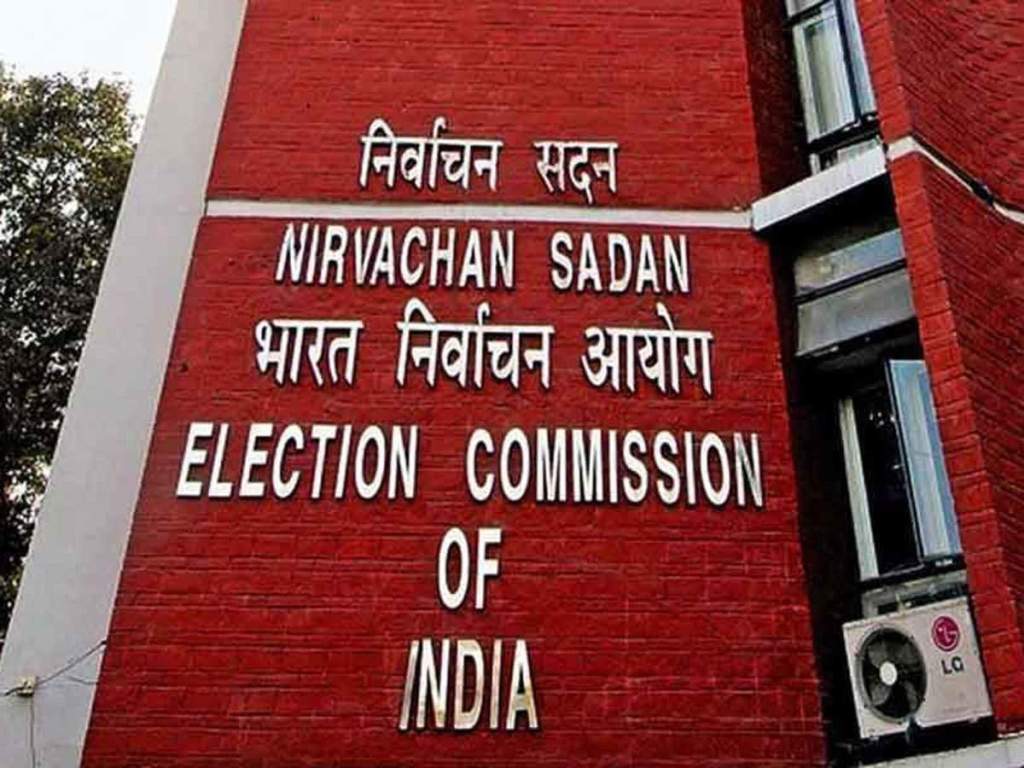
All the politicians except the President and the Governor all are elected by citizens of the country. India has a proper pyramidal system of conducting elections. The central election Commission of India was established on 25th of January 1950, which conducts elections at central.
Similarly each state has its own election Commission known as state election Commission for conducting elections at state and local elections within state.
For electing Prime Minister, Members of Parliament, Chief Ministers and Members of Legislative Assembly, elections are conducted by the Election Commission of India (ECI).
It monitors the indirect elections conducted for electing the President by the consent of both the houses of Parliament and Legislative Assemblies of States.
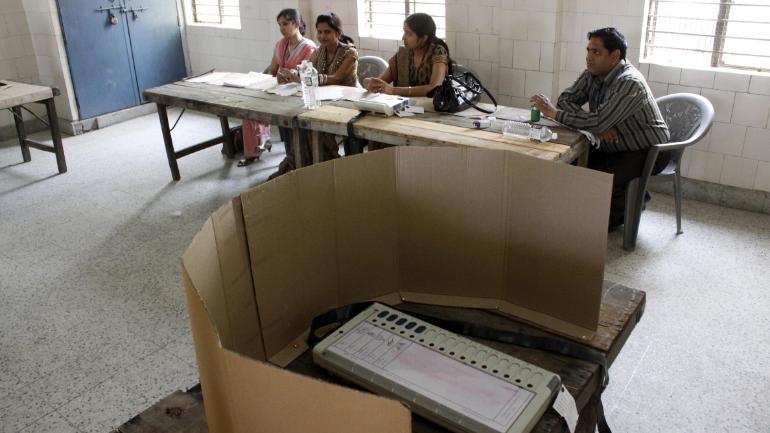
ECI is responsible for all the head to toe management for conducting elections. It prepares voters list, provides voting booths, makes voter's ID cards, provides voting machines to each booth, manages election campaigns, monitors for preventing any type of scam in votes and voting machines. It is responsible for implementing model code of conduct 144 before 72 hours of elections. It is responsible for the delimitation of places according to population.
For both Central and State election commissions, commissioners are appointed as the heads of the commission.
After the President, the second citizen of the country is the Prime Minister, he has the executive power for implementing and amending any law. He is elected by direct elections, by the citizens of India who are above 18 and has been listed in voters list. Places are divided into constituencies over 10 lakh population each. Each constituency has one representative known as Member of Parliament, of the same political party to which the candidate for the post of Prime Minister belongs to. Which means if a person is voting for a particular representative he is voting for the leader of that political party who has stood for the post of the Prime Minister.Same is with the Chief Ministers of the states.
Municipalities and Nagar Nigam heads are elected directly by the people through voting. Same is with the case of Councillor and Sarpanch.
All this process is what one can see from a bird's eye view, the reality is always beneath the surface. Entire process of elections seems to be truly democratic and constitutional. It is fixed that the party and the representative who will get the majority of votes will be the leader, but the votes which they get in majority are they real ones?
Whenever we say politics or politicians, the first thought which comes to mind is of fraud and corruption. It's a fact that a politician is never an honest and dedicated man. He tries every means to come into power, because history is the evidence that everybody has greed for the throne, everybody wants to be superior and can rule among others. The hunger of that seat can turn every honest and responsible person into a dishonest and irresponsible one.
In order to come into power the menadatory thing is securing a majority of the votes. Therefore leaders of political parties use their financial power. They spread their workers in their areas where they give money and bribe to the voters who are either poor or in need of money. This is called purchasing of votes by giving money. By giving money they assure their votes. Even when that candidate loses the elections, the person who has been given money is mentally harassed by them.
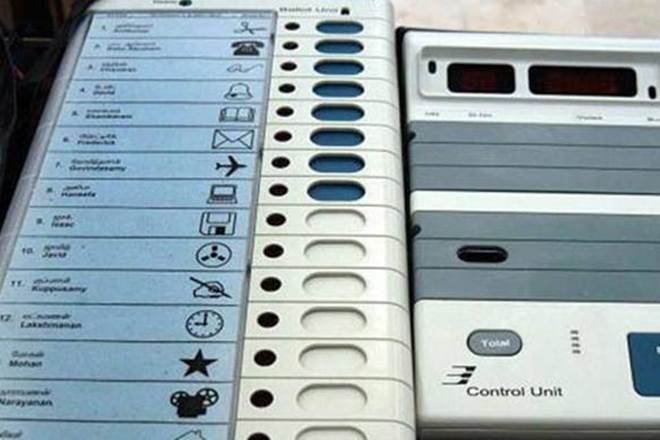
Another way which they try out is malpractices in voting machines. They change or adjust machines in the manner that no matter to whom the vote is given it automatically goes into the account of one particular party who had changed it. Though ECI keeps an eye over such kind of malpractices but still this happens in the country.
One more way which these politicians try out is changing the settings of counting machines where it miscounts the vote.
When a candidate conducts election campaigns in order to get votes he tries to influence backward classes people by promising them various kinds of opportunities and privileges. Secondly, he tries to influence people of poor sections who don't have shelter and money. He promises them to provide groceries either for free or at cheap rates. Thirdly, he influences farmers by promising them to give maximum profit of their production. All the grains will be purchased by the government at a good rate.
Poverty, corruption, slums, cleanliness, improper roads, security of women and unemployment are some of the common and huge problems almost every corner of India is facing. Hence politicians promise to eradicate all the problems. Once they win the elections they never look back at their promises and they misuse their power by every means they can and just fill their own pockets.
There are many more things regarding elections. The list is never ending. The people choose their leaders with the hope that their problems will be listened to and can reach a solution. Leaders are those who shape the nation and are responsible for its growth as all the laws and schemes are launched by their government. He is the one who leads the nation who runs the nation. He has the responsibility to take the nation towards development and progress. A leader is someone who is never selfish and is always dedicated to the society and his work. The responsibility of administration and of being a head, a captain and a leader is not a matter of joke. If a captain is not responsible, the ship will for sure drown.
India has potential to be one of the most prestigious and developed nations of the world. It has the power to emerge as a well known nation. India has so many young talented people who can take the country to higher levels but it's lacking in opportunities and shaping, since the very early time India has always gone in wrong hands and hence this is the condition of the nation. For sure politics is never so honest in any country but the United States and Britain are developed because of their laws and administration of the country which is done by the leader who is leading it.
India, a land with vast geography where every hundred kilometers, there is a change in the language and culture of the people residing in that area; it is safe to say that the land has been influenced by its major civilization and, of course, a long duration of invasions from the foreigners and adaption of their culture to the indigenous civilization. The name India is derived from the name of a nurturing river, Indus. I would like to share my views about one of the oldest civilizations, the Indian civilization. As we know, the birth of a civilization conveniently starts from the riverbanks of a flourishing river. Similarly, we can date back the dawn of the Indian civilization to the river Indus and two major cities, Mohenja Daro and Harappa, in the third millennium BC. These cities were exceptionally well-planned cities with urban establishments, well-built homes with separate cooking areas and toilets, roads, underground drainage systems, centers like ports near the riverside, and irrigation systems. In the second millennium BC, the Indus civilization collapsed with a much suspicion of fluctuations of the nature of the Indus river, which gave rise to the Vedic civilization with the migration of the Indo-Aryans into the north-west of the Indian landmass.
As the name suggests, in this period, the concept of Vedas and Varna was introduced. This period contributes to the present-day religions of the Indian peninsula such as Hinduism based on Dharma, Kama, Artha, and Moksha and also Buddhism and Jainism. There are also principal contributions to literature such as Vedas, Upanishads, Mahabharata, and Ramayana. There were also new cultural and social practices like the caste system, which eventually caused the emergence of various kingdoms and states and political foundations that initiated developments of industrialization and technology, arithmetic system, astronomy, medicine, and better use of natural resources, and metallurgy. Sushruta, the father of Indian medicine, is one of the founders of surgery and plastic surgery who deveOne of the famous mathematician and astronomers is Aryabhata, who discovered the concept of zero decimal systems and also presented the theory of heliostat. Due to the fact that the Aryans worshipped stars and comets, some of the first astronomical concepts and lunar calendars can be dated back to the Vedas. And such immense developments and technological advancements brought a lot of attention to the rich land, which paved the way to quite a few.
Did you know there’s a day dedicated solely to left-handed people? There is, indeed! International Lefthanders Day is observed on August 13th. The purpose of the day is to emphasize the uniqueness of persons who accomplish daily tasks with their left hand. Many well-known people all across the world are left-handed. Former US President Barack Obama is at the top of the list, followed by renowned CEOs like Mark Zuckerberg, Ratan Tata, and Bill Gates. Lady Gaga, Julia Roberts, and Amitabh Bachchan, all well-known stars in the entertainment business, are left-handed. Left-handed people include Walt Disney, Charlie Chaplin, and Albert Einstein.
Left-handed persons have long been considered and treated as misfits. Left-handed persons in the Middle Ages were afraid of being accused of witchcraft. Many schools in the United States compelled left-handed students to “retrain” their natural proclivities in order to become right-handed as recently as the early twentieth century. Left-handedness was once thought to be caused by slight brain injury during early development, according to scientists. Over time, these misconceptions have been dispelled, and some have even claimed that being left-handed is linked to superior IQ. While the claim is intriguing, medical research yields mixed findings.
Every year on August 13, the International Left-Handers’ Day 2021 is commemorated. It’s a way to honour those who were born left-handed, in contrast to the majority of the population. While we mark this day by calling up our lefty friends and family, let us look into some fun facts about lefties. Here’s a list of ten interesting facts about lefties that distinguish them in a variety of ways.
1. Left-handed people make up a significant portion of the population, accounting for almost 10% to 12% of the global population.
2. The right half of the brain is used more by left-handed people. The human brain is cross-wired, with the right half controlling the left side of the body and the left half controlling the right. As a result, persons who are left-handed use their right side of the brain more than people who are right-handed.
3. Some people are terrified of the left side or those who are left-handed. Sinistrophobia is a phobia that can occur as a result of this illness.
4. According to a study conducted at Queen’s University in Belfast, a foetus which prefers to suck its left hand while in the womb will grow up to be left-handed. Left-handedness is determined in part by genetics.
5. After a stroke, left-handed people recover faster. Our language function is controlled by the left side of the human brain, which is heavily employed by right-handed persons. As a result, strokes on the left side of the body tamper with a right-handed person’s language. Left-handed people, on the other hand, rely less on the left side of the brain. As a result, they can regain their language abilities more quickly after a stroke.
6. In several sports, left-handed people have an advantage. When it comes to sports, they are usually good in one-on-one situations. Left-handed players generally have an advantage over right-handed opponents in sports like baseball, boxing, fencing, and tennis since they are accustomed to competing with right-handed players.
7. Being a left-handed person is considered unnatural in many cultures and countries. Left-handedness is considered impolite in eastern nations such as India and the Middle East. Left-handed children were once required to use their right hands in the United Kingdom as well.
8. Left-handed people have an advantage when it comes to typing. They can type nearly 3,000 English words using only their left hand on a QWERTY keyboard. However, only about 300 words can be typed using just the right hand. The most frequently typed letters are found on the left side of the keyboard.
9. Tasks and memory are handled differently by right and left-handed people. Left-handed people are known for multitasking effectively since they consider the tasks as a whole.
10. While this is still debatable, studies have shown that the majority of artists, including painters, musicians, and even architects, are left-handed.
Permafrost is any earth material on or under the surface at or below 0 degrees Celsius for two or more consecutive years. The range of permafrost thickness can be from one meter to one mile and, in some cases, even beyond that. Permafrost can be found on land and even under the ocean floor. It is primarily found in places where temperatures rarely rise above freezing. Permafrost is often found in Arctic regions such as Greenland, the US state of Alaska, Russia, China, and Eastern Europe.
The top few inches (up to a few feet) of the permafrost is what’s known as the “active layer.” This topsoil does thaw with yearly seasonal changes and is home to a thriving ecosystem. If you go deep enough, you will arrive at a solid layer; the permafrost rising temperatures are chipping away at this layer. Every year, more permafrost grows closer to thawing and the “active layer” depth.
THAWING PERMAFROST IS ONE OF THE TIPPING POINTS FOR CLIMATE BREAKDOWN, AND IT’S HAPPENING BEFORE OUR VERY EYES THIS PREMATURE THAWING IS ANOTHER CLEAR SIGNAL THAT WE MUST DECARBONIZE OUR ECONOMIES AND IMMEDIATELY
JENNIFER MORGAN, EXECUTIVE DIRECTOR OF GREENPEACE INTERNATIONAL
Direct Effects:
Half the volume of permafrost may be frozen water. When this thaws, the water runs off and may head downhill, leaving a vacuum. The ground slumps and falls apart.
For tens of thousands of years, permafrost has acted as a freezer, keeping 1,400 to 1,600 gigatons (billion tons) of plant matter carbon trapped in the soil.
When plants growing in permafrost regions die, they don’t fully decompose because of the cold temperature, so some organic carbon is left behind.
When the permafrost thaws, this starts to rot and decompose, releasing carbon dioxide and methane. The average temperature of the Earth is rising at nearly twice the rate it was 50 years ago.
This rapid warming trend cannot be explained by natural cycles alone. The only way to describe the pattern is to include the effect of greenhouse gases emitted by humans, which have accelerated the rate at which permafrost has been thawing due to rising temperatures.
Deforestation and Tree Clearing
Burning of Fossil Fuels
Fluorinated Gases
Livestock Farming
These are indirect causes propagated through human activities that have led to a dramatic increase in global temperatures and fastened the permafrost’s thawing.
Oil Drilling and Mining are some of the more direct causes.
The impact caused can create huge repercussions, such as :-
Release of Mercury
According to a study conducted by the University of Colorado, we were able to find out that permafrost contains the biggest pool of mercury on the planet.
– If mercury leaches out of the soil into surrounding waterways, it could be transported across waterways and taken up by microorganisms and transformed into methylmercury
-Mercury is a powerful neurotoxin and can have negative impacts on the cognitive, visual and cardiovascular well being of children and adults
-More mercury winds up in the high northern latitudes than anywhere else It’s already known to build up there in birds, fish, seals, walrus, polar bears, and some whales, even in areas thousands of miles from pollution sources.
2. Release of Methane and Carbon Dioxide
Permafrost in the Arctic alone, there are an estimated 1,400 gigatons of carbon are frozen in permafrost, making the Arctic one of the largest carbon sinks in the world. Thawing can also open pathways for methane to rise up from reservoirs deep in the Earth. Thawing permafrost will release large amounts of carbon dioxide and methane, which will lead to rising global temperatures, which will lead to further permafrost thawing, which will lead to rising global temperatures And that trend is projected to continue through the rest of the century
3. Risk of Ancient Disease & Zombie Pathogens
Just as permafrost locks in carbon and other greenhouse gases, it can also trap – and preserve – ancient microbes. There maybe “a resurgence of anthrax, smallpox, and influenza” that have been frozen in permafrost for hundreds of years.
Diseases like the Spanish flu, smallpox, or the plague that have been wiped out might be frozen in the permafrost. As The Arctic warms, more activity, like mining for rare Earth or precious metals, could potentially put us in contact with them again.
4. Crumbling Infrastructure and Altered Landscapes
Degradation of permafrost makes it difficult to build and maintain infrastructure, including roads, buildings, pipelines, and airports.
Thawing permafrost alters natural ecosystems in many ways as well.
Digital Detoxification is a practice to limit the use of technology. Digital Detox helps us to enhance the quality of our lives. It is a way to stop the constant urge to use social media.
Do we really need Digital detox?
Our lives are filled with technology. According to a study we give about 2.5 hours daily on social media. But some take it too further than this.
Here is the list to check if you need a Digital Detox.
Do you:
Use social media late night instead of sleeping;
Get stressed, anxious, and irritated without social media;
Think about social media even after using cell phone;
Check likes, shares, comments constantly.
If yes, then you need Digital Detox.
Benefits of Digital Detox
1. Keep your life balanced.
According to Ayurveda a balanced mind, body, and life is key to all round health.
2. Sleep benefits
The health of a person can be judged by his sleeping pattern. If you have irregular sleep and insomnia then your body might have some underlying problems. Using digital detox helps you sleep peacefully.
3. Time for Family and friends
Time spent with family and friends boost your Psychological health. Digital detox helps you to focus on your life. This gives you emotional wellbeing.
4. Embracing reality
The contemporary world is virtually oriented. People spend time getting perfect selfies, try to maintain a hectic online presence, and feel insecure about themselves. Same cycle again and again.
Digital detox will give you inspiration, boost your creativity, and give you true values of life.
5. Look younger
A study shows that people who spend more time on screen age faster than others. Looking at the screen gives your skin wrinkles and lines. Digital detox helps you look fresh and young.
Check out this infographics for quick ways to detox:
Here are 10 useful tips that you can do to Detox digitally:
1. Keep away from your cell phone for a minimum of 5 hours. You can increase as you like.
2. Keep away from distractions such as Netflix, gaming, other digital products.
3. Read a book during disconnection. Write a journal about how you feel during this time. You will be amazed that in a month your health has progressed.
4. Go out. Embrace nature. Do some activity that connects you to nature such as gardening, walking on beaches, swimming, or cycling in the morning.
5. Play with your pets. This is the best time to bond with your pets.
6. Do volunteering. Give your hand to a person in need. Everything that goes around comes around.
7. Spend time with your family.
8. Declutter your house.
9. Use cell phones ONLY when necessary. If you really need your cell phone, you may use it. Make sure you don’t exceed your time limit.
10. Practice your hobby and master it. Remove negative self with Digital Detox.
Do these 10 simple Digital Detox techniques every week. You will be surprised with the productivity and efficiency you see in your life and work.
Here are 5 famous motivational quotes to inspire you while you Digitally Detox.
The body achieves what the mind believes.
Be patient with yourself. Nothing in nature blooms all year.
Your life only gets better when you do. Work on yourself and the rest will follow.
Nurturing yourself is not selfish—it’s essential to your survival and your well–being.
It is health that is real wealth and not pieces of gold and silver.
New season of English domestic football tournament Premier league( PL ) is starting 13th august (14th august according to IST). PL is considered as one of best top tier league in football world. 20 team contest with each other playing 38 games( 19 home and 19 away) in a 8 month long season from august to may. This league operates on system of promotion and relegation. Bottom three teams gets relegated to English football league( EFL ). PL was founded on 20th February 1992. Total 49 clubs have participated in PL, seven of them have won the title. Also the PL is the most watched sports league in the world with potential TV audience of 4.7 billion.
Build Up
Before PL, EFL was the top tier league in English football system, founded in 1888. Decline of English football in late 1980s and money were the main reasons behind PL’s foundation. Late 1980’s was a difficult period for English football as stadiums were crumbling, violence in stadiums was rising. In addition English clubs were banned from European competition for five years after Heysel stadium disaster in 1985. EFL was behind from other European leagues in attendance and revenues.
This made change in system necessary. During 1980’s major clubs of English football started transforming in business ventures to maximize revenues. Manchester united, Everton, Tottenham Hotspurs and Arsenal were among the top leaders in this transformation. To increase the power and revenue, top clubs threatened to break away from the league. They succeeded and begged 50% share of income. By the beginning of 1990’s, big clubs again considered breaking away for EFL. This time they also had fund for the upgradation of stadiums.
In 1990 managing director of London weekend television, Greg Dyke met with representatives of “BIG 5” for establishing Premier league, but they required backing of The football association (the governing body of English football). Luckily The FA didn’t have good relationship with football league so they agreed and released a report in June 1991 which supported the idea of Premier league.
Foundation
At the close of 1990-91 season, a proposal was tabled to create a new league that would bring more money into the English football. The idea was to make English clubs compete with teams across the Europe. The newly formed league was given commercial independence from The FA and EFL. Even though Dyke played a significant role in establishment of PL, he and his company lost out in the bidding for broadcast rights to Sky.
In 1992 resigned from football league and on 27th may of same year The FA Premier league was formed as a limited company. 22 clubs from football league joined the PL including big clubs like Arsenal, Manchester united, Liverpool, Leeds, Everton, Tottenham hotspurs etc.
It broke up the 104 years old football league that had operated till then with four divisions. Now PL would operate as top tier league and and football league with bottom three divisions. The competition format was not changed and the rules and regulations of promotion and regulations were adopted from football league as it is.
The first season was help in 1992-93 with 22 clubs. The first ever PL goal was scored by Brian Deane of Sheffield united. Sheffield united won the match by 2-1 against Manchester united.
So that was the brief history of Premier league. If you want watch the new season in India, tune in to star sports select.
Education is a critical aspect of one’s life. It boosts your self-confidence, acquires skills and knowledge, and shows your capabilities.Female education continues being a trending topic since many years. There is consistently a notion created that girls are born to do household chores, get married, and look after their families. Is this why women are born? Education is medium to take wise decisions and have great control in life and women have the ability to do so.
EQUAL RIGHTS TO QUALITY EDUACTION IS IMPORTANT.
Women encounter multiple barriers when they are on a journey of gaining education. The pressure of their families and society restrict them from doing so.
When women have the ability to look after their families and perform household chores, aren’t they capable enough to educate themselves? Why is there discrimination between men and women in this field? As the Indian Constitution says ALL HAVE EQUAL RIGHTS TO QUALITY EDUCATION, why isn’t no one following it? Our nation is in a development phase in all the fields. No doubt we are gaining our motive, but once give a thought, if women involve in this movement what would the success rate be? Women should have the rights to contribute their ideas, articulate their thoughts to the world.
IMPORTANCE OF FEMALE EDUCATION
If females are provided with education, the poverty in our nation will gradually decrease.
According to UNESCO, if all females in developing countries completed primary education then child mortality would drop by a sixth, saving nearly one million lives annually.
Girls are definitely the future of our nation. Girls who receive an education will undoubtedly make it a priority for their children.
By educating women, they can uplift their families, support them financially.
Educating females can reduce the chances of child marriage as this can deliver a negative impact on female education.
PROMOTION OF FEMALE EDUCATION
The awareness of female education should start from rural areas.
Schools should be constructed in villages so that women can feel safe to attend.
Security should be provided to women so that they don’t hesitate to come out of their house to attend schools.
Stern actions should be initiated for any crime against women.
Abortion of female feticide should be banned and if it is practiced, punishment should be given.
Beti Bachao Beti Padhao campaigns should frequently be conducted to bring awareness about the importance of education in a woman’s life.
Women shouldn’t hold themselves back assuming what people will think about them. They should do what their heart says. In today’s world, people do believe female education is important. Frequent encouragement is needed to completely stop this act. When women can look after her family, why can’t she look after her nation? Women can inevitably cause a change in society, if she is given a chance. She doesn’t expect much from her family and close ones. She merely wants them to support her decisions and help her achieve success.
It is important for women to voice out their thoughts, ideas and decisions. They should reveal to the world that they are capable enough to balance both their personal and professional life. That day is not too far when all the women in this world would be happily attending schools and colleges and gaining abundance of knowledge.
We all know that we are surrounded by air, we feel it in the form of wind. But have you ever thought why it gets cold as we go up? Or how is it that our earth never heats up even when the sun supplies it with so much energy? Or how is the temperature at night maintained even when there is no sun? Or how is fog formed? And why is it formed mostly in winters (or in areas having low temperature)?
The troposphere is the bottom-most layer of the Earth’s atmosphere (contains 75% of the total mass of the planetary atmosphere, 99% of the total mass of water vapor and aerosols, source-Wikipedia). It is the densest layer of the atmosphere (owing to the highest gravitational force experienced in this layer). Most types of clouds are found here. All the weather and climate activity take place in this layer. The troposphere has the highest amount of water vapor and the temperature decreases as we go up.
The troposphere extends 10 km up above the sea level. The height of the top of the troposphere varies with latitudes, lowest at the poles and highest at the equator: the poles have low temperature and the equator has high temperature (low density) and by season, lower in winter and higher in summer, again a function of density. It is approximately 20 km near the equator, and about 7 km over the poles in winter. Air is warmest at the bottom of the troposphere near ground level, because of terrestrial radiation of earth. Air gets colder as one rises through the troposphere, as the molecule density decreases and inter-molecular space increases and so less radiation is absorbed. That’s why the peaks of mountains are many-a-times snow covered throughout the year. Air pressure and the density of the air also decrease with altitude, all a function of the number of molecules.
The layer immediately above the troposphere is called the stratosphere separated from the troposphere by tropopause. The tropopause is the area between the two atmospheric layers where the temperature is constant.
The sun emits short wavelength radiations that are absorbed by the earth’s surface (note, surface not atmosphere). The earth’s surface later emits long wavelength radiations that are absorbed by the molecules of air (the Green house gases) which is responsible for maintaining the earth’s temperature. The oceanic currents and the wind movements, due to change in pressures is what is responsible for distributing the earth’s heat so that heat is distributed and no region experiences any extreme. The radiations absorbed by the gas molecules are reflected back towards the earth as well as towards the space. This heat, thus, absorbed by the earth goes back to the atmosphere. The terrestrial radiation is what maintains the earth’s temperature when there is no sun.
Now, can you guess the formation of fog. It is formed in areas where cold and warm air or ocean currents meet. It is the condensation of water molecules, around nuclei (molecules to act as bases) near to the earth’s surface. Now you can guess why it happens in winters. The temperature difference increases making condensation easier. The phenomenon, where the temperature of earth increases with height is known as temperature inversion, like what happens when terrestrial radiation heats air upwards or when hot air rises due to convection. It is the condition of instability.
In today’s society, we are all witnessing how social media is evolving on a daily basis. The majority of individuals on the planet use social media. This is very popular among the younger generation. Even if you look at statistics, you will find the same scenario. Every day, the popularity of social media grows. The effects of social media on youngsters are also seen in other aspects of our life.
Social Media Trivia: Brush Up Your Knowledge
Here are some statistics that were done on social media.
The average time spent by the people per day on the social network is 1.72 hours.
For the teenagers, the numbers are much higher which is up to 27 hours per week.
In today’s society, social media has become an integral part of many young people’s lives. Many young people continue to engage in social media without stopping to consider the influence of social media on youth. The consequences might be beneficial or bad, but they are usually detrimental if they are not linked with a commercial or professional purpose.
It is a major issue for the majority of people in today’s society because what is more important?
Is it more essential to be concerned about “Facebook” friends than those with whom we meet face to face in our everyday lives? What is the long-term influence of social media on today’s youth?
There are many advantages to using sites such as Twitter, Facebook, Pinterest, LinkedIn, Tumblr, Google +, Gaming sites, Instagram, and blogs, but there are also many disadvantages. If we want to make sound decisions, we must go deep within ourselves and conduct extensive study on the subject.
Positive Impact of Social Media on Youth
It keeps connected to their friends when they are not able to see each other always when they want to.
Social media keeps you updates about the important things that are going across the globe currently or maybe in your locality. It is a great benefit to know about everything just by the simple click of your finger.
The youths have the perfect place to express themselves in such a way in which they won’t be allowed to do in public. This is something which makes the youth feel better about them and they hold some position in society.
It helps you in developing social skills and the best part is that a number of friendships can begin from the social website. Youths generally like make new friends and know about others as much as they can. All of this is possible with the social media platform.
One more interesting impact of social media on youth is that it feels fun to interact with peers rather than talking to them face to face.
Negative Impact of Social Media on Youth
People in today’s age place such a high value on social media that it has become their top priority. They like being on social networking sites and neglect all of the things that should come first for them, such as family, sports, and school.
We can only see the virtual aspect of a person on social media sites. This implies that we can only see the aspect that they want us to see. Many people strive to present themselves to others as someone they are not.
Young people have a bad tendency of bullying their classmates, which is understandable to some extent. However, when it comes to cyberbullying, it has a significant impact on the other peer because it may appear on anyone’s newsfeed and quickly go viral. Such factors can sometimes lead to despair and suicide ideation.
Some young people are extremely susceptible to influence. They may feel the urge to modify their physical appearance and compare themselves to everyone they see on social media.
Social media provides a powerful temptation. It might become an addiction for the young and cause them to get distracted.
Positive Impact of Social Media on Youth in different Sectors
Educational Aspects
Social media allows teachers to quickly interact and connect with students and others.
Students have free and simple access to internet sites where they may obtain all of the information.
Grades have improved, and the rate of absentees has decreased.
According to a poll, around 59 percent of schools confess that their students use social media for instructional purposes. In addition, 50 percent of them utilise social media to discuss school tasks.
Political Aspects
The participation of the voters has increased. The users of the platform of Facebook have admitted that they get the inspiration to vote in an election when they see online their friends have voted too. A survey reported that those who visited Facebook more than two times in a single day were more likely to attend a political meeting or rally- 43% more people said that they are sure to vote.
Social media gives birth to the idea of change in politics. Social networking gives the social movement cheap as well as a quick method for distributing the information and make the people come together.
News/ Awareness
Around 30% of the people of America get their news from online. The information in the social networking sites spreads much faster than any other forms of media.
More than 50% of people in the world nowadays get the breaking news from a social media platform
The social networking sites provide the benefits academic research to the people along with the online access. This helps the people to get access to the resources that were unavailable before
The people who use the platforms of social media get empowered and informed to change their communities and themselves.
Social Aspects
With the help of social media, people can communicate with friends and this enhanced communication online strengthens the relationship between them. Survey says around 52% of the teens that remain online say social media have helped them with their friendships and around 88% of the people say that staying online has helped them stay in touch with the friends they don’t see regularly.
As said earlier, young people always have this tendency to make new friends. Around 57% of the teens that remain online say that they make new friends on social media.
Jobs for the Youth
Social media is one of the best ways for marketing products, connecting with people and find business opportunities.
It helps the employers to get the employees and those who are in search of new jobs. Around 87% of the job recruiters have found their employers through LinkedIn, around 30% through Facebook and 15% through Twitter.
The social media sites are the reasons for creating thousands of job opportunities for the people and they have brought new avenues of income.
Negative Impact of Social Media on Youth in different Sectors
Work/School
Social media helps the students to cheat on school assignments and for those who work can get some idea about their work.
If social media is used on a light scale, it will help the students to improve their grades. However, for those students who are heavy users, their grades tend to fall incredibly. A study shows that students who are using Facebook have an average GPA of 3.06 while those who don’t use Facebook have an average GPA of 3.82.
On average of 106 minutes in every 90 minutes that is spent on Facebook college students drop their grades to12.
The social media platform affects the productivity of the employees to .51%. These workers are generally between the age of 25-34 and check their social media during work.
Lacking Privacy
One thing that is seen common among the young people is they often get too open in the public and share their personal information. Most of the people don’t read the privacy policies and are unaware that their information that the information is read by the insurance companies, advertisers and the IRS.
They expose themselves to the governmental and corporate intrusions. The justice department of the US gather hundreds of pieces of information from the social networks and email every year.
Cyber Bullying
One of the very prime negative impact of social media on youth as some of the negative minded individuals use it for bullying someone.
People use it for sending intimidating messages to others that sometimes create trauma for the others as well.
Misinformation or false propaganda is another negative impact of social media on youth.

















 Eduindex
You must be logged in to post a comment.