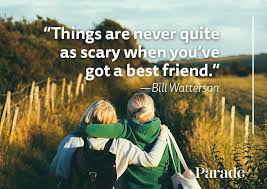
Friendship – The unbreakable bond!!!

TRUST, LOVE, LOYALTY. Friendship is the only bond that suits these three words. In love, if there is love and faith, there is no loyalty at all. In family, if there is trust and love, there is no loyalty. But friendship has these three trust, love and faith. All people in this world will definitely have a true friend who care for you all the time. When I told you this, who is the one that strikes on your mind? The one that strike on your mind will be your soulmate forever. This is my trust. Just try this. Let me come to the point. Why we value friendship more than our family? Have you ever thought about it? Okay. Come on! Let me tell you about the non-sinking ship that is friendship.

When you first went to school, you would have cried when your mom/dad left you there. After getting some friends there, you would have definitely not cried. Yes, the bond that makes feel secure and happy beyond parents must be your friends. When you grow up with your friends, you will feel them as your own brother or sister. This gives you a feel to do anything for them. In your 12 years of school life, you might have faced many situations like punishments etc., right? School, where we learned all goo deeds with our friends. There must definitely be some naughtyness. Getting punishments together, picking on your friends as much as you can, irritating them etc. This childhood friendship has given us something, that is possessiveness, ego, love, care. These are the emergence of our own friendship. We always have a thought, my friend must talk to me and should not talk to others. Those possessive bonds are unbreakable.

14 Reasons Why School Friends Are Friends For Life

In your college life, at first, you might have some hesitation to talk to your friends and it will start very formally and after the bond get stronger, these won’t be formal talks even if you imagine it. The life’s adventures can be known with your friends in your college life. These school and college friendship can never be forgotten. It doesn’t matter what the gender is but what matters is friendship!! Friendship has no language, gender, caste etc., It’s just the sink of two hearts. There have always been the cute and lovely friendship between a boy and a girl. Some thought its wrong; what’s wrong with that? They are friends; they know their limits right? So, let’s stop being opposive on friendship between a boy and girl.

How to teach ... making friends | Teacher Network | The Guardian

As everyone know, tomorrow is International Friendship Day. Rather than texting your long distance friends just make it lively. Just do a video call or a normal call. This makes them feel happy for you. And they will know how strong your friendship is!!

HAPPY FRIENDSHIP DAY!!

When is Friendship Day 2021, International Friendship Day Date

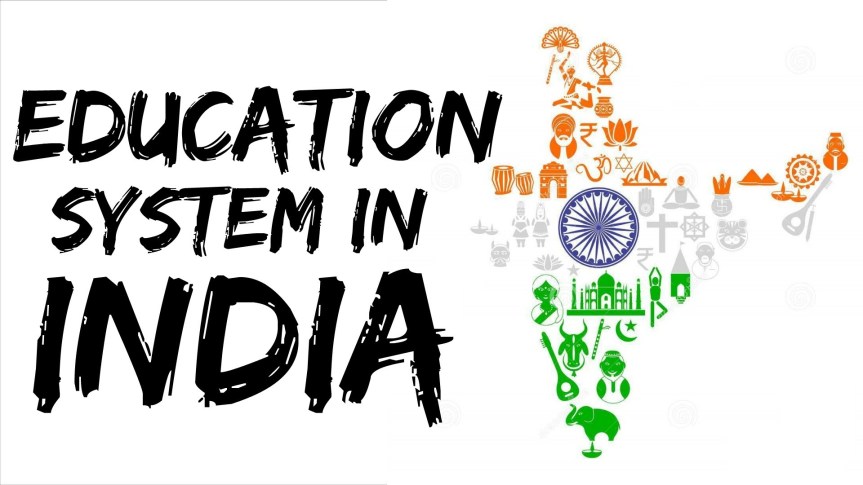
Education System In India…

Education is critical in the growth of a person and the formation of an informed citizen. Education empowers individuals, aids in the suppression of societal ills, and contributes to the overall development of society and nation. Education aids in the unravelling of nature’s mysteries. It helps us to comprehend and enhance the functioning of our civilization. It lays the groundwork for a better existence. Education develops the skills needed to combat social injustice. Every person has the right to an education.

Along with China, India has one of the world’s largest and most complicated educational systems. The National Policy of Education defines the basis for India’s commitment to delivering basic education to its inhabitants. In India, elementary schooling is now required. Only 14 percent of India’s population was literate at the time of independence. After so many decades since independence, the number of literates has more than fivefold grown.

History of Education System:

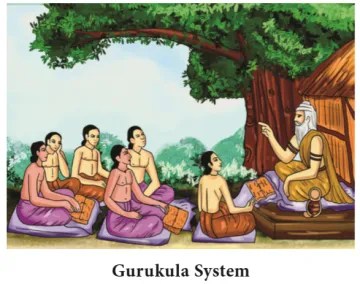
The history of Indian education may be traced back to the Ramayana and Mahabharata. The Gurukula system is another name for the traditional Indian schooling system. There were gurus back then, who are now known as instructors, and shishyas, who are now known as pupils. Gurus and shishyas lived together in Gurukula under one roof till they finished their study. As part of their education, the shishyas were required to assist the guru with all everyday duties. Gurus taught all topics to youngsters from upper social classes, ranging from Sanskrit to Holy Scriptures and mathematics to philosophy. During that period, the Gurukulas concentrated on the practical parts of life. The children were taught in an open classroom in a natural setting. This early school system in India lasted for many years until the modern education system arrived in the nineteenth century.

Lord Thomas Babington Macaulay introduced the modern education system to our country in the early nineteenth century, during the British period. The primary basis of this updated education system was tests and a well-defined curriculum that prioritised topics like science and mathematics while pushing subjects like philosophy and metaphysics to the sidelines. The open classrooms of the Gurukulas were replaced by brick and mortar classrooms. A more formal relationship between the instructor and the learner replaced the core of the guru shishya tie. Examinations were held at regular intervals to assess each student’s progress. The emphasis of the educational system moved from studying to remembering topics in order to achieve high scores in tests.

Problems of Indian Education System:

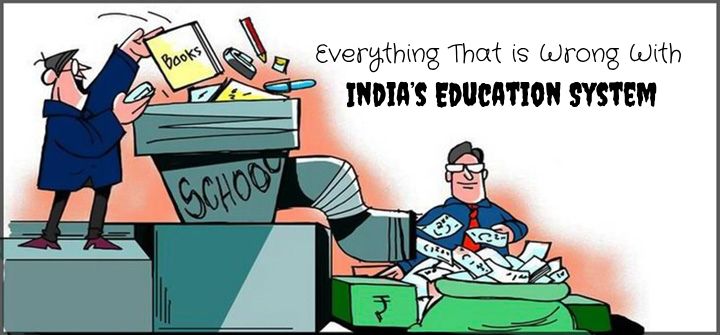
Over time, it has been discovered that there are several flaws in India’s educational system. Instead of comprehending the principles, pupils began cramming and memorizing them. Knowledge takes a second seat as high ranks take precedence. Modern parents have modified their mentality appropriately, and their objective is to guarantee that their children get high grades rather than learning from the ground up.

Private schools and universities are quickly expanding in the country, but the outcomes they generate are far from adequate. It has also been noticed that the quality of teachers has worsened with time. Our examination system is to blame for the large skill disparity. Every year, thousands of engineers and professionals are produced in India, yet only a portion of this number is employed. This is due to the Indian test system’s emphasis on high percentages rather than ongoing comprehensive review.

Research and development, which should be the foundation of our system, are given the least attention. Private schools and colleges are more concerned with the number of students admitted than with the quality of their education. This is the primary reason for the faculty’s and instructors’ lack of skills and expertise. The fact that a single professor is assigned to teach numerous courses demonstrates this.

How Can We Improve the Indian Education System?

First and foremost, we must reform the grading system. Rote learning should be avoided at all costs. Teachers and professors should pay greater attention to students’ analytical skills and evaluate them properly. Instead than just getting excellent grades, there should be a greater emphasis on complete evaluation. Workshops for teachers should be held on a regular basis to keep them up to speed on the newest advancements in the education field. Simultaneously, the curriculum should be restructured in accordance with India’s current educational demands.

The payroll structure of the teachers and the faculties especially in the government institutions should be improved. This step will help in motivating the teachers to develop their skills and they will take a keen interest in grooming or shaping up a student’s life and career. The government and other entities who are associated with the education sector, need to understand the importance of quality of education. Education should be a holistic process that must focus on the overall development of the physical, emotional, social and cognitive skills of a child. It needs to be a slow and cyclic process and must take place gradually to help the child develop into an autonomous, independent and knowledgeable individual.

Conclusion:

An educated person is one who can contribute to the advancement of the economic and social growth of the society as well as the country. The actual purpose of education must go beyond simply providing degrees and certificates to pupils. Education is not a means of earning a living; rather, it is a means of liberating one’s mind and spirit.

Moral Philosophy and Ethical Theories

Moral Philosophy is a branch of philosophy that contemplates what is right and wrong. It explores the nature of morality and examines how people should live their lives.

Ethics are the moral principles that govern a person’s behaviour or the conduct of an activity. Morals are concerned with principles of right and wrong behaviour and the goodness and badness of human character. Morality governs private, personal interactions while Ethics governs professional interactions. Ethics and morals relate to right and wrong conduct and are often taught to be the same however they are different.

Ethics refer to rules provided by an external source e.g., codes of conduct in workplaces or principles in religions while Morals refer to an individual ‘s own principles regarding right and wrong. Many morals are common as they stem from basic human emotions.

There are 3 Branches of Moral Philosophy

  1. Meta-ethics

This Branch asks the big picture question such as “What is Morality?” “What is Justice?” “Is there Truth?”

  • Normative Ethics

This branch answers questions of what we ought to do. It provides a framework for deciding what is right and wrong. There are 3 common frameworks;

Consequentialism (Utilitarianism)

Deontology

Virtue Ethics

  • Applied Ethics

This branch addresses specific, practical issues of Moral Philosophy such as war and capital punishment. It also tackles specific moral challenges that people face daily, such as whether they should lie to help a friend or coworker.

The Focus of this article is on the Normative Branch of Moral Philosophy

  1. Consequentialism is an ethical theory that judges whether or not something is right by what its consequences are. For instance, most people would agree that lying is wrong. But if telling a lie would help save a person’s life, consequentialism says it’s the right thing to do.
  • Deontology is duty ethics, so it compares a person’s ethics against some duty or imperative. Deontology emphasizes the character of actions.
  • Divine Command Theory

In this Theory, the action performed is in accordance to the order or decree given by God.

e.g., Sabbath

Virtue Ethics

Virtue Ethics is a philosophy developed by Aristotle and other ancient Greeks. It is the quest to understand and live a life of moral character.

This character-based approach to morality assumes that we acquire virtue through practice. By practicing being honest, brave, just, generous and so on, a person develops an honorable and moral character.

According to Aristotle, by honing virtuous habits, people will likely make the right choice when faced with ethical challenges.

Aristotle and The Highest Good

In book one of Aristotle’s Nicomachean Ethics, he claims every action is aimed at some good yet these aims vary between individual and context. 

According to Aristotle the highest good must fit into three criteria:

  • it is desirable for itself
  • it is not desirable for the sake of some other good
  • all other goods are desirable for its sake.

Furthermore, Aristotle later includes that the highest good must be acted upon because if one does not act to achieve any aim then they will never achieve it. In other words, the highest good is a solitary nucleus, which all other goods are acted upon for.

For Aristotle this highest good is happiness or eudaimonia (which translates to living well). He argues this by going through the list of what many may consider the highest good of actions; for example, pursuing wealth, honor, or wisdom. Yet, these do not fit the criteria he is trying to fill. Instead, he examines all these aims and realizes happiness is the highest good because it is what living well consists in and the latter aims are sought because they promote living well, not because they are what living well consists in.

Eudaimonia vs Euphoria

Euphoria can be described as the short spike of happiness that we feel during certain moments while the lasting happiness is called eudaimonia.

Eudaimonia is a more balanced approach where the happiness does not rely on isolated, powerful events but yields from every day events. Little things like conversations, encounters with people, a walk in a park, hearing a bird sing, a train being on time, a drink in a pub, a beautiful sunset. It is a mental attitude to appreciate little things and creates a robust and content state mind.

Bhagavad-Gita: The Philosophical Guide

The Bhagavad Gita is one of the most well-known scriptures in Hinduism. It is a scripture that extends upon the Vedic teachings. The word ‘Bhagavad Gita’ literally translates to ‘Song of God’ and is a dialogue that took place between the Supreme Lord Shree Krishna and His devotee Arjun, when they were on the battleground of the Mahabharat war. Bhagavad-Gita has been a source of perennial wisdom and has inspired many modern thinkers such as Mahatma Gandhi, Carl Jung & Herman Hesse.

One who comes to know the Absolute Truth attains knowledge of everything.

The science of knowing the Absolute Truth is called “Brahma Vidyā.” The purpose of the Bhagavad Gita, above everything else, is to impart Brahma Vidyā, the science of God-realization.

Philosophical Teachings from Gita

  • Gunas
  • According to Gita Prakriti is made up of 3 Gunas. Sattva (Purity), Rajas (Passion and Activity) and Tamas (Ignorance). The balance of these three Gunas in humans decides the character of that person.

    1. Jnana Yog

    Jnana Yog (Path of Knowledge) emphasises on attaining self-knowledge and meta-physical knowledge. According to Jnana Yog we need to continuously seek to achieve knowledge and the answers for all this knowledge that we need to know lie within us. We do not need to seek them in external sources. The concept of Reality of Body and Soul is also explored in Jnana Yog.  It says that all souls (Atman) are a part of Brahman and all creations come from God. The present world is just 1/4th of God’s realm. Something larger awaits in the 3/4th of the other realm and we can go there only when we achieve liberation.

    2. Karma Yog

    Karma Yog (Path of Action) refers to performing one’s worldly obligations and responsibilities without attachments but involving ourselves in it. It advocates detaching the mind from the fruits of actions and doing tasks without having any expectations but staying true to the task and doing it with complete attention of mind and heart. By not having expectations, even from people we free that individual from any burden of dependency and hence make them free to follow their own path.

    Whatever you do with your body – whether you eat, dance, sing or you just sit and breathe – if you do it with involvement and joy, you become a Karma Yogi. – Sadhguru

    3. Bhakti Yog

    Bhakti refers to Path of Devotion. It means to devote ourself to God by constantly worshipping them and keeping them in our mind. Krishna reveals in Gita that he is the Supreme Being who has taken several avatars such as Brahma, Vishnu, Ram, etc.

    Krishna also distinct between positive and negative worship. If one follows a character of negative influence, they too will inculcate their negative attitude and habits. Similarly, when one worships a character of good virtues they will be positively influences and grow in the right direction. Therefore, since God is known to be perfect and the best positive influence Krishna asks to worship God through Bhakti.

    After a soul achieves knowledge of these 3 Yogs and practices them only then one can realise God, Atman and Brahman can become one and attain blissful liberation.

    Twitter will pay hackers to discover biases in its automated picture cropping after being accused of doing so.

    Twitter is running a competition in the hopes of finding biases in its picture cropping algorithm, and the best teams will get cash awards (via Engadget). Twitter hopes that by allowing teams access to its code and picture cropping model, they will be able to identify ways in which the algorithm might be detrimental (for example, cropping in a way that stereotypes or erases the image’s topic).


    Those that compete must submit a summary of their results as well as a dataset that can be put through the algorithm to show the problem. Twitter will then give points depending on the kind of damages discovered, the potential impact on people, and other factors.


    The winner team will get $3,500, with $1,000 awards granted for the most creative and generalizable results. On Twitter, that figure has sparked some debate, with some people arguing that it should include an extra zero. For example, if you discovered a bug that allowed you to execute activities for someone else (such retweeting a tweet or picture) via cross-site scripting, Twitter’s standard bug bounty programme would pay you $2,940. You’d make $7,700 if you could find an OAuth flaw that allowed you to take over someone’s Twitter account.


    Twitter had already conducted its own study into its image-cropping algorithm, publishing a paper in May that looked at how the system was biassed in the wake of claims that its preview crops were racist. Since then, Twitter has mainly abandoned algorithmically trimming previews, but it is still utilised on desktop, and a good cropping algorithm is a useful tool for a firm like Twitter.


    Opening a competition allows Twitter to receive input from a much wider group of people. For example, the Twitter team had a meeting to discuss the competition, during which a team member stated that they were getting queries about caste-based biases in the algorithm, something that software developers in California may not be aware of.
    Twitter is also searching for more than simply unintentional algorithmic bias. Both deliberate and unintended damages have point values on the scale. Unintentional harms are cropping behaviours that may be abused by someone publishing maliciously created photos, according to Twitter. Intentional harms are cropping behaviours that could be exploited by someone posting maliciously intended images.


    The competition, according to Twitter’s announcement blog, is distinct from its bug bounty programme; if you submit a complaint regarding algorithmic biases to Twitter outside of the competition, your report will be closed and tagged as not applicable, the company warns. If you’re interested in participating, visit the competition’s HackerOne page to learn more about the rules, qualifications, and other details. Submissions are open until August 6th at 11:59 p.m. PT, and the challenge winners will be revealed on August 9th at the Def Con AI Village.

    Superstition in India

    Superstition refers to any belief or practice that is caused by supernatural causality, and which contradicts modern science. Superstitious beliefs and practices often vary from one person to another or from one culture to another.

    Common examples of superstitious beliefs in India include: a black cat crossing the road symbolizes bad luck, a crow cawing indicates that guests are arriving, drinking milk after eating fish causes skin diseases, seeing a mongoose symbolizes to be very lucky, and itchy palms mean that money is coming your way.

    Hindus believe that cutting nails and hair on Saturdays brings bad luck.

    Hindus believe that it’s inauspicious to cut hair and nails on Saturday because it angers planet Saturn (shani), which then brings bad luck. However, ask people who cut their hair and nails on Saturdays, and we bet they’ll tell you their hair looked better and their nails neater, and no planet hovered above them with bad luck.

    If a black cat crosses your path, then your tasks get delayed or postponed.

    Poor black cats. They are blamed just for being black (no racist joke here). It’s a popular belief in the west too that, if a black cat crosses your path, it’s a bad omen. For the west, the origin of this superstition came from Egypt. Egyptian culture believed that black cats were evil creatures, whereas the Indian explanation is that black represents Shani and therefore brings bad luck. It is said that if a black cat crosses your path, then your day’s tasks get delayed or postponed.

    Curse of 8

    According to numerology, the number eight is ruled by the planet Shani (again Shani!) and therefore if you’re ruled by the number eight then there shall be lots of obstructions, limitations and frustrations in your way.

    Keeping onions and knives under your bed will drive away bad dreams.

    An onion and a knife is kept under a newborn child’s bed to drive away bad dreams. It is also believed that placing an onion under your pillow while you sleep will bring you great insight when dreaming about who your future partner in life will be.

    Childhood Obesity

    In 2019, an estimated 38.2 million children under the age of 5 years were overweight or obese. Once considered a high-income country problem, child obesity is now on the rise in low- and middle-income countries, particularly in urban settings. Childhood obesity is a complex health issue. It occurs when a child is well above the normal or healthy weight for his or her age and height. The causes of excess weight gain in young people are similar to those in adults, including behaviour and genetics. The rate of childhood obesity has more than tripled over the last four decades—rising from 5 percent in 1978 to 18.5 percent in 2016. But what are the reasons for this rapid increase?

    Fast food Consumption

    Increased fast food consumption has been linked with obesity in the recent years. Many families, opt for these places as they are often favoured by their children and are both convenient and inexpensive. Foods served at fast food restaurants tend to contain a high number of calories with low nutritional values. Though many studies have shown weight gain with regular consumption of fast food, it is difficult to establish a causal relationship between fast food and obesity.

    Sugary beverages

    A study examining children aged 9–14 from 1996–1998, found that consumption of sugary beverages increased BMI by small amounts over the years. Sugary drinks are another factor that has been examined as a potential contributing factor to obesity. Sugary drinks are often thought of as being limited to soda, but juice and other sweetened beverages fall into this category. Sugary drinks are less filling than food and can be consumed quicker, which results in a higher caloric intake.

    Activity level

    One of the factors that is most significantly linked to obesity is a sedentary lifestyle. Each additional hour of television per day increased the prevalence of obesity by 2%. Television viewing among young children and adolescents has increased dramatically in recent years. The increased amount of time spent in sedentary behaviours has decreased the amount of time spent in physical activity. Research which indicates the number of hours children spend watching TV correlates with their consumption of the most advertised goods, including sweetened cereals, sweets, beverages, and snacks. Media effects have been found for adolescent aggression and smoking and formation of unrealistic body ideals. Regulation of marketing for unhealthy foods is recommended, as is media advocacy to promote healthy eating.

    Psychological factors:

    Self-esteem

    Research findings comparing overweight/obese children with normal-weight children in regards to self-esteem have been mixed. Some studies have found that obese children have lower self-esteem while others do not. There is some consensus in the literature that the global approach to self-esteem measurement with children who are overweight/obese is misleading as the physical and social domains of self-esteem seem to be where these children are most vulnerable.

    Eating disorder symptoms

    Traits associated with eating disorders appear to be common in adolescent obese populations. A number of studies have shown higher prevalence of eating-related pathology (i.e. Anorexia, Bulimia Nervosa, and impulse regulation) in obese children/youth.

    Consequences

    Childhood obesity can profoundly affect children’s physical health, social, and emotional well-being, and self-esteem. It is also associated with poor academic performance and a lower quality of life experienced by the child. It has also been linked to numerous medical conditions. These conditions include, but are not limited to, fatty liver disease, Type 2 diabetes, asthma, cardiovascular disease, high cholesterol, glucose intolerance and insulin resistance, skin conditions, menstrual abnormalities and impaired balance. Until recently, many of the above health conditions had only been found in adults; now they are extremely prevalent in obese children. Childhood obesity has also been found to negatively affect school performance. A research study concluded that overweight and obese children were four times more likely to report having problems at school than their peers. They are also more likely to miss school more frequently, especially those with chronic health conditions such as diabetes and asthma, which can also affect academic performance.

    The growing issue of childhood obesity can be slowed, if one focuses on the causes. There are many components that play into childhood obesity, some being more crucial than others. A combined diet and physical activity intervention conducted in the community with a school component is more effective at preventing obesity or overweight. Moreover, if parents enforce a healthier lifestyle at home, many obesity problems could be avoided. What children learn at home about eating healthy, exercising and making the right nutritional choices will eventually spill over into other aspects of their life. This will have the biggest influence on the choices kids make when selecting foods to consume and choosing to be active. Focusing on these causes may, over time, decrease childhood obesity and lead to a healthier society as a whole.

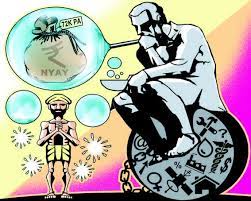
    NYAY- CAN IT ELIMINATE POVERTY?

    The Nyuntam Aay Yojana is a social welfare program that was a proposed by the Indian National Congress in its 2019 general election manifesto. According to The economic times NYAY is “yet another welfare program for India, but one that is between promising the moon and simply loony”.

    Under this scheme, bottom 20% poorest families who are earning less than Rupees 12,000 per month will get Rupees 6000 per month directly transferred to their bank accounts.

    NYAY promises annual income transfers of ₹72,000 to each of the poorest five crore families comprising approximately 25 crore individuals. If implemented, it will cost the exchequer ₹3.6 lakh crore per annum.

    UPSIDE:

    • It helps poor people in providing nutrition and education.
    • It follows direct cash transfer which eliminates fake beneficiaries.
    • The money will be transferred to the women of the family which will in turn help in empowering women.

    LOOPHOLES:

    • Spending money on development is much more effective than giving out cash directly.
    • Inflation may rise.
    • This scheme should not be as a permanent scheme. If it is, the whole purpose of eliminating poverty will be defeated.
    • There is no incentive to work. And hence NYAY can make people lazy and may stop them looking for work.

    If it is targeted well, and if leakages are avoided, NYAY can bring at least a few people out of poverty. There are more issues that remain unanswered.

    Well there isn’t a definite answer weather it can end poverty or not, but it is in the hands of every individual to kick poverty out of our country as well as the whole world.

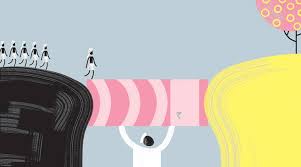
    Poverty is not like cancer where every cell must be removed or will come back. Whereas we can consider it like , being overweight or obese. The hard and slow process; victories are partial, sometimes you regress. But keeping up the fight you can definitely succeed. So just working towards poverty each and every day we can eventually overcome it.

    TYPES OF 3D PRINTING

    3D PRINTING

    3D printing is the process of producing a 3D object by the successive addition of layers one above the other. It is also called additive manufacturing. To know more about 3D printing, check out my article on 3D printing. There are seven different types and technologies involved in 3D printing. 

    TYPES OF 3D PRINTING

    1. Sintering

    Sintering is a technology where the material to be used for 3D printing is heated but not to the melting point. Metal powders are used for selective laser sintering whereas thermoplastic powders are used for direct laser metal sintering. Laser is used for fusing the layers of the final object. Each layer is formed and the laser traces the parts formed and fuses the next layer on the top until the complete object is made.

    2. Melting Methods

    The melting methods include

    • Power bed fusion – Uses a thermal source such as laser to melt the materials. The layers are fused and consolidated to form the object. It combines sintering and melting processes.
    • Electron beam melting – Uses a high-power electron beam that can generate heat to melt the material in the vacuum. It ensures no residue and a clean environment.
    • Direct energy deposition – Uses electric arcs or beams to melt the substrate material. It is used to add parts to the existing object.

    3. Binder Jetting

    Binder jetting is a method where the powdered material is deposited on the bed and adhesive is added to bind the particles to form one layer of the object. Sand, metals, and ceramics are the most commonly used materials. The process is repeated until the complete object is formed.

    4. Fused Deposition Modeling

    In this, the thermoplastic filament is heated to its melting point and shaped layer-by-layer to form a solid object. It is a cost-effective method where the material softens and sets in the shape and then becomes ready to add the next layer. It is also called material extrusion.

    5. Material Jetting

    It is similar to inkjet printing where the liquid material is jetted from the nozzle and a layer of the object is formed. After the layer solidifies, the next layer is added on the top. The layers are cured using UV rays for a smooth finish. It is the most expensive method in 3D printing.

    6. Sheet Lamination

    This process is made by superimposing the layers one above the other and then joining them using ultrasound for metals or adhesive for cardboards and plastic. Once the layers are combined, it is cut and refined to get the desired shape. This method is not widely used as the other methods. Ultrasonic Additive Manufacturing (UAM) and Laminated Object Manufacturing (LOM) are the two sub-types in this method.

    7. VAT polymerization

    It uses the method of photopolymerization where liquids are turned into solids by exposing UV light to them. It is one of the most commonly used 3D printing methods that include

    • Stereolithography – Stereolithography uses photopolymerization technique where a single point laser or UV beam is used to cure and solidify the object.
    • Digital light processing – It also creates objects from liquids like resin where the image of each layer is flashed onto the surface.

    THE INFLUENCE OF GENDER ROLES ON HEALTH SECTOR INCLUDING REPRODUCTIVE RIGHTS

                                                                              (Photo: Singularity Hub)

      Men form one-third of a typical medical school’s population; Rest of the seats are all occupied by women. The pay gap in the healthcare sector is 25% higher than any other sector. Most women agree to work at low wages because of the financial crises they face. Gender inequality is leading to a shortage of healthcare workers in the sector. Women in India face “extensive gender discrimination” in access to healthcare. Gender inequality is leading to a shortage of healthcare workers in the sector because obviously only one-third of the seats were taken by men. 

    Under the National Health Mission, the government has launched several schemes. The most important program launched by the government is Rashtriya Arogya Nidhi which provides financial assistance to the patients that are below poverty line and are suffering from life-threatening diseases.  Rashtriya Swasthya Bima Yojana is a government-run health insurance program for the Indian poor. It aims to provide health insurance coverage to the unrecognized sector workers belonging to the below poverty line.  National AIDS Control Organization was set up so that every person living with HIV has access to quality care and is treated with dignity.  Anganwadi Workers and the ASHA workers are the grassroots level functionaries under the umbrella ICDS Scheme and the National Health Mission respectively.  Both these functionaries being closely connected with the rural and urban poor families, play a pivotal role in addressing their nutrition and health related problems/issues.

    How the Government has failed them ?

    ·        Do not have regular salaries, partly because their work is supposed to be voluntary and part-time.

    ·        Even though the Code on Social Security, 2020 aims to include formal and informal sectors under a social safety net, it excludes several categories of workers, including ASHA and Anganwadi workers. The Code on Wages, too, has left this constituency out of its coverage, depriving employees of a fixed minimum wage.

    ·        As per Modi government’s definition, Anganwadi and ASHA workers are not ‘workers’ but only ‘volunteers’, who do not receive any ‘wage’ but only an ‘honorarium’! So the principle of minimum wage would not apply to these scheme workers.”

    Also a gender issue

    ·  Limited space for career progression is linked to low institutional recognition, demotivation, and curtailed opportunities for growth. ASHAs face sexual harassment by other health workers and community members, linked to their mobility and public profile. ASHAs have worked to further women’s interests, particularly in Chhattisgarh state where Mitanins(the name for ASHAs there) have mobilized protests against alcoholism, supported women’s collectives and taken action against gender based violence. ASHAs have begun taking action to mobilize their peers to reduce gender based violence. ASHAs have reported an increased sense of empowerment and personal growth, in part through their belief in the social value of their work.

         Gender as a social determinant of health

    •     The social determinants of health (SDH) are the non-medical factors that influence health outcomes. They are the conditions in which people are born, grow, work, live, and age, and the wider set of forces and systems shaping the conditions of daily life. These forces and systems include economic policies and systems, development agendas, social norms, social policies and political systems.
    •          The SDH have an important influence on health inequities – the unfair and avoidable differences in health status seen within and between countries. In countries at all levels of income, health and illness follow a social gradient: the lower the socioeconomic position, the worse the health.
    •        The following list provides examples of the social determinants of health, which can influence health equity in positive and negative ways:

                  1.Income and social protection

                  2. Education

                  3.Unemployment and Job security

    •      Research shows that the social determinants can be more important than health care or lifestyle choices in influencing health. For example, numerous studies suggest that SDH account for between 30-55% of health outcomes. In addition, estimates show that the contribution of sectors outside health to population health outcomes exceeds the contribution from the health sector.
    •     Addressing SDH appropriately is fundamental for improving health and reducing longstanding inequities in health, which requires action by all sectors and civil .
    •      Social determinants of health are conditions in the environments in which people are born, live, learn, work, play, worship, and age that affect a wide range of health, functioning, and quality-of-life outcomes and risks. Conditions (e.g., social, economic, and physical) in these various environments and settings (e.g., school, church, workplace, and neighborhood) have been referred to as “place.”
    •      In addition to the more material attributes of “place, ” the patterns of social engagement and sense of security and well-being are also affected by where people live. Resources that enhance quality of life can have a significant influence on population health outcomes. Examples of these resources include safe and affordable housing, access to education, public safety, availability of healthy foods, local emergency/health services and, environments free of life-threatening toxins.
         Reproductive rights in India
         Reproductive Rights are rights of individual to decide freely and responsibly the number, spacing and timing of children. It is individual’s right to decide whether to reproduce and have reproductive health. The Supreme Court of India and several state high courts have recognized the importance of reproductive rights and have observed that the denial of reproductive rights is violation of women’s fundamental and human rights.
         Courts have been at the forefront of expanding, protecting, and promoting reproductive rights. court through its various judgements from time to time has promoted and protected the reproductive rights of women. for instance, Puttaswamy judgment, Suchita Srivastava V. Chandigarh Administration, Navtej Singh Johar V. UOI. 
         
         Role of socio-physical environment in health care
         Social determinants of health are the conditions in the environment where people sustain, i.e. they born, live, learn etc., which affects the health, functioning and quality of life outcomes and risks. Health starts from our localities, our homes, schools, communities where it is also examined by our access to social and economic opportunities. So, social determinants of health are designed to identity ways to create social and physical environment that promote good health.


    Poverty – The massive trap

    • Almost half the world- over 3 billion people live on less than $2.5 a day
    • More than 80 % of humanity lives on less than $10 a day.
    • Around 27-28 percent of all children in developing countries are estimated to be underweight.
    • According to UNICEF 22000 children die each day due to poverty.
    • Infectious diseases continue to blight the lives of the poor across the world.

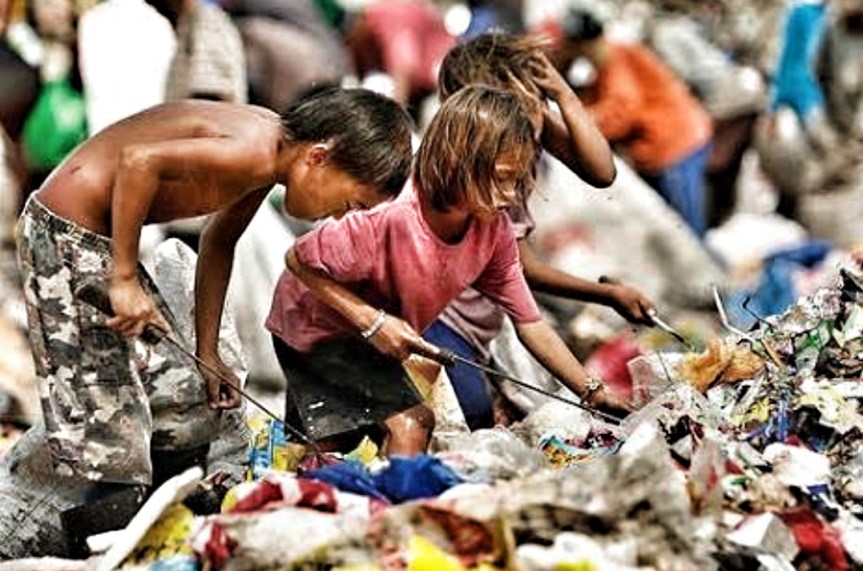
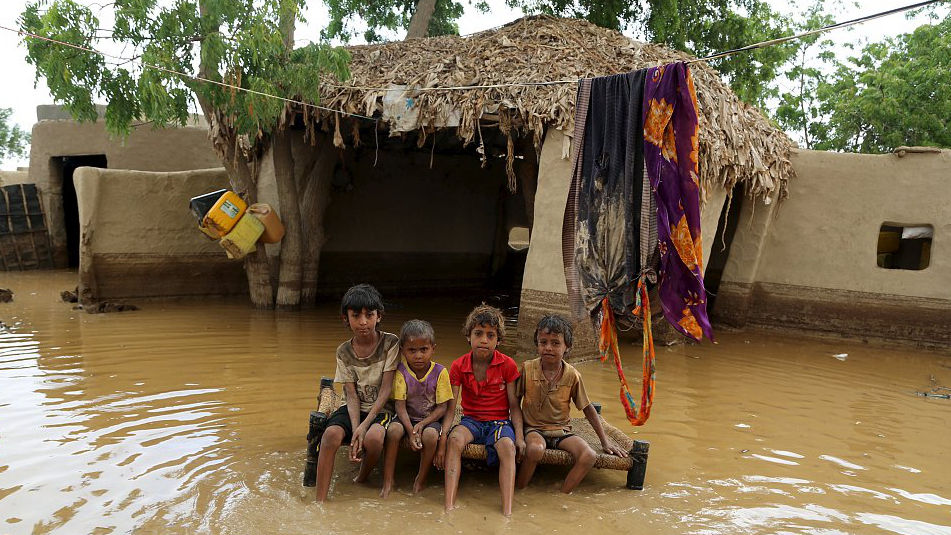
    and we can pile up many such pathetic situations faced by the folks all over the world by getting trapped in poverty. Poverty is a state in which a person or a community  lacks the financial resources( like the income level of people will be very low to meet the daily human needs) and essentials to lead a minimum standard of living. What could be more disadvantaging of a factor than ruining people’s life ? This also contributes as a loophole in the Indian economy. Development of a country has a lot to deal with the effect of poverty. It is interrelated to many problems of underdevelopment. Both the rural and the urban communities tend to face this issue but they can be different. In rural areas people may not have much access to education, health and many such factors but people are exposed to a healthier and natural environment whereas in urban places people are provided with adequate education and health but many of the problems caused by poverty are made worse by things like overcrowding, rising expenses, pollution, unhygienic conditions etc. There may be some serious economic decline due to poverty. Reduces productivity and economic output by about 1.3 % of GDP. Raises the costs of crime by 1.3% of GDP. Raises health expenditures and reduces the value of health by 1.2 %. This can also make the developing countries to hang back from emerging into a developed country.

    Impact of poverty in the environment

    In addition to the effects on economic development of a country, Poverty also has an adverse impact on the environment leading to pollution, such a lifestyle leads to unnecessary depletion of resources. It encompasses a combination of factors. The first reason is people hit by poverty create an unhealthy lifestyle around them because most of the houses of such people are located in the slum areas. The houses would be devoid of a proper drainage system and sewage disposal, lack of sanitation and would let all the effluents and filthy water on the road. Such waters would be flowing rapidly in between houses, which to a drastic level will pollute the environment.

    Every house may not hold the service of individual toilets and there would be a common one among them, and that would increase the risks of infectious diseases because there would be lack of proper maintenance. People over there use flex banners for house roofing and have them as a sleeping mat but the fact is flex banners are made of poly vinyl chloride( they are made of plastics which do not degrade biologically and it causes a serious threat to the environment as it is not bio degradable. It may have serious effects on the health and can even cause cancer and infertility problems. There are high chances of polluting the water resources due to lack of knowledge and poor water management. Humans who are lesser educated live shorter lives than who are educated more, such intangible gaps are a huge loss for people and the country.

    What could be the promising measures to alleviate poverty?

    • Many people are pushed into such a state due to the lack of employment and education opportunities so it would be an important measure to generate such opportunities for the poor and to raise their productivity is the speedy development of infrastructure.
    • Further for the mitigation of poverty growth of non farm employment in the rural areas holds a special importance. Non farm employment is created in marketing, transportation, handicrafts, dairying and forestry, food processing and other agricultural products.
    • Educating a girl child is very prominent for the society. Educated girls can grow into skilled workers and get well paying jobs. Working women can earn and support the families and lead to sustainable development.
    • The public distribution system should be strengthened to remove poverty. Poor section should get food grains at subsidized rates and in adequate quantity.
    • Even a common man are not able to afford things these days due to the constant escalation of prices and just imagine the plight of the impoverished. Stability in prices helps to remove poverty. If the prices increases constantly the poor becomes poorer. So the Government should render the best to keep the prices under control.
    • Development in agriculture can aid the eradication of poverty. Rapid rate of growth of agriculture production will help to remove urban as well as rural poverty. Agriculture should be mechanized and modernized.

    IS BEING AN INTROVERT AWFUL ?

    Above all else, let me clear out that one ought not get befuddled between the words “introvert” and “being shy”. An outgoing/ extrovert person can likewise feel timid here and there and that doesn’t imply that he/she is an introvert. An Introvert is a tranquil individual that doesn’t prefer to talk definitely and likes to remain quiet about their contemplations for the most part. They are somewhat individual that returns home just to unwind and have the opportunity to think. However, that doesn’t imply that a friendly individual can’t be a contemplative/introvert person. Similarly as they partake in the calm opportunity to get themselves, they’re probably a contemplative person somewhat. Being a contemplative person is regularly viewed as frail. They aren’t exactly on par with the social butterflies, who simply appear to float through life.

    OPINION: Introverts still make great leaders – The Lancer Feed

    However, that is false, there isn’t anything amiss with being a introvert. The primary issue is with society, which doesn’t see it similarly. Society has instructed us that being an introvert or thoughtful person is the most exceedingly terrible thing you can be and that everybody should need to be outgoing.

    The Perks Of Being An Introvert | Writers Write

    They are informed that being active is acceptable and being modest and calm is terrible. They are advised in schools to lift hands, take an interest in a class or we lose marks. For introverts, those are a portion of the exceptionally hard principles to accomplish. Insights say that half of Indian populace is comprised of introverts. So society is saying that 675 Million individuals need to change what their identity is to be acknowledged, to be effective and to be content. I’m additionally told this thing since youth that I should change myself and become a outgoing individual. Indeed, presently likewise my companions, educators and direct relations bother me as a bashful individual and they request that I go along with them in their discussion which I don’t need. Furthermore, some of the time it’s truly irritating.

    How to Know If and Why You're an Extreme Introvert | SocialPro

    Continuously recollect inside this enormous gathering of self observers are individuals like Emma Watson, Michael Jordan, Albert Einstein, Elton John, Audrey Hepburn thus a lot additional moving individuals. Being an Introvert has not prevented any of them from accomplishing their objectives or being cheerful. Pioneers like Abraham Lincoln, Rosa Parks and Mahatma Gandhi. Every inconceivable pioneer and all are introverts. Being a thoughtful/introvert person has no impact on how glad you or fruitful you will be the length of you see it in the correct manner. In the event that you consider yourself to be a thoughtful person and think its the most exceedingly awful thing on the planet, you are never going to be really content with yourself. In any case, in the event that you acknowledge yourself as a introvert and you’re cheerful, there isn’t anything in your method of you accomplishing your objectives.

    Introverted Leadership
    INTROVERT LEADERS

    So in conclusion there is noting wrong in being an introvert. I am an introvert myself and I don’t feel like to change myself for the society and so should you. As long as you are happy others opinion doesn’t matter.

    Also, in case you are an extrovert and you see an individual sitting at the side of your working environment simply contemplate what incredible thoughts he/she is coming up with.

    In a World of Extroverts, What Does it Mean to Be an Introvert at School

    RESOURCES:

    https://timesofindia.indiatimes.com/readersblog/wakeup-india/is-being-an-introvert-bad-23079/

    IMPORTANCE OF CHILDHOOD FRIENDS

    Without a doubt, one of the greatest gifts in the universe is the friendship of children. No matter how old we are, playing times with friends can take us back to a time when life was perfect and fun. It is easy to assume that such moments are a global and proven child experience, however, sadly it is not. Children raised in orphanages often miss out on the joys of contact with fellow orphans because such experiences are not available to them in an orphanage. Today is a great day to think about why friendships are so important to children. For children, friendship is an important part of their mental, physical, and social development. Children need opportunities to play together to form friendships. Through friendships, children learn to communicate with others in social situations. They also improve their physical health by competing with their peers in sports and by pushing the limits of their physical abilities. Friendship during childhood is an important part of a child’s emotional development and promotes good mental health. Through friendship and playfulness, toddlers and young children learn to interpret social media and learn to communicate with others. Children are naturally inclined to think of them and their needs. Through childhood friendships, children learn to understand how others feel and how their actions can affect others. Friendship teaches children empathy which is an important life skill that helps them understand why a person feels a certain emotion. Children’s friendships built into a noisy playground create a sense of security for children. They are able to form strong bonds with their peers, as well as with their caregivers and teachers. This has the added benefit of improving their learning skills and creating better opportunities for academic success. The benefits of childhood friendship extend to adulthood. Adults who have built strong relationships from childhood will have great success in their personal and professional lives. The benefits of childhood friendship are undeniable. Play is the child’s first chance to build a relationship. By creating an environment in which children can form friendships with their peers, we are investing in their long-term success.

    Cursed Items of World


    1. The Cursed Mirror 

    Myrtles Plantation in Louisiana, USA is said to be one of the most haunted places in the world. However, the most spooky item in the house is a mirror. Locals claim that the mirror is cursed and has the spirits of Sara Woodruff and her two children who were poisoned by their slave Chloe trapped inside it.     

    2. Baker’s Wedding Dress 

    Inside the Baker mansion in Altoona, USA is the wedding dress of Anna Baker who fell in love with an ironworker. Legends claim that Anna eloped from her home to get married to her lover but her father forcefully brought her back and locked her in the bedroom. She then refused to marry anyone else and spent the rest of her life alone. After her death, the members of the Baker family reported spotting Anna’s wedding dress at different places around the house. Some of them even saw the spirit of Anna Baker moving around the house dressed in the same wedding dress. 

    3. Annabelle Doll 

    The discovery of this doll dates back to 1970 when a mother bought it from an antique shop as a birthday gift for her daughter. Soon, the family noticed strange things happening inside the house related to the doll. The family then called for the help of renowned psychic investigators, Ed and Lorraine Warren who found that the doll possesses the spirit of a 7-year-old girl named Annabelle Higgins who was brutally murdered. The doll is now in the Occult Museum, Connecticut.  

    4. Screaming Skull

    The Burton Agnes Hall in Burton Agnes, England is home to a creepy paranormal object called the screaming skull. The screaming skull is believed to be of Katherine Anne Griffith who died in the same house after being attacked by bullies in 1620. Every night, a terrifying ghost is seen roaming around the skull making tremendous noise and scaring out everyone who tried to remove the skull. 

    5. ‘The Hand Resist Him’ Painting 

    The ‘Hand Resist Him’ painting by artist Bill Stoneham is probably one of the most haunted pieces of art. According to the artist, this painting is a representation of the doorway that connects our world with the world of the spirits. The owners of the painting have claimed that the characters in the picture move or disappear in the night.    

    6. ‘The Anguished Man’ Painting 

    Fascinated by the charm of ‘The Anguished Man Painting’, Sean Robinson inherited the painting from his grandmother and decided to hang the painting on the wall of his house. Soon after that, Sean and his family started experiencing paranormal events like cracking of the doors in the middle of the night and sudden blood-curdling screams from nowhere. Sean’s wife decided to investigate the origin of the painting and found that the artist who painted the painting committed suicide and before doing that he mixed his own blood with the paint that he used in making the painting. Learning this, the couple decided to hide the painting in the basement of their house in Cumbria. 

    7. Peice Of Uluru Rock 

    Uluru rock is a large sandstone formation in the southern part of the Northern Territory, Australia. Also known as the Ayers Rock, this place is sacred for the Aboriginal people of the area. This is the reason they request or rather advice the visitors not to take anything from the site. However, many tourists smuggled home small chunks of the formation and experienced bad luck, severe illness, terrible break-ups and even death of loved ones. 

    8. Letta The Gypsy Doll

    According to the locals of Romania, a Romanian man handcrafted a doll for his son Letta. Unfortunately, the boy drowned while playing with the doll and his spirit got trapped inside the doll. The man then decided to give the doll to the son of one of his workers. The child claimed that the doll talked to him while other successive owners reported that holding the doll or being around it causes a feeling of immense grief and makes them cry without reason.  

    9. Bulgarian Phone Number 

    There is a Bulgarian phone number +359 888 888 888 which was in use for 10 years and is now closed. The reason behind deactivating the number lies in the death of those 3 people who used it.  All of the owners of this number died shortly after getting the number registered on their name. The first owner died of cancer, while the other two were shot down without any solid motive. 

    10. ‘The Crying Boy’ Painting 

    The painting of ‘The Crying Boy’ was created by artist Giovani Bragolin and became famous quickly. It was then mass-produced and was found in many homes across Britain. However, soon many of these homes mysteriously caught fire. But the most disturbing part of the entire incident was that no matter how severe the fire was, the painting remained absolutely fine. Some regarded these fires as mere coincidences, but the undamaged paintings have not been bagged by a valid explanation till date. 

    11. Robert The Evil Doll

    Robert Otto was gifted a look-a-like doll by one of his servants who apparently hated the family. Neighbors of Robert used to hear him having a conversation with the doll. After his death, A couple bought the house and their 8-year-old daughter found the doll in the attic. The little girl often claimed that the doll was trying to kill her. The doll is now on display in a museum in Key West and is still believed to curse people.   

    12. Hope Diamond 

    Another cursed object that must be kept away from human reach is the Hope diamond. This famous jewel is of an unusually large size with a soothing blue shade and is worth $250 million. However, the diamond is believed to be cursed since the 17th century and brings great misfortune and misery to its wearer. Folklores state that a French merchant plucked the gem from one of the eyes of a Hindu idol in 1653 and ever since then, whoever owns this 115-carat blue diamond opens the door for bad luck.   

    13. Thomas Busby Chair 

    Popularly known as Busby’s stoop chair, this wooden furniture is cursed by the spirit of Thomas Busby who was known to ruthlessly murder people. Before getting hanged for his crimes, he requested to have a meal in his favorite local pub. Upon finishing his meal, he stood and said: “May sudden death come to anyone who dares sit on my chair” and ever since then, 63 people who dared to sit on the chair, met untimely and terrifying deaths. Later, the owner of the pub donated the chair to the Thirsk Museum, UK and it is still there, hung 1.5 meters off of the ground to prevent any further deaths. 

    14. Elmo Knows Your Name 

    Elmo, the popular Sesame street character had a doll version of it launched who was programmed to memorize his owner’s name. A young boy James Bowman was a big fan of Elmo so his mother decided to gift him one on his 10th birthday. However, a few days later, the Elmo doll began to chant  “Kill James” continuously. This made his mom throw away the accursed toy. After a couple of years, other such incidents came into light regarding the Elmo doll. 

    15. The Woman From Lemb Statue 

    The Women From Lemb was found in Cyprus in 1878 and is an eye-catching artifact carved from limestone. The statue is said to have been owned by four different families, each of them dying within a few years of obtaining the artifact. Terrified by the deadly history of the statue, the only surviving member of the last family donated the statue to the Royal Scottish Museum in Edinburgh, Scotland. However, things didn’t stop there. The museum curator who handled the statue was mysteriously murdered after a few days.  

    16. Basano Vase 

    Another cursed object that must not be touched is the Basano Vase that was made in the 15th century by an Italian maiden on her wedding night as a gift for her groom. Locals say that she was found murdered with the vase in her hand that very night. The vase was then passed on from families to families each claiming unfortunate deaths of loved ones. In 1988, it was offered to multiple museums but all of them refused to take it because of the curse on it. Where exactly it is now, remains unclear, but some say that it is buried in a lead coffin at an inaccessible place.   

    17. Dybbuk Box 

    The Dybbuk Box came into light in 2001 when Kevin Mannis purchased a wine cabinet and started having terrible nightmares. He then decided to gift the cabinet to his mother who suffered a stroke the very day she received it. Not just this, every person who ever owned that wine cabinet has reported experiencing horrible events. The last owner of the cabinet Jason Haxton found out that the box possesses the spirit of a malicious Jewish creature called Dybbuk, who has the ability to haunt and possess the living.  

    18. The Iceman 

    The mummy of Otzi aka the Iceman was found in 1991 in the Otzal Alps, Italy. It is believed that the Iceman belonged to 3000 BCE and his body was preserved because of the glacier that surrounded him after he died. However, soon after his discovery, people who were involved with his discovery began to die due to violent accidents. Forensic pathologist Rainer Henn died in a horrific car accident, Mountaineer Kurt Fritz died in an avalanche and Hiker Helmut Simon died after falling off from a dangerous hidden path. People believe that the discovery of Iceman is a curse and has the power to destroy mankind.   

    19.Terracotta Army 

    Terracotta Army in Shaanxi, China is a unique 2,200 pieces of funerary art which are regarded as one of the most massive archaeological discovery of modern times. However, it is nothing but a bearer of bad luck for all those seven farmers who discovered it in 1974. Soon after the discovery, their farmland was claimed by the government and their homes were demolished to make way for exhibition halls and gift shops. 

    20. Belcourt Castle Chairs 

    This former summer cottage in Rhode Island has a ballroom where you will find haunted chairs. Visitors have reported feeling chills racing up and down their spine while standing near the chairs or have felt a strange sensation of energy around them. Others have reportedly been pushed down from the chairs by an unseen force.     

    Review of Old Man and The Sea Book

    Book Name : Old Man and The Sea

    Author Name : Ernest Hemingway

    Year of Publication : 1952

    We are going to look at a book called The Old Man and the Sea, a short story written in 1952 by the famous American writer Ernest Hemingway. Ernest Hemingway’s other books, A Farewell to the arms and For whom the Bell Tolls are all his best books. This is a short story. This is the story of an oldest fisherman near Cuba. He received the prestigious Nobel Prize for Literature for this short story. This story is a very simple story.

    The name of the oldest fisherman in Cuba is Santiago. Although Santiago is old he goes alone in his boat and catches fish. He has been returning to his hut with bare hands for almost 84 days now without getting any fish. He is ridiculed and teased by other fishermen for being unlucky. On the 85th day he goes in his small boat to the deepest sea in Cuba and lures the fish. He goes a long way. At noon a giant marlin is caught in the bait. The old man Santiago is stranded at sea for two days, along with the bait and the boat, on the bait of Marlin’s.

    Santiago suffers a terrible injury. On the third day Santiago used all his strength to stab the giant fish with his spear and tie it to the side of his boat. He leaves happy to go ashore. That attracts sharks to the rot of blood coming out of Marlin’s body. Santiago fights hard with sharks. The sharks, however, leave only Marlin’s head and bones. Exhausted, Santiago leaves the boat at shore, thinking he is an unlucky man, and goes to sleep in a hut. Fishermen who came ashore the next morning measured the length of that marlin bone in Santiago’s boat. Its length is almost over 18 feet. Surprised everyone apologizes to Santiago and everyone leaves to fish with him.

    This story is a story book of 100 pages. This story is very simple to read and intriguing. But the things we need to learn from this story are important. If we read a book then that book should be useful to us in some way.  

    Let me tell you three things I learned from reading this book.

    1. The first thing to do is travel. Travel long distances. Traveling can teach us many things. Some journeys will show us the path to progress. Now in this story, Santiago went on a long journey on the 85th day and caught that huge fish.

    2. The second thing is to practice fighting alone. You may have experienced many struggles in life‌. There will be many more struggles to be faced. Only when we fight alone will it give us the greatest confidence and courage. Importantly do not expect anyone to help.

    3. Third is the training to take on the attitude of success and achievement while undergoing emotional states. Do not expect the benefit. Do your duty to the best of your ability and energy. Santiago tie the fish to his boat using his full strength. The shark eats the fish and leaves only its head and bones when it thinks it has paid off. On the surface it was a failure for the old man. But the value of the old man rises only after the other fishermen see the fish after it comes ashore. All those who mocked him apologize to Santiago. Praise him. This is why even if Santiago had come back with the whole fish other fishermen would have said that Santiago might have gotten the fish with some luck. But his respect has risen because he worked hard and brought that fish.