Indian Fiscal System

It refers to the management of revenue and capital expenditure finances of the state.

  1. Fiscal system of a country refers to the revenue and capital resources that can be raised by government, the procedure to be observed in raising and spending funds and in case of a federation such as ours the provision that governs the relationship of the constituent unit of federation. It includes with in its purview taxation, expenditure, debt management and inter- governmental fiscal relation.
  2. Indian fiscal system is based on the constitution of India which is federal in character. The constitution envisages two layers of government: the Union of central government and the state government. Local bodies do not find a place in the constitution and the function and resources allotted to them are delegated by the state government.

Fiscal Policy:- It is how a government rectifies its spending levels and tax ratios to monitor and influence a nation’s economy. It is the sister strategy to Monetary Policy through which a Union Bank influences a nation’s money reserve. These uses can affect the following macroeconomic variable in the economy:

• Aggregate demand and the level of economic activity;

• The distribution of income;

• The pattern of resource allocation within the government sector and relative to the private sector.

Sources of Revenue:- The main sources of revenue are custom duties, excise duties, service tax, taxes on property, corporate taxes, and income taxes.

Sources of Expenditure:-

Plan Expenditure includes agriculture, rural development, irrigation, and flood conrol, energy, industry, minerals, transport, and communications, etc.

Non-Plan Expenditure:- It consists of interest payment, defence, subsidies, and general services.

Public Dept:-

Internal Debt comprises loans raised from the open market treasury bills issued to the RBI, Commercial Banks, etc.

External Debt consists of loans taken from World Bank, IMF, ADB, and individual countries.

Deficits:- In a budget statement, four types of deficits are mentioned:

• Revenue Deficit

• Fiscal Deficit

• Capital Deficit

• Primary Deficit

(1) Revenue Deficit: There are various ways to represent and interpret a government’s deficit. The simplest is the revenue deficit which is just the difference between revenue receipts and revenue expenditures.

Revenue deficit = Revenue expenditure – Revenue receipts

(2) Capital Deficit: An imbalance in a nation’s balance of payments capital account in which payments made by the country for purchasing foreign assets exceed payments received by the country for selling domestic assets.

In other words, investment by the domestic economy in foreign assets is less than foreign investment in domestic assets. This is generally not a desirable situation for a domestic economy.

Capital deficit = Capital receipts – Disbursement on Capital acoount

Fiscal Deficit: This is the sum of. revenue and capital expenditure less all revenue and capital receipts other than loans taken. This gives a more holistic view of the government’s funding situations since it gives the difference between all receipts and expenditures other than loans taken to meet such expenditures.

Fiscal Deficit = Difference between country’s expenses and earnings

Fiscal deficit = Revenue receipts (net tax revenue+non tax revenue) + Capital receipts (only recoveries of loans and other receipts) – Total expenditure ( Plan and non- plan) .

Primary Deficit: Amount by which a government’s total expenditure exceeds its total revenue, excluding interest payments on its debt.

Primary deficit = Fiscal deficit – Interest payments.
“ATITHI DEVO BHAVA” – Part 1.

Land of all Seasons:

India is the current tourism hot spot. The other epithets used while referring to the nation include ‘Destination of the Millennium’ and ‘Land of All Seasons’. Spanning an area of 3,287,263 square kilometers, India is a vast country and includes dry desert areas, evergreen forests, snowy Himalayas, a long coast, and fertile plains.The natural beauty and cultural diversity of the place echoes a rich tradition. India flaunts with equal grandeur bays and beaches, deserts and mountains, enigmatic green valleys and backwaters. There exists in India a comfortable juxtaposition of contrasts- the existence of bustling haats and swanky malls, emergence of nuclear families but a reluctance to let go on the joint family system, a rush to embrace modernity yet a firm resolve to preserve traditions; destination for both ayurveda and modern medical tourism; bustling communities and indigenous tribes.

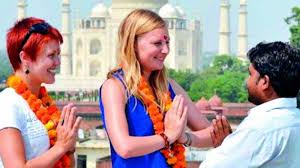
India has a rich heritage and culture of warm hospitality. In India it is believed that honouring guests equals to honouring God. A guest is welcomed into our home and hearth with cheerful gratitude. The Sanskrit adage ‘atithi devo bhava’ dictates the respect granted to guests in India. This wonderful tradition of our country has become the unique selling point of the modern tourism industry. Ministry of Tourism, Government of India has pioneered an initiative that will help tap into the full potential of tourism in India. Ministry of Tourism, Government of India has introduced “Atithi Devo Bhavah Program”- a nation wide campaign that aims at sensitizing key stakeholders towards tourists, through a process of training and orientation. The endeavour is to boost tourism in India, which in turn would act as a catalyst for India’s economic growth.

The ‘Incredible India’ Campaign has been launched to create awareness about the effects of tourism and sensitizing people about preservation of our rich heritage and culture, cleanliness and warm hospitality. It also re-instills a sense of responsibility towards tourists and reinforces the confidence of foreign tourists towards India as a preferred holiday destination.

Some points prepared by the Ministry of Tourism, Government of India, Part -1:

‘Guest Is God – Atithi Devo Bhavah’

Image Source -google.

As the old saying goes, “Treat others as you would like to be treated yourself.” That is the essence of Atithi Devo Bhavah campaign. And for that to happen, we need to change our attitude towards tourists. Some of us have lost touch with the hospitality that we were famous for. Let us bring that warmth back. Let us truly embrace the spirit of Atithi Devo Bhavah.

WHY ATITHI DEVO BHAVAH? : Last year we had 3.3 million visitors, but when you consider that Singapore gets 7 million a year, Thailand 9.6 million a year and Malaysia 11.5 million, it is a small number. There is no reason why we can’t aim to increase our numbers by 100%. And that too would be just a beginning. However to do this we need to change our attitude towards those who visit us. Often tourists are mistreated, cheated and rudely dealt with. It is simple logic: if someone in a house is rude to you, as a guest, you don’t encourage your friends and relations to go there. This is perhaps the reason why, in spite of an incredible wealth of tourist spots, cultural attractions, natural wonders and destinations for the soul, India still isn’t amongst the top 15 tourist destinations of the world. The time has definitely come to get together to change this.

INSPIRATION BEHIND ATITHI DEVO BHAVAH ? : Respect has always been an integral part of the Indian soul. From time immemorial we have always respected our teachers, our elders, our parents and our guests. Perhaps this is why a great Indian Emperor once observed-‘In Hindustan our manner is very respectful and our hearts are always open’. In many ways, at that time India was the ultimate destination for the enlightened travellers. Now, thousands of years later, we can when bring that golden age back again. This inspired us to go back to those years, when Indian hospitality set the standard for the world. And we found the keystone of what we want to do ,

Or guest is blessed, Our visitor is God. That was how we arrived at our mission called ‘Atithi Devo Bhavah’.

To be continued………………

External Morphology of leech

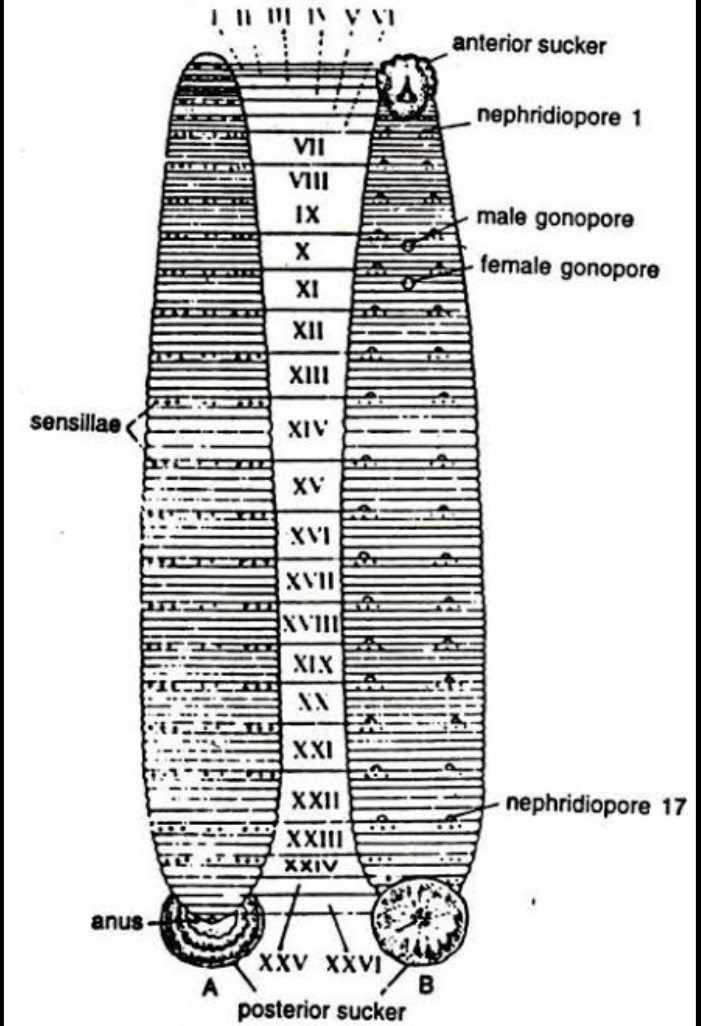
Shape and size: The body of a leech is soft, vermiform, elongated and segmented. It becomes ribbon shaped when extended and almost cylindrical when contracted. Leeches may grow to a length of 35cm.

Colouration: Dorsal surface is olive green in colour and the ventral surface is orange yellow or orange red in colour.

Segmentation: Metamerism is the segmentation of the body. The body of leech is metamerically divided into 33 segments. The segments are arranged one behind the other. Each segment is further superficially subdivided into rings or annuli. A temporary clitellum is formed on segments 9-11, which is meant to produce a cocoon during the breeding season.
Receptors: On the dorsal side there are five pairs of eyes on the first five segments. Each segment bears a number of sensory projections called receptors are located in each annulus and segmental receptors are located on the first annulus of each segment.
Suckers: leech has two suckers. The sucker located at the anterior end is called anterior sucker or oral sucker which is ventral in position occupying the first five segments. The posterior sucker is formed by the fusion of the last seven segments. The anterior sucker helps, in feeding, while both suckers help in attachment and locomotion.
External apertures

Mouth: It is located in the middle of anterior sucker.

Anus: Anus is a small aperture that opens on the mid- dorsal side of 26th segment.

Nephridiopores: Nephridia open to the exterior by 17 pairs of nephridiopores. They lie ventrally on the last annulus of each segment from 6 to 22.
Male genital pore: It is a mid – ventral opening, situated between second and third annuli of 10th segment.

Female genital pore: It lies mid- ventrally between second and third annuli of 11th segment.

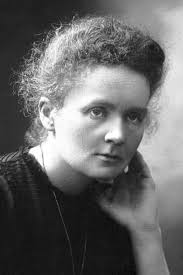
“MARIE CURIE” Biography

“Marie Curie” was the first woman to win a Nobel prize. She was born in Warsaw, the Kingdom of Poland then part of the Russian Empire. On 7 November, 1867 her father’s name was Wladyslaw Sklodowska, and her mother’s name was Bronislawa Sklodowska. Her father and mother was a teacher she was the youngest of the five children she was ten years old and began attending the boarding school of J. Sikorska.

Then she attended a gymnasium for girls from which she graduated on 12 June 1983 with a gold medal she started her practical scientific training at the chemical laboratory in 1891 she moved to France where she enrolled herself at the Sorbonne University. In 1993 she was awarded a master’s degree in Physics she returns to Paris to pursue a Ph.D. In 1894 Marie met Pierre Curie. Like Marie, he was a scientist and the two of them fell in love. They married on July 26, 1895, and they had to daughter. Marie became fascinated by rays that were recently discovered by scientists Wilhelm Roentgen and Henri Becquerel. Roentgen discovered X- rays and Becquerel had found rays given off by and elements called uranium Marie begin to do experiments once Marie was examining a material called pitchblende see it budget there to be a few raised from the Uranium pitchblende. But instead, Marie found a lot of rays she soon realized that there must be new and discovered the element in pitchblende Mary and her husband spent many hours in the science lab investigating pitchblende and the new element the event figured out that there where to a new element in “Pitchblende” they had discovered two new elements for the periodic table Mary named owner of the element polonium after her Homeland Poland she named “The Other radium” because it gave off such strong rays the curies came up with the term “radioactivity” to describe elements that emitted strong rays. In 1903, the Nobel prize in physics was awarded to Marie and Pierre Curie as well as Henri Becquerel for their work in radiation. Marie became the first woman to be awarded the prize. In 1911, Marie won the Nobel in chemistry for the two elements, polonium, and radium. She was the first person to be awarded two Nobel prizes. Marie became very famous. Scientists came from around the world to study radioactivity with Marie soon doctors found that radiology could help with curing cancer when World War I started Marie learned that doctors could use X-rays to help determine what was wrong with an injured Soldier. At that time Marie finds out a new portable system to carry the machine and helped over 1 million soldiers during the war she was the first woman to be awarded the prestigious Nobel Prize and the only to win into the field and multiple Sciences. She died in Passy, Haute-Savoie, France on 4 July 1934, at the age of 66. “YOU CANNOT HOPE TO BUILD A BETTER WORLD WITHOUT IMPROVING THE INDIVIDUALS”.

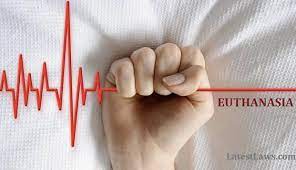
EUTHANASIA:

Euthanasia refers to deliberate action taken with the intention of ending a life, in order to relieve persistent suffering. It is performed by doctors when requested by people to put and end to illness and a lo of pain.

In most countries, euthanasia is against the law and it may carry a jail sentence. For a long time now, euthanasia ha been controversial and emotive topic.

TYPES OF EUTHANASIA:

There are different types of euthanasia

  • Voluntary euthanasia:

It is conducted with the consent of the patient. 

  • Non-Voluntary euthanasia:

It is conducted when the consent of the patient is not available.

  • Involuntary euthanasia:

It is conducted against the will of the patient.

  • Passive and active euthanasia:

Passive euthanasia entails the treatment necessary for the continuance of life. Active euthanasia entails the use of lethal substances and is more controversial.

CONTROVERSY SURROUNDING IT:

There are many arguments both for and against euthanasia.

Some believe euthanasia is murder and find it unacceptable for moral reasons. Some argue that it is legal if someone is mentally capable of making their choice.

“Death with dignity” is a movement that encourages legislatures to allow people to decide how they want to die. Some people prefer not to go through a lot of pain while dying and often it concerns on not putting burden on their loved ones which is what exactly this movement defines.

It is also concerned about the ethical complications that doctors could face. Long back doctors have taken the Hippocratic oath which implies to care for and never harm those under their care. As a result most doctors never encourage euthanasia. But even in that Hippocratic oath some argue that it ends suffering and brings no more harm and hence euthanasia is totally acceptable.

IS EUTHANASIA LEGAL?

Well there are lot of debate going about the legality of euthanasia. But according to laws, euthanasia is legal in

  • Belgium,
  • Canada,
  • Luxembourg,
  • Netherlands,
  • New Zealand,
  • Spain and
  • several states of Australia.

Whereas in INDIA passive euthanasia is legal under strict guidelines. Patients must consent through a living will, and must be either terminally ill or in a vegetative state.

There is no particular conclusion in this case as the debate is still ongoing and one cannot come to a conclusion whether euthanasia is necessary or not. It it always in the individual and it is also a matter of choice.

Anime series for beginners

1.Death Note

Death Note is written by Tsugumi Ohba and illustrated by Takeshi Obata. It consists of 37 episodes . It is psychological thriller, mystery based anime. This is the story of a teen genius boy who got a strange notebook which originally belongs to Shinigami Ryuk.

2.Attack on Titan

It is written by Hiroshi Seko and illustrated by Tetsuro Akari. Attack on Titan is of 4 season and 75 episodes. It’s genre is action, dark fantasy and post-apocalyptic.

3. One Punch Man

It is written by ONE and illustrated by Yusuke Murata. It consists of 23 episodes and it’s genre is action, gag comedy and superhero. One punch man is a story of a boy name Saitama, who has superpower and strongest person in the universe.

Indian Female Athletes And Their Contribution To Sports

Women athletes had constantly struggled to create space for themselves in Indian sports. People had doubts about women’s performance and did not think they had what it took to compete in sports. They were considered weak and too emotional to survive the rough play. Though, women had been part of sports for a long time, lack of motivation and trust in them took time to make a mark and reinforce the lost confidence. Women are born to cook and have family was the belief of the society, but they defied all odds and changed history of sports with striking sporting skills. Now, female athletes have made India proud in various international games and their passion has inspired every girl out there to believe in her dreams and work hard to achieve them.

Here are a few Indian female athletes who have made India proud on international platforms.

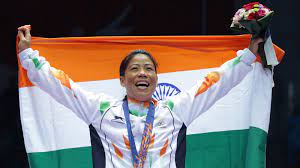
  1. Mary Kom (Boxing)

Boxing is a career that was believed to be meant for men and not women. Female boxing was not considered a viable sport to be played and was discouraged by people. However, Mary proved them wrong and kept working to be the boxer she aspired to become. She had her own struggles but strived to the best that she is now. She overcame all the obstacles that pulled her from reaching the level that is unattainable to come near to even for the greatest boxers. Winning a medal in each of the six World Championships, she has set an astounding record despite being a wife and a mother of three children. Also, Mary is the first Indian female boxer to win gold in Asian Games. She could not qualify further in Olympics but her achievements are inspirational.

2. Saina Nehwal (Badminton)

Saina is the first Indian female badminton player to win Olympics medal. She is a true inspiration to young girls who aspire to be badminton player. She won prestigious awards like Arjuna Award, Padma Shri and Padma Bhushan. She was the first female to be raked no. 1 in the world.

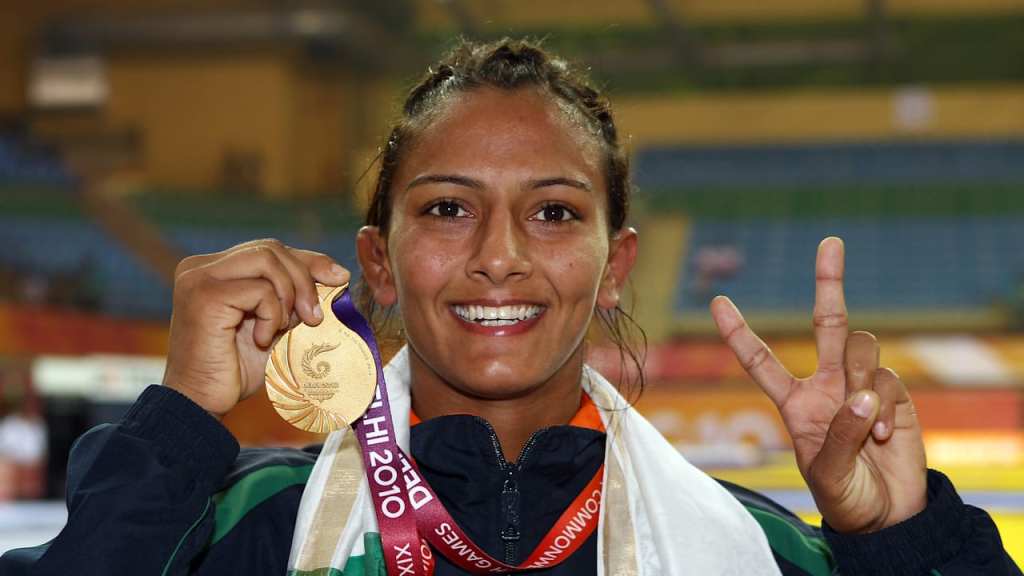
3. Geeta Phogat (Wrestling)

Geeta Phogat in wrestling stunned everyone with remarkable performance. She wrestled her way through gold medal in Commonwealth Games. She is not the only Phogat known to incredibly represent the country but her sisters as well are equally bringing pride to Indians. Geeta and her sisters sacrificed a lot to be who they are now. Moreover, she was the first Female Indian Boxer to qualify Summer Olympics.

4. P V Sindhu (Badminton)

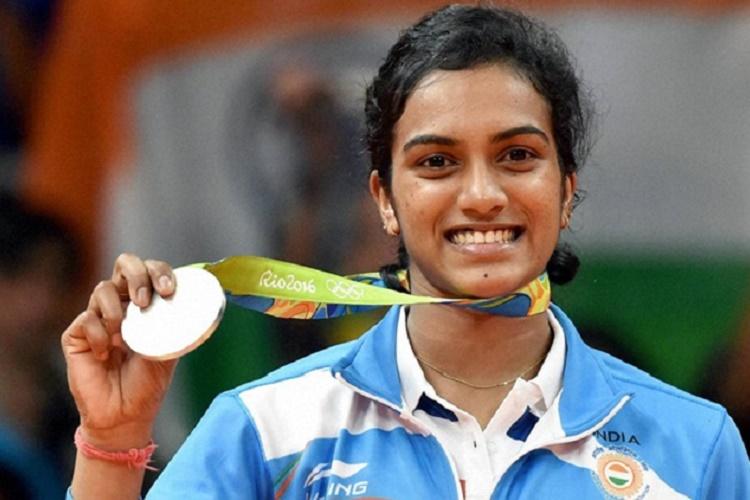
PV Sindhu at a very young age achieved magnificent things that made her India’s favorite badminton player. She was the first Indian woman to win a silver medal in Olympics at only 21 years of age. With her precision and skills she has now entered semi-finals in Tokyo Olympics and will be seen in action today.

5. Sakshi Malik (Wrestling)

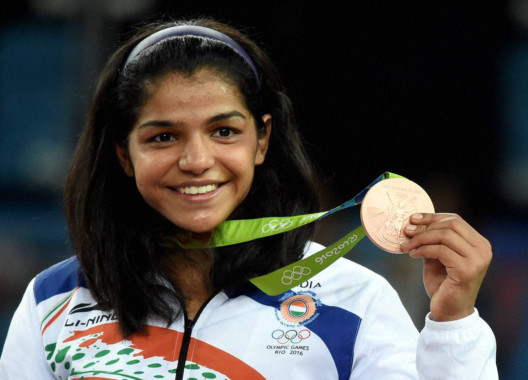
Rio Olympics, 2016 turned to be the time when a talent like Sakshi Malik had become inspiration by winning first Olympic medal in wrestling. She started wrestling at a young age and her hard work payed off by achieving third place with supreme talent.

6. Deepika Kumari (Archery)

An inspiring woman who is praised for her excellence in archery and rewarded with numerous titles. Her achievements in archery are exceptional. She was ranked world’s no. 1 female archer. She could not make it through Quarter-finals but we can expect to see a lot of extraordinary performance in future games.

7. Rani Rampal (Hockey)

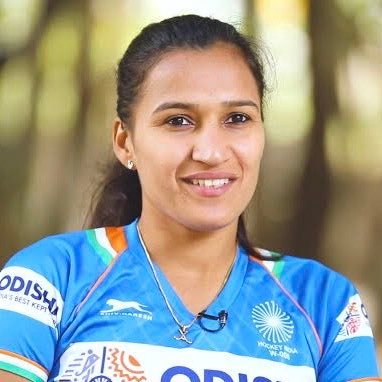
At the age of 15, she wonderfully represented India at the World Cup. She was awarded Khel Ratna and Padma Shri in the year 2020. Her contribution to Indian hockey paved her way to becoming captain of the team. Rani is successfully leading hockey team this year in Tokyo Olympics.

People were tough on them but they fought for themselves and for all those girls who were prevented to dream. They carved a way for women to strive against stereotypes. We are proud of you!

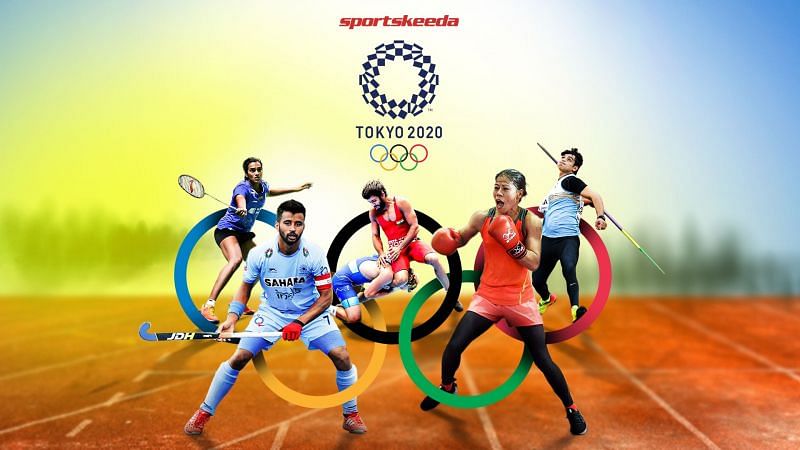
TOKYO OLYMPICS (2020) AND INDIA’S TOP MEDAL CONTENDERS

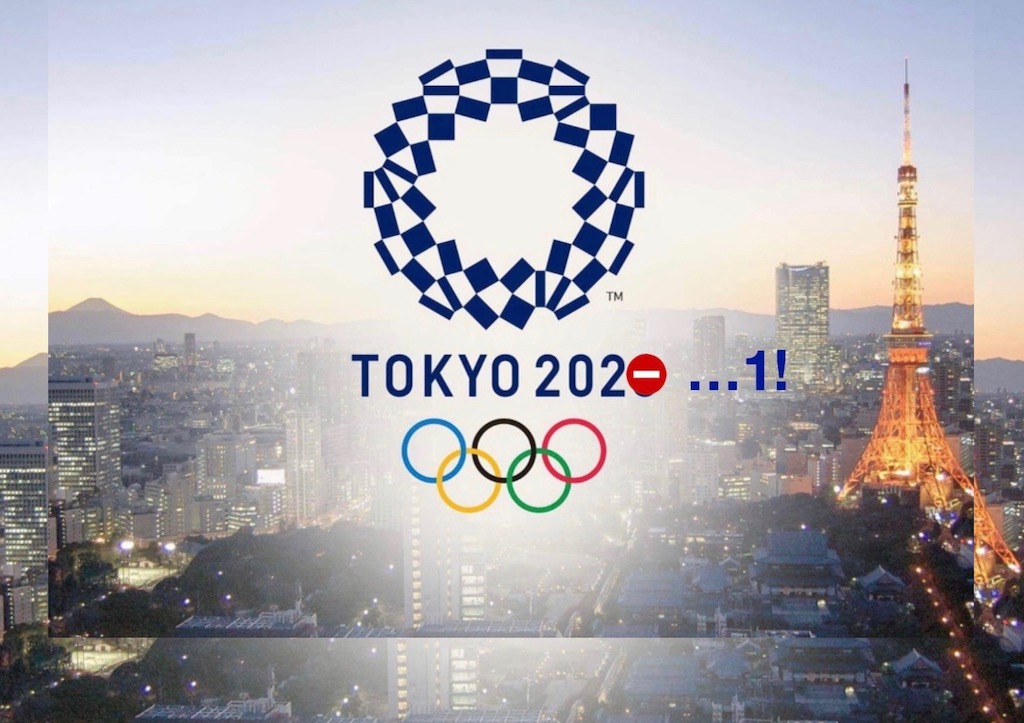
The 2020 summer Olympics officially the Games of XXXII Olympiad unbranded as Tokyo 2020. Tokyo 2020 is an international multi sport event being held from 23 July to 28 August 2021 in Tokyo Japan with some preliminary events that begin on 21 July.

POSTPONED TO 2021:

During the 125th IOC session  in Buenos Aires held at Argentina, on September 7, 2013 TOKYO was selected as a host city to conduct 2020 Olympics. The actual date to conduct the Olympics was from 24th July to 9th August 2020. But due to Covid -19 pandemic the event was postponed to 2021 and now happening in Tokyo. This is the first time the Olympics games had been rescheduled. The name of the event remains the same Tokyo 2020 because of marketing and branding purpose. The event is been held with all safety measures behind the closed doors, without any public spectators. The Summer Paralympics will be held between 24 August and 5 September 2021.

The 2020 Games are the fourth Olympic Games to be held in Japan, following the Tokyo 1964 (Summer), Sapporo 1972 (Winter), and Nagano 1998 (Winter) games.[c] Tokyo is the first city in Asia to hold the Summer Games twice. The 2020 Games are the second of three consecutive Olympics to be held in East Asia, following the 2018 Winter Olympics in Pyeongchang, South Korea, and preceding the 2022 Winter Olympics in Beijing, China.

NEW GAMES:

This 2020 olympics introduces new games. Those games were once held but subsequently removed.  New games are 3×3 basketball, freestyle BMX (bicycle Motocross), Madison cycling (relay race). New IOC policies also allow the host organizing committee that is Japanese Olympic Committee to add new sports. The games are baseball and softball. The olympic debuts are karate, sport climbing, surfing and skateboarding.

Bermuda and the Philippines won their first ever olympic gold medals. San-Marino and Turkmenistan won their first ever olympic medals.

INDIA’S TOP MEDAL CONTENDERS:

India is sending its largest ever contingent to the Tokyo Olympics. The nation has the great hope of bettering its medals hauls this time over previous Games. With 122 athletes competing in 13 events across 85 events, the country hopes to win medals for shooting, wrestling, boxing, archery and badminton.

In 2016 Rio Olympics, India returned with two medals. A silver for ace shuttler PV Sindhu in the Women’s Singles Badminton and a bronze for wrestler Sakshi Malik in the Women’s 58kg Freestyle Wrestling Event.

  • 2016 Rio Olympics: 1 Silver, 1 Bronze
  • 2012 London Olympics: 2 Silver, 4 Bronze
  • 2008 Beijing Olympics: 1 Gold, 2 Bronze

India has won a total of 28 medals since 1900 – 11 from hockey, five from wrestling, four from shooting, two each in badminton, boxing and athletics, and one each in tennis and weightlifting.

SHOOTING: India’s 15 member, shooting contingent is the favourite to bring back a big haul of medals.

Nineteen year old Manu Bhaker is one of the top contenders on the 10m Women’s Air Pistol event. She has won two gold medals in ISSF World cup in 2018 and she was the youngest Indian to win gold medals in ISSF World Cup to Commanwealth medal and Youth Olympics.

Shooter Saurabh Chaudhary, world number two and Youth Olympics champion, became the youngest Indian shooter to win a gold at the Asian Games in 2018 when he was just 16. Rahi Sarnobat in the pistol events, rifle marksman and two-time Olympian Sanjeev Rajput (2008 and 2012), and the current world-number-one Divyansh Singh Panwar and Elavenil Valarivan in the men’s and women’s air rifle, respectively.

BADMINTON: In 2016 Rio Olympics, India returned with two medals. A silver for ace shuttler PV Sindhu in the Women’s Singles Badminton.”I was just a participant back then, but now everyone says Sindhu has to get a medal,” she told the BBC recently. Last year, the ace shuttler won the inaugural BBC Indian Sportswoman of the Year award. In 2019, she was crowned the World Badminton Champion but her form has had inconsistencies since then. However, she remains India’s top medal prospect.

BOXING: Mary Kom also known as Magnificent Mary, the Iron Lady. She won bronze at the 2012 London Olympics. She is expected to win Gold medal when she participates in Flyweight section. In May, she picked up a silver when she lost the final to Kazakhstan’s Nazym Kyzaibay during the Asian Boxing Championships in Dubai.At 38, Kom may well be taking part in her last Olympics, and India will be rooting for her to increase her tally before she takes off her gloves.

WRESTLING: India had a decent run at the Rio Olympics in 2016, with Sakshi Malik earning a bronze medal. In Tokyo, Vinesh Phogat leads the women’s wrestling team. Having suffered a freak injury during the Rio Olympics, Phogat returned to India in a wheelchair and underwent surgery. The 26-year-old is now roaring to go in the 53kg category with some great wins in the last couple of months, as well as reclaiming the number one ranking. With three world championships to his name, wrestler Bajrang Punia is the top contender from India in the 65kg men’s category at his first Olympics.

WEIGHTLIFTING: The Tokyo Olympics will be Mirabai Chanu’s second time on the big stage. In 2016, she qualified for Rio but failed to record any legal lift in three attempts in the Clean and Jerk category, and was out of the running in the Women’s 48kg category.In 2017, she won gold in the World Weightlifting Championships and went on to win gold in the Commonwealth Games a year later and bronze at the 2019 Asian Weightlifting Championships.

She is the first athlete from India to win Silver medal in 2020 Summer Olympics.

ARCHERY: Only last month, archer Deepika Kumari won three golds at the Archery World Cup in Paris. Deepika Kumari is the number one ranked recurve woman in the world
She is now the world number one in the women’s recurve category and a strong candidate for a medal in Tokyo. Kumari has won nine gold, 12 silver and seven bronze medals at various World Cups and will be looking to add the Olympic medal to her tally now.

The nation is looking forward for more medals from the athletes competing in Tokyo Olympics and also feeling proud of Mirabai Chanu who is the one to win the first medal, silver medal for India in 2020 Olympics until now.

IMPORTANCE OF TECHNOLOGY IN EDUCATION

In the world that we currently live in,
technology is a very vital factor. With each passing day a new software or
gadget is being brought into the market that serves to improve our lives in one
way or another and make it much easier and also to advance an already existing
software or gadget. However, it is important to note that despite the fact that
technology plays a big role in making our lives easier, it is not the only role
it has.
There are countless reasons why technology
is a key aspect of learning in the schools. Whether we like it or not,
technology is everywhere; and in order for our students to survive in
post-secondary education and the business world, they must know technology.

Although many people like to rely on
traditional methods of teaching, the possibilities that open when technology is
brought into the classroom are endless. For one, access to education has been
significantly broadened as a result, including a wide range of learning styles
and degree options. Even if you are not a student or an education professional,
it is crucial to note the importance of technology in education. To really
utilize these tools, teachers should ask themselves why students want
technology in the classroom, not just why they need it.

Students are often bombarded with
information in a classroom which they must quickly attempt to process and make
sense of. However, this can leave them feeling overwhelmed and confused by
concepts. Technology provides students with access to countless online
resources, encouraging them to carry out research and therefore become more
independent. It also simplifies learning by making concepts more digestible,
for example through an instructional video. It is important to recognise that
there are various learning styles and traditional education may not be catering
to them all. Technology has made it possible for students to gain
qualifications online and educate themselves through institutes that offer
online courses. They can learn from home without having to pay to commute or
move away to attend university.

Technology that is made use of in the
classroom is very beneficial in helping the students understand and absorb what
they are being taught. For instance, since there are a number of students who
are visual learners, projection screens connected to computers could be put in
classrooms to let the students see their notes as opposed to simply sitting
down and listening to the instructor teach.

With the continuing advances in the
technological world, students are getting improved access to such educational
opportunities. Every time something ‘better’ and ‘new’ is brought into the
market, the price of the existing technology is decreased which makes it much
more accessible in the educational setting even to those schools that might not
have a lot of financial resources available to them. We need to face the truth,
technology is the ‘in thing’ in the world today and it has become necessary in
each and every aspect of our lives and education has without doubt not been
left behind. It is very useful in providing more knowledge to our students and
also on making them competitive in the job market.


India At Olympic 2021 (Updated)

30th July 2021 – P.V. Sindhu (Badminton), Indian hockey team, Deepika Kumari (Archery), A.M. Sable(Athletics), Madari Palliyalli (Athletics), Simranjeet Kaur (Boxing), Lovlina Borgohain(Boxing), Fouaad Mirza (Equestrian), Anirban Lahiri and Udayan Mane (Golf), Indian Sailing Team,

31 July 2021 – Atanu Das(Archery), Kamalpreet Kaur(Athletics), P.V. Sindhu(Badminton), Pooja Rani(Boxing),Fouaad Mirza (Equestrain), Anirban Lahiri (Golf).

1 Aug 2021: P.V. Sindhu , Fouaad Mirza, Anirban Lahiri, U. Mane, Indian Hockey Team.

2 Aug 2021: Kamalpreet Kaur, Dutee Chand, Fouaad Mirza, Indian women’s hockey team.

3 Aug 2021: Annu Rani(Javelin Throw), Tajinderpal Singh Toor(Shotput), Indian Hockey Team,

This image has an empty alt attribute; its file name is untitled-design-6.jpg

Archery

Women’s individual

Deepika Kumari defeated Ksenia Perova from Russia in 1/8 Eliminations with scores 6-5.

But, An San from Korea gave her a tough match in Quarter Finals. Deepika Kumari lost to wth scores 6-0.

Men’s individual

In 1/8 Eliminations, Takaharu Furukawa from Japan won against Atanu Das in a close call match with scores 6-4.

Athletics:

Men’s 3000m steeplechase

In round 1, Heat 2, A.M. Sable secured 7th Position failing to qualify for the next round.

Men’s 400m hurdles

In round 2, Heat 5, Madari Palliyalli, secured 7th position failing to qualify for next round.

Women’s discus throw

Valarie Allman from USA and Kamalpreet Kaur from India have qualified for finals by securing 1st and 2nd Position respectively.

Discuss Finals:

  1. Valerie Allman from America
  2. Kristin Pudenz from Germany
  3. Yaime Perez from Cuba

Kamalpreet Kaur held the 6th position in the finals.

Women’s 200m

Dutee Chand acquired 7th position in heat 4.

Women’s Javelin throw

Annu Rani secured 14th position with score as 54.04m in qualifications.

Men’s shotput

Tajinderpal Singh Toor, a petty officer in the Indian Navy, secured 13th position with distance as 19.99mm.

Badminton

Women’s Singles

What a amazing match it was between Akane Yamaguchi and P.V. Sindhu. In the first set, the points were 21-13 with Sindhu being in lead. In the second, we can see the clash between shot acer (Sindhu) and defense master (Yamaguchi) aggressively using their skills to make points. Sindhu gets the game to deuce i.e. scores are 20-20 wherein a player has to score 2 more points than their opponents score. Using her signature moves, Sindhu won by scoring 2 continuous smashes.

Women’s Singles Semi-Finals


Tai Tzu-ying from Chinese Taipei Vs P.V. Sindhu. TTY won by 21-18 and 21-12.

1 Aug, P.V. Sindhu can fight for Bronze medal in Bronze medals match vs He Bingjiao

P.V. Sindhu begged the Bronze Medal.

Boxing

Women’s LIghtweight

Sudaporn Seesondee from Thailand defeated Simranjit Kaur From india in Round 16.

Men’s flyweight

Yuberjen Martínez from Colombia won against Amit Panghal in round 16

Women’s middleweight Quarter-finals

Pooja Rani vs Li Qian. Li Qian won by 5-0 scores in Quaterfinal 4

Equestrian

Individual eventing

Fouaad Mirza placed at 9th Position in Dressage session 2

He continues his streak by acquiring 9th place in Dressage session 3

He bagged 22nd Position in Cross-Country

He placed 23rd in the Jumping Finals. – 2 august

Golf

Udayan Mane secured 66th positon in Men’s Individual.

Anirban Lahiri acquired 28th Position in round 3 of Finals and U. Mane 55th Position.

Hockey

Men’s Tournamnet

Indian Men’s Hockey team defeated Japan with scores 3-2.

Belgium defeated India in the semi-finals to enter finals with scores as 5-2. – 3 aug

Women’s Tournament

Indian Women’s Team defeated Ireland with scores 1-0

India defeated South Africa with scores 4-3 on 31 July.

Indian Women’s Team defeated Australia in a nail-biting against match against with scores 1-0 to enter the Semi-Finals. – 2 Aug

Sailing

49er

Indian team secured 17th Position in Race 9.

Race 12, India bagged 17th Position.

Wrestling

Women’s freestyle 62kg

In an extremely nail-biting match of “Sonam Malik vs Bolortuya Khurelkhuu “, Bolortuya Khurelkhuu from Mongolia won with points 2-2. Although, the scores were eual and acquired in the last second, she won due to powerful move of scoring in 1/8 Finals.

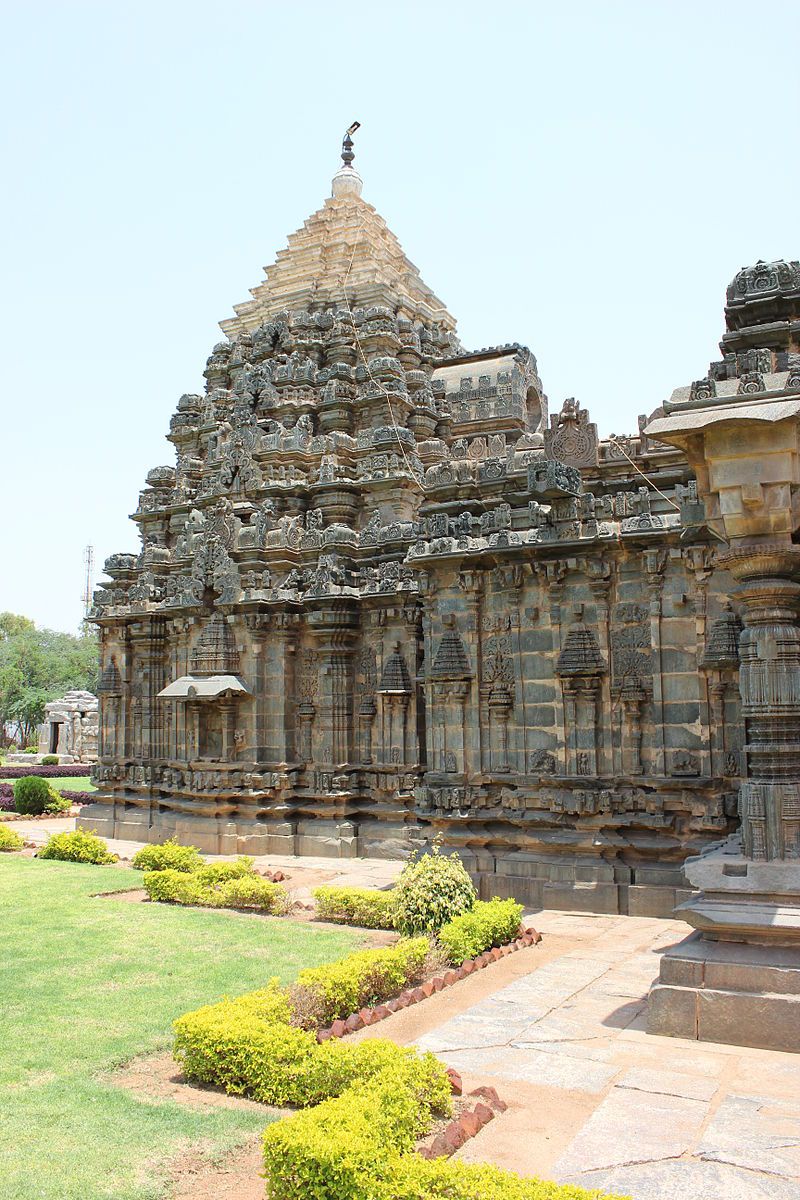
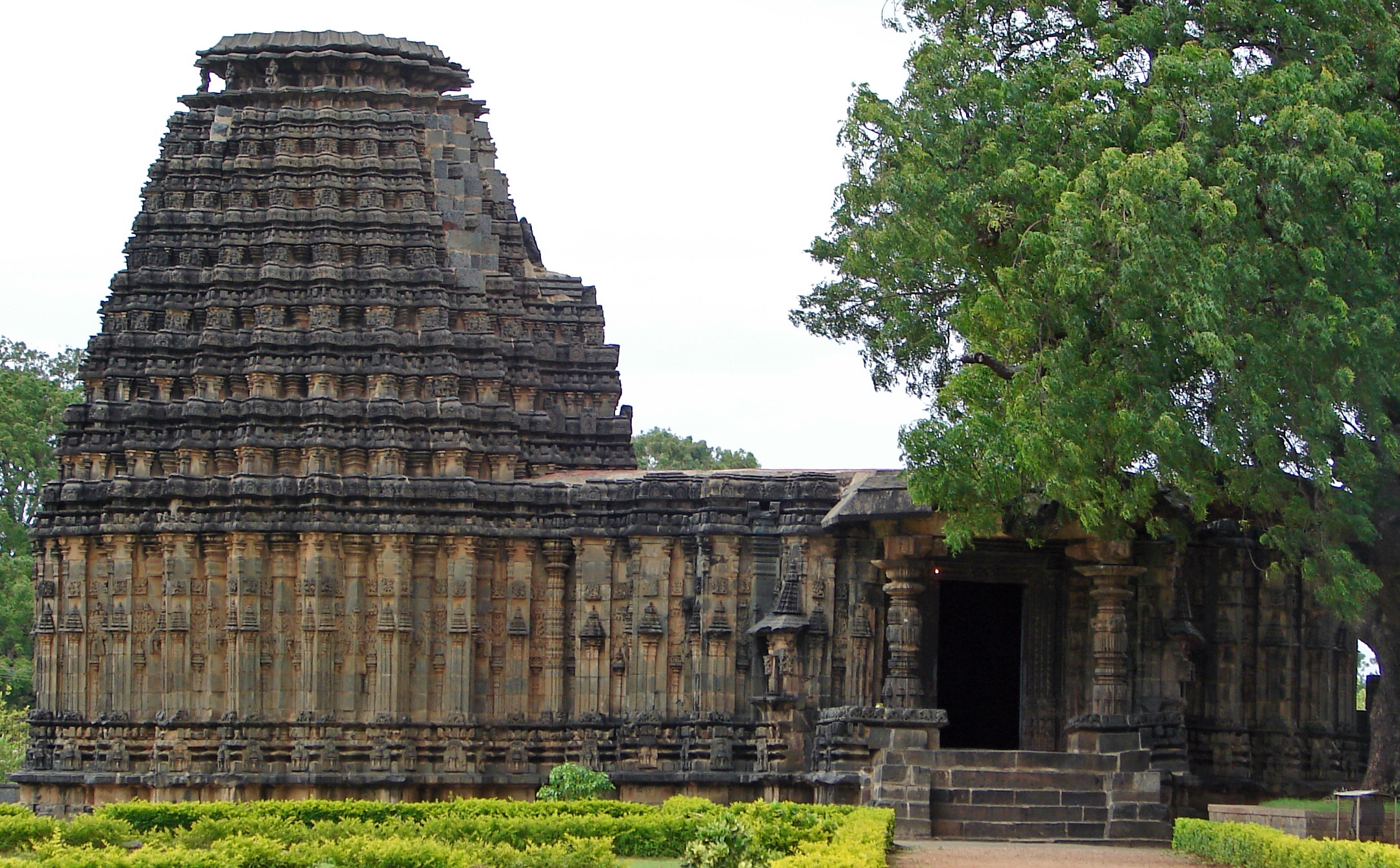
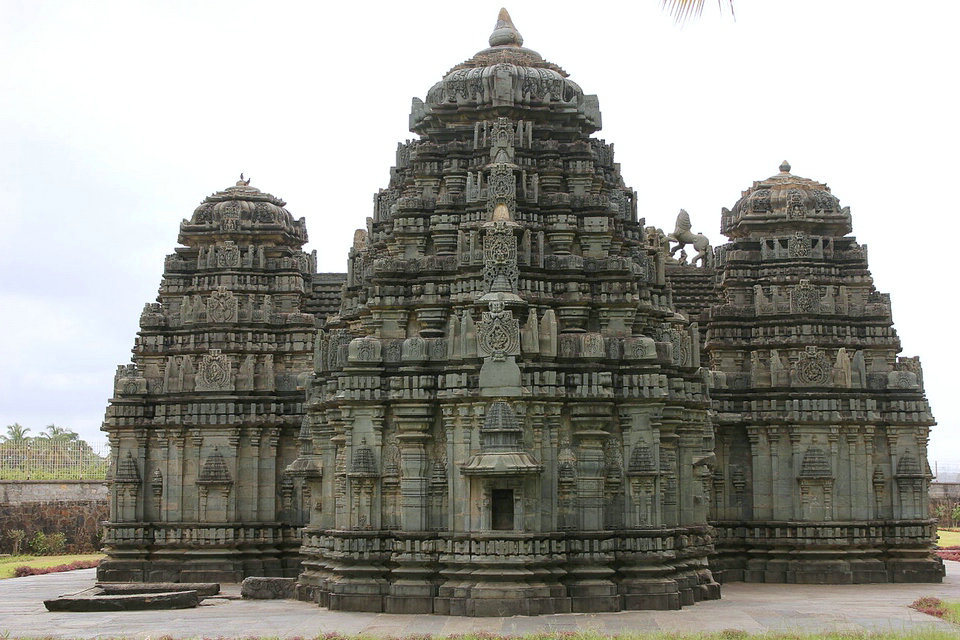
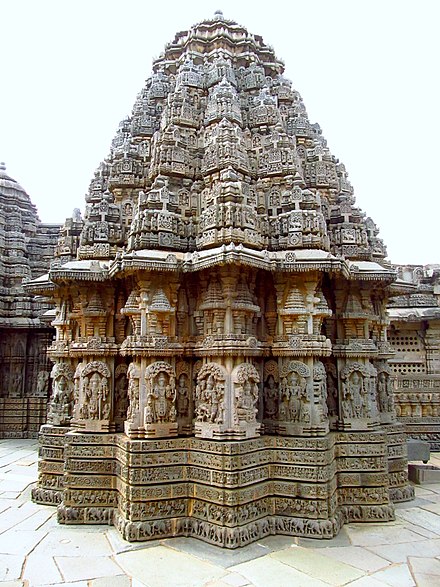
Indian Temple Architecture

India is a Diverse country with many Cultures, religions, Traditions and beliefs living in Harmony. The true meaning of Unity in Diversity. Today we’ll talk about the diverse Temple architecture of India.

As temples grew more complex, more surfaces were created for sculpture by adding more and more rhythmically projecting, symmetrical walls and niches, without breaking away from the fundamental plan of the shrine.

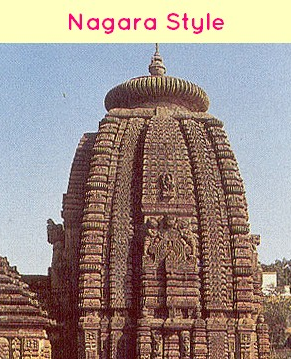
Nagara or North Indian Temple Style

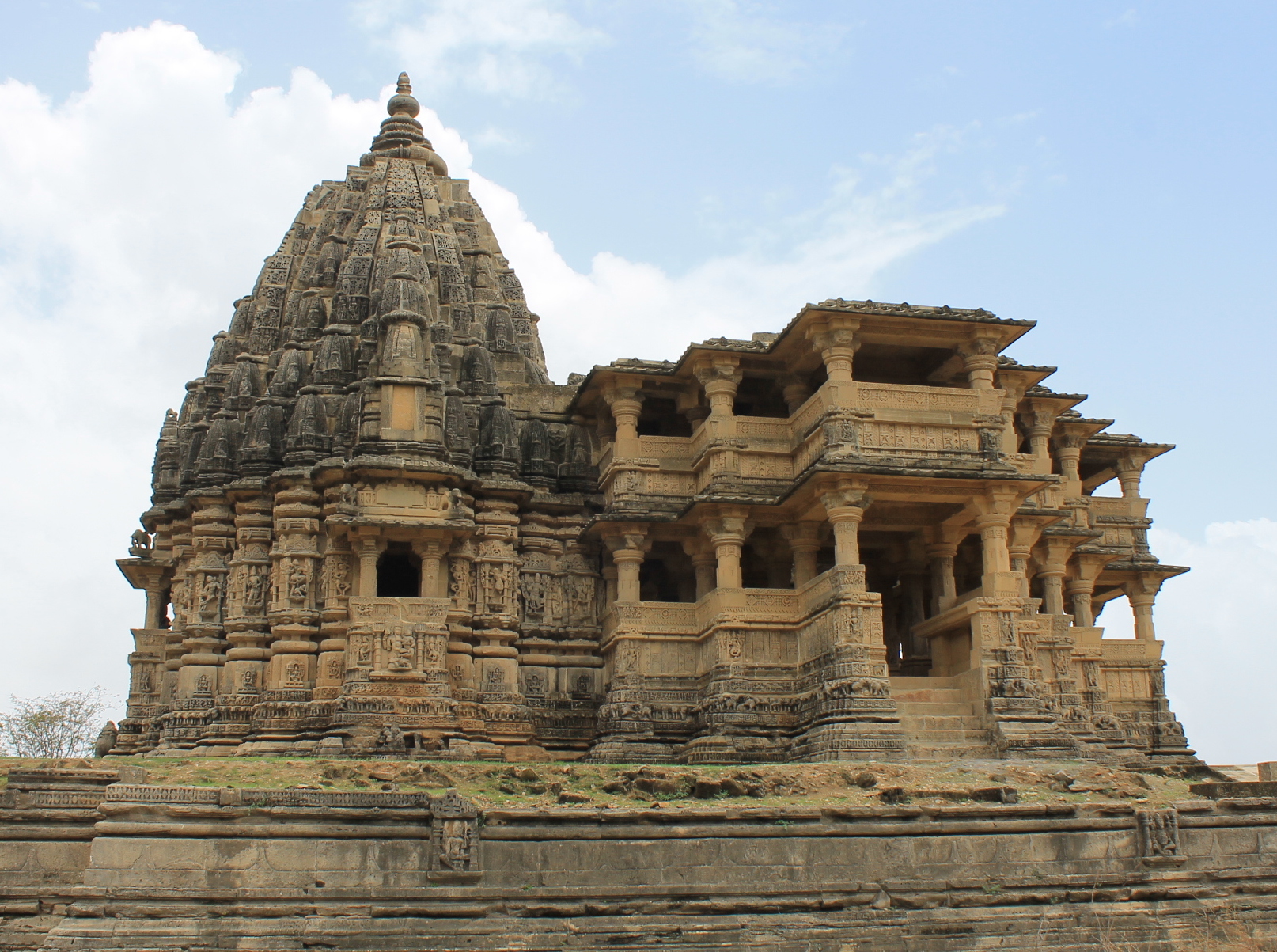
  • In North India it is common for an entire temple to be built on a stone platform with steps leading up to it.
  • Further, unlike in South India it does not usually have elaborate boundary walls or gateways.
  • While the earliest temples had just one tower, or shikhara, later temples had several.
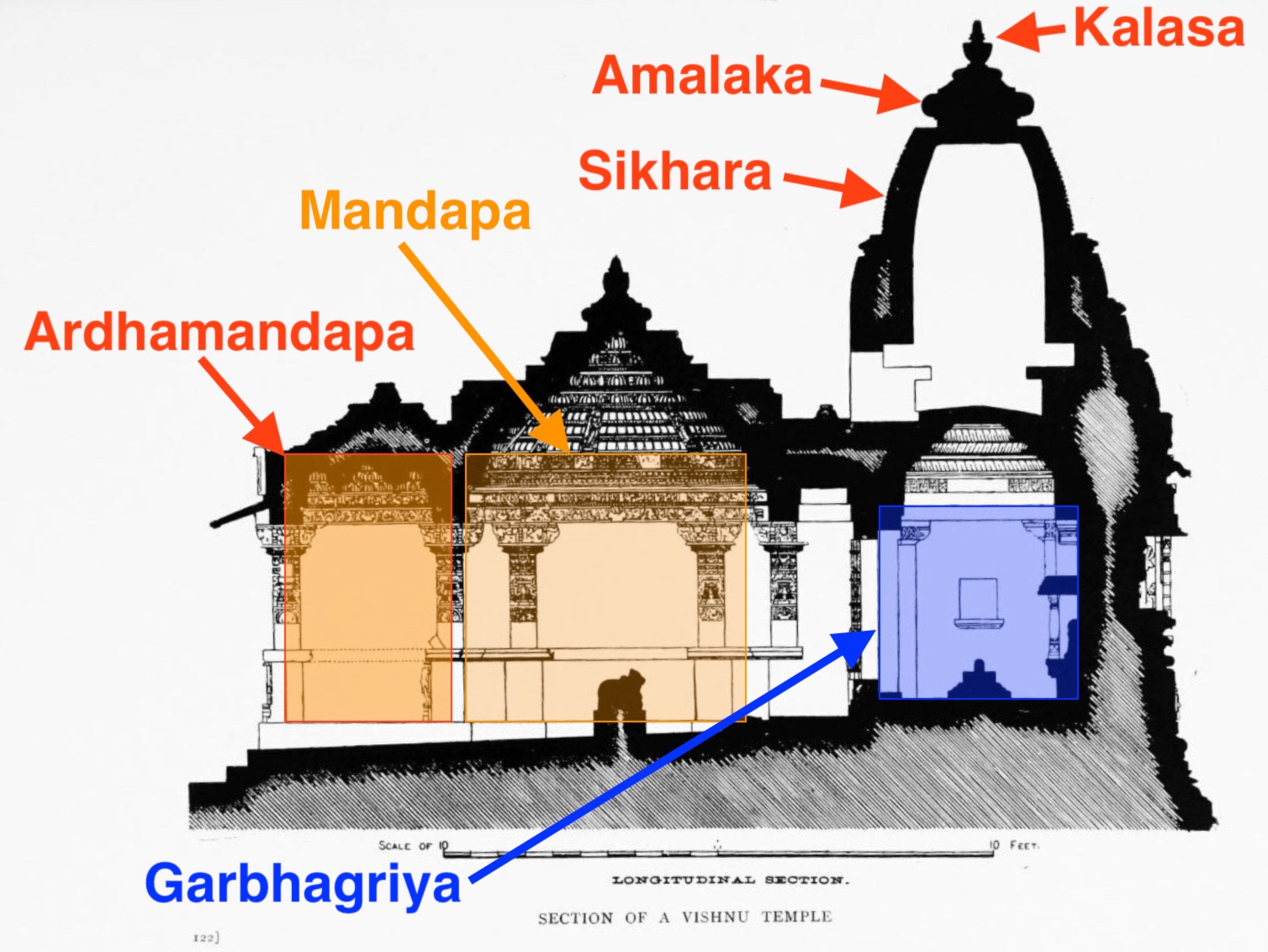
  • The garbhagriha is always located directly under the tallest tower.
  • There are many subdivisions of nagara temples depending on the shape of the shikhara.
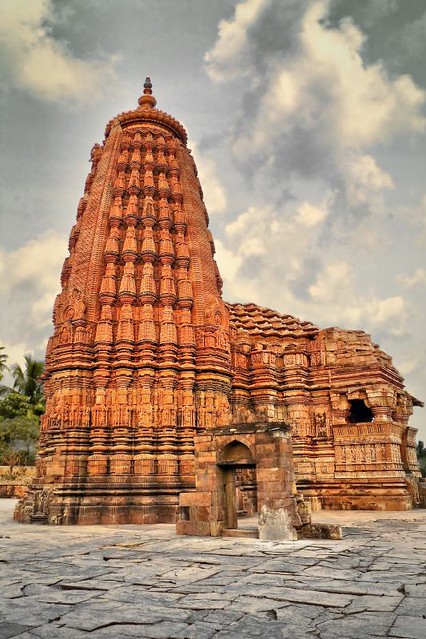
  • There are different names for the various parts of the temple in different parts of India; however, the most common name for the simple shikhara which is square at the base and whose walls curve or slope inward to a point on top is called the ‘latina’ or the rekha-prasada type of shikara.
  • The second major type of architectural form in the nagara order is the phamsana, which tends to be broader and shorter than latina ones. Their roofs are composed of several slabs that gently rise to a single point over the centre of the building, unlike the latina ones which look like sharply rising tall towers.
  • The third main sub-type of the nagara building is generally called the valabhi type. These are rectangular buildings with a roof that rises into a vaulted chamber.

Central India Temples

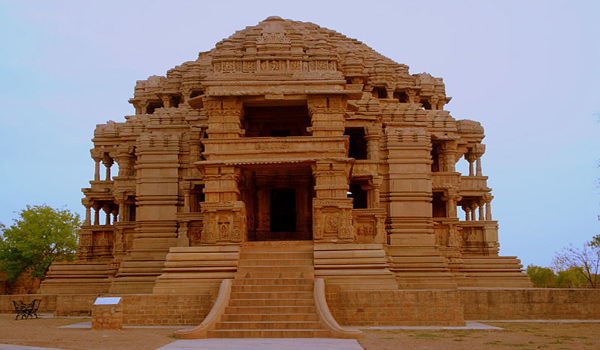
  • Ancient temples of Uttar Pradesh, Madhya Pradesh and Rajasthan share many traits. The most visible is that they are made of sandstone.
  • Some of the oldest surviving structural temples from the Gupta Period are in Madhya Pradesh.
  • The crowning elements- amalak and kalash, are to be found on all nagara temples of this period.
  • These are relatively modest-looking shrines each having four pillars that support a small mandapa which looks like a simple square porch-like extension before an equally small room that served as the garbhagriha.
  • Udaigiri, which is on the outskirts of Vidisha is part of a larger Hindu complex of cave shrines, while the other one is at Sanchi, near the stupa.
  • Deogarh (in Lalitpur District, Uttar Pradesh) was built in the early sixth century CE, is a classic example of a late Gupta Period type of temple. This temple is in the panchayatana style of architecture where the main shrine is built on a rectangular plinth with four smaller subsidiary shrines at the four corners (making it a total number of five shrines, hence the name, panchayatana).
  • The presence of this curving latina or rekha-prasada type of shikhara also makes it clear that this is an early example of a classic nagara style of temple.
  • The temple depicts Vishnu in various forms, due to which it was assumed that the four subsidiary shrines must also have housed Vishnu’s avatars and the temple was mistaken for a dashavatara temple.
  • Predating the tenth century, Chausath Yogini temple is a temple of small, square shrines of roughly-hewn granite blocks, each dedicated to goddesses associated with the rise of Tantric worship after the seventh century.Built between 7th and 10th centuries, several such temples were dedicated to the cult of the yoginis across Madhya Pradesh, Odisha and even as far south as Tamil Nadu.
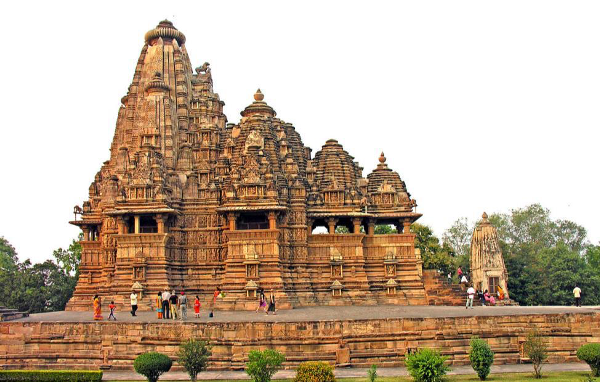
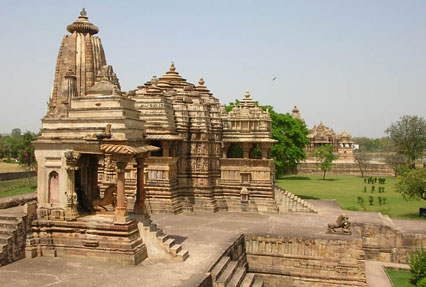
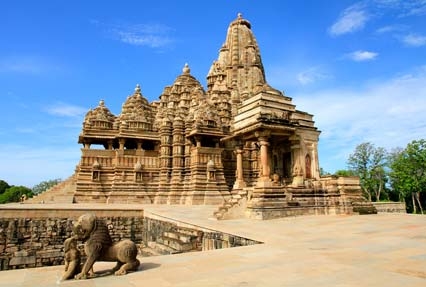
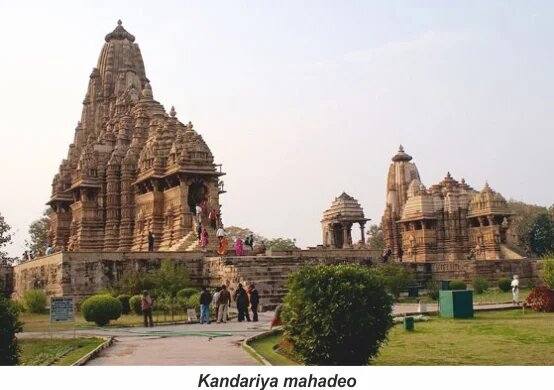
  • There are many temples at Khajuraho, most of them devoted to Hindu gods. There are some Jain temples as well. Khajuraho’s temples are also known for their extensive erotic sculptures; the erotic expression is given equal importance in human experience as spiritual pursuit, and it is seen as part of a larger cosmic whole.
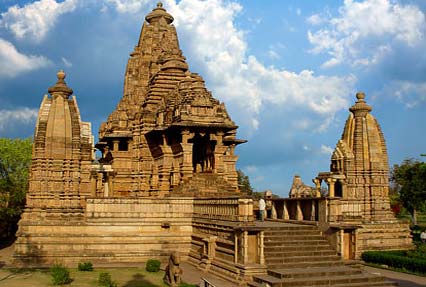
  • The Lakshmana temple of Khajuraho, dedicated to Vishnu, was built in 954 by the Chandela king, Dhanga. It is a nagara temple placed on a high platform accessed by stairs.
  • Kandariya Mahadeo temple at Khajuraho is the epitome of temple architecture in Central India.

Western Indian Temples

  • The temples in the north-western parts of India including Gujarat and Rajasthan, and in western Madhya Pradesh are large in numbers.
  • The stone used to build the temples ranges in colour and type.
  • While sandstone is the commonest, a grey to black basalt can be seen in some of the 10th to 12th century temple sculptures.
  • The most exuberant and famed is the manipulatable soft white marble which is also seen in some of the 10th-12th century Jain temples in Mount Abu and the 15th century temple at Ranakpur.
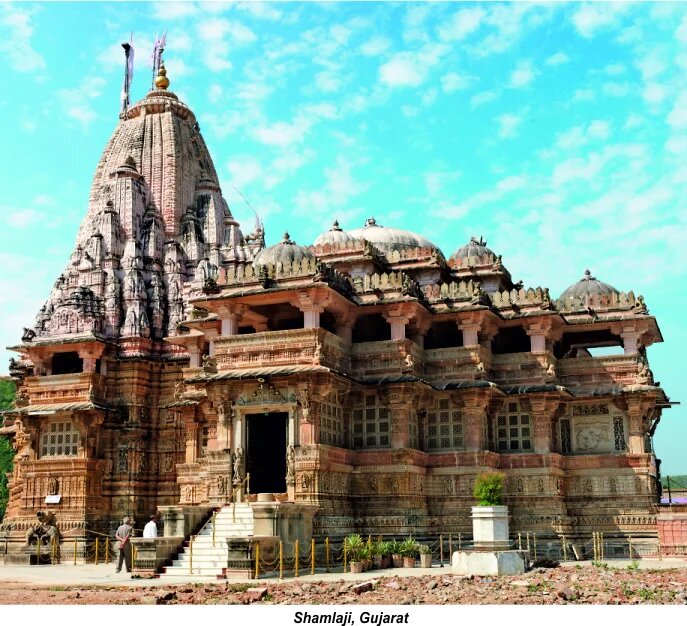
  • Among the most important art-historical sites in the region is Samlaji in Gujarat.
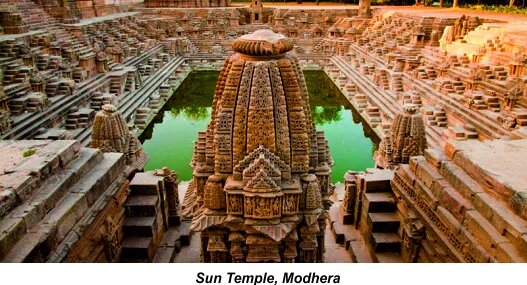
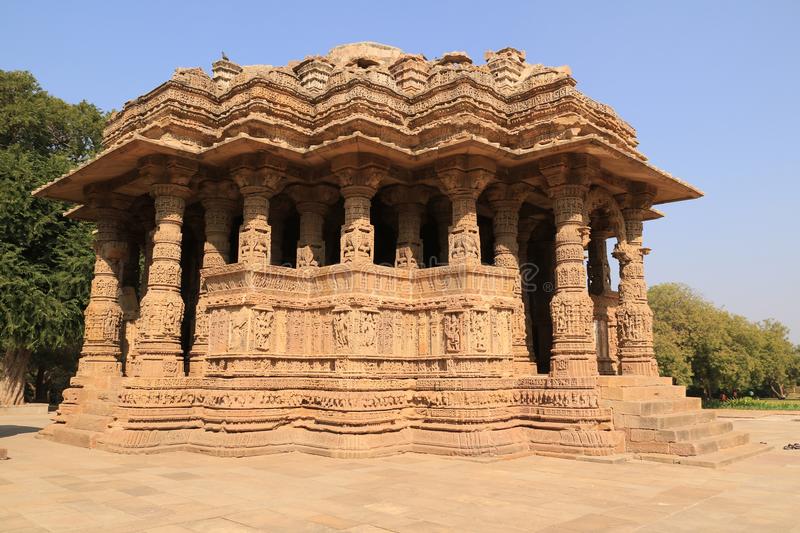
  • The Sun temple at Modhera dates back to the early 11th century and was built by Raja Bhimdev I of the Solanki Dynasty in 1026. There is a massive rectangular stepped tank called the surya kund in front of it, perhaps the grandest temple tank in India.
  • Every year, at the time of the equinoxes, the sun shines directly into this central shrine of the temple.

Eastern Indian temples

  • Eastern Indian temples include those found in the North East, Bengal and Odisha.
  • It appears that terracotta was the main medium of construction, and also for moulding plaques which depicted Buddhist and Hindu deities in Bengal until the 7th century.

Assam

  • An old sixth-century sculpted door frame from Dah Parvatia near Tezpur and another few stray sculptures from Rangagora Tea Estate near Tinsukia in Assam bear witness to the import of the Gupta idiom in that region.By the 12th-14th centuries, a distinct regional style developed in Assam.
  • The style that came with the migration of the Tais from Upper Burma mixed with the dominant Pala style of Bengal and led to the creation of what was later known as the Ahom style in and around Guwahati.
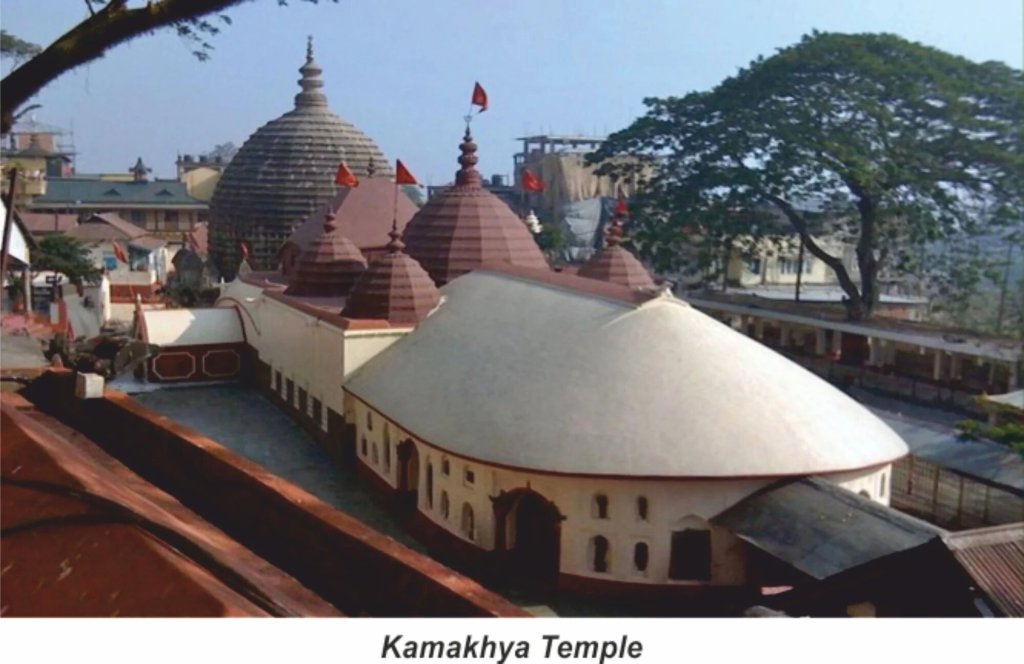
  • Kamakhya temple, a Shakti Peeth, is dedicated to Goddess Kamakhya and was built in the 17th century in Assam.

Bengal

  • The style of the sculptures during the period between the ninth and eleventh centuries in Bengal (including Bangladesh) and Bihar is known as the Pala style, named after the ruling dynasty at the time.
  • While the style of those of the mid-eleventh to mid-thirteenth centuries is named after the Sena kings.
  • While the Palas are celebrated as patrons of many Buddhist monastic sites, the temples from that region are known to express the local Vanga style.
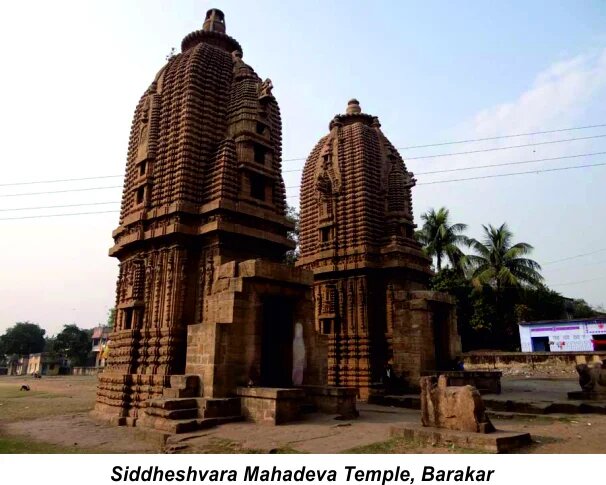
  • The 9th century Siddheshvara Mahadeva Temple in Barakar in Burdwan District, for example, shows a tall curving shikhara crowned by a large amalaka and is an example of the early Pala style.
  • The black to grey basalt and chlorite stone pillars and arched niches of Purlia temples heavily influenced the earliest Bengal sultanate buildings at Gaur and Pandua.
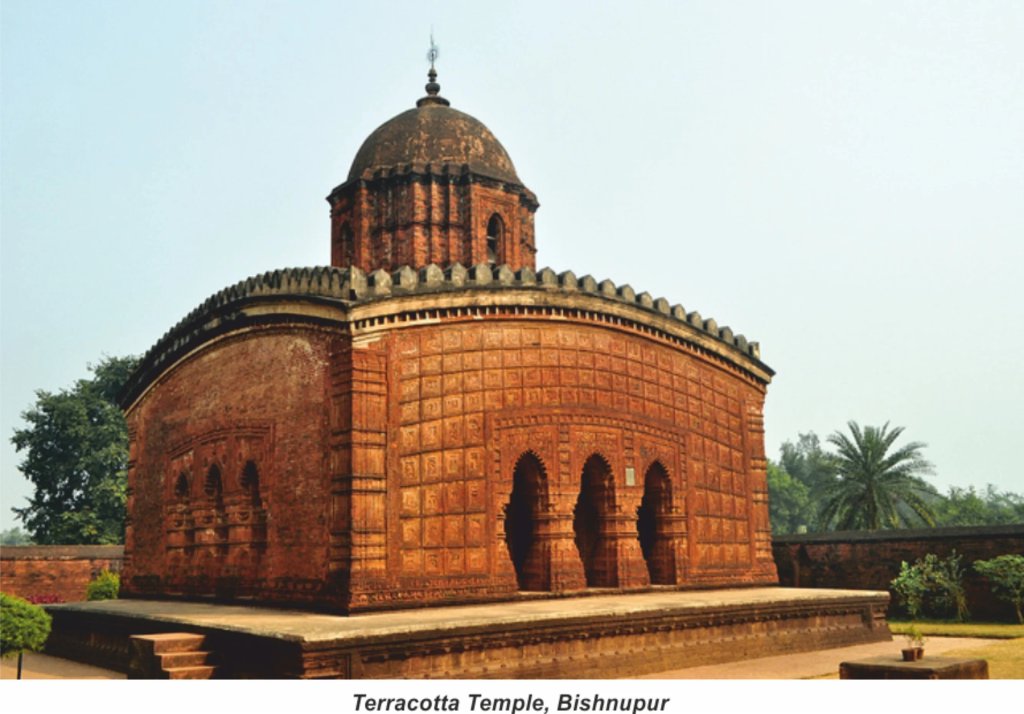
  • In the Mughal period and later, scores of terracotta brick temples were built across Bengal and Bangladesh in a unique style that had elements of local building techniques seen in bamboo huts.

Orissa

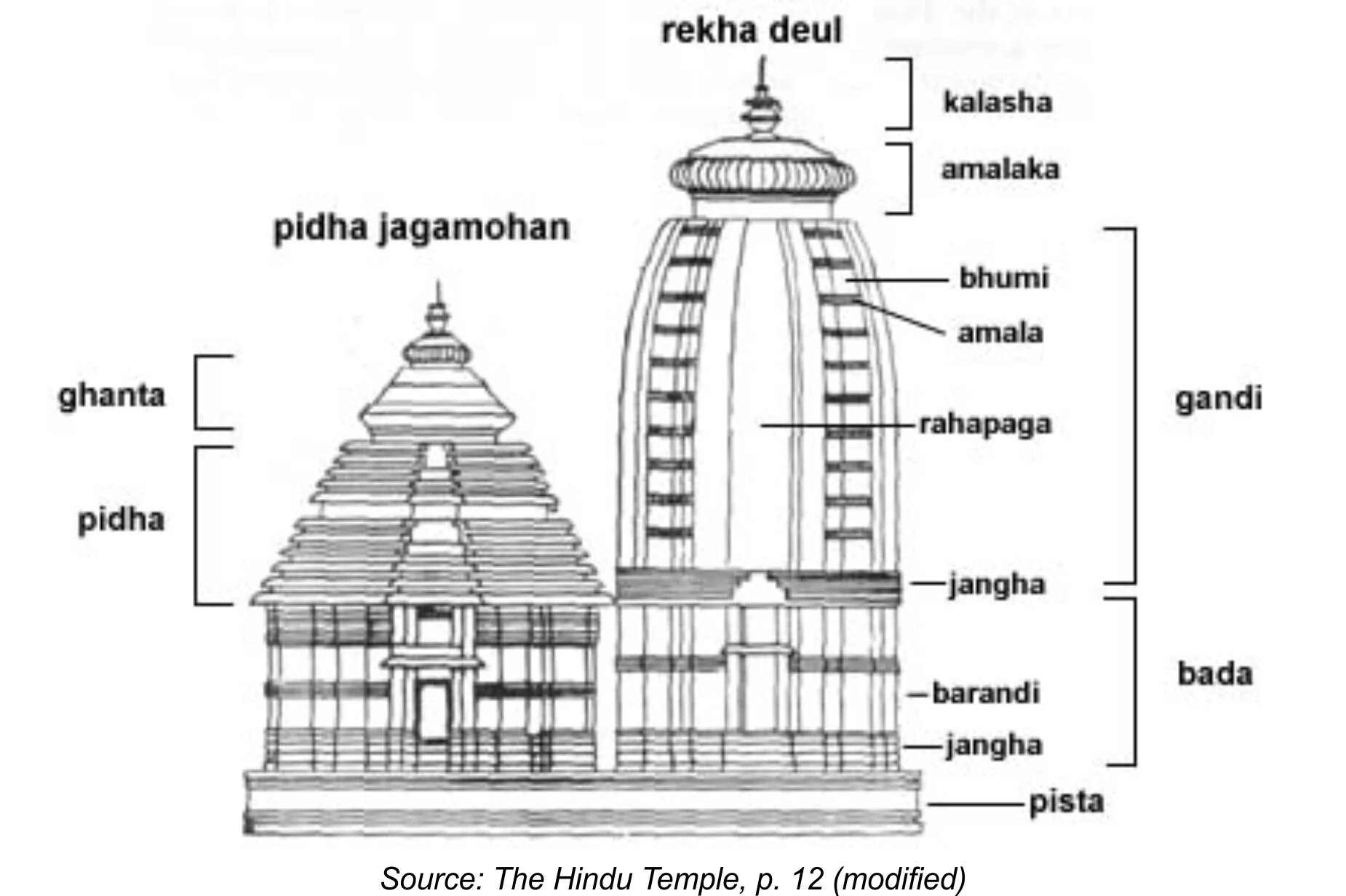
  • The main architectural features of Odisha temples are classified into three orders, i.e., rekhapida, pidhadeul and khakra.
  • Most of the main temple sites are located in ancient Kalinga—modern Puri District, including Bhubaneswar or ancient Tribhuvanesvara, Puri and Konark.
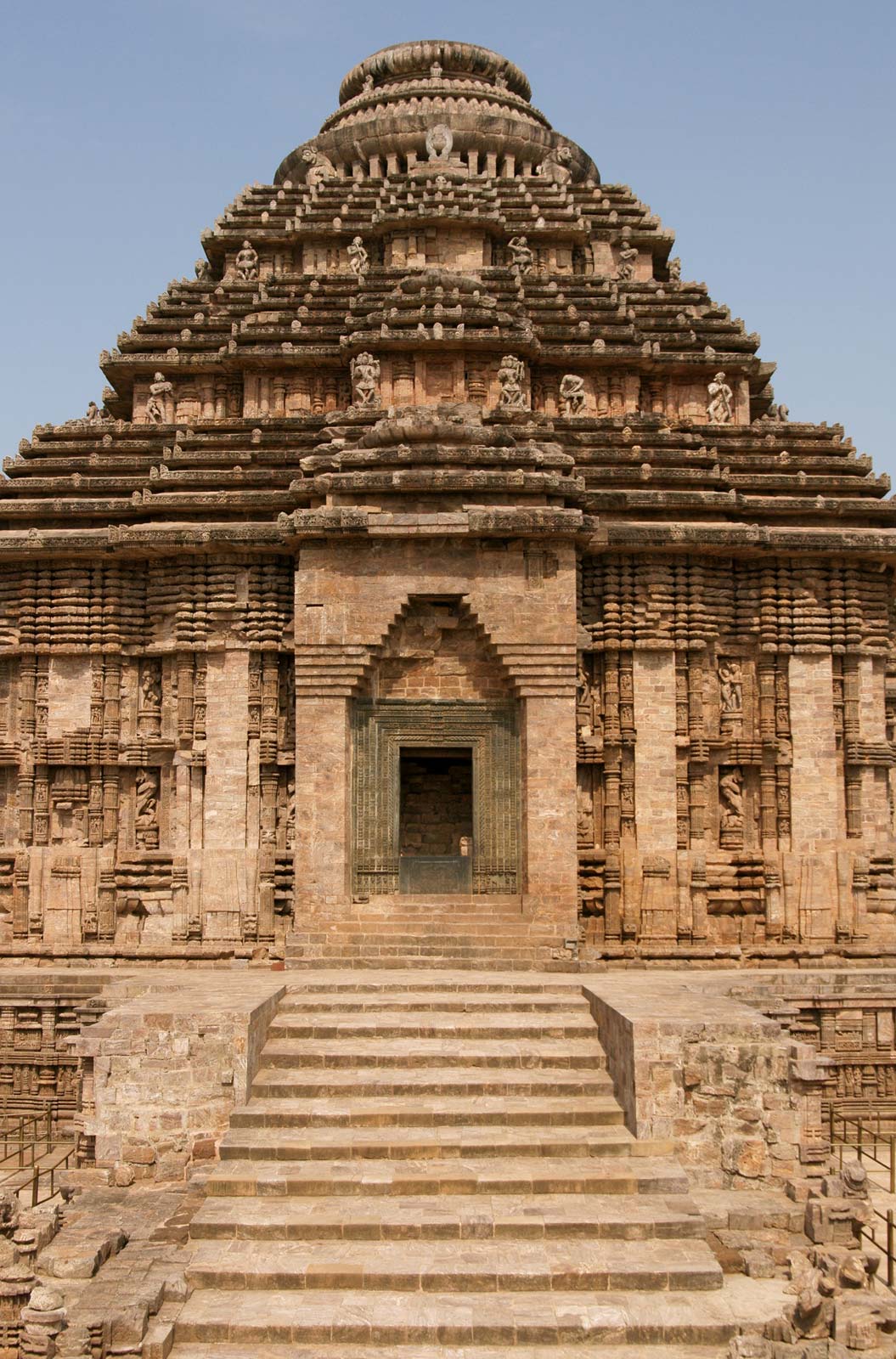
  • In general, the shikhara, called deul in Odisha, is vertical almost until the top when it suddenly curves sharply inwards.
  • Deuls are preceded, as usual, by mandapas called jagamohana in Odisha.
  • Odisha temples usually have boundary walls.
  • The ground plan of the main temple is almost always square, which, in the upper reaches of its superstructure becomes circular in the crowning mastaka.
  • Compartments and niches are generally square, the exterior of the temples are lavishly carved, their interiors generally quite bare.
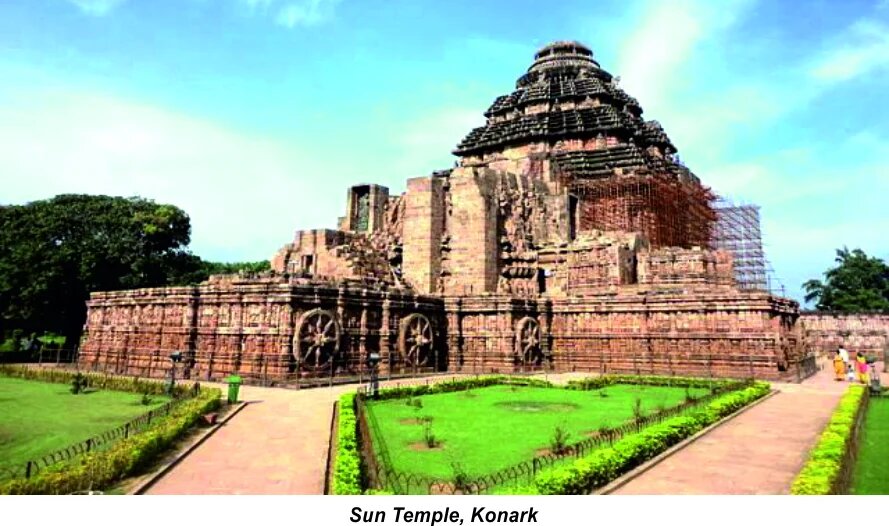
  • At Konark, on the shores of the Bay of Bengal, lie the ruins of the Surya or Sun temple built in stone around 1240. The Sun temple is set on a high base, its walls covered in extensive, detailed ornamental carving.
  • These include twelve pairs of enormous wheels sculpted with spokes and hubs, representing the chariot wheels of the Sun god who, in mythology, rides a chariot driven by seven horses, sculpted here at the entrance staircase.

Hill Temples

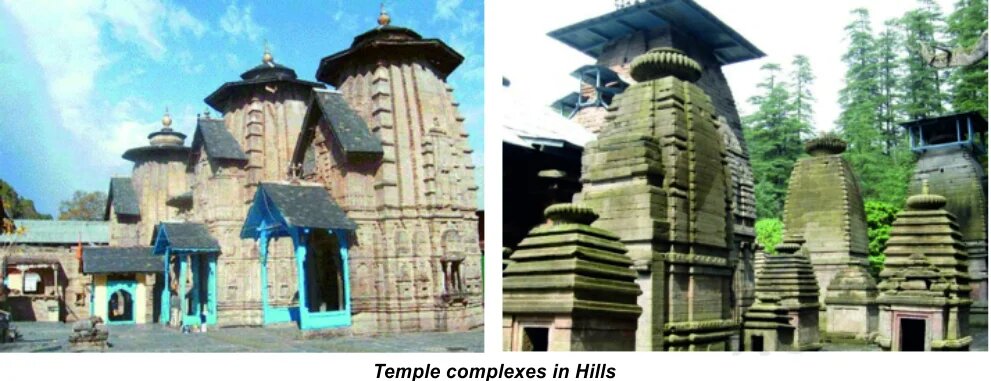
  • A unique form of architecture developed in the hills of Kumaon, Garhwal, Himachal and Kashmir.Kashmir’s proximity to prominent Gandhara sites (such as Taxila, Peshawar and the northwest frontier) lent the region a strong Gandhara influence by the 5th century CE.
  • This began to mix with the Gupta and post-Gupta traditions that were brought to it from Sarnath, Mathura and even centres in Gujarat and Bengal.
  • Brahmin pundits and Buddhist monks frequently travelled between Kashmir, Garhwal, Kumaon and religious centres in the plains like Banaras, Nalanda and even as far south as Kanchipuram.
  • As a result both Buddhist and Hindu traditions began to intermingle and spread in the hills.
  • The hills also had their own tradition of wooden buildings with pitched roofs.
  • At several places in the hills, while the main garbhagriha and shikhara are made in a rekha-prasada or latina style, the mandapa is of an older form of wooden architecture.
  • Sometimes, the temple itself takes on a pagoda shape.
  • The Karkota period of Kashmir is the most significant in terms of architecture.
  • One of the most important temples is Pandrethan, built during the 8th and 9th centuries. In keeping with the tradition of a water tank attached to the shrine, this temple is built on a plinth built in the middle of a tank.
  • Like the findings at Samlaji, the sculptures at Chamba also show an amalgamation of local traditions with a post Gupta style.
  • The images of Mahishasuramardini and Narasimha at the Laksna-Devi Mandir are evidences of the influence of the post-Gupta tradition.
  • Of the temples in Kumaon, the ones at Jageshwar near Almora, and Champavat near Pithoragarh, are classic examples of nagara architecture in the region.

Dravida Or South Indian Temple Style

  • Unlike the nagara temple, the dravida temple is enclosed within a compound wall.
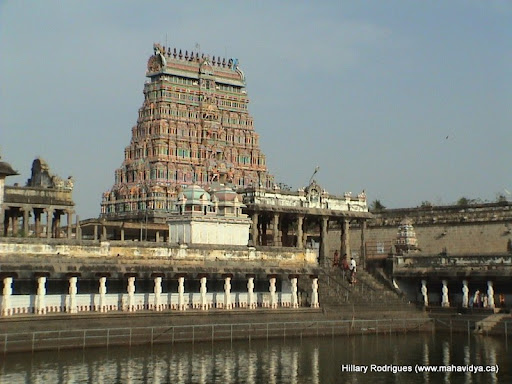
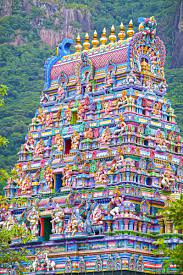
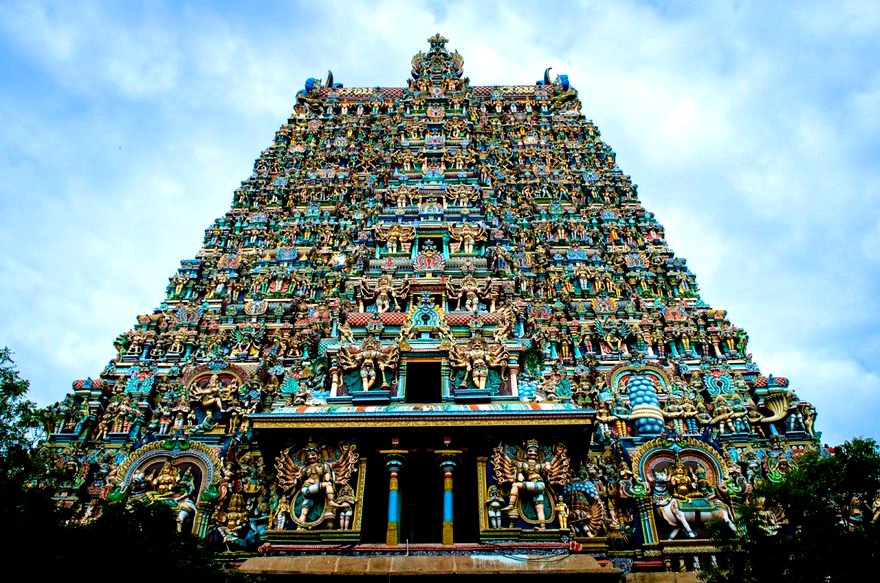
  • The front wall has an entrance gateway in its centre, which is known as a gopuram.
  • The shape of the main temple tower known as vimana in Tamil Nadu, is like a stepped pyramid that rises up geometrically rather than the curving shikhara of North India.
  • It is common to find a large water reservoir, or a temple tank, enclosed within the complex.
  • Subsidiary shrines are either incorporated within the main temple tower, or located as distinct, separate small shrines beside the main temple.
  • Kanchipuram, Thanjavur or Tanjore, Madurai and Kumbakonam are the most famous temple towns of Tamil Nadu, where, during the 8th-12th centuries, the role of the temple was not limited to religious matters alone.
  • Temples became rich administrative centres, controlling vast areas of land.
  • Just as there are many subdivisions of the main types of nagara temples, there are subdivisions also of dravida temples.
  • These are basically of five different shapes: square, usually called kuta, and also caturasra
  • rectangular or shala or ayatasra
  • elliptical, called gaja-prishta or elephant backed, or also called vrittayata, deriving from wagon vaulted shapes of apsidal chaityas with a horse-shoe shaped entrance facade usually called a nasi
  • circular or vritta
  • octagonal or ashtasra.
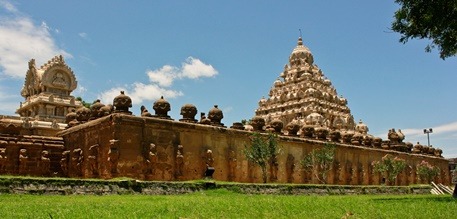
  • The Pallavas were one of the ancient South Indian dynasties. They spread their empire to various parts of the subcontinent, at times reaching the borders of Odisha, and their links with South–East Asia were also strong.
  • Although they were mostly Shaivite, several Vaishnava shrines also survived from their reign, and there is no doubt that they were influenced by the long Buddhist history of the Deccan.
  • Their early buildings, it is generally assumed, were rock cut, while the later ones were structural.
  • The early buildings are generally attributed to the reign of Mahendravarman I, a contemporary of the Chalukyan king, Pulakesin II of Karnataka.
  • Narasimhavarman I, also known as Mamalla, inaugurated most of the building works at Mahabalipuram which came to be known after him as Mamallapuram.
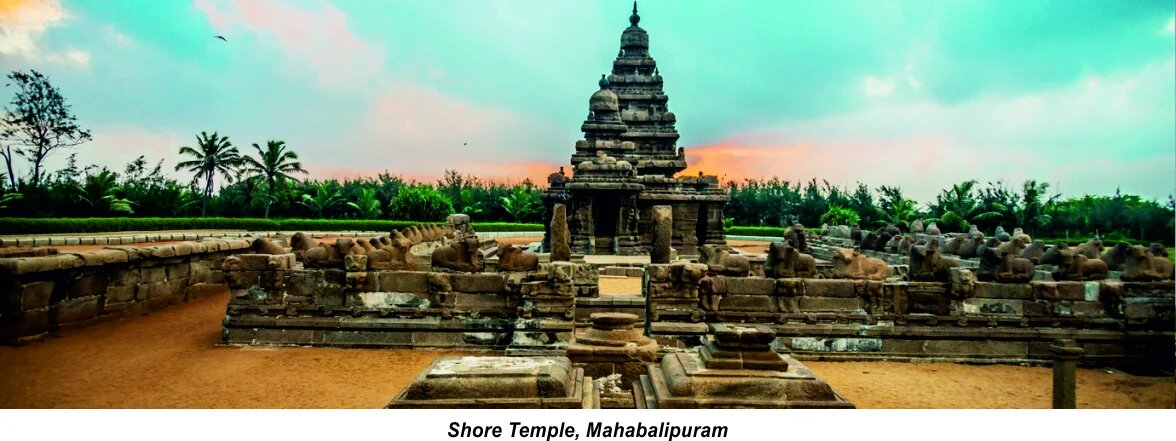
  • The shore temple at Mahabalipuram was built later, probably in the reign of Narasimhavarman II, also known as Rajasimha who reigned from 700 to 728 CE. The temple houses three shrines, two to Shiva, one facing east and the other west, and a middle one to Vishnu.
  • In the compound there is evidence of a water tank, an early example of a gopuram, and several other images.
  • Sculptures of the bull, Nandi, Shiva’s mount, line the temple walls, and these, along with the carvings on the temple’s lower walls have suffered severe disfiguration due to erosion by salt-water laden air over the centuries.
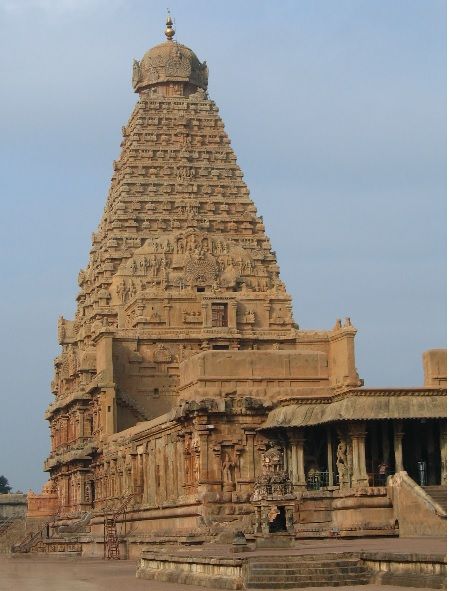
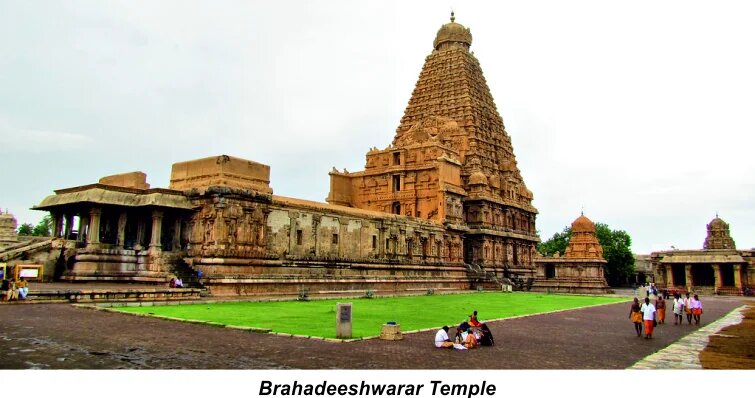
  • The magnificent Shiva temple of Thanjavur, called the Rajarajeswara or Brahadeeshwarar temple, was completed around 1009 by Rajaraja Chola, and is the largest and tallest of all Indian temples.
  • It is in this temple that one notices for the first time two large gopurams (gateway towers) with an elaborate sculptural programme which was conceived along with the temple.

Vesara / Deccan Style of Indian Temple Architecture

  • Many different styles of temple architecture influenced by both North and South Indian temples were used in regions like Karnataka.
  • By the late 7th or early 8th century, the ambitious projects at Ellora became even grander.
  • By about 750 CE, the early western Chalukya control of the Deccan was taken by the Rashtrakutas.
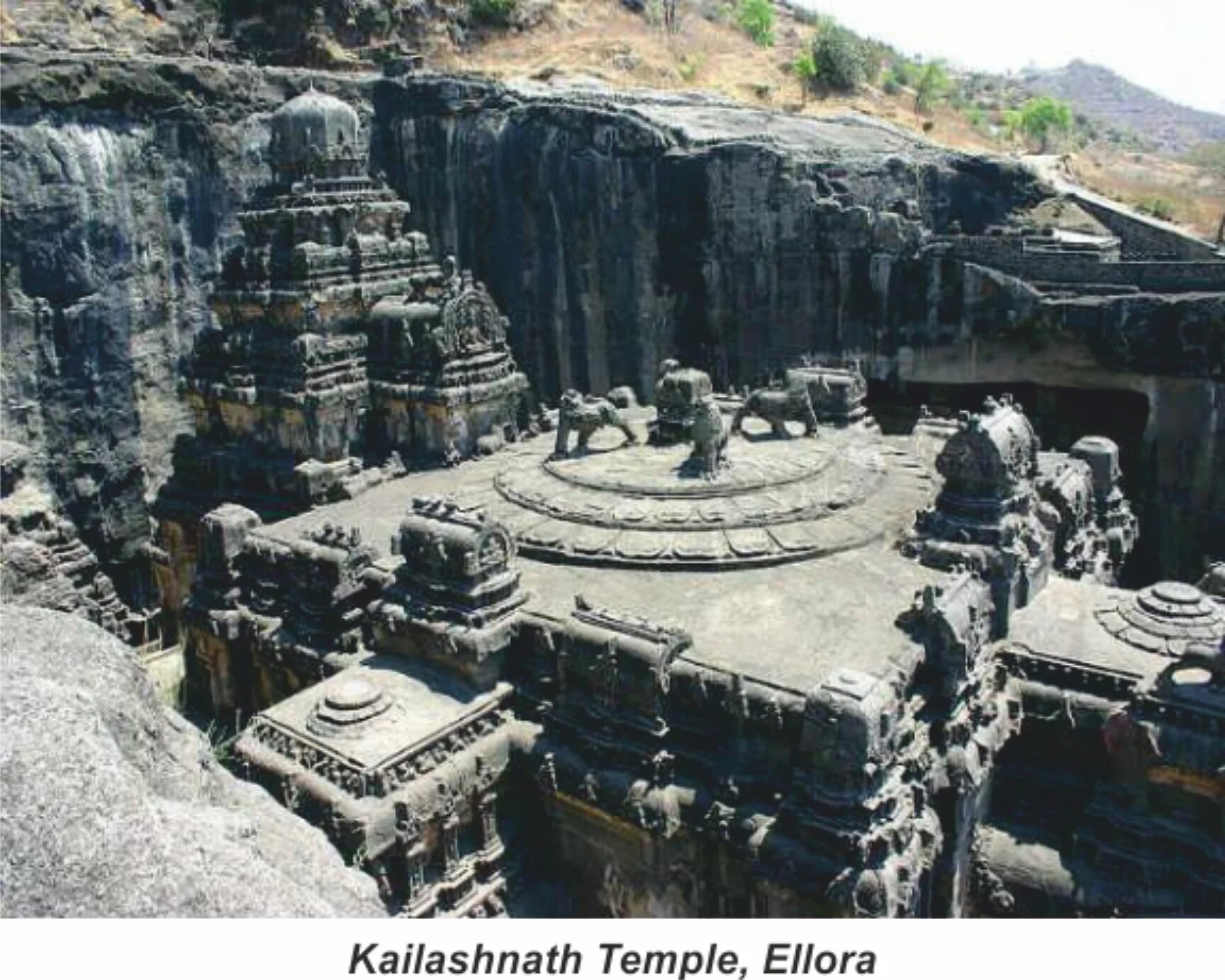
  • Their greatest achievement in architecture is the Kailashnath temple at Ellora, a culmination of at least a millennium-long tradition in rock-cut architecture in India.
  • It is a complete dravida building with a Nandi shrine—since the temple is dedicated to Shiva—a gopuram-like gateway, surrounding cloisters, subsidiary shrines, staircases and an imposing tower or vimana rising to thirty metres.
  • Importantly, all of this is carved out of living rock. One portion of the monolithic hill was carved patiently to build the Kailashnath temple.
  • In the southern part of the Deccan, i.e., in the region of Karnataka where some of the most experimental hybrid styles of vesara architecture are to be found.
  • Pulakesin I established the western Chalukya kingdom when he secured the land around Badami in 543.
  • Early Chalukyan activity also takes the form of rock-cut caves while later activity is of structural temples.
  • The earliest is probably the Ravana Phadi cave at Aihole which is known for its distinctive sculptural style.
  • One of the most important sculptures at the site is of Nataraja, surrounded by larger -than-life-size depictions of the saptamatrikas: three to Shiva’s left and four to his right.
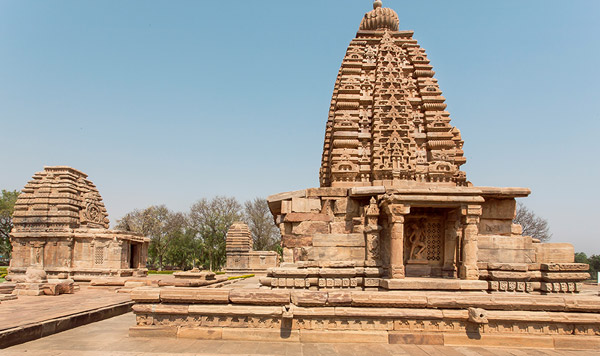
  • The most elaborate of all Chalukyan temples at Pattadakal made in the reign of Vikramaditya II (733-44) by his chief queen Loka Mahadevi is Virupaksha temple. Another important temple from this site is Papnath temple, dedicated to Lord Shiva.
  • Lad Khan temple at Aihole in Karnataka, seems to be inspired by the wooden-roofed temples of the hills, except that it is constructed out of stone.
  • The Hoysaleswara temple (Lord of the Hoysalas) at Halebid in Karnataka was built in dark schist stone by the Hoysala king in 1150. Dedicated to Shiva as Nataraja, the Halebid temple is a double building with a large hall for the mandapa to facilitate music and dance.
  • Founded in 1336, Vijayanagara, literally ‘city of victory’, attracted a number of international travellers such as the Italian, Niccolo di Conti, the Portuguese Domingo Paes etc.who have left vivid accounts of the city.
  • In addition, various Sanskrit and Telugu works document the vibrant literary tradition of this kingdom.
  • Architecturally, Vijayanagara synthesises the centuries-old dravidian temple architecture with Islamic styles demonstrated by the neighbouring sultanates.

Poverty in India

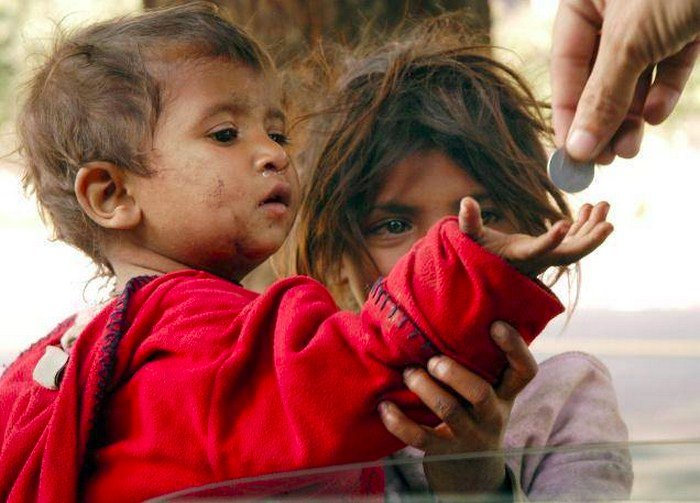
Poverty is a social phenomenon where few sections of society is unable to live sustainable life. Planning Commission(now NITI Aayog) is the aithoriy, which publishes the poverty estimates based on various rounds of National Sample Survey Organization (NSSO) on monthly per capita consumption expenditure. In India the poverty line is defined on the basis of calories a day has been fixed for urban areas and 2400 calories in rural areas.

Universal Recall Period, consumption data for all items are collected for a 30 day recall period.

Causes of Rural Poverty:-

• Rapid population growth.

• Lack of capital.

• Lack of alternative employment opportunities other than agriculture.

• Excessive population pressure on agriculture.

• Illiteracy

• Regional disparities

• Joint family system

• Child marriage

• Lack of proper implementation of PDS ( Public Distribution System).

Causes of Urban Poverty:-

• Migration from rural areas.

• Lack of skilled labor.

• Lack of housing facilities.

• Limited job opportunities in cities.

• Lack of vocational training.

Poverty and its Study in India:- Various economists and organizations have studied the extent of poverty in India. Some of them are as follow:

Dandekar and Rath’s study of poverty in India:- Dr. VM Dandekar and Mr. Nilkantha Rath estimated the value of the diet with 2250 calories as the desired lowest level of nutrition.

Montek Singh Ahluwalia’s study of Rural poverty:- MS Ahulawalia studied the trends in incidence of rural poverty in India for the period 1956-57 to 1973-74. He used the concept of the poverty line, i.e. an expenditure level of rupees 15 in 196-61 for rural areas and rupees 20 per person for urban areas.

Estimate Poverty by the Seventh Finance Commission 1978:- The Seventh Finance Commission attempted to have a more inclusive concept of the poverty line. Since the NSS data cover the only household consumer expenditure, thus to get a more inclusive measure of welfare or deprivation, an estimate of the benefit of public expenditure was added to the private consumer expenditure norm for calculating the augmented poverty line.

Tendulkar Committee Report:- This committee moved away from just calorie criterion definition to a broader definition of poverty that also includes expenditure on health, education, clothing expenditures in addition to food. According to this report, 41.8% population in rural areas and 25.7% population in urban areas were living below the poverty line.

Rangarajan Report on Poverty:- The expert group under the Chairmanship of Dr. C Ranganrajan to review the methodology for measurement of poverty in the country constituted by the Planning Commission in June 2012 has submitted its report on 30th June 2014. The report retained consumption expenditure measures of NSSO as the basis for specifying poverty. Based on this, it pegged the total number of poor in India at 363 million or 29.6% of the population. This is higher than 269.8 million poor people or 21.9% pegged by the Suresh Tendulkar Committee.

Highlights of the Report:-

• The daily per capita expenditure is pegged at rupees 32 for rural areas and rupees 47 for urban areas.

• Poverty line based on the average monthly per capita expenditure is pegged at rupees 972 for rural areas and rupees 1047 for urban areas.

A STITCH IN TIME SAVES NINE

“A Stitch in Time Saves Nine” is a phrase and has a lot of wise meanings inside it when understood. This phrase reflects the hole in a cloth and tries to make the people understand that, a small hole in a cloth keeps on getting bigger if it is not fixed on time. It means that timely effort will help in preventing more work in future and also tries to teach – Prevention is Better than Cure. Hence, if a problem exists then one must fix it immediately. If not fixed in time. then even small problem can lead to a bigger problem.

Importance of “A Stitch in Time Saves Nine”

  • This phrase tells about the “Importance of Time“. Time is the most important part of life and according to many successful individuals, time is money. Time is precious because time is limited. There are 24 hours in a day and its constant and the human life of a particular person is also fixed, which shows that we can’t afford to waste time at all. And this is what the phrase describes.
  • Another concept that the phrase describes is “Effort in Time“. This is possible by dealing with problems in proper time. While dealing with a problem, there’s a need to contribute proper amount of effort in the right time and when the problem is not solved and delayed, then it will make the problem more hard to solve and more time will be consumed. So, following “Stitch in Time Saves Nine” saves effort and time.
  • Another advantage of the phrase is “Better Decision Making“. Following this concept ensures that a person has sufficient time to handle the problem and this is the most wise decision. This shows that within problem time interval, the person will solve the problem efficiently. And when the person delays the problem the time available for solving problem will be reduced . This will cause shortage of time. This will make the person more stressful and nervous. This would lead to poor decision.

This proverb is a learning for everyone. It is an important advice for everyone. It doesn’t target any specific person or age group or people rather a lesson for all, for everyone from different phases of life and walks of life. It advices the individual to carry out the responsibilities and immediately solve problem, how ever small and simple it may be.

FOR EXAMPLE: To students, it advices to get their doubts cleared from the beginning itself otherwise they will keep getting bigger and will need more time, affect the performance. Small doubts when not cleared will lead to bigger doubts and finally affect the scores. This advice is also important for officials and professionals and suggests them not to neglect the problems and postpone them. It is important to solve every problem with keen interest and sense of responsibility. Have you noticed, how with time the problems keep getting bigger and get things complicated ? This is what the proverb tries to teach everyone and warn us.

Action at right time and required moment saves a lot of time and effort in the future. Delayed actions, adds to the problems and aggravates them. Thus, we should tackle them before it gets difficult. This saying has a very valuable and rational meaning and has a lot to learn from.

Passion fruit

What is passion fruit?
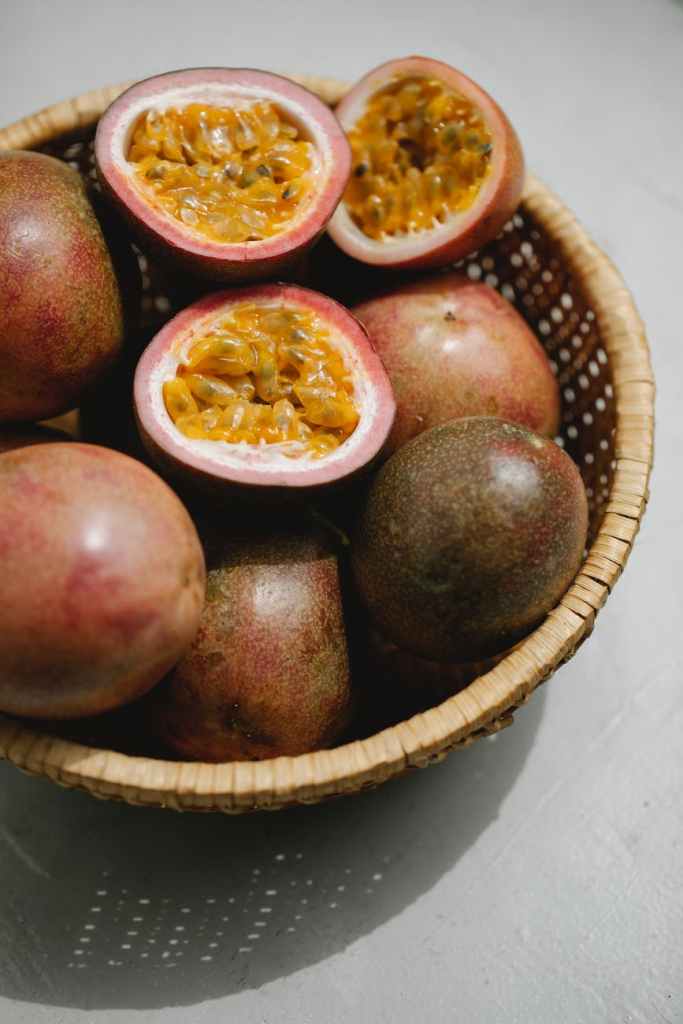
Passion fruit is the fruit of the Passiflora vine, a type of passion flower. The passion flower is the national flower of Paraguay. It has a tough outer rind and juicy, seed-filled center. There are two main types of passion fruit which I have never seen in my life, the purple and yellow varieties. There is a bit difference between purple and yellow varieties.

Passion fruit is a tropical fruit and as such its grown in tropical and temperate climates. Available in store pretty much all years round. Passion fruit is a nutritious fruit thats why gaining popularity in, among health conscious peoples.
You can find it when it’s not in season too, but it is still delicious.
Purple passion fruit are available throughout the year.

Benefits
Passion fruit has recently gained a lot of attention because it is a rich source of powerful antioxidants and may also have other health benefits.
It is rich in antioxidants, vitamins, and plant compounds that could benefit your health. It contains a high level of vitamin A which is important for skin, vision and immune system. Vitamin C is an important antioxidant that you need to get from your diet.

How to eat?

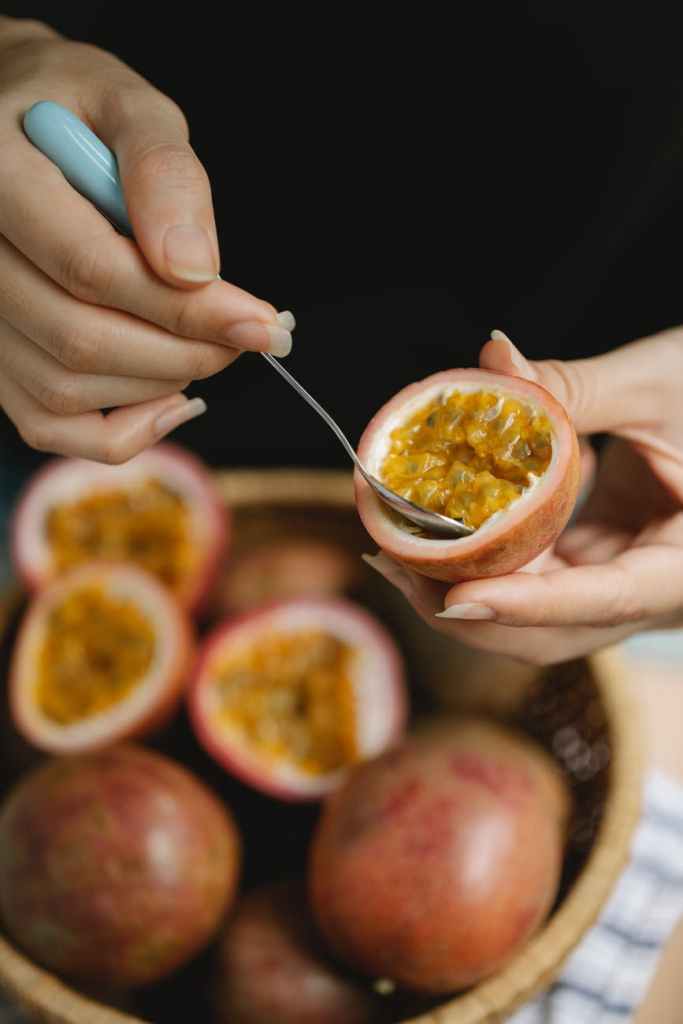
Take a knife and youre gonna cut it in half. Sometimes the skin may be little leathery and hard to cut through. The white film separating the rind from flesh is edible as well, but don’t eat it, as it is very bitter in taste. This is an alien fruit for me. It looks like some kind of jelly with seeds and now you just need a spoon and scoop it out. Seeds are really really easy to eat but they are a little crunchy. The taste is kind of sour, not as sour like a lemon.

Storing passion fruit
After ripening, this fruit can be kept for upto two weeks in the fridge. It will slow down the breakdown process and keep it cool. We all know sweet flavours are best when cold. You can also store it in a freezer. But make sure to put it in the freezer safe bag.