Naphthalene balls

Naphthalene balls have been used for decades as household preservative of clothes and as deodorant tables for toilets, urinals etc. They are manufactured from naphthalene flakes by a tablet making machine having a ball shaped die. The product has wide market and the investment cost is low. The raw material is required for manufacturing Naphthalene Balls are Naphthalene flakes, camphor, phenol etc.

Moth balls over the sackcloth.

Dictionary meaning:

a white, crystalline, water-insoluble hydrocarbon, C10H8, usually obtained from coal tar: used in making dyes, as a moth repellant, etc.

Mothballs or Naphthalene balls are small balls containing smell of a deodorant and are used for storing clothing and articles susceptible to damage from mold or moth larvae. It is also used as a repellent to keep away mice, snakes, or other pests and for use as a stovepipe cleaner.1 Mothballs have been used by drag racers to enhance the octane rating of fuel, by dissolving the mothballs in some of the fuel and filtering out the remains with a filter paper. Generally mothballs are made from ingredients containing either naphthalene or para-dichloro benzene. Due to health risks of naphthalene and para-dichloro benzene, these chemicals have been prohibited for the use in mothballs. Nowadays, camphor is being used as a substitute for these chemicals.

Proper Use of Mothballs

Mothball labels typically direct users to place mothballs in a tightly closed container that will prevent the pesticide fumes from accumulating in living spaces where people and pets can breathe them in for long periods of time. Inside airtight containers, the vapors released by the mothballs build up and kill the clothes moths.

One common mistake is using mothballs in containers that aren’t airtight, allowing the toxic vapors to escape into the surrounding air. This can lead to long-term exposure, which may cause health problems.

Another common mistake is using mothballs in gardens or other outdoor locations to control insects, snakes or other wildlife. Using mothballs outside can harm children, pets and other animals. Mothballs used outdoors can also contaminate soil, plants and water. The information below contains additional resources for the proper use of mothballs and some alternative methods of controlling clothes moths.

Other places you may find naphthalene being used include:

  • Abrasives
  • Fuels
  • Agricultural chemicals, other than pesticides
  • Paint additives
  • Adhesives

Health Effects of Mothballs

Mothballs are nearly 100% active ingredient, and the active ingredient may be either naphthalene or paradichlorobenzene. Each active ingredient can cause different health effects if the exposure is high enough. Mothballs slowly turn from solids to toxic vapor. When you smell mothballs, you are inhaling the insecticide. Mothballs can also be dangerous if they are chewed or eaten. Children, pets and wildlife may mistake them for food or candy and eat them. One mothball can cause serious harm if eaten by a small child.

 Inhalation of naphthalene may cause skin and eye irritation; gastrointestinal symptoms, such as nausea, vomiting, abdominal cramps, and diarrhea; neurologic symptoms, such as confusion, excitement, and convulsions; renal problems, such as acute renal shutdown; and hematologic features, such as icterus and severe anemia.
Hanko San-Japanese Urban Legend

Legends about Hanko-san have achieved some popularity in Japanese schools, where children may challenge classmates to undertake to summon Hanko-san. The character has been depicted during a kind of media, including films, manga, anime, and video games.
Hanko-san, or Toire no Hanko-san may be a Japanese urban legend about the spirit of a lass named Hanko-san who haunts school toilets. Like many urban legends, the tiny print of the origins of the legend vary relying on the account; different versions of the story include that Hanko-san is that the ghost of a war II-era girl who was killed while playing hide-and-seek during an air raid , that she was murdered by a parent or stranger, or that she committed suicide in a school toilet.
According to legend, Hanko-san is that the spirit of a lass who haunts school toilets, and may be described as a yōkai or a yūrei. The details of her physical appearance vary across different sources, but she is usually described as having a bobbed haircut and as wearing a red skirt or dress. The details of Hanko-san’s origins also vary counting on the account; in some versions, Hanko-san was a toddler who was murdered by a stranger or an abusive parent in a school toilet; in other versions, she was a woman who committed suicide during a school toilet; in still other versions, she was a toddler who lived during war II, and who was killed during a n air attack while hiding in a school toilet during a game of hide-and-seek.
To summon Hanko-san, it’s often said that individuals must enter a girls’ toilet (usually on the third floor of a school), knock 3 times on the third stall, and ask if Hanko-san is present. If Hanko-san is there, she is going to reply with some variation of “Yes, I am.” counting on the story, the individual may then witness the looks of a bloody or ghostly hand;[4][5] the hand, or Hanko-san herself, may pull the individual into the rest room , which can cause Hell; or the individual could also be eaten by a three-headed lizard who claims that the individual was invading Hanko’s privacy.

BIOGRAPHY – NARENDRA MODI (PM OF INDIA)

            PM OF INDIA – Mr. NARENDRA DAMODARDAS MODI

Name: Narendra  Damodardas Modi
Born: 17 September, 1950
Place of Birth: Vadnagar, Mehsana (Gujarat)
Zodiac Sign: Virgo
Nationality: Indian
Father’s Name: Late Damodardas Mulchand Modi
Mother’s Name: Smt. Heeraben Damodardas Modi
Siblings: Soma Modi, Amrut Modi, Pankaj Modi, Prahlad Modi, Vasantiben Hasmukhlal Modi
Spouse Name: Smt. Jashodaben Modi
Education: SSC – 1967 from SSC board, Gujarat; BA  in Political Science a distance-education course from Delhi University, Delhi; PG MA – 1983 Gujarat University, Ahmedabad (acc. to the affidavit before Election Commission)
Political Party: Bharatiya Janta Party
Profession: Politician
Prime Minister of India: Since 26 May, 2014
Preceded by: Manmohan Singh
Favorite Leaders: Mohandas Karamchand Gandhi, Swami Vivekananda


Narendra Modi’s inspiring life journey to the Office of Prime Minister began in the by-lanes of Vadnagar, a small town in North Gujarat’s Mehsana district. He was born on the 17th of September 1950; three years after India had gained its Independence. This makes him the first Prime Minister to be born in independent India. Mr. Modi is the third child born to Damodardas Modi and Hiraba Modi. Mr. Modi comes from a family of humble origins and modest means. The entire family lived in a small single store house which was approximately 40 feet by 12 feet.


Formative Years

Narendra Modi’s formative years taught him early tough lessons as he balanced his studies, non-academic life to spare time to work at the family owned Tea Stall as the family struggled to make ends meet. His school friends remember that as a child also he was very industrious and had an affinity for debates and a curiosity to read books. Schoolmates recollect how Mr. Modi used to spend many hours reading in the local Library. As a child he was also fond of swimming.

Mr. Modi’s thoughts and dreams as a child were quite removed from how most children of his age thought. Perhaps it was the influence of Vadnagar which once used to be a vibrant center of Buddhist learning and spirituality many centuries ago. As a child also he always felt a strong urge to make a difference to society. He was highly influenced by the works of Swami Vivekananda which laid the foundation of his journey towards spiritualism and which inspired him to pursue the mission to fulfill Swamiji’s dream of making India a Jagat Guru.

At the age of 17 he left home to travel across India. For two years he travelled across the expansive landscape of India exploring various cultures. When he returned home he was a changed man with a clear aim of what he wanted to achieve in life. He went to Ahmedabad and joined Rastriya Swayamsevak Sangh (RSS). RSS is a socio-cultural organization working towards the social and cultural regeneration of India. It was a tough routine for Narendra Modi in Ahmedabad since 1972 when he became a Pracharak for RSS. His day began at 5 am and went on till late night. Late 1970s also saw a young Narendra Modi join the movement to restore Democracy in India which was reeling under Emergency.

While continuing to shoulder different responsibilities within the Sangh during the 1980s Narendra Modi emerged as an Organizer exemplar with his organizing skills. In 1987 a different chapter began in the life of Mr. Modi when he started work as the General Secretary of the BJP in Gujarat. In his first task Mr. Modi won a victory for the BJP in Ahmedabad Municipal Corporation elections for the first time ever. He also ensured that the BJP was a close second to the Congress in the 1990 Gujarat Assembly elections. In the 1995 Assembly elections Mr. Modi’s organizational skills ensured the BJP’s vote share increased and the party won 121 seats in the Assembly.

Mr. Modi worked as the National Secretary of BJP from 1995 looking after party’s activities in Haryana and Himachal Pradesh. As BJP’s General Secretary Organization he worked to ensure the BJP won the 1998 Lok Sabha elections. It was in September 2001 that Mr. Modi received a phone call from then Prime Minister Vajpayee which opened a new chapter in his life taking him from the rough and tumble of Organizational Politics to the world of Governance. 


Years in Governance

Narendra Modi’s evolution from quintessential Organization Man of the BJP to one of India’s best known leaders recognized for his Good Governance over a span of a decade tells a story of grit, determination and Strong Leadership in the face of grave adversity. Narendra Modi’s transition from the world of Political Organizing to the realm of Administration and Governance neither had the luxury of time nor the benefit of training. Shri Modi had to learn the ropes of Administration while on the job right from Day One. Narendra Modi’s first 100 days in office offer a glimpse of not just how Shri Modi made that personal transition but these 100 days also offer a glimpse of how Shri Modi brought unconventional thinking and out of the box ideas to shake status-quo and reform Governance.

Narendra Modi’s life has been a journey of courage, compassion and constant hard work. At a very young age he had decided to devote his life in service of the people. He displayed his skills as a grass root level worker, an organizer and an administrator during his 13 year long stint as the Chief Minister of his home state of Gujarat, where he ushered a paradigm shift towards pro-people and pro-active good governance.

Narendra Modi’s path to creating a Vibrant Gujarat as a shining example of Development and Governance did not come easy. It was a path littered with adversities and challenges. Through the last decade if there is one constant trait of Narendra Modi that has stood out it is his Strong Leadership in the face of grave adversity. Shri Narendra Modi’s approach to governance has always been viewed as being above politics. Shri Modi never let political differences get in the way of pursuing solutions to developmental challenges. As Shri Narendra Modi prepares to assume Office as India’s next Prime Minister, his approach to Administration and Governance stands out for its convergent thinking. The finest manifestation of Shri Modi’s philosophy of “Minimum Government, Maximum Governance” is his Pancha-Amrut construct for convergent Governance.


His performance is reflected in the many Awards his government received from both National and International media. Shri Narendra Modi as India’s Prime Minister brings with him a rich and hands-on experience as one of India’s most successful Chief Ministers and one of its finest of Administrators. 


History was recorded in the plaza of Rashtrapati Bhawan on the evening of 26th May 2014 as Narendra Modi took oath as the Prime Minister of India after a historic mandate from the people of India. Narendra Modi has come out as a spirited, strong minded and development-oriented leader who have a ray of hope for the dreams and inclination of a bazillions Indians. His aim on enlargement, scrupulous  and attempts to initiate a qualitative difference in the lives of the poorest of the poor have made Narendra Modi a popular and respected leader across the length and breadth of India.

<

p style=”background-color: white;border: 0px;font-size: 16px;line-height: 22.4px;margin: 0px;padding: 0px 0px 15px;text-align: justify;vertical-align: baseline”>Narendra Modi’s life has been a journey of courage, compassion and constant hard work. At a very young age he had decided to devote his life in service of the people. He displayed his skills as a grass root level worker, an organizer and an administrator during his 13 year long stint as the Chief Minister of his home state of Gujarat, where he ushered a paradigm shift towards pro-people and pro-active good governance.


GOODS SERVICES AND TAX (GST)

GST is most likely to be introduced with effect from 1st April 2017 . With its introduction , the following 3 major Taxes will be abolished : Central Excise Duty , Service Tax , Value Added tax (VAT) Supply will become the taxable event rather than manufacture or sale . GST will comprise of the following 3 elements Central Goods & services Tax (CGST ) , State Goods & service Tax (SGST) GSTIN (Goods And Services Tax Identification Number ) has 15 digits number that is given in a certificate of registration to an applicant . This number is given once his application for the Grant of GST registration is approved . Furthermore, this number is made available to the applicant on the common portal once GST registration gets completed. The number is based on PAN or TAN. the number indicates 1. First 2 digits represents State Code for Telangana code is 36 , Andhra Pradesh is 37 , Tamil Nadu is 33 and more on. 2. Next 10 digits indicate PAN or TAN 3. Thirteenth Digit represents number of registrations under a single PAN 4. Fourteenth Digit Indicates The Nature of Business 5. Fifteenth Digit is a Check Code. ( i.e alphanumeric character is known as check code ) NO fees for registration under GST registration is free of cost. Further more , registration under GST is not tax specific . This means that a single registration is needed for CGST , SGST/UGST . additionally , business in multiple states need to take GSTIN state wise .

Inunaki-The Cursed Village of Japan

There is a village in Japan where the voices of individuals screaming are always kept on hearing, and where if an individual has gone accidentally, disappeared forever, because the villagers usually kill him ruthlessly. The stories of this village are published in many newspapers in Japan but actually , it’s very difficult to seek out this village because it’s not present on any Japan’s map.
Inunaki may be a village in Japan that’s considered cursed by people and is additionally counted together of the foremost haunted places there. It is said that if you’re browsing the old Inunaki tunnel then a brief way from there results in the Inunaki village and since this path is quite small and hidden, it’s quite difficult to seek out it. At the doorway of the village, you’ll find a signboard on which it’s clearly written that the japanese constitution and laws don’t apply beyond now . Moving a touch further, you’ll find a broken-down house, ahead of which are the remains of a couple’s dead bodies who were unfortunate enough to enter the village and never return. If you continue to go further, you’ll find many such deadly traps which will kill you, and if you continue to manage to flee further, then you’ll need to face the people of this deadly town who will catch you and brutally kill you.
But all the people in Inunaki village are considered dead and here only their evil spirits are wandering, who don’t like all visitor to enter this village. This village is isolated from the surface world and its existence always remains unsure . In a movie called Howling Village, it’s told that by entering Inunaki village, people undergo a time portal in order that they reach the time when the village actually existed. A very famous anecdote associated with the idea of the Inunaki tunnel being a time portal is of an individual who first told people about this village intimately . So it had been in 1999 when a Tele-Networking company from Japan received a letter from an anonymous person, titled “The Village in Japan That Isn’t a part of Japan.” Whatever was described about Inunaki during this letter remains alive as a legend of Inunaki village exactly as we all know it today. Now, who had sent this letter, why and from where it had been sent, nobody has been ready to determine nor has anyone been conscious of it.
It was only clear to the folks that the writings utilized in this letter were almost like the old Japanese scriptures and about an anonymous one that went into detail about the path leading to Inunaki village. According to him, alittle path goes through the Inunaki tunnel, which gets even shorter because it moves further. At the top of it, there’s a village that doesn’t exist on maps and where there’s also a signboard which we’ve discussed earlier. Now after crossing this signboard, one can enter the Inunaki village. Through this letter, the person has also stated that the villagers of Inunaki are insane and that they always still perform some quite rituals. They do not love it in the least that anyone can enter their village and thus they are doing not let any visitor remain alive after coming here. He had also requested the channel to research it as soon as possible to understand its reality and warn others to never go there.
Now many questions also arose on who was that one that knew such a lot about Inunaki, does it mean that the person came from the Inunaki village. It is also said that within the auld langsyne , the people that wont to sleep in this area were began to considered as attackers by the opposite communities, and gradually the people of the Inunaki community were forced to measure on the outskirts of the town. After which those people started cohabitation during a village called Inunaki and gradually they became violent, after which they didn’t allow people of the other community to enter their area. Today, the place where Inunaki is tried to identify can actually be found underwater, because a dam has been constructed thereon spot. And if there ever was an Inunaki village here, now it’s submerged in water.
Now consistent with another story associated with this village, there’s a phone booth near the Inunaki bridge on which a call comes from Inunaki village at exactly 2 o’clock every night, and whoever answers that decision , the thanks to this village automatically opens for them. Death is for certain after getting to this village and albeit someone comes back from there alive, he surely returns being cursed from there. Due to this curse, an individual loses control of his body and mind and eventually dies. Now within the Howling Village movie, Inunaki is described as a village whose people were tortured tons and were killed. But actually , the assumption which is most famous about Inunaki is that the people of this village actually started worshiping evil entities and since of this the land of Inunaki became cursed.

They had completely lost control over themselves, and that they wont to sacrifice their visitors to the devil once they accidentally came to their village, and consistent with many stories, they used to eat them as well. They had thrown those dead bodies on the Inunaki tunnel in order that others wouldn’t attempt to enter this village fearing it. But people still keep checking out this village thanks to their curiosity and explore the world round the Inunaki tunnel. Now, these are all prevalent stories, but now we’ll attempt to skills the rumors of the Inunaki tunnel and Inunaki bridge started spreading.
So the clearest clarification of this we get from an event in 1988, in fact, in 1988 an area gang group in Fukuchi town kidnapped a mill-hand and murdered him a few days later. Now they threw away his body near the tunnel of Inunaki, and as this tunnel was supported a foreign location, this place had become a spot of dead bodies disposal for many such gangs. Until 2000, countless dead bodies were continuously thrown here, after which the police sealed the doorway of this tunnel.
Now, where this news spread sort of a shock among people, on the opposite side, some people began to believe that the police is hiding something from them and hence they have sealed this tunnel. Now though the police sealed this tunnel for the protection of the people, but still some people started making their own theories associated with it, after which many of us went inside the sealed tunnel to seek out out the reality .
Now as far because the existence of Inunaki cares , a proof about this is often that around 1691 a true village named Inunaki existed which merged with a close-by village Yoshikawa in 1889. Now over the years, Yoshikawa merged once more with Miyawaka City and hence there are not any records of it in maps.
Now many of us believe that the stories of Inunaki village are nothing but self-proclaimed stories and on the opposite hand, many of us associate it with the time portal and therefore the conspiracy of the government. And to seek out out the truth , many explorers keep visiting this place, thanks to which it’s become even more famous. As far because the Inunaki curse cares , there’s no solid proof that the people whose death is being connected by the Inunaki curse have ever visited the Inunaki tunnel or not. As long because the village of Inunaki is related to the theories of conspiracy, its legends will remain alive among the people within the same way. It also seems that the stories spoken about the Inunaki village and villagers are self-made and maybe no such village exists actually . But what’s the particular truth, nobody knows.

The dark side of Artificial Intelligence

There are predictions that by 2029, computers will have the power and capacity to outsmart humans. This means that the computers will be able to learn from experiences and comprehend several languages. Just like computers, robots also are likely to evolve faster than humans, thus outsmarting us.
The good thing about artificial intelligence is that it is always bringing together a combination of modern technologies to make life better. These technologies include driverless transportation and targeted treatments within the healthcare sector. However, this innovation is also impacting the way we live today and how we will live in the future. For instance, AI technologies are taking up most of our jobs and increasing data privacy concerns.

Opportunity for Cyber Attacks: Cyber security is one among the IT vectors that AI technologies seem to be targeting. However, there are concerns that hackers are using an equivalent approaches that AI developers are using to style cyber security mechanisms to develop malicious bots. Hackers find it easy to interrupt AI systems because the used codes have flaws and are usually a mixture of several programming methodologies.
AI technologies can also create room for computer users to reveal their passwords to unsuspecting users. They may allow the hacker to send downloadable malware files to a person that seeks to steal login credentials. This technique also can allow hackers to realize access to autonomous devices.

The “Black-box” Problem: AI applications believe machine-learning algorithms or neural networks to mimic the functioning of the human brain. The problem is that it’s impossible to elucidate how these algorithms manage to supply accurate results. This “black-box problem” is one among the dark sides of AI and machine learning. It is sad that folks don’t get access to the knowledge regarding the automated decision-making that AI applications subject them to.

Lack of Transparency: There are concerns regarding the decision of AI system designers refusing to reveal to us the type of input data they feed into the AI systems. For instance, the engineers of the Google program don’t reveal how the program usually ranks search results. They may be considering such processes as company trade secrets. What they are doing is contrary to our expectations of AI applications being transparent.
Lack of transparency in AI applications is beginning to raise speculations regarding how these technologies can really positively change our lives. As much as program designers are arguing that their AI designs are proprietary, it’s time for them to form their processes more transparent. Their failure to stay to the present simple policy may force most of the people to lose their trust in future AI technologies.

Values and Morale: People from different walks of life are raising ethical questions regarding the future of AI. There are data laws in other jurisdictions that protect the rights of people based on how AI technologies affect them. In some countries, when companies and individuals fail to stick to those strict policies, they’ll be susceptible to prosecution or penalties.

Increased Data Privacy Concerns: One problem with the new wave of AI applications is that they demand too much data from people. It is good to note that through AI, machine-learning technologies simplify the process of analyzing large data sets by looking for specified patterns. However, when the method of extracting the info invades the privacy of individuals , then it’s time that these technologies stop being invasive. The data extraction process should only happen when people consent thereto .

It is unfortunate that the info collectors usually ask people to sign contracts with many pages before taking their data. Since most of the people receive most of those agreement policies online, it’s going to take time for them to read and understand the whole document. Most of them end up clicking ‘accept’ before carefully reading what the agreement document entails thus agreeing to share their personal information.
AI technologies may be manipulative if proper oversight is not in place. It is up to market participants, lawyers and policymakers to work together when coming up with an effective regulatory statute that can guide AI-related decision-making processes. Since these technologies directly interact with us, we should also join these stakeholders in regulating AI decision-making. We should be on the verge of setting up an AI watchdog to ensure that the usage of AI programs is fair. Before the programs collect data from us, we’ve the proper to consent to them or deny them the permission.

Poverty is not just lack of money

“Poverty is not just a lack of money; it is not having the capability to realize one’s full potential as a
human being”
This is a Quote by Amartya Sen

According to the ​ World Bank​ , Poverty is pronounced ​ deprivation in well-being, and comprises many dimensions​ . It includes low incomes and the ​ inability to acquire the basic goods and services necessary for survival with dignity​ . Poverty also encompasses low levels of health and education, poor access to clean water and sanitation, inadequate physical security, lack of voice, and insufficient capacity and opportunity to better one’s life.


Poverty is more than just lack of money, deprivation of a person’s capabilities to live the life they have reason to value​ . The capability approach looks at the range of options available for the individual to choose from and the freedom to exercise that choice. A person below poverty line is not just lack of money, it is an indication of the inability to acquire the basic goods and services necessary for survival with dignity. Poverty is not just lack of money but is a mark of low levels of health and education, poor access to clean water and sanitation, inadequate physical security, lack of voice, and insufficient capacity and opportunity to better one’s life. ​ This incapability​ leads to hopelessness , And in this global world with an plethora of opportunities this hopelessness leads to fear and uncertainty Which fades away the hope of a better future​ . Hence poverty is not just lack of money, it is a ​ multi dimensional social evil.


Furthermore Poverty leads to a ​ devilious “Poverty Trap” which ​ affects both Growth and Development cycle​ . How poverty affects ​ Growth cycle: Low income leads to low saving which in turn leads to low investment which results in low economic growth which ultimately results in low income thus forming a vicious cycle​ , Similarly The development cycle also runs in the opposite direction as Low income leads to low level of education and health care which in turn leads to low level of human capital which results in low productivity which ​ ultimately results in low income thus forming another
vicious cycle​ and thus ​ poverty becomes inevitable and slowly people drown in this brutal cycle​ . Generally poverty is associated with lack of money, measured on the basis as those who live on $1.90 per day or less . ​ In India the poverty line is defined on the basis of monthly spending on food, education, health, electricity and transport. According to this estimate, a ​ person who spends Rs. 27.2 in rural areas and Rs. 33.3 in urban areas a day​ are defined as living below the poverty line. It is regretful that in India, ​ 21.9% ​ of the population lives below the national poverty line in ​ 2011​ . ​ The
Global Multidimensional Poverty Index (MPI) found that about ​ 420 million people are considered destitute (People having an extreme lack of basic living standards). Most of them live in South Asia. About ​ 343 million live in India​ .


While on the bright side The ​ Global Multidimensional Poverty Index-2018 released by the UN noted that ​ 271 million people moved out of poverty between 2005-06 and 2015-16 in India. The ​ poverty rate in the country has nearly halved, falling from 55% to 28% over the ten-year period. Still a big part of the population in India is still living Below the Poverty Line. As Poverty is not just lack of money, Hence, ​ Policies which concentrate beyond just increasing the income are the need of the hour ​ as rightly quoted by Amartya Sen (nobel laureate).

“Poverty is the deprivation of opportunity.”


The Government of India has recognised the need for ​ policies that focus not just on increasing income of the people below poverty line, the focus of the policy makers has also ​ shifted on increasing capability of the poor people through expanding opportunities of healthcare, education, skill development and ending gender based and caste based partiality leading to deprivation of opportunities​ . Thus in recent years ​ schemes like National Rural Health Mission (NRHM) ,Beti bachao beti padhao , Skill India mission and Sarva shiksha Abhiyaan and many such policiesl point out that that government wants to increase the capability of the poor people so that they could live a life meaningful to them in long run.

Reincarnation in Hinduism

It’s hard to believe this wide universe that there’s just one chance to measure during a lifetime. There are many controversial issues surrounding the topic of reincarnation. Who created those ideas? Were these ideas created to steer people faraway from their religion?
What is reincarnation? Answer to the present question are often different for various people, but the essential meaning of reincarnation is Life before the life that we live in. Reincarnation may be a select process for the role the person will need to live. A person may reincarnate immediately after death, or could also be assigned to a dimension of life, which may be a plane before heaven, until it’s time for the person’s reincarnation
Hinduism believes in body and soul. Your soul returns to your body after your death. Your status or caste in next life depends on your deeds of the previous life. This is called Reincarnation in Hinduism. According to Hinduism a soul reincarnates again and again on earth till it becomes perfect and reunites with it Source. And, also being has got to live many lives and under go many experiences before it attains perfection and becomes one with the Divine. The Hindu theory of creation suggests that creation begins when the individual souls becomes separated from the undifferentiated One. It continues because the evolution of life and consciousness in matter progresses. During this process a number of souls journey back to God through the transformation of matter or prakriti during which they were hidden. The remaining souls continue their existence and rejoin Him within the end, not through transformation but through a process of great destruction. Thus the good cycle of creation, stretching over many years, involves its logical end.
Once the creative process is switched on, the individual soul hides behind the false personality called jiva, the subtle body and an outer personality called the mind and therefore the body or the ego. The Jiva is made up of the subtle body, the subtle mind and a little bit of discretionary intelligence called buddhi. The ego is formed from the gross human body , the surface consciousness consisting of innumerable desires and impulses. Since the Jiva and therefore the ego haven’t any idea of Truth or reality, they suffer from ignorance and illusion. They give way to illusion and suffer from the delusion of the outer mind. They behave selfishly as if they’re different from the remainder of creation and find yourself with suffering, indulging in acts of self perpetuation.
In order to explain how the effects of past actions of man are preserved in the atman after the death of the body and how these effects produce their fruit in a future rebirth, the Hindu theologians make a distinction between two types of body: the gross body (sthula-sarira) and the subtle body (sukshma-sarira or linga- sarira).9The gross body is that which is visible and tangible, consists of the eternal senses, of organs, etc. The subtle body, instead, isn’t visible nor tangible, and consists of subtle elements, like: buddhi (intelligence), manas (mind), ahamkara (ego), etc. The subtle body encircles the atma as a connection between the soul and the gross body. Every action of man leaves its imprint (sanskara) on the subtle body and remains as a seed which has to mature and produce in due time its proper fruit. While the gross body disintegrates at death, the spirit continues to be in touch with the subtle psychic body which it carries forward. The subtle body together with all the tendencies, merits or effects of karma is said to migrate with the soul (atman) at death. At the top of every life, the human body and therefore the gross mind return to the weather of the world . But the Jiva and therefore the soul survive death. Depending upon the nature of their past deeds, and the number of subtle bodies it has developed, the Jiva either ascends to the heaven or descends into the hell. Hiding the indwelling spirit in its core, the Jiva stays in these worlds till it exhausts the fruits of its good or bad actions. Having learned some new lessons, it then returns to the world again to require another birth. Thus the Jiva undergoes innumerable births and deaths. It becomes sure to the mortal life and therefore the laws of nature. Death provides temporary relief, but exposes the individual Jiva to the danger of falling into greater depths of suffering.
Hinduism speaks of the existence of heavens above and hells below. The former are sun filled, inhabited by gods and innumerable divine souls. The latter are dark worlds (asurya lokas) and populated by all the dark and demonic forces. The individual souls enter these worlds consistent with their deeds. But they are doing not stay there permanently till the top of destruction. They go there basically as a consequence of their actions, either to enjoy or to suffer. In either case they learn the lesson and are available back to earth to start out a replacement earthly life everywhere again.
Thus consistent with Hinduism, life in heaven could also be longer, but still it’s a mortal life only. There, a Jiva may enjoy extreme pleasures, but it might not last for ever. Once its karma is exhausted, the Jiva is thrown back from the heights of heavenly glory into the turmoil of unstable earthly life. As the soul moves from one body to a different , it carries forward something along side it, which is nothing but what it’s accumulated performing various deeds. This can be thought of as a worldwide account that every soul is related to , regardless of the place it’s in currently. This account would have both the logs of excellent and bad deeds it performed almost like the credit and liabilities. This account is what’s called karma.

Where is your Happiness?

Hey peps!

This blog will be all about my own mindset; about this title. I may discuss the facts which are known or experienced by you; but I hope this would make you realize something over again. So I am not going to include any quotes or philosophies but bare with me if it sounds so!.. Fine I do gasp at the key term, Happiness. There is one fine saying as ‘The world’s richest man is the one who finds his happiness‘. Hope we all running for it. But where it is?

Fine! How this abstract thing could be defined?. It may be some kind of satisfaction in whatever we do, we may feel it while we achieve our goal, may also be some kind of peace when we tend keep our loved one’s with ourself. It might also sense like when someone is suddenly turned from their rags to riches. It may also sense like when you don’t face any interruptions in whatever you do, so that you tend to accomplish your things. It could also feel like the very sense you get; when you realise that when you are treated like a king or queen. It can also be the feel that you initially get when you land in your dream job. It may also be the sense when we finally get to hear ‘covid is gone’!

So, the above said are certain instances which would make us feel better, if we get to really like it. We all are trained from our initial stage to run behind something, to chase out for some treasure. The end reaction of accomplishing the particular thing is the sense of relief and most of them define it as happiness. But can you realise that our happiness is depended upon the external factors! This life is something beautiful and we often forget to admire the little things amidst us. Finding joy also gets bounded to little things. It’s fine to have a purpose for our life but happiness is not bound only to such things; the factors which is elevated for our eyes. Everything depends upon the way we view it.

Mostly, we tend to seek our happiness in external factors or with others. Some are even chasing out something which gives them a kind of relief. ‘But happiness lies within ourself‘. We may receive it from others but it couldn’t equal the peaceful satisfaction that we get within ourselves. When we run behind someone or something, there comes a kind of exhaustion and though we receive certain happiness out of accomplishing certain things that we desire for a long time, it wouldn’t give the intensity of that feel which you had longed for; initially. Instead we can search for happiness within ourselves. “Everyday is a new day and it is not necessary for it to bloom with joy, love and curiosity. But it is in our hands to be happy for what we are and for whatever we have been through“. If you can’t get my words, think of a beggar who is happy without a single penny. It is definite that we would have come across such persons.

Stress: a social issue

We thrive on performance, competitiveness, and perfection in today’s culture, which leads to an insidious increase in stress. Stress produces harm that is frequently underestimated, and it is a social phenomena that should be thoroughly investigated and assessed.

What is Stress?

Stress is our bodies’ reaction to pressure. Stress may be caused by a variety of conditions or occurrences in one’s life. It is frequently triggered when we encounter something novel, unexpected, or threatening to our sense of self, or when we believe we have little control over a situation. We all react differently to stress. Our capacity to cope can be influenced by genetics, early life experiences, personality, and social and economic conditions. When we are stressed, our bodies create stress hormones, which cause us to fight or flee and activate our immune system. This enables us to react swiftly in risky circumstances.

This stress reaction can be beneficial at times: it can help us overcome anxiety or pain in order to run a marathon or make a speech, for example. When a stressful incident is done, our stress hormones typically return to normal soon, and there are no long-term consequences.

However, excessive stress might have a detrimental impact. It can keep us in a constant state of fight or flight, leaving us exhausted or unable to cope. This can have a long-term impact on our physical and emotional health.

Stress: The Bane Of Modern Existence

Our forefathers used to claim that “work is health,” but we now know that this is no longer the case. People are subjected to unprecedented levels of stress in today’s society and job. The symptoms of stress are everywhere, and the repercussions are diverse. The stress we feel on a daily basis is mostly produced by a number of phenomena that are inherent in today’s culture, including, but not limited to:

  1. Increased workload to boost productivity improvements
  2. Continuous pursuit of perfection;
  3. Obsession with winning;
  4. Balancing job, personal life, and family life;
  5. Significant shifts in attitudes and societal standards.

Stress affects all social groupings and age groups; no one can fully escape it. However, depending on their personal, psychological, professional, and health background, some people are more severely affected by its repercussions.

What is the source of our anxiety? Stress is the body’s natural reaction to everyday occurrences. There are several sources of stress and numerous strategies to deal with it. Fundamentally, stress is a human defensive mechanism, but it is critical not to allow it to take control.

Stress may originate from a variety of factors, including physical, psychological, emotional, social, and so on. A stressful occasion might be either joyous or sad (wedding, birth, travel, etc). (getting fired, going through a divorce, the loss of a loved one, etc.). The stimulus might be modest or large, and it can be brief or persistent. Because we do not all react the same way to stressors, it is critical to understand your stress triggers in order to effectively deal with them.

Signs of Stress:-

When confronted with a stressful circumstance, the human body responds by producing a variety of chemicals, including adrenaline. Stress can induce symptoms such as palpitations, a lump in the throat, worry, discomfort, and so on in its early stages. These symptoms are generally transient. Uncontrolled stress, on the other hand, may be damaging to one’s well-being and health over time; symptoms can then be physical, emotional, psychological, or behavioural in character. Here are a couple such examples:

  • sleep disorders
  • muscular tension
  • digestive disorders
  • irritability
  • agitation
  • depression
  • anxiety
  • burnout
  • increased isolation
  • relationship problems
  • work absenteeism
  • lower performance
  • loss of self-esteem

Aside from such obvious short-term consequences, stress leads to the development of a number of chronic illnesses, including heart disease, vascular disease, and cancer.

Obviously, stress has a bad impact. However, when correctly handled, it may have a positive impact. Indeed, it can assist to improve attention, contribute to creativity, enhance productivity, and aid in the development of new abilities. However, in order to do so, you must first learn to regulate and manage it.

How you might behave:-

  1. Withdraw from others or lash out at them
    be unable to make a decision or be flexible
    be moved to tears
  2. have difficulty falling or staying asleep
  3. encounter sexual issues
  4. More than usual, you smoke, consume alcohol, or use drugs.

How can you help yourself?

  1. Recognize when stress is a problem.
  2. Review your lifestyle.
  3. Build supportive relationships.
  4. Eat healthily.
  5. Be aware of your smoking and drinking.
  6. Exercise.
  7. Take time out.
  8. Be mindful.
  9. Get some restful sleep.
  10. Don’t be too hard on yourself.

Internship and its importance

Photo by Magnetme on Pexels.com

An internship is a professional learning experience that offers practical experience related to a particular field of study .it gives a student many opportunities such as work experience ,exploration of career, increase our network, gain confidence etc. internship may be paid or unpaid.

Generally , there is a exchange of services during a Internships. we do internships for many reasons such as work experience ,confidence etc. and company or the organization ,who are giving us internships also want something back from us. If they ae very satisfied and impressed from our work they also offer a full time job in there company .Internships can be of any duration like 1 month , 3 months or 6 months.

There are different types of internships ,an internship can be paid internship or unpaid. In paid, they give a particular stipend per month. internships may be part time or full time. that are flexible with students schedule. internships are very common in professional fields like engineering, medical, law , architectures and various fields.

Importance of internship

Getting internships is a very important part of starting our career.

  1. Career exploration :- Internship is best way to apply your all knowledge, study and skills in a real world experience.as we know studying theoretically in class is good but applying that knowledge in internship definitely helps in exploring career for our future that suits us perfectly.

2. Helps in gaining experience:- It helps us gaining a work experience before doing job.it gives an edge to a particular person who is doing internships than other candidates.it will not only helps in gaining experience but it will also boost our confidence for upcoming challenges and jobs. It also teach us how to work under pressure with deadlines, because of these challenges we will not get much difficulties in jobs.

3.Check our strength and weakness:- During an internship we will be also able to check our strengths and weaknesses we will be able to know whether we are able to cop up with our schedule, whether we are doing our work before deadline etc. git also helps one in realizing that doing job in this field will be good or not. whether we like it or not.

4. Increasing network connections:- An internship is a very valuable opportunity through which we can built strong connections .The more people we interact in the company or organization ,the more we learn and grow. The more network we will have, there will be more chance to get a descent job.

5.Resume:-Most companies before hiring us want us to have some professional work experience before that. we can loose a job opportunity we if have not done even a single internship before that.so if we have done Internship and we have told it in our resume. our resume becomes better and strong that the one who has not done any kind of internship. An internship will definitely boost our resume.

conclusion

Internships play a major role in shaping our career.it gives us exposure of real experience of working environment and also helps us to know about ourselves, our strength and weaknesses.

Indian places that looks like foreign

We all dream of traveling international but most of the time our pockets don’t allow so, here is the list of some famous places in India that looks like foreign destinations. These Indian cities will make you feel like as if you’re in abroad.

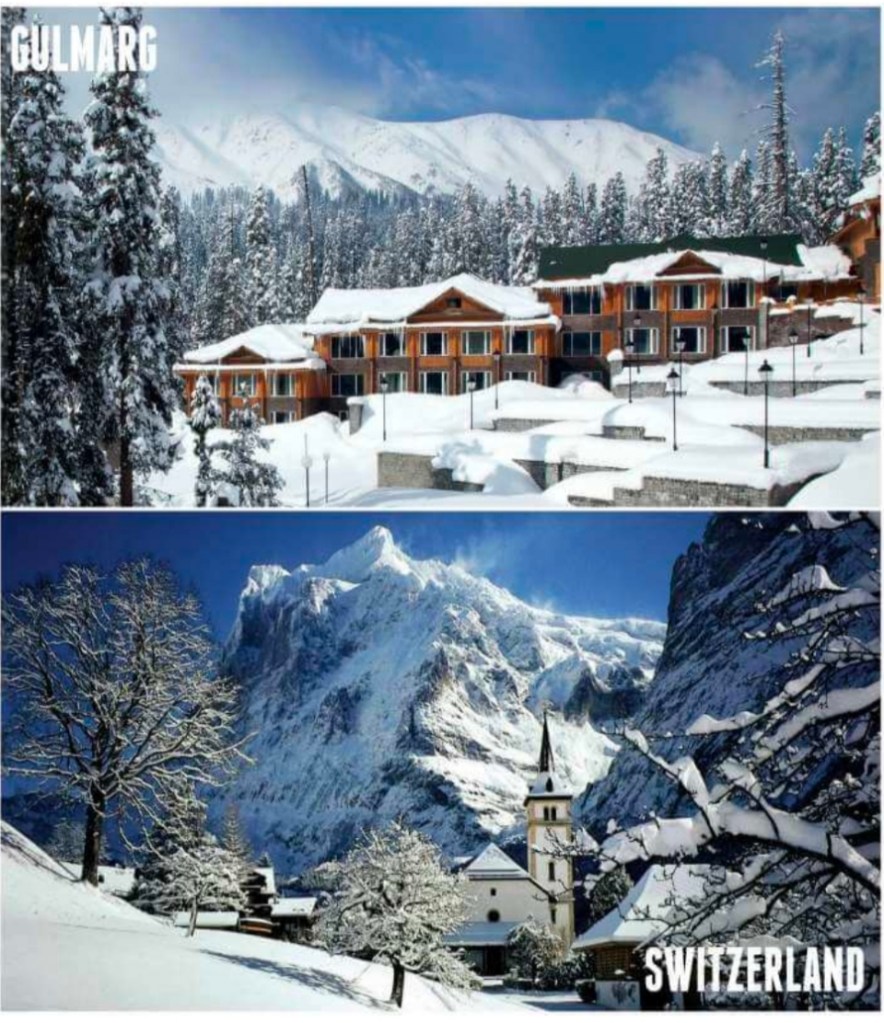
The scene of snow clad mountains at Gulmarg in Kashmir is quite similar to those in Switzerland. There’s no other place like Kashmir in the world! Kashmir is often referred as Paradise on earth.

Tulips in Srinagar will remind of you of Tulips in Amsterdam. If not the tulip fields of the Netherlands, you can still visit our own Tulip garden which is located in Srinagar. The best time to visit for the tulips is when they are in full bloom that is March-end and early April.

Hills of Alaska is quite similar to Auli of Uttarakhand. The Ski slopes of Uttarakhand and Sikkim in India are one of the best things to do.

Rolling hills in Scotland and Mandi in Himachal Pradesh, looks same.

Andaman and Nicobar Islands and Phi Phi Islands, Thailand. The Andaman and Nicobar islands of India, are as beautiful as the islands of Thailand. The Andamans are beautiful and have equally turquoise waters.

Valley of Flowers in Uttarakhand is in the same as that of Antelope Valley in USA.

Thar Desert in Jaisalmer and Sahara Desert in Morocco, Africa

Chitrakoot Falls in Chhattisgarh and Niagara Falls in Canada. In case you’ve been dreaming about visiting the Niagara Falls, you can visit Chitrakoot falls. The Chitrakote falls in the state of Chattisgarh, are the most beautiful falls in the monsoon – June to Sept. To see this waterfall, you don’t need to board a 16-hour long flight or make hole in your pocket.

Tea leaves at Munnar in Kerala and Boh Tea Plantation in Malaysia. The hill station in Munnar has around 50 tea gardens which have free entry. You can also visit the Tata Tea museum located on these hills. If you happen to be a tea lover too, then visiting a tea plantation should be on your list.

Alleppey in Kerala and Venice at Italy. The river is lined with trees and nature, seeing the sunrise from these boats will be the most beautiful experience.

The Bonneville Salt Flats of Utah vs The Rann of Kutch of Gujarat.

WHY TRUST YOUR INTUITION?

Should we always trust our intuition?. While some say yes and other say no, lets just go through what all goes into it.

INTUITUION, GUT or INSTINCT is basically the “feeling or understanding that makes you believe or know that something is true without being able to explain why”. As it is so personal, that no one else can weigh it to tell that if it is correct or not. It is you who have to make the call for yourself. And by this, trusting your intuition means an ultimate act of trusting yourself.

REASONS TO TRUST YOUR INTUITION:

There ate many reasons why one have to trust their gut. Some safe reasons are

88% BELIEVE THAT THEIR INTUITION SERVES WELL: A study shows that when people are forced to choose between two options based on instinct alone, participants made the right call up to 90 percent of the time. Try to give your intuition a chance and make them a part of your life.

HELPS MAKE DECISION QUICKLY: Intuition plays an essential role for decision-making that too in this rapidly changing environment. When a person follows the mere gut, then the time taken for thinking, analyzing and processing cuts off and decisions are made in a shorter period of time.

CULTIVATE YOUR INTUITION IN A RIGHT WAY:

HAVE A CLEAR MIND: Being in a clear state of mind helps you recognize and process the information correctly. Mentally and physically clear away the clutter that resides within.

NOTICE SENSATIONS IN YOUR BODY: Intuitions are grounded within the sensations inside the body. So learn to recognize and understand what goes inside your body and try to act accordingly. Don’t be swept away by thoughts instead tune into your body where your intuition resides.

FOCUS: Keep your focus, if you find them shifting to other people and thing bring them back and keep your focus in place.

Remember that trusting your intuition is a journey which will repeat the above process at particular intervals of time.

IS INTUITION ALWAYS RIGHT?

Your purest intuitions are always right but those tinged by your own thoughts and emotions may only be partially correct or even completely wrong. So before following your intuition, make sure that they are not tinged by your emotions and are pure instinct.

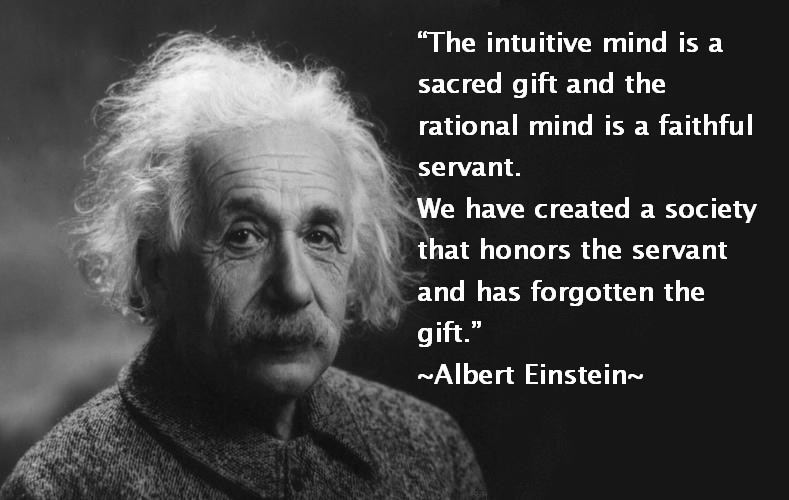
” THE ONE REAL VALUE THNG IS INTUITION “- ALBERT EINSTEIN

Beti Bachao, Beti padhao

-Aditi Raj

“don’t let life end before it even begins, save girl child

Beti Bachao Beti Padhao programme is a nationwide scheme which is purposefully launched to address the serious issue of decreasing girl child ratio in the nation as well as the society. This programme has also a major motive to empower every girl child in our country. This scheme has been successfully launched by the Indian Prime Minister Narendra Modi on 22nd of January at Panipat, Haryana. This scheme is to make people aware of the importance of girl child in the Indian society as well as bring some positive mindset in our country towards girl child. In our society, girls are treated like burden in our life who need to spend their whole life for their parents or husband.

However it is not true, girls occupy half of their population of the world. So that means they are equally need for the sustaining life in the earth. Since several years, girls have been treated as a domestic slave and are given food to eat, but she has no rights to speak over primary matters of the family. For infusing self confidence in girls, it is important that they are aware of their rights and rights to education is one of the most important right which a girl child should have equal access to. Population and poverty are other reasons why most of the Indian families stop their girl child from stepping towards higher education

Different NGOs have also joined hands and organize various campaigns to increase awareness about Beti Bachao Beti Padhao. Large hoardings and banners are placed at the popular locality in order to grab the attention of a larger audience.

Greenhouse effect

Greenhouse effect 

Abstract

Greenhouses affect the level of oceans and seas. Many environmental problems arise due to carbon dioxide excess in the environment. Reason of greenhouse effects is excess use of chemicals which release harmful gases.  Individuals can reduce the carbon footprints. Government can also take strict action against the companies who are responsible for degradation in the environment. 

Greenhouse effect

The greenhouse effect means increasing the level of gases in the earth’s atmosphere which leads to the warmness in the environment and an excess of the temperature of the environment. 

In the atmosphere there are three layers of exosphere, thermosphere, mesosphere, stratosphere and troposphere. 

There is an ozone layer above the stratosphere. It helps to protect from ultraviolet rays and maintain the temperature of the environment. Due to the pollution, the ozone layer starts depleting. The gases are trapped in the atmosphere and increase the warmth (by 3- 4 degree celsius) in the environment. 

 The gases which are responsible for the greenhouse effect are:

Carbon, nitrous oxide, methane, chlorofluorocarbons (CFCs) and water vapour.

Type of layers in atmosphere.

Causes of greenhouse effect

Over time human activities continue to develop. Humans want more and more from everything. Burning fossil fuel, deforestation for urbanisation and cultivation, progress in chemical factories, use of cfcs in cooling stuff of home appliances, overpopulation, farming, transportation, landfill and forestry smog and pollution, acidification of water bodies and industrial act effect  leads to climate change in the environment.

 According to the environmental experts and scientists only the United States of America produces 95% of the gases worldwide (5th assessment report on climate change). 

https://www.ipcc.ch/site/assets/uploads/2018/02/ipcc_wg3_ar5_summary-for-policymakers.pdf

Reference link of that report.

Impact of greenhouse effect 

  • Melting of polar ice – Due to the rise in temperature the polar ice starts melting. The level of oceans and seas increased, which led to floods and cyclones. 
  • Climatic extremes-  climatic extremes such as drought, excess rainfall , leads to threat to the life and wealth of an individual. An increase of co2 in the environment also affects the ecosystem of a particular place. Some fungi, pests and weeds are also deprived under warm water.
  • Impact on crops- our crops are also affected by the increasing of level co2 in the environment.  Co2 reduces the nutrient level of crops. It imbalanced the concentration of protein and other important and essential nutrients.
  • Health issues- warming the environment also increase the health risk of an individual. Malaria, cholra, dengue and now covid-19  all are result of increasing the temperature in the environment.
  • Migration of species- due to the change in the climate, many species have to migrate forcefully from their regions. The migration create the problem of sustaning and settlement.

Prevention from greenhouse effect

Reducing the emission of gases lead gcan prevent the greenhouse effect. International organisation also give some recommendations as follow

At individual level

  • Use of renewble energy- we should use solar panel for our household and small industries.
  • Use of public transport insist of private: Transportron also increase the level of co2 in the environment because of the combustion of dissel and petrol. So we should use public transport instead of private.
  • Afforestion- Go green , grow more trees. Trees and plants  consume the carbondioxide and release oxygen and make the environment cool in temperature.

at national level

  • India greenhouse programme- The programme provide standarized method and measure to use GHG emission.
  • The world resources (WRI)-  it was launched by 2013 and provide the companies knowledge of identify the emission, measure the use of GHG, establish the long and short terms goals.
  • National Action Plan on Climate Change (NAPCC) 2008.- The plan take initiative to work for the mitigation of green house gas emissuon that are causing change in climate.

conclusion.

The green house effect has cause by the emission of methane, nitrous oxide and carbondioxide. The level of increasing co2 in the environment can lead the warmth in the temperature. Due to the high temperature the polar ice are melting which leads flood and other climatic extreme. We should work at the rooth level to reduced the emission of co2 gasses.

Reference