Tips to get through a Bad day

Not everyday is a perfect day. Not everything will be perfect as you think. One day will be the best day, you accomplish all your targets and will have a happy ending. Another day will be worst, every plan fails and every second a new problem arises. What do you do if your day is going rough? How you handle yourself if you get angry and irritated by everything that’s going around. You can only wish for a restart button. Better thing is to try to handle everything with peace even though you are loosing it. Dragging yourself towards positivity when life is trying to push you back, will be a good strategy to follow for your own good. You can try these things if you are having a unpleasant day.

go for a walk

To get things out of your head, you can choose a lonely walk. Just walk by a roadside or in a park, whatever is good for you. Just get out of the place which is making you feel unpleasant. If you can, just go for a picnic. watching the outside world will make you realize that you are not the only one with struggles. You may get inspired by some stranger or the busy world, will take out the problem from your head.

just breath in

The day may get hectic and bring you discomfort. When you feel as if you are inside a trap, sit back and try to relax. Try to concentrate on your breathing, may be some pranayama, and take a deep breath. Concentrating on your breath relaxes you and shifts your attention from the tension. This may be is a very short term solution, but this will help you rethink and think better.

get a treat for yourself

Why to have treat only when you are happy. Get a treat to make yourself happy. Grab some coffee or get a pastry or a cake. Even you can bake for yourself. Make your favorite drink or visit your favorite restaurant.

just write it out

What’s bothering you all day? let that flow out through your words inside a journal. Write about the whole day. Write about all the reasons you think of, for the bad mood. Write about all your feelings. Let them be stay inside a book rather be inside your head. This will help you have a better perspective about the things. You will get to analyze what went wrong and what you should do now. It will help you take better decisions.

let music takeover you

If you are a person who loves music, what is better to deal with the bad day other than music! Just put your headphones on and let the world be on mute. Or just sing for yourself. Play any instrument if you can. Sing as if nobody around you. Dance on your favorite song. Listen to all motivational songs and cheer yourself up.

talk to the people you love

Why do you have bestfriends! call them. Talk to your buddy who will complain along with you about the bad life. Talk and laugh through your bad fortune. Or they will help you get out of the problem. Talk to your family. They may not have a best solution ready in hand, but talking to them will make you feel lighter.

trust you hobby

Your hobby will be a best partner. Just read a book or cook. Clean your house or draw a bird. Watch a movie or a fun Vedio. They will help you get out of bad mood.

At last, we all know nothing stays forever. Then a small problem should not be affecting you too much. Be happy for what you have. Be grateful and graceful. Remember a non living thing will never get problems, only living things do. Try to solve the problem and find out what caused it if you can. Just let a day be a day, not more than that.

FIBONACCI SEQUENCE! THE MAGIC!!!

Though mathematics is an interesting and beautiful subject, most of us find it difficult to learn. We often learn mathematics to do calculations and learn formulas to get good grades in the exams. Mathematics is a wonderful subject which we tend to apply in our day-to-day life. If you see maths through a different dimension, it will be as interesting as social media. We learn so many formulas and theorems, but where do we apply them? Think and come to a solution to make mathematics an interesting one. To prove mathematics an interesting subject, here come the Fibonacci numbers. Most of us have heard it once or twice in our classes when our teacher says about it. If you love to play with numbers, then Fibonacci numbers are the one. Let’s see how interesting these Fibonacci Numbers are!!

The Fibonacci Sequence in Nature

Fibonacci numbers are numbers, such that each number is the sum of the two preceding numbers starting from 0 and 1. The Fibonacci numbers or Fibonacci sequence are first used in the book, Liber Abaci, by Fibonacci which is used in the calculation of the growth of the rabbits. The Fibonacci numbers are closely related to the golden ratio. The ratio of the two consecutive Fibonacci numbers gives the golden ratio as n increases. {Golden Ratio: 1.61803398875}. Though, Liber Abaci contain the earliest description outside India, Indian mathematicians are the ones who described Fibonacci sequence as early as the sixth century.

Fibonacci Sequence

The Fibonacci day is celebrated on November 23rd every year. If we write it in mm/dd format, 11/23; it is also a Fibonacci number. The name Fibonacci is named after its inventor, Leonardo of Pisa, commonly known as Fibonacci was an Italian Mathematician, who was famous for his invention in the history of mathematics.

Leonardo of Pisa, commonly known as Fibonacci (1170 – 1250)

Let’s see the Fibonacci sequence with the example of rabbit, A farmer put a pair of rabbits on a closed surface. How many rabbits can be produced from the pair in a year, if it is that every month each pair produces a new pair which from the second month on becomes productive? The solution is the Fibonacci sequence. The sequence will go on like   1, 1, 2, 3, 5,….. and so on.

FIBONACCI SEQUENCE IN NATURE!!

  • In some flowers, the petals are arranged in the Fibonacci sequential arrangement which is enough to prove that Fibonacci sequences are available in nature too.
  • In the branches of plants, the leaves are spirally arranged in the Fibonacci sequence arrangement. In small plants, it will be 5 or 8. In larger ones, it will be 8 or 13 based on the growth of the plant.
  • The pattern of the seeds within the sunflower follows the Fibonacci sequence (1,1,2,3,5, …..).
The nature of design: the Fibonacci sequence and the Golden Ratio -  Cleveland Design

Fine! Till now, we saw what is a fibonacci sequence, and who is the inventor and where can we see this fibonacci series. Now, shall we see where these fibonacci sequence are used practically? Yeah! Come on!

IN MATHEMATICS,

  • The Fibonacci numbers occur in the sum of the shallow diagonals of Pascal’s triangle.
Fibonacci sequence and Pascal’s triangle
  • The Fibonacci sequence is also used in the Pythagoras theorem. The hypotenuse of the triangle can be a Fibonacci number.
  • The Fibonacci sequence is also used in the network topology for parallel computing.

IN COUMPUTER SCIENCE,

  • The Fibonacci numbers are important in the analysis of algorithms (computational run-time analysis) of Euclid’s algorithm.
  • Its also used in the common factor tree method that is called a binary tree method which is the Fibonacci number minus one.
  • This Fibonacci sequence also used in the game called poker, it is a step in the game development.

Fibonacci sequence are used not only in these two fields but also in many other fields. To put it simply, I have given these two fields. As we saw earlier, fibonacci sequence can also be seen in nature. While contructing tall buildings, climb up and see from the top, this is also an example of a fibonacci sequence.

Algorithms 101: Climbing stairs in JavaScript | by Joan Indiana Lyness |  JavaScript in Plain English

These are the various interesting facts in the Fibonacci sequence. It’s just a small part of mathematics. If we take an interest in various parts or topics in mathematics, we can make maths an interesting one. Mathematics is an ocean, where Fibonacci sequence is a small fish in it. Let’s try to catch various fishes like the Fibonacci sequence and make our lives a great one. If you find it interesting, just do some more research and excite by yourself like how I got excited!!

Reference links;

https://www.mathsisfun.com/numbers/fibonacci-sequence.html

http://www.eniscuola.net/en/2016/06/27/the-numbers-of-nature-the-fibonacci-sequence/

𝑯𝑰𝑺𝑻𝑶𝑹𝒀 𝑶𝑭 𝑮𝑫 𝑵𝑨𝑰𝑫𝑼

“ENGINEERS LIKE TO SOLVE PROBLEMS. THERE ARE NO PROBLEMS HANDILY AVALIABLE. THEY WILL CREATE THEIR OWN PROBLEMS”

G. D. Naidu (Gopalaswamy Doraiswamy Naidu) (23 March 1893 – 4 January 1974) was an Indian inventor and engineer who is referred to as the “EDISON OF INDIA” and “THE WEATHER CREATOR OF COIMBATORE” He is credited with the manufacture of the first electric motor in India. His contributions were primarily industrial but also spanned the fields of electrical, mechanical, agricultural (hybrid cultivation) and automobile engineering. Naidu developed an independently internal combustion four stroke engine. He had only primary education but excelled as a versatile genius.

PERSONAL LIFE :

G.D. Naidu was born at Kalangal, COIMBATORE on 23 March 1893 in Tamil Nadu, India. He was the son of a farmer. His childhood years were spent getting in trouble at school. He disliked attending classes.His son name is KaliyaSwamy he created the company.His wife name is pushpa Naidu.

EARLY LIFE :

Naidu obtained work as a 𝐬𝐞𝐫𝐯𝐞𝐫 in a hotel in Coimbatore with the intention of saving money to buy a motorcycle. After getting the vehicle he spent time dismantling and re-assembling it, and later became a mechanic. He began his transport business in 1920, with the purchase of an automobile coach. He drove it between 𝐩𝐨𝐥𝐥𝐚𝐜𝐡𝐢 and 𝐩𝐚𝐥𝐚𝐧𝐢 In a few years, his Universal Motor Service (UMS) owned the most efficient fleet of public transport vehicles in the country. In 1937, the first motor to be produced in India was brought out from G. D. Naidu’s factory – NEW (National Electric Works) at Peelamedu, Coimbatore.

𝐈𝐍𝐕𝐄𝐍𝐓𝐈𝐎𝐍 𝐀𝐍𝐃 𝐋𝐀𝐓𝐄𝐑 𝐋𝐈𝐅𝐄 :

G.D. Naidu developed India’s first indigenous motor in 1937 along with D. Balasundaram Naidu. The motor’s success resulted in the founding of textool by Balasundaram and, later, lakshmi machine works (LMW).Naidu’s ‘Rasant’ razor incorporated a small motor operated by dry cells, called HELIBRONN.

G.D. Naidu, Rathnasabapathy Mudaliar and India’s first finance minister R.K. SHANMUKHAM CHETTY conducted survey, for bringing Siruvani water to the Coimbatore city.Through Naidu’s efforts and donations India’s first polytechnic college, the Arthur Hope Polytechnic and the Arthur Hope College of Engineering were set up. Later the college moved to its present location and is now known as Government college of techonology. The college was named after the then Madras governor Aurthur hope In 1945, GD Naidu was the principal of the college. Naidu was not satisfied with the four-year programs and said that it was a waste of time for students. He suggested that two years was more than enough to teach the same courses, even with different concentrations. However, the British government did not accept his idea and Naidu resigned from his post. The name Hope College for the original site of the college remains in Coimbatore even.

Naidu died on 4 January 1974. Sir C V Raman said of Naidu: “A great educator, an entrepreneur in many fields of engineering and industry, a warm-hearted man filled with love for his fellows and a desire to help them in their troubles, Mr Naidu is truly a man in a million – perhaps this is an understatement!” He is survived by his son G.D. Gopal and grandchildren G.D. Rajkumar and Shantini. A permanent Industrial Exhibition in his memory is in Coimbatore. He provided employment in the engineering and manufacturing sectors to many individuals in the 1950s and 1960s.

360 Wander Writer

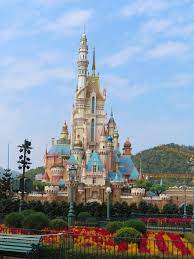
Welcome to the Disney world

Hong Kong Disneyland Says Closing Over China Virus Fears

The Hong Kong Disney land is still a dream land for many children. It is also know as the HK Disneyland or HKDL . It is situated in the Penny’s bay in the Lantau Island . It is located inside the Hong Kong Disneyland Resort. It is the largest theme park in Hong Kong. It was opened on 12th September on the year of 2005. The built the theme park by incorporating the Chinese culture and also many customs and tradition. They have built the Hong Kong Disneyland Resort entrance with a bend so that the good vital force energy would not flow into the the South China Sea. This park consists of seven themed areas .Languages such as English , Mandarin and Cantonese are spoken by the cast members of the Disney land. Guide maps are printed in both English and Chinese for the Tourist to refer easily.

Where to Get Discounts on Hong Kong Disneyland Ticket Prices

The Disney Land is owned by the Walt Disney Company Government of Hong Kong and it is operated by the Hong Kong International Theme Parks. Among all the Disney Lands this Disney Land’s park has the lowest capacity of 34,000 visitors daily. The target was fixed to a total visitors of 5.6 million but it attracted only 5.2 million people. On the next few years it had growth and received up to 5.2 million tourists in the year of 2010 . But it is fact to be accepted that the Hong Kong Disney land is under the consecutive years of loss. Yet it is trying to cope up with it and it is on the process of extension.

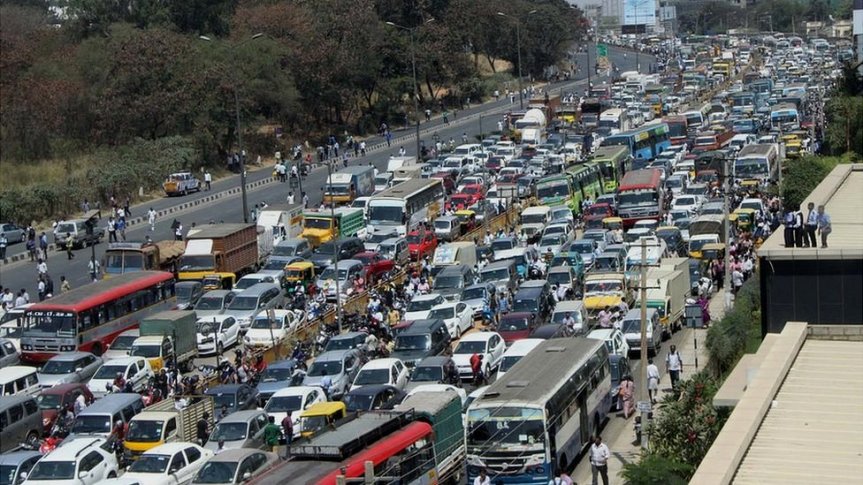
The Traffic in Bengaluru

We know that India in general suffers from traffic jams in many different parts of the country. This is essentially due to the population density and thereby, the vehicle density that is prevalent in the country. With so many people using automobiles, there is bound to be traffic and packed roads especially in high populated metropolitan cities. When speaking of traffic in India, people often talk about Mumbai as being the city with the worst traffic. This is understandable as Mumbai is the most highly populated city in India. It is also India’s financial hub and gets a lot of tourism. However, there is one other city that gives strong competition to Mumbai, and which many claim is definitely the city with the worst traffic in India. It is so bad that it can even content to be the city with the worst traffic in the world. That city is Bengaluru. Bengaluru sees constant bad traffic on a day-to-day basis, and every single person that comes from the city can testify on how bad the condition really is. But why is this so?

Why is it so bad?

On average, it is estimated that a Bangalore citizen spends about 10 days in traffic. This is an unimaginable amount for a lot of us from outside Bangalore, who might experience traffic here and there but nothing compared to Bangalore. Furthermore, the average speed travelled on Bangalore roads is only 11 km/h, and it is estimated that it could decrease to 8 km/h if no measures are taken to curb traffic. The unusual thing here is that the speed is low not only with traffic but also without it. This is because the roads in Bangalore, and in generally in India, are multi-purpose public goods serving a wide variety of uses other than motorized transport that slow down travel (hawkers, stalls, parked vehicles, etc.).

The generally agreed reason behind the traffic is that it is because of the rapid and unplanned growth of the city. Bangalore’s traffic advisor M.N. Sreehari himself has said that Bangalore suddenly went from a sleepy village, to a town, to a city. These unforeseen and unplanned changes in the city left it unprepared to deal with the traffic.

Bangalore is often described as the Silicon Valley of India as it is home to the IT industry. Since the early 1990s, with the advent of globalization and privatization, global technology firms began opening offices in Bangalore and a large number of support industries have grown around it, bringing with them a huge influx of people from all over India. Many Indians and NRIs started moving to Bangalore to try building their start-ups, which Bangalore is known for today.

Hence, Bangalore’s population grew from 5.6 million in 2001 to 8.7 million in 2011. Today, it is estimated to have reached 11.5 million. So, the population has grown exponentially, but the infrastructure and roads have not been able to keep up the pace.

Apart from this, even the general road layout is to be blamed for the traffic. Rather than having a grid pattern which promotes the flow of traffic, Bangalore has a star pattern which causes a lot of interceptions and jams. Bangalore used to have grid like roads, but it gradually became more star shaped because of unplanned change and development. Also, the roads themselves are mostly in bad conditions and full of potholes. Potholes are one of the reasons for traffic congestion and road accidents. There is also illegal construction on these roads which narrow them down, causing more jamming.

Furthermore, the public transport like buses carry only about 45% of the city’s traffic and the metro system is still underdeveloped. This means that most people are dependent on their private transport. The city has 6.6 million private vehicles, including one million cars. Every day, another million vehicles enter from outside the city, clogging its already choked streets. Adding to this problem is the fact that one-third of the city roads are taken away by parking and encroachments.

Conclusion

Bengaluru’s traffic is undeniably bad, and measures need to be taken to curb traffic jams and congestion in the city. The traffic has had wide ranging effects on pollution and on the health of people, not to mention it is an immense waste of a person’s time. Even companies in Bengaluru have started pulling out of the city to move to tier 2 and tier 3 cities because the traffic is simply bad for business. It is the statutory and constitutional duty of civic bodies to maintain roads and footpaths. If the administration takes steps to solve the traffic issue in the city, Bengaluru will become a much more popular city and gain a better reputation.

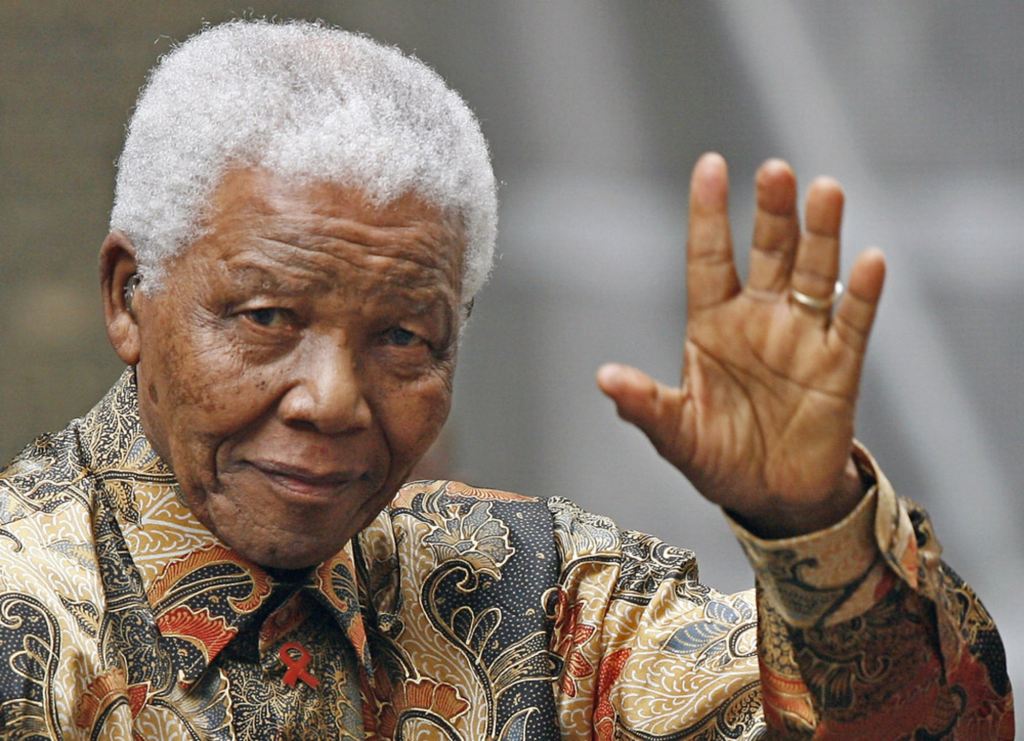
REMEMBERING NELSON MANDELA

Nelson Mandela, the figurehead of Africa’s Anti-aparthied movement and the first Black President was born on this day, July 18, 1918  into the Thembu royal family in South Africa. He was the first elected Black President who was elected in a fully democratic election. Mandela became involved in protests against the racist policies of South Africa’s government in his 20s, and is known for having spent 27 years in prison for political offenses.  He served as the president of the African National Congress (ANC) party from 1991 to 1997. The South Africans who love him refer to him as Tata, father. He was an active member of African National congress. Mandela had always looked for peaceful ways to protest.

However, the Sharpville massacre in March 1960, where 69 Black South Africans were shot and killed by police and hundreds wounded during a peaceful protest; contributed to deteriorating relations with the White minority government. The resistance fighter who for years had denounced violence suddenly saw a need to use arms in the struggle for equality.

Mandel abandoned his peaceful stance and started advocating sabotage against the White Government. He went underground and co-founded Umkhonto we Sizwe (Spear of the Nation), the military wing ofhe ANC. During this time he was known as Black Pimpernal for his ability to evade capture. In 1962, he went to Algeruia to eran the Guirella warfare tactic. On the way of his return he was arrested along with other members at a road block. He was sentenced to life imprisonment for guerrilla war actions against the government. International pressure to free Mandela grew over time and he was released after 27 years of imprisonment. He declared his commitment to peace and reconciliation with the country’s white minority on the day of his release, which turned into a large-scale celebration that included a global media presence. People in the street cheered in support of Tata.

Mandela’s biggest influence on the new South Africa was his personal determination that anger over the crimes of the past, including his 27 years as a political prisoner, should not motivate future laws and actions. Key to this was his 1995 establishment of a Truth and Reconciliation Commission that investigated historic human rights violations and gave vent to grievances.

His negotiations with the South African president in the early 90s, F.W. de Klerk helped in cession of aparthied system of racial segregation. Mandela along with Klerk received Nobel Peace Prize for their efforts in 1993.

Mandela’s other key legacy is his extensive charitable work, including the creation of the Nelson Mandela Foundation,  the Nelson Mandela Children’s Fund. Starting from 2002, Mandela encouraged AIDS awareness and treatment. 46664 – the HIV-AIDS initiative was named after his prison number.

In 2009, the United Nations declared that July 18, Mandela’s birthday, would be a worldwide day of community service known as Nelson Mandela International Day.

JAIPUR, THE PINK CITY

Jaipur stands out as one of the most picturesque and culturally vibrant cities in the entire world. It is the capital of Rajasthan which is known for its rich heritage and culture. Resplendent in the hues of its magnificent past, this historic city stands out for being one of the most spectacular cities in the world.

A city of royalty, craft, heritage.  Jaipur and its people thrive in their colourful and awe-inspiring surroundings. The people adorn their traditional attires that reflect their free spirits and grandiose past. Perhaps it is the only city in India to reflect the fusion of heritage culture and modernity.

The entire city is bathed in a nostalgic shade of pink, this city charms the visitors with their forts and palaces. Every corner of this city holds an interesting anecdote. The stories and the colors adorn the city which takes form in the hearts of people living there.

It is almost 4 hours from the bustling capital city, this city needs to be a part of your itinerary to experience the true essence of the country irrespective of how short or long the trip is.

BEST TIME TO VISIT

Best time to visit Jaipur is between November to February when it gets slightly cold and windy. Weather of Jaipur is on the hotter side, as it is near to the Thar desert which makes Rajasthan hot. The summer months which are March to August make it difficult to explore the city.

ACCOMODATION

If you’re visiting here for a special vacation then there are a bunch of luxury hotel chains which can make your experience memorable like – Leela Palace Jaipur, ITC Rajputana, Samode Haveli, Oberoi Rajvillas and so on depending on your budget.

To experience the royal culture of the city, Jaipur has many haveli’s with antique décor which will serve you typical Rajasthani food and you will step in the culture of the place.

If you’re on a budget there are beautiful Airbnb’s and hostel for people who are coming in large groups, solo traveler’s or with friends.

THINGS TO SEE

  • Amer Fort 

The most famous tourist attraction of Jaipur. This is a UNESCO World Heritage Site for all the right reasons. You will be bound to be impressed by the marvelous fort and the intricate design of the entire fort, lavish mirror works of Amer.

  • City Palace

It is located in the center of the city, presently it is the home for the royal family of Jaipur. It is majorly a series of courtyards, gardens and buildings.

  • Patrika Gate

It is a place that reflects the beautiful Rajasthani culture and architecture of the state. It has stunning frescos and beautiful carved arches.

  • Hawa Mahal

It is Popularly known as the “Palace of wind”. It has 953 windows and was initially a summer get away for Rajput families.

The city paints different strokes on each admirer’s soul with its beauty. Traveller’s that are looking for a taste of the past Indian Culture and traditions.

 Jaipur is a Must Visit, Happy Travelling!

How to foster mental health?

Mental health is often overlooked and underrated but it is just as prominent as our physical well being. More frequently people relate the term health to the physical body but mental and physical health are closely inter-related. Though we separate the terms as body and mind, one cannot be physically fit completely if he/she carries a poor mental health because it leaves a negative impact on the physical body. A good mental state paves the way for a healthy lifestyle and prevents several serious health conditions. A study found that positive mental well being can mitigate the risks of heart attacks and strokes. The mortality rate from cancer and heart disease is higher amidst people who suffer from depression or other mental health conditions. It is apparent that our body can give rise to many physical problems when we are mentally ill. Mental illness in simple terms can be the depression, anxiety, irregular eating habits and stress, that are faced by many in their day to day lives which lay the root causes for many complicated mental disorders. How to promote mental health for a thriving and vigorous life?

In the contemporary world everyone are rapidly running to acquire means for a wealthy lifestyle but in this process we have forgotten that health is our greatest wealth. In this modernized society we afford every thing by just a single click from the tip of our hands, perform more smart works rather than hard work, for this our mind should be clear and strong but on the other hand mental illness is an issue faced even by the little ones these days and so we have to frame some valuable time to engage in a mindfulness to lead a fruitful life. There so much factors that contributes to the stress and depression from time to time but mental health is very salient for the further going.

In the rushing lifestyle just make some time for your hobbies, do things that you relish and which makes you feel relaxed. As mental health can have a positive impact on the physical body similarly take good care yourself physically to improve the mental health. Intake nutritious food, have a regular and adequate sleep because lack of sleep contributes to a high rate of depression, stay hydrated. Exercise regularly which curtails stress & anxiety levels and enhances the mood. It will sharpen our memory and augments our thinking capacity. Benefits of yoga are well known and it could be a great stress reliever and improves the quality of life. It will help build confidence & self esteem, calm the mind and gradually helps to boost the immunity. When you feel that sometimes when life is getting over you just get a grip yourself with the succor of your family and friends, widen your horizons, seek out activities that can get you out of the mental trauma. Surround yourself with good people and positive thoughts which tends to leave a huge positive impact in your mind. If you have any intense mental issues do consult a psychiatrist without any hesitation and delay as prevention is better than cure. Things will be beautiful in its time and just wait for your time to arrive without becoming more stressed or intimidated about the future.

Healthy mind in a healthy body is the healthy style of living.

An Excellent Publication by a Dynamic IAS Officer (Retired): Few Points about the Book

By virtue of working in the National Institute of Rural Development and Panchayati Raj (NIRDPR)   and few other organisations in India and even abroad, I have the opportunity to meet many IAS officers and around 15 senior IAS officers were my bosses. While I was in abroad (many countries) many foreigners appreciated our IAS system of recruiting. 

 I have to agree that all IAS officers whom I met and interacted with were knowledgeable and vibrant in different fields. Some of them were publishing articles also. I am now a senior citizen and around 65 years of age but two names I remember whose articles inspired me – one is T. L Sankar sir and another one Rajeev Sadanandan sir. I had the opportunity to work under both of them when both were in NIRDPR as Director General and Deputy Director General in different periods. 

Recently, I have the opportunity to go through the book written by Chinmay Basu sir, an Odisha cadre IAS now retired on superannuation and settled in Kolkata. He also worked in NIRDPR as Deputy Director General. After retirement he has published (February 2021) a wonderful book in Bengali titled ‘Jibaner Jharna Kalam’ (meaning, according to me Jotted Down Experience of Life). 

There are altogether 23 chapters in the book and the volume is spread over to 128 pages including foreword and preface. The foreword is written by one IAS – Anita Agnihotri madam. 

For the benefit of readers I am highlighting a gist of each chapter as the author has presented his experience during service life mostly during his experience in Odisha with some cases in each chapter. 

 First chapter has highlighted his experience when   he was a student staying in the hostel of Young Men’s Christian Association (YMCA) in Calcutta, now Kolkata. According to the author most of the students were from different parts of India mostly from North East of India. Anyway, he has presented a sad case as he met one person, Sheikh Kader at YMCA whose family still has a renowned bakery in Guwahati, Assam. Kader finally became a medical doctor and a few years ago when the author with his wife went to Guwahati as tourists desired to meet Kader and accordingly went to Sheikh Brothers Bakery and came to know Kader passed away. Second chapter is interesting as when he joined Lal Bahadur Shastri Academy, Mussoorie, in 1977 as probationer, while filling up the form mentioned married as before joining marriage registration took place.  But normally as per Indian culture social marriage is a must so when he wanted to go for social marriage top head of the Institute asked him to clarify and with interesting note he has clarified   because registration and social marriage are two  different phenomena. In the third chapter, the author has presented his experience when he went to join with his wife a small town Gunupur as SDO (Sub Divisional Officer), Korapout district.  With a lot of hassles he joined and he was the first IAS officer to join as SDO in that place. In the fourth chapter, the author has narrated how a small   rivulet (drainage type)   became furious because of incessant rain. With a lot of difficulty the author crossed the rivulet with the help of local staff as there was an important meeting. 

In the fifth chapter a case of corrupt practice has been highlighted as how an official harassed a small cinema hall owner. With the intervention of the author, the cinema hall was reopened. Sixth chapter also touched upon the corruption (bribery) case which the author has neutralised. In the seventh chapter exploitation of the bonded labourers by the big landowners has been presented. The author’s experience in Kalahandi has been presented in chapter 8 where he worked as district magistrate. Here also he observed some issues. In chapter 9 the author had to move by train by taking a ticket in another person’s name and the situation has been lucidly explained. An anomaly during recruitment of staff in Sambalpur district, where the author was the district magistrate, has been presented in chapter 10, and the author and his immediate colleagues tackled the issue as he received an anonymous letter about corruption during examination. In chapter 11 the author has explained how his childhood friend who went mountaineering lost his life. The chapter 12 is also interesting as the author was with his two children and wife while going to Nandankanan, a great and famous sanctuary of the animals by bus, and faced a serious problem because he forgot to take the required amount. And finally how it was resolved may be found in the chapter. 

 The author has explained his interesting experience in Chapter 13 about train journeys and the train left the station as within the stipulated time he along with his boss a chief secretary level officer could not get down in the station timely and finally the issue was resolved. In Chapter 14 the author has explained how the big industrialists exploit weavers. Health issue of the author’s teenage son and how the issue was tackled has been narrated in chapter 15 and chapter 16 as the author’s son suddenly suffered from nerve related issues in 1995. In chapter 17 former Prime Minister Honourable Rajiv Gandhi’s visit with Madam Sonia Gandhi at Kalahandi in 1987 has been lucidly presented. And unfortunately both could not visit a village because of heavy rain although it was scheduled. But later on the author visited and observed a few cases of corruption and highlighted these in chapter 17.  When the author’s son and daughter were students at Symbiosis college in Pune, the mother of both (his wife) , used too many phone calls through STD. Those days cell phones were not available. So the author was disgusted as the phone was meant for official purposes. In view of this, the author joined in Mumbai as Chief Executive Officer in Khadi and Village Industries Commission. Time to time both husband and wife used to visit Pune to meet their children and similarly both the children on holidays used to visit their home in Mumbai. And in this chapter 18 behaviour of both son and daughter has been lucidly explained which is a simple example of generation gap. 

The author had the opportunity to study in Harvard University of USA in 1989 under the scholarship of UNDP. Since it was a prestigious programme, he went there with his wife and both the children and had the opportunity to attend Nobel laureate Professor Amartya Sen’s class (chapter 19). In chapter 20, the author has explained a case in the USA as by seeing ‘Food Coupon’ which an old lady was using he puzzled and later on came to know these are given by the Government to the poor persons who are unable to work like Old-age pension in our country. The author has lucidly explained in chapter 21 his visit with family members to Niagara Falls in Canada. Here he has honestly explained about the visa issue because he came from India on one single entry visa but some people misguided him that multiple entry visas are required and finally the issue was resolved. The author’s experience with the former Chief Minister Honourable Biju Pattnaik and about his personality has been wonderfully jotted down in chapter 22. In the last chapter of 23 while the author was Chief Executive Officer in Khadi and Village Industries Commission in a programme Prime Minister Honourable Atal  Bihari Vajpayee came as chief guest , the author’s embracing position while extending vote of thanks in Hindi has been explained. The author feels that he should have spoken like an extempore speech not by reading a piece of paper and with a humorous note he has concluded the chapter.

This is a wonderful publication although in Bengali so I suggest the author if possible it may be published in Odia, English and Hindi also. Also I suggest all the 23 chapters should be numbered by inserting 1, 2, 3 etc., as only the chapters’ titles have been mentioned in the content. Since, the publication has mainly highlighted his experience during service period and abroad so many of us faced such issues in our service life so I am feeling nostalgic.

 Dr Shankar Chatterjee

Former Professor & Head (CPME),NIRD & PR ( Govt. of India), Hyderabad,  

TOP FAMOUS DANCE STYLES IN THE WORLD

Dance is one of the best forms of expression. People all over the world are into various forms of dancing. They say anybody can dance…which is true, unless and until you are knowledgeable of the dance form. The easiest dance form is Freestyling. It is simple and you don’t need to have a specific choreography to dance along with the music.

Here are some dance styles that are widely loved by the people of the world.

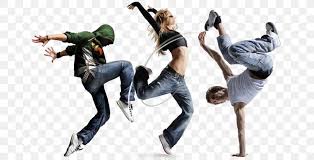
HIP-HOP

The dance form is usually performed by skilled dancers. It includes a wide range of styles created in the 1970s and made popular by dance ctews in the United States. They go under training that usually involves locking, popping, breaking, flips, handstands etc. This dance has moves which are closer to the ground and is usually performed to hip-hop, R&B, Funk, Electronic, and pop music. They are also called street dances or street style. This is a dace form that is widely performed and loved.

BALLET

A dance style that was originated in the 15th century in Italy and later developed into a concert dance form in France and Russia. This is usually performed on classical music. Ballets are choreographed and performed by trained ballet dancers. It requires ages of training and is extremely eye pleasing.

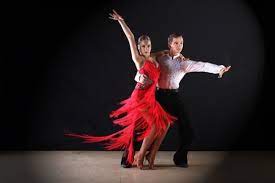
SALSA

It is performed in couples and is performed on Salsa and Latin American music. Salsa is an amalgamation of Cuban dances such mambo, pachanga, and rumba as well as American dances such as swing and tap. It was primarily developed by Puerto Ricans and Cubans living in New York in the late 1960s and early 1970s. Different regions of Latin America and the United States (including countries in the Caribbean) have distinct salsa styles of their own, such as Cuban, Puerto Rican, Colombian, and New York styles. Salsa dance socials are commonly held in nightclubs, bars, ballrooms, restaurants, and outside, especially when part of an outdoor festival.

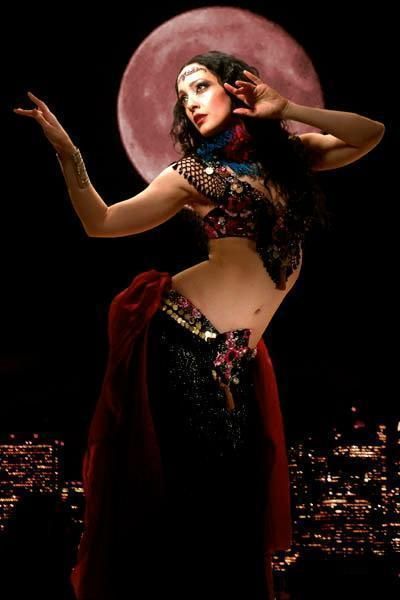
BELLY DANCE

It is an expressive Arabian dance style that was originated in Egypt. It features movements of the hips and torso. It has evolved to take many different forms depending on the country and region, both in costume and dance style; with Egyptian style the most recognized worldwide due to the Egyptian cinema. It is popular worldwide with many schools around the globe now practicing it.

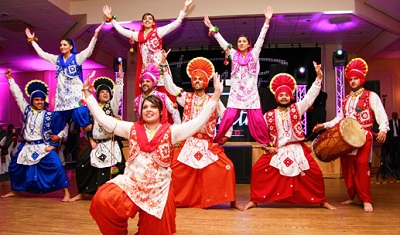
BHANGRA

It is a type of traditional folk dance of the India subcontinent, originating in Sialkot in Punjab. In a typical performance, several dancers execute vigorous kicks, leaps, and bends of the body—often with upraised, thrusting arm or shoulder movements.  its modern-day evoluti on has allowed bhangra to retain its traditional Indian roots, while broadening its reach to include integration into popular music and DJing, group-based competitions, and even exercise and dance programs in schools and studios.

FLAMENCO

It is an art form based on the various folkloric music traditions of southern Spain, originating in the culture and traditions of the Cale Roma, commonly known in Spanish as Gitanos, of the region of Andalusia, but also having a historical presence in Mucia. Flamenco has become popular all over the world, especially the US and Japan.

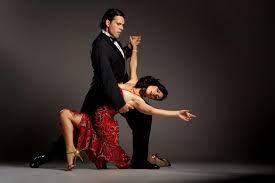
TANGO

Tango is a partner dance, and social dance that originated in the 1880s, the natural border between Argentina and Uruguay. The tango then spread to the rest of the world. Many variations of this dance currently exist around the world. On August 31, 2009, it approved a joint proposal by Argentina and Uruguay to include the tango in the UNESCO Cultral Heritage list.

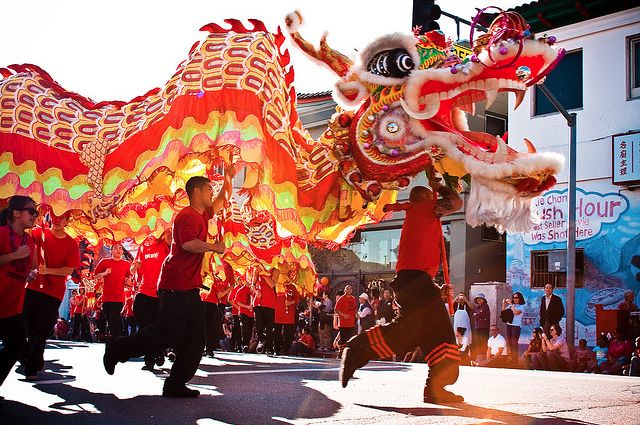
DRAGON DANCE

It is a form of traditional dance and performance in Chinese dance. Like the lion dance, it is most often seen in festive celebrations. The dance is performed by a team of experienced dancers who manipulate a long flexible figure of a dragon using poles positioned at regular intervals along the length of the dragon. The dragons are believed to possess qualities that include great power, dignity, fertility, wisdom and auspiciousness. The movements in a performance traditionally symbolize historical roles of dragons demonstrating power and dignity.

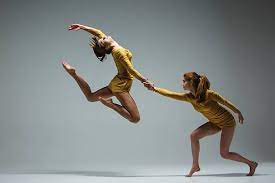
CONTEMPORARY

is a genre of dance performance that developed during the mid-twentieth century and has since grown to become one of the dominant genres for formally trained dancers throughout the world, with particularly strong popularity in the U.S. and Europe. Although originally informed by and borrowing from classical, modern, and jazz styles. Due to its technical similarities, it is often perceived to be closely related to modern dance, ballet, and other classical concert dance styles. 

Article by : Haniah Mirza

what makes you most beautiful;

“Beauty is skin-deep” the saying goes, and it seems most of you agree when you describe what you consider most beautiful in a person.

Confidence, kindness, happiness, dignity and intelligence all ranked in the top five out of 19 attributes that people said make the opposite and same sex beautiful.

Physical attributes like facial appearance, body weight and shape, and sexiness come much lower in the rankings of a recent Global Advisor survey of more than 18,000 people across 27 countries.

In fact, strength was the only physical attribute in the top 10 for what women considered beautiful in men. For how men view women – strength, sexiness and facial appearance – ranked at the bottom of the top 10 traits.

No matter how physically gorgeous someone
is, if they are a rotten person, they will
not appear beautiful to us for long.

Carla Flamer, Marketing Canada

But, if the business of improving your looks is such a big business, then why do we place less importance on physical traits when it comes to what we consider beautiful?

Or, is there more to this than what meets the eye?

Difference between thinking & experiencing

Namika Sagara, President of Ipsos’ Behavioral Science Center, says we use different processes in our brain when we think of what characteristics matter versus what matters when we experience things.

“When we think of it, we tend to be more logical and rational, and also cognizant of what others might think of what we have to say,” said Sagara. “But when we experience, we tend to skip those logical and rational processes.”

Greg Gwiasda, Behavioral Scientist & VP at our Behavioral Science Center, adds that when things seem distant, we tend to think more abstractly, but when we are close to doing something, we think more concretely.

“When we talk to people about what they want in a partner, we are in a more abstract mindset – so the general traits are more likely to be salient,” said Gwiasda. “When we are actually choosing a partner, this is a very immediate need and we think in much more concrete terms – she’s got a nice smile, figure; he’s got good eyes, abs.”

Appearing beautiful vs. staying beautiful

There’s also a difference between what we initially view as beautiful when we meet someone and what keeps them as beautiful in our eyes, according to Carla Flamer, President of Marketing Canada, who’s worked with some of the world’s biggest beauty brands.

“The physical aspects, features, body type, facial balance – that gets positive first attention,” said Flamer. “What keeps someone looking beautiful in our eyes is intrinsic.”

“One is more immediate/visceral, in terms of creating an impression, and the other longer lasting,” said Flamer suggesting both are equally important elements of beauty – the physical and non-physical.

“No matter how physically gorgeous someone is, if they are a rotten person, they will not appear beautiful to us for long.”

Sagara backed this sentiment by saying that attraction can go through a journey and change over time.

“For example, the most salient attraction you might recall right when you met your partner is a physical attraction [like] how pretty his or her eyes were,” said Sagara. “What you think most attractive about your partner now may be the confidence he or she has.”

This is not because you think the eyes of your partner are no longer attractive, Sagara explains, but more that you have developed a stronger attraction to their confidence after spending more time with them.

What’s socially acceptable?

But given the popularity of current dating apps where you can swipe through potential partners based on their looks, the experts agreed there could be an element of people wanting to give socially desirable answers in order not to appear shallow.

Physical traits like hair styling, youthfulness and body weight and shape were among eight of the last nine characteristics that made men beautiful to women. Similarly, seven of last 10 attributes that made women beautiful to men were physical ones.

Sagara said that when we report what makes a person beautiful, we – consciously or unconsciously – tend to align with what we think should make a person beautiful, which can be heavily influenced by our macro and micro cultures.

But Colin Strong, Global Head of Behavioral Science at Ipsos, argues that giving more importance to physical attributes of beauty can be misleading, because it is difficult to really understand why we are attracted to another.

He points to the fact that the current survey’s findings are similar to one done by Ipsos for Dove’s Real Beauty campaign in 2004.

“Since 2004 there has been an explosion in online dating – and a lot of handwringing over the way in which we are making increasingly superficial decisions over who we want to date,” said Strong.

“Maybe this shows that in actual fact, despite this, we are all still looking for qualities in our partners that will lead to love, not just a hot date.”

life is easy when we put in efforts

Everything that we want to achieve requires some effort. But how important is effort in achieving our goals?

What you do today – the effort you put in – determines your success tomorrow. Rory Vaden, the author of “Take the Stairs: 7 Steps for Achieving True Success”, says, “Success is never owned; it is only rented – and the rent is due every day.”

Effort, like sunscreen in the summer, needs to be applied consistently. To achieve our goals, we need to put in the effort each and every day. On days that we feel good and on days when we don’t feel like doing the work. Many people will put in effort for a short time and when their effort does not immediately pay off or they become distracted by life, they stop putting in the daily effort needed to finish and succeed.

One way to keep yourself motivated to put in the effort needed for your goals is to think of all the other people who have the same goal. Knowing that most people will at some point give up and stop putting in consistent effort, you can use this to motivate you to continue to work hard and keep moving forward. I call these “Get ahead” days. These are the days that you get ahead of your competition. After all, everyone can put in the effort when they are feeling good or the circumstances are perfect, but not many persist through the tough days.

Effort is really just a habit that we need to develop if we want to be successful. Success requires that you are willing to do whatever is necessary, when it is necessary in order to succeed.

Effort pays off in many ways. When we put in effort, we learn. Whether the effort produces results or not, we can learn and adapt based on what we learn from our efforts. If our efforts lead us further away from our goal, then we need to change our strategy. If our effort brings us closer to our goal, we can double down with our effort.

The great basketball player, Michael Jordan said that work ethic, (effort), eliminates fear. By putting in the effort, we know what we are capable of and do not need to be afraid.

Effort teaches us that we can do more than we thought. We learn new skills and abilities when we take the time to put in consistent effort. Every new success that we achieve through our efforts increases our confidence in ourselves and our abilities. Effort keeps us focused on success. As your effort brings you closer to your goal, your motivation and willpower increase as you can taste victory.

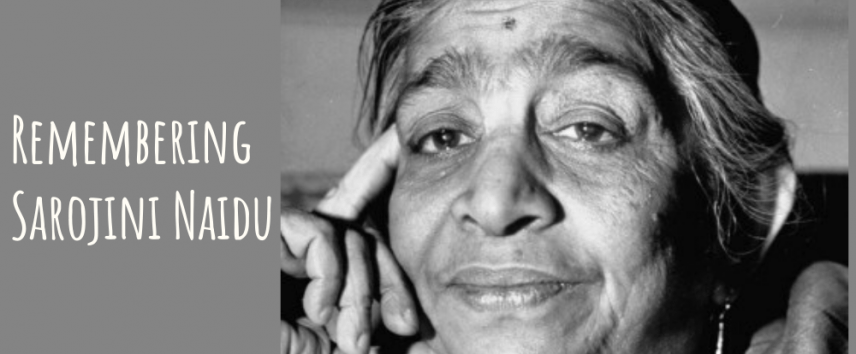
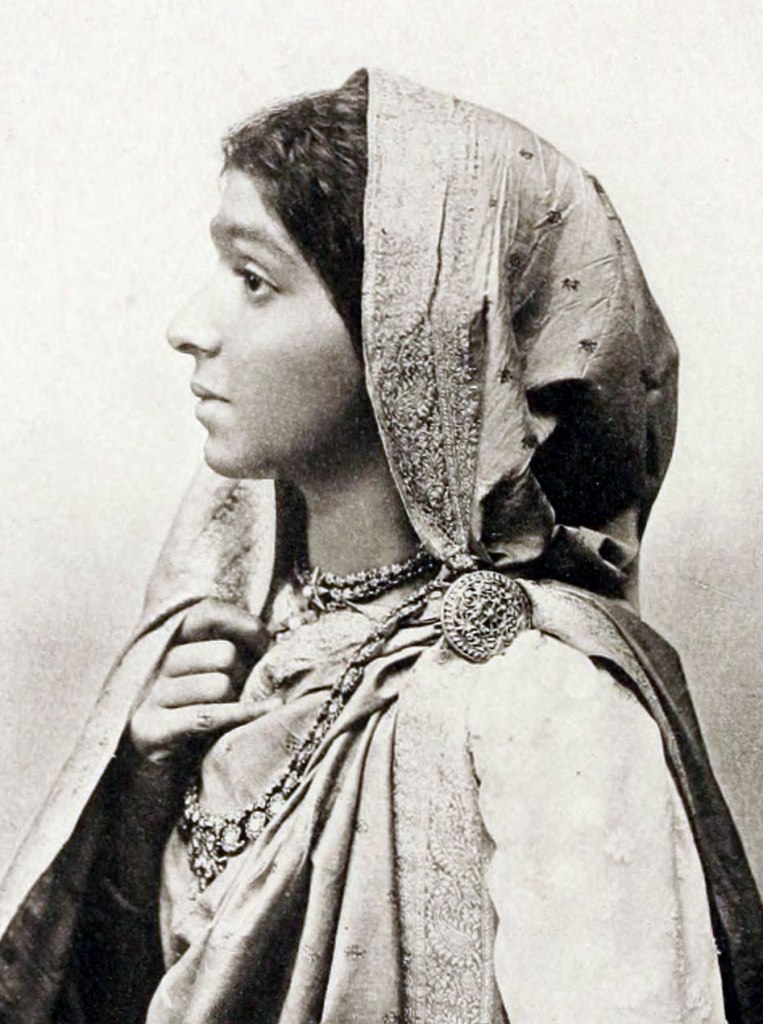
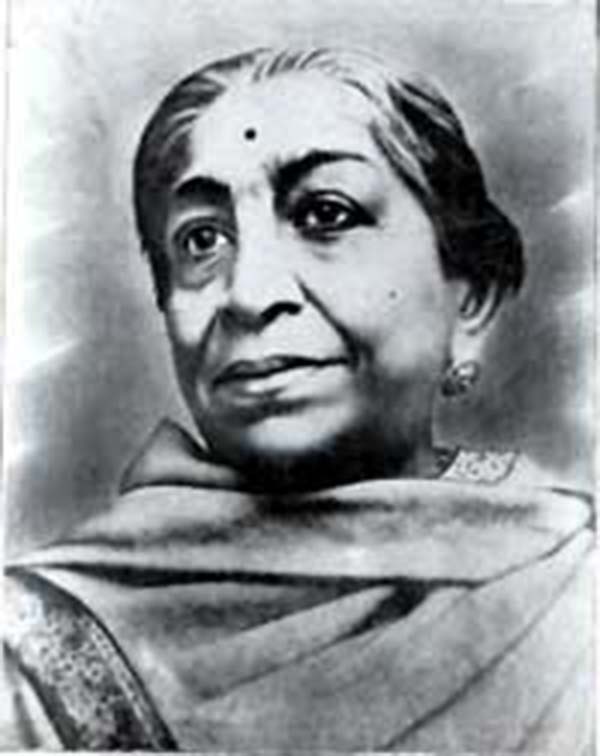
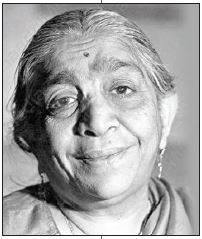
The Nightingale Of India

“As long as I have life, as long as blood flows through this arm of mine, I shall not leave the cause of freedom…I am only a woman, only a poet. But as a woman, I give to you the weapons of faith and courage and the shield of fortitude. And as a poet, I fling out the banner of song and sound, the bugle call to battle. How shall I kindle the flame which shall waken you men from slavery…”

Introduction

She was an Indian political activist and poet. A proponent of civil rights, women’s emancipation, and anti-imperialistic ideas, she was an important figure in India’s struggle for independence from colonial rule. Naidu’s work as a poetess earned her the sobriquet ‘the Nightingale of India’, or ‘Bharat Kokila’ by Mahatma Gandhi because of colour, imagery and lyrical quality of her poetry.

Birth and death

Born in a Bengali family in Hyderabad, Naidu was educated in Madras, London and Cambridge. Following her time in England, where she worked as a suffragist, she was drawn to Indian National Congress’ movement for India’s independence from British rule. She became a part of the Indian nationalist movement and became a follower of Mahatma Gandhi and his idea of swaraj. She was appointed as the President of the Indian National Congress in 1925 and later became the Governor of the United Provinces in 1947, becoming the first woman to hold the office of Governor in the Dominion of India.

Naidu’s poetry includes both children’s poems and others written on more serious themes including patriotism, romance, and tragedy. Published in 1912, “In the Bazaars of Hyderabad” remains one of her most popular poems. She married Govindarajulu Naidu, a general physician, and had five children with him. She died of a cardiac arrest on 2 March 1949.

Work

“Tell me no more of thy love, papeeha,
Wouldst thou recall to my heart, papeeha,
Dreams of delight that are gone,
When swift to my side came the feet of my lover…”

– A Love Song From The North by Sarojini
Naidu

1905: The Golden Threshold, published in the United Kingdom.
1912: The Bird of Time: Songs of Life, Death & the Spring, published in London.
1917: The Broken Wing: Songs of Love, Death and the Spring, including “The Gift of India” (first read in public in 1915) .
1919: Muhammad Jinnah: An Ambassador of Unity.
1943: The Sceptred Flute: Songs of India, Allahabad: Kitabistan, posthumously published.
1961: The Feather of the Dawn, posthumously published, edited by her daughter, Padmaja Naidu.
1971:The Indian Weavers.

After India attained independence, she became the first woman Governor of an Indian state, Uttar Pradesh. She served as governor till she passed away in March 1949, when she was working late in office.

As a Feminist

“Sarojini Naidu inspired the Indian Renaissance Movement and had a mission to improve the life of Indian woman.”

Bappaditya Bandopadhyay

Sarojini Naidu played an important role in women’s rights struggle in India. She helped in shaping Women’s Indian Association in 1917 with Annie Besant and others. The Association sought equal rights including the right to vote and represent. She presented the need to include more women in the Congress and in the freedom struggle. During 1918, British and Indian feminists including Naidu set up a magazine called “Stri Dharma” to present international news from a feminist perspective.

Link

Draupadi by Mahasweta Devi

Photo by Jairo David Arboleda on Pexels.com

Mahasweta Devi is a Bengali writer and activist who is known for her strikingly social and poignant stories. She wrote several works ranging from novels and plays to essays and short stories. Her most notable works include Hajar Churashir Maa, Rudali, Aranyer Adhikar etc. She has received highest literary merits in India like Jnanpith Award and Padma Vibhushan. As an activist, she has also worked towards the empowerment and rights of tribal people from West Bengal, Bihar, Madhya Pradesh, and Chhattisgarh.

Draupadi is a thought-provoking short story that deals with the underlying caste system and tribal subjugation in India. Originally written in Bengali, it follows a raw narrative that depicts the struggles of the subaltern in a vastly power-imbalanced society. Draupadi narrates the story of Dopdi Mejhen, a woman belonging to the Santal tribe in West Bengal. Dopdi and her husband Dulna are wanted by the Indian Special Forces as they were the chief instigators in the murder of Surja Sahu, an upper caste man who selfishly drew all source of water to his own wells and tube-wells even during the drought. Their bravery in questioning the authority of the upper caste is seen as a threat and battalions of officers are deployed to capture this ‘untouchable’ couple. Senanayak, the appointed head of the task force, uses the power of knowledge, tactics and violence to capture them. He is pragmatic with his ideology that ‘In order to destroy the enemy, become one.’ He is ruthless and tries everything in his power to achieve this, even going as far as to bait Dopdi with her own husband’s corpse. After her capture, his command allows multiple officers to rape her to extract information. Capturing and torturing them for information becomes a pleasurable game to Senanayak. Where the fugitives struggle for their lives, he takes joy in decoding their language and ‘countering’ them.

Draupadi in this narrative is an implicit reversal of the mythical character Draupadi from the Mahabharatha Mythology. Where the young princess is married off to five princes and leads the life as a fugitive who finally gets back their kingdom, this Dopdi does not grow up in the luxury. She has always been considered an outcast by her country for her identity and she is always on the run. Despite being nearly raped to death, she fearlessly walks out naked and confronts Senanayak, demanding him to ‘Counter’ her.

The people in power always reinforce their power by asserting dominance and by manipulating the internalised stigma against the people born in lower castes. Mahasweta Devi narrates this story of oppression without overtly emotionalising it and yet, it affects the readers in such a way that it provokes these emotions within us. To bring out maximum impact, she portrays reality as it is in all of its rawness which makes us question the power play prevalent in the society. The gradual shift of power in the end can be seen as her way of hinting at a hopeful future.

KNOWLEDGE IS POWER

Knowledge is power, which indicates that a person can use knowledge to gain education and complete control over his life. Educated people can deal with life’s challenges with ease. Knowledge is the most powerful tool for empowering people, and no other power on the planet can defeat it. Knowledge, we may say, gives power to a person who strives for his rights and competes with the rest of the world. The distinction between a man and an animal has been made by knowledge. Human beings cannot be compared to animals in terms of physical strength, but because of the power of knowledge, they have been the most powerful species on the planet.

Humans are physically weaker than animals. Every knowing person is educated, but not everyone who is educated is knowledgeable. This may appear strange, yet it is correct. Almost everyone in today’s world is educated, but they have little understanding of the subjects they have studied. Furthermore, knowledge is a critical tool for bringing about positive changes in society or in a country. Knowledge provides us with a glimpse of our future and what we may accomplish there. The effect of knowledge is that all countries around the world use technologically advanced tools and technology, among other things. Knowledge, not weapons or bombs, is what makes a country powerful.

Benefits of Knowledge:

Enables Problem Saving: There is a solution to every problem in life. Solutions, on the other hand, are only supplied by people who are knowledgeable. Problems will inevitably arise in life, and by gaining knowledge, you may train yourself to be a problem solver. You will become important in your culture if you accomplish this. Doctors, for example, cure ailments by giving patients medications, but they cannot do so if they are uninformed.

Builds Confidence: When you are well-informed, your self-assurance grows. You won’t be able to solve problems if you don’t have faith in yourself. You can have faith in yourself if you have knowledge. Your level of confidence in approaching a task will be determined by your knowledge of the subject. People who are familiar with the situation are rarely afraid. When issues develop, they may even rejoice since it gives them the opportunity to shine. Consider how the stars shine brightly at night while humans strain to see them.

Breeds Success: Knowledge is a key to success. What guys know determines their success. What you know about the subject determines your success as a student. Let’s face it: we can’t demonstrate that we grasp a problem if we keep failing. Failure indicates that there is still something you don’t understand. Once you’ve overcome your ignorance, you’ll be on your way to success.

In conclusion, we may state that accurate knowledge aids in the development of a person. It also keeps people out of confrontations and corrupt situations. Knowledge also provides happiness and wealth to a country. Above all, information is the key to everyone’s success. We should also be willing to learn new things in areas where we believe we are experts. Let us not be afraid to fail in our pursuit of knowledge.