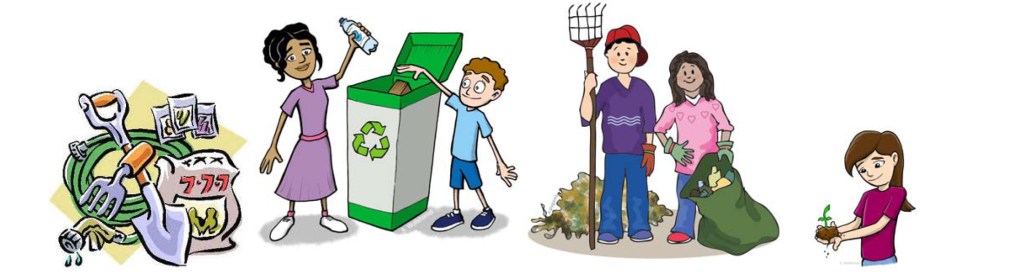
Man is a social being and social service is a must in a system of man-making education, There are so many kinds of social service and students have a lot of work to do in this field. They have some duties to remove illiteracy. They can hold night schools for the illiterate adults and give them lessons on the three R’s. They can remove bad customs and inform the people of the rights and duties. They can clean dirty ponds and maintain hygiene around their area. In times of emergency such as flood, famine and earthquake, they can take an active part in bringing relief to the sufferers like giving them food, clothes, and finding them shelter. In times of normalcy they can organise cultural functions for the poor villagers as we know that poverty is depressing but drudgery is killing but most of the time students waste their time in idle gossip, in roaming and in fruitless work. It is better to utilise the power of youth in socially productive work than to squander our precious time in loitering at the market place or before theatre hall. It is true also that the studies of students will be affected somewhat if they turn their attention to social service. But, on the whole, they will be gainer as social service will promote their fellow-feeling, increase their love for the country and develop their organising capacity.
High schools can deliver social services on campus or refer students to outside agencies for assistance like various NGO’s.
If a student utilizes his time fruitfully and in socially useful work he gets contentment. Contentment is his satisfaction with his position. Students should remember that they are born for the improvement of the society by instilling the spirit of service in them. They can help the mankind in the best possible way.
The value of social service should be taught to students to create inspiration in them. They should be enthused to pay their utmost strength and service to the society to make their existence meaningful.
Students can co-operate with people on matters of public interest such as education, sanitation, trade and commerce and be a part of that so that they can help more and more people.
Students have a spirit to work but the guardians and teacher should guide them in the right way. Social service can be safely managed if they can be guided properly. Our leaders should guide them in the right way.
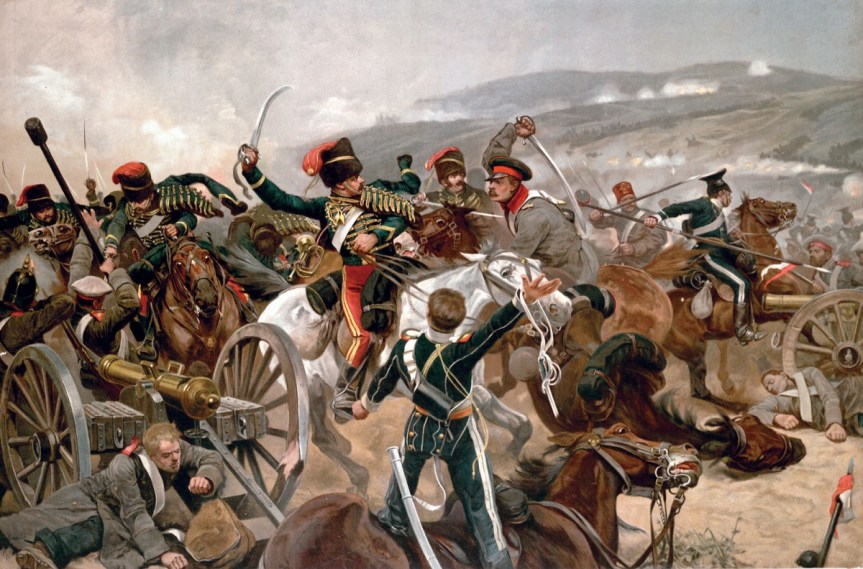
The term ‘Great Game’ was used to describe the rivalry that occurred between the British Empire and the Russian Empire for most of the 19th century and beginning of the 20th century as their spheres of influence in India, Afghanistan and the Tibetan Kingdom moved the two powers closer to one another in South-Central Asia. It also had direct consequences in Persia(Iran) and British India.
History
The Great Game is believed to have begun on 12 January 1830 when Lord Ellenborough, the President of the Board of Control for India, tasked Lord Bentinck, the Governor General, with establishing a new trade route to the Emirate of Bukhara. Britain was fearful of Russia invading India to add to the vast empire that Russia was building. Britain intended to gain control over the Emirate of Afghanistan and make it a protectorate, and to use the Ottoman Empire, the Persian Empire, the Khiva Khanate, and the Emirate of Bukhara as buffer states between both empires. This would have protected India and also key British sea trade routes by stopping the Russian Empire from obtaining a port on the Persian Gulf or the Indian Ocean. Russia proposed Afghanistan to be the neutral, buffer zone. As a result, there was a deep atmosphere of distrust and the talk of war between the two major European Empires. Britain made it a high priority to protect all the approaches to India, getting involved in a geopolitical chess and the “great game” is primarily how the British did this. The British Empire used Afghanistan as a buffer state to protect all approaches to British India from a Russian invasion. British concern about the Russian influence on Afghanistan led to the First Anglo-Afghan War (from 1838 to 1842) and the Second Anglo-Afghan War (from 1878 to 1880). The Third Anglo-Afghan War began May 1919 and lasted for a month. British Empire no longer had influence on Afghanistan’s foreign affairs after an armistice was signed on August 8, 1919.
Wakhan Corridor
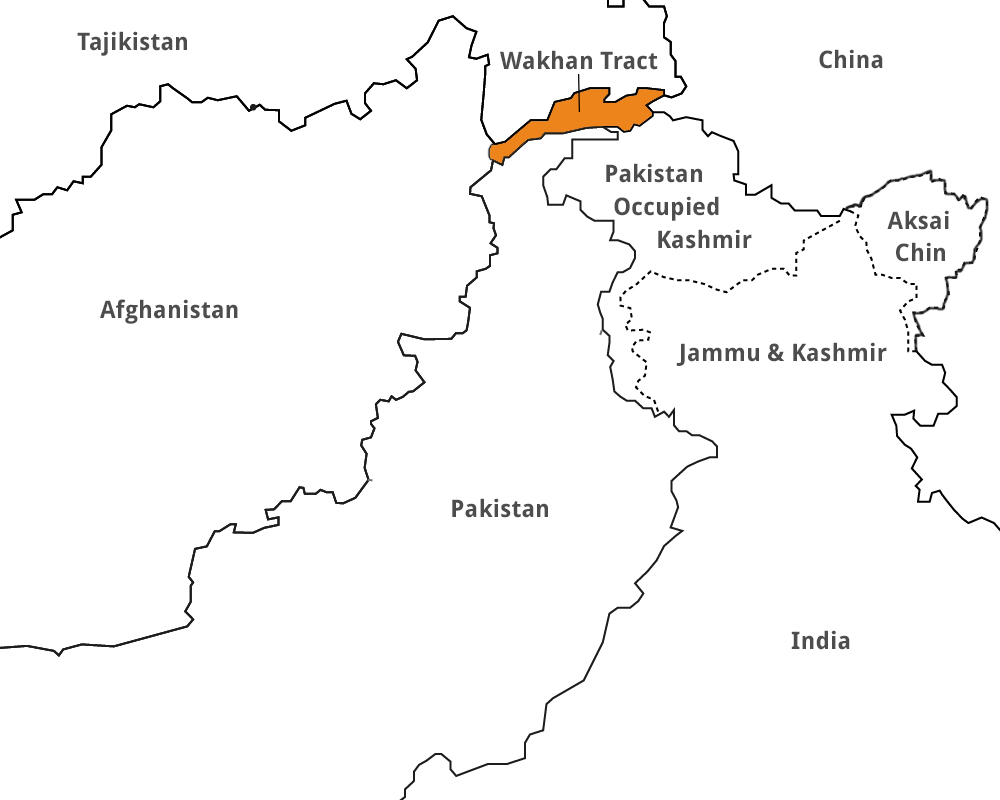
The Geographical effects of the great game are still felt to this day by the formation of the Wakhan corridor, which was formed by an 1893 agreement between the British Empire (British India) and Afghanistan, creating the Durand Line. This narrow strip was to act as a Buffer zone between the Russian and the British Empires, and this geographical anomaly still exists to this day, as part of Afghanistan.
The end of the Great Game
Many Historians consider the end of the Great Game to be the 10 September 1895 signing of the Pamir Boundary Commission protocols and the border between Afghanistan and the Russian empire was defined.
Situated in North Kolkata, in the oldest part of 300 year old city situated on the banks of River Hooghly, is Sonagachi, Asia’s largest red light district whose narrow , rat infested lanes houses around 11, 000 sex workers.
Click on the link to know what are the red light areas.
SONAGACHI in Bengali means TREE OF GOLD. There is a fascinating story behind the origin of its name.
SONAGACHI- a place of SAINT and SIN
Sonagachi is named after a Muslim saint turned dacoit, Sanaullah. The area in olden times was known as the den of notorious dacoit Sanaullah who lived with his mother. After his death, when his mother lamented the loss of her son she heard a voice which said ,” Mother don’t cry, I have now become a Gazi”. Gazi which means a “warrior who help in the spread of Islam” is the title given to the Muslim saints. Thereafter, a mosque was constructed in his rememberance and many people came there for cures and the mosque came to be know as the Dargah of Sanaullah and the area as Sonagachi. This fascinating tale was traced by PT Nair, Kolkata’s “barefoot historian” in his book ‘ A History of Calcutta’s streets’.
Though the transformation from a dacoit to warrior may seem strange but it is pretty normal as there were many Bengali Hindu dacoits who were the devotees of Goddess Kali and a robin hood figure for the people.
Though there is no direct documentary tracing the reasons responsible for the transformation of Sonagachi into a Red light district but some stories blame the neighborhood of the area which was a business one. Sonagachi is in the neighborhood of Chitpur which many centuries back was a business center even before the arrival of the Britishers. Any place with large number of travellers or pilgrims in the British area was bound to have a red light area which housed brothels enclosing many women who were seen as nothing but a toy.
Brothels in those times were known to be owned by the prominent Bengali families . The now decrepit mansions which has suggestive names like “Prem kutir” houses and provides livelihood to thousands of woman living there.
SONAGACHI- where bounts of make up hides the pain
Majority of the sex workers there like any other red light district are trafficked . They were dubbed by husbands , lovers or by the well wishers in the false hope of a better future and “sold” to this area which has painful stories behind every gesture. The 10 by 10 rooms in the brothels provides a perfect balance of the personal + professional lives of the workers. The single bed with condoms stacked beneath the mattress and household utensils underneath the bed is a reminder of the family life for which these places and this profession provides the money for. The glossy make up, flashy lights , scented rooms and loud music is a facade to drown the cries of the children of sex workers and also the horrors faced by the workers.
To us , as the third persons the place may seem like hell , but for some workers it is a place of refugee which accepted and provided shelter to them when nobody else did. A sex worker told her story to Indian Express mentioning how she dreamt to be a teacher in a rural conservative household but since the idea of woman in the professional zone is strictly prohibited in a rural conservative home, she had to give up on her home until she found a “well wisher” who on the pretext of helping her get education sold her to these narrow lanes of Sonagachi , which after all these years are her safe haven.
Women here are scared of love because all they got in the name of love from the men outside is just hurt. Another sex worker recalled her leaving the brothel with the man she loved only to come to know months after being pregnant with his child that he already had two wives and in order to escape the physical torture , she had no where else but the lanes of Sonagachi to return.
The children of these workers have a hard time coming i terms with their mother’s profession. They have only their mother in terms of family , identity of the fathers being unknown . While some children slips into depression and denounce their mothers, the others leave their mother forever when they are able to stand on their feet while some understand the sacrifices she gave in terms of her body, soul and peace to provide for them.
Health concerns of the workers
The local government , a few years back had started the “Sonagachi project” which educates women about the use of condoms necessary to prevent HIV diseases. The result is that today the area as compared to other red light districts has low rate of Hiv.
During the covid lockdown, when there were no customers, local authorities and NGO provided ration here and educated the women about measures to keep themselves save from Covid-19. Authorities also ensured the vaccination of the workers.
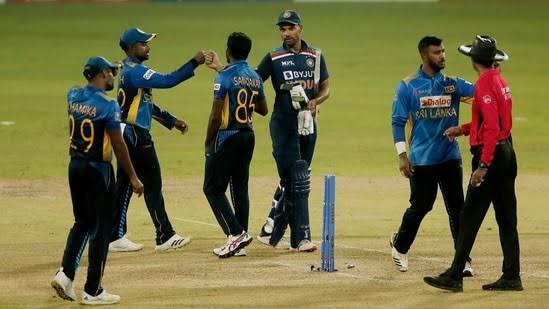
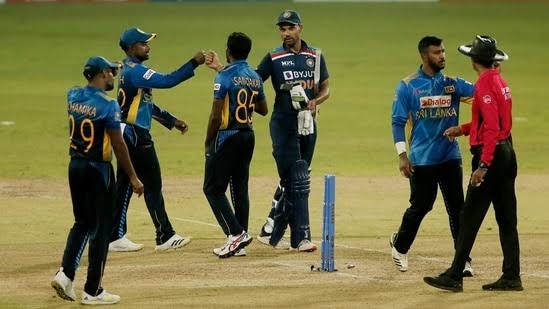
India defeated sri lanka in their first match of the odi series played in Colombo. Indian outplayed the inexperienced Sri-lankan in every aspects of the game.
India leads 1-0 in the 3 match series
Sril Lanka won the toss and opted to bat first and things were going there way until chahal stricked and removed Fernando. Contributions from bhanuka 27 of 44, rajpaksa 24 of 22, Dhananjay de Silva 14(27), assalanka 38(65), Shanaka 39 (50), Chanika karunatana and chameera scored 40 runs in last 3 overs to get teams total to 263.
Bhubaneshwar kumar looked off colour today and went wicketless with figure 9-63-0,Deepak chahar took 2 wickets and looked in great touch. Spin duo of kulcha shared 4 wickets between them. While Pandya brothers shared 1 wickets each and Kurnal Pandya was most economical with figure 10-1-26-1.
Chasing down the target of 263, P shaw and captain Dhawan came to crease. P shaw smacked the Lankans all over the ground and was progressing towards half century before falling to de selva at long-off at 43(24).
Then, debutant Ishan kishan came and smacked the lankans all over the ground and scored half century. And he edged one delivery to the wicketkeeper and scored 59(42).
Next,Manish Pandey came to crease and with captain he stitched a partnership of 74. Throughout his innings of 26(40),he looked uncomfortable and except few strokes,he was in a hurry to finish the innings.Then,another debutant surya Kumar Yadav joined captain in middle and finished the game. Dhawan carried his bat with an unbeaten 86*(95) and sky scored quickfire 31*(20).
Dhananjay de selva bagged 2 wickets and lakshan Sandakan took 1 wicket. india leads the series 1 -0 , Lankan side will be looking to bounce back while indian side will be looking to continue their winning streak.
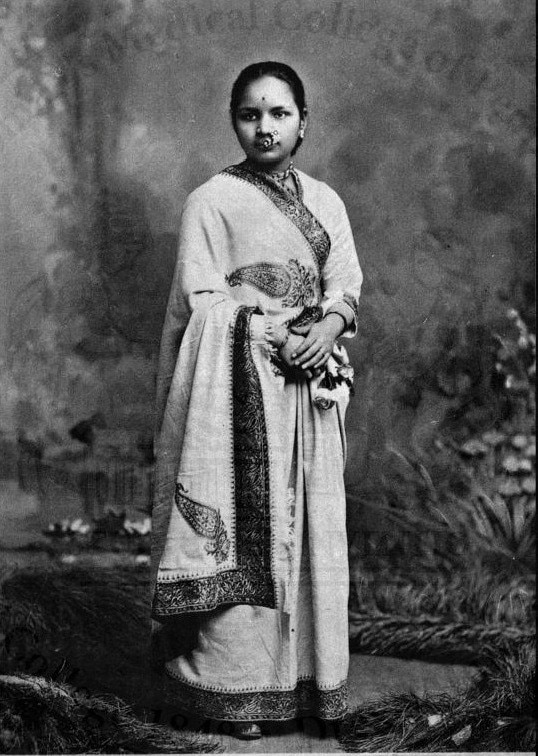
Today’s google doodle is dedicated to Kadambini Ganguly, an inspiring lady who was born in Bhagalpur, Bihar and wrote history by achieving exceptional heights during her lifetime.
Google has already honoured her by dedicating the doodle on her 160th birth anniversary, born today in the year 1861. She belonged to an upper-class Bengali family and her father Braja Kishore Basu who was a Brahmo reformer and founder of Bhagalpur Mahila Samiti. She was born in an era when, educating a girl was far beyond imagination of people but, opposite to that her father encouraged her to pursue her education, after completing her schooling. she wanted to pursue her career in medicine and she cracked the entrance exam of University of Calcutta, she got admission in the university and became first women to do so but, after facing lot of struggles and denial from the society. At every stage of her life, she has to face a lot of obstacles mostly from society to fulfil her dreams and ambition. She later went abroad and received a triple diploma from training in Dublin, Glasgow and Edinburgh, adding another feather to the cap she became the first women to achieve such a qualification. On her return to India, she served great ladies like- Florene nightingale, Anne Beasant and other people. By this time, she got recognised for her work, a medical professional who was serving her nation. In the year 1890, she gave a lecture at INC which is again something exceptional that she did at that time
Later, she started working on improving the condition of the society, where educating a girl child and letting her pursue her dreams was considered unacceptable. She was always supported by her husband Dwarkanath Ganguliyand along with him she raised her voice against the discrimination between a male and female that she herself faced at the university, her voice turned out to be so impactful that in 1915 the University of Calcutta made the decision to open the university for female candidates as well.
As a woman medical practitioner, she was not only dedicated to her work but also had a vision to bring change in the society by setting an example since her schooling to her triple diploma, an inspirational and passionate women wo created history back then. Today, it’s her 160 th birth anniversary and her story makes us remember the contribution of all those women who worked really hard and stood up against the wrong opinion and criticism of society to become what they wanted to be. All the stories have one common learning that there is nothing that a women can not achieve just that she has to have that courage to step up herself and cross the boundaries that the society sets up by the narrow perspective they have in their mind. By proving all the critics wrong, and successfully reaching at a level that is beyond the imagination of an orthodox mentality. Today, in many countries women are in a much better situation but, there is still so much that has to be changed.
Celebrities can influence the taste, preference and beliefs of the public. They can make powerful Influence in the minds of consumers about the product and services which they endorse. A popular face can communicate more than any advertisement using a model. It will lead to mass brand sale. Companies use stars to endorse any products and services like food, soft drinks, soaps, perfumes, hair oil, cosmetics, home appliances, mobile networks, mobile phones, electronic equipment, health products, automobile etc. Even political parties are influenced by the charisma of stars because of the magnetism of stars in the country. In the recent parliament election major political parties fielded a record number of stars from different constituencies around the country. South Indian star Nagma, Innocent and Suresh Gopi from Malayalam industry, Anitha Prathap from media competed in election.
Factors of successful celebrity branding
1) Consistency and long-term Commitment
As with branding, companies should try to maintain consistency between the endorser and the brand to establish a strong personality and identity. More importantly, companies should view celebrity endorsements as long-term strategic decisions affecting the brand. A global must respect local needs, wants, and tastes while endorsing.
2) Prerequisites to Selecting Celebrities
Before signing on celebrities to endorse their brands, companies need to ensure that they meet three basic prerequisites, namely the endorser should be attractive, have a positive image in society, and be perceived as having the necessary knowledge (although it might be difficult for a celebrity to meet all three prerequisites.
3) Celebrity-Brand match
Companies should ensure a match between the brand being endorsed and the endorser so that the endorsements are able to strongly influence the thought process of consumers and create a positive perception of the brand. Tiger Woods endorsing the Buick brand makes no sense at all. There is just no believability that Tiger is dying to drive a Buick. And without believability celebrity endorsement is worthless.
4) Constant monitoring
Companies should monitor the behavior, conduct and public image of the endorser continuously to minimize any potential negative publicity.
5) Selecting Unique Endorsers
Great brands represent great ideas. These brands express the uniqueness of position to all internal and external audiences. Companies should try to bring on board those celebrities who do not endorse competitors’ products or other quite different products, so that there is a clear transfer of personality and identity between the endorser and the brand. The controversy related to the endorser’s personal or professional life must hamper the associated brand image. Kobe Bryant’s family-friendly endorsement deals with Nutella and McDonald’s came to a quick end after he was accused of rape.
6) Timing
As celebrities command a high price tag, companies should be on the constant lookout for emerging celebrities who show some promise and potential and sign them on in their formative years.
The benefits of celebrity branding
Attracts the attention: Celebrity ensures attention by breaking the clutter of ads and makes the brand more noticeable.
Establishes credibility: celebrities create a sense of trust for the brand among target audience. It will be more helpful to new products.
Associative benefit: When the celebrity prefers the product it helps to create a persuasion to the target audience. It creates a feeling that as the celebrity benefits from the brand the consumer will also benefit.
Psychographic connect: Stars are loved and respected by the public, so the advertisers use stars to capitalize the feeling to turn the fans towards their brand.
Demographic connect: Stars represent different demographic segments like age, gender, class, geography etc.
Mass Appeal: Stars have universal appeal can make interest among these masses.
Dinnerware is the allure of the dining table. It settles the right tone of the dinner. Whether it is an informal dinner with your friends or a formal with your boss and colleagues or maybe even your regular dinner at home with your family. Different types of dinnerware are used for different purposes of dinner gatherings. If you have doubts about how to choose dinnerware, you have come to the right place. This right here is the proper guide for choosing dinnerware for the perfect setting.
Dinnerware is not just for style, it should be useful as well. It is a daily use item and should be durable for a long time. Now, how do you choose the right type of dinnerware for all different purposes? Don’t know? Well, let us help you with that. Come on, let’s dive into the world of dinnerwares.
Before searching for anything else like the style, design, and colors, of the dinnerware set, look for something that will be durable and will not embarrass you in front of your guests. Some of the famous materials used for dinnerware sets are Bone China, Porcelain, Earthenware, Ceramic, and many more. Read on to have a detailed look at the types of materials.
Bone China
Bone China is the perfect type of dinnerware for both daily use and formal dinners. It is durable, stylish, comes in many designs and colors. It is generally thin, lightweight, and chip-resistant. In addition to its qualities, it is microwave safe and can be easily washed in a dishwasher. It has an elegant appearance and is better than fine china.
Earthenware
One of the oldest types of dinnerware sets that gives a casual appeal. Earthenware gives slight durability and adds value to the dinner set. It also provides a significant weight to the dishes. But make sure you avoid high temperature changes that may damage the look of the material. Keep the microwave at low temperature settings while using earthenware. It is affordable but not as suitable for daily use as others.
Porcelain
Porcelain is the most common type of dinnerware material and the best for daily use purposes. This amazing type of material is dishwasher, microwave, and oven safe. It provides wonderful durability and appealing designs. Porcelain has a non-porous surface that gives an amazing texture. It is difficult to manufacture. But it is less expensive than Bone China and is easily affordable.
Ceramic
Ceramic is specifically not a type of material but it is considered as a class containing different types of china and porcelain. It is generally white in appearance but ranges in color from white to blue. White also has many different shades in ceramic, like off-white and others.
Stoneware is made from the same materials as porcelain but in different ratios. This makes it more heavy weight and sometimes it has a texture. This material may have speckles on it which gives a beautiful look to the plates and dishes. It generally comes with an off-white body. It is durable and user friendly. It is good for regular use as well as dinner parties. But they need to be kept at normal temperatures and away from both freezing or very high temperatures.
Melamine
Melamine is used for outdoor purposes as it is unbreakable. It is hard to break or chip. It is dishwasher safe but unfortunately not microwave or oven safe.
Sizes of Dinnerware sets
Now after getting to know about the materials of dinnerwares, next important point is to decide what size you have in mind. Is it a proper dinner set or just some plates for regular use? Let’s have a look.
Formal Dinnerware
Formal dinnerware sets mostly contain all the required dishes for a person to have a great dinner easily. It may also contain soup bowls. It contains full plates, quarter plates with serving spoons, and small spoons for eating.
Open stock
Open stock is a piece by piece sold dinnerware set. It can include dishes of your own choice. You are free to add items of your requirement like plates, spoons, or some dishes. You can mix and match with your collection at home if you need some white plates to go with your set, you can easily find them. If you don’t want the whole dinner set with things you don’t require, then you can go for open stock and select the items as per your requirements.
You can collect single pieces of different sizes or designs and colors according to what you have in mind. Choose whether you want soup bowls or not. Which color will go with your existing collection at home? Which design matches the tone for your dinner party? With open stock, you can customize your cabinet of dinnerware set with beautiful designs, shapes, and colors of the dishes and bowls. If you don’t want the unnecessary saucers, you can remove them, or maybe you just need one serving bowl, it’s your wish. Pick your item and that’s it.
Other Points to Keep in Mind While Buying Dinnerware
Choose plates and bowls according to the size of your cupboards and dishwasher. It will cause a problem for you if the plates are too wide or big.
Dinnerware makes the dining table look presentable if it is glazed or white with a beautifully designed plate set. So choose your set of designs and colors according to your choice.
Don’t shy away when buying a good dinnerware set. It will be useful in the long run. Don’t hold back if the set is a bit expensive. Make sure to buy enough for hosting a huge gathering. You don’t know when you might have to celebrate!
Look for thinner rim plates as they offer a larger plate area for use as compared to the ones with broad rims. Or maybe you want plates with flat surfaces.
You can decide whether to buy large cereal bowls, that can be used for many purposes, or you want shallow soup bowls. Commonly round bottom bowls are preferred over flat ones.
If you are planning for a formal meal, you may want cups and saucers. They give an old and classic look to the setting.
These were all the required things you need to keep in mind while choosing your set of dinnerware. Enjoy shopping! We have made sure you have the answer to your query that is, ‘how to choose dinnerware?’ Remember these things and you are ready to start your collection of perfect dinnerware sets.
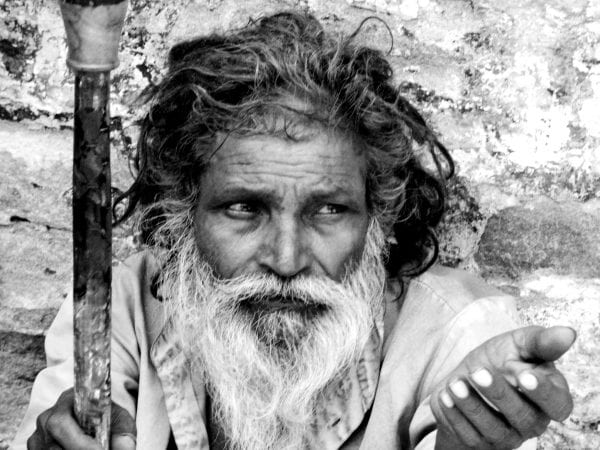
At a tender age when children should study in schools, play with toys and enjoy their leisure, many of them are seen on roads seeking alms to make both ends meet due to selfish motives of some miscreants that make them beg under extreme conditions. Masked perpetrators of such deeds are making it a huge business by remaining behind the scenes. The plight of such children is really heart-wrenching. Several initiatives are taken by various institutions and NGOs to check it, but to no avail. Not because they are not true to the work they are doing, but because people like us are not ready to accept that by giving them money we are encouraging begging. The situation is not better throughout the nation as these beggars can be seen begging at traffic intersections, market places, religious places and outside educational institutions. Many of them are mowed down by speeding vehicles. Such children sometimes take to stealing and snatchings. They also disrupt the traffic. There is a need to unmask those elements who are behind the menace. Don’t encourage begging, instead help them by instilling positive ideas and educating them. JASPREET SINGH, PATIALA, editorial@tribune.com
A Street Beggar Begging has been declared an offense in independent India, but it has really no real impact. On almost every red light’, there are number of beggars who beg in the name of mercy or religion. Initially, people used to beg only in desperate circumstances but now-a-days, it has become a profession. Those who can make easy money by begging. do not want to work. And at times, they can earn more than an honest worker. At every crossing, a woman carrying a child, a handicap person. young children asking for alms for food or in the name of God, IS a common sight. They can all work to earn their livelihood, even the handicapped, because all self-respecting people try to stand on their own feet. Of course, crippled people should be helped, but not by giving them alms. Begging cannot be justified at any cost. People use different innovative ideas for begging. Some form singing parties, some wear saffron clothes and carry a bowl, others beg in the name of charitable institutions. Some try to rouse sympathy by carrying small, crying, hungry infants but while giving aims to any beggar, one should always remember that one is not helping the beggar in any way by giving them money but is only satisfying his ego of being a kind and benevolent man. Begging is a stigma on the name of any nation and charity should be given only to charitable institution so that it reaches those who really need them.
Hello guys! Have you ever watched the movie “smurfs”. If not definitely watch it it’s a fun film.
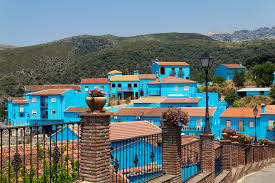
But this just an animated movie but there exists a real smurf village in this world!
This village is located in juzcar ,spain and can be easily located ,you want to know why? Because it's a blue-tiful village.
From tyla.com
Although the smurfs are not present in this village and is a normal village like any other then why do you think it is called a smurf village .
It is called because the whole village painted their houses in blue dedicating it to the film smurfs.
From ladbible.com
They even have statues located here and there and visiting this “blue-tiful” city you enter into a whole new world.
Like every other village everyone leads their daily lives normally but painting a whole village is something to talk about.
This painting of the whole village in blue colour was something that is intiated to promote the movie "Smurfs " which can captivate people by thinking out of the box .
From:veebrant.com
They chose this village juzcar because they are famous for mushrooms and Smurfs love and live in mushrooms so this place is perfect as this city not only promotes the movie but also can be related to the movie.
This started attracting tourists ,travellers,celebrities to this city ,this place became a hub for all the smurf fandoms to gather .
Every wall has a smurf painting on it them and evey corner of the city is painted in blue and an astonishing amout of effort has been put in to this.
From hlc edu.in
Although the sponsors offered to paint back the village into white but the villagers liked as it is at present now and declined their offer .
This place gives off an relaxing vibe where one can visit it to just walk through the village and experience the refreshing atmosphere and appreciate the village for its simplicity.
This is an age of advertisement, nay aggressive advertisement. There is virtually an advertisement invasion. It is all over the country influencing our ideas, lifestyles and decisions. There are more advertisements in the newspapers than the news and articles. On the small screen of television the programmes are heavily punctuated with advertisements. They are there on the silver screen of the cinema in large numbers. They can be seen on the walls, buildings, scaffolds, electric and telephone poles, trucks, buses airports and even in such places as cremation and burial grounds. Big, colourful and attractive advertisement balloons rise and float high in the sky. There are costly but very attractive laser advertisements. It has become a very big industry and there are huge profits and volumes. Corporate groups, business houses, film makers, shopkeepers, traders etc spend crores and crores on advertising. A great part of the annual budget of these people is spent on it.
Advertisements serve a great purpose. They promote sales, increase businesses and profits as nothing else can do. They catch the eyes, hearts and minds of the viewers and turn them into instant buyers. They appeal to their imagination, curiosity and purchasing urges. People are tempted to buy what they see advertised. Then there is pressure from ladies and children in the family. These pressures turn hesitation into immediate purchasing decisions even when the things are actually not needed. People buy on instalments, on credit or by borrowing money, such is the power of attractive advertisements. During festivals and social occasions their psychological appeal is at its best. They create a mood to buy and spend money. Then there are gift coupons, hampers, discounts, annual sales etc which the people find very hard to resist. Advertisements have ushered in a wave of consumerism in white, brown and other goods besides clothes and commodities.
Then there are big exhibitions in five star hotels, halls and sprawling grounds. Customers throng the exhibitions and enjoy themselves with their members of the family. When an environment of picnic prevails there, one can’t be easily on a spending spree. There is home delivery, buy now pay later offers. Such an onslaught can hardly be withstood. Advertisements also offer better products at reasonable rates. There is wider choice and vast range of things to choose from. People want value for their money and advertisements give them this opportunity. There is cheating as well but it soon exposed and cannot be repeated. In this age of global economy, international integration and fierce competition only the fittest can survive.
An advertisement to be successful, needs to be creative, novel, appealing and result oriented. Advertisements are prepared by experts by spending lakhs of rupees and keeping the target buyers in mind. Publicity aims at promoting sales by underlining certain unique qualities of a product and commodity. “Out of sight, out of mind” is a very old and time tested saying. It applies so well in the world of business, trade and commerce that nobody can ignore it. The more people see and listen about a product, the more they are sure to buy it.
Advertisements help in introducing new products as well as increasing the sales of established products. Advertisements create brand image and once a brand is established a commodity becomes a household word. Established brands have very strong appeal. And once one starts liking a particular brand, he or she sticks to it lifelong. It becomes a kind of addiction and hypnotism. Advertisements have revolutionized the business world.
But sometimes advertisements are really very dangerous and cause a lot of harm particularly to children and youngsters. They try to imitate dangerous advertisements seen on television, silver screen or in a magazine. Such visuals and advertisements should be banned and there should be heavy penalty on those advertisements which cause loss of life or injury among children.
Three athletes have tested positive for COVID-19, two of them South African football players staying at the Olympic Village. Organising Committee announced on Sunday adding to the scepticism that surrounds the troubled event slated to open on July 23. It is the first case of athletes staying at the village catching the infection. Their identities were not yet revealed by the organizers but the South African Football Association issued a statement to make that information clear.
“Three members from Team SA’s men’s under 23 football team have produced positive tests for Covid-19 and are in isolation in the Tokyo 2020 isolation facility,” the South African Football Association (SAFA) stated.
“The three members are players Thabiso Monyane and Kamohelo Mahlatsi and video analyst Mario Masha, who produced a positive result in the latest round of daily sputum (saliva) testing,” South African Football Association (SAFA) stated.
The third infected athlete is staying at a designated Games hotel and his/her identity is not yet known.
“A fourth Team SA member, Sevens rugby coach Neil Powell, has also produced a positive result and has been admitted to an isolation facility in Kagashimo where the Sevens squad are currently in at a pre-
Games training camp,” SAFA stated.
The total number of Games-related COVID cases have now risen to 55 as per the OC records. “When there is a positive COVID-19 case- it means action. There is a clear procedure to identify close contacts. A case is not just data in a spread sheet but leads to action, including follow-up testing,” International Olympic Committee’s (IOC) Games Executive Director Christrophe Dubi stated.
A total of 10 cases were detected on the day, including five “Games concerned personnel”, one contractor and a journalist according to the COVID-19 positive list uploaded by the OC.
The Olympic Village on Tokyo Bay will house 11,000 athletes and thousands of support staff.
A whooping 7.9 billion people, 8.7 million discovered eukaryotic species and an estimated 1 trillion microbes- How did it all came into being? How did our Earth or even better, the solar system or the whole universe came into being?
So, it all began about 13.8 billion years ago. There existed a single point, a minute, hot and really dense point which violently exploded-‘The Big Bang’, and it is how everything came into being- Matter, Energy space, universe, stars, solar system, me, you-everything. After the explosion took place, it expanded into what we today call the universe. And, what’s more interesting is the fact that it is still expanding, and this is how the scientists came to believe that it all began with a big bang.
Scientists divide the period after the big bang into 2 era-
Radiation era
Matter era
Radiation era
The period between 10^(-43) seconds (after the explosion took place)-the Planck era(here, the current laws of physics do not apply), to about 30,000 years after the big bang is referred to as the radiation era. During this period, the temperature of the atmosphere was soo high that there was no distinction between matter and radiation ,or even better, no matter existed.
It is divided into 7 era or epoch-
Grand unification epoch- Named for the unification of 3 grand forces of nature- Electro-magnetic forces, Weak forces, Strong nuclear forces. With a temperature greater than 1029 K, it began 10−43 s after the big bang. At the end of this epoch, the strong nuclear force broke away from the other two.
Inflationary epoch- With a temperature greater than 1032 K, it began 10−36 s after the big bang. As the name suggests, the universe rapidly expanded in this epoch. The universe, ta this time had electrons, quarks and antiquarks.
Electroweak epoch- Here, now all the 4 forces of nature have split off. Temperature- 10^20 K and time after big bang- 10^(-32)s.
Quark epoch- Temperature here is 10^16K and 10^-12 s have passed since the big bang. All of the ingredients required to form subatomic particles were present but the universe still was too hot and dense.
Hadron Epoch- Temperature- 10^10 K and Temperature-10^-6 s. The universe has not finally cooled down enough for subatomic particles to form and hence, quarks bind to form protons and neutrons.
Lepton epoch- Temperature- 10^ 12 K and finally, about1 sec have passed since the big bang.
Nuclear epoch- Temperature-10^9 K and 100 s approximately have passed since the big bang.
In these last two epoch, when the universe has cooled down quite a lot, the protons and neutrons fuse together to form the very first chemical elements- Hydrogen and Helium. And now that our universe is capable of forming elements, it brings us to the end of radiation era and the matter era begins.
Matter Era
Matter era includes 3 epoch that spread over billions of years and include the formation of our galaxy, solar system and even the present day.
Atomic epoch- With the temperature of 3000 K and time after big bang- 50,000 years, this epic marks the beginning of attachment of electrons to nuclei. This process is known as recombination.
Galactic epoch- Now, 200 million years have passed since the formation of our universe. With the ability of universe to now form Hydrogen and Helium molecules, the universe is dotted with atomic clouds. Within the clouds, due to gravity, clusters were formed which later led to the formation of galaxies.
Stellar epoch- 3 billion years have now passed. Within those clusters of clouds, now stars will be formed. Stars begin their lives as proto-stars. These are formed as a result of gravitational forces between particles of dust and gas and heat is generated due to friction and collision. When the proto-star becomes extremely hot, the process of thermonuclear fusion starts taking place. This is how stars generate heat and electricity. This heat within the clouds convert the already exiting elements into all others that are currently known to humankind. When stars burn themselves and are destroyed in explosion know as supernova, it destabilizes the heat cloud, which then begins to rearrange itself in the shape of a flattened disc. At the center a proto-star forms (eg.- our sun). The clumps of dust are flash heated and form chrondules that later from planetesimals by cohesion. These planetesimals then, later accrete to form what we call today as planets.
And this is how our solar system was formed about 4.5 billion years ago. It is located in the Milky Way galaxy’s Orion Star Cluster and has about 8 planets with a total of 63 moons. The inner 4 planets (also known as terrestrial planets) are separated form the outer 4(also known as jovian planets) by a belt of asteroids. Terrestrial planets are known as such because they are made of rocky material, have solid surface, do nor have rings and are relatively small. Earth, among these, is the only one to have a moon.
The jovian planets, on the other hand, have multiple moons, support ring system, have no solid surface and are immense in size. The Oort Cloud, a collection of icy debris, marks the edge of our solar system as the gravitational and physical influence of sun diminishes .
This is how our solar system and our Earth were formed. Now, can our solar system end? If yes, then how and by when? It’s a question for a later time.
Environmental legislation are often defined as, a set of laws and regulations which are aimed toward protecting the environment from harmful actions. In both the international commitments and constitutional framework of India, the need for protection and conservation of environment is reflected.
Constitutional Provisions
By the Constitution (Forty-Second Amendment) Act, 1976 , Article 48A was added as a part of Directive Principles of State Policy and Article 51A as a fundamental duty of every citizen of India.
Article 51A under Part IV A of the Indian constituition talks about the 11 fundamental duties that are expected to be performed by the citizens of India. One of these is to protect and improve the natural environment including forests, lakes, rivers and wildlife, and to have compassion for living creatures. Furthermore, Article 48 A, of the Directive Principles of State Policy (DPSP) enumerated in Part IV of the Indian Constitution says that the State shall aspire to protect and improve the environment and to conserve the forests and wildlife of the country.
Some of International Conventions for Environment Protection to which India is a Signatory :
Stockholm Convention
The objective of the convention is to target additional POPs for action, supporting safer alternatives, and make a POPs-free future. It calls to ban nine of the dirty dozen chemicals (key POPs), limit the use of DDT to malaria control. As per Article 25(4), India ratified the Convention in 2006.
Montreal Protocol 1987
The Montreal Protocol was negotiated and signed by 197 parties in 1987 with the aim to control the consumption and production of chlorofluorocarbons (CFCs) which is responsible for Ozone Layer depletion.
The adoption of the 2016 Kigali Amendment to the Montreal Protocol is projected to reduce future global average warming in 2100 due to hydrofluorocarbons (HFCs) from a baseline of 0.3–0.5°C to less than 0.1°C.
United Nations Framework Convention on climate change (UNFCCC)
It was signed in 1992 at the United Nations Conference on Environment and Development ( Earth Summit, the Rio Summit or the Rio Conference). The parties to the convention meet annually at the Conference of the Parties (COP) to review the progress under the convention. It aims to achieve stabilization concentration of greenhouse gases in the atmosphere at a certain level that would prevent the climate.
United Nations Convention to Combat Desertification (UNCCD)
It was established in 1994 with the aim to take care of and restore land and soil productivity, and to minimise impact of drought.
The Hindu philosophy is categorized into six Orthodox and three Heterodox philosophies. The classification is based on the acceptance of the authority of the Vedas. The Orthodox school of philosophy also called the Aastika School believes in the authority of Vedas, while the Heterodox school of philosophy, popularly known as Nastika School rejects the principle of authority of Vedas. While the western schools of thoughts came up one after the other, with the only aim of destructing the existing thought process and establishing a new totally different way of thinking. In other words, the western schools were never complimentary to each other while the Indian schools sprouted and nurtured giving each other a stand to hold on. Rasa is generally regarded as the corner stone of Indian Aesthetics. Rasa implies aesthetic emotion. The earliest work of Indian aesthetics is Bharatha’s ‘Natya Sastra’. It consists of a few instructions to the actors about present plays. In the course of discussion, Bharatha remarks that the aim of presenting a play is to evoke Rasa. Rasa, according to him, is the product of the combination of the Vibhavas, Anubhavas and the Vyabhicharibhavas. While the western philosophy concentrated on authors intention, structure, semantics, semiology and other highly technical aspects. Indian philosophy concentrates on the universalization of poetics. Universalization of poetic art is of two kinds. First of all, the aesthetic composition presents before our minds an aesthetic situation and an emotion, free from its local character. Secondly, the expression of this artistic enlightenment has a universal character in its manifestation in different minds. In the next stage this presented whole, becomes mingled with various types of subconscious and unconscious feelings which are lying dormant in the minds of various people. But we do not find any trace of any local character or colour with the real objective world around it. It is therefore, called transcendental, i.e., Alaukika or Camatkara. While the western philosophy school almost dissipates this possibility by ensuring such elements that make it connect to surroundings of the work is not done. As per the Indian aesthetics, the beauty of literature is related to the synthesis of law and liberty. A literary work is presented in the medium of language. Hence it is certainly subjected to the rule of language. However, the beauty of a work of art is beyond these considerations. In fact, the laws are the wings of literature with which it soars high in the horizon of meaning. This synthesis of law and liberty is achieved by the judicious use of the elements of suggestion or Vyanjana. The concept of Vyanjana explains how meaning expands far beyond the literal sense. The language of poetry is different from the language of ordinary discourse. It is characterized by ‘suppression in expression’. Beauty in literature is best generated by the technique of Vyanjana or the suggested meaning. In the words of Kuntaka, Vakrokti or indirect expression generates beauty in poetry. According to Anandavardhana, the soul of poetry is suggestion. This concept is encapsulated in his maxim ‘Kavyasyatma Dhvani’. Words have different orders of signatory power. They have primary or literal meaning as well as contextual and suggested meaning. The primary meaning is referred to as ‘Abidha’ and the contextual meaning is called ‘Lakshnna’. Vyanjana is the suggested meaning. Concealment is the essence of Vyanjana. Poetry generates beauty by suppression in expression. Concealment arouses curiosity and the urge to unravel which leads to conquest. In poetry, only the implicit, indirect and suggested language is capable of producing beauty. This suggested language is called Vakrokti. Vakroti presents before the Sahridaya an indeterminate range of meaning to be explored. The greatness of poet lies in his mastery over the technique of suggestion. A sentence may express something over and above the meaning of the words that constitute the sentence. The relation between the various words is unexpressed. This relation is referred to as Samsarga by the Naiyayikas of ancient India. Samsarga is Vakyartha. How Samsarga is expressed is not satisfactorily explained. In sentences, there is a juxtaposition of words. The element of the relation between words is conveyed by suppression. The essential part of every judgement is conveyed by suppression. This shows how the Indian schools of thought were already in an elevated state way before the introduction of western philosophical schools. The absence of manuscripts and the lack of ability to translate the ancient texts has truly hindered the growth of Indian philosophy into a universally recognized one.
Numerous armed conflicts are currently taking place around the globe, cost of which goes beyond the numbers deaths but it also includes the victims of the consequences of war.The number of indirect victims of armed conflicts is much higher than that of direct deaths. Indirect death is mainly caused by some preventable infectious diseases, undernourishment , and pregnancy-related conditions. In addition to deaths, armed conflicts also lead to undernourishment, increased infant mortality rates, forced migration, refugees, destruction of infrastructure.
International armed conflict, internationalized armed conflict, and non-international armed conflict are the three types of conflicts recognized by International humanitarian law.
Human rights
“Human rights” can be defined as rights of all human beings, regardless of nationality, residence, gender, ethnic origin, race, religion, language or any other status. Everyone is equally entitled to their human rights without any discrimination. This belief is fairly new and it stems from an evolution of the reflection of human dignity over the past centuries.
After World War II, stronger ideas of human rights emerged . People wanted to make sure that they never again be unjustly denied freedom, food, and shelter. The calls for human rights standards to protect citizens from abuses by their governments, came from different parts of the world. These voices played an important role in the San Francisco meeting that drafted the United Nations Charter in 1945. United Nations was then established with the primary goal of maintaining international peace and preventing conflict.
International humanitarian law
Human rights during armed conflicts are infringed upon the most. Therefore, over the years, there has been much focus on the formulation of mechanism aimed at alleviating human suffering armed conflicts. International law of armed conflicts, of which humanitarian law is a part, tries to provide protection to victims of war and crimes.











 Eduindex
You must be logged in to post a comment.