Police said four people had been shot but there was “no ongoing threat”, without clarifying the condition of the gunshot victims.
Washington, United States:
Four people were shot outside a baseball stadium crowded with thousands of spectators in the US capital on Saturday, causing the game to be abruptly halted as spectators were ushered out.
Police said four people had been shot but there was “no ongoing threat”, without clarifying the condition of the gunshot victims.
Police tweeted officers were “responding to a shooting… in which two people where shot outside of Nationals Park,” in the Navy Yard neighborhood of southern Washington, DC.
Shortly after, it tweeted that “two additional victims associated with this incident walked into area hospitals for treatment of gunshot wounds.
“This is currently an active investigation and it appears there is no ongoing threat at this time,” it added.
Two AFP journalists who were at the game said some spectators had rushed for the exits after hearing the gunshots, while others remained in their seats at the announcer’s initial urging.
Players rushed off the field and the game was halted after what sounded like a dozen or more shots were heard from outside the stadium.
The lights of multiple police cars lit up the street and sirens could be heard, as the crowd attending the game between the Washington Nationals and the San Diego Padres was then asked to leave the stadium.
Karma and Reincarnation are one of the central concepts of Hinduism. Although it is also a concept that is explored by many Western Philosophies. This article however is restricted to the concept that is discussed in the Indian Scriptures and Indian Philosophies. Karma and re-birth also comprise the core of Indian Philosophies as it is through this that the difficulties in overcoming suffering is measured. The path that needs to be followed in order to attain liberation or freedom from bondage is often by annihilating Karma thereby annihilating Re-birth.
The knowledge about laws of Karma and reincarnation is believed to be first revealed by God to sages who underwent deep and focused meditations. Thus they are considered to be direct revelations by God made to the sages (rishis)
The concept of Karma is simple. Action and Reaction. According to Karma every action we do will have an equal reaction. Therefore if we do good things we may get good in return and if we do bad things then we may get bad returns. However, this Karma is not limited to present human life but also extends itself to upcoming lives of humans. If the deeds that we did in this life were full of evil then our next life will also be full of suffering.
Reincarnation comes as a concept that mainly concerns soul. According to Hinduism soul is immortal. It never dies. It just jumps from one body to another. And this cycle of human birth, death and rebirth (jumping from body to body) is called samsara or reincarnation.
The reason why reincarnation happens is because our soul is on a journey to maturation. In order to evolve to its maturity and finally become one with God, the soul has to go through this cycle of reincarnation until a certain number of times. It is said that when a person dies, the soul moves to a Second Realm where it temporarily stays in some other kind of body and when the time comes for rebirth, the soul moves to earthland and again possess a physical body/form. How the next life will be and how many times one will reincarnate majorly depends on our Karmic Deeds done in this life. It is also said that when a soul completes its number of physical rebirths and reaches maturation it further undergoes a cycle of inner development which eventually makes the soul to dissolve and become one with God.
All of these concepts are deeply explored in the Vedas and Upanishads. Most of the orthodox schools that has Vedas as their foundations also expound upon this concept with their own twists and philosophies. In some philosophy the concept of Karma and Re-birth is accepted however none of them accept God as the being who is responsible for Re-birth or Karma in any way. Philosophies such as Buddhism and Jainism do not accept the existence of God however they do believe in birth and re-birth.
Hence, the concept is widely explored in almost every Indian Philosophy whether they agree with it or disagree with it.
Want to enjoy Japanese comics for free of cost, then you are at the right place. MangaStream is a free comic database website which provides free Japanese comics for its users to read which is a grand gift for the comics lovers. Reason for Finding Alternatives of MangaStream :-
After fulfilling all the desires, needs and working up to the mark for over a decade, MangaStream has entirely gone down and is not available and accessible for the users now. Some sources are telling that it is shut down as it was involved in providing illegal content. The other reason of its shut down may be that MangaStream wants to promote reading content from legal sources only.
ALTERNATIVES TO MangaStream :-
MangaOwl :- It has gained enormous popularity among the users as it has released various episodes of comics before they were officially released. It has a nice user-friendly interface and users find no trouble in finding their favourite comics. It is updated on regular basis, synthesized and content is translated with high-quality images.
MangaFreak :-MangaFreak provides mangas free to read and download. However, those annoying ads and pop-ups is still an issue to address. Its best advantage is that users can track their history on this website. This feature is helpful to find previously read mangas.
MangaReborn :- MangaReborn is a brilliant online manga comics reading website in terms of its user-interface. Filters option on basis of latest manga, new manga, completed manga, etc. is also available for the users.
MangaKakalot :-MangaKakalot comes with a simple but interactive user-interface which can be easy used by children also. Search option on the basis of hot manga, new manga, popular manga, etc. is available for the users to save their time from unnecessary surfing. The content available on it is updated on regular basis.
Viz Media :-Viz Media is an excellent platform for reading manga comics. But if somebody wants its PC version, then it is necessary to buy its subscription. This single app opens the door of the vast world of comics and anime for the users. Filtering option is also available on it. The English version of all the comics and anime is also available. The app version of this website is also available for the comics and anime lovers. We can say Viz Media is a sure shot delight for the comics and anime lovers.
And Now Its Time for the Conclusion!!! As everyone knows that comics have remained as a source of entertainment for the people of all age groups from a long time as there were no TVs, laptops or PCs available at that time. The Manga comics database is a huge one to maintain and you can not rely on a specific platform for reading manga comics everytime. MangaStream is an undobut champion in this field but still there is a need of some other alternatives of it so that manga comics lovers do not hamper. Therefore, these handpicked alternatives of MangaStream can solve this problem and manga lovers can continue reading and enjoying manga comics.
‘BRIYANI‘! The word just tickles the tongue and its buds with sweet pain. The phrase “Briyani is not just a word, it’s an emotion“, denotes that it has become a part of our life. Each merriment is decored with this signature dish. This particular food doesn’t really need any introduction, as it could present itself with the blend of shades, dance of spices, satisfying aroma, texture of meat and prominent raisins. For centuries, this significant dish serves the tongue and satisfies our crave for unique flavour and our appetite. Let’s go deeper into the search of; where does it come from. The journey of briyani would also be an interesting one as itself.
It’s quite exclamatory to acknowledge that Persia is the throne of its arrival. The etymology of this Indo-Aryan word ‘Briyani’ is from the Persian word ‘Biryan‘ which means ‘fried before cooking’. It served as the food for those soldiers who confronted at the battlefield in Persia. During those times, the people at the war field had prepared their food of this kind. They had coated their meat with the spicy powders that they got from their home and parched it for a night. Then they cook it with rice in earthenware vessel with the charcoal. That was termed as ‘Brinji‘ in those times. So Briyani was the food meant for the people in warfare.
Briyani stepped into India with the arrival of Mughal dynasty in 13th century and King Timur had a huge role in it. But then the food was meant for the people who fight for our country. Then the recipe came to the ears of cooks in kingdoms and it was maintained as the food for the kings which was a mystery for the normal people, including the soldiers. 16th century again played a role, when Mumtaz Mahal, the iconic reason behind the existence of Tajmahal, also played a key role for this iconic dish to reach to the citizens. Mumtaz is the most beautiful and intelligent wife of Shajahan and she used to accompany him, wherever he goes. When she found the soldiers in a weary condition without any nutrients, she prepared this recipe with nutrient sources such as meat and nuts. As the cyclic process, this briyani came back to normal people.
When the British had entered India during the later half of 19th century, the practice of adding ghee to the dish came in, as they were not exposed to the spicy taste. When India got independence, this dish got popularized all over India and each state had adopted their own creative way of preparation. For instance, Hyderabadi briyani got its flavour from the Nizam of Hyderabad and he taught this to Nawab of Arcot.
It would be really intresting to ponder about the history behind each types of Briyani. Now this particular dish got adopted to its own style in accordance to different cultures. Earlier in 2nd century it was mentioned as ‘Oon Soru‘ in Sangam literature. This is one such traditional dish which is revered all throughout the world in recent times. As Virginia Woolf said “One cannot think well, love well, sleep well, If one has not dined well“, food is a kind of elixir for life and it would be intresting to know about their history.
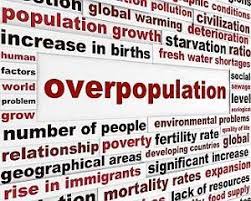
Debates concerning overpopulation may rapidly turn contentious because they raise the question of who is to blame for the problem and what, anything that, should be done to address it. Numerous population experts are concerned that debates about overpopulation will be exploited by small-minded people who claim that some humans are “right people” to be on the planet and others are the “wrong people” (typically people living in poverty, people of colour, foreigners, and so on). However, there are no “right” or “wrong” individuals on the world, and debating the issues of global overpopulation should never be used as a justification or as a platform for such a discussion.
Every human being has a legal right to an adequate and equitable share of the Earth’s resources. However, with a population reaching 8 billion, even when everyone chose a comparatively low materialistic quality of life, the Earth would still be pushed to the brink of ecological disaster. Furthermore, the “average individual” on Earth consume at a pace that is more than 50% more than what is feasible. Surprisingly, the average American consumes over five times more than the planet’s sustainable output.
If we are using the word “overpopulation,” we explicitly imply a scenario in which the Earth’s resources cannot be replenished each year due to the world’s population. According to specialists, this has been the situation every year since 1970, with each succeeding year growing increasingly harmful. To help moderate this highly unsustainable scenario, humans have to understand what is causing overpopulation and overconsumption, as well as how these patterns influence everything from climate change to sociocultural instability.
THE CAUSES OF OVERPOPULATION:
The Earth now has a population of over 7.8 billion people. And according to United Nations, the world’s population would reach 10.8 billion by 2100, assuming sustained fertility decreases in many nations. Surprisingly, if more progress can be made in women’s reproductive self-determination and fertility decreases faster than the United Nations predicts, the population in 2100 may be a relatively smaller 7.3 billion.
For the time being, the world’s population continues to grow at a rapid pace (approximately 80 million people per year), and our supply of critical nonrenewable resources is depleting. Many variables, including declining death rates, underused contraceptives, and a poor education for females, contributes to these unsustainable trends.
FALLING MORTALITY RATE:
An imbalance between births and deaths is the fundamental (and arguably most visible) driver of population increase. According to the World Health Organization, the worldwide infant mortality rate has dropped, with 4.1 million newborn deaths in 2017 compared to 8.8 million in 1990. Of course, this is good news for public health.
At the same time, people are living longer lives all across the world. Those of us alive now will most certainly live far longer lives than most of our forefathers. Because to advances in medical, technologies, and hygiene practices, global average life expectancy has more than quadrupled since 1900. Falling death rates are also nothing to grumble about, but universal lifespan contributes to the math of growing population numbers.
UNDERUTILIZED CONTRACEPTION:
According to the UN Population Division, the worldwide fertility rate has consistently declined over the years, falling from an average of 5 children per woman in 1950 to 2.4 children per woman now. Along with that encouraging trend, worldwide contraceptives use has gradually grown, going from 54 percent in 1990 to 57.4 percent in 2015. Nonetheless, contraceptives usage is underused in general. According to the World Health Organization, an estimated 214 million women in poor nations who wish to avoid pregnancy do not use contemporary contraception.
These women are not taking contraception for a number of reasons, including societal norms or religious beliefs that prohibit birth control, misunderstandings about negative side effects, and a lack of autonomy for women to make sex and family planning decisions. Between 2010 and 2014, an estimated 44 percent of pregnancies were unplanned. Giving more women access to and control over family planning options might go a long way toward flattening the population curve.
THE EFFECTS OF OVERPOPULATION:
It seems to reason that as the world’s population grows, so will the demand on resources. Higher population equals more demand for food, water, housing, energy, healthcare, transportation, and other necessities. All of this consumption adds to environmental degradation, increasing conflict, and an increased likelihood of large-scale calamities such as pandemics.
ECOLOGICAL DEGRADATION:
Population growth will undoubtedly generate pressures that will result in increased deforestation, diminished biodiversity, and increases in pollution and emissions, all of which will worsen climate change. Eventually, many experts think that unless we take action to assist prevent future population increase in the duration of this decade, the extra pressure on the planet will lead to ecological upheaval and breakdown so extreme that it affects the survival of life on Earth as we know it.
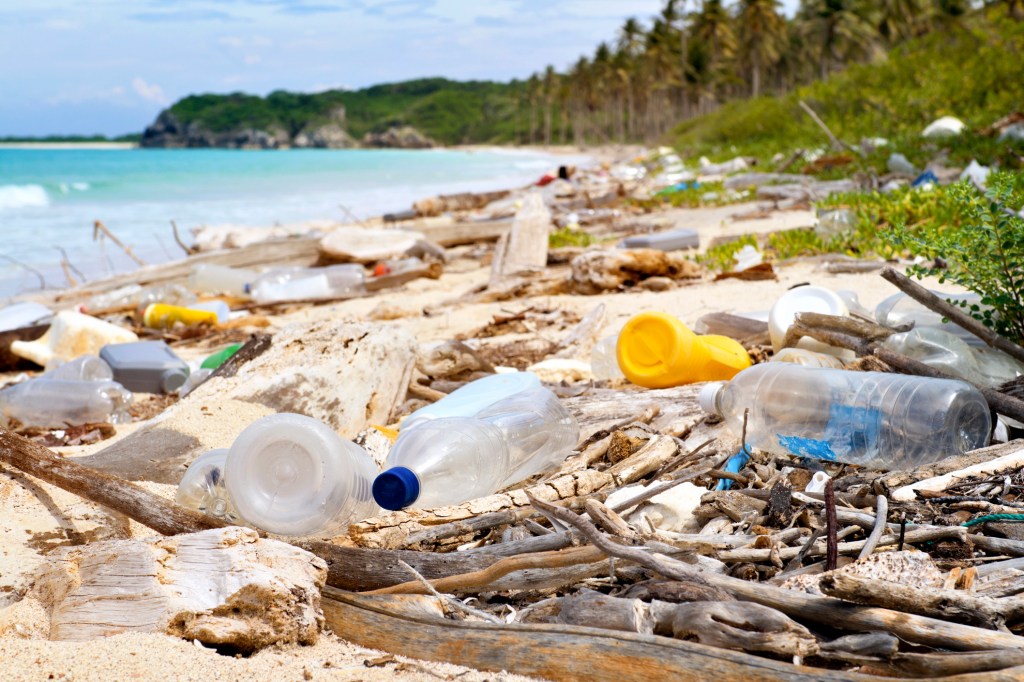
Garbage and pollution on beach
Each spike in the global population has a measurable impact on the planet’s health. According to estimates a family having one fewer child could reduce emissions by 58.6 tonnes CO2-equivalent per year in developed countries.
INCREASED CONFLICTS:
Scarcity caused by environmental damage and overpopulation has the ability to promote violence and political upheaval. Warfare over water, land, and energy resources is already taking place in the Middle East and other places, and the unrest is certain to worsen as the world population rises.
HIGHER RISK OF DISASTERS AND PANDEMICS:
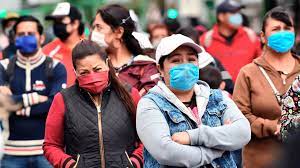
Some of the recent new diseases that have wreaked havoc on humans throughout the world, such as COVID-19, Zika virus, Ebola, and West Nile virus, emerged in animals or insects before being transmitted to humans. Part of the reason the globe is approaching “a time of heightened outbreak activity” is because humans are demolishing natural habitats and coming into more frequent contact with wild animals. Now that we’re in the grip of a pandemic, it’s apparent how impossible it is to maintain social distance in a globe populated by over 8 billion people.
WHAT CAN BE DONE?
When tackling overpopulation, it is critical to use an empowerment-focused strategy while organising against anybody promoting the use of compulsion or violence to solve our issues. The combined efforts of expanding family planning information, enhancing women’s autonomy, and refuting commonly held contraceptive misconceptions will have a significant impact on the world’s population trajectory.
At Population Media Center (PMC), we observe firsthand how raising knowledge about family planning options and the environmental and economic benefits of having fewer families may influence reproductive behaviour. Listeners to our Burundian radio show Agashi (“Hey! Look Again!”), for example, were 1.7 times more likely than non-listeners to verify that they were willing to negotiate condom use with a sexual partner, and 1.8 times more likely to say that they generally approve of family planning for limiting the number of children.
At PMC, we use the power of storytelling to inspire listeners to live healthier and more affluent lives, which helps to stabilise the global population and allows people to live sustainably with the world’s renewable resources. Discover how PMC is combating overpopulation right now!
To come to some conclusion first we need to know about how the internet originally came into the existence, how it works, how we people are evolved with it, and then we are able to decide/answer the very question – is internet software hardware or what??
ARPANET ‘s initial logical map
The need…
Way Before the internet we know today there was a precursor ARPANET. ARPANET was funded by the US defence department to connect all research institutions and colleges through a big wire. by using this they can transfer or interact with each of these institutions very easily and fast. it was a really big breakthrough in computer or world history! later this tech was shared with many big companies later this network becomes so big that we now call it the internet! but in 1990 ARPANET stopped and the internet was unaffected by it ( tells how big internet became). With time we have seen many advancements in tech too with lay down the path to normal users and made all this infrastructure so feasible that even a normal household can have a connection with the network, thanks to the introduction of WIFI and win98 in the 90s.
we and our peripherals all connected with internet today
Internet and us: today
When we entered the 21st-century internet started becoming a big deal started using in many sectors and helped professionals even students! with tech it impacted on our lifestyle too, from space exploration department to personal AI in our phones …all this developed with help of the internet! millions of developers/contributors around the world contributed to making it in reach of every human! In the 2000s nearly 6.5 % of earth’s population was using the internet ( which is HUGE ngl) but this number became 50.8%! in 2018 and still growing at a faster rate than before too! when we talk about the internet and its working we think of few things like phone or pc which connected with WIFI/broadband network then that WIFI connected with some wire (ex.- fibre wire) coming from ISP(in case of broadband, it connected with some tower initially then ISP) …yeah that’s it, until which we able to visualize .. let us see this and understand in more detail.
world shares one big network
It’s all connected …
Internet is very much the same as it was in ARPANET days. different system(ex- computer) connected with one common server which acts as a message counter aka help connect each other . back then all this connection used to happen only through wires but now we have wireless modems/routers which help us connect with the same network at on close range ( so no need to connect each of them with different wire !) . so communicate with others we need to identify each other by something unique name to all here comes IP addresses and make it happen some rules introduced called TCP. When ARPANET decommissioned and the internet growing rapidly to different nations connected through the big wire ( all way from oceans ) WorldWideWeb was introduced at the same time. through the browser, we can connect with all these IP addresses and request for things ( like this blog itself!) but as you noticed IP address look very different and numeric but what we use is are in more readable. this is because of DNS protocol all IP addresses have some word associated with them like http://www.facebook.com is associated with 69.63.181.15 IP address
From the user side( called client ) when we enter some URL / website our HTTP request for that website goes to ISP(Internet Service Provider) then DNS servers identify the IP address and where that website is stored, yes you heard it right! websites are files just like your word or excel ones and similarly, it stored somewhere someplace ( called data centers ) . so this HTTP request rhea there and all this info comes to you all the way from there in packets and tada! Each and every website works like these even video ones where the same packets come… in the case of live interaction it comes continuously. These data centres/web servers are a bit different they are not connected with the internet as your client one is through isp but they are connected with the internet network directly!
Now the big answer time! The answer is as you already figured out reading all this.. Internet is a mix of both!
The Internet consists of many interconnected networks. Those networks are composed of hardware and software. The systems connected to the network must have hardware network interfaces, which are either wired or wireless. Software is required to regulate those interfaces, to compose, send, receive, and decode packets of knowledge using several standard protocols. Routers, switches, firewalls, and other devices are required to attach systems and networks together. a number of these devices are purely hardware, but many perform some level of processing, which needs that they contain an embedded computer running software. The systems connected to the network also typically have some type of package running on them, and a software system is a software. Web servers, management systems, web browsers, web-enabled applications, etc. are all required likewise, and people are all samples of software.
So, the net consists of both hardware and software
Pls, comment down below tell me if you want me to cover something techy ! or have some suggestions! until then 🙂 sayonara!
This smartwatch had been launched on 24 June 2021, by Fire Boltt, India’s leading smartwatch company. With just ₹2,999 get this trendy, comfy and budget smartwatches .
Display and design – Provide 1.7 inches backlight display with scratch resistant, laminated touch screen and fully metallic body. IPX7 waterproof square display with 240×280 pixel display resolution. Available in five silicon strap variants- blue, black, grey, pink and beige.
Dimensions Width 36.4 mm
Height 44.9 mm
Thickness 8.8 mm
Diameter 45 mm
Weight 80 g
Connectivity – Bluetooth v5.0 with operation range of 10m. Call and message functions available. Compatible OS Android 5.0 or above, iOS 8.0 or above Bluetooth Version:BT 5.0 or above.
Sensors – Temperature Check; Body Temperature Monitoring – Control and check your body temperature changes real time with this watch, Accelerometer Sensor, Barometer Sensor, Gyro Sensor, Light Sensor, Optical Heart Rate Sensor, SpO2 Sensor; SpO2 Monitoring & Continuous Heart Rate Tracking – Monitor your Oxygen Levels and Keep a watch on your heart rate.
Other features – 7 Sports Modes & Smart Controls like Remote Camera & Music, Weather, Alarm Stop clock.
Technology has given the Midas touch to almost every sector today. With its far and deep reach, technology has made work efficient and hassle-free. The food industry has gained enormous momentum with its introduction, and many novel products and applications are currently being used in the foods sector. But the downside of modern technology is the cut throat competition that has grown with it and the food sector, too, hasn’t been spared in this regard. With advanced machinery and new substitute ingredients and methods replacing old, slow and expensive ones, many industries have been vested with the power to produce a hefty amount of goods in a short and stipulated amount of time, and with good accuracy too. This has led to huge cost cutting, and manufacturers in search of ways to optimise their product prices have found ingredient modification or manipulation as an effective means to bring down its cost, while keeping the sensory attributes of the product intact. All this noted, there arise concerns over product quality and safety if synthetic ingredients or chemical substances are used in food products. There need to be a set of rules and laws governing the usage of components and techniques in commercial food manufacturing, processing, packaging and storage.
Almost every packaged food product that we buy made in the commercial market today (not specifying the local food shops or marts) contains the fssai mark. What does the fssai mark on packaged foods ensure?
The Food Safety and Standards Authority of India (FSSAI) is a statutory body established under the Ministry of Health and Family Welfare under the Government of India. This body governs and regulates the supervision of food safety. The objective of fssai is to assure safe and nutritious food and inspire trust in the hearts of the common Indian consumer, that the food he/she eats is safe and completely free of hazards. This ensures that the Indian consumer is a part of the food manufacturing process, though indirectly. The mark indicates that the manufacturers also involve in good manufacturing practices and their packaged products are devoid of any adulteration. The body goes by ‘One Nation, One Food Law’:
Have globally benchmarked food standards and practices
Ensure consistency in enforcement
Manage food testing with standardised testing methods and protocols.
The Food Safety and Standards Act 2006 was passed in order to accentuate food laws and establish the fssai to lay down standards and specifications related on food and related articles in science and regulate/keep watch on every step of the process from procuring raw material to the finished food product reaching the customer with minimal damage. This includes manufacture, storage, distribution, sale and import, and ensures that the available food to be consumed is safe and wholesome, and takes care of the rules and regulations designed thereof. A number of Food Safety and Standards Regulations have been set up to confine food manufacturers to food grade limits and maintain the quality of food being served on the consumer’s platter. Many other certifications and certifying bodies have been approved and set up by the Government or international bodies, too, to keep up food quality. These bodies audit industrial units or food company units to check if all the components being used in a food industry are well within the required/proper specifications and roll out a report to the producers regarding what they can improve, what they can control or what they can modify to enhance the overall quality of the product and the unit.
Controlling and keeping up the safety and quality of packaged and processed food is a tumultuous task, and it can be daunting to make even the slightest of mistake in the sector, as this can put thousands of lives in jeopardy, but regulating bodies ensure that the end consumer’s safety is well protected and cared for.
This essay is written by Max Beerbohm, in the year 1918. The essay is influenced or derived from James Boswell’s record of Johnson’s life probably from the biography “Life of Samuel Johnson”, which he published in 1971. In this famous biography of Samuel Johnson, Boswell presents him, mostly as an intellectual person, who engages in many table-talks. One such episode is being highlighted in this essay by Beerbohm in which Johnson and Boswell engages in an intellectual meeting “at Streatham, in the well-appointed house of Mr. Thrale” on April 7th, 1778.Henry Thrale, was a British politician who sat in the House of Commons from 1765 to 1780. He was also a close friend of Samuel Johnson. This meeting was also joined by Sir John Pringle, (“father of military medicine”) and they were discussing about the sermons and the peculiarities of some sermon writers.
Max Beerbohm, uses this incident to paint the imagined past that he recreates in this essay. He introduces the passive yet the main focus, the Clergyman into this actual incident so as to give his imaginary character a sense of reality. He verbally caricatures this passive character who “cuts in” their conversation as a “man with a high, thin voice, and without power to impress anyone with a sense of his importance, a man so null in effect that even the retentive mind of Boswell did not retain his very name, would assuredly not be a self-confident man. He sat forgotten, overlooked; so that his self-assertion startled everyone just as on Boswell’s page it startles us”. Beerbohm gives the details of this meeting as if he were among the intellectuals who actually participated in the meeting. The Clergyman, as Beerbohm presents him is a young man who is “unregarded, shy” and with a nice persons’ thin voice. His shyness and thin voice enhance his passiveness. On the contrary Johnson is presented as the centre of this intellectual meeting, and this eager clergyman waits for him to notice him. He musters up all his courage to ask a question to Johnson, but he dismisses him with his disdainful remark.
“A CLERGYMAN, whose name I do not recollect: Were not Dodd’s sermons addressed to the passions? JOHNSON: They were nothing, Sir, be they addressed to what they may.’”
The clergyman is portrayed as a nonentity or an unwelcomed intrusion in the so-called intellectual gathering and Max Beerbohm gives us a number of possibilities as of why he remained largely unnoticed. The essayist opines that it could be because of his thin voice , or could be because he was not properly dressed, or could be because the others in the gathering outshined him. He also presents the possibility that the Johnson, as he was a deaf “old lion” by then, was never aware that he was actually, permanently damaging the clergyman with his “force of paw and claws” which were not the less lethal. The social courage that had been sapped in him, was destroyed, by this experience.
It could be interpreted that Johnson could have dismissed the clergyman’s question because he mentioned William Dodd, whom “Johnson had befriended in adversity”. William Dodd, was an English Anglican clergyman and a man of letters, he was also a controversial topic, for he was caught and punished for forgery. It was said that he had received the assistance of Samuel Johnson. Thus, when the Clergyman mentioned this person, Johnson was caught off-guard and that is why he might have shunned him with his disdainful remark.
The writer also draws parallels between two ages; one, that of Johnson’s, in which sermons were given ore importance and the other, probably the Victorian age, in which novels replaced the sermons. He says that after some time in the future the intellectuals will start discussing about the novels, not the sermons. He comments that by following the trends of the age, people are being capricious and as the Clergyman is being neglected now, people will neglect the sermons for the novels. This, he presents through the conversation between a Pundit and his disciples on many novel writers and their significance. With this conversation he also draws parallels to the characters of the passive clergyman and the “poor nameless wretch” and Johnson to the Pundit.
He concludes the essay, suggesting that hopefully theses nameless and passive people might get the attention they required. It seems impossible. “But we must remember that things are not always what they seem”. On a philosophical note, “Every man illustrious in his day, however much he may be gratified by his fame, looks with an eager eye to posterity for a continuance of past favors, and would even live the remainder of his life in obscurity if by so doing he could ensure that future generations would preserve a correct attitude towards him forever”. He wishes that the clergyman hadn’t been there at that meeting so that he would not have been nipped in the bud and so, would have saved his face for posterity. Thus, the writer does not fully convey his opinions for the neglect of the clergyman. He just gives his opinions as possibilities. At the end, he suggests that for delicate people like the clergyman, such experiencing might have a long-term effect and the damaged caused could not be reversed. “He sank into a rapid decline”. He also hopes that this person might have died “forgiving Dr. Johnson”.
McLaren F1 was the fastest production car for 12 straight years from 1993 to 2005. At the time of its unveiling, McLaren F1 was an engineering marvel with numerous pioneering technological innovations. It was designed by the legendary designer and engineer Gordon Murray.
McLaren F1 Rear
It was the first road production car to be fully built carbon fiber. The entire Carbon fiber monocoque weighs just fewer than 220 pounds and 5000 pieces of carbon fiber pieces were used to mold the final frame. This gives it double the strength of steel but it makes it five times lighter than traditional frames.
The car has a central seating position which is unique to this car. While developing McLaren F1, Gordon Murray drove and tested all the contemporary supercars of that time and he realized that their three-pedal boxes were somewhat offset. So He wanted to eliminate that. To solve this problem he placed the seat in the central driving position similar to a traditional F1 racing car. The central position also helps in increasing the visibility of the driver.
It has a naturally aspirated 6.1-liter V12 engine, but initially, McLaren has asked Honda to supply an engine for them as they were also the supplier for their F1 racing team at that time. But Honda didn’t follow the specification stated by Gordon Murray. Later they asked BMW to supply them with the engine of their car. BMW had to make a new engine as per the specification and the final results were incredible. The Engine is called BMW Motorsport S70/2
The engine possesses extremely efficient heads. It also has continuous variable inlet valve timing and an emission-control system and four catalytic converters with ‘Lambda’ exhaust gas analysis control. Even with a 6064 CC displacement and a power output excess of 550bhp, the engine is quite efficient. The engine created so much heat that it had to be covered with a good heat deflecting material and to solve that problem the engine bay was covered with 16 grams of gold foil.
On 31 March 1998, Andy Wallace drove the McLaren F1 XP5 prototype at Volkswagen’s test track in Ehra-Lessen, Germany, and broke the record created by McLaren F1 itself in 1993. The car reached the top speed of 391 kilometers per hour or 243 Miles per hour. As of today, the F1 remains the fastest naturally aspirated production car in the world.
The car had a limited production of 106. Of those only 64 of them were road-going cars and 28 of them were racecars and the remaining of them were prototypes and special editions like the LM and longtail version. Rowan Atkinson (Mr. Bean) was for one period the owner of McLaren F1 as well.
Back in 1993, a brand-new McLaren F1 cost £540,000. In today’s money it would be approximately 1.1 million pounds but due to the rarity and the special status and engineering feat of the car. McLaren F1 has steadily climbed in value since then. As of today a McLaren F1 costs around £16 million and special versions can fetch even more. This car has also stood the test of time in its design, engineering, and craftsmanship.
NCERT is an autonomous governmental organisation that actively contributes to the education sector in India. This organisation provides the CBSE, with textbooks, thus becoming the publishing body. In 2017 the CBSE had asked all the schools in India to adopt the NCERT textbooks and to avoid using books from other publishers. It might be because, the schools except Kendriya Vidyalaya and Jawahar Navodaya were free to use books from a different publisher other than NCERT, but there have been reports of some of these schools, taking huge amount of money, in the name of various textbooks, workbooks and guides. The cost of study at CBSE schools are little high when compared to the State government schools. So, when the tuition fee, added with the other expenses especially for the textbooks, resulted in school education being overpriced. Also, the authenticity of these textbooks is something that cannot be taken for granted. There have been reports that some school conducted some illegal experiments with living animals, with respect to the workbooks of these non-NCERT textbooks.
To avoid such lapses, the CBSE, has made it mandatory for all the schools that are affiliated under it to follow the NCERT textbooks, with the exception for some subjects. The NCERT books have the following benefits.
Both the CBSE and the NCERT are governmental organisations, so they will have more flexible workspace.
The NCERT strictly follows the CBSE curriculum. Primarily focusing on simple diction and clarity of the concepts.
The NCERT textbooks are available with quality content at affordable prices.
Large proportion of the CBSE Board Exam questions, come from the NCERT textbooks
They are cost effective, since they help in forming the basics and the textbooks could also be used as basics for competitive exam like the PSC, UPSC, AFCAT etc.
“The earth provides enough to satisfy everyone’s need but not enough to satisfy everyone’s greed” This quote by the father of our nation Mohandas Karamchand Gandhi is now amongst his most well-known. But what does it really mean? It means that the earth has abundant resources to satisfy everyone’s needs but, in our greed, and hurry to develop, we have been recklessly exploiting these resources. In the name of development, we have indulged in activities such as deforestation, overgrazing, encroachment into forest lands, overuse of ground water, use of plastics, etc. The exploitation of natural resources not only harms the environment but may cripple the future generations of the development process itself.
The world is increasingly managed in a way that maximises the flow of material from nature, to meet rising human demands for resources like food, energy and timber. As a result, humans have directly altered at least 70% of Earth’s land, mainly for growing plants and keeping animals. These activities necessitate deforestation, the degradation of land, loss of biodiversity and pollution, and they have the biggest impacts on land and freshwater ecosystems. About 77% of rivers longer than 1,000 kilometres no longer flow freely from source to sea, despite supporting millions of people. The main cause of ocean change is overfishing, but 66% of the ocean’s surface has also been affected by other processes like runoff from agriculture and plastic pollution. In addition, fewer varieties of plants and animals are being preserved due to standardisations in farming practices, market preferences, large-scale trade and loss of local and indigenous knowledge
The wildlife population is in a fall around the world, driven by human overconsumption, population growth and intensive agriculture, according to a major new assessment of the abundance of life on Earth. On average, global populations of mammals, birds, fish, amphibians and reptiles plunged by 68% between 1970 and 2016, according to the WWF. Two years ago, the figure stood at 60%. Latin America and the Caribbean recorded the most alarming drop, with an average fall of 94% in the populations of vertebrate wildlife. Reptiles, fish and amphibians in the region were the most negatively affected, driven by the overexploitation of ecosystems, habitat fragmentation and diseases. Africa and the Asia Pacific region have also experienced large falls in the abundance of wildlife, dropping 65% and 45% respectively. Europe and Central Asia recorded a fall of 24%, while populations dropped 33% on average in North America. According to the UN’s global assessment report in 2019, due to human activity one million species on the planet are at a risk. Deforestation and the conversion of wild spaces for human food production have largely been blamed for the destruction of Earth’s web of life. It has been highlighted that 75% of the Earth’s ice-free land has been significantly altered by human activity, and almost 90% of global wetlands have been lost since 1700.
The Earth is dying and is up to us, the future generation, to protect it from all the harmful toxins and other pollutants. We only have one home with limited resources which we share with a billion other species of wildlife. Steps have to be taken no matter how small to save our beautiful mother planet and leave a home for our future generations.
Artificial intelligence (AI) refers to the simulation of human intelligence in machines that are programmed to think like humans and copy their actions. This may also be applicable to any machine that exhibits traits associated with a human mind such as learning and problem-solving. From SIRI to self-driving cars, AI is progressing rapidly. While science fiction often portrays AI as robots with human-like characteristics, AI can enclose anything from Google’s search algorithms to automatic weapons.
Benefits
AI’s impact on society can be beneficial for research in many areas. Topics such as economics, law, technical topics such as verification, validity, security and control can be improved so much with the help of AI. it may be little more than a minor nuisance if your laptop crashes or gets hacked, it becomes all the more important that an AI system does what you want it to do if it controls cars, airplanes, automated trading systems or a power grid. Another short-term challenge is preventing a devastating arms race in dangerous automated weapons.
Artificial Intelligence can also be used in performing surgeries which require precision. It can also be helpful in performing tasks which are difficult for humans to perform. As technology advances, previous landmarks that defined artificial intelligence become outdated. For example, machines that calculate basic functions or recognize text through character recognition are no longer considered to embody artificial intelligence, since this function is now taken for granted as a basic computer function.
Disadvantages
When misused, AI has the potential to become the most dangerous weapon humans have ever seen. Autonomous weapons are automated weapons that are programmed to kill. In the hands of wrong people, this weapon can easily be a medium for mass destruction. Moreover, AI arms race can cause an AI war which can also cause mass causalities.
Even if AI is programmed to do something beneficial, but it develops a destructive method to achieve its goals. For example, when we ask an AI powered car to take us in the fastest way possible, it can break several traffic rules and speed limits to help us reach our destination. It can run over people or damage the vehicle. AI is very difficult to tame once it learns to think like humans. So, we should be very careful while handing over our future to the hands of artificial intelligence.
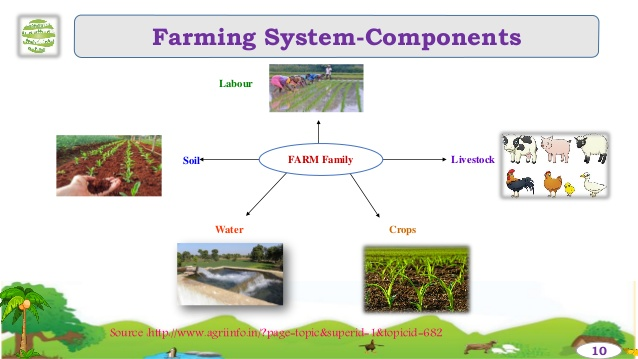
Farming plays a major role to the life of any human being. Without food, life on earth is not possible as hunger will consume every human and living being on this earth. Each and every modern food like pizza, burger, sandwich and nuggets and many more have atleast one primary content of cereal in it.
This sector is the primary factor for any economical balance and system of a country. Agriculture is commonly called as the backbone of any nation as it supports the important necessity factor of any country. Provides employment for various industries and population in an enormous rate that can be guaranteed for sure.
“If the farmer is poor then so is the whole country”. – Polish Proverb
Agriculture is the only platform that proves to provide self-employment and opportunities for others also. A smart way of farming can help you earn more than a lakh a month with organic based products alone. It’s stream also associates with rearing of farm animals, and sea creatures along with livelihood of many families. In rural sides, the basic establishment is agriculture to run their family.
There maybe sophisticated industries uprising and converting the society into a digital world, but a farmer can never be replaced or compared with anyone as they are preferred as gods to fulfill our stomach on time.
“The farmer is the only man in our economy who buys everything at retail, sells everything at wholesale, and pays the freight both ways”. – John F. Kennedy
There are critical situations where farmers lose hope on their passion and life resulting in suicides. These corporates also play a role in controlling vast area of these fields and demolishing but these issues became outdated inspite of protesting it.
“An agricultural life is one eminently calculated for human happiness and human virtue”. – Josiah Quincy
It can be considered as the India is the ancient and first nation to spread the cultivation process all over countries by exporting them also encouraging friendly nations to produce their paddy or farming.
An independent, stress-free job only with your hardwork and knowledge about effective production for each variety of seed, you succeed with your outcome.
Certain kind of insults and discriminations are made in every step of their life denoting their passion as if some kind wrong act to stabilize certain dignity of higher caste forgetting about the reality as farmers are rulers of any nation.
To understand the present let me take you to an incident, “Imagine a situation where you have to just drink water and tolerate your hunger, you can adjust for a day or even one week but your health will gradually decrease since as a defect to fulfil hunger”.
Our health is balanced and nutrition is maintained because of the benefits of various pulses and grains that supports life force of every species. So, try to support and cultivate the habit of encouraging it to younger generations as they need to respect and know the importance played by this sector in a nation’s economy.
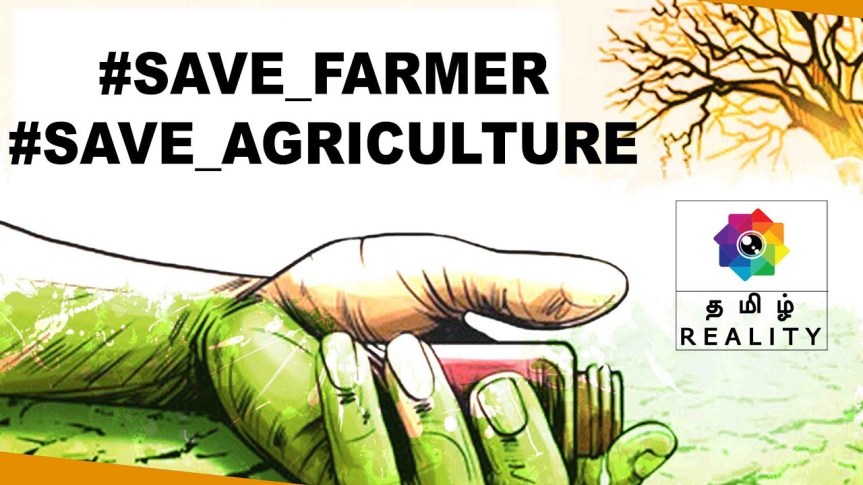
“If farmers fail to keep hands on land, we can’t keep hands on food/rice”
Try creating awareness and modify of vision towards farmers to appreciate them at right work which is forgotten by us mostly. Helping a farmer is like feeding a thousand children while they are hungry. Do support agriculture and respect as mere humans to maintain humanity.
The things must be told to every single child to know the value of farming to be recognized and adopt this as their passion in upcoming future.
“There are only one thing more precious than our time and that are who we spend it on”
Time is very precious and we should not waste it in any way. Likewise, we can earn the money we spent but we cannot get back the time we have lost. So, this makes the time more valuable than money. Hence, we should utilize the time in the most possible way.
Importance of Time:
𝐓𝐈𝐌𝐄 refers to the indefinite continued progress of existence and events. Furthermore, these events occur from the past, through the present, and to the future. This explanation of time tells us one important truth. This truth is that time is a limited and precious resource. Each second, minute or hour that passes is lost forever. Most noteworthy, this second, minute, or hour will never ever return to our lives. This clearly shows the extreme importance of the 𝗩𝗔𝗟𝗨𝗘 𝗢𝗙 𝗧𝗜𝗠𝗘.
First of all, everyone must understand that Time waits for no one. This is an age-old belief that still holds true. No one can stop the clock or slow it down. Most noteworthy, Time will keep going whether one likes it or not. Because Time doesn’t wait for everyone, it becomes a precious commodity. Hence, everyone must make sure to make the most of the Time. People must certainly stop wasting time and procastination. This is because “Time is not unlimited“.
Secondly, Time cannot be reversed. This means we must spend each moment wisely. One cannot go back to a moment of wrongdoing to correct a mistake. What is gone is gone. Above all, nobody can turn back the clock to gain more Time. Therefore, individuals must make every moment count. This is because that moment is never going to repeat itself.
IMPORTANCE POINTS OF TIMES:
People certainly have many distractions these days that threaten Time. Above all, some of these distractions are the internet, social media, smartphones, and video games.
Everyone must certainly follow the most Time effective way to do a task. Above all, it is the way that will yield the greatest benefit per moment spent.
Time is second most important thing after life, make sure to utilize your time wisely in good activities.
Time is a measurement of our life, time is very important in our life, it depends on you, how you use your time, if you use time in learning and implementing on good things it will help to you to live with ease.
Value of time this word is very significant for us especially students. Working time is very valuable for everyone.
Time is the most valuable in our worldly life. The secret of success in life is the proper use of time.
Life is nothing but a collection of moments. It is shot and uncertain but art is long. So, every moment of our life is very precious. It is known to all that time waits for none.
Everyone has to realize the value of time and spend it unwisely. Such people waste their time and keep unnecessary thinking can backward to them and lost their future. Everyone has to do focus on their important task every day.

















 Eduindex
You must be logged in to post a comment.