School Inovation ambassador training program

The program, School innovation ambassador training program (SATP) launched on16 July is a joint effort of ministry of the union education ministry and tribal affair ministry. Education minister Dharmendra Pradhan and Tribal minister Arjun Munda together announced the scheme for training 50,000 school teacher. “The teachers are the biggest influence in our lives. We aim to make our teachers, change agents, and ambassadors of innovation to make our students future-ready,” said education minister Dharmendra Pradhan on the launch of program. Further Tribal Affair minister Ashok Munda highlighted how it will be helping students in tribal area and broaden their perspective with will enhance the creativity.

The scheme will be implemented from 20 July. the ultimate aim of the program is to bring innovative changes for the benefit of both student and teachers. The program will benefit CBSE affiliated school including government schools like – kendriya Vidyalaya, Eklavya Residential model school and other school. The training will be divided into 5 subjective parts which include:
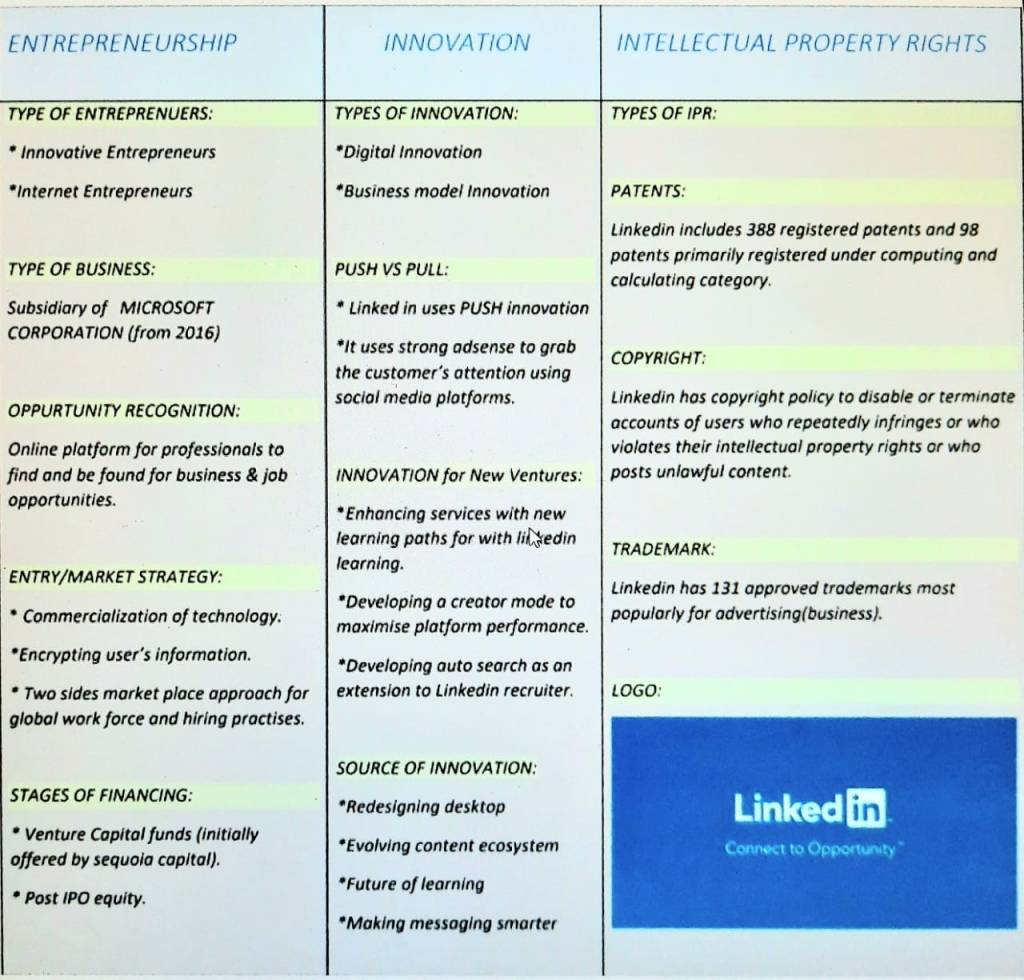
• Entrepreneurship
• Innovation
• Intellectual property rights
• Product development
• Design thinking
• Idea generation
The training will be of a duration of 2 months and it will be conducted online. The implementation of such schemes is effective in overall development of education system not only for students but, teachers who are considered an important pillar of education system.
Above all The Indian education system which is continuously trying to evolve and implement new changes can succeed by such programs.

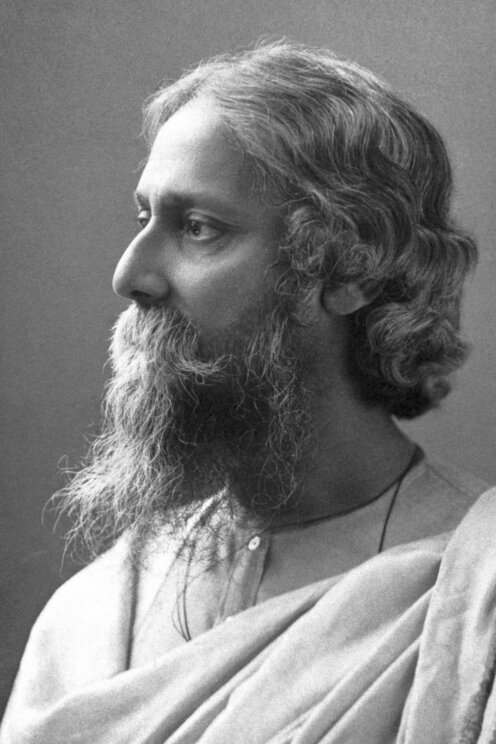
RABINDRANATH TAGORE

Rabindranath Tagore was a legendary Indian poet. Furthermore, he was also a great philosopher, patriot, painter, and humanist. People often made use of the word Gurudev with regard to him. This exceptional personality was born on the 7th of May in 1861 at Calcutta. His early education took place at home by a variety of teachers. Also, through this education, he got knowledge of many subjects. His higher education took place in England. Above all, Rabindranath Tagore began writing poems from a very young age.

Works of Rabindranath Tagore

Rabindranath Tagore began to write drama from sixteen years of age. At the age of twenty, Rabindranath Tagore wrote original dramatic piece Valmiki Pratibha. Most noteworthy, Rabindranath Tagore works focused on feelings and not on action. In 1890 he wrote another drama work Visarjan. Visarjan is probably the best drama work of Rabindranath Tagore.

Similarly, from the age of sixteen Rabindranath Tagore began to write short stories. His first short story was Bhikarini. Most noteworthy, he is the founder of the Bengali-language short story genre. Tagore certainly wrote numerous stories from 1891 to 1895. Also, stories from this period form the collection of Galpaguchchha. It is a big collection of 84 stories.

Rabindranath Tagore was certainly in touch with novels as well. He wrote eight notable novels. Furthermore, he wrote four novellas.

The best collection of poetry of Rabindranath Tagore is Gitanjali. Most noteworthy, Rabindranath Tagore received the Nobel Prize in 1913 for Gitanjali. Furthermore, his other important poetry works are Manasi, Sonar Tori, and Balaka.

Rabindranath Tagore’s contribution to politics

Rabindranath Tagore was active in politics. He was in total support of Indian nationalists. Furthermore, he was in opposition to British rule. His work Manast contains his political views. He also wrote a number of patriotic songs. Rabindranath Tagore increased the motivation for Indian independence. He wrote some works for patriotism. There was great love among the masses for such works. Even Mahatma Gandhi showed his favor for these works.

The Dream Catcher

Globalisation has brought the world under a big digital umbrella, which helps everyone across the globe to connect, understand and imbibe with people all around them. As a part of this, we see a world that moves alongside the trends adapting and taking inspiration from any possible nooks and corners. One such pop-culture artefact that caught the eyes of the netizens was the Dreamcatcher. If you have watched the Twilight series, the enigmatic hoop that Jacob gifts Bella might have caught your eye. The dainty piece famous for its rusty looks, not only is a collection piece that could decorate your room but is also a powerful tool used by the Native Americans. 

Photo by cottonbro on Pexels.com

In the traditional Native American narrative, dreamcatchers are handmade hoops made out of willow wood, embellished with feathers and beads, which would act as an armour of protection against bad dreams. The Native American tribe of Ojibwes are known to be the founders of the dreamcatchers. The Godmother of the Ojibwes, Asibaikaashi or the Spider Woman, found it extremely difficult to look after her people as the Ojibwe community started being nomadic. According to the old Objiwen tales, their women had to find an alternative method to protect their families. As a solution to it, they started weaving magical webs with charms for protection. 

Dreamcatchers in the present day are decor pieces that add a pop of indigenous feeling to your living space. But the Native American myths compare the dreamcatchers to sieves, which would filter your dreams while you are sleeping and only let the good dreams reach you. The structure of dreamcatchers also has an interesting myth behind it. The circular pattern that it is made in symbolises the shape of the earth. The web that is woven within is said to absorb the bad dreams and the feathers, the path that would lead the good dreams into you. If you are interested in owning a dreamcatcher you can find several DIY videos on how to make one. Let me know in the comments below if you own a dreamcatcher and whether you knew about the history of dreamcatchers even before.

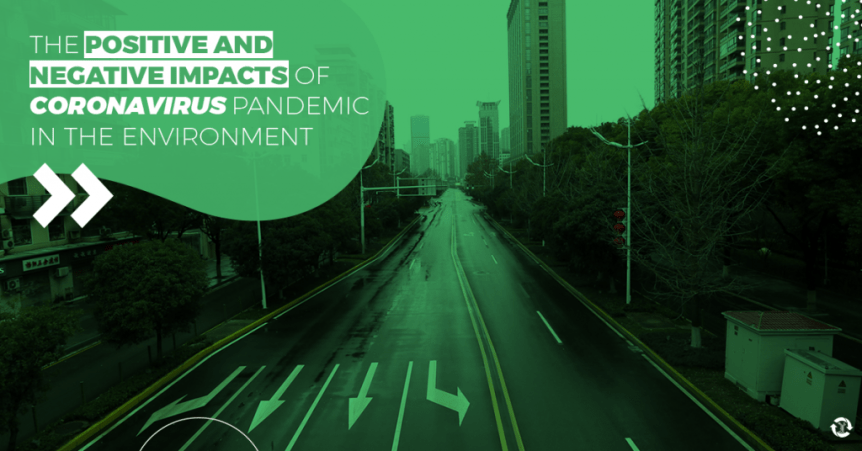
Positive and Negative impact of COVID-19 on environment

As Work from Home becomes the new norm, 23% of carbon emissions have dropped globally just because of a decrease in transportation.

Here are few positive as well as negative impacts the COVID-19 pandemic has brought to the environment.

  • Positive impact of the pandemic on the environment
  • There is more freshwater available

As the majority of industries have reduced activities, the water consumption of the industrial sector has decreased to about 20-30%. The hotels and health clubs are not functioning to full capacity either, hence a decrease in water consumption has been observed. It has also been noted that people tend to be more efficient with water at home than hotels and resorts.

  • The vegetation is growing better

Due to less human interference, plants are exposed to better air quality and clean water. The amount of oxygen and other nutrients required for their growth are not polluted and hence allow plants to grow.

  • Reduction of air pollution

A drop of 25% in carbon dioxide emissions along with 40% in nitrogen oxide emissions was

observed in Italy during the self-isolation period. Energy-related CO2 emissions in India is on track with value 1.8 as per SDG report 2020. Air quality improved because of a reduction in road traffic, air traffic, and factory emissions of carbon dioxide, Nitrogen oxide and particular matter formation.

  • Decreasing demand for oil

Due to the decrease in fuel demands for factories and travel, there has been a sharp decline by 435,000 barrels a day in the first quarter of 2020, due to the pandemic. Oil pollution also harms animals and insects, disrupts the food chain, and prevents photosynthesis in plants. Oil contamination can make water unsuitable for irrigation and damage irrigation plants.

  • Negative impacts of the pandemic on the environment
  • Increasing organic waste

Due to a sharp decline in the cargo transportation services, the export and import of various essential commodities have come to a standstill.

  • Waste management is getting difficult

Garbage contaminated with Medical waste has increased. There has been no evidence related to human contact of waste leading to the transmission of the virus. Many local waste recycling centers have suspended their activities

over the fear of virus circulation in the recycling centres.

Increasing non-recyclable waste

With increasing home deliveries during the lockdown, meals and online shopping surged which requires a lot of plastic packaging. Production and disposal of surgical masks, gloves, protective equipment and body bags have increased due to the COVID-19 crisis but all the waste generated ends up adding on the landfills and the environment.

Ecosystem at risk – Illegal deforestation, fishing and wildlife

Environment protection workers at national parks, land, marine conservation zones were required to stay at home during lockdown resulting in leaving these areas unmonitored. The decline in ecotourism activity has led to an increase in unemployment in the regions frequented by tourists.

being a female is not easy

You wake up in the morning and get ready to go to school. Picking out clothes can sometimes be a little emotional for you. Like 91 percent of other girls, you are unhappy with the way you look. Doing your makeup isn’t easy either. The day that you ran out of time to put any on, someone called your skin gross. A few days later, your friend tells you you’d be prettier if you just didn’t wear so much makeup. You glance at the fashion magazines on your nightstand, where Kerry Washington or Emma Watson or it doesn’t really matter who is laughing at you with a frozen, glossy smile. They never had to worry about this, did they?

You arrive at school. Your first class is calculus. The class has more girls than boys, so you have some close friends in the class who have been helping you with your homework the past few days. This unit has been particularly challenging. At the end of class, you walk over to the teacher’s desk to grab some extra review sheets. A male classmate of yours is trying to argue his way into a C- on a recent test; he is doing far worse than you are. Before you make it to the door the teacher catches you and says, “I see you’ve been having some trouble lately. Are you sure this class is the right place for you? You may want to think about switching down a level.” You politely assure him you’ll stay where you are.

Your day is fine until lunch. The hot line option is chicken fingers and French fries, your favorite. You walk over to your lunch table with your friends and sit down. The girls  are all eating salad. They look at your French fries, then at you, then back to their lettuce bowls. They’ll never admit they’d rather be eating fries. One girl eventually comments, “Why don’t you like salad? It’s so much better for you. Fewer carbs. You won’t gain any weight.” You lose your appetite and end up throwing half of your meal away. But then your friend slides her fruit cup across the table. “You gotta have something in front of you or you’ll look anorexic or something.”

The rest of the day is uneventful, but it’s a Friday, and you are so tired and stressed by the end of the day by the homework you’ll have to do this weekend and your low-paying babysitting job. You’re managing OK, but you snap when your male friend says your dress makes you look like a housewife. “Calm down,” he says. “It was just a joke. Are you on your period or something?”  Despite your annoyance, this reminds you that your time of the month is next week, and you’re going to have to buy tampons on the way home. Throughout the course of your life, you will end up spending $1,773.33 on tampons alone. And this kid in your econ class was arguing today that the pink tax is a myth.

You stay in for the night and your friend comes over to watch a movie. The two of you decide to grab some candy and you run to the CVS down the street. You are walking home; it’s not too late but your street is dark. As a car slowly drives by, you tense up. The other day someone whistled at you from their car, and you’ve felt a bit uneasy on the sidewalk ever since. You are part of the 99 percent of women who have experienced street harassment in their lives. You desperately try to remember the self-defense lesson you got in middle school–was it go for the eyes or do you try to run?–when you realize the car is only waiting to pull into the driveway you’ve just crossed.

This story is not my story, per se, though parts of it resonant daily. The teen feminists I know often paint sexism in broad strokes as we discuss narrowing the wage gap, legalizing reproductive health and destroying the patriarchy once and for all. These are all important issues to discuss and to work towards. But sometimes we forget about the microaggressions, the comments that slide under the radar, the inherent sexism ingrained in our entire society—not just from males.

This is why I need feminism—because there are things that women have to hear, see and endure that men will never have to, and that’s not right. Gender equality does not only mean equality in the eyes of the law. It means that women can feel safe walking alone at night. It means women can see themselves represented in their classes and media. It means women are taken seriously in any context or capacity. It means that women’s bodies, with all their nuances, organs and curves, are treated with love and equal respect. We’re not there yet. We need feminism.

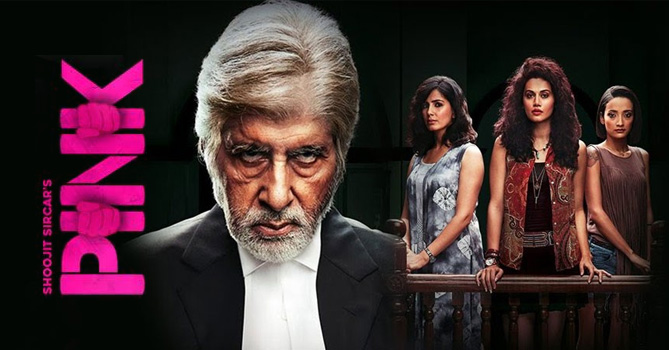
A Flamboyant Thriller That Grips You From Start To End

Pink Movie Review, Ratings, Star Cast, Story, Songs, Actors - Movies
Image Source: google.com

FILM: PINK
LANGUAGE: HINDI
GENRE: THRILLER/DRAMA
REALEASE DATE: 16 SEPTEMBER 2016
DIRECTOR: ANIRUDDHA ROY CHOWDHURY
SCREENPLAY: ANIRUDDHA ROY
CHOWDHURY, SHOOJIT SIRCAR, RITESH SHAH
CINEMATOGRAPHY: ABHIK MUKHOPADHYAY
CASTS: AMITABH BACHCHAN, TAPSEE PANNU,
KIRTI KULHARI, ANDRIA TARIANG, ANGAD
BEDI, VIJAY VARMA

Pink is a powerful, socially relevant, mainstream film that is bound to make you think about the society we are living in. It challenges the orthodox mindset of people regarding woman in our country. Narrated in a linearly, it brings forward the concept of ‘sexual consent’. No means No , no matter what. This film talks about patriarchy, gender discrimination, double standards etc & keeps viewers glued to the screen from the very beginning with its killer performance and fearsome dialogue delivery. This is Anirudhdha Chopra’s first try on Bollywood, and what a debut it is.

Synopsis

The story is about three independent girls Minal Arora (Tapsee Pannu), Falak Ali (Kirti Kulhari), & Andrea Tariang (Andrea Tariang) living within the outskirts of Delhi who are friends and flatmates. After a rock concert, they meet Rajveer (Angad Bedi) nephew of a very influential political person, and his friends. Minal and friends accept dinner invitations at a resort from them.

Rajeev tries to molest and seduce Minal to which she smashes his head with a bottle for self-defense. Rajeev is seriously injured and plans to take revenge on her with the assistance of his friends.
Minal along with her friend files an FIR against them. Rajveer with his political influence get Minal arrested for an attempt to murder with Minal’s case being handled by Deepak Saigal (Amitabh Bachchan). The film revolves around how Deepak Saigal fights the case against these influential boys.

Direction

Aniruddha Chaudhary has directed the film in such a way that the soul of the film isn’t lost in any scene. Also, the courtroom scenes are not shown as how a typical Bollywood film does so.

Performance

Amitabh Bachchan with his thunderous performance will leave the audience in awe. The performances of Tapsee Pannu and Kirti Kulhari are highly commendable and laudable, especially the scenes within the court room. Andrea Tariang is extremely natural and lives within the character. She is fine in her role as debutant actress. Angad Bedi delivers remarkable performance and makes the foremost of his limited screen time.

Screenplay & Dialogue

The movie is written realistically and does not deviate from the core theme. Screenplay & dialogues are undoubtedly the backbone of this film. Court room scenes are written in such a way that it creates suspense to the audience. The dialogues are powerful and energetic conveying socially relevant messages without beating around the bush. There are many interesting and fantastic scenes in the film.

Music

It is unarguably one of the best part in the movie. The song ‘Kaari Kaari’ is well placed in the film as it creates the mood in delivering the message to the audience. Incredibly emotional, this song gives massive goosebumps every time you listen to it. The background score also works as an additional key element to the movie.
Pink is a mixture of various emotions. This film gives a tight slap to people who think woman’s social friendliness and gestures are an invitation to men for sleeping with them. A woman has the complete right to wear short skirts, to drink, party hard, comes home late at night and so on without any doubt. Exposing India’s real face, this film is truly a landmark in Indian Cinema. In short, Pink is bloody brilliant and deserves a watch.

self hygiene

Maintaining personal hygiene is essential for more than one reason; social, health, personal, psychological or just as a way of life. Maintaining a good standard of hygiene helps keep infections, illnesses and bad odors at bay. The importance of hygiene should be taught from an early age to help cultivate good habits. Personal hygiene can be defined as an act of maintaining cleanliness and grooming of the external body. Maintaining good personal hygiene consists of bathing, washing your hands, brushing teeth and sporting clean clothing. Additionally, it is also about making safe and hygienic decisions when you are around others.

One of the most fool proof ways to safeguard yourself and others from illness is through good personal hygiene. This means cleaning your hands, especially, but additionally your body. Good personal hygiene not only enhances your overall appearance, its importance is directly related to prevention of diseases, infections, and unpleasant odors.

Our comprehensive guide to help you stay healthy through good personal hygiene from healthy hand washing to all your need to know about skin we’ve got healthy personal hygiene covered from top to toe!

NOISE POLLUTION

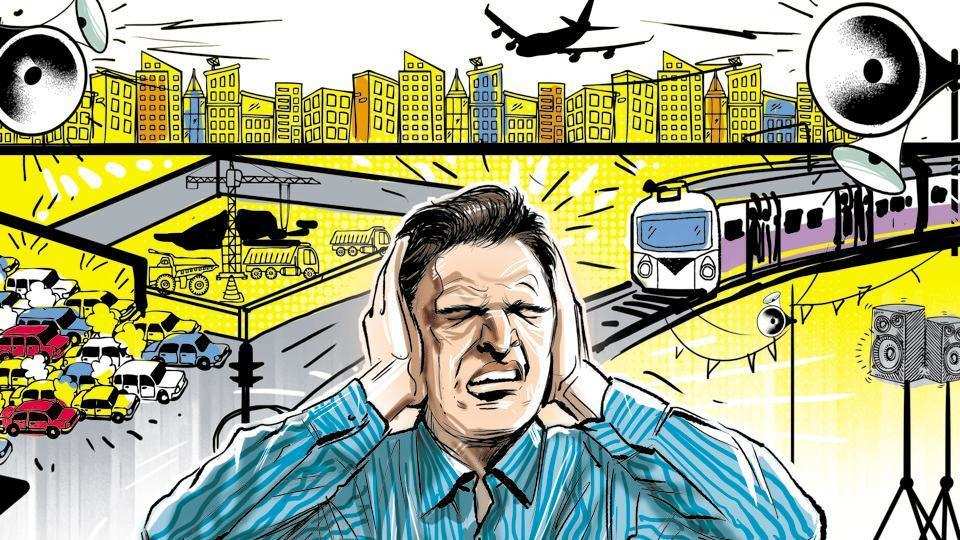
Noise pollution can cause health problems for people and wildlife, both on land and in the sea. From traffic noise to rock concerts, loud or inescapable sounds can cause hearing loss, stress, and high blood pressure. Noise from ships and human activities in the ocean is harmful to whales and dolphins that depend on echolocation to survive.

Noise pollution  is an invisible danger. It cannot be seen, but it is present nonetheless, both on land and under the sea. Noise pollution is considered to be any unwanted or disturbing sound that affects the health and well-being of humans and other organisms.                        

Sound is measured in decibles. There are many sounds in the environment, from rustling leaves (20 to 30 decibels) to a thunderclap (120 decibels) to the wail of a siren (120 to 140 decibels). Sounds that reach 85 decibels or higher can harm a person’s ears. Sound sources that exceed this threshold include familiar things, such as power lawn mowers (90 decibels), subway trains (90 to 115 decibels), and loud rock concerts (110 to 120 decibels).

Noise pollution impacts millions of people on a daily basis. The most common health problem it causes is Noise Induced Hearing Loss (NIHL). Exposure to loud noise can also cause high blood pressure, heart disease, sleep disturbances, and stress.

These health problems can affect all age groups, especially children. Many children who live near noisy airports or streets have been found to suffer from stress and other problems, such as impairments in memory, attention level, and reading skill.

Noise pollution also impacts the health and well-being of wildlife. Studies have shown that loud noises cause caterpillars’ hearts to beat faster and bluebirds to have fewer chicks. Animals use sound for a variety of reasons, including to navigate, find food, attract mates, and avoid predators. Noise pollution makes it difficult for them to accomplish these tasks, which affects their ability survive.

NELSON MANDELA

Rolihlahla Mandela was born in the village of Mvezo, in the Eastern Cape, on 18 July 1918. His mother was Nonqaphi Nosekeni and his father was Nkosi Mphakanyiswa Gadla Mandela.

Hearing the elders’ stories of his ancestors’ valour during the wars of resistance, he dreamed also of making his own contribution to the freedom struggle of his people.


EDUCATION

He attended primary school in Qunu where his teacher, Miss Mdingane, gave him the name Nelson, in accordance with the custom of giving all schoolchildren “Christian” names.

He completed his Junior Certificate at Clarkebury Boarding Institute and went on to Healdtown, a Wesleyan secondary school of some repute, where he matriculated. Mandela began his studies for a Bachelor of Arts degree at the University College of Fort Hare but did not complete the degree there as he was expelled for joining in a student protest.He completed his BA through the University of South Africa and went back to Fort Hare for his graduation in 1943.

Meanwhile, he began studying for an LLB at the University of the Witwatersrand. By his own admission he was a poor student and left the university in 1952 without graduating.He only started studying again through the University of London after his imprisonment in 1962 but also did not complete that degree.

In 1989, while in the last months of his imprisonment, he obtained an LLB through the University of South Africa. He graduated in absentia at a ceremony in Cape Town.

JOINED THE POLITICS

Mandela, while increasingly politically involved from 1942, only joined the African National Congress in 1944 when he helped to form the ANC Youth League (ANCYL). Mandela rose through the ranks of the ANCYL and through its efforts, the ANC adopted a more radical mass-based policy, the Programme of Action, in 1949.

A two-year diploma in law on top of his BA allowed Mandela to practise law, and in August 1952 he and Oliver Tambo established South Africa’s first black law firm, Mandela & Tambo.

At the end of 1952 he was banned for the first time. As a restricted person he was only permitted to watch in secret as the Freedom Charter was adopted in Kliptown on 26 June 1955.

Mandela immersed himself in official talks to end white minority rule and in 1991 was elected ANC President to replace his ailing friend, Oliver Tambo. In 1993 he and President FW de Klerk jointly won the Nobel Peace Prize and on 27 April 1994 he voted for the first time in his life.

PRESIDENT

On 10 May 1994 he was inaugurated as South Africa’s first democratically elected President. True to his promise, Mandela stepped down in 1999 after one term as President. He continued to work with the Nelson Mandela Children’s Fund he set up in 1995 and established the Nelson Mandela Foundation and The Mandela Rhodes Foundation.
 

THE TRIAL AND THE RELEASE

Mandela was arrested in a countrywide police swoop on 5 December 1956, which led to the 1956 Treason Trial. Mandela and his colleagues in the Treason Trial were among thousands detained during the state of emergency.Days before the end of the Treason Trial, Mandela travelled to Pietermaritzburg to speak at the All-in Africa Conference, which resolved that he should write to Prime Minister Verwoerd requesting a national convention on a non-racial constitution, and to warn that should he not agree there would be a national strike against South Africa becoming a republic. After he and his colleagues were acquitted in the Treason Trial, Mandela went underground and began planning a national strike for 29, 30 and 31 March. On 11 January 1962, using the adopted name David Motsamayi, Mandela secretly left South Africa. He travelled around Africa and visited England to gain support for the armed struggle. He was charged with leaving the country without a permit and inciting workers to strike. While facing the death penalty his words to the court at the end of his famous “Speech from the Dock” on 20 April 1964 became immortalised:

I have fought against white domination, and I have fought against black domination. I have cherished the ideal of a democratic and free society in which all persons live together in harmony and with equal opportunities. It is an ideal which I hope to live for and to achieve. But if needs be, it is an ideal for which I am prepared to die. 

UNDERSTANDING LINKEDIN AS A BUSINESS MODEL

As we all know that ” Linked in ” corporation is one of the leading networking website which functions on describing user created profiles with their work experience, education and training, skills, and a personal photo so that users can find jobs, people and business opportunities recommended by someone in one’s contact network. Users can save jobs that they would like to apply for. Users also have the ability to follow different companies.

In the above para we discussed about the working of linked in corporation with user provided data but we can understand it’s business marketing strategies and it’s growth from initial stage in a clear manner when we see linked in as a business model.

Linked in was found on may 5, 2003 at mountain view, California, US by Reid Hoffman. Initially the company started getting it’s financing through the help of venture capitalist company and later it struggled to get investors in IPO but at the year of 2011 LinkedIn priced its IPO at $45 per share giving the company valuation of $4.5 billion but at the year of 2016 Microsoft announced the valuation of LinkedIn for $196 per share which in all cash transaction valued as $26.2 billion and acquired the company.

CHALLENGES THAT ARE ACCEPTED BY LINKEDIN :

As a networking site the first and foremost challenge faced by LinkedIn is data encryption of user along with the data encryption LinkedIn should also concentrate on following terms:

PRIORITISING LINKEDIN GROUPS: LinkedIn contains many community groups with managers to share/discuss ideas for improving their work/business. So, they have to arrange the groups with out arising any type of ambiguity.

CONSTANTLY CHANGING THE WAY OF ADVERTISING : We get too many irrelevant ads when we use LinkedIn. Sometimes, getting non-sink advertisements also creates a negative impact on the site. So, that it should constantly change the patterns of presenting adds with new algorithms to avoid negative footprints on site.

ARTICULATING THE DORMANT PROFILES: LinkedIn says it’s growing, but there are many inactive accounts that should be removed after a reasonable period of time by keeping the active users accounts effectively and let inactive users go by the wayside.

MAKING LINKEDIN FROM “HAVE TO” TO “WANT TO” FOR BUSINESS PROFESSIONALS: Many people are on LinkedIn because they feel that they “have to” be there for expanding their network but very few professionals LOVE logging in to their LinkedIn. So, to attract more people on internet then LinkedIn must use competitive content on it’s pulse.

MARKETING STRATEGIES APPLIED BY LINKEDIN:

LinkedIn used Traditional marketing strategy at its initial stage of growth. LinkedIn approached it’s users through branding it’s company with chocolates. Similarly, LinkedIn adopted several marketing strategies on internet for improving it’s sustainability.

Most of the business organisations put a great deal of effort into creating the perfect website, and invest a significant portion of the marketing budget on curating the ultimate customer experience. So for that purpose LinkedIn has created virtual circle of influence by combining LinkedIn marketing and remarketing on your website. In order to attract efficient business professionals LinkedIn promoted paid marketing system which can afford a wide variety of ad formats and business targeting opportunities.

LinkedIn provides sponsored content, sponsored messaging, Text adds and Dynamic adds which are considered as native ads that will appear in the viewer’s LinkedIn feed and it tends to be customer centric with helping it’s customers on getting control over their business marketing.

Overview of the company

One of the main reason for it’s sustainable marketing growth is, LinkedIn seamlessly fills in the fields and provides you with information it already knows about your prospect. The up side of this capability is that it reduces the user’s submission time, and also diminishes their friction to signing up for whatever you are offering to the opposite person .It also target the customised accounts for the profile that is provided by user and also allows you to run account based marketing campaigns, powered by LinkedIn data.

Finally, LinkedIn is particularly well-suited for personal branding and which actively manages one’s image and unique value to position oneself for career opportunities. LinkedIn has evolved from being a mere platform for job searchers into a social network which allows users a chance to create a personal brand. LinkedIn’s constant adoption and application of new technologies and new strategies in market has improved it’s standards and sustainability in the competitive corporate field.

Service Marketing

Must have heard this term often right? But do you really know what is service marketing all about? Keep reading to understand properly.

The term can be easily understood separately as the service refers to an act of performing something for someone in exchange for adequate consideration on the other hand marketing is a broader term but in simple word it means promotion. Collectively we can say that when a person or entity promotes services it offers to the various clients it can be known as service marketing which aims at providing the solutions to the problems faced by the clients. Both the B2B (business-to-business) and B2C ( business-to-consumer) marketing is included in it.

Service Marketing have occupied a significant role in the market because service is something which can’t be seen or touched it can only be availed and experienced. The decision of the buyers in case of products is highly influenced by its quality but it is something different in case of services because the quality of service can be determined after it is availed by the customers. So it is required by the marketers to adopt those strategies that are highly attractive for the customers to induce them for availing a particular service.

Also these services can’t be resold or returned that means they are one time action and the manner it is availed at that time affects its future sale because if the goodwill of a particular service is not maintained then it will not be able to attract another more customers.

Examples: marketing of medical services, beauty parlours and spa, coaching centres , telecommunication etc

Service marketing is often confused with the term product marketing but it is important to know that both of them are different product marketing is the marketing of a tangible item that can be seen and touched whereas services are intangible.

If the proper service marketing strategies are adopted then it can leads to huge profit potential for a business and promote it to get more customers also.

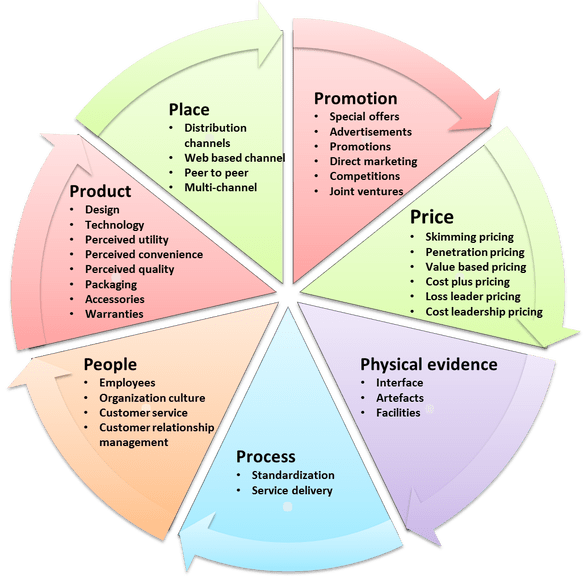
Services marketing are dominated by the 7 Ps of marketing namely Product, Price, Place, Promotion, People, Process and Physical evidence. All these are the factors or elements that are mixed by the marketer in order to deal with the customers much better.

Explanation of service marketing elements.

manners.

Why should we teach manners and etiquette in the classroom? Because kids need good social skills in order to succeed. If kids aren’t learning these basic skills at home, we need to be teaching them at school. Otherwise, through subtle social signals, the kids without manners will lose out and never know why.

And here’s a scary thought: students are learning manners from us whether we are teaching them or not. As Robert Fulghum (All I Really Need to Know I Learned in Kindergarten) said: Don’t worry that children never listen to you; worry that they are always watching you.

Where To Begin

Manners and etiquette include so many aspects of human behavior that you’ll need to determine which ones you want to focus on. Here are two simple behaviors you might start with.

1. BEING POLITE

Making an effort to be polite — smiling, saying “please” and “thank you,” holding the door for someone — goes a long way toward making and keeping friends and diffusing hostilities.

You might begin by asking students to give some examples of polite behavior. Have them demonstrate ways they have been polite and role-play situations in which they should make an effort to be polite.

Encourage them to practice in real life too. Be sure to notice when they do.

Discuss the outcomes of their practicing polite behavior. Ask students to describe any changes they feel in the classroom (or school, if everyone is working on manners and etiquette). Do they feel more comfortable, happier, safer? How do they feel when they are being polite? When someone is polite to them?

2. ACTING APPROPRIATELY FOR THE SITUATION

Behaving appropriately can help you succeed in reaching your goals — whether you want to get better grades; get a job and get promoted; or get invited to social events.

Again, brainstorm with students to get them talking about appropriate behavior for various settings. Discuss appropriate behavior for conversations, including listening when someone is speaking to you, speaking when spoken to, not talking about private things in public, looking at the person you are speaking with (I know the cultural implications, but not explaining to students what some people expect of them is doing them a disservice).

Have students role-play conversations with their peers and adults, focusing on making small talk about appropriate, positive topics, giving a compliment, and receiving a compliment graciously.

Ask students to suggest ways to remember to smile, stand up straight, or get rid of the chewing gum when they want to be taken seriously.

We Owe It To Our Kids

We owe it to our kids to teach them manners and etiquette. If we truly want to give all students an opportunity to succeed, we must stress the importance of acceptable, desirable behavior that will help them get and keep jobs, friends, and family. Someone needs to tell them.
 

HOW DOES SEARCH ENGINE GOOGLE WORKS?

Almost everyone of use google chrome for searching information today but do we ever think about how the google functions in order to give the accurate results. Today we are going to know about the functionality of search engine google.

INTRODUCTION ABOUT SEARCH ENGINE:

Search engine came into our world in the year of 1990 in the form of “archie”, which was an ftp indexing tool that allowed people to obtain certain files. A “ search engine “ is several interlinked mechanisms that work together to identify pieces of web content like images, videos , website pages, etc… based on the words you type in the search bar. The search engines always looks for the best solution, the right product, the most relevant video & the most accurate answers to better up the search experience of user.  

Search engine look simple from outside but that deceptively easy interchange requires a lot of computation and heavy lifting backstage. The too complicate matters in search engines are the algorithms used for searching. Most of the search algorithms are not only kept secret but are also constantly being changed and revised.  The hard work of search engine start it’s way before you make a search .Search engine work round-the-clock by gathering and organising information. 

FUNCTIONALITY OF A GOOGLE SEARCH ENGINE:

Understanding how a search engine works is vital to know about rank of a website. As the rank of a website is higher, the traffic that the website gets is also higher which leads to more income. The functioning of every search engine begins with the three-step process which is clearly explained in following steps:

CRAWLING:

Search engines rely on crawlers to scour the web information. Crawlers start out with a list of websites. The algorithms dictate crawlers about how many pages to crawl and how frequently.    A crawler is an internet bot that systematically browses the world wide web. Typically used by search engines . These crawlers are also called as spider.   Crawlers visit each site on the list systematically, following through tags like HREF & SRC to     jump to internal or external pages . Over time crawlers build an ever expanding map of interlinking pages

INDEXING & PAGE RANKING:

Once the content from web pages has been crawled, the web pages should be indexed based on the occurrence of multiple keywords.  When the web page content is indexing, the common elements are avoided and indexed information is stored in an organized manner. The organisation of indexed pages is called as page ranking. Search engines use algorithms for determining the rank of a web page.

PageRank is the first algorithm used by Google to evaluate web pages. It uses a simplistic model of web surfing to estimate the probability of browsing to each site on the internet. It uses the concept of random walks in a Directed Acyclic Graph.

The factors include in page ranking are Backlink quality, Mobile friendliness and how recently content was updated or Freshness. Engagement and Page speed. So, These three process steps play a vital role in “Search Engine” for query processing. The following video picturizes about the functionality of google search engine in a clear way.

CONCLUSION:

As billions of search queries per day are being performed in google, The quality of search results is closely monitored by google search quality team. The caffeine index of google takes up around 1,00,000,000 gigabytes and fills “server farms” , thousands of computers of google never get turned off around the globe. Google’s synonym system allows the search engine to recognize when groups of words mean the same thing.  For example: when you type “ dark coloured dresses”, search engine’s will results for black dresses as well as dark tones. That is the engine understands that dark as often synonymous with black

Finally, Google search engine is provided by Google LLC which is handling 40 billion indexed pages containing results along with advertisements in it. The three main reasons why internet user’s love google beside other search engines are because of it’s high quality results and regular updation of search algorithms. This is the reason why google has become most popular search engine even today in the world though it was developed at 1997 and it has almost 92% share of the global search engine market. 

ENVIRONMENT

All living things that live on this earth comes under the environment. Whether they live on land or water they are part of the environment. The environment also includes air, water, sunlight, plants, animals, etc.

Moreover, the earth is considered the only planet in the universe that supports life. The environment can be understood as a blanket that keeps life on the planet sage and sound.

Importance of Environment

We truly cannot understand the real worth of the environment. But we can estimate some of its importance that can help us understand its importance. It plays a vital role in keeping living things healthy in the environment.

Likewise, it maintains the ecological balance that will keep check of life on earth. It provides food, shelter, air, and fulfills all the human needs whether big or small.

Moreover, the entire life support of humans depends wholly on the environmental factors. In addition, it also helps in maintaining various life cycles on earth.

Most importantly, our environment is the source of natural beauty and is necessary for maintaining physical and mental health.

Benefits of the Environment

The environment gives us countless benefits that we can’t repay our entire life. As they are connected with the forest, trees, animals, water, and air. The forest and trees filter the air and absorb harmful gases. Plants purify water, reduce the chances of flood maintain natural balance and many others.

Moreover, the environment keeps a close check on the environment and its functioning, It regulates the vital systems that are essential for the ecosystem. Besides, it maintains the culture and quality of life on earth.

The environment regulates various natural cycles that happen daily. These cycles help in maintaining the natural balance between living things and the environment. Disturbance of these things can ultimately affect the life cycle of humans and other living beings.

The environment has helped us and other living beings to flourish and grow from thousands of years. The environment provides us fertile land, water, air, livestock and many essential things for survival.

Microplastic-A new global concern

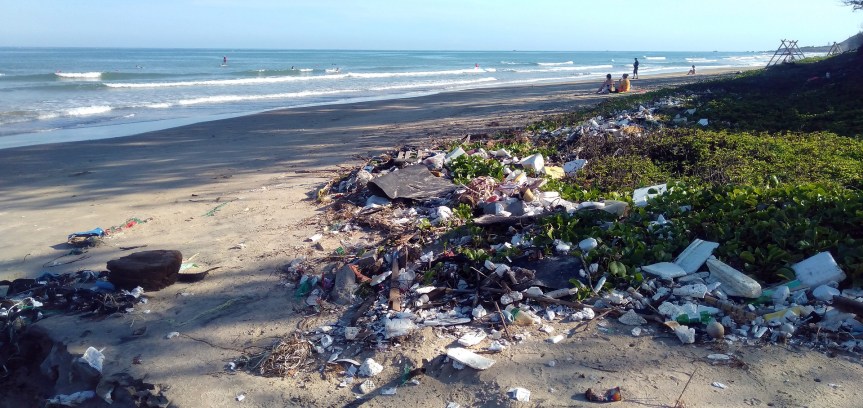
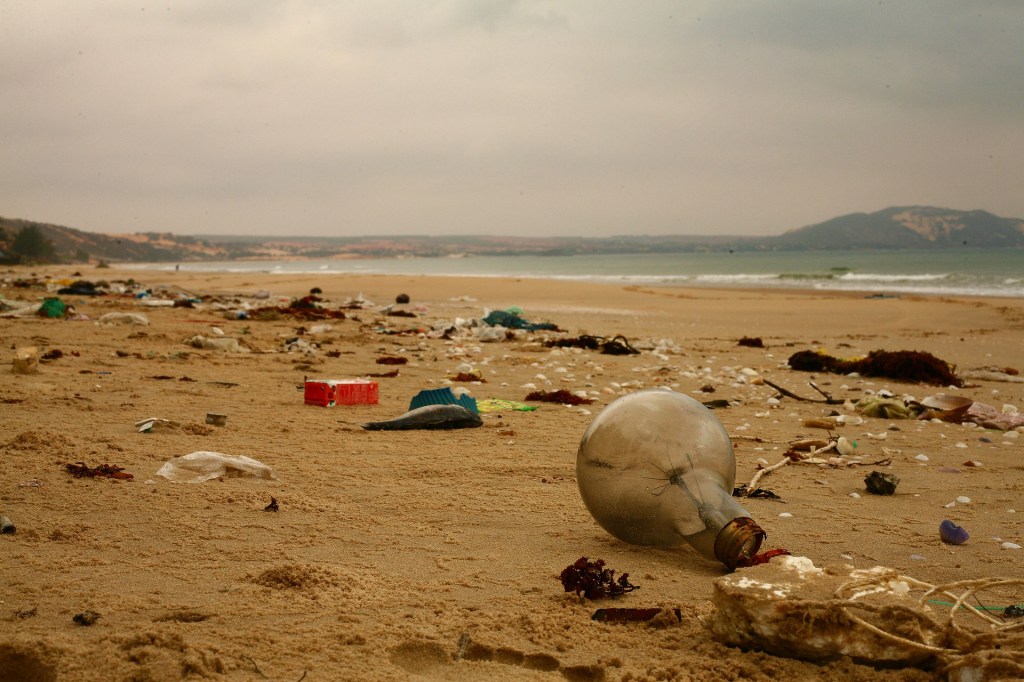
Pollution from plastics have always ranked in the top for being a global problem. Now microplastic pollution is joining the club. Microplastics, as the name suggests are the minute particles of plastic. The size of a particle is less than 5mm. They occur from the larger plastics which degrades into small pieces as expected, they are also added as exfoliants to beauty and health products. Microbeads which are intentionally designed to be small can be added to this list of sources. Microplastic fragments are also found in single use plastic bottles and everyday usage plastic products like containers also one of the sources. As the macroplastic waste is omnipresent but prominent in marine bodies, microplastic also is a major pollutant of the oceans and large lakes. They get accumulated in soil as well.

Microplastics is a quite new to the pollutants list. But they are a serious threat as they can not be removed by water filtration systems. Aquatic life and birds will feed this microplastics mistaking them as food. There is no complete information available about the pollution because of less research in the area. But slowly the research is increasing in the field.

hazards of microplastics

Microplastics are made of polypropylene, polystyrene and polyethylene. UV light fragments large plastic litter into micro and nanoparticles of plastic. As mentioned above, the capacity of the to microplastics escape the filtration process poses a serious threat. We all know plastic can not be digested. If these microparticles enter the body they may get accumulated. Because of their small size they might posses the capacity to pass through cells and tissues. Their segregation in aquatic animals will be a threat indirectly to humans because we feed on them. It is estimated that humans consume 11,000 microplastic particles per annum.

If these microplastics enter cells, they may cause irritation as they are foreign bodies. They are chemically toxic to the body as well. But it is the biggest threat to marine animals. They affect the reproducing capacity of the marine animals. The number of larvae were less and size of the offspring was small. They got physical inabilities, problems in swimming. They block gastrointestinal tracts of the animals.

some solutions to reduce microplastic pollution

The main solution is the 3R, reuse reduce and recycle. Any pollution related to plastic can be reduced if we reduce the usage of the plastic. Mainly the single usage plastics should be reduced. Products containing microbeads should be avoided. people should be aware about the problems and should support bans on plastic. Conducting beach cleanups will reduce the amount of plastic that reaches the ocean. Ocean cleanup projects will also do maximum help. Finding the major sources of the problem and starting to solve the problem at its origin. People should try to have zero waste life, at least mini waste life so that there will be less contributions towards pollution. Taking the help of technologies to check the pollution and developing perfect filter systems which will filter off 100% microplastics.