Today, 11th July has been recognized as World Population Day and the main significance of this day is to draw attention to the alarming global population issues. Among the 195 countries in the entire world, China tops the list recording the highest population and further India stands in the second position.
The day was established by the United Nations Development Programme in 1989 and was suggested by Dr. K.C.Zachariah in which the population reaches Five Billion when he worked as Sr Demographer at World Bank. On this day one should not only seek to raise awareness about the world population but also gives importance to issues like family planning, gender equality, poverty, maternal health, and human rights.
The increasing population has always been a matter of concern. At the beginning of the 1800s, the recorded population was 1 billion. Then, at the beginning of the 2000s, the population recorded was around 6 billion. As of 2019, the world population recorded is 767.35 Crores. The massive rate at which the population is increasing is very distressing. With the increase in the number of human beings, the resources to sustain human life has come to a downfall. The natural resources available are limited while their consumption is increasing every year. If this continues increasing at the same rate, the day isn’t away when everyone here would be doomed.
Individuals always advocate through words and suggest the required steps to be taken to control the increasing population but very few carry out various programs at their institution or organizational levels to make people aware of the consequences this would lead to us if not controlled. In India, most of the remote area’s population aren’t even aware of basic human rights, educating them about various policies and family planning strategies can turn out to be beneficial. If we get a close look at the stats in India, the birth rate is increasing rapidly stating 51 births each min(as of 2020) and death rates decreasing comparatively to around 19 deaths each min(as of 2020). Taking this into consideration, reproductive health of woman is a matter of concern too. Maternal health affects adversely due to multiple rebirths and if one’s sexually active with multiple partners makes her more vulnerable to deadly diseases like vaginal and cervical cancer.
While the media/ press only surges on the count of the world population, leaders, small organizations, institutions should hold hands together to create and spread awareness about reproductive health issues and advocate their voices for the basic human rights of every individual. It’s also my request to the government to come forward with effective policies and schemes to control the population. And the concern is so widespread that the results won’t show up immediately, everyone has to be patient whilst these measures become effective. But if not controlled now, human life should get prepared for some adverse repercussions.
You Can’t Live an Indian Life without a saree – 4 different saree you should know about!!
City Of Joy – Kolkata yes we are now talking about the tant saree which is famous in all over West Bengal. It is originally made from Bengal cotton handloom, it is also known as taant, tat, taat . This saree is not only worn by west Bengals but also women in Bangladesh is also fond of tant saree. This saree is has a speciality as it is light as airy texture and very suitable for the warm weather. These saree has a thick border and decorative pallu and is decorated by floral pattern.
BACKGROUND–
The word “Tant” indicate the handloom in Bengal that are used weave cotton garments like saree, dhoti and other garments. the background of this saree took place in the 15th century in shantipur.
The art gave wave during the Mughal rule 16th – 18th century when it became an extreme favourite among Muslim and jamdani weaving. This beautiful art continued during the British rule and decades before independence. After the partition of Bengal in 1947, many weavers from Bangladesh migrated to India and started living in neighbouring town shantipur, now it became a new home for Tangail weavers of Bangladesh. today both Bengalis and Bangladeshi weaver are well known for the varieties of tant saree.
WEAVING TECHNIQUE–
A massive quantity of cotton threads comes from the mill are first washed to remove any chemicals, dried in the sun, bleached and again dried.
Then they are put in boiling water which contains colour to dye them.
After this, they are then starched and processed some more times to make then stronger and subtler. The threads are wound on bamboo drums for weaving.
Every saree has a design on its border, pallu and body . These design made by the artist on a soft card sheet by perforating them which are then put up from the loom.
The simplest saree takes about 10- 12 hours to weave, and saree which have complex design takes 5-6 days to get complete.
State Of Jewels – Gujarat, which is famous for bandhani work derived from the Hindi/Sanskrit word “ bandhna” and “bandha”, which means tying or to tie. Traditionally in India tie and dye art known as bandhani. According to the design and motifs each pattern has its special significance.
BACKGROUND –
It is an ancient practice done by people. People used the technique of picking the cloth with fingernails and tying before dying, this was first found in Indus valley civilization, back to 4000 B.C. even the Buddhist painting, and Ajanta caves have bandhani design in it.
MAKING PROCESS –
Here the selection of cloth plays an important role. The artist starts with the unbleached white fabric.
Then they have block printing design in other words it is senticels for printing on saree they give impressing by designed blocked on saree
Later they grab some amount of cloth and tie with thread tightly, they also use some kinds of pebbles, motis , stones to give design to the saree.
Then they dip the cloth into normal water to soak the saree so that colour can easily stick to the cloth.
After this, they put the saree in the boiling water which contains salt and colour.
Again they put the saree in the cold water and at last they dry the saree. And after untying you will find beautiful designs on saree.
State of Caves – Maharashtra. Every bride in Maharashtra dream to wear paithani saree at her wedding, one of the most beautiful saree in India. Paithani gives the reflection of rich Marathi culture and tradition. Paithani is woven with very fine silk which makes them one of the richest saree in India.
BACKGROUND –
Paithani is extracted more than the 2000 year back from statvahana dynasty. it is said that paithani is originated from the city called pratishan now it is known as paithan. At that time paithan was the centre of silk and zari ( gold yarn) and they even exported cotton and silk to the roman empire. So this is how paithani gots its name.
MAKING PROCESS –
At first pallu or padar of paithani is weaved it is either woven either with zari work or silk warp. Traditionally zari work has silver coated with wash gold. Pallu is designed with akruti, asawali, banddimore etc.
Next step is to weave its body. The body has bordered on the edges which are handwoven by gold and silver zari. As the border is made by gold zari body also has floral design and zari work is done.
After all the zari work is done, it is polished with a mixture of water and gum to give saree a stiff texture. They also used methi and jaggery used in the mixture.
They use various colours of bana and tana to get colours of the paithani saree. Tana bana means a mixture of two colours to give a single colour. ex- blue bana and red tana will give a shade of purple. This is how colour is given to paithani. After this, a perfect paithani is made.
State Of Temples – Tamil Nadu, kanjeevaram got its name from a village Kanchipuram. This saree owns thick fabric and dark shades of colours mixed with hints of gold. Women in India love to wear saree during festivals, weddings, occasion and celebrations then kanjeevaram is the best outfit to look classy.
BACKGROUND –
The history of kanjeevaram silk saree started from Hindu mythology. It is said that Kanchi silk weaver is descendants of sage Makanda, who was considered to be the best weaver. It is considered that two weaving communities from Andhra Pradesh, the devangas and the saligars came to Kanchipuram. As we know the city is full of temples and weaver cleverly used temples’ architecture in kanjeevaram saree to give details.
MAKING PROCESS –
Mulberry silk is used to weave Kanjeevaram saree and the gold, silver zari which is used in the edges of the saree comes from Gujarat.
Silk threads then dipped into rice water and dried under the sun to make the texture of silk thick and stiff.
This silk thread is interlocked within a thin silver wire and woven
with the help of golden thread to complete the process.
To weave this fabric a wrap frame is used which has approx of 60 holes, in which there are 240 threads in the warp and 250 to 3000 threads in the weft.
Saree is popular for vibrant colour and impressive designs which borrowed from designs of temples.
Usually, weaver weaves pallu and body separately and they are pretty different from each other and later than are interlocked by pinti which is a zig-zag pattern where pallu meets the body of the saree. This is how a kanjeevaram saree is made.
Water is the precious gift of nature to humankind and millions of other species living on the earth.
Tamil Nadu constitutes 4% of India’s land area and is inhabited by 6% of India’s population, but has only 2.5% percent of India’s water resources. More than 95% of the surface water and 80% of the ground water have already been put into use.
Multipurpose River Valley Projects
Multipurpose river valley projects are basically designed for the development of irrigation for agriculture and hydropower generation. However, they are used for many other purposes as well.
Mettur Dam
The Mettur Dam was constructed in a gorge, where river Cauvery enters the plains. It is one of the oldest dam in India. It provides irrigation to Salem, Erode, Karur, Tiruchirapalli, Thanjavur, Tiruvarur and Nagapattinam districts farmlands.
Bhavani Sagar Dam
The Bhavani Sagar Dam is located 80 km away from Coimbatore city in the district of Erode. It has been constructed across the river Bhavani. This dam is one of the biggest earthen dams in the country.
Amaravathi Dam
The Amaravathi dam is situated 25 km away from Udumalpet in Tirupur district. The dam has been constructed across the river Amaravathi, a tributary of Cauvery. The dam was built primarily for irrigation and flood control. A small Hydropower station has also been installed recently.
Krishnagiri Dam
Krishnagiri dam is situated at a distance of 7 km from Krishnagiri towards Dharmapuri.
Sathanur Dam
Sathanur Dam was constructed across the river Thenpennai in Chengam taluk. It is in the midst of Chennakesava hills. It irrigates the land in Thandrampet and Tiruvannamalai blocks. There is also a large crocodile farm and a fish grotto. Parks are maintained inside the dam for tourists and the gardens are used by the film industry.
Mullaperiyar Dam
Mullaperiyar dam was built by the British administration in 1895. It has been constructed on the Periyar river, which originates from Thekkady hills of Kerala. The dam was built mainly for watering the farming land of Tamil Nadu, which is perennially drought-prone.
Vaigai Dam
This dam built across the river Vaigai near Andipatti. The dam with a height of 111 feet can store water up to 71 feet. It is a located 7 km from Andipatti and 70 km from Madurai. This dam was opened on 21 January, 1959.
Manimuthar Dam
Manimuthar dam is located about 47 km from Tirunelveli.
The Papanasam Dam
It is also known as Karaiyar dam and is located about 49 km away from Tirunelveli and Thoothukudi districts.
Parampikulam Aliyar Project
It is a joint venture of Tamil Nadu and Kerala states. It envisages the construction of seven interconnected reservoirs by harnessing the water of seven rivers, which include major rivers of Parampikulam and Aliyar.
Parappalar project is located near Ottanchatram. Its storage capacity is 167 million cubic feet of water. It is about 75 km from Madurai and is in Palani taluk.
Water Resource Management
Water resource management is the activity of planning, developing, distributing and managing the optimum use of water resources. The demand for water in Tamil Nadu is increasing at a fast rate both due to increasing population and also due to larger per capita needs triggered by economic growth. Demands from other sectors such as domestic and industries have been growing significantly. The state is heavily dependent on monsoon rains. Since the state is entirely dependent on rains for recharging its water resources, monsoon failures lead to acute water scarcity and severe droughts. So, it is important to save water for us and the future generation.
Gandhi is an important figure in India’s national movement. A phase of our national movement is called the Gandhian Phase. Nation is defined as a people sharing a common language, history and culture and having a sense of belonging to their common identity. The idea of nation was combined with the nation of the state. It developed where the people of one nation were suppose to live in one state. Nationalism has 2 versions: Premordial and Modernist.
Premordial versions means is the the original versions of nationalism in which the nation has a common language, culture, ethics and history. The modernist version however they treat people like a particular territory and sharing its civic amenities despite loving different ethic on regular affinities.
Gandhi ji was one of the nationalist who was the leader of many movements. He helped us to get independence. He believed in non- violence. He lead many movements in his opposition to the British rule like Satyagraha, Dandi March, Khilafat Movement, the non-cooperation movement. For Mahatma Gandhi, nationalist was based on understanding what was required for people to be free. He was not a socialist but, in common with the socialists, he believed that capitalism could never solve the problem of unemployment and the mental dullness is produced. Gamdhi ji also fought against the practices of sati, child marriage, oppressions of widow, ‘pardah’ and fueled emancipation of women.
Gandhi ji on Communal Liberty
India is a land of diversity. Populated by heterogeneous people of multifarious languages, religion, castes and creeds. Inspite of such diversities of character, there is always an underlying unity among them since time immemorial. The fact also remains that there is always a threat to narrow communal feelings. In modern India, gandhi was one of the greatest champions and communal unity. He lived his whole lofe striving for it, ensuring it, stood firmly by itand finally sacrificed his life in the pursuit of his communal unity. For Gandhi the life of communal unity was even greater than swaraj. None of the political leaders or religious priests were as devotedly concerned about communal unity as Gandhi ji was. Gandhi ji saw truth, love, compassion and service enlisted in all religions, which led him to accord equal respects to all faiths. All religion insist on equality of human race and developing a harmonious relationship with the entirety of creation. Any violation of the principle of equality gives way to conflict and violation. Gnadhiji regarded Islam as a religion of peace in the same sense as Christanity, Buddhism and Hinduism. No doubt, there are differences in the degree. He said in this regard that he knew the passages that could be quoted from the holy Quran to the contrary. Hindu and Muslim has often raised a great challenge before India became secular. Without unity between Hindu and Muslim no certain progress can be made by the nation tenet that ‘unity is strength’ is not merely a copy book maxim but a rule of life. Hindu-Muslim unity means not only unity betwwen Hindus and Muslims but betwwen all these who believe India to be their home, no matter to what faith they belong. Gandhi ji did not fully succeed in Hindu-Muslim unity . Some writers felt that Gandhi ji locked a historocal perspective. He did not take into the account that held that religion with its dagma, tradition, customs, rituals and historical memories has on the minds of men and women in the pre modern society. Gandhi assigned only a derination role to the cultural factors. He did not grasp the deeper social and cultural roots of the hindu-muslims conflict. Gamdhi placed the entire blame for the communal problem on the British. He thought that hindu-muslim was essentially religious amd missed the social aspect of the problems. Gandhi always emphasized upon the necessity of openness of mind for the unity and harmony of the society. It was not a question of failure or success. Gandhi realised that the only alternative to violence coercion, retribution and chaos was restoration of society among the misguided individual to counter Frenzy and indictiveness, gandhi sought rehabilitation of balanced social interrogation among the masses to reslove to put the cause of nation above all denominated prejudices. Today, India is a secular nation. Democracy is mature, muslims have got equal rights and opportunities and are more secure in India than in any other country. The credit goes to the founding father of contribution and Mahatma Gandhi.
Indian Women cricketer Harleen Deol pulled off a stunning catch to dismiss Amy Jones in the first T20 against on Friday (9th July 2021), that acrobatic effort from Harleen Deol won the hearts of fans and Cricket lover all over the globe.
Harleen was fielding at long off and Amy Jones tried to clear the fences off Shikha Pandey’s delivery, everyone thought that the ball would sail over the fence for maximum but Harleen Deol timed her jump in the air to perfection and managed it to keep it inside the boundary and drived back to hold onto it.
Every single person watching that catch knows that she had broken the barrier between men’s and women’s cricket . Though India women’s lost the match to England women’s, but everyone appreciated that effort of Harleen, even England cricket team appreciate that efforts in their twitter.
Banking in India in the mdern sense originated in the last decades of the 18th century . The first banks were Bank of Hindustan (1770-1829) and the General Bank of India established 1786. The largest bank and the oldest still in existence, is tge State bank of India, which originated in the Bank of Calcutta in June 1806 , which almost immediately became the bank of Bengal. This was one of the three presidency banks , the other two being The Bank of Bombay and The bank of Madras , all three of which were established under charters from the British East India Company. The three banks merged in 1921 to form the Imperial Bank of India , which , upon India’s independence became the State Bank of India in 1955. For many years the presidency banks acted as quasi-central banks , as did their successors until the reserve Bank of India was established in 1935 .
Reserve bank of India (RBI)
The Reserve Bank of India is India’s central banking institution, which controls the monetary policy of the Indian rupee. It commenced its operations on 1 April 1935 during the British Rule in accordance with the provisions of the Reserve Bank of India Act,1934 and in 1949 it was nationalized.The central office of the Reserve Bank was initially established in Calcutta but was permanently moved to Mumbai in 1937. The central office is where the Governor sits and where policies are formulated. Sir CD Deshmukh is the first Governor of RBI. The RBI has four zonal offices at Chennai, Delhi, Kolkata, Mumbai and 20 regional offices mostly located in the state capitals and 11 sub-offices. Reserve Bank of India Act,1934 is the legislative act under which the Reserve Bank of India was formed. This act along with the Comapnies Act, which was amended in 1936, were meant to provide a framework for the supervision of banking firms in india.
Scheduled and non-scheduled banks
Scheduled banks in India refer to those banks which have been included in the second schedule of Reserve Bank of India Act, 1934. Banks not under this schedule are called non-scheduled banks. In other words, Banks with a reserve capital of less than 5 lakh rupees qualify as non-scheduled banks. Unlike scheduled Banks , they are not entitled to borrow from the RBI for normal banking purposes, except, in emergency or ‘abnormal circumstances’. Coastal local Area Bank Ltd. (Vijayawasa,AP), Capital Local Area Bank Ltd. (Phagwara, Punjab), Krishna Bhima Samrudhi Local Area Bank Ltd. (Mehbubnagar, Telangana), Subhadra Local Area Bank Ltd. (Kolhapur, Maharashtra) are the only non-scheduled banks in India.
Scheduled banks are further internally classified into commercial banks and cooperative banks.
Public Sector Banks
Public sector banks (PSBs) are banks where a majority state (ie., more than 50%) is held by a government . The shares of these banks are listed on stock exchange. There are a total of 21 PSBs in India and State Bank of India group.
In 1969, the Indira-Gandhi headed government nationalised 14 major commercial banks ( Allahabad Bank , Bank of Baroda , Bank of India , Bank of Maharashtra , Canara Bank , Central Bank of India , Dena Bank , Indian Bank , Indian Overseas Bank , Punjab and Sindh Bank , Punjab National Bank, Sindicate Bank , UCO Bank , United Bank of India)
In 1980 , a further 6 banks were nationalised (Andhra Bank , Cooperation Bank , New Bank of India , Oriental Bank of Commerce, Punjab and Sindh Bank , Vijay Bank )
IDBI Bank is an Indian government-owned financial service company, formarly known as industrial Development Bank of India , headquartered in Mumbai , India .It was established in 1964 and nationalised in year 2005 .
Private Sector Banks
The ‘Private- Sector’ banks are baks where greater parts of share or equity are not held by the government but by private shareholders . There are many Indian and Foreign Banks in India . HDFC Bank , ICICI Bank , Axis Bank , Kotak Mahindra Bank , Yes Bank , IDFC Bank , RBL Bank , Federal Bank , City Union Bank are the major private banks in India.
Regional Rural Banks
Regional Rural Banks were formed on October 2,1975 upon the recommendations of M. Narsimham working group during the tenure of Indira Gandhi’s government. The object behind the formation of RRBs was to serve large unserve population of rural areas and promoting financial inclusions . They have been created with a view to serve primarily the rural areas of India with basic banking and financial services. However, RRBs may have branches set up for urban operations and their area of operation may include urban areas too.
CooperativeBanks
The cooperative banks are furtger classified into:
State cooperative banks: These are small financial institutions which are governed by regulations like Banking Regulations Act , 1949 and Banking Laws Cooperative Socities Act ,1965 . At present there are about 33 state cooperative banks of which 19 are scheduled.
Urban/ Central cooperative banks: The term urban cooperative banks (UCB) refers to primary cooperative banks located in urban and semi-urban areas . These banks till 1996 , were allowed to lend money only for non-agricultural purposes. This distinction does not hold today . They essentially lent to small borrowers abd business . There are about 2,104 UCBs of which 56 were scheduled Banks. About 79 percent of these are located in 5states- Andhra Pradesh, Gujarat, Karnataka, Maharashtra and Tamil Nadu .
Primary credit Socities: Primary Credit Societies or primary agricultural credit society (PACs) is a basic unit and smallest cooperative credit institutions in India. It works on the grassroot level (Gram panchayat and village level ) . It virtually function like banks , but whose net worth is less than Rs. 1 lakh; who are not members of the payment system and to whom deposit insurance is not extended .
I’ve seen many people say ‘fitness is my passion’ but have never tried doing yoga. Why? Did you know that yoga is one of the most relaxing and fun way to be fit? Every Asana, every movement builds up the strength in your muscles and relaxes your mind and body. Yoga helps build flexibility and strength. When you hold a pose for a long time, you realize that your balance has also improved which surely gives you the confidence to continue practicing yoga for a healthier life. It is said that yoga is derived from the Sanskrit word “yuji” which means union. In simple terms, it’s the union of your body, mind and soul. Oh also, an Asana is a body posture which starts with simple poses but with time and experience, it can get more complex and interesting. In this article, I’ll mainly be talking about Surya Namaskar/ Sun Salutation. Surya Namaskar is a powerful force in practicing yoga. It consists of 12 yoga poses. It has a very positive impact on the mind and body, it’s also a great cardiovascular workout. There are many benefits of practicing this workout, it mainly helps with stimulating the nervous system, helps in flexibility, is an amazing solution to weight loss and improves cognitive functioning.
1) Pranamasana / Prayer pose : Stand at the edge of your mat while keeping your foot together. As you inhale, lift both of your arms from the sides and while exhaling, bring your palms together and form a praying position.
2) Hastauttanasana / Raised arms pose : The main purpose of this pose is to stretch your entire body so to do that you must breathe in, lift your arms up and then take it back while keeping your biceps close to the ears.
3) Hastapadasana / Standing forward bend : While breathing out, bend forward from gbe waist but remember to keep the spine intact. After exhaling completely, bring your hands down and place them next to your feet.
4) Ashwa Sanchalanasana / Equestrian pose : Push your right leg back but make sure to push it as far as you can and bring the right knee to the floor and look up but also keep in mind that the left foot is in between your palms.
5) Chaturanga Dandasana / Stick pose : in and take the left leg back and bring the whole body to make a straight line.
6) Ashtanga Namaskara / Salute with eight joints : Exhale while bringing your knees down to the floor, take your hips slightly back and slide forward. Make sure your two hands, two feet, two knees, chest and chin are on the floor.
7) Bhujangasana / Cobra pose : For this pose, slide forward and raise your chest up to form a cobra pose. It’s advisable to keep your elbows bent and keep your shoulders away from your ears and look up the ceiling.
8) Adho Mukha Svanasana / Downward facing dog pose : The inverted ‘V’ pose. Breathe out and lift your hips and the tailbone to make an inverted ‘V’. If it’s possible, try keeping your heels on the ground.
9) Ashwa Sanchalanasana / Equestrian pose : Push your right leg back but make sure to push it as far as you can and bring the right knee to the floor and look up but also keep in mind that the left foot is in between your palms.
10) Hastapadasana / Standing forward bend : While breathing out, bend forward from the waist but remember to keep the spine intact. After exhaling completely, bring your hands down and place them next to your feet.
11) Hastauttanasana / Raised arms pose : The main purpose of this pose is to stretch your entire body so to do that you must breathe in, lift your arms up and then take it back while keeping your biceps close to the ears.
12) Tadasana / Mountain pose : While exhaling, straighten your body and bring your arms down. Observing the sensations taking place in your body is the key point to master this pose.
Therefore, this completes Set 1. While doing Surya Namaskar, make sure to do 2 sets. For the second set, start with the left leg and bring the right foot forward in step 10. The main purpose of doing yoga is to make sure you relax and enjoy this form of exercise. Always give yourself and your body enough time to adapt to this method and never rush into anything.
Years after leaving those precious school days behind, you still gush over the idea of having a popular, cool classmate having a crush on you or a warm and caring senior as your friend.
Of course, your school days can’t come back but you can watch these dramas and feel happy about the good memories you made. Here, is the list of Top 10 Highschool K-dramas that you’ll love:
1) Sassy Go-Go (2015):
Taking place at a prestigious boarding school, this drama depicts high school life in South Korea where students are taught to compete and climb over their competitors.
One day, an unfortunate incident creates a crisis for the school’s dance club and a group of elite students. They must overcome their differences and work together in order to prove others wrong. It starred Jung Eun-Ji, Lee Won-Keun, Chae Soo-Bin, Cha Haek-Yon, Ji-Soo as the main cast.
2) A-Teen(2018):
This K-drama was a sequel made for the K-drama “Seventeen”. A production of Naver Subsidiaries, it starred Shin Yae-Eun, Lee Na-Eun, Shin Seung-Ho, Kim Dong-Hee, and Kim So-Hyun.
In A-Teen, two characters shared the same name “Ha-Na” embark on a journey of self-discovery as they turn 18. Do Ha-Na may be ordinary, but she’s outgoing and confident.
Meanwhile, Kim Ha-Na is the school’s most favored student and yet she’s insecure on the inside. This is a story about six friends and how they deal with their teenage years. A worth it Teenage sympathetic romance drama.
3) Moment Of Eighteen(2019):
At eighteen, Choi Jun-Woo has solidified his position as a perpetual loner. Unable to adequately express his emotions, he often comes across as unsympathetic and aloof, when in reality, that couldn’t be further from the truth.
Underneath his lonely exterior lies a cute, goofy young man who just needs the right people around to bring this side more often. When Jun Woo transfers schools, he meets Yoo Soo Bin, a top student who has spent her entire life being controlled by her overbearing mother.
Suffocated under her mother’s care, Soo Bin spends most of her life dreaming of the day she becomes an independent woman. Meanwhile, Ma Hwi Young, seems like the perfect gentleman.
Strong on the outside, Hwi Young seems like he has it all, but on the inside, he’s just a timid eighteen-year-old boy trying to find his place in the world. Each student has their own set of struggles but when they come together, they find their lives slowly begin to change. “Moment of Eighteen” is a 2019 Viki Original directed drama directed by Sim Na-Yeon.
4) Love Alarm(2019):
Love Alarm is a streaming television series starring Kim So Hyun, Jung Ga-Ram, and Song Kang. It is based on the Daum Webtoon of the same name written by Chon Kye-Yong.
The drama is based on a futuristic app that alerts you when someone within a ten minutes radius harbors a crush on you. While this cutting-edge technology sounds exciting, heartbreaks are bound to arise as feelings start to get exposed.
Injecting technology into romance would make for the most intense love triangle ever. You’d be spilt between rooting for Hwang Sun-Oh, the school’s most popular transfer student who’s go-getter, and Lee Hye-Hyeong, who’s quiet and shy but never fails to look out for Jo-Jo.
5) The Heirs (2013):
The world at your feet and the weight of the world at your shoulders, children of the super-elite class bear the burden of success as they are being groomed of the success as they are being groomed as heirs to their family business empires despite only being in high school.
“Heirs: He Who Wears The Crown Must Bear Its Weight” or commonly known as “The Heirs”, is a 2013 south Korean starring the hottest actors working today. It is directed by Knag Shin Yo.
6) Who Are You: School 2015 (2015):
“Who Are You: School 2015” also known as “Love Generation” in Japan is a television series, starring Kim So-Hyun, Nam Joo-Hyuk, and Yook Jung-Sae.
This drama is a 2015 version of KBS2’s “School” series, this young adult drama focuses on an 18-year old female high school student who has her life turned upside down overnight and the honest, touching situations that the students encounter.
7) Dream High(2011):
“Dream High” is one of those K-dramas whose cast mostly consisted of K-pop idols. It starred 2PM’s Ok Taec-Yeon and Jang Woo-Young, IU, T-ara’s Ham Eun-Jung, and Kim So0-Hyun.
The drama follows six school classmates at a performing arts high school as they strive to become successful K-pop stars while also navigating through the trials of teenage life.
8) Extraordinary You (2019):
Dan Oh, a high school girl who is an only child from a wealthy family, has congenital heart disease. One day, she wonders why her memory keeps disappearing.
She finally realizes that she is a character in the cartoon and decides to find her real life and love. Meanwhile, a character who doesn’t even has its name, Seuli high school’s student number 13, lives like the background of the other character, but his life slowly changes after meeting Dan-Oh.
They begin their mysterious adventure to find out the secret of the romance cartoon world, and they try to get their independent lives back.
9) Boys Over Flowers (2009):
Jan Di is an average girl whose family owns a dry-cleaning store located near the luxurious and well-known Shin Hwa High School. After saving a boy from jumping off the roof of Shin Hwa High School, Jan Di is admitted into the school on a swimming scholarship.
At school, Jan Di tries to avoid confrontation with the four richest and most spoiled boys known as the F4, because she knows what happens to those that stand up against them. However, when Jan Di’s friend, Oh Min Ji, accidentally gets ice cream on the F4 leader’s shoes, she is forced to declare war on the leader of the F4, Goo Joon Pyo.
What will happen, though, when she falls in love with someone from the F4 and Goo Joon Pyo starts developing feelings for her, too? Will the love triangle disrupt the F4 and change their lives forever?
“Boys Over Flowers” is one of the biggest Korean drama hits of our time, sweeping ratings and awards across Asia in 2009 and 2010.
10) True Beauty(2020):
Based on a webtoon of the same name, it starred Cha Eun-Woo, Moon Ga-Young, Hwang In-Youp, and Park Yoo-Naa. This drama was one of the most famous K-Dramas of 2020 and still is in the hype. It centers on a high school girl, who after being bullied and discriminated against because of being perceived as ugly, masters the art of makeup to transform herself into a gorgeous person. It was a smash hit after it was released. The drama enthralled the audience as it had a riveting love triangle which was worth the attention. The creator expressed it was a dream come true to see her work turned into a drama.
K-dramas are not must about Romance or love triangles. It focuses on much more issues like family, friendship, trust. If you want to spend some quality time in this hectic period, you should definitely try these K-Dramas. You don’t know what waits for you in the K-Drama World.
🌟Born in a wealthy, aristocratic Kashmir Brahmin family as the only son of Pandit Motilal Nehru, a flourishing law practitioner in Allahabad, Uttar Pradesh (UP), Jawaharlal received the best of education first in India and later in England where he attended at Harrow and Trinity colleges, Cambridge.Later still, he qualified as a barrister at the Inner Temple. After completing his higher studies Jawaharlal returned to India in 1912. Being a highly cultivated and sensitive individual, he was more interested in public affairs affairs rather than in practising law, specially so since his father was already deeply involved in Congress politics. In 1916,at the of 27,he was married to Kamala, daughter of Jawaharlal Kaul, another distinguished Kashmiri Brahmin descendant. After marriage,the couple went to Europe for their honeymoon. Soon a daughter was born to them, Indira Priyadharshini, who was to become India’s third prime Minister in 1967. Nehru’s family life was short-lived. As her husband plunged into politics and was hailed by the British in 1921, kamala also started participating in public life. Constant travel and rigiorous schedule made her I’ll and she had to spend several months in Switzerland for treatment. She returned to India in 1928, and again engaged herself in public life, often with her husband. When her health deteriorated,she had to go to Switzerland once again. But this time the journey was fatal. She succumbed to her illness on 28 February 1936,when Nehru was only 47 and Indira just 19. Nehru did not marry again. His life was totally dedicated to the National cause and to bring up his only daughter.
🌟Nehru’s political initiation took placeat his father’s home ‘Anandbhavan’ itself. Many Senior politicians visited Anadhabavan to hold discussions with Motilal Nehru. The young Jawaharlal got acquainted with many of them. He also came to have glimpses into the prevailing political situation. Later, he became more active in UP politics. The defining moment of Nehru’s political career came soon when he met Gandhiji in 1919. Gandhiji had already become a prominent leader of the nationalist movement. They got attracted to each other instantly. The occasion also was right. In Amristar, Punjab, the British troops had opened fire on a unarmed crowd on 13, April 1919 killing and wounding thousands of men and women. The whole nation was shocked. Innumerable protest meetings were held all over the country. Jawaharlal was among the leaders who organized protests. In the 1920 session of the Indian National Congress, Gandhiji put forward the idea of non-cooperation. Though there were differences of opinion on this novel political weapon, Nehru staunchly backed the idea. After coming into code contact with Gandhiji Tere was no respite for Nehru. In 1927, there were widespread demonstrations ad strikes against the Simon Commession sent to India by the British Government to study Constitutional reforms in the country. Jawaharlal who led the protests in Allahabad was beaten by the police. The opposition to the Simon Commession wa not only in respect of it’s terms of reference but aso to the fact that the commission had no Indian as a member. Nehru was asked to prepare an alternative ‘constitutio’ for India. This Nehru himself was elected as the President of ye Congress at the Lahore session. It as a rare honour for the young leader, for the previous session in 1928 was presided over by his father Motilal Nehru. It was also in this session that the Congress declared that complete independence was it’s avowed goal. The car the famous salt ‘satyagraha’ whereby Gandhiji exhorted people to extract salt from see water violating British ban on it. Nehru was arrested along with so many others for participating in the salt agitation. It was a series of agitations and jail terms that followed. The grand finale was the Quit India Movement when Gandhiji asked Britain and to leave India and let the Indians take over the country’s governance. Again, all the leaders including Nehru was arrested and jailed. Altogether Jawaharlal had to spend a period of more than decade and a half in British Indian jails on various occasions.
🌟But such harsh measures could not silence the man. Instead it brought to light another brilliant quality of the multifaceted personality – the writer in Nehru. He wrote some of the most historically reliable and literature- wise brilliant books during his prison days. ‘Dicovery of India’, ‘Glimpses of World History’, ‘Letters to His Daughter’, ‘An Autobiography’, Etc. are some of them. They are considered literary masterpiece in English language, and are in good demand even now.
🌟By the end of the Second World war, Britain had recognized the need for settling the questions of India’s demand for Independence. The labour Government that came to power after the war sent in 1946 a Cabinet Mission under sir Stafford Crips to negotiate with Indian leaders on issues connected with the transfer of power. They spent weeks in India talking with political leaders of various shades. Nehru played a prominent role in these discussions as he had been once again elected President of the Congress Party. The talks were practically inconclusive as the two main political parties, the Indian National Congress and the Muslim League, could not agree to any formula put farward. Finally as a prelude to transfer of power Britain set up an interim Indian Government under the premiership of Jawaharlal Nehru. Though the Muslim League did not join at the beginning, they joined The Cabinet at a later stage, effectively making it a coalition ministry. The relationship of the two parties had been very complex and often antagonistic. British Government was partly responsible for their mutual hatred and suspicion. In their anxiety to prolong their rule in India, they had tacitly encouraged communal division between Hindus and Muslims, the dominant segments of the India’s population. As the political agitations for Independence intensified and on the British departure became imminent, the meetinggrounds between the divided political foes became unbridgeable. British solution was division of the country into India and Pakistan a state to be newly carved out in the Indian subcontinent. Like his mentor, Mahatma Gandhi, Jawaharlal Nehru was also dead opposed to the idea of country’s partition. But the brief experience in the interim Cabinet with Muslim League during 1946 – 1947 convinced him that the partition could not be avoided. Vital portfolios were shared by rival parties and there were bickering almost daily on the decision-making process and on the allotment of funds to various administrative and development activities. The overcome this running agony and to make the administration a creative smooth affair, partition of the country was agreed upon. India became free on 15, August 1947 after Pakistan was granted freedom a day earlier. Jawaharlal Nehru was sworn in as the first prime Minister of free India when the clock struck the midnight hour that day. He was 58.
🌟As the Prime Minister of free India, Nehru’s task was stupendous. There was the immediate problem of communal mayhem and whole- scale slaughter following mass migration between the two countries. More vital was the agenda for long term development of the country. Congress Party had laid down broad outlines of National priorities. But it had to be drafted into policies and put into implementation. It was the towering personality of Jawaharlal Nehru that saved the situation. Mahatma Gandhi had already proclaimed him to be his political heir, and Nehru had a clear vision about the future of the country. He was an idealist ,but not a prisoner of ideologies. He was a top class intellectual,but he always respected the opinion of others of that decisions of national importance were made after due consultations.
🌟Nehru envisaged a planned developed for the country. With this in view, he formed planning commission which was entrusted with the preparation of the First Five Year Plan. Though the first plan was a modest one, as the years passed the plans grew in size and ambition. One can stay with certainty that whatever growth the development India attained during the fifties and sixties had their origin in Nehru’s ideas on planned progress. Nehurvian developmental vision guided this vast country in it’s tryst with destiny.
🌟Probably, Nehru’s more basic contribution was in the field of social and political developmenrs. India inherited a diversified and layered society and polity. Tendencies for internal feud and dissensions wre aplenty. Nehru’s inclusive Vision and policy of accommodation held this immense country together and helped it to evolve into a vibrant secular democracy. He remained accessible to everyone irrespective of religion, caste, region, language or other differences.
🌟Nehru’s achievement on the international arena was no less great. The post-war world was divided into a pro-socialist bloc of the contries under the USSR and a pro-capitalist bloc under the USA. In this divided world Nehru took an independent stand. Dubbed as non-alignment,the policy attracted many newly emergent, Independence countries of Asia, Africa and Latin America. A third bloc of nations soon got organized under the banner of Non-Alignment. Nehru was regarded a leader of the Non-Alignment Movement (NAM) along with President Nasser of Egypt, President Sukarno of Indonesia and President Tito of Yugoslavia. Peaceful coexistence was the pillar of his foreign policy. Non-Alignment policy helped India and other third World countries to exert an influence out of proportion to their Military or economic strength.
🌟At the domestic front, Jawaharlal showed great insight on Developmental priorities. He knew that heavy industries like steel, cement, ship building, locomotives, fertilizer, machine tools, etc. we’re the backbones for any meaningful industrialization. If heavy industries were not founded on strong basis, other industries would not follow. A similar principal was followed in the case of development of science and technology. The Council of Scientific Industrial Research (CSIR) was started as a nodal agency for promoting institutional level research efforts in various fields. As a result, some of the world class research laboratories grew up in the country. Steps were taken to establish atomic research centres and space research centres. University Grants Commission was founded for rapid expansion of higher education facilities in the country. Nehru Paid equal attention to the flowering of human talents in social sciences, arts and literature. Various national level councils such as Indian Council for Historical Research (ICHR), Indian Council for Social Science Research (ICSSR), etc. were set up to encourage pursuits of quality studies in social sciences. Various academic such as kendra Sathiya Academy, Lalith Kala Academy, National Book Trust, Children’s Books Trust, etc. also owe their existence to Nehru’s deep concern for the cultural, artistic and intellectual development of the people of this vast country.
🌟Jawaharlal travelled widely both within the country and outside. In India there would be hardly a town or village where he had no visited at least once. Also, he carried India’s message across the world by visiting almost all important countries. In USA and the USSR, India’s leader was given reception that stunned even the host countries. For example,it was reported that when he visited New York in 1949, the welcome received by him was comparable only yo that received by General Mac Arthur, the 5- starred homecoming hero of the Pacific War.
🌟Nehru was a man of the masses. He was in his element when he moved with them or addressed them. He drew inspiration,even ideas from the lives of ordinary, faceless common people. For him they represented real India.
🌟A fairly long period of 16 years as head of the Government of a cast country with nearly one-sixth of world’s population should have been exhaustive and tiring for any leader. Yet, Nehru remained a relentless fighter for peace and development. However, in the summer of 1964 while he was on a hectic tour of the Himalayan districts, Jawaharlal fell ill. He was in the hospital for less than two weeks. Aged 75 ,he breathed his last peacefully on 27 May 1964 and bade good bye to his beloved people. As a token a affection to the departed leader, the ashes for his mortal body were apportioned and taken to various rivers and seacoasts across the country for immersion. Even in death, the titanic leader wanted to remain united with his country and it’s people. A simple mausoleum on the banks of the river Yamuna in Delhi was erected to preserve part of his mortal remains. It is apply named ‘Shantivan’, the adobe of peace or rather ‘peaceful woods’.
🌹Jawaharlal Nehru will be remembered by posterity as one of the greatest statemen that India has produced. His place in historyis assured as the supreme architect of modern India🌹.
Groom PROMISES: I will provide welfare and happiness for you and the children that we bear and you shall offer me food and help whenever it is required.
BRIDE PROMISES: I will be responsible for the complete household management.
Second Vow:
Groom PROMISES: He promises that together, we will protect our children and home
BRIDE PROMISES: She promises to stand with her husband as his strength and courage and in return demands him to be loyal to her.
Third Vow:
Groom PROMISES: He hopes for a wealthy and prosperous future for both of them and their children.
BRIDE PROMISES: She gives an assurance of staying loyal to her husband and putting every other man in her life as secondary.
Fourth Vow:
Groom PROMISES: The groom declares that bride has made his life complete and promises to respect her. He hopes for their children to be obedient , noble and longevity of their life.
BRIDE PROMISES: She promises him that shower him with joy and happiness and do everything possible to please him.
Fifth Vow:
Groom PROMISES: He calls the bride his best friend and a well-wisher. He thanks her, and asks God to bless her.
BRIDE PROMISES: She promises to love and cherish him all her life and pledges that his happiness and sorrows are now her happiness and sorrows and she promises to honour him and strive to fulfill his wishes.
SIXTH VOW:
Groom PROMISES: He says to the bride “Now that you have taken six steps with me and I am delighted. Would you promise to fill my heart with the same happiness for the lifetime?”
BRIDE PROMISES: She the bride promises to be with her husband all her life.
Seventh Vow:
Groom PROMISES: He declares that “we are now husband and wife, and now we will stay together for eternity.”
BRIDE PROMISES: she says that with God being the witness, she is now his wife and says that both of them will cherish and honour each other forever.
Replacing traditional sources of energy completely with renewable energy is going to be a challenging task. However, by adding renewable energy to the grid and gradually increasing its contribution, we can realistically expect a future that is powered completely by green energy.
– Tulsi Tanti
A way to live a new life . Without any destruction , without worrying about the future . Live a life where we can grow together , develop a life with renewable resources.
Introduction
A renewable resource, also known as a flow resource, is a natural resource which will replenish to replace the portion depleted by usage and consumption, either through natural reproduction or other recurring processes in a finite amount of time in a human time scale.
When such recovery rate of resources is unlikely to ever exceed a human time scale, these are called perpetual resources. Renewable resources are a part of Earth’s natural environment and the largest components of its ecosphere. A positive life-cycle assessment is a key indicator of a resource’s sustainability.
Renewable resources are an energy source that cannot be depleted and are able to supply a continuous source of clean energy.
Renewable resources also produce clean energy, meaning less pollution and greenhouse gas emissions, which contribute to climate change.
Examples of renewable resources.
Biomass .
Biogas.
Tidal Energy.
Wind Energy.
Geothermal Energy.
Radiant Energy.
Hydro Electricity.
Compressed Natural Gas.
Types of renewable resources.
1) Solar energy. Sunlight is one of our planet’s most abundant and freely available energy resources. 2) Wind energy. Wind is a plentiful source of clean energy. 3) Hydro energy. 4) Tidal energy. 5) Geothermal energy. 6) Biomass Energy.
Impact of renewable resources.
Environmental impact
Renewable energy projects have also contributed in improving environmental impacts such as reduction of carbon dioxide gas, awakening community about the climate change. The study observed very small impacts on the people living in a particular area, tourism, cost of energy supply, and educational impacts. Significant impacts were observed in improvement of life standard, social bonds creation, and community development. They also observed that the renewable energy projects are complex to install and are local environmental and condition sensitive. Their forecasting, execution, and planning require more consideration and knowledge as compared to other projects.
Social impact
These resources also provide social benefits like improvement of health, according to choice of consumer, advancement in technologies, and opportunities for the work, but some basic considerations should be taken for the benefit of humans, for example, climate conditions, level of education and standard of living, and region whether urban or rural from agricultural point of view. Social aspects are the basic considerations for the development of any country. The following social benefits can be achieved by renewable energy systems: local employment, better health, job opportunities, and consumer choice.
Advantages of renewable resources.
Renewable energy won’t run out.
Maintenance requirements are lower.
Renewables save money.
Renewable energy has numerous health and environmental benefits.
Renewables lower reliance on foreign energy sources.
Higher upfront cost.
Intermittency.
Storage capabilities.
Conclusion
Renewable energy is becoming an important resource in all over the world . I do agree that people might exploit the resources for there own benefit . But the government is working on that aspect and trying to provide resources that can help our future households .
There are a lot of different ways of building a prosperous society, and some of them use much less energy than others. And it is possible and more practical to talk about rebuilding systems to use much less energy than it is to think about trying to meet greater demands of energy through clean energy alone.
Here we are going to discuss the historical background of the Indian Constitution. The fact that the Constitution of the Indian Republic is not a political revolution but an outcome of the research and reflections of renowned exemplary people who were looking forward to enhancing the existing system of administration. Post-independence, India was spilled up into two units—
(1) The British India.
(2) Princely States ( under Subsidiary Rights).
Later, the two were combined all together to form The Indian Union.
There are several different coating behind the background of the Indian Constitution:
• Regulation Act, of 1773
• Pitt’s India Act, of 1784
• Charter Act, of 1833and 1853
For our present intent, we do not need to go far off from the year 1858, when the British Crown concluded sovereignty over India by the East India Company.
• Government of India Act, 1858:- The government of India Act, 1858 (21 & 22 Vict, c 106). By this act, the powers of the Crown were to be exercised by the Secretary of State for India, assisted by a Council (known as the Council of India). Essential features of the system, introduced by the act of 1858 we’re:-
(1) The administration of the country was rigidly centralized.
(2) Government of India had to function under the superintendence, direction, and control of the Governor-General in all matters.
(3) The entire machinery of administration was bureaucratic.
• Indian Councils Act, 1861:- Indian Councils Act, 1861 introduced a grain of popular element insofar as it provided that the Governor-General’s Executive Council, which was so long composed limited to officials, should incorporate non-officials members. Elements of the act:
(1) This Legislature Council was neither representative nor contemplative.
(2) It could not by any means criticize the acts of administration or the procedure of the Parliament.
• Indian Councils Act, 1892:- Two rectification was done as regards the Indian and Provincial Legislative Councils were introduced by the Indian Councils Act, 1892:
(1) The non-officials members of the Indian Legislative Council were henceforth to be nominated by the Bengal Chamber of Commerce and the Provincial Councils would be nominated by certain local bodies.
(2) The Councils vested with the powers of discussing the annual statement of revenue and expenditures.
• Morley-Minto reforms and the Indian Councils Act, 1909:-The first effort for introducing a representative was made by Morley-Minto reforms known by the names of the then Secretary of State in India LordMorley and the Viceroy Lord Minto, implemented by the Indian Councils Act,1909 elements of which are mentioned below:
(1) The size of Councils was enlarged by including elected non-official menbers.
(2) Election was also introduced in the Legislative Councils at the Centre.
(3) The deliberative functions of the Councils were also increased.
• Montagu-Chelmsford Report and the Government of India Act, 1919:- The next landmark in the Constitutional development of India is the Montagu- Chelmsford Report which led to the enactment of the Government of India Act, 1919. The reforms did not aim at the establishment of a parliamentary system of government in the country but to provide for the reservation of the final decision on all inquiries in the hands of the inconsistent Executive.
• Government of India Act, 1935:-Essential elements of the Government of India Act, 1935 are:
(1) Federation and Provincial Autonomy.
(2) Dyarchy at the Centre.
(3) The Central Legislature was bicameral, constitutes a Federal Assembly, and the Councils of State.
(4) Though the Indian States did not join the federation, the federal provisions of the government of India Act 1935, existed between the Central Government and the provinces.
Government of India Act 1935
• Conclusion:-The changes introduced by the above-mentioned acts into the structure of government pending the outcome of a constitution for an independent India. In pursuance of the India Independence Act, the Government of India Act 1935, as amended by the Adoption Orders, both in India and Pakistan, in order to provide an interim Constitution to each of the two Dominions until the Constitution Assembly could draw up the future Constitution.
Argentina defeated Brazil in the Copa America final in Rio’s Maracana stadium, ending Lionel Messi’s wait for his first major international title.
At the full-time whistle, Messi, 34, dropped to the ground in excitement and was quickly swarmed by his teammates before being thrown in the air in celebration, as he finally achieved top-level honours with his country in his 10th major tournament.
He also helped Argentina win the competition for the first time in 28 years, and he was awarded player of the tournament after scoring four goals in the competition.
Messi had a chance to seal the victory with a goal at his mercy, but he slipped with the game on the line. It would have been the perfect ending for the Argentine captain. “The happiness is great,” Messi stated after the game, praising the Argentina team’s mentality. “I had a lot of faith in this group, which had grown in strength since the last Copa America. “I had a lot of faith in this group, which had grown in strength since the last Copa America. It’s a collection of wonderful people that are continually striving to improve and never complain.”
Brazil, the defending champions, were lacklustre, with their only notable chances coming when Richarlison and Gabriel Barbosa forced Emi Martinez into saves.
Messi’s opposing number 10 and former Barcelona teammate Neymar went to his knees in tears at the final whistle, as he continues his own personal pursuit of international triumph after missing Brazil’s 2019 Copa win due to injury.
While waiting for the trophy ceremony, the pair, who played together at the Nou Camp between 2013 and 2017 before the Brazilian’s departure to Paris St-Germain, reunited after the match.
“You’d adore him even more if you knew how he [Messi] played at the Copa America,” Argentina coach Lionel Scaloni said.
“You can never have enough of a player like him, even when he isn’t entirely fit, as he was in this and the prior game.”
Because of Covid-19 restrictions, the game was only viewed by a small crowd of 7,000 invited guests, although it was the first of the tournament to draw spectators.
The tiny home crowd made their presence felt, especially when Messi touched the ball, booing and jeering the forward.
The tournament, which had been postponed for a year due to the coronavirus pandemic and relocated from initial co-hosts Colombia and Argentina, was transferred to Brazil at the last minute, drawing controversy due to a spike in coronavirus cases in the country.
Messi’s opposing number 10 and former Barcelona teammate Neymar went to his knees in tears at the final whistle, as he continues his own personal pursuit of international triumph after missing Brazil’s 2019 Copa win due to injury.
It was clear from the ecstatic Argentina celebrations at full-time, with Messi the focal point, that this squad’s drive to triumph against their old rival was as much for their legendary forward as it was the nation.
It has been 15 years since Messi first represented Argentina at a major tournament and after four World Cups and six Copa America appearances, taking in 53 matches, he finally has the major international title he – and his country – has craved.
Despite being one of the most decorated and brilliant players of the modern era – and arguably all time – with 10 La Liga titles, four Champions Leagues and six Ballons d’Or, questions over his lack of impact on the international stage have hung over his legacy.
Messi at the World Cup
Country
Played
Won
Lost
Minutes
Goals
Stage
2006
3
2
0
121
1
Quarter-final
2010
5
4
1
450
0
Quarter-final
2014
7
5
1
693
4
Runners-up
2018
4
1
2
360
1
Last 16
TOTALS
19
12
4
1624
6
Figures provided by Stats Perform
Questions about his immediate future will now continue to be asked, with Messi now a free agent after his Barcelona contract ended two weeks ago – although Barca have stepped up their attempts to keep hold of their star man with negotiations continuing.
There also remains the prospect of Messi going for what would likely be his last chance of winning the World Cup – something Argentina have not done since 1986 – should he lead his country out in Qatar at the age of 35 in December 2022.
Color is a communicator. It has a language all its own that we utilize, and culturally participate with, on a daily basis. Color can inspire moods from outside in interior designers and decorators know this. To initiate color choices, color professionals.Mere color,unspoiled by meaning,and unallied with definite form, can speak to the soul in a thousand different ways.
It is used effectively color theory is one of the most powerful tools a designer can wield. Colors are a form of non verbal communication that can speak volumes in a fraction of second. They can instantly set a mood,convey an emotion,invoke a physiological reaction or inspire people to take action.when we harness the right color emotion to help tell a client’s story it can have a powerful effect. Below is a list of PMS colors and their associated moods.
Red :
Evokes strong emotions like passion or intensity, encourages appetite,symbolizes love and danger, Eyes look to red first, it draws attemtion,creates movement and exctiment, Too much red however,feels hostile. Use to stimulate quick decision making, shows to increase respiration rate ,raise blood pressure and enhance metabolism.
Yellow :
A spontaneous yet unstable color, associated with joy, intellect , energy, happiness, and food. Use to attract attention. When overused it can have a disturbing effects, studies have shown that babies cry more in yellow rooms. Cherrful, warm and symbolizes energy and increases metabolism. Yellow also causes the brain to seretonin, giving one a feeling of optismism . That is all well are good but if used wrongly on a brands graphics and especially on a website, and can strain eyes and cause eye fatigue.
Blue :
Number one color preferred by males. Symbolizes trust, loyality, wisdom, confidence, intelligence, faith, truth. Use to promote cleaniness, stability and hi tech products. Shown to supress ones appetite and stimulate productivity.
Orange :
Highly accepted among the younger generation. Associated with tascination, creativity, determination, attraction, encouragement and stimualtion. Effective in promoting food products by stimulating, appetite. Increases oxygen to the brain amd stimulates mental activity.
Green :
The color of nature that involves a healing power. Symbolizes grown relaxation, harmony, freshness and fertility. Use to promote saftey and tranqullity. Stimulates harmony in the brain promoting balance between body and mind.
White :
A depiction of faith and purity. Associated with safety and cleanliness. Use to suggest simplicity and sterlitity in products. Acts as a clean state and helps to promote creativity.
Purple :
The color of royality. Associated with luxury, ambition, wisdom, dignity, independence, creativity and magic. Use when marketing toys to children. Surveys taken have shown that 3/4 of childen prefer that color purple.
Black :
A mysterious yet authoritative color, associated with elegance, formality, fear, death and evil. Use behind bright colors to make them pop. Know to create a slimming effect when worn.
Gray :
Gray is the perfect neutral to work with in a graphics environments and has less reflection than white. Evokes a sense of professionalism and calm. Seen a sleek and high-end and gives one a sense of stability. Too much evokes a feeling of aging, depression and loss.
Pink :
A calming and warm color that evokes love and romance. Pink is a clean and feminine color. Recently however, there has been a backlash against is overuse in product packaging, giving rise to the term ” pink- washed”.
Color Harmony :
Color is similar to musical notes in many ways, and there are certain combinations of colors that are pleasing when put together, approximately called color chords or color Harmonies.
Complementary :
Colors that are opposite of each other on the color wheel are called complementary colors. The high contrast between complementary colors when seen together causes them to stand out more and has a very vibrant look, but can be tricky to use in large doses without being too intense.
Split- Complementary:
Split – complementary is a variation on complementary. It uses one color and the two adjacement colors to its complement to bring the same strong contrast as complementary color combinations,but with less tension.
Analogous :
Using colors next to each other on the color wheel tend to give designs a feeling of unity and serenity. Because these colors are similar in hue, having constrating values is important when using analogous combinations to keep colors distinct from each other.
Triadic :
Triadic combinations are made with three colors located equal distance from each other on the color wheel, such as red, yellow, and blue making a triangular pattern. This harmony has a tendency to be vibrant despite satuartion, and is often more impacting when one color is used more than the others.
Conspiracy theory, an attempt to explain harmful or tragic events as the result of the actions of a small powerful group. Such explanations reject the accepted narrative surrounding those events; indeed, the official version may be seen as further proof of the conspiracy.
Conspiracy theories increase in prevalence in periods of widespread anxiety, uncertainty, or hardship, as during wars and economic depressions and in the aftermath of natural disasters like tsunamis, earthquakes, and pandemics. This fact is evidenced by the profusion of conspiracy theories that emerged in the wake of the September 11 attacks in 2001 and by the more than 2,000 volumes on U.S. Pres. John F. Kennedy’s assassination. This suggests that conspiratorial thinking is driven by a strong human desire to make sense of social forces that are self-relevant, important, and threatening
The content of conspiracy theories is emotionally laden and its alleged discovery can be gratifying. The evidentiary standards for corroborating conspiracy theories are typically weak, and they are usually resistant to falsification. The survivability of conspiracy theories may be aided by psychological biases and by distrust of official sources.
Top 10 conspiracy theory
Many conspiracy theorists go much further, though, and see a hidden hand behind the world’s major events. While some of the theories have a grain of truth to them, conspiracy theories are impossible to disprove, because the hardcore believers will find some way to rationalize away evidence that contradicts their beliefs. Eyewitnesses who dispute their conclusions are mistaken—or part of the conspiracy.
The 9/11 Conspiracies
9/11 was the worst terrorist incident in the history of the United States. Terrorists hijacked 3 planes, two of which were flown into the World Trade Center in NYC, which led to its collapse and the death of about 3,000 people. To many people, the official story of what actually happened on that day seemed way off.
The weird way in which the twin towers came down and the surgical precision that is required to use two airplanes to cause the towers to collapse the way they did resulted in many conspiracy theories claiming that the attack was an inside job.
Reptilian People Ruling the World
A rather crazier one among these, this one suggests that the most influential leaders of the worlds are in fact Lizard Peoples. According to researchers travelling to different countries, Reptilians are a predator race that takes the form of a reptile man when feeding off of humanity. Some people have claimed to have seen people turn into reptiles and change back into humans, in seconds and sometimes the change lasts for even days. The theory suggests that the race feeds on human fear and that is why most of the terror attacks are actually inside jobs to keep the humans scared.
According to everyone else who believes in this theory- the society’s elites are actually lizards disguised as humans with the mission of enslaving the human race! Those “elites” include world leaders, actors and large corporate executives. Celebrities that are claimed to be from the “reptilian elite” include George W. Bush, the Clintons and even Queen Elizabeth.
The JFK Assassination
On November 22, 1963, John F. Kennedy was assassinated. Due to the mysterious motives and circumstances surrounding the assassination, plenty of conspiracy theories that are related to this incident have emerged. Those conspiracy theories make all kinds of claims, starting with the identity of the real killer and the people who were really behind it.
Conspiracy theories related to the people behind the assassination involved many organizations and government agencies, starting with the CIA and all the way to the mafia. Some even accuse the Castro government of being behind the assassination.
Who really killed JFK? Nobody knows for sure.
Area 51
Perhaps one of the most interesting and talked about conspiracy theories that trigger the curiosity of people of all ages has to be Area 51. It is a highly guarded place located in the Nevada Test andTraining Range in the southern parts of Nevada in the western United States, 83 miles north-northwest of Las Vegas. Details of what goes on in this area are top national secret but speculations say that it is a training and development grounds of the United States Air Force (USAF).
Where something is called “top secret” to the public, conspiracy theories are bound to surface. This was back in the 1940s when mysterious flying saucers were claimed to been spotted by commercial airline pilots. Then later, what was found on the crash site, was described to be a UFO. Theories suggest that the government has kept within Area 51 many such UFOs and most probably its inhabitants, to re-engineer their aircraft and build highly advanced machines for themselves.
These theories were reaffirmed when a retired army colonel claimed that he was given access to extraterrestrial materials gathered from a crashed UFO in Roswell. MAny other conspiracy theories go as far as suggesting that the government is studying time travel in Area 51. Believe them or don’t but these are sure quite the talk of the town.
The moon landing
The greatest achieved by human civilization was the first steps of mankind on the moon. Astronauts Neil Armstrong and Buzz Aldrin were the first humans to set foot on the moon’s soil. But if conspiracy theorists were to be believed, then the whole thing might have been a hoax. It is said that the US was so desperate to win the moon race against Russia, that they faked the whole mission by filming it on a film set.
Unfortunately, there are many conspiracy involving this. Filmmaker Stanley Kubrick in his 1968 Film 2001: A Space Odessey has shown the world that it was possible to create a make-believe film set that perfectly depicted space. This further solidified the conspiracy theories that he might have helped Nasa to film the hoax. Also, the fact that the pictures and videos of the space mission were only available through NASA’s website further raised suspicions.
Secret Societies of the World
The conspiracy theories surrounding this one definitely received its due limelight due to our very famous novelist Dan Brown and his books about the Illuminati. Conspiracy theories suggest that the world is actually ruled by secret societies that are very powerful and influential. They control the world order.
Reports came out in 2004 that both the Presidential candidates were members of a secret society called the Skull and Bones Society of the Yale University. It is believed they control the world.
Apart from that, theories claim that most of the people sitting in some of the most powerful positions in the world are members of some sort of secret society.
The more famous societies that are at the zenith of conspiracies are the Illuminati and the Freemasons. The Illuminati, a Satanic society, which has apparently formed in 18th Century Germany, is said to be trying to create a single government to rule the world and contains some of the most influential people with the likes of Beyonce.
5G causes Coronavirus
Living during a pandemic, how can we miss out on the latest and most happening conspiracy theory that is afloat among us right as we discuss this. This theory claims that 5G technology may have been responsible for the outbreak of the Novel Coronavirus.
Though scientists and experts all around the world have rubbish theses claims stating that it is biologically impossible for a virus to spread through an electromagnetic wave, it hasn’t stopped theorists from second-guessing. The idea around is that 5G lowers the body’s immune system and thus accelerates the spread of the Covid-19.
Also, the huge debatable conspiracy around the coronavirus is that it is a bioweapon created by China to weaken the world. It’s surely one of the tragic events to have ever struck the world. Public health now remains a worry more than ever.
Whatever it is, we would like nothing more than to get rid of the deadly virus and get our normal lives back.
For all we know, the real world is a strange one indeed.
Chemtrails
Did you ever look at the sky and notice those line-shaped clouds that an airplane leaves behind? Those trails are mainly a combination of water vapor and other impurities that are crystallized due to the low temperatures at high altitudes.
The chemtrails conspiracy theory suggests that those trails are a material that is sprayed by governments over their populations with the malicious intent of controlling their minds!
As those trails are seen by people all over the world, this conspiracy theory has gained much more momentum than it should. Or, is that what the government wants us to believe?
Paul Is Dead
This is one of the very many conspiracy theories that has entertained fans in pop culture for decades. According to claims, The Beatles legend Paul Mc Cartney died in a gruesome car accident in 1966 when the band was in the peak of its fame. Fearing that the news of his death would severely affect the band’s image so early on in their career, the band members decided to replace McCartney with a look-alike who, as we all know, is still very much alive and kicking.
Fans have speculated the albums the band released after 1966 and found many references and clues which suggested McCartney’s untimely death. In the album, Sgt Pepper’s Lonely Hearts Club Band, fans have pointed out several clues which validate their suspicion. In the song, A Day In The Life, lyrics like “He blew his mind out in the car” are said to suggest his car accident.
The song, Strawberry Fields Forever has been under the midst of a huge conspiracy which still gets talked about. It is said that John Lennon is clearly heard mumbling at the end of the song “I buried Paul” twice. Lennon has vehemently denied the claims insisting that he was saying “Cranberry sauce”.
Another famous conspiracy theory arises due to the cover of the album Abbey Road where the band members are walking in a line. There John is seen leading a “funeral procession” dressed in white, Ringo is dressed in black signifying a mourner and George appears as a gravedigger. Paul, however, is seeing walking out of line from the rest, barefoot. This, fans claim is a sign since there is no need for shoes in the afterlife.
Tupac Shakur isn’t Dead
After attending the Mike Tyson vs. Bruce Seldon match in the MGM Grand Hotel in Las Vegas, Tupac Shakur was shot in a drive-by shooting in the Las Vegas Strip, after which he died a few days later in the hospital. Well, at least that’s what the official story and the hospital reports said!
According to many of the iconic rapper’s fans, Tupac Shakur is still alive and actually faked his own death. People who believe in this conspiracy theory resort to all kinds of lyrics deciphering to provide evidence of Tupac hinting his own “fake death” and the fact that he is still alive in his songs lyrics.
What are your favorite conspiracy theories? Let us know in the comments section.




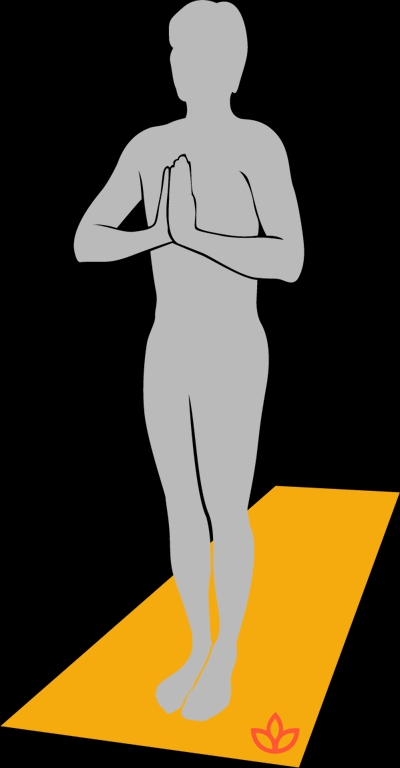

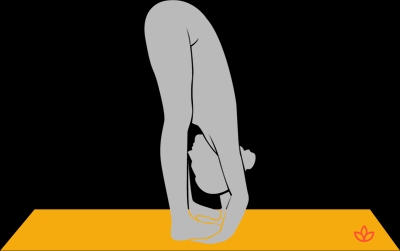
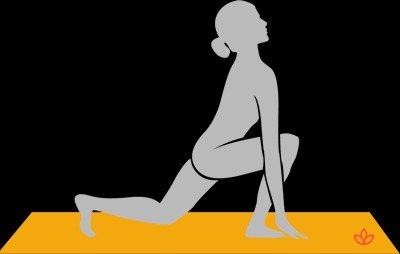



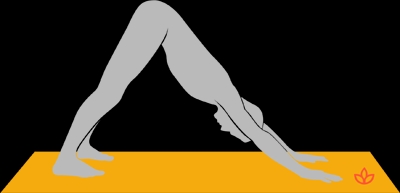
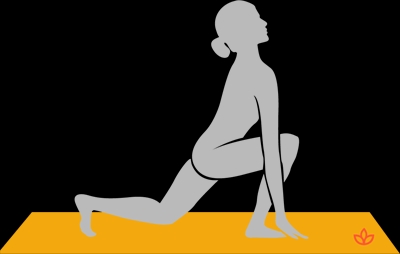
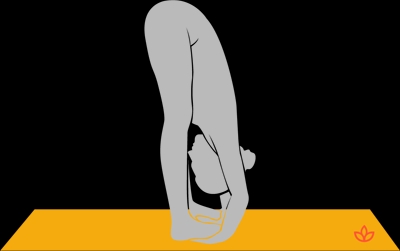

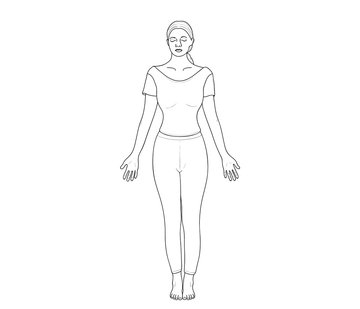







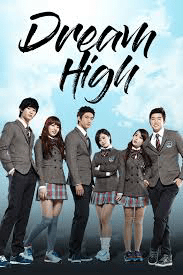

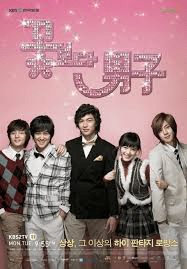

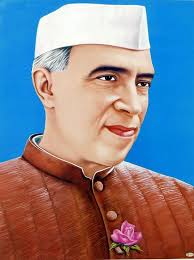
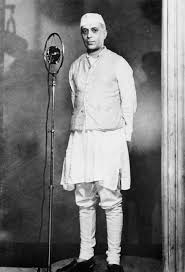
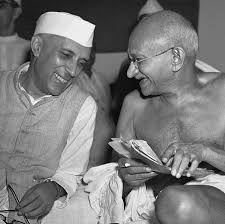
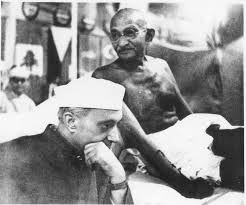
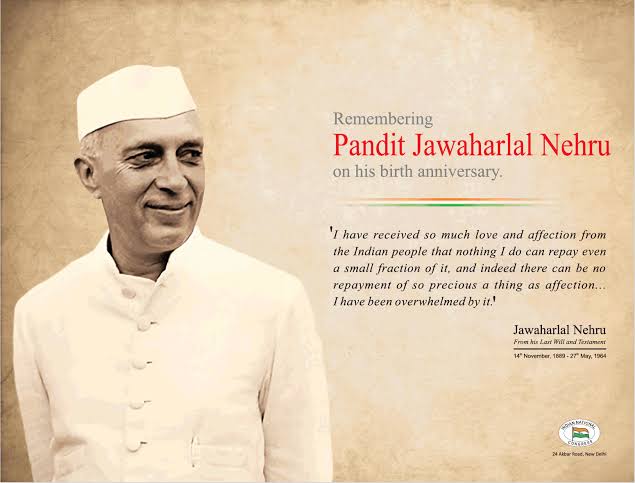
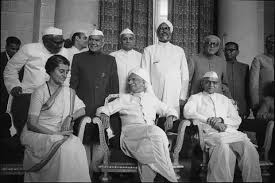
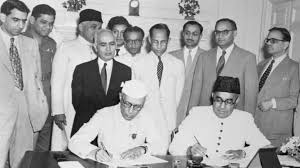
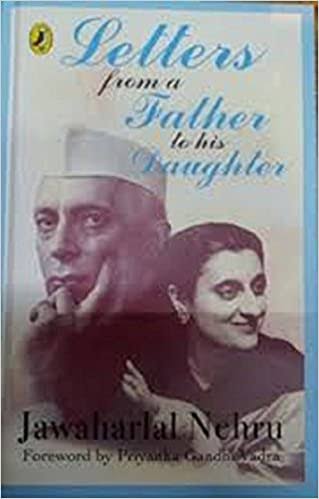
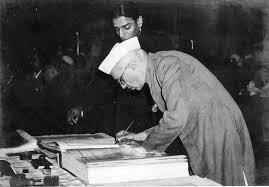


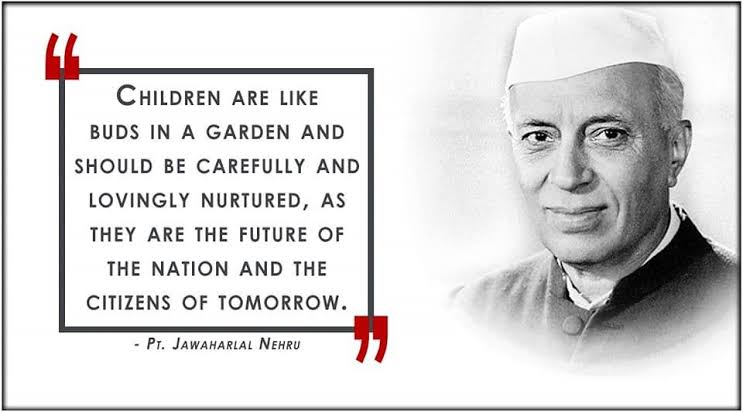
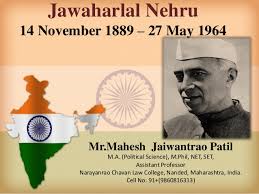
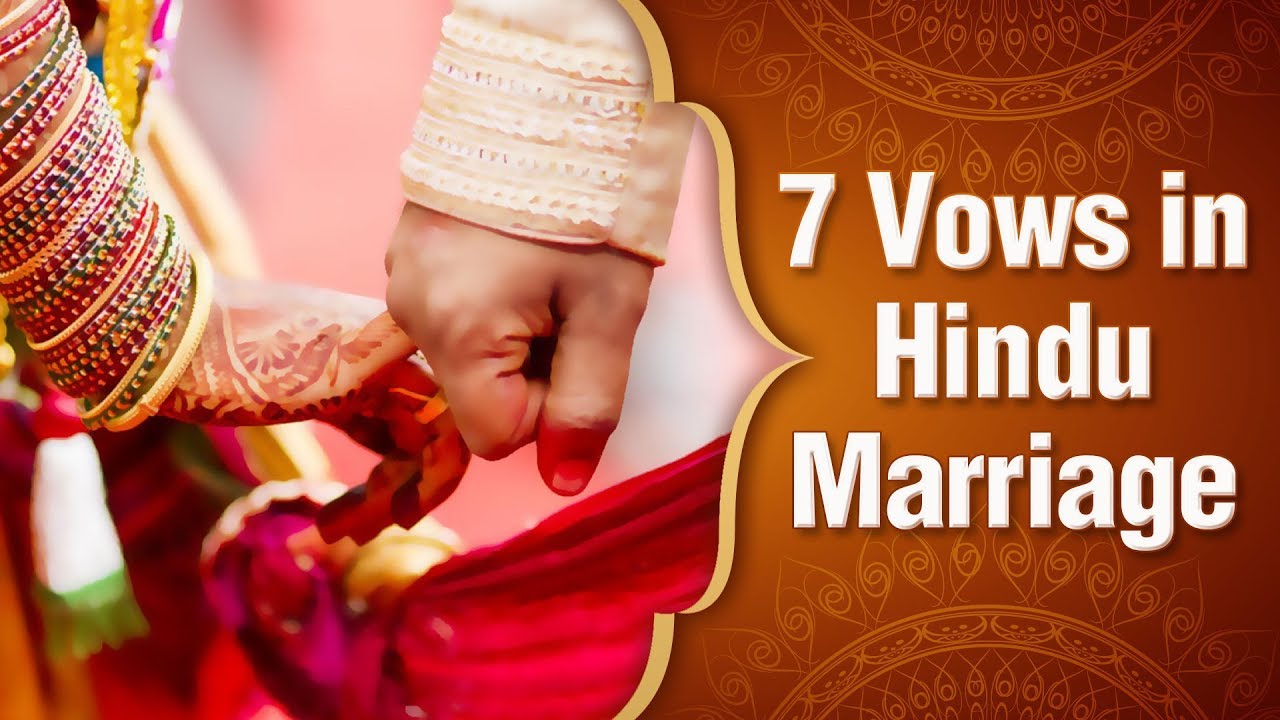
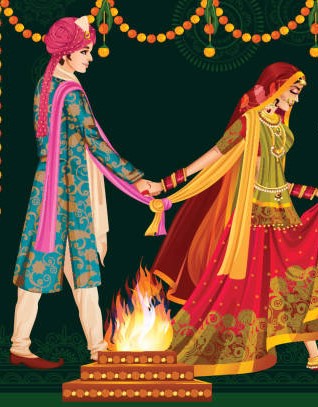


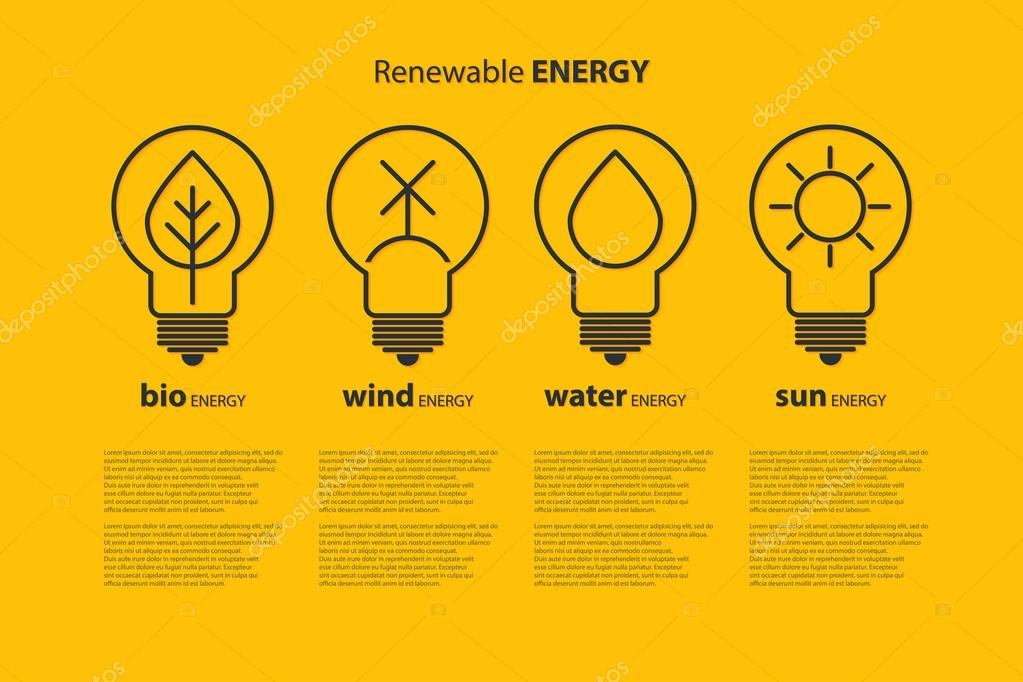
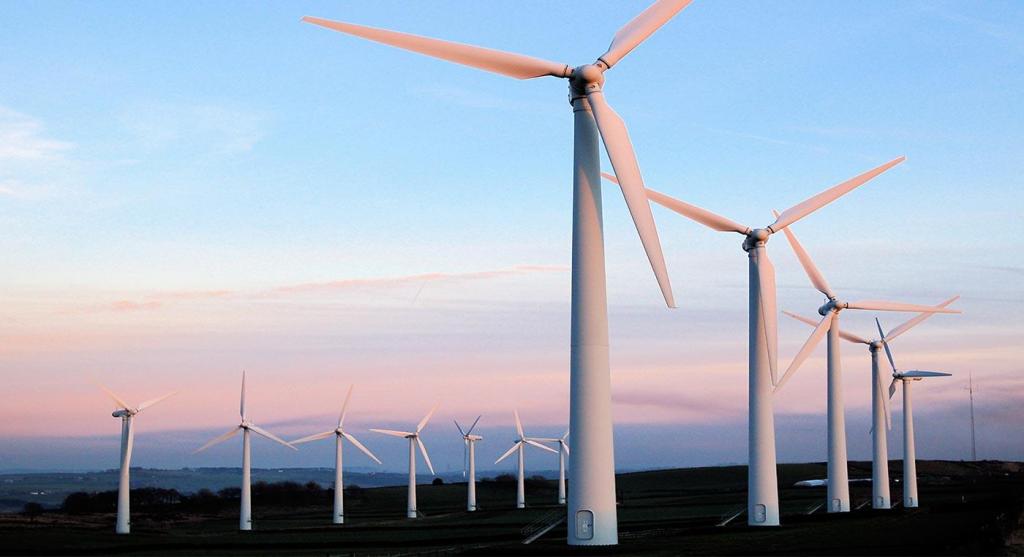





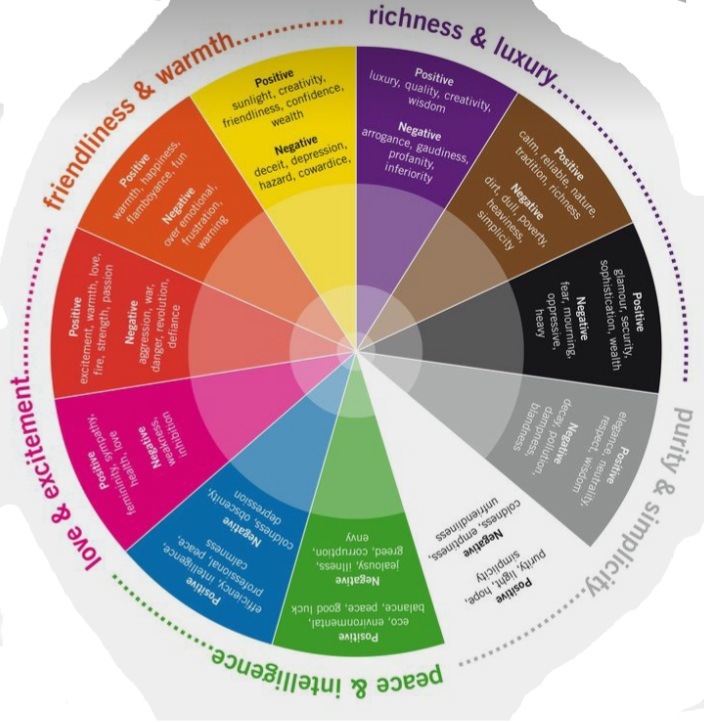















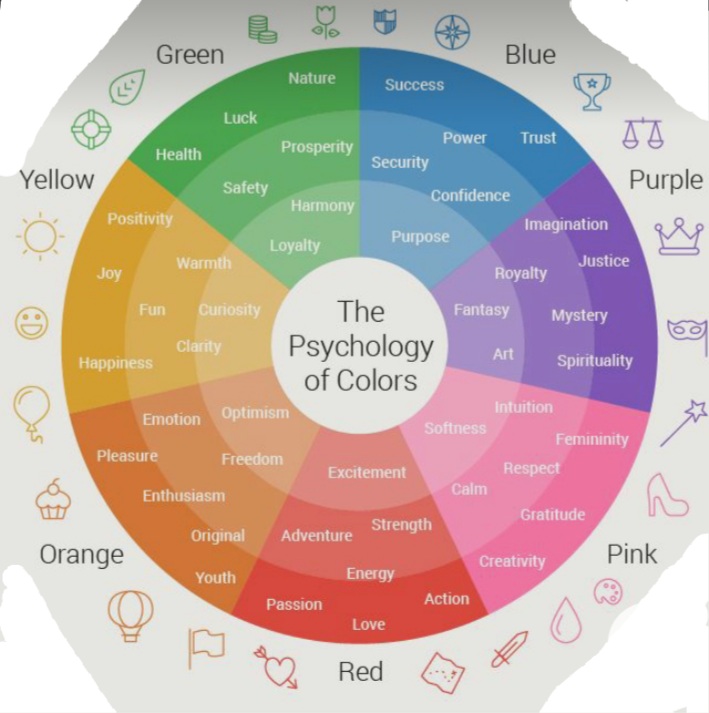
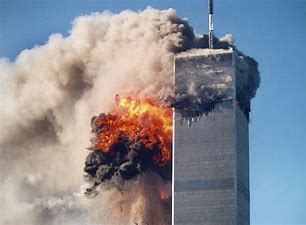


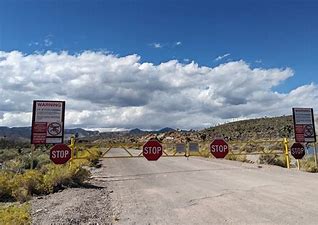
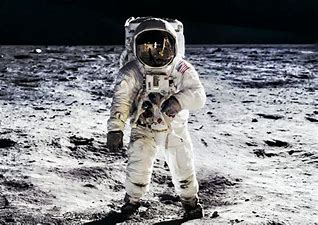





 Eduindex
You must be logged in to post a comment.